

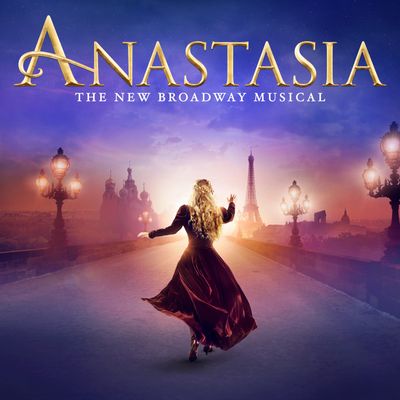
ANASTASIA is a musical based on a rumor that has stood the test of time and is a testament to the stories we tell during our "darkest Decembers." Joining us this week to discuss it is a young man who's just beginning to tell his own story, and he's earned quite the platform to do so... Read More
From the show: A Musical Theatre Podcast
Featured Shows
About
ANASTASIA is a musical based on a rumor that has stood the test of time and is a testament to the stories we tell during our "darkest Decembers." Joining us this week to discuss it is a young man who's just beginning to tell his own story, and he's earned quite the platform to do so. Damson Chola Jr. won the Jimmy Awards earlier this year and, thanks to incredible performing arts support in his Texas hometown, already has this epic musical on his resume. Don't miss this conversation filled with history, animation, and heart.
Follow Damson on Instagram @damsoncholajr, and be sure to check out his galleries and original music by visiting damsoncholajr.com
If you enjoyed this episode, be sure to check out our episode with ANASTASIA composers Lynn Ahrens & Stephen Flaherty: A MAN OF NO IMPORTANCE with Stephen Flaherty & Lynn Ahrens
Have you subscribed to PATREON! yet? It's only $1 a month, and next week subscribers get a new episode of "Something Worth Singing About" dedicated to the musicals of Ahrens & Flaherty. Follow all the latest from the podcast on Instagram, TikTok, and X. And don't forget about our TeePublic Store where our profits are donated to Broadway Cares/Equity Fights AIDS.
Above all, thank you for being part of this wonderful podcasting community!
Transcript
This transcript was automatically generated and might contain errors.
[0:00] Jeffrey Scott Parsons: Welcome, everybody, to A Musical Theatre Podcast where we discuss the cultural and emotional impact of some of our favorite musicals in theatre history. My name is Jeffrey Scott Parsons, you can call me Jeff. Today we are discussing the musical Anastasia, which was a listener request from Jonah, who wrote in and said, quote, my university just put on Anastasia. I'm thinking, is Jonah from the United States? Or maybe it actually was his university. You know, because like sometimes people use university in different ways around the world. Anyway, my university just put on Anastasia. I feel like that could be a fun show to learn about. It's obviously very different from the movie, and I bet there are some interesting stories out there because of it not being Disney.
End quote. Jonah, you're correct. Although Anastasia is now in my Disney emoji blitz because they took over Sony Pictures. So I mean, it juries out as to whether or not it's Disney now. There's quite a bit to discuss here with this one, and here to do it with me is a first for A Musical Theatre Podcast. Not only is he the youngest guest we've ever had on the show. Did you know that? You're the youngest guest. He's also the first Jimmy Award winner. He's certainly been thrust into the spotlight since he won the Jimmy Awards earlier this year. Everyone, please welcome the super talented Damson Chola Jr. Thank you so much.
[3:27] Damson Chola Jr.: Thank you so much for being here.
[3:32] Jeffrey Scott Parsons: Oh, good to be here. Good to be here. Good to be here. Okay, so for those that don't know, can you tell us what the Jimmy Awards are?
[3:37] Damson Chola Jr.: Okay, so the Jimmy Awards is the National High School Musical Theater Awards. Kids from all over the country come and they compete in this thing called the Jimmy Awards, and they compete for a $25,000 scholarship to help with their careers that they may want to start, and also with their schooling as well. So it is a very cool thing. This year we had 102 nominees, including myself. Such an incredible thing. I went there to go and represent Broadway Dallas here in Texas, Broadway Dallas High School Musical Theater Awards, and that was such an incredible time. Yeah, that's what the Jimmy Awards are. There's many different things we have. So everyone gets nominated for specific roles that they played in their high school musicals.
[4:28] Jeffrey Scott Parsons: So what were you nominated for to begin with?
[4:34] Damson Chola Jr.: I was nominated for my portrayal of Seymour Crelborn from Little Shop of Horrors. Adorable. I loved it so much, I'm telling you. So then when you go to the awards show, do you have to present something from the show that you performed, or do you get to pick new material?
[4:46] Damson Chola Jr.: Yes, I had to present something from the show that I performed. So I presented myself as Seymour in front of our judges, who are all casting directors and agents. It's a great way to be seen as well. And what it basically, the Jimmy Awards, if I could put it all into a nutshell, it is a lens into the future of Broadway.
[5:13] Jeffrey Scott Parsons: Come on. Hey, come on. That's awesome. Okay, just so many awesome opportunities here, because you're from a tiny town in Texas. And now you're thrust into the New York conversation, which has to be so exciting. So has it been overwhelming, just exciting? What's been going on inside?
[5:36] Damson Chola Jr.: Well, it's been a little bit of both, I'm not going to lie. I mean, emails right after the Jimmy's were flooding, let me tell you. And that was a little overwhelming. But it's also been kind of exciting, because this is the dream. And it will take some getting used to, obviously. But this is the beginning. And I pray that this is the beginning of something.
[5:58] Jeffrey Scott Parsons: So sweet. So can you share a little bit about your journey to discovery musical theater? Has this always been a passion? Did you think, you're talking to somebody who was working with cows in the field, but also planning my Tony Awards speech at the same time. So this was always part of me. But what about you?
[6:19] Damson Chola Jr.: I actually started out as a very shy and introverted kid. Actually, I was so shy and introverted that my mother sent me to school when I was two years old, just some sort of head start, just to kind of get me ready for... Yeah, yeah. Well, she's very shy and introverted too.
[6:35] Jeffrey Scott Parsons: Oh, sure. There you go.
[6:37] Damson Chola Jr.: You are not going to end up like me. That's what she said. I've always loved music. My whole entire family sings. So I've always been around music my whole entire life. So it was easy for me to pick up singing and stuff like that. My mother taught me, my father taught me. And it was just really, it was really a great thing. But I didn't really get into theater until the beginning of junior high, middle school. I tried just about everything. I did basketball, I did athletics, I did all of that. I tried band, I tried a bit of choir, but none of that really clicked, right? And I couldn't find a click. I was good at everything and I liked to do it, but it wasn't just like, oh, this is where I belong. Passion.
[7:20] Damson Chola Jr.: So it wasn't my passion, exactly. And my mom said, okay, why don't you try theater? And me still being introverted and very afraid of human interaction, I decided to go like, you know what? Fine, let's do it. And it ended up being one of the best things I ever did. I'm telling you, because you got to step into the skin of another person and you get to feel that electricity of people that watch your show and just everything. And that was addictive to me. And I just, I loved it. I love the rush and I stuck with it ever since. That's kind of the beginning. And then once I got into musical theater, didn't get into musical theater until my ninth grade year, going into high school. And that same year through my community theater that I have here called Plaza Theater Company. Shout out community theater.
[8:12] Jeffrey Scott Parsons: Yeah, community theater.
[8:18] Damson Chola Jr.: They have taught me everything that I know, coupled with my high school director, Kelly Price. But I started out over there and I did one of their summer camps. I did one of their summer camps. I started out, someone scholarship me anonymously. Now keep in mind, this is during like the 2020 era. So, you know, the dreaded COVID. So we, for first week, we were doing The Addams Family and I auditioned to be a part of their summer camp, but not only a part of their summer camp, but a part of their academy. So I kind of did two things. Initially, I auditioned for the role of Lucas from The Addams Family. And then they kind of, they liked my video and they called me back and they're like, you know what, we're looking for a Gomez.
[8:55] Damson Chola Jr.: So I self-taped Gomez and I sent it to them. Went over there, did a call back for Gomez and I got the part. My first ever audition for a musical theater. And you booked it.
[9:06] Damson Chola Jr.: And it was crazy. And I booked it and it was great. And I loved every second of it. You know, the accent, the singing, the music was just incredible and infectious and I loved it. And then once I started getting into the swing of things, boom, COVID.
[9:24] Jeffrey Scott Parsons: They're like, how badly do you want to do theater? That's what that says to me.
[9:29] Damson Chola Jr.: We just finished our first week and we're going to start our tech week, quote unquote. And that's when COVID hit and broke out inside the camp. So I didn't come back and it was bad. It was very bad. But then I had my reboot. My reboot in playing Troy Bolton.
[9:45] Jeffrey Scott Parsons: Yeah, get your head in the game.
[9:47] Damson Chola Jr.: Yeah, that's how we do it. It was actually the High School Musical 2, so it was more of a bet on it era, which is great. And it was so awesome. And that's kind of the beginning of where I've been and I've stayed with them ever since.
[10:02] Jeffrey Scott Parsons: How wonderful. Truly all my love to people who live in smaller towns and are crazy enough to dedicate their lives to creating community theater and artistic experiences because it changes people's lives. I mean, hello, I'm staring at one right here. So how cool is that? And also, it just makes me laugh so hard that your first audition was a self-tape. That is, if nothing else, like the indication of a world that many of us don't understand.
[10:30] Damson Chola Jr.: So like, holy cow, you already understand lighting and angles and sides and slating. And that just is hilarious and devastating to me all at the same time.
[10:49] Jeffrey Scott Parsons: Anyway, thank you so much for being here. We're going to have such a great time. Now, what people don't know is that you've also done Anastasia. It's one of the reasons why I was like, maybe we should chat this one because it's on your resume. So tell us who you played and where.
[11:03] Damson Chola Jr.: It was at Plaza Theater Company and I recently just wrapped up playing Gleb Vaginov in Anastasia and that was such an incredible production. I loved it.
[11:13] Jeffrey Scott Parsons: That's so cool. I can't wait to talk to you about that character specifically because he's one, I mean, he is probably the new character in the musical. So it's going to be nice to have somebody who literally was walking in his shoes. All right, so let's begin the Anastasia talk by talking about the 1997 animated film. Was this a movie that you saw in your, you're already young, so your younger life?
[11:42] Damson Chola Jr.: In my younger years. Yes, I did see this movie, Rasputin scared the heck out of me when I was a kid. It's pretty creepy. He has body parts falling off.
[12:00] Damson Chola Jr.: He does, he does. And I was like, wow. No, but it was an awesome movie. It had my attention the whole entire time, I'm telling you. 100%. So this is a 1997 film, as our friend Jonah wrote into us and said, it was not a Disney animated film. And it's one of, I mean, Prince of Egypt is probably the other one that comes to mind, a true musical animated film.
[12:22] Jeffrey Scott Parsons: That is in Disney and has stood the test of time. Anastasia right up there. In order to talk about this movie, we got to talk about the director. It's this guy named Don Bluth. Now, Don Bluth was with Disney in the late 70s. He was behind The Rescuers and Pete's Dragon, if you remember those old movies, old Disney movies. And right around that time, Disney animation is super struggling. And when they get into the 80s, basically, the Walt Disney Company says, maybe we're not in animation anymore. Maybe we're just going to leave animated films altogether. And Don Bluth is one of the people who leaves Disney because of it. Because he just felt, I'm not talking for him, but there was a group, a faction of this organization that felt like they just weren't being supported anymore in the same way that Walt would have if he had still been alive.
So, he leaves. He partners up with none other than Steven Spielberg. Not a bad choice there. And during the 80s, he directs and creates two of the biggest animated films of the decade, Land Before Time. Did you ever see that one? Okay, Land Before Time is all about dinosaurs. It's adorable. It might be in there. There's a little dinosaur named Ducky. It's adorable. Littlefoot. And there's also, I mean, spoiler alert, there are like 12 of these movies that came after it, but the first one's actually quite good. And then the other big movie, An American Tail. I don't know if you remember that it's about a little Jewish mouse that emigrates from Russia to America. Because there are no cats in America.
And the streets are big. So, another big hit. And those two movies kind of blow Disney out of the water during the 80s. Then at the end of the 80s, as I'm sure you know, Disney Renaissance happens, Little Mermaid comes out, and boom, boom, boom, Little Mermaid, Aladdin, Beauty and the Beast just kind of take over. And Don Bluth never really captures that big success again until Anastasia. Now, you mentioned that Rasputin is scary. And I think one of the real hallmarks of Don Bluth animated films is that they are terrifying. Secret of NIMH, if anyone's seen that one, horrifying. All Dogs Go to Heaven, unsettling. Rockadoodle, forget about it. Can't even watch it. There is kind of this super scary underbelly.
That being said, when you look at the actual history that Anastasia, the story, is built upon, even that was too dark for Don Bluth. So, now let's talk about what actually is behind Anastasia. How are you with Russian political history? Listen, listen, I had two weeks to prepare for this role. Normally, I would go straight. I love history. So, I go straight, and I would dive straight into this and really try and dig it up. But I know bits and pieces. Totally. To be clear, Russian history is so much more expansive than anything we have here in the United States. So, this is how I'm going to dial it down. There were centuries of Russia that were ruled by the Romanov family. Imperialistic Russia was all about the Romanovs, which means it was all within the family.
You just have story after story of so-and-so didn't have enough children, so how are they going to pass the political power to someone else? Then they marry the grandson of the King of Denmark, and then they come over. It's just a web of aristocracy at this point. Now, at the end of this reign, at the end of imperialistic Russia, things aren't going well. You got Nicholas II, who's czar, and he's a terrible leader. Let's just get this out of the way. Anastasia's dad did not do a great job with the country. There was famine. There was war. I mean, it was not a great place, which meant that he needed to leave. Now, he did. That's the crazy thing is that he abdicated his throne. He stepped down and said, somebody else needs to do this job.
What was going to happen was a sort of democratic, I say in quotations, process of figuring out where the country should go next. Now, there's a lot of upheaval. Obviously, the Bolsheviks have stepped in to run things militaristically. During that time, the whole Romanov family is basically put on house arrest to make sure that they don't escape Russia because if they abandon the homeland, that's a real bad move. They're staying in this house. One night, they are told to get dressed and come down to a room to take a picture to prove to all Russians that they are still in the country. Everybody wakes up, gets dressed, goes down to this room. They stand in two lines getting ready to have their picture taken.
In that moment, soldiers come in and shoot them all. Dark. Not only did they shoot them all, but they were just firing their guns, and there was so much smoke in the room that not everybody died immediately. The Romanovs, we're talking children, we're talking aunts, uncles, everybody. Anybody who was still there and was breathing was then stabbed to death. It's gruesome and dark, dark, dark. Then came the absolute chaos of what to do with these bodies because they didn't want them to be celebrated as this turning of the tide in the country was going to happen. So, there wasn't going to be a big funeral or anything. They were going to dump the bodies into the forest, but then that information got out to the public.
So, then they had to change their mind. They ended up disembodying people and throwing acid to try and dissolve the bodies. Really nasty. In the midst of all of this chaos comes the rumor that the youngest daughter of the Romanov family, Anastasia, was unaccounted for. What's interesting is that because of the way that they died, the Romanovs are probably romanticized much more than they would have been because of the political chaos. If they hadn't been murdered in such an awful way, they probably would just be remembered as terrible rulers. But because all of this happened, and then the Bolsheviks honestly didn't do a great job in making things better for the average Russian, those two things put together meant that a large population, a large group of the Russian people started thinking, well, maybe the Romanovs weren't so bad and remember how beautiful they dressed.
And also, have you heard that maybe there's a chance that one of them survived? It's such a sad and beautiful commentary on humanity that when something that horrible exists, we got to find something to hold on to. Even if it's just this rumor that maybe this innocent girl wasn't murdered with the rest of her family. So kind of dark, right, Dampson? A little dark. Yeah, just a little bit. Not too much. But this story doesn't necessarily scream animated musical comedy. So when Don Bluth decided to turn it into an animated film, gone are the Bolsheviks. And instead is this other kind of mythological creature from Russia, which is Rasputin, who was looked upon as a mystical, magical advisor to the Romanovs and wasn't always super honest or ethical.
And so the idea comes, okay, maybe Rasputin is this evil sorcerer and he has an adorable little bat that will say really great lines like, and I kick him, sir. So the Anastasia film, based on this very, very real, true myth, becomes more of a fairy tale. Once the film gets greenlit, then Don Bluth brings on award-winning, some of my favorite composers of all time, Ahrens and Flaherty, to write songs for the film. And when you listen to them talk about doing the film of Anastasia, they said it was an absolute pleasure because the film had already been approved. It was going to happen. It wasn't about doing all of this work with the hope that it might happen. It was in the process. And so then it was just about writing songs, meeting with the animators.
They talk about how all of the songs were written first, and then they would present it to the animators to see what it inspired. Two of the songs that they wrote at the very beginning were Rumor in St. Petersburg. So that still stood the test of time. And Once Upon a December, they got it right, right off the bat. The movie's a big hit. They're nominated for Oscars. They don't win, unfortunately, because it was the year of Titanic. So there's no way you were going to win. I'm sorry. You got to give James that one. Thank you. Which, by the way, James Horner, way to pull that out, Damson. I'm very impressed. He wrote the music for Land Before Time and American Tail, the two Don Bluth movies in the 80s. So how about that?
Of course he did. All right. So that's the movie. I grew up loving it. I remember thinking that Meg Ryan and John Cusack somehow had really great chemistry in the movie, even though they were animated characters. There was such sexual tension, in a way, between Dmitry and Anastasia. I'm like, these are cartoons. Why are they so hot? I was like, I don't know. And so I was really invested in their relationship. It's a great movie, and I think it still is a great movie. It also, because it took the fairy tale route, I think that it was still very popular in Russia. I mean, it's not historically accurate at all, but also by that point, DNA evidence had proven that the little Anastasia did die that day.
It's just playing on the myth anyway. Why not just let it be what it wants to be? Which has always been a way to process these horribly dark moments of history in a hopeful way. So that's my big spiel on Russia and the history of the film. Is there anything you want to add to it?
[24:07] Damson Chola Jr.: No, I was sitting here and listening to everything. Wow, it was beautiful. It was dark. It was like you took me through a- It was a rollercoaster. It was a rollercoaster like you'd find in Arlington, Texas.
[24:23] Jeffrey Scott Parsons: All right. So now let's fast forward many, many years to the Broadway incarnation. For those who are interested and maybe haven't listened, I had the great privilege of recording an episode with Ahrens and Flaherty all about their musical Man of No
[24:43] Jeffrey Scott Parsons: Importance, which they also wrote with Terrence McNally, and they had collaborated with him, of course, on Ragtime. So I highly recommend that everybody go back and listen to that episode because they talk about their collaborative process, as well as really look at some of the details of creating Anastasia, which is really fun. So everybody go back and listen to that one. I'll link it into our show notes. But when it comes time to produce this thing on Broadway, it starts out in Hartford, Connecticut. And how would you, I want to turn this over to you, how would you describe the big differences between the film and the musical, like the stage musical?
[25:19] Damson Chola Jr.: Big differences between that, I would say, well, first off, there's no Rasputin. He's gone. I don't think we can really have dismembered body parts all over the stage. Although it's one of my favorite songs in the movie. And so that's kind of a bummer. It is a bit of a bummer. Anyway, but instead of Rasputin, we get this character named Gleb, who I played. So there's a bit more. That's one very, very big difference, at least in my character. You also get to see a lot more of the Dowager Empress as well. You get to see a lot more of her grandmother and her side of the story. There's so much, I would say that in this musical version, there is so much realism. It does not feel like a fairytale. It does not feel like a fairytale at all.
[26:15] Jeffrey Scott Parsons: You're exactly right. You're exactly right. And I think that was the intention of our three collaborators. Aaron Slarity and McNally set out to write something that was profound and more rooted in reality. They were also really interested by Russian art and culture at this time and wanted to really pay respect to that, which is interesting because this is also the same Broadway season as Natasha, Pierre and The Great Comet. So there's a lot of Russia on Broadway at this point. But that intention makes this telling, like you said, less of a fairytale and more of an epic. I mean, it is not a short show. It's not a simplistic show. And also I will say this, there are so many recognizable moments from other types of shows throughout musical theater history.
There's a little bit of My Fair Lady. There's a little bit of Fiddler on the Roof. There's a little bit of Gigi. It encompasses so many things that it now feels like a musical much bigger than it ever was as a movie. And that's a movie that, like we said, includes a sorcerer casting spells. So it's an interesting transition to the stage. Like I said, it starts out at Hartford, Connecticut, directed by the same guy who did Gentleman's Guide to Love and Murder, choreographed by the late, great Peggy Hickey, RIP. And then it transfers to Broadway, doesn't get super great reviews, but manages to run for two years, which is amazing. Has a couple of Tony Awards. It doesn't win because it was a crowded year.
This is one of the few Broadway seasons where we on the podcast have covered every single musical that was nominated for Best Musical. And there are still so many other shows like Anastasia in that season. That being said, it managed to run and then have a successful national tour and just also the most gorgeous costumes you've ever seen in your life. Holy cow. I have only seen the bootleg, don't tell anybody. Were you ever able to see a professional production of this or was your first introduction the production you did?
[28:38] Damson Chola Jr.: My first introduction to Anastasia was what I did. I mean, I also saw the bootleg as well. Slime tutorial.
[28:49] Jeffrey Scott Parsons: Oh, slime tutorials for the end. They save lives and they make me happy. Yes, I watched the slime tutorial to kind of prepare myself for the show. And I listened to the soundtrack on repeat. And every single time I was just like in tears. I was bawling on how beautiful it was. I mean, I'm a huge fan of that whole entire creation team. I've loved every single thing that they've done.
[29:13] Damson Chola Jr.: Yeah, I'm into that. Great, great point. Since you and I have both seen the slime tutorial, which by the way, when I was watching it, I'll never forget there was a cell phone that went off close to whoever this person was. And I was like, even in slime tutorials, even in bootlegs, my experience is interrupted by people forgetting to turn off their cell phone.
[29:38] Jeffrey Scott Parsons: For real. I'm like, Oh, come on.
[29:40] Damson Chola Jr.: Come on now. And so anyway, God bless. All right, let's talk through the show. Because like I said, it is an epic one. And I think there's a lot of great stuff, a lot of great human humanity to discuss. The show begins with a prologue, in which kind of what I just shared goes down, but in a more artistic way, it doesn't feel quite so Holocaust-like. But we meet little Anya, who is with her grandmama. And although she doesn't go by grandmama, she goes by Nana, right? If I'm remembering correctly?
[30:13] Damson Chola Jr.: Yes. Nana is the Dowager Empress, right? So the empress of all of Russia, and she is leaving. Because of this political upheaval, many were able to be exiled before everything went down like it did. So she's leaving to Paris. In reality, I think she went to Denmark, but in the musical, she goes to Paris. And before she leaves, she leaves little Anastasia, her favorite, a music box. It's a music box that looks like a candle that you would find at a boutique. And it's kind of difficult to get open. You have to know exactly how to twist the ties and flip the switch, and then it opens. And so she presents it to Anastasia, and it plays their favorite little lullaby called Once Upon a December.
[31:11] Jeffrey Scott Parsons: Right here from the get-go, Damson, is the stuff that gives my body the chills. Because you think of this song, and you think of what December means, right? December is supposed to be in the middle of winter, the dark times, the times where spring is hopefully coming, but it feels like it may never come. They're singing this little song in a moment of darkness, saying hopefully one day we'll see each other again in Paris. And then this horrible thing goes down where all of the Romanovs are killed. What it leaves us with, and what I believe this musical is about, is about specifically two women who, because of this horrible incident, forget who they are. Anya, literally because of amnesia and honestly probably trauma, forgets who she is.
And at this moment, the dowager empress really shuts off her heart because the pain is too much. And the rest of the musical is about trying to remember who you are, and even though it may have happened in the middle of the winter once upon a December, that there is still love to be found, and there is still hope to be found. And that's the moving, touching part of this story to me, is seeing these two women in their journeys to the past, if you will, to take a line from a title of a song, but see their journeys back to discovering who they are. It's a long journey though. Anya ends up somehow in an orphanage and kind of working odd jobs to get by. St. Petersburg is no longer St. Petersburg. It's called Leningrad, named after Mr. Lenin, who came up with some interesting ideas for sure. But how would you describe Leningrad? What's the feeling of the place?
[33:16] Damson Chola Jr.: For Gleb and all of the soldiers, it feels like we've done it. This is our new place. This is it. We don't need a czar. The people can lead, that sort of thing. Which once again, great idea. That sounds like exactly what you'd want. And that's what it is. But for the people, they feel oppressed. We're still poor. We still have nothing to eat.
[33:42] Jeffrey Scott Parsons: Still starving.
[33:42] Damson Chola Jr.: Exactly. Still starving. What are you really doing for us? Except now, pointing guns in our faces, if we say anything about the Romanovs. So, one side sees growth. The other side still sees we're still in poverty. What are you doing for us? Just because you have a new name doesn't mean there's a new lifestyle. That's actually what Dimitri says at the very beginning. He says, new name, same empty stomachs. And I was like, oh, that's this vibe of the show that we're getting.
[34:13] Jeffrey Scott Parsons: Yeah. Which then makes this opening number, Rumor in St. Petersburg, it humanizes all of these people because they're tired of thinking about their empty stomachs. They want to think about something else. And the thing to think about is, oh, there's a rumor that one of the Romanovs survived, but we have to be very quiet about it. It's probably why it's more of a gossipy rumor is because, like you said, you even mentioned the name of the Romanovs, you're going to get a gun in the face. Now, the rumor has led to these two, I don't know if they're like con men, but maybe, maybe they're just, you know, industrious. This guy named Dimitri and this other dude named Vlad, who had been more upper class, right, during the Romanov era. Wouldn't you say Vlad was, I mean, he considered himself a count, even though he didn't have maybe any real power?
[35:12] Damson Chola Jr.: I mean, he also, I believe he worked also inside the palace as well.
[35:17] Jeffrey Scott Parsons: Okay. So he was employed by the Romanovs.
[35:21] Damson Chola Jr.: Yeah. So these two guys have worked, are working together to find the missing girl. And they're not really all that interested in finding the missing girl. They're just, they're trying to find someone who will pass as the missing girl, because then they'll get some money.
[35:38] Jeffrey Scott Parsons: That's right.
[35:39] Damson Chola Jr.: The auditions don't go well. In fact, the women who are turned down actually turn to your character and kind of tattle on them and say, guess what? These two guys are trying to resurrect the Romanovs. Now, how does Gleb take this information?
[35:59] Damson Chola Jr.: Oh, because, by the way, Gleb Soldier, who they tattle to.
[36:04] Jeffrey Scott Parsons: Exactly. The way that I played it, I'll tell you the way that I played it. When these girls came to me who are actually prostitutes as well, so already...
[36:15] Damson Chola Jr.: Industrious as well.
[36:17] Damson Chola Jr.: Exactly. Exactly. So Gleb's respect for them has already gone down. And then once they also tell him this story, he says, everything concerning the Romanovs, we take very seriously, which means he's taking it seriously, but he's also at his wit's end because he's heard so many rumors about this already. That's the way that I played it. So he's like...
[36:42] Jeffrey Scott Parsons: Don't make me do any more paperwork.
[36:44] Damson Chola Jr.: Exactly.
[36:45] Damson Chola Jr.: Exactly. He actually says one of the things, the first thing that he sings is actually, fill out the new report, the rumors never end. That's one of his first lyrics. And he says, another, another, another person, another person. Oh, my goodness, another rumor on the street, you know, that sort of thing. And it's kind of at his wit's end. And then he has...
[37:05] Damson Chola Jr.: Gleb's father was one of the people that pulled the trigger on the Romanovs, and especially the Romanov children as well.
[37:35] Damson Chola Jr.: My father shook his head and told me not to ask. My mother said he died of shame. But then the next lyric is, but I believe you did a proud and vital task. And in my father's name, the Niva flows, and that chorus we'll go into later and what I think it means.
[37:53] Damson Chola Jr.: He had to do a horrible, terrible thing for the betterment of his country, and it ultimately killed his father, but he's never going to say that it was the wrong thing to do.
[38:03] Damson Chola Jr.: And then he goes on to say, the Niva flows and new wind blows and soon it will be spring. As you said, I like what you said, how December always brings darkness and everybody's looking towards spring.
[38:14] Damson Chola Jr.: So he's saying, the Niva flows, the Niva flows, the Niva is a river in Russia, and it continues to flow, it continues to flow, so time will keep on going, growth will start to happen, soon it will be spring, soon there will be growth, soon it will be a brighter day.
[38:42] Damson Chola Jr.: And then he says, could I have pulled the trigger, if I'd been told, which is kind of foreshadowing. And then he says, be careful what this dream may bring.
[39:04] Damson Chola Jr.: Because one of the lines that Anya says to him is, everyone imagines being someone else, it's an innocent fantasy. Right? So he says, be careful what this dream may bring, a revolution is a simple thing, which means like, I will not hesitate.
[39:22] Damson Chola Jr.: That's kind of the way that I played it. I played it very threatening, and I played it very, because that's the character he's supposed to play. He's supposed to be the substitute for Rasputin, and kind of be, you know, a lot of people play it that way, but I really wanted to take it on as much of a dark turn as I could, because it's a dark story. And if you're giving me the villain, I will play the villain.
[39:50] Damson Chola Jr.: Don't you worry.
[39:51] Jeffrey Scott Parsons: Oh, I'll get you a villain.
[39:53] Damson Chola Jr.: Thank you for taking us through that. Because number one, I think it shows what a great lyricist Lynn Ahrens is. My gosh, that's so good. She's so fantastic.
[40:06] Damson Chola Jr.: She gives actors so much to play with. And that's the thing about a good lyricist and a good writer, and with a good composer as well. Why music itself, no words, can make you cry. It's a beautiful thing.
[40:21] Jeffrey Scott Parsons: Amen. Thank you for that. So I love that we've kind of set the stage here for Gleb, because he is a really interesting character. He's very Javert. He's giving me a lot of Javert vibes.
[40:36] Damson Chola Jr.: I've played that part too.
[40:37] Jeffrey Scott Parsons: There is this duality. There's the duty, and then there's the man. As much as you try to keep those two sides apart, the person has to eventually deal with both of them.
[40:50] Jeffrey Scott Parsons: Let's talk about Anya now, because she does run into Dimitri and Vlad. And why do you think that she comes to this audition? Oh, actually, she says right off the bat, she's like, I hear you can get me out of here. But why do you think she wants to get out of there?
[41:10] Damson Chola Jr.: Actually, she says at the very beginning, she's like, I don't know why, but I need to go to Paris. I'm looking for someone and they're waiting for me in Paris. And you can get me to Paris.
[41:35] Damson Chola Jr.: But she's going with it because it's literally all she has. She has no memory, but she kind of has this dream world that she floats in and out of that guides her in a compass sort of way to where she needs to go.
[41:50] Damson Chola Jr.: The big one is Paris, right? She just feels like she needs to go to Paris. We know it obviously is because that's where her grandma is. But she is able to talk about all of this in probably my favorite new song in the show, which is called In My Dreams. Beautiful, beautiful, earnest.
[42:10] Damson Chola Jr.: I guess it's an I Want song, but it's just a beautiful introduction to who this person is. Vlad, who like you said, has worked for the Romanovs, sees her as a great opportunity. I mean, she probably looks a lot like the Romanovs for some strange reason.
[42:30] Damson Chola Jr.: But she's also kind of the perfect blank slate to build this character. And Anya, once again wanting to go to Paris, like you said, what she ultimately says to Gleb, it's an innocent fantasy. Like, what's the big deal? They all go along with it and join forces.
[42:50] Damson Chola Jr.: Gleb gives her the warning to not do it because the three ladies tattled on her. But they decide to go ahead anyway, and they leave Russia. This is where kind of the fiddler on the roof moment happens because they sing this song that's kind of heavy, right? In saying goodbye to the country that they love.
[43:10] Damson Chola Jr.: Such a beautiful, such a beautiful piece. Hearing it every single night, I would always just stay silent and just listen backstage because it starts out acapella. And you hear the sorrow.
[43:30] Damson Chola Jr.: That's from that song. So Rasputin lives a little bit in this musical.
[43:40] Damson Chola Jr.: I mean, it was a beautiful melody. You can't not have it in there. And I think they knew that. It's like, we got to think that song.
[43:48] Damson Chola Jr.: And it's so Russian too, you know, in celebrating the musical heritage, which obviously he wrote Ragtime for crying out loud. He really understands how to create motifs based on pre-existing stuff.
[44:02] Jeffrey Scott Parsons: All right, so now they're off. They are on the train on their way to Paris. There are several moments when I first saw this musical, I was like, oh, maybe this is the end of the first act. By the way, it's not. But there is kind of this like traveling song. We're on our way. The police are now checking everyone's papers to make sure they are who they say they are.
[44:25] Damson Chola Jr.: So that means there are three characters have to jump off the train in order to survive. They do. How did you do that in a community theater, by the way, with a blackout?
[44:36] Damson Chola Jr.: It was really, really cool, actually. Our theater is in the round.
[44:41] Damson Chola Jr.: So it's in the round and it has a turntable in the middle.
[44:43] Jeffrey Scott Parsons: I need to stop thinking about this community theater like, like, oh, bless their hearts. They're patron saints of the arts. You have a turntable?
[44:54] Damson Chola Jr.: I'm sure there's never been a bad show at Plaza Theater Company. I have enjoyed being in their shows and I've enjoyed watching all of their shows and being an audience member and an actor.
[45:05] Jeffrey Scott Parsons: Yes. So what happened is that we also have like a tech team that built our train so they would wheel out these two pieces of the train, have powerful magnets in between, put them together. Right. And then we do all of our scenes on the train.
[45:20] Damson Chola Jr.: And now it's time and then we have the turntable going. We have projections also on all four corners. They climbed around the train.
[45:29] Damson Chola Jr.: All three of them climbed on the sides of the train hanging on. And then finally, when they finally said the word jump, they jumped blackout.
[45:39] Damson Chola Jr.: And it was so cool to watch every time. Yes.
[45:43] Jeffrey Scott Parsons: How cool is that? All right. Some of the other things or other songs we should touch on here in the first act.
[45:50] Damson Chola Jr.: My Petersburg that Dimitri sings. It's a great song. Speaking of Madame No Importance reminds me a lot of Streets of Dublin.
[45:58] Damson Chola Jr.: The reason they were able to afford train tickets is because Anya had a diamond sewn into her dress. Right.
[46:06] Damson Chola Jr.: I think it was into like a piece of her undergarments. I think. Yeah, I believe.
[46:10] Damson Chola Jr.: So that's kind of an important little plot point. Let's see. Anything else in this first. Oh, and then, of course, the first act ends with maybe the most popular song of the musical Journey to the Past, which is placed so perfectly.
[46:26] Damson Chola Jr.: Like even more so than Let It Go and Frozen. This song placed here is such a great idea because this used to be in the animated film.
[46:36] Damson Chola Jr.: Her want song, her desire to leave Russia, leave her life, at least what she thought was her life, to discover something new.
[46:46] Damson Chola Jr.: But now she's literally on the precipice of getting to Paris. Yeah.
[46:50] Damson Chola Jr.: Oh, it's so good. It's so beautiful. Super great way to end the first act. The second act is just as epic, if not more so.
[47:00] Damson Chola Jr.: They get to Paris and they really take their time to establish Paris in the 1920s. This place is hopping.
[47:10] Damson Chola Jr.: And not only is it a center for culture and joy, but it's also a place where many Russians have escaped to.
[47:20] Damson Chola Jr.: Actually, I would say not just any Russians, but the upper class, right?
[47:26] Damson Chola Jr.: All of these people who had been in the Romanov money and care and privilege, and there certainly isn't a place for them in Russia anymore. Where do they go?
[47:38] Damson Chola Jr.: Well, they go to Paris and try to relive the glory days.
[47:41] Damson Chola Jr.: It's a really interesting thing that I didn't expect in this musical was to get Land of Yesterday.
[47:48] Damson Chola Jr.: I was not expecting to get a song, which is ultimately a big production number, right?
[47:55] Damson Chola Jr.: But underneath all of that is sadness, is mourning the fact that we used to be really privileged and now we're just going to come to Paris and pretend that we still are.
[48:06] Damson Chola Jr.: That's complex and interesting.
[48:09] Damson Chola Jr.: Heading this group of privileged Russians who are now living in Paris is Countess Lily, who was and is kind of the confidant of the Dowager Empress.
[48:22] Damson Chola Jr.: She's hilarious. Shout out Caroline O'Connor, who can do no wrong in my book. I think she's just such a stage delight.
[48:29] Damson Chola Jr.: Plot twist, she and Vlad used to be a thing back in the Russian days.
[48:35] Damson Chola Jr.: So when they get to Paris, she is Vlad's in to the Empress.
[48:40] Damson Chola Jr.: This is how they're going to get Anya to be seen because they have this previous connection.
[48:46] Damson Chola Jr.: Here's where the Gigi comes in. They spark their old romance.
[48:50] Damson Chola Jr.: And what ends up happening is Anya, they get her all dressed up and everybody goes to Paris.
[49:27] Damson Chola Jr.: I think the most impactful part of Anastasia for me is the journey of self-discovery that the character goes through. She starts off not knowing who she is, and as the story unfolds, she learns about her past and her identity, which is something that resonates with a lot of people, especially young people trying to find their place in the world.
[49:57] Damson Chola Jr.: The music in Anastasia is also incredibly powerful. Each song captures the emotions of the characters so beautifully. For example, "Journey to the Past" is such a pivotal moment in the show where Anastasia decides to take control of her life and seek out her family. It’s a moment filled with hope and determination.
[50:03] Damson Chola Jr.: I remember the first time I heard that song; it gave me chills. It’s one of those songs that just sticks with you, and I think that’s what makes musical theatre so special. The music can really elevate the storytelling and connect with the audience on a deeper level.
[50:09] Damson Chola Jr.: Another aspect I love about Anastasia is the historical context. It’s based on a real story, which adds a layer of depth to the characters and their struggles. The idea of a lost princess searching for her identity is such a compelling narrative, and it’s fascinating to see how the show interprets that history.
[50:17] Damson Chola Jr.: I also think the themes of family and belonging are universal. Everyone can relate to wanting to find their place in the world and connect with their roots. Anastasia’s journey is a reminder that no matter how lost you feel, there’s always a path back to who you are.
[50:25] Damson Chola Jr.: Performing in this musical has been a dream come true for me. I’ve always loved musical theatre, and to be part of a show that has such a rich story and beautiful music is truly an honor. It’s a chance to share a message of hope and resilience with the audience.
[50:33] Damson Chola Jr.: I’ve learned so much from my experience in Anastasia, not just about acting and singing, but also about the importance of storytelling. Every performance is an opportunity to connect with the audience and share a piece of yourself with them.
[50:41] Damson Chola Jr.: I think that’s what makes live theatre so magical. You never know how your performance might touch someone’s life or inspire them in some way. It’s a powerful feeling to know that you can make a difference through your art.
[50:49] Damson Chola Jr.: I also appreciate the support I’ve received from my community back in Texas. Growing up, I had access to incredible performing arts programs that helped me develop my skills and find my passion for musical theatre. It’s amazing to see how those early experiences have shaped my journey.
[50:57] Damson Chola Jr.: I think it’s important for young artists to have that kind of support. It can make all the difference in helping them pursue their dreams and find their voice in the industry. I’m grateful for the opportunities I’ve had and hope to inspire others to follow their passions as well.
[51:05] Damson Chola Jr.: As I continue my journey in musical theatre, I’m excited to explore new roles and stories. Each character brings a unique perspective and challenges, and I look forward to diving into those experiences and growing as an artist.
[51:13] Damson Chola Jr.: I think the future of musical theatre is bright, especially with so many diverse voices and stories being represented. It’s an exciting time to be part of this community, and I can’t wait to see where it takes me next.
[51:21] Damson Chola Jr.: Overall, Anastasia has been a transformative experience for me. It’s not just a show; it’s a celebration of resilience, hope, and the power of storytelling. I’m honored to be part of it and to share that message with audiences everywhere.
[51:29] Damson Chola Jr.: I encourage everyone to come see the show if they can. It’s a beautiful production that I believe will resonate with anyone who has ever felt lost or is searching for their place in the world.
[51:37] Damson Chola Jr.: Thank you for having me on the podcast to share my thoughts about Anastasia. It’s been a pleasure discussing this incredible musical and the impact it has had on my life and the lives of others.
[51:45] Damson Chola Jr.: I hope listeners take away a sense of hope and inspiration from our conversation. Remember, no matter where you are in your journey, there’s always a path to finding your true self.
[51:53] Damson Chola Jr.: And don’t forget to follow me on Instagram @damsoncholajr and check out my original music and galleries at damsoncholajr.com. I’d love to connect with everyone and share more of my journey with you.
[52:01] Damson Chola Jr.: Thank you again for this opportunity, and I look forward to what’s next in my career. Musical theatre has a special place in my heart, and I can’t wait to continue sharing stories through this art form.
[52:09] Damson Chola Jr.: I think it’s important for young artists to remember that every journey is unique. Embrace your path, learn from your experiences, and never be afraid to share your voice with the world.
[52:17] Damson Chola Jr.: There’s so much power in storytelling, and I believe that each of us has a story worth telling. Whether it’s through musical theatre or another medium, find what speaks to you and let it shine.
[52:27] Damson Chola Jr.: Thank you for listening, and I hope to see you at the theatre!
© Broadway Podcast Network, All Rights Reserved