

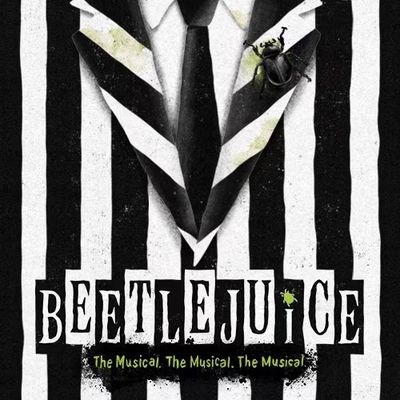
Beetlejuice...Beetlejuice...Beetle-just kidding, we're not that crazy. Today, we're talking about "you know who," and we're doing it with original Broadway cast member and current dance captain on the BEETLEJUICE national tour, Ryan Breslin!.. Read More
From the show: A Musical Theatre Podcast
Featured Shows
About
Beetlejuice...Beetlejuice...Beetle-just kidding, we're not that crazy.
Today, we're talking about "you know who," and we're doing it with original Broadway cast member and current dance captain on the BEETLEJUICE national tour, Ryan Breslin! (NEWSIES, THE BOOK OF MORMON, CHARLIE AND THE CHOCOLATE FACTORY) Join us as we delve into the history of this fan favorite musical, the lore of the Netherworld, and what happens when Congresspeople are escorted out of your show.
Follow Ryan on Instagram at @theryanbreslin and visit him and the rest of the cast on one of their stops by visiting BEETLEJUICE The Musical | Official Tour Website
If you enjoyed this episode, check out another film turned musical composed by a different Australian comic: GROUNDHOG DAY with Ste Clough
Join our ever-growing community on PATREON! Starting at only $1 a month, you can gain access to membership tiers, trivia competitions, bonus episodes and voting polls!
Don't forget to like and share our episodes on Instagram and TikTok. We have fun playlists on Spotify to keep you company in between episodes. And be sure to check out our TeePublic Store where our profits from the designs are donated to Broadway Cares/Equity Fights AIDS.
Most importantly, thank you for being part of this wonderful podcasting community!
Transcript
This transcript was automatically generated and might contain errors.
[0:01] Ryan Breslin: Honestly felt a little bit like an outsider when I joined because the show had gone through so many readings and workshops and labs and they had already gone through so much of the writing process that I kind of felt like a fly on the wall getting to watch them, you know, put some finishing touches on the musical. Little did I know they were going to change a lot from DC to Broadway.
[0:42] Jeffrey Scott Parsons: Welcome everybody to A Musical Theatre Podcast where we discuss the cultural and emotional impact of some of our favorite musicals in theatre history. My name is Jeffrey Scott Parsons. You can call me Jeff. Today we are discussing Beetlejuice, I only said it once, a musical that if you're thinking seen the movie, seen the sequel, know it already, you are incorrect. I'm honestly not sure I can think of another stage musical based on an intellectual property this famous that's also this different or original from the OG story. This episode was a listener request from several of you, including Claire, who has played the Girl Scout in I'm assuming a school production, and Jasmine, who wrote in and said, quote, "I first saw the show on YouTube when I contracted COVID for the first time.
Interestingly, the scenes in the show seemed more dreamy and enticing with my 40-degree fever," somebody uses Celsius, "and severe headache. It is so energetic and upbeat that it got me back on my feet and made me feel alive again. Even though I've been a musical theater and Tim Burton film nerd since the age of nine, at first I didn't like the idea of my favorite Burton film being turned into a musical. However, as I watched the show, I realized that it had a different concept and tone to the dark film that inspired it, and yet I love both without feeling guilty for betraying my first love." Unquote. Great message. Thank you for writing in. Joining us today is someone who knows this show better than most people on the planet.
Not only was he in the original Broadway cast of Beetlejuice, he originated the role of Racetrack in the Broadway cast of Newsies. He was also in Charlie and the Chocolate Factory and The Book of Mormon. He's currently on tour with Beetlejuice where he's busy doing many things, including being dance captain. Everyone, please welcome the wonderful Ryan Breslin.
[2:38] Ryan Breslin: Hi, Ryan. Welcome to A Musical Theatre Podcast. How are you?
[2:40] Ryan Breslin: I'm doing great. How are you doing?
[2:46] Jeffrey Scott Parsons: I am great. I'm so grateful you're here. There are so many things I want to chat with you about. First of all, we need to touch on Newsies if that's okay with you.
[2:53] Ryan Breslin: Absolutely.
[2:53] Jeffrey Scott Parsons: I said in our Newsies episode, and everyone go back and listen to it, that when I first watched these the day on the Tony Awards, I was viscerally angry that you guys had to do that choreography eight times a week. So all these years later, I need to know how's everyone feeling? Are your bodies falling apart? Which now that I think about it, this is a pretty decent question for Beetlejuice. Yeah, what damage was done? Are you—how are you?
[3:17] Ryan Breslin: Oh, I'm doing great. I do remember the show was supposed to run for 11 weeks and we just threw everything on stage. We threw all of our tricks into the show. We were so excited. We were ready to go. We were running on fumes. We were running on adrenaline. We were all very young, and I recall Aaron Albano, who deemed himself Grandpa Newsy because I believe he was in his late 20s at the time, and he was just standing in the rehearsal room and just anytime we were like, "We can do this trick! We can do this trick!" he was just like, "Eight times a week! Eight times a week!" And at some point when the show extended and just became an open-ended run, we all started to feel it in our bodies. He was there to be like, "I told you."
[4:14] Ryan Breslin: He was right. It was very challenging. The Tony Awards performance feels like—it's something I will never forget, and it also felt like such a blur and a moment in time that just happened to us. That was a performance where we were fully just running on adrenaline, and I didn't feel a thing after that performance. That was the time of my life.
[4:39] Jeffrey Scott Parsons: Wow, that's so exciting. I don't think I realized that it was only supposed to be 11 weeks. Was that just because Disney wasn't sure if it was gonna fly and they only wanted to budget that amount?
[4:48] Ryan Breslin: I think so. I think that they wanted to see how audiences were gonna receive it and also, great marketing strategy—make it a little bit time-limited to get the ticket sales. I gotta get there.
[5:00] Jeffrey Scott Parsons: Yeah, well speaking of like large entertainment corporations making musicals, Warner Brothers, right, is the one that's behind Beetlejuice?
[5:09] Ryan Breslin: Yeah.
[5:09] Jeffrey Scott Parsons: Yes. Let's talk a little bit about the film that they produced back in 1988. It's a Tim Burton film, a huge surprise hit. It was only the second film of Tim Burton, the first being Peewee's Big Adventure, so they often talk about this film as like lightning in a bottle because it was weird and different and low budget in a weird way despite having a really specific look and cool special effects, and it was a big old hit. So when did you first see it? Because there was no way that you were born when it came out.
[5:42] Ryan Breslin: No, I was born in 1989, but I definitely saw it growing up, and then I revisited it in 2018 after booking this, did the out-of-town tryout of Beetlejuice, and then honestly, I rewatched it about a week ago because I wanted to refresh on how the story is told in comparison to how we're doing it in the musical. Sure, and I enjoyed it the most a week ago. I was like, I think it's just a really cool—it takes its time. The atmosphere is very specific. It's very Tim Burton. I really enjoyed just revisiting all of the original cast members of the movie and seeing how their take was.
[6:29] Ryan Breslin: 100%. When I first saw this movie, I mean, I'll be honest, I was a big old wimp growing up when it comes to movies. Like King Triton destroying Ariel's grotto was enough to like destroy me when I was little. So watching a film like Beetlejuice where their faces turned into weird, you know, glorious makeup designs, like it was too much for me. And I remember being at a Halloween party for my church, and they had like Beetlejuice, which now that I think about it, like wow, good job Mormons watching Beetlejuice at a Halloween party. But like they had like Beetlejuice going on in the other room, and I like took a couple steps in and saw a few seconds of it and was like, "Not for me," going back out to the apple cider.
And then of course, like I really grew to love Tim Burton in general. What I love about him, and also what drives me nuts about some of his other movies, is that he is such a master of style and theme and vibe and character. Like the characters are so interesting, and he always gets like the coolest actors to bring them to life, but in terms of script and plot, it doesn't matter as much. You don't necessarily watch a Tim Burton movie for the plot; you watch it for all of the other things that I said.
[7:53] Ryan Breslin: So when you then blow up the story of Beetlejuice into a musical, you all of a sudden see some of the problematic parts of the story or the things that don't make sense that then you have to make sense of because people are singing about their feelings, and you have a lot more time looking at these characters' lives. You have to address them. So I'm really excited to talk with you about some of these changes in your experience with it. You mentioned that you were in the out-of-town tryout. So take me through your journey with it.
[8:31] Ryan Breslin: We did the out-of-town in Washington, DC at the National Theater. I honestly felt a little bit like an outsider when I joined because the show had gone through so many readings and workshops and labs, and they had already gone through so much of the writing process by the time that I got there that I kind of felt like a fly on the wall getting to watch them, you know, put some finishing touches on the musical. Little did I know they were going to change a lot from DC to Broadway.
[9:05] Ryan Breslin: It was a very crass musical. There was a parental advisory warning on the poster that we had outside of DC because it had a lot more adult humor. So yeah, definitely not Mormon Halloween party appropriate.
[9:18] Ryan Breslin: No, it was honestly adjacent to The Book of Mormon in my experience. I felt like it was very funny. It wasn't appropriate. It was not for a family of four. It was not going to get four seats in like, you know, parents and their kids. It felt more like an adult date night. But what they had to do was restructure the show in a way that fits on stage. And when you're watching the movie, you're going to be introduced to the Maitlands early on. They're going to go through their experience in the house. They're going to—spoiler alert—they die. They're trying to figure out what's going on with their life. Then you get introduced to the Deetzes, and somewhere in there, they kind of sprinkle Beetlejuice in.
You learn that there is a bio-exorcist demon from hell, and you don't really get a lot of Beetlejuice until, you know, the conflict arises with the Maitlands trying to get the Deetzes out of the house. One famously in the movie, Beetlejuice is in it for Michael Keaton, 17 and a half minutes, I think is the amount of screen time. Granted, they're talking about him more than that, so he's a huge part of the piece, but in terms of his actual, you know, physical presence on film, not that much. Not the case on stage. He's all over the place. He's one of the first people you see. The opening number is a song to the audience explaining to them what is going to happen in the show in a very irreverent way to kind of warm you up to what's going to happen for the next two and a half hours.
And I think that is a really great way to start the show. It honors Tim Burton because the scene is a funeral. All of the mourners are in black. There's a lot of fog coming onto the stage. It creates this very Tim Burton feeling number—silhouettes of it. Yes, it's a really cool number. It's one of my favorite numbers in the show because we don't do anything like that for the rest of the show.
[11:22] Ryan Breslin: But yeah, I think that they really had fun with trying to figure out how they were gonna tell this story and keep it grounded and keep the theme of wanting to be seen and have connection with all of the characters. I feel like that's a through line with Beetlejuice—wanting to be seen with Lydia, wanting to be seen with the Maitlands, wanting to be seen honestly with Delia, wanting to build a relationship with Charles and Lydia, and also keep the balance of it being a musical comedy so that it doesn't become too dark, too heavy, and emotional, and then still find those moments to really connect with the audience.
[12:06] Ryan Breslin: I do think they did a really good job of connecting with the audience about loss, about grief, about coping with grief and death. And as we watched the show develop, a couple of songs were cut. There were a lot of songs that I never heard that were cut. And there's a Beetlejuice demo album that Eddie Perfect has. It's on Apple and Spotify. And it's all the demos of some of the songs that were cut, some of the songs that are not cut. And it's cool to go back and listen through that to hear some of the Otho's. There was a whole Otho song about being in a cult. There was a song that Lydia sang to the Maitlands in the attic scene in the first act called "Mama Wood," which then became a scene of her just telling the story to the Maitlands about her mom and her doing a haunted house in the summer. So nobody knew it was coming. And that was a piece of the song, but then it just became a moment to connect with the Maitlands in a scene.
[13:10] Geoff Pevere: I'm not surprised and also incredibly impressed that they were able to recreate lightning in a bottle in a way that can also be its own thing. It seems like a Herculean task. And so kudos and all my sympathies to this very talented creative team that had quite a task on their hands. From what I understand, and correct me if I'm wrong, Beetlejuice wasn't the first Tim Burton musical that Warner Brothers wanted to create. For a while there, they were trying to create a Batman in the late 90s, early 2000s. Then Dance of the Vampires came out and terrified them, and they were like, Nope! Which is fascinating. I love that when a total flop, not a bad word, like Dance of the Vampires has this huge cultural impact about the types of shows that get produced.
But then right after that, which is even more interesting, they decided instead to do Lestat, which was the Elton John vampire musical. So they decided not to do Batman because of Dance of the Vampires, but then decided to do a vampire musical instead. However, instead of the kind of comedy take that Dance of the Vampires went, Lestat was serious to the point of, I think, being sleepy for a lot of people. And that's one of the reasons why it didn't fly. So then it turns to Beetlejuice. Do you have any insight as to why they turned their sights to this one? I mean, it makes the most sense out of all three of those properties, because if for no other reason, there's musical numbers in the original film.
[14:42] Ryan Breslin: Yeah. Well, one of our producers, Mark Kaufman, who works for Warner Brothers, also was one of our producers on Charlie and the Chocolate Factory. Oh, I don't think I knew that one. Made a part in that as well. And I'm not sure if there was anything between Lestat and Charlie and the Chocolate Factory. But I do think that was a huge learning experience for them as well, in terms of taking a musical that had already been created, and I think received pretty well in London, and brought it to Broadway and kind of revamped it. We didn't do an out-of-town tryout for Charlie. And I think that the show could have benefited from just putting it together and putting it out of town in front of an audience.
I think it was a really cool show, and I think that it could have run longer. But I also think that was a huge learning experience for them with Beetlejuice, because that came right after. It was right on the heels of Charlie. And doing the out-of-town run helped save the show and allow it to have the life that it has had, just simply because the audience response was great. Some of the reviews were mixed, and it allowed the writing team, the creative team, to go back to the drawing board and chop a couple of things and rewrite the Netherworld song to make it what I know now, the Argentina song, which is received much better than "Everything is Kind of Meh," the Boy Inferno number, where we did a dead boy band song in the Netherworld.
[16:20] Oh, interesting. It was really important, because the second act is so much more challenging than the first act. The first act really does feel like a play with music. There's not a bunch of production numbers. You get a lot of Lydia. You get a lot of the Maitlands. You get a lot of the setup for the second act. And then the second act, it goes off the rails. Beetlejuice can be seen, but he can't get out of the house yet, because he's not alive. This is where it starts to get a little confusing in the timbered Netherworld rules of the dead and how that works. You have a scene in the second act, in the seance scene, where Lydia is trying to bring her mother back to life. She's being tricked by Beetlejuice, and she actually brings Barbara into an exorcism.
Lydia then jumps in front of them and goes into the Netherworld herself. That's where we get into the Netherworld scene, where it's like, we need a song that's going to propel her into the 11 o'clock number home, that's going to get her emotionally to the place of giving up and ultimately having a big conversation with Charles to get them on the same page, to have them connect, to spark their relationship again.
[17:39] Geoff Pevere: But it's still energetic, I'm sure, too, right?
[17:41] Ryan Breslin: Yeah. What I know now is it's clear. It's a clear song. It still has all the Netherworld characters. You still get all the Easter eggs with the shrunken head, with the football team, and enough is going on on stage to make you feel like there's more chaos in Lydia's life. I love this. I'm so grateful you're able to bring these little insights. Let's talk about some of the creative team, shall we?
[18:01] Geoff Pevere: Yeah. Now, if somebody just played this score for me and said, who do you think wrote it, I'm going to be totally honest. I would probably guess Tim Minchin.
[18:08] Ryan Breslin: Okay. Now, what's funny is that it isn't Tim Minchin, but it's another Australian comedian who writes music, who happens to also be friends with Tim Minchin, by the way. So talk to me about Eddie Perfect.
[18:23] Ryan Breslin: Eddie's fantastic. I don't know if you know this, but Eddie is starring in Beetlejuice in Australia as Beetlejuice.
[18:34] Geoff Pevere: No way! I was just going to ask if it had gone down under yet.
[18:37] Ryan Breslin: Yeah. That's amazing. And they're heading there to put that up in the next couple of months. They're starting rehearsals. Wow. Yeah. So Eddie's going to get to play Beetlejuice, and that's just fantastic. I think the score is amazing. I love the different styles of songs he was able to create in the same score. I've been doing the show for seven years now, and the songs are still really great to me. I have not gotten sick of the score. I think that they did a great job of incorporating the score from the Tim Burton movie and also creating new songs that fit into the atmosphere of the show.
[19:19] Geoff Pevere: Yes, because right off the top, you hear some of the Danny Elfman themes sneaking into the score, and yet it's not a Danny Elfman score, right?
[19:25] Ryan Breslin: Right. So when you were just saying there are the Easter eggs from the film in the Netherworld, there are Easter eggs from Danny Elfman kind of right there at the top of the show in the score.
[19:35] Geoff Pevere: Yeah, I think it's really cool. I also think he does a great job with acoustic sound. The song "Mama Wood," I'm referring to it again, was such a departure from the rest of the show, and it just started with an acoustic guitar, and it built off of that, and it felt like such a warm, nostalgic song that I'm sad the world got robbed of. It still exists, but I'm sad that there wasn't enough time or enough of a journey with that song. I feel like a lot of musical theater songs, you want to start somewhere and end somewhere else and go through that journey with the character, and with "Mama Wood," it was kind of more of a storytelling song than it was a journey for Lydia.
[20:15] Ryan Breslin: I also think he has brought something new to musical theater. By the way, do you know, does he like musicals? Do you get an MT vibe from him? Obviously, he's going to be playing Beetlejuice in his own show, but...
[20:27] Geoff Pevere: I think he likes musical theater. I think he's a very well-rounded person and has lots of other interests, which I think is always a good thing for musical theater to have people who... We need it. We can't just be churning in our same juices. He has brought something new, if nothing else, than in the character of Lydia. I don't know of... I mean, Winona Ryder was such an awakening for so many alt girls to see themselves represented on film, and I feel the exact same way about the character of Lydia in the musical. I don't know of any other little alt girl who's able to do what Lydia does and also sound like... Sorry, Sophia Ann Caruso, is that who did it originally? I've never heard anybody sound like that in a Broadway musical before.
[21:22] Ryan Breslin: I know. I know, she was amazing. She is amazing. Yeah, it is a really hard score for Lydia. The second act, she enters the stage at the top of the act, and she is in every scene until the show ends. So it really is a marathon for her. And the girls that we've all had lead it with grace, and they all sound amazing. And it's really fun to see the different takes of Lydia as the evolution of Beetlejuice continues.
[22:00] Geoff Pevere: That's so cool. Let's talk about arriving on Broadway. So like you said, a lot of rewrites, not only from the out of town, but even before with the labs and the workshops. You arrived to Broadway, and this is one of the more well-known things about this show. I feel like I was in Hawaii at the time, but even out there, I was hearing all of the drama about Beetlejuice and Music Man. So real fast, can we just kind of go through that and hit on it? Because I want to know, were you guys feeling this, or was this more of like a Twitter fight?
[22:29] Ryan Breslin: It was something I think we felt from the beginning. The show did not have the following that it developed over time. You guys needed a little time for everyone to understand what it is. Because like I said at the beginning, people probably think, I know what that show is. You don't. There's no way. You need people to tell you, by the way, go and see this thing. You've never seen anything like it.
[23:03] Geoff Pevere: Yeah, and the discourse of musical theater right now I think is commercial musical theater has a little bit of an easier time selling because of the familiarity, whether it being a biomusical about an artist or something that has source material, like a movie or something that people can recognize, versus completely original works of theater, which have a much harder time selling because of the unfamiliarity and people not willing to take a risk. So I think Beetlejuice coming to Broadway was another movie musical. So I think there's a factor of people in the musical theater world that are going to want it to not do as well or are going to judge it in a more harsh way, including critics. I think that they will walk into it being like, this has to really impress me.
And the thing about Beetlejuice is it is really impressive all around. The set design is amazing. The lighting design is amazing. The sound design is amazing. The costumes are beautiful. The makeup is something I've never done in a show. The wigs are amazing. It is a world that they created and worked really hard to create. The music is amazing. The book is hilarious. There's so much that went into this show. And I think it just needed some time to get some...
[24:12] Jeffrey Scott Parsons: So, Ryan, as the dance captain and swing for Beetlejuice, can you tell us about your responsibilities in the show?
[25:12] Ryan Breslin: I cover 14 tracks on the tour. All eight male ensemble members, all five female ensemble members, except the specialties, so like Juno, Maxine, Miss Argentina, Girl Scout. I don't do those specific moments, the features, but I know the rest of their tracks. And then I also cover Otho, which is one of the male tracks, Maxi Dean, and Adam Maitland. And I am also responsible for keeping the show clean from a dance perspective, teaching new cast members. Yeah, I think that's pretty much everything. It is a full-time job.
[27:17] Jeffrey Scott Parsons: That is a lot of work. So are you in the show every night, or how much are you watching it versus being in it?
[27:25] Ryan Breslin: I think I've done the show about 280 out of close to 800 performances. So I've done a little over a third of the performances. My math is probably wrong. Almost a third of the performances. And when I'm not doing that, I'm watching the show. And then when my brain cannot do it anymore, I'll take a night off from the show and just work on tracking or just brush up on some of the tracks for myself because it's one of those things where people are like, how do you know all of these tracks? And the honest answer is, I don't. I'm familiar with all of the tracks, but I have notes and I have charts and I have videos for myself to brush up on things when I need to go into a track on short notice.
[28:37] Jeffrey Scott Parsons: You're like, I've only done 280 performances, which is more than most people except Yul Brynner and Judy McLean and Mamma Mia. Anyway, that's amazing. And I love that. It's not about clearing enough space for all of that. It's about making sure you have the tools and the processes in place so that when you need to be able to access all that, you can and you can do it quickly. All right. Well, with the time that we have left, I'd love to go through the show a little bit and hear your insights because as we talk through it, I know that things will pop up and I want you to interrupt me whenever you want. Now, we talked about Eddie Perfect, but we didn't talk about the two book writers. And their names are...
[28:57] Ryan Breslin: Scott Brown, Anthony King.
[29:01] Jeffrey Scott Parsons: Comedy dude, right? Comedy legend. Wasn't he artistic director for Upright Citizens Brigade?
[29:09] Ryan Breslin: I believe so.
[29:13] Jeffrey Scott Parsons: He is a comedy king. He and his writing partner not only wrote the book for Beetlejuice and got a Tony nom for it. Well-deserved Tony nomination because they really made sense of a lot of things. They also did Gutenberg the Musical. So what are these guys like? They obviously love musicals to the point of sending them up lovingly, but they also just have a really smart mind for live comedy and understanding audiences.
[29:45] Ryan Breslin: Yeah. I mean, I think they're fantastic. I like both of them a lot. I think they're really down to earth. I think they are really adaptable. The way that they were able to churn out rewrites as the show is trying to figure out where the jokes go, how long the jokes can be, just the pacing of a scene. I think that there's a musicality to the scenes as well and being like, this is the information you need as an audience member. This is what we can play with. They also allowed Alex and Justin, when we went on tour, to add some of their own personality into the show. You're talking about the guys who were playing Beetlejuice, by the way.
[30:29] Jeffrey Scott Parsons: Yes. They've allowed them to play within the script that they wrote. That speaks to the humility of collaborating with artists and letting them play so that they can do the best performance that they can. That was really fun to watch them bounce ideas off of each other. I think that's what makes it great, is that there's nobody who is getting the final say in how those jokes would go. They all work together. Best idea wins. I think that it shows in the work.
[31:05] Ryan Breslin: How cool. The show begins in a very not funny way, like you mentioned. It's a funeral. It's the funeral of the dead mom, who we never meet. On some level, when I first experienced the show, I was like, are we going to meet mom? There's a feeling that you could, right? There's going to be this big musical sequence at the end where she gets a loving embrace from a ghost. We never meet dead mom, but we do see her funeral. Not only do we see the funeral, but it's gorgeous lighting design and scenic design. Can we give shoutouts to those people? Hold on. Lighting design, Ken Posner, Peter Degrini, and then sound design. Or just scenic design. David Korins, yeah. David Korins, of course.
[31:49] Ryan Breslin: Of course, David Korins. How did he not win? Who won?
[31:53] Jeffrey Scott Parsons: Oh, it was Hadestown. Didn't Hadestown win instead of him for scenic design?
[31:57] Ryan Breslin: Okay, I mean, they had the revolving stage. Awesome. Great. But come on. That's amazing. Just saying. What is this first song about for you?
[32:05] Ryan Breslin: I think it touches on what you said about being unseen. Yeah, I think it just sets up Lydia's... What Lydia is going through. It sets up her entire show. And that's all you really need. Because you don't see her another 20 minutes after that. She does not come in until after the three being dead things that we have. You have a long time until you see her, and I don't think if they set that up that you would care as much about Lydia if she just entered 20 minutes into the show.
[32:37] Jeffrey Scott Parsons: That's a great point. That's a great point. And it also is just the perfect setup for Beetlejuice to be like... and start patronizing everyone. It's not the only Hello, Dolly! reference in the musical, but it is in a way kind of like a Music Man or a Hello, Dolly! where he has kind of a star entrance, a little surprise star entrance, and tells everybody, like, wow, this is quite a departure from the film, isn't it? And proceeds to tell everybody, this is a musical about death. Now, this is worth a conversation. This show is about real things. It's silly, it's big budget, it's got huge sets. But they tell us right off the bat, like, get ready! Because we're going to talk about some pretty serious things in a pretty fun way.
[33:25] Ryan Breslin: Yeah. There's also no way for that entire opening sequence to make sense if we don't get introduced to Lydia because we're at a funeral and Beetlejuice is running around during a funeral kind of making fun of what's going on. And if we don't get that, like, real emotion from Lydia, then the payoff doesn't really make sense. I think it's executed really well. The jokes are also breaking the fourth wall. It's making the audience feel comfortable. It's setting you up for what you're about to experience. The next characters that we meet, like you said, are not the Dietzes, but the Maitlands. They, of course, have their, like, beautiful home. I love the changes, or maybe not even changes, the additions that they brought to these two characters.
The whole concept behind this couple is that they're perfectly nice and perfectly boring. And the reason that they are is because, on some level, they're terrified to live life. The first thing that we see Adam doing is preparing a cradle for the baby that they're going to have when they start a family. And by the end of the scene, they've already talked themselves out of having a family. Because, honestly, we can wait. This isn't quite right and this isn't quite right, and maybe we should just make pottery instead. Unfortunately, what happens is that before they can ever get to a place where their life is good enough, or before they can even just find the courage to do all the things they've been talking about, they die. It's kind of tragic.
[35:01] Ryan Breslin: I feel like this is something I kind of caught when I watched the movie last week. I do think, and I think that they tried to do this in the musical, but I think it was better left unsaid, I do think that the Maitlands tried at some point to have a baby. I think they tried, and I think that there might have been a miscarriage or something that had happened where they got cold feet afterwards and were afraid to try again. I don't know if that reads at all in the musical, but I think that is the underlying issue with it.
[35:37] Jeffrey Scott Parsons: Yes, because there was a comment made or a line from the real estate agent in the movie where she says something to Barbara about the house that she's trying to get them to sell. She's like, this would be better for a family, and maybe you should try. She kind of was just like, oh, and shut the door on her. I was like, oh, maybe this was a thing that scared them off from trying again. But regardless of that little Easter egg, I think that it's the Maitlands finding excuses to live their life. Everything needs to be perfect. It's that thing that a lot of us can relate to, where we're like, I'm afraid to start doing this thing because I'm not ready, because I haven't prepared this, I haven't prepared this.
[36:19] Ryan Breslin: I've never heard of this. And they're just going through the house being like, oh, we need to fix all these things in the house before we can even have a kid. And then their lives are cut short. Another fun tidbit is the song "Maitland's 2.0" was in the D.C. tryout called "The Children We Didn't Have." And it was a much slower song about... Oh gosh, that's devastating. Very devastating. It was really, really sad. And I think they did a great job of revamping that scene to make it more of an "I want" song. And like, let's reinvent ourselves. Let's help out Lydia. Let's be the parents that she never had. And the first step in that is claiming their house as ghosts. Right. Because now as dead individuals, and I don't know.
Maybe maybe I'm getting into the weird theology of the Beetlejuice world. Why didn't they get the book right as soon as they died? Because Beetlejuice takes it from them. Did he take it from them? OK, I didn't I don't think I remember that. He does another little aside to the audience and, you know, explains what's going to happen. And then the book comes and falls on the stage and he grabs it, takes it and he throws it in the fireplace. So they don't get it, which is OK. And which is why they're in the house and are kind of taking things beat by beat because they just don't have any concept for what it means to be dead. What they do know is that they want the house to themselves. They want to kick these new people who are moving into their home with the Dietz's out of their house, which means that they need to step outside of their comfort zones and learn to be scary, which, of course, is hilarious.
And they're so bad at it. But on top of it, the person that they end up trying to scare is someone who is not scared by ghosts at all. Right. The spooky little Lydia Dietz girl. Now let's talk about the Dietz's. Obviously, the mom has passed away. Lydia is devastated, and that's kind of a dangerous combination to be like both obsessed with death and then devastated by death. I'm sure that's just all consuming and in a very overwhelming way. And then to make matters worse, she has a dad who probably has many positives to his character, but one of which is not communication. He can't figure out how to express his mourning of his wife dying in any sort of way that connects him to his daughter. So there's this deep disconnection.
And then on top of it, he's kind of come into a relationship with his assistant. Now, another big change. Delia and Charles are not married when we first meet them. Right. He, I think, hires her to be a life coach for Lydia, like his way of fixing the problem. Oh, I'd never put that together. OK, yeah, I see that. Just to keep moving forward, just to immerse himself in this project of building, you know, model homes for model families. And like she is there to basically babysit Lydia. And then they strike up a relationship, which happens before we meet them. And it all just feels like putting Band-Aids on Band-Aids on Band-Aids. And like they're not actually addressing any of the issues. And Lydia's honesty about it is off putting to them.
So they're trying to just force her to just move on and be happy, which is never going to work well. And her feedback is a little passive aggressive and also emo in and of itself. So they don't necessarily know how to deal with that was. And this may be a question you don't know. Was Delia ever an artist in any of the versions of this musical? Because I do miss I do miss like weird artistic. Yeah, no, I don't think they ever address that Delia is creating any of that art. I think it's all just art that they've used to register. Yeah, the weapon that's used to kill Beetlejuice at the end of Act Two is, you know, the famous piece that Delia gets the claw, like the claw that gets the idea that gets trapped in on the house when they're moving in.
Yeah, but I don't think they ever address that Delia does art. Interesting. Let's see. Let's see. Let's see. Where do we go next? So then Beetlejuice comes in to kind of just constantly turn up chaos, realizing that he's not having a lot of success with the Maitlands. He turns the sights on to Lydia because she can actually see him. Now, why can Lydia see these different entities? I am really curious about myself. I think that I think that the that Lydia meeting Beetlejuice is happenstance because she, you know, finds Delia in her dad's bed because she's trying to scare them with the Maitlands. And then she finds out that he proposed to her and she that that's her final straw. She's going to kill herself.
So she goes to the roof to commit suicide and Beetlejuice is up there. That's a good point. And I feel like Winona in the movie. Is she ever actually suicidal or is she just kind of obsessed? She is. She does also write a suicide note. Okay, I thought so. Yeah. And I think that she just has a special power to see dead people. I think that's just what it is. What it comes down to. The Tim Burton world that Lydia is obsessed with death. And when she can see ghosts, then she can see all of the ghosts. Sure. And once that happens, Beetlejuice now has a person to convince and then to be brought to life by being a con artist. I hope everybody is seeing like once again, how many details have to be thought through when you're expanding a really fast paced movie like Beetlejuice?
Because all of a sudden, like these questions come up, right? When you actually have to sit and think about it. Wait, how can they see this? What is Beetlejuice? He's not a ghost. He's a demon. So does that mean he was never alive? Which means now that we're going to incorporate into the script that he wants to be alive so that he can be seen instead of just creating chaos like he used to be. These are all like, I can only imagine the whiteboard that has all of these thought bubbles trying to connect. It's a complex map. It is. And it's also, you know, it's at some point, I think that the creators of it are like, this is a movie. This is not real life. And I think that the tricky part of it is that they made the characters so real and so relatable that you forget that it's a movie.
And in movies, you can break rules. You can do things that are just are left up to interpretation to the audience member. And different people will see it as different things. And some people will be like, this isn't real. And you're like, it's not real. By the way, it's not real. So we can bend the rules a little bit. The first act ends. It's a great ending to the first act. And oh my gosh, I can't even imagine teching this whole sequence. Like, was this days, days of your lives trying to detect this whole thing? Yeah. And it's had different iterations because there was the first iteration was the trap doors that the Maitlands fall through reopen and like three clowns crawl out of it and pull Maxie Dean into it.
And then a head flies out of the pit. Or a head. Oh my gosh. So like, it went, we went all the way there and like, was very scary. And that's when everybody was like, run. But then we, you know, ended with some giant, a giant Beetlejuice with giant hands, just kind of like terrorizing the house. They still have like the circus theme, which is, you know, an Easter egg to the movie. And I think they ended at a better place. And it's all happening at the dinner party with the "Deo" sequence. And so, which is, of course, one of the most iconic moments in the film. So you get all of those fun laughs. But then these, I mean, truly incredible thing. You know, actually, I want to make this point. I had friends who saw your tour in, I believe, San Diego.
And they were saying how much they loved it. And I don't want to trash talk Mean Girls, but they had seen Mean Girls and they were so kind of disappointed. By the way, these are muggles. These aren't like theater people. They were kind of disappointed with Mean Girls because of all of the screens. And they were so excited to see Beetlejuice because of the sets. Yeah. The tactile nature of your show. And when you have that huge Beetlejuice puppet coming up, right? Like it's so cool. It's really, really awesome. You do have that on tour, right? Yeah, it doesn't come out of the pit anymore. But there is a giant Beetlejuice head and Beetlejuice hands. And I'm going to even go back to what you just said.
I think that Beetlejuice is one of the best gateway musicals for muggles. I think it is a great transition musical for people to be like, oh, I really do like musical theater. I've heard that from so many people over the past seven years that they're like, I don't normally like musicals. I loved this. And I'm like, that's so cool. I hope you like more musicals because of this. And you don't just stay here and you expand a little bit. Because there are musicals that are in the same vein that are very innovative and creative and have a whole world that you can go into if you just open your eyes. It's fantastic. The second act begins with Lydia and Beetlejuice doing what I can only really describe as "together at last, together forever."
Like, it feels like straight out of Annie, but in this really dark, twisted way, where they're like this perfect partnership, just terrorizing everybody. Obviously, it's a deflection of her own feelings, right? She's keeping people away because there's nobody who can actually handle her feelings. And then, you know, Beetlejuice is just chaotic and is happy to have, like, partnership with this weird little girl. So when do things start falling apart? Because at some point, Lydia's like, this can't continue. So "Beautiful Sound" is our biggest production number. That and "Creepy Old Guy." And those are the two numbers, going back to Eddie Perfect, that I feel like are the most musical theater numbers.
They're big production numbers. And I think that having somebody like Eddie write those songs is so great because they are reminiscent of giant production numbers in musical theater, but they also have this playful quality to them. It's really fun to see Lydia and Beetlejuice having fun because we don't get to see that very often in the show. They develop the friendship. She kind of trusts him now. And that's her demise, is believing that Beetlejuice is on her side. He's kind of using this as a way to scare people, to be self-indulgent. And then he knows he's gained her trust. So he tricks her into bringing her mom back to life because she now has the handbook for the recently deceased. Gave her the handbook to look through.
She shows it to the Maitlands. The Maitlands try to help her. She doesn't want their help. She wants to find her mom. She has her eye on the prize. She gets tricked into exercising Barbara in order to save her because there's so much chaos. This was the hardest scene for everyone to put together because it's where all of these whimsical plot points and question marks all come to a head where you're like, who's dead? Who's alive? Who can be seen? You're like, even the actors, when we're learning the show, they're like, so can Otho see the Maitlands here? And we're like, no, Otho can't see the Maitlands until after Barbara gets released. And oh, interesting. Yeah, right. No, that makes total sense. Blitting so many hairs. And it's really challenging to be like, so when can we see the ghosts? Is it when she's being exercised? Is it after?
[48:26] Jeffrey Scott Parsons: By the way, we keep mentioning Otho. Otho is the guru that Delia brings along to get the demon out of the house. By the way, he's a total phony. Yes, Otho's a phony. In the movie, Otho is there from the beginning of the Dietz's arriving. And in the musical, he doesn't show up until the seance in the second act. He's referenced a lot. Delia always says, it's like my guru Otho and then says something ridiculous. It makes no sense. A quote that you're like, yeah, I see how you believe that's very enlivening, but that doesn't make any sense at all. But so much is happening in this moment, and the stakes get raised so quickly that Beetlejuice finally has a way to trick Lydia into marrying him so that when they get married, he comes to life and is not just seen by everybody.
Now, when you look back on this, it's kind of disgusting, right? You're like, how did we ever think this was an okay thing for Michael Keaton to be marrying 15-year-old Winona Ryder? This is kind of disgusting. And the musical asks that question in the form of an entire production number where we just nail it down further and further. He does this because he's a disgusting demon, and she's going along with it, Lydia, because she has a couple of things on her mind that have nothing to do with falling in love with him. And they set it up twice before Creepy. In the beautiful sound scene before the reprise, he's talking to the audience again and giving them what his plan is after Lydia's gone, and he says something about, of course, all I have to do is marry her.
And all of the clones are like, what? And he's like, it's just a green card thing. It's strictly business. And then in the seance, it happens again. I need you to marry me. And everybody on stage goes, what? And he goes, it's a green card thing, guys. I thought I already went through this. So he sets it up in a way that you're like, okay, cool. We're addressing this as it is creepy. And then the production number is the payoff for all of those jokes. And Lydia's like, yeah, no, I love creepy old guys. That's what I want. That's what we all want. And then we still get the cool red dress. They get married. It brings him to life, which then allows someone to kill him. You already mentioned that he gets stabbed with the sculpture.
There are also other plot pieces like the old lady who has the trach pipe in the Netherworld. Yes, in the Netherworld. She is actually Beetlejuice's mom. And maybe the most evil of them all. There's the sand snake, which of course is very famous from the film. Instead of it eating Beetlejuice, it eats the mom. I mean, these are all kind of fun little moments that pay homage to the film, but have their own little twist. Maybe that's how I would say it. I've always described the musical as the most heightened fan fiction version of Beetlejuice that you could get, where you're like, I'm going to get the story of Beetlejuice, but it feels like it's fan fiction in that we're doing things differently.
But you're going to get a lot of similar lines. You're going to get I, myself, am strange and unusual. You're going to get the fire moment with the Maitlands where she's like, I don't remember making a fire. That happens there. It's showtime. You get all the greatest hits.
[52:07] Ryan Breslin: Yeah. It is cool to see Juno get eaten instead of Beetlejuice so that he can get his proper goodbye to everybody. Whereas in Beetlejuice 1 and in Beetlejuice 2, he gets eaten by the sandworm and that's how we get rid of Beetlejuice. When Lydia is in the Netherworld looking for mom, she has the realization that honestly, everybody has in the show, which is like, maybe I should make the most of the time that I have in the short life that I lead. She has this big 11 o'clock number home. There's always home songs in musical theater. This one's beautiful. It propels her to reunite with her father and they go back to the land of the living, of course. The ending is this cool little callback to a scene earlier in the show where they clean up the huge mess that has been made from all of the Beetlejuice chaos.
The callback is from Lydia saying that when her mom used to clean up, she would sing Shake, Shake, Shake Sonora, which is the famous song that ends the film. By the dad participating in this tradition, he is reconciling with the fact that he's okay talking about mom. Delia is participating in it as possibly a new mom, but also recognizing the importance of the person from the past. Then the Maitlands, of course, are staying and making it all magical. It's a really sweet ending. I always get teary-eyed when the music transitions from Shake, Shake, Shake to a reprise of Dead Mom. I never thought that the ending of Beetlejuice would make me a little teary-eyed, but it kind of does. It's very sweet. It's a very sweet ending, and it's the resolve that you've wanted from the top of the show.
[54:03] Jeffrey Scott Parsons: What do you think the future of it will be? There is a teen version. One of our listeners, of course, wrote about it. Do you think it will be able to live on in any community theater-esque way? What do you think the future of it will be? Will you guys do a pro shot of it?
[54:10] Ryan Breslin: I don't know if there will ever be a pro shot of it from the iteration that we did. I am always surprised by where the show goes. I'm not surprised that it's going to Australia. 50-50 shot that it goes to London at some point. I think the tour will continue. I'm not sure how long. I do think at some point they will release the rights to it, and it will make its rounds in regional houses, and there will be versions that high schools can do. I do think it will exist again, and I do think that there will be a revival. I just don't know how long they're going to wait. I also know that there's a perfect opportunity because it's already been on Broadway twice that they could do it a third time. I don't know that's something that would behoove anybody at this point in time to bring back Beetlejuice for a third revival within five years. At the same time though, Beetlejuice, Beetlejuice, Beetlejuice, maybe it'll really... I mean it makes itself.
[55:13] Jeffrey Scott Parsons: So tell me from being at the show as much as you are, when do audiences lose their minds the most at the show?
[55:20] Ryan Breslin: Oh man. Is there a consistent thing that you always look forward to hearing them reacting?
[55:25] I enjoy hearing them get involved. It's like the first monologue that Beetlejuice does after the opening number, and the curtain comes down for the scene change where he just starts talking to the audience, and he addresses an audience member for the first time. That always lets us know what we're in for. There are some audiences that are a little out of control, and they embrace the audience participation. And hopefully for us, all of our Beetlejuices are down to play. So if there is an audience member who is a little too excited, they understand how they can feed into that, but also stop it from them becoming too much a part of the show. I really do think it's wild how much they enjoy these production numbers of like, beautiful sound, what I know now. Those are two numbers that always get a really big audience response. And then people also love when Delia gets possessed for the first time, and you know that we're about to get the Harry Montante song.
[56:38] Ryan Breslin: Well, look, one of the other, I think, unusual pieces of press that you got throughout this tour was in fact connected to audience members being kind of crazy in the audience. I'm speaking, of course, in Colorado. So it is interesting how this musical both gets people to cheer really loud for traditional-type musical numbers, and also gets non-traditional audiences to come out and support it. It's really fun. And even in that instance, we deal with so many audience members that have either had one too many, or are very, very comfortable expressing themselves from the audience, that we didn't know from the stage that that was even happening until... Because we're so used to just hearing people screaming from the audience, that it's something that's just like, oh, there's a really excited audience member tonight, and then come to find out it was a congresswoman being escorted from the theater.
[57:34] Jeffrey Scott Parsons: Oh, gosh. Well, I mean, if you can't fill someone up at Beetlejuice the Musical, where can you, Ryan? Exactly. Thank you so much for doing this with me today. I really appreciate it. You've given us such great things to think about. Where are you now, and where are you going next?
[57:50] Ryan Breslin: We're all over. Our show goes one week at a time, and the only sit-down sit-down we have coming up is in Toronto for seven weeks this summer. Other than that, we're just circling the middle of the country. We're in Kansas City, Toledo, Chicago, Durham, Wichita. We'll be in Florida in April, May. We are all over the place.
[58:14] Jeffrey Scott Parsons: You're everywhere. As always, if you have recommendations for shows you'd like us to cover on a musical theater podcast, you better email me at amusicalpodcast@gmail.com. I read every single email. I put every single musical on the list. It just is a matter of time. That's when I can get them all recorded. Remember to follow us. We're on Instagram. We're on TikTok. We're still on X, but I'm not posting there. You can look at it, but I'm done. So I'm very proud of our feed there. Go ahead and look through it, but there ain't gonna be anything new. But I'll tell you what we do have new is Patreon! Every month we are adding content there exclusively for our subscribers. I love our community. I love the discussions we have.
Go to Patreon! and join us so that you can be receiving those updates in real time. Don't forget about our TeePublic store. It's got a lot of great designs. The profits we receive from those designs goes to Broadway Cares Equity Fights AIDS more than anything. Grateful that you are here with us in this great podcasting community.
[59:20] Ryan Breslin: Hey, where can we follow you? And is there anything else you want to plug, obviously, besides your fantastic work in Beetlejuice?
[59:23] Ryan Breslin: Yeah, you can follow me at the Ryan Breslin. And if we come to your part of the country, I hope you come and see Beetlejuice, especially if you have not seen Beetlejuice. You're not going to be disappointed. The show is so much fun. And don't be afraid to put together your own little costume and come and cosplay. I think that's one of the most fun parts of our show is people can express themselves.
[59:44] Jeffrey Scott Parsons: Oh, that's fantastic. That's fantastic. Thank you so much again for being here. Thank you, Mark Ginsberg, for setting it up, everybody. Mark, he was on our band's visit episode. It's fantastic. He's also the cover for Beetlejuice. So who knows, if you go see Beetlejuice, you may see him in the title role. And everybody out there, thank you for listening. You're the best. And remember, we're all in a show about death. I don't know. That's dark, but it is what it is.
© Broadway Podcast Network, All Rights Reserved