

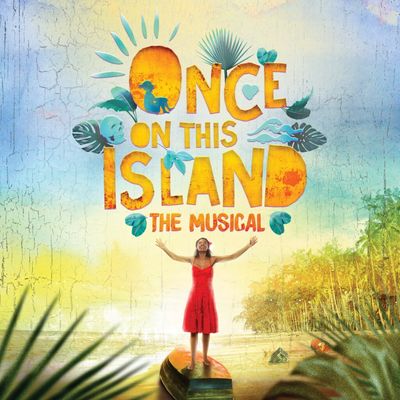
Happy Black History Month! On this week's episode Jeff and guest Bryce Charles sit down for a "human heart to heart" on ONCE ON THIS ISLAND, making room along the way to discuss Quan La Chanze, Queen Audra, and even listen to a special message from original Broadway cast member Gerry McIntyre... Read More
From the show: A Musical Theatre Podcast
Featured Shows
About
Happy Black History Month! On this week's episode Jeff and guest Bryce Charles sit down for a "human heart to heart" on ONCE ON THIS ISLAND, making room along the way to discuss Quan La Chanze, Queen Audra, and even listen to a special message from original Broadway cast member Gerry McIntyre.
Follow our guest Bryce Charles on Instagram @bryce_charles and if you're in the mood for her nerdy side, check out her cosplay @bryce.cosplays
Special thanks to this week's sponsor, Box Elder High School Theatre Department! See what those awesome kids are up to on Instagram @behstheatre
Follow "A Musical Theatre Podcast" wherever you may be listening and share us with your friends!
Join us on Instagram, TikTok and X for more great content. For bonus episodes, subscribe to PATREON! for only $1 a month. And don't forget about our TeePublic Store, our proceeds from which we donate to Broadway Cares/Equity Fights AIDS.
Above all, thank you for being part of this wonderful podcasting community.
Transcript
This transcript was automatically generated and might contain errors.
[0:00] Jeffrey Scott Parsons: Bryce, I do need some advice. Not for me, of course. It's for a friend. It's a friend. He's white. And the other night he was thinking about the possibility of having a daughter. And what if he named that daughter Erzuli? Maybe just a middle name. But would that be offensive cultural appropriation? Or is naming your child after a musical actually the most white thing you could do? So it doesn't really matter. I think there's a fine line. I feel like that's somewhere in the middle. It just depends on how you approach it. For me, it's all about intentions.
[0:36] Bryce Charles: Fair enough. You know what I mean? Fair enough. Absolutely. And the intention behind that would be like, oh, I mean, personally, I'm not planning to have kids. Oh, yeah. But like, now I have a cat allergy. However, I love cats. So at some point, I'm gonna just, you know, make it happen.
[0:50] Jeffrey Scott Parsons: What if you had a cat named Papa Gay?
[0:53] Bryce Charles: But do you see what I'm saying? Like, that would be cute. I'm gonna have, you know, cat names probably of, you know, characters that mean a lot to me. This is smart. This is smart. I'm a nerd across the board. So not just musicals, but also literature as well. Like I love, you know, sci-fi, fantasy. And so, I mean, I have so many options of like nerdy names to give my pets. It's just what you decide to go down.
[1:14] Jeffrey Scott Parsons: Yeah, I definitely am all for.
[1:19] Bryce Charles: You're gonna need a lot of animals.
[1:19] Jeffrey Scott Parsons: I probably will have them. And then I'll have so many allergy meds to take. You have a reptile named Elfie. Or maybe the reptile should be Glinda. Let's be honest.
[1:25] Bryce Charles: Okay, yeah, mix it up. Let's turn it around. Actually, if anybody out there has a pet that's named after a musical theater character, I want to see that. Send it to us. Add us. Because now I'm really fascinated. Yeah. And if you are named after a musical theater character, like God bless those parents. I want to see a picture of those parents.
[2:03] Jeffrey Scott Parsons: Welcome everybody to a musical theater podcast where we discuss the cultural and emotional impact of some of our favorite musicals in theater history. My name is Jeffrey Scott Parsons. You can call me Jeff. This week we're talking Once on this Island with Bryce Charles.
[2:14] Bryce Charles: Hello. Everybody say hi Bryce.
[2:21] Jeffrey Scott Parsons: So grateful you're here.
[2:21] Bryce Charles: So happy to be here.
[2:27] Jeffrey Scott Parsons: This episode will be coming out the last of Black History Month, but I wanted to be sure to have some representation this month.
[2:33] Bryce Charles: Yes, amazing.
[2:33] Jeffrey Scott Parsons: For many reasons. I feel like Black artists have given me so much in my life as a white farm boy. Truly, in many ways, I feel like Black artists taught me how to feel. So I'm super grateful to be talking about this show that is so much about heart and feeling and love. And I'm grateful you're here to do it. When did you first get to know Once on this Island?
[2:53] Bryce Charles: I have been aware of LaChanze for a while. How can you not know her and her voice? People often talk about performers who light up the screen. And LaChanze, that smile, lights up a theater. Forget about the screen. All she does is flash those teeth, man. And you feel it in the back row of the theater. And then she just has this voice that just, I mean, she would open her mouth, just drop her jaw and just this wall of sound. You know what I mean? I was just like, mesmerized that people could just like do that. And so because of that, I think I kind of had some sort of knowledge of Once on this Island maybe in high school, but hadn't really like, you know, done the full dive, the full proper dive into it. And then in college, they did it. They did the show and I had auditioned and I was essentially an onstage swing. Basically, I covered Asaka, which if anyone knows me vocally, it's vocally not my jam.
[3:58] Jeffrey Scott Parsons: It's just not where you live.
[3:59] Bryce Charles: It's not where my voice lives, Lord have mercy. But I never had to go on. It was mainly for like rehearsal purposes, but I covered Asaka, covered Erzulie, which felt a little...
[4:09] Jeffrey Scott Parsons: Yeah, that's your game, right?
[4:11] Bryce Charles: Yeah, I was like, this, all right, I can live here. And then I also kind of covered Ti Moune a bit as well, like in the rehearsal process. And then I was in the ensemble, a part of The Village. And that was... I have fond memories of the show, just such fond memories of being in it. I would love to do it again. There's such a community to the show that I feel like it could be a really beautiful bonding experience to be a part of.
[4:32] Jeffrey Scott Parsons: One of the main parts of the story of how Once on this Island came about is Rosa Guy. And she is one of the personalities or one of the people that I wanted to focus on, particularly as we're celebrating Black History Month. She was a writer who wrote a novel called My Love, My Love, or The Peasant Girl. And that's what Once on this Island was based on. She was born in Trinidad, like immigrated to New York, very, very young with her family, and then was quickly orphaned. As a young woman, like she was 19, she joined the American Negro Theater. And then as she became a writer, she was one of the founders of the Harlem Writers Guild, which their whole purpose was to support Black writers and getting them published. And Maya Angelou was on the board, Ruby Dee, like all of these legendary people were a part of this organization that was actually very, proved to be very effective.
[5:36] Bryce Charles: As her career continued, she started writing more for youth, which I think is beautiful. And that's where My Love, My Love came from, which is a Caribbean spin on Hans Christian Andersen's The Little Mermaid. And so she wrote this novel, and then it was picked up by the musical theater writing team, Stephen Flaherty and Lynn Ahrens. I believe we are both big fans of this composing team.
[6:04] Jeffrey Scott Parsons: Yes, what a duo. They're some of my favorites. Lynn Ahrens and Stephen Flaherty met at the BMI workshop, like musical theater workshop, which pretty much every musical theater writing team that became popular after 1980, they met there.
[6:19] Bryce Charles: Okay, got it.
[6:25] Jeffrey Scott Parsons: And so they met, they started writing together. Lynn Ahrens, I didn't realize, started as a composer and lyricist. She worked on Schoolhouse Rock. So if you know the Preamble, or Interplanet Janet, like any of those songs, she did those for Schoolhouse Rock.
[6:45] Bryce Charles: Wow, so I grew up with them even further back in my childhood than I realized.
[6:51] Jeffrey Scott Parsons: And then she gets together with Stephen Flaherty, who was a composer, and she became lyricist. And they started writing shows, some of which came to fruition, some didn't. But Once on this Island was their first musical that hit Broadway. It started out at Playwright Horizons. It's amazing how important these different organizations are that give opportunities for young, you know, unknown artists to be seen and heard. Playwrights Horizons is one of them. It's produced there and then quickly moves to Broadway. And it opened on Broadway in 1990, ran for about a year. And that's it.
[7:26] Bryce Charles: Wow, that feels really short.
[7:26] Jeffrey Scott Parsons: We'll talk about the season that surrounded it. It was a big season, and it kind of got swallowed up by everybody. But it's had staying power.
[7:33] Bryce Charles: Yes. And I also think that it was really well beloved, even if the ticket sales may not have shown that as enthusiastically. It was directed by Graciela Daniel and choreographed by her as well. She's another person who I think a lot of people don't know about, even in the musical theater world.
[7:53] Jeffrey Scott Parsons: I honestly didn't. She later choreographed Ragtime. She is an incredibly creative woman.
[7:57] Bryce Charles: Clearly. Yeah. And everybody who works with her has said what a generous and creative person she is, taking time in rehearsals to just figure out how your character moves and why they would do one gesture or the other. And that kind of generosity just creates these really magical experiences for everyone involved. She may be kind of an unsung hero, I think, in modern musical theater.
[8:30] Jeffrey Scott Parsons: Definitely. Anyway, so that's kind of how the musical came to fruition. But the real heart of it is the story itself.
[8:37] Bryce Charles: Hey, listeners, you want to hear something really cool? The theater department from my old high school reached out to me and asked if they could sponsor an episode of the podcast. It's kind of the sweetest thing ever, especially since when I was in high school, I spent most of the time in the choral department. But under the direction of my pals, Melanie Day and Jenna Barber, the Box Elder High School Theater Department has grown into one of the biggest assets of the school and the region as well. I've worked with the kids before, and oh my heck, they're great. A little Utah humor for you. They're willing to work hard and fully invest, and I'm so very happy to spend a little time this episode giving them some love.
If you want to check out what they're up to, visit their Instagram at B-E-H-S Theater. That's B-E-H-S Theater with an R-E. Duh, is there any other way to spell it? And I also want to take a moment to talk to the students specifically. Listen up, guys. Many moons ago, I was where you are right now, and honestly, I couldn't wait to get out. High school is weird that way. But I know that this theater department cares about you, so I strongly encourage you to let that love in and then take that with you no matter where you end up, because that's the beautiful thing about theater. We're connected for a moment and then somehow forever.
[10:06] Jeffrey Scott Parsons: What I love about this show, the approach that they took with this show, is that it gets right back to the basics of storytelling. It starts traditionally with the storm and a young child crying because they're afraid, and the community comes together and begins to tell the child a story.
[10:26] Bryce Charles: It's so sweet. It's so endearing, and it pulls you right in.
[10:29] Jeffrey Scott Parsons: Right?
[10:30] Bryce Charles: Yeah.
[10:30] Jeffrey Scott Parsons: And Lynn Ahrens, who also wrote the script, the book, along with the lyrics, did such a musical job of creating this dialogue that even now as I'm thinking of how to tell the story, I just want to go straight to the dialogue. There is an island where rivers run deep. It's so poetic and beautiful, and I don't know how much of it comes actually from Rosa Guy's source material, but it's so evocative and paints such a beautiful picture.
[10:59] Bryce Charles: It does.
[10:59] Jeffrey Scott Parsons: We get to know this island that is in the Antilles, and it's called the Jewel of the Antilles, right? On this island are two groups of people. You have the peasants whose skin is very dark, and then you have the bosoms, who are kind of like a mixed European race, and they don't get along because one is very rich and uppity and has very European ways, and the other does not. And the peasants pray to the gods.
[11:34] Bryce Charles: There's Asaka.
[11:35] Jeffrey Scott Parsons: So we got Asaka, who is...
[11:37] Bryce Charles: Mother.
[11:38] Jeffrey Scott Parsons: Mother of Earth.
[11:39] Bryce Charles: Right.
[11:39] Jeffrey Scott Parsons: There's Agwe.
[11:41] Bryce Charles: Oh, Agwe, right. God of Water.
[11:43] Jeffrey Scott Parsons: Papa Gay, who we know is our villain.
[11:45] Bryce Charles: Sly Demon of Death.
[11:46] Jeffrey Scott Parsons: And then Erzulie.
[11:47] Bryce Charles: And Erzulie, who's...
[11:49] Jeffrey Scott Parsons: Goddess of Love.
[11:49] Bryce Charles: Goddess of Love. Thank you. And we see kind of the humility of this peasant population, and from that begins the opening number. Now, Aarons and Flaherty, in my opinion, write the best opening numbers in musical theatre. Every one of their shows has an amazing opening number.
[12:12] Bryce Charles: Yeah, and this one in particular always gives me chills when I listen to it. The music, for one, makes me so happy. The rhythm of it, the way that they wrote it, it just feels like a celebration. It feels like joy. It feels like community. There's something so magical about the music throughout this show. On my way here, I was listening to it just to, you know, get in the vibe and everything. And I was just... I kind of sat back and was like, I love this show. I love the music. And you're right, with the storytelling, the book is so musical in itself. And I always thought of it all as one thing.
[12:53] Jeffrey Scott Parsons: Yeah, it might as well, you know, feel... it might as well be an opera in that sense. You know what I mean? It just... everything moves with music. Everything comes from music. And that is so cultural as well. They love each other. They love the earth around them. And they praise these beings for giving them, you know, the ability to be on that earth and with each other. And that is the heartbeat throughout the show. And even when it's slowed down for the ballads, there's... you just... you still can feel that, like, spiritual connection to the music. And intention, you know, you know, from the get go, that everybody is a part of this for the right reason.
[13:29] Bryce Charles: Why do you think being wealthy disrupts that so traditionally?
[13:36] Bryce Charles: Because it's a distraction. The people who essentially have nothing comparatively to, you know, these wealthy people on the other side of the island, they have no choice but to look around and appreciate the little things. The air in their lungs in that moment is something that they do not take for granted. And they will thank the gods for that, you know, and money and wealth that becomes a person's new god deity. Yeah, it becomes that new focus. Isn't it interesting that we've kind of created this racket where we want to create an easy life for our children or for those we love? But what this show teaches us is that, in reality, the greatest thing that we can give our kids are our stories and our love, love, care, attention, compassion, community, and a sense of community.
Okay, so they do the opening number. We meet everybody. And then there's a couple in the village. And in the story, after a storm, they find a little girl in a tree, a little orphaned girl, and nobody knows who she is or how she got there. And they decide to take her in, they decide to adopt her, which when I think of the writer, Rosa Guy, and I love those lines that say, we have nothing and yet our lives are more full than ever. I love in the show that the gods, they're very temperamental, is how the villagers talk about them. There's kind of a sense of humor that they have. They're meddlesome. Yeah, let's see what we can do now. And I think that that can be found in earlier forms of religion, tradition, culture, even Old Testament, right?
He tends to be kind of a jealous, angry God. And we see how the gods kind of organize opportunities to make choices. But when we use those opportunities to be better, to do better, the gods respond. And in a way, their evolution continues as well. Right. Okay, so they name her Ti Moune, which it means a little orphan, I believe, right? That's her nickname. Oh, yeah. Her proper name is Desiree, right? Desiree French something. Yeah, I was gonna say Desiree something or other. And then they're like, Ti Moune. We'll just call you Ti Moune. Yeah, you still, no matter what, you're still a little orphan girl we found in the tree and we love you. Yes, exactly. And then Ti Moune grows into LaChanze.
Although we got to do a shout out to Haley Kilgore. I will say and then eventually grows into Haley Kilgore. Because that girl can sing. She can. Then Ti Moune sings Waiting for Life. Now, this song has some really interesting memories for me because in college, we had group vocal class, which is torture. I mean, it's just legalized torture. It was a voice lesson, but as a class and so you would sit and watch people be torn to bits. They pick one song for everybody to work on one song for all the girls to work on one song for all the guys. Yeah, that sounds familiar for me. Yeah. And they picked Waiting for Life for the girls to learn how to belt. Oh, my gosh. Because initially at school, I auditioned for Ti Moune.
So initially, they asked us to sing it in the original key, which all of us, even the girls who could do it were like, Okay, here we go now. But that key change is a that's that's a tricky. Oh, yeah, that's a tricky spot because you're holding that out. And on that vowel to like, my goodness, it's not as simple as it may seem. And then I'm sure people are going to be listening to this like, like, check out my YouTube video. And I'm like, good for you. That is great. But that is not everyone's testimony. It's not mine. And I can't like to imagine doing Ti Moune eight times a week. And I gotta be honest, like, look, I'm gonna call out my white brothers and sisters and say that this is probably something that a lot of us take for granted that we just assume that all black girls can sing this song can just Yeah, well, and I'm not a whaler at all.
I'm grateful for you being like, representation. Let's, let's be real here. Represent those black people. Yeah, we're like, Queen Audra. Truly, truly Audra. Audra's very existence for me is, is also another reason why I've been able to grow up with so much hope because I've known who Audra McDonald was for a very long time. You know, she she did pave the way for like, the the black ingenue and like mainstream musical theater, which I mean, is a huge feat. It's it's incredible. It's inspiring. I mean, yeah, I, in some ways, I feel like I kind of model my musical theater career, what I want my musical theater career to be after her even because like, like, I can get my way through the song now.
But again, it's not the right colors for like, what people want are expecting, knowing the show. Right. And, and to what they might want from that style. I like based on people's expectations. Yeah, exactly. Exactly. Like in a cabaret setting, I would love to just like try it and just have fun with it and do it my way because that would be me expressing like my journey with my voice and my career, that kind of thing. But I know I you know, those are just things that you just you just know, I know that like going into a room, like back especially back when they were like auditioning, like for the tour and stuff. I was like, I'm probably not gonna be able to get in there. But Andrea. Oh, right.
Now, Andrea is my track. Andrea is my track. That's we'll meet her pretty soon. Well. And actually, I really like what they did with her in the revival. Love, love, love, love. Yeah, everything about it. Okay. Did you see the revival twice? Oh, so I saw it earlier. I saw it with the full original cast, which I mean, what a blessing that was. And then I saw it once I saw it after Lea Salonga left. And Haley had just, I think, like done some to her ankle or something like that. Oh, no. And so she was out for a couple weeks. I saw her understudy. But for me, it was I like seeing alternative versions of things, things like that, to see how they play and how people respond to them. Because when I tell you like it took nothing away.
You know what I mean? That's so important to hear that that is and that was important for me because I honestly I wish I could remember her name. I feel so bad that I can't but she Yeah, I thought she was she was stunning. And I really appreciated seeing that. After waiting for life, which we were talking about the song we didn't even say the songs about. It's it's such a great I want song, right? She's saying, Gods, you put me in a tree. I don't know where I came from. But can I have a say in where I'm going? And if we're going to talk about, you know, the parallels between this and Little Mermaid, and you know, because the root of the stories are the same, and it was based off of that story.
So this and part of your world, you know what I mean? Like, for sure. But waiting for life for me, what I love about it is it's it feels a little more active. You know what I mean? Because she's actually talking back to the gods. And she's actually like, demanding, you know, for something to happen anything they give me give me something you wash me up on this island. And, you know, you put me in these circumstances, but I am, you know, she's like bursting for life for anything. She's so exuberant in that way. And isn't it cool that she also isn't expecting the gods to do the work for her. She's like, I'm ready to do the work. Just let me let me just show me what I will I should do and I will do it.
Yeah. And once again, they respond and the gods heard her prayer. Yes, they did. Yes, they did. And this always made me giggle because this is when they're this is what the whole mango situation, right? And this where the is it Osaka who's like, she's crazy. Yeah. And what I also like about this little sort of interlude as well, is it shows all of the gods individual personalities, all the personalities, the council. Exactly. And it shows, you know, each of them, they take the mango and they say, like, Papa Gaye is like a poison mango. And there's a lovely mango. And then, you know, they drop the mango and knock some sense in her head. And then all of a sudden, it's like, but wait, but what if we give her what she wants?
Yeah, let's let's shake it up a little bit. Let's actually like see what happens if, you know, she asks for this thing and we give it to her. What will she make the most of it? It is interesting in a Little Mermaid sort of way, because Waiting for Life comes out of the fact that she sees a stranger in white in a car. Right. And sorry, I just heard her singing. So it comes out of that. But it isn't like, I'm so poor and I want to go live in a rich house. There's something calling her to this in the way that Ariel something she's yearning for more in the way that Ariel's like, it's not that I hate being a fish or that I hate my family. I just feel like there's something up there out of this water that I got to be a part of.
And so in order for this to happen, in order for her to cross over from her villager life into this stranger in white in a car, something's got to happen. And that's when the gods intervene. And they do so by, first of all, Agwe. What a great song. And this transition from And the Gods Heard Her Prayer into Rain is just, it's so good. Now that is, that's a voice too. I love, I love Agwe's because that's another color that we don't always get to see in these types of musicals. Just a big, baritone, gorgeous voice. Right. Yeah. Oh my gosh. Yeah. So Agwe makes it rain, but like rain. Yeah. Full on, full on. Can we jump to the revival or do you want to save that for later? No, please, please go.
Okay. So, I mean, I was shook to my actual core because I went into the show with the purest mind. Like revivals are such a weird thing for me because, especially with a show that I really love and have such a like strong, passionate connection to. So I was like, you know, I know that they changed the orchestration and everything was so, it was in the round and it was immersive. And for me, I was like, this is so ambitious. Like, how is this going to change the heart of the show? And it just enhanced everything I already loved about the musical. And in the first moment, when I sat down, I was like, like before the show even started, because the show actually has already begun. Let me correct myself.
When you sit down, they're already sort of like, just in the space and living, just living in the space. And I sat down and I was like, oh my gosh, I'm going to love this. And then everything washed away. And I was just there with an open mind. By the time we got to rain, I mean, it's raining. They have water coming down. Michael Arden. It's like, it's incredible. It's incredible because it really does hit all of your senses. I mean, even on the side, in the beginning, before Alex Newell transitions into being a Sokka, you know what I mean? Because they're all a part of Lea Salonga's The Doctor. They were all part of the community before assuming parts of the story. And to see them transition into and just sort of like morph into the gods, it's so amazing to see.
But on the side, before that happens, Alex Newell's just cooking. Oh, how cute. Just cooking food. And you can like smell like the spices and things like that. And then there's also like live animals and sand. And then when the water comes down. I'm sorry, there were live animals. There's a goat, there's a chicken. I can't. There were so many things. I love animals so much. So you're smelling food and you're smelling animals and you see the sand. They're all, you know, they're barefoot. And so they're just so a part of the space. And then when the rain comes down at the various, you know, like storm moments of the show, you sort of can kind of feel that depending on where you're sitting. The coolness of the water.
It's just it is fascinating just how sensory the show became and how fully immersed everyone becomes. Like, I felt like I was part of the village. And because of the change in the orchestration, because it became more minimal and because a lot of things were divvied up amongst the voices. I mean, you just kind of you feel the music a little bit more. It doesn't feel like a distant thing or like some separate. Proscenium type experience. Exactly. It's just it's all around you and you really feel like you're in this village and they're just sort of playing music and you're just vibing with them. I mean, I remember sitting in my seat and I went both times with my mom and we were just dancing. That's so beautiful.
It was so amazing. And so, yeah, rain for me. I was excited about that because vocally, like just hearing that kind of booming sound. Also, there's a full spectrum of vocal quality and style throughout the show, I feel, because Agwe, when singing rain, it feels very classical. Yeah. And that's exciting. That was exciting for me to see that they sort of they kept that vibe. It didn't feel like some sort of American Idol. You know, you just never know because you never do. Broadway can be a sing off sometimes. And I was just so just enamored with the vocal choices throughout the show, even with Tauntaun, Julian and Mama Urely, you know, when they're the parents of the parents. Yes. He was parents. They had a very classical approach to the music, in a sense. But then they were just up there telling the story. They were up there telling the.
[27:12] Bryce Charles: And vocally what came out enhanced that. It lended itself to telling the story. Agwe makes it rain. So then, what's the guy's name? Daniel. Daniel comes driving in his white car, obviously bad conditions with the weather, and he drives off the road and has an accident. Yes. A bad accident that is about to take his life. And Ti Moune witnesses it all. Because once again, all of these things have been put into motion by the deities. So she rescues him and decides that this must be her mission is to nurse him back to health. She was the one there to witness it and to rescue him. And now, in a way, the fulfillment of her dream, her wish. Yeah, she's just prayed to the gods and, you know, and sort of demanded like something happened.
And then something does happen. And it's, you know, not just happens to be him. Yes. And it's, it's not just some little thing. She doesn't just happen to pass by him, like he's in critical condition. She's like, okay, his life is in my hands now. Now, the villagers don't respond well to her plan. Right. Because Daniel is a bosom. Daniel is a bosom. And I guess maybe now we should talk about the tale of the bosoms. Which is kind of the little history lesson that we get in the middle of the show, about the wealthy side of the island. As it turns out, there's this guy named Armand, right? And oh, the original Armand was Jerry McIntyre. Do you know who Jerry McIntyre is?
[28:53] Bryce Charles: Jerry Mac? I know that name. He's, he's an amazing director, choreographer, performer. He was in the original cast. And he's currently directing and choreographing a production of Once on this Island back in Utah. And I worked with him on a project out here in LA a couple of years ago. And so I reached out to him to see if he would share some of his anecdotes or memories of being in the show. And he sent me a voice message. And so I'm going to play that now. So enjoy Jerry Mac.
[29:22] Gerry McIntyre: Jerry McIntyre here, the original Armand. Well, not really the original. Because there was, I auditioned for the workshop of this before it went to Playwrights Horizons. God, I don't even know what year that was, but I auditioned for it. And I was cast as Papa Gay. But I got this huge gig. I got this huge part in this new Broadway musical that was like destined to run forever, called Annie Too. And I was cast as Punjab. So I had to turn Lynn Aronson, Stephen Flaherty, and Graciela Danielle down and said, no, no, I can't do this workshop of this new show that I'd never heard of. Of course, knowing I'd never heard of it. So I said, no, I'm going to go and be a huge Broadway star. And then it crashed and burned.
And I came back to the city. And the guy who played Armand in the workshop dropped out. So they called me and said, do you want to play Armand? And I said, yes, I'd love to. And they said, well, great. Come in tomorrow and audition. Yikes. So that happened. And I got it. And then I did Playwrights Horizons. I played Armand. And I did it on Broadway. And I was the dance captain in Graciela Danielle, the director of Playwrights Horizons. And they said, oh, you know what? You should do this. You should direct a choreograph. You're like, it's a natural for you. And I was like, oh, my God, I don't want to do this at all. I just want to sing, dance, and act. I thought that's all you really need to do.
And then it opened a door for me that changed my life, changed my career. And once on this island, you know, with LaChanze, who I did my first Broadway show with, was amazing. And Jerry Dixon and Keisha, like, we've all been being on stage with 10 people and every night having prayer circle at five. It is really a show that the community loved, like all the actors would become. And I actually staged the 20-year anniversary of it at the Martin Beck. And it was just so amazing and joyous to see what we had done. I mean, people were crying. And I walked out of the stage door and people had the program from when it was at Playwrights Horizons. And this is a show that my wife and I met on. And we, you know, sang Human Heart at the wedding. It's like, it's a life-changing experience for me once on this island.
[32:11] Bryce Charles: That's so sweet. That is so sweet. Thank you, Jerry Mac. So he was the original Armand. And Armand is this European dude, right? And he, based on the orders of Napoleon, comes to this island and, you know, claims it for Europe and has a beautiful white wife. But likes to make love to the ladies. We have many variations of this in our own history.
[32:45] Jeffrey Scott Parsons: My family.
[32:46] Bryce Charles: Oh, really? Yeah, I'm Louisiana Creole, like French Creole. Oh, yeah. On my mom's side. And aesthetically, like, it's very apparent, like, they're very fair. And a lot of them have like, blue eyes and like, yeah, and like lighter hair, even to blonde hair. And yeah, it's fascinating. And my mom is like, you can see you can see it more so in my mom than like me. But even still, like in high school, people would be like, are you mixed at all? And I would be confused. I was like, I don't think so. Like, I'm pretty. Like, what is an indication? But I realized it was because, like, with that culture comes like, you know, relaxing your hair and things like that. And so most of the women on my mom's side, on like the Creole side, relax their hair.
And so I grew up with like, relaxing my hair as well. And keeping up with it, too. I was just kind of like, eventually I got over it. And so I think when I was like a sophomore in high school, I was like, I'm gonna grow out my natural hair and just do that, because that feels more me. But for the longest time, I was like, why would people think I'm mixed? Because to me, I was like, I just look black. And then it was because I would get my hair relaxed. And they, some people didn't know that it was like relaxer. They were like, is that just natural? No, no, it's not. But that was just a part of like, Creole beauty.
[34:02] Bryce Charles: Yeah, yeah. And then when did you find out? Like where? So your ancestry? Our family name is Ruzone.
[34:10] Jeffrey Scott Parsons: Oh, wow.
[34:11] Bryce Charles: Yeah. And you're basically are a bosom. I hate to break it to you. That's why it was always something really interesting, like this part of the musical, because I was like, huh, you know, like, it was something that I could kind of relate to, because I remember being in high school, and you know, we would have like family picnics and family reunions and things like that. And we had t-shirts, we have t-shirts every year. And one year, we had the shirt of Jean Jacques Ruzone, who was French patriarchy, our family. So that was always something interesting. I was like, what's the story behind Jean Jacques Ruzone? Like, who is this dude? And then like, well, he, you know, he came over. And I don't know if I really don't know if it's a love story, or if it was just, you know, the typical goings on. Yeah, but yeah, that was he, you know, he came over and the deed was done.
[35:02] Jeffrey Scott Parsons: Yeah, the family line was thus formed.
[35:04] Bryce Charles: So Armand has a son with one of the peasant women. And the son's name is Bosom, which means the beautiful one. Bosom grows up and rebels against his father. And there's this huge war that happens. Armand, the father gets kicked out. But before he leaves, he leaves a curse on his son. And the curse is basically that you will always loathe yourself. Because you will be trapped on this island because you're black. But the whiteness that's added to it will always make your heart yearn for something else. It's a very complicated position to be in, I imagine.
[35:49] Jeffrey Scott Parsons: It's a really kind of beautiful symbol for, I think, being mixed race. And trying to figure out.
[35:55] Bryce Charles: Yeah, it's far more complicated than people realize, especially, you know, finding it's the identity crisis. You know, I mean, but then also, what I think is so interesting, too, about the story is having the Bosoms on one side, and then having the peasants on the other side. And then the idea of like colorism within the community is also something that I guess, appreciated is a weird way to explain it. But it's just not something that gets brought up in, you know, in stories.
[36:20] Jeffrey Scott Parsons: Like the degrees of blackness.
[36:22] Bryce Charles: Yeah, exactly. And just to show to depict like, yeah, we have issues within our own community as well. You know what I mean? Like, we're all people and because of the European influence, because of the in like internal conflict of like, am I one thing? Am I another thing? Am I white? Or am I black? And does that make me better if I have like whiteness? Yeah, does that make me better than someone who is who doesn't have that?
[36:46] Jeffrey Scott Parsons: Or on the other side, less black, less able to connect with your roots or your culture.
[36:51] Bryce Charles: And so it goes back and forth. And it's a really like the identity crisis within like the black community, I feel like. And, you know, I'm not speaking for the entire black community. Yeah, but for me personally, it is something that is kind of, it's so complex. And to see that in a show, that was also something that I didn't realize that I had connected to so much until later on. Like, not even until maybe even after doing the show in college, because we had to talk about it a lot. And again, just talk about like colorism and how we're depicting that. And then also who should be cast as the peasant and who should be cast on the bosom side. Like some people will look at me and think that I'm, quote unquote, light skinned.
And then others will be like, nah. You know what I mean? It just depends on who I'm around, or like what the what the spectrum is. And so in the context of the show, I don't think I was a bosom. But like, when I'm around white people in musical theater, I feel black. I feel like you know what I mean? I feel like I'm looked at as a black person. And when I'm around black people, not so much now, but definitely when I was like, kind of just sort of finding myself in high school and in college, like seeing where I fit in, when I was around black people in the industry, I would kind of feel other. Definitely wouldn't feel by any means white. But I would feel like something, but just other, which is kind of scarier, because you're like, what am I then?
[38:19] Jeffrey Scott Parsons: Yeah, what am I viewed as?
[38:20] Bryce Charles: But then I just kind of was like, I am me. And I was being a black woman. That is just that is who I am. And I'm, you know, I'm different. You know, I'm nerdy. And I, you know, sing differently than people expect me to. And sometimes speak differently than people expect me to. Sometimes I speak the way people expect me to. It just, it just really depends on, you know, the circumstances and how I'm feeling. And it's never anything put on. And it's not something I'm conscious of. It's just like, this the various levels of me being who I am. And this show is about bridging that gap, I feel like, you know what I mean? And how we how do we do it? How do we do it? And they don't accomplish it in the show, which I think is also something important, that it's something that society is going to be figuring out for a very long time. And I like that the show doesn't put a nice little bow on it. But somewhere down the road, someone's going to hear her story and be better for it. And is going to make the right decision.
[39:26] Jeffrey Scott Parsons: Yeah.
[39:27] Bryce Charles: Yeah, just like so much. It is it's so much. It is. It's so much. But somebody's got to be first. So Daniel is a bosom. He's from that side of the island. Hence why the villagers aren't real happy about Ti Moune, you know, taking care of this bosom. It's like, no, they're, they will probably kill you because you're there. They're probably looking for him. You've got him in your house. Are you kidding me? This is just a crazy idea. The kind of leading the charge on that is, is her mom. What's mom's name again?
[40:01] Jeffrey Scott Parsons: Mama Ureli.
[40:02] Bryce Charles: Mama Ureli. And, and she's constantly trying to talk her out of, you know, in this in Prey. Constantly trying to talk her out of doing what she's doing. And Ti Moune is doubling down hard and she keeps asking for herbs and she keeps asking for herbs, more herbs. And telling her mama to shush, which is, which is bold. Mommy gotta be quiet. Give me some cilantro and keep quiet. But I love how Prey gives way to this kind of tribal. Yes. It's so visceral. It's so it's just very in the moment, you know, when, when you are overcome with the, with the spirit, essentially, you know, they are, they're trying to call upon this higher power.
[40:48] Bryce Charles: And you know in this really crazy situation that none of them have faced before because Ti Moune was brave enough to do something so different to shake things up and so there's fear and there's desperation and I remember doing this number and oh my gosh I feel like we all kind of look forward to it every night um when we did it in college and even just like rehearsing it was just like like listening to it is one thing because I remember listening to it on the soundtrack and just being moved and then getting to like actually physicalize it yeah wow wow it's cathartic you know you just you release so much and seeing it live too I love the way they did in the revival and yeah I think that that is one of the things that I have taken away most from black culture is the ability to connect spiritual and physical in our bodies growing up in my church if you were reverent if you felt the spirit then you were very still and quiet and that's not to say that that's wrong because I think that there's absolutely a time and place for that but there there is also something to be said for spiritually working something out that requires a lot of wrestling and turmoil and then physicalizing that you know that's why people do kickboxing you know yeah yeah to physicalize something you do get to like express that energy in a way that you know stillness just kind of doesn't do I also wasn't raised with that and so for me I was raised Catholic and so that's very it's very reserved and organized quiet organized but somehow still being able to connect to it like whenever I see that and when I do listen to gospel music I just feel it inwardly but that comes from you know my love of music in general I think right you know what I mean because even you're saying you didn't grow up with that but you see it and you can kind of feel how yeah it's undeniable to see it within the context of a story and you're like oh I get it I get it yeah it's not it's not my experience but I get it yes yes.
[42:56] Bryce Charles: Yeah uh in the process of everyone trying to figure out what to do Ti Moune's dad goes to the other side of the island which is quite a jaunt and he you know bangs on the big old mansion yeah the gates of the bosom manor and says hey we have your son and they won't listen to him until they finally do realize that he knows where Daniel is meanwhile Ti Moune has fallen in love with Daniel by showing that love and nurturing even when she first discovered him there he opened his eyes and she saw that you know eyes from another world that kind of thing she there was fascination and then yeah taking him into her care that sort of attachment a feeling that she never felt before and it's safe to say that Daniel is feeling things as well yes I have thoughts about Daniel and me too because I mean spoiler alert he has no intention of marrying Ti Moune no and I think what always um got me about Daniel was that there's something condescending and patronizing you know and and that's his truth that's the bubble he's lived in but then he sees one who's so pretty and she's so sweet and yes she did save his life and so he's intrigued now I don't doubt that he has a fondness for her and that in many ways his heart has been softened but but it goes it doesn't go further than that and even like a fondness you know what I mean just the idea of oh yeah I'm fond of that person when the other person is like madly in love and would give her life for him the idea of that just oh it always it always kind of irked me even when he sings his song about her which is a beautiful song but when you look at those lyrics I mean Lynn Ahrens did a beautiful job because it sounds so romantic and then when you look at the words you're like wait a second that's kind of messed up kind of and that's the thing too because I I was oh I was sucked right in I was like oh this is pretty and he's pretty and he's singing a pretty song about how pretty she is you know I mean I was just I I was dragged right along and then yeah looking at the lyrics you're just like some some girls you love some you teach some girls you marry some you keep isn't that isn't that also a lyric like what excuse me okay that being said even though these feelings are starting and and obviously continue throughout the show he's not doing well physically and it looks like he might pass away cue Papa Gay to enter and say all right you know this is this is the god of death it's time for me to take this boy and she says take me instead which blows Papa Gay's mind in some way you know and he says okay fine we'll do a little trade I agree I like the fact that it's it's it comes to Papa Gay as as a great shock that someone would be willing to do that but that's also Rosalie's point yeah is that give her the chance she will show you that love is more powerful than anything and Papa Gay's like yes she will but will he and that's that's the thing just because you know she has all this love you know growing inside of her and and that's fueling her choices in her life that doesn't mean that the person that she has chosen to give all of this love to will be able to reciprocate and so that that's the kicker and that's a life lesson yeah that's another life lesson and that's that one two people to make choices and also just since we're on this number the way they staged this and the revival was unreal tell me about it it's so great the first time I watched it I mean it's such an intimate space already so you think there's only so much that they can do as far as you know stage magic you know what I mean but there's a great moment where you know Daniel is laying on this boat and and then at some point at some point Daniel is removed like there's a she put Ti Moune puts a blanket over him and at some point she goes back to Daniel after pray and then Papa Gay was under the blanket and you're like when did this happen but you know there's so much going on right um before that before that number um and so I love that theater magic man nothing like it I was sitting pretty close we had good seat I mean no seat in that house is a bad was a bad seat to be honest which was a great surprise but still just a couple rows back and I I literally I was with my mom and my best friend and I looked I was like how did that happen where because you just really feel like there's I was like there can't be a trap door because the boat gets lifted and moved and there's sand underneath so there's no way it's like was how did it how did it happen and I was like I'm gonna just have to look at it how did it happen and I was like I'm gonna just have to let it go but then I saw it a second time okay and so a couple months later I saw it again and I I knew I was like okay it's coming up and so I didn't take my eyes off Daniel and it happened it was like this really smooth you know the the focus is on the opposite end of the stage um and people you know there's stuff happening and there's lights flashing and things like that and they just switch it was so quick and I don't even know where he how did he disappear I really don't know where he went but I cannot deal yeah even seeing it happen it was still impressive still impressive see and that that's true magic yeah miracles aren't just impressive because you can't explain them right even when you see the explanation you still love it that's a miracle truly I was in there like wow mind blown that's so cool yeah so deal is made yes and Ti Moune's dad brings back the people right to take Daniel back home Ti Moune feels like she needs to go after them this is heartbreaking that her work is not done yet and her parents sing this beautiful song called Ti Moune that is that's basically every parent's journey of letting go of their children it's a beautiful song and they give their blessing as hard as it is they give their blessing to her to to go so she starts walking across and feeling all alone but goddess of earth Asaka has your back and what a great number isn't this such a great song uh now this one is another one showstopper can't help but showstopper I mean Alex Newell got a standing ovation mid-show yes that's awesome yes I remember the first time I do I do love that the revival played with some gender-bending things because Asaka was always uh has always been a woman and then you get Alex Newell who can sing anything through the rafters I mean just like in the original key so having so much fun making so many new vocal choices and literally stopped the show yeah I mean totally and it was it was just and also my mom is a pretty reserved um audience member for the most part so whenever she does like dance or like jump to her feet or like hoot and holler or whatever I know the show was good you know what I mean and this was one of those ones because I never know what to take her to when we go to New York together you know and so the second time we went she was like oh I can't wait to see it again and we were just jamming it was so good because it's just oh it's one of those songs I gotta do a shout out also to Lilius White oh my goodness because for those who may not know who this Kwan is Lilius White is one of the muses from Hercules she's like the lead muse and she she took over in Once on this Island pretty early on in the Broadway run okay and her mama will provide what is it everything is thrilling oh man I think is it her on the Tony Awards I'm not sure you gotta look it up I have to I have to I actually met the the woman who originated it who's on the soundtrack Keisha Keisha Lewis Evans Keisha Lewis Evans Miss Keisha Lewis Evans it was a pleasure meeting her yeah we totally fangirled I remember we were in the watching the show I wish I could remember what show it was but in um my friend and I we were like why does her voice sound familiar and then we looked at because we were in the nosebleeds we couldn't really see we're like why is her voice not familiar and we were flipping through we were like oh my god we've been listening to her for a month after mama will provide is some say which is a really sweet way of saying we don't exactly know how she got there how she got to the other side of the island but she did and maybe it could be this way and maybe it could be this like so great the game of telephone that folklore and oral storytelling becomes you know it's like oh I heard that it was this and it's it's part of our storytelling tradition I think it's humans from there she makes her way and they don't let her in but she agrees to be a servant and so that gets her in the gate right so now she's a servant for the bosoms for the very fancy family and she sees Daniel and Daniel's like Ti Moune what are you doing here oh my gosh you look so great I love your skin and and they connect they have like a moment of connection right now how did this moment of connection yeah I was going to ask you what was it in the revival there was nothing like too literal yeah um but it was like it's strongly alluded to you know they were in bed together and they spent the night together okay um in that bed and she you know was dressing his wounds and taking care of him and stuff and you know he found her beautiful and then Erzulie's song human heart right so the goddess of love sings this beautiful song and I also think too just Daniel being who he is and coming from the world that he comes from and you know seeing a beautiful woman you know I'm inclined to think that he and not to say that he didn't care for her on some you know base level he had his fondness is you know but I say that with the biggest eyes rolling in the back of your head because because that's just uh you know but to him it was something it was new and so maybe they did experience that together and I and then also I mean Ti Moune's affection grows significantly after that and she is there's an attachment yeah so yeah I mean you're absolutely right I think they share a kiss it would be nice to have in the staging for her to have one moment of that before she dies yeah thinking that thinking that like this is like there's some sort of culmination of all of the love that she's been giving uh let's skip now to the ball so there's this big party that's being thrown enter Andrea now she is she's definitely a condescending one yeah never like you need to get this girl out of here or oh Ti Moune you look some type of way blah blah you know I mean she's never just like um overtly nasty right but that's why she's that's why it's worse because she it's underneath all of this like smiles and she's delicate and she's dainty and very polite very very polite poise polished and in those ways opposite of Ti Moune and and there's like a rigidity about her um whereas like Ti Moune is just loose and fluid and she would be someone like of the earth someone who is just like grounded and real yeah the feeling that I get is that she's more upset with Daniel Andrea excuse me is more upset with Daniel than Ti Moune she's like there are things that haven't been explained so I'm going to uh-huh you know uh-huh.
[54:25] Bryce Charles: You on like that, but we've been engaged since. Well, she makes Daniel say, but we've been betrothed since we were young. This was always going to happen. It's not going to change. So, but before that he invites Timon to dance. This was done so beautifully. So in the revival, you know, there's the sand covering the entire stage now, but for the Bozome Manor, what they did is they removed a big chunk of the sand in the center, then they could like lift it up and then reveal a sort of like dance floor. And yeah, it was a really cool transition. And the other servants in this Bozome Manor are played by the same actors who played Tonton Julian and Mama Yurly. So we know that these are people from the village.
And when Timon starts dancing, you see the other servants sort of light up because they're like, "Oh, we know what that is. And I remember we used to dance like that. And I remember when we used to be like free in the village and we got to, you know, we had to express ourselves in that way." So Timon starts dancing and everyone's captivated. The Bozomes and the servants alike are all captivated. And then the servants join her in her dance. And it filled my heart with so much joy. Even just thinking of it now, it was really special because they were breaking it down. It was spiritual and it was like, and it was tribal, but it was also just fun. You know what I mean? Like you could just tell like their spirits were lifted by being able to express themselves in that way.
That was so like a part of their culture, but that stripped from them when they had to work in this new place. What's so heartbreaking is that she's so vulnerable and shows so much of herself, not only through her love and deeds in helping Daniel return to health, but by this dance in front of everybody who very well could have judged her for, and probably at the beginning were judging her. Especially when she was first invited to dance, they were probably like, "Who is this?" And she was having a hard time walking in the shoes, like in the heels. And so she, it is. And then when she takes them off and then she just expresses herself, she just dances. So to go from that, from that kind of allowing yourself to be seen to them, like the crushing news of knowing that he's been betrothed all this time is crushing.
I mean, and for Andrea to tell her, "You danced so well, dance at my and Daniel's wedding." Yeah, that one hurts. That one really hurts because she's on this high, Timon is on this high and you know, she feels so proud that she's shown that the peasants can be beautiful and elegant and can, you know, be something to be appreciated. And then she asks her Papa Gay again, "Now what blanket was he hiding under?" No, so Papa Gay comes in and basically says, "All right, well, it didn't work. He doesn't love you. So it's time to die." And she says, "Please don't, I don't want to die." And he goes, "And he says, great. Well, here's a little proposition for you." He or she, because in the revival was played by a woman.
So well too. Papa Gay says, "All right, you can live, but you got to kill him." I mean, he was going to die anyway. And now he's betrayed you in the most, you know, horrible fashion. So give me his life, go ahead and kill him. And we'll call it even. It's an interesting proposition for her, especially in this time when the hurt is so raw, right, right. She has a real wrestling of her soul and spirit, but ultimately decides she can't, that she will not, she's not that type of person. She's Timon. She's Timon, which once again is a huge surprise to Papa Gay. Ersulie knew it all the time, of course. So then he backs off and she gets kicked out of the house and refuses to go back to the village.
Instead, she's going to stay at the gate because at least when they marry, when Daniel and Andrea marry, they have a tradition of coming to the gate and throwing coins. So if she stays at the gate, then at least he'll be forced to see her. So she sits there and they get married. They come to the gate and what happens? He gives her a coin. And that's, that's all he can give her. That's it. This, and like, this is a fairy tale. Are you kidding me? I mean, seriously, that's, I mean, that is the original ending of Little Mermaid. I know. And I had to, had to come to terms with that one too, turning into sea foam. Anyway, so Timon's crushed. She stays out there at the gate and dies of a broken heart.
And the gods, knowing how brave that she's been in her life, are very kind to her. The song says the Asaka holds her close to her breast. They each have their moment with her. That they accepted her. To accept her. And in honor of her love, they plant a tree and the tree grows and busts open that stupid gate at the mansion. So much so that the gate never closes again. And children of all backgrounds, colors play in its branches until one day a Bozome boy sees a young peasant girl and they are able to connect and fall in love. And that's why we tell the story. And then, and then it sets us into this glorious finale of these moments. This progression is why we continue to tell these stories. And it's literally called Why We Tell the Story.
It's a good ending. It's a sad ending with an amazing song that makes you feel okay about that sad ending. Yeah, that's the thing. The song is so vibrant and uplifting and does feel like a celebration. And that's how a lot of cultures will view death too. It's like, you know, instead of mourning the life lost, they celebrate the life that that person had. The story lives on, the tree lives on, and the echoes, the ripples can't be taken back. Right. It's already set into motion. It's already on its way. And the story ends with the little girl who was crying from the storm. She starts telling the story. She starts telling the story all over again. Oh, my gosh. Yeah, that whole full circle is just inspired.
It's special. You're absolutely right. I think it's one of the reasons why I respect Ahrens and Flaherty so much is because they are such courageous storytellers. And they never apologize for writing a musical. They're never doing, "Hey, look at us, we're doing this silly art form." It's earnest, and profound and entertaining. Yes. And I love it. I'm so grateful for their additions to musical theater. Likewise. And this one will continue to live on. I think that I wish it had a longer life on Broadway. Oh, okay. So let's talk about that, shall we? I guess the revival too, it closed pretty early, didn't it? Yeah, and it was so good. And now the tour is happening, but they can't do it in the round because there's just limitations with tours like that.
And I saw a picture of what they're doing and of how they've adapted for the tour. And it looks, it looks good. But there was just something about that experience that really set it apart from any other Broadway experience I think anyone will ever have. Wow. You just felt so a part of the world. Experiences like that are unparalleled, I think. And that you can't really have in film. I love, I love film, but there will always be a place for theater if we keep embracing the theatricality and create an experience that you can only have in it. That's really cool. I'm jealous you got to experience it twice. Man. So cool. Okay, so the original production ran from 90 to 91, and it was nominated for a bunch of Tony Awards, including Best Musical.
Here were the other nominees that year. Miss Saigon. Oh, shoot. Big show. Dang. The Secret Garden. Okay. Another big, gorgeous show. Mm-hmm. And The Will Rogers Follies. Oh. Another huge show. Yeah. And Will Rogers Follies was the one that won, surprisingly enough. I mean, great show, but of Miss Saigon, Once on this Island, Secret Garden, Will Rogers Follies, I think Will Rogers Follies is probably the least known of those four, don't you think? Mm-hmm. Yeah, definitely. Tommy Toon wins for director, even though Graciela Danielle was nominated. Secret Garden wins for best book, which actually, I love that story. I think Secret Garden is one of those stories like Peter Pan that's pretty perfect.
Timeless. Yeah, and then score goes to Cy Coleman for Will Rogers Follies. Once on this Island was just a lovely little show that really had a hard time, I think, not getting swallowed up by all of these big ones. LaChanze was nominated for best featured actress, which is interesting. Oh, who did they consider to be the lead of that show? I don't think they had any leads. Oh, it is a pretty ensemble show. I think everyone was considered ensemble. Uh-huh, okay. But Daisy Egan became the youngest actress to win a Tony Award for playing Mary in Secret Garden that year. And it wasn't going up against much for best revival, was it? It won best revival. I know it won, but was there like stiff competition, I'm saying?
Yeah. Oh, I see what you're saying. Revival of a musical that year was Once on this Island, Carousel, My Fair Lady. Oh, I saw My Fair Lady. So those were three really solid choices, but I'm really glad they went with Once on this Island. I think that one was the most innovative. That was the most, they really did something new and special with that revival that, I mean, people, you can't get another experience like that one. Right. Well, like you said, even if you take it on tour, it will never be the same as it was. Yeah, it really will never. And the story is always beautiful and they'll get wonderful performers, but the experience itself will never be that. And so that's why that was so special.
I'm glad that they got recognized for that because My Fair Lady was very well done as well. And it looked stunning. Well, and no offense, but Carousel and My Fair Lady will be fine. That's the thing, too. That's the thing, too. Those have had lives and those will continue to have lives. Let's give some love to our Islanders. And those are considered classics. Those are considered like traditional musical theater classics. Exactly. I saw a production of Once on this Island. The first time I actually saw it on stage was here in LA at Reprise. Oh, cool. And I want to say like Billy Porter directed it. That's amazing. And Ledisi. Do you know who Ledisi is? She's like a neo soul. Oh, Ledisi. Oh, is that how you say it?
Oh my gosh. How embarrassing. Ledisi. No, that's totally fine. Ledisi, I do. I'm very familiar with her work. Like that voice, right? She played Asaka. Oh, that was probably stunning. And they like made it kind of Afro-Caribbean. That was probably stunning. Yeah. I could totally see her. It was really enjoyable. It was an enjoyable evening at the theater. I bet. All right. Once on this Island rocks. Yes, it does. There are three different cast albums that you can listen to on Spotify. There's like The Original Broadway, The London, and The Revival. All of them have amazing things. So thank you, Lynn Ahrens and Stephen Flaherty. Thank you so much. Thank you, everybody who shares their stories because that's how it happens.
And that's why we do this. Yes. I have to remind myself sometimes. That's why we do this is because these stories and it's one of the reasons why I wanted to do this podcast is because I believe there is something profound about these stories that when we look in them make us a little bit better and might show the gods that we're ready for something new. And we as performers as actors we and just artists in general. We are storytellers. We tell our own stories and we try to connect to other people's stories through our art. So many layers so much, you know, complex emotion within the music with and within the book. It's special to be a part of and it's special to sit back and actually get to talk about those things and to appreciate them in this way. So thank you so much for letting me be here and be a part of this discussion.
[1:06:47] Jeffrey Scott Parsons: Bryce, thank you. How can we follow what you're up to?
[1:06:51] Bryce Charles: Yeah, so I'm on Instagram @bryce_charles. I try to keep up with the social media game, but it's a tricky game. If nothing else go on her Instagram and see how drop-dead gorgeous you looked at the Ovation Awards.
[1:07:07] Bryce Charles: Thank you so much. I talk about showstopper. It's like you give Alex Newell a standing ovation. We also give you a standing ovation for that ensemble.
[1:07:16] Bryce Charles: Stop it. Thank you so much. I appreciate it. You know what you guys remember that you can always request a specific show for us to cover here on A Musical Theatre Podcast by emailing me at amusicalpodcast@gmail.com and be sure to follow us on Instagram and Twitter @amusicalpodcast for more great content. Don't forget to show me those pictures of your pets with names from musical theater.
[1:07:40] Bryce Charles: Yes, and tell your story.
© Broadway Podcast Network, All Rights Reserved