

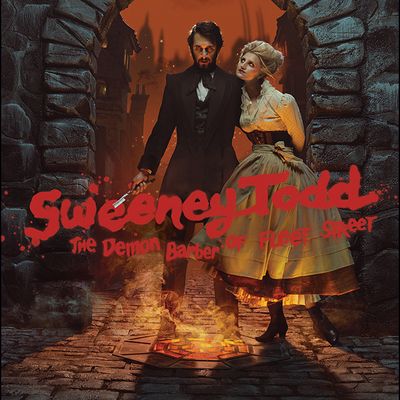
Major masterwork SWEENEY TODD has made us all wince, laugh, and think since its bloody premiere in 1979. Joining us this week to discuss what makes this killer musical simmer and explode is Tony nominee (SpongeBob SquarePants: The Broadway Musical), Sondheim star (the off Broadway Assassins), and all around "Sweeney Fan," the very smart and talented Ethan Slater!.. Read More
From the show: A Musical Theatre Podcast
Guests

Featured Shows
About
Major masterwork SWEENEY TODD has made us all wince, laugh, and think since its bloody premiere in 1979. Joining us this week to discuss what makes this killer musical simmer and explode is Tony nominee (SpongeBob SquarePants: The Broadway Musical), Sondheim star (the off Broadway Assassins), and all around "Sweeney Fan," the very smart and talented Ethan Slater! Don't miss this episode full of laughs and "epiphanies" like, but not limited to, Jeff realizing in real time just how complex the plot is.
Follow Ethan on Instagram and Twitter, and check out him and his fellow "assassins" on their new cast album from Broadway Records.
Be sure to rate, review, and share "A Musical Theatre Podcast" with your friends! Connect with us on Instagram, Twitter, and TikTok. You can subscribe to PATREON! for bonus content at a very low price, and we also have a TeePublic Store where we're currently seeking "listener art" to include in our store gallery!
Thank you for being part of our podcast community!
Transcript
This transcript was automatically generated and might contain errors.
[0:01] Ethan Slater: Whenever people would ask me what my favorite show is, I would always say, like, well, it depends on what you're asking me. Are you asking me about my favorite show growing up, the thing that, like, made the biggest imprint, the thing that I always loved as a kid, or the one that I've, like, returned to as a student of musical theatre, where I, like, go and I, like, and I'm reading the script and I'm listening to the score. That, for me, is Sweeney. Like, that's why I love it.
[0:30] Jeffrey Scott Parsons: Welcome, everybody, to A Musical Theatre Podcast, where we discuss the cultural and emotional impact of some of our favorite musicals in theatre history. My name is Jeffrey Scott Parsons. You can call me Jeff. Today, we are covering the bloodiest show to ever earn the title of Musical Theatre Masterpiece, Stephen Sondheim's Sweeney Todd. And here to discuss it with me is not only a fan of the musical, he's an actor, writer, and musician who was most recently seen in the off-Broadway revival of another Sondheim musical, Assassins, which now has its own cast recording that I highly recommend. Everyone, please welcome Tony nominee, Drama Desk Award winner, let's throw Outer Critics Circle in there as well, the incredibly talented Ethan Slater! Yay!
[1:20] Ethan Slater: Oh, thank you so much. What a lovely introduction. Thanks, Jeff.
[1:24] Jeffrey Scott Parsons: I'm so excited that you're here. Thank you so much.
[1:27] Ethan Slater: I'm so excited to be here.
[1:29] Jeffrey Scott Parsons: This is what I freaking love about musical theatre people. You can be known everywhere as eternal optimist Spongebob Squarepants, which, let's call it like it is, a phenomenal performance. It's well-documented. But then on the inside, you can still be like, yeah, my heart belongs to the story about turning people into meat pies.
[1:45] Ethan Slater: Well, I mean, deep down, I'm actually a bass baritone, so that's kind of where it comes from.
[1:50] Jeffrey Scott Parsons: No, you're not. Get out of here.
[1:51] Ethan Slater: No, I just wish I were. I do a lot of walking around like, my friends, you know, kind of thing down there.
[1:59] Jeffrey Scott Parsons: Lower that larynx.
[2:04] Ethan Slater: Yeah. In my head, that is like the most Norm Lewis thing you've ever heard.
[2:09] Jeffrey Scott Parsons: That is gorgeous. But out in the world, whenever I hear it back to me, I'm like, oh, right. He's a high, he's a pingy high tenor.
[2:12] Ethan Slater: You got to own it. You do it well. You do it well.
[2:17] Ethan Slater: I also I think you're the perfect guest for this episode, because like I said, you got done doing Assassins earlier this year. And these two musicals, in my opinion, above all of Sondheim's works, reveal his core beliefs about music.
[2:31] Jeffrey Scott Parsons: Well, say more about that, please.
[2:40] Ethan Slater: OK, so in Assassins, he's using the tradition of folk music to tell the stories of these people in history. P.S. listeners, if you haven't listened to our Assassins episode, highly recommend. But he's sharing his belief that music has always been used as a storytelling device, particularly in this country. And then with Sweeney, the only reason that we stay on the crazy ride that is the story is because the music keeps us emotionally engaged. The tension, the fear, the comedy. So now it's not. I mean, the music does tell the story. But even more importantly, it's facilitating our emotion, facilitating our emotional journey while taking the story. Otherwise, I feel like I check out.
[3:26] Jeffrey Scott Parsons: Yeah. Yeah. And I feel like you almost said a word. And I don't know if you meant to say it, but you almost said the word immersion.
[3:29] Ethan Slater: No, I think that my brain not with my tongue, but I love that. What a happy accident. I mean, I do feel like that is the thing about Sweeney from the very first moment. You're like immersed in it and you're immersed in like, I don't know. There's just something that really like immediately gets you feeling what he wants you to feel.
[3:46] Jeffrey Scott Parsons: Yeah. Whereas with Assassins, what's really cool about it is he lulls you into this story. Right. And like there's kind of a built in irony about the presentation of it. There's a juxtaposition of the kinds of music that they're using to tell the specific. And there's like a self-awareness to both of them actually have a self-awareness in this really cool way. Attend the tale of Sweeney Todd and someone tell the story. Someone sing the song.
[4:11] Ethan Slater: Right. Totally. Those are both invocations, but they have such different effects on you. Right. One is like and especially in on our cast recording and in our production of Assassins, there was like this optimism that you could see being torn away, which I think is kind of beautiful. And in the music, in the music that Sondheim wrote, whereas with Sweeney Todd, the thing that is so striking is the horror at the very top. There's something really amazing about it.
[4:50] Jeffrey Scott Parsons: Yeah, it's really emotional.
[4:55] Ethan Slater: Exactly. Exactly. Sweeney Todd feels like one of his most emotional scores. And I don't mean that like in terms of sentimentality. It's just from like you said, from the downbeat, you feel it. This was one. OK, so growing up, I had one of those huge stereo systems that had like five different CDs you could put in. And then it would like rotate as soon as it got done with one. And so help me if I fell asleep and one of the CDs was Sweeney Todd. Right.
[5:22] Jeffrey Scott Parsons: Yeah. Yeah. Terrifying, because all of a sudden you wake up.
[5:26] Ethan Slater: Absolutely terrifying. Or you don't wake up and you're just having a nightmare. You're just.
[5:31] Ethan Slater: This is such a tangent, but I just have this one distinct childhood memory that flashed into my mind. It's not about Sweeney Todd. I'm so sorry, but I fell asleep on the couch. Yeah. And I had been watching my Big Fat Greek Wedding. Oh, and OK, I and I woke up just like tortured by the menu music because it was a DVD. So there's a menu and I'd watch all the way through and I was like, I was like, what's going on? And it was so the this like fun music at the menu is like now that like triggers this like autonomic response in me. It makes me start sweating. Immediately I get a fever.
[6:07] Ethan Slater: That's absolutely fantastic. One time I fell asleep watching HBO and woke up in the middle of the night to a really upsetting scene in Monsters Ball.
[6:15] Jeffrey Scott Parsons: Oh, my God. Yeah. Yeah. You have to be careful about these things.
[6:20] Ethan Slater: And like those are not Sweeney Todd, but they are sweet, but they are. That is kind of the. Yeah. All of a sudden you're in this scary. Like, I'm just going to put that out there right now. I grew up in a basement like we have basements in Utah and it was very dark. And when all the lights were out, I did not want to go around the corner and picture seeing Sweeney Todd or the Phantom of the Opera. Those were two of my childhood worries.
[6:45] Jeffrey Scott Parsons: Yeah. And they're very they were very real.
[6:50] Ethan Slater: They were they were super real and they become more real as you've gotten older.
[6:54] Jeffrey Scott Parsons: Maybe. Maybe. Do you have any favorite Sweeney's or Lovett's?
[7:03] Ethan Slater: God, that's such a good question. I look, I'm kind of partial to the to the Michael servers version.
[7:10] Jeffrey Scott Parsons: Oh, because because you got the John Doyle connection.
[7:14] Ethan Slater: Well, right. Because I've got the John Doyle connection. So that was my smooth way of working that in. But because I like I hadn't ever actually seen Sweeney until I watched YouTube videos over and over again of that John Doyle version.
[7:29] Jeffrey Scott Parsons: OK, I thought for sure coming into this conversation, you're going to be like, I played Tobias in college.
[7:35] Ethan Slater: I sang Tobias at like a at like a I want to call it a concert. But what it really was, was my our vocal studio at the end of the year had like a presentation. Right. Where you like saying the things that you'd sung. So I did Tobias at one and I did Anthony at another.
[7:53] Jeffrey Scott Parsons: Oh, versatile.
[7:53] Ethan Slater: Yeah. Also, like, you know, trying to figure out it was like a very classical studio. So I was I was I felt like I was being very transgressive by doing a couple of musical theater songs. But really sticking it to the man by doing some Sweeney Todd, Sweeney Todd, a musical that many people argue is opera. Right. By doing an opera. Yeah, I love that.
[8:25] Jeffrey Scott Parsons: All right. Well, let's look a little at the timeline of Sondheim musicals at the time of the Sweeney Todd. The 70s were a busy decade for Mr. Sondheim, who once again, we miss. But he had company right at the beginning of the 70s, then Follies, then A Little Night Music, Pacific Overtures and then Sweeney Todd.
[8:44] Ethan Slater: Wow. So many different collaborators in there, too. Right.
[8:47] Jeffrey Scott Parsons: Like, like I am. So I was I was saying to you earlier, I'm really I'm not a theater historian. You know, I get things wrong a lot. Yeah. So I'm just admitting that right up. But like A Little Night Music is also Hugh Wheeler. Right. Is that right?
[9:05] Ethan Slater: So there's that. And then Wideman, John Wideman, who assassinated Pacific Overtures.
[9:09] Jeffrey Scott Parsons: Exactly. And then George Firth with company.
[9:14] Ethan Slater: George Firth with company. Yeah.
[9:19] Jeffrey Scott Parsons: Yeah. So there's like Follies. Oh, gosh. Now I need to look that up.
[9:24] Ethan Slater: Oh, James Goldman.
[9:29] Jeffrey Scott Parsons: I was gonna you know, I was gonna say that's not true. I wasn't I had a complete blank. Yeah, but you're right. Lots of different collaborators. And what's really interesting is that throughout Sondheim's career, the musicals that he has written have often been brought to him by his collaborators. So right before this with Pacific Overtures, he's been very upfront about saying that he went into that project kicking and screaming. He didn't want to do it. Of course, he ended up loving it, but it was not his idea. It was John Wideman's. John Wideman had written a play and how Prince. I think this is the story. I hope I'm not butchering it.
[10:06] Ethan Slater: No. But I think he had written a play and how Prince was like, you know what, this could be a musical. This could be a great musical. And I know who's the right person for it. And this was born an amazing collaboration between the two of them.
[10:18] Jeffrey Scott Parsons: That's fantastic. The three of them, I guess. So inspiring.
[10:21] Ethan Slater: Yeah. And by the way, Hal Prince is kind of the through line through all of these. Right.
[10:27] Jeffrey Scott Parsons: Right. Him and Stephen Sondheim. But with Sweeney Todd, it was Sondheim's idea. It's only one of two musicals that he wrote where it was his idea. Do you know what the other one was?
[10:39] Ethan Slater: No.
[10:39] Jeffrey Scott Parsons: Assassins.
[10:44] Ethan Slater: Wait, wait, wait. Isn't that crazy?
[10:44] Jeffrey Scott Parsons: Wait, wait, wait. That's so crazy. So he was like he read the book. He like read the other play.
[10:49] Ethan Slater: Yeah. So it was like a competition of sorts and a play came across his eyes. And it wasn't even the play. It was just the concept. It was a concept about all of the different people who had tried to kill the president. And he was like, that could be a musical.
[11:03] Jeffrey Scott Parsons: Yeah. Oh, wow. That's great. I mean, I know the story with this is an Assassin's episode, but I know there are a lot of there's a lot of crossover.
[11:14] Ethan Slater: There is. Yeah. And like and Wideman went off and wrote the script and and sent it to him. And, you know, according to lore and also to Mr. Sondheim himself, he read that first draft and just like weeped because it was perfect.
[11:31] Jeffrey Scott Parsons: Oh, wow. Which is just kind of an amazing thing. And it's an. Yeah, I have to. I mean, I'm just going to drop this in one of the great honors of my life that I will be telling whatever future generations of my family there are, you know, hopefully my grandkids someday is getting to meet Stephen Sondheim while working on Assassins and getting to perform for him from about two feet away.
[11:54] Ethan Slater: Wow. And it's, you know, I'm I grapple with the the the sort of humble brag of it all whenever I talk about this. But it was just such a special thing to like to meet somebody that you look up to and to get to hear their thoughts. He gave me notes. I have I got notes from Sondheim, you know, and, you know, just a couple of weeks before he passed, we were able to perform for him and and, you know, spend the evening at a cast party with him. That was very small for covid safety reasons. And, yeah, it was just a really special thing.
[12:28] Jeffrey Scott Parsons: Well, you're not you weren't only performing for him, you were playing his score on top of that. That's got. Yeah. What was that like?
[12:43] Ethan Slater: There was this moment in the in the Ballad of Booth where I'm because once again, for those who are listening and may not understand what we're talking about, John Doyle, famous director, always has his actors play the score that they are portraying as well. Right. So it's like, you know, we were all it was kind of a stripped down Americana band. And so I was playing guitar and mandolin throughout the show as the balladeer, which was like, oh, what?
[13:12] Ethan Slater: You think of Sweeney Todd as one of, sometimes, more complicated scores. You think of Assassins as maybe one of his simpler scores. Yeah, because folk music, right? It's kind of simple. Turns out it is super not. It is really, really complicated, super clever, unbelievable chord changes and key changes, and the rhythm changes in these unpredictable ways that when you listen to it, they feel inevitable. But when you're playing it, you're like, what could possibly come next? A bar of 7, 4 after a bar of 6? Like, oh, 6, 7, 4. So we're like, I'm playing Ballad of Booth, and it's a moment where I get to just sort of play guitar, which was maybe my biggest, greatest joy in the show, and watch Steve Pasquale just, you know, sing to the heavens.
And I'm sitting on the downstage right corner on the edge of the stage, playing a really complicated guitar part. And in the seat that is on that very corner is Stephen Sondheim and what we would, for the rest of the run, call Sondheim's seat. And I couldn't look at him. I was too nervous, right? It was like, it was complicated. I didn't want to mess up. But from my castmates who were, you know, upstage and looking at us, apparently he was just, his eyes were glued on my hands. And then afterwards, I got a nice, I got the seal of approval. And I did not make a mistake that night. I mean, well, at least not in that moment. Sure, not the one where he was watching your hand. Plenty of other mistakes, but not that one moment.
[14:49] Jeff Parsons: Oh my gosh, how cool though. That is not even a humble brag. That is just like, that's just truth that needs to be shared. I couldn't believe that I got that. What an outrageous privilege. I feel like to be alive in the time of Sondheim is one thing. To be in the same room as Sondheim when he was alive, I will never forget that. And then getting to talk with people who like had really deep collaborations with him and, you know, bringing it back to Sweeney, you know, John Doyle's intimate collaboration with him and doing something with his shows. Like, I think what I love about John Doyle and his interpretation of Sondheim's work is that he finds what's essential about it. And like you were saying, it's such an emotional score.
It's such like an evocative score. And so you can be emotional and evocative, and you don't have to be literal. And I think that that's like, if your show can hold up to that kind of essentialization, then you've written something really unimpeachable.
[15:53] Ethan Slater: Ain't that the truth? It's kind of the principle of minimalism, right?
[15:57] Jeff Parsons: Sure, yeah.
[15:57] Ethan Slater: Where if you're really confident in something, then let's just see it in its simplest form. And if it's great, it'll hold up.
[16:07] Jeff Parsons: Yeah, there's a place in the world for both minimalism and maximalism.
[16:11] Ethan Slater: Yeah.
[16:11] Jeff Parsons: But I do love seeing something like Sweeney stripped down.
[16:16] Ethan Slater: Well, and I mean, speaking of maximalism, the original production was huge, right?
[16:23] Jeff Parsons: Yeah.
[16:23] Ethan Slater: And I love how honest Sondheim has been in interviews because you can hear him talk about how he didn't love Hal Prince's view on this show. I actually should go back. So, Sweeney Todd originally was a penny dreadful, which was a popular fiction during the Victorian era. And so he was a serialized character. People would read about the adventures or killings of Sweeney Todd. And then that character got turned into plays in the 1970s. So not too much earlier than the musical itself, it gets turned into a play by Christopher Bond. Sondheim sees it at Theatre Royal Stratford East. And when he sees it, that was when he thought it could be an incredible musical. He loved the melodrama of it all. He really felt like music and also in interviews, whenever he talks about Sweeney Todd, he mentions John Williams and Bernard Herrmann.
He talks about movie music and in particular horror films and how much tension is in Jaws because of dun-dun-dun-dun, right? And that was really what he was bringing to the stage was, let's create an emotional experience for the audience with this crazy melodrama. So he brings it to Hal Prince. Hal Prince wasn't super into it just being a human story. So he wanted a grander concept over it all. And what he came up with was the Industrial Revolution that essentially treating people like machines to further the economy creates Sweeney Todd's that this story is inevitable because of the time that it existed. And so you hear the original recording in that like whistle, right? The factory whistle that is just always present, reminding us that this kind of life is going to create people like this.
That was his concept. And Sondheim was like, I don't know if we needed it. So that's why I think it's really interesting that then years and years later, John Doyle comes around with this very stripped down version of Sweeney Todd that doesn't really have anything like that, but it's just about revenge and how it can consume you, right? But once again, both versions, totally brilliant.
[18:59] Jeff Parsons: Yeah, yeah. It's interesting. I'm thinking about all these other sort of like turning humans into machines, Industrial Revolution kind of works and like Chaplin did some of that in his-
[19:08] Ethan Slater: Ragtime, for sure.
[19:11] Jeff Parsons: And that whistle, I will say the one thing that stuck out to me is that whistle, that like really metallic kind of sound.
[19:20] Ethan Slater: Well, and I don't have this information, but I wonder when the prologue, like the opening of the show was written. Was it written before Hal Prince came on or after? Because it feels there's a huge ensemble in the original piece that's like almost Shakespearean. This is our story. This is the story that we're telling, which is also very literally saying we are a society and this is what we've created.
[19:51] Jeff Parsons: Right. Anyway, it's a fascinating origin story in my opinion.
[19:51] Ethan Slater: It is. It is. And I love that. The other thing is that we tend to like ascribe like an artist's work to just that one person. And like this, I mean, for better or worse, like not to take anything away from any individual artists, but most art, most, most like, you know, all theater.
[20:08] Jeff Parsons: Oh, specifically musical theater.
[20:11] Ethan Slater: It's hugely collaborative, you know, like you kind of can't take away any single element and end up with the same thing. And so you think about like, I think about this a lot when you're doing a revival of something and you get to a certain line and you're like, why is that line in this play here? It just like doesn't need to be here. And then you realize, oh, it's because the original company, they had to run across the stage and grab this prop to get it off stage in time. And so they added a line to like allow that to happen. And now you're justifying the emotionality of something that was completely practical. Right. And it's just, it's the difference between a novel and a play. A play is practical. It's on its feet. Some things serve like a physical function and some an emotional one. And the goal is to hopefully make them both work, right?
[20:58] Jeff Parsons: Right. Make it all work.
[20:59] Ethan Slater: Sweeney gets greenlit. He immediately thinks of Angela Lansbury. Stephen Sondheim always says that Angela Lansbury is the only person who never had to audition. Everybody always had to audition, except Angie. She reads it. She's like, I'm not so sure how to do this. And he gives her the note. Think of it like an old English musical. And of course, like that's where she is very almost vaudevillian in the way that we would consider the performance style. And she's like, got it. So her entire take on Mrs. Lovett is like very, and you see how much just energy is pouring out of her throughout this. It's really fascinating. And I love that, that once again, that that was a collaboration.
[21:43] Jeff Parsons: Yeah. And I think it's really fascinating. I mean, it's really fascinating. And I love that, that once again, that that was a collaboration.
[21:53] Ethan Slater: Yeah. That's amazing. And also to, to write something and, and be like, I know exactly who is like, not only did he know who would be great, who would be perfect, but he knew how to get it there. He knew like which version of Angela Lansbury.
[22:05] Jeff Parsons: Which version of Angela Lansbury. Exactly. Wow. That's so true. That's kind of amazing.
[22:10] Ethan Slater: So when it opens, it opens on Broadway in 1979, March 1st, 1979. It's a huge hit. I mean, for Sondheim, it runs 557 performances. And that year at the Tony Awards, it pardon the pun, slays the competition. It wins Best Musical Best Book for Hugh Wheeler, which by the way, sometimes you'll see him referred to as Patrick Quentin. Patrick Quentin was a pen name that he used. It was kind of interesting. But yeah, it was Hugh Wheeler, though. It also wins Best Director, Best Actor and Actress. Sweeney Todd in this season is like the mega musical. But then you also have some like peripheral favorites in this season. You had Best Little Whorehouse in Texas. And they're playing our song. And then you have shows that are really interesting, but were never heard from again.
Like Carmelina, Yubi, which was kind of how Gregory Hines was discovered. You had King of Hearts, Platinum, Ballroom. This season was just full of really interesting shows that haven't seen the light of day. But if there are any diehard fans out there that want me to cover them, you know I will just let me know. Really interesting season. But Sweeney really is the thing that stands out and above. It is kind of nice when a show that stood the test of time seems to have been understood in its moment.
[23:50] Jeff Parsons: Good point. I don't think that always happens.
[23:55] Ethan Slater: No, it certainly doesn't always happen with Sondheim shows. It doesn't happen with Kander and Ebb either. Right. I think that's something that's kind of amazing that we as a culture or whatever tend to forget is when a show that is now canon was received as heretical. And then you look at people looking at revivals and being like, well, it's not as good as the original, but the original was received as not good. You know, and there's like this really interesting revisionist history of it all.
[24:26] Jeff Parsons: Well, and even still, I say it's a big hit, but it wasn't 42nd Street.
[24:31] Ethan Slater: Right. You know, it didn't run for years and years and years, and no Sondheim show ever did. And yet here we are talking about him as one of maybe the greatest musical theater composer of all time. Like that in and of itself has some interesting layers to it. I wonder what that is. I mean, and do you know what? Sweeney was at the, it was called the Eurus at the time. It's now the Gershwin. So it was playing a huge theater. A huge house. That's 2000 seats, right?
[25:01] Jeff Parsons: Yeah. It's just a barn of a place. And Wicked can fill it because it's wicked, but you know, Sweeney was a melodrama. Yes, but a thinking man's musical as well.
[25:14] Ethan Slater: Right. It was a thinking person's musical that was in, well, I mean, Wicked's now been in there for like 18 years. How many years? No longer.
[25:22] Jeff Parsons: 2003 or 2004.
[25:25] Ethan Slater: Okay. So let's go through the show. It's a, there's a lot of story, a lot of plot here. So there will be things that were probably leave out, but good to remember that Mr. Concept Musical still loves a good story, you know? There are a few musicals that are as plot driven as Sweeney Todd and that was, it's a Sondheim show. So.
[25:47] Jeff Parsons: Yeah. Super, like really structured and really like you're following an antihero protagonist.
[25:53] Ethan Slater: Yeah, for sure. For sure. The show begins with, like we mentioned, the prologue, The Ballad of Sweeney Todd, in which we don't really get a lot of information. It's just setting the tone, those Jonathan Tunick orchestrations. I mean, come on. It really is bringing us into this story. For me, the single most important lyric in this entire prologue is attend the tale of Sweeney Todd. He served a dark and a vengeful God.
[26:25] Ethan Slater: And I think that really tells us what's going to happen throughout this story. Because if anyone knows about revenge, it's the God that takes and takes and takes and gives nothing in return. You never get anything from serving that emotion. An unsatiable God.
[26:44] Jeffrey Scott Parsons: Thank you. Yes, exactly. And I mean, right after that, he says, what happens then? Well, that's the play, and we wouldn't want to give it away. So Sondheim is basically telling us, this is what the story is about. But get ready, because it's going to be quite the ride. When Christopher Bond turned the character of Sweeney Todd into a play, and I think this is one of the things that Sondheim really loved about it. He created a backstory for him. And the backstory is thus. There was this guy named Benjamin Barker. He had a beautiful wife. They were very, very happy. He was a barber, probably the best barber in all of London. And then there's this super corrupt judge by the name of Judge Turpin.
And he, I mean, we're talking Seven Deadly Sins now. He's coveting after Benjamin Barker's wife. And so he gets him arrested on these bogus charges. He gets shipped to Australia, because that's what you do with the riffraff in those days. And we love Australia. We just covered Boy From Oz. And so he serves his sentence there. He comes back a completely changed man, right? Because his life had been just completely yanked out from under him. So he comes back wanting some sort of revenge. On the boat, on the ship on the way back, he meets a very unlikely BFF in this guy named Anthony.
[28:14] Ethan Slater: And do you remember why they are connected?
[28:18] Jeffrey Scott Parsons: Yeah, I mean, wait, okay. So here's the thing that you're maybe going to have to cut off. Doesn't he save his life on the ship?
[28:24] Ethan Slater: Yeah, exactly.
[28:25] Jeffrey Scott Parsons: Okay, great. Yeah, right. He saves his life on the ship. That's the one he used. That's the line he used. So nervous about getting everything wrong.
[28:32] Ethan Slater: Great take. Great take.
[28:33] Jeffrey Scott Parsons: Thank you.
[28:37] Ethan Slater: Yeah, so they're these unlikely friends, because Anthony, whose last name is Hope, by the way, subtle, his life was saved by Mr. Todd, who from here on, I'm just going to be calling Sweeney Todd, because Benjamin Barker's dead. After this prison sentence, he's no more, right? Benjamin Barker can't come to the phone anymore.
[29:00] Jeffrey Scott Parsons: Oh, no, he cannot. Why? Because the phone call is coming from in the house.
[29:07] Ethan Slater: So Sweeney and Anthony are connected. It's this interesting juxtaposition of kind of a young ingenue who has literally, you know, the hope and future of the world, and a man who has just been broken down. Interesting to be putting them up against each other.
[29:15] Jeffrey Scott Parsons: Right, to put somebody who's so thrilled to be back in London with somebody who sees it as a pit, a pit with a vermin of the world inhabited.
[29:36] Ethan Slater: Exactly. Such good lyrics. Sweeney goes back to his old stomping ground, and it has been taken over by one Mrs. Lovett. And how would you describe this broad? She's a hoot.
[29:56] Jeffrey Scott Parsons: Well, actually, having the image of Music Hall and Angela Lansbury, she's like, she is a shop owner whose best quality is being a strong businesswoman.
[30:09] Ethan Slater: Absolutely. This is an entrepreneur. A consummate salesperson.
[30:14] Jeffrey Scott Parsons: 100%. One thing that I really love about the show is the world creating. It's a disgusting place, and yet I love to be in it.
[30:25] Ethan Slater: Right. I mean, you know, I actually, I was thinking, I know I'm now going to backtrack just like two steps, but when you're talking about the overture, the invocation, the prologue, when you're talking about the prologue, like, it's basically describing the vibe, right? Like, it's setting the tone, we're saying it's setting the tone, it's giving you the space, whatever, but it's also like, it's letting you know, like, this is kind of a gritty, gross place with rats and all, you know, and that's what it's telling you. It's telling you this is, you better like the world of feeling like a little sweat caked on your hands, you know, that that's what it is.
[31:01] Jeffrey Scott Parsons: Because here it is.
[31:02] Ethan Slater: Because here it is. And then you arrive and you have Mrs. Lovett, who is the most joyful version of that.
[31:07] Jeffrey Scott Parsons: Yeah.
[31:08] Ethan Slater: You actually, I guess that's sort of interesting. Sorry, I'm now, you've given like these three different archetypes so quickly. You have the sort of hopeful, you know, ready to fall in love at first sight, Anthony, you have the fully jaded, you know, sort of nihilistic Sweeney. And then you have somebody who's like this mix of both, but like, but sort of is like pushing, you know, you can make the world what you want it to be.
[31:38] Jeffrey Scott Parsons: Yeah. Like, well, if it's going to be crappy, then I'm going to at least take advantage of it and make it work for me.
[31:45] Ethan Slater: Yeah. It's kind of cynical, but it's also kind of optimistic. It's like this weird, she's like towing this line. They've got to be the worst pies in London, you know, like, take a bite.
[31:54] Jeffrey Scott Parsons: It's terrible, isn't it?
[31:57] Ethan Slater: I've got everything I've got.
[31:58] Jeffrey Scott Parsons: Spit it out. It's disgusting. I know.
[32:00] Ethan Slater: But you know what? Give me $10 and then tell me if you think it's the worst pies in London or the, you know, how much is it?
[32:07] Jeffrey Scott Parsons: Right. Yeah, exactly.
[32:08] Ethan Slater: Cheap.
[32:08] Jeffrey Scott Parsons: Quid.
[32:08] Ethan Slater: But, but that's so smart. Like, like within the care, the first three characters you meet, thesis, antithesis, and synthesis.
[32:17] Jeffrey Scott Parsons: And then like the whole thing just keeps on going, right? You've got like optimism, pure cynicism, and then using your cynical understanding to make the best of a situation.
[32:26] Ethan Slater: And then you can see how those three things converge and.
[32:29] Jeffrey Scott Parsons: Well done, Ethan.
[32:30] Ethan Slater: Thank you. Thank you.
[32:31] Jeffrey Scott Parsons: That was great. No, that's fantastic. I love worst pies in London. It's just the best number. It's such a great introduction to this character who like you, like you're saying, is trying to make the best out of a horrible situation.
[32:45] Ethan Slater: And she's also surrounded by people who are also kind of unethical. She's got the lady down the street who she knows is popping pussies into pies.
[32:52] Jeffrey Scott Parsons: Right. I was just going to say, I was just going to say like, are we going to have to bleep that line? Because that is.
[32:56] Ethan Slater: Oh, that's true. No, I'll just.
[32:57] Jeffrey Scott Parsons: No, we're not. No, I'm just kidding.
[32:58] Ethan Slater: We'll just put the E on the episode. We're already talking about cannibalism.
[33:02] Jeffrey Scott Parsons: What an incredible line.
[33:04] Ethan Slater: Yeah.
[33:04] Jeffrey Scott Parsons: The alliteration alone.
[33:06] Ethan Slater: When you hear a song that says pop your pussy, this is the one that I think of, right?
[33:11] Jeffrey Scott Parsons: Right, right, right.
[33:14] Ethan Slater: So Mrs. Lovett has now met Mr. Sweeney Todd and she recognizes him.
[33:22] Jeffrey Scott Parsons: Right, right.
[33:23] Ethan Slater: She knows who he is and.
[33:25] Jeffrey Scott Parsons: She was, she was from the neighborhood before she took over the spot.
[33:28] Ethan Slater: For sure. To kind of test the waters, she retells the story of Benjamin Barker to see how he reacts and also gives Sweeney some more information on his wife.
[33:37] Jeffrey Scott Parsons: So after he left, the judge essentially raped her and then put her into an insane asylum because she was probably uncontrollable emotionally.
[33:55] Ethan Slater: And this causes such a, an emotional outburst in, in Sweeney that she's like, gotcha. I knew it was you.
[34:03] Jeffrey Scott Parsons: Yeah.
[34:04] Ethan Slater: Since she recognizes him, she brings out his prized set of razors.
[34:11] Jeffrey Scott Parsons: Oh my gosh, I'm getting the chills talking about this.
[34:14] Ethan Slater: It brings out these razors. And when he, he sees them, it's this, it's like this romantic, ethereal type of experience where he's like, my friends, you will drip with rubies. Um, the, the famous line of my arm is complete again.
[34:35] Jeffrey Scott Parsons: Unless my right arm is complete again.
[34:38] Ethan Slater: But I think what's so incredible is that we've also had like, Sweeney Todd saves Anthony's life.
[34:46] Jeffrey Scott Parsons: Correct me if I'm wrong about this, but the next thing we hear from him is about the, the, you know, great black pit that is London, right? Like just saying that everybody is terrible.
[34:53] Ethan Slater: Like just saying that everybody is terrible.
[34:55] Jeffrey Scott Parsons: The world is terrible.
[34:56] Ethan Slater: Everyone is terrible.
[34:57] Jeffrey Scott Parsons: We all deserve to die.
[34:58] Ethan Slater: And that we all deserve to die.
[35:00] Jeffrey Scott Parsons: Right.
[35:00] Ethan Slater: And then, and then he screams, would, would no one have mercy on her is the line that makes her go.
[35:07] Jeffrey Scott Parsons: Right.
[35:07] Ethan Slater: So it is you.
[35:07] Jeffrey Scott Parsons: Right.
[35:08] Ethan Slater: So it's like this weird juxtaposition. You have this character who's professing to be jaded and, and a misanthrope.
[35:16] Jeffrey Scott Parsons: Right.
[35:16] Ethan Slater: He's like, according to him, he hates people, but all we've seen so far is him ask for mercy from somebody who should have been given mercy and to save a life.
[35:27] Jeffrey Scott Parsons: Yeah.
[35:27] Ethan Slater: Well, I, that's such a beautiful point of view. I wonder if he realizes it's too late for himself, but when he sees an opportunity for someone else to maybe not go down the same road, he's willing. Because even later he refuses to kill somebody because their child is there.
[35:46] Jeffrey Scott Parsons: Right.
[35:47] Ethan Slater: Right.
[35:47] Jeffrey Scott Parsons: So there's like this weird.
[35:48] Ethan Slater: There's this protection of what may still be innocent because his innocence, his joy was, you know, so cruelly stolen. And you have that, like, I feel like anybody who's, who's ever dabbled in screenwriting has maybe read the book, Save the Cat, which is like this, this book.
[36:08] Jeffrey Scott Parsons: I have not, but I feel like I already know what that refers to.
[36:12] Ethan Slater: Yeah.
[36:12] Jeffrey Scott Parsons: I'm like Bryce Snyder, I think is his name. And it's like, you know, one of the dozens of books on structure, but it's one that's like really easy to latch onto. One of the things that he talks about is early in your script, in the first scene, you have to have your main character, quote unquote, save the cat, which is do something that is like selfless and, and good. Do something good. So even if they're a complicated character, you like them from the beginning because they saved the cat. And that's like this, this element that needs to be there. And I think what I'm realizing we're talking about is that that's what happens with Sweeney. He does a couple of things throughout this. The first thing we see him do is save a life kind of, but the, but you know, there are so many moments where we see his humanity that we're able to think of him as an empathetic character, even though he's just a mass murderer.
[37:05] Ethan Slater: Right.
[37:05] Jeffrey Scott Parsons: You know, like that's.
[37:06] Ethan Slater: That's why it's a thinking man's musical is because he's not just a mass murderer, right? It's a fully realized character.
[37:14] Jeffrey Scott Parsons: Yeah. That's beautiful. So after we get done with this little section, we meet Joanna. Joanna is Sweeney and his wife's child. She is currently in a prison of her own being held by that same horrible judge.
[37:27] Ethan Slater: And she sings the gorgeous Green Finch and Luna Bird in which she's talking to these birds and asking, how do you sing even though you're in that cage?
[37:44] Jeffrey Scott Parsons: How gorgeous is that?
[37:46] Ethan Slater: Sopranos rarely get a song this profound.
[37:51] Jeffrey Scott Parsons: Yeah. Really, really beautiful.
[37:53] Ethan Slater: Really sad.
[37:55] Jeffrey Scott Parsons: Yeah. Romeo and Juliet style while she's singing to these birds, Anthony sees her from the street and immediately falls in love with her.
[38:06] Ethan Slater: I love Amis. I think that's, it's just a gorgeous piece of music. And then he sings the very famous Joanna, you know, saying that he's going to rescue her.
[38:17] Jeffrey Scott Parsons: Yeah.
[38:17] Ethan Slater: Because he sees that she is very much imprisoned by both the judge and the judge's kind of henchman known as Beatle Bamford.
[38:27] Jeffrey Scott Parsons: A role that you can maybe play in like 30 years.
[38:30] Ethan Slater: Oh, gosh. I hope.
[38:31] Jeffrey Scott Parsons: I hope. Do you think that when, do you think that, at what point did the created backstory for the play stop? Was it just the Benjamin Barker stuff?
[38:40] Ethan Slater: I think it was just the background of it all.
[38:44] Jeffrey Scott Parsons: Yeah. From what I, I haven't read the play, but from what I understand, Sondheim appreciated how funny the play was and that there was this kind of dark humor and also a psychological complexity to the characters. But he absolutely turned it into something even bigger because I believe the play is quite short.
[39:06] Ethan Slater: Oh, yeah.
[39:07] Jeffrey Scott Parsons: Yeah. That makes sense. The humor in it is, I mean, like, even the humor of Joanna's song of...
[39:14] Ethan Slater: Of Green Finch?
[39:15] Jeffrey Scott Parsons: You know, of Green Finch, of being in a cage singing about being in a cage and singing. Do you think that he wrote that and was like, I'm a genius?
[39:24] Ethan Slater: Yeah. This is so good. This is so smart.
[39:37] Ethan Slater: Shade of judgment. And they're stupid and young and just haven't realized how terrible the world is. And Sondheim has been asked about it before, and he always says, "No, I believe in love. I wrote Passion for crying out loud." And I'm like, "Well, yes, but also, woof. Like, Passion is rough." And if that's like your, that's how you view love, like, okay, I guess we're not celebrating St. Valentine's Day, right? You know what I mean? Pain? Yeah, yeah. So there is a lack of sentimentality for sure. And what he views as sentimentality, I find interesting and different from my own views on love, I think. Sure. Oh, yeah. I mean, the language of Anthony's song is so odd for a love song. Mm hmm. Well, I mean, it's interesting that someone who is so unsentimental has both Joanna and Maria in their canon of work.
So there is something about creating music that sounds and feels like that feeling and infatuation of love, but then when you break it down, cerebrally, it seems a little... Well, I think infatuation is a really good word for it, right? There's a lot of Maria and Joanna are both based on just seeing someone. Yeah, you're right. And saying, you know, the most beautiful sound I ever heard. The one word I heard her say, basically. Yeah. I'll steal you, Joanna. Yeah, you know, I don't know. There's something that's that is... And I think there's a profundity in that, in the fact that it's kind of superficial. Like, there is something kind of interesting and profound about it, but it's not about a depth of love.
Right, right. I get that. It's about an infatuation. But I think that there's something, like, yeah, I'm thinking about how interesting it is to do something really outlandish or outrageous on that love at first sight thing, you know? I think there's actually something really interesting in telling about human nature about that without the sentimental angle that is like, it was true love, and so I had to. No, that's true. And I think that there is also something evolutionarily speaking about needing that huge rush of endorphins right at the get-go, because relationships are hard. Yeah. And you know what I mean? And so you got to have fuel in the tank to make it all seem worth it. Oh, that's such a good way to put it.
It's like you're heading out on a cross-country trip, and you know that you're going to fill up once, and there's going to be a long stretch without any gas stations. Yes, exactly. So you better be driving a hybrid. And that's why we buy a Tesla. This episode has been brought to you by...
[42:44] Jeffrey Scott Parsons: Right. Please. Oh my gosh. Mr. What's-his-bucket. What's his name?
[42:52] Ethan Slater: Elon Musk. Elon, yeah. Elon, please sponsor my podcast. Okay, so after Joanna, we meet this guy by the name of Pirelli and his assistant Tobias. And Pirelli is supposed to be the best shaver in the world. Not only that, but he has all of these ointments that will grow hair. And he has this little assistant named Tobias, which seems like is possibly on the spectrum, has something that requires him to be taken care of. Is that fair? Yeah. He's in the town square asking for a contest. Of course, Sweeney hears about this and is like, "I'll take you on, sir," and beats him. The twist there is that Pirelli is actually this Irish guy who's a total fraud and is selling piss and ink to try and grow people's hair.
But he, like Mrs. Lovett, has recognized him as Benjamin Barker because that person is probably the only one that could beat him. And so he is threatening to reveal his true identity in exchange for money for the rest of his life. Yeah. But I love this niche world of barbers. It's like the greatest barbers. Who knew? The two greatest barbers in the world facing off in a barbering challenge. That is very true. Everybody for a while got really into the world of cheerleading or you get into the world of all of these worlds that you dive whole hog into. Now it's competitive barber. Now it's competitive barber. And this is as niche as it gets. Yeah, 100%. I love that. I look forward to the Netflix series.
[44:43] Jeffrey Scott Parsons: Right. All about this.
[44:45] Ethan Slater: Shaved away. There it is. And then you can say like, "You did not make the cut" or something like that when they get kicked off. There's only one way for Sweeney to take care of this problem and it's to kill Pirelli. So he does. And in getting rid of Pirelli, now Tobias is left needing to be taken care of. So Mrs. Lovett takes him under her wing. So after Pirelli's death, we see Joanna and Anthony making the plan for their elopement. Yeah, he promised he'd steal her and so they're making it happen. And as they're doing that, Beetle was the one who they were shaving in the competition in the square. And so he goes to the judge and says, "By the way, I know that you're really wanting Joanna to like you and you want to marry her," which is disgusting because he would be marrying his daughter, quote unquote.
But if you want to attract her, you might need to like put on some cologne, look your best. Here's the thing, though. I just found the best barber in all of London. His name's Sweeney Todd. You should go over there. And so that's what happens. The judge goes over to Sweeney's place to get a shave and some perfume water. And Todd is ecstatic because now he gets to enact revenge on the judge. And they sing this gorgeous song, "Pretty Women," right? He's trying to get him really relaxed in the chair so he can slit his throat. And right before he does, Anthony comes in and is like, "Mr. Todd, you would never believe I just found the most beautiful girl. I'm going to steal her away." And judge sees Anthony and knows that he's the one who has been trying to get Joanna away.
So everything turns horrible. He marches out because he's like, "Sweeney Todd, if you are into people like this, you do not get my business." So he was so close to enacting this revenge and it's gone. And that leads to quite possibly one of the best solos in all of musical theater. It's just called "Epiphany," in which Sweeney says, "Okay, my purpose here is to just enact death on the human race because we are all broken." It's dark and terrifying and ends on a major chord, which is even crazier. And what's absolutely brilliant about this musical is that that horrifying moment is then followed by quite possibly the most clever, funny song of all time. Seems an awful waste. Mrs. Lovett's realized, "Okay, if you need to kill everybody and you know what, who am I to tell you, you shouldn't. If you're going to kill everybody, then can we at least use the meat to turn into pies because mine are just terrible." And so they begin this awesome song, thinking about how everybody tastes, right? As food. I mean, this just has some of the most clever little rhymes and couplets. Do you have any faves?
[48:11] Ethan Slater: The trouble with poet is how do you know it's deceased? That's a great one. You know he's the grocer because he's green. That's really good. But I also think on top of being clever, it introduces one of the greatest themes of this entire musical, which is eat or be eaten, which goes to Hal Prince's original concept for it. If you leave it up to the goodness of man, everybody will always let you down. And so then you got to be the one to eat instead of be eaten. And then to on top of that, to put it quite literally into cannibalism is just so brilliant. So completely brilliant. I do think it's really interesting, though, that you also have this world in which the people who are actually acting badly are people in power.
And the people who are then forced by circumstance to see the world as cynically as they do, it's eat or be eaten because people who could eat without eating others are taking advantage. And the judge and Beatle, these are people with power who are taking advantage of. So there's this interesting thing where our main baddies who are also our main protagonists, these murderers, are actually kind of being forced there by societal things. And it's kind of deeply political in that way while being completely apolitical also.
[49:55] Jeffrey Scott Parsons: No, you're so right. Would they ever reach this conclusion if they didn't feel like if they had no other choice?
[50:05] Ethan Slater: No, I mean, for sure not. And Benjamin Barker turned into Sweeney Todd because the judge abused his power. It's just like everybody is being abused by people in power in this. And that's actually something that I don't always latch onto in it because it seems like it's everybody is bad. But it's actually like one bad apple spoils the whole bunch.
[50:31] Jeffrey Scott Parsons: That's exactly what I was going to say. It's contagious.
[50:33] Ethan Slater: It's contagious. The abuse of power is contagious because then you feel like the only way to combat it is to abuse your own power.
[50:41] Jeffrey Scott Parsons: Right. Whatever little power you have. If the power you have is a knife, then you're going to abuse that.
[50:46] Ethan Slater: Yeah. If it's shaving necks, then you're going to cut them. If it's making pies, you're going to. Yeah, you're going to kill to get them. And the judge even takes out his own power on himself. There's also this element of the flagellation scene.
[51:02] Jeffrey Scott Parsons: Oh, that's true. I completely skipped over that. I don't know if it's always...
[51:05] Ethan Slater: Is it always in the show?
[51:07] Jeffrey Scott Parsons: The mea culpa?
[51:08] Ethan Slater: Yeah.
[51:08] Jeffrey Scott Parsons: Is that what it says? Deliver me?
[51:12] Ethan Slater: It's so stressful. I think it's always in there.
[51:14] Jeffrey Scott Parsons: It is very stressful. He's whipping himself. He's talking to God. So on some level, he has a conscience and he knows that he shouldn't be lusting after Joanna, but that's why he decides to marry her. It's because that solves that problem. You know what I mean? I don't know if I can quite put my finger on it yet other than these ideas, but there is something that feels very directional about it. It's not just everyone is bad. It's that people abuse power.
[51:46] Ethan Slater: Yeah, there's a systemic problem here for sure.
[51:57] Jeffrey Scott Parsons: So second act starts and we're just going to get through this.
[52:03] Ethan Slater: I'll let you plow through. Sorry.
[52:05] Jeffrey Scott Parsons: No, no, please, please interrupt me whenever. Things are going well in the second act. I love this, that Mrs. Lovett's idea has really taken off. The pies are great. They're real meaty because Sweeney is killing people and they're putting them in the pies. He has ordered a fancy new chair, which I don't know what company designed this chair, if we want to get into some interesting questions, but it is a chair where he can kill somebody and send them down to shoot so that they go right to the meat grinder and everything seems to be going awesome. There are only two problems here. Problem number one.
[52:48] Jeffrey Scott Parsons: Sweeney's killing a lot of people, but none of them are the judge.
[52:52] Problem number two, there's some really stinky smoke coming from Mrs. Lovett's chimney because they're burning bodies. Yeah, these are kind of the two main problems of the second act.
[53:03] Mrs. Lovett has decided that one way to solve it is, you know what, let's just move. Let's just go away from here, start a life together by the sea. A great song. I recently had on my Patreon exclamation point David Loudon to talk about Sondheim, and one of the things that he said about Sweeney Todd was here in By the Sea. Here, I'm going to read this lyric.
[53:33] But a seaside wedding could be devised, me rumpled bedding legitimized.
[53:39] So in two lines, Sondheim has let us know that they've been sleeping together. Whoa, that's really good.
[53:48] Right? On some level, she's a little traditional. She's like, well, you know, we've been getting at it. We obviously enjoy each other. So let's get married and make it a thing, make it official.
[54:00] So Sweeney's not into it. He's already long gone. Yeah. And instead, he writes a letter to the judge and says, all right, I really respect you. I'm getting that young boy Anthony to bring Joanna here. And so when she's here, you can take her. Yeah. He still doesn't know that Joanna is his daughter. Anthony goes to steal her. She's now in the asylum as well.
[54:35] We haven't even talked about the beggar woman. Oh, my God, Ethan. I'm so overwhelmed by this. There's so many threads to this and they all come together. This is such a reverse engineered. It all leads to the climax. So this is a, this is so well put together. It blows my mind. Even just telling the story makes me realize how incredibly intricate and beautiful it's put together.
[55:04] So intricate. While all of that's happening, Toby is professing his love and dedication to Mrs. Lovett by singing Not While I'm Around. Maybe the song most regularly taken out of context and sung in a completely different way in musical theater. Maybe that one in Cabaret, the title song from Cabaret, which is about a woman who just had an abortion. But Not While I'm Around, a close second.
[55:27] And so their relationship is becoming much tighter. Definitely not a romantic one. It's more of a guardian and child. During Nothing's Gonna Harm You, there's that great, there's that great reveal at the very end of the song, which is that Mrs. Lovett says, like, you know, whatever, like, go, go buy yourself something nice. Okay, I can't remember exactly what she does. But she takes some coins out of Pirelli's purse. That's right, right.
[56:07] And she hands the coins over to Toby, who is like, where did you get that? Where did you get that? That's Senor Pirelli's purse. And for those who remember, Toby originally was barking for Pirelli before he was barking for Mrs. Lovett. So like, that's, oh, what a great little moment of, and it's also this little moment of hubris, too. It's like, Mrs. Lovett doesn't think she's gonna get caught. So she takes little things from the bodies that they're burning. They're burning the bodies to get rid of the evidence, but she keeps this one little thing.
[56:26] And that hubristic act, like, sends it all tumbling. 100%. She's a little worried about Toby telling, and so she decides to show him how the meat grinder works, which is in the basement. She takes him there, shuts the door, locks him in, because she can't have him ruining her plans. Just then, Beetle comes in to Sweeney to say that the judge received the letter. While I'm here, can I get a shave? Absolutely. Beetle gets killed, goes into the cellar. Now Toby is there with a dead body. Like, he was absolutely right to be worried about these two, and now he's freaking stuck in the cellar with dead bodies.
[57:06] Anthony comes with Joanna after rescuing her. She hides in, oh my gosh, so much. She hides, like, in the same, in the barber room.
[57:20] Yes. She hides in the barber room. I can't remember where Anthony goes, though.
[57:24] Oh, he's, like, going to seek, he's going to, like, find the coach, like, the...
[57:29] The rescue vessel. Yes, thank you.
[57:35] So sorry. Yes, the rescue vessel. And while Joanna's hiding, the beggar woman, who has been kind of going in and out of the action all of this time, comes up into the room and is, like, you know, reaching for Sweeney, and then Sweeney hears the judge coming to get Joanna, and so he hurries and kills the beggar woman and sends her down the chute. Toby's completely surrounded by dead bodies now. The judge comes. They have, like, a little pretty woman reunion, and then, boom, he finally kills him.
[58:06] And it's everything that he wanted, but not really, because he realizes in doing so, thanks to Mrs. Lovett, the beggar woman has been his wife. He has killed his wife in front of his daughter, who has been hiding in the room. It's the worst possible scenario, even though it's exactly what he wanted. God, it's very, it's kind of Oedipus. I didn't quite realize that it was, like, he kind of is fulfilling his own prophecy.
[58:30] Classical. Yeah, yeah, you're right. I'm telling you, that dark and vengeful god ain't gonna do nothing for you. No, just leave Toby surrounded by bodies. Yeah, that's all.
[58:43] So when Sweeney realizes he's killed his wife, he runs down to, you know, the cellar where the dead bodies are to mourn over the fact that he just did this. And he's like, how could you have lied to me? Right, you're absolutely right. So Mrs. Lovett had been very strategically withholding that information because she did know the entire story.
[59:07] Yeah, because she tells the story of Benjamin Barker at the beginning and says that she died.
[59:13] Yeah, the ultimate betrayal. How could you ever trust that person? Says that she took the poison.
[59:17] I just, I have the script up in front of me.
[59:23] Oh, really? I just pulled it up. She said that she, like, took poison and died? At the very end, in the beginning, she says that she took the poison and she did. And then in this moment, she says, said she took the poison, she did. Never said that she died, poor thing.
[59:32] Oh, gosh. Okay. Yeah. Wow, I don't think I realized this. So the fact that she's crazy isn't just because she was, like, emotionally damaged by being raped by the judge. It was because she took poison to try and kill herself and it didn't work.
[59:48] I think it's probably mostly the former, but certainly the latter couldn't have helped.
[59:51] Sure. Wow, that's dark.
[59:56] Okay, so yeah, and Mrs. Lovett comes in and is like, I know, babe, this sucks. But you know what, we can still be together. And Sweeney Todd is like, oh, you know what, you're right, Mrs. Lovett, we can be together. And they start dancing. And the dance turns into him shoving her into the furnace. And so she's dead as well.
[1:00:20] Well, this is all broken, poor Toby. Fair to say, right? And he has been hiding there in the cellar. I always loved in the original, his hair, like, turned white. It's quite an image, quite an interesting wig change. But his, his hair's turned white from all of the trauma. And he comes out and sees Sweeney Todd cradling the beggar woman's body, his wife, and Toby picks up the razor and slits his throat.
[1:00:48] What a beautiful, beautiful ending.
[1:00:50] And we're left with Toby turning the meat grinder, because that's what Mrs. Lovett always told him to do.
[1:00:57] What happens to Joanna and Anthony? Do they get away? I mean, is it a happy ending? And I'm just not thinking of it in the right way.
[1:01:04] I don't, it's such a good question. I feel like in my memory of it, everyone dies. But of course, Joanna runs away. Joanna certainly gets away. And where is Anthony during that? Didn't, did he, he never comes back?
[1:01:15] Well, he got the vehicle.
[1:01:16] Right. He goes off. I assume, it sounds like they get away.
[1:01:19] Yeah.
[1:01:20] They start a new life.
[1:01:22] Hopefully by the sea, by the beautiful sea.
[1:01:25] Maybe that is hopeful. Maybe that is a hopeful ending. We just don't get to see it. We see the, the dark end of, because when you think about, I mean, the only two people who don't-
[1:01:33] Well, maybe that's what they're saying also is like, they had to get out of there to even have a chance. They needed to leave London and the society and the, the pressure of it.
[1:01:43] And they are the only two people who don't, like, who don't act on sort of dishonorable impulses.
[1:01:53] They don't murder. They don't extort. They are simply trying to do their best.
[1:01:58] Yeah.
[1:01:59] He's not kidnapping Joanna. He says, I'll steal you. But he, but she wants to go.
[1:02:03] Yeah. She's, she's a game for sure.
[1:02:05] It's a consensual relationship. And that's, it's the only, it's kind of the only one that isn't predicated on lies.
[1:02:13] You're absolutely right.
[1:02:14] So maybe there is something really hopeful there.
[1:02:16] Well, his last name's Hope. So he better be.
[1:02:19] It's good stuff.
[1:02:20] Wow. Okay. That was intense.
[1:02:24] Shake it off.
[1:02:25] My goodness.
[1:02:25] You did a great job. That was really impressive. There's a lot, there's a lot in there.
[1:02:29] There's a lot in there. It's a masterpiece of a show. I've, I, I love this show and I just fell in love with it even more trying to explain it.
[1:02:37] It's wonderful. I have to, I want to see it again.
[1:02:39] This is the thing, people. If you want to love musical theater, start a podcast in when you have, in which you have to like pick it apart because when you do, you see it for what it is, which is incredible collaborations that bring really detailed and fascinating works to our world. It's great.
[1:02:59] I love that.
[1:03:01] Ethan, thank you so much for doing this with me. What a joy to chat with you.
[1:03:06] Anything else you want to say about the show?
[1:03:09] No, I just, I think that was really fun to do. And like to, to go through plot point by plot point, you realize that like, this is, this is, it's really unbelievable to tell such a plot heavy story with such emotional music. And maybe the reason that it has had such a big lasting impact is that it combines what kind of feels like two different modes of storytelling into one.
[1:03:29] You've got the incredibly emotional opera and then you've got the really intricate sort of thriller plot.
[1:03:38] And oftentimes one thing can try to get away without having the other, but this one has every element in it. And I think that that's kind of beautiful and it's funny. I mean, it's got, it's got some real humor in it. So I feel very validated in my love of this show.
[1:03:54] And you loving the show. That's gotta feel good. That's great.
[1:03:56] That's gotta feel good.
[1:04:00] As always, if you have recommendations for shows you'd like us to cover on a musical theater podcast, you can always email me at amusicalpodcast at gmail.com.
[1:04:08] Don't forget to follow us on social media on Twitter and Instagram at amusicalpodcast.
[1:04:13] We also have a TikTok. Like I said earlier, you can subscribe to Patreon!
[1:04:19] We also have a TeePublic store. There are so many ways to stay connected in this beautiful podcasting community that I'm so grateful you're a part of.
[1:04:27] Hey, Ethan, how do we follow you and what's up next?
[1:04:31] Hey, yeah, I guess you can follow me on Instagram at Ethan Slater or on Twitter. I'm Ethan S.A. Slater. And, you know, I think that in the world of Sondheim, we just released a cast album of our production of Assassins on Broadway Records. So you can check that out, I guess, wherever you listen to music or broadwayrecords.com. It's pretty awesome. And I'm currently, if you happen to be in the Chicago area for the next couple months, I'm doing a show called Goodnight Oscar with Sean Hayes over at the Goodman Theater. And, you know, find me on Spotify or Apple Music. I've got some original music and the musical for all of you musical lovers. I wrote a musical with Nick Blamire and we did a concept album with the one and only Norbert Leo Butz and the one and only Lily Cooper. So it's a pretty stellar cast. And yeah, check those things out. That's a lot of stuff I just kind of rambled on.
[1:05:25] No, I love my things. I love it. You are multifaceted. Ethan, thank you again. Such a pleasure. Everybody out there, thank you for listening. And remember, be vegetarians. Yeah.
© Broadway Podcast Network, All Rights Reserved