

THE SECRET GARDEN is a timeless story with a lot of layers, just like our two guests who were gracious enough to discuss it with us this week... Read More
From the show: A Musical Theatre Podcast
Guests

Featured Shows
About
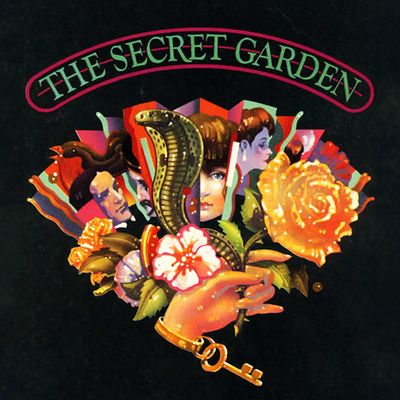
THE SECRET GARDEN is a timeless story with a lot of layers, just like our two guests who were gracious enough to discuss it with us this week. Tony-winning Daisy Eagan ("Mary Lennox," herself) and John Cameron Mitchell (do you think of him as "Hedwig" first, or Dickon?) enjoy a mini reunion in this episode that has a bit of everything, including "earth." Come to the garden, and stay for the "T!"
Daisy's podcast Strange and Unexplained with Daisy Eagan is available wherever you listen to podcasts. You can also follow her on Instagram @daisyeagan or learn more about her career at daisyeagan.com
Follow John on Instagram @johncameronmitchell to witness all the creativity, including the recent benefit of REM music for Planned Parenthood that he mentions in the episode.
Be sure to share "A Musical Theatre Podcast" with your friends and follow us on Instagram, Twitter, and TikTok. We have PATREON! that brings you bonus content for only $1 a month. Don't forget about our TeePublic Store that benefits Broadway Cares/Equity Fights AIDS.
Above all, thank you for being part of this podcasting community!
Transcript
This transcript was automatically generated and might contain errors.
[0:00] Jeffrey Scott Parsons: One thing I will say about Secret Garden is I cannot tell you how many people over the years have told me what the original Broadway cast recording meant to them and how it got them through, you know, coming out or somebody in their life, you know, dying or just their teenage years. I mean, so many people.
[0:30] Jeffrey Scott Parsons: Welcome everybody to a musical theater podcast where we discuss the cultural and emotional impact of some of our favorite musicals in theater history. My name is Jeffrey Scott Parsons. You can call me Jeff.
[0:50] Jeffrey Scott Parsons: Today we are discussing the musical The Secret Garden, which was a listener request from Bridget and others. Thank you all for writing in. Here to chat about it, you guys, I don't even know what to say. They're original cast members of the Broadway production. You may know them as Mary Lennox and Dickon, or you may know them as Tony winner Daisy Eagan and Hedwig himself, John Cameron Mitchell. Everyone, please welcome two beautiful pieces of our musical theater history. Daisy and John, thank you for being on the podcast.
[1:24] Daisy Eagan: Thank you. Thanks so much for having us.
[1:26] John Cameron Mitchell: So grateful you're here. I also want to put this out in the universe. As I was thought about talking to you both, I suddenly had this vision of you two hosting an HGTV type show together where you like explore gardening in metropolitan areas where you're like visiting Monstera plants and patio gardens.
[1:51] Daisy Eagan: Exactly. It's like Wick with Daisy and John.
[1:53] John Cameron Mitchell: Anyway, I'm not asking for any royalties. It really does. I actually am starting a permaculture garden in my backyard. So it's a thing. It's a thing. Very excited. The kids love the green, which makes The Secret Garden a very timely thing to talk about for many reasons.
[2:11] Daisy Eagan: And I promise I'm not going to try it because I know John Cameron, you're pretty punk rock. So I'll try not to get too sentimental on this podcast. But just know that I tend to cry on Mike. And this show is so emotional for me. I want to jump right in, though, and talk about your relationships to it. What was happening in your lives when it came into your lives? And Daisy, let's start with you, because I was how old were you when all this went down?
[2:39] Daisy Eagan: I was 10 when we did the reading, the first reading in the summer of whatever that was. And then I turned 11 during the official workshop. So I was I was I had been in Les Miserables and I had left because I was I'd been on the show for 14 months and I was, you know, already jaded and I was just ready for something else. Or no, I guess I left because we were supposed to do Secret Garden in Virginia. That was supposed to be the out of out of town. Okay. Try out. So I did put in my notice at Les Mis for that. And then that fell through. But I, you know, I just thought, it's okay, I'm going to go off to summer camp and do whatever go swimming in the lake. And yeah, and then they did this reading. And then the workshop and it all happened very quickly, especially I mean, now knowing how long it takes for things to happen. It really did happen very fast. We were open by, you know, April of the following year on Broadway.
[3:49] Jeffrey Scott Parsons: Wow, that's impressive. I didn't I don't think I realized it was such a quick process. Yeah, I was trying to put myself in your shoes, though. Because like, if I look back to being 10 or 11, I have general memories. And if I sit down and really do the math of like, what grade I was in, I'm sure there are some core memories, but like, my recollection is unreliable at best.
[4:15] Daisy Eagan: Oh, yeah. Yeah. So is that like the same way you feel about it, even though you like won a Tony Award?
[4:22] Daisy Eagan: Yeah, absolutely. I mean, I'm lucky that a lot of it is on tape, you know, I can go back. I mean, I guess that's like the kids today, right? Their whole lives are being documented. But I think if a lot of it hadn't been televised, I wouldn't remember and my son is nine and a half. And, you know, I look at him and I think, at his age, I was already going off to work every night. And I can't imagine that I can't imagine sending him. And, you know, recently, I was asked to write some memories about our dear, beloved Rebecca Luker. And, you know, I don't have that many. I have some really strong ones about Johnny, because I was in love with him.
[5:01] Daisy Eagan: And John was the first man that I, you know, had a had a real crush on who I found out was gay. And I was just, I, you know, I couldn't believe it. But, you know, we were gonna go see the Violent Femmes. And then we realized I was too young, I couldn't get into the club. And, yeah, I was I was a big fan of Johnny.
[5:24] Jeffrey Scott Parsons: And by the time you were starring in a Broadway show, had things like shifted enough from the Andrea McArdle years that it was a little healthier for you?
[5:36] Daisy Eagan: I think so. You know, I think and my mom was really a big advocate for children in the business. And she was she'd been researching the nuts. What is it? Coogan? The Coogan law?
[5:51] Jeffrey Scott Parsons: Oh, I don't know.
[5:52] Daisy Eagan: It's where parents can't steal their kids money, which had which had which had been a recent, you know, thing. And she was very much about kids and their and their rights. Although, again, looking back, you know, people people say like, Oh, I saw an interview you did on Regis and Kathie Lee. And oh, you were so cool and calm and collected. And I'm like, No, I was actually exhausted. That's what that was. I was exhausted.
[6:22] Jeffrey Scott Parsons: They did not make it easy on you with the show, like going back and looking at it. It's an incredibly complex character. And I and the actual content was incredibly challenging.
[6:36] Daisy Eagan: Yeah, I was very familiar with the book. I it had been my favorite book, and I had read it many, many times. And I had, I had acted out the story in my bedroom alone for years. So I was very familiar with it. And I had already played, you know, Tiny Tim, a little dying street urchin, and I'd already played Little Cozette, a little dying street urchin. So I was familiar with the, you know, with the sad characters. But also, I think, what ended up happening in my, my personal life during the show, I think the show was a real savior, because it helped me put my focus somewhere that was ultimately very healing for me. And the message of the show, I think, was a very healing message.
[7:18] Daisy Eagan: So then what happened is a dream.
[7:21] Daisy Eagan: Yeah, so, so I won the Tony in June of 91. And then my mom was diagnosed with pretty late stage colon cancer in September of that year. Really didn't take me until my, thank you until my late 20s to realize how fast how how short that period of time was because you know, when you're a kid, everything feels longer.
[7:45] John Cameron Mitchell: Watercolor.
[7:46] Daisy Eagan: Yeah. And so I so I realized, like, Jesus, that all happened in a three or four month span. And I left the show the following April, because, you know, she was in the hospital so much. And I was basically going from school to the hospital to to work. And I was, I couldn't do it anymore. I was exhausted.
[8:07] Jeffrey Scott Parsons: Wow.
[8:38] Daisy Eagan: So it was it was tremendously difficult. I like I said, I don't think I put my kid in, in the business. But Monty's little friend at school recently asked me, was it worth it? The deepest, coolest little kid I've ever met. But I said, you know, it was hard. And I wouldn't put a kid through it. But for me, I wouldn't be where I am now. I wouldn't have my son, I wouldn't have my partner. And so yes, it was worth it. Life is a twisty path. You know, you never know.
[9:14] John Cameron Mitchell: It's a maze, this garden.
[9:17] Daisy Eagan: It is. And now my son is coming home and having listened to Wick in the car. And he walked in the door the other day and went, Hey, Mary. And I was like, Oh, no, are we here?
[9:27] John Cameron Mitchell: That's fantastic.
[9:58] Daisy Eagan: So it's all of our everything, you know, our hundred years of career combined. And I have various things that I've done. And whenever we hit Secret Garden, we do Wick. And Amber puts on a terrible wig with a dreadful accent, wanders all through Britain. And it's like, I'll jump to help Wick cook that garden. And it came right back. The accent came right back to me.
[10:31] Daisy Eagan: And at first, I'm like, Oh, this isn't going to last long. But it's some people's favorite bit. So, you know, if you're in New York at that time, we're going to come to LA eventually. We'll do a surprise and then we'll do it.
[10:45] Jeffrey Scott Parsons: John, talk to me about what was going on in your life when you came into the Secret Garden.
[10:50] John Cameron Mitchell: Oh, well, I was just acting up a storm. I had just moved back to New York and did Six Degrees of Separation at Lincoln Center. And I guess during that maybe is when I did the reading. I can't remember exactly, but we opened in 91, right?
[11:10] Daisy Eagan: Yeah, because I remember going to see it, which I'm sure I did because I knew you.
[11:15] John Cameron Mitchell: And I was in it?
[11:16] Daisy Eagan: I don't think at nine, I would have.
[11:18] John Cameron Mitchell: Did you get it at your age?
[11:20] Daisy Eagan: I think so.
[11:22] John Cameron Mitchell: I don't think I got Six Degrees of Separation when I was in my 20s.
[11:26] John Cameron Mitchell: It was a pretty special thing to come back to. And then I just, you know, my mom's British. And so I really, Secret Garden was very much, I mean, my mom's favorite thing that I did, I think, you know, Hedvig wasn't quite her thing. You know, even when I did Hedvig and it was winning awards, my dad was like, this is all very groundbreaking, but do you think you'll ever get back to something like the Secret Garden?
[11:51] John Cameron Mitchell: And I loved doing the workshop. In some ways, I have to say, I think it was better.
[11:58] Daisy Eagan: The workshop was better than what it became?
[12:01] John Cameron Mitchell: Yes, in terms of the writing. I don't know, Daisy, you probably can't remember, but we had some different cast members and in the workshop, Patti Kohanauer, an unsung legend of the theater. When I arrived, she was...
[12:16] Daisy Eagan: Yeah, Edwin Drood.
[12:18] John Cameron Mitchell: Yeah, my first play on Broadway was Big River, first musical and play. And she was in that and she, what a voice and then Edwin Drood and just...
[12:30] John Cameron Mitchell: Her voice was like, it was like a crystal waterfall.
[12:34] John Cameron Mitchell: Yeah, and every time she sang, you would just burst into tears. I mean, Rebecca was fantastic, too. But there was something about Patti, it was more on the edge, you know, she was more like about to fall apart or something. Everything was just a little bit more integrated in terms of not being overpromoted or something. And when you go to Broadway, you tend to have to amplify and hyperbolate. And we also had stars coming in, you know, brilliant stars like Mandy Patinkin. They beefed him up, you know, because he was the star. So they gave him an extra song. Right. And it's sometimes overbalanced. It was just for me. I love it. And, you know, you felt the need to have a larger set and more chorus members and everything. But I actually, to be honest, felt that the workshop was...
[13:22] John Cameron Mitchell: It's Apogee, you know, it was as best. Even wick there was a different version of wick remember? I don't know if you ever heard that.
[13:31] Daisy Eagan: No, but I do remember I had the most ridiculous song of all time called, "What is a home?" Do you remember that one?
[13:39] John Cameron Mitchell: Why was it ridiculous? Oh because the lyrics were insane. It was uh, "What is a home? Does it have a father hat upon his head? What is a home? Does it have a mother waiting by your bed? Do you build a fire to sit beside when supper's done and then listen while it's read?"
[14:04] Daisy Eagan: Actually, I like that. I had a demo of Lucy. I have a demo of Lucy Simon singing it and it's drilled into my brain.
[14:12] John Cameron Mitchell: Oh crazy. It's very Oliver. Yeah, just you know, "Does it have a father hat upon his head?" was like, well we can do better than that.
[14:21] Daisy Eagan: We can do better. I love the workshop and I, you know, but from the beginning it was a woman-led production in terms of writers, director, producers, designers. I don't know if it was planned that way, but it ended up that way and that was the first time I'd experienced that and it actually made it, I think, extremely comfortable for all of us. And I loved working on it and I loved working with Daisy and Allison Fraser and chorus members.
[14:51] John Cameron Mitchell: I was not a story. Yeah, so I was in the chorus room with the great Peter Marinos and other people who just cracked me up. Peter Marinos who did my first makeup for Hedwig, which was, uh, wow, I didn't know that. Only a couple years after that, I did my first gig, uh, '94. He also used to call people the angry inch that were kind of like Napoleon type.
[15:17] Daisy Eagan: You know, the theaters were pretty rough back then and they still are often, but they, you know, it's like pipes leaking and you'd have to go upstairs to turn the lights on for your level and Peter Marinos is like, careful, don't turn that off my kidney dialysis machine, you know, there was a lot of, you know, brew and uh, all Jackal. It was just non-stop shtick and I wasn't as much a Broadway person, even though I'd been on a couple shows by then.
[15:52] John Cameron Mitchell: I was starting to think about writing a musical and I wanted something that really doing this show in effect for a year and a half including the workshop. It taught me a lot, right? I mean Daisy, when you have to do it over and over, you are aware of your process much more. You know, as an acting teacher once told me, there's nights you're going to be brilliant and for the other nights that's acting class. That's why you need acting class to be able to, you know, close to what it should be.
[16:27] Daisy Eagan: I had never studied voice. Um, I really didn't until I think got to doing the first production of Hedwig. So I didn't really know what I was doing with my voice, but I really enjoyed it. It was just a long run, you know, it was a very long run.
[16:43] John Cameron Mitchell: And it's funny, you know, the women in the production were great, but I wasn't really a big fan of the producers and they, it was the Dodgers and they had produced and they were well named. They would often dodge you. Do you remember Daisy, there was a weird thing and for a young actor you're affected by it, but they cut my song "Winter's on the Wing," but only through the period that the Tony voters come.
[17:11] Daisy Eagan: What?
[17:12] John Cameron Mitchell: And I didn't really have the wherewithal. I didn't know what to do. Like this probably would have been some kind of an equity thing now, but they wanted the show to be shorter to be more favorable to the Tonys. But they didn't cut it for real, like they didn't cut it in previews or anything. They cut it, and this is after opening because like that's a, could you imagine that show? Could you imagine that show without "Winter's on the Wing?" Absolutely not. How else are we gonna conjure spring up in this thing? But do you remember? I didn't, I don't remember it for a while, like about a month.
[17:42] Daisy Eagan: No, I know. Yeah, and then when the Tony period was over they reinstated it.
[17:49] John Cameron Mitchell: That's shady. Oh, that's, that is shady. I'm sorry.
[17:55] Daisy Eagan: And no one, I, yeah, even I demand answers. Even the director didn't, good luck. But it was shaky, you know. But in any case, it still was a very warm, a wonderful experience. We also did the Thanksgiving parade. John and I sang, I mean we were lip-syncing, but we did it, you know, we performed live and we were both just sort of trying not to laugh at sort of the hokeyness of it.
[18:23] John Cameron Mitchell: And you can see if you find it and watch it, you can see we're both sort of like, this is goofy.
[18:29] Daisy Eagan: Yeah, were you in like Herald Square? Were you on a float?
[18:37] John Cameron Mitchell: We were in Herald Square, right? Yeah, there's nothing quite so jarring as seeing, you know, period costumes on that garish red and green.
[18:41] Daisy Eagan: Yeah.
[18:42] John Cameron Mitchell: In the 30-degree weather, right?
[18:45] Daisy Eagan: To say the least. Yeah, that's crazy.
[18:50] John Cameron Mitchell: Well, let's talk about some of these amazing women who were behind The Secret Garden because it is such an anomaly in musical theater history. I mean to this day, we don't see this happening, uh, let alone in the early 90s. So, uh, let's begin by talking about Lucy Simon, who unfortunately we lost recently.
[19:11] Daisy Eagan: Brief feelings about Lucy as a person before we talk about her career. She was the nicest of them all. She really was. She was so kind. You know, she comes from a musical royalty family, you know, all three of her sisters, one was a famous opera singer, one was a famous pop star, and she was the least famous but probably the most head on her shoulders. Adorable, kind person.
[19:38] John Cameron Mitchell: But Lucy was a dream, you know, and she just, how was she for you, Daisy? Was she just awful to you?
[19:48] Daisy Eagan: Incredibly warm. She was like, I mean now, you know, as she got older she was like everyone's Nana, you know, she just was like, she just exuded love and grace and warmth and I have a lot of regrets about not taking advantage of having her in my life just on a personal level, you know, I became a teenager and I was more interested in smoking cigarettes and being angry. Um, and so I do, I have a lot of sadness about sort of losing touch over the years, um, but she's just like one of those points of light, you know, when you look back, like a grounded etherealness, I don't know if that makes sense, but that's beautiful.
[20:45] John Cameron Mitchell: Yeah. Thank you for that. I'm so impressed by her. There's this famous story that it's kind of written everywhere, but I'll share it here where she was a young girl born in 1940, by the way, and young girl in elementary school, she had to memorize a poem. And in order to memorize the poem, the only way she could do it was to make up a song to it. So she wrote a song to this poem to help her remember it and that song was literally "Wink and Blink and a Nod."
[21:15] Daisy Eagan: Yes.
[21:18] John Cameron Mitchell: And years later she records it with, you know, her pop star sister Carly Simon and it becomes like an actual hit. And I find that so interesting because so much of The Secret Garden score has that sensibility to it. It's almost like a nursery childlike but not childish. It's tied to nursery rhyme, it's tied to literature, and I so I just think that this source material was a perfect match for her gifts and composing sensibilities.
[21:52] Daisy Eagan: I agree. I think it was the perfect match. Her music is so lush and full and also, now that I think about it, a lot of variety because a lot of the show sounds like a chamber musical with, you know, a chorus facing out front addressing the audience and then you've also got folk pop with Dickens material and it's, I think one of the first scores that shows like Little Women, shows like Jane Eyre have since not copied but definitely drawn upon that really broke through to a wide audience and has I think aged really beautifully too. People love it even maybe more so than they did when it first came out.
[22:41] John Cameron Mitchell: Yeah, it's funny that chamber chorus aspect of it. I think is one of its Achilles' heels, but the score wise I think it's, you know, unmatched.
[22:50] Daisy Eagan: Mm-hmm. Why is that?
[22:55] John Cameron Mitchell: Uh, well, I don't want to disparage anything, but I think it's story-wise a very difficult thing to figure out who all those voices should be assigned to and you know in our production they were ghosts. In a subsequent production they were house staff. And in my opinion, having seen the show 70 bazillion times in many different iterations, the ghosts don't really make that much sense. Her parents certainly do and Lily obviously does, but it doesn't make sense that Mary would lug her parents' friends with her over to England from India.
[23:40] Daisy Eagan: But she had to in order for those voices to exist.
[23:43] John Cameron Mitchell: And I personally, as a storyteller, feel like if they can figure out that puzzle piece it would go a long way. Just seeing the show as an adult now, I watch it and I go, I don't know why those people are with her.
[23:59] Daisy Eagan: Hmm.
[24:00] John Cameron Mitchell: I remember seeing the first national tour came through Utah and I went as I was probably 12 and my grandparents took me and there are like stage pictures in that storytelling specifically with the ghosts and the cholera and the red scarves that are really indelibly printed in my mind and it was incredibly clear to me and then I grew up and read reviews where people were like, nobody understood what was happening in the show. It was unclear. I'm like I was 12. I totally got it. I don't understand this, but that's just me. It's, it is, it's I think especially the India stuff is very clear. You'd have to be pretty dolt-headed to not get it. But a lot of critics are very dolt-headed and well, there you go, filled with mashed potatoes, but um, but I think logically as it moves to England, you know, in my humble opinion as a storyteller.
[24:57] Daisy Eagan: No, I get it lacks a bit of logic and honestly, it's one of the reasons why, I mean not to disagree with you John, but one of the reasons why I enjoy the design of the original production is because some of that chamber stuff can be so stark that I really love the texture that comes from the design elements to balance it out. So it doesn't just feel like, you know, Wuthering Heights or something more bleak because it very easily could go that route and I mean there's a place for that for sure, but I don't know if I prefer it.
[25:26] John Cameron Mitchell: There was actually a production that they did I think in Denver maybe four or five years ago while we were in DC doing that revival, um, that I saw production stills from that was gorgeous. It was like it was very stark. It was very, um, I mean it was the winter, you know, but it was very dead and bleak and um, spooky and gorgeous.
[25:49] Daisy Eagan: Yeah, I didn't see, I didn't see the later, you know, the act two stuff, but I thought it was a really interesting approach.
[25:59] John Cameron Mitchell: That's cool. So let's talk about Marcia Norman who was a famous, famous playwright at this point, uh, having won a gajillion awards for 'night, Mother,' a show that is, you know, just about as light-hearted as you could want, right? Obviously about suicide. Recollections on working with Miss Norman?
[26:23] Daisy Eagan: She was great. I mean, we, you know, we were just the, you know, we were just the canaries so we didn't always, we weren't always asked our opinion, but you know, like everyone was super for sure. I know when Manny came in it was kind of a different vibe because he, he's a very soft-hearted guy, but he had also a kind of an aggressive outer thing, you know, which is mellow.
[26:44] Jeffrey Scott Parsons: Welcome back to A Musical Theatre Podcast. Today, we’re diving into the enchanting world of *The Secret Garden* with two incredible guests.
[27:12] Daisy Eagan: I’m so excited to be here and talk about this beautiful show!
[27:42] John Cameron Mitchell: Yes, it’s such a layered story. I think it resonates with so many people.
[28:02] Jeffrey Scott Parsons: Absolutely! *The Secret Garden* has so many themes of loss and healing. What do you think makes it so timeless?
[28:22] Daisy Eagan: I think it’s the journey of the characters. Mary Lennox, for instance, starts off so lost and angry, and through the garden, she finds herself and her connections to others.
[28:42] John Cameron Mitchell: And the music! The score is just breathtaking. It really captures the essence of the characters' emotions.
[29:02] Jeffrey Scott Parsons: The music is definitely a standout. Do you have a favorite song from the show?
[29:22] Daisy Eagan: I love "The Girl I Mean to Be." It’s such a poignant moment for Mary, where she starts to envision her future.
[29:42] John Cameron Mitchell: I’m partial to "Come to My Garden." It’s so magical and really encapsulates the transformation that happens.
[30:02] Jeffrey Scott Parsons: Those are both beautiful choices. The garden itself is almost a character in the show, isn’t it?
[30:22] Daisy Eagan: Definitely! It symbolizes growth and healing, and it’s a place where all the characters can come together.
[30:42] John Cameron Mitchell: And it’s a reminder of the beauty that can come from pain. The garden thrives despite the darkness surrounding it.
[31:02] Jeffrey Scott Parsons: That’s such a powerful metaphor. How do you think audiences connect with that message today?
[31:22] Daisy Eagan: I think everyone has experienced loss or hardship, and *The Secret Garden* shows that there’s always hope and a way to heal.
[31:42] John Cameron Mitchell: Exactly! It’s about finding light in the darkest of times, which is something we can all relate to.
[32:02] Jeffrey Scott Parsons: It’s a universal theme. Speaking of themes, what do you think about the character of Colin?
[32:22] Daisy Eagan: Colin’s journey is so inspiring. He starts off so isolated and afraid, but through his friendship with Mary and Dickon, he learns to embrace life.
[32:52] John Cameron Mitchell: And his transformation is so beautifully portrayed. It’s a testament to the power of friendship and love.
[33:12] Jeffrey Scott Parsons: It really is. The relationships in the show are so rich and complex.
[33:42] Daisy Eagan: Yes! Each character has their own struggles, and they all find solace in each other, which is so heartwarming.
[34:02] John Cameron Mitchell: And the way the story unfolds, with each character’s arc intertwining, makes it so compelling.
[34:32] Jeffrey Scott Parsons: It’s a beautifully woven tapestry of emotions. What do you hope audiences take away from *The Secret Garden*?
[35:02] Daisy Eagan: I hope they leave feeling inspired and hopeful. That even in the darkest times, there’s always a way to find light.
[35:32] John Cameron Mitchell: Yes! And that it’s okay to ask for help and lean on others. We’re all in this together.
[36:02] Jeffrey Scott Parsons: Such an important message. Thank you both for sharing your insights on this incredible musical.
[36:32] Daisy Eagan: Thank you for having us! It’s been a joy to discuss it.
[37:02] John Cameron Mitchell: Absolutely! I could talk about *The Secret Garden* all day.
[37:32] Jeffrey Scott Parsons: And we appreciate you both being here. It’s been a wonderful conversation.
[38:02] Daisy Eagan: Thank you! I hope everyone gets a chance to experience the magic of the show.
[38:32] John Cameron Mitchell: Yes, it’s truly a special piece of theatre.
[39:02] Jeffrey Scott Parsons: And to our listeners, thank you for joining us today. Be sure to check out *The Secret Garden* and follow Daisy and John on their creative journeys.
[39:32] Daisy Eagan: Thanks, everyone!
[40:02] John Cameron Mitchell: Bye!
[40:07] John Cameron Mitchell: Like the timeless tale of colonialism, isn't it? That we come into a space and we, I mean, you know, I don't think the English necessarily brought cholera, but we certainly as colonizers had a history of bringing our disease and then not caring for those who got ill from it. Yeah, not being accountable for the consequences we bring about.
[40:36] Daisy Eagan: So Mary Lennox has been orphaned because of this cholera outbreak in India. And so she is sent to England to live with her uncle Archibald, who of course married her aunt Lily. Lily, like we said, was just someone that everybody loved. She loved gardening. She loved Archibald. He loved her in a way that I think was very confronting to him because he has a hunch and a bit of a gimpy leg. So he's handicapped and probably didn't think that someone as beautiful as she would fall in love with him. But alas, there it was. She was pregnant and in her garden, sitting on a branch of a tree and the tree branch broke, which, wow, that's really interesting when you think of the symbolism of the garden giving both life and death to this family.
And Lily falls. It immediately puts her into labor and she dies in childbirth. This destroys Archibald, Archie. It also proves to be rather difficult for the son Colin. Everyone treats him like a precious object that cannot leave a bed. He is bedridden. But this house that Mary is coming to, and we are told this incessantly by the ghosts who inhabit it, is haunted. There's a house on the hill. Spirits haunt the halls. And so this question of what is a ghost and why are they here really floats, if you will, throughout the entire show. Are they here because they're actually haunting? Are they here because the people who knew them won't let them go? It seems to be a little bit more of the latter.
But when Mary arrives, she immediately picks up on it and also hears someone crying, which, of course, is Colin. But because no one talks about him, she doesn't know where he is. She just hears this kind of moaning throughout the hallways. And who knows? Maybe it's even a figurative crying. She also is really a bit of a brat. She can have her full-on hissy fit tantrums, some of which are done in Indian. She's very expressive in that way, too.
[43:17] John Cameron Mitchell: Do you think that comes from the only child syndrome or just growing up and testing boundaries?
[43:27] Daisy Eagan: I think actually Mary is not a brat. And I think that's actually a pitfall of the character. And I think it's what I think a lot of little girls have trouble with when they're auditioning for that part. They go in with that mindset of like, Mary is a brat, right? And she's not. She's a traumatized child who lacks love and nurturing and kindness. I was watching, I can't remember their name, this social media influencer. And they were talking about when someone calls you an old soul, it's actually not a compliment. And that really comes from trauma. And it comes from learning to swallow your feelings and not burden anybody else with them. And I think that's what Mary is. And I think also her mother was probably also somebody who just threw tantrums when she didn't like things or didn't get her way.
Yeah, I think that's the model that she had. But also, when my kid throws a tantrum, it comes out of left field, right? Because he's generally incredibly loved and nurtured and listened to. And we're like, where does this come from? Yeah, you don't need to be doing this because we're here and we're listening to you. But for somebody like Mary, it's the only way that she can get herself heard. And that tantrum that she has when she's told she has to go away to school, I mean, it works. She ends up getting threatened to get sent away and is saved at the last minute. But it's the only thing she knows how to do because nobody's told her any different.
[45:24] John Cameron Mitchell: So if you don't mind me asking, because one of the people that we didn't talk about on the team, Susan Schulman, who was a great director, is a great director. We actually didn't talk that much about Marsha either.
[45:34] Daisy Eagan: No, we really didn't. That's actually a fair point. But we did say Marsha had a hard job taking this really complex story, a novel at that, and turning it into a musical. She also wrote the lyrics to Lucy Simon's music. But what she was able to craft was this complex character with a lot of interesting things to say, act, do, sing. How were you able to toe that line of not being too bratty? Did Susan have a lot to do with that, director Susan Schulman?
[46:11] John Cameron Mitchell: Yeah, Susan was a very hands-on director. Lots and lots and lots and lots and lots of notes. You would get a pile of index cards with notes that I kept for years and years. I probably still have some of them. She knew what she wanted. She was very clear and knew what she wanted. I mean, I think, again, my familiarity with the story was part of what helped me. I think also just... I was also an old soul, so I think I just related to that character in such a strong way. It never occurred to me to go in there and stamp my foot and put my hands on my hips or whatever that cliché is with bratty little girls. And I think that Susan was very careful to make a character that was... to help craft a character that was likable.
One of the big things, one of the big turning points for me, because I read the script before I talked to you, just to kind of take myself through it. And one of the big turning points for me with aligning myself with Mary is when she stands up to Colin. Because you see these children who, to quote you, are both old souls. They both have a lot of baggage and trauma. And Mary, maybe subconsciously seeing herself in him, is able to put him in his place in a way that nobody else in his life can. And I really feel like that is the moment where I'm like, oh, she's our girl.
[48:18] Daisy Eagan: Yeah, absolutely. She has done something that no one else has been able to do, mostly just because that's how she's been treated. And I think they really save each other, you know, Mary and Colin both save each other, because obviously he gets out of his wheelchair and, you know, and the garden is healed. But Mary is healed by all of that as well. And yeah, I think you're right. That's the moment where you're like, oh, okay, we're on your side. We get it. I also would say too, about Susan, generally speaking, I personally think that having a woman direct this story is the appropriate choice. I think that it is ultimately the story of a little girl and of motherhood, you know, mother nature and nurturing. And I think that that's only something that can come from a woman. That's my opinion.
[48:52] John Cameron Mitchell: I agree. I think it's one of the big reasons why this musical feels so of its own.
[48:59] Daisy Eagan: Yeah. And John said, you know, the rehearsal room was very, really comfortable. And I think that's because it was led by women. There was never any screaming. There was never any all the stuff you hear about from male directors that most of us have encountered. None of that took place.
[49:25] John Cameron Mitchell: Wow. That's great. Not everybody in the house is mean or haunted or upset. We have the chambermaid Martha, who is sprightly and spunky and is immediately trying to get Mary to go outside and get fresh air and play. Mary being from India, where it was very humid and crowded, does not understand this concept of open air and cold. But Martha, because of a fun song called If I Had a Fine White Horse, uses a little reverse psychology to get her to go outside. And Martha also talks about her brother Dickon. Talk to me about Dickon. Who is this character?
[50:10] John Cameron Mitchell: He's magical. He's probably a Virgo. He's definitely done ayahuasca. That's hilarious. He grows magic mushrooms. He's a witch boy. You know, witches are like liminal. They bring different worlds together, the beyonds. But I think of him as a kind of priest, a therapist, but in using different forms, using music and gardening therapy and reminding Mary that she's part of something larger. And it's not necessarily God, but it's a mother. It's a mother nature. It's the world in which we live and don't always take care of. And you can even look at the story as a kind of early inadvertent metaphor for climate change. The garden has been left to die. And the literal death in Mary's life is in this dead garden.
And he says, it's not that it's actually dead, but it's just dormant. And you have to clear away the dead parts. You have to loosen up the earth. You have to make these things grow again that are waiting to grow. You can put in your own seeds, but there are some that are there already. And it's preparing and stewardship of your environment, of your life, of your world.
[51:41] Daisy Eagan: Yeah, that's what I love. I love that Dickon is a collaborator with nature. And it shows that this doesn't happen without the two working together. We can't live on this planet without thinking that what we do affects how our environment changes around us. And so here's this boy who we don't see. We hear about him way before we ever see him. Everybody talks about Dickon, but we never see him. And because he's always out doing things, he's always out collaborating with nature to make it happen, to help it happen.
[52:14] John Cameron Mitchell: Yeah, he might not even be human. I mean, who knows? No one really stays where he lives. Who knows? But he is certainly in this world and he has work to do. When we experience loss as we all do or will, these are the kind of messages that we need. And it was very moving for me. I lost a brother when I was young and my boyfriend after this doing Supergarden. But the metaphor continues to be very powerful.
[52:45] Daisy Eagan: Last thing for you, John Cameron, talk to me about this accent. This is where I did some research. I have ancestors from this area, but gosh dang it, I can't understand a thing they say.
[52:57] John Cameron Mitchell: Can you understand what I'm saying?
[53:03] Daisy Eagan: Every other word, but I get the idea.
[53:10] John Cameron Mitchell: I remember back then they were like, you got to pull back on the accent. I'm like, I will not. It will not be correct if I do that. I learned accents pretty quickly. And it was important. I think I had a couple of reviews where people were like, you know, I couldn't quite get what he was saying. And the most vitriolic critic was John Simon of New York Magazine.
[53:29] John Cameron Mitchell: She ultimately gets into the garden by means of magic. First is a bird, who Dickon can talk to. The bird shows her where a key is. And then, after a very stormy night in which there's a lot of drama in the house, it's the ghost, and specifically her Aunt Lily, who leads her to the door of the garden. And she finally is able to get in, only to then see how truly dead everything looks. I think the second act of The Secret Garden is really about seeing how this renewal, this rebirth, both in love in the household and family relationships, and as well as the garden itself, comes to pass. What are some of your favorite moments in the score? Because when I look at I Heard Someone Crying, which is a really challenging trio, where you're just this 11-year-old singing with freaking Rebecca Luker and Mandy Patinkin, and holding your own.
And then also The Girl I Mean to Be, which is just such a beautiful melody and gorgeous little lyric, and a song that an adult would kill to have. And yet it's given to a child. Anyway. I would say the ones that really stick out to me are Hold On, Winter's on the Wing, and How Could I Know?
[54:58] Daisy Eagan: Mm.
[55:00] John Cameron Mitchell: Marsha and Lucy told a story in an interview once about how could I know when Lucy finished it, or came up, I guess, with the melody. And Marsha was driving, and she had one of those old suitcase phones in her car. And Lucy called her and said, I think I've come up with the melody and started playing it for her. And Marsha said she had to pull over and stop. And it was just like a train. And I still believe that. I still believe that that duet is one of the most gorgeous, haunting pieces of music ever. I think Winter's on the Wing is so like sexy, and mysterious, and spooky. Hold On, obviously, is a timeless anthem. When I did the revival, and I had the good fortune to play Martha, Trump got elected on... Gosh.
Wow, that's making me cry. And we were in DC. And I sang that song every night, and I felt like I was saying, you know, we're gonna get through this. He is the monster. And we're gonna get through it. And I guess I'm upset. I'm crying because I feel like we've just, it's worse now. I mean, not, I don't mean, you know, the presidency. I just mean, like, back then we were so naive. You know, we were like, oh, this is the dumbest thing anyone's ever said. And it's like, the next day, oh, no, this is the dumbest thing anyone's Oh, no, this is the dumbest thing. This is the scariest thing that's ever happened. This is the scariest thing that's ever happened. And to watch, you know, the rights of LGBTQ people getting stripped away as a direct result of that is heartbreaking. And I really feel like Hold On is one of those songs that's just, I keep coming back to is the thing that helps me to keep going.
[58:25] John Cameron Mitchell: Thank you for sharing that. I completely agree. What I was filled with by relooking at the show, and maybe it's where I am right now. But like, this idea that life wants to live. And I feel like I'm constantly being given this message that like, everything's crappy. And that like, nobody can get along and everything is working against me. And it's really, really helpful to go back to nature. And I think being in Hawaii has done that for me as well, because the ocean is so majestic. And you're like, constantly like, you are all powerful. I am nothing, you know, the ocean. But it's this feeling that like, the charm from the ground wants to come up, no matter how deep the winter is. Yeah. And so yeah, the show should have an anthem like Hold On.
And yes, the garden has to bloom into something beautiful, both literally and metaphorically. And death and birth and renewal are all mixed into it in this really beautiful way that just fills me with so much hope. And like, those are the best American musicals, in my opinion, are the ones that really fill us with hope. You know,
[59:51] Daisy Eagan: I agree. I agree. I was reading, I guess it was in my permaculture gardening book. I was reading that they have learned that the earth actually releases chemicals that stimulate happiness. So when you are gardening, it actually increases your levels of happiness. And that's why so many people turn to it as like a meditative, calming practice that and you know, and the earth in a very, very real way is healing. One of the characters that we haven't mentioned is Neville, who is Archie's brother. He is a doctor. Once again, Marsha Norman creating a lot of nuance with these characters. He very easily could just be this evil doctor who is keeping Colin down because he's jealous that Archibald, his brother, was able to marry Lily, the woman that he loved.
But when you look at it, when you look at the script, Neville had a practice that he then gave up in order to help Colin to help Archie in his mourning. He really gave up a lot of his life to help this family. And of course, because of it, boy, oh boy, did the resentments build up. I think it began with good intentions. And then in the same way that a lot of the love has left the house, it has left his heart as well.
[1:01:26] John Cameron Mitchell: What happens plot-wise is that Archie gets overwhelmed by the promise of all of this life and love that might be coming back to his home, especially since he's still haunted, if you will. It's so interesting, this idea of being haunted by your love. It's like, which do we want? Do we want them to stay or do we want them to go? But because Archie is really struggling in that transition in his life, he leaves. He leaves the house and says, Neville, brother, you're in charge. Neville decides that he needs to send Mary away because Mary has made contact with Colin and is trying to get him to live a little bit louder than Neville thinks he should for health reasons. What Mary decides to do is write a letter to her uncle Archie, asking him to come back and saying, you're missed.
And when Archie, when Archibald receives that, it's enough to make him really confront his choices and this devastating loss that he has had in his life. As the show wraps up, Mary playing in the garden with Colin and Martha and Dickon, and it has grown back just as Dickon had promised. Not only is Mary running around, but Colin is pushing her in his wheelchair for a change. And it is in that scene that Neville and Archibald walk in. Neville is, of course, very upset. Archibald, however, couldn't be happier to see his son. And this day in this garden, no small coincidence there, is the moment that they decide to be a family. And there's accountability and there's connection and there's love, and there's a chance for a new season.
[1:03:27] Daisy Eagan: I think also to the matter of hope, what I always think of, you know, we say like, oh, we're killing the earth. That's actually not true. We're killing ourselves and the animals on the earth. But the earth's going to be fine. She's going to be just fine. She's going to be fine. She's going to take our trash and turn it into something else. We won't be here anymore. But boy, while we are, what are we doing if we're not being good stewards of the earth and of each other? Like, what else? Why else are we here? You know?
[1:04:10] John Cameron Mitchell: Oh, amen to that. Amen, sister. That's awesome.
[1:04:17] Jeffrey Scott Parsons: As always, if you have recommendations for shows you'd like us to cover on a musical theater podcast, you can always email me at amusicalpodcast at gmail.com. Don't forget to follow us on social media. We're still on Twitter. I don't know how much longer. But we're definitely on Instagram at amusicalpodcast. We're also on TikTok. We have Patreon, exclamation point, where for only one dollar a month, you can support the regular show and receive bonus content like our recent conversation with one of the longest running male dancers in Broadway history, Ray Mercer. We also have a TeePublic store and the profits we receive from that, we donate to Broadway Cares Equity Fights AIDS. We're going to do our big submission here at the end of the month.
No more than anything, listeners, that we may be going into December, but the promise of spring is always there. And I love you and I'm grateful for you and never forget that. John and Daisy, it's time for you to plug what you got going on. What's coming up?
[1:05:17] John Cameron Mitchell: Cassette Roulette, my show with Amber Martin at Joe's Pub in New York for five shows starting January 21, every weekend in February too. I'm doing a Planned Parenthood benefit in Atlanta and Athens with this music of R.E.M. December 14th and 15th in Athens and Atlanta. You can Google that. My podcast Strange and Unexplained with Daisy Eagan. It's every Thursday. We're, oh my God, we're almost at the end of season two, which blows my mind. I love it so much. I'm so proud of it. I write it every single week. That's what I got to get to now. And I have a live show, Daisy and Jordan's Brunch of Shame, March 5th at Green Room 42. It is wildly inappropriate and messy and dirty and a fun time is had by all. And that's it for the moment. But other things are coming down the pike. You always got pots of stirrin' on the stove. Always, you have to.
[1:06:25] Daisy Eagan: I love you, Daisy. Thank you. This has been a pleasure. I love you, Johnny. Thanks, everybody. And remember, if the thing is weak, it'll grow.
© Broadway Podcast Network, All Rights Reserved