

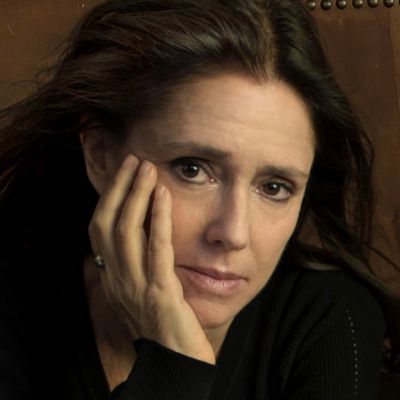
Julie Taymor made history being the first female director to win a Tony Award for Best Director of a Musical. One of the most iconic directors of our generation, Julie is also a writer of theater, opera and film... Read More
From the show: And the Award Goes To... Hosted by Ilana Levine
Guests
Featured Shows
About
Julie Taymor made history being the first female director to win a Tony Award for Best Director of a Musical. One of the most iconic directors of our generation, Julie is also a writer of theater, opera and film. Her stage adaptation of The Lion King debuted in 1997, and received eleven Tony Award nominations, with Taymor receiving Tony Awards for Best Director and Costume Designer. Her film Frida, about Mexican artist Frida Kahlo, was nominated for five Academy Awards, including a Best Original Song nomination for Taymor's composition "Burn It Blue".
Julie has a strong passion for mask work, puppetry work, and why many people who watch The Lion King may not understand the extreme levels of talent required to be a great performer with a mask on. Julie also discusses what the show means to her, why it's so important to the world, and what really drives her.
Hosted by Ilana Levine, Produced by Alan Seales, part of the Broadway Podcast Network.
Transcript
This transcript was automatically generated and might contain errors.
[0:00] Julie Taymor: This is Julie Taymor, and you're listening to, and the Award Goes To...
[0:22] Ilana Levine: Have you ever dreamed of winning a Tony Award? Did you ever practice your Tony acceptance speech in the bathroom mirror? Did you grow up watching the Tony Awards every year? Do you have a collection of Tony Award shows on VHS tape that you refuse to throw out? Well, then this is the podcast for you. Every week I interview your favorite Tony Award winners, and together we go down memory lane as my guests share intimate and never-before-shared details about their Tony experience. By the end of every episode, you're going to feel like you just won a Tony. Welcome to, and the Tony goes to... I'm your host, Ilana Levine. Welcome today's Tony winner, Julie Taymor.
[1:25] Julie Taymor: I'm so happy to be following in a long line of awards for women as directors. Yes, Gary! Anyway, oh, this is just spectacular, spectacular! And thank you for that. First of all, the Lion King cast, to put up with what they have to wear and do, and give me as a director so much enthusiasm and do it all the time, I kiss and love every single one of you. I also want to thank my collaborators, all of them, Richard Hudson, Lev O.M., Mark Mancina, the whole group. I can't go on and on about you, but they are the best supporters. I got to pick them. Why? I had the best producers. Producers Tom Schumacher, Peter Schneider, Michael Eisner, who give you the support as a director. I'm a not-for-profit baby.
That means I have Lincoln Center, Music Theater Group, the Public Theater, Theater for a New Audience, all of them, all are New York comrades, supporting me to play, to grow, to hone my art. Then I get this other company to come in and say, we want you to do it again, and we're going to give you a little more support, so it can be a little bit bigger and last a little bit longer, maybe. I thank you, Disney. I thank you, my sweetheart and collaborator, Elliot Goldenthal. And also, I have parents, Betty and Mel, who let me be very free when I was a young girl and play, play, play. I love you. Thank you. That was hard to listen to the last line. Why? My mom passed away last year. That's why. At 100. At 100. Wow. And my father went into the hospital, the opening of The Lion King, the opening of The Lion King on Broadway. So, he was not there that night. Anyway, that's that.
[3:34] Ilana Levine: As you watch that speech back again, is that something you've done over the years from time to time? Have you heard it often?
[3:45] Julie Taymor: No.
[3:48] Ilana Levine: What's remarkable to me in watching this back with you is the composure. And I wonder if you can recall and take me back to that night as you watch it and as you remember it 25 years ago. And part of why we're doing this is you are about to celebrate in November 25 years since the premiere of The Lion King on Broadway, which is when you said in your speech, you know, hopeful that it'll have a long run. Well, Mazel, on the very long run. Can you just share?
[4:26] Julie Taymor: Yeah, I think by the time the Tonys happened, we opened in November and the Tonys are the following June, I think. So, I thought, wow, that is a long run, you know, because Broadway is usually two months max, you know, two or three months, not 25 years. But, yeah, I felt it was an extraordinary night. You know, we were, I think, Ragtime that year, Chicago. There were good things on Broadway that year. And they got awards, too. I don't think people appreciated our performers as much as they should have because CeeDee LaLoca, who was up for Tony for Rafiki, and also just not even having the other actors nominated is a misunderstanding of what kind of talent you need to be able to play Scar, for instance, and have a mask and be an emotional character.
So, people still confuse what the power and the artistry of mask work or puppetry work is. But I don't think at that night. I mean, I was just overjoyed that my comrades, my other collaborators were also recognized and the entire production was recognized, which was great.
[5:37] Ilana Levine: Well, I want to go back because at the time of The Lion King, and you were being hired to direct it, I think, I mean, there are a lot of words thrown around, but I think one would have described you as an avant-garde director, an experimental theater director. I mean, you also, you had your hands in so many different genres from opera to, you know, as you described yourself as kind of a not-for-profit baby. But I do want to talk about, I mean, I can't reiterate enough what a historic evening it was. Julie Taymor was the first female director to win direction of a musical that night. Sandy Duncan, who gave you your award, was so overjoyed by it that she actually announced your place in history before even saying your name, that you had won. So, in that moment, you were like, wait, so did you understand?
[6:31] Julie Taymor: No, you saw that. I wasn't, as I just watched this, I went, why aren't I responding more? Because I didn't know yet. I was just sort of, yes, yes, could be somebody else, but, and then she went, oh yeah, I forgot. Which was completely adorable and authentic. I would love for you to share, if you can, how Julie Taymor became the choice for this kind of unprecedented production on Broadway, and how those phone calls and interactions first started with Tom Schumacher and other Disney folk. And, you know, did you just get a phone call one day? Did you know Schumacher before? Sort of what was the origin story of you as director for this show?
[7:21] Julie Taymor: Well, right, yes, no, I had done off-Broadway shows, but I'd also done a giant opera with Seiji Ozawa, Jesse Norman, Bryn Terfel in Japan. Peter Gelb was one of the producers who's now, you know, who's been the director of the Metropolitan Opera. And so I had worked on large scale before. That's not, that was not a concern for me, maybe for them, but I had done, you know, a giant piece, Oedipus Rex, with 120 men in the chorus, and, you know, all these extraordinary world famous opera singers. And it had been on television, it had won the, it had won Best Opera in the World, a classical music award. And I did Juan Darién at music theater, that was a music theater group production at Lincoln Center, and we were nominated for five Tonys.
And so it's still, it was more, you can use the word experimental, but it was just different. You know, it was the use of puppetry and masks to tell a story that would be hard to tell with just humans, because it's not a human story. So I think, I also had done, right before I was offered The Lion King, a large musical, actually earlier, 1980, I think it was 84 or 86, that Elliot and I and David Seesdorf did an original musical called Liberty's Taken, up in, and Ed Sheeran, which I, who I saw at the Tony Award there, he and his wife Jane Alexander were featured right there. He produced with, no, no, he produced at the Castle Hill Festival, Liberty's Taken. Liberty with a Y and apostrophe S, not I-E-S, Liberty's Taken, so it's Liberty is Taken.
And Norman Lear was the main producer on that, or, you know, he put the money into it. This was an original musical that was the underbelly of the American Revolution. There were no George Washingtons or Jeffersons or any of the, you know, it was the people who fought in the war, it was the fight. There were, I don't know how many hundreds of characters, but 15 actors using all kinds of masks and puppets, peopled this musical. And we did it in Massachusetts at Castle Hill. It was amazing, and we, at that time, Tom Schumacher, who had done the movie The Lion King with Peter Schneider, the animated film, he was running the Los Angeles, it was the Olympic Arts Festival in L.A., and we wanted him to bring, he wanted to bring Liberty's Taken there.
So he was aware of this work that was hundreds of scenes and talking ships, figureheads and armies and wars and giant numbers of people. I created puppets that were, one person could have 20 puppets off his back or off her back. So I invented all kinds of techniques to be able to do any kind of story, you know, what you would normally think would be a movie, but that I did on stage. And he could never bring it, but he, as he's told me, they didn't have the money to bring it or something happened, but he remembered me and he knew about me because I'd won Obie Awards and Off-Broadway, and it wasn't that I was an unknown. I just hadn't done commercial theater. That was it.
[11:00] Julie Taymor: So I also at that time, I think I was invited to do De Vliegende Hollander, The Flying Dutchman at the L.A. Opera. So I was already, you know, starting to do the magic flute at the Maggio Musicale for Zubenwete in Florence. I was doing large-scale opera and with great conductors and great singers. So he called me up and I was floored. And he said, have you, do you know The Lion King? And I said, you mean the cartoon or the anime? You know, I think I even called it a cartoon at that time. I mean, and I said, no, I haven't seen it, which shocked him, you know, utterly shocked him. And he said, well, we're thinking of putting it on the stage, but we don't exactly know what we're thinking of. You know, it could be anything.
I think Michael Eisner wanted a Broadway show. Tom didn't really, even though Tom was a great theater guy and animated film producer, he wasn't absolutely sure that that was feasible. So they sent me the animated film. I learned that you call that not a cartoon. And I thought it was fabulous. Yeah. First of all, it's amazing. The music, especially the combination of Elton John and Lebo M, where you have the South African extraordinary voices, the singing, mostly choral background in the movie. I put it to the foreground in the Broadway show. Right. Big time, you know. And Lebo wrote more songs and that sort of thing. But I was amazed by that. But also something like The Stampede just presents itself as the greatest challenge in the world.
I mean, you know, how do you do that on stage? So it started to get my sculpture. I'm a sculptor. I make the puppets and masks. A lot of people don't know that I design the costumes, but I also am the sculptor. I sculpted every one. Michael Curry was the partner in helping it technically, the puppets like to move off the head and this and that. But the actual sculpture of the masks and most of the puppets is my work. And so it was very exciting, the idea of how would I be able to visualize this whole thing. So I then started to talk to them about doing it. And they also knew that the short 70-minute animated film was not really complete enough for a Broadway musical. We talked about it being in a planetarium surrounding.
Or in a skating rink or some other form of theater. But I knew Eisner really wanted a Broadway show. And so it started with, well, before the puppet and mask thing even happened, because they didn't ask me to do that. They asked me, how do you think you can do The Lion King on Broadway? And first I said, well, we have to deal with the story because the story comes first. So I felt that, and they knew that in the 70-minute animated film, it wasn't a complete story.
[14:08] Julie Taymor: And my background is mythology and folklore. That's what I studied at Oberlin. That's, you know, a big part of how I think. I'd spent four years in Asia, in Indonesia, Japan, traveling and had my own theater company there. This is early on in my 20s. And so I came up with the concept that in order for Simba to have the right to be king, to go back home and take on the mantle, literally, of the king, he needed to go through a darker experience. He was the prodigal son. This is classic mythology in every culture in the world. So he needed to go to a dark place. And the first ideas I had for story, because they just said, come up with the story, there were very few limitations in the beginning.
And I came up with a wild second act, completely wild. One of the reasons I came up with this was I didn't think you could just put humans into animal costumes, especially these large ones, not cats. It's not little small things. It's big things, wildebeest, elephants, lions. I came up with an idea that when Simba, like at the end of Act One, Act One was the way it is, went off to the jungle and met Timon and Pumbaa. And then he's very unhappy and he runs away. He actually runs away across the desert to a gleaming city in the distance. And this was a Vegas image. And he comes in this wild lion, young lion, this teenager lion. And he sees what are half human, half people. Half human, half animal.
Humanimals, true humanimals. And it's too long to go through this thing, but I had a whole nother second act that allowed for wonderful half human, half animal things. Not the way I did it ultimately, but what this story did, it was wild. And I'd still like to do it, frankly. I'd love to do a film version of it or a streaming version of it, whatever. But it's a fabulously fun thing that has entered work that I've done later. But Tom and Peter felt it was too far. So what is wonderful is the producers allowed tremendous freedom. And then that told them what they didn't want to do. Meaning, okay, we like this aspect. We understand the need for Simba to go through an experience that he has to rise up out of to prove that he's worthy of being king.
And I also needed to develop the Nala section. The Nala, that she was really the nothing in the movie. And of course, we all know that lionesses are the kings of the jungle. They are the queens of the jungle, not male lions. But at any rate, the way that this first idea was solved was this human-animal thing that entered into my work as the designer director, not just the storyteller. I am actually the creator of the second half of the story. I didn't want to take that credit. Roger Allers and Irene Mechie wrote the original, and I worked on that story aspect. I get paid for it, but I didn't want... I mean, it's enough already. I wrote a song. I'm the director. I did the Costance Mass probably.
[17:38] Ilana Levine: You were good.
[17:39] Julie Taymor: I didn't, but this idea, I was fine. The way that I solved this problem in how do we deal with actors playing animal parts was through this duality of the mask on top of the head and the visibility of the humans who are inside or behind that you always see the humans pretty much always manipulating, or it's a duality, a double event that I would call it. I want to talk about, if you can, a little bit how you translate from your mind to an actor coming into audition for you. What was that process like in terms of finding a company of people who could do a very challenging, beautiful piece of theater that they were being asked to do? I also want to talk about, in the movie, I haven't seen the movie in a long time, but I don't recall Rafiki being a woman in the movie version. I also want to know...
[18:44] Ilana Levine: And the one that they did two years or three years ago.
[18:48] Julie Taymor: Okay. That also, what an astonishingly beautiful thing to have that character narrate the experience for us in a way. It's a two-part question, whichever order you want to answer, but I am curious about just the audition process in general and then the Rafiki of it all, who was extraordinary. Right. And still is. All of the Rafikis who are mostly from South Africa, the ones who play the actresses. I can't exactly remember all of the auditions 25 years ago. And I know that whenever I've done a commedia dell'arte, which is like Italian form of theater where I've used masks or any of the other things, what I've done in the past is just have a set of masks that actors... You want to see if the actor is galled by the mask, if they feel that it takes away from them or that they're hidden behind, or whether they have joy in playing with the mask and how facile they are and how good they are with their bodies.
So often in that kind of theater, which is not... The majority of what I do is not with masks and puppets, but people don't think of that. I mean, I've done a lot of Shakespeare, I've done operas, other operas, all my movies, not one of them has a mask puppet. And even Midsummer Night's Dream, which you think would be with puppets, I don't use puppets or masks. But the way to find out if you're going to be working with actors who are game and who will find... Who will bring me somewhere. I can't dictate. What I can do as a sculptor is I can give... The shape of the mask will inform the actor as to what the movement of the character would be. So often, of course, they read the part. Can they sing?
Can they read it? Do they have a good voice? Do they get the character? Just like any audition. They audition without the mask and puppet, and then you bring the mask and puppet and you see if they can find the same pleasure and the same joy in performing with those objects on them or in front of them. Because if they don't, it's going to be pure torture for the director, my associate directors, and myself and them. Okay, so that's that in the process, you know, and finding great... And my God, Max... I'll never... Max Casella, who was a TV star and actor, they don't have to have experience in masks and puppets. They just naturally take to it. They understand. They look in a mirror. They play.
I give them time outside. They come up with characters. They improvise. It's a fun thing to see an actor move from character to character. And remember, the joy of a mask is that it's not you. The actor gets to play parts that are far from them. So, you know, they're not... You could be a very, I don't know, a very young person who's very skinny and get a mask of a fat, older man and be a woman, and you get to put that on and you transform. So it can release. I've used it in psychotherapy and with a psychiatrist. I've done all kinds of things with masks where it's used to get other characters out of a human, other aspects of your personality out of you. So it's a very ancient form, masks. That's why I studied shamanism, and this will lead me to the next thing.
I studied shamanism at Oberlin College and did my, you know, final studies on mythology and folklore, but shamanism in east, northwest coast Indian cultures. And I also understood the power of the masks as I studied more Asian forms, not African actually at that time. And shamanism in Eskimo culture, I did a piece. One of my first, my first theater pieces was called Way of Snow, which I created in Indonesia when I was on a four-year, well, I was on a one-year fellowship, a Watson traveling fellowship to Eastern Europe, Indonesia, and Japan, and ended up staying four years in Indonesia. And after two years, started my own theater company of Javanese, Balinese, Sundanese mask dancers and actors, musicians.
And we created original work. So I had, and I also studied and learned about in Java and Bali, the power of the dukun, who is the shaman there. So shamans in various cultures, they are the combination of the spiritual and medicinal doctor. It becomes in one form. They're like the psychiatrist of a community. So let's say that there is a drought somewhere, or the seals are not coming in the Eskimo waters. The shaman will go through, will put on a mask that might be the spirit of that animal, and we'll go through an inner journey and we'll bring to forth the voice or the needs. It's a ritual that many cultures do, which is to have the shaman put the mask and to go into the spiritual aspect of what is going on in the community.
I, in this podcast, I can't go into the complexity of mask work and shamanism around the world, but I, it was something that was part of what I studied at Oberlin and what, as a director and a theater person, the first true directors slash actors were shamans. They were the ones that created the theatrical experience for the community. So I'm given the Lion King. I see the animated film and the women are really lousy parts. There's nothing there. Nala is just the girl, you know, the lioness. And I knew that this was not right, nor satisfying for anybody, especially for the audience. So I, we were going to do a workshop, meaning we were going to read the script that we had put forth for the drama in one of our first workshops.
And I called up an actress, a South African actress, Sidi Laloka, who was in New York because she was the lead in the music theater piece that Elliot Goldenthal and I had done at Music Theater Group, Kwang Barien, where she played the mother. And she had won the Olivier Award for Papi Nongaina. And she was a magnificent actor, singer, and, you know, character, wonderful person and character. And I called her up because I knew we needed a lot of South African singers. And I thought that she could be part of the chorus. And she, and so we're on the telephone and I, and this is 27 years ago. So excuse me if I do a very bad job of recreating this call, but I said, hi, hi. It's been a while. Yes.
And I said, you know, we're doing the Lion King. You know, the Lion King. Oh, yes, I know the Lion King. And she might've been one of the singers with Lebo in the background chorus, but she knew it. And I said, listen, Tuli, there are no real parts. I mean, she was a star. She was a fantastic. And I said, but we're doing a reading. Would you be able to round up and find other South African singers for the chorus? And would you be in the chorus? You know, they're just, I'm sorry to say, but there are no female parts. You know, there's the mother, she doesn't do anything. And, you know, in fairy tales, if the mother is a good mother, then there's no reason for the child to leave home. It's always a nasty stepmother or the mother's dead.
I mean, oh, mother's always dead. So she, she laughed and she, and this, and I'm going to do a bad imitation, but it was so incredible. She went, oh, Julie, there's never any parts for women. No, I can't do it. I can't do it. But I remember her going, there's never any parts for women. And her laugh came out in her voice and her accent. And I had a light go off in my head. And I said to her, Julie, are there shamans in, in South Africa? I mean, I kind of knew there was, but I, are there shamans? Are there in South Africa where there are shamans? What do you call them? And are there any women shamans? Oh, the women, the women have the power. They are the shamans. They are the main shamans. So again, my South African accents gone out the window.
It's been too many years. And it's probably not right these days anyway. But so I said, Julie, I'm going to get back to you. And I called up Tom Schumacher and I said, I have an idea and, and I want to have Rafiki transformed into a female character. She will be a Sangoma, which is a shaman. She will be the, that will be the character that will sing the circle of life because in the movie it's an, it's an abstract woman who sings it or Lebo M often would sing it. But in the theater, you have to have a presence on stage. So who is the solo singer? So I decided that it would be Rafiki and that she would be, as you say, the kind of overall narrator that she could speak to the audience in various languages.
She speaks five languages and, and he loved it. And they immediately grasped and, and said, yes, that's a great idea. So what I had learned also in Asia, in the traditional theaters that you do, and this is in the West as well, that you have the princesses, you know, this is.
[28:17] Julie Taymor: Historically, even in Shakespeare, there's only two women ever, and they're played by men, right? Because the women didn't perform. But you have the young, innocent princess, the kind of Nala character. And then you have the old lady or the witch, or it's the old mother. But the humor of women never gets to come through. And when I lived in Indonesia, and I started my own theater company in Bali, women never did mask performance. And I had one of the greatest mask dancers, a man in my company, a 50-year-old master. And he brought his daughter into the company. And she was a great actor and singer, but he had never seen his own daughter perform with masks. So as I told you earlier, when the mask goes on, you can do what you are not.
And this beautiful young, late teenager had her father's humor, had her father's talent. And she put on the masks in our original shows, she performed a lot of comedic parts. So I was aware that there is an absence of that. And by having Rafiki be the spiritual leader of the community, sort of the god, the shaman, the go-to person, character. And Rafiki is a baboon. So even visually, it's a vertical, almost human character with long fingers and feet that resemble. And she doesn't wear a mask, it's makeup. It's done through makeup, that there is that link to the human audience. And she brings in dignity, old age. She's incredibly wise, but she's incredibly funny. And that's necessary for us to see in the females.
We're really the witch bitches and the innocent, beautiful young ladies. So we need to see this. And it's grown over 25 years. We have seen many more female comedians come to the forefront. And they can be very attractive. And they can be, you know, all kinds of women. But that really wasn't even part of American culture back then. I want to talk about the fact I can't. I mean, do you know how many countries The Lion King has been performed in at this point? And how many languages? Well, I think it's written down somewhere, but it's been on every continent except for Antarctica. You know, it's everywhere. It's been in South America. It's been on every continent. And I have been a part of almost every company, not to direct them fully, but I've been a part of either auditioning or coming in at the very end to tighten it up.
And it really does work coming in a week before the final opening, before the opening. So I've been to South Africa, Germany, England, France, China. I was incredible in China, in Shanghai and Mandarin. And these are all in the local languages. We've had two companies in Japan. I was there. We've had a company that was created in South Africa a couple of years ago. I cast the original, you know, people do go in and out after two years or so. But that company then went and toured all of Asia. It's the second or third company touring Asia. And now it has 25 nationalities in that one country, in that one company. That's in English, so that they could move from country to country and then you would have super titles or subtitles in the local languages.
I am going to Abu Dhabi the day after the 25th anniversary of The Lion King in New York to see this company do their final performance in Abu Dhabi. And this is the first time Disney is going to the Middle East. So they're bringing that company and I'll be coming at the end of their three-year tour, but I've never met them all since they were cast because I was busy doing cinema. I was doing films, you know, and other theater things during the time that they were touring. So it's been everywhere. I mean, Canada, Mexico, Brazil. I, oh my God, doing it in Portuguese and in Brazil, the way we cast the symbol was one of the most exciting moments because they do a lot of theater in God, it wasn't in Rio.
It was in Sao Paulo where they do a lot of musical theater, but a lot of the musical theater that they do very Western, very Broadway. The actors are not, you know, you have many, many races in Brazil or many colors of skin and many backgrounds. So it's a different kind of person who does those American musicals. And I said, my God, we're going to Brazil. This is its origins are Africa. So we should be going for black Brazilians. We should be going for African roots. And that was not easy because a lot of things like, you know, Little Mermaid or Cinderella or whatever doesn't require that. And I wanted South Africans. And I also, I'd worked, I did the Frida, when we did Frida, the movie on Frida Kahlo, Caetano Veloso did the theme song.
And I'd been to Brazil many times and I knew that there were incredible singers and Gilberto Gil, and, you know, and he did the translation of it, Gil. So we, I said, you've got to search. And I was in Sao Paulo and they brought a young man from the favelas in Rio who had never, he was really 18 or so. He'd never been in a Broadway musical type thing. There was such talent and such honesty to his performance that I was shocked in the rehearsal. And I turned, I think this was his final audition. And this is not normal, but I just turned to Tom and I said, can we do it now? And he said, go ahead. And in that audition, I'm going to cry, but I was able to say, will you be our Simba? And it was, you know, the kind of truth that came from a boy who, I don't know whether he had a father or not, but there are a lot of stories for me to tell you about the most extraordinary things that happened in Germany and Hamburg or in South Africa, stories about how socially powerful The Lion King is in these places, how it becomes very political, especially in South Africa.
And so that was an amazing experience when this young guy, and that happened in South Africa too, where this little kid from one of the townships and who, you know, who played the teeny, the little, little Simba, what it was like to take him and have him be this lost child. If you're interested, I'll tell you this story about Germany that blew me away, which is, oh my God, you know, we make a very big attempt to have, you know, this is 25 years ago, you have to know there was no Obama, right? There was very little Black presence on Broadway, except for musicals that were about racism, Ragtime, Ma Rainey, you know, and that's not a musical, but let's say Jelly's Last Jam, you know, these, or Duke Ellington.
And I really insisted, and Disney accepted this, Disney meaning these wonderful people I work with, because it's not Disney, like this giant thing, it's Tom Schumacher, Peter Schneider, ta-da, there you go, that 90% or more of our cast is not white and mostly African or African American, but also Asian American and, you know, mixture. And this was really unusual way before Hamilton, let's put it that way. Disney never made a big deal about it, but the fact is I said, you're going to see the chorus, they're not hidden in animal costumes and their voices and their presence. So this was a very big choice to make. So in every other country, we really tried and made a point of trying to bring a Rafiki from South Africa.
I mean, we have a whole system where so many of the chorus members come and it's not tokenism. What it is, is they have a style of singing and acting that is unique, the voices, and it's not African American. So their presence, the six chorus members, plus the Rafiki who we bring from South Africa to be in The Lion King in America, they determine the style of singing for the chorus. There's no vibrato, imagine, there's none of the elaboration that is part of the African American style of singing. So, and I felt this is an international production. You know, we, I made a very big point when I hired my collaborators, Lebo M should be the front composer. He's the one who did the original, more of the original work.
We did have Elton John, but instead of it being Lebo's music, being the background, even in something like the Circle of Life, what would that be without the choral part of the Circle of Life or Rafiki's first chant? So, and he lives in you, they live in you. This is from Lebo M, you know, and Endless Night, which I wrote the lyrics for, the music was Lebo M. So I, we, when we would go to countries and we're coming back to Germany, to Hamburg, they had to find black performers and African performers living in Germany and, or African German, whatever, you know, like African American, African German. So when I got there after they, we cast it or they cast it, I don't know what I was doing. I came to the final rehearsals and, or some of them are in the middle or something.
And every single one of them, they had to have many children because of the labor laws. So there would be five little Simbas, you know, the little ones that are 10 or 12 years old and five Nalas. And almost every one of these boys didn't have a father. There, a lot of them, the mothers were white and the fathers had been black servicemen or they, they didn't have fathers. And there's a scene that was being rehearsed, which was so moving to me. The, this is the scene where little Simba asks his father if he, if he will be there forever, when he asked Mufasa. And the father sings the song, you see the great spirits. They live in the stars. They are our ancestors. Basically, they live in you. They live in me.
They're watching over everything you see. Basically, he says, I will always be there for you, even if I'm not here physically. And at the end of that scene, the little child spontaneously, it's acted, but spontaneously grabs the father around the waist and holds him tight. And the father Mufasa has to pull this child, take his by the shoulders and literally tear him away from himself. Well, in this one rehearsal, this little boy, I didn't know about the background of the kids. This one little boy would not let go. And I realized, and we all realized in the room, we were just totally torn apart by it because we realized this little boy had really taken this Mufasa as a father figure, and he was physical to this boy.
So there were many, many experiences like that. I can tell you, I can go on and on because it's 25 years, we're in rehearsal in various countries. There were moments of the storytelling that were so significant to the characters, the actors, and then the communities that came to see it. In South Africa, they had to bus in audiences who had never been to a Western type of musical. They had fabulous music and dance from their own tribes, their own cultures. It wasn't just city folk. They didn't know what an intermission was. It was unbelievable. And also, unlike every other country, we had a white Afrikaner's background playing Pumba, an actor who was from Cape Town, and a Black from a township playing Timon.
That means that even though it's a meerkat and a warthog, and the meerkat is green, you still know there's a Black performer in that makeup. You can tell by the voice, by the acting. And you know that there is a white guy, and there's only two or three white guys in The Lion King. And this meant that there was no apartheid between Timon and Pumba. They were truly outcasts, that they had missed apartheid. They were in the jungle. They had been bad guys, and they were running away from it. We didn't have to change the script. It was just by the sheer casting. They were best friends. This is incredible. You know, again, 25 years ago, when Lebo came to America, Lebo had lived in apartheid. He had fled, so the songs that he wrote, Lea Ha Leila, which is Shadowland, My Land, this was about his experience personally.
Right. You know, and again, we've never really, really told that story in a very cohesive way of the true background and meaning of The Lion King, where it goes in the world, you know, of how it matches audiences. I've told one story a lot, which is, you know, I don't need to do it again here, but it depends on your time. But, you know, these are the things that have made it absolutely joyous and meaningful to my life, you know.
[42:03] Ilana Levine: So it's coming up on 25 years, and I imagine there's, you know, they're building something around the night, as you described, you're going to Abu Dhabi the next day. How often have you seen or when was the last time you saw the Broadway production? Obviously, there was a shutdown during COVID, but is it is it going to be a remarkable?
[42:25] Julie Taymor: The Lion King, Hamilton, and Wicked were the first three musicals to reopen Broadway. So I saw it a year ago, I think. It was about a year ago, September or October. And that was truly thrilling. I think they recorded the first rehearsal when I came back, and then it was just very exciting to see it. And there was an energy because even some of the members, I remember one of the South African choral members, he had almost died from COVID. So the meaning of the circle of life, and again, when we did that first reading around the table, a little bit of that was put online, but the whole thing was just utterly shocking and moving. So I haven't seen it since a year ago. And I do go in when the company says they need to attune, or they need some inspiration, or they need something.
And if it's a new company, I'll often go. So can I ask you, because you've been doing this for so long, when you meet a new company, is there something that you say to each company that if a company in, you know, Rio met a company from Tokyo, and had a conversation, where they would go, Yes, Julie said that to us so that we're all in the same play, wherever we are, whatever our experiences are, because it's your show, wherever it is, what is it that you say on the first day to any new company about what it is you are trying to say with a show?
[44:16] Julie Taymor: I don't, you know, I don't know if I'm always there the first day. But there, I do when I do go, there are stories that I tell about my time in Indonesia. And which have to do with why do we do what we do? I mean, I think there are two things. One is when what is very hard about long running shows is having the actors keep up their enthusiasm, excitement and energy. And when they don't, the audiences, without it being on a conscious level, are not getting what they deserve, the audiences are not getting. So why are you there on stage, you can't just be doing this difficult show, which can be enjoyable, but it is difficult eight shows a week. If you aren't fully engaged, it's like, would you go and practice yoga halfway?
Would you go to the gym halfway? No. So when you're there for the two and a half hours or three with the makeup and the preparation, you have to be, how do you find that the stimulation to be fully invested so that it is a ritual practice for yourself. So when it is for yourself and you're fully there, it will translate across the line of the proscenium. And so I tell a story that happened to me in Bali when I was young. I don't know if we want to do all that now, but there is a common tale about why people perform and what the ritual of performance is going way back to the origins of theater and traditional theater and religious theater all over the world. And this transcends every single culture.
[45:55] Julie Taymor: The other thing that I love about The Lion King, especially in a world where we're really dividing ourselves more and more, even not just on the right wing side, but on the left wing side that only you can tell a story that's lived experience, which is kind of nonsense because no one's ever lived as a lion or they've never lived as a hyena. So can we just dispense with this concept? If the music is or coming from South Africa, then there is a truth to that. And also remember 25 years ago to have black actors populate most of it. That wasn't about racism, a musical that was not about racism. That was very different. But what I love about The Lion King, it's not like Fiddler on the Roof goes to Japan and you recognize it as a Jewish story in an American musical form.
Lion King is not an American musical. It's a world musical. Garth Fagan is a Jamaican choreographer. Love O.M. is from South Africa. Many of our cast is international from all over. Of course, we have the pop rock musicians from England. I'm American. Richard Hudson, who is the wonderful set designer, is from England and Zimbabwe. He was brought up in Zimbabwe. So he's a white African in that sense. And my inspiration because of my time is so much from Asia. A lot of it because I learned about the power of puppetry and mass in cultures like the Bunraku in Japan, where it's the most sophisticated art form. In my culture, it's Muppets. And then there was no war horse. Lion King was the first where the sculpture and the artistry of puppetry is supposedly elevated to the highest level so that you could go to an exhibition and look at these masses sculptures like we do African masks or Japanese masks.
But the point is, it was a very difficult, sophisticated art form. But every culture can look at the story and say that prodigal son story, the experience, the coming of age story, the power struggle. People often say Hamlet is the inspiration for the Lion King. You can say that the brother who deposed, who killed the king and the child who thinks he killed his father and all of that. But so there's Shakespeare in there. But these stories come from Japan, Africa, everywhere. They're the common thread of us as humanity, which we are losing sight of, I think, in this culture wars.
[48:39] Julie Taymor: Now, the good thing about it is that many people whose voices were not heard are coming to the forefront. So there's the positive side of people saying, this is my story. I am telling the story. Absolutely. It has to happen and is happening. On the other hand, an artist is an artist. And when an artist is authentic to their artistry, people may quibble with this, but Lebo, Garth, and I all feel we were on the same wavelength telling our stories. And the beauty that came out of our collaboration is something authentic to us as artists. No one lives in my shoes. I don't live in Lebo's shoes. You know what I mean? So this was a collaboration that was so truly joyous. And people think, oh, Disney, a machine.
But they gave us the freedom. They said, go do your thing. When we had five languages, of course, why do you keep them singing in South African languages? Well, I had done opera in Greek, ancient Greek, and Italian. I mean, come on. You don't understand the words. You see subtitles. But the beauty of the language is incredible. So I felt that in a combination of English with Xhosa, Susutu, Swahili, that the beauty of that sound would transcend. So of course it does. In every culture, it's the same. And there are very few people, except in South Africa or Africa, who are going to come and understand every word. But it's the sound and beauty of the language and its presence. And so they allowed it to stay there.
And the click. You know, the click. When Sidi LeLoca, the first Rafiki, we created that part together. I said, tell me stories. And she would do it in her language. And you'd hear that, you know, I can't. I've tried. I just can't. But it was so exciting, both musically, and it just thrilled everybody that I said, okay, so tell the story. You know, the first story that Rafiki, when she comes out and she realizes that the audience doesn't understand, she just kind of says, you know, do you understand? You know, do you understand? And then they don't and they laugh and she goes on. But it is the beauty of being in a foreign culture, which I was in Indonesia, where I didn't understand Javanese and Balinese, but I loved it.
And I did create an original show there with my company of Javanese, Balinese, Sundanese, masked dancers and actors that made up language. And it was Balinese upside down and Javanese. So they would hear their own language in the way that I, as a foreigner, heard and the beauty of the sound of the music.
[51:17] Ilana Levine: Well, I wonder if you know, I've had the privilege of seeing The Lion King many times over the years, both with adults and with young people, seeing their first Broadway show is The Lion King. And I don't think with all the unbelievable shows I've had the privilege to see the first moments of The Lion King, where suddenly all of those animals and it and it is that, you know, when you what did you call them animal human animals? What did you say? That moment when sort of double event, which is watching the technique, the how to how it's done as at the same time that you are immersed in the characters in the story. And that moment, when you look to the aisle on your left, and suddenly, the Sahara is coming down the aisle next to you.
And the hair on the back of your neck stands up and you either burst into tears or the hugest smile humanly possible, because you cannot believe that you are suddenly immersed in this experience. Unlike anything, you know, when you talked about should we do it in a planetarium, you are fully immersed and transported into this other place in time. And it is truly Julie Taymor. I mean, all of your work is so original and singular and beautiful and powerful. But there is something specific and that's true on screens, large and small opera houses all over the world. But the opening of The Lion King, it is astonishing what that feels like, because it's a collective experience where you had no idea you're about to be transported and be on a safari, like you have no idea that's supposed to happen. And it does. And so first of all, I get to say thank you for that and all of the other incredible theatrical moments and artistic moments you have given me and the world.
[54:12] Julie Taymor: No, he is my happily unmarried partner. My husband without the official marriage license, and my father used to call Elliot his son outlaw. So we have been together for 30 odd years. We've created, we started working together. We did Juan Darien, Liberties Taken, and all my movies. And he won the Academy Award, Frida, which I directed. We've done operas together, original musicals, original operas, and then he's done 50 odd films and has been nominated for Academy Award three or four times, won. And we wrote songs together. So he is my partner in life.
[55:01] Ilana Levine: And I wonder if before we say goodbye, I have, I guess I have two questions. One, can you even remember the moment Sandy Duncan sort of called your name? Cart before horse, as it were, what went through your mind as you were walking up the aisle in that beautiful dress? I don't know if you remember who made your dress. Do you remember where that dress was from?
[55:01] Ilana Levine: So this is sort of corny, but if you could just finish this sentence. To me, The Lion King is.
[55:11] Julie Taymor: Oh, my God. To me, The Lion King is the most all encompassing experience that I've ever had. And hopefully, it has brought tremendous joy. And also, it hopefully, it has also healed many people, because that's what the job of the arts is to do.
[55:37] Julie Taymor: I designed it. And one of the shops that built the costumes for The Lion King, they made it.
[55:40] Ilana Levine: Julie Taymor, thank you so much for being on. And the award goes to, it very much goes to you for so many things. Thank you for being on the podcast today. I'm so grateful.
[55:46] Ilana Levine: Okay. So you designed it? They made it? I can't.
[55:50] Julie Taymor: Yeah. Yeah. Do you remember walking from the stage? No, I don't remember. And who was with you? Who was next to you the night of the win? And you went to that night for college. You call Elliot Elliot, your partner, but I'm not sure people understand that doesn't just mean in work.
[55:57] Julie Taymor: Oh, thank you.
[56:03] Ilana Levine: And the Tony goes to is produced by Alan Seals for the Broadway Podcast Network. The music and lyrics for the theme song were written by Georgia Femusa. Theme song orchestration by Alexander Sage Oyen. Episodes are edited by Derek Gunther. Thank you to Parody Bill for the graphics. And please don't forget to go to the iTunes show page and rate and review the show. Thanks for listening. Excerpt from the Tony Awards used with permission of Tony Awards Productions.
© Broadway Podcast Network, All Rights Reserved