

In celebration of the 20th anniversary of THE FANTASTICKS, the first of a three-part program featuring legendary writing partners, lyricist and librettist, Tom Jones, and composer, Harvey Schmidt, known for such amazing shows as I DO, I DO, and 110 IN THE SHADE... Read More
From the show: Anything Goes
Guests
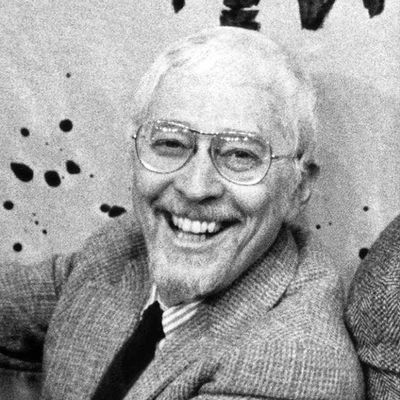
About
In celebration of the 20th anniversary of THE FANTASTICKS, the first of a three-part program featuring legendary writing partners, lyricist and librettist, Tom Jones, and composer, Harvey Schmidt, known for such amazing shows as I DO, I DO, and 110 IN THE SHADE. In this episode, Jones and Schmidt recount their early days in Texas, working for Julius Monk, and writing the music for 110 IN THE SHADE.
Featured songs: “Much More” from THE FANTASTICKS, “The Holy Man and the New Yorker” and “Mr. Off-Broadway” from DEMI DOZEN, and “Gonna Be Another Hot Day” from 110 IN THE SHADE.
Originally produced and broadcast in 1980. For more information go to AnythingGoesPL.com or BPN.FM/Anything Goes. Theme music arranged by Bruce Coughlin. Backstage with Broadway’s Best – is produced and hosted by Paul Lazarus.
Transcript
This transcript was automatically generated and might contain errors.
[0:00] Paul Lazarus: Hi, this is Paul Lazarus. In the 1980s, I produced and hosted a radio series called Anything Goes, a celebration of the American musical theater. Now, the Broadway Podcast Network is bringing back these shows. Today, part one of a three-part look at the career of legendary writing partners Tom Jones and Harvey Schmidt. Jones and Schmidt are best known for their amazing shows, The Fantastics, I Do, I Do, and 110 in the Shade. This program was originally broadcast in 1980 in celebration of the 20th anniversary of the Fantastics.
[0:42] Paul Lazarus: Good afternoon, and welcome to Anything Goes. I'm your host, Paul Lazarus. On May 3, 1960, a small, intimate show opened at the Sullivan Street Playhouse in Greenwich Village. Twenty years later, The Fantastics is still going strong. Some say that many of the current performers are even better than the originals. My guests today on Anything Goes are composer Harvey Schmidt and author Tom Jones, creators of The Fantastics and many other musicals, including I Do, I Do, Celebration, and 110 in the Shade. For the next hour and a half, you'll be hearing excerpts from a prerecorded interview with the writers, and portions of an evening with Jones and Schmidt at the 92nd Street Y. We'll be playing many well-known and rare songs from Jones and Schmidt musicals, including a few selections recorded especially for this program by the writers themselves. Join us as we celebrate the 20th anniversary of The Fantastics with composer Harvey Schmidt and author Tom Jones.
[2:36] Paul Lazarus: I want to bore you for a bit and get some of the early backgrounds on you, because I find that interesting. Harvey, where did you grow up first of all?
[3:10] Harvey Schmidt: Well, my father was a Methodist minister in Texas, and Methodist ministers in Texas moved constantly. So we moved every couple of years, and I always say I've lived in every town in Texas that had a population under 500. I used to wish we could move to a town that had a movie theater so I could go to movies.
[3:29] Paul Lazarus: What was your early musical background? When did that get started?
[3:34] Harvey Schmidt: I had none, actually, except all my relatives in Texas are German farmers, and they're very musical in that they all love to sing, and a lot of them play instruments and things. But it was nearly all self-taught, because at the time they were growing up on the farm, that's the way they did it. Sometimes their church would have musicians in it, so a lot of the singing came out of the church, a German Methodist church. So they were all natively interested in music. But as I was saying, I lived primarily in rural towns, and growing up during the late 30s and 40s, the only contact with the outside world really was radio and movies, which were two terribly strong influences on my life, and I think young people today can't perceive that. You cannot imagine a world without television, for instance. Movies are very different than television, and they fed you dreams.
[4:25] Paul Lazarus: They weren't that available, for one thing.
[4:28] Harvey Schmidt: Then on top of that, my parents were very strict about how often we could see films. It wasn't until I got my paper out when I was 10 that I started having enough money I would actually sneak off with friends to see more movies. I remember the first wicked movie I ever saw was Lady Be Good with Ann Southern and Robert Young, because a little friend of mine lived in a trailer house next door. We stole off into the night and saw it. It was one of the first musical films I saw, too, and it left its mark on me.
[4:54] Paul Lazarus: When did you actually first hit a piano?
[4:56] Harvey Schmidt: I had always played by ear, and my mother, ironically, taught music to help out with the money. She played quite well. She had studied voice and piano in college, but I was a real wild, restless child. By the time she started trying to teach me at age six, I would instantly play whatever I heard by ear. I would not learn the notes, and then I'd just run away. They couldn't keep up with me, so she finally just gave up on it. I just continued playing by ear. When I was a teenager, I was very interested in symphonic music because those were the days of the NBC Symphony and the New York Philharmonic, which were broadcast on Sundays. I didn't care anything about show music or popular music, except musical films I sort of liked.
It was really at college when the first LP started coming out. That's 48, 49, Kiss Me, Kate, South Pacific. Those just opened the doors to me. One of the very early ones was On the Town, too. I couldn't believe suddenly there was this whole other world of exciting music. I sort of lost interest at the time in symphonic and classical music, which had been my big love until then. Then I just started going berserk over show music, and I started reading books about it and getting more and more into the history of it in the past. It was like a whole new world opening up, suddenly through LPs.
[6:25] Paul Lazarus: Basically, your training was self-taught.
[6:28] Harvey Schmidt: Yes, and I never intended to have a career in music, or I would have certainly studied it. I was lucky enough at the University of Texas to meet Tom. I was an art major there, and Tom was a drama major. He was president of an organization called the Curtain Club, which for people who had an interest in drama but were not majoring in it, it gave them a chance to do little weekly shows and things. So I joined that, and then because I played the piano, it was the only reason they took me in. They needed a piano player.
[6:57] Paul Lazarus: Yes, they always need piano players.
[6:59] Harvey Schmidt: So I started playing for shows, and then I got to know Tom there, and then we started writing together. That was an incredibly important thing for me also, because in order to play for these weekly shows, prior to that time I only really played in the KFC. All these people would get records of things from New York, and they'd say, I want to do this on next Thursday, you know, work it up for me. And I was too terrified to tell them that I couldn't play in that key, and I would take it over to the studio and play it over and over again. I would learn how to play in these other keys. So it was like a tremendous, in a few months I got to where I could play in a lot of keys, which I hadn't been able to prior to that.
[7:37] Tom Jones: Harvey invented modulation on his own.
[7:39] Harvey Schmidt: Yes, I thought I'd invented that. I didn't know it was one of the basics of music.
[7:43] ♪ Musical number: "Much More" — performed by Rita Gardner ♪
[10:15] Paul Lazarus: Rita Gardner, from the original cast recording of The Fantastics, performing a song entitled Much More. You're listening to Anything Goes, today's program in celebration of the 20th anniversary of the longest-running off-Broadway show in history, The Fantastics. Back to a pre-recorded interview with the creators of The Fantastics.
[10:35] Tom Jones: Tom, can we go back early for you? I'm also from Texas. Harvey and I are from different, although Harvey's family traveled around Texas and so forth, they were more in the central and the eastern part. And I was always in the western part of the state, which is a different world, really. But I wanted to, actually, I wanted to be an actor. I say that, really, the truth of the matter is I wanted to be anything other than what I was, which meant to be an actor. And I became convinced, I lived in also small towns, not as small as Harvey's. I mean, we had two movie theaters. I went to Tom's town once and I was stunned by the size of it. 5,000 people. It was the county seat. I don't usually think of myself as a lyricist, exactly.
I think of myself as a theater person. I started off quite a few years ago wanting to be an actor. And I went to college and studied acting, but I was a terrible actor. I really was because I wasn't a bad showman, necessarily, but I was a really bad actor because I never wanted to look at the other actors. I always wanted to look at the audience. And my whole thing was I wanted to get applause when I went off stage. That was my whole technique of acting. And my motto as an actor was, the show must not go on. And I had to stop it. And combined with that difficult thing was another childish manifestation, which was that when I get nervous, which you'll notice it in the course of the evening, I sort of drop out of a lyric.
It's because I start belching and I can't stop. And there weren't too many parts written for belchers that I could find. I mean, of course, in my limited place where I went to school, there may have been a bigger range than I knew. But anyway, I moved on out of acting, thank goodness, because I got awfully nervous and became a director. And I studied directing at the University of Texas and got a couple of college degrees in directing. And somewhere along the line, I did a few lyrics for college shows. You know how you do. And the first one I did, I was 17 years old and I wrote a song called, Out of the Night Comes My Lament of Sorrow. You know, you don't know what sorrowful is unless you're 17, you know, really.
And it wasn't too original. I'll have to admit that. But we had a fantastic piece of staging that was very original. We had a girl sing it by a lamppost. And we thought we thought that was some kind of revolutionary breakthrough. And I worked with several people turning out other terrible songs like that. And then at some point I encountered Harvey and began to write songs and began to discover the real excitement of it.
[13:30] ♪ Musical number: "The Holy Man and the New Yorker" — performed by Jerry Matthews ♪
[17:39] Tom Jones: From the Julius Monk review, Demi Dozen, Jerry Matthews performed Harvey Schmidt and Tom Jones' parable with music, The Holy Man and the New Yorker. You know, sometimes if you write a song and you're very, very lucky, it may not seem to date. Years can go by, decades, even your own lifetime, and the song will seem as fresh and as new as the very first day you wrote it. On the other hand, there are other songs that are more like blue cheese. They tend to date very, very rapidly indeed. And that's particularly true in the review field, where for some reason topicality is thought to be horribly amusing. And Harvey and I served time in the review field, working for Julius Monk at the upstairs-downstairs and the downstairs-upstairs, and for Ben Bagley in the shoestring reviews.
Actually, I may joke about it, but it was a wonderful training ground for us and for other lyricists and composers of our time, when they had these reviews, and you could come and actually have a chance to get your work done in front of an audience. Well, in 1958, in a show called Demi Dozen, produced by Julius Monk, we wrote a song that was so timely that within six months of the time it was written, it was already a museum piece. And we'd like to do it for you now. Ironically, this song is probably the most obscure that we ever wrote, but it went on to become something like our own trademark, as Bate would have it.
[19:14] ♪ Musical number: "Mr. Off-Broadway" — performed by Jerry Matthews ♪
[21:10] Tom Jones: And every well-respected south of 14th Street. Over there, over there, I mean the circle in the square. I played the Iceman Cometh there for nearly a year. I never made much money but I drank a lot of beer. That's why everybody calls me Mister Off-Broadway. Off-Broadway Melody. Gosh, when I think of all those shows, it may not be modest but I suppose if I listed each one of my credits name by name, it would read like an Off-Broadway Hall of Fame. The Trial of Dmitri Karamazov. Crazy. And Sandhog. You all remember Sandhog at the Phoenix? It was a new concept in musicals all about sandhogs, don't you know? The whole thing took place under the East River. Then there was Audette and Ardell and Climbombard and, oh hell, all them French ones.
All of them French ones. And Mandragula by Machiavelli. Now that was kind of cute. All about this girl they get with child by a mandrake root. It's kind of special, I'll admit that. Then Pale Rider, Pale Horse. I played in that. The front end, of course. Then a play by Ionesco all done in esoteric rhyme. Till Atkinson reviewed it, the show was doing fine. But after the notices came out, I lost my job through the New York Times. That's why everybody calls me Mr. Off-Broadway. Off-Broadway, way off-Broadway, way, way off-Broadway. Melody.
[23:14] Paul Lazarus: Harvey Schmidt at the piano with Tom Jones performing "Mr. Off-Broadway," a song they wrote in 1958 for the Julius Monk-reviewed Demi Dozen. You're listening to Anything Goes. I'm Paul Lazarus and my guests today are composer Harvey Schmidt and lyric and book writer Tom Jones, here to help celebrate the 20th anniversary of their long-running off-Broadway show, The Fantasticks. You've been together for over 25 years, by my reckoning. But who's counting? But who's counting? For a long time. You've been together for a very long time. And I was just curious, have you ever had moments when you wanted to split up and you had big fights and this is the end? Do you ever go through periods? Because any kind of relationship that you've developed in marriage, per se, really, in writing marriage, is a tenuous one, isn't it?
[24:03] Tom Jones: Oh, it is just exactly like a marriage, absolutely, with the same problems. With one or two things that are different, actually. Let me clarify that. But God knows the strains are like a marriage, they really are, you know, because it's pure and simple, a thing, like, if you get two people and you want to do different things, how do you decide what do you do? You know, it's just as simple as that. It's just A, B, and sure. I don't know that we've ever really had a great desire to split up. We've never actually thrown in the gauntlet, you know, or said, you know, stop. But we've certainly had plenty of fights. Oh, we've had a lot of fights, sure. We have fights all the time, yeah. Is it mostly over choices, artistic choices kind of things?
[24:47] Harvey Schmidt: Well, it's what I said. I mean, it's like, if we view things from two different sides, whose way do you go, you know?
[24:59] Tom Jones: Right. And that's one thing, you know. How do you resolve it? We try both ways and see how it works?
[25:03] Harvey Schmidt: I give in and do it Tom's way. Sure, that's what always happens. Curiously, what we often do is reverse our stand.
[25:09] Tom Jones: That's right. Like, by the next day we'll be arguing the other side.
[25:14] Harvey Schmidt: Yeah. And then we're still at a... We're still arguing, but it's completely the opposite.
[25:19] Tom Jones: Yeah, I love it. I'm gonna jump right to 110 in the Shade, which was a musical you wrote in 1963 based on playwright N. Richard Nash's work, The Rainmaker. I was just wondering about the difficulties you probably incurred in transposing this piece into a musical.
[25:30] Harvey Schmidt: First of all, Richard, Dick Nash, did the book for 110. That's the only show we've done in which I didn't do the book.
[25:42] Tom Jones: Right. So that, and not only that, but Richard not only did the book, but he wrote the original play and...
[25:56] Harvey Schmidt: Which made him very attached to the original material, I imagine.
[26:01] Tom Jones: Well, it's not just that, but the point of the matter is that there was a... In 110, it was a unique experience for us to really, in fact, just be bringing in the songs in effect. That was very unusual. That's not the role we normally play. We had a wonderful working relationship with Richard. He was very perceptive also.
[26:21] Harvey Schmidt: Yes, he was really terribly important in shaping the score. It was really nice to be able to play things for him, and knowing the play inwardly and outwardly as well as he did. It was a real great framing device for our work in that way.
[26:57] Tom Jones: Morning, Pile.
[27:28] Harvey Schmidt: Morning, Toby. Opening up the water tank.
[27:37] Tom Jones: Yep. The folks will be here soon. You going to the picnic?
[27:46] Harvey Schmidt: Uh-huh. Maybe it'll be a little cooler out at the park.
[27:55] Tom Jones: I sure hope so. Cause it's gonna be another hot day.
[28:04] Harvey Schmidt: Yes, it's gonna be another hot day. That's what it said on the radio. 110 degrees.
[28:31] ♪ Musical number: "Gonna Be Another Hot Day" — performed by Stephen Douglas ♪
[31:05] Paul Lazarus: You've been listening to part one of a three-part look at the legendary career of Tom Jones and Harvey Schmidt. Anything Goes backstage with Broadway's best is produced and hosted by Paul Lazarus. For more information, visit anythinggoes.com. If you enjoyed this episode, be sure to rate and follow us. Thanks for listening.
© Broadway Podcast Network, All Rights Reserved