

The second of a three-part program featuring legendary writing partners, lyricist and book writer, Tom Jones and composer, Harvey Schmidt, known for such amazing shows as THE FANTASTICKS, I DO, I DO, and 110 IN THE SHADE... Read More
From the show: Anything Goes
Guests
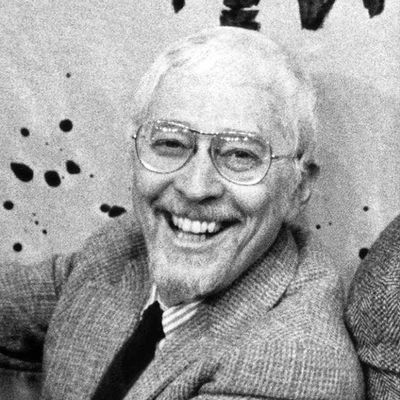
About
The second of a three-part program featuring legendary writing partners, lyricist and book writer, Tom Jones and composer, Harvey Schmidt, known for such amazing shows as THE FANTASTICKS, I DO, I DO, and 110 IN THE SHADE. Jones and Schmidt discuss the reception for 110 IN THE SHADE, developing the titular songs and writing “Thousands of Flowers” for I DO, I DO.
Featured numbers: a cut song performed by the writers, “Too Many People Alone,” and from the original cast recording; “A Man and a Woman,” and “Wonderful Music” from 110 IN THE SHADE, three title songs and “Thousands of Flowers” for I DO, I DO.
Originally produced and broadcast in 1980. For more information go to AnythingGoesPL.com or BPN.FM/Anything Goes. Theme music arranged by Bruce Coughlin. Backstage with Broadway’s Best – is produced and hosted by Paul Lazarus.
Transcript
This transcript was automatically generated and might contain errors.
[0:00] Paul Lazarus: Hi, this is Paul Lazarus. In the 1980s, I produced and hosted a radio series called Anything Goes, a celebration of the American musical theater. Now, the Broadway Podcast Network is bringing back these shows. Today, part two of a three-part look at the career of writing partners Tom Jones and Harvey Schmidt. Jones and Schmidt are best known for their amazing shows, The Fantasticks, I Do, I Do, and 110 in the Shade. This program was originally broadcast in 1980 in celebration of the 20th anniversary of The Fantasticks. 110 in the Shade, which opened in October of 1963 at the Broadhurst Theater, had a book by playwright N. Richard Nash, who based the work on his own well-received play, The Rainmaker.
Harvey Schmidt and Tom Jones provided the songs. The score to 110 in the Shade is a personal favorite of mine, a score which I think deserves much more attention than it has received over the years. In a prerecorded interview, I asked Tom and Harvey why they thought the show was not a bigger success in 1963.
[1:12] Tom Jones: There was a long troubled period out of town, which was very staggering to us. I mean, now, I wouldn't be surprised. I mean, that's just, there's always a long troubled period out of town, really, you know what I mean? And you just do it, that's all. At that time, I must say, I was devastated by it. Although we did a lot of good work, I think, out of town, and the show, generally speaking, got better. Certainly, I think the score...
[1:41] Harvey Schmidt: What did you write? Do you remember what you wrote out of town?
[1:43] Tom Jones: Oh, yeah. One of the big changes was we wrote a song called A Man and a Woman in Boston, and we had a song called Too Many People Alone, which was between Lizzie and Thyle, and it was very good. We liked it. Everybody liked it. In fact, the critics did. But something about it just seemed to slow up the show, or it just sat there in the wrong way, or it was too... We couldn't tell what was wrong with it, but we sort of zeroed in on that spot.
[2:09] Harvey Schmidt: Yeah, it wasn't really a song, but just its place.
[2:10] Tom Jones: Also, even in the title, Too Many People Alone, I think people, the show was getting too heavy. People were pulling back. They were a little afraid of, in the audience, I mean, of it getting too grim or serious or whatever.
[2:21] Harvey Schmidt: Yeah, it just seemed to sag there, and there was something slightly accusatory to it in the tone of her singing as well.
[2:28] Tom Jones: And then you replaced that with...
[2:29] Harvey Schmidt: With a song called A Man and a Woman, which had more hope in it. The instant it went in, everybody loved it. The audience loved it. It's curious how those things can work with an audience, and that's why you go out of town. But it was absolutely wacky the night we put that... Because we wrote it so quickly. I remember we wrote it in one day at the Ritz Hotel, and then took it to... They called Inga and Steve off the stage. We went in the lobby. There's a piano in the lobby, and I remember, whenever I'm in Boston at the Schubert Theater, I always think of that when I walk through the lobby, about sitting right there, and Steve and Inga sat on the steps, learned the song. And it's one of those songs, easy to learn, too.
[3:07] Tom Jones: Yeah.
[3:08] Harvey Schmidt: So they learned it quickly.
[3:09] Tom Jones: And you put it in that night.
[3:10] Harvey Schmidt: Yeah, we put it in that night. During this time, Hershey K. was out orchestrating it instantly. It was all just like instant songwriting. And it was so new that they couldn't learn the lyrics, so we had the assistant stage manager standing in the pit, holding up huge cue cards that said, a man and a woman.
[3:26] Tom Jones: Oh, that's funny.
[3:27] Harvey Schmidt: And they just came... The staging of it, they just came down close to... One reason also that it went over well, I think, is whenever people come down to the footlights and get up close to the audience and just sing, if they have good voices, which these two did, then that's very satisfying.
[3:42] Tom Jones: Oh, that's hilarious.
[3:43] Harvey Schmidt: It's very satisfying to be able to write things out of town, have them work.
[4:04] ♪ Musical number: "Too Many People Alone" — performed by Tom Jones and Harvey Schmidt ♪
[5:47] ♪ Musical number: "A Man and a Woman" — performed by Tom Jones and Harvey Schmidt ♪
[10:34] ♪ Musical number: "Wonderful Music" — performed by Tom Jones and Harvey Schmidt ♪
[10:39] ♪ Musical number: "Wonderful Music" — performed by the original cast of 110 in the Shade ♪
[12:41] Harvey Schmidt: Three songs from 110 in the Shade. Harvey Schmidt played and sang "Too Many People Alone," a song that was replaced during the show's out-of-town tryout in Boston. Next, Inga Swenson and Stephen Douglas, from the original cast recording, performed "A Man and a Woman," a song that replaced "Too Many People Alone." Finally, Stephen Douglas, Robert Horton, Inga Swenson, and the entire original cast performed the show's rousing finale, "Wonderful Music." You're listening to Anything Goes with guests Tom Jones and Harvey Schmidt. Next, a recording of Tom Jones and Harvey Schmidt made during their performance at the 92nd Street YMYWHA for the Lyrics and Lyricists Series. After that show, 110 in the Shade, Harvey went over to Italy and took a house for a year.
And my wife and I went over and visited with him to stay there. And I was going to do some work. And it was a kind of a peculiar situation, because at that time, as opposed to now, none of us spoke a word of Italian. Now we speak six or eight words. But we didn't speak anything at that time. And nobody in that village spoke a word of English. And after we had been there about six weeks, the telephone rang. And we were surprised. It had never rung before the whole time. And we looked at it, you know. And we didn't know what you said in it. But I knew it was exotic, something like presto, or pronto, prego, or something. So we picked it up. And it wasn't Italian at all. But it was all the way across the Tyrrhenian Sea and the Atlantic Ocean, all the way from New York.
And it was Gower Champion calling. And he said, boys, what about a musical version of The Four Poster? And we thought, what a really terrible idea, a two-character musical. And he said, wait a minute, wait a minute, wait a minute. He said, what about a musical version of The Four Poster produced by David Merrick, directed by Gower Champion, starring Mary Martin and Robert Preston? And we thought it began to sound better, you know. But for one thing, we just couldn't resist it. It would have made such a great poster, one thing. And also, I had a momentary fleeting vision of that, you know, when you take the train to Philadelphia and you go through New Jersey and you see those billboards out there.
I saw it with our names at the bottom in small print, just the way it really turned out. And so we started working on it. And then we found it very exciting. It was a tremendous challenge to try to do a big Broadway musical, not an intimate one, but a big show with two people. It was fun to do. And at that time, it was absolutely obligatory to have a title song. It didn't used to be before that, and it isn't that way anymore. But at that time, you had to have a title song. As a British producer told us about something that we were thinking about doing over there, he said, oh, my dear boys, he said, you must have a title song so that everyone can remember the title as, for example, Oh, Dolly.
That's a true story. So we set out to write title songs. We overwrite. We're very insecure. And before we went into rehearsal for 110 in the Shade, we had written 114 songs for the show, the theory being that wherever you were out of town, when you got in trouble, you would go back to your hotel room, and instead of writing a song, you would order from room service a drink and turn on the TV and come out the next morning looking very tired and say, well, we got one for you. But figuring the same thing might happen with 110 in the Shade, I mean with I Do, I Do, we wrote 15 title songs for it. And we're not going to do all of them for you now. We're only going to do 12 of them. The remainder of this evening will be spent doing I Do, I Do.
Now, we're going to do three title songs. The first one is the one that was actually used in the show. And the reason for the raison d'etre, you see how well I speak Italian, the raison d'etre for that song was simply to get the title I Do, I Do in as many times as you could. I've never counted it. It must be 50 or 60 times to get it in there, though. And the second song, I have to explain a little bit. The show covers a long period of time in a marriage. And we didn't know whether to begin it in the 20s or 30s and take it up to now or to begin it at the turn of the century and take it up to the 20s or 30s or whatever. And Gower wanted to play around with different possibilities. So at one point, the show actually began in the 30s. And the second song you'll hear, which Suzy will do, I think you will very clearly recognize as a 30s type I Do, I Do title song.
The third song is from the movie of I Do, I Do. If you didn't see the movie of I Do, I Do, don't feel badly. Don't feel as badly as we feel. Because they didn't make a movie of I Do, I Do. They bought it. They bought it, which is nice. And we banked it. But they talked about it, though. And they looked to us as if they were serious, you know. And they were dropping names like Julie Andrews and Dick Van Dyke. And we, in a flurry of excitement, rushed back to piano and paper and pencil and did yet another I Do, I Do title song. So here we go, three I Do, I Do title songs.
[21:18] ♪ Musical number: "I Do, I Do" — performed by Tom Jones and Harvey Schmidt ♪
[21:19] ♪ Musical number: "I Do, I Do" — performed by Tom Jones and Harvey Schmidt ♪
[24:29] Tom Jones: I was starting to ask you when and why was "Thousands of Flowers" cut from the show? It was everybody's favorite number when we were always in rehearsal. Anybody who heard the score loved "Thousands of Flowers." It was everybody's favorite song. But it just didn't work on stage. There were supposed to be thousands of flowers coming down, and the effect didn't work out scenically. There were two little bouquets that came down from the ceiling. That just changed hundreds of flowers. It seemed to call for a big dancing thing between them, which Gerhard felt was not the right thing for them to be doing at that point as middle-aged people. And also just vocally, it's a big song. Ideally, you should have the Mormon Tabernacle Choir or something.
You need a huge sound. You need a chorus. You need what you have behind a regular music band. You need what you have behind a regular musical. Then they could sing it, and then it could be picked up and amplified. And you could dance and you could build it. It is so big that you get out on a limb. Right from the beginning, when we talked in Italy, Gower said, I've got to have some production in this thing. And we all agreed. Right away the decision is, are we going to add other people? Even a chorus kind of backup. They're playing our song, a two-character musical, but in fact, it really isn't. We decided, no, the challenge, the excitement, was to try to do it. And then not only is it just two people, but we want to keep it in one setting.
At the same time, you don't want it to be like a play. You want it to have that fluid feeling of motion, fluidity and presentational form, which is the essential ingredient to a musical. And you want some production numbers and so forth. And it was really very difficult. So Gower said, I need an act two. I've got to have some visual something, some something. So we talked with him and we said, we came up with the idea of flowers. They were calling a flower market. And thousands of flowers would come. And as they remember it, their home would disappear and the flowers would come in and they would dance and they would be back in their youth and then they would go back, you know, fade out, dream sequence over, whatever.
But that didn't work out for combinations of reasons. But so we wound up with this other song then, "Someone Needs Me." And then they had ribbons cascading, which was a lot simpler. You know, did someone suddenly decorate the sky? And again, a funny story on that. These ribbons came cascading at various times. And David Merrick, when that number went in, promised not to come until it had been in three days. Well, of course, he came the first night, naturally. I think it was Halloween night because I was standing there so nervous. And he came up behind me and he said, Trick or treat. And it made me all the more nervous. And that night, I had all these mechanical things to spring these ribbons.
And sure enough, in the serious, dramatic scene, the menopause scene, in the middle of the scene, periodically, in the course of the scene, these cascades of red ribbons would come swirling along. And Mary Bob would look at them. They dropped lines. And so when they started to do the song, Gower had staged a sort of dance in which she sits on a sewing machine box and he whirls her around. Well, all the ribbons had come out early, so she got tangled. I thought she was going to strangle because as she was being wheeled around and around on this thing, they would wrap around her neck. Yeah, so there they were singing this song totally imprisoned in these red ribbons. So it's amazing the song stayed in, but it did. And it really solved a lot of problems in that show.
[28:30] ♪ Musical number: "Thousands of Flowers" — performed by Tom Jones and Harvey Schmidt ♪
[30:48] Tom Jones: You've been listening to part two of a three-part look at the career of writing partners Tom Jones and Harvey Schmidt. Anything Goes, backstage with Broadway's best, is produced and hosted by Paul Lazarus. For more information, visit anythinggoespl.com. If you enjoyed this episode, be sure to rate and follow us. Thanks for listening.
© Broadway Podcast Network, All Rights Reserved