

The conclusion of a three-part program featuring legendary writing partners Tom Jones and Harvey Schmidt, known for such amazing shows as THE FANTASTICKS, I DO, I DO, and 110 IN THE SHADE... Read More
From the show: Anything Goes
Guests
About
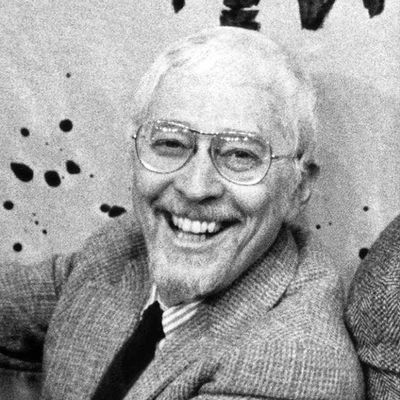
The conclusion of a three-part program featuring legendary writing partners Tom Jones and Harvey Schmidt, known for such amazing shows as THE FANTASTICKS, I DO, I DO, and 110 IN THE SHADE. Jones and Schmidt discuss the success of “My Cup Runneth Over,” developing THE FANTASTICKS, and the show’s subsequent long-running success.
Featured songs: “My Cup Runneth Over” from I DO, I DO, and from THE FANTASTICKS: the writers performing “Come on Along” the original opening number and “Try to Remember” the show’s ultimate opening song, “Plant a Radish,” featuring Bert Lahr and Stanley Holloway from the TV version and “Soon It’s Gonna Rain,” “Try to Remember,” and the reprise of “Try to Remember.”
Originally produced and broadcast in 1980. For more information go to AnythingGoesPL.com or BPN.FM/Anything Goes. Theme music arranged by Bruce Coughlin. Backstage with Broadway’s Best – is produced and hosted by Paul Lazarus.
Transcript
This transcript was automatically generated and might contain errors.
[0:00] Paul Lazarus: Hi, this is Paul Lazarus. In the 1980s, I produced and hosted a radio series called Anything Goes, a celebration of the American musical theater. Now, the Broadway Podcast Network is bringing back these shows. Today, the conclusion of a three-part look at the career of legendary writing partners Tom Jones and Harvey Schmidt. Jones and Schmidt are best known for their amazing shows, The Fantasticks, I Do, I Do, and 110 in the Shade. This program was originally broadcast in 1980 in celebration of the 20th anniversary of The Fantasticks.
[0:43] Tom Jones: Did you expect My Cup Runneth Over to become such a big success as it did? I mean, that really came out of that score like a lot. It came very close to being cut at one point. It was actually Mary who kept it in the show. It's interesting about that becoming a hit because it's Ed Ames' recording which really launched it. The same thing had happened with Try to Remember. It was his recording that really got it off the ground because he appeared one night on the Johnny Carson show. The Bellafonte recording was very respectable and had been out for a couple of years before that actually.
[1:20] Harvey Schmidt: Yeah, and the Bellafonte recording is still my favorite, I think. It's just a gorgeous recording. It's amazing how a moment on Johnny Carson can make so much difference. The song, as we had always liked it a lot, and people liked it, but as written, it was written exactly in the way that Ed Ames sang it, which was that long-held note on love, which we figured the signature and the distinctive thing about the song. Well, that was hard for Mary and Bob to sustain, particularly in an evening where they were doing on stage two and a half hours. And also as it came out of the staging, it was a quiet moment, and it seemed pretentious to stand there holding this.
[2:06] Tom Jones: And also, I mean, Bob Preston is a wonderful singer-actor, but he's not like a long-line ballad person who's going to stand there and hold a note for like those many bars. That's not natural or comfortable to... So since that seemed to be the distinctive thing about the song, we all agreed, well, we'll just have to let it go. And then Mary came and she said, you know, that is such a sweet little song. She said, why don't we just do it and not hold that note so long? So that's what, in fact, they did on stage. And Gower said, well, let me see. I don't know. He says, I'm not sure, but it doesn't pay off. But he says, if we don't go for applause at the end of it. So she's pregnant, it's a scene where she's very pregnant.
So they did the song in a nice, he staged it in a nice simple way, and the last time she sings, my cup runneth over with, and she grabs her stomach, and he says, oh my God, my God, is it ready? And he starts to get a grip. So they don't go for applause. So it was always ironic then, unexpectedly, the Ed Ames thing came out, and unexpectedly it was this huge hit, and people would come to the show, and you know, like when you hear...
[3:07] Harvey Schmidt: That's all they wanted to see.
[3:08] Tom Jones: When you hear Hello Dolly, you know what I mean? They do, I don't know if you notice, but they do go for applause at the end of the Hello Dolly number, you might say.
[3:17] Harvey Schmidt: There was no way to avoid it.
[3:20] Tom Jones: There was the hit song of the show, and like, again, it's typical of what you were saying, the show is melded together, and that big song, they didn't even go for applause, but the plot went forward.
[3:34] ♪ Musical number: "My Cup Runneth Over" — performed by Mary Martin and Robert Preston ♪
[5:37] Paul Lazarus: Back to an interview with Tom Jones and Harvey Schmidt, my guests today on Anything Goes, in celebration of the momentous occasion of the Fantastics' 20th anniversary. On May 3rd, 1960, a show opened at the Sullivan Street Playhouse called Fantastics, and it's been running ever since, and one of the reasons to have you on this program is to celebrate the 20th anniversary of the Fantastics, and I just wanted to congratulate you. I mean, that is a monument, there's no other way to describe it, is that it's second to Mousetrap in London, it's probably the longest-running show of all time, I believe, and that is nothing to hem and haw about, it's worth celebrating.
[6:23] Tom Jones: When Harvey and I first arrived in New York, we were working on a book musical based on Romeo and Juliet, sort of a spin-off, only in our book musical, the situation was that the boy was Anglo and the girl was Spanish, and the girl's name was Maria, and we even had a song called Maria, which we subsequently abandoned, but to open that musical, there was a song by a sort of bandit narrator who came out, and in a presentational way, invited the audience, invoked them to participate in the spirit of the evening.
[7:09] Harvey Schmidt: Easy and slow, follow along with me, follow the song with me, let's go see how it was long ago.
[7:27] ♪ Musical number: "Follow Along" ♪
[8:10] Tom Jones: Well, that song was alright, I suppose, but it had some elements that we found questionable, particularly that I found questionable lyrically, that is to say, back beyond the smarter view, to that special childlike part of you, it began to sound like a children's radio program, so we decided to try another version of the same follow type song, and this is that version.
[8:34] Harvey Schmidt: Try to remember the kind of September when life was slow and oh so mellow.
[8:47] Tom Jones: Try to remember the kind of September when grass was green and rain was yellow.
[8:59] Harvey Schmidt: Try to remember the kind of September when you were hot, tender, and callow.
[9:11] Tom Jones: Try to remember, and if you remember, then follow.
[9:23] ♪ Musical number: "Try to Remember" — performed by Tom Jones and Harvey Schmidt ♪
[9:49] Paul Lazarus: You're listening to Anything Goes, I'm your host Paul Lazarus. The recordings you heard were made exclusively for this program celebrating the 20th anniversary of the Fantastics. When Schmidt and Jones originally conceived the Fantastics, they first envisioned a book musical based on the traditional Romeo and Juliet story. Then they heard about a show called West Side Story. How did you discover that the Sondheim, Laurence, Jerome Robbins piece was being done? Did you read it one day in an article somewhere?
[10:18] Tom Jones: I don't recall now the sequence of that, exactly when it happened. Because I'm assuming that that's what terminated that idea.
[10:25] Harvey Schmidt: Yeah, we worked on it as a big musical for several years, and then it wasn't until one day Ward Baker said, I'm directing three one-act plays up in Barnard, and I'd like to do a musical for one of them. If you can give me something in two weeks that I can direct for that, I'd love to do it.
[10:39] Tom Jones: So we decided, we were getting nowhere with this thing. It was so huge and just collapsing under its own weight. And it was heavy, too. It was pretty serious, a lot of serious elements. We decided to throw all that out and just do it as light and as simple a way as we could. We did a total reversal on it, and wrote in those two weeks mostly the bulk of what is now in the first act of the Fantastics.
[11:09] Harvey Schmidt: So we put it on, that's where Laurie Noto saw it, and commissioned us to turn it into two acts, which we fought then after having finally thrown out all this stuff and done it as one act. We thought, God, no, we don't want to do it as two acts. We wanted to do a review with the first act, and of course that probably wouldn't have run. I mean, not to the extent that it has today, or become the thing that it has. Laurie absolutely insisted that we do it as two acts, and we fought that for quite a long time.
[11:33] Tom Jones: Amazing. The critics weren't really receptive to the show when it first opened. What kept it going?
[11:39] Harvey Schmidt: Oh, it was really word of mouth. The reviews were not all bad.
[11:42] Tom Jones: No, they were not that bad.
[11:44] Harvey Schmidt: We had some very good reviews, and even the Times and the Tribune said very good things. They just were not money reviews, so-called money reviews, and all the smart people in the theater advised Laurie Noto to close it based on those reviews. At that time we still thought he was an eccentric millionaire, but it turned out he took his life savings, which was $3,000, and kept the show going those early days, during which then we had a lot of theater people came down, and it was sort of an avant-garde show, and the word of mouth was among people in the profession, and that kept us going for a while.
[12:19] Tom Jones: What really made the show sell, like in the third year or something, second or third year, a version was done on Hallmark Hall of Fame on television.
[12:30] Harvey Schmidt: Oh, is that the one with Burt Law and Stanley Holloway?
[12:32] Tom Jones: That's right, yes, and again Susan Watson, and John Davidson being like the first thing.
[12:38] Harvey Schmidt: And Ricardo Montalbano.
[12:40] Tom Jones: And that version, which we in some ways didn't like that much, because it had to be much reduced. It was one hour, and of course you have room for the commercials and so forth, and nevertheless, immediately following that, it didn't hurt the show, which people thought that it would. Laurie did several, a number of smart things, unorthodox things. One is he released it for secondary rights when we were in our fourth month or something like that, and immediately there started to be productions, which started bringing in income to help them survive there, but it also began to spread the name. Then the next thing he did was allow it to be done on television, and that gamble paid off immediately. The next night we were sold out, and we were sold out virtually every seat for like five years.
[13:32] Tom Jones: Oh, by the way, how's your garden?
[13:34] Harvey Schmidt: Oh, growing.
[13:36] Tom Jones: Mine too.
[13:37] Harvey Schmidt: It's so dependable. Gardens go on growing.
[13:40] Tom Jones: Oh yes, indeed, they do.
[13:42] Harvey Schmidt: I tell you, I love vegetables.
[13:44] Tom Jones: True, I love them too.
[13:48] ♪ Musical number: "Plant a Radish" — performed by Tom Jones and Harvey Schmidt ♪
[14:44] ♪ Musical number: "Plant a Radish" — performed by Burt Lahr and Stanley Holloway ♪
[16:11] ♪ Musical number: "Soon It's Gonna Rain" — performed by the original cast of The Fantasticks ♪
[22:40] Tom Jones: What do you mean by that? In total?
[22:46] Harvey Schmidt: Yeah. On the quarterly statements, it probably averages out, I would figure this, wouldn't you figure about 200 per quarter, in other words, per three months or something?
[23:00] Tom Jones: That seems like a fair figure, I would think.
[23:04] Harvey Schmidt: Oh yeah, I can believe that, absolutely.
[23:06] Tom Jones: In high schools alone?
[23:08] Harvey Schmidt: Yeah, although it's not done as much in high schools, it's done more in colleges and community theaters. It's not done that often in high schools.
[23:18] Tom Jones: Mostly in community theaters.
[23:20] Harvey Schmidt: Yeah, Birdy is done in high schools, that's the big number in high schools. But for one thing, there's the rape song and everything, and the people, they don't know how to deal with that.
[23:32] Tom Jones: Innocence, we've got a thing about a Catholic girl's school where they just changed the rape song to Snatch. You can get the snatch polite and so forth, but that's what I call Innocence.
[23:46] Harvey Schmidt: In this show, do you have any favorite piece? This must be really difficult.
[23:52] Tom Jones: You mean the score?
[23:54] Harvey Schmidt: Yeah. If you really had to lock into one song.
[23:58] Tom Jones: Seriously, I'm still very fond of Try to Remember, and it's not just because it was a big hit, it's become very much a standard. I just remember when we wrote it, I loved it then, and it still gives me enormous pleasure. I mean, I enjoy today playing it on the piano. I really do. So I'm very fond of that for many, many reasons.
[24:30] Harvey Schmidt: I just want to re-congratulate you on the event upcoming, the 20th anniversary of The Fantasticks, and thank you for all your time. I'll add one other last thing. One thing about Jerry Auerbach and those people, it's been terrific over all these years. We've worked almost exclusively with new people arriving in New York, and we've had really a chance to work with some incredibly talented young people, which has been one of the major pleasures of The Fantasticks.
[24:58] ♪ Musical number: "Try to Remember" — performed by Tom Jones and Harvey Schmidt ♪
© Broadway Podcast Network, All Rights Reserved