

The first of a two-part program featuring talented composer-lyricist William Finn, known for his musicals FALSETTOS, A NEW BRAIN and SPELLING BEE. In this program, Finn takes us through his early theatrical experiences as he discusses the unproduced show, JOCKS and his first produced show, IN TROUSERS... Read More
From the show: Anything Goes
Featured Shows

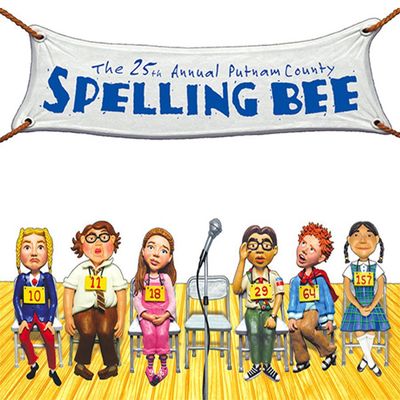
About
The first of a two-part program featuring talented composer-lyricist William Finn, known for his musicals FALSETTOS, A NEW BRAIN and SPELLING BEE. In this program, Finn takes us through his early theatrical experiences as he discusses the unproduced show, JOCKS and his first produced show, IN TROUSERS.
Featured songs: “HEAVY OBJECTS,” “WHEN HE STARTS TO FALL,” “ARE YOU REALLY COMMITTED TO SAVING BUDDY?” “WE PLAY BALL,” “LADY FEELS NO SHAME,” “MY HIGH SCHOOL SWEETHEART,” “SET THOSE SAILS.”
Originally produced and broadcast in 1981. For more information go to AnythingGoesPL.com or BPN.FM/Anything Goes. Theme music arranged by Bruce Coughlin. Anything Goes – Backstage with Broadway’s Best – is produced and hosted by Paul Lazarus.
Transcript
This transcript was automatically generated and might contain errors.
[0:00] Paul Lazarus: Hi, this is Paul Lazarus. In the 1980s, I produced and hosted a radio series called Anything Goes, a celebration of the American musical theater. Now, the Broadway Podcast Network is bringing back these shows. This is the first of a two-part series featuring remarkable composer-lyricist William Finn, perhaps best known for Falsettos and Spelling Bee. This program originally aired in 1981 and featured several rare recordings from groundbreaking shows like The Unproduced Jocks and In Trousers.
[0:39] Paul Lazarus: I have in the studio today a composer-lyricist who I've known a long time and worked together with and actually was first on this program about three years ago. It was a man by the name of William Finn, and as I said earlier, his latest show, March of the Falsettos, was awarded the Outer Critics Circle Best Musical this year. And Bill has come on to talk, and we're going to play a little later on an excerpt, a rather large portion, of the newest recording of one of his shows, the original cast recording of March of the Falsettos.
[1:24] William Finn: 15 minutes.
[1:25] Paul Lazarus: Only 15 minutes. Welcome. That's the voice of Bill Finn, by the way. I thought before we talk, Bill, we'll just start off with a little bit of your music to sort of change the tone here.
[1:34] William Finn: That's fine, Paul.
[1:35] Paul Lazarus: This is a song from Jocks, and the short title is Heavy Objects and the long title is...
[1:40] William Finn: No, It Pleases God That I Lift Heavy Objects Over My Head. It was sung by a weightlifter in an unseen show called Jocks.
[1:49] ♪ Musical number: "Heavy Objects" — performed by William Finn ♪
[4:45] William Finn: I wrote that song with, that show with Adam LeFevre who, in fact, the first time we got together to discuss the show, gave me that line. It pleases God that I lift heavy objects over my head. I said, oh, let's do a show. Let's do a show. It might have been the best line in the show.
[5:04] Paul Lazarus: That was Craig Lucas singing, right?
[5:05] William Finn: Craig Lucas, right.
[5:06] Paul Lazarus: And I want to make sure we thank Hot House Recording Studios who provided most of the recordings of Jocks that we're going to be playing today. And the rest of the cast, why don't we just, it was Kay Pesick, Mary Testa, Alison Fraser, Tom Cuff, and Bill, you sang a bit yourself.
[5:21] William Finn: I think I did, yes.
[5:24] Paul Lazarus: Yes, you did. You know, a lot of things have happened since you were last on the program about three years ago. You have been serving, perhaps the wrong verb, residency at Playwrights Horizons.
[5:36] William Finn: That's right.
[5:37] Paul Lazarus: And you've had, I guess, two productions of In Trousers since we talked. You were just about to go into the main stage version. And of course, March of the Falsettos, your most recent show. I want to take you back to early days in New York when you were taking Jocks around, which is perhaps your only unproduced show as far as I know.
[5:57] William Finn: Well, taking it around is the wrong, it was done at the Public Theater and we auditioned at the Public Theater. I was play reading there. And I'm glad that's over.
[6:09] Paul Lazarus: Right. And they didn't want to produce it.
[6:12] William Finn: Well, not only did they not produce it, they barely recognized it as a work of anything. It was very unpleasant. And then the Kennedy Center down in Washington said they were going to do it and then they sent up people who were drunk and they didn't do it. It was blah, blah, blah. You know, it just wasn't, it's not a very interesting story and it doesn't have a happy ending. I don't see any reason.
[6:36] Paul Lazarus: Right. It's kind of typical of taking around a show in the city sometimes. I guess that's why I brought it up. Why don't we just set up what the show's about as we play some of these songs?
[6:48] William Finn: It's just some athletes in Ohio. The next song we're going to be playing called When He Starts to Fall is a rather extenuated song. It has different portions to it. And the reason I wanted to play it was because it very much resembles what I've, in just going from song to song, what I've come to do. And I've always looked at Jocks, thank goodness I could find something positive to say about it, as sort of an apprenticeship without a master. And I just wrote and wrote and wrote and wrote. And a lot of the things that, I mean, I think it's necessary to have done that.
[7:31] Paul Lazarus: Right. Okay. This is, as you said, an extended section from Jocks called When He Starts...
[7:37] William Finn: Wait, it's with Mary Testa, Alison Frazier, Kay Pesick, Tom Cuff, and myself.
[7:44] Paul Lazarus: Right. Are you on the piano on these recordings, Bill?
[7:47] William Finn: Unfortunately, I am. Yes, the clomps. The clomps, when you hear me clomp.
[7:50] Paul Lazarus: Okay. When He Starts to Fall from Jocks.
[7:53] ♪ Musical number: "When He Starts to Fall" — performed by the cast of Jocks ♪
[11:42] William Finn: That was When He Starts to Fall and featured the company who, how would you say it, first sang Jocks even though it wasn't produced.
[11:50] William Finn: Well, I was singing with the people, I was singing with Kay Pesick.
[11:54] William Finn: Testa and Alison Frazier for about three years, or about two years really, before we got any public performances, they'd just come over to my apartment and we'd disturb my neighbors and try to live. If it weren't for them, I'm sure I wouldn't still be writing. There were no things that kept me writing. And then when I'd stop writing, they'd call me up and say, let's rehearse. And so I'd write something just to rehearse and I'd get back to writing. It's the only...
[12:24] Paul Lazarus: We talked a lot about that last time you were here, about just trying to keep yourself going while you're first trying to get your first work on in the city, but you have to... If it weren't for them, pardon me, I can't believe I said if it weren't for they, if it weren't for them. Okay.
[12:39] William Finn: It's okay. We know you're embarrassed.
[12:40] Paul Lazarus: I'm an English major. No, I can't. No, I can't do it.
[12:43] William Finn: We have another sort of small section from Jocks, from a piece called, Are You Really Committed to Saving Buddy? You want to set that up, Bill?
[12:52] William Finn: Yeah. It's again, one of these extended songs. These cheerleaders are stripping in the middle of the field, don't ask me why. And one of them decides you can't do it. And there's another guy telling a joke to this guy who's dying, Buddy. And you're getting a hint of why it wasn't put on. People were dropping like flies. And so just listen to it. We'll see.
[13:17] Paul Lazarus: Right. Just to remind those who tuned in.
[13:20] William Finn: It is Kay Pesick who's singing now, I think.
[13:22] Paul Lazarus: Right. Kay Pesick sings the major part of it. And Bill Finn is also featured in this performance of Are You Really Committed to Saving Buddy? And Jocks took place in New Stark, Ohio and was basically about the sustenance of a football team and its cheerleaders and players.
[13:36] William Finn: That's right.
[14:12] William Finn: Okay, buddy, here's the joke. So they get married. They're on their honeymoon. She's waiting, says, come on, come on, come on, come on. Doesn't know what to do. She goes, he's a real mama's boy. She says, Mama, tell me, please, please, what should I do? She says, put your most prized possession where she pees.
[14:53] William Finn: So he puts his bowling ball in the toilet. That's the end of the joke, buddy.
[15:00] William Finn: What do you mean saving the town? What do you mean saving the world? I'm standing naked in the middle of the field. How do I look? How do I feel? Stupid. I feel very stupid. And I'm chicken, but I'm sticking to my theory that it's queer and downright rude to be appearing in the nude. Also, I'm neck, but go no further. And she fears that she's a virgin. Yes, that's me. And I will probably be for years. I'm standing naked in the middle of the field. How do I look? How do I feel? Stupid, naked, and scared. Now I'm putting on my bra. Ah, someone help me with my bra, please. Now I'm putting on my sock. A tree, a jock, a jock, a jock. She's standing naked in the middle of the field. I'm standing naked in the middle of the field.
How do I look? How do I feel? Stupid, naked, and scared. How do I feel? Stupid, naked, and scared. Thank you both for understanding. I was feeling so perplexed. I think that without you two, I'd probably die somewhere. I've got to kill myself without a revolver. But we all got to grow up, and now's my time to say I am sorry. I am so sorry, but this I cannot do. So I say to you now with respect that my clothes are new, put back on. You shouldn't be mad. Why is no one talking to me? No one ever listened to me. I was always odd man out. No one listened to me. You gotta listen to me. You must listen to me. Listen to me. Listen to me. Are you really committed to saving Buddy? If you are, take your clothes off. I'm ripping mine off. If you're really committed to saving Buddy, you'd rip your clothes off. I'm ripping mine off.
[17:17] William Finn: That always amused me, and that's the only reason I wanted to play. Are you really committed to saving Buddy?
[17:23] Paul Lazarus: Kay's now a missionary in Illinois or something.
[17:25] William Finn: Is she really? She also was the first group that started to form in Trousers as well.
[17:31] Paul Lazarus: Yes, she was the high school sweetheart, and quite wonderful.
[17:34] Paul Lazarus: You're listening to Anything Goes with guest songwriter William Finn. We have one more song from Jocks, which was Bill Finn's unproduced musical, written in, I guess it was 77.
[17:44] William Finn: No, well, it was really written in like 75. It started taking a round in 74.
[17:51] Paul Lazarus: You wrote that just after you'd finished at Williams, right?
[17:53] William Finn: Just after I got out of college, right.
[17:56] Paul Lazarus: This last song is We Play Ball, and it's the finale. It moves me terribly. Just play it. There's nothing to say about it.
[18:02] Paul Lazarus: All right.
[18:06] ♪ Musical number: "We Play Ball" — performed by William Finn and the cast ♪
[20:43] Paul Lazarus: We play ball from William Finn's show Jocks, which unfortunately wasn't produced.
[20:49] William Finn: I don't think it's so unfortunate.
[20:51] Paul Lazarus: Well, I think it was.
[20:53] William Finn: Maybe if four years ago it would have been.
[20:56] Paul Lazarus: Four years ago it would have been very nice.
[20:58] Paul Lazarus: Just to thank the cast one more time. The recordings you heard featured William Finn himself at the piano and singing, Mary Testa, Kay Pesick, Alison Fraser, Tom Cuff, and Craig Lucas. I think I got them all.
[21:12] Paul Lazarus: Bill, how long after Jocks sort of fell through that you went into writing In Trousers?
[21:18] William Finn: Well, I took a long hiatus and I was seriously considering becoming a doctor at that time.
[21:25] William Finn: One of the many times I've seriously considered becoming a doctor.
[21:29] Paul Lazarus: What kind of doctor?
[21:31] William Finn: I hadn't decided. I didn't think that was important. I just wanted to be called doctor.
[21:35] William Finn: And I didn't want to be an academic doctor. I wanted to be a doctor doctor so I could do something with my life instead of writing unproduced musicals, which is the very worst thing anyone can do with his life.
[21:48] William Finn: I had pretty much taken off about eight months, I think. And then Mary, Kay, and Alison started calling individually and then collectively. And so I started writing songs.
[22:00] William Finn: And I had 105 temperature when one of them called. I don't remember whom. And I wrote Marvin's Giddy Seizures.
[22:12] William Finn: Marvin's Giddy Seizures. Marvin needs love. And that was the first song I wrote for it.
[22:18] Paul Lazarus: Was that the first song you ever wrote with a character Marvin in mind?
[22:20] William Finn: That was. And I had no idea that Marvin was anyone I would follow up on. But it was just a name I liked and I just thought it was going to be a song. And they came over, we sang it, and I said, Ah, like Judy Garland and Mickey Rooney, let's make a musical.
[22:36] William Finn: So it was done in my apartment. And it was very hot at the end of the summer.
[22:42] William Finn: Very, very hot. There wasn't nearly enough room for people who came to see it.
[22:45] Paul Lazarus: You did all the, what they call, backers auditions in your apartment, didn't you?
[22:51] William Finn: Yeah, they were backers auditions. I really didn't expect anything to come of them. I thought pretty much this was my life. I was going to write unsuccessful musicals. And all of a sudden, it happened.
[23:05] William Finn: Ira Weitzman came to see it. Encouraged by Andre Bishop, who had seen Jocks. Who's the artistic director of Playwrights Horizons. And offered me a spot at Playwrights Horizons.
[23:16] William Finn: And we did In Trousers there.
[23:18] Paul Lazarus: And you were the first show of Playwrights Horizons series on musicals.
[23:22] William Finn: On musical series, right. And I've seen three productions of In Trousers. It's had three separate productions in New York. The first was that production we were talking about upstairs at Playwrights Horizons. And then when that was a very successful effort, it moved down to their main stage. And then it was revived recently at the second stage.
[23:43] William Finn: And every time I've seen it, it's massively changed. And I just wanted to talk a little bit about it.
[23:47] William Finn: I think we almost got it right the last time, I think, if the production had been better and the actors were quite fine. It was just a miserable production. I think the writing is all there. Is that the way the show is going to stay now? Well, I'm going to write a new opening number, I think, but pretty much Joe Lapine will direct it. Which brings up the question, you called March of the Falsettos another Marvin musical, a new Marvin musical. You at one time had told me that this was meant to be a trilogy. Is that going to happen? Well, I guess so, yeah. I figured I've done two and... Why not? Why not? Right. When I can decide what the third's going to be about, I'll write. Just to show how things change in your work, I thought it'd be interesting to talk about one song, which is a song that ended up being called Set Those Sails, but when I was with you on the production it was called Lady Feels No Shame.
Can you just focus on why a song called Lady Feels No Shame became Set Those Sails? The show was very much like a review when it was done originally. It was about kind of the sexual vicissitudes of Marvin and of these three ladies, and what I tried to do eventually was to make it a cohesive whole and tell a story. It also switches in time, and I was trying to do this without dialogue and everything, but the first time I wasn't really concerned with trying to make it a whole. I just wanted people to hear the music and I just wanted them to say, isn't he talented and isn't that wonderful? When that happened, I said, well, this isn't enough. It might have been, in fact. I mean, for what it was.
It wasn't a whole. It was a review. It was an educated review, and I wasn't doing this to write educated reviews, so I changed it, and it got me into a lot of trouble and precipitated an enormous depression. But why don't you play the first Lady Feels No Shame, which stopped the show cold, and I pretty much dropped it, and Mary Testa was seeing it and being a real trooper. I said, how are you doing? She said, oh, fine. I just have nothing to live for anymore, so I rewrote the lyrics to Set Those Sails and still stopped the show, but we had to put it closer up front to make more sense of the lyric that you rewrote for it.
[26:07] William Finn: Okay, so you'll hear now a section of the original lyric, which was called Lady Feels No Shame. It's an embarrassing lyric, by the way. Lady Feels No Shame is just gruesome. Only once again in Bill's opinion, but Lady Feels No Shame was recorded by David Rafkin, and this is Mary Testa performing with Alison Fraser and Joanna Green in the background, and then you'll hear two songs from the original cast recording of In Trousers, My High School Sweetheart, followed by the new version of Lady Feels No Shame, Set Those Sails.
[27:51] ♪ Musical number: "Lady Feels No Shame" — performed by Mary Testa, Alison Fraser, and Joanna Green ♪
[28:51] ♪ Musical number: "My High School Sweetheart" — performed by the original cast of In Trousers ♪
[29:57] ♪ Musical number: "Set Those Sails" — performed by the original cast of In Trousers ♪
[33:44] William Finn: I think better than anything that shows what a good orchestrator can do. The orchestrations were done by Michael Stairman, who did March of the Falsettos and has made himself unfortunately indispensable to me. He's an extraordinary orchestrator. And I think, you know, with Ralph Burns and Jonathan Tunick, that those three are probably the best in the city. I'm so enormously fortunate. It can't be overestimated, underestimated. And the recordings that you heard from In Trousers featured the original cast recording. Chip Zien played Marvin, Mary Testa, Alison Frazer, and Joanna Green were the ladies. Chip Zien, who's so wonderful in March of the Falsettos and Alison Frazer also. Right. You probably more than anyone else I know have carried your cast through. It makes sense considering that it's another Marvin musical, but you've stuck with a lot of the same people.
[34:42] William Finn: I like them a lot. It's good to find those kind of people.
[35:13] Paul Lazarus: If you enjoyed this episode, be sure to rate and follow us. Thanks for listening.
© Broadway Podcast Network, All Rights Reserved