

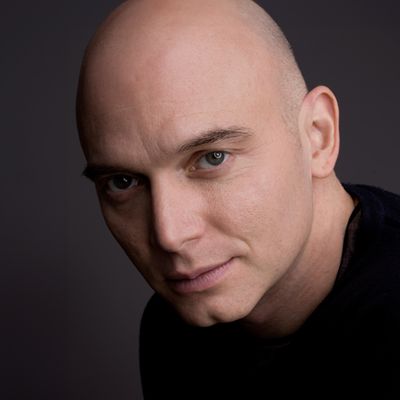
The stars of Broadway may look like they have it all figured out, but today’s guest knows there isn’t one straightforward path to success in this industry. Michael joins Justin to chat about versatility, the roles that have changed him, and the necessary evil that is auditioning... Read More
From the show: Audition Secrets
Guests
Featured Shows


About
The stars of Broadway may look like they have it all figured out, but today’s guest knows there isn’t one straightforward path to success in this industry. Michael joins Justin to chat about versatility, the roles that have changed him, and the necessary evil that is auditioning.
Michael Cerveris is a two time Tony Award-winning actor best known for his roles in Broadway productions of Fun Home, Assassins, The Who’s Tommy, and Sweeney Todd: The Demon Barber of Fleet Street. Connect with Michael on Twitter at @cerveris and Instagram at @michaelcerveris.
Welcome to the fourteenth episode of Audition Secrets!
People, Places & Things mentioned in this episode:
TOMMY https://www.ibdb.com/broadway-production/the-whos-tommy-4715
David Hyde Pierce https://en.wikipedia.org/wiki/David_Hyde_Pierce
Fun Home https://www.ibdb.com/broadway-show/fun-home-497806
Follow Justin at @justinguarini on all social media!
Transcript
This transcript was automatically generated and might contain errors.
[0:00] Justin Guarini: You know, there's always more to learn. But at a certain point, you have to start believing that your perceptions and your instincts and your point of view is at least as valid as anybody else's. And that's, I think, when you start to really come into your own as a person and as an actor.
[0:24] Justin Guarini: I'm Justin Guarini, and you're listening to another episode of Audition Secrets, the behind-the-scenes podcast for nailing more auditions and booking more jobs, and for having outstanding conversations with some of the most amazing people in our business. And today's episode is no exception. On the pod, we have Michael Cerveris, Tony Award winner. He is a man who has been called by Playbill, arguably the most versatile leading man on Broadway. He has been in Assassins, Sweeney Todd, Roadshow. In 2004, he won the Tony Award for Best Featured Actor in a Musical for Assassins as John Wilkes Booth. And then in 2015, he won his second Tony Award as Best Actor in Fun Home as Bruce Bechdel. He's a wonderful human being, and I can't wait for you to hear my conversation with him.
Real quick, before we get to that, we are on episode 14. We are just getting started here with the Audition Secrets podcast. And whether you're a first-time listener or you've been listening for a while now, I would love your help. If you could take a screen grab of this episode and put it up on your social media and say, hey, I'm listening to this, and spread the word, it will go a long way to getting more people to know that this show exists, more people to find out about what we're doing here in the Audition Secrets world, and how we are helping and informing performers all over the world. Okay, that being said, I can't wait for you to hear my interview with Michael Cerveris.
[1:46] Justin Guarini: Okay, so thank you so very much for being here with me. You know, you've been called arguably the most versatile leading man on Broadway. And in a world where actors are just lucky to be typecast, considering that they can at least walk in the door with a solid brand, what do you think the secret or secrets behind your ability to slip in and out of roles that are so vastly different is?
[2:12] Michael Cerveris: Well, I guess part of it is, I kind of learned that that was the job, you know, when I was in school. Like, that seemed to be, I feel like there's so much more kind of specialization and people, especially in training programs, are kind of honed by faculties that have to kind of show results in the professional world to justify, you know, there being so many programs. So I think the kind of easier seeming way to do that is to just find somebody, put them in a box early in their training, and then just sort of refine those skills and polish them into a particular thing, as opposed to when I was in school, it was sort of like, you know, the idea is to have as many skills as possible and as many different abilities and capacities as you could.
And the idea was that, you know, an actor should be able to play anything within reason, but I don't feel like that is true anymore. So, but that was what I, you know, how I learned. And then I guess the other part of it is just, I've always had so many different interests, even outside of acting to begin with.
[3:42] Michael Cerveris: So I was interested in lots of different things. I found a lot of different things intriguing and sort of followed my interests in these other worlds, whether it was music or an opportunity to go live in Germany, for example, when I was doing, I had just done my first Broadway show, Tommy, and then I had a chance to go leave the Broadway company after a couple years and go do it in Germany, which didn't make the most sense from a career standpoint, you know, to leave your first Broadway show and go to a small town outside Frankfurt for the next, you know, who knew how long. But it, A, meant that I got to be paid to live in Europe and travel and see things and have life experiences that I never would have had a chance to have otherwise.
And then, inadvertently, it gave me a lot of the groundwork that I needed when I had the opportunity then to take over from John Cameron Mitchell in Hedwig when it was off Broadway, because I, you know, I knew German culture pretty up close. And so you never know, you never know what it is that's going to kind of be the thing that the skill that you have that separates you from other people. And I think the combination of being taught that being as multifaceted as possible was a valuable thing. And then just my own natural interest, I think, is why I've had the kind of varied career that I've had.
[5:16] Justin Guarini: Yeah. And it's really, you touched on a couple of very interesting points. I mean, the fact that in order to justify the huge sums of money that people pay in order to get an education nowadays... And then have to pay back. It makes sense that at times, there's a justification for their own jobs by finding people, putting them inside a box and saying, here, look, this is what we do. This is what we specialize in. And here are the results. And, you know, the education, I think, overall, the experience outside of the scope of education is not that black and white. And you know that anybody who's auditioned more than a couple of times knows that that's listening.
[6:02] Michael Cerveris: Yeah.
[6:03] Justin Guarini: And so another thing that you touched on that I really love, and that when I approach a role, and when I talk to other people who are multifaceted and do all kinds of different roles, is that life experience. Yes, it didn't make sense for you to leave a Broadway show in one of the greatest cities in the world, right? But you went to Germany, and you followed your art, you followed your interest. And because you were able to travel and see, in essence, the world, let's say, you know, Europe, if anything else, it contributed to your life experience. And when my students will come to me and say, well, I don't, you know, I'm 19 years old, and I've never killed anyone before, but I had to play a murderer.
I'm like, A, hopefully, you'll never have to kill anyone, whether it's self-defense or not. But like, I say, look, you know, you're 19 years old. And yes, you've never experienced being in a situation where you have to murder or be murdered, or any of those things. But let's look at the thought behind the thought. Let's look at the emotions behind the experience and say, have you ever experienced rage? Have you experienced shame? Have you experienced regret? And it's being able to draw on those life experiences, like the ones that you talked about, that help broaden literally your horizon, but also help you to slip into other people's experiences.
[7:22] Michael Cerveris: Yeah, which is the essence of what, you know, what you're trying to do, you're sort of drawing from the well of your own experiences. And like you say, you may not have had the same circumstances as your character, but you can relate to, in a broader stroke, that idea of shame or that, you know, fear of harm or protection of somebody else or whatever. And then it's the ability to imagine and to, like you say, to put yourself in, you know, in the point of view of somebody else. And that is something that comes from being in contact with all kinds of different people and all kinds of different life experiences. The more unlike the circumstances that you grew up in, the better. And that was actually a significant part of the reason why when I was graduating from high school and looking to schools to apply to, I applied to some conservatory programs like NYU and Carnegie Mellon and places like that.
But I also applied to a bunch of liberal arts places as well. And in the end, I chose a liberal arts school because I thought, you know, I don't want to spend four years only with people who are doing the same thing that I'm not even sure yet I'm going to do. And I figure if I'm going to spend my life playing all kinds of different people, maybe I should go to school with all kinds of different people who, you know, and have a roommate who's a biology major and a classical civilizations major. And for me, that was the ideal thing. And that which is not to say that you can't be an interesting, complex, varied actor coming out of a training program. But I think you do have to work a little harder if that's your, you know, academic world to broaden yourself beyond that in ways that and to interact with other kinds of people on other walks of life that somebody who's going to, you know, a non-arts focused school is just by necessity going to be experiencing.
[9:45] Justin Guarini: Yeah, I like to think of it sort of like the difference between New York and L.A. It's like, you know, when somebody asks you in L.A., what do you do? You know, the subtext for that is basically, what can I gain by knowing you? Because everybody in L.A., obviously, that's a blanket statement, but everybody in L.A. is mostly there for the entertainment industry. But the reason why I love New York, one of the many reasons why I love New York is because when somebody says, hey, what do you do? The subtext for that is, how can I relate to you? How can we form some sort of bond? And it's like, and you're right. Of course, I applied to Carnegie Mellon and got accepted, but I ended up going to University of the Arts in Philadelphia because I wanted to have, A, I got accepted as an opera major at Carnegie Mellon, which is crazy to think, but like, I went for a vocal performance major in University of the Arts because I wanted to be around dancers. I wanted to be around actors and musicians and jazz. And I expanded my career so much and my viewpoint so much by doing that, and I think that I'm a better entertainer for it.
[11:07] Michael Cerveris: Well, that's an interesting point, too, because it always baffles me how arts training programs still are separated into even smaller fiefdoms once you get there, and the music department never interacts with the theater department. And the most baffling thing to me is when the universities have a theater program and a musical theater program, as though those are two entirely different disciplines, and those students often don't interact almost at all.
[11:35] Michael Cerveris: Now, moving to opportunities in the audition room. You and I were texting and you said to me in one of our text exchanges that you feel like you get cast in roles in spite of what you do in the audition room. What did you mean by that?
[11:58] Michael Cerveris: I stand behind that statement. Okay. I just feel like I have friends who will say, you know, I just look at an audition as an opportunity to act that day. And I'm like, that is so awesome that you can do that. I'm incapable of looking at it like that.
[12:19] Justin Guarini: How do you see it?
[12:21] Michael Cerveris: I see it as agony and as a necessary torture still. I mean, the most wonderful watershed moment in my career, I think, was when for stage things, and especially musical theater things, I reached a point at a certain point where I sort of transitioned into the just have meetings with directors or just get offered things instead of having to audition for everything. And, you know, to be honest, I would play a tree in, you know, Sherwood Forest if I don't have to audition for it. But so, you know, so that's really nice. Although it comes with its own difficult things, because you then can find yourself at the first day of rehearsal at the readthrough, realizing nobody in this room has actually heard me read this character. And they could suddenly decide, oh, we may have made a mistake just assuming that he would be the right guy for this.
[13:36] Justin Guarini: I have seen people in your position show up to the first day of a table read and kind of be a little unprepared or not quite know what's going on. And that's a huge danger there.
[13:49] Michael Cerveris: Well, and also because you forget or you don't realize that even though at least my experience when I go into an audition room is, you know, panic and abject terror. But there's something to be said for that process.
[14:07] Justin Guarini: Yeah, well, and also you are having some interaction with the people who may become your eventual director and producers and musical director and stuff. So, you know, you are learning things about them in the process, even though you think it's all just a blind panic. So it is a different thing when you walk into a room without having had any of that experience, other than either just an offer or a conversation over a coffee about something. It's not like I've left the auditioning world behind altogether. I still spend plenty of time, what I affectionately call groveling. That's a life, career long, lifelong thing. Your feelings of panic, of nervousness, of all those things that all of us feel at some point in the process, right? Whether it's the audition or getting on stage or opening night or whatever it is. So when you get nervous, when you feel that sense of panic, what's your process to work through it?
[15:13] Michael Cerveris: In college, I went through a period of real severe stage fright, panic attacks. And it was connected to the stage and to the theater, or it was manifest in that. So I had to really find solutions and try to understand what was going on. And I got some really good advice from someone. I can't remember now who it was, but they said that when you have that kind of nervousness or anxiety, whether it's just the kind of butterflies thing or full blown panic attack, the root of the problem is a hyper self-awareness and this feedback loop that you are aware that you're feeling nervous. You're aware of feeling nervous. You're aware that you're aware of feeling nervous. And it just cycles and cycles and cycles.
And a useful way out of that is to place your focus outside yourself on someone or something else, that it's the very self-awareness that is creating the problem. And so I try to find ways to do that, whether it's recommitting myself or reinvesting myself in the circumstances of the character or not worrying about how I'm feeling about this or what I want out of this job or whatever, but really trying nuts and bolts to go back to what is the story I have to tell? What are the things that I need to convey? And then it can also be things like I'm trying to, it seems a little counterintuitive because when it's happening, you're feeling like, oh my God, I'm being judged by these people and I'm so aware of what they're thinking of me. But I think what you're actually frightened of is your fear of their judgment as opposed to actually their judgment.
[17:58] Michael Cerveris: And this was where somebody's advice, I had one experience when I got out of college and was first in New York. I was a reader for auditions for, I was a reader for a few different things, but I was part of these two days of auditions for a summer stock company in West Virginia. And so I got the opportunity to watch literally hundreds of people come in. And I learned so much. I think every training program or every actor should look for opportunities to do that, especially early on in their career, because you learn a number of really important things. One, you learn they're actually far more capable actors than you might suspect. There weren't that many people that were terrible. There were plenty of people that were fine.
And some would be good for this and some would be good for something else. But there were also very few people who were really remarkable. And what often was the thing that made them stand out was not necessarily their skill set, although, you know, that somebody came in with an amazing voice, you certainly noticed, but it was more the people that just walked in and were prepared and confident, but not overconfident and not trying to sell you too hard and not, you know, too frightened. They just seemed like, I can imagine being in a room with this person for the next however many months, I'm going to have to be working on this. That made you immediately much more open to see their abilities.
[19:46] Michael Cerveris: And someone said to me, you know, if you're going to a doctor, you have to remember that the people on the other side of the table are the ones with the problem. They have a show and a lot of money that's dependent on them filling these roles that they don't have people for yet. And they have to do it soon because there are deadlines that are coming up for them. And you are potentially the solution to one of their problems, you know, to one of their roles. And just like if you go to the doctor and, you know, if you go to a doctor who, before you've even sort of explained what is wrong with you, who says, you don't even need to tell me, I'm a great doctor, I can fix your problem, you know, it'll be fine. I don't need to know what your temperature is or anything else. Get the hell out of that office, basically.
[20:40] Justin Guarini: Yeah, you'd be really nervous, just like you'd be nervous if you went to a doctor who says, oh, wow, yeah, I mean, I didn't get a lot of sleep last night. So I'm not sure that I'm going to have the best, you know, I may get some of the information wrong. But, you know, you would also be nervous of that guy. But if you go to a doctor and, you know, he listens to what you need and says, okay, here's what I think might be helpful, you know, try this. If it doesn't work, you know, no skin off my nose. But, you know, this is where they think they want one thing, and then they... It's an informed opinion, and it becomes a dialogue. And I think that that's what a lot of people, especially when actors are starting out, and I know for me as well, it was the same way, is that we walk into the room thinking, okay, I want to give these people what they want, as if we know what they want, first of all.
[21:39] Michael Cerveris: Just to visit sometime later, and everybody's like, so what's it like out in the world? You know, what's it like auditioning for things? And he said, you know, I think the thing I learned, the most important thing I've learned so far is to just figure out what I would do if I already had this part, and to approach it that way. Because I feel like if I am trying to guess what they want, and I try to do that, A, I might be totally wrong about that in the first place. If I think that they want, you know, a cliched version of this character, which you may well glean either from the script itself, or from the way they talk to you in the room, or, you know, the character breakdown or whatever, you sometimes get a pretty clear idea of they want, you know, the typical blah, blah, blah.
But if you go in sort of not really wanting to do that, but feeling like you need to do that, because that's probably what they want, he said, if I get hired to do that, I'm going to be miserable. Because, you know, I will have succeeded in presenting myself in a certain way that I'm probably not going to be happy living up to.
[23:10] Michael Cerveris: To a different direction, that's probably not going to go well, because they hired me because of what I did in the first place. Whereas if I go in, and, you know, I've made, I've kind of pretended I've got the job already. And this is the way I sort of see the character. Then if they hire me to do that, then we're probably already thinking along the same lines in the first place. And if they don't, if they're looking for something else, then maybe this just wasn't my job. You know, maybe I'll just keep doing things until I find the right pairing of people. And that doesn't mean that you don't make changes and take direction and make adjustments once you're in the room, because that's probably the most important thing of the whole thing.
Which is why self-taping is such a frustrating thing, because you don't have that opportunity, necessarily. But again, I guess even more so than you have to do what you think you would want to do. I mean, take some time really, you know, if you get the whole script, read the whole script, if you just get the sides, spend time with them so that not just to be learning the words, but really, how much information can I glean from this? And given that, what is the performance that I would feel good about giving and not worry so much about whether it's the right thing or not? Because like we said, you can't know. But if you put yourself out in a certain way, that's truthful to you as a person and as an artist, then you just, you kind of attract the right people to you, the right people will find you, and they'll connect with you in the right way and vice versa. And, you know, and then you just have to know that not every job is your job, you know.
[25:27] Justin Guarini: If you are someone who auditions, you're someone who goes into the room or goes on stage and performs, then you need to get the book, Audition Secrets, Volume One. It is the behind the scenes guidebook for nailing more auditions and booking more jobs. And the best part about all of it is it's absolutely free to you if you go to AuditionSecrets.com and hit the tab that says free book. It's a digital download. You can have instant access to it today. So after this interview, go to AuditionSecrets.com and get your copy.
[26:02] Justin Guarini: You've told us so much wonderful stuff, and I want to kind of go back all the way, take you all the way back to the beginning and ask you what is the one thing that you wish you knew that you know now, but that you wish you knew when you started?
[26:16] Michael Cerveris: That nobody else has the key either.
[26:21] Justin Guarini: Yes.
[26:22] Michael Cerveris: You know, I spent a long time believing that there was a key to acting and unlocking a good performance and a career in the theater and a deep understanding of the character and accessibility to emotional depth and all this. And I thought my teachers had it, because that's why they were my teachers, because they knew the answers. And I suspected that I would never actually know the answer. I worked really hard to learn everything and understand everything. But down deep, I kind of suspected that I was never going to actually get the key. And then at a certain point, I ran into a guy who had been a TA who, you know, who I still had looked up to as, oh, well, he's, you know, he came from college and he's, you know, older than me.
He was probably like, you know, four years older, but he seemed like an entirely different person. And, you know, so I assumed he had the key, whatever it is. And I ran into him sometime later, and I realized that I was now the age that he had been when he was teaching us. And I had had more professional experience than he had had at that time when he was teaching us. And I knew that I still, you know, struggled to feel like I knew anything. I still felt like I was learning everything. But I realized, but I know more, you know, I've had more real world experience than he did when he was teaching us. I know that I don't know anything now. So he couldn't have known more than that. And I suddenly realized, oh, maybe just nobody really knows.
And everybody's, you know, trying to learn all the time. And there is no key. And you're at a certain point, you know, there's always more to learn. But at a certain point, you have to start believing that your perceptions and your instincts and your point of view is at least as valid as anybody else's. And that's, I think, when you start to really come into your own as a person and as an actor.
[28:57] Justin Guarini: Absolutely. I mean, I think that's such a great point of view. And really, truly, it's just like fingerprints. Everyone's are different. I don't believe that there is a key either. I love performing. I also love teaching. And I feel that my job as a teacher is to show my students the keys that they have inside themselves, and then to guide them or point them in the direction of their own personal door, where they take those keys, and they try them out, and maybe they're going to whittle here and whittle there, and they put it into the lock, and they open the door to their own whatever version of success.
[29:38] Michael Cerveris: Yeah, that's an interesting way to think about it.
[29:41] Justin Guarini: That being said, what do you think the – maybe you kind of answered this question already. You know, the biggest lesson that you've learned over your career – yes, no one has the key to acting, for sure, when you started out. But is there something that now, here in 2019, you're like, wow, that's probably the biggest lesson I have ever learned?
[30:01] Michael Cerveris: I think the thing I've been feeling more, I think, as I go on in my career is I appreciate more now than I did at the time the cost of some of the sacrifices that we make to have our careers. And I don't regret making the sacrifices that I made through the years. And I'm talking more about just in terms of personal life or a stable home or being able to be there for your family's birthdays or being reliably ever able to say that you'll be any place at any time. That those are really substantial sacrifices. And I can't really look at a lot of things that I would say, I wish I hadn't done that instead of spending more time in a relationship or with family. I feel like the things that I sacrificed for were valuable to me at the time.
But I find the balance skewing a little differently now. And I'm starting to have a new respect and appreciation for the people who managed and worked harder to maintain a life and maintain a connection to things outside the business and to not letting work define their feeling of self-worth or their complete interest.
[31:57] Justin Guarini: That's a big one.
[31:58] Michael Cerveris: I feel like I respect and envy a little bit people who were much better at doing that along the way than I've been. And I think it's something that you're not encouraged to think that way when you're younger and either by your peer group or by people ahead of you because you're made to feel like this is your one shot and you only get this. And if you don't have your eye on the prize all the time, you can't call yourself an actor. And it's just bullshit. It's not true. And like we said at the beginning, the richer your life is, the more interesting you will be. And therefore, the more interesting an actor you will be just by default. So, I think remembering to check in with your whole life and not just your perceived career path is important.
[33:14] Justin Guarini: That's fantastic. My next question was going to be, what's the one piece of advice you'd give younger folks and people struggling on the path to success? And I think that's it. I think it's making sure that you, like you said, you check in with your whole life because as we are reading scripts, as we are trying to find agents, as we are going and struggling through the barbaric process of auditioning, as we're going through all of that, and then having our peers, our family being like, how are you doing? How's it going? And feeling like we need to prove something to them as well. All of that can be its own world and its own bubble that you exist in. And then don't be in school while you're doing it because then it's all just, it's that 24-7.
And so, making sure that you are checking in with the rest of your life, making sure that you one day just don't do anything arts related. Or at the very least, go take yourself on an artistic date, you know, kind of like in the, oh, what's that thing? There's the artist's way, you know, like sort of just, you know what I mean?
[34:21] Michael Cerveris: Well, you have to feed yourself. You have to feed yourself and, you know.
[34:25] Justin Guarini: Right. And doing the work is not necessarily feeding yourself all the time.
[34:29] Michael Cerveris: No. And like head on is not the only way to approach anything, you know. I mean, it's so interesting. My career, in hindsight, I can...
[34:44] Michael Cerveris: From One Thing to Another, how it all kind of led from one thing to another and, you know, leading up to where I am right this minute. And it has its own logic and makes sense. But on the other side of it, you know, looking at it out in front of me, it makes no sense. Like, I made so many of the, you know, like going to Germany after my Broadway debut, I made so many incorrect career choices and followed just what I thought was interesting or what terrified me. Those were the things that determined sort of where I turned my attentions and energies. And that's a part of expansion. It's being able to push through that terror, being able to push outside of, you know, your comfort zone is kind of like the general sort of notion of it.
And you'd be surprised. I tell people, my students all the time, I'm like, there is so much success waiting for you on the other side of the willingness to completely fail or to fall flat on your face. Oh, God. And the number of times I was so fortunate not to get the job that I thought I really had to get, you know, I've had as much luck not getting the wrong jobs as I have ever had getting the right jobs.
[36:08] Justin Guarini: For sure. You know, you've been in so many outstanding shows. What has been your favorite role? And why?
[36:16] Michael Cerveris: That's such a hard thing to answer. And of course, it changes all the time. You know, part of you always kind of goes back to the most recent thing, because that's the thing that you're sort of like, you know, this still the freshest, but I think and I have had so many things that I felt dearly invested and deeply connected to. But I think as a whole experience, Fun Home would have to be the pinnacle thus far. And I mean, I hope that I will do things that I will care about, you know, deeply like I did that. But I don't know whether there will be something that on every level was the ideal expression of that thing. You know, the piece itself, which is extraordinary, the getting to be a part of inventing and creating what that would be was, you know, extraordinary, instead of just walking into a ready-made thing, the people that I got to do it with every single one of them from the creative team to the, you know, the crew to the cast, just extraordinary, unlikely, you know, ideal people.
And then what it meant to the audiences that came to see us beyond just its value, its artistic merit, but, you know, what it meant in a real world, literal, life-changing way for people. And it's the arrival at what, sadly, at the moment looks like the end of, you know, an optimism and a hope and an expanding inclusiveness and idealism. You know, it's so weird that the flowering of everything that was happening when we were doing the show, from marriage equality being passed to, you know, to everything else. And it seemed at that moment, like, well, we have finally figured some shit out, you know, and as a society, I think we've finally crossed some hurdle. And, of course, probably not surprisingly, you know, the pendulum has been wrenched back the other way.
[38:54] Justin Guarini: Yeah, for sure. But to be doing something that was talking about having compassion at that moment in our country was so much beyond, you know, a career highlight or an artistic highlight. It was just a personal thing. So, I think—
[39:16] Michael Cerveris: And I can see why it meant so much to you. I was very fortunate to be able to see you and the rest of the original cast in that show, in The Circle in the Square. And it was gorgeous. I mean, it was absolutely beautiful. I mean, like you said, someone coming to see that and hearing the music and seeing the stories that everyone was going through. It just, it really, I'm sure, just people were changed. And that's great theatre. When you walk out of the theatre asking questions of yourself, when you walk out of the theatre changed, then you know that it's great art that you've seen. And certainly, Fun Home was great art. Seeing it from the perspective that I have of being a performer, you know, I loved it so much.
And I also was just, I literally was doing everything I could to not bite my nails as you walked around the stage, just deftly avoiding the traps that were open. And I know that was a whole part of it. I talked to Mike Isaacson. I was like, what the fuck was that about? And he's like, oh yeah, we planned that. And I was like, oh my God, because the whole time I'm thinking, Michael, please don't fall into that trap. Michael, my God, please don't fall into that trap. And so, if you hadn't seen the show, there were holes in the floors where things would come up and down. And there's a very poignant song where Michael's walking around them and you just think he's going to fall into one of them. And there's probably some sort of metaphorical thing going on there, right?
Obviously, with the character. And it's so interesting that you say that Fun Home happened at the time that it happened, because not that much after Fun Home, I did In Transit in Circle on the Square. And it was this beautiful, our opening night. You were the first ones in after us, right? Yeah, yes, yes. And I think our first preview was the day after the elections. And here we have a piece which was just like, oof. And so, here we have this piece that is not so centered around some of the same things that Fun Home is, but certainly deals with some of the same things. And you're just like, oh, it's like, we need to be doing this for us. Today, of all days, we need to be doing this for us and the people who came to the audience and to see it.
[41:36] Justin Guarini: And so, I'm so glad you said Fun Home, because it is one of my most favorite musicals I've ever seen. I've walked out of that show, and I was just buzzing, because everyone, I mean, everyone was so authentic. It was so beautiful and so well done. And I couldn't agree more with you that it was a highlight of your career, because it was a highlight for me as an audience member.
[41:57] Michael Cerveris: That's really, really good to hear. And I remember thinking at the time, because we did have so many young people coming to the show and sort of having their mindset on fire in terms of what's possible and what stories can be told. And I had conversations with kids and then just kind of could think about it afterwards. And I'm positive that there is at least one, and I'm betting a lot more than one, you know, next Janine Tesori or Tony Kushner or some, you know, some kid was there and some fire was lit watching Fun Home that will, we may never know, you know, I may never see the, you know, the Tonight Show interview where they talk about, you know, this is why they ever wanted to pursue this.
But somehow there are going to be things, if there aren't already, that are going to move us as, you know, as people and artists in a society towards a better future because of something that happened to them while they watched that show. And that's, you know, that's really something that I have to cling to desperately these days.
[43:27] Justin Guarini: Oh, my God. Yeah. And that's great. And, you know, I think you have to have the experience, you have to go through the desperation of being an actor. You, if you're lucky, go through the success of being an actor. But, you know, I think sometimes when I am doing my, you know, eighth show that week, and I'm kind of like, okay, this is, I'm grateful. I know, I'm in the pinnacle of world theater, right? But I have to remind myself, even now, I have to remind myself, look, there is someone at the show in the audience that was just like you when you walked into Phantom that first time when you first heard the music, who is going to have their minds, like you said, lit on fire. And if I go out and I give anything less to my best, I am doing a disservice not only to that person, but to the version of me that walked into that theater that day and was lit and said, yes, this is what I want to do.
[44:30] Michael Cerveris: Yeah, that's why I try on matinee days, even if I'm going to stay inside and, you know, just order in and stay in my dressing room, because I'm exhausted and stuff. I still try to at least, and it helps when I have my dog with me, because she needs to go out between shows. But just to be out for just a minute and just see and feel the excitement of the people going up to the front of your theater and be reminded that, yeah, it's the 500th time you've done it. This is the one and only time they're ever going to see it. And you don't know what they sacrificed to be here today. And, you know, just it very quickly, you find what you need to do that again.
[45:12] Justin Guarini: Yeah, yeah. And again, and again, and again, if you're lucky.
[45:15] Michael Cerveris: Well, thank you very much. If you're lucky. Well, thank you so very much for your time. I really appreciate it. This has been a great conversation.
[45:21] Justin Guarini: Wonderful. Yeah. Thank you so very much. I hope you have a great day. And I'll talk to you soon. Okay.
[45:26] Michael Cerveris: Okay, cool.
[45:30] Justin Guarini: The man is a fountain of knowledge and wisdom. And I'm so, so grateful that he stopped by our show this week. Okay. Thank you very much for being here. I'm Justin Guarini. This is Audition Secrets. Next week, we have the wonderful Sierra Buggis on the show, and she is so awesome. She gave me life in this interview. It is so fun. It is so funny, and I cannot wait for you to hear it. In the meantime, make sure you go to auditionsecrets.com and pick up your free copy of Audition Secrets Volume 1. All right, that's all I got for you this week. You've been listening to Audition Secrets. I'm Justin Guarini. And remember, at the end of the day, you're only one audition away.
© Broadway Podcast Network, All Rights Reserved