

The incredible psychologist Dr. Alisa Hurwitz has been working on bridging Mental Health and Musical Theatre. 👏🏻 She talks about how Stephen Sondheim was a mastermind in observing human behavior and how to put that into his craft... Read More
From the show: Backstage Talk
Featured Shows

About
The incredible psychologist Dr. Alisa Hurwitz has been working on bridging Mental Health and Musical Theatre. 👏🏻
She talks about how Stephen Sondheim was a mastermind in observing human behavior and how to put that into his craft. 🤩
Please visit her Instagram to see what she's been working on!
If you want to know more about our host, please visit his website! Feel free to reach out with feedback or if you want to be part of Backstage Talk!
Follow us on Social Media:
Transcript
This transcript was automatically generated and might contain errors.
[0:00] Martín Acuña: Hi, everyone. I am Martín Acuña, and you are listening to Backstage Talk.
[0:16] Martín Acuña: Hello, everyone. Welcome back to another episode of Backstage Talk Season 4. Today, I am honored and happy to have my friend, Dr. Alisa Hurwitz, here with me. I, as many of my friends, met her through Twitter because we started discussing musicals, mental health, a lot of this discourse and conversation around how art can impulse and enhance mental health, not only in performers but also in the audience. But also, Dr. Alisa is a really big fighter for LGBTQIA plus rights, specifically trans rights. And I had the pleasure of seeing her in two incredible panels on BroadwayCon 2022. So, Dr. Alisa, I am so happy to have you here. Welcome to Backstage Talk.
[1:15] Alisa Hurwitz: Oh, thank you so much for having me. I just love that you exist in the world and in my sphere. And I can call you a friend. You bring joy and love to the world, and I really appreciate that.
[1:33] Martín Acuña: And you know I love you back so much. So, let's start by getting to know you a little bit. Tell us, introduce yourself to us.
[1:42] Alisa Hurwitz: Yeah. So, I am a mom, daughter, sister, aunt, friend, cousin. And I, you know, outside of my professional life, I am an advocate for rescue pit bulls, much maligned and misunderstood collection of breeds of dogs and mixes, and have a pity mix, Louie. He's our second pit bull mix, great family dogs. And those are, you know, aspects of my, and a theater lover. Those are aspects of my life that are more important to me than my work life or my work identity, my career identity. But I am, yeah, by trade, a psychologist. And I am, I do work as a generalist. So, you know, depression, anxiety, mood disorder, other mood disorders, that kind of thing. But my specialty is providing gender affirming healthcare for the trans community.
And I am passionate about that work and about the advocacy, both within the workplace and outside of the workplace. Because trans rights are human rights. And as a Jewish person, when I say never again, when we say never again, we mean never again to anybody. And there are attacks on the trans community and trans rights currently in our country, in the United States. And I just can't sit idly by and not do something about it. But, you know, the way that we have connected is through my work in theater, which is really a passion project. Because I love theater. I love, love, love, love, love theater. And my role was never to be on the stage. But I felt called to it. And it really, you know, was just as somebody who loves the art form and an audience member.
But I realized a few, several years, maybe five years ago now, that, you know, I could bring my professional knowledge, you know, to the theater world and talk about mental health in a way that brought people into the conversation, you know, through performing arts, through theater. Because I think those conversations matter. And I think de-stigmatizing matter and normalizing conversations about mental health. And so that's how Dr. Drama was born. I absolutely love it. And that is, as you just said, how we connected. Because the conversation around mental health, specifically since 2018 to until today, has been more prominent. And I, as a performer, and as an avid audience member, I do think that each time we talk about mental health in the stage, either a play, a musical, a movie, a series, when done right, can do a lot, a lot of beneficial things for the audience and also the performers.
And I remember when we started following you, that was like the whole conversation that brought me to you. And I just loved it. But before we dive into that, I would love for you to tell us, what is a random fun fact about you?
[5:29] Alisa Hurwitz: I think, I think I, I think I showed my hand a little early. I think a random fun fact about me is that I am, I am, you know, a mom by day and a psychologist and have a serious job and all that thing. And I'm a, and I am, and I am also a Pitbull loving tattooed person. And, you know, I was very straight laced growing up. And so I kind of like, not that having a Pitbull is rebellious, but it's just, you know, people have certain associations with it, you know, and with tattoos. And I kind of like, I kind of feel like a superhero because my tattoo, they're for me, you know, and so they're really meaningful for me. And I kind of feel like it's the cape under my suit, you know? And, you know, and I, and I, yeah, so I have a Pitbull loving tattooed woman.
[6:20] Martín Acuña: I love it. I absolutely love it. So now let's dive deep into this relationship that you've created between psychology and theater, because it's broad, it's not only Broadway or musical theater, obviously we connected because of musical theater, but what was that aha moment that you said, I want to bridge these two passions of mine?
[6:28] Alisa Hurwitz: Yeah, it was really an epiphany. You know, I, I am not, you know, I'm not, I'm not trying to like minimize what I do or contribute or whatever, but I'm not a creative person. Like I'm not, I'm not an actor. I am not a writer, you know, a playwright. I am not a director. And so I can only imagine like this, like art, creating art feels like this a lot. It just was an epiphany. It just came to me and I had nothing to do with it in a way. It like felt like it came outside to me. And part of it was because I was feeling a little stale in my, in my work. I was at another job and I just kind of, I was feeling stale and unchallenged and kind of in mid career mode where the stuff I was doing, wasn't going to change the work I was doing.
And I, and I didn't feel as inspired by kind of the learning curve because it just wasn't the same anymore. And it just came to me, it came to me, like I said, from outside of me. And it really was like a lightning strike and a moment of inspiration. And you know, because I'm doing this as an offering and, and because I'm passionate about it, it's really allowed it to be whatever it's meant to be. And so it's, it's, you know, it's kind of evolved in different ways. You know, at first it was a lot of, you know, print interviews with folks and, you know, and evolved into, to doing more stuff live, like talkbacks and consulting with theater productions on mental health elements. And then, you know, over the pandemic, another inspiration was doing an Instagram live series about musicals and mental health that lasted for just about a year.
I only stopped doing it because I went back to the office and I kind of didn't have the bandwidth time-wise. But that, you know, that's just what it needed to be in that, in that, and during that time and has, you know, has gone into, you know, doing, doing panels at BroadwayCon and at other, you know, other live events and teaching. And, and, you know, who knows what it'll be in the, in the future, but it, it's been, when I let it be what it was supposed to be, it was, it kind of was a lot more, felt more, it felt right. It felt right. You know? So it literally was like a strike of lightning. It was the inspiration.
[9:20] Martín Acuña: I love it. I love it. So now let's double click on mental health in musical theater or performing arts or the whole performing arts industry. So how are you like linking both of them? How have you seen that shows specifically have done it right? Have done it wrong? How can we as audience members, but also as part of the creative teams, can support this endeavor of always trying to do it better with such a sensitive topic as mental health?
[9:35] Alisa Hurwitz: Yeah. Oh, that's a, it's a big, big question. You know, and I think in a way to kind of answer the first part, I think in a way that every musical is about mental health. I think that the same things that interest me about psychology are the same things that interest me about musicals and plays too. Although musicals are just more my thing. You know, that's 95% of the time what I'm going to see is a musical and about 5% of the time plays. But you know, it's, it's about understanding human behavior and about expression of our internal lives. Right? So in mental health, our, you know, the expression of our internal lives are talking and it can be art therapy, but you know, it's really, I'm talking about talking, talk therapy and you know, in musical theater, it is through dialogue and dance and movement and song and lighting and costume.
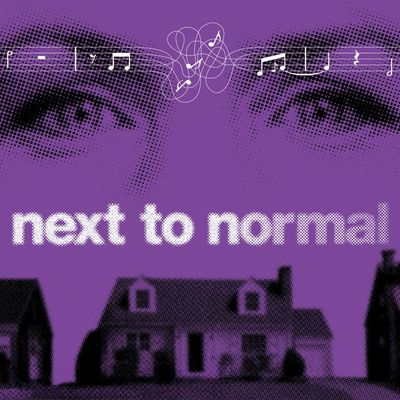
And to me, it's all, it's all the same. It's all, you know, understanding human relationships, understanding human behavior, understanding expression of our, of our internal lives. So, you know, I, so, you know, for me, the Showboat, you know, arguably the first American musical is a mental health musical, just as much as, you know, Next to Normal. Next to Normal is more content, you know, kind of has more of the content, so to speak, mental health content, but they're both about understanding human behavior. And they're both about people's inner lives. And, you know, I think that there are, you know, there are musicals like Next to Normal that are really, that are really content-wise about, you know, about mental health topics or, you know, other shows like Dear Evan Hansen.
There are some shows that I, that are, I'm aware of that are in development that are really, I hope they get to see a wider audience because they really are very spot on about that topic as well. And I think when the content is clearly about mental health, it really engenders the conversation more organically. You know, but I think, you know, every Sondheim musical, gosh, you could dig in and never get to the bottom, right, in talking about psychology. You know, he was, Sondheim was, you know, as much as he, I mean, he co-authored, right, these works with many other creators, but as much, you know, as he had a voice in, certainly in the lyrics and the music, he was an astute observer of human behavior. And I forget what your other, there was like a third element to that question.
[12:50] Alisa Hurwitz: How can we support as creatives this approach to mental health topics in musical theater to do it right? I mean, ideally, you know, ideally consulting with an expert because there, well, you know, while I will say over and over and over again, that musicals are not meant to be documentaries. And so I think it's unreasonable to expect them to be as such, or, you know, or, or flyers for, you know, for psychology and mental health, so to speak. I do think that there are responsible and irresponsible things that, that shows can do with, with their content. So for example, you know, a show like Dear Evan Hansen, you know, very thoughtfully, you know, did not put, there is, there is a suicide in the show, not a spoiler alert, because it happens pretty early on. And they, they, they don't put this any.
[13:51] Alisa Hurwitz: Thank you so much for having me, Martín. I'm really excited to be here and talk about the intersection of mental health and musical theatre.
[13:54] Alisa Hurwitz: It's such a fascinating area, especially considering how much emotion and vulnerability is involved in performing arts.
[14:20] Alisa Hurwitz: I think one of the most important things we can do is to create a safe space for performers to express themselves and to address their mental health needs.
[14:46] Alisa Hurwitz: You know, Stephen Sondheim was a genius at observing human behavior and translating that into his work. His ability to capture the complexities of emotions is something that resonates deeply with audiences.
[14:54] Alisa Hurwitz: When we look at his songs, we see characters grappling with their feelings, their fears, and their desires, which is something we all experience in our lives.
[15:02] Alisa Hurwitz: This connection between mental health and the stories we tell on stage is vital. It allows performers to not only portray these emotions but also to process their own experiences.
[15:10] Alisa Hurwitz: I often encourage performers to engage in self-reflection and to use their craft as a way to explore their own mental health journeys.
[15:30] Alisa Hurwitz: It's important to remember that the stage can be a powerful tool for healing, both for the performer and the audience.
[15:50] Alisa Hurwitz: When performers share their vulnerabilities, it creates a sense of community and understanding among the audience, which can be incredibly therapeutic.
[16:10] Alisa Hurwitz: I also think that mental health awareness in the theatre community has been growing, and it's encouraging to see more conversations happening around this topic.
[16:20] Alisa Hurwitz: There are so many resources available now for performers, from therapy to workshops focused on mental wellness.
[16:30] Alisa Hurwitz: It's about breaking the stigma and recognizing that mental health is just as important as physical health in the performing arts.
[16:50] Alisa Hurwitz: I believe that when we prioritize mental health, we not only enhance the quality of performances but also the overall well-being of the artists.
[17:00] Alisa Hurwitz: It's a win-win situation, really. Performers can thrive both personally and professionally when they take care of their mental health.
[17:10] Alisa Hurwitz: And I think audiences are starting to appreciate that as well. They want to see authentic performances that come from a place of emotional truth.
[17:20] Alisa Hurwitz: This shift in perspective is so important for the future of musical theatre.
[17:30] Alisa Hurwitz: I often share with my clients that it's okay to seek help and to talk about their struggles. It doesn't make them any less of an artist.
[17:40] Alisa Hurwitz: In fact, it can enhance their artistry by bringing depth and authenticity to their performances.
[17:50] Alisa Hurwitz: The more we talk about these issues, the more we normalize them, and the healthier our community will become.
[18:00] Alisa Hurwitz: I think it's crucial for theatre programs and institutions to incorporate mental health education into their curricula.
[18:10] Alisa Hurwitz: By doing so, we can equip the next generation of performers with the tools they need to navigate the challenges of this industry.
[18:20] Alisa Hurwitz: It's about creating a culture where mental health is prioritized and where performers feel supported.
[18:30] Alisa Hurwitz: I also encourage performers to find their own coping mechanisms, whether that's through mindfulness, exercise, or creative outlets.
[18:40] Alisa Hurwitz: Everyone's journey is different, and it's important to find what works best for each individual.
[18:50] Alisa Hurwitz: Ultimately, the goal is to foster a supportive environment where performers can thrive both on and off the stage.
[19:00] Alisa Hurwitz: I believe that when we take care of our mental health, we can create art that truly resonates with others.
[19:10] Alisa Hurwitz: And that's what it's all about—connecting with people through our stories and experiences.
[19:20] Alisa Hurwitz: So, I'm really passionate about continuing this conversation and advocating for mental health in the performing arts.
[19:30] Alisa Hurwitz: It's a journey, but I believe we're making progress, and I'm excited to see where it leads us.
[19:40] Alisa Hurwitz: Thank you again for having me, Martín. I'm looking forward to diving deeper into this topic with you.
[19:50] Alisa Hurwitz: Let's keep the conversation going and explore how we can further bridge the gap between mental health and musical theatre.
[20:00] Alisa Hurwitz: I think it's essential for all of us to be advocates for mental health awareness in our communities.
[20:10] Alisa Hurwitz: Whether it's through our art or our personal lives, we can make a difference.
[20:20] Alisa Hurwitz: And I hope that by sharing our stories, we can inspire others to do the same.
[20:30] Alisa Hurwitz: It's all about creating a culture of openness and support, and I truly believe we can achieve that together.
[20:40] Alisa Hurwitz: Thank you for this opportunity to share my thoughts, and I'm excited to see what we can accomplish in the future.
[20:50] Alisa Hurwitz: Let's continue to uplift each other and prioritize mental health in the performing arts.
[21:00] Alisa Hurwitz: I'm here for any questions or discussions you might want to have, Martín.
[21:10] Alisa Hurwitz: I think it's important to keep this dialogue alive and to explore new ways to support our community.
[21:20] Alisa Hurwitz: So, if anyone listening has thoughts or experiences to share, I encourage you to reach out.
[21:30] Alisa Hurwitz: Together, we can create a more compassionate and understanding environment for all performers.
[21:40] Alisa Hurwitz: Thank you again for having me on Backstage Talk. It's been a pleasure.
[21:50] Alisa Hurwitz: I'm looking forward to seeing how we can continue to advocate for mental health in the theatre world.
[22:00] Alisa Hurwitz: Let's keep pushing for change and supporting one another in this journey.
[22:10] Alisa Hurwitz: It's so important to remember that we are not alone in this, and there is strength in community.
[22:20] Alisa Hurwitz: Thank you, Martín, for being such a wonderful host and for facilitating this important conversation.
[22:30] Alisa Hurwitz: I'm excited to see what the future holds for mental health in musical theatre.
[22:40] Alisa Hurwitz: Let's keep the momentum going and continue to make a positive impact.
[22:50] Alisa Hurwitz: I appreciate the opportunity to share my insights, and I'm here to support anyone who needs it.
[23:00] Alisa Hurwitz: Thank you for listening, everyone. Let's keep advocating for mental health together.
[23:10] Alisa Hurwitz: I'm looking forward to hearing from all of you and continuing this important dialogue.
[23:20] Alisa Hurwitz: Let's make a difference in the lives of performers everywhere.
[23:30] Alisa Hurwitz: Thank you again, Martín, for this platform to discuss such a vital topic.
[23:40] Alisa Hurwitz: I'm excited to see how we can work together to promote mental health awareness in the performing arts.
[23:50] Alisa Hurwitz: Let's keep the conversation going and support one another in this journey.
[24:00] Alisa Hurwitz: Thank you for having me, and I look forward to connecting with everyone.
[24:10] Alisa Hurwitz: Together, we can create a brighter future for mental health in musical theatre.
[24:20] Alisa Hurwitz: Let's continue to uplift each other and prioritize our well-being.
[24:30] Alisa Hurwitz: Thank you for this opportunity, and I'm excited to see where this journey takes us.
[24:40] Alisa Hurwitz: Let's keep advocating for mental health and supporting one another in our artistic endeavors.
[24:50] Alisa Hurwitz: Thank you, Martín, for being such a great host and for facilitating this important conversation.
[25:00] Alisa Hurwitz: I'm looking forward to seeing how we can continue to make a positive impact in the theatre community.
[25:10] Alisa Hurwitz: Let's keep pushing for change and supporting one another in this journey.
[25:20] Alisa Hurwitz: Thank you for listening, everyone. Let's keep advocating for mental health together.
[25:30] Alisa Hurwitz: I'm excited to hear from all of you and continue this important dialogue.
[25:40] Alisa Hurwitz: Let's make a difference in the lives of performers everywhere.
[25:50] Alisa Hurwitz: Thank you again, Martín, for this platform to discuss such a vital topic.
[26:00] Alisa Hurwitz: I'm excited to see how we can work together to promote mental health awareness in the performing arts.
[26:10] Alisa Hurwitz: Let's keep the conversation going and support one another in this journey.
[26:20] Alisa Hurwitz: Thank you for having me, and I look forward to connecting with everyone.
[26:30] Alisa Hurwitz: Together, we can create a brighter future for mental health in musical theatre.
[26:40] Alisa Hurwitz: Let's continue to uplift each other and prioritize our well-being.
[26:50] Alisa Hurwitz: Thank you for this opportunity, and I'm excited to see where this journey takes us.
[27:00] Alisa Hurwitz: Let's keep advocating for mental health and supporting one another in our artistic endeavors.
[27:10] Alisa Hurwitz: Thank you, Martín, for being such a great host and for facilitating this important conversation.
[27:20] Alisa Hurwitz: I'm looking forward to seeing how we can continue to make a positive impact in the theatre community.
© Broadway Podcast Network, All Rights Reserved