

¡Bienvenidos al cierre de temporada del Especial de Latinos en Teatro Musical! 👏🏻 Esta semana tenemos el honor de entrevistar a uno de nuestros ídolos: ¡el increíble Sergio Trujillo!.. Read More
From the show: Backstage Talk
Guests

Featured Shows

About
¡Bienvenidos al cierre de temporada del Especial de Latinos en Teatro Musical! 👏🏻
Esta semana tenemos el honor de entrevistar a uno de nuestros ídolos: ¡el increíble Sergio Trujillo! 🔥
Sergio es un director, coreógrafo y actor, ganador del premio Tony, cuyo trabajo en Broadway y Off-Broadway siempre ha tenido un vínculo a sus raíces Latinas. 🤩
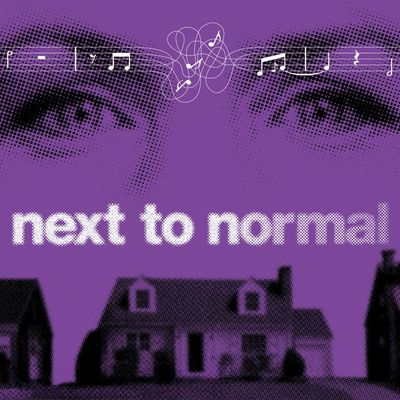
Con On Your Feet!, Viva Broadway!, Next To Normal, Ain't Too Proud To Beg, y muchos más espectáculos en su hoja de vida, Sergio ha sido un ícono Latino en la industria,✨
Nunca podremos olvidar su discurso cuando ganó el Tony, en el que le habló directamente a todos esos futuros artistas que vienen de Latinoamérica, asegurándoles que ellos también pueden llegar a los escenarios más grandes del mundo, validando nuestros sueños. Esta entrevista fue la oportunidad perfecta de cerrar la primera edición del especial de Latinos en Teatro Musical. 💙
Estamos completamente orgullosos y honrados de haber tenido a 30 increíbles y talentosos artistas durante esta temporada. No podemos esperar a seguir elevando el trabajo de nuestros amigos y familia. 🌎
¡Este episodio también está disponible en Inglés!
Por favor visiten su Instagram para que conozcan su trabajo!
Si quieren conocer más acerca de nuestro anfitrión, visiten su website! Siéntanse libres de contactarlo si tienen feedback o si quieren hacer parte de Backstage Talk!
Sígannos en nuestras redes sociales:
Transcript
This transcript was automatically generated and might contain errors.
[0:01] Martín Acuña: Hi, everyone. I am Martín Acuña, and you are listening to Backstage Talk.
[0:16] Martín Acuña: Jonathan Arsene asked how can you make someone take off and fly in one of his songs from Tic-Tac-Boo. And I, for the past two years, have learned one way to do it, through the power of community. Welcome to the Latinx in Musical Theatre Special for Season 3 of Backstage Talk, where we will be featuring artists from across all positions in musical theatre, from several Latin American countries and different Latin heritages. I am proud to showcase my Latinx family. I hope you enjoy.
[1:17] Martín Acuña: Jerome Robbins' Broadway. Guys and Dolls, Victor Victoria, Kiss of the Spider Woman, Fosse. Next to Normal, The Addams Family, Summer, Donna Summer's musical, and Bronx Tale. Additionally, Viva Broadway, Hear Our Voices. Sergio, you were the first Colombian on Broadway. It means a lot to me and my audience that you are here. Welcome to Backstage Talk. Thank you for accepting our invitation. It is an honor to have you here.
[2:02] Sergio Trujillo: Thank you, Martín. I am happy to share these moments with you and your audience.
[2:10] Martín Acuña: I love it. I want to ask you first, what made you decide the life of an artist, the path of an artist?
[2:18] Sergio Trujillo: Well, I know. I think that for me it has always been part of my destiny. As a kid, I was very restless. I lived in Cali. I was born in Cali. When I was a kid, I would go to theaters and organize theatrical events in our neighborhood. I was very restless. When my family left, we immigrated from Cali to Toronto, Canada in the 70s. When I arrived in Toronto, my life changed a lot because when you arrive in a country as an immigrant, you have a lot of responsibilities that are not spoken of, but you know them. As a son of an immigrant, it is very important to follow a career in which you can help your family. For me, that meant that I was going to be a doctor or something like that, something safer.
I never thought that art was something that could give me the same things. So I focused everything on my academic studies. For me, I had in mind that I was going to be a doctor. I was going to go to college. Then I was going to go to medical school. But it was during my last year of high school that I went to see a show called The Best of Broadway. When I saw that show, it changed my life. Because I saw those dancers, I saw how they moved, how they sang. And it lit up an idea in my head that I wanted to dance. Of course, I had always danced all my life. I was born in Cali, where we went out dancing when we were little. But you know, dancing was social. So when I entered college, my first year of college, after seeing that show, I enrolled at the University of Toronto, studying biochemistry.
But I also enrolled at a dance school. So for three years, I studied hard and I also trained dancing hard. And that was all I did. Actually, I didn't have youth. Because I had in mind to be a doctor and a dancer. And I kept that struggle of being an artist or a doctor. And then I enrolled at the chiropractic school. And it was during that time that I had the idea of taking a sabbatical at the school. But I decided that if I was going to take that leap of faith and try to see if I could be a dancer, I had to do it where I was at my best. And at that time, I lived in Toronto. So I decided to come to New York because I wanted to study with the best. So it took me a year to try to see if I could be a dancer.
If I could continue to dance on Broadway. I came to New York. I didn't know anyone. I came like this. An incredible leap of faith. And I arrived in New York. The reality was that I still had a lot of work to do. I wasn't the dancer that I could be. And I worked very hard. I ate, slept, danced 24 hours a day. And I was here for about four months. And I wasn't doing very well. Because I did auditions and they rejected me. So I decided to go to Los Angeles. Because I also wanted to dance in movies, in videos, in advertisements. All the commercial dance that is done in Los Angeles. And I arrived there in January of 1989. And I also studied dance. All my life was dance. And there I realized that there was an audition for a show called Jerome Robbins Broadway.
And I went to the audition. I stayed until the end. But at the end I didn't hear anything from them. If they had chosen me or not. And in June of that same year, nothing happened. And then I said, ok, it's time to go back to studying. Because I started studying in September. And that's it. My dream had already died. Nothing happened. But then, at the end of June, the producers of the show called me. And they told me that if I wanted to enter as a dancer in the show of Jerome Robbins Broadway. And that's when my life changed. And it was something that, well, imagine that. Something that for me is having faith. And in one's destiny it is very important.
[9:29] Martín Acuña: Yes, I totally agree with you. I want to then delve a little bit into all that journey in musical theater. I mean, you started with this show. And then a lot of doors opened for you. Up to Next to Normal, Kiss of the Spider Woman, Fosse, The Addams Family, Summer. Donna Summer's musical. And now, I mean, you've never stopped working. So how has all that journey been within musical theater?
[9:39] Sergio Trujillo: No, look, I've had, well, yes. Actually, I've had a very nice career. A very, very... When I take a moment like this to talk about that, I realize that it has been a very special journey. But I also tell you that it has been a very hard journey. Because just as everything looks amazing, I've also worked very hard. And many sacrifices. Imagine, the biggest sacrifice I made was to distance myself from my family. Because, in reality, in order to achieve these goals, it's like making a pact with life. Because you either choose art or you choose your family. And that was, for me, something that, when I think about it, it's painful. Because, imagine, I came to the United States. And I came from my family.
And I've been here in New York for 35 years. And far from my family. So that was the biggest sacrifice I made. But I've also had many, many, many triumphs. Many experiences that have proven that that sacrifice was worth something. And that is to have the opportunity to have the experience, to have the experiences that I've had, to be able to emerge, to be able to triumph. To be able to triumph in a way that I can serve the Latino community. Through the shows and the work that I do. Inspiring young people, young artists, with the example that I can give them. And those are the examples of the shows that I've done. Imagine, as a dancer, I started with Jerome Robbins Broadway. Jerome Robbins was one of the most prolific choreographers that has ever existed.
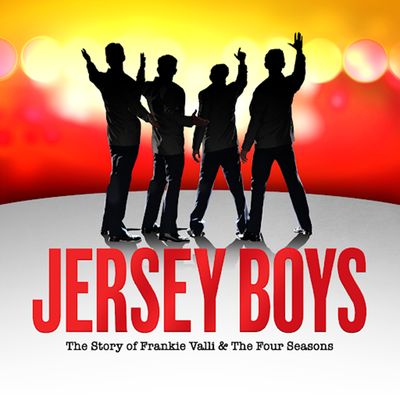
He did West Side Story, he did On the Town, Fiddler on the Roof, Peter Pan, King and I. Imagine, the best musicals. And I finished my dancing career with the show Fosse. It was a show that was celebrating Bob Fosse's work. And those were my principles. And that was a beautiful career as a dancer. And I was actually able to study under those teachers, who are geniuses. And that's how I was able to continue my career as a director and choreographer. And that's also how I was able to have experiences as the director and choreographer of Jersey Boys, Memphis, The Addams Family, Next to Normal, Ain't Too Proud. Imagine, 12 shows that I've done as a choreographer of Hector on Broadway.
[11:05] Martín Acuña: Yes, and what a crazy journey, because you also had and have had the best teachers in the industry. And you've been able to transmit all that knowledge through your work. And it seems absolutely amazing to me. That's why I want to ask you, how do you approach directing and creating choreography in musical theater? How do you start those processes with each show?
[11:31] Sergio Trujillo: Yes, well, first of all, all the processes are very different as a director and as a choreographer. First, I'll tell you about my process as a choreographer. For me, it's very important to obviously read the script and have creative conversations with my director when I'm a choreographer. Because I want to understand the world, I want to understand the characters, I want to understand the dramaturgy of the show. And then I start to think about it. I come up with ideas all day. I can be washing the dishes, I can be walking, I can be... All of that is a process of superposition.
[12:41] Sergio Trujillo: Ser colombiano, pues para mí era obvio que podía hacer la coreografía de cualquier show latino, pero para mí fue muy importante estudiar el movimiento, la cultura cubana. Me fui para Havana, para Cuba, y estuve por dos semanas y estudié con grandes maestros del baile afrocubano. Eso es lo que busco, lo que me gusta hacer, porque de esa manera me equipo, me pongo más poderoso, porque tengo la sabiduría, lo entiendo, entiendo el movimiento, y ahí yo comienzo. Después de ese tiempo voy a un estudio, trabajo como por a veces tres, cuatro semanas, no más en la coreografía, antes de comenzar los estudios, porque siempre quiero entrar al estudio cuando los ensayos oficiales comiencen con todo preparado, porque no me gusta entrar a un estudio sin saber exactamente qué es lo que voy a hacer.
Ese es el proceso como coreógrafo. Como director es totalmente distinto, porque yo usualmente lo que hago soy director y coreógrafo en los shows. Cuando soy director no me pongo el sombrero de coreógrafo para nada, hasta que no estudie, hasta que no trabaje con mi guionista, con el que escribe la letra de las canciones, con el compositor, y no entienda exactamente la historia, no trabajemos el guión del show, no puedo comenzar a trabajar en la segunda etapa, que es comenzar a informar el mundo y comenzar a estudiar el mundo en el cual el show esté basado, porque esa sabiduría me empodereza también, porque puedo también informar a los otros colaboradores míos, que son el que diseña el vestuario, el escenógrafo, el projection designer, el que diseña las proyecciones, etcétera, etcétera.
Entonces eso todo, y a veces se demoran años, eso no es algo que pasa en meses, eso se demoran dos, tres años, antes de, imagínate, comenzar el ensayo, y después ya cuando ya entienda exactamente, exactamente todo eso, me pongo el sombrero de coreógrafo, y ahí ya puedo trabajar ambas, ambos a la misma vez. Me encanta, de verdad, gracias, gracias por todos, todos estos consejos, porque además conocer el proceso de un coreógrafo y de un director coreógrafo es alucinante.
[15:06] Martín Acuña: ¿Qué consejo le darías a una versión mucho más joven de ser Sergio?
[15:17] Sergio Trujillo: Yo le diría que, no creo que para mí, el consejo que le daría al Sergio joven sería, anda sin miedo. Claro que mira, cuando miro mi carrera, lo que he vivido, es una persona, un chico que vivió sin miedo, pero a veces creo, pienso, imagínate si no me hubiera dado miedo en momentos. ¿Qué más hubiera podido capturar? ¿Dónde estaría? Hubiera sido una locura. No, pero aquí estamos. No cambiaría mi vida, no cambiaría nada. Pero me encanta, me encanta. Además, que no tengas miedo, que no tengas, sobre todo, no tenerle miedo a puestas nuevas, se ve mucho en tu trabajo. Y es algo que a mí me parece, otra palabra que no tiene traducción a español, mind-blowing. Tener eso, no, de verdad, me parece a mí increíble.
[16:27] Martín Acuña: Tú has tenido la oportunidad de trabajar con los grandes nombres en la industria, y sobre todo con los grandes nombres latinos en la industria. Quiero preguntarte para ti qué es, en términos de latinos en teatro musical, qué es visibilidad y representación.
[16:41] Sergio Trujillo: Sí, mira, pues primero que todo es muy importante y estamos en un momento en nuestra comunidad, en el mundo, en el que la representación y diversificación es muy importante. Pero también te quiero contar algo que es muy importante para mí, y la manera que he vivido mi vida, porque creo que esto le puede ayudar a la gente joven, porque también eso existirá en términos del racismo y prejudición. Nunca he pensado, nunca pensé y continúo pensando así, que el color de mi piel afectó el resultado de, por lo menos, por ejemplo, mis audiciones. Cuando era joven yo pensaba que no me habían escogido porque no eran buenos todavía, no era suficiente, no había llegado a ser el bailarín que podía ser. Y cuando no me escogían yo pensaba, tengo que trabajar más duro.
No me escogieron porque no soy bueno todavía, y eso era lo que me empujaba. Nunca decía, no me escogieron porque soy latino. Aunque me imagino que a veces tuve momentos de perjudición, pero eso no era la manera que funcionaba. Y sigo de esa manera, porque yo pienso que siempre pienso que yo estoy en el mismo plano que todo el mundo cuando entro al mundo. Period. That's it. Entonces, pero creo que sí, eso es importante. Es una conversación muy importante, especialmente aquí en América, una conversación que se tiene que tener. Y yo, en el momento donde estoy, en la posición en que estoy, quiero cambiar esa conversación. Y de la manera de la cual puedo cambiar esa conversación es tomar el control. ¿Cómo tomar el control?
Ser responsable de unificarme con otros creativos, escritores, lyricistas, compositores, y contar historias latinas, historias que pertenecen a nuestra cultura. Y tengo, en este momento estoy trabajando seis nuevos shows, totalmente nuevos, y todos son basados en nuestra cultura, en nuestra cultura latina. Y son basados en libros, plays, otras películas, pero todas tienen contenido latino. Y de esa manera, es la manera en la cual yo, en este momento, puedo tratar de cambiar la conversación.
[19:35] Martín Acuña: Me encanta, porque además resolviste mi siguiente pregunta, que era cómo podíamos incrementar esa visibilidad y representación latina en los escenarios de Broadway. Y tú lo acabas de decir, la unión hace la fuerza. Cuando tenemos un equipo en donde son varios latinos juntos trabajando en una obra, contando estas historias de la manera más auténtica que se pueda, vamos a incrementar nuestra posición en el mercado. Entonces me encanta. Y ahora que hablas de estos seis shows que tienen contenido latino, para ti ¿cuál es la parte más importante de crear estos personajes latinos en teatro musical?
[20:20] Sergio Trujillo: Yo creo que algo que es muy importante es la verdad, es la autenticidad de cada historia. Porque en nuestras manos, esas historias van a tener más verdad, van a ser más... como te digo, no sé más que decir que son auténticas, porque pertenecen a nosotros, creadas por las personas que han tenido la experiencia, que entienden la experiencia, que entienden el mundo, que entienden la comunidad. No es decir que mis amigos, mis colaboradores, que son blancos, no tienen el permiso de también contar estas historias, pero creo que miradas por el lente de nosotros, que somos más íntimos, que entendemos más, esas historias creo que van a tener más fuerza, van a tener más power.
[21:17] Martín Acuña: Sí, totalmente de acuerdo. Sergio, de verdad, muchísimas gracias por estar acá. Esta conversación de hoy significa el mundo entero para mí. Cuando yo descubrí que tú eras el primer colombiano en Broadway, te volviste mi ídolo, y de verdad es para mí un sueño cumplido estar hablando contigo. Y sé que has estado trabajando a distancia por y con nosotros. Y lo más bonito de todo es que cuando tú ganaste el Tony, a mí jamás se me va a olvidar el discurso que diste, porque de verdad marcó mi vida. Y el día en que yo me gane un Tony, si me lo gano, diré algo muy similar a lo que dijiste, porque significa el mundo entero poder ver a un colombiano allá, poder ver a un colombiano en las grandes ligas, haciendo historia. Entonces, de verdad, desde el fondo de mi corazón te doy las gracias por estar acá.
[22:23] Sergio Trujillo: Y tengo una última pregunta para ti antes de cerrar.
[22:28] Martín Acuña: Primero que todo, antes de que me preguntes, muchas gracias. Mira, para mí es parte de lo que te digo, de mantenerse cerca a una persona al destino de cada uno. Y parte de mi destino no es solamente poder brindar al público felicidad por medio del arte, de los shows que hago, pero también de poder inspirar a la gente como tú, a tu audiencia. Porque todo es posible. Yo soy ejemplo de que todo es posible. Imagínate, si un chico, un muchachito de Cali, un barrio pobrecito, pudo tener estos momentos, estas experiencias, todo es posible.
[23:13] Martín Acuña: Sí, totalmente de acuerdo. Ahora sí, te pregunto, ¿cuáles son tus top 5 musicales favoritos?
[23:19] Sergio Trujillo: So, Cabaret de Sam Mendes y Rob Marshall, Nine de Devil of Old, con Antonio Banderas, y los otros tres son míos. Next to Normal, porque es un show muy, como te digo, la historia, la música, es muy interesante. Jersey Boys y Ain't Too Proud. Me encantan. Una vez más, Sergio, muchísimas gracias por estar acá. Un placer, un placer.
© Broadway Podcast Network, All Rights Reserved