

Tony Nominated Director Zhailon Levingston come back to BTA to deep all things Cats The Jellicle Ball. Zhailon discusses everything to casting André De Shields, honoring the origins of Ball Room and Cats, and even gives us the scoop on what he’s doing next... Read More
From the show: Behind the Awards with Eila Mell & Bruce Gotlieb
Guests

Featured Shows
About
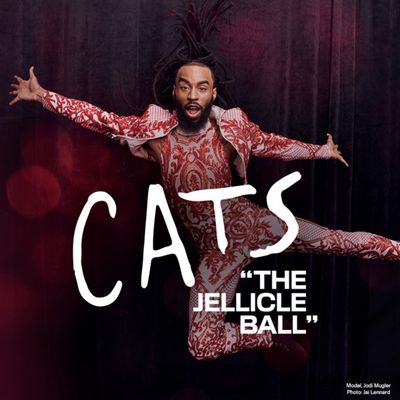
Tony Nominated Director Zhailon Levingston come back to BTA to deep all things Cats The Jellicle Ball. Zhailon discusses everything to casting André De Shields, honoring the origins of Ball Room and Cats, and even gives us the scoop on what he’s doing next.
Also in this episode - Eila & Bruce discuss reimagined Broadway Shows. Like, Romeo & Juliet, Much Ado About Nothing, and this seasons hit Cats the Jellicle Ball!
Zhailon Levingston is a Louisiana-raised storyteller, director, and activist who co-directed CATS: The Jellicle Ball, an immersive reimagining of the classic musical that premiered in 2024 at New York City’s Perelman Arts Center. The production earned him an OBIE Award (co-directing) as well as a Drama Desk, Drama League and Outer
Make sure to check out Eila's book, "The Tony Awards", and all her other amazing books: https://amzn.to/43WMu5Y.
Connect with Eila and Bruce:
- Instagram @behind_the_awards
- Eila @eilamell
- Bruce @cominghomewithbruce
Transcript
This transcript was automatically generated and might contain errors.
[0:12] Eila Mell: Hello and welcome to Behind The Awards. I'm Eila. I am here with Bruce.
[0:17] Bruce Gotlieb: Hello there. How we doing?
[0:19] Eila Mell: We are good. What should we talk about today, Bruce? We have a wonderful guest, but let's do a little opener here.
[0:27] Bruce Gotlieb: Well, so here's my question, Eila.
[0:30] Eila Mell: Okay.
[0:31] Bruce Gotlieb: We have Cats the Jellicle Ball! this season, which is so hot. I mean, last season, Off-Broadway, it was the hottest ticket. You couldn't even get it.
[0:39] Eila Mell: I know.
[0:40] Bruce Gotlieb: If you didn't get it when they went on sale, you weren't going.
[0:42] Eila Mell: Right. Shut out.
[0:45] Bruce Gotlieb: But what they've done is they've taken a show that was told in one manner, not changing anything. And we've seen this done before with, like, Oklahoma, and they've flipped it a little bit.
[0:57] Eila Mell: Yes, for sure.
[1:00] Bruce Gotlieb: This one, much more than they did the Oklahoma revival.
[1:01] Eila Mell: Yeah.
[1:06] Bruce Gotlieb: So it lives in a whole new, completely different world.
[1:09] Eila Mell: Yeah.
[1:12] Bruce Gotlieb: The words are the same. The music is the same. But we're told the story in a different manner.
[1:16] Eila Mell: This, I think, more successfully than the Oklahoma one did.
[1:22] Bruce Gotlieb: Mm hmm. Less controversially, for sure, because people were very split on that Oklahoma.
[1:28] Eila Mell: Yes. So my question is, you know, most people either love or hate Cats, right? There is no, like, in between, really.
[1:31] Bruce Gotlieb: I wonder if in the future, you know, coming up seasons, whether we'll see something else, some other classics.
[1:39] Eila Mell: Yeah. Well, they should, because I don't know anyone who hates this version of Cats.
[1:44] Bruce Gotlieb: So I feel like they perfected it now. But to your point, you know, they do it a lot for Shakespeare.
[1:51] Eila Mell: Right.
[1:52] Bruce Gotlieb: So we see, you know, reimagining, you know, a different setting, a different concept. So it works really well with a very old show.
[2:03] Eila Mell: But is your question what more modern shows could use?
[2:08] Bruce Gotlieb: Yes. Or even what older shows. I mean, listen, you know, if you take The Sound of Music, which has been around forever.
[2:14] Eila Mell: Mm hmm.
[2:15] Bruce Gotlieb: I don't really know that you can reimagine that because the story relies on the historical, you know, what historical information and that feeling of living in that time.
[2:28] Eila Mell: You know, I don't know that you could take it and put it in a different in a different way.
[2:33] Bruce Gotlieb: You know, I saw a production of Blind Spirit recently and I was thinking it would be interesting to see this done modern day, like maybe in Brooklyn or New York City.
[2:43] Eila Mell: But, you know, that's an interesting idea, but I don't think it changes any of the questions of the show itself in a way that so I don't think it's the most interesting choice, I think.
[2:56] Bruce Gotlieb: Whereas that, you know, you could do it that way. It doesn't really it wouldn't do much. But so there's a better answer than that. Do you have any ideas, Bruce?
[3:05] Bruce Gotlieb: You know, I just I think it's more of like an open ended, you know, discussion of like what you know, what could the landscape look like with this?
[3:14] Eila Mell: Right.
[3:15] Bruce Gotlieb: I do think, to your point, we've seen it with Shakespeare last season with Romeo and Juliet this coming season. We have much to do about nothing coming in. The first one that pops into my head is maybe Oliver.
[3:27] Eila Mell: Yeah.
[3:32] Bruce Gotlieb: You know, maybe if we put Oliver in a more modern setting, I mean, the story and all.
[3:42] Eila Mell: Yeah. I also think it's interesting if you take like a subject that's relevant today, maybe in today's politics and apply that to a show.
[3:59] Bruce Gotlieb: But no, you're right. I think that from a political standpoint, doing a piece, whether you keep it the way it was or you do it differently, it's received and digested differently because you're looking in through a lens that wasn't being looked at when it was done.
[4:03] Eila Mell: I mean, you could do West Side Story with like red states and blue states.
[4:04] Bruce Gotlieb: You could. You could.
[4:07] Eila Mell: But could be interesting.
[4:17] Bruce Gotlieb: So I just, you know, food for thought, you know, throwing it out there to our listeners. We'd love to hear from you. What do you think could be reimagined and how, you know?
[4:24] Eila Mell: Yeah. But I can't imagine doing it as well as Jalyn Levingston and Bill Rush have done it with Cats this season.
[4:37] Bruce Gotlieb: Yes. And we have, you know, we are lucky enough to have Jalyn back with us to do a little bit more of a dive into the deeper pool of Cats and his Tony nominated hand at it. So let's bring him out.
[4:41] Eila Mell: Bruce, I am so excited. I know you are, too, because we get to welcome back Jalyn Levingston to our show.
[4:48] Zhailon Levingston: Hello.
[4:49] Eila Mell: Yay.
[4:50] Bruce Gotlieb: Tony nominee.
[4:51] Eila Mell: Yes, congratulations.
[4:53] Zhailon Levingston: Thank you so much.
[4:54] Eila Mell: It's good.
[4:55] Zhailon Levingston: Oh, my gosh.
[4:56] Eila Mell: So I went to the show that happened on the day of the Tony nominations.
[5:01] Zhailon Levingston: The whole TV show was wild.
[5:03] Eila Mell: Yeah, I was there.
[5:06] Zhailon Levingston: Oh, my gosh.
[5:08] Eila Mell: What a thrill to be in the room that day.
[5:10] Zhailon Levingston: Yeah, that was cool.
[5:11] Eila Mell: Yeah. TDS had sponsored like, I mean, hundreds of high school seniors.
[5:18] Zhailon Levingston: I think it was maybe like 2,000 kids.
[5:20] Eila Mell: Yeah, it was like most of the house.
[5:23] Zhailon Levingston: Yeah.
[5:24] Eila Mell: At least everywhere I could turn and look was high school seniors.
[5:28] Zhailon Levingston: And it was like incredible to just I think anytime I see young people watch the show, I get zapped into the present the quickest.
[5:37] Zhailon Levingston: So, yeah, it was cool.
[5:39] Eila Mell: So my friend works for TDF and that's why I was able to go that night. And we were saying, do they know? Do they know what ballroom is?
[5:46] Zhailon Levingston: Oh, they know.
[5:48] Eila Mell: Oh, they know.
[5:49] Zhailon Levingston: Yeah.
[5:50] Eila Mell: They know.
[5:51] Zhailon Levingston: And they were ready.
[5:52] Eila Mell: They were so excited.
[5:53] Zhailon Levingston: It was great.
[5:54] Eila Mell: So the show is such a huge success.
[5:57] Zhailon Levingston: It is.
[5:58] Eila Mell: And when you guys started downtown, obviously, it was you couldn't get a ticket.
[6:03] Zhailon Levingston: Once people found out what was happening, you couldn't.
[6:07] Eila Mell: Now moving into Broadway, obviously, everything has gone up in level, like from off-Broadway to Broadway, Broadway-ifying Cats. Other than that, were you able to take certain things that maybe you learned being downtown that you were like, okay, we have to do this in the Broadway space?
[6:28] Zhailon Levingston: Yeah, it was always really important to make sure we justified, in terms of the effect of it all, why move to Broadway. One, we want as many people to be able to get caught up by the infection of the show as possible.
[6:48] Zhailon Levingston: And there are a lot of questions to be answered in terms of how do you do this and maintain a kind of authenticity that people respond to downtown, a type of perceived scrappiness that people walk away with downtown.
[7:03] Zhailon Levingston: And so I'll answer the question in two ways. One, kind of creatively, the prompt was, how do we not copy and paste what we did downtown, but actually tell the story of these cats from downtown have come uptown, broke into the Broadhurst Theater, and decided to throw a ball?
[7:25] Zhailon Levingston: And so Cats on Broadway takes place on Broadway. It takes place in the Broadhurst Theater. And that opened up all kinds of fascinating little gifts that I think some are working subconsciously on the audience's mind, and some are more overt in terms of the proscenium and how we have to deal with it.
[7:47] Zhailon Levingston: And then the other thing I would say is, one of the things that me and Bill really kind of wracked our brain around is, after the successful off-Broadway run, what is the essential thing? What is the thing that can't be tampered with, that must remain?
[8:01] Zhailon Levingston: And I think for a while we thought, oh, what's making this so unique for people is the space and the runway and how it's staged. And in a way, that definitely was a big part of it.
[8:19] Zhailon Levingston: But I think what we really understood, having debriefed that entire experience, was it was the audience's relationship to each other. And if we can recreate a space where people go, I can't even believe I talked to that stranger next to me. Or I can't believe that I need to sit with this person. Or I can't believe I feel comfortable crying in front of that person. Or I can't believe there's an 80-year-old right here, but a six-year-old right here.
[8:51] Zhailon Levingston: And we've really leaned into this idea that the spectacle of Cats on Broadway is humanity. And so even though the space is bigger by thousands of seats, it feels more intimate. And it feels much more of the town hall coming together around the watering hole, which I think connects us right back to the origins of theater.
[9:14] Eila Mell: It's so funny you say that, because the night after you opened, and I'm waiting in line to go into the theater. And they come out, and they're handing out the free fans to however many people they do.
[9:29] Zhailon Levingston: So that organically created a conversation with this mother and daughter that were standing behind us. Because we saw them, and we were like, wait a minute. They didn't ask us, so the one girl grabbed for our little group. And then when we were sitting in our seats, there was another woman in front of me. She took out this little fan, really ornate. And I was like, your fan is beautiful. And she goes, but look at yours. And I said, oh, I'll give you mine. We had this whole, before the show started, this community event.
[10:01] Zhailon Levingston: Oh, I love that.
[10:01] Eila Mell: And it's just what you said. And intermission, then we came back to that little group that we established. And what did you think? And one has tears. And so you've successfully done that.
[10:13] Zhailon Levingston: Thank you.
[10:14] Zhailon Levingston: Yeah, thank you so much. I appreciate that. And I love hearing all the stories that people have in terms of their interactions with folks at the show.
[10:21] Eila Mell: Yeah. You know, part of what you had to do is a redesign of your set by Rachel Hawk, who I love. You know, off-Broadway, the runway was able to extend throughout the audience. But clearly, you would lose too many seats in a Broadway house to do that. Is that why you have stage seating?
[10:41] Zhailon Levingston: I think stage seating, yeah, in a way, is our answer to how to continue to make the one room. I think that would be how Rachel would frame it. And even that was a question off-Broadway, because technically, those are two theaters put together at the Pearl. And so two different kind of designs of rooms. And the runway was actually a thing that, like, forced the rooms together. And then the work was, like, making sure no one really saw the, you know, the seams of things.
[11:10] Eila Mell: How cool.
[11:11] Zhailon Levingston: And so that kind of question continued on Broadway. It's like, how do we make the room one room for people? And what's great about the show is I think it feels like one room, but you still have all these different vantage points.
[11:23] Eila Mell: Yeah.
[11:24] Zhailon Levingston: And I think, like, holistically, politically, all the other deep things that can come up when talking about the show. Like, I think Rachel's design in this space primes people to receive the show in a certain kind of way because we are all in it together. And yet, what is it like over there? And what is it like over there? And what do you see over here? And what did you hear? And, like, both things can be true. But, yeah, that was definitely an intentional part of the design was, like, oh, we can create this human event by having this.
[12:29] Zhailon Levingston: The balance between the Broadway glow up and not getting so lost in, oh, we have to transfer to Broadway that we lose a certain kind of authenticity that is about a kind of scrappiness. Well, that's it, right? Because, you know, the people who participate in Ballroom, they're not spending zillions of dollars on anything. They're using their creativity to create these incredible outfits and anything they do, they're funded by anyone.
[12:49] Eila Mell: Yeah, totally. I mean, it's the house, right? And we're competing so that we can have resources for the house and get status for the house.
[13:06] Zhailon Levingston: Yeah, you're totally right. There is not that built-in infrastructure outside of competition. And so everything is quite scrappy. And it was kind of beautiful to watch some of our cast members who are more rooted in Ballroom, like, make their opening night outfits over the course of weeks. And we had an actor who, like, was bedazzling his studs on his shoes for, like, two weeks of previews. And so, like, every note session, he would be also listening to notes and, like, getting his shoes ready. And I was like, yeah, that's exactly what it is.
[13:40] Eila Mell: And, you know, let's talk about that, because it's incredible that you have legends like Junior LaBeija in the show, Leomi, 10% Chance City Moore, you know, I mean, all these people who really, I mean, Junior LaBeija was one of the founders, you know, built the Ballroom scene. So how did that come about that you were able to incorporate them into the show?
[14:00] Zhailon Levingston: I mean, it's really all thanks to our unbelievable casting team, X Castings. Victor and Sujata worked together on the show. And from the very beginning, we knew that the casting process would be rigorous. We knew that it couldn't be about just putting on a culture on top of another culture. We knew that we had to have a critical mass of people from Ballroom, both in the show and behind the table. So that kind of has always been true, though, I will say that. And yeah, so a lot of it also was like, well, now, well, the person's, yes, let's just see. Right. You know, that was the Junior thing was like, does Junior even say, like, would he even do? Well, let's just ask and to not be afraid to just ask.
And I think that after that first workshop we had, we were like, well, that's Gus. So yeah, that's what it is. But Leomi is new to the Broadway production. So that has actually been its own kind of fascinating thing. One, honored that she would say yes. And then two, like the opportunity to completely re-imagine to a certain extent, the role of Macavity, which was male presenting off Broadway and represented on Broadway as a black trans woman. And to me, it made the track even more complicated and interesting. But what Leomi brings to it is all of the unexpected colors that, you know, I just think is incredible. So she's been a dream to work with. And yeah, a real mother in the room.
[15:37] Eila Mell: I have so many questions. All right. So you directed the show with Bill Rauch, who, you know, is a well-established Broadway director. And now you're a big, fancy Broadway director. But, you know, wasn't always the case. You started off. Is it true that you handed out flyers?
[15:58] Zhailon Levingston: Oh, yeah. Yeah. So like when I moved to New York in 2016, I didn't have a job and I was living on a friend's couch. And so the first gig I got was selling Broadway tickets at Times Square. And this was not the tickets. This was like a mom and pop. Here is this clipboard. Here are a list of shows. Walk the patron to our riggity rig office somewhere a block away. You know, it was kind of like a dinosaur in the shadow of like tickets. He has really rising. And today to start like this was before it got, you know, made made all that a lot. And that people would follow you to some thing is just funny enough as it is. Right. Like who's just following some random stranger? Sometimes what would happen is I would like the person interested, but they would be they would feel more comfortable walking with someone else.
And so then they would take it. So that was like the worst part of it. And also, like, I'm not a great salesman of things. I don't care that much. So it's like either you want to see Chicago or you don't. But I'm not about to which, you know, doesn't bode well for tips. And so I had to leave that job.
[17:18] Eila Mell: So how did you and Bill come together for this show?
[17:21] Zhailon Levingston: Yeah. So I was directing a show at Second Stage and Victor, the casting director came and one of my other friends, Jane, was there and I started to tell them about how me and my roommate at the time, how I was joking around with him and was imagining a production of cats where nobody was a cat. And I was calling it cats, no ears, no tails. And I was like, you know, wouldn't that be crazy? And, you know, we're just kind of joking around about all these things. I was thinking. And Victor didn't laugh. And he was like, and I was like, yeah, so isn't that crazy? That'll never happen. He was like, you need to talk to Bill Rauch. And I was like, OK. And he was like, and that's when I learned about Bill's idea of cats and ballroom. And two days later, we were on a Zoom and two hours into that, we became co-directors. And so we walked into the first workshop of the show as co-directors together. But it's been a joy ever since.
[18:30] Eila Mell: And so there are very, you know, there's a very specific story, even though, you know, there's no script. It's, you know, the same as 1982, I think, production, same text, pretty much. So how do you work out what happens? Because, you know, again, it's very specific what happens. You get a very clear picture of what's going on, and especially when the police come in. Where did all those ideas come from?
[18:47] Zhailon Levingston: Yeah, I mean, it's truly the best idea in the room. So like a lot of times it's like, what about this? And either it's like, oh, yeah, that's the right direction. Let's go this direction. Or, whoa, that's definitely not what we want the show to be. But great to know that now. But everyone in the room is always throwing ideas around. And really what Bill and I are doing are trying to create that initial prompt. So that initial, what if we saw it like this? And then everyone represent a different filter or POV on an idea. And so costumes might get really lit up about something. But then a cast member might be like, oh, but it also makes sense that you look at it just at this angle. It's still within that idea, but it's also that.
But then somebody come and be like, actually, I know what y'all are trying to do, but it's actually that idea over there and the whole thing shifts. And so like what Bill and I are doing are just instigating, poking around, crowding and putting prompts out there. But in terms of the actual process of ideating how to translate the show, it goes back to the poetry. It goes back to the T.S. Eliot of it all. When you ask of poetry, the questions we all ask of poetry, good poetry is bottomless. It creates all of these other kinds of possibilities as you read. When you ask of poetry to be the mind of a literal cat, you get cats. But maybe you don't get the amount of layers of story you're able to get if you ask those same questions to a human.
So when I ask of a human, what's going on when you hear Dome, Dome, Dome, Dome, Dome? Like what are the human possibilities for why that music would sound like that on Grizabella's entrance? Remark the cat who hesitates towards you. Well, who's that cat that's hesitating towards you? And oh, that's Monkestrap. We have a relationship with him, but he has a complicated relationship with Grizabella. And what is that all about? Right? And so you just start to ask the questions you ask of any great piece. But I think what unlocks it is being able to have these cats be humans. And then I think just to be specific about the Macavity of it all, you know, in the show, the police come in and they are looking for stolen goods that Macavity has taken and basically all Deuteronomy sacrifices himself so that Macavity can be protected and that the ball can continue.
And of course, the cops don't really care. They just want to take in someone. And I think a lot of that story really came from continuing to trace the story of Macavity in our version, which is a kind of Robin Hood stealing from the rich to give to your house. And what is the inevitable danger that our version of Macavity has if the danger isn't just Macavity is awful and bad and wants to fight everyone? But Macavity also has this crazy intense music that's amazing. So, again, you ask what is the human possibility? What are the human stakes that would justify music that sounds like that? And then, you know, you just go on the ride and it cuts. Macavity is the reason why old Deuteronomy disappears from the ball. And so that's true in our production. Despite Macavity maybe not doing it on purpose, Macavity is ultimately to blame for bringing the danger in the room that disappears.
[22:42] Eila Mell: And what's so beautifully done is that you get all of this without saying a word. You understand everything that's happening. You understand who Grizabella is right as soon as she makes her entrance. It's so well done.
[22:55] Zhailon Levingston: I think also, too, I mean, it's the casting thing, right? Like these people have merged into these characters in ways that are like really hard to articulate. But I think when you see them on stage, like they don't really have to say anything because you're like, you are that. When Junior walks down and takes a seat on his rocker or walker, you get the image and then you're just allowed to have your own experience with it.
[23:23] Eila Mell: But there was never a time where you sort of storyboarded the story, it just sort of developed as you went along?
[23:29] Zhailon Levingston: I wouldn't say that the storyboarded like tentpoles of the show. It was really about the categories. Like what is the category? What is the character to the category? Who wins the category? Who loses the category? Why ballroom beats and when? So like that really became our like fence, you know, the fence around the cow to breed the cow was really around those questions. And then everything else.
[23:57] Zhailon Levingston: The Category is…Cats the Jellicle Ball!
[24:27] Zhailon Levingston: The Category is…Cats the Jellicle Ball!
[24:51] Zhailon Levingston: The Category is…Cats the Jellicle Ball!
[25:19] Zhailon Levingston: The Category is…Cats the Jellicle Ball!
[25:47] Zhailon Levingston: The Category is…Cats the Jellicle Ball!
[26:15] Zhailon Levingston: The Category is…Cats the Jellicle Ball!
[26:43] Zhailon Levingston: The Category is…Cats the Jellicle Ball!
[27:13] Zhailon Levingston: The Category is…Cats the Jellicle Ball!
[27:43] Zhailon Levingston: The Category is…Cats the Jellicle Ball!
[28:13] Zhailon Levingston: The Category is…Cats the Jellicle Ball!
[28:43] Zhailon Levingston: The Category is…Cats the Jellicle Ball!
[29:13] Zhailon Levingston: The Category is…Cats the Jellicle Ball!
[29:43] Zhailon Levingston: The Category is…Cats the Jellicle Ball!
[30:13] Zhailon Levingston: The Category is…Cats the Jellicle Ball!
[30:43] Zhailon Levingston: The Category is…Cats the Jellicle Ball!
[31:13] Zhailon Levingston: The Category is…Cats the Jellicle Ball!
[31:43] Zhailon Levingston: The Category is…Cats the Jellicle Ball!
[32:13] Zhailon Levingston: The Category is…Cats the Jellicle Ball!
[32:43] Zhailon Levingston: The Category is…Cats the Jellicle Ball!
[33:13] Zhailon Levingston: The Category is…Cats the Jellicle Ball!
[33:43] Zhailon Levingston: The Category is…Cats the Jellicle Ball!
[34:13] Zhailon Levingston: The Category is…Cats the Jellicle Ball!
[34:43] Zhailon Levingston: The Category is…Cats the Jellicle Ball!
[35:13] Zhailon Levingston: The Category is…Cats the Jellicle Ball!
[35:43] Zhailon Levingston: The Category is…Cats the Jellicle Ball!
[36:56] Zhailon Levingston: The Category is…Cats the Jellicle Ball!.
[37:26] Zhailon Levingston: Yes. Let's make a category for wigs. Wigs and projections. I think it's time for categories for those. Lisa, you're a publicist. Let us know that you have ADHD. So many people have ADHD, and I have someone very close to me that does. I know that it gives you a superpower in that you can hyper-focus on the things that really matter to you. Has that been an asset to you in some ways as a director? The quick answer is yes. The more complicated answer is I am so lucky and blessed to have found the thing that I hyper-fixate on at a super young age. I think that is the key. When I was 10, I discovered Broadway, and it just so happened that the thing I was hyper-fixated on, I could actually pursue as a career.
I don't know if the ways in which it functions as a superpower in my life would be the same if I spent most of my days working at Chase Bank and didn't have the relationship to that. It means my mind is different. It just works differently. It needs different things. At this age, it's my responsibility to find the accommodations that I need to succeed. That's so much of what the journey is, especially when you're diagnosed later in life or as an adult. It's really trying to unmask who you thought you were, discover who you really are, and get the help that you actually need. I think it just also gives me an empathy for our community and for the artists I work with, who so many of them exist on the spectrum in different ways.
I would say that also a sneaky thing about my own neuro-spiciness is just I can probably put up with a level of... I don't even know what the word is, but I can gamify our industry in a way that might be harder for people because I have spent a life gamifying my relationships and trying to understand what does this person need? What do they want? How do I show up? Just how the mind racks and trying to figure out how to be normal. Now that I'm giving myself the space to really understand who I am, I also have this other skill set, which is I can walk into the room, scan the room, and know exactly what the room needs. That's its own little superpower in terms of navigating the industry of Broadway, not just the part making of it.
[40:11] Eila Mell: That's cool. You use the word normal, but I think we're learning that this is normal. There's a wide range of what's normal, wider than we thought even 10 years ago.
[40:23] Zhailon Levingston: Totally real. You gave everybody a glimpse into what it was like to watch the nomination live and discover that you were a Tony nominee, which was so thrilling. Did you decide, like, okay, we're going to sit down, we're going to watch live? Was there a back and forth of what was going to happen that morning?
[40:39] Zhailon Levingston: Well, I knew my boyfriend had to go to work, so I didn't want to watch by myself. I carry very close to me the 10-year-old child that grew up watching the Tonys every single year and sitting really close to the TV and not having a Tony party because I don't want anyone to interrupt my experience. Thank you. I don't care what you think. I don't want to hear your opinion. I just want to be locked in. So part of it was like honoring that person.
[41:12] Eila Mell: Yeah.
[41:12] Zhailon Levingston: And two, I think to go back to the neurosliceness, sometimes I just have a hard time perceiving the moment I'm in and understanding the weight of it. And so, you know, sometimes I experience my memories through videos and snaps, screenshots, and old memories on Facebook. I just knew, like, in order for me to really remember how this went down, I should have this recorded. It was perfect. Sometimes you think you know how these nominations are going to go and then they don't go that way.
[41:41] Eila Mell: Yeah.
[41:41] Zhailon Levingston: So, you know, it could, I mean, I think everybody assumed that you were going to get in, but then what if you don't, you know? Well, there's this moment you'll see in the video where, like, because Two Strangers takes up such a lot of space at the bottom of the space. And also because my name starts with a Z, I knew that if I'm nominated, I'm still going to be last. But I don't think my friends really clocked that. There's this like half a second where you see just a little bit of like, OK, we're going to have to go into best friend mode in a different way. Right. And then, you know, it happens.
[42:21] Eila Mell: So that's the best.
[42:21] Zhailon Levingston: But you look, you will appreciate this. I was at a Tony party not that long ago. Right, Bruce? Bruce knows this story. And, you know, I get there early and everyone's there on time. And so then the host says, OK, we're going to eat dinner while the creative awards are on because no one cares about that. I sat in that room by myself, I let them all eat and I watched every award. I need to know who got best sound design. That's right. Of a play. Exactly. And that matters to me. You know, I wrote a book about design on Broadway. I know Broadway designers. I it's equally, you know, sound design is as important to me as choreography. Totally. That's why I was so thrilling that our entire creative team got nominated because it was like, right, we are telling the same story and I need Kai Harada as much as I need Queen, as much as I need Arturo.
[43:11] Eila Mell: Exactly. I need Bill.
[43:11] Zhailon Levingston: Yes. Well, let's talk about your choreographers, because what they have created is I mean, it's like just jaw dropping.
[43:16] Eila Mell: Yeah. Are they always a team or did you hire them for skills?
[43:24] Zhailon Levingston: Well, Mario was on the team first and knew that he needed Arturo to complement him and they had never worked together. They knew each other and had a relationship, but they had never created together. And I will say I never saw their intention with each other over, you know, creating the work, maybe intention as a team and the work and trying to figure it all out. But, you know, a lot of times people ask me and Bill, you know, like, what happens when you disagree or what? And it's just like, no, it's such a there's such a rapid rate of ideas and failure happening that disagreement is not the right. It doesn't have the weight on it that I think people.
[44:09] Eila Mell: Yeah. And people have a thick skin in that kind of situation.
[44:15] Zhailon Levingston: Totally. And so just watching them play together has been thrilling and watching them learn this industry, which is all day. Ballroom has a culture and commercial theater has a culture and both can be rigid. Right. It's a watching them navigate and learn and grow as storytellers as well. Fascinating.
[44:36] Eila Mell: And was one more rooted in ballroom?
[44:40] Zhailon Levingston: They both are pretty rooted equally in ballroom. I would say Omari and both have their own training apart from ballroom. Yeah. But Omari also has a. You know, his own track of a dance rooted in African movement that he he holds distinctively, probably from Arturo.
[45:05] Eila Mell: Yeah.
[45:05] Zhailon Levingston: And, you know, it's important that people know, you know, obviously, Cats is a dance show and there's not it's not just ballroom. There's no there's ballet. There's there's traditional Broadway. Right. There's it's all kinds of. Yes, for sure. All different kinds of dance put together in the most exciting way. I especially love Mr. Mistoffelees. He's so great. It is incredible in the show.
[45:29] Eila Mell: Now that you've now that you've taken this idea that you had and created flipped a property on its head completely. Do you have anything else like in the back of your mind going, OK, well, now that I know I could do this, I want to take this and kind of swish it around?
[45:43] Zhailon Levingston: I mean, I think what we did for Cats is really for Cats. But I do think that there are some frameworks and ways of thinking about adaption that I'm interested in continuing in that, like, you know, I don't think I'm interested in an adaption that is about a gimmick as opposed to about a world, like putting people in a world. Yeah, I think ballroom is a world more than it is a gimmick. And I'm sure.
[46:03] Eila Mell: Sure.
[46:03] Zhailon Levingston: And so, you know, that's a thing. I have been I have an exciting. I think I can say we did a workshop. I think I can say. But I am reimagining the 90s Neil Simon comedy Rumors.
[46:33] Eila Mell: I love that.
[46:33] Zhailon Levingston: And I'm reimagining it as an episode of The Real Housewives.
[46:40] Eila Mell: Oh, my gosh. That's hilarious.
[46:40] Zhailon Levingston: Or Real Housewives. So, you know, there's a little Cats tie in there in terms of bringing worlds together.
[46:49] Eila Mell: I love that. But, you know, Cats isn't the only show that's reimagined this season because Oedipus 2 is taking a very old property and doing something fresh with it. And I think that it's wonderful that people are seeing. I think Cats most successfully that you can use the same exact property that, you know, but, you know, but use your own imagination and things that are maybe more topical today for today's audience. Right.
[47:21] Eila Mell: Yeah.
[47:21] Zhailon Levingston: Well, we are going to be cheering you on at the Tony Awards and your whole team.
[47:28] Eila Mell: Thank you. So good to see you.
[47:28] Zhailon Levingston: Great to see you. The next whatever, you know, production you're mounting comes our way and.
[47:34] Zhailon Levingston: Thank you. More announcements soon.
[47:37] Eila Mell: Wonderful. We now consider you a regular on our show. So you will come back whenever you want.
[47:42] Zhailon Levingston: Whenever you need me.
[47:45] Eila Mell: We love it. Awesome. Thank you so much. And we'll see everyone next time on Behind the Awards.
[47:48] Zhailon Levingston: Bye.
© Broadway Podcast Network, All Rights Reserved