

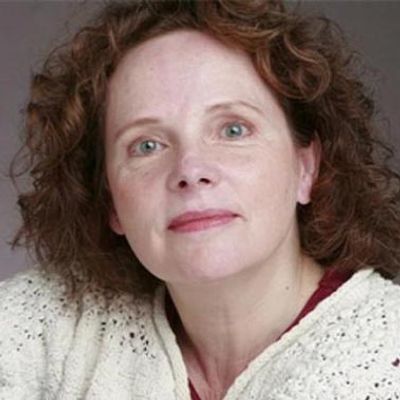
Tony Award Winning Actress Maryann Plunkett stops by Behind the Awards to discuss her new play The Loved Ones now playing through August 2nd at The Irish Repertory Theater. Maryann also takes us back down memory lane and shares some tales of her time with Sunday in the Park with George, Me & My Girl, and The Notebook... Read More
From the show: Behind the Awards with Eila Mell & Bruce Gotlieb
Guests
Featured Shows
About
Tony Award Winning Actress Maryann Plunkett stops by Behind the Awards to discuss her new play The Loved Ones now playing through August 2nd at The Irish Repertory Theater. Maryann also takes us back down memory lane and shares some tales of her time with Sunday in the Park with George, Me & My Girl, and The Notebook. Maryann also gives us a sneak peek into the upcoming Richard Nelson play We’ll See at The Public along side her husband Jay O. Sanders.
The Loved Ones Tickets - https://irishrep.org/
Also in this episode - Emmy chatter, plus a huge congrats to our former guest Carlos Manuel Vesga on his Emmy nomination for Best Support Actor for Pluribus.
Maryann Plunkett currently starring as Nell in The Loved Ones at the Irish Repertory Theater originated and was nominated for a Tony Award for the role of Older Allie in The Notebook. Additional Broadway includes Agnes of God, Sunday in the Park....
Me and My Girl (Tony Award), The Crucible, St. Joan, A Man for All Seasons and The Seagull. Off-Broadway: Deep Blue Sound (Obie) at Clubbed Thumb, Dublin Trilogy (Irish Rep), The Lucky Ones, Aristocrats, Richard Nelson's 12-play Rhinebeck Panorama. Films: Showing Up, Little Women, MAD, A Beautiful Day in the Neighborhood, Family Fang. Much TV. Founding member Portland Stage. Coach and mentor.
Make sure to check out Eila's book, "The Tony Awards", and all her other amazing books: https://amzn.to/43WMu5Y.
Connect with Eila and Bruce:
- Instagram @behind_the_awards
- Eila @eilamell
- Bruce @cominghomewithbruce
Transcript
This transcript was automatically generated and might contain errors.
[0:00] Maryann Plunkett: Hi, this is Maryann Plunkett, and you're listening to Behind the Awards.
[0:14] Eila Mell: Hello, and welcome to Behind the Awards. I'm Eila. I am here with Bruce.
[0:18] Bruce Gotlieb: Hello there.
[0:19] Eila Mell: Well, were your Emmy expectations met with the announcement of the award?
[0:24] Bruce Gotlieb: I don't know if my expectations were met, but, you know, you see always, you know, I feel like the same shows get nominated, you know, like The Pit, and it's wonderful, and The Bear is wonderful. All of these shows are great. But I do always, I'm always left with, you know, the roles or the actors or the shows that kind of fall in between the cracks somewhere.
[0:50] Eila Mell: Ooh, so are there any notable snubs for you this time around?
[0:53] Bruce Gotlieb: No, I mean, I don't know about a snub, but I just feel like, listen, I get it. There's how many shows out there that, you know, to be able to, if you're a nominator or a voter, to be able to watch them all probably is an unearthly job.
[1:10] Eila Mell: Right. I don't know. How do they monitor that?
[1:11] Bruce Gotlieb: I don't know. But even before the streamers and all of that, if you look back to like, you know, like when Seinfeld would get nominated every year or Cheers, it was like, but there are other shows on TV, you know, like, sometimes I like the show that nobody else is watching or people are watching, but the critics aren't watching. And I think there's such like amazing performances. Right. And, you know, it's up to the shows to submit the clips that they want for the actors. So I don't know. It's a very complicated process.
[1:44] Bruce Gotlieb: But I will tell you, there's two actors on The Pit that both submitted, self-submitted themselves for Emmy Awards, and they're both nominated.
[1:54] Eila Mell: And that's amazing. I think that's fantastic.
[1:58] Bruce Gotlieb: Yeah, I think Brittany Allen is one of them. Yes, I believe so.
[2:01] Eila Mell: Yeah, it's crazy. But as I scroll through Instagram, almost every other post I see is for someone getting nominated for a guest actor spot. How many nominees are there? It seems like there's a lot of guest nominees.
[2:12] Bruce Gotlieb: Well, that's the thing. Like, how can somebody physically watch all of these submissions?
[2:16] Eila Mell: I know. I know. And right. It's still right. It's still a lot.
[2:24] Bruce Gotlieb: I want to congratulate our guest Carlos Manuel Vesca, who got nominated. And what is it? Supporting?
[2:30] Eila Mell: Supporting actor.
[2:30] Bruce Gotlieb: Yes. For his role in Pluribus. Yes. So good for him. And, you know, if you're interested in Pluribus, we did a very deep dive with him on our episode with him. So that's exciting. You know, it's a thrill when you get to talk to somebody like we talk to all these people, but, you know, he's so passionate about what he's doing and the work he's doing and the opportunity that it's just, you know, just icing on the cake.
[2:59] Eila Mell: Right. Yeah. Right. Exactly. Right. Nobody goes into playing a role for an award, obviously.
[3:05] Bruce Gotlieb: Yeah. It's like Maryann Plunkett said in our episode, which people will hear shortly, that, you know, to seek out if you're seeking out to be an actor because you love the work and you love what you're doing, that's why you seek it out. You don't seek it out because you want your name in the marquee and you want your, you know, your awards and your accolades. Most of the greats don't. That's not why they entered into the business. Right. Because it's very hard and almost no one gets that. So, you know, if you're going to do that, there's diminishing returns. But Maryann has accomplished that. She's a Tony winner for Me and My Girl. And let's just bring her out because there's so much to cover with Maryann.
[3:43] Eila Mell: Absolutely. Well, Bruce, I'm very excited to welcome Maryann Plunkett to Behind the Awards. Hi, Maryann.
[3:50] Maryann Plunkett: Hi, how are you? It's a hot day today.
[3:56] Eila Mell: Oh, my gosh. It's for sure. Thank you for taking the time out of your busy schedule to come and join us.
[4:01] Maryann Plunkett: Well, thanks. Thanks for asking.
[4:09] Eila Mell: Yeah. So you're very busy right now. You're doing The Loved Ones at Irish Rep.
[4:17] Maryann Plunkett: That's right. Beautiful, beautiful play. And, you know, really four generations of women, like from age 21 up to my fresh young age and two in between. So it's about really just birth to death, grieving, you know, what you think you believe, what you think you know, and then what you find out is not true. Yeah, very funny. And very moving.
[4:51] Maryann Plunkett: So anyway, we have a wonderful cast for women. And how did this piece come to you?
[5:01] Maryann Plunkett: I was called to do a reading. Last fall, Irish Rep does readings of new plays every fall, sort of have a week or two weeks in which three or four new plays are read. In a day, you go and rehearse and then you perform it. And then they decided they wanted to do this in a full production. And they asked me to come back. So I was very happy to do that.
[5:30] Eila Mell: That's nice. Yeah. Have you worked with them a lot before?
[5:34] Maryann Plunkett: In 2019, I did six months with them with the Sean O'Casey Dublin Trilogy. And I played Juno in Juno and the Peacock and Bessie Burgess in Plough and the Stars. And I had been to Irish Rep many times. Yeah, but I had not worked with them. And then since then, I just continued to go and sit in the audience. And so I'm very happy to be on the stage again. But I'm happy either way, to be honest, I love that theater. I love the intimacy of it. The plays they choose and the just the sense of the culture that drives it and drives, you know, Charlotte and Kieran, who founded this, I think it's 40 years ago. Wow. Maybe it's 35. But it's close. And what they have built is amazing for this city. And an amazing institution in New York City.
[6:43] Eila Mell: So it seems to be a trend you playing, you know, you and other women playing the same character, because you did the same thing in The Notebook.
[6:48] Maryann Plunkett: Yeah, well, we're not the same character. No, it's just if it's for ages of women. Okay. Yeah, representative. No, it's for in fact, we are completely different people. You know, when it starts, you couldn't find four more different characters. And then by the end, how circumstance life sort of blurs the edges, maybe a little bit, and you find that there is a union or a communion that can occur between people. So yeah, maybe they're not so far off from one another as you think they are.
[7:30] Eila Mell: Yeah. Yep. I think that's a lot of what it says. Yeah. You know, Bruce and I were at, where were we? Oh, I know where we were. We went to see the screening of Our Town. And you were there. And I remember this woman was so excited to see you. And she said, I'm so honored to vote for you for the Tony Awards.
[8:00] Maryann Plunkett: I remember that. Yeah. You know, it's so sweet just to witness that just people being so appreciative of your work. How meaningful is something like that to you?
[8:11] Maryann Plunkett: It's lovely. I have, I'm not the most comfortable person with, you know, hoopla. You know, I'm a very shy person. So the sentiment is lovely. Like, oh, good. That's, that's nice. That's great. I get a bit overwhelmed at times, but the sentiment is lovely. I just, I'm very like, I sometimes say I have no idea how I ever became an actor because it's like, I don't know.
[8:47] Bruce Gotlieb: Well, it makes sense because, you know, you can put that aside and put on someone else's personality.
[8:51] Maryann Plunkett: Yeah, it's pleasant to do that at times.
[8:56] Bruce Gotlieb: Oh, actually, in Our Town, it was Pearly Victorious, which your husband was so wonderful.
[9:01] Maryann Plunkett: That's right. That's what I was thinking. I'm thinking, I don't think I remember.
[9:05] Bruce Gotlieb: Yeah, it was. It was Pearly Victorious.
[9:08] Maryann Plunkett: Yeah.
[9:09] Eila Mell: Speaking of your work in The Notebook, I don't know if you're somebody who likes to watch performances that you do, but with The Notebook now being on tour, it gives an opportunity for you to see not only the show and what you created, but sit back and not have to watch yourself perform in it necessarily, but be able to see anybody else. Have you had the opportunity to see, to watch the show ever?
[9:37] Maryann Plunkett: The touring company?
[9:38] Eila Mell: Yeah.
[9:39] Maryann Plunkett: Yeah. No, I mean, they've been off far, a million miles away. So, no, I have not, but I know they're coming to Philadelphia in, I think, August. So, if the temperatures are like they are now, I probably will not venture to Philadelphia. But in the back of my head, I've been thinking that would be an easy one to catch. So, I have been thinking of doing that.
[10:12] Eila Mell: Were you with The Notebook from the very beginning?
[10:15] Maryann Plunkett: I think they had had one reading at New York Stage and Film. You know, they do sort of a reading or a weekend, you know, you work on your weekend and do a reading. And I believe there had been a reading there maybe a year before or two years. I'm not sure how long. But I was with it from the beginning of when they started working on it and, you know, doing two-week workshops and that. So, it's 2019, in fact, right before COVID. Well, 2020, actually, because it was 2020, January, I think, we had a two-week workshop and then COVID happened. And then we do workshops on Zoom, you know, if we would just get together and read through and read the lyrics because they didn't have a setup where you could do music and people in different places. So, we would just read the lyrics, which was a beautiful exercise because it wasn't just, not just, but it wasn't solely the music. It was also
[11:29] Maryann Plunkett: What are we saying? What are the words that are part of this as well, though?
[11:33] Maryann Plunkett: Yeah. Yeah, it's a unique opportunity to really examine a show in a different way when you're doing it that way. Yes. And I felt very fortunate because Michael Greif always had me, you know, the song, I Want to Go Back, the two girls sing it and older Allie wanders through her memories or her past life. But during those online, the Zoom workshops, Richard had me read the lyrics. So I was the voice. So I got a chance to actually say those lyrics and instill them within me. So then during the show, even though I wasn't singing those lyrics, I was singing those lyrics as I wandered around the stage. So I thought it was a I was very happy that I had that chance to put those inside of me, those words inside me.
[12:21] Maryann Plunkett: Yeah, that scene is so, so beautifully done and so moving. The words, like you said, and I think some of the lyrics in that piece helped, you know, with the story, the beauty of it. Completely. I am still in here. You know, my own mother lived with dementia. And I learned during those years of how much of herself was still there, even though it wasn't actively there. It wasn't her knowing, but it was parts of herself that, you know, we all as we get older, as we grow up, you put things aside or you, you know, put other back shelf things that maybe are not useful at the time or are not acceptable at the time or, and in those final years, there were times when she, I thought, Oh, my God, I see her at age 16. I see who she was, you know, as a girl. And, you know, it's a harsh existence. But also, there was great joy in it that we found discoveries together.
[13:39] Bruce Gotlieb: How was it like to build when you're building a character on your own? You know, obviously, you're doing your own research and you're taking from your own life, but the three of you have to kind of build this character together, but to have your own lives and your own perspectives to stand in? Did you guys have time where you worked? Did character work then together? Or did it just kind of happen organically?
[14:04] Maryann Plunkett: We did a lot of watching. I loved watching them, Jordan and Joy, because really, that's where Allie started. You know, it's, they, do you know what I mean? I became, but from them. So, you know, sort of trying to say, how does she touch young Noah's face? Or how does, you know, Joy as middle Allie, you know, approach middle Noah? Or are there certain gestures that we tried? There was one that we always tried to incorporate all three of us. There was just one, it was subtle, but it was just, it made a unity for all of us. So, just a certain thing that we all did at one point or another. And that was just in, maybe no one even noticed it, but for us, it was our secret code.
[15:01] Bruce Gotlieb: I love that.
[15:02] Maryann Plunkett: No. So, you know, you've been so fortunate, because sometimes musical performers get pigeonholed, and they only do musicals. But you know, you've seamlessly gone from, you know, drama to musical to film, television, you know, is that something that was a goal for you always, to be able to do a variety of things? I can't imagine it wouldn't have been.
[15:24] Maryann Plunkett: You know, I didn't, I've been very, very fortunate. Things that came, things that happened, you know, the synchronicity of life, and that being in a place at a certain time where something happens that suddenly you have an opportunity that you couldn't have imagined. You know, you couldn't have said, okay, at this age, I'm going to be here, and someone's going to pull out of a show, and I'm going to step in. You know, those are things you cannot plan. And I always, when I'm working with young people, I always say, the only control, really, you have in this business is to be ready. You know, that you know, that if one of those strange opportunities turn up, you'll go, well, I'm ready to at least try. You know, I'm ready to make a mighty effort to achieve this. It's not, wait a minute, I don't know how to do that. You go, well, if you think I could do it, I'll give it a try.
[16:31] Maryann Plunkett: And me and my girl, I didn't know how to dance. And they, I was doing St. Joan up in Boston at the Huntington, and they sent someone up, Karen Baker, and she, during the day where we weren't performing, the Huntington let us use the rehearsal hall, because there wasn't anything else coming in at the moment. She used to be flapping, tap and flop and heel ball change and all these things. I'm going, this is real. But it was sort of, well, my mom tapped dance, and she taught me a couple little, but I never had tap lessons or anything. And it was sort of, that was, I'm doing an MGM musical. Who would ever have thought that? That would not have gone in my list of, and then I'm going to do an MGM musical type. It would be, no, I can't do that. And the dream ballet and leap into someone's arms, and it's sort of, no, I'm not built for that. And then you go, I did it, I did it. You never know what you might one day, you know, put you up and go, I did that. Wow.
[17:56] Maryann Plunkett: You know, it's a very, it's a very big thing to just say yes, and to try as much as you can.
[18:02] Bruce Gotlieb: Yeah. I mean, what's the, the worst that can happen is you, you know, follow your face and they go, oh, we thought you could do this, but turns out you can't. And that's humiliating and all, but you try, you know, you're not jumping out of an airplane here.
[18:20] Maryann Plunkett: Right. The stakes are relatively low.
[18:22] Bruce Gotlieb: Yeah. Yeah. You just go, go on an adventure. And, and of course, you have to have people who believe that you can do it too. You know, that I look at some of the things, Sunday in the Park with George, I had two weeks of rehearsal and they believed I could do it. So I believed I could do it. It was not perhaps the best way to do it. You know, it's like you learn the music and go, I don't know how to sing it though. You know, I don't know the best way to sing it. You jump in. And as an older individual now, I think, well, I probably would have, you know, pleaded for at least three weeks, because it's sort of like this is because it's such an incredible show and, and the music is magnificent and, but difficult, you know, you have, you have to get into your body. And, um, but that's another one I go, wow, how lucky am I? Oh my gosh, I got to do this in the final seven months of the run. Right. And it's just, I mean, how could you plan that? You couldn't plan that.
[19:31] Maryann Plunkett: I know. It's still one of my favorite shows. I saw you do it.
[19:36] Bruce Gotlieb: Oh, you did. Oh my God. Yeah.
[19:37] Maryann Plunkett: Oh, it's just so beautiful. It is. And let's remind people that for me and my girl, you know, you were rewarded with a Tony for taking that chance.
[19:52] Maryann Plunkett: I'll tap dance off the table. And by the end, oh man, I had such a great time. You know, in the beginning it was just sort of, oh, is this for real? But it was a dream. It was a dream.
[20:06] Maryann Plunkett: Yeah. And, um, you know, the day before we were leaving, we rehearsed at 819 Broadway. And, um, you know, I was feeling, yeah, I think I'm happy. Move forward. I always say next steps. I always say to people happy next step. And, um, and I got hit by a bike coming back from lunch.
[20:28] Maryann Plunkett: Oh my gosh. And I couldn't, I got blind on foot. It was raining. I remember that. And it occurred. It made me realize, God, somebody's hurt. And all these people are interested and they're all looking down at me, but nobody's holding an umbrella over it. I got the perspective from looking straight up and all people had umbrellas. Oh my God, is she all right? What happened? And I'm saying, I'm being rained on at the moment. And, um, it was a very strange moment. Um, but we went to LA the next day. I would do the opening number of my opening number, me and my girl with Robert, and then get off stage and hit ice packs that I would sit on because I landed on my coccyx, you know, my tail bump and I would come off and sit on ice and then make an entrance. And every time I was off stage, I would sit on ice.
[21:26] Bruce Gotlieb: Oh my God. It's not hard enough to open a show.
[21:28] Maryann Plunkett: Yeah. Especially when you're not a dancer, but, but here I am. I'm still here. I can walk.
[21:35] Maryann Plunkett: Yeah. I'm okay. Um, did you get to see him do anything goes Robert Lindsay?
[21:41] Bruce Gotlieb: On, on, um, uh, great performances. Yeah. I watched that. Yes. He was very good.
[21:48] Maryann Plunkett: In fact, he's opening or last night he opened in a show in London written by Richard Nelson, who I've spent 12 years with, um, plus, um, with my husband Jay. And, um, and, and it's a play Richard wrote Hyde Park and Hudson. Uh, Richard had written a movie. It was a few years ago. And then Bill Murray played FDR and, um, in the movie and then Richard turned it into a play.
[22:17] Maryann Plunkett: And Robert is playing FDR in this play. I just opened last night. So I go the circles of life, you know, that we have such an association. Then he called and said, Robert Lindsay is playing Franklin Roosevelt's in, um, the, the play. So, um, yeah, it was, you know, the fingers reach out, you know?
[22:38] Bruce Gotlieb: Yeah. This is Joy Woods and behind the awards. We'll be right back.
[22:47] Maryann Plunkett: And speaking of Jay, he just played, uh, Lionel Stander. Yes. Are you now? Or have you ever been? Yes. He was brilliant in it.
[22:58] Maryann Plunkett: What a play. Isn't it incredible? It really is. I got to see him, thank God, in an invited dress because we didn't have a show that night. And so I wish that I'd been able to see him, you know, in the run. Then they only got three weeks. The people who play one role, other than the interrogators, they're in it permanently. But in the cast that are being questioned, the people who play one role, they're rotated every three weeks or so. I didn't know what to expect going in because usually when it's something like that, where people rotate their reading from a script, and I was so happy that they weren't. I'm tired of watching people read from a script.
[23:43] Maryann Plunkett: Yes, yes. Yeah, you know, it's where you if you're going to a reading, you know, you're going to a reading, but if you're going to a play, yeah, it's a it's nice to go, oh, my God, so it's a play. Because they could they could stage it that way. But they could. I think it's because the drama of it that you realize these are the words this man actually said. Yes. And you realize the power of human speech of human. It's like in St. Joan, St. Joan, the trial scenes, most of those lines are directly from the transcript of Joan's trial. So the lines that you're saying actually were spoken by Joan. And it's sort of how more dramatic would it be? And powerful. And she wasn't a writer. She was an uneducated farm girl. And yet the words that she came up with were incredible. With the help of George Bush, Shaw in places, but but still that her words were powerful.
[24:52] Maryann Plunkett: Yeah. As as were Lionel Sanders. I only knew him, you know, I'm embarrassed to say from heart to heart. I well, I did, too. I looked him up. And it's funny because Jay has this ability to he did this with when he did George Bush in Stuff Happens at the Public. I didn't like to listen to George Bush. I didn't like to. And then Jay and Jay's much bigger than George Bush. And he doesn't really look like him. But yet he was on the stage. And I'm going, I don't know. He looked like George Bush. And I suddenly began to find myself. I was teased with this. I said, I'm suddenly he's coming on the news and I'm thinking, George Bush is kind of attractive. I'm kind of drawn to him in a way. And he did with Lionel. He does not look like Lionel Stander. He appeared when he came out. I'm saying he looks like Stander. He has this chameleon ability to just sort of look like who he's playing.
[26:00] Maryann Plunkett: And then, yeah, and executed beautifully. Let's go back a little bit. Was Agnes of God a huge turning point in your career? What a role to get to play. Yeah, there are different worlds, I think, that actors and that actors, I think, diminish themselves sometimes by going, if I don't, you know, when I was doing The Notebook, and I would go out every night to talk to people, because there were lots of people who were experiencing dementia within their own families, or even people who had just been diagnosed themselves. And, you know, I had no idea that and when I discovered that lots of people were there, who just wanted to share that, I felt like it's kind of important for me to come out. And lots of young people, more young people than I would have expected.
And the numbers of young people and or their parents. And it is a wonderful thing to dream of, but that it was sort of we, we want her up there, you know, we want or I want to be up there, you know, and the marquee or whatever. And my question to them always was, do you want to be on Broadway, however you perceive it? Or do you want to be an actor? I said, there, there, if you want to be an actor, there are opportunities for you to become an actor. If you feel that if you don't get to do this, you have failed somehow, you haven't, quote, made it, you're setting yourself up for failure.
[27:44] Maryann Plunkett: Sure. You know, there are a limited number of plays each year on Broadway. Within those limited number of plays, there are a limited number of roles. And within those limited roles, there are even more limited of one that might be right for a particular person. So you keep going down, you go, okay, so if you are basing your whole worth on if you make it, it's a dead end road. It's like, do you want to be an actor? Go become an actor. How do you become an actor? What do you need to do to become an actor? And, and it's not wanting to quash anyone's dreams. It's just saying, but don't make this the be all and end all. You know, if someone just said, I want to be an actor, I want to, I want to play such and such that I want to play such and such, I want to say the words, I want to communicate.
For me, I was a very shy person. And my mom, you know, would bring me to a play. And then she, it was sort of, you have, in theater, at least, you have a magic protection, you have a script, when you first start, and you're able to, okay, I don't look really awkward, because everybody has this magic wall, too, you know, everybody, even the most rambunctious person. And if there's a break, and I can't get my breath and step out to talk to someone, oh, I'm very interested in the words that I'm looking at here, I think I'll underline, you know, there is an activity. And gradually, because you are all in this together, it's you become and I become, you know, as I know people, I then like, oh, I'm comfortable.
I'm not, people would not necessarily feel I'm shy. It would just be, oh, I've gotten to know you. And I am more open this and it's a wonderful, it's a tool of communication. It's a tool of being able to speak to people in the notebook, for example, to people in there who were experiencing loss. For me, with Allie, older Allie, I, it was a tribute to my own mother of saying, every dementia or Alzheimer's patient or whatever form, they're all individual still. It's not, it's not like they have dementia, whoop, they're in a box. They're still an individual who is living with dementia, and or, you know, whatever term. And I want that the life and the vigor and the, and the anger, you know, at times I, I didn't want to be passive.
My mom was not passive in her. And sometimes in her life, she might have been more passive, you know, living, you know, in New England and in this era. But she wasn't a passive person, was not a passive person.
[30:44] Maryann Plunkett: And so you go, you're not just, you're not, I'm a star, you're doing something, you're communicating something. And it's sort of in what is a star? You know, people who are, and then you go, oh, I haven't heard of so and so in years, they might be off making, building their own theater someplace off in Montana, and putting on wonderful productions of things, maybe their passion is that. And just because we don't know what they're doing, doesn't mean they're not doing great work. Right? Exactly. You know, so that that is what I try to convey to young people, or even older people, if they have always wanted to be an actor and sort of, okay, what does that mean to you? Yeah. How do you get an agent?
And sort of, well, no. You're my age. And so how, what's your life been like? Tell me about your life. Don't suddenly be, I want to do this. It's sort of, that's great, then go, go find, go volunteer someplace, go, go volunteer. You know, as a reader someplace, read as many plays as you possibly can. You know, the literature, the words, find out why you want to do this.
[32:06] Maryann Plunkett: I'm as happy. I always say, you know, I'm a downtown actor, really. It's like, I love being part of a company that comes back together again. I love Club Thumb is a brilliant organization company that they do new plays, I was able to do their play Deep Blue Sound. And it was, it's great being part of that organization. And that group of people, Maria and Michael who run it, and they're, they're doing the work. You know, it's nonprofit, and they're looking for new things. They're looking for new voices. And they're not necessarily looking for, okay, we have to, this has to make money, or you're done, you're out the door. This is what are we creating here? What are we building up here? And that's, I think, where I'm happiest.
I, I'm one of the founding members of Portland Stage Company in Portland, Maine. And it was when I was still in college, I went to University of New Hampshire in Durham. And you know, I was working as a waitress and going to school and driving up the main turnpike to Portland, you know, late at night in my old car. And of course, there were no cell phones then. And, and that turnpike gets really dark at night in the winter. Yeah. Very lonely. And in Kennebunk, there's a rest stop with a restaurant that, but you do it. You just go, you stay safe, but you just, you try, you do things. And Portland Stage is still thriving. They do a lot of new works too. And it's like seeing your, a child grow up and they're no longer part of your life.
I hope my own child doesn't do that, but you still have pride. You go, Hey, you know, I was there when you were born. And I'm sure they still say Miriam Plunkett came from here. Well, I have a story about that, but I won't tell it. Oh, maybe I will. My husband and I, we go up to Maine and with our son and Jay has a cousin who lives there. We stop and we visit them sometimes. And one, one summer and Jay said, why don't we just go by? Cause there's a new thing.
[35:27] Maryann Plunkett: I know I did this. I know this was part of my life. And then eventually he did let us peek in, so I did see the theater. But you leave and you think, why did I ever stop there? We should have just stayed on 27 and go, oh yeah, Portland Stage is over there. But it was a good thing because you go, life goes on, you know, life does go on. And I can hold, you know, pride in the place. And but you realize, this young guy, you know, oh, yeah, oh, yeah, great. Everybody comes in here and says that, you know. I don't know. It is frustrating, though, when people don't have a sense of history. Well, it was. And I know that they do mark us as the beginning, you know, because I went on the computer going, maybe we disappeared. We were there. We were there. So I thought, okay, as long as I know that we are there, then it's okay. And it was called Profile, where we started it. And then it changed to Portland Stage. Both good names.
[36:40] Bruce Gotlieb: Yes.
[36:41] Maryann Plunkett: So do people think that you're actually married to Mr. Rogers?
[36:44] Bruce Gotlieb: No, they know I'm married to Daniel Sanders.
[36:49] Maryann Plunkett: That must have been a fun movie to be a part of.
[36:52] Maryann Plunkett: It was. I mean, it was a small part, but a wonderful part. And the best part of it was meeting and becoming friends with Joanne Rogers. She was there a lot on the set. And she was the most, I think she had to give her approval of me before they officially cast me because I went to her home in Pittsburgh and we sat at her piano and she was the most, I still have voice messages from her on my phone that she would call and leave a message because she was filled with life and just joy and just everything about her. And she was a concert brilliant pianist. And she had a person, a woman who they did four handed piano pieces. And I have a couple of her albums she gave me on CDs. And you think, oh yeah, I've heard that she was a wonderful pianist.
And then you put it in and you go, oh my God, she didn't just play the piano. She was a concert pianist. And you realize too that she, with all of her life and all of her fire and her talents to the world, she was just Mr. Rogers' wife. And she had the fullness of who she was and she loved him. And they met young and they had a life together that she knew him and he knew her. And you go, there's the full picture. And you can it's not just Mr. Rogers. There's also someone here, two children. And she was the person he slept with every night. His head was next to hers and what they talked about. And they were a pair. And he was Mr. Rogers and she was Joanne Rogers. She was Joanne Rogers.
[39:04] Bruce Gotlieb: Your husband, J.O. Sanders, obviously is, I mean, the two of you are really just at the top of what you do. You're both such really great actors and like the real deal. Do you, not encourage, but you influence each other or do you talk about roles with each other?
[39:16] Maryann Plunkett: Yeah, yeah. We watch each other a lot. And if something's bothering us in terms of, I think that we'll have conversations. But again, we have gotten to do over 12 years, so many of Richard's plays and traveled the world together. And we're doing one, I don't know if you knew that, in the fall, another one at the Public Theater. Richard is bringing back the Apple family for midterm elections. So it was 16 years ago that we did the first, the Ryan Beck panorama started then. And he's bringing back the Apple family for this midterm election. And I said, what if there is no midterm election? He said, well, I guess that's what the play will be about.
[40:10] Maryann Plunkett: Is it still being written?
[40:10] Bruce Gotlieb: Yes, it's being written. Well, it will be being written up until the opening day because the, our opening is election day, midterm election day. So all these plays in the panorama, the opening date is the day on which the play takes place. So yeah, Jay always said, he says it's funny because when you're in previews, you're doing a play that's still in the future.
[40:39] Maryann Plunkett: Yeah. Opening night, you're doing a play that's right now. The next day, you're doing a history play.
[40:57] Bruce Gotlieb: Wow. It's in the past.
[40:57] Maryann Plunkett: Yeah, that's so unique. Yeah, it's incredible. And even on opening, Richard's watching the news. He's watching, see if there's anything that should be included in the play. So he's rewriting and maybe inserting, if something big happened, he'll find a way to put it into the script.
[41:17] Bruce Gotlieb: Wow. It'll be interesting to see how the audiences are based on how the election goes.
[41:24] Maryann Plunkett: Yes. Well, on the opening, official opening, people won't know yet how the elections have gone. So it'll be the next day, the next performance, they'll know. 2016 was very interesting because in our community, people were expecting Hillary Clinton to win. And we started the play and you say it's 6.30 or 7.00. On opening, we started early. And by the end, say we came down 8.30, 9.00, and the reception was in the lobby at the public. And I was coming down the stairway from upstairs. And I'm looking through the window where you can see into the lobby. And they had TV set up all around. And I could see people going, and I thought, and I said to Richard, I went, Richard's just looking at the screen.
I didn't look at it. I just said, how bad can it be? And he said, don't look. I remember that moment. And they went, wait, wait, wait, something might happen. And then it was, it was sort of, and that was all, and the play that we had just done was about, you know, it was a different family. It was the, the Michaels were going off to vote. And so, yeah, I was in that bubble that just didn't even think there was a chance she wouldn't win.
[42:53] Bruce Gotlieb: Yeah, I know. But I guess that teaches us something too.
[42:58] Maryann Plunkett: Yeah, don't take anything for granted. Really? I think the real opportunity with this work is, if you have the time and the means to do so, you get a ticket for opening night and a ticket for the following night.
[43:09] Bruce Gotlieb: Back to back, the change of the play.
[43:16] Maryann Plunkett: Yeah, well, the next, we had the next night off, which we're all grateful for. Of course. And, and but then it was Thursday, we came back. And it was a completely different experience because people, the lines of hope that were in the play, again, it had become a history play. And people were, there was great emotion of, oh my god, how did we lose this? How did we let this one slip through our fingers? I don't know.
[43:48] Bruce Gotlieb: Well, hopefully that won't happen this time around.
[43:54] Maryann Plunkett: I know. I know. All right, but when can people see The Loved Ones? Until?
[43:59] Maryann Plunkett: Until August 2nd. Okay, so there's some time, but people get there.
[44:05] Bruce Gotlieb: Yes, they do. And I think they will. It's two hours, including the intermission, and brings in the Irish sense of, you know, mourning and wit and language, loneliness. It's very Irish, and wonderful. And a comedy?
[44:25] Maryann Plunkett: Well, there is a lot of humor in it. Donalyn Champlin plays an American tourist who's staying in my home. And she's, I think we all start out sort of as prototypes of individuals. And then by the end, we have become, the audience will see us as deeply, have learned more about who we are. No one is a stereotype or a prototype for everyone is a person. Everyone you meet, even if you see people in the street, you don't know their story. You see just the broad sweeps at first, as you get to know them, you might go, Oh, I never would have seen that from, you know, in this person. Yeah, I think it achieves that beautifully.
[45:15] Bruce Gotlieb: Well, we'll include a link in our show notes. So people just have to click right there and they can buy tickets and come and see this beautiful play.
[45:24] Maryann Plunkett: Yes, that would be great.
[45:26] Maryann Plunkett: Well, thank you so much for joining us. This was a real treat.
[45:29] Maryann Plunkett: Thank you. Yes, I had a good time. I usually get anxious about it. It's like, Oh, this is fun. Thank you. Thank you for making it fun.
[45:40] Bruce Gotlieb: Oh, absolutely. And we're going to invite Jay too at some point.
[45:42] Maryann Plunkett: Oh, good. Good.
[45:43] Bruce Gotlieb: We love him.
[45:44] Maryann Plunkett: Yes. Wonderful. He would love to do it.
[45:47] Bruce Gotlieb: Wonderful. All right. And we will see everyone next time on Behind the Awards.
[45:51] Maryann Plunkett: Bye-bye.
[45:51] Bruce Gotlieb: Bye.
© Broadway Podcast Network, All Rights Reserved