

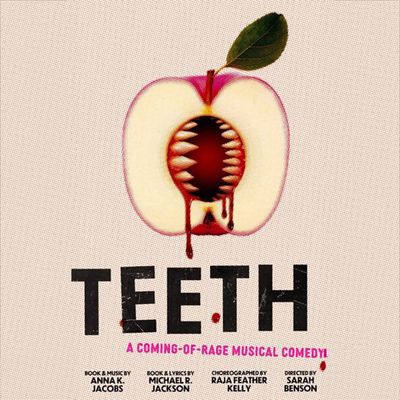
Anna K Jacobs, Alyse Alan Louis and Jared Loftin visit with Behind the Awards to do a Teeth Deep Dive. They share everything from the original concept album to the expanded slash zone. Also in the episode - Steven Spielberg’s 1999 Oscar win for Best Director for Saving Private Ryan... Read More
From the show: Behind the Awards with Eila Mell & Bruce Gotlieb
Guests


Featured Shows
About
Anna K Jacobs, Alyse Alan Louis and Jared Loftin visit with Behind the Awards to do a Teeth Deep Dive. They share everything from the original concept album to the expanded slash zone.
Also in the episode - Steven Spielberg’s 1999 Oscar win for Best Director for Saving Private Ryan. Plus the 2nd Tony Committee Eligibility Rulings. Show included in the meeting were: Sunset Blvd.; A Wonderful World: The Louis Armstrong Musical; Maybe Happy Ending; Tammy Faye; Elf; Swept Away; Death Becomes Her; Cult of Love; Eureka Day; Gypsy; and All In.
Make sure to check out Eila's book, "The Tony Awards", and all her other amazing books: https://amzn.to/43WMu5Y.
Connect with Eila and Bruce:
- Instagram @behind_the_awards
- Eila @eilamell
- Bruce @cominghomewithbruce
Transcript
This transcript was automatically generated and might contain errors.
[0:00] Jared Loftin: This is Jared Loftin.
[0:01] Alyse Alan Louis: This is Alyse Alan Louis, and you're listening to Behind the Awards.
[0:04] Jared Loftin: Thank you.
[0:05] Alyse Alan Louis: Am I allowed to say I really wanted this?
[0:09] Jared Loftin: This is fantastic.
[0:20] Eila Mell: Hello and welcome to Behind the Awards. I'm Eila.
[0:22] Bruce Gotlieb: I'm here with Bruce.
[0:25] Eila Mell: Hi, Bruce.
[0:26] Bruce Gotlieb: Hello.
[0:26] Eila Mell: How are you?
[0:27] Bruce Gotlieb: I'm good.
[0:28] Eila Mell: How are you?
[0:29] Bruce Gotlieb: Doing well, doing well.
[0:31] Eila Mell: Not as well as Steven Spielberg.
[0:32] Bruce Gotlieb: No, no, no.
[0:33] Eila Mell: 1999 Oscar win.
[0:35] Bruce Gotlieb: It's always a good day when you win an Oscar.
[0:38] Eila Mell: I would imagine.
[0:39] Bruce Gotlieb: Yeah.
[0:39] Eila Mell: I'll let you know when it happens.
[0:40] Bruce Gotlieb: Okay.
[0:41] Eila Mell: Yes.
[0:41] Bruce Gotlieb: I'll be the first one you call, I expect.
[0:44] Eila Mell: Okay.
[0:44] Bruce Gotlieb: Um, so we got a little insight into Steven Spielberg when we talked to Kevin Solak.
[0:51] Eila Mell: So we have that.
[0:53] Bruce Gotlieb: Yes.
[0:53] Eila Mell: So he plays Tulson Gypsy, but he was in the movie version of West Side Story, and he worked with Steven Spielberg.
[1:00] Bruce Gotlieb: So he told us a little bit about that.
[1:02] Eila Mell: So look for that episode because you'll hear.
[1:06] Bruce Gotlieb: And it's pretty cool.
[1:07] Eila Mell: Yeah.
[1:09] Bruce Gotlieb: Straight from him.
[1:10] Eila Mell: Yeah.
[1:10] Bruce Gotlieb: He has really good stories.
[1:14] Eila Mell: Absolutely.
[1:16] Bruce Gotlieb: So it's a busy week.
[1:18] Eila Mell: It's a busy week.
[1:19] Bruce Gotlieb: We have just actually came out today.
[1:22] Eila Mell: So when you're listening to this, it'll be a couple of days since it's been out.
[1:26] Bruce Gotlieb: It gives you a little time to digest and see what you think about the latest Tony committee meeting.
[1:32] Eila Mell: Right.
[1:32] Bruce Gotlieb: So they have to meet to determine what categories the nominations are going to be in.
[1:38] Eila Mell: So I know that there's a discussion happening right now.
[1:41] Bruce Gotlieb: It hasn't been decided, but is Jennifer Samard gonna be in lead or some supporting category for Death Becomes Her?
[1:48] Eila Mell: Well, that's in this update.
[1:50] Bruce Gotlieb: Oh, it is?
[1:51] Eila Mell: Yes.
[1:52] Bruce Gotlieb: Oh, oh my gosh.
[1:53] Eila Mell: Well, I didn't even read it yet.
[1:54] Bruce Gotlieb: So okay.
[1:55] Eila Mell: I thought it was still in question.
[1:57] Bruce Gotlieb: All right.
[1:57] Eila Mell: Nope.
[1:58] Bruce Gotlieb: No longer in question.
[2:00] Eila Mell: Oh, good.
[2:01] Bruce Gotlieb: All right.
[2:01] Eila Mell: Good.
[2:02] Bruce Gotlieb: Well, we have so much to talk about. Some of these are pretty obvious, but some are not.
[2:05] Eila Mell: So yeah.
[2:06] Bruce Gotlieb: So the productions that were discussed at the meeting yesterday were Sunset Boulevard, A Wonderful World, The Louis Armstrong musical, Maybe Happy Ending, Tammy Faye, Elf, Swept Away, Death Becomes Her, Cult of Love, Eureka Day, Gypsy and All In.
[2:24] Eila Mell: Okay.
[2:25] Bruce Gotlieb: Well, that's a good amount.
[2:27] Eila Mell: Yeah, I think so.
[2:28] Bruce Gotlieb: So everything, unless noted from the determination of the meeting is as billed.
[2:34] Eila Mell: Oh, opening night billing.
[2:36] Bruce Gotlieb: Okay.
[2:37] Eila Mell: So what does that mean?
[2:39] Bruce Gotlieb: So like director is director, and you know, things that are obvious, so obvious.
[2:44] Eila Mell: Well, yeah, like if you're billed above the title, then you know then you're in the lead category.
[2:49] Bruce Gotlieb: Okay.
[2:49] Eila Mell: Um eligibility is just basically this is anything other than anything other than opening night crying.
[2:58] Bruce Gotlieb: Okay, so things that could be in question, like Jennifer Smart.
[3:02] Eila Mell: So this is letting us know that Tom Francis will be considered best performer by an actor in a leading role for Sunset Boulevard.
[3:12] Bruce Gotlieb: Yeah, that makes total sense, right?
[3:13] Eila Mell: Don't you think?
[3:14] Bruce Gotlieb: Absolutely.
[3:15] Eila Mell: Uh Sotra Gilmore, who did the scenic design, Nathan Amsey and Joe Ransom for video design and cinematography, they'll all be jointly eligible for best scenic design of a musical for Sunset Boulevard.
[3:31] Bruce Gotlieb: Okay.
[3:31] Eila Mell: I mean, unfortunately, I feel like these are two very separate designs, but you know, what can you do?
[3:38] Bruce Gotlieb: There is no um video or projection category yet.
[3:42] Eila Mell: That's true.
[3:43] Bruce Gotlieb: Hopefully, there will be one because I think there needs to be, but okay.
[3:48] Eila Mell: David Cullen and Andrew Lloyd Weber are considered eligible for the best orchestration category for Sunset Boulevard, again, jointly.
[3:55] Bruce Gotlieb: Right.
[3:56] Eila Mell: James Monroe Eigelhart is best performer by an actor in a leading role for A Wonderful World.
[4:02] Bruce Gotlieb: Yeah, I mean that seems pretty obvious.
[4:04] Eila Mell: Yeah.
[4:05] Bruce Gotlieb: I don't think anybody was wondering about that one.
[4:08] Eila Mell: Right.
[4:09] Bruce Gotlieb: The video design by Adam Koch and Stephen Royal are jointly eligible for scenic design.
[4:15] Eila Mell: Okay.
[5:16] Bruce Gotlieb: Uh for A Wonderful World.
[5:16] Eila Mell: Right.
[5:16] Bruce Gotlieb: Uh Christopher Renshaw for direction.
[5:16] Eila Mell: And then James Monroe Eigelhart and Christina Sugis for co-direction will be considered jointly for best direction of a musical.
[5:16] Bruce Gotlieb: Okay, great.
[5:16] Eila Mell: So it's all three of them as a unit.
[5:16] Bruce Gotlieb: All three of them.
[5:16] Eila Mell: So you know, how exciting that for James that he could be nominated for both director and actor.
[5:16] Bruce Gotlieb: I don't think there's ever been a time where that's happened.
[5:16] Eila Mell: I yeah, I don't think so, unless it goes way, way back.
[5:16] Bruce Gotlieb: Yeah, I you know, but I think even then.
[5:16] Eila Mell: But I don't think so.
[5:16] Bruce Gotlieb: I probably would remember that from writing the Tony book that that would have stood out.
[5:16] Eila Mell: I probably would have written about that.
[5:16] Bruce Gotlieb: So, you know, how exciting to be, even if even if he doesn't win but is nominated for both categories, how exciting.
[5:16] Eila Mell: Right.
[5:16] Bruce Gotlieb: Just to be recognized.
[5:16] Eila Mell: But we'll see if that happens.
[5:16] Bruce Gotlieb: We don't know.
[5:16] Eila Mell: Right.
[5:16] Bruce Gotlieb: Ricky Tripp for choreography and DeWitt Fleming Jr. for tap choreography are jointly considered best choreography for A Wonderful World.
[5:21] Eila Mell: Okay.
[5:23] Bruce Gotlieb: Um Helen J. Shen will be considered eligible for best performance by an actress in a leading role for Maybe Happy Ending.
[5:33] Eila Mell: Okay.
[5:33] Bruce Gotlieb: So I know that they were talking about putting her in supporting, I guess because they thought she'd have a better chance, but it really is a leading role.
[5:40] Eila Mell: Yeah, the committee did not didn't rule that way.
[5:42] Bruce Gotlieb: Okay.
[5:43] Eila Mell: I think that's the right ruling, though.
[5:46] Bruce Gotlieb: Yeah.
[5:47] Eila Mell: In that show, her and Darren Chris really split the lead.
[5:51] Bruce Gotlieb: Yeah, they're equal.
[5:52] Eila Mell: Responsibility.
[5:53] Bruce Gotlieb: Right.
[5:54] Eila Mell: So they have just about as much stage time as the other.
[5:58] Bruce Gotlieb: It's really they're equal.
[6:00] Eila Mell: Yeah.
[6:01] Bruce Gotlieb: Then you have Dane Laffrey for scenic and additional video design and George Reeves for video design. They're jointly eligible for best scenic design of a musical.
[6:11] Eila Mell: Boy, George Reeves.
[6:13] Bruce Gotlieb: George Reeve did such a good job with this show.
[6:16] Eila Mell: Wow.
[6:16] Bruce Gotlieb: Yeah.
[6:17] Eila Mell: Absolutely.
[6:18] Bruce Gotlieb: I mean, Dane Laffrey as well, but just what George Reeve did was, you know, like a lot of it was something I've never seen before on stage.
[6:27] Eila Mell: Yeah, and there's a lot of video, you know, in that show as a when you think of a show that is set-driven that has some projections.
[6:36] Bruce Gotlieb: Um, this one, yes, there are sets, of course, but it relies heavily on video.
[6:41] Eila Mell: Yeah.
[6:41] Bruce Gotlieb: So it's going to be a real contest between this and Sunset Boulevard because of the video, which is so interesting, because usually that's not the case.
[6:49] Eila Mell: Yeah, because this is there, they rely heavily on that medium.
[6:52] Bruce Gotlieb: Yeah.
[6:53] Eila Mell: So that's an interesting race.
[6:55] Bruce Gotlieb: I don't know who'd I who I'd give it to because Nathan Amsey and Joe Ransom, I mean, their work is incredible too.
[7:02] Eila Mell: And it's really so important to that story.
[7:05] Bruce Gotlieb: Absolutely.
[7:07] Eila Mell: Next up we have Katie Braben for Tammy Faye. She'll be considered for best performance by an actress in a leading role.
[7:14] Bruce Gotlieb: Of course.
[7:16] Eila Mell: Gray Henson, he's gonna be considered eligible for best performance by an actor in a leading role for Elf.
[7:22] Bruce Gotlieb: Wonderful.
[7:22] Eila Mell: Our guest, Gray Henson.
[7:24] Bruce Gotlieb: Absolutely.
[7:25] Eila Mell: John Gallagher Jr. will be considered eligible for best performance by an actor in a leading role for Swept Away.
[7:33] Bruce Gotlieb: Okay.
[7:34] Eila Mell: Christopher Sieber and Michelle Williams will each be considered eligible for featured actor and actress for their roles in Death Becomes Her.
[7:43] Bruce Gotlieb: Yeah, that makes total sense.
[7:45] Eila Mell: Cult of Love will be considered eligible for best play.
[7:49] Bruce Gotlieb: Okay.
[7:50] Eila Mell: Eureka Day will be considered eligible for best revival of a play.
[7:54] Bruce Gotlieb: So it had an off-Broadway run, then I'm guessing.
[7:56] Eila Mell: I guess so.
[7:57] Bruce Gotlieb: Okay.
[7:57] Eila Mell: And Jonathan Spector is considered eligible as author.
[8:01] Bruce Gotlieb: Okay.
[8:02] Eila Mell: And then Todd Rosenthal, Scenic Design, and David Bengali for Projection Design are jointly considered eligible for best scenic design in a play for Eureka Day.
[8:12] Bruce Gotlieb: So this is another case where people are really talking about the video in Eureka Day.
[8:17] Eila Mell: So I mean it's an exciting season for video and productions.
[8:21] Bruce Gotlieb: Absolutely.
[8:21] Eila Mell: And it does seem here everything, it says everything else is consistent with opening the night, like we discussed.
[8:26] Bruce Gotlieb: All right, so that means Jennifer Samard is lead.
[8:29] Eila Mell: Yes.
[8:29] Bruce Gotlieb: Okay.
[8:30] Eila Mell: Well, I honestly I think that that is the appropriate category for her.
[8:34] Bruce Gotlieb: Right.
[8:34] Eila Mell: I mean I think their intention, almost like with Helen, they wanted to give each person, you know, the best chance.
[8:42] Bruce Gotlieb: Yeah.
[8:43] Eila Mell: Because, you know, the conversation, I'm sure we'll have it a million times from here to Tony's.
[8:47] Bruce Gotlieb: Right.
[8:47] Eila Mell: You know, are Jennifer and Megan gonna split the vote?
[8:50] Bruce Gotlieb: And I hope not, because they're both so good.
[8:53] Eila Mell: It would be a great award season if they're both nominated.
[8:57] Bruce Gotlieb: It would be, but we'll have to see.
[8:59] Eila Mell: I know.
[8:59] Bruce Gotlieb: This is a hard category.
[9:01] Eila Mell: And certainly if we take the movie as an example, they were both billed as leads.
[9:08] Bruce Gotlieb: Sure.
[9:09] Eila Mell: So we'll see what happens.
[9:10] Bruce Gotlieb: That's exciting.
[9:11] Eila Mell: Yeah.
[9:12] Bruce Gotlieb: With every announcement that comes out with the committee meetings, you're getting closer and closer to the show and nominations.
[9:18] Eila Mell: It's just it gets very exciting.
[9:20] Bruce Gotlieb: I love it.
[9:22] Eila Mell: Is that it?
[9:22] Bruce Gotlieb: That's all that they told us.
[9:24] Eila Mell: That's all the committee met this go around.
[9:27] Bruce Gotlieb: Gotcha.
[9:27] Eila Mell: Okay.
[9:28] Bruce Gotlieb: So unfortunately, our we're at a time where our next guests have since packed up and cleaned up their dressing rooms.
[9:36] Eila Mell: I know.
[9:36] Bruce Gotlieb: Um, but we were lucky enough to have Anna K. Jacobs back again for a second time to discuss Teeth alongside two of the leads of the show.
[9:47] Eila Mell: Yeah.
[9:51] Eila Mell: So that was great.
[9:53] Bruce Gotlieb: And you can still, even though the show closed, you can still get the cast album, which will give you a fantastic sense of the show if you haven't seen it.
[10:01] Eila Mell: And if you have, it's gonna bring back all those fun memories of the show.
[10:06] Bruce Gotlieb: Absolutely.
[10:06] Eila Mell: So we had a little party. It's always fun when we have more than one person on and we get the different people's perspective on the show, and how did they come to the project and all of that?
[10:15] Bruce Gotlieb: So it's a little bit of a deep dive into Teeth.
[10:19] Eila Mell: So let's dig our teeth in and bring them out.
[10:25] Bruce Gotlieb: Eila, it's such a treat when we get to have more than one guest at a time, don't you think?
[10:31] Eila Mell: It's like a party for us.
[10:32] Bruce Gotlieb: I know.
[10:33] Eila Mell: And today we not only have one of the creators of Teeth, a show that we love, we also have two of the stars. We have Anna K. Jacobs, Alyse Alan Louis, and Jared Loftin.
[10:45] Bruce Gotlieb: Welcome, everyone.
[10:46] Anna K Jacobs: Thank you.
[10:47] Alyse Alan Louis: Thank you.
[10:47] Jared Loftin: Thanks for having us.
[10:49] Eila Mell: Thank you.
[10:50] Anna K Jacobs: Thank you so much for joining us.
[10:52] Eila Mell: And Anna, thanks for coming back a second time.
[10:54] Anna K Jacobs: I am thrilled to be back a second time.
[10:56] Eila Mell: Yeah, so our listeners know Anna is our first repeat guest, and we love her so much.
[11:01] Anna K Jacobs: So thank you for calling me a repeat guest and not a repeat offender.
[11:08] Eila Mell: No, next we'll ask you to co-host.
[11:10] Anna K Jacobs: So just be on clear.
[11:11] Eila Mell: There you go.
[11:12] Bruce Gotlieb: Yeah, we'll so um all right.
[11:16] Eila Mell: So let's backtrack a little bit.
[11:19] Bruce Gotlieb: So um the movie Teeth. Did all of you grow up watching that or or no?
[11:27] Anna K Jacobs: I still have never seen it.
[11:30] Bruce Gotlieb: Oh my god.
[11:31] Alyse Alan Louis: Really?
[11:32] Anna K Jacobs: Is it intentional now at this point though? Because you don't want it to affect what you're doing and you know, alter any of that.
[11:40] Alyse Alan Louis: Yeah, I think once the teeth chapter of my life is closed, I'll probably watch it.
[11:45] Anna K Jacobs: But yeah, I think going into it, I was when I read the script, I also was told by people who were familiar with it that specifically my storyline in the show was like pretty different from the movie.
[12:02] Alyse Alan Louis: And so I was like, you know what? I'll let this be my like intro to the world.
[12:08] Anna K Jacobs: So I've kind of held off a little bit.
[12:11] Eila Mell: That makes sense.
[12:12] Anna K Jacobs: So, you know, for those not in the know, there's a splash zone, and it's quite big now because everyone wants to get blood and whatever else sprays from the stage on them.
[12:22] Alyse Alan Louis: Well, so much so you could buy a poncho at the gift shop.
[12:25] Anna K Jacobs: So yeah we have had some people show up more recently and intentionally sit in the splash zone without a poncho just to get more splash and they've they've also worn head to toe white so they can like show off their blood splatter after the show.
[12:44] Alyse Alan Louis: Right.
[12:45] Anna K Jacobs: It it's honestly like thrilling that we get to like lean into that part of it and that audiences are like bring it on.
[12:53] Alyse Alan Louis: It's like a Rocky Horror kind of thing where you know they get to interact in a way.
[12:57] Eila Mell: How did that splash zone come about Anna? How was that developed?
[13:00] Anna K Jacobs: Um that was developed because people were accidentally getting splashed at playwrights right but then we realized that actually it it was such a fun immersive element of a show that we should just like go at that idea hard.
[13:15] Alyse Alan Louis: And initially it was only two rows of new old stages and then it eventually got extended back even further to another two rows.
[13:21] Anna K Jacobs: So it's very popular.
[13:24] Alyse Alan Louis: I will say at playwrights particularly for me the the blood pack that I have it's hard to control like the direction where it's shooting and like how forceful I'm shooting it.
[13:37] Anna K Jacobs: And so sometimes I'm like shooting myself in the face with it. Sometimes I'm like getting it on my arm or getting it on Alyse.
[13:43] Alyse Alan Louis: But a lot of times especially at playwrights I was shooting it so far that it was getting it in the front row and I know that that's not the only instance throughout the the show that it was happening but I'm kind of relieved that we're allowed to like kind of let it fly now because I was like, oh, I don't have to worry anymore.
[14:05] Anna K Jacobs: Like I the only thing I'm I'm worried about now is like if I get it in my eyes, but that's that's my thing to deal with later on.
[14:13] Alyse Alan Louis: Yeah. So it's nice to have like permission to go for it. I feel like letting a fly to is like in perfect alignment with the messaging of the show.
[14:22] Anna K Jacobs: I was just gonna say exactly that. And it must free you up in your performance too, just not having to worry about that kind of thing. Because who wants to be worried about, you know, that blood pack when you're trying to be in the moment.
[14:33] Jared Loftin: Exactly. And in those moments, there are so many like choreographic and like story elements that I'm like trying to. I have like a mental checklist of all the things I need to get done and make sure at least feels safe and make sure everything is like going correctly. So when I can remove one of those things that I'm worried about, it's like all the better for the story.
[14:59] Alyse Alan Louis: We'll be right back. We have to listen to some commercials.
[15:05] Jared Loftin: So I do notice a difference between audiences from Playwrights Horizons to New World Stages. We have great houses. I feel like we had a lot of great audiences at Playwrights and we have a lot of great audience at New World. I do feel like at New World there's more interaction from the audience with us. Um I don't know if that's because there's a splash zone and in some ways they're prepared to have interaction with us because they're gonna put that poncho on and expect it. Um I also think that maybe that just has to do with the cultural climate as well, because I feel like theater right now, I do believe is a true connector with everything that we have going on in our country in the world. And so I think to come and see a piece like this, it elicits a lot of different feelings and reactions from the audiences.
[16:00] Anna K Jacobs: I do think because we also have fans of the show, that you can definitely feel flocks of fans, like a group of young people who are coming to see the show who know the cast recording as well. So it can get a little wild out there, which I love because I have done a couple of live productions of Rocky Horror and the callouts in that show. It's wild to move through a story live and have people throwing props at the stage and calling out, especially the amount of call-outs that you could call out in a musical like that. I don't I wouldn't put our musical necessarily in the same category as that musical for an array of reasons.
[16:37] Jared Loftin: Right. But I do think that participation factor is there. And we've had some, we've had some callouts in this production from our audience that have made me a little scared.
[16:49] Alyse Alan Louis: Yeah. Um we definitely had a moment during Born Again after Jenna Rose, who plays Trisha, she is talking to Ryan, Jared's character, and she says something about him being a homo in the script, and somebody called out F you. And that was in our first few previews. That was that was like pretty early on. And then we had a fight almost break out in the show. What last week there, I think someone came to the show, you know, who had had a few too many and was speaking to the stage, and then someone else in their section, a few people were like shut up, like starting to call back at that person. And number one, it was distracting because it was happening pretty close to the time that any dialogue started. So right at the top. And then a couple scenes later, they were escorted out.
[17:37] Jared Loftin: So yeah, it can run the gamut with laughter, with silence, with the amount of people, with call-outs, with reactions that are joyful, happy, uncomfortable, yeah, splashed. So yeah, I will say because the theater is bigger at New World Stages, and New World Stages, stage one. I think all the theaters, in fact, in that complex, used to be cinemas. So it's very wide as well. And no matter where you sit, you have a great view of everybody else in the audience.
[18:07] Alyse Alan Louis: Yeah. And something that I've always loved about the show are the moments of collective reaction. There's one, especially after a line that Jared has after his song I'm Your Guy, where everybody has the same reaction, which is just like remarkable, and also not what Michael and I especially expected when we were writing that moment. And what has happened in New World Stages is those collective moments have been twice as loud.
[18:36] Anna K Jacobs: The theater was twice this big. I also think, like speaking for like the differences, I think at Playwrights for me, my experience of it on stage was like most of the people who were seeing the show did not know what to expect at all. And so I think that there also has been a little bit of like talk since we did it at Playwrights and have moved to New World Stages of kind of what it is or what to potentially expect. And so I do think that people we have had a little more enthusiastic reactions just because people are like ready to engage in that way, because they're like, oh, I know that this is the kind of show that is going to elicit such response, which is fun.
[20:16] Jared Loftin: Like the moment that Anna was talking about where my character has a turn and I feel the audience like on my side for a lot of the show, and then I feel them really hate my gut. And it's so fun. Like it's so fun. Because we don't see it coming, too. That's part of it. Right. And then it like launches Elise's character. So it's like the most like thrilling thing in the world to be a catalyst for that, but also to get the visceral response from the people watching.
[20:48] Alyse Alan Louis: It's cool. Right. That's such an important moment because you're Ryan is like the one person who she feels she can trust. That's what I how I see it. And then she can't. And so then, you know, she goes full out. And oh my god, Elise, you are so brilliant in this show.
[21:05] Anna K Jacobs: And right. Thank you. And uh Jared, I mean, you are so funny. I mean, it's just a fun musical, but the character work you guys are doing, it's just so good. What was your way into these characters? Elise, if you can start. Just because you have such a journey. You go from I mean, this sweet, sweet girl to the complete opposite, and then some.
[21:30] Alyse Alan Louis: I think bringing Dawn to life physically was new to me in the later development of the show. I think there were many, there were quite a few development processes and times where I was behind a stand singing from the show over the years, where I only got a taste of what the character would be like physically. And it wasn't until we were at our developmental process at Open Jar when Raja Feather Kelly was then a part of our process as choreographer, and we choreographed a few numbers, that I started finding a physical language. So finding a physical language opened me up as I played the character in a variety of ways, because I do feel like even in the singing towards the top of the show, as Dawn at NTV sort of more of a bubble come pop sound, more of a, I would say, lateral and clear sound to Dawn.
And I think that that says a lot about her not really having the relationship with her body that she will have. Um, and also the discovery. It has to also do with, I think something like that style feels very com in community with the rest of the PKGs, too. So I feel like my body and those parts of the show are much different than when we are going from, I would say, the scene before Always the Woman after the lake, when you're seeing Dawn after Toby's death.
[22:56] Jared Loftin: Yeah. And you're then into Always the Woman, which I feel like is taking Dawn into a more guttural place. That can mean anything in terms of how someone would describe the singing of it. But for me, that's what I'm thinking. Like she's dropping down, she's dropping down. And then I always get a little confused talking about who I am by the end. Because when I've tried to do this, I feel like I end up saying Dawn and Dentata, or I end up saying just Dentata or Dentata with Dawn on her shoulder, or vice versa. I end up getting confused because as the actor, I feel very much, I feel folded in. Like at this point, I feel like we're all baked in. And so I really loved creating that physical language at Open Jar when we started to like stage Dentata, Shame in My Body.
And then I feel like in this second run, there was even more room to figure out Dentata physically because there was an actual transformation, a possession of Dentata possessing Dawn. And I really believe that it was because of the physical language we all found in the first run that then Anna and Michael wrote for that transformation and Sarah Benson and Raja and Krista supported it, which then like supported how I sing it and how I mapped it with Amanda Flynn.
[24:17] Alyse Alan Louis: So I'm very interested by the time I transform into Zentata too, to I don't know if it's I never thought that I would want someone to look at me and think like she's angry, but she's beautiful or something. Anna and I talk about this a little of like taking the qualifiers out. It's more that I want I want to feel like you're seeing power. And that might mean in the posturing she's bent, she's like an electrical current. She's bug-eyed, she's joyful, but also corrupt. She's um ravenous and like drooling over new power. She's excited to discover her body. The other night in the show I burped, and I am only saying that because it like seemed to fit in the last scene. And I'm saying that because I also feel like maybe that made me feel in that moment more male identifying by the time I hit um. It was one of the best things I've ever experienced on a stage.
[25:20] Jared Loftin: It's interesting though, because I mean you're dressed in a very sexy way at the end of the show.
[25:25] Alyse Alan Louis: Yeah, but you're saying that feeling more male was helpful in that in the Yeah, and that it feels like I love Enver's costume there and for Shakardish and that beautiful wig that we see throughout the show. That's designed by Katie Gallon Pickens. But I do really feel like even then being in that dress, it's like devoid of it's it's feminine power, but also it's like human body power because of seeing this person have this relationship with their body and foster it and accept it and also like it can be corrupt, it can go in a very extreme direction.
[26:03] Jared Loftin: Right. Although I'm always gonna, every time we talk about maybe evil when it comes to Zentat, I'm also always protective when I at least talk about that because I feel like I support all of her decisions. So I'm a little bit like I'm not a person who then can talk about like, yeah, but Dawn's really, you know, murdering people by the end. I know that was a question with someone that I was talking about the show with, and I find it interesting because I can't really separate, like, I'm so supportive of all the choices that I can't.
[26:30] Alyse Alan Louis: Yeah, I think the physical part.
[26:32] Jared Loftin: Yeah, yeah, I can't really. So I do feel like the f like my way in was I feel like the physicality of it, which is really one of my favorite things about making a character in a show. That really was my way in.
[26:44] Alyse Alan Louis: And Jared, how about you?
[26:46] Jared Loftin: Mine, well, first of all, I uh the writing, I I know Anna's on call, but I'm gonna I'm just gonna praise the writing so heavily because it's so amazing what Michael and Anna have done. The characters are so rich and they're so layered that you can have somebody that like the audience really really roots for, and then the audience really really roots for him to die, like a split second later. So I do think that like going into it, I was like, oh, this person acts in ways that are objectively bad to an audience. Like he the audience perceives what he is doing as bad. How do I, the actor, believe in what he is doing? Like, how do I live through those moments and know that he thinks he's doing the right thing for himself?
And I think that is how I tried to like dig into Ryan because he's a troubled teenager who is in the only community he has ever known, and he doesn't believe that there is community to be found outside of the only one he's ever experienced. And so for him to live authentically, he would be at odds with the community he is surrounded by. And so there is a feeling of being trapped. There is a feeling of wanting to stay ahead of what everybody thinks of you so you can try to control the narrative. And so I think later in the show, he certainly also, by the way, the men in our show do awful things, and our show that deals heavily with sexual assault.
[28:30] Alyse Alan Louis: I'm not excusing any of their behavior. But I also, as the actor, I have to justify what he's doing. And I do think that the way he is acting is all out of self-preservation. He is trying to protect himself in this face that would not be okay with who he actually is. And so there's a moment in the song "Born Again," which is probably 30, 40 minutes into the show, way before Ryan takes a real nasty turn, where he has a little bit of lashing out at the PKGs. Somebody brought this up to me, someone who's seen the show many times brought this up to me recently, and they were like, "Oh, I think because the song is so funny, and we're rooting for this guy, I didn't realize until recently that he is doing something nasty."
And while I do believe that is true, I also think that he feels he is being cornered by a group of people, like the mob is attacking him, and so he's trying to get out, he's trying to get to safety, and so that also applies later in this before Don becomes dentata. And I think he genuinely believes that even if somebody else has negative ramifications from what he is doing, if it protects him, it's okay with him. And so I think my way in was just trying to understand why someone would do these things. And so then I kind of was like, if I understand that, the rest of it falls into place for me. And once I accepted that he is fighting for survival in his community, it all made sense. And so it was less physical for me. It was more moral justification, I think.
[30:26] Bruce Gotlieb: Let's take a minute to hear a word from our sponsors.
[30:33] Bruce Gotlieb: With that starting from the beginning there, if we take even a step back further, can you share a little bit how this came to be for you? The audition process, how you got it, and then the different incarnations depending on what step you joined, how you saw the changes from the characters from whether it be workshops and so forth going to the playwrights.
[30:52] Anna K Jacobs: I joined the show in 2018. I'm actually wearing the sweatshirt that I bought where we went to do the workshop at the Eugene O'Neill Theater season. Because it's a great sweatshirt, but also I thought it was appropriate for today.
[31:07] Bruce Gotlieb: Definitely. And how far into the writing of the show is 2018, Anna?
[31:11] Anna K Jacobs: Years, right? Michael and I started kind of writing the show in 2009.
[31:16] Bruce Gotlieb: Okay.
[31:17] Anna K Jacobs: But then we really dove in in earnest. So 2011 is when Elise started developing with us. 2013, I think was when we really, you know, dove in in earnest and produced a full draft. So 2018 was quite far along in the development process. And it was a very important time for us, I think, in the development of the show, because a lot had changed politically and culturally right before then. Right after the Me Too movement had sprung up, it was right after Trump's first election. It was right after the word "incel" had been in the cultural zeitgeist. And a lot of the things that we were sort of struggling to get specific with in how we were sort of updating and what we were leaning into thematically fell into place during these really, really pivotal two weeks at the O'Neill.
[32:18] Anna K Jacobs: But I want to say that with Jared, Michael and I wanted to work with Jared because Michael had seen a video on YouTube of Jared singing a song at Joe's Pub. And he was funnier than anybody we had ever seen ever in on a YouTube video. And I think we were quite taken. And even though this was just a concert, you could tell what an incredible physical comedian he was as well, just from watching how he performed this song. And so it was actually our request. They cast him, but we were asking for Jared. So I don't know if he knew that.
[33:07] Jared Loftin: That's amazing.
[33:07] Bruce Gotlieb: I mean, what song were you singing?
[33:09] Jared Loftin: I have no idea.
[33:10] Jared Loftin: I also know that I had done a show in 2015 at the Vineyard called "Gigantic" that Michael had also seen. And we had been around each other, I think, just from probably Musical Theater Factory stuff that Shikin and Asack had started that helps develop new musicals. And so I think that I had also heard of this show, "Teeth," because I had friends who had done readings of it in the past because it had been developed for years before I even joined. And so I knew what it was, but I didn't know the material. But I got an offer. So at the O'Neill, they develop new musicals and new plays. But in the summer for the new musicals, you don't audition. They ask you to join, and you say yes or no. At the time, I was supposed to do a full production of another show in that summer, like out of town.
And I was ready to pack my bags and go do a full production for probably like two or three months. And I got a two-week reading. Like I got an offer for a two-week reading that conflicted. But because I had heard about what the show was, for some reason my gut was like, you should do the reading. Like that, like financially, that is the dumbest thing in the world to do. But also I do think that a lot of times you gotta just like trust your gut that the path you're carving for your career will work if you go with what you think is right for you. And I think that the second I got there and the second I started learning the music, especially, I was like, it's such a right fit for me. It's such a good match.
And you dream of having material like that that fits you so well. And so I do think that sometimes there can be hesitancy, I guess, like starting a new show. But for some reason, from the first day I was like, oh, I'm in. Like I am, I'm doing this. And then they've kept me around, which has been so thrilling. Seeing a show through many years of development and actually getting to do it outside of a music stand is the best thing in the world. But also for me was like such a good match. I was like, please, please let me be able to do this someday. And they kept me around.
[35:51] Bruce Gotlieb: Well, they were very smart to keep you around.
[35:53] Alyse Alan Louis: Absolutely.
[35:54] Bruce Gotlieb: Great in this show. And so now, Anna, was Elise your muse as you were writing this?
[35:58] Anna K Jacobs: Yes.
[35:58] Bruce Gotlieb: You guys go way back, right?
[36:00] Anna K Jacobs: We do.
[36:01] Anna K Jacobs: Yeah. So Elise was an undergraduate at NYU when I was in graduate school doing musical theater writing. And Elise sang in the pieces of my other folks in my cohort and auditioned for a musical that I'd written. And from that moment made a very, very big impression on me. And the thing about the thing Elise and Jared and other people in our company, I think have in common is that they bring an immense amount of humanity to the roles that they play, even in a musical like "Teeth" that is very comedic and the circumstances are like way out there. They really play their characters with maximum humanity. And I saw that in Elise, even when she was still just this like insanely talented sophomore or whatever at Cap 21. And Elise, I can't, I think this was after you'd done "Pop," right?
[37:00] Alyse Alan Louis: After you'd done "Pop," maybe it's Elise done a musical that I'd written with a collaborator, Maggie K. Coleman called "Pop," and played a role that sort of is very different than Dawn, but sort of has the same sort of like massive journey as Dawn in a way, and she played it with so much heart and sang it so incredibly and moved in it so incredibly. And around that same time, Michael and I had an opportunity to do a song from "Teeth" in a concert of Cap 21. And so we had reached out to Elise and another friend, Jared Weiss, to sing this song. It was the title song "Teeth," but at the time it was a duet between Dawn and Brad. And she said yes, and that started that relationship. And Elise is very much a muse for Michael as well in other works that he's written.
It's been like sort of this beautiful, expansive collaboration, but with us always coming back to "Teeth." And we've had other people play Dawn for periods, and we've learned from that too. But I feel like this role is so inside of her at this point, and her DNA is totally in it in every aspect of how we've made choices with our writing.
[38:27] Alyse Alan Louis: That's quite a compliment.
[38:29] Alyse Alan Louis: That is so kind. Did you write to Elise's strengths also?
[38:34] Anna K Jacobs: I mean, for me personally, at a certain point when I would be writing, like take "Always the Woman," which got baked very late in the process, Michael and I were writing up for this open jar workshop that Jared was referencing. And I think I had a couple of days to compose the music. So when I was writing that song, I just had Elise's voice in my head. And when something like that happens, you're not even thinking, like, what are Elise's strengths? You're just like making a thing for your friend who you know very well and who you've collaborated with a lot. You just do it.
[39:12] Alyse Alan Louis: Which that's like a gift that keeps on giving.
[39:14] Anna K Jacobs: That's such a gift. Do you also find that as a composer, I've heard this said before, that you know, you're writing a song and whatever construct that it's in, you give it to somebody and now it's being performed, and you're like, "Oh, wait, but you could do this?" Okay. And now you're going in and you're tweaking, and maybe you're pushing their limits a little because you see that they can do whether it be more gymnastics or put more drama in it, or whatever the case might be. Do you find that that helps evolve more work?
[39:44] Anna K Jacobs: Oh, yeah. I mean, both with Elise and Jared. Elise and Jared, I think, do the most virtuosic singing in "Teeth" of all the roles. And like with both of them, we had a moment where it was like, okay, we're going into production. Let's get in the rehearsal room and really collaborate on these peak virtuosic moments and talk about them and let me write down how you want to do this riff. And then it got super specifically tailored. But there were also times where they were just making choices and they felt perfect, and that's what ended up in the score. And then it grows. It grows past that. Yeah, I think that is like one of the best parts of this process for me, is that there are times in new musicals where people are like, this is it, sing it.
And Anna has very much been like, I need to, I want to find the right version for you. I want to find the version that number one is sustainable, but also that feels authentic and fits your voice the best. Singing this music is such a thrill every night, but also it's a thrill knowing that I was taken into account. Like that is like magic.
[41:00] Bruce Gotlieb: Well, and I'm sure if you're playing a role, a traditional, maybe something that's been around for a while, there's certain expectations of what that's gonna sound like because it's been around for however many years. So it has to be thrilling for both of you to be able to be like, when this gets done at other levels, rights become available, they're like, "Oh well, this is, you know, you get to be that blueprint, you know, of how it's supposed to sound."
[41:26] Alyse Alan Louis: That's amazing. Like that's such a compliment. And at least especially for you being, you know, with this show every step of the way, that's just incredible. I think that's such a rare opportunity for an actor to get.
[41:39] Alyse Alan Louis: It's absolutely rare. I think about that often. There'll be times where I'm doing my quick change in dentata, and I can't believe that we're doing a full production. I'm still in a place where, as Jared uses his phrase, like coming out behind the stand, you know, and realizing that everything aligned for that to happen on this production and for it to happen in two productions and for it to be archived in a cast recording and for us to kind of watch it build over time. And I think what's also interesting is that as I've grown with what's been on the page, because of my collaboration and how deep it's become with Anna, with Michael, what ran parallel to that and me being in the room as Dawn over the years has been my ability as an actor to become comfortable using the muscle where I say no and the muscle where I set my limits and my boundaries and say what I need.
That continues to be a learning experience for me. I do feel like something that has helped as I've then stepped into the full productions of "Teeth," is that I tend to feminine identifying characters on stage that are deep, that are very authentic.
[42:49] Alyse Alan Louis: Their most important relationship is with that character's body or that person's belief system.
[42:57] Alyse Alan Louis: Also, characters who are female identifying who have a virtuosic say sing, but the emotion that you're watching is all kinds of emotions.
[43:09] Alyse Alan Louis: I mean, you're watching that person, maybe they're singing something like "Always the Woman," but in "Always the Woman," Dawn is very much fighting with her perceptions, her insecurity about her own body, her perceptions about her own mother, passed down trauma.
[43:23] Alyse Alan Louis: You're hearing this guttural sound, and you're hearing you're seeing Dawn as small and also expansive in one song.
[43:31] Alyse Alan Louis: And I feel like it's been really important for me to have these carries where I'm doing that to lead me to carry "Teeth."
[43:40] Alyse Alan Louis: Because in having those experiences is pretty filthy was a show where I learned a little bit about this.
[43:45] Alyse Alan Louis: Michael Freeman and Bess Wall with the Civilians, "Rattlesnake Kate" by Karen Hartman and Neela Pikarick that I did out at the Denver Center, "Soft Power," where I played a fictionalized version of Hillary Clinton.
[43:56] Alyse Alan Louis: These are all carries where I also was very aware of how I was being perceived.
[44:03] Alyse Alan Louis: That's on the outside from the audience.
[44:06] Alyse Alan Louis: That's even as we built it, the way I was perceived from a team.
[44:10] Alyse Alan Louis: If I asked for what I needed and asked for what I wanted, that's welcomed at times, and then at other times it's not.
[44:18] Alyse Alan Louis: And how to stay strong and level in those moments to have enough fortitude to say, "Well, I hear you, and I'm still saying no."
[44:29] Alyse Alan Louis: Yeah, I hear you, and I know that you would like me to sing it this way in this moment.
[44:35] Alyse Alan Louis: And also I'm saying that I won't sing it this way, and we have to shift it.
[44:39] Alyse Alan Louis: Or saying, "Hey, in this moment, my body is not able to do the choreography this way. Can I offer something else?"
[44:47] Alyse Alan Louis: That's been a really important journey for me up to this point.
[44:50] Alyse Alan Louis: And that has completely run parallel to development with "Teeth."
[44:55] Alyse Alan Louis: I feel like in my development with "Teeth," I was with friends, and I was with, especially during the full productions, my deep collaborators in Anna and Michael, but also Sarah Benson, who creates like a needs-based room.
[45:08] Alyse Alan Louis: And so then feeling like a no and a yes were very much the way I feel like they were with Anna and Michael when I would talk to them about something I was doing on stage as this character.
[45:19] Alyse Alan Louis: They were just a way for another alternative.
[45:21] Alyse Alan Louis: It was just a like no and yes had the same reaction when I said it, meaning like, "Okay, let's find this way."
[45:29] Alyse Alan Louis: Oh, okay, that's okay, let's go this way.
[45:31] Alyse Alan Louis: That's not always the case.
[45:32] Alyse Alan Louis: When you're given, you know, a safe space and a space where you feel that there's a safety net under you, or, you know, a caring environment, or you know, whatever word you want to put in there, when you're given that ability to be safe, then you're given the ability to fly and you've been given the ability to really explore what you need from just a human level, regardless of a singer or an actor or any of those things.
[45:57] Alyse Alan Louis: You're able to just be free.
[45:59] Alyse Alan Louis: And that's how I feel.
[46:01] Alyse Alan Louis: And that's and specifically with Anna's score, like it's also taken me, I think that a lot of actors who sing in our business, and I feel this being a woman in the business too, like the expectation of sound and what it means as a character.
[46:16] Alyse Alan Louis: I'm always trying to break down that door.
[46:18] Alyse Alan Louis: I'm always trying to move past that boundary.
[46:22] Alyse Alan Louis: I feel like wherever it sits, I just want to feel authentic.
[46:26] Alyse Alan Louis: And there's been a lot of times where I haven't trusted that within myself.
[46:30] Alyse Alan Louis: And in this run, I can safely say that through both full productions of "Teeth," I've also really learned to trust my voice.
[46:39] Alyse Alan Louis: And that's because of my collaboration with Anna.
[46:42] Alyse Alan Louis: And then taking that collaboration with Anna and Michael and Sarah and Raja and Krista and bringing it to Amanda Flynn, who then was like, "Okay, when you're doing the show, we're gonna map this together when I coach you each week."
[46:57] Alyse Alan Louis: But also to sing like this is a full body sport.
[47:00] Alyse Alan Louis: So it's about figuring out how to be able to give so much as this character and be able to repeat it.
[47:08] Alyse Alan Louis: How to feel like there were moments where she would call me out on my guarding because I've had times on stage where I have pseudo-cysts on my chords and pseudo-cysts are just part of your anatomy.
[47:19] Alyse Alan Louis: They're not something that you necessarily have to remove or not.
[47:22] Alyse Alan Louis: And a lot of singers have them, and there's a lot of stigma about talking about them.
[47:26] Alyse Alan Louis: There are times where the wave of a schedule or weather or a lot of factors at once can make it where you just like up that fatigue a bit more because you have them, right?
[47:36] Alyse Alan Louis: And what a gift to bring that forward, like you said, into whatever comes next.
[47:41] Alyse Alan Louis: We'll be right back.
[47:42] Bruce Gotlieb: We have to listen to some commercials.
[47:47] Alyse Alan Louis: So I was not happy to hear that the show is actually closing.
[47:52] Alyse Alan Louis: And I know there's so many fans of this show.
[47:55] Alyse Alan Louis: Like, this is one of those cult shows that people just love.
[47:58] Bruce Gotlieb: Is there any talk about maybe doing a recording of it so people can watch it over and over?
[48:04] Alyse Alan Louis: I don't know about a video recording, but what we do have currently is our insanely magical original off-Broadway cast album, which is on all the streaming platforms.
[48:16] Alyse Alan Louis: And I know people are already consuming that, but I am so proud of that album.
[48:21] Alyse Alan Louis: I think everybody did their best work on it.
[48:24] Alyse Alan Louis: It sounds really terrific, and so that's what we have right now.
[48:30] Bruce Gotlieb: Yes.
[48:30] Alyse Alan Louis: Well, I'm planning the seed.
[48:31] Alyse Alan Louis: I think this should be on a streaming platform because I think people would just love it so much.
[48:37] Alyse Alan Louis: So throwing that out into the universe, hopefully.
[48:40] Alyse Alan Louis: Yeah, fucking laugh at it.
[48:43] Alyse Alan Louis: But I mean, you know, it's such a fun ride that you take, and you do get a sense of it from the album because songs are so funny.
[48:52] Bruce Gotlieb: Is that something that you specialize in, Anna?
[48:54] Anna K Jacobs: Just writing these really funny, funny songs.
[48:57] Anna K Jacobs: Listen, that is all Michael R. Jackson's lyrics.
[48:58] Anna K Jacobs: That has nothing to do with me.
[49:04] Anna K Jacobs: But we have had so much fun co-writing those songs and like sitting the way that we work is we always sit down, we talk about what we want the song to be and do and what we want the style to be.
[49:17] Anna K Jacobs: Like, for example, the song that Jared and Lee sing, "I'm Your Guy."
[49:22] Anna K Jacobs: We sat down, we had a chat about it, and then we're like, "It's gotta be like a Peter Cetera 80s rock ballad."
[49:27] Anna K Jacobs: It's just butter.
[49:28] Anna K Jacobs: This feels so right for like performative heteromasculinity.
[49:33] Anna K Jacobs: So we'd send examples of the songs that inspired us back and forth, and then he would write a little and then I'd write it a little and we'd share and the sort of the thing that Michael does that is not ingrained in me is just the level of boldness in his writing.
[49:49] Anna K Jacobs: And that's something that I recognized immediately in his work all the way back in the mid-2000s when I approached him and said, "I want to work with you."
[49:59] Anna K Jacobs: And it's been very freeing for me to have a collaborator like that because it's inspired me to take more risk in my own writing, and also because he's somebody who's I think his sensibility is so astute and he really knows when something is working and when something is not working.
[50:18] Anna K Jacobs: And there've been plenty of times we've cut 34 songs from this show.
[50:22] Anna K Jacobs: So there've been plenty of times I'd like gussied up with a setting of a lyric.
[50:28] Anna K Jacobs: I mean, like, "What do you think?"
[50:29] Anna K Jacobs: We've been like, "I don't think it's working," and we just throw the whole thing out, we start again.
[50:33] Bruce Gotlieb: So and you co-wrote the book as well, didn't you?
[50:36] Anna K Jacobs: I did, yeah.
[50:37] Bruce Gotlieb: So I'm sure there's so much just in the spoken word that was cut too along the way.
[50:43] Anna K Jacobs: Oh, I mean, there's no way to count that.
[50:46] Anna K Jacobs: Right.
[50:47] Anna K Jacobs: You could probably have written it four times over at least.
[50:49] Anna K Jacobs: Yeah, I mean, when we were at the O'Neill alone, and I'm sure Jared won't remember this finally.
[50:54] Anna K Jacobs: We did three public presentations, and every single presentation was completely different.
[51:00] Anna K Jacobs: We got like I feel like maybe there were like 97 pages total or something.
[51:06] Anna K Jacobs: And I think each performance, we got like 80 new pages before they're spread out to where you have a presentation, you have two days of rehearsal, you have another presentation.
[51:18] Anna K Jacobs: But Alex Geminiani, who was the I don't know if he still is the head of it at the time now, but he was at the time the head of the new musicals that summer.
[51:29] Anna K Jacobs: He was like, "That's what this is. That's what this is for."
[51:31] Anna K Jacobs: They're using every bit of time to take the biggest swings possible and to just like go for it because they gotta find what this musical is.
[51:43] Anna K Jacobs: And so I feel like every time I've done the show, which is so many times now, it's been a different show.
[51:49] Anna K Jacobs: Like the arc of Dawn has been similar because that's like the core of the story, but the show has been so very different every time because you hack away.
[52:03] Anna K Jacobs: If you're a good writer, you hack away at what isn't working and what is.
[52:08] Anna K Jacobs: And I think that's why now I'm like so satisfied with the version that we get to do every night, because I've seen so many other versions that I even thought were amazing, but aren't what we have now, because they've really taken the time to develop it.
[52:22] Alyse Alan Louis: Yeah, after our opening night, I cornered Sarah Benson, our director, and I said, "I just cannot believe that this is the version. Like this is exactly the way that this show currently is, is exactly the way that this show was meant to be."
[52:38] Alyse Alan Louis: And I think very few writers get to say that about their work because to be able to do that, you need so many resources and so many collaborators and so much faith from so many people who are willing to invest money and time and resources.
[52:54] Alyse Alan Louis: And we were just so lucky that we got that.
[52:56] Alyse Alan Louis: And we got our show all the way to be as perfectly realized as it could possibly be.
[53:02] Alyse Alan Louis: And that is something that we are so proud of.
[53:04] Alyse Alan Louis: And it's been so funny because people had been asking me, "Are you sad that the show is closing?"
[53:09] Alyse Alan Louis: And I'm like, "I are it's hard for me to feel sad when I feel so much pride and so much gratitude over what we have done with this new world stage as production."
[53:21] Alyse Alan Louis: When I think about musicals, I think that historically there is a resistance sometimes to seeing characters and musicals who present good and bad, who have your sympathy and don't have your sympathy, and that those things can like coexist.
[53:39] Alyse Alan Louis: I think can sometimes be difficult for audiences because that's not how traditionally people think about musicals.
[53:46] Alyse Alan Louis: And my favorite musicals, there are a lot of musicals that do do that, and they do it beautifully, and they're my favorite musicals.
[53:52] Alyse Alan Louis: And it's what I love most about this musical is that the company that we have collected, and the cast who are on stage every night are people who specifically love that and they love digging into that.
[54:05] Bruce Gotlieb: Well, this is definitely a show that groups are gonna do, you know, probably next month.
[54:11] Bruce Gotlieb: They'll start popping up, you know.
[54:13] Alyse Alan Louis: Well, they the rights are available.
[54:15] Alyse Alan Louis: Release the rights right away.
[54:16] Alyse Alan Louis: Because hopefully you can retire from this, Anna.
[54:19] Bruce Gotlieb: Well, is it too soon for you guys to know what's next for you for the show?
[54:25] Alyse Alan Louis: Or the show of the show for personally, yeah, individually.
[54:29] Anna K Jacobs: I'm gonna take a vacation.
[54:33] Alyse Alan Louis: Okay.
[54:34] Anna K Jacobs: That's great.
[54:35] Alyse Alan Louis: I know it was only just announced, so we didn't know if you okay.
[54:40] Alyse Alan Louis: And Annie, you're very fancy.
[54:42] Alyse Alan Louis: You work with Disney.
[54:43] Alyse Alan Louis: I mean, what else do you have going on?
[54:45] Anna K Jacobs: Yeah, no, yeah, I just wrote the book for an adapt the first stage adaptation of "Moana."
[54:50] Anna K Jacobs: Amazing.
[54:50] Anna K Jacobs: That's currently up on the Disney Treasure, which is one of the it's the newest of the Disney cruise line sleek.
[54:58] Anna K Jacobs: And so that's just gonna be there in resonance, which is really exciting.
[55:02] Anna K Jacobs: And I'm doing a concert at 54 Below on February 11th.
[55:07] Anna K Jacobs: And as part of that, I'm going to for the very very first time be showcasing some songs from a brand new musical that I'm writing called "A House Without Windows."
[55:17] Anna K Jacobs: I'm writing it with the playwright Anna Ziegler.
[55:20] Anna K Jacobs: It's about a real woman who lived in the 20s called Barbara Newhall Follett, who was a child prodigy author who wrote about a little girl called Epissip who loved nature and ultimately disappeared to it.
[55:34] Anna K Jacobs: And then when she was 25, she herself disappeared.
[55:38] Anna K Jacobs: And so it's sort of a meditation on this life imitating tension.
[55:44] Bruce Gotlieb: So will you be singing your songs or and will you be having guests?
[55:49] Anna K Jacobs: I'm gonna be having guests, but you know, it's so funny.
[55:54] Anna K Jacobs: I don't love performing.
[55:57] Anna K Jacobs: I get performance anxiety, and also people get bummed out when they go to these concerts and you don't present your own work.
[56:05] Anna K Jacobs: So I'm gonna force myself to sing a couple songs.
[56:09] Bruce Gotlieb: Oh great.
[56:10] Alyse Alan Louis: Well, that's good.
[56:11] Alyse Alan Louis: Maybe we'll see Elise and Jared there performing.
[56:15] Jared Loftin: I'll do anything she wants.
[56:19] Jared Loftin: If they're not on the Disney cruise watching their "Moana," then they'll be all right.
[56:24] Bruce Gotlieb: Well, we're gonna post about that when it gets closer.
[56:26] Bruce Gotlieb: And I hope to come out and see you because you know I just want to support everything you do.
[56:31] Alyse Alan Louis: I think you're all three of you are just wonderful, and we can't wait to see what you're absolutely.
[56:37] Anna K Jacobs: Thank you, Eila.
[56:38] Jared Loftin: Thank you, Bruce.
[56:39] Bruce Gotlieb: You're very welcome so much for joining us, and we will see you all next time on Behind the Awards.
[56:45] Alyse Alan Louis: Bye-bye.
© Broadway Podcast Network, All Rights Reserved