

Director and Creator Zhailon Levingston joins Behind the Awards to share his vision for the upcoming Wonderful Town at New York City Center Encores. Zhailon also talks about Cats: The Jellicle Ball and the future of the show and his collaboration with Playwright Douglas Lyons... Read More
From the show: Behind the Awards with Eila Mell & Bruce Gotlieb
Guests

Featured Shows
About
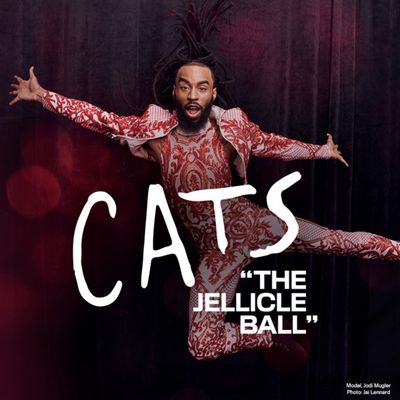
Director and Creator Zhailon Levingston joins Behind the Awards to share his vision for the upcoming Wonderful Town at New York City Center Encores. Zhailon also talks about Cats: The Jellicle Ball and the future of the show and his collaboration with Playwright Douglas Lyons.
Link to Wonderful Town Tickets - https://www.nycitycenter.org/pdps/2024-2025/wonderful-town/
Also in this episode - Christine Ebersole 2007 Tony Win for Grey Gardens. Review of Stranger Things on Broadway.
Zhailon Levingston is a Louisiana-raised storyteller, director, and activist. He is a Board Member for the Broadway Advocacy Coalition, which he co-created, and teaches the Theatre of Change course at Columbia University.
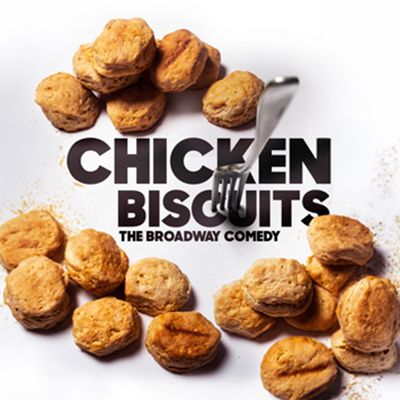
He is a Music Mentor Fellow and has done work with Idina Menzel’s A Broader Way Foundation. His directing credits include: Neptune (Dixon Place, Brooklyn Museum), The Years That Went Wrong (Lark, MCC), The Exonerated (Columbia Law School), Chariot Part 2 (Soho Rep., for The Movement Theatre Company), Mother of Pearl (LaGuardia Performing Arts Center). He is the associate director of Primer for a Failed Superpower with Tony Award winner Rachel Chavkin, and Runaways at The Public Theater with Sam Pinkleton. Most recently, he directed Chicken & Biscuits which premiered on Broadway in 2021 and Patience which premiered at Second Stage UPTOWN Summer of 2022. Zhailon is also the former resident director at Tina: The Tina Turner Musical on Broadway and the associate director of Hadestown in South Korea.
Make sure to check out Eila's book, "The Tony Awards", and all her other amazing books: https://amzn.to/43WMu5Y.
Connect with Eila and Bruce:
- Instagram @behind_the_awards
- Eila @eilamell
- Bruce @cominghomewithbruce
Transcript
This transcript was automatically generated and might contain errors.
[0:00] Eila Mell: Oh my God, this is amazing. I left Hollywood when they told me I was over the hill and now I'm standing here with this most distinguished award for what I consider to be the role of a lifetime. I'm over the hill in the role of a lifetime. This is so encouraging.
[0:30] Eila Mell: Hello, and welcome to Behind the Awards. I'm Eila and I am here with Bruce.
[0:40] Bruce Gotlieb: Good morning. Well, good afternoon at this point, actually.
[0:42] Eila Mell: I guess so. That's right. So we're listening to our guest, Christine Ebersole. Our past, you know, we've had her, was it a year ago already, maybe?
[0:49] Bruce Gotlieb: I'd have to look at a date. But it was definitely a little ways back.
[0:58] Eila Mell: One of our earlier guests, Christine Ebersole.
[1:00] Bruce Gotlieb: Yes, it was definitely during last season.
[1:03] Eila Mell: That's right. That's right. And this is her 2007 Tony win for Grey Gardens, which she shared some wonderful stories about.
[1:13] Bruce Gotlieb: Yes. So if you want to hear her talk about Grey Gardens and everything else, listen to her episode. And I love her speech about, you know, leaving Hollywood because she was over the hill. And then she wins a Tony and then goes on to have a pretty successful series with Bob Hart's Ebersole. So.
[1:32] Eila Mell: Absolutely.
[1:33] Bruce Gotlieb: Hollywood welcomed her back. They realized their mistake.
[1:37] Eila Mell: We got to see Stranger Things.
[1:40] Bruce Gotlieb: We did.
[1:41] Eila Mell: And I think we should review it.
[1:43] Bruce Gotlieb: Yes. And we have, you know, we can give a little hearken back to when we had T.R. Knight on.
[1:49] Eila Mell: That's right.
[1:50] Bruce Gotlieb: And it was only announced that he was in it, so he couldn't share very much.
[1:55] Eila Mell: It was so early then. Yeah.
[1:57] Bruce Gotlieb: We'll be chatting with him coming soon.
[1:59] Eila Mell: Yes, he's going to come back.
[2:01] Bruce Gotlieb: And then we also have coming up very soon, our conversation with Burke Swanson, who's also in Stranger Things.
[2:08] Eila Mell: Yeah. Burke plays David Harbour's character as a teenager in high school. So that's fun.
[2:13] Bruce Gotlieb: Yes. So Stranger Things, you don't need to have seen the TV show in order to see the play or enjoy the play. But if you have seen the show, there's obviously Easter eggs and certain things that are going to affect you or give you those wow moments more than somebody who hadn't. It is a prequel from the television show. So a lot of characters that you know are in it, but just in a different, a younger form, let's call it.
[2:41] Eila Mell: Right. And then there are the parents of a lot of the kids who are on the show. So you don't even really need to know who their kids turn out to be later, you know. But if you know the show, you'll recognize the last names. That's all. It's fun.
[2:56] Bruce Gotlieb: Absolutely. So this is at the Marquis Theatre, which has been transformed into a sci-fi fantasy thriller magical experience.
[3:05] Eila Mell: Oh, my gosh.
[3:10] Bruce Gotlieb: I'm not giving too much away. There is nothing that I've ever seen on live that is that type of a visual event. The tricks and the illusions and the magic that's being created from the team that did Harry Potter.
[3:30] Eila Mell: The technology, too. It's just incredible.
[3:33] Bruce Gotlieb: It really, really is fantastic. And it's, you know, it's worth the price of admission alone. The story and the acting is, in my opinion, really, really, really strong. But that tech is just out of this world.
[3:48] Eila Mell: Right. The tech alone wouldn't carry a show for me. It's the combination of the great story that they're telling and the incredible performances, especially Louis McCartney as Henry Creel. Wow.
[4:02] Bruce Gotlieb: That and these, I mean, like things you've never seen on stage before. It's the whole show. It's like another level of theater going.
[4:11] Eila Mell: Absolutely. And one of the things I know we've talked about before and we've talked about with our guests, it's just another way that creatives on Broadway are pushing the envelope and storytelling and getting things to another level for a new generation of theater goers. And yeah, it's exciting to have a show that is going to help bring younger and maybe non-traditional theater goers to Broadway that might, you know, give them the taste of seeing more live theater so that the industry continues to thrive.
[4:46] Bruce Gotlieb: Yeah, for sure. So this let's just give a little snippet of what the story is. So people know it is the origin story of Henry Creel, the son of Victor Creel, who was in this series played by Robert Englund in just one scene. But our guest and our pal T.R. Knight, he gets to play this character. And with so much more nuance than the TV show allowed that character to have, we get to see like a real a whole full arc of him.
[5:14] Eila Mell: Absolutely. And it's, you know, takes place there, you know, again, not to give too much away, but this family is now moving to Indiana to start a new life because there have been some troubles. And, you know, it is a troubled family. There's some disconnect and there's some strain there.
[5:32] Bruce Gotlieb: With Henry. I mean, Henry is the one.
[5:35] Eila Mell: Well, he's the crux of, you know, some of the issues that the family has, you know, the relationships kind of all stem off of that. And it also gives you an insight into school and that life and and kind of how this next character that we know from Stranger Things, the TV show evolves and takes form and how this city is never changed since they've moved in.
[6:02] Bruce Gotlieb: Right.
[6:03] Eila Mell: For me, it was it blew me away. If I was giving a critic's pick, it would it would get that for me.
[6:09] Bruce Gotlieb: Easily. And so let's say that we went in with different points of view because I had seen the entire series and you hadn't watched any of it. And we both loved it. At one point, we both said to each other, wow, out loud, because of some of the stuff that was happening.
[6:23] Eila Mell: Yeah, I don't want to give I don't even want to give any of the tech away because it's just so special to experience it firsthand.
[6:29] Bruce Gotlieb: Yeah. So I mean, it's a huge, huge endeavor and they are killing it. It's really incredible. One of my favorite shows of the season, That and My Beloved Operation Mincemeat.
[6:42] Eila Mell: That's right.
[6:43] Bruce Gotlieb: Well, speaking of, you know, stretching the envelope and, and telling stories differently and kind of taking the world by storm. We have an amazing guest.
[6:52] Eila Mell: Oh my gosh.
[6:53] Bruce Gotlieb: Coming up.
[6:53] Eila Mell: Yeah.
[6:54] Bruce Gotlieb: Who is directing Wonderful Town at Encore City Center on the heels of the Jellicle Ball.
[7:02] Eila Mell: That was just a big, big giant hit. And hopefully we'll see more of it soon.
[7:08] Bruce Gotlieb: We hope so.
[7:09] Eila Mell: Yeah.
[7:09] Bruce Gotlieb: So without further ado, let's bring out Zhailon Levingston and have a chat.
[7:25] Eila Mell: Bruce, I'm so excited to welcome Zhailon Levingston to our show. Welcome.
[7:31] Zhailon Levingston: Hey, it's so great to be here. Thanks for having me.
[7:33] Eila Mell: Such a thrill to have you.
[7:35] Zhailon Levingston: We've been trying to coordinate this for for a bit, but you're so busy.
[7:39] Eila Mell: Which is the best thing.
[7:41] Zhailon Levingston: It's a crazy, silly schedule, really.
[7:43] Eila Mell: It's just...
[7:45] Zhailon Levingston: So you're, I'm assuming, upstairs somewhere at City Center right now in rehearsal for Wonderful Town.
[7:50] Zhailon Levingston: Yeah.
[7:51] Eila Mell: How exciting.
[7:51] Zhailon Levingston: You were catching me on the eve before our first rehearsals for Wonderful Town. So this is our last day of pre-production. And yeah, it's exciting.
[8:01] Eila Mell: So how did that project come to you?
[8:03] Zhailon Levingston: It came through City Center, just reaching out and being like, can you listen to this score and tell us if it resonates with you at all?
[8:11] Zhailon Levingston: And then the ball kind of started rolling from there.
[8:17] Zhailon Levingston: And I think at first I was like, Darnstein, OK, classic golden age musical theater. OK, well, let's see.
[8:22] Zhailon Levingston: And, you know, the score is indestructible, you know.
[8:29] Zhailon Levingston: And so the more I listened to it, the more I was like, oh, I love this and just like love the opportunity to be able to stretch my aesthetic and taste across as many genres as possible.
[8:42] Zhailon Levingston: I told a friend recently, it's like everything I do, I want people to be like, he's doing what now? You know, this felt like it fit in that that bucket of never having people guess what I might do next.
[8:57] Eila Mell: I love that.
[8:58] Bruce Gotlieb: Well, no one certainly could have predicted the Jellicle Ball, the cat's Jellicle Ball. What a brilliant concept.
[9:06] Zhailon Levingston: Where did that come from?
[9:08] Zhailon Levingston: It came from my co-director, Bill Roush.
[9:10] Zhailon Levingston: Well, I mean, the impetus came out of Bill Roush in terms of originally seeing the song Memory as sang by an older gay man in a gay bar.
[9:19] Zhailon Levingston: And then as he brought a team around him, what everyone realized is that, you know, it's not an older queer man in a gay bar, but it is a ball.
[9:29] Zhailon Levingston: And so for a handful of years, we developed this idea of how to make Cats a kind of active competition and celebrate the legacy, the history of ballroom culture and how to bring the worlds of musical theater and people who have done musicals together with the world of ballroom and people who have not done musicals before, but have only competed in the ballroom space, how to bring them together, how to have a process wherein something new was made by that reaching across the aisle.
[10:03] Eila Mell: It was the hottest ticket. You couldn't get your hands on it.
[10:06] Bruce Gotlieb: Every extension was sold out within minutes.
[10:08] Zhailon Levingston: So, yeah, good for you guys.
[10:11] Bruce Gotlieb: That's amazing.
[10:12] Zhailon Levingston: I went to high school with Octavia St. Laurent, who was, you know, a legend.
[10:16] Zhailon Levingston: Yeah, incredible.
[10:18] Bruce Gotlieb: Wow.
[10:19] Zhailon Levingston: Right.
[10:21] Zhailon Levingston: Oh, my goodness.
[10:21] Bruce Gotlieb: So I don't know if you can talk about this, but, you know, there's rumors that we might be able to see it on Broadway.
[10:30] Zhailon Levingston: I think we will see Cats the Jellicle Ball again. I can't tell you when. I can't tell you where, but I think we feel pretty optimistic that we will see it again.
[10:42] Zhailon Levingston: And, you know, I think that it will feel right to bring the show back under the climate that we're all in right now.
[10:51] Zhailon Levingston: And I think it will feel like a kind of battle cry, actually.
[10:55] Bruce Gotlieb: Yeah.
[10:56] Zhailon Levingston: So, yeah, we'll we'll see.
[10:58] Bruce Gotlieb: All right. Sounds like we'll keep your eyes peeled.
[11:01] Eila Mell: That's your ticket buying thumbs ready.
[11:03] Bruce Gotlieb: That's right. That's right.
[11:04] Zhailon Levingston: Because it's going to sell if it comes back.
[13:07] Zhailon Levingston: Not the initial cast that the production might have thought they would have had. What you want is that kind of magical thing that happens where it almost goes out of your control, where actually the right role and the right person meets them at the right time. And you kind of can't really force that. You just got to be open to whatever is coming. And so we were, we stayed very open. And I think we landed on two people who are going to do something extraordinary. Yeah. And don't you also find with casting that, you know, you don't know what someone's going to bring to a role until you actually see them do it? That's right. You said that you always strive to have people, I guess, keep them on their toes and guessing.
Has that always been just your formula? Because what it seems like is you're working on projects that kind of flip storytelling a little bit, which for me, as a theater goer is exciting, because we don't always want to, you know, the same story over and over again, it can get boring. Has that always been something that you gravitated to was just kind of mixing things up a bit? I think it probably started from a place of really never wanting the industry to treat me as if I could only do one thing. And so it was a little bit of that and a little bit of like understanding that I know I am young in this space. I don't come from a ton of resources. I didn't go to grad school for directing from the South.
So there's a lot of things that come together that don't necessarily point to commercial director. And I wanted to like honor that by leaning into, you know, the fact that we are not in 1995 or 85 or 75. You know, we're in a new period where I want to be involved in as many things that expand my imagination as possible. And if I'm just playing by a rule book that I think that I saw at some point, then I won't be contributing, I think, in the way that my generation is calling for contribution right now. You know, like, I think there's still so far to go, despite the barriers that have been broken. But, you know, I think like Shelley Williams was maybe just the second Black woman to direct a musical on Broadway.
That's crazy. Something like that. I think that, you know, George Wolfe is still like the only Black director to win a Tony for best direction of a musical. So there's like, when you look at the statistics, there's still a lot of story to be told. And so I think the only way to continue to smash that door is to, you know, do things that are unexpected. And then I think that like, for me, on a more artistic tip, and less like political, I just am drawn to things that scare me. And I'm drawn to things that at the center of it is a question that I don't know the answer to. And that's the thing that's going to keep me up every day. That's the thing that's going to make me want to go to work. That's the thing.
And so most things that I do, I don't know it's gonna land. Like, I don't know if Wonderful Town is gonna land. I believe in it enough now to walk into the rehearsal room. But you know, there was a lot of like moments of like, Jalen, what are you doing? And you know, I tell people about Cats all the time. We only had six previews on that show. And I didn't believe the audience for most of them. Like, maybe the last preview, I kind of felt like, well, maybe people will like this, just because I'd never seen anything like it. And so the first audience, I was like, well, that's friends and family. Of course, they're gonna be going crazy. Friday, and I was like, well, it's a Friday, of course, people are happy to be here.
And I was like, wait to wait till the way to the older crowd comes way to the matinee crowd comes, then we'll really see what's going on. Then that Sunday matinee came and it was like the loudest matinee I'd ever experienced. And so it just took a long time. Wow. But I'm drawn to things that scare me in that way. Do you remember at what point you, you know, whether you were a kid or whatever, you sat back and said, this is this is my calling. This is what I need to do. Did you see something? Yeah, I went to performing arts elementary school, not because I wanted to be an artist, but because it happened to be the best school for my mother to put me in. She was a single mom. And it was like the magnet school, I had to test to get into it.
And so it wasn't because I had shown some early ability, it was because, you know, it was the best place for me to be. And it just so happened, there was a lot of exposure to the arts. But I thought that it was all extracurricular, like lunchtime and recess, which is a fun thing my school did. But then in fifth grade, I was cast as a short, chubby black Aladdin, and my school's production of Aladdin. And that kind of changed everything. Because in that same year, I learned what a.com was. And my theory about the internet was like, anything you're interested in, you can just write that thing and put.com and then a whole thing appears in front of you. And so I was like, Broadway.com. And then I saw and realized, oh, when people ask me what I want to be when I grow up, I can just say I want to work there. I want to be on Broadway. I want to do that. And so from fifth grade on, that has been the North Star.
[18:40] Eila Mell: Wow.
[18:40] Zhailon Levingston: That's amazing.
[18:41] Eila Mell: It's amazing that it worked out, right? Because so many people have similar dreams. So what do you think it was about your path that, you know, made it actually happen?
[18:51] Zhailon Levingston: Yeah, that's a good question. I mean, there's a lot of like different elements in the gumbo, right? There is tons of support from my family and not the kind of like material support that one might think. Like I didn't have a lot of resources, but no one ever told me I couldn't do something. And I just think that's huge. I think it's really huge. I credit my mother, who saw at a very early age that at a certain point she should probably stop saying I should think of a backup plan. And I think that's huge. I think it's important to say that, especially if you have a child who it's clear they may not excel in this career. But I think by the time I was a teenager, she saw that like, oh, I can't punish him by taking away his opportunity to do a show or he will go into a mental crisis.
You know, like, I think he learned early on that, like, this is the path he's going. And I think just always wanted me to be happy. And so that was huge, huge, huge, huge, huge. I think faith in the journey was huge for me, understanding that, like, this is the path that I'm on to do something greater than myself. You know, that the rehearsal room is a kind of pop-up society. And I want to be a part of creating emergent ways of being together. And I think I pick projects and shows that allow me to experiment with that. And, you know, if they become commercially successful or a hit or whatever, that's cool. But also at the core of everything is like a kind of real intention and rigor to have an audience even subconsciously go, oh, they are getting along on stage in a different way than I have seen outside of the doors of this theater.
So I think there's a little bit of that. I used to say I moved to New York because it moves at the pace of my ambitions. And I do think that I showed up to New York with two suitcases. I was living on a broken futon on 191st Street with some dysfunctional folks. But it was all that I wanted. I didn't really have values in any other area other than, like, becoming an artist who worked in New York. That was the thing that I wanted to do. And so I worked just enough hours to make just enough money to pay my little rent so that I could be meeting playwrights, having coffees, making little things here and there. And I don't know if the person I am now could not have shown up to New York in the same way and done in the same way.
And so I think it took, you know, a lot of naivete and a lot of ignorance, really, that, like, I used to tell myself, if I just walk outside, something can happen. So that was, like, the mantra, especially in the times where I was like, what am I doing? Is anything ever going to happen for me? You know?
[21:52] Eila Mell: Right, because it's not a snap of a finger where all of a sudden, oh, here you go. Go put this up on Broadway. At what point did you meet Douglas Lyons, who, you know, you have such a great collaboration with?
[22:03] Zhailon Levingston: Pretty early on, actually. I mean, maybe a couple of years into living in New York, we were both at one of the first performances of a mutual friend, Britton Smith.
[22:13] Zhailon Levingston: has a really dope funk band called Britain and the Sting. And Britain's a close friend of mine and collaborator of mine. And we were at one of the initial concerts of his. And me and Douglas just happened to be kind of like, he was sitting on a couch, I think I was standing by him. And he was like, Oh, hey, how are you? I was like, How are you? And what do you do? And he was like, I'm a playwright, never had a play done before. And he was like, What do you do? I was like, I'm a director. And I had very little on my resume at all. And he gave me like the first 40 or so pages of Chicken and Biscuits, and was like, Well, you read this. And if you like it, then we're going to do a really informal little reading, not for anyone, but just to kind of see.
And I was like, yeah, sure. And that's how it started, like really two strangers meeting and really needing to be seen as the thing that we wanted to be seen in the world. And like, I think I co-signed his ambitions to be a playwright, and he co-signed my ambitions to be a director. And that's how it started. And he's just, you know, hilarious. His writing is snappy and fun. And so that was another example of something that I wanted to do, because I was like, how often in this time, because this was like 2017, am I seeing a lot of black storytellers be able to just fully lean into comedy? Right. I wasn't able to see that as much as and so that was part of it as and Chicken and Biscuits was hilarious. It was. And it was your Broadway debut, which is incredible. Correct. Yeah. And you had Norm Lewis, Natasha Yvette Williams, a great cast.
[23:48] Eila Mell: Unbelievable cast. Yeah. And I think we were maybe the third show, second or third show to open up after the pandemic.
[23:54] Zhailon Levingston: Yes, which was a wild, wild experience. I know. Well, so I let in circle in the square. I always say that I like to see a show there. Also, what I like about it is that I can see the other audience members and I feel like part of this community. And I remember just seeing people all masked up in the audience. And it's just it just felt so good to be back in a theater.
[24:15] Zhailon Levingston: Yeah. And we were like, can we make a comedy work when people are wearing masks? But I think for the people who came, they had a blast. I think.
[24:19] Eila Mell: Yeah. People had a really good time in the theater. So I count it as a success for sure.
[24:26] Zhailon Levingston: Absolutely. And they needed it after. Oh, yeah. Everyone did. They needed to laugh. And then you guys did Table 17 together, which I was so fortunate to be at the reading that you did.
[24:37] Eila Mell: Oh, OK. Yeah. Those are fun.
[24:39] Zhailon Levingston: Yeah. Oh, yes. I mean, I just think Carrie Young is brilliant. Anything she does is great. But that whole cast, too, is incredible. Probably. And we have some announcements about that coming out this week. I'm very excited.
[24:53] Eila Mell: Oh, my gosh. Well, our episode will come out next week. So can you tell us what the announcement is?
[25:01] Zhailon Levingston: If it comes out next week, then I can say, yes, we will be going to the guessing in Los Angeles premiering the show. Very exciting. And I'll let you.
[25:15] Eila Mell: Well, that's incredible. Same casting. Everybody's staying together with it.
[25:20] Zhailon Levingston: For the most part, we've recast the role that Cara's in due to schedule. She's in purpose. Yeah. Yeah. So we have a new actress in the role named Gail Bean, who's extraordinary. And yeah, when we have the same male actors.
[25:32] Eila Mell: Oh, congratulations. Well, that's exciting. So let's get back to Wonderful Town a little bit.
[25:39] Zhailon Levingston: OK. So I know that Encores! likes to preserve the shows, you know, so they are presented as they were originally. Is that right?
[25:46] Zhailon Levingston: For the most part. Yeah. I mean, I really did not want to change the show in this kind of way. I think I was really more interested in how does a kind of a contemporary audience, contemporary artists meet this material? And what is the friction that it brings up? What are the new ways into the comedy that we may not have been able to see before? Because I think what's really interesting about that show is it takes place in Greenwich Village in a time where Greenwich Village was more diverse than it is today. And so what's interesting is to actually be able to really lean into the period of it all and really like let folks believe you're seeing something old tonight, only to then bring them into such close proximity with this thing that it feels like it came out yesterday. That's the hope with the show is that we almost kind of trick you into thinking that actually this thing is as urgent and as contemporary as anything, as everything.
[26:57] Eila Mell: Well, the village of Wonderful Town, you know, is before it became commercial, before, you know, like I always say, the death of the village was when the gap came. You know, when it was really about artists and individuals, you know, so that's exciting to me just to see that little piece of history totally back.
[27:12] Zhailon Levingston: Yeah. You know, I mean, we think about like New York in that time and you think about like, I think someone was like, oh, are you going to set it in Harlem or something? And I was like, no, because it is unbelievably rich to keep it in its setting. And I mean, that is what it's about. It's about a particular time where you're running into artists and dancers and activists and revolutionaries and poets and people just trying to survive and just unbelievable history that happened in that time. You know, the NAACP was founded in Greenwich Village.
[27:48] Eila Mell: Oh, wow.
[27:49] Zhailon Levingston: Yeah, it's very specific. I mean, they mentioned Greenwich Village a lot, so it has to be there.
[27:54] Eila Mell: Yeah, it has to be there.
[27:59] Zhailon Levingston: Yeah. And the music's amazing. Like, there's nothing to touch with the music. You know, Bernstein is classic and inevitable. And I think what's going to be exciting is, I mean, I think this is similar with Cats. The score for Cats was not changed all that much. We added some ballroom beats here and there. But I think what was surprising to people was feeling like they were into something that they told themselves that they couldn't be into. Right. Exactly. And I like that, you know, many, everyone knows West Side Story that Bernstein did and, you know, some other shows. But Wonderful Town, either you know it and love it or you probably haven't really heard it.
[28:40] Eila Mell: Yeah. So that's exciting for me. I mean, I'm someone who loves Wonderful Town. I've known it since college. So when I heard that you were doing that, I thought this is perfect. This is going to be.
[28:49] Zhailon Levingston: And there's some interesting, like problems, like interesting problems in it, right? Like, there's a song called Quiet Girl, where Bob is like singing about the desire to have a quiet girl. And so like, yeah, artistic challenge for me is like, how do I bring us? How do I have that character meet a contemporary audience in a way that doesn't like actually take away from what he's doing, but in some way highlights the fact that here's a man stuck in a particular time. And he is reaching towards something as much as Ruth is, but is locked in by, you know, what society is saying that a man has to be as well. So to me, I'm more interested in how to look at these things as their own kind of thesis around, you know, time then and now.
[29:37] Eila Mell: That's interesting. And, you know, Ruth is a character that is never going to be quiet anyway. I think the audience knows that that's never gone. You know, there's never a threat of her being silenced in any way.
[29:49] Zhailon Levingston: Exactly. You know, and she's a round hole in a square peg. And yeah, she is ahead of her time in a certain kind of way. And so it's exciting.
[29:57] Eila Mell: Yeah. And what's interesting to you about the character of Eileen, who could so easily fall into just a trope?
[30:04] Zhailon Levingston: Yeah, I mean, one, I love that Ayesha Jackson gets to be an ingenue, who is bombed over and beautiful. And Eileen's an actress. And I think in this production, we really want to lean into that fact, in the same way that Ruth is always writing. I think Eileen is always trying to create herself in a certain kind of way. And I think as opposed to maybe playing her a little more ditzy, I think I'm interested in what does it mean to play her like, just truly accepting of everyone and everything to the point where it can be easy to miss the bad qualities about certain people, right? Like, I have a friend like that, who just believes in people so much that, you know, doesn't see that maybe it's not a great idea to invite four guys over for dinner.
It's dinner, you know. And so I'm excited to play with her vocation more in this production, and play with the fact that like, she is not a victim to these men at all. If anything, it's extracurricular for her in a way exciting and funny.
[31:16] Eila Mell: Well, you know, we just saw Ayesha do Vape, the one night voice parody. So we know how hilarious she is. You know, I think people are going to be so pleasantly surprised. It just, you know, you come thinking Ayesha is a great singer. And they're great singers, but they can bring so much more. And I'm sure that that we're going to see that.
[31:38] Zhailon Levingston: And I think it's so smart. She's so, so, so, so smart. And I think I'm excited to see where her wits take roots as well.
[31:47] Eila Mell: And she could so easily have been cast as Eileen too. So it's interesting to see her. And then what makes her non attractive in the world that she's in, right? It isn't because she's an ugly woman. She's one of the most.
[31:59] Zhailon Levingston: Oh, my God. She's gorgeous.
[32:00] Eila Mell: No, she's gorgeous. But then what is it about? It's about age. It's about ambition. It's about wits. It's about all of these other things that society wasn't ready for a woman to be yet. And I think that's going to be really fun to watch.
[32:15] Zhailon Levingston: Yeah, absolutely. Right. She's maybe a little pushier than people would want or big personality and all the things that we value now.
[32:23] Eila Mell: Yeah, exactly. It sounds so exciting.
[32:25] Zhailon Levingston: I know. So people can get tickets at citycenter.com.
[32:31] Eila Mell: Yes. Is there anything else coming up? Not that you're not busy enough, but that maybe you can talk about that people can look for?
[32:39] Zhailon Levingston: Yeah, I'm doing a workshop at National Black Theatre in June called Sweetwater. That's written by a fabulous playwright named Nathan Youngerberg. So that's probably the next thing that I'll be thinking about the most after Wonderful Town as it relates to what's going on in New York.
[32:57] Eila Mell: Excellent. Well, we will definitely be keeping an eye on everything that you do because we like good theatre and that's what you bring.
[33:03] Zhailon Levingston: Oh, thank you. Thank you all so much. It was a joy, really.
[33:06] Eila Mell: And you have to get back to rehearsal. So we will see you all next time on Behind The Awards.
[33:12] Zhailon Levingston: Awesome. Thank you.
[33:14] Eila Mell: Thank you.
[33:15] Zhailon Levingston: Thank you. Bye-bye.
© Broadway Podcast Network, All Rights Reserved