

Tony Nominated Director/Choreographer Camille A Brown stops by Behind the Awards to discuss Gypsy, Hells Kitchen, For Colored Girls and her journey to Broadway. Also in this episode - Bebe Neuwirth 1997 Tony win for her portrayal of Velma Kelly in Chicago and a review of Purpose... Read More
From the show: Behind the Awards with Eila Mell & Bruce Gotlieb
Guests

Featured Shows

About
Tony Nominated Director/Choreographer Camille A Brown stops by Behind the Awards to discuss Gypsy, Hells Kitchen, For Colored Girls and her journey to Broadway.
Also in this episode - Bebe Neuwirth 1997 Tony win for her portrayal of Velma Kelly in Chicago and a review of Purpose
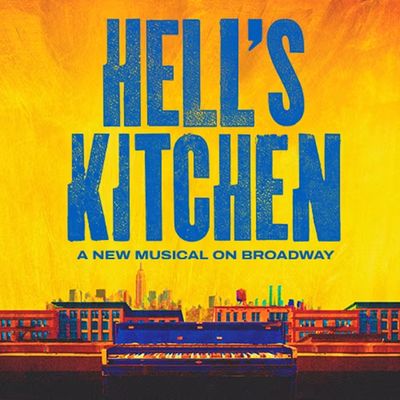
Four Time Tony Award nominee Camille A. Brown, currently nominated for her choreography in Hells Kitchen on Broadway, is a prolific Black female choreographer who in 2022, made her Broadway directorial debut for the Broadway revival of for colored girls who have considered suicide/when the rainbow is enuf, making her the first Black woman to direct and choreograph a Broadway play since Katherine Dunham in 1955. The production received seven Tony Award nominations including Best Direction of a Play and Best Choreography for Brown. The New York Times proclaimed the production “triumphant.” The same season, at The Metropolitan Opera, Camille became the first Black artist to direct a mainstage production, co-directing alongside James Robinson on Terence Blanchard’s Fire Shut Up in My Bones (2021), which she also choreographed. Fire was triumphantly brought back to the MET again this 2024 spring season. Camille also choreographed Porgy & Bess in 2020 and Terence Blanchard’s Champion, which premiered April 2023, both at The MET Opera. Camille made her Broadway choreography debut with the critically acclaimed revival of Once on This Island, followed by Choir Boy for MTC. She continues to be the artistic director and choreographer for her own company, Camille A Brown and Dancers and this summer will premiere a new piece, the highly anticipated “I AM” at Jacobs Pillow. Most recently, Brown won the Chita Rivera Award for outstanding choreography and earned a Drama Desk nomination and her fourth Tony Award nomination for her choreography of the Broadway hit, Hell’s Kitchen, the new Alicia Keys musical which has garnered 13 Tony Award nominations.
Make sure to check out Eila's book, "The Tony Awards", and all her other amazing books: https://amzn.to/43WMu5Y.
Connect with Eila and Bruce:
- Instagram @behind_the_awards
- Eila @eilamell
- Bruce @cominghomewithbruce
Transcript
This transcript was automatically generated and might contain errors.
[0:00] Bebe Neuwirth: Um, I love the stage more than any other place in the world, also. Mr. Batinkin, thank you. Um, Cheetah Rivera is the goddess of the theater, and I bow to her when I accept this, and I thank her for creating such a delicious role. And remember being in my teens watching her from the mezzanine, going, how did she do that with that chair just now? And inspiring me for, uh, until this day.
[0:36] Eila Mell: Hello and welcome to Behind the Awards. I'm Eila.
[0:39] Bruce Gotlieb: I'm here with Bruce.
[0:40] Eila Mell: Hello there, Bruce.
[0:42] Bruce Gotlieb: That was Bebe Neuwirth.
[0:44] Eila Mell: Uh, 1997 Tony win for her take on Velma Kelly.
[0:50] Bruce Gotlieb: I love that she gives uh credit to Cheetah Rivera too.
[0:54] Eila Mell: Of course.
[0:55] Bruce Gotlieb: Yeah.
[0:56] Eila Mell: Bebe is just she's such a presence on stage. I love to watch her.
[1:00] Bruce Gotlieb: She's so different from how we got to know her as Lilith, you know, right?
[1:06] Eila Mell: Sure.
[1:06] Bruce Gotlieb: Just so much fun. I mean, I remember that her breakthrough was Sweet Charity, you know, a zillion years ago.
[1:14] Eila Mell: Yeah.
[1:14] Bruce Gotlieb: And um, you know, nobody really knew who she was back then, and now she's like she has a lot of people.
[1:20] Eila Mell: Now everybody knows who she is.
[1:22] Bruce Gotlieb: Cheetah Rivera likes status.
[1:24] Eila Mell: That's right.
[1:24] Bruce Gotlieb: That's right.
[1:25] Eila Mell: Yeah. So Bruce, you went to see Purpose.
[1:28] Bruce Gotlieb: I did over at the Helen Hayes Theater.
[1:31] Eila Mell: I so I need your review, please. Give us.
[1:33] Bruce Gotlieb: It was exciting. So I was, uh, you know, going in, uh, not really knowing much about the show. I was excited, um, because Felicia Rashad was making her Broadway directorial debut, which, um, I love Felicia.
[1:46] Eila Mell: Um, ever since, you know, the Claire days.
[1:49] Bruce Gotlieb: Of course.
[1:51] Eila Mell: Um, I like how you skirted around the name of the show.
[1:54] Bruce Gotlieb: Well, you know, you can't.
[1:56] Eila Mell: Because it really wasn't a, it wasn't about the show for me.
[1:58] Bruce Gotlieb: It was all about Claire.
[2:00] Eila Mell: I get it. She stole that show.
[2:03] Bruce Gotlieb: Oh my god, all her little one-liners and the singers, like she would just get this look in her eye and you knew it was coming.
[2:08] Eila Mell: Oh yeah. I know.
[2:10] Bruce Gotlieb: So yeah, I was excited to see it. I think that going in, again, not knowing anything, it was the set is beautiful.
[2:19] Eila Mell: The one thing, and I know we've talked about this before.
[2:22] Bruce Gotlieb: So my seat and going in, I knew was partial view.
[2:25] Eila Mell: Okay.
[2:25] Bruce Gotlieb: But you lose a huge chunk of the stage from based on where I was sitting.
[2:31] Eila Mell: Where were you sitting?
[2:33] Bruce Gotlieb: I was on the left all the way against the wall.
[2:35] Eila Mell: Okay, so in the orchestra, but on the left?
[2:37] Bruce Gotlieb: In the orchestra on the left.
[2:39] Eila Mell: Okay. Maybe like the third or fourth row.
[2:42] Bruce Gotlieb: There's a piano that I knew existed because I saw it when I was walking into the theater, but I couldn't see it from my seat.
[2:50] Eila Mell: Oh wow.
[2:51] Bruce Gotlieb: Half the dining room table you lose from my seat. So when the dinner scene is going on, it's a round table. I only saw a few of the characters.
[3:00] Eila Mell: Okay.
[3:01] Bruce Gotlieb: I think it's just hard. I think when we're, when, and it's not this show specifically, because I think it happens more often than not.
[3:09] Eila Mell: So much of the time, yeah.
[3:10] Bruce Gotlieb: You're, you trying to obviously you want to use the full stage, but I think you also need to keep in mind.
[3:10] Eila Mell: Yeah, you know, closing off some things.
[3:19] Bruce Gotlieb: But that being said, I thought it was a good show, a little long.
[3:23] Eila Mell: It was almost three hours.
[3:24] Bruce Gotlieb: Wow.
[3:25] Eila Mell: Um, so there was obviously an intermission then.
[3:28] Bruce Gotlieb: Yes.
[3:28] Eila Mell: Yeah, okay. I don't know if when I saw it in previews, if they were still maybe making some tweaks, so that could have changed. Also, when a show gets going, you know, it naturally tightens and it naturally speeds up a little bit.
[3:42] Bruce Gotlieb: But it did, it wound up feeling a little bit long. There's a lot of action in act one.
[3:47] Eila Mell: And then act two, you know, when they're solving some of the dynamics and problems that happened, kind of feels like it jumps the shark a little bit.
[3:55] Bruce Gotlieb: It's good, but I just I wonder if some things were cut and it was maybe tightened a little bit, if they wouldn't have felt that way.
[4:03] Eila Mell: I see. Okay. This was written by the playwright who also did Appropriate. Did it feel, did it have that kind of sort of lineage? Did you feel that?
[4:11] Bruce Gotlieb: A little bit. Brandon Jacobs Jenkins was the playwright, and it certainly had his vibe to it.
[4:19] Eila Mell: Okay, yeah. But I wouldn't necessarily correlate them.
[4:23] Bruce Gotlieb: Okay. How were the actors?
[4:24] Eila Mell: Actors are great. John Michael Hill was a real standout to me. He kind of plays the narrator. He is the younger son in this family dynamic. Harry Lennox, Latanya Richardson Jackson play his parents. Glenn Davis is his brother. He also then brings home Carrie Young.
[4:43] Bruce Gotlieb: Oh, we love her.
[4:44] Eila Mell: Not as a love interest, although I think the parents might have thought that that was the case.
[4:49] Bruce Gotlieb: Oh, okay.
[4:50] Eila Mell: There's an interesting dynamic, interesting dynamic there. And then they are also then accompanied with Alana Arenas, who plays Glenn Davis's wife. She is, she's also a standout. She has this scene at the end of Act One that is just a tour de force.
[5:01] Bruce Gotlieb: Really?
[5:01] Eila Mell: She has this scene. I'm gonna give a spoiler alert.
[5:11] Bruce Gotlieb: Okay.
[5:11] Eila Mell: She gets slapped from here to the end of the stage in true, you know, grand fashion, gives this little speech, throws on a pair of sunglasses, and storms upstairs, and just the place erupts.
[5:24] Bruce Gotlieb: Oh my gosh, that sounds like so much fun.
[5:27] Eila Mell: Now, I always, I'm a stickler for this. So many stage slaps look so fake. How is this one?
[5:32] Bruce Gotlieb: Well, I couldn't see it because it was in the part of the screen that I couldn't see.
[5:37] Eila Mell: Stage that I couldn't see.
[5:39] Bruce Gotlieb: But boy, did you hear it. I mean, I felt it.
[5:41] Eila Mell: Wow.
[5:41] Bruce Gotlieb: That's how loud it was. So I'm sure it looked pretty good.
[5:45] Eila Mell: Oh, that's great. Did the audience have a react? I'm sure, right?
[5:48] Bruce Gotlieb: Yes, of course.
[5:49] Eila Mell: Of course. So is this a recommend for you?
[5:52] Bruce Gotlieb: Yeah, I think it's, it's an interesting story. Again, if you can get past some of the, there's a little some clunkiness to it.
[5:59] Eila Mell: Um, but if you can get past that, I think it's, you know, it's an interesting story.
[6:04] Eila Mell: I want to see it just for that slap scene. That sounds like so much fun.
[6:06] Bruce Gotlieb: There you go. They did some interesting thing with lights, and I, I for me it was effective. I know for others, I've heard, you know, in having conversations about the show, they didn't find as effective.
[6:18] Eila Mell: What happened? What was it?
[6:19] Bruce Gotlieb: So the narrator is speaking to the audience, breaking the fourth wall a lot of times to help progress the story.
[6:28] Eila Mell: Um, so that's one thing that I found effective. I know others felt like it kind of took them out of the storytelling.
[6:35] Bruce Gotlieb: The other thing they did is when that happened, there was some light, there was lighting adjustments. So they would dim the background and give him a special, so it did that separation.
[6:46] Eila Mell: Again, I think there were some people that feel like it kind of broke up the ride that you're on. You know, the train kind of had to slow down and that felt some disconnect.
[6:56] Bruce Gotlieb: If he's breaking away to address the audience, isn't it an interruption anyway, or it no?
[7:02] Eila Mell: Right.
[7:03] Bruce Gotlieb: Well, that's the point. The point is, is that it doesn't, I found it effective. Some people didn't find it an effective way of storytelling.
[7:10] Eila Mell: Okay.
[7:11] Bruce Gotlieb: Um, and it's just, I think it's just how it's written.
[7:13] Eila Mell: Yeah.
[7:14] Bruce Gotlieb: That's the style of it.
[7:15] Eila Mell: Yeah, I think that that winds up to be a personal preference.
[7:18] Bruce Gotlieb: Yeah, I mean, that's the fun of it.
[7:19] Eila Mell: Yeah. You know, one thing that someone loves someone else is irritated by.
[7:24] Bruce Gotlieb: So there you go.
[7:26] Eila Mell: All right. Well, I'm excited to see it. I think based on your review, it sounds like a fun time.
[7:31] Bruce Gotlieb: Well, you better get there. Well, who is our guest today, Bruce?
[7:35] Bruce Gotlieb: Today we have the choreographer and uh director of Broadway, Camille A. Brown, fashion icon.
[7:43] Eila Mell: Oh, yeah.
[7:45] Bruce Gotlieb: Oh, yeah. I mean, Camille is the total package. She is so talented, not just as a choreographer, but she's a director.
[7:55] Eila Mell: She is uh just extraordinary at what she does.
[7:59] Bruce Gotlieb: Um, let's bring her out. Uh, why give her all this praise behind her back? Let's let's tell it to her.
[8:04] Eila Mell: We have to have a quick little chat with her.
[8:05] Bruce Gotlieb: Yes.
[8:08] Bruce Gotlieb: Behind the Awards is so happy to welcome Camille A. Brown to our show.
[8:12] Camille A. Brown: Welcome.
[8:14] Bruce Gotlieb: Thank you.
[8:15] Camille A. Brown: Thank you for coming. It's our pleasure to have you here.
[8:18] Bruce Gotlieb: Before we even dive into things, I just want to paint a picture for everybody for our listeners. So me and Eila are standing outside Lincoln Center last summer, waiting to go in to be able to go in for the Tony Awards, and people are starting to arrive, and all of a sudden, from across the street down the road, we see this vision that walking in feathers right in feathers across the street.
[8:45] Eila Mell: And we're like, who is that? Who is that?
[8:47] Bruce Gotlieb: And then you finally got closer, and it was such a breathtaking moment, that dress.
[8:52] Eila Mell: So who were you wearing that night?
[8:54] Camille A. Brown: Yes, I was wearing Marquesa.
[8:55] Eila Mell: Of course that's Marquesa.
[8:57] Camille A. Brown: Now that you say that, it seems so obvious.
[8:59] Eila Mell: Thank you.
[9:00] Camille A. Brown: Thank you. Shout out to my uh stylist, Jake Soclep, my makeup artist uh Steven Harris.
[9:06] Eila Mell: Yeah, you were amazing that night.
[9:09] Bruce Gotlieb: Probably the best for us, I think.
[9:12] Camille A. Brown: So you've been busy, huh?
[9:14] Camille A. Brown: Yes, busy is good. Busy is the best thing to be. I always say that.
[9:19] Eila Mell: Yes, busy is good.
[9:21] Camille A. Brown: We opened Gypsy in December, and then I just finished my premiere, my New York premiere of my PIM at the Joyce Theater.
[9:30] Eila Mell: So very, very exciting things have been happening.
[9:33] Bruce Gotlieb: Were you always a dancer from a little girl? Did you start with ballet like most people?
[9:35] Camille A. Brown: I started with ballet, tap and African. I'm originally from Jamaica, Queen, New York. I went to Bernice Johnson Cultural Arts Center, that's where I started.
[9:49] Camille A. Brown: And then we went on to DeVort Dance Center in Queen, and then went to LaGuardia High School, and then and then and then.
[9:57] Eila Mell: Do you remember that moment where this was the career choice for you? That whether you saw a show were involved in something that you were like, I need to create dance the rest of my life?
[10:07] Camille A. Brown: I always felt like dance was something that I wanted to do. I just didn't necessarily know that there was a career for it until I went to the Ailey School and was introduced to the A dancers.
[10:19] Camille A. Brown: And at the time I was at the uh old school on um 61st Street, so it was an opportunity to see people doing what they love and traveling the world, and I thought, oh my gosh, I can do dance and get paid for it and have it be a career. So I never look back after that.
[10:40] Bruce Gotlieb: So was it always gonna be theater for you, or did you consider doing, you know, just strictly being in dance companies or a combination like you are doing?
[10:50] Camille A. Brown: Well, I started in a in a dance company. I was with Ronald K. Brown Evidence for five seasons. And during that time, I started developing my voice as a choreographer as well. And I my mother introduced me to musical theater a very long time ago when I was a child, probably around the same time that I started dance class. And um I really around 2009, 2010 with Georgiana Pickett, who uh was executive director of Rishna Kulf Arts Center and 651 Arts. She sadly passed away last year. But I remember speaking to her and asking her, how do I get into theater? Because it's such a different world from concert dance, and I didn't know how. And she just suggested that I start just speaking it into existence.
So while I was talking about my work as a choreographer, I also said, and I'm pursuing a career in theater. And it just started happening. And that was when Daniel Auken approached me uh about Fortress of Solitude. And that was the first musical that I was a part of. Well, that was 2011.
[12:04] Bruce Gotlieb: Wow. As a dancer, being the recipient of the Cheetah Rivera Award, to be honored by somebody who was an extraordinary dancer. I have to imagine that's quite an accomplishment as a choreographer.
[12:13] Camille A. Brown: Oh yes, I mean, I I got for being the choreographer for Hell's Kitchen. I was very, very honored to have an award named after such a legend and inspirational, elegant woman.
[12:29] Bruce Gotlieb: So before we get into Gypsy, I want to talk about For Colored Girls, because not only did you choreograph that, but you directed it.
[12:36] Camille A. Brown: And Tony nomination, we should say.
[12:38] Bruce Gotlieb: Yes, I did. Thank you. Was directing something you had always wanted to do, or did it just sort of come you got an opportunity and took it?
[12:47] Camille A. Brown: Well, I've had my company since 2006, and I'm artistic of that. So, in a way, I have been directing since then. My friends and my family said, Camille, you've been directing for years. All the tools that you have as a director of your company, trust those instincts and bring them in in the theater world. And whatever you don't know, and I told myself this too, whatever you don't know, you're gonna learn really, really fast.
[13:14] Bruce Gotlieb: For sure.
[13:15] Camille A. Brown: Yeah. That's such it's such an important play to so many people. Um, was it something that you knew growing up? I never saw a production live, but always saw uh excerpts, and I always there was always one degree of separation. There were all of these connections throughout my life. And so when I had the opportunity to dive into it at first, I got in my nervous for all the things that you mentioned. It's beloved, everybody knows it. And mine said something simple, but it was something that really cleared my head, and she just said, This is an offering, just look at it as that. Don't even think of it as a revival. Think is this is your contribution to this legacy. And once it was presented in that way, I was just able to shed off all of the all of the stress and extra noise and just focus on what I wanted to say. And it was received so beautifully, every, you know, critically acclaimed, popular acclaim. So bravo for that.
[14:16] Bruce Gotlieb: Thank you. It was one of the scariest things that I've ever done in my entire life.
[14:21] Camille A. Brown: Well, it's just a good lesson to people that if something is scary, that just means it's probably a great opportunity. And I always want to be challenged. So I never want to walk in a space and feel comfortable. If I feel like that, that's not for me. So I'm always interested in challenging myself and pushing forward and leaning in.
[14:42] Bruce Gotlieb: So how did you approach Gypsy? I mean, it's a show that many people know and love. And I guess people have certain expectations from what it's going to look like. So how did you come into that?
[14:54] Camille A. Brown: I mean, it's the same thing. It's dearly beloved. I grew up on Gypsy. You know, since my my mom loved musical theater, she introduced me to that. That was one of the musicals. We watched it all the time. And so I knew it. I knew it like the back of my hand. But this is your offering. This is your contribution to this legacy. I was very excited by Gypsy because it was an opportunity to introduce people to another side of me. And I think there's a tendency to easily put someone in a box. Hell's Kitchen is this, you know, energy that I grew up with, the music I grew up with. We're going back to you know the 90s and all of that vibe. So it and then you go to Gypsy, which also has energy, but it's completely different energy. And we were lucky enough to have Kevin on to talk about his dancing as Tulsa and how he brought his artistic ability to your choreography and marrying the two, which was a lot of fun.
[15:55] Camille A. Brown: Oh, great. I love work with Kevin and his work ethic was so fantastic. And that number that all I need is the girl is such a showstopper. It's such a great opportunity for a dancer. That's what I think about when I create dance and storytelling. We're still writing scripts. In Gypsy you're working with all these children who might not be first time dancers but probably are making their stage debuts. How is that different with choreographing and being a dance teacher all at the same time?
[16:24] Camille A. Brown: I had a wonderful time with the kids of Gypsy and I really tried to tap into how my teachers taught me when I was growing up I was giving them lessons. I I was I was teaching them about the show and the choreography and also how to deliver the choreography and their technique and it was really fun to watch them work so hard and be so joyful and they actually know the adult choreography too.
[17:01] Bruce Gotlieb: I bet they do yes they do they would they would do it in rehearsals they would do it on the side and it was so beautiful to see their joy and how much they loved doing it.
[17:13] Camille A. Brown: And so I'm so proud of them and it was really beautiful to see the older dancers teaching them either during the breaks or before or you know just to see that kind of camaraderie between the generations was really lovely to see.
[17:28] Bruce Gotlieb: I'm sure it's like you had your own little, you know, community full circle community kind of recharging each other.
[17:35] Camille A. Brown: Absolutely so Gypsy this season is one of the buzziest shows when you're working on a project that that kind of has all of this buzz does that affect the creative process at all?
[17:35] Camille A. Brown: I actually don't think about it and regardless of whatever the space I'm in I focus on the work and so I'll take time since the met when I when I first worked at the Metropolitan Opera I was focused on the work the whole time and then when we got to tech bars and we were actually in the theater I looked up and and it hit me wow we are at the Metropolitan up and then I went back in and focused on the work. And so it's the same with this like you you have to find a way to zone in and focus.
[18:19] Bruce Gotlieb: Yeah and that's what I do with all of my projects.
[18:23] Camille A. Brown: Well you can tell I mean you could tell the focus and dedication watching the pieces that you create are all so beautiful.
[18:29] Bruce Gotlieb: Thank you. What do you have anything coming up on the horizon that our listeners can can look forward to that you can speak about?
[18:30] Camille A. Brown: Well I can't I can speak about can't speak about it yet.
[18:41] Bruce Gotlieb: Okay.
[18:41] Camille A. Brown: Can you think about it yet but you know I will say that moving forward I'm really excited to just with For Colored Girls and uh directing that I'm really excited to have uh directing opportunities and looking looking for those and and diving in and like we spoke about earlier challenging myself and continuing to put myself in spaces that give me an opportunity to grow and also to continue sharing my voice so I'm just um hoping that that continues.
[19:14] Bruce Gotlieb: Well we're here at Behind the Awards cheering you on on. Once you're here, you're family. So when you're able to speak about those projects, we would love to have you back to chat about them.
[19:23] Camille A. Brown: I would absolutely love that. You were saying your company is going out on tour?
[19:27] Camille A. Brown: Yes. So my company, we just had our New York premiere of I Am. And so now this season, we're gonna take it on tour. And one of the things that we're really excited about is that we have with uh support from the Mellon Foundation. We have collaborated with three HBCUs to bring I Am to those colleges and universities. So really, really excited for I Am and to share it with the world.
[19:55] Bruce Gotlieb: That's amazing. And you know, it gives you the opportunity to shape new dancers and people who are interested in in making a career in the arts.
[20:04] Camille A. Brown: Yes, thank you. Well, Camille, we will let you go and uh we just thank you so much for sharing yourself with us.
[20:13] Camille A. Brown: Oh, I love it. I appreciate you both. Thank you. Really enjoyed the conversation.
[20:19] Bruce Gotlieb: Thank you. And thank you for coming on Behind the Awards.
© Broadway Podcast Network, All Rights Reserved