

Richard Frankel is one of Broadway's most respected producers and is one of the co-owners of Feinstein's/54 Below, arguable the most influential cabaret space in the world... Read More
From the show: BEHIND THE CURTAIN: BROADWAY'S LIVING LEGENDS » Podcast
Featured Shows
About
Richard Frankel is one of Broadway's most respected producers and is one of the co-owners of Feinstein's/54 Below, arguable the most influential cabaret space in the world. As a producer, his passion for theater led to audiences discovering such theatrical pieces as Penn & Teller, Driving Miss Daisy, Frankie and Johnny in the Clair De Lune, Stomp, Angels in America, The Producers, Hairspray, and revivals of The Sound of Music, A Little Night Music, Company, Sweeney Todd, and so many others. Richard pulls back the curtain on his career to discuss how his beginnings in theater were shaped at La Mama, what was it like creating the incomparable Feinstein's/54 Below, and why El Grande De Coca Cola is more important than we think! Also, Richard shines the spotlight on Penn & Teller, Mel Brooks, and Ellen Stewart! Become a sponsor of Behind The Curtain and get early access to interviews, private playlists, and advance knowledge of future guests so you can ask the legends your own questions. Go to: http://bit.ly/2i7nWC4
Transcript
This transcript was automatically generated and might contain errors.
[0:00] Robert W. Schneider: Happy New Year, Ken.
[0:01] Kevin David Thomas: Happy New Year, Rob.
[0:02] Robert W. Schneider: Any resolutions?
[0:03] Kevin David Thomas: Oh, to be more generous, you.
[0:05] Robert W. Schneider: Same. I wonder if any of our listeners wish to be more generous too.
[0:08] Kevin David Thomas: Well, listeners, if generosity is on your resolution list, head on over to patreon.com.
[0:13] Robert W. Schneider: Yep, that's right, b-a-t-re-e-o-n.com and search for Behind the Curtain, Broadway's Living Legends, and then you can set up a monthly donation.
[0:20] Kevin David Thomas: Even a dollar a month helps us.
[0:22] Robert W. Schneider: Your contributions help us continue what we are doing. So thank you.
[0:25] Kevin David Thomas: Thank you. And if your resolution is to get rid of all your fatty foods and start a healthy diet, please mail me all your fatty foods, courtesy of the UPS store on Amsterdam Avenue.
[0:34] Robert W. Schneider: Stop that, Rob. May this year be your favorite year.
[0:39] Kevin David Thomas: Thanks, Benji Stone.
[0:41] Robert W. Schneider: So lovely, Kevin.
[0:43] Kevin David Thomas: My favorite year.
[0:46] Robert W. Schneider: Like no other year of my life.
[0:49] Kevin David Thomas: My favorite year.
[0:51] Robert W. Schneider: Oh, we're closing. Bye.
[0:53] Robert W. Schneider: Hi, I'm Robert W. Schneider.
[0:54] Kevin David Thomas: And I'm Kevin David Thomas.
[0:56] Robert W. Schneider: And this is Behind the Curtain, Broadway's Living Legends.
[0:58] Kevin David Thomas: Don't forget to follow us on Twitter at Broadway Curtain.
[1:01] Robert W. Schneider: And make sure to join our Facebook page at Behind the Curtain, Broadway's Living Legends.
[1:05] Kevin David Thomas: And follow us on Instagram at Broadway Curtain Podcasts.
[1:07] Robert W. Schneider: Plus, you can always listen to our podcasts on Broadway World and Stitcher.
[1:10] Kevin David Thomas: Today's guest has been behind some of the most seminal works in the American theater. While he is primarily known as one of the industry's most successful producers, he has worn many hats in his journey, including those of a stage manager, technician, press agent, marketing director, and general manager.
[1:25] Robert W. Schneider: Then it was on to producing. As a producer, he, along with the partners Mark Rauch, Tom Bertel, Steve Barush, gave the world such shows as Driving Miss Daisy, FRANKEL and Johnny at the Clair De Lune, Angels in America, Smoky Joe's Cafe, The Producers, Hairspray, and revivals of Gypsy, Damn Yankees, Company, Sweeney Todd, The Norman Conquests, A Little Night Music, which I was in, and so many more.
[1:47] Kevin David Thomas: Plus, he was one of the creators and owners of the incomparable Feinstein's/54 Below. Could tell us what it was like to work with such legends as Mel Brooks, Susan Stroman, Ron House, Penn and Teller, George C. Wolfe, Harvey Fierstein, and so many others. Here is the Tony Award-winning producer, and our only guest who can count both Kevin and I as employees, RICHARD FRANKEL.
[2:05] RICHARD FRANKEL: This is true. I hadn't thought of it that way.
[2:09] Kevin David Thomas: How are you, RICHARD? Thank you for joining us. We are so happy to have you here.
[2:13] Robert W. Schneider: So, RICHARD, we're gonna start right at the very beginning. Where'd you grow up?
[2:15] RICHARD FRANKEL: Brooklyn.
[2:16] Kevin David Thomas: Whereabouts in Brooklyn?
[2:18] RICHARD FRANKEL: Bensonhurst.
[2:20] Kevin David Thomas: Bensonhurst, good old Bensonhurst. How did you fall in love with the theater?
[2:25] RICHARD FRANKEL: I had two inspirational high school drama teachers, actually. Yeah. And I joined the stage crew. I sort of from the beginning, I did acting in high school, but I knew early on I wasn't. I was elected class actor actually when I graduated.
[2:45] Kevin David Thomas: Really?
[2:46] RICHARD FRANKEL: But the bar was not high. And no, I started working, you know, backstage on stage crew doing tech stuff in high school, and I just loved it. Amazing from the beginning.
[3:00] Kevin David Thomas: So you enjoyed that backstage world?
[3:01] RICHARD FRANKEL: Yes. What did mom and dad do?
[3:03] RICHARD FRANKEL: Oh, they were school teachers. My father was a principal, my stepmother was a teacher.
[3:08] Kevin David Thomas: Oh, okay, okay in the educational world. Were you going to see Broadway shows at all? Do you remember the first show you ever saw?
[3:12] RICHARD FRANKEL: You know, they did it right once. They brought us to My Fair Lady in 1955 with Julie Andrews.
[3:23] Kevin David Thomas: Classic.
[3:23] RICHARD FRANKEL: And Edward Mulhare was in it. Oh, I remember that. They weren't distressed because Julie Andrews was in it. And I, you know, I remember sitting low in the seat and women with hats and the strong smell of perfume surrounding me. I was seven or eight. I liked it, but I don't remember going to other plays or musicals with them. They did take me to, I went to, you know, Leonard Bernstein Young People's Concert from now and again, and they took me to the Nutcracker and that kind of stuff as well.
[4:02] Kevin David Thomas: Well, it wasn't, it was pretty good. But the main thing was, you know, happened in high school, and of course summer camp.
[4:10] RICHARD FRANKEL: Where was summer camp?
[4:11] RICHARD FRANKEL: Oh, summer camp was a very small left-wing summer camp in Connecticut. And actually that was my first acting role was in the chorus of Porgy and Bess, which I think is funny because who better to do Porgy and Bess than a Jewish summer camp? I mean, that is like so. A left-wing Jewish summer camp in Connecticut in 1957. Like what could be better?
[4:34] Kevin David Thomas: Of course.
[4:41] RICHARD FRANKEL: It was brilliant.
[4:44] Kevin David Thomas: Brilliant. And then you went off to Brooklyn College?
[4:48] RICHARD FRANKEL: Yeah, then I went to Brooklyn College and I lived at home. I was very, I was 16 when I went to college. You know, well, people skipped a lot in public school in the 50s. And I went to Brooklyn College and I knew I wanted to major in theater. I ended up, I took a lot of theater courses. I ended up majoring in television production in part because I wasn't fond of the other people in the department. I've said in years since that I have yet, even after all of the big stars and such that I've worked with through my career, I have yet to encounter arrogance like the Brooklyn College Theater Department, college seniors when I was a freshman. It was so I, it just, you know, I wasn't, you know, I had issues with it. So I worked crew on a bunch of shows in the theater department, but I did a lot in the television department.
[5:50] RICHARD FRANKEL: And I got a speech therapy teaching license because my parents, you know, were kind of pushing for that. But it was, you know, all in all, it was good. While I went to Brooklyn College, though, I worked at WOR on a talk show, a three-hour-a-day talk show. I was like a production assistant, whatever you would call it.
[6:18] RICHARD FRANKEL: And I worked every day from two until ten. The show taped from, it was the Barry Farber show, and it taped from five o'clock until eight o'clock. And I, you know, would be in the studio with the list of commercials and hurry up and slow down and all that stuff. And I would pre-interview guests, and after I would edit it for both for syndication and for rebroadcast later in the night. So we would tape from five to eight, and then we would have a panel of guests on different subjects. It was before call-in shows. I mean, people weren't interested in what the lumpen proletariat had to say. People wanted to hear experts. So we would gather a panel every day on a different subject, and the show would be aired from clean, well, I would clean it up a little bit between eight and eleven, and then it would be on from eleven to two and repeated from two to five. And I did that for like the last whole last two years of college.
[7:14] Kevin David Thomas: Wow.
[7:15] RICHARD FRANKEL: And it was great. It was great. And it was great about pressure because we were always late. Like we would have a panel tomorrow if we only had three people, you know, and we needed five, or we didn't have a subject for next Monday or something. But there were expert people who were always reliable to call in a pinch.
[7:54] Kevin David Thomas: Wild.
[7:54] RICHARD FRANKEL: Yes. Wild. So it was very good. It was a very good experience.
[8:00] Kevin David Thomas: Were you in the Peace Corps?
[8:01] RICHARD FRANKEL: Yeah. When I graduated college, having lived at home through college, the draft was after me. So I could teach, remember my parents' insistence on the speech teaching license. So I could have taught in New York, and that would have been acceptable in terms of not going into the army. But there was this Peace Corps thing, which I thought was irresistible. I didn't know why everybody didn't want to do it. They trained you, they taught you a language, you went to Ethiopia, they put a little money aside, $75 a month they put aside for us when we got back, and you got to live in Africa in a little village for two years. I didn't understand why everybody wasn't doing it. And of course it got me out of Brooklyn.
[8:54] RICHARD FRANKEL: Right. Where I had rarely been, actually, you know, I had been to Florida on a vacation or two or the Jewish summer camp in Connecticut. It was unusual though that I went to Manhattan. I went to the city. I went to Manhattan every day, you know, working when I was in college. So it wasn't like I was entirely sheltered. But I hadn't lived really in America or in a foreign country or anything like that. So I went into the Peace Corps. And that was wonderful in every respect.
[9:26] Kevin David Thomas: You really were in a small town.
[9:27] RICHARD FRANKEL: Yeah, I was in a small village in southern Ethiopia, and there was me and another American guy, and we taught. I taught English and social studies and history and geography. They taught geography was big on the syllabus. And he taught sciences, he taught, you know, math, science, physics, chemistry, and all of that, and there were a lot of Ethiopian, the Western Ethiopian teachers. And we lived in this little town, and it was fantastic. We had a mud house with a tin roof, and it was great, really.
[10:07] Kevin David Thomas: And then when did you get back to the United States?
[10:10] RICHARD FRANKEL: So I came back in February of '70, actually. I came back in February of '70, and of course the draft which had been bothering me the whole, it was the height of Vietnam. This was I was there '68 to '70. And my draft number, you know, we had lottery numbers for people of a particular age for a two or three year period, the lottery numbers were big. And mine was what my friends referred to as a dead man's number. I was like 116. I was just going to be drafted. So they bothered me the whole time I was in Ethiopia. They would set, I would sit in my mud house and read the draft notice they were sending me, and I'd write them back and say, this is a deferment. You're supposed to leave me alone until I got out.
So they did that like the second I got back to Brooklyn, they called me. And luckily, luckily I had gotten malaria and dysentery in Ethiopia, and that kept me out. So there was a certain kind of justice to the whole thing. So my malaria actually served a purpose. So they gave me a 4F when I got back.
[11:35] RICHARD FRANKEL: And when I lived in a tiny, tiny apartment. I think it was literally like eight by ten room in Brooklyn Heights, and lo and behold, upstairs, two flights up, there was a woman I had gone to high school with who I had been in Oklahoma with and different other plays, and she was living with a director. And since I had worked for a radio station, albeit having nothing to do with technical stuff, he said, Oh, you can run sound on my new off-Broadway production.
[12:21] Kevin David Thomas: Right.
[12:21] RICHARD FRANKEL: So I worked at the Mercer Art Center. I don't know if that's come up ever. That was a wonder on a play that didn't last very long. The Mercer Art Center was on Mercer Street between Bleeker and Third, I guess it is. There's houses there now. And there was a hotel called the Broadway Central Hotel, which was built in the 1800s. And the Mercer Art Center was built in the back end of it and had three theaters. And it was a real hub. It was like going to the Public Theater now.
[12:55] RICHARD FRANKEL: It was a real hub. The, uh, I don't remember the other plays that played there, but um there was, uh, um Man of the Moon Marigolds and, uh, substantial off-Broadway plays played there, and then people started doing new music in the kitchen of the Mercer Art Center. Oh, and that became the kitchen. The new music, you know. Uh, that that's where it was called the kitchen because they would start doing it in the kitchen. So the Mercer Art Center was a wonderful place, and um there was a bar in the hotel that everybody hung around in, and it was a very fertile, exciting place to be, you know, when you're 22 and starting off and all of that. And then, uh, a couple of years later, the Broadway Central Hotel collapsed the entire building.
I mean, it must have been 14, you know, 15 stories high. It pancaked. I don't think anybody was killed. I think it was empty, or they had been emptying it, or perhaps there was one casualty or something, but it wasn't, it was absolutely amazing. And the Mercer Art Center in its entirety was pancaked. I can't remember. I heard this. Yeah, it was, uh, well, it's long ago. But you could look it up. It is, it's very interesting. It was a wonderful, wonderful place. And it was the kind of, uh, you know, sort of fertile cross, and a lot of different styles being done there.
[14:30] Kevin David Thomas: Yeah, sounds like very off-off-Broadway type.
[14:32] RICHARD FRANKEL: It was, it was all very, very off of Broadway. I mean, uh, you know, and so it's at that point I did the, uh, the show, uh, working sound, which is they pointed that told me which dials to turn at which time and I turned them. God help me if anything broke or had to be fixed. But I started doing like unskilled techie stuff after that. You know, I was an unskilled carpenter at the Delacourt. Uh, it was, you know, the Ming Choli period. So all the sets, all the sets were, uh, scaffolding, you know, huge scaffolding, and we would, one show would close on Sunday and would really start on Wednesday. And we, I don't know if they still do anything like this, but the crews would work all night loading out the one and putting the other one in.
And of course, the, uh, the idea was to work as many hours as you could without sleep. That was the challenge to, you know, Tuesday night, you're still, you know, hadn't, you know, slept and you're working through. And, um, it was great. It was, it was that was, you know, working in the park at three o'clock in the morning is pretty great. You know, it's, you know, it's really terrific. People would be welding on the scaffolding and the sparks and stuff and the sun coming up. Very romantic, very, very theatrical, very wonderful.
[15:53] Kevin David Thomas: And you were taking these sort of, I'm gonna say odd jobs in the theater, but was there an old at this time in your life, did you have like a goal? Were you like, I want to be...
[16:00] RICHARD FRANKEL: Yeah, I want, I think I, yeah, I wanted to be a stage manager. You didn't, that was, yeah, I wanted to be a stage manager. But I think, uh, you know, I wanted to be a stage manager in a way because I, you know, I figured I'd have to learn everything and get to know the nuts and bolts of the business. I think I probably had it in my mind that I wanted to produce or something at that point. But, um, I, and I did do, I stage managed at La Mama, yeah, and, and, uh, that was great. I mean, that was inspiring as well, and, and Ellen Stewart was active and, and active to put it mildly.
[16:40] Kevin David Thomas: What is it, what is that?
[16:42] RICHARD FRANKEL: Sorry, but well, you know, she was all over everything, and she was a huge personality, and, and, uh, you know, she was a great artist in every respect. You know, she was a fashion designer, and she like worked for Sachs or something, and this was her, you know, her real interest. But she was a fashion designer and, um, uh, of some sort and supported the place like that. And you know, she lived upstairs in this apartment with all these African, uh, and, and, uh, all of these artifacts from all over the world from her stuff. And, um, she was, you know, a lot of energy and a lot of vision, you know. I think Andre Cherbon lived under the stairs, you know, in the back somebody, you know, it was like that.
There were people all over the place that she collected, yeah, you know, and, and nourished. I met Harvey Feierstein there, and, and, uh, you know, it was, it was, it was so it was a wonderful thing. So there I, uh, I was stage, I stage managed a company and we did a play or two, and then she sent us to tour in Europe, and, um, so we went on a, uh, a tour in, uh, the, the, uh, uh, the international avant-garde. It was, it was a good life, you know. The pay wasn't great, but everything else about it was pretty great, you know. The social life was exciting, good time and, and, and the shows were, you know, I don't know, we were excited about them.
[18:20] RICHARD FRANKEL: I used to have, I used to, you know, I think I was self-aware enough, you know, even to I remember, you know, thinking or joking, I want to do a play that has a couch, like where people sit on a couch and they talk to each other, like, or a play that does not begin with everyone lying on the floor. That was, that was the other thing. It would be really great if one of these plays did not begin with everyone lying on the floor. And you know, it was, uh, it was a style, and you know, and when I worked at La Mama, I lived on Third Street across from the men's shelter. And, um, I had a, I had a three-room apartment, um, bathtub in the sink in the, in the kitchen thing, um, for 6750 a month. Wow, it's probably great.
It's probably a multi-million dollar co-op now. And I, uh, so I was on Third Street between Bowery and 2nd, and La Mama's on Fourth Street, you know, and I would walk around the block in the morning and go to La Mama all day, and when I was finished there, I'd go to Phoebe's on 4th Street in Bowery. And I had an account there I could sign for my meals. Uh, my, I got $50 a week from La Mama, but I was living like a king. It was a great life. And then I'd go back to my, you know, to my apartment. And I, you know, I used to boast that I had not crossed the street for days and days and days. I just went around the block, you know, or that I hadn't been above 14th Street for a long time. And, and so that went on for, you know, that went on for quite a while. I went to Europe. That went on for about a year, I guess, a year and a half.
[20:08] RICHARD FRANKEL: Um, and then I went to Europe with this La Mama tour, and we went to the Mickory in Amsterdam. Uh, it was outside of Amsterdam. And, um, I don't know if anybody has ever brought that up. That's gone now. Yeah, too. But it was a really magical place. It was, um, it was funded by the good Dutch government, and, um, it, uh, it was in, uh, it was a theater. It was built in a farmhouse in a, in a little village, which I'm sure is a suburb now. Um, but the, uh, and it only presented shows from other countries like non-Dutch companies. So there would be a Spanish company there for two weeks, or a La Mama company there for two weeks, and then it would change over and be an English company, all avant-garde companies, and they would go in and out for two or three weeks at a time, and the, and the casts and the crew and the people running the theater lived in this farmhouse with it actually had a thatched roof, like straw.
It was like really Dutch. It had a, you know, one of those. And the, the theater was, of course, in the converted barn. And there were fields with cows and, and you know, fresh yogurt and, you know, and freshly churned butter in the village in the morning. It was, you know, it was really, uh, pretty, uh, idyllic and isolated in a way. Um, except that all these companies would be coming in every few weeks. So the, the character of the, like we ate communally, and the, the character of the place would change depending on what the nationality was. When, you know, when the Italian company was there, dinner was at after the show at 11:30 and went on, and when the English were there, it was, it was, it was different. But there was wonderful, wonderful stuff came through there.
[21:59] RICHARD FRANKEL: And the, the, uh, the La Mama Tour fell apart, the play was not great, and, and we were supposed to be, you know, booked for much longer period, but it kind of died there. So, well, we played, we played all over Holland. We played, must have played nine, ten different cities in Holland, um, in these big state theaters that were in all these towns, you know, with our, with our avant-garde, you know, little suitcases and and cardboard boxes of props and things. You know, um, we'd get go to a theater in Eindhoven or someplace like that, and there would be a huge theater, and there would be stage hands lined up in like uniforms with like overalls and smocks and stuff and ties. Yeah, it was, it was, uh, it was it was also fun. Um, anyway, so the tour fell apart, and I stayed at the theater and I worked there for a year and a half in Holland. Yeah, it was another time, you know.
[23:05] RICHARD FRANKEL: Yeah, it was another time. And, uh, and then I would have stayed, but I, I was learning Dutch was daunting. Um, a company came through that was, um, an English company had just fired its stage manager. So they hired me and I went to England and I worked there for another year. So, and then I came back.
[23:29] Kevin David Thomas: Wow.
[23:29] RICHARD FRANKEL: Yeah, and you didn't, were you, do you remember missing New York at all? Do you remember, do you remember thinking, oh, I gotta get back to New York? Or were you just enjoying this sort of like team?
[23:38] RICHARD FRANKEL: I don't know whether, you know, it was the early 70s and whether it was, you know, I was a happy hippie, or whether it was the war and the general Nixonian stuff, but I, I didn't want to come here. In fact, whenever I contemplated going, coming back to America, I remember for a time I kind of wanted to go back and visit, but I w I didn't have enough money for a round trip ticket. I didn't want to go, I didn't want to buy a one-way ticket and be stuck back here. Yep, yeah, you know, but eventually in England, um, I, I worked for a fringe company that was pretty great, actually. They did a, it was called Low Moan Spectacular, and they did a show called El Grande de Coca-Cola, which is still around.
You know, the play we've talked about on this podcast before. It's, it's pretty great. I mean, it is, I was the stage manager for, you know, a year and a half or so, and I laughed every night. I laughed every single night, and there was not one intelligent joke in it. It was all, it was all stupid slapstick stuff that was completely irresistible. And, uh, we toured in a Bedford ambulance, uh, like it was like a bread truck, like, uh, like a UPS truck, actually. And we had some flats in there and, uh, five or six of us. Um, but eventually I wanted to, you know, work at, um, uh, you know, I wanted to work at like Nottingham Rep, I remember. I could have gotten a job there, and I could have, uh, a couple of other places that I, oh, you know, let me stay here and I'll stay in the UK and, and stage manage here. And the, the home office, the, you know, immigration just kicked my butt out.
[25:23] Kevin David Thomas: Yeah.
[25:24] RICHARD FRANKEL: As long as I was in the fringe, they didn't care. Right. But, um, uh, yeah, so I came back.
[25:30] Kevin David Thomas: Yeah.
[25:30] RICHARD FRANKEL: I see.
[25:31] Kevin David Thomas: So you were gone for a couple years.
[25:32] RICHARD FRANKEL: So I was gone for a couple of years, yeah. So between, uh, Peace Corps for two years, then I was back for a year, a year and a half, and then I was gone for another two years. But then that was, uh, like 50 years ago, and I haven't left. Studied since then. I mean, other than going to, you know, England or whatever with, you know, producers and things and traveling like that.
[25:53] RICHARD FRANKEL: But I mean, I've lived in New York ever since.
[25:56] Kevin David Thomas: Yeah.
[25:56] RICHARD FRANKEL: Uh, how did you get involved with Circle Rep? Um, I was working at a not-for-profit that was in Huntington, Long Island. There was a good theater called the PAF Playhouse, the Performing Arts Foundation Playhouse, and it was a big regional theater. I was the marketing director. And when I came back, I was a marketing director there, and Marshall Mason, who is the artistic director of Circle, came to direct a play there. I don't remember which one it was. Might have been Gemini, I'm not sure. He did he take over directly? I'm not sure what it was. But he came and directed a play there, and then I greatly admired him. And a while later, I went to see a play. I remember going to see Fifth of July at Circle with William Hurt and Jeff Daniels, the famous Jeff Daniels carrying Bill Hurt up a flight of stairs.
It was the most wonderful thing I'd ever seen. And I remember saying afterwards, this is where I want to be. I want to work there, you know. But I knew the woman who had the press job there. They didn't have a marketing director, but they had a press agent. And I said, she ain't going anywhere, you know, so I was despondent. And Marshall called like a week later and said she's leaving. He remembered me from the PAF Playhouse, and he said, so you want to come here? And I said, whoa. It was heaven, yeah, it was really good.
[27:46] Kevin David Thomas: Who was it like working there at that time?
[27:48] RICHARD FRANKEL: Well, it was very exciting. Magical. It was very exciting, it was magical. You know, it was kind of like, you know, it was Lanford and Marshall and Jeff Daniels and Bill Hurt, and the terrific actors, and a real focus, you know. You know, every place I worked downtown, you know, I was lucky. Ellen Stewart was nothing if not focused. You know, it was always there was a lot of like hippie fun, but I mean she was nothing if not focused. And she believed. I didn't quite believe in the style of theater at some point that she was doing, but she was very focused. In the interim between like La Mama and Circle, I had worked at Ensemble Studio Theater. Um, and Kurt Dempster was also focused, and he had a real vision, you know.
His vision was that his theater I used to was a gym, a gym for actors where they would work out and build up their muscles, is the way I saw it. And he didn't have interest and didn't have apparent interest in commercial success, but was interested in doing tons and tons of workshops and readings and actors directing and directors acting. And I worked with Jerry Zaks did his first directing. He was an actor and he did his first directing thing when I was there when I was in EST. So when I was at Circle, it was very similar. I mean, they had a style, you know, what they called lyric realism. And Lanford actually wrote these plays for these people, for these particular actors. So these plays, all those plays were written with the particular actors in mind. And that was pretty incredible. I mean, Shakespeare did that.
[29:40] Kevin David Thomas: Yeah.
[29:41] RICHARD FRANKEL: So, you know, that was pretty terrific. And there was a very fertile time. I don't know whether, you know, it's always the good old days were always better, and they always were right before you came and all of that. But when I was there, it was pretty great. It was pretty great. And I caught the tail end of Fifth of July and Tally's Folly and the other tally plays, Tale Told and all of that, and then just a lot of good plays, a lot of bad plays too. I mean, the volume was massive.
[30:20] Kevin David Thomas: Yeah.
[30:21] RICHARD FRANKEL: And any of these theaters where I was the marketing director, just the volume was unmanageable. Yeah, and just too many. There were like readings every week and there were workshops and there were mainstage shows, and at that PAF Playhouse place they had touring companies and children companies. And if you were the marketing person, you had to do brochures and press releases and subscription things for a half a dozen different programs and 40, 50 shows a year. It was absolutely crazy. I don't think I've ever even since worked as hard as I worked in those jobs, you know, doing that.
[30:59] Kevin David Thomas: When did you decide to become a producer then?
[31:03] RICHARD FRANKEL: Well, at some point in the whole process, I mean Ellen Stewart taught me a lot, and Kurt Dempster taught me a lot, and at the PAF, there was a guy named Jay Broad who had a big influence on me, and then Marshall and Lanford. You know, the lesson there was, which really, I mean, I hadn't you know my issues, but I mean the lesson there was that it would be not correct to say that Marshall doesn't like managers. I think he likes anybody who does a good job of does a thing. But the idea was that the managers serve the artists, the artists are not commodities for the use of the managers. And as long as you were getting the artists what they need so that the work would be wonderful, everything was fine.
At the time that it at any time that it became centered around you as managers or producers or office workers or staff or whatever like that, he got annoyed. So that was a great lesson for me, and I came to completely believe it and hope that I most of the time that I've kept it. Our job is to give them what we can so that they can do the work.
[32:38] Kevin David Thomas: Yeah, it's not you know, like the they are the instruments with which we producers fulfill our vision.
[32:48] RICHARD FRANKEL: That's not it. They, you know, we can have visions, but basically the point is to get them all of the support and the need and the collaborators and the money that they need to do their job. And so that was the good part about serving all these artistic directors as either the marketing director or the managing director for the new OCS. The bad part of it was that at some point, not if it's bad part, but at some point I started thinking, I don't really like this stuff. This is a little too kitchen sink for me, and this is a little too avant-garde for me. And this is a little too self-satisfied. Like all of these plays, in the Circle Rep in the development program, which when I was the managing director, I had to be concerned about resources and time spent and money spent and stuff.
And we would respond to anyone who sent an unsolicited manuscript, somebody on the staff would read it and send them a report. And then the person would send another draft, and the staff would send another report. And the reports tended to be this is a great improvement from the first draft. And if you do this, this, and this, it'll be even better. And the writer would be very grateful because, you know, who talks to them? Like, you know, who gives them that kind of attention, and they would improve the play and send it back. So, and that would be improved. But it always was the judgment started in my mind, became these are incremental improvements on what are bad plays, and there's nothing you're gonna do to turn this really into a play that's useful for the institution.
[34:43] Kevin David Thomas: Right.
[34:44] RICHARD FRANKEL: And the mission of improving the lots of writers' lives is an admirable one, but I wasn't sure that that, you know, about that. So, you know, in retrospect, we added to the ether, we added to the creative ether of the theater and any, and then it was supportive and it had value. But me personally, I started thinking, you know, maybe I should have more control over the work I'm doing. I've been so concentrated on making other people's work happen. Maybe I should have a little more control over what I want to do.
[35:19] Kevin David Thomas: That's great.
[35:20] RICHARD FRANKEL: And that's when the producing comes in. Yeah, so Penn and Teller had sent me a tape. They were magicians at the time. They weren't theatrical, they were magicians, and they were working magic castles and things like places like that. And they were making a living. It wasn't like they were, you know, living in the street. They made a good living as magicians. Um, they did seances on the side, they did private seances.
[35:49] Kevin David Thomas: Yeah, scariest thing I ever...
[35:49] RICHARD FRANKEL: They did say like for private party, like they go to somebody's house and they would have 12 dinner guests, and they would do a seance, and they would tell them at the outset, this is phony, there are no ghosts, this is not real. And they'd turn the lights out and scare the bejesus out of everybody. It was great. Oh, it kept the lights on, and scare the bejesus out of everybody. It was pretty terrific. But they were magicians and they wanted to play in a theatrical context. They thought they had a better, bigger future, besides being restricted. Being a magician was a little restrictive.
[36:33] Kevin David Thomas: Yeah.
[36:34] RICHARD FRANKEL: So they had sent a tape of they what they did was they stopped working as magicians, and they got a deal with a very small theater in LA on Las Palmas, and they just played there. And they didn't make any money. And, you know, after a while, I think they started feeling pressure about the money, but they were gonna stick it out until they got an agent and until they got a producer. So they had sent me a tape of them when I was the managing director of Circle. And it was not, I thought it was great, but it was not lyric realism. But I asked the board chairman, who was I guess my other boss besides Marshall. And I said, do you mind if I option this privately? And when I find like don't give me a raise next year, and I'll find some time to produce this thing.
And he did. So and then came time to part ways with Circle. So I left, I was leaving Circle, and like, you know, once again, I actually talking to you, I realized it was not dissimilar from the I could teach speech to stay out of the army, or I could go to Ethiopia to stay out of the army. I could go work for another not-for-profit theater. Arnold Middleman was just starting the Coconut Grove in Miami at the time, and he offered me a job, I remember, and I could go be a managing director of a not-for-profit, or I could produce these guys. So I did that.
[38:19] Kevin David Thomas: What a risk.
[38:20] RICHARD FRANKEL: A little bit. Yeah, yeah. And you know, it was great. It was super. I, when I look back on it, of course, it was one of the only times in my life before career before or since when I only had one thing to do.
[38:43] Kevin David Thomas: Yeah.
[38:44] RICHARD FRANKEL: I didn't have 50 shows to promote for the not-for-profits in the marketing department.
[38:50] RICHARD FRANKEL: And I didn't have five shows on Broadway and Off-Broadway or touring or things in development or readings I promised to go to or nothing. All I had was make this a success.
[39:17] RICHARD FRANKEL: Yeah, sure. Because at Circle, like we did Fool for Love with Ed Harris and Kathy Baker, and we moved it to the John Housman, and I ran it as a commercial producer for the next two years with a lot of replacements. Bruce Willis was a replacement and Aidan Quinn, and we kept cast moving in and out, and it made money, and it made money for Circle. And there were other shows I didn't run the transfer of. I was the marketing director at the time that they transferred 5th of July to Broadway, so I just witnessed it. I didn't run it, but Tally's Folly to Broadway I was involved in, and then a tale told and a couple other things. So I had been familiar with the Broadway things, and I had run shows off Broadway.
So off-Broadway, particularly, I thought I Broadway I still didn't get. I mean, I didn't I couldn't wrap my arms around it particularly, but off-Broadway was fine, and one of the first tasks was to pick a theater and I made two great contributions to Penn and Teller. One was choosing the West Side Downstairs, the downstairs, which has, you know, what a seven-foot ceiling. Yes, and Penn is six seven. So he was massive in there. He was the most gigantic, loudest thing you've ever seen in your life. And the magic, whether it was real close-up magic, official close-up magic, or whether it was illusions, were right in your face. So the effect of just how good they were and just how magical or what funny their effects were was literally 10 feet from you.
And when, and it was one step from the stage down to the audience, and you know, they were right, they were right, they were all over you. It was great. It was really it was really great. And it was a fantastic show. And my other contribution to Penn and Teller was they used to build themselves as the bad boys of magic. And I said, magic is the M-word. We are never saying magic, we're never calling you magicians, we're not talking about magic, because you're different than magicians. You're entertainers of some bizarre or indescribable thing, so we won't describe you. So everything was just Penn and Teller with some kind of either a picture or a cryptic design, and we just never referred to them as magicians.
And it was a hit. I mean, it was it was a gigantic hit. I mean, it cost 175,000 to do. It recouped very quickly, and they were so popular so quickly. I mean, I think we opened in March, and by the following September, if my memory is correct with the dates, they were on Saturday Night Live six or seven times that season. They were on Saturday Night Live almost once a month during the first full year, 85, 86 of the run, and FarmAid and Live Aid and all of the big television things they were doing. They were on Letterman two, three, four times within a very short period of time, including what was famous at the time with the cockroach thing. I don't know if you've ever seen that. You can look it up on YouTube.
But they're joking with David Letterman sitting at the couch on the table. And I think, did he have a hat on the table? And oh, they do a trick. I'll tell you this, it's still worth seeing. They do a trick, which is some stupid trick with bunny rabbits, which is intentionally bad, and they say to Letterman, well, how did you like that? And Letterman says, the word lame comes to mind. And they say, well, how about this? And they lift up the hat, and hundreds of cockroaches, giant cockroaches, real cockroaches go scattering all over the table and out to everywhere. And they had, being Penn and Teller and very meticulous and smart about everything they do, they had a roach wrangler. They called him the Roach Wrangler, and he was a guy from the Museum of Natural History.
He was an entomologist, is that what bugs are? And he found them a breed of roaches that didn't go far, though they were big, and it was all males or all females, so they didn't breed, and do-do-do, I don't know what it was, but he worked it out, so it was manageable. But the expression, and Letterman had told them, like, surprise me, and don't tell me what the surprise is. So that was their surprise. So that was the kind, so they were sensational. They were sensational, and they were hugely popular, and they just exploded out of a can and all of them suddenly they were famous and very successful, and then we moved to Broadway and we went on tour. First we went on tour, and then we moved to Broadway and we worked for the next seven or eight years.
So that was doing that stuff. Gigantic was like it was gigantic. And the second show, this was with Tom and Steve and Mark, and the second show was Driving Miss Daisy. So we really, you know, we really had a great start to it, and it gave us a base because those things ran and toured. It gave us a base on which to do a lot of other stuff.
[45:36] RICHARD FRANKEL: Why them? How did they? Well, when in 84, in 84, Tom and Steve went out to, they were in the real estate business. And they went out to LA for the Olympics. Jack Vertell was the critic for the Los Angeles Herald Examiner at the time, a paper that's no longer there. Jack was a great critic, by the way. I remember Lanford Wilson, him reviewing one of Lanford's plays, and Lanford corresponding with him. I all I knew was that it was this guy. I didn't know anything about Vertell's or anything at the time. But Lanford had great respect for him. And he was a critic. And when they went out there, they said, what should we see? And they said the only thing worth seeing is this Penn and Teller guys on Las Palmas.
So they went to see Penn and Teller, and they had a background in theater. Their Tom's family had built the Mark Ellinger and such like that. So they went back to Penn and Teller and said, you know, we'd like to produce you. We'd like to bring you to New York. They had the same vision I did. And they said, fine, but this guy FRANKEL has the rights, you gotta go talk to him. And so I had, having left Circle Rep, I'm gonna raise the money for Penn and Teller. And I really I you know, I was well, I thought I was had a lot of experience. I didn't have as much as I thought I had, but I had experience. But money raising was another matter, and that was gonna be really hard. And I was anticipating I was gonna get this 175,000, $5,000 here, $5,000 there, for the course of six or seven months.
It was fall, and I thought that by the spring I might be able to raise the money. I don't remember honestly, what I'd have no idea to this day what Penn and Teller's expectations were about my money-raising ability, whether they knew it was gonna be as difficult as it was for me, but I doubt that I confessed that to them. So I meet with Tom, and I'm saying, oh, I need $175,000, which sounded like a lot to me. And I gave him this whole schedule of if you invest this amount, you get this, and if you invest more, you get that, and all of that stuff. And he said, we'll do it all. We'll just we'll do the whole thing. And it was not a lot of money. They were in the real estate business, there was they were co-op converters, they were dealing with really large with real about real estate, real amounts of money.
And he said we'll do it all, and we just decided to split everything. Well, you'll raise the money, I got the show, I'll run it and teach you whatever I know. And there we are. And we'll just split everything 50-50. And that's what we did. And Steve Baruch, the way I tell the story, I don't know how he tells the story, but the way I tell the story, he raised the money in an afternoon. He just got on the phone and called like 10 people, and the original investors in Penn and Teller put in 12, 5 or 10 or 15. Yeah, and that was the end of it. He took care of it with just his associates from their real business life, and they had raised the money, and that was it. Wow. So, and then we just continued like that forever.
Interestingly, when it came to Driving Miss Daisy, which we had half of, it was 400,000, and we had half. Jane Harman had the other half of 200, and we had 200. We had these investors on Penn and Teller, we had 10 or 15 investors on Penn and Teller, and there were other people that wanted to do it. So, but we only had 20, we only had 200,000. So we I don't know whose idea it was, but it was brilliant, whose ever it was. We decided to restrict it to $10,000. You can only invest 10, no more than that. And so that's we did Driving Miss Daisy that way, and of course they made a lot of money from that too. I mean, the investors in that. But what it led to was we kept that policy to this day, now we're looser because the numbers are way bigger, right?
But basically, we sometimes it's 15. I think on the recent Smokey Joe's Cafe, it was 15 was the basic amount, but we encouraged people to just invest a very small amount of money, and it was brilliant without being aware of what a brilliant idea it was. It was a brilliant idea we fell into because you know it's $10,000. So if it pays back four, you lost six. You get a tax deduction for 40%. So it ended up costing you $2,500, and you got a signed poster. We always give them a framed poster, and you went to the opening night party, and you get house seat privileges for the rest of your life through, you know, my assistant Heidi. We'll get you house seats to whatever you want to go to, and you have bragging rights or not, and it didn't cost you much, and your kids are still going to college.
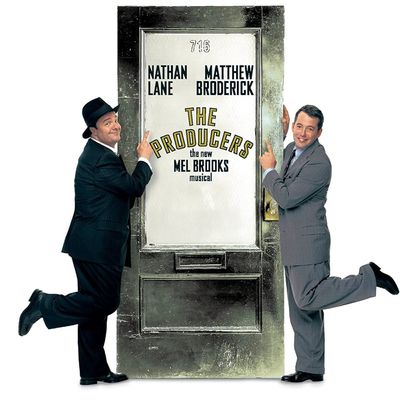
And it turned theater investing into recreation, which is what it should be. I mean, it should be recreation. And so we've continued to now, of course, we have investors that put much more in. Right. But the basic, but that's because they choose to, and we take it if somebody wants to put 75 or 150 in a show. But we basically always have a very low amount that you can put in. So we end up with you know, when we did The Producers, we had two million of the 10 million, and we had 200 investors. Oh wow. Putting up $10,000 each. And they did very much. They did fine, they did fine. Mel Brooks didn't like it because at the opening night party he was besieged by dentists, as he put it. Um, he's just, you know, but it was very useful for us.
[51:51] RICHARD FRANKEL: Yeah, yeah. Because then, I mean, it was a bunch of big hits for you. You had Producers, then Hairspray. I mean, we've had big, we had a lot of successful off-Broadway shows, and we actually built the thing, um, organically, I guess you would say, because Penn & Teller wasn't even a play, and had two people. Driving Miss Daisy had three people, including Walter Bobby, who played Boolean. Yeah, and uh, had three people in it was an actual play. And then FRANKEL and Johnny in the Clair de Lune was Kathy Bates, and you know, um, and that was two people. So we had these very small plays, and we didn't do that. That and Jeff Free was a small cast play, and uh, and uh Marvin's Room, and a lot of them were transfers from the not-for-profits, which you um, so we didn't even, you know, have to create the whole thing.
We kind of learned on the job how to do this and build it and how to run them because, you know, Daisy was, you know, from Playwrights Horizons, Andre Bishop was responsible for it, of course. Um, but we ran it for years and we had loads of replacements and we had tours and sit-downs and England and all sorts of stuff. So it required work on our part and skill after a while, but um, the first musical we did was in was Song of Singapore, which was in about '91, '92. So we've been doing it for about five years before we even tried a musical.
[53:34] Kevin David Thomas: How do you as a producer balance the aesthetics of creating great art versus making money off of? Because you got a really good track record. You've really created some amazing art for your company. That wasn't just like, let's just make some money and put on a good show, but like, let's put on a good show and make money.
[53:53] RICHARD FRANKEL: Well, that's I think always been our attitude. And I think from me, from my point of view, and I think you know it's the same with Tom and Steve. We've always believed that, um, if you move them, they will come. Yes, yeah. I mean, if you really can connect with the audience, they'll come and they'll buy tickets. Uh, you know, people, if you can get people engaged and get them crying and laughing and caring, there's big money in that. Yeah, you know, and that's the way to make money. And we always thought that way, as opposed to buying cheap selling dear, which maybe we should have done more often. But we always tried to do stuff that we thought, you know, would move us. And I guess many producers may do it, but um, I didn't know any other way to really do it.
Yeah, other than I wish that I could find the opportunity to do something cheap and bad that would make a lot of money. I would do it, you know, but I just don't see those opportunities as opportunities. I just see things that are cheap and bad, and I just don't connect it to, oh, I really could make a lot of money from this. I like, I wish I could pander. If I could pander, I would, but I'm just, you know, we're not, we're not, we're not panderers.
[55:21] Kevin David Thomas: Not as a pandering stage.
[55:21] RICHARD FRANKEL: Sorry?
[55:22] Kevin David Thomas: Yeah.
[55:22] RICHARD FRANKEL: Um, one of the things that you've created, which is fantastic because it's changing people's lives all around the world, is 54 Below. Um, how did that idea come to be?
[55:32] RICHARD FRANKEL: Um, it was two things. One was I think we all had a, uh, a general interest, three things I think. One, I had always a general interest in, let me have a this if you move them, they will come, is all fine, but shows keep closing, and not all the shows have been successful. The idea of having an ongoing business that would continue, um, for years. I mean, we do Stomp, and Stomp has been like that. Stomp is, we're celebrating our 25th anniversary, and that has been a baseline of income and activity, you know, for 25 years, been very, very useful. Another, you know, fantastic show, uh, avant-garde. You would, I mean, they were street performers, yeah, with a really good inherent understanding of what works theatrically, even though they kind of have kind of contempt for the theater, you know, they're not theater people per se.
Um, but they have a real, and you know, I tell say Aristotle could look at Stomp and see how it's structured. Um, so, uh, had the desire for an ongoing business was one part of it. We all had a connection to cabaret or nightclubs. I had along with the WOR job in college, in high school in college, I worked in the Catskills, um, backstage, working the stage lights at the Raleigh Hotel, which was known for its entertainment. We had three shows a night, actually, eight o'clock, eleven o'clock, and two in the morning. What? Yeah, and I worked the stage lights there for, you know, for years. I would go up on weekends or work summers up there as well. And I loved it. I mean, I just loved the whole nightclub thing.
[57:29] Kevin David Thomas: Exactly, yeah.
[57:30] RICHARD FRANKEL: Yeah, yeah, yeah. I tried actually to hire Dion Warwick a couple of years ago to sing at 54 Below. And my, I actually got her phone number and I called her and I said, "Look, I worked the stage lights for you at the Raleigh Hotel in 1965, and surely you remember me. I was the short Jewish guy," you know. And she laughed, but we couldn't, you know, pay her enough to, we couldn't meet her price for 54 Below. But so I loved that life. Also, we had done, I love that not life. I love the atmosphere. And we had done Song of Singapore, which was, you know, pretty fantastic. It ran a little over a year and it lost all its money, but it was a really magical experience. You know, we had created an environment, and it was a 1941 nightclub, and we had dancing and we had food, and we had Donna Murphy, and um, as a band singer with amnesia, and John Lee Beatty designed it just as he did this.
We had a, he had a birdcage bar with like, you know, 300 bird cages, and um, we all loved it. We regretted losing all the money for everybody, but we loved doing the place. We loved running the place. It was just a lot of fun. So that was in our head. Uh, and Tom had run a cabaret with Jack, I think, um, in New Haven when they were, you know, that age, they ran a folk club, I think, in Stamford. Um, so we all sort of had a proclivity for it. And then we actually made a list of, we started thinking about it, and we said there's no, you know, there was at the time, um, there was the Algonquin and there was Feinstein's at the Regency, the other one, and there was the Metropolitan Carlisle. But there was, we actually made a list of not to denigrate anybody, but we made a list of everything we disliked about everywhere else.
The food's no good here. This is over $85 for Dover Sole. Right. The food's overpriced here. The sight lines are terrible because it's not really a cabaret room. It's a poll like the poll right here. None of them had programming of Broadway. And none were on the West Side. So we said there's an opportunity here, you know, to do that. And we looked, it took us about two years to find the space. And um, Tom lives in this neighborhood, and he just walked by there one day, and we approached them, and that took a very long time to get the space. But um, that was how that started.
[1:00:30] Kevin David Thomas: Wow.
[1:00:30] RICHARD FRANKEL: That was how that started. And it's been great. It's a very difficult business. I wish it made money, but um, it, you know, but it's, uh, knock wood. It's been very satisfying. Extremely satisfying.
[1:00:51] Kevin David Thomas: But you certainly created a new, uh, the city needed that space.
[1:00:54] RICHARD FRANKEL: Yes, and you've certainly created something that we did not have for many, many years.
[1:00:58] Kevin David Thomas: Yeah, there is, it's a whole new generation of artists are appreciating this art form again because we lost it for a while.
[1:01:04] RICHARD FRANKEL: That yeah, so it's really, I think it's true, and I uh, you know, whenever we know it's important for us to keep it going.
[1:01:14] Kevin David Thomas: Yeah, yeah, so we do.
[1:01:15] RICHARD FRANKEL: And it's giving new artists a place to showcase their work. And we, I mean, look at Joe Iconis, yeah, yeah. Who I think has gotten a lot of traction from the club, yeah.
[1:01:26] Kevin David Thomas: That's been a great relationship.
[1:01:27] RICHARD FRANKEL: Yeah, that's been a great relationship. And it's, it's, uh, you know, it's just wonderful. We do 700 shows a year. We do two, you know, at a night and three on Friday and Saturdays, and we're open 365 days. We can't afford to close.
[1:01:41] Kevin David Thomas: Right.
[1:01:42] RICHARD FRANKEL: Yeah. So the overhead continues when we're dark.
[1:01:47] Kevin David Thomas: Yeah.
[1:01:47] RICHARD FRANKEL: So we can't afford to close. So it's been very, uh, very interesting. I wish we could do more jazz, I wish we could do comics. I wish we could do, you know, kind of expand what we do. I would love to do classical music. But um, our audience, we really, there it's a Broadway audience, you know, both Broadway participants and if it's associated with Broadway music, we can sell it.
[1:02:19] Kevin David Thomas: That's very exciting, and the whole culinary aspect of it's been very interesting to me.
[1:02:25] RICHARD FRANKEL: I've always liked food in restaurants, and we've had to learn that from the ground up, yeah, literally from the cellar up, you know. We had the Union Square Hospitality that Danny Meyer people consulted with us when we opened, and because we knew we didn't know anything about that. And uh, you know, we have a great chef who's been with us now five of the seven years, Lynn Bound, and she's fabulous, and um, it's been terrific. And Norm Lewis opens tonight.
[1:02:59] Kevin David Thomas: Yeah, yeah, I don't know more.
[1:03:03] RICHARD FRANKEL: This has been so much fun. Thank you so much for stopping in.
[1:03:06] Kevin David Thomas: Yeah, this was, thank you. This was it, this was it.
[1:03:09] RICHARD FRANKEL: Thank you. Painless, hopefully.
[1:03:11] Kevin David Thomas: Yes, okay, good.
[1:03:14] Robert W. Schneider: Today's episode was recorded at Shetler Studios on 244 West 54th Street. Visit Shetler Studios to book your room today, and you could be as cool as us. That's S H E T L E R Studios.com.
[1:03:28] Robert W. Schneider: And a big thanks to our sound editor Daniel Schwartzberg and social media manager Bethany Ann Selecki.
[1:03:34] Robert W. Schneider: And friends, don't forget, we want more folks to hear these incredible stories, and that's where you guys can come in and help us out.
[1:03:40] Kevin David Thomas: Yes, in order for people to find out about us, we need lots of ratings on iTunes.
[1:03:44] Robert W. Schneider: The more ratings, the more they'll come up in searches. So head on over to iTunes, search for Behind the Curtain: Broadway's Living Legends, click on our logo, click on ratings and reviews, then write a review and leave us five stars and make us feel as special as Eliza Doolittle on Eliza Doolittle Day.
[1:04:02] Kevin David Thomas: Or you can leave us one star and make us feel as bad as Annie did in that weird production in Boston where Annie dreamed about being adopted and then ended the show back in the orphanage. True story, Rob was there.
[1:04:15] Robert W. Schneider: I saw it. So head on over to iTunes and make us feel even more special than we already do.
© Broadway Podcast Network, All Rights Reserved