

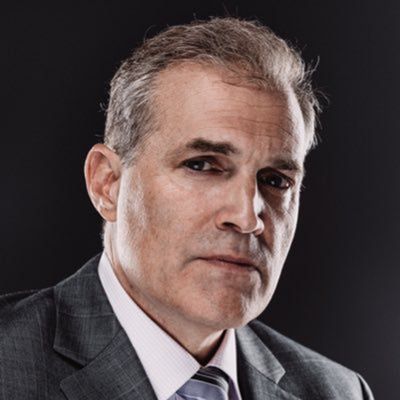
One of Broadway's most beloved political scientists, three time Tony Award nominee Marc Kudisch, swings by Shetler Studios to look back on his career which took him for Florida Atlantic University to Broadway in such shows as Thoroughly Modern Millie, Beauty and the Beast, Assassins, The Apple Tree, 9 to 5, Hand to God, and such Off-Broadway musicals as The Thing About Men, See What I Wanna See, The Glorious Ones, and more!.. Read More
From the show: BEHIND THE CURTAIN: BROADWAY'S LIVING LEGENDS » Podcast
Guests
Featured Shows

About
One of Broadway's most beloved political scientists, three time Tony Award nominee Marc Kudisch, swings by Shetler Studios to look back on his career which took him for Florida Atlantic University to Broadway in such shows as Thoroughly Modern Millie, Beauty and the Beast, Assassins, The Apple Tree, 9 to 5, Hand to God, and such Off-Broadway musicals as The Thing About Men, See What I Wanna See, The Glorious Ones, and more! Marc pulls back the curtain on his career to discuss how a character actor became one of Broadway's most reliable leading men, what it was like finding his voice both on and off the stage , and why you should always follow your instincts in an audition! Also, Marc shines the spotlight on Gene Saks, Rachel Bay Jones, and Jessica Tandy! Become a sponsor of Behind The Curtain and get early access to interviews, private playlists, and advance knowledge of future guests so you can ask the legends your own questions. Go to: http://bit.ly/2i7nWC4
Transcript
This transcript was automatically generated and might contain errors.
[0:00] Kevin David Thomas: Top of the morning to you, Kevin David Thomas.
[0:02] Robert W. Schneider: The top of the morning to you, my little Shaley.
[0:04] Kevin David Thomas: Now I feel uncomfortable.
[0:06] Robert W. Schneider: Have you found any lucky charms?
[0:08] Kevin David Thomas: Oh, not yet, but I haven't looked on Patreon yet.
[0:10] Robert W. Schneider: Ah, which is a Patreon!
[0:11] Kevin David Thomas: It's the place.
[0:13] Robert W. Schneider: We're all the listeners go and can donate a dollar or two to help us podcast going.
[0:17] Kevin David Thomas: How does one do that, my darling Eileen?
[0:24] Robert W. Schneider: com and search for Behind the Curtain, Broadway's Living Legends.
[0:26] Kevin David Thomas: Instead of monthly donation.
[0:28] Robert W. Schneider: Even a dollar a month helps us.
[0:29] Kevin David Thomas: Your contributions help continue doing what we are doing.
[0:32] Robert W. Schneider: No dialect work in Baldwin Wallace, eh, Kevin?
[0:35] Kevin David Thomas: None whatsoever.
[0:36] Robert W. Schneider: Faith and Megara.
[0:38] Kevin David Thomas: Faith Prince indeed.
[0:39] Robert W. Schneider: No, I say never mind.
[0:41] Kevin David Thomas: Thanks, everyone.
[0:42] Robert W. Schneider: Hi, I'm Robert W. Schneider.
[0:43] Kevin David Thomas: And I'm Kevin David Thomas.
[0:45] Robert W. Schneider: And this is Behind the Curtain: Broadway's Living Legends.
[0:47] Kevin David Thomas: Don't forget to follow us on Twitter at Broadway Curtain.
[0:50] Robert W. Schneider: And make sure to join our Facebook page at Behind the Curtain: Broadway's Living Legends.
[0:53] Kevin David Thomas: And follow us on Instagram at Broadway Curtain Podcast.
[0:56] Robert W. Schneider: Plus, you can always listen to our podcasts on Broadway World and Stitcher.
[0:59] Kevin David Thomas: Today's guest is one of Broadway's most beloved character actors, the one that you love to hate.
[1:03] Robert W. Schneider: His ability to play pomposity and aloofness in a way that is humorous and never off-putting is really a true art form.
[1:11] Kevin David Thomas: Matinee idol indeed.
[1:12] Robert W. Schneider: That's a great way of putting it.
[1:13] Kevin David Thomas: You know him from such shows as Bye Bye Birdie, Joseph and the Amazing Technicolor Dreamcoat.
[1:16] Robert W. Schneider: See What I Wanna See, one of my favorites.
[1:18] Kevin David Thomas: The Wild Party, another one of my favorites.
[1:20] Robert W. Schneider: Thoroughly Modern Millie, A Little Night Music, A New City Opera, Nine to Five.
[1:23] Kevin David Thomas: I could go on and on and on.
[1:41] Robert W. Schneider: Yes, and hello.
[1:42] Kevin David Thomas: Hello.
[1:43] MARC KUDISCH: Mark, how did you go from political science to having a career on stage? And is there really a difference between the two?
[1:47] MARC KUDISCH: There is. The difference is this. Politicians mostly do what they can to hide whatever flaws they have, to hide whatever, you know, inconsistencies there are to their personal nature because they're out there and they're pitching a bigger picture. They're pitching a morality play, if you will. That said, actors, when we go on the stage, it's our job to tell the truth. And what we do is we actually dissemble the flaws of the human character, and that's how we bring people together.
[2:31] Kevin David Thomas: Right.
[2:31] MARC KUDISCH: Right. And that's the difference. It's really simple. It's almost like the opposite sides of a coin. You know, too often in politics, it's about hiding the flaws and not wanting to own up to the flaws, not wanting to apologize, not wanting to own up to your human existence, you know, because you're afraid that that's a sign of weakness. You know, in the theater, our weaknesses are the swords that we walk out there with. In the theater, all we do is open the conversation to politically incorrect themes.
[3:03] Kevin David Thomas: Right.
[3:03] MARC KUDISCH: In politics, all we try to do is avoid it. So is it theater? Yeah, politics is theater. Am I still a politician at heart? In a lot of ways, yeah. But that's why I chose to go into the theater. When my first political theory class, it was my favorite class when I was in college. It was great. The first day I walked in, the professor had it written up on the board. It was huge. All politics is based on failure.
[3:33] Kevin David Thomas: Huh.
[3:33] MARC KUDISCH: Political theory, political programs are all based on failure. How long will this program last before it starts to break down? Short-term economics, long-term economics. Short term is eight to ten years. Long term can be between ten to thirty years, right? So long term was the Great Society and the New Deal. Those things actually functioned for a long period of time. And as they went on, they were able to tinker and fix it. And those were programs that were super useful. Short-term economics, supply side, trickle-down theory. It was never meant to last longer than when Reagan was in office, and it was left to poor George H.W. Bush to have to deal with the fallout of it, right? Now, why we haven't learned as we've gone along, why we keep going back to that short-term here we come recession political theory, I will never know. But I just was like, I couldn't base, you know, a life's goal on something that I knew was always going to fail.
[4:37] Kevin David Thomas: You knew that even in college, you could sense that.
[4:41] MARC KUDISCH: Well, I just was like, I what? That was like what? I thought this was about succeeding for a long no. Not in our system anyway. You know, and look, it's complex, right? I mean, as we're all learning. The greatest thing about where we are in the last two years is we have all been given free college courses on how our government and politics work.
[5:04] Kevin David Thomas: Yes, you're right.
[5:04] MARC KUDISCH: I've never learned so much in the last two years.
[5:06] Kevin David Thomas: Oh, yeah.
[5:06] MARC KUDISCH: You're right. Now you ask people about the Senate or the how long is the senator in office? Oh, they got six years. How long is, you know, your house rep in there? Oh, two years from now. Thank God.
[5:15] Kevin David Thomas: Totally.
[5:15] MARC KUDISCH: Yeah, and now these people are so like we know these people's names.
[5:20] Kevin David Thomas: Such a good point.
[5:20] MARC KUDISCH: That is such a good point. So I mean, that's the thing. Politics is theater. It always has been theater. They're very close. It's just the difference is. It's sort of like I like to, you know. There's this really cool thing about Maui and you know, the natives of Maui, where most of the, you know, the Hawaiian indigenous would, you know, they have those gorgeous Samoan tattoos and they're on the right side of the body, the right side of the body, if you are those gorgeous Samoan tattoos, and the reason for that was because they felt the right side was the strong side, the left side is the heart side, so that's the sensitive side or that's the vulnerable side. So they would tattoo the right side, and that was their show of strength, and that was their sign of their culture.
[6:09] Kevin David Thomas: Yeah.
[6:10] MARC KUDISCH: The inhabitants of Maui, they tattooed their left side because they felt that their vulnerabilities were their strengths.
[6:20] Kevin David Thomas: Oh my god.
[6:22] MARC KUDISCH: Oh wow. And then they ended up like taking over all of the Hawaiian audience. That's crazy because they went forward with the idea that your vulnerabilities are your strengths. That's who we are in the theater.
[6:34] Kevin David Thomas: Yeah, yeah.
[6:35] MARC KUDISCH: I mean, that's what we do.
[6:37] Kevin David Thomas: Yeah, that's exactly right.
[6:39] MARC KUDISCH: So that's how it happened.
[6:41] Kevin David Thomas: That's fascinating.
[6:43] Robert W. Schneider: Let me ask you a question. I read an article where you were saying that you think that theater is the greatest place for political conversation.
[6:49] MARC KUDISCH: It is. It is.
[6:50] Kevin David Thomas: Um we agree as well.
[6:52] MARC KUDISCH: What do we you can answer this or you don't have to answer this? There's a lot of college campuses now which are, you know, announcing that they're gonna do shows and then feel that they might be a little, um, tri what are they called? Trigger warnings, is that what I'm looking for? What do you think about that? We're seeing now plays getting censored on college campuses. Thoughts on that?
[7:11] MARC KUDISCH: Yeah, I have a lot of thoughts on that. If you don't mind my asking, no, first of all, stop it. Stop it. Stop censoring. What are you doing? Why are you first question I would have for anyone what are you afraid of?
[7:17] Kevin David Thomas: Right.
[7:17] MARC KUDISCH: What are you afraid of? Look, man, I'm the first person. If I'm sitting next to somebody and you know, like, hey, let's talk religion. I'm a happy man. Let's talk it. Let's talk religion and politics. Because what are you afraid of?
[7:35] Kevin David Thomas: Yeah.
[7:35] MARC KUDISCH: I mean, come on, man. It's community. It's all community-based. And the reason for writing and books and plays and is because it's a community reaching out to talk to each other. And the more we talk to each other, the more we're going to realize how similar we truly are. The problem with today, and this is why I think censorship is like look, man, we live in a virtual world now. You can love it, you can hate it, but you can't ignore it, right?
[7:59] Kevin David Thomas: Podcast.
[8:17] MARC KUDISCH: I mean, come on. How many kids of the millennial age that I know? This is how, you know, on their phone. They're twittering to each other, you know, they're texting to each other, but they're not talking directly to each other. And there's a real lack of, I want to say, practice in that kind of a communication. So the idea that you're gonna censor something, open up the conversation. I don't get it. Now, I understand these sensitive, you know, buttons. I did this um this new opera, uh, I think it's a year and a half, two years ago now, at Los Angeles Opera, and then we did it out at BAM by this wonderful composer named David Lang. He's essentially forefather of, you know, modern minimalism. David wrote this incredible piece called Anatomy Theater.
[9:09] Kevin David Thomas: Now, what's the title again?
[9:10] MARC KUDISCH: Anatomy Theater. It's an amazing piece of theater. And I say it's theater, it's opera, but I mean it's a play. Everything's a play, right? It's this wonderful piece. It opens with the hanging of a woman that takes place late 1700s, could be in England, could be here. At that point in time, we're still one and the same in a lot of ways. It's the hanging of a woman who's a prostitute for the killing of her husband and two children, which she openly admits to and explains why she did it, and pretty much says, and I do it again. And um, all of you who are about to be, you know, moralistically judging me. Um I've slept with a lot of you in the, you know, looking at me right now. So then we hang her, and then my character who is the hangman and also the proprietor of the anatomy theater, invites a paying male audience into the anatomy theater proper, where we will now dissect this woman you just saw hanged, because we're going to find out where original sin resides in women.
[10:13] Kevin David Thomas: Oh wow.
[10:15] MARC KUDISCH: Now, 90% of the libretto of this piece, Mark Dion, this great, you know, um, he's he's this wonderful artist of, you know, art installations, and he also wrote the libretto. 90%, I want to say, of the libretto was lifted from studies of that period of time. So the language was so incredible and so specific. It's one of the greatest libretto I've ever. I mean, the language was like, this is amazing. And we go through this whole thing of cutting her open, and she's laying naked on a slab, and we are taken organ out by organ out, and it's it's one of the most remarkable pieces because it's this incredible morality play of how we in our absolute endeavors to find truth and justice. Because in this period of time, these were things we listen to now and we are abhorrent to, but then they firmly believed.
But it was in that place where religion and science were working hand in hand, they weren't opposed to each other. We were using science to prove faith. And we were coming to the crossroads of things not making any sense. One did not support the other, and that's essentially what the play is. And it's it's the pursuit, in some ways, the noble pursuit of information and truth, you know, the the amoral pursuit of information and truth, you know, the immoral pursuit of those things with these these three different male characters, but regardless of the pursuit, it was always without words, but without question, the objectification of women. It was rough, and it was uh it's genius, but like, and I mean, at the end of the at the end of the opera, I had the last aria, and I'd say goodnight to the audience.
The lights would go black, and you would just literally hear the audience go, uh not that they weren't, and this is this is a big theme for me. Did they enjoy it? I don't know. Were they engaged by it thoroughly? Sounds like it, yeah. And they were gonna talk about it. The minute they left. They were going to dinner for drinks, probably drinks, somewhere to talk about what they just saw. That's that's what I think the point is. So I don't like it. And it shouldn't happen. Explore it. Explore it. What's the worst thing that could possibly happen if you put it up and there were arguments and there were fights, and that's theater too.
[12:55] Kevin David Thomas: Yeah.
[12:57] MARC KUDISCH: Well, that's the point of theater, which is to trigger these discussions. Look, man, I mean, you know, the Greeks got together to talk about, you know, issues of morality and human existence. And I mean, what else is it about? Right? That's why we're doing it.
[13:17] Kevin David Thomas: Yeah.
[13:18] MARC KUDISCH: You know, and it's funny because it's like anyway.
[13:23] Kevin David Thomas: Yeah.
[13:23] MARC KUDISCH: We'll keep talking about that.
[13:25] Kevin David Thomas: But yeah.
[13:25] MARC KUDISCH: I'm so curious. Has this always this inquisitive nature, has this always been instilled in you even from the beginning?
[13:31] Kevin David Thomas: Yeah.
[13:31] MARC KUDISCH: Childhood? What did your folks do?
[13:34] MARC KUDISCH: My father was a uh an engineer, uh, and then he became a salesman, uh uh and director of sales for a very large um uh electronics corporation, and then he became a lobbyist.
[13:48] Kevin David Thomas: And then what did mom do?
[13:50] MARC KUDISCH: My mom was just uh um, you know, um a monk. She was, you know, she took care of us.
[13:55] Kevin David Thomas: Which is a huge job.
[13:57] MARC KUDISCH: When did you start getting interested in theater?
[14:00] MARC KUDISCH: High school.
[14:01] Kevin David Thomas: Yeah, senior year.
[14:03] MARC KUDISCH: Senior year.
[14:04] MARC KUDISCH: Yeah, I was in the gifted program when I was going all through school. So from like the second grade up until I graduated, I was in the same class with the same kids all the time. I mean, I was in that kind of, you know, I was one of the brains.
[14:16] Kevin David Thomas: Yeah.
[14:16] MARC KUDISCH: Uh so I was very insular in terms of my high school experience. Like, you know, my class was like twenty kids as opposed to like the rest of the population of them because and then it wasn't until I got into high school and then like there was advanced students and gifted students that I actually started to get to know other people a little bit more in my high school, you know, in experience.
[14:46] Kevin David Thomas: Alright, so you know, like I was always in the gifted program and I always felt insular. I had my brother Jeff's two years older than me. He was always president of his class.
[14:58] MARC KUDISCH: And his junior and senior year and in my freshman and sophomore year, we were in like three out of seven classes together. So I was always, yeah, which was weird, right? Would you like to be in the same class with your kid brother? Yeah. No, you would not, and so I was always like in my brother's shadow in some way. I mean, my brother's a great guy, don't get me wrong, but that's a separate thing. But again, so like when I got into my junior year, I just was like, I've got to do something in my high school career. Do you know, instead of being president of the Spanish club, which I was for a long time. Oh yeah, so I tried out, don't ask me why, to be a male cheerleader. Awesome. That's amazing.
And I became one, and through, and but what was interesting about it was with the cheerleaders at South Plantation High School. Yeah. They're there, they're um, the guys that were cheerleaders were either in the theater department or were football players that either because they had crap grades or because they were injured could not play, but still wanted to be a part of it. So basically, the most popular people were cheerleaders. And then like I, through association, suddenly began to just get more out into the larger pool of things, and I think through cheerleading, I uh auditioned for because you know, we did like what do you call that? Like the fall, you know, thing, the bonfire, and oh yeah, yeah.
Do you know what I mean? For the football, and like we were responsible for doing that. So, like we did this whole sort of stupid kind of show, you know, for that whole thing, and the drama teacher said to me, I want you to try out for a play, which I'd never played before. Well, a musical, no! And guess what? I couldn't, I couldn't sing, I couldn't sing. No, I couldn't sing, it was never on my radar, but then I did it and like I got out there, and again, I think I don't know that anyone can, I don't know what anyone else has ever said to you guys. I don't know what it is that makes it possible for a person or people to get out in front of a large group of people and either perform or talk to them or whatever it is.
I don't know what it is, I don't know what the genetic makeup is. It was just something that I never had a problem doing. And I discovered that in my senior year of high school. Oh, oh, this is comfortable. I don't know why. Now, whatever quality of performance you're gonna give is a whole other thing. But you gotta start with that thing of I'm comfortable being out in front of a large group of people. This is normal to me. Um, that's where it started. Where was college for you?
[18:00] MARC KUDISCH: Florida Atlantic University, which is a much bigger college now than it was when I was going. When I was going there, people were like, Where? And it's FAU, we used to say, find another university. That's what we called it. But I mean, and it was great, but now here's the thing on the other side of it. The faculty that worked there, these were all guys that in the 50s and 60s were like lions in the theater. You know, and I mean regional, and when I say regional theater, that was when like, you know, in a big regional theater, like the ACT or Stratford or you know, like or in DC, you know, at the arena when arena was, you know, originally and like real, yeah. Yes, and like, and it was at a time when you didn't, when you toured a show, you didn't tour through all of these big pack centers.
You toured through these particular kinds of theaters. So people forget that like big shows that started out of town, they started out at the Muni, or they started out at Kansas City, or they started out at Westport Playhouse, or they started out at Bucks County. Those were the houses that you went to to try out a show, or put out like a summer tour, but you got the biggest stars to go and work those theaters because those were the theaters you went to. The faculty at FAU were guys like that that had been ensconced in that, you know, arena, but like I was lucky because so my teachers when I was in school, I didn't even know who these people really were because I didn't, I was just getting into theater.
Uh, Zoe Caldwell was a teacher of mine first semester, Hume Cronin was a teacher of mine first semester, and Jessica Tandy. No, but here's why. Because Hume was down there and he was shooting on Cocoon with Jessica. And because they all knew each other. They were like, hey, you're down here, you're shooting Cocoon. How long's the shoot? Oh, would you guys want to do like an eminent scholarship for a semester? And anytime Hume's not available, maybe Jessica can pick up if Hume's shooting, or vice versa. Or so that's what happened. While they were shooting Cocoon 2, they were also teaching us at FAU. That's amazing. It wasn't now that I think about it, it was insane. So nobody gets that. So I don't know.
It was just this really odd, weird way to get an education, and it was such a small department, and I think this is another big part of it. Most theater departments in university or whatever, they're pretty big, right? And you have to wait until like your senior year to actually finally get up and do a production or a few productions, because you know, it's always those that are graduating and get the roles. Our department was so small that pretty much had to use everyone all the time because there just wasn't enough people otherwise. You know, you know. It's like, you know, playing Iron Rules football, right? Yeah. You're playing offense and defense, because that's all you got. And I was in the first four-year program of Florida Atlantic University.
Before that, it was just a graduate college. Okay. And they didn't know what to do with me because they hadn't set up a four-year curriculum for the theater department. So I started by taking graduate courses.
[21:33] MARC KUDISCH: I had to. Yeah. There was nothing else available. So I was taking director courses with Edward Albee. Okay. Oh. Yeah. Ed was a teacher of mine, God rest him. But I was lucky. Like, holy shit, that was so what I got that a lot of people didn't get was practice when I was in university. I did 20 productions when I was in university. Oh my God. Because we had to. And then we were responsible to do black box performances. So we were working upstairs and working downstairs, and because there was just a very finite amount of us, we were in everything. Now, because I was not one of the graduate students, I was not going to be one of the leads. Right. So I was always in the character role. Because that's what was available to me in that moment.
So I was always in the character slot until I got like to my half of my junior and my senior year. But by that time I had been trained to be a character actor. And I was always told when I was in university, no, this isn't the way it's going to be in real life, Marc, you know. It's just this is where you are in school right now, and this is what this is. So I was like Cleant and you know, in Tartuffe and you know, uh Ferrovius and Androcles and the Lion, and like I was just all of these characters. So of course what happened when I left, I was, I've had a career as a character actor because that's what I was trained to do, you know. So I never thought of myself as a personality, I always thought of myself as a character. Uh, which is why when people talk about leading man or this or that, I'm like, mmm, you know, wow, you're really just tapping on the surface, man.
[23:23] Kevin David Thomas: Yeah. Because, like, you know, you can't look at someone and decide who or what they are.
[23:28] MARC KUDISCH: Exactly. So, how did you uh decide to come to New York? I mean, was it New York always on the horizon?
[23:34] MARC KUDISCH: Was it okay? Yeah, for me it was. I just was like, I want to move to New York. Okay. After I started getting into it, I just thought, look, I mean, if I'm gonna do it, then I want to do it, and I want to do it in New York. And that was just always my thing. I just was like, yeah, I'll work in the region, I'll work down here until I get my union card. But the minute I get my card, I'm going to New York. And that's how it happened. Pretty much. That's what I just chose to do. I just was like, yeah. And everyone told me it was a bad idea. Everyone, like in the region, or act, you know, directors that I work with. And what's interesting as well is it was this interesting thing. A Florida Atlantic University, at that time, we would have the critics come and review us the same way they would review regional production.
[24:15] Kevin David Thomas: Oh wow, okay.
[24:16] MARC KUDISCH: So interestingly, we were treated like a regional theater, even though we were college. So all of the reviewers, I was getting reviews from the Miami Herald, from the Sun Sentinel. I mean, I was getting reviewed like all of the other professional actors. So when I did start working professionally, people already knew who I was because they had read reviews about shows. Sure, right, right. Do you know? Um, so I mean, I did. I did like I want to say four or five professional productions while I was down there. Uh, like I did the Florida Shakespeare Festival.
[24:52] Kevin David Thomas: What got your equity card? Do you mind?
[24:54] MARC KUDISCH: Yes. Uh, the Caldwell Theater Company, Another Antigone by God, I'm being old right now. No, it's Gurney, it's it's Pete. By Pete Gurney. Uh, and uh yeah, and I ended up working with him here in town, and I was like, yeah, dude, you got me my equity card. But you know, and then I just was like, yeah, I'm moving. Look, what's the worst thing that could happen? I go up there and maybe it doesn't work out so great, and I come home, but I don't know. Again, for me.
[25:31] MARC KUDISCH: So I moved up. It's funny. I moved up with uh, it was me, our friend Stuart Clark, three of us, and uh Rachel Bay Jones.
[25:40] Kevin David Thomas: It's a good group.
[25:42] MARC KUDISCH: Good group. Yeah. So we all moved up to town together. Two weeks after Rachel got to town, two weeks. She's like, hey, I got a Broadway show. Stuart and I hadn't moved yet, and we were like, oh Jesus. You know, oh my God, that's a lot to have to follow up. But uh, yeah, it was crazy.
[25:59] Kevin David Thomas: Now, how was it then? I mean, did you know what to do when you came up here?
[26:03] MARC KUDISCH: Did you know that's the first one? This is what I did when I moved to New York. No, I didn't know shit. I didn't know shit, and I knew two people. Yeah, I knew Rachel and Rachel was already busy. Yeah, so it wasn't like I was going to share the experience of newly being in New York and starting a life and looking for work. No, she was already doing it. Stuart was in that position. So I was like, all right, I got Stu, and Stu and I were roommates, so I was still doing a job down in South Florida, finishing that up, and then I was getting my U-Haul. Stuart had already moved up like two months, a month and a half before. So he had moved into the apartment that we had gotten together. Basement apartment on 71st Street between Broadway and Columbus.
One bedroom, and we lofted in the living room. So, you know, we made it work. And I just literally got here. But even by that point, Stuart had already started interning at Circle Rep. He'd gotten in somehow. So the both of them were like doing it. And I was like, okay, in some ways I'm on my own a little bit. But I just literally, I remember when I drove, I drove into the city in my fucking U-Haul, and I got here, and I, you know, Stuart helped me unload my furniture into the U-Haul, and then I was able to take the U-Haul and got rid of it. And that day, I literally was like, I'm here. And Stuart was like, all right, what do you want something to eat? You want to grab a bite to eat? Are you tired?
Because you know, I just driven like a straight 24 hours. I said, nope. I'm gonna walk five blocks north and I'm gonna walk five blocks south. I'm just gonna see where my, what this neighborhood is. So I walked over to Columbus, I walked five blocks north, I walked five blocks south, walked over to Amsterdam Broadway, I walked five blocks north, I walked five blocks south. Then I went home and I went to sleep. And then the next day I got up, had breakfast, and then I walked another five blocks further than each direction in that way. On day, so three, four days later, I'm now down in the theater district, and I'm walking as far up as like into the 90s. And at that period of time, you didn't go any further.
Yes, yes. So I'm like, okay, Upper West Side. I now have a sense of where I am. And as I was walking home, I think on day four, I saw that there was uh uh help wanted in a restaurant, and I had waited tables when I put myself through college waiting tables. So I walked into the Broadway Bay on 78th and Broadway, which is now a diner, and I applied for the job and I got it. So I was like, I got a job. And then life just started happening.
[28:54] MARC KUDISCH: Yeah, and that's what I did. But I didn't, I mean, it was crazy, and you know, I'm sure I drove people nuts because you go from you know, being a kid from like, you know, Boca and Fort Lauderdale, and then suddenly you're in New York, didn't have a lot of money. Yeah. You know, suddenly you're in New York, and I'm like, wow, it's expensive here. But like, you know, and I'm working the, I'm working the lunch, you know, route where everybody's ordering bluefish and they're not tipping well, and but then life, and then I started to just meet people, you know. My buddy uh Rich Cohen, who used to go by Rick Clements.
[29:34] MARC KUDISCH: Oh, because this was still back in the day when when you were Jewish and you had a ethnic last name, you changed it. I thought about changing my name when I moved here. Well, KUDISCH is pretty, as far as I'm concerned, it's pretty clear. Yeah, yeah, you know? S C H that is. It's pretty clear. Yeah, you know, and Rich uh uh uh went from Richard Cohen to Rick Clements.
[29:58] MARC KUDISCH: Wow. And uh I remember I was just I was walking home from work one night and there was the Bear Bar. I don't remember you guys don't know what I'm talking about. It was right on it was right on Broadway, and like it was right by the China Club. It was like this just really rough sort of tumble, but really great bar. It was called the Bear Bar. Yeah. There was a bear in front of it. And like and Rick was like the bouncer at the Bear Bar. So one night I'm just walking home and he's like, hey, come here. You know, and he just started asking me questions. And he's like, you know, who what's your name? Mark, I'm Rick. It's nice to meet you. Blah blah blah. You live around here. I'm like, yeah, I work over at Broadway Bay, and you know, I'm over here.
And he's uh yeah, in the right round corner from you. And then we just started shooting the shit standing outside there, you know, and then he was we just started, he's like, Where are you from? Uh from Fort Lauderdale, I just moved up here a little while ago blah blah blah blah blah blah. He was telling me about where he's from, Long Island and everything. And he's like, I just I wrote the screenplay. I'm gonna be having a reading of it. I need guys, I mean, you'd be great. You want to do it? And like this is like after being in town for maybe like two and a half, three weeks, and then there's Rick on the corner, and I just was like, Yeah, sure. Because I didn't know people, yeah. So then I did this reading of this, it's actually really good.
He he he had you he he at one time was uh uh a stripper at Chippendales. Amazing. So it was a story of that, of course, now Magic Mike. Yeah, yeah, yeah. Rick wrote that story back in the 80s. And then I met this group of guys, this really cool group of dudes. All these guys were in the same acting class together, and some of them you'd know today if you saw them out there. Uh, you know, um, really good dudes, and like everyone was young and kicking it. Johnny DeCuchis was one of the guys and uh Chris Bruno, I don't know if you know who Chris is. He's done a lot of television and like my buddy Dylan Shelfi, and like it's just so interesting that like then all of a sudden I was in this group of these young like guys.
Yeah. And suddenly life was just, you know. Can't talk now, Ma. Gotta go. Yeah, no. You had a tribe. You had a yeah, you had your own. Yeah, and but that's the great thing about the city is that like you find that. Like, that's what I mean. Like, you know, I'm sure that you know, kids always ask, Well, what are the steps or what should you do? Just be present to the day. I'm not, there's no, I don't know. Just be present to what's happening.
[32:34] Robert W. Schneider: Hey, podcast listeners. Are you looking for a place to rehearse in New York City that is clean, spacious, and most importantly, affordable? Come check out Shetler Studios and Theatres, our wonderful host for these podcasts. Shetler is centrally located on West 54th Street between Broadway and Eighth Avenue, right in the heart of the theater district. Right in the heart, you'll find music, dance, and acting studios complemented by two black box theaters, and six presentation venues. The professional facilities, inspired environment, and expert industry staff combined to provide the New York artists with an unparalleled studio experience. Visit their website at ShetlerStudios.com. That's S H E T L E R Studios.com. Shetler Studios and Theatres is our home for recording the legends of Broadway, and we hope that you make it your artistic home too. That's Shetler, S-H-E-T-L-E-R-Studios.com. See you here.
[33:27] MARC KUDISCH: When did you get an agent? Look, I was lucky in that way. And that's a part of how I moved to New York. I had mentioned Pat Hogue. Pat finished her master's and then she went back to New York. She'd been a casting director for the WPA. She originally cast Steel Magnolias. Yeah, it was her show. So one day I'm at the theater department at FAU, and I'm at the office, you know, and the phone rings, and so I'm manning it. So I pick it up and I say, Hi, FAU Theater Department. And it's Pat. She's like, Hi, this is Pat Hogue. I'm looking for uh um MARC KUDISCH. I was like, Pat, it's Mark. What's up? She's like, hi, honey. I was like, hey, how you doing? What's going on? How's everything up in New York?
And this is back at the time when you get a call from New York, that's long distance. Yeah and it's exciting. When 212 comes up, you're like, wow. Yeah. 212, New York, it's New York. Yeah, yeah, yeah. You know, we no one remembers. No, you're right. And she said, Look, I don't know where you are. I don't know what you're doing. Are you? I'm like, well, I'm in Florida. She said, How are you doing? What's going on? I'm like, I'm doing Florida Shakespeare. I'm doing Laertes in Hamlet, and I'm also, you know, in Rosencrantz and Guildenstern in Rep, and I'm finishing classes, and things are good here. She's like, I don't know how much time you have or what. Look, there's a role on a soap I think you'd be really good for.
I'm working for this agency right now, and the minute I saw it, I thought of you. Can you be here in two days? Uh she's like, look, you can sleep on my couch. This is when she and John were, you know, recently gotten together. And I didn't know who John Simon was, really. And I just was like, oh, uh, she's like, listen, if this isn't something you can do, I just, yes. Great. Um, you know, here's the address, blah, blah, blah, blah. I'm gonna send you the sides. And again, how did she get me the sides? I they must have been faxed. Yeah. I'll fax them to the office number. I still have it. And I mean, again, I I just was like, oh. And I, you know, I was non-union, of course, so I mean, I literally went into you know, work that night at the festival, and I was like, I'm going to New York to audition for soap.
And of course, you know, the director, the theater and everybody was hugely pissed at me. No, you're not. You're not just going. And I'm like, why not? I'm non-union. So my buddy Chaz, like, you know, who was Osric in the show, was also my cover and went on for me. And well, how long are you gonna be gone? I mean, maybe a day or two, like, literally, and I didn't know if I had that job coming back. Right, right. So I booked a flight with money I really didn't have, and I flew to New York, and I had a whirlwind of a 24 hours. I got there, Pat and John put me on the couch, they were totally cool about it. It was insane. The agency was called the New York Agency at the time. And Craig, I can't remember his last name, who ran the agency, but they were so cool to me.
And like I got to New York and I got in late. And the next morning I woke up and she's like, okay, this is where you're gonna go. And she lived close to the studio anyway, which kind of made it great. So I was able to literally walk over to the audition at the studios. And you know, back then with the soap, you went to ABC and you auditioned at ABC, right? So I had my sides, and it was literally like, wow, I'm going in. And I went in and I auditioned for the soap for the casting director. And then I left, and I and I and I went back to Pat's place. And by the time I got back to Pat's place, she's like, okay, you're going back in. And I went, What? They want to see you again? The producers want to see you.
I told them you're in town for 24 hours. If there's any interest, they need to see you. So they're having a special session where you can read for the producers. And I was like, so then a couple of hours later, I went back and I read for the producers and everything. And then Pat was doing this thing. This is when Dukakis was running for office. And there was a big uh, you know, like thing in the middle of Times Square for him, and Bernadette was performing, and Mandy was performing, and Craig had a big part to do with organizing everything. So she's like, We're going down where there's this big thing in the middle of Times Square. You want to come? And I was like, Yes. And so I'm I'm I'm guys, I'm 21, 22, 21.
And like, I'm just like, I've never been to New York, and I'm just following Pat and like and Craig, and like, and we're in the middle of Times Square, and it's this, you know, the way they build the stage in Times Square. And I'm standing next to like Mandy, you know, who of course I work with later and I've done forever, but like at that time, I literally was like, and he gets up and he sings Brother King's Paradine. And the only way that Mandy can sing it. And it was just like 24 hours of the most by the time I got on the plane and I got back to South Florida, there was no way I could look at South Florida in the same way again. There just wasn't. And I was like, I'm out of here. You had your taste of it.
Yeah. I'm out of here. And I went back to Florida Shakespeare. And I literally called him and I said, So I'm back if I still have a job and you need me to come in. And they read me the Riot Act, but they were like, get here early. I just was like, I really just didn't care at that point. Not that I didn't care about being reliable to the job. But that was like it was a new journey. And it wasn't even that. It's like, look, why would you stop someone from an opportunity? Why would you? Yeah. Why would you? You know? Yes. So anyway, that was a long-winded story. But man, it was so. That was cool. That was really cool. It was so cool. So the point is, when I then Pat called me, I did not get the role.
Right. But and she said, Look, I don't want you to feel upset or sad that you didn't get the role. You did really well, and they really like you, and roles always come up. Yeah. She's like, So when are you moving? Like out of Pat's mouth. When are you moving? As soon as I'm done, Pat. Great. Because Craig really likes you. So when you get back, I think he's gonna want to rep you. That's right. So my incredible now, when I did get back, first person I called was Pat. She was no longer working for Craig. She's like, I'm working for another agency. So I want to bring you in to meet these guys. Okay. So I was just like, Pat was just like my angel. She was looking out for me, man. And that was for uh uh uh Bauman and Mill Bauman and Hiller was what it was originally.
Then it was Bauman, Redanti, and Shaw. Yeah, and now of course BRS is with uh gauge groups. So they're a much bigger, but like I just I was fortunate. I always had someone looking out after me. But but and I say this to any of those students that are out there, having an agent doesn't guarantee anything. Yeah, it's true. I went to those open calls, good. I went to those open calls, and I liked those open calls because those look, I didn't have any musical experience, none, not a lick of it, because at FAU, FAU didn't have a musical theater department. Yeah, there was a music department right across the hall from the theater department. They didn't talk to each other. Yeah, my book's yeah, same, yeah.
Right? So once every three years they would do a musical together. Why? Because it was a way to make money. Right. Right, but I was not trained to be musical, which is why I say I did not sing. Well, then how'd you audition for musicals? What did you do? Poorly. No, but I mean, but I liked it, and when I got to New York, it interested me. And and and frankly, I was also, you know, a narcissistic ass. So I I would see musicals, and I'd be like, well, none of those people can act, man. And I can act. Right. So all I need to do is learn how to sing a little bit, and I can do that too. And um. I couldn't sing. But what I was, I my so my first big musical was Bye Bye Birdie. The Tour. Tommy Toon and Ann Ranking.
Right. Not bad. And Marilyn Cooper. Oh God, I forgot about that. Coopie, yeah. Just so great. And uh, and Gene Sachs directed. I mean. L's to the yes. Yeah. So I wanted to be seen. They wouldn't see me. I couldn't get an appointment through the agents because I didn't have any music theater experience. There was no experience there. So I went to the open call. And guys, I love the open call. Me and my buddy Wade would go to the open calls all the time because we were like, why are people so depressed? Like, you could see people just sitting there, just hating being there. And I'm like, you can't walk in the room like that. No way. So I Wade and I looked at each other going, we are gonna look like gods on the bell curve.
Because we're in a good mood. I'd walk in the room and be like, hey everybody, how are you doing? Because I'm like, look, this gives me a chance to meet somebody. That's right. Yeah. And I'm Jewish and I'm a talker. I like to engage. Do you know? I I'm not here to entertain you, but I'm certainly interested in engaging. And it worked really well. You know, I walked in, I got a commercial agent out of walking in that way. I met casting directors that would call me back. And with Birdie, they wouldn't see me. So I'm like, I'm going to the open call. Okay. My agents were like, Mark. I'm like, no, I'm going to the open call. Look, man, I'm going to be seen one way or the other. So went in, because I loved Elvis.
I grew up with Elvis. So I could do, I wasn't a singer. Clearly, I had a voice of some form. Right. Right. So I'd go in and I'd do my thing, and you know, like, and again, I had a very specific take on the role. And from those open calls that I went to, that got me into the agent's submissions. But even when I got into the agent's submissions, they wouldn't bring me back in because I didn't have the experience. But then literally three months down the line, after they'd seen every young guy for Conrad Birdie and just scraped the bottom of the barrel, they finally brought me back in. Oh my god. And that was like, again, it's one of those great aha's of a of uh an audition sequence. You know?
[44:55] MARC KUDISCH: It's like 1990, 1991. Now I'd worked off Broadway a couple times. So again, I was an actor. That's how people knew me. Um, Stuart Howard was casting it, but all of these people knew me as an actor. You know, and I want to be seen from musicals. Johnson and Liffitt cast me in two plays, but they were like, Mark, you don't sing. You know, I didn't sing, nobody Mark, you know. And so I had my black leather jacket, and I had my boots on that had like the silver spurs, yeah. Because it's 1991, guys. And you know, and I was just ready to get up there and go. I learned sincere. I was like, ready to hit this bad boy. The audition was at, I want to say the Broadhurst. This was back when you auditioned on Broadway Stadium.
And the holding pen for the actors was the balcony. So everyone was able to watch everyone else's audition. I've never heard of that before. I've never experienced that before or since. Wow. So we're watching people's auditions and stuff. I remember this so clearly because the same day I was there, uh Walter Bobby was there too for Mr. McAfee. And Walter and I had worked together as actors on Loving. We were both recurring roles. So that's how I first like I knew Walter as an actor first. Yeah, yeah, yeah, yeah. So they call my name and I'm ready, and I'm standing acting, and you have to walk down that long ass, you know, you're walking down from the back of the house all the way down to the stage.
And right as I'm ready to go, Stuart stops me and he goes, All right, so whatever you do, don't sing sincere. And I was like, why? What? No, don't sing it, don't sing it. Everyone's been singing it, they don't want to hear it anymore. Do something else. Sing, I don't know, sing a lot of living to do. And I'm like, but a lot of living to do, it's a choral number, it's for the chorus. Don't sing sincere. All right, go. So I'm literally like walking down the aisle. Now, and I'm I'm not I poop my pants. I mean, all I had prepared was sincere, and I'm being told, don't you dare do that. And as I'm walking down the aisle, you know, I'm like, oh man, there are the Weisslers sitting over here. There's Tommy Toon.
You can't miss that man of hair, you know, and there's, and there's Gene Sachs closest to the front, and I'm just like walked up, and I'm walking across the stage looking at everybody, and I walked over to the accompanist, Brad Garcide. Oh, the great Brad Gar. He's still, I mean, I've coached with him. I mean, and I always tell this story, and I'll never forget Brad's name. Because again, it's one of those moments that you remember. Walked up to Brad, and he looked at me, and he was like, Are you okay? And I was like, dude. Because I'm from South Florida, so we say dude. Yeah. I said, dude. Dude, they told me not to sing sincere. And he's like, Well, what did you prepare? He said, I'm sincere, man.
And then Brad said this to me, I swear to God. Brad just looked at me and he said, Whose audition is this? I said, Mine. Yeah, yours. Sing your damn song. Wow. And if Brad hadn't done that, I do not know what the rest of like everything would have been. Wow. Because I would have crumbled trying to do anything else, I think.
[48:33] MARC KUDISCH: Yeah. And he gave me a moment to feel confident to do what I was gonna do. So I started, and you know how the song starts. It's that chord. Brom. We all know it. And I started with you gotta be sincere. And I watched Stuart in the back throw up his hands and just walk out. And not subtly. Right. And I just kept going. But then I watched him slowly come back. And I did it. And honestly, in my mind, I was like, look, I've never been on a Broadway stage. This is likely my first and last time singing this stuff on a Broadway stage. But I'm on one. Right. And I'm singing. So if I don't enjoy this right now. So I did. And when I finished, everybody was cheering. Like everybody was like, yeah. And then it was just such a high.
Yes. And I literally was like, thank you, thank you, thank you very much. Like, and then I wanted to run away as fast as I could. And then I heard, and and I did. I I just was like, and then I got off and I started it, and then I heard Gene say, Mark, come here. And then he's like, Wanna read? And I said, Yes, yes, I do, because Lord knows I can act. So then I got, but I was in such a giddy mood. I was doing all the scenes and everything, and I was doing what I wanted to do with the scenes, and I just I I I was having fun. I was having fun, and they were having fun with me, and like, and then I I just said thank you, and again I tried running out of there as fast as I could, and then Mark, where are you going?
Come here, and then I walked back down, and now they wanted to talk to me. Okay, and I just was like, please, please just let me go away now. You know, this just went really well. Please let me go away. So Gene wanted to have a conversation. Where are you from? I'm from Fort Lauderdale. How long have you been in New York now? Uh I've been here like two and a half, two and a half, three years. How's it been going? Pretty good, you know. I've been working pretty steady off Broadway, and I've done some stuff on the soaps. He's like, that's great. Where are your parents from? Uh my mom's from Detroit originally, you know, did her winners in Miami. My father's from Brooklyn. Oh, Brooklyn, where? Um, I mean, kind of South.
Yeah, what avenue? K. Ah, I grew up right around the corner from there. That's great. Thanks for coming in. Yeah. Thank you. Um, but then when I was walking out of that audition, I mean, man, that just was like, that was a good thing. I just felt whatever fucking happens. Yeah, yeah, yeah. You did everything. I mean, I just whatever, whatever. You can control certain things. But then Stuart stopped me on the way out. Stuart stopped me. And again, he looked me in the eye and he said, Thank you for not listening to me. All right, that's classy. Yes.
[51:48] MARC KUDISCH: Yeah. But it's also one of those things where you go, look, so far in my career, in my life, I had had people telling me, don't do that. Don't move to New York. But every now and again there's that one voice that's there saying, go do what you want to do. Like my mentoring in college was this wonderful little imp of a man named J. Robert Deets, who is this incredible actor and incredible director. Um, you know, uh, and he was a again in the theater. He had done so many wonderful things in both, you know, he had mentored William Shatner. You know, Shatner was one of his young students that he then ended up directing at Stratford, and like, you know, he was a really close to William Ball. Like when I was, I was either gonna go to graduate school or move to New York, and I was already set up to go to the ACT and work with William Ball, which was something I actually really wanted to do.
I moved to New York. Yeah. And um, you know, I it's just those moments where there are people that are willing to hold out a hand or just give you that positive something. Yeah, do you know? And like, so ever since Pat, I've always been like a person to say, you're great, you should do this, you should do that. I met I was doing a show out of town, and I only bring it up because it's not like it's because of me, but it's just it's just mentorship is important.
[53:24] Kevin David Thomas: Well, it's just it's like we're a community, right?
[53:26] MARC KUDISCH: Yeah, we were just talking about this the other day. We're a community, and we should be reminded of that constantly. Yes. I was doing a show, I was doing this Prince in the Pauper uh out of town. I was at uh uh this was at the uh Seattle Fifth Avenue. It was a joint production between there and then uh uh in Minnesota, the Ordway. Oh, yeah, nice. So we did it. So first day I walk in for rehearsal, and we had already done a production of Kansas City Starlight, but now you know Kevin McCollum is producing on it, and we're working doing work on it, and there are hopes. Yeah, and I walk in the room and I'm essentially the male lead of the show, even though the kids are really so it's character, right?
It's character role, right? Of course. So, because that's what I am. Uh character is a drunk, so he's your anti-hero. And uh I walked in the room, and there are all these people in the room, and it's a a lot of the people are local from Seattle because there's a lot of talent there. And then in the middle of the room, there's this monolith of a man, perhaps the most handsome man I'd ever seen in my life. Just standing in the middle of the room.
[54:37] MARC KUDISCH: And I was like, holy shit, who is that? I am talking about Cheyenne Jackson. Shy still has that effect was local. He was local. He was in Seattle, right? Wow. And then I remember the writer coming up to me and saying to me, you know, can you guess who your understudy is? And I said, the real question is, is anyone going to know who their leading man is? Because we're all gonna be looking at that guy. Right? We're all gonna be looking at that guy. So, yeah, Shy was in the ensemble and he was covering me, and like I just was like, nicest guy, sweetest guy, talented guy, beautiful voice. And I just I remember I said to him, dude, you're moving to New York, right? I mean, you're moving, right? I mean, you're moving to New York, right?
I said, There is a show in New York City that you are absolutely perfect for, and when I vacate the role, it should be you. And I was talking about Millie. Yeah. So I just did whatever. Like I said, you if you're gonna move, you let me know. I will introduce you to my agents. I will, you know, and and the agents met him and they loved him. And I I think I introduced him to Michael Mayer. I just was like, you people have to meet you. People have to meet you. You know, and and I'm not taking any credit, don't misunderstand, because the Lord knows Shy was going where Shy was going. Of course. But it's that thing of reaching out because you just go, come on. Because when you're from someplace like that, and Seattle's a bigger, you know, like than where I was from.
No, sure. But it's just that thing of going, it's possible. It's possible. I do this in the city that you can do. And I'm like, and you're a nice guy. Like you're a really good guy and you're a really talented guy. You should be doing it. Shit, if I'm doing this, you should be doing this. You know, and and it's just that thing of like, because you know then it just keeps happening and happening and happening, and we keep doing that for each other.
[56:51] Kevin David Thomas: Yeah. How long were you on the road with Birdie?
[56:54] MARC KUDISCH: Fourteen months. And then the TV movie? That came later. So we did it for 14 months. They want they always wanted to bring it in, but there were a lot of reasons why we didn't. A clip of it on the Tony's one year. No. Oh, yeah, yeah, yeah, yeah. Well, it wasn't a clip of it. It is when it's when it's when Tommy won another two Tony Awards. So they stopped the show when we were in Seattle of all places. And they stopped the show so that he could accept his awards. And like they knew they were gonna stop the show. So that was my first time on the Tony Awards. So the film I don't it it. I had just star I was just into doing Beauty and the Beast at this point in time. So I'd just take an over Gaston.
I was in for a little while, and then I got a call, the Tommy had called to say, Hallmark in ABC wants to do a movie version of Bye bye Birdie. And he said, I don't know who's playing Conrad Mark. And at the time they were talking to Harry Conick about it, I think. He said, But they they just want to do a table read. So I said that I would I would help and I would put together all of these people. Gene's going to direct it. Saks is going to direct it. Annie is going to choreograph it. And we just want to put people at a table so they can hear it. You know?
[58:24] MARC KUDISCH: So I was like, sure, I'd be happy to help. So Susie was doing it. I did it. Zon was already in Los Angeles, already making films. He was gone. I can't remember how many other people from our original cast did it. But we did it. And we we we read it. We literally read it at Sarty's for uh the producer, Robert Halmey, and some people from ABC. We just sat around and we read it. And then at the end of the read, and I was just saying hello, you know, nice to meet you guys, nice to meet everybody. Tommy came up to me and he said, You might have just gotten yourself a job. Okay. And I was like, he's like, look, I'm not promising anything, but I think that they like you a lot. And that's how I got it. I never auditioned for it. I just did the reading of it, and then we got the call, they'd like to offer you Conrad Birdie.
[59:17] MARC KUDISCH: Oh my God. Now, I can tell you this. I did not know how to sing when I was doing the national tour, Birdie. I was losing my voice at the end of every week. I did not know how to sing. I knew how to do the thing, but I didn't know how to do the thing, do the thing. And I remember Susan Egan even saying to me, You need to get some voice lessons. She was mad at me that I was losing my voice. Rightly so. Yeah. She's like, look, you want to do this? You want to be out there? You want to put yourself out like this? You have a responsibility. People are counting on you. You can't be losing your voice at the end of every week, Mark.
[59:52] MARC KUDISCH: She was right.
[59:52] Kevin David Thomas: Yeah, she was.
[59:53] MARC KUDISCH: So the minute I got off the road with Bertie, I mean, I started to train. You know, and then I ended up doing right after. I mean, I did Forever Plaid, like right after that, and then after that I did Joseph. So, you know, things were going on, and I was training. Okay. And uh, and then and then I started into Beauty and the Beast, and then I started training operatically, actually. I met uh my voice teacher Alan Seal, and my life changed vocally. Like, changed vocally. That's another interesting story. But uh I was all right, so to segue from that, uh, when I started doing uh Beauty and the Beast and everything, uh playing Gaston, originally I had auditioned for the role, but Rob, the director, had seen me do Birdie, and so he just couldn't get Birdie out of his head, and it was always meant to be Burke. Right. Burke showed them how to physicalize that for the stage. Right. And so I happily replaced Burke and uh took everything that he had built and then added, you know, a couple of extra things.
[1:01:10] Yeah.
[1:01:11] MARC KUDISCH: And I remember my dresser, uh, really sweet guy, uh Eric, uh, had uh was dressing me one day, you know, he's strapping me into the thing, and he said to me, Mark, you have such a lovely voice. I was like, Oh, thanks, dude. I appreciate that. Too bad you only use about 25% of it.
[1:01:32] Kevin David Thomas: He's dressing me for a show.
[1:01:37] MARC KUDISCH: And I just looked at the lead. But I'm looking at him. I'm getting ready to go out there. I have to go on stage right now and sing. And of course, what's in my mind to say to him is, but what came out of my mouth was, so what do I do? Because I knew he was right. And I'd worked with voice teachers that I just was like, no. And then he smiled at me and he went, you see him. And he handed me Alan's card because he was uh he was an operatic bass, and that was his voice teacher. So I went and I met Adam, or Alan, I mean, and I worked with him one afternoon. I swear on my life, I'm not making this up, I'm not exaggerating. By the end of the voice lesson, sound was coming out of me. I literally, I'm not lying. I I I had like a sh uh I I had a look of shock on my face while I was singing. Because I I did not know how I was producing that sound.
[1:02:47] Oh wow.
[1:02:48] MARC KUDISCH: Because when I started, I said, so I just want to know if I'm a tenor or I'm a baritone, or you know, because people tell me, my last voice teacher was like, You're really a tenor because listen to your speaking voice, and he was like, Yeah, well, we'll find out. Let's find out what your voice is first. The only way to do that is to open it up and see what's going on. And by the end of it, he said to me, So, what do you think? And I just was like, I don't know what to think right now. He said, Well, I think you are a baritone. What baritone you are, I'm not sure. And he's like, So, when do I see you next? I said, next week.
[1:03:31] Okay.
[1:03:32] MARC KUDISCH: He said, So try using some of this stuff that you've done today in the show, but don't kill yourself now. He said, and it's gonna be hard not to want to. Right. So I went into work. You know, I mean, and I started to open it all up in a way that I hadn't. And you know how shows are, no one's really paying attention until they're paying attention. Right. Two days later, one of the guys in the show comes up to me. He's like, dude, what happened? Beth Fowler comes up to me and she's like, she literally said, she came to my dressing room and said, So when did Alfred Drake show up? And she said, What happened? And I was literally like, I met the greatest voice teacher. He showed me what to do. And then by the weekend, stage manager sits me down in my dressing room and says, So we need to talk about the new voice.
[1:04:36] And I said, Okay.
[1:04:37] MARC KUDISCH: Yeah. So that's not the voice you auditioned with. I'm not lying. And I said, I hear you. And he said, sounds really good though. Are you okay? I said, Yeah, I'm good. I'm good. And I'm not gonna stop. Yeah, yeah, yeah. Because it's healthier.
[1:05:01] Yeah, yeah, yeah.
[1:05:02] MARC KUDISCH: And he said, Alright, alright. Keep doing what you're doing. Keep going. I will make people aware that there is a new voice in the show. And like, and no kidding, they all came to hear me now because I sounded nothing like what I sounded when I auditioned. And it was wild, dudes, because like suddenly I became this classical baritone in people's eyes. Because people, again, before all of this, I was Birdie, so I was like a 50s rock and roll guy. Yes. Right? Yes. Then I got Gaston, and then I started training this way. And then I was going into auditions for people for other shows. Right. Where people were literally like, you sound. Like people were like, wow, you really singing now.
[1:06:00] Yeah, yeah, yeah, yeah.
[1:06:02] MARC KUDISCH: You know, and it was just because I never stopped. You never stopped training. Right. You had technique now. You had like a rule of things. Well, yeah, and now I'm like, all right, I gotta I gotta find what this is.
[1:06:08] Yeah.
[1:06:09] MARC KUDISCH: Now I gotta find this. And then I became this classical baritone almost overnight. Not that I wasn't always, just now I was accessing what was there. You always had it, but it was and then suddenly everything started going in a different direction from there. So like when we finally did the film of Birdie, now I'm saying all of these things, and this is a long, you know, like the thing about Birdie when we did the tour is we never got to record the album. That always made me sad. But because of the film, we got to record the album. And now I could sing it. Like sing it the way I really wanted to sing it. And those guys were really cool, and they like, you know, uh Charles and Lee, you know, really sort of gave me s freedoms with how I was singing it and how I sang the role, and like they let me play around with it because it's the nature of that kind of style. But like, it's so funny how all things come around because when we finally did Birdie, I was actually able to genuinely sing the role.
[1:07:14] Yeah.
[1:07:15] Kevin David Thomas: In a way that's preserved forever.
[1:07:17] MARC KUDISCH: And that's what I mean. We were just like talking about that last night at you know the 25th anniversary of Joseph is that like you know, the joy of a cast album is that it's preserved in that particular way. And I and that recording of Birdie is actually really good.
[1:07:31] Yeah, it is very good.
[1:07:32] MARC KUDISCH: Yeah, it's really good. I I really like it. The orchestrations and everything are so it's weird how things come together. There are I I just think if if you waste too much time trying to plan things out, you're gonna miss what's in front of you. You know, like I like I ride motorcycles because I like them, and because the minute you put your butt in the saddle, it doesn't matter what the destination is. You're kind of digging on the journey.
[1:08:04] Yeah, yes.
[1:08:04] MARC KUDISCH: And you're more present to it because you're a part of the environment as opposed to being shut off from it. So, like, you're gonna make stops along the way when you're on a motorcycle. You're just gonna.
[1:08:15] Yeah.
[1:08:16] MARC KUDISCH: Because you're just a hyper aware, and like that's why I've just tried and continue to try to just like just be present and try not to plan.
[1:08:25] Kevin David Thomas: That's that's really good advice.
[1:08:27] MARC KUDISCH: I think it is because otherwise you're just gonna disappoint yourself.
[1:08:30] Yeah.
[1:08:31] Kevin David Thomas: That's great.
[1:08:33] MARC KUDISCH: This has been so much fun today. This is amazing. Our time is up.
[1:08:36] Kevin David Thomas: Well, sorry, we didn't get very far.
[1:08:38] MARC KUDISCH: Oh sorry, no, we got very far. It's not about the relating we can go on I I B D B and look at all your cards.
[1:08:44] Kevin David Thomas: Yeah, we know about what's underneath all of that.
[1:08:46] MARC KUDISCH: Yeah, but it's really important. That's really thank you for saying that. Because I would say the rest of it is almost superfluous compared to just what those first great aha moments ultimately were.
[1:09:03] Kevin David Thomas: Yeah.
[1:09:04] MARC KUDISCH: Yeah. And the fact that, like, look, I never planned to be on Broadway when I got to New York. It wasn't what I was trained to do. My plan was to work at Circle Rep, to work off Broadway for the rest of my life. That's what I was trained to do. To go and work on soap opera, you know, because that's what I was told, that's where your bread and butter is gonna be. Make the money there. You know, but like if I'm gonna do television in New York, it's soap opera. That's where, you know, and off Broadway, and like how I ended up on Broadway, and it's it's amazing to me because like have you guys talked with Rachel Bay?
[1:09:43] Kevin David Thomas: No, not yet.
[1:09:44] MARC KUDISCH: You need to put her on the list, yeah. Put her on the list. You need to her her story is a crazy one, a crazy one. You know, things that were happening to me, I was like, this should be happening to Rachel, not me.
[1:09:55] Kevin David Thomas: Of course, yeah, things have been fine with Rachel.
[1:09:59] MARC KUDISCH: And everyone's path is is different.
[1:10:00] Kevin David Thomas: And everyone's path is different, but I think that's the great lesson, which is why I think you guys should have Rachel on, because her path is so uniquely different. And like, you know, uh you can't worry about other people's paths. You've just really got to like stay focused on your own. Because again, I just if if I had thought about all of that crap, there's no way I'd be doing what I'm doing. I still don't know. I really don't know how this all ended up happening. And there are days that I genuinely think about how much longer do I want to keep doing it?
[1:10:33] Yeah.
[1:10:34] MARC KUDISCH: You know? Because this is another thing, and I actually think this is important. I don't love performing the way most other people do. Do you know, like we were talking about, like, you know, uh uh fulfilling ego or I mean I'm an introvert by nature, and but I'm uh you know, being an introvert doesn't mean that I don't know how to be in front of an audience, but I'm not refueled by people telling me that they like me or think I'm good, or that's that's not of interest to me. I like engaging. Eight eight eight eight shows a week does not refuel me. It it exhausts me, um, which is why I don't know how much longer I want to do eight shows a week. I just I I I just don't. I'm interested in engaging, and that's the thing that's always fueled me forward, and I think that's a big part of the choices that I've made along my way. I like making an audience uncomfortable, you know.
[1:11:36] Kevin David Thomas: Like the David Lang opera, yeah.
[1:11:37] MARC KUDISCH: Like the David Lang opera, like hand of God.
[1:11:39] Kevin David Thomas: Yeah, if it's funny, yes.
[1:11:41] MARC KUDISCH: Do you know? Yes. I like engaging an audience in a way that they are able to actively choose how they want to feel. That to me is the most important thing. It took me a long time to come to the focused understanding of what it is that fueled me to do this. Because what we consider to be success is so linear and it's so small compared to the bigger picture of what is it that you really want to do. Like you guys are here right now with the microphones and the podcast, and you're reaching out in a way that's you can't on stage. So it's like knowing what is it? What do you have to say that you are asking people to listen? And that has to be first and foremost. And um, I think that's the most important thing for anyone listening to this, wondering. You know, the first thing I say to any students are, why? Why you want to do this? And honestly, if it's to be a star or to be a celebrity, own it.
[1:12:45] Kevin David Thomas: Yeah.
[1:12:46] MARC KUDISCH: Own it. Yeah. That's okay. Eventually, you're going to have to get more specific than that.
[1:12:52] Kevin David Thomas: Yeah.
[1:12:52] MARC KUDISCH: Because I know we all know people who are celebrity who are not happy.
[1:12:56] Kevin David Thomas: That's right.
[1:12:57] MARC KUDISCH: And are confused by that.
[1:12:58] Kevin David Thomas: Yes.
[1:12:59] MARC KUDISCH: Right? Yeah. You can't comprehend that, but it's true.
[1:13:01] Kevin David Thomas: Right.
[1:13:01] MARC KUDISCH: Yes.
[1:13:01] Kevin David Thomas: And you know, what is success?
[1:13:03] MARC KUDISCH: I mean, you know, I'm still out there like everybody else. I'm I'm looking at, you know, the jobs and the paycheck and the bank account. I mean, I live very comfortably. But at the same time, you know, but but but what is the thing that drives me?
[1:13:18] Kevin David Thomas: Fulfills your claim.
[1:13:19] MARC KUDISCH: Yes. You know. So anyway.
[1:13:20] Kevin David Thomas: Well, thank you so much for Mark.
[1:13:22] MARC KUDISCH: This is a good idea.
[1:13:22] Kevin David Thomas: Yeah, Mark, thank you so much for this.
[1:13:24] MARC KUDISCH: Thanks for sharing so much. I mean, truly.
[1:13:26] Kevin David Thomas: Oh, yeah, come on, man.
[1:13:27] MARC KUDISCH: That's the fun stuff.
[1:13:29] Kevin David Thomas: Well, it was fun.
[1:13:30] MARC KUDISCH: That's what's interesting.
[1:13:33] Kevin David Thomas: Today's episode was recorded at Shetler Studios on 244 West 54th Street.
[1:13:38] MARC KUDISCH: Visit Shatler Studios to book your room today, and you could be as cool as us. That's S-H-E-T-L-E-R-Studios.com.
[1:13:47] Kevin David Thomas: And a big thanks to our sound editor Daniel Schwartzberg and social media manager Bethany Ann Selecki.
[1:13:52] MARC KUDISCH: And friends, don't forget, we want more folks to hear these incredible stories, and that's where you guys can come in and help us out.
[1:13:58] Kevin David Thomas: Yes, in order for people to find out about us, we need lots of ratings on iTunes.
[1:14:03] MARC KUDISCH: The more ratings, the more they'll come up and search us. So head on over to iTunes, search for behind the curtain Broadway's Living Legends, click on our logo, click on ratings and reviews, then write a review and leave us five stars and make us feel as special as Eliza Doolittle on Eliza Doolittle Day.
[1:14:21] Kevin David Thomas: Or you can leave us one star and make us feel as bad as Annie did in that weird production in Boston where Annie dreamed about being adopted and then ended the show back in the orphanage.
[1:14:31] MARC KUDISCH: True story, Rob was there.
[1:14:33] Kevin David Thomas: I saw it.
[1:14:34] MARC KUDISCH: So head on over to iTunes and make us feel even more special than we already do.
© Broadway Podcast Network, All Rights Reserved