

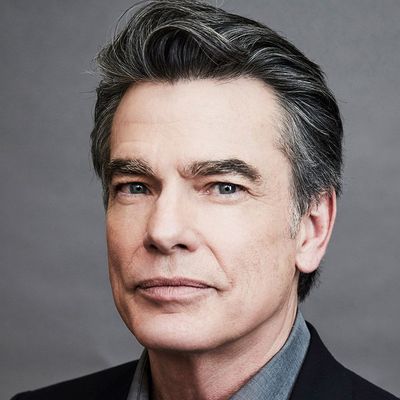
He is one of the entertainment industry’s most recognizable faces, having appeared on screen in American Beauty, Grace and Frankie, Center Stage, Sex, Lies, and Videotape, and so many others... Read More
From the show: BEHIND THE CURTAIN: BROADWAY'S LIVING LEGENDS » Podcast
Guests
Featured Shows
About
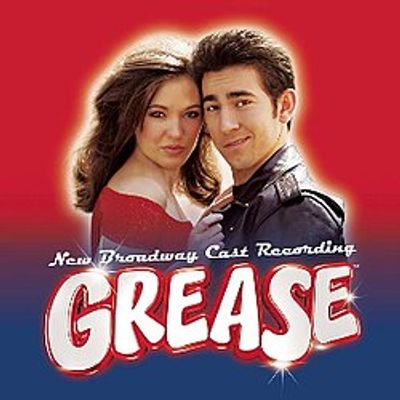
He is one of the entertainment industry’s most recognizable faces, having appeared on screen in American Beauty, Grace and Frankie, Center Stage, Sex, Lies, and Videotape, and so many others. But, Peter Gallagher is truly a creature of the stage, having made appearances in Grease, A Doll’s Life, The Real Thing, Long Day’s Journey Into Night, the 1992 revival of Guys and Dolls, Noises Off, and so many others! Peter pulls back the curtain on his career to discuss how a strong opinion led him to Mike Nichols, what it was like spending after hours with Jack Lemmon, and why the LAPD doesn’t like Fiddler on the Roof. Also, Peter shines the spotlight on Glenn Close, Tom Stoppard, and Hal Prince! Become a sponsor of Behind The Curtain and get early access to interviews, private playlists, and advance knowledge of future guests so you can ask the legends your own questions. Go to: http://bit.ly/2i7nWC4
Transcript
This transcript was automatically generated and might contain errors.
[0:12] Kevin David Thomas: Just because it's June, Junge.
[0:18] Robert W. Schneider: Uh Missuggums.
[0:21] Kevin David Thomas: I thought that was pretty good.
[0:22] Robert W. Schneider: Me too.
[0:23] Kevin David Thomas: You know what else is good, Kevin?
[0:24] Robert W. Schneider: I thought the lyrics.
[0:25] Kevin David Thomas: I really thought I did.
[0:26] Robert W. Schneider: It has to be good.
[0:27] Kevin David Thomas: Yeah.
[0:27] Robert W. Schneider: Uh being one we know what else is good, Kevin?
[0:30] Kevin David Thomas: Being one of our Patreon subscribers.
[0:32] Robert W. Schneider: Now, how does one do that, Rob?
[0:34] Robert W. Schneider: Well, you head on over to patreon.com. That's P-A-T-R-E-O-N.com and search for Behind the Curtain, Broadway's Living Legends, and set a monthly donation.
[0:43] Robert W. Schneider: Even a dollar a month helps us.
[0:46] Robert W. Schneider: Your contributions help us continue doing what we are doing and bring the legend stories to your ears.
[0:52] Robert W. Schneider: Alright, time to go cast my Tony ballot.
[0:55] Kevin David Thomas: You voted for me, right?
[0:57] Robert W. Schneider: Sure.
[1:10] Robert W. Schneider: Hi, I'm Robert W. Schneider, and I'm Kevin David Thomas.
[1:13] Robert W. Schneider: And this is Behind the Curtain Broadway's Living Legends.
[1:16] Robert W. Schneider: Don't forget to follow us on Twitter at Broadway Curtain.
[1:18] Robert W. Schneider: And make sure to join our Facebook page at Behind the Curtain Broadway's Living Legends.
[1:22] Robert W. Schneider: And follow us on Instagram at Broadway Curtain Podcast.
[1:24] Robert W. Schneider: Plus, you can always listen to our podcasts on Broadway World and Stitcher.
[1:27] Robert W. Schneider: Today's guest is one of the entertainment industry's most familiar faces, having appeared on camera in such projects as The OC, Grace and Frankie, Center Stage, American Beauty, amongst many others.
[1:37] Robert W. Schneider: But today we celebrate the incredible legacy he has created in the American theater.
[1:42] Robert W. Schneider: He has appeared on Broadway in such shows as Grease, Hair, A Doll's Life, The Real Thing, the 1986 Long Day's Journey in Tonight, for which he was Tony nominated, the 1992 Guys and Dolls, and Noises Off, The Country Girl, and most recently as Oscar Jaffe in the hit revival of On the Twentieth Century.
[1:59] Robert W. Schneider: Tell us what it was like to work with such legends as Mike Nichols, Hal Prince, George Hearn, Jack Lemmon, Jerry Zaks, Betty Comden, Adolph Green, Cecily Tyson, and so many more.
[2:08] Robert W. Schneider: Here is one of Broadway's most recognizable faces, the wonderful PETER GALLAGHER.
[2:13] PETER GALLAGHER: Well, hello, gentlemen. So good to be hearing that lovely introduction. I was listening to it and went on. I thought, God, I wish I was that guy. Then I realized I am that guy, apparently. I was in those shows too.
[2:27] PETER GALLAGHER: We have to just thank PETER because it's very early in Los Angeles, and you've agreed to join us, I think, even before the sun is rising over there. So thank you for that.
[2:35] PETER GALLAGHER: Well, you know what? I'm never short on bad judgment. That's for sure. I don't know what I was thinking. But I'm really glad to be on the phone with you. And the sun is up, and uh and all is well. God bless.
[2:50] Robert W. Schneider: God bless. So I want to ask, I'm gonna start right off the bat. Tell us about A Doll's Life. We're gonna go all in different types of order, but we're so curious about A Doll's Life.
[3:01] PETER GALLAGHER: Well, A Doll's Life was wonderful. Yeah. First of all, yeah. It was amazing. It was directed by Hal Prince, whom I worshipped from afar. And uh Betty Comden and Adolph Green were there.
[3:19] PETER GALLAGHER: And writing the show. And Larry Grossman was composing the music. And of course, years later, when I did On the Twentieth Century, all I could hear was Betty and Adolph's voice in every line.
[3:31] PETER GALLAGHER: Yeah. And all I could hear or see was, you know, just the depth and the warmth of Betty's smile and and see, you know, Adolph's glee. I had just done a movie, and as I was wont to do, defied expectations and did the exact opposite thing of the sensible thing to do, which was do another movie.
[3:57] PETER GALLAGHER: But I just kind of was uh I needed to, I needed to do be back on stage. And um so I did that. Uh and it was with George Hearn, whom I adored, Ed Lindeck, and uh, you know, the thing is, the show wasn't a hit, but I learned pretty early on in my career not to associate the quality of an experience with the outcome.
[4:25] PETER GALLAGHER: Wow, whether it was going to be a hit, because it really made no difference. For me, the quality of the thing that I'll be smiling about on my deathbed was not box office, was not you know, accolades or any of that, are the moments.
[4:42] PETER GALLAGHER: Yeah, the moments that you have with people that no one knows about, no one would understand, and unless you were there, you wouldn't necessarily care. But it's the stuff that keeps me going because it makes me feel connected in a way that you know the theater always the theater for me was the first place I felt there was a place for me in the world, the first place I had some freedom, the first place that I it was my mother, it was my father, it was my sister, my it was like what I learned, how I learned about the world, at least, how I got the hell out of my home.
[5:21] PETER GALLAGHER: And and so, you know, when you have those, especially with with people you admire, you know. For me, I had, you know, my dad was not, didn't really talk to me much. And so I was always curious what you know, guys I admired had to say about the world and about life.
[5:39] PETER GALLAGHER: And I found that in George and Ed Lindeck. And George is one of our heroes. He's one of my heroes.
[5:45] PETER GALLAGHER: Yeah. You know, he's one of the guys that was, he was he was a guy that welcomed me, even though I was young and you know, and so on. We were on the same level, we'd sing Irish songs together and we'd go out and roll around.
[5:56] PETER GALLAGHER: Yeah. You know, in that, you know, we'd roll around the town, and back in the day when you that's what you did.
[6:02] Kevin David Thomas: Exactly.
[6:03] PETER GALLAGHER: The fact that the show, you know, didn't take the world by storm was more the rule than the exception. That's just the way things are.
[6:14] PETER GALLAGHER: You know, people don't understand that when you have a hit, it's a miracle. It's a mor, and if it's a musical hit, that's like a unicorn. You guys know that.
[6:23] Kevin David Thomas: Yes.
[6:24] PETER GALLAGHER: That's just an impossible thing. So if you've done enough flops or if you've done enough things, you you you know, you hope it's gonna succeed.
[6:33] PETER GALLAGHER: I mean, in my way my brain works, I dare not think it's gonna succeed, and just concentrate on what's happening right in front of us, and and just loving the company.
[6:42] PETER GALLAGHER: Yeah, you know, like it's just we're all together in it. We're in it together. The thing about Hal was he welcomed you.
[6:49] PETER GALLAGHER: Yeah, felt like you were part of it. You felt like you were the thing I love more than anything is when I feel like I'm standing shoulder to shoulder with the people I'm working with, looking the same direction, and we're gonna try to crack this thing.
[7:01] Kevin David Thomas: Yes, it's like problem solving.
[7:03] PETER GALLAGHER: And Hal loved that.
[7:06] PETER GALLAGHER: I remember he and I had he and I had like, we say, Why did you do this? He said, and he said, I didn't even know you were acting.
[7:13] PETER GALLAGHER: I said, Well, thank you. And I was like, it was like we were all nervous. And he and he came into my dressing and said, Wait, it's good to literally get it going before the show.
[7:21] PETER GALLAGHER: And it's a maybe for you. I'm a wreck right now. But uh, I loved Hal.
[7:27] PETER GALLAGHER: And uh, and years what was funny was before that, we did the first production of at college at Tufts.
[7:27] PETER GALLAGHER: We did the first production of Follies after the Broadway show. We had for some reason, I don't know whether it was legal or whatever, but as Mr. Sondheim was wont to do, he wrote to us because I'm sure the people the guys at college uh wrote to him.
[7:50] PETER GALLAGHER: And he wrote to us and saying, Well, we lost four million dollars on or three or four million dollars on this show. I hope you do better than we did.
[7:57] PETER GALLAGHER: Years later, after I'd done A Doll's Life, and I was in Florida shooting uh The OC with Linda Lavin, Linda said, Come on, let's go see Hal and Judy.
[8:08] PETER GALLAGHER: So we went to see it in a beautiful, beautiful place. And I realized I'd never told Hal that story.
[8:12] PETER GALLAGHER: He said, That's not true. The Steve is wrong. We didn't lose four million, we only lost.
[8:20] Kevin David Thomas: Where'd you grow up, PETER?
[8:21] PETER GALLAGHER: I was uh born in New York City at Lennox Hill Hospital, and uh my first home was uh Bronx River Road, 85 Bronx River Road, and uh in an apartment building where my right after the war, uh it was tough for GIs to get housing, and I think we lived with my aunt and uncle in the Bronx for a while before I was born, and and then my uh grandparents had an apartment in uh uh in Yonkers there.
[8:44] PETER GALLAGHER: And I was we lived there until I had about five or six. I almost got killed by a car. My brother got started to get into trouble, and my my my mother kicked my father in the ass and said, Get us out of here.
[8:54] PETER GALLAGHER: And then we moved north to Armont, New York, which was beautiful back in 1960, but it was it was like moving to British Columbia.
[9:02] PETER GALLAGHER: And it was like, I don't think my mother left the house for like 15 years after that. I'm not going out there.
[9:10] PETER GALLAGHER: So it was a bit of a it was a bit of a dislocation, but it was a uh it was a beautiful place to grow up.
[9:17] Kevin David Thomas: How did you fall in love with theater?
[9:20] PETER GALLAGHER: Um it was just like so many things in my life, it was just suspicion that there was something there.
[9:28] PETER GALLAGHER: Now we didn't have a lot of, you know, my mom was a first-generation American. She was uh she was from Ireland, her parents were from Ireland, but she helped develop penicillin during the second world war because she became a bacteriologist.
[9:44] PETER GALLAGHER: She went to she went to Hunter College and then she went to a grad, got her certified in bacteriology. In fact, she was at school with Gene Cagney, Jimmy's sister.
[9:52] PETER GALLAGHER: So when I worked with Cagney years later, I was in like Flynn because my mom and his sister were you know were sort of in the same class.
[10:01] PETER GALLAGHER: And it was with Art Carney, too, because Art, my uncle was a janitor's assistant in a in a bank during school in Mount Vernon, and Art's dad would bring him in when he was a kid to tap dance at the Christmas parties.
[10:15] PETER GALLAGHER: So, anyway, I'll tell that story later. But that was incredible.
[10:20] PETER GALLAGHER: So my my mom was uh, you know, she for her, it was a sort of a rough and tumble upbringing, you know, and and but she was very bright, and um, and her belief was that education was the only way that you'd get and my dad, he was the first in his family, and he and his two brothers were the first in his family to get an education.
[10:42] PETER GALLAGHER: His dad was a coal miner in Pennsylvania, and his mom died early, and my dad was in the Normandy invasion D-Day.
[10:50] PETER GALLAGHER: Um, and so he had a tumultuous time.
[10:53] PETER GALLAGHER: And so entertainment was never anything, it was all for them, everything was survival.
[10:59] PETER GALLAGHER: You know, we didn't we weren't particularly well off, we were doing okay. And then when my brother and sister, my mother really wanted them to go to good school, and they went away to private school, and then things got really tight.
[11:11] PETER GALLAGHER: But then by then they built a new high school, and I didn't have to go away to private school, and that that made things a little better.
[11:17] PETER GALLAGHER: But I what we watched growing up was the only we had this old television like the boom like that.
[11:26] PETER GALLAGHER: But we'd watch uh Lawrence Welk's show, class, which I made constant fun of, and eventually did a science project with my mother's help based on the the effects of Geritol on the hemoglobin determination in mice.
[11:42] PETER GALLAGHER: Because all they did was advertise Geritol on that show, and I think that's bullshit. What do you think, Ma?
[11:47] PETER GALLAGHER: I said, Well, why don't you do an experiment? And I did, and it got published.
[11:50] PETER GALLAGHER: And not that it had anything to do with my paper, but six months later, Geritol had to retract their some of their advertising, had nothing to do with my paper, I'm sure, but had to retract some of their advertised.
[11:58] PETER GALLAGHER: I'm sure there were other people because it was not true.
[12:02] PETER GALLAGHER: Make sure blood, you know, it gives you iron strong blood. You know, if you have iron proof, give me more iron in your blood.
[12:07] PETER GALLAGHER: Bullshit. All it did had was a very high alcohol content.
[12:10] PETER GALLAGHER: So you felt a little too you felt better, but you didn't, you know, a little while.
[12:14] PETER GALLAGHER: Anyway, I've just been very lucky that I came along at a time when these guys were still around.
[12:19] PETER GALLAGHER: And the thing about these guys, like that, they were in on joke.
[12:24] PETER GALLAGHER: If they were famous, and if they had a million Oscars or Tonys, they didn't think they were better.
[12:29] Kevin David Thomas: Right.
[12:31] PETER GALLAGHER: It was all that's all part of the biz. That's selling.
[12:34] PETER GALLAGHER: That's marketing. That has nothing to do with what we do.
[12:37] PETER GALLAGHER: He says, we're just, we're, we're just the luckiest people alive.
[12:40] PETER GALLAGHER: So let's not fuck it up.
[12:42] Kevin David Thomas: Yeah.
[12:43] PETER GALLAGHER: You know? And but they got it.
[12:45] PETER GALLAGHER: And they didn't use their position to make you feel less there.
[12:48] PETER GALLAGHER: They didn't use their position because they felt they had gotten there dishonestly.
[12:53] PETER GALLAGHER: No, they were authentic.
[12:55] PETER GALLAGHER: And that's all I ever strived to be.
[12:57] PETER GALLAGHER: Was authentic. I wanted to be a real actor.
[13:01] PETER GALLAGHER: I wanted to be a real. I'm not somebody who did musical theater because they were afraid they couldn't act well.
[13:07] PETER GALLAGHER: I wanted to, I, you know, or I wanted to just, that's what was my religion in a way.
[13:14] Kevin David Thomas: Yeah.
[13:15] PETER GALLAGHER: So my folks had no exposure to that.
[13:18] PETER GALLAGHER: And I didn't even know about the I never even heard of theater until uh, I guess when I was about 12 or 13, they took us on a field trip to see a Broadway show, Hello Dolly, with Cab Callaway and Pearl Bailey.
[13:32] PETER GALLAGHER: And Morgan as Rodolfo, that we figured out when Morgan and I were doing The Country Girl together on Broadway, because before every performance, Morgan and I would sing and dance.
[13:42] PETER GALLAGHER: We'd come, I'd come down in his dressing room, he'd come up to my dressing room and we either sing Frank Sinatra or Jay or Al Green.
[13:49] PETER GALLAGHER: His favorite was come fly with me because he liked to fly planes, and you know, and we'd sing Al Green and would dance.
[13:55] PETER GALLAGHER: And we were talking about Broadway. I said, Yeah, I was in Hello Dolly.
[13:57] PETER GALLAGHER: Oh my god, I saw you.
[13:59] PETER GALLAGHER: So that was the first show. But again, you know, I didn't come from a family where, hey, life's great, and you get to do what you love in life, and isn't it gonna be wonderful?
[14:09] PETER GALLAGHER: This is, you know, like I asked my dad, what were you in the war? I was a general. Yeah, yeah, general nuisance. Now go clean the gutters. And, uh, and, uh, you know, and I never got the impression that you were supposed to be happy in work, it was just something you put up with until you died. And, um, and I didn't have a clue. And so then there was this, you know, it's all the people, the angels in your life. There are a few examples of my life along the way that without whom the big biggest one is my mom, you know, because my mom really, my mom was my mom loved me. And, um, well, my dad did too, but he knows whatever. Anyway, um, the, uh, they were auditioning Mr. Bissell, our teacher, everybody has their high school teacher, yes, Mr. Bissell.
And he was a complicated guy, and he changed my life. And, you know, he wasn't nice, he wasn't particularly, but he was really talented. And he was probably he was probably a closeted game, he might have been gay at a time when he just, you know, people don't understand it. I mean, I'm sure people do understand, but people who don't understand really don't understand the devastation of not being feeling that you can live the life that you deserve, or you, you know, own can own. And I don't know if that's true or not, but he was very frustrated. But he also was he played piano and composed in New Faces of 1952, an old review that Lily Tomlin was in. Oh, yes. So I wish I just asked Lily the other day if she remembered him.
She didn't remember, but there were a lot of people, but that was his pedigree. He would actually played and composed, and, uh, he was fanatical about how things you had to enter on your offstage foot. You know, in terms of the stagecraft, it was really like boot camp. And he was serious. My teachers are everything to me. You know, and they've been either teachers or not teachers, but the real, yeah, anyway. Anyway, I learned a lot from Mr. Bissell. So we, I remember two. There's a couple of things, Mr. Bissell. I'd never sung out loud in front of anybody in my life, except for those my Morris wasn't as low then. Before the voice my cheesy D. Martin impressions. I never sung in front of anybody.
And so we were in music class, Mr. Bissell's music class. I guess it was ninth grade. And we were learning a song, and I was probably cutting up. I was probably making a joke or something and pissing him off. And so he was going to humiliate me. He says, you get up right now and sing this song by yourself. I wanted to die. I thought my life was going to be over. I thought it was going to become clear that I was a worthless human being and I should die. But there was part of me inside that said, I will be goddamned if you were going to break me. And I'm going to reach out and I'm going to try to sing this fucking song as well as I can. And I just reached in and I just sang it. And everybody was quiet.
And I knew I hadn't fucked up. But it really pissed off Bissell. Because I didn't fuck up. And then I did something, said, go to the back of the room. And so I had to stand in the back of the class by the bass, the string bass, which of course I couldn't keep my hands off. And then I just exiled further in the building somewhere. So I was the only one who wasn't asked to be in 110 in the shade. And so all my classmates were and all that. And I'm what was an audience member watching it and thinking, I'd never seen anything like that, other than I guess I'd seen Hello Dolly, but I never equated watching Hello Dolly with something that the normal mortal could actually do. That would be like watching a space launch.
It wasn't in my consciousness. I was just trying to figure out how to get to the next day. And so but then he had auditions for The Fantasticks, the next show. I think it was that that was the one. And they had a part for a guy in the show that had spoke with a Cockney accent. And again, I had no reason to believe I could do a cockney accent, but I really thought I could. Because I'd watch all movies and I did go along with it. But I never did it in front of anybody. And so I thought I could do this. I could do this. I could do no, you can't. No, you can't. You've never done this. You're not good. What do you make you think you can do? You're the only one who didn't get asked, because you're no good.
You know, they can, but I think I can. I think I this went on in my head for like hours. And I was pacing around at the edge of the school away from the auditions, but it was in front of Mr. Mastika's French class. And I loved Mr. Mastika. And he liked me. He had a great sense of humor and he was kind. He was a gentleman. And he said, what are you doing out here, PETER? I said, oh, nothing. I'm just, uh, just hanging out. Yeah, but you've been pacing back in front of my door for two and a half hours. So what do you do? Well, Mr. Bissell's having auditions today, and I thought maybe I'd audition for it, but maybe I'm not. And I don't think it's such a good idea. So why? Well, because I've never done anything like that.
And I think it's, I don't even know why I'm thinking, well, why not just try? Well, I can't I can't try. I don't what happens if you, you know, I'm seeing my in my mind, I was gonna be exiled, I was gonna be asked to leave the school, and people would laugh at me and say, never come back. But he stayed with me. And through a kind of loving kind of, he said, you got nothing to lose. Just walk down there. What do you have? Just give it a try. You can try it. And I walked down there. And Mr. Bissell was closing up for the day because nothing else was coming. And he was closing, he's going up. Hello, PETER, how are you doing? He says, fine, thank you, Mr. Bissell. Can I help you? Uh, well, no, because you're done now from the, and that's okay.
I'll see you. Have a good, were you gonna audition? Well, I was thinking of it, but you're done now. I said, well, I can open it up again. No, that's okay. Well, come on. Well, I'm here, might as well do it. All right. Anyway, I did it, and I did do a good cockney accent. And it introduced me to the first experience on stage, and it was I didn't know. I was free for the first time in my life. I didn't have to be me. And all of a sudden, and I was part of something. And I knew, and I didn't have the kind of, you know, if you have a script and you know what you're supposed to be doing, you don't have the kind of uncertainty and that life where you don't know what the fuck is gonna happen next and whether it's gonna kill you or make you, you know, and, and you, um, and this was, and you know, and he was, you know, he was a little tough, but I don't I was used to I didn't have no idea.
I was never scared of tough people, either tough women or tough men. Um, and, uh, but I was in it, and I remember we were doing the show, and Scott Duncan, who was playing the old actor, started to fall into the stage, and I remember off the stage, I remember grabbing him, and we both ended up tumbling into the stage off the stage in the audience. It was a huge laugh. And I, and I got, and I thought I was probably doing Lear or something, and not that I knew what Lear was then, but then I got these enormous laughs, and oh my god, the sunshine, my heart opened, my top of my brain exploded to think that there might be a place in the world that wasn't scary and confusing and hard.
[22:08] Robert W. Schneider: Did he ever know that you when you succeeded, did he ever see a piece of that success? Did he know when you, you know, went on after college and maybe when you went to the house?
[22:16] PETER GALLAGHER: Oh yeah, he was thrilled. Yeah, he was thrilled. He came to see me in Hair and Grease and A Doll's Life, and I introduced him to everybody I could. He came to the opening night of The Idol Maker. Um, and, uh, yeah, I always included him because, you know, and I did a little, uh, one-man show where I talked about him, and you know, and it didn't occur to me that theater was an option to do with your life, because again, I was into the idea that you couldn't really be, you weren't supposed to be that happy, right? You weren't supposed to have a job that you liked, you weren't nobody did theater, you know. You know, you had to, especially in my, as I said, my mother and her, my mother got transferred to Walter Reed Army Hospital, got herself a job at Walter Reed Army Hospital when her brother was blown up in Anzio in World War II.
And he wasn't expected to live, so she went down there to get keep an eye on him. And she was assigned to this research team to develop penicillin. And they made their big breakthrough on D-Day, which was the day my dad was landing on the beach. And we didn't know that until the just after my mother died, which was 60 years to the day later of D-Day. So that their focus was on, you know, survival. Yeah. Was it? There was no margin for, oh, let's go to the theater. What are you kidding? Let's maybe get a record player first. You know, let's, you know, let's go to McDonald's instead.
[23:51] Robert W. Schneider: How did you get your equity card?
[23:53] PETER GALLAGHER: So here's the thing. So in college, I didn't really have an economics degree. I did get my degree, but I didn't really go to school much. Okay. Um, I did theater, I did theater with Thorn Ticket. As I said, we did that first production of Follies. And then I started working at the Boston Shakespeare Company, which was a company that, um, that PETER Sellers ended up taking over, but Bill Kane started with Kevin Bratt. Bill Kane and Kevin Bratt were Jesuits who ultimately married us, my wife and me. But before that, we started this company, um, in Boston, uh, called the Boston Shakespeare Company, which I started working at there, uh, and worked all the way through school and I got a job at Boston Ballet in the box office for money, and I worked most summers in Priscilla Beach Theater and Summerstock, but the, oh, and the ultimate season, and but my when I had a chance, I wanted to graduate, get out of college early, and I had enough credits, so I took a summer at Berkeley.
I had a girl out there and I'd never been on a plane before, and I wanted to get a plane ride. I got a good cheap ticket and flew out there and studied non-Western economic thought in Berkeley. Statistics. Oh my god, I wanted to kill myself. I, you know, and I realized that I had no aptitude for economics and no interest in being with people that liked economics, but they were showing all of these Shakespeare on film series. So I was watching Olivier's, uh, Hamlet, Olivier's, uh, Othello, and Richardson, and, and it was the irony of studying non-Mussian economic thought and statistics, and then watch that's when I decided with a very heavy heart that I'd give myself seven years to try to make a living in the theater.
All I wanted to do was try to make a live if I could make a living in the theater, I'd die a happy person because I knew, and it was with a sadness because one thing Mr. Bissell did was made you absolutely confident there's no way you could succeed as an actor because he never knew anybody who did, and just knew people whose hearts were broken and you know, and bitter about the whole thing. And he said, no, you can't do this, nobody can do this. And, um, and so I just didn't care. I was resigned to myself. I don't care if I'm gonna be miserable because I just know for those moments when I'm on stage, I won't be miserable if I get those moments, and this is what I have to do. And fortunately, I didn't have to test the strength of that resolve.
So I graduated early. I finished my last play at, uh, Boston Shakespeare Company, I finished my job at the ballet and drove to New York. And I got a cheap apartment, $223 a month. You know, a friend sublet. And I went on open calls because you could still do that then. I knew no one, I knew nothing. I just got a picture, you get your resume, and you and the deal with the open calls then, because for if you just read backstage in, uh, show business, they would list where the open calls were, and you get there at six or seven in the morning, and there were stacks of legal yellow pages on a clipboard, and you put your name at the end of the list. And I was always number 2,000 something. No matter how early I got there, it's like the system was already game.
It's like the night before they got the first 1500 people on, and then you get there. I'm still fucking number 2,000 something or other. Then you get on the end of the blocks long line and inch forward. You just inch forward and you inch forward and you inch forward, and after hours, you're inching up the Minsk rehearsal studio, you're in your inch, which is where the Urus, the former Urus used to be. You're inching, I think it was the Euros. No, the Minskov 45th and Broadway there, inching up the stairs to your little tiny little audition room. There are 10,000 people out there on the street, all trying to get into this, you know, eight by ten room with an upright piano, Phyllis Grandy and Vinny Liff.
And this was for great for Greece. So going up, I'd never, you know, I'd done one of these open calls before, maybe for Holal Gali, a road company or something like that. So I was going up. They wanted, um, a 50s song. And so the night before, I'm thinking, or the night, I'm thinking, okay, I'm gonna really jazz up this audition.
[28:20] PETER GALLAGHER: I didn't have any classes, I didn't know anything. I'm gonna really, I said, no, don't jazz it up, don't try to be funny, just sing it like a meeting. You know, what are you gonna do? And so I'm getting up there and I'm getting close. All of a sudden, the guy in front of me is in there, he's singing, "Jeremiah was a bullfrog. He was a good friend of mine." And I'm thinking, oh, why didn't I choose that song? I choose the famous song in the world. I'm never gonna get anywhere. Yes, and I go, and there's Vinny Lif. Yes, and Phyllis Grandy. And um, and uh just got it together and I started "Put your head on my shoulder. Hold me in your arms, baby. Squeeze me out so time. Tell me that you love me too."
And that was it. And I just say my and Vinny looked up and said, "That was beautiful," and my knees buckled, and honest to God, I nearly hit the ground and I started crying. And I just like I was just like, If that was the last thing I expect, I was prepared for every kind of rejection, being kicked down the stairs, thrown out the window, everything. It had never occurred to me that I'd get a kind response, which I was not prepared for. And I just I didn't, I did I kept myself from like bawling, but I fortunately I didn't have to do much after that because I was and I thought to myself immediately I just got what I need. It's gonna keep going for seven seven days seven years. I just got what I need.
This is all I need. I had no expectation that I was gonna get a part. I just had reason to keep showing up. It just gave me reason. Okay, I'm not too crazy. I might not be too crazy. I'm just gonna keep showing up. And my buddy whose house I was renting, I gotta thank Henry Kelson because I was subletting his grandmother's apartment, which I left the wreck, and I'll always do that. I didn't know how to behave in the grown-up world yet, and I just didn't know how to take care of myself. And I'm sorry, Henry and Mrs. Gelson or Henry's uh grandma. But he said, I had just gone to see the show, and I was got Greece, and I was told Henry, I said, Man, I'm gonna audition for everything. And he was going into the we had done some shows together, but he was going into the straight life a little.
And I said, I'm gonna audition for everything. But then I went to see Greece, and I think I saw Treat Williams and said, and dude, it's so well. I can't do it. I'm not going in on that. I thought you said you were gonna go in on everything. You're right. So I um so I went in and I got and I had reason. And then I had like 15 more callbacks, it felt like, but then I started auditioning, doing opal calls for hair. And it was the same situation. I was number again, number 2,000, something or other. And then it got, and then, but then we started doing auditions after auditions after auditions of editions, and it finally came down to I got the part. No. It's a part of uh in the revival of 77 revival of hair in the tribe to sing electric blues and to understudy Claude.
And so, and it was it was amazing because you know it was like we were they got us from all over the country, you know, Charlene Littard, um Loretta. Alan Foley, Loretta Devine, oh my god, Loretta. I mean, the most loveliest creatures in the world. We were all just fresh off the boat and didn't know anything, and Julie Aronel whipped the shit out of us in those dance rehearsals, and you know, got the baby fat off us. And but still, it was it was hair, it was Tom O'Horgan and you know, and uh and uh uh Galt and all the original people, Jimmy and you know, Jerry Ragney and Jim Redo, who might just saw Jim Redo now, he came to see you on the 20th century. Oh, it's unbelievable. Um, and um, and so it was that vibe, it was this beautiful kind of cool loving vibe.
Now, ow, I did not have an agent for the first three jobs I got. I got them from open calls. In fact, when I had done hair, still nobody wanted to represent me. And what and they were changing, they were kept swapping people out for Claude, and we never had understudy rehearsals. I didn't know an understudy rehearsal. In the back of my mind, I'm thinking, God, I sure hope I never have to go on because I wouldn't know what to do. But they don't seem too worried about it. So what am I gonna worry about it for? I gotta do electric blues and get beat up by Julie Aronel. You know what, PETER, just take the mic and stand over there and sing, you know, choreographer. And so Michael Leslie and I would be over there on the side singing.
Um and uh so then I had another call back, so we were in previews forever for hair. They kept postponing the opening, postponing the opening, postponing the opening. And then I had a call back for Greece. And it was like, what? My hair is long now. I'm like in the whole hair head, and I go in, audition, I do a good job, and I'm walking, and I leave. I guess they told me to wait, but I missed that part because I had to get back to uh I was on my lunch break and I had to get back to Biltmore on 40 uh 46th Street, right? Um, which is now the Manhattan Theater Theater there. And uh all of a sudden Danny Left is chasing me down 8th Avenue, saying, Wait a minute, wait a minute, we want you, we want you from the wait, where do you where are you going?
I said, Well, I'm going back to work. He said, We want you, we want you to come by. I already got a job. I'm I'm good. So no, we want you Danny, we get you know, so he's so they he wrote he chases me down, says, We want you to go on the road as Danny Zuko. I said, Really? Yeah, and wow. And again, it was like there was a promise they'd fly me to Utica. And again, that'd be my second plane trip. And I hadn't seen the country. And and uh, and so I started thinking, and they were talking to me. He said, This would be a great opportunity for you. And I I started thinking about it. I said, Well, I've been doing this well, understudy role, and they'd be keep changing Claude, and I don't even think they'd miss me if I wasn't here.
So because I knew nothing, I go up to Tom. Hey Tom, Tom O'Horgan, director. I have no representation, keep in mind. I don't know how anything works. To me, I'm just like, ugh. So I um listen, I just got off of this to play Danny Zuko, the lead in his show on the road, you know, and to see the country, and I've been doing this for a while, and I don't, you know, I don't think anybody would miss me if I wasn't here. Do you? And I think it might be kind of fun to go and do that. He said, are you serious? I said, yeah. I mean, why not, right? Well, let me talk to the guys. So, like a week later, and they came back. Yeah, we're talking about it. Sure. You can go. No problem. And uh, do you want to go on as squad?
I said, No, you kidnapped. I'm a heart attack. I wouldn't know how to go on squad. I'll just try to do my show the best I can. So I did my show and walked out and into before we opened. And I didn't know it was unusual. Because it was so sensible and reasonable. And I didn't know it was unusual. And then I went on the road for six months with Scott Ellis, who's who replaced James Rimar on the road to play dude. No, no, Jamie was uh Kennicky. No, Scott was duty on the road in this on our bus and truck. And um, and then I ended up going, they invited me into the Broadway company where I did that for over a year. Um, and uh so that's how I got my first job. My first three jobs were without man, and then I worked for Bobby Lewis, the guy who started the actor studio in his repertory company and New Rochelle um and did Caligula and with Mo, my pal Maureen Stapleton, who was starting the the season, you know.
You know, she and I were pals from commuting to the when I was doing Greece and she was doing gin game, I'd visit her in her dressing room, and we were both Irish, and I I was just worshipped her as an actress, and we lived near each other on the upper west side, and we just became pals. And she gave me my theater world award. Oh my gosh. Do you have any good Maureen Stapleton stories? We've we've heard that she was quite wild. I forget how we got to know each other, but it was kind of cemented when I I'd go visit her after her show of Jin Game, and she would have had literally a gallon of gallop wine. I mean, it was like a jug. And I don't think that I hope that wasn't just for the one night, but we'd throw back a few dozen glasses of wine in her dressing room and just laugh, and she'd tell me stories and I'd and then we'd take the bus uptown.
And we'd probably take the bus downtown, and her feet, her her feet were sore, which I get because I have bone spurs now, and I bet she had bone spurs. So I'd always go to try to find her things for her feet that might help and say, Hey Mo, I found this at the uh Akeels. Might help you feel. Oh, aren't she a dear? Thank you. But she was she was a dame. She was I love Neil and I ran into her daughter uh not too long ago. And it was, I guess Maureen liked me too. I don't know if that goes both ways, but I yeah, I was to meet some of these people, and I think I'm a fart in the breeze, they're not gonna remember me, I'll remember them forever. But they they uh you know, that's I say that's to me the goal.
That's the stuff nobody can take. I don't care, you can take your Tonnies, you can take all this other bullshit. But it's those moments that that connect you as a human being to the people you admire, and you think I actually might be part of something I'm proud of that I'm that I that we're up. Yeah, you know, so that was a big gift. Yeah, and I didn't, you know, I mean, look, it wasn't if I had to start now from from where I was then with the way the kids are now. I mean, they're all like, you know, like the golfers on the PJ Tour who grew up watching Tiger Woods. You know, they're all phenoms. You know, and I work with them. I just did a pilot actually with uh Skylar Ashton and Carmen Cusack. And I just finished the movie with J.K. Simmons and Kristen Miliati, and uh who else is in Broadway folks? So I see the this tribe everywhere, and they're always proud to see them.
[39:22] PETER GALLAGHER: Hey podcast listeners, are you looking for a place to rehearse in New York City that is clean, spacious, and most importantly, affordable? Come check out Shetler Studios and Theatres, our wonderful host for these podcasts. Shetler is centrally located on West 54th Street between Broadway and Eighth Avenue, right in the heart of the theater district. Right in the heart, you'll find music, dance, and acting studios complemented by two black box theaters and six presentation venues. The professional facilities, inspired environment, and expert industry staff combined to provide the New York artists with an unparalleled studio experience. Visit their website at Shetler Studios.com. That's S H E T L E R Studios.com. Shetler Studios and Theatres is our home for recording the legends of Broadway, and we hope that you make it your artistic home too. That's Shetler, S H E T L E R Studios.com. See you here.
[40:17] Robert W. Schneider: Tell us what it was like working with Mike Nichols.
[40:20] PETER GALLAGHER: Um I love Mike. Yeah. Mike was a huge, huge part of my life. So in I didn't, I auditioned for the real thing in 1984. I didn't get the part. I wasn't sexy enough, according to Martin Herzer, my dear friend who I adored. Um, stage manager. Um, who's no longer with us? And um, and uh, and they were out of town. And I'd done, you know, some starring roles on Broadway. I've done a bunch of Broadway shows already. By then I'd done Corner Screen and Greece and Hair and A Doll's Life. And I got a call to go up to Boston to see the real thing with the with for the purposes of replacing the young actor that was playing the role of Billy. And so I was, you know, the bottom line is I was nervous. And we went to Boston where my where my wife and I met at Tufts, and uh we see the play, and my wife and I go out for a drink afterwards, and I'm like, why would I do this?
But it's nothing there. There's no part there. And this guy's missing all the lights. If I were gonna do it, I'd change this, I'd change this, I'd change that, I'd change this, I'd change that. And I said, Well, why did you tell that to Mike Nichols? I mean, you can't just tell that to Mike Nichols. You can't just say things to him. You can't just, you can't know. I was terrified. I was terrified because the one thing I wanted that I I strive for, I wanted to see what life was like with the A team. I wanted to see what life was like with the guys that were really doing the best work, just out there on the edge and sort of trying to redefine stuff and find stuff and just be, and that's how I thought of Mike Nichols.
And not to mention the cast, Jeremy Irons, Glenn Close, Christine Baransky, Cynthia Nixon when she was still in high school, uh, uh Vio Rugitis, Ken Welsh. And so she said, Why don't you tell that to Mike? You know, I can't remember this, I changed this, I think this, I think this, I think.
[42:28] PETER GALLAGHER: So I said, and I realized she was right, and I was just this chicken shit. I was scared. So I go to this meeting, and I go on out, it was in the back of the house. It was like one of those little sort of ante-rooms in between the, you know, the orchestra and the downstairs or whatever, just a little underneath the stairs room. I said, hello, Mr. Hello, PETER, nice to meet you. And so I says, Well, Mr. So what'd you think? I said, Well, Mr. Nichols, I really enjoyed the production very much. Um, you know, if I were to find myself in a position, you know, position of doing this, I’d think about doing a few things differently. Like what? Well, I think that the characters should be from this region of England, and that the, you know, sort of the energy here in his attire wouldn't necessarily be more of a the kind of person that's alive that's in England now.
There's sort of the stars, guys are starting to wear earrings. There was a kind of a rougher kind of, you know, punk kind of sensibility that just because you were playing a character in restoration comedy didn't mean that on your off hours you didn't have a different kind of life. You know, um they said, Great, try it. And it reminded me of like the first response Robert Altman had to me, or Steven Soderbergh had to me. It was all of a sudden he was saying, Come on in. Let's see if we can figure this out. I respect you enough to be interested in what you might contribute. And that's like catnip for me. That's like, okay, you don't have to pay me. I'm yours. Because you, because this is where I shine.
I can be, you know, Altman would say in a scene we'd be shooting where I did I wasn't in, I'm waiting for the next one to go up. He said, GALLAGHER, what? I need you to go in there and do something. What? I don't know. When? Next take. And all of a sudden you think, and are you ready? I said, I don't know. Well, we'll find out. You know, all of a sudden you have that much time to figure out where you're going, where you've been, where you're going, and what you can do to contribute to further the story. You're an ally. And you know, the greatest thing about that were the note sessions with Tom Stoppard and Mike Nichols. Because they were the two smartest people I've ever come across. And you know, and I appreciated my mother was smart, and I was always taught to appreciate smart people.
And they were so different. And I learned two huge things. One, first of all, Tom Stoppard, you know, the smartest person in the world. And both of them were born non-English speaking. You know, Mike was born in Germany. I think he was born in Germany. I think my and Tom is born in Czechoslovakia. Smartest, you know, and um, and I remember, and Tom's notes were often more technical, and Mike was more steeped in the kind of tradition the New York actor lived in, which was you know, more of a method, more of an underpinnings kind of gestalt and psychological view of some of the stuff that happens, and Tom was a little more. And Tom is explaining what this scene is about to be to us, and Mike goes, No, it's not, Tom.
It's about you and your first wife. And my and Tom went, oh no. Oh no. No. Oh no. No. No! And clearly it was. But here's the greatest, smartest man in the world, the playwright, who wrote the goddamn play. And so eyes are being opened to something that that's the majesty of great material. And then we had the glorious thing, which you everyone should experience once in their life of just being part of the biggest, fattest Broadway hit that everybody in the world wants to go see. And um, and it just made me realize that when you work with the best, it's the easiest thing you're ever gonna do. Because all they want is for the thing itself to work. It might be Rocky getting there, but it's about the thing.
And there's no illusion that anybody has all the answers. We're up with this a life and death match. This thing usually ends with us dying more often than with us surviving. That's right. Jack Lemmon. Oh, that you see you're hitting all the people I love. Jack Lemmon was like a father to me. Um, he gave me my first set of golf clubs. And I didn't the only movie I mean again, I'm a uh uh idiot in a lot of ways, but the only movie I really had seen of his was Save the Tiger when I started working with him. And that was because I was uh you know, I was hoping somebody was gonna take their shirt on. I was like that age, or it was like, oh my god, I just love French movies. Um, you know, I was not and and we uh and then we went to an AFI thing when we were out of town in Washington, DC trying the show out, and they they were honoring him, and they had some like and I sat with him while they streamed Someone Like It Hot and said, Jesus Jack, finding all this, I've been a nervous wreck working with you.
That's right, you asshole. I'm a legend. And so the thing, Jack was I loved him, and he knew it, and he loved me, I think. And when we did, I was a bit of a punk. And then when we did Long Day's Journey, I'd been I'd had a hard ultimately I had a very hard time at the end of The Real Thing because I think I stayed in it too long. I did it for like a year, over a year, and everybody else got great new jobs, and I didn't get any, I didn't get auditions for anything. I didn't get I did one little movie at the very beginning that where I was very proud of, but everybody was going off, and I just kept staying in it, and I just kind of I remember Lila Robbins came in and she said, Oh, you're gonna do it like that?
I said, You're right, that's a terrible idea. I said, wait a minute, instead of saying, wait a minute, I've been doing this for a year. What are you telling me what it's but I just had lost all confidence and I didn't really see I hit really you know, I think men and women too probably at 29, it's like a rehearsal for midlife crisis. You have a chance to either become the person you want to be or keep banging your head against the wall. And so I really hit the wall. After I quit. I left after well over a year, I did that uh real thing, and I was and I didn't think I didn't think I had anything to offer anymore. And then I didn't really didn't even deserve to live. Um I had a it was a bad, you know, probably a lot of demons from my past or whatever were coming to haunt me, and I had some growing up to do, and um uh um and and uh and which and so I started actually and you know what again it was a teacher that saved me.
I decided I was gonna start over. Actually, two amazing things happened that's pretty much saved my life. I when I finally got the courage to go out, I think I inherited my mother's good looks, but her asthma and her social anxiety and her tendency to depression, probably. I'm very anxious, so I feel very incompetent socially, which is why I feel comfortable on stage because I don't I know it's gonna I'm not doing anything wrong. And um and so when I had the courage to sort of get leave my apartment after I left the show and try to figure out what my next step was, I knew I wanted to start over, to start take beginning acting classes and just start over. And um, because I felt I didn't know anything and I was a fraud and blah blah blah blah blah blah.
And so I went to HV studios to audit those classes, and I remember just thinking, just wanting to disappear and how much courage it took to show up and just I was just part of a throng going into the class, this jam-packed class for Bill Hick, William Hickey. And it was just jam-packed. And I was just back in the back, back, back corner trying to just read. And you know, by the time I left the show, The Real Thing after a year, I had lost 30 pounds. I was about 130 pounds. I lost all confidence in life in myself and everything. And uh and so I it was a it took a lot of courage to get there. I got there, and all of a sudden William Hickey said, Listen, before I uh before I um uh start today's uh class, I just want to say that uh there's a we're very lucky today because we have one of the you know one of the young shining lights.
Uh one of the legends, really, young legends really on Broadway here with us today. And I thought, oh my god, who's this gonna be? It's again just I'm thinking I'm gonna feel even worse. And I'm thinking, and uh I was saying I bet it's I'm probably somebody I know when I'm looking around. And he was talking about me. It did not occur to me that he was talking about me until all of a sudden everybody was looking at me. And that was another time I almost I lost it completely. But I could never come back to the HB Studios after that because I didn't want to disappoint them. I find out that I wasn't all that, you know, that you know, I know you're real kind, and my thing I'm happy is about, I didn't see him for years after that.
But I heard he was at the Sunset Marquee when I was visiting. Someone said, sorry, oh, that was William Hickey. He was very old then, and it was not long before he died. I said, Oh my god, I dropped everything I've done, and I ran. I scared the heart out. I'm glad I didn't kill him. Um I just told him, and I just thanked him. I said, You saved my life. You gave me reason to believe when I had no reason to believe. And I'll be forever indebted to you, and I will love you forever. And um I just hugged him, and he hugged me. He said, PETER, I love you too. And I cannot every word I said. So that was huge. Oh, and the other angel, oh, thank God for these people in my life. Thank God for these people in my life.
Manny Eisenberg was the next huge person in my life. I'd done The Real Thing for him and had this big, big, big, big hit. And now he was doing Long Day's Journey with Jack Lemmon and Jonathan Miller was directing it. And they wanted me to come in and audition. And it was still pretty early. I mean, I hadn't, I hadn't quite gotten my confidence back. I was still in a very rocky, it was early auditions, and I was still in class with Bill, and I wasn't better yet. I wasn't confident yet. And so I didn't go. I didn't go to the audition because I thought, what could I possibly have to contribute to Long Day's Journey Into Night? What could I possibly have to contribute? And Manny called me up. He said, Hey Peter, it's Manny.
Manny and I were close. I loved it. You know, he was tough, but he was he loved the theater and he liked actors. He didn't, he's one of those. Aren't many producers that understand or like actors, and he was one of them, the old school producers. And uh, and he said, Manny, it's he said, uh PETER, it's Manny. He said, Listen, you know, I'm Jewish, but half of me is Italian. And if you don't come in and audition for this part, I'm gonna break both your fucking legs. And of course, to me, that was the most beautiful thing I'd heard anybody ever say. And somebody cared for him. Yeah, yeah, believe me. Yeah. And it took every ounce of courage and strength in me to show up. And I remember giving not pretending I knew anything about anything or not trying to do any acting about anything, but just trying to make sense of those words and without any expectation that I was gonna get the part.
And then I went again, and I had the feeling that geez, I'm gonna get the part. And I went to my agent, I think I'm gonna get the part, and said, No, you're not so and so's gonna get it. Another one of his clients. I said, Oh, so that's how it works. You just sort of go in there, pretend I'm gonna get the part, but it's really gonna go to this guy. I said, I don't know. Anyway, I ended up getting the part. And um, and then I started studying with the teacher I studied with for 25 years, Mira Russova. I'm showing you with Mira Russova because I was a huge fan of Diane Wiest. Oh, you loved Mira. I loved her work, and she studied with Mira. And so I studied with Mira for 25 years. I could not stop studying with Mira, because she was so genius.
She was born in Russia, fled the Bolshevik Revolution, went to Germany where she started acting with this brilliant theor acting manager and theoretician, then fled the Nazis and went to New York where she studied at the Actor Studio with Bobby Lewis, who I studied with only 40 years later.
[56:43] PETER GALLAGHER: And she was uh, and she uh, you know, when we'd talk about Chekhov, she'd pull it down off the shelf and read to me in Russian, and explain to me the language. And a lot of what we did was for script analysis and script interpretation. And for after the first 15 years, I thought, oh my god, I'm never gonna be able to do this on my own. I don't know how to do this. And I started almost like being resentful of the fact that I was so dependent. But then all of a sudden, the consciousness opens up a little bit and you see things a little differently. And so she was when I was towards the end of her life, she was 99 when she died, and she was in a convalescent home towards the end of life. I'd go visit her and I'd just gasbag with her, keep her company in because I loved her.
And um, but she scared the heart out of me, too. I mean, she was so tough and so she did she uh she was amazing, and all of a sudden she said she says all of a sudden she says, You were my best student. Yeah, as another time else, right? Oh yeah, and I was like for her to say that it was just huge because I worshipped her. I thought, wait a minute. What about Montgomery Clift? She said, he's dead. That's why I started studying with her for Long Day's Journey, and then for everything I ever did after that, you know, and uh and Long Day's Journey was absolutely the greatest, greatest, greatest thing I could have been doing because it was like one of the parts I always wanted to play. And it's as an Irish American kid, you know, my father never called me my name.
He called me Lunkhead, called me, you know. I just understood the dynamics of that. Really, yeah. And I was doing a play up at Longworth before at Pride and Prejudice with Tony Goldman and Jane Kasmeric and uh Ken Frankl, who's no longer with us directed, and I was able to go to New London to the O'Neill House and just hang out there and haunt the place as Mary Tyrone did, just to absorb it before I went in to do the play.
[58:48] PETER GALLAGHER: We gotta talk about Guys and Dolls just a little bit. We gotta, we just we have to go there. I mean, that was epic, that production. Everyone still talks about it. It was such a special production. What were some of your favorite memories of that? It was an amazing production in so many ways. It was a very challenging production to be Sky Masterson or Sarah Brown in. Um, but it you know, it was amazing because I thought Guys and Dolls was the perfect musical. It had great parts for guys, it had great parts for women, and the characters were drawn with some grace and some definition and truth, and I and the music, and I got to sing those songs. What I didn't realize was that the world had changed.
Between 1986 and 1992, it was a different world, and primarily a shocking huge percentage of my tribe had died. Everybody was dead. You know, except for a few people from Mike. And you know, I remember riding up with Michael Bennett talking to me about a show he wanted to he was talking to me about to do, but then he was gone. I'd see a kid in the course on Tuesday, and they'd be gone by the following Tuesday. I'd see, you know, you know, the stage managers, the people who worked in the publicity offices, the people I took care of my wife and I took care of a friend of ours. We had no money, he had no money, and then we shepherded him through the you know healthcare system for two years until he finally died.
And I remember when I was doing The Real Thing, he'd gotten sick just before The Real Thing, just around The Real Thing, '84, early '84, late '83. He was right pretty early, because nobody really, you know, was still not. And then uh in '86, and I was in Pride and Prejudice. I thought, I was driving back, I was late, I was falling asleep at the world. I gotta see John today. So I pulled off on the road and went to Bird Kohler, and he was there, and I just talked with him. And he was a little agitated, and I got his mask back on. I said, Jimmy, we love you, man. We love you. I said, You've done so much on this planet while you've been alive. And don't feel like you have to stay longer than you need to.
Just know you've made a you know, you you've made a real impact on our lives. And we love you. He was adopted, his B was gay, you know, and his parents and his from the Midwest, and they weren't too crazy about that stuff, and you know, they it wasn't. And uh, and he just sort of calmed down, had uh had his hand, and uh and uh and I drove home, and two hours later they called us and he died, you know. Um so anyway, so but but between '86 and '92, all the people had were gone, and also another thing happened. Broadway shows had started making a shit ton of money. You know, I came from the time when Broadway's dying, please help us, we love you too. Broadway could make us a billion dollars. Who the fuck are you?
Yeah, and and it's and also the time where business all over, you know, hedge hedge funds were probably started, the masters of the universe. We're gonna disrupt this business. We're gonna, and the same was true in the theater. You know, our producers were gonna be the new producers in town, and we're gonna do things differently, you know, and so I first noticed it because it was a logo of Guys and Dolls. It was a beautiful, cool, wonderful branding. Yeah, but there were no people, there were no names. Yeah, oh, so they want to replace us all, they can keep it running like Grease, and nobody'll know if they're who's in it. I was thinking, well, that's a tough call on Guys and Dolls because it's pretty dependent on who's in it.
It's not like the you know, some shows, but you know, whatever. And so it was a uh a kind of aggressive approach to things. So I've come back, I done I just had a Tony nomination, and I felt like you know, in '86, and I'd done a couple of movies, uh, Sex, Lies, and Videotape and this, and I was coming back like I always did. I was gonna be the guy that always came back, no matter how things were going elsewhere, because that's where I that's where I that was my touchstone where I just felt I lived. But what I didn't realize about the that production of Guys and Dolls was that it there was a gonna our director had a different angle on it. That it was gonna be about the comedy, and it was gonna feature Nathan Detroit and Adelaide.
Well, you can't help but feature Adelaide. Adelaide steals that show no matter who's being treated. But part of his concern was that Sky and Sarah weren't funny. And so that's a tough way to start a production. And what I realized, I saw J.K., you know, is I don't have I only have connections with people in that cast that I actually had scenes with because we were rehearsed separately from the rest of the company. We had to watch them do their comedy stuff, so maybe we could learn some comedy, I guess. But nobody watched the Sarah Brown, the first Sarah Brown, Carol Manini was fired, and then Josie was an old pal of mine, was brought in. We were rehearsed separately. Because I mean basically get him on and get him off.
Um, because they thought that love story would bring the show down. And my feeling was that you know, I didn't know there was a problem with Guys and Dolls. Um I I thought, you know, if if you want to people are playing a hundred dollars, believe that, I thought that was a lot of money then. Um they're gonna want more than just angry gags about a fatherhood and marriage, it's also about salvation through love. It's like Orpheus descending. It's it's uh, you know, it's the only one who character who changes in that show is Sky. He joins the mission, he stops being a gambler. But um so ultimately the show didn't work in previews with the way that they were going, where they were going, it was so out of balance in terms of I mean, I don't know why all the reasons why it didn't work, because I was on stage, but all of a sudden this juggernaut, everybody was convinced they were ahead, and this was everybody's first stop on their world domination tour.
What's working out? There was some, you know, if you talk to anybody that remembers it well or being honest with you, yeah, we'll say, yeah, we're fucked. Because it wasn't really working. And so I asked Jerry if I could reblock my numbers because he had me standing down like a cartoon. He wanted me to be a book cartoon, you know, not you know, get on and get off. I remember I didn't have an entrance. I remember I was I was hiding down left for like 20 minutes. Who's that guy in the blue suit? Sky's in town, Sky's in town. I was down there by the race buying the racing forms for 20 minutes before I said anything. You know, it's not like I take upright and cross down left, Sky's in town. It's like, who's that?
Oh, oh, that must be Sky. And so it was challenging because I felt I was kind of handcuffed and underwater. But Jerry, uh, you know, let me reblock my numbers so I could turn to the person I was singing to. I could relate to them, I could bend down and touch, be down in my time of day. And you know, and I remember the opening night was the loneliest night of my life because I thought I just don't want to be a cartoon. Yeah, and I know you want me to be a cartoon, but I don't want to do this to Sky Masterson and Ray Blessed Babe Burrows or Frank Lesser. And fortunately, I wasn't seen as this millstone around the neck of the production that I think they thought it was. And to what I'll be always grateful to Jerry for our director.
And uh for being such a mention honesty God, he saved me years of therapy. Was after a few years after the show, he ran we ran into each other and we had a really beautiful conversation. We essentially apologized for how he treated me during that show. And you know, on the and I'm sure I because I wasn't aware that this was a kind of a vehicle for Nathan Detroit and Adelaide. It was before a lot of people had really been kicked in the guts. Yeah. You know, so everybody was full of beans and thinking they were all geniuses, you know. And the truth is we were just lucky that we were happened to be doing the greatest show. And also William I. And they were genius, not because they were cartoonish, they suggested that in the color and the but they were real clothes.
In the same way that we could afford to be real people without the show suffering. You know, the same way I didn't want to sing those songs like an opera singer. I didn't want to sing, you know, Luck Be a Lady. I didn't want to do that. I want to sing like a gambler. And I didn't understand that there was a whole juggernaut there that I was about to get steamrolled by. Um, and then after for the run-up of the Tonies, it was even more aggressive. So it was it was uh it's just like things in life. The thing that was great. I'm so had I known that stuff, maybe I wouldn't have done it, and I would have been sad that I hadn't done it. So I'm really glad that all that's left in my memory and people's memory is the album and the what they saw on stage, and they don't need to know.
I mean, except for you talking about behind the curtain. And I will always be grateful for Jerry because he was a real mesh. He's a good guy, and you are a great guy. Thank you so so much for spending so much time with us. This has been a blast. Absolute blast. Thank you. You are the best. You're so special. Hopefully, we'll do it again sometime. Anytime. Yeah, I hear the best stories. Enjoy the rest of your day, okay?
[1:09:20] PETER GALLAGHER: You too. Today's episode was recorded at Shetler Studios on 244 West 54th Street. Visit Shetler Studios to book your room today, and you could be as cool as us. That's S-H-E-T-L-E-R Studios.com. And a big thanks to our sound editor Daniel Schwartzberg and social media manager Bethany and Selecki. And friends, don't forget, we want more folks to hear these incredible stories, and that's where you guys can come in and help us out. Yes, in order for people to find out about us, we need lots of ratings on iTunes. The more ratings, the more they'll come up in searches. So head on over to iTunes, search for Behind the Curtain: Broadway's Living Legends, click on our logo, click on ratings and reviews, then write a review and leave us five stars and make us feel as special as Eliza Doolittle on Eliza Doolittle Day.
Or you can leave us one star and make us feel as bad as Annie did in that weird production in Boston where Annie dreamed about being adopted and then ended the show back in the orphanage. True story, Rob was there. I saw it. So head on over to iTunes and make us feel even more special than we already do.
© Broadway Podcast Network, All Rights Reserved