

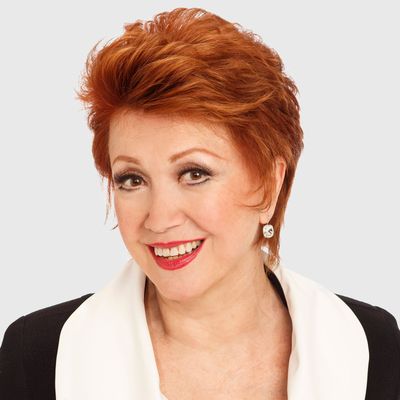
SHOWS: A Chorus Line, Company, Promises, Promises The one and only Tony Award winner Donna McKechnie, star of A Chorus Line, sits down with Rob and Kevin to look back on her incredible career which started with How to Succeed in Business Without Really Trying, and then went to The Education of Hyman Kaplan, Promises, Promises, Company, On the Town, A Chorus Line, State Fair, and The Visit!.. Read More
From the show: BEHIND THE CURTAIN: BROADWAY'S LIVING LEGENDS » Podcast
Guests
Featured Shows
About
SHOWS: A Chorus Line, Company, Promises, Promises The one and only Tony Award winner Donna McKechnie, star of A Chorus Line, sits down with Rob and Kevin to look back on her incredible career which started with How to Succeed in Business Without Really Trying, and then went to The Education of Hyman Kaplan, Promises, Promises, Company, On the Town, A Chorus Line, State Fair, and The Visit! Donna pulls back the curtain on her career to discuss how The Music and The Mirror was created, what it was like working with Bob Fosse, and why she has found new joy in her self and the art of cabaret. Also, Donna shines the spotlight on Frank Loesser, Elaine Stritch, and Dean Jones! Become a sponsor of Behind The Curtain and get early access to interviews, private playlists, and advance knowledge of future guests so you can ask the legends your own questions. Go to: http://bit.ly/2i7nWC4
Transcript
This transcript was automatically generated and might contain errors.
[0:00] Kevin David Thomas: Trick-or-treat, Rob.
[0:01] Robert W. Schneider: Oh, honey, I've been using that line for ages.
[0:03] Kevin David Thomas: Oh my God, Jesus.
[0:04] Robert W. Schneider: Sorry, sorry, sorry.
[0:06] Kevin David Thomas: Who are you going for for Halloween?
[0:07] Robert W. Schneider: Why, one of our Patreon sponsors, of course.
[0:09] Kevin David Thomas: Okay, I want to be that too, but how do I do that?
[0:12] Robert W. Schneider: Well, my little ghoul, head on over to Patreon.com, that's P-A-T-R-E-O-N.com, and search for BEHIND THE CURTAIN BROADWAY'S LIVING LEGENDS, and set a monthly donation, even a dollar a month helps us.
[0:23] Robert W. Schneider: Your contributions help us continue doing what we are doing and bringing the legend stories to your ears.
[0:29] Kevin David Thomas: I'm thinking about going as Sergio Franchi myself.
[0:32] Robert W. Schneider: So do yourself.
[0:34] Kevin David Thomas: Maybe Tim Curry, actually.
[0:36] Robert W. Schneider: Anything can happen on Halloween.
[0:38] Kevin David Thomas: You don't turn into a cat.
[0:40] Robert W. Schneider: Charles Strauss.
[0:41] Kevin David Thomas: We need the green screen.
[0:42] Robert W. Schneider: We need the green screen.
[0:44] Robert W. Schneider: Hi, I'm Rob Schneider.
[0:46] Kevin David Thomas: And I'm Kevin David Thomas.
[0:47] Robert W. Schneider: And this is BEHIND THE CURTAIN BROADWAY'S LIVING LEGENDS.
[0:50] Kevin David Thomas: Don't forget to follow us on Twitter, at BroadwayCurtain, and make sure to join our Facebook page of BEHIND THE CURTAIN BROADWAY'S LIVING LEGENDS.
[0:58] Robert W. Schneider: And follow us on Instagram at BroadwayCurtainPodcast.
[1:00] Kevin David Thomas: Plus, you can always listen to our podcasts on Broadway, World, and Stitcher.
[1:04] Robert W. Schneider: For so many, she is the epitome of Broadway. As an enthralled audience member, her ability to tell a story through her fantastic use of language, music, and body is akin to no one. And her ability to do it all so brilliantly has inspired countless artists from all across the world to enter this business, hoping they could be like her someday.
[1:23] Robert W. Schneider: Her Broadway credits include How to Succeed in Business Without Really Trying, The Education of Hyman Kaplan, Promises, Promises, Company, On the Town, A Chorus Line, for which she won the Tony Award, State Fair, Sweet Charity, to name just a few, not to mention her, uh, she's one of the most sought-after cabaret performers performing right now. To tell us what it was like to work with such legends as Frank Loesser, Rudy Valli, George Abbott, Michael Bennett, Bob Fosse, Stephen Sondheim, Ron Field, Marilyn Cooper, David Merrick, and so many more, here is the one singular sensation herself, Miss Turkey Lurkey Time, Tony Award winner Donna McKechnie.
[1:59] Donna McKechnie: Oh my god, I'm exhausted.
[2:01] Robert W. Schneider: Welcome.
[2:02] Donna McKechnie: All that work.
[2:04] Robert W. Schneider: It's incredible.
[2:06] Donna McKechnie: All those people, oh my god. How are we going to cover all of this?
[2:09] Donna McKechnie: I am such a lucky girl, just hearing those names.
[2:12] Robert W. Schneider: It's, well, we are lucky to have you today.
[2:14] Donna McKechnie: Well, thank you, my pleasure.
[2:16] Kevin David Thomas: So when did you first fall in love with dance?
[2:18] Donna McKechnie: Um, I think when I first heard classical music. I think I heard any music, and I would get up. That story, um, found its way into A Chorus Line, uh, through another character in the workshop, uh, and, um, of the character of Maggie. And I, I would, you know, dance around the living room when I would hear music, and my mother sent me, then saw this, and sent me to ballet, and it just changed my life.
[2:44] Donna McKechnie: Yeah. Those baby classes, and then the, the love of music, and especially the classical music, really touched me in a deep way, and, and, uh, it was great.
[2:55] Kevin David Thomas: And where did you grow up?
[2:57] Donna McKechnie: In, outside of Detroit, Michigan.
[2:59] Kevin David Thomas: Outside of Detroit.
[2:59] Donna McKechnie: Royal Oak, Michigan.
[3:00] Kevin David Thomas: Okay.
[3:01] Donna McKechnie: All those little suburbs.
[3:02] Kevin David Thomas: Yeah.
[3:02] Donna McKechnie: Yeah.
[3:02] Kevin David Thomas: And what do mom and dad do?
[3:04] Donna McKechnie: Um, well, mom was a 50s woman, housewife, and mother. And, uh, my father was in the tool and dye industry, which is, you know, there wasn't too many theatrical people, or, you know, people from, in, in the arts, in our, in our family. You know, the back, the backdrop was that Detroit industry.
[3:21] Kevin David Thomas: Yes, of course.
[3:26] Kevin David Thomas: And then were you performing in community theater, or children's theater?
[3:29] Donna McKechnie: No, nothing like that. I, I found a little, I was lucky to, uh, because there, there weren't a lot of dance schools at that time. And, you know, nothing like a performing arts high school. But I found a little dance school, my mother did, and, um, two dance teachers that I stayed with as I was growing up. One in Dearborn, Pamela Dunworth, who is still living, a living legend, is a master teacher.
[3:53] Donna McKechnie: That's amazing.
[3:54] Donna McKechnie: And Rosemary Floyd, who still is living. Oh, my God. Oh, God bless her. Retired, but she's a world-class teacher. She's, you know, everyone knows her. Um, and so I had good background, a good dance training.
[4:06] Kevin David Thomas: And ballet was your, was the first, the first, you know, study.
[4:09] Donna McKechnie: So when I came to New York, then I continued this, you know, I had to get a job, so I had to work. So I was introduced then, um, to, you know, Broadway dance, jazz.
[4:22] Kevin David Thomas: And you came to New York at what age did you come to New York?
[4:24] Donna McKechnie: Fifteen, fifteen, yeah. I know, it's like a cautionary tale, really.
[4:33] Donna McKechnie: It's not something I, I, when I'm able to do classes, when I do concerts, um, I kind of suggest that things are a little different now. You don't have to run away from home at fifteen to join a dance company. You can, there are performing arts, excuse me, uh, high schools and, um, and there are programs in college. You know, it's like a dancer's life is short, so it's not, that was never an option for me.
[4:59] Kevin David Thomas: So you knew that there was an urgency that you needed to.
[5:01] Donna McKechnie: I felt that there was, that there was elements to that story, though, that are more psychological. And so it was, I had an opportunity in my teenage angst. Uh, I got this, uh, an invitation to join a little dance troupe touring the South before civil rights. And, um, I thought it was my big chance and my only chance, my big break.
[5:22] Kevin David Thomas: Yeah, of course.
[5:23] Donna McKechnie: And I asked my parents if I could go to New York to rehearse and do this tour, you know, in a U-Haul truck. And they said no. And then I asked them again and they said no. And so I ran away.
[5:33] Kevin David Thomas: You really did.
[5:34] Donna McKechnie: Yeah. But I don't want to pass that on or glamorize it.
[5:38] Kevin David Thomas: No, no, no, no.
[5:39] Donna McKechnie: Because that's part of your history. But I say, you know, this, this is if I had, you know, but anyway, I thought that that was it. And in some ways, I can say that it was a good thing. I mean, it, it, it was, it was, I was on my own and it kind of fueled my passion to succeed to show my parents because I felt really bad about they were so upset.
[6:03] Kevin David Thomas: And did you go on this tour in the South before the Civil Rights?
[6:06] Donna McKechnie: Oh, my God. What was that like?
[6:08] Donna McKechnie: It was really an education. I mean, I was so naive about things. And in the South at that time, 1959, I remember trying to get to my first engagement and they used to call them Negro Colleges. And we had a series of one night performances with about six, a troupe of six or seven people. There was one male singer and I represented the modern, modern dance. And we had a ballerina and, you know, so we had different styles. And we traveled in this station wagon and, and, but before our first engagement, I left the hotel with my cleaning and a little plastic thing and tried to hail a cab to get this college. And I didn't realize that on the side of the cab, it would say for white only, for colored only. And I didn't get that, you know, and so finally I almost jumped in front of a taxi. And he, this driver, this black driver, I told him where I was going and I was crying. I gotta go to my job. And he said, well, get in, but you have to lie down on the floor.
[7:16] Kevin David Thomas: Oh, my God.
[7:17] Donna McKechnie: So I did and holding my little plastic, you know, and it just hit me, you know, this is, this, this is scary here. What's going on? And I was kind of putting it together. And when I told George Wolf, when I was going to put this in the show, he said, oh, he, I said, you know, he was afraid I would get shot or something. He said, no, he wasn't afraid you were going to get shot. He was afraid he was going to get shot.
[7:48] Donna McKechnie: So that, when I got to this place and I got there on time, and then our audience was so, uh, so, you know, wonderful to have us there performing in bringing our, you know, our, our work. Um, so that was the first night and that, that was an eye opener. And, uh, wow.
[8:11] Kevin David Thomas: So yeah, sure. I mean, like, talk about education through like experience, experience.
[8:16] Donna McKechnie: Yeah.
[8:17] Kevin David Thomas: And when the, when the tour was finished, you went right back to New York city.
[8:21] Donna McKechnie: I went to New York and was able to, I lived at the YWCA, which we, you know,
[8:27] Kevin David Thomas: You could do, I didn't know that was a thing.
[8:29] Donna McKechnie: Yeah. And on eighth Avenue, it's no longer there. It's, it's a condominiums now.
[8:34] Kevin David Thomas: Of course.
[8:35] Donna McKechnie: Yeah. And I was able to get a job at the corps de ballet at radio city. Um, that's when they had, when a lot of the ballet dancers would go to the corps de ballet, they don't have it any longer, of course, but, and it would be, you know, you do these five shows a day and, uh, they had a ballet corps and the Rockettes and the audition. And I was auditioning for ballet theater at the same time.
[9:00] Donna McKechnie: ABT. Yeah. And we should chase was, you know, we did a series of five classes and each day you'd go in, there would be less, fewer dancers. And the last day was the pot of do with the male dancer. And while that was going on, I was auditioning for the radio city cause I had to get a job and, um, and I wasn't really qualified to do anything else. I went to, you know, the Woolworth's or something, and there was some store dime, five and dime store and I filled out and I had no education. So I couldn't say it. I was so embarrassed.
[9:40] Donna McKechnie: Um, but then the audition for radio city, I've talked about this before. Um, it was so difficult. It was harder than ABTs audition in some ways.
[9:52] Kevin David Thomas: Okay.
[9:52] Donna McKechnie: Yeah. 32 foot days on the right, 32 foot days on the left. And in that football field of a, of a studio, you do releve first arabesque across, you know? Um, so I got it, uh, and that was good until I realized that we weren't really going to dance in the Easter show. We were going to just kind of pose. So I was a, you know, a crazy teenager. I wanted to dance.
[10:19] Kevin David Thomas: Yes.
[10:19] Donna McKechnie: And the ABT thing was, um, was, uh, the first time, well, Lucia chase came up to me after the week, um, and said, look, we, we don't know you. You're, you know, you're young. We're going to Russia. So why don't you stay with the school for about a year and then we'll take you into the company. Well, I took this, um, as such a rejection and I just, you know, left.
[10:44] Kevin David Thomas: Oh my goodness.
[10:45] Donna McKechnie: And it was really, yeah, it was very distorted perception. I just didn't have the wherewithal to that comes with time.
[10:54] Kevin David Thomas: Were your goals at this time when you were this young to be in the core of a ballet? I mean, was that, was that serious?
[10:59] Donna McKechnie: I wanted to be a dancer.
[11:02] Kevin David Thomas: Yeah.
[11:02] Donna McKechnie: Serious dancer.
[11:03] Kevin David Thomas: Was like Broadway an option yet?
[11:05] Donna McKechnie: No, I wasn't. I was, you know, I was, I watched the movies. There was MGM musicals and I loved all those dancers, but I wanted to be a ballet dancer, but I loved all kinds of dancing, but more than anything I wanted, I needed a job and that was, and then I got, yeah, I did something and then a West Side Story and I did a tour with Lenny Dale of West Side Story and John Mineo, who was eventually was my dance partner there. So that, and that, I came back from that and that started, you know, other things.
[11:40] Kevin David Thomas: Yeah.
[11:40] Donna McKechnie: Okay.
[11:41] Donna McKechnie: But it seems like right, right. Actually that the industrial came after that and then how to succeed.
[11:46] Kevin David Thomas: What was the industrial do you remember?
[11:48] Donna McKechnie: It was a Oldsmobile.
[11:50] Kevin David Thomas: Okay.
[11:51] Donna McKechnie: And the day when maybe you've had guests that have talked about the era about industrials because they spent millions of dollars on these. And this was, Fuhrer and Martin produced this. I mean like top notch Broadway producers.
[12:05] Donna McKechnie: Yeah. And they, it was spectacular and they had, you know, first rate people on it and designers and everything. And so I, Fuhrer, when I auditioned for it and I got it, I did the dance from Carousel and, and he pulled, he took me off the stage and brought me to the back of the theater, the Lunt-Fontanne and we sat on the stairs and he said, I'm doing a Broadway show soon and we would like you to be in it. Would you like to do that? And I went, sure.
[12:39] Kevin David Thomas: Yeah.
[12:40] Donna McKechnie: Because I was about, I got to get a job.
[12:42] Kevin David Thomas: Yeah.
[12:43] Donna McKechnie: And I thought, this is how you get a Broadway show. I found out soon after, it doesn't happen that way. You don't get a producer, a nice producer sitting down and saying, would you like to, you know.
[12:55] Kevin David Thomas: My goodness.
[12:56] Donna McKechnie: Yeah.
[12:56] Kevin David Thomas: Did you know you could sing?
[12:58] Donna McKechnie: Oh, I couldn't sing.
[13:00] Donna McKechnie: I couldn't sing. No, no, no.
[13:03] Donna McKechnie: No, I had to learn. I mean, how to succeed became my university.
[13:08] Kevin David Thomas: Okay.
[13:08] Donna McKechnie: And I, I was so new to everything. I mean, I started after West Side Story to be able to recreate Jerome Robbins' choreography was really helped me transition into a whole way of looking at musical theater.
[13:25] Kevin David Thomas: That show in itself.
[13:27] Donna McKechnie: West Side Story.
[13:28] Kevin David Thomas: Yeah.
[13:28] Donna McKechnie: Yeah.
[13:30] Donna McKechnie: Oh yeah. I felt that the, that level of our artistic work could touch a very deep place, you know, in people. And, and besides, it was just so fantastic. I mean, his choreography. So when I got to the rehearsals of How to Succeed, I was there in the room with Frank Lesser. And, you know, this is when the guys would come, you know, Frank and, and, and Cy and Ernie would come. Suits and everything. They'd have three-piece suits and ties and, you know, cufflinks and things. And by the end of the afternoon, because there was no air conditioning, everything would, you know, ties would be off. Coaches.
[14:10] Donna McKechnie: And I just loved it. I was very lucky in that, who knew it was going to be a Pulitzer Prize winning, long, you know, hit long running because I thought, well, of all the silly things I've done, the one really clever thing was to think about the longevity, you know, of, and I went, I want to do this, and I think I can do it if I learn how to do it.
[14:41] Donna McKechnie: And so all of my $166 a week went to, my rent was $75 a month, went to voice lessons and acting classes, and dad's class was like $1.50.
[14:54] Kevin David Thomas: Yeah, while you were in How to Succeed.
[14:56] Donna McKechnie: Yeah, so I was a professional student.
[14:59] Kevin David Thomas: God for you.
[15:00] Donna McKechnie: And yeah, well, you know, you can do eight a week then and do everything else.
[15:04] Kevin David Thomas: Yeah.
[15:05] Donna McKechnie: When you're that young, right. I mean, that's when you do it.
[15:08] Kevin David Thomas: Did you find a mentor within this company who sort of guided you along?
[15:12] Donna McKechnie: Well, Gwen.
[15:13] Kevin David Thomas: Gwen.
[15:14] Donna McKechnie: Gwen Verdon, who was our dance captain.
[15:16] Kevin David Thomas: Oh, yes.
[15:17] Donna McKechnie: Well, I mean, she wasn't really, she was a great star, but she was between jobs, I think, with Fosse.
[15:23] Donna McKechnie: So she was around and she was there.
[15:25] Donna McKechnie: Yeah, because she loved to do that, you know, with all of her years with Jack Cole, you know, in the films.
[15:30] Kevin David Thomas: Love Jack Cole, yeah.
[15:32] Donna McKechnie: And she loved, she didn't want to choreograph, and Chita, I think, felt the same way.
[15:37] Donna McKechnie: But she loved the work, so she loved to assist.
[15:42] Donna McKechnie: And Fosse came in after Hugh Lambert was kind of set aside, after he got stuck, which was terrible for the dancers because we loved him.
[15:55] Donna McKechnie: He was like our, because he hired us. So we had to reprove ourselves to Fosse and Gwen in a way.
[16:02] Donna McKechnie: But because they had done no pre-production, they were, she was very cute and so warm and friendly.
[16:13] Donna McKechnie: And she said we would be up all night dancing, jumping around on the bed for the next day's work because if you didn't keep those, you know, the work moving.
[16:24] Donna McKechnie: But Fosse did something really great with Hugh. He wouldn't let them fire, you've probably heard this story before.
[16:30] Kevin David Thomas: Tell us.
[16:31] Donna McKechnie: They wouldn't let the producers fire him. We were working on Paris Original for like three days, and he couldn't, he was stuck.
[16:40] Donna McKechnie: And, you know, I didn't think, we didn't think anything bad. You know, we just, well, he'll figure it out.
[16:46] Donna McKechnie: But they got rid of him and Fosse, and they brought Fosse in and he said, I want, I don't want you to fire him. Keep his name for the work he's done, and I will finish it.
[16:57] Kevin David Thomas: Classic.
[16:58] Donna McKechnie: So he stayed, you know, his one number, the big pirate number, which is fantastic.
[17:04] Kevin David Thomas: Yeah.
[17:05] Donna McKechnie: Yeah, so those are, that's part of your learning experience too, you know, kind of growing up with that and seeing, you know, the humanity in people and also the cold, you know, the hard things that go on.
[17:21] Kevin David Thomas: Were you familiar with Fosse's style of movement at this point?
[17:24] Donna McKechnie: No.
[17:25] Kevin David Thomas: Yeah, so that was all very new.
[17:26] Donna McKechnie: No, it wasn't like that then.
[17:27] Kevin David Thomas: No.
[17:28] Donna McKechnie: He evolved, but what it was like was very much like, you know, in other words, he didn't have those signature steps.
[17:38] Kevin David Thomas: Yes, the caricature things.
[17:39] Donna McKechnie: I'm doing it now, but they can't see me.
[17:41] Kevin David Thomas: She's doing a Fosse.
[17:42] Donna McKechnie: They can tell you.
[17:43] Donna McKechnie: But he had enough of the same style because he really –
[17:47] Donna McKechnie: That jazz.
[17:48] Donna McKechnie: Yeah, well, his energy would go more down.
[17:52] Donna McKechnie: It's like we were doing the coffee break number, and we would be in those angles, and we'd do very specific things.
[17:59] Donna McKechnie: I remember rehearsing our fingers, like going, you know, in our eyeballs, and we had to, in unison, and it was like fantastic.
[18:08] Donna McKechnie: I don't think it, you know, I don't think it stayed in it.
[18:12] Donna McKechnie: But he did all this very isolated work, and the energy was more up and down, do you know what I mean, but in the floor, and wonderful, great humor, and all acting-based, all character-based, and even the, you know, he –
[18:33] Donna McKechnie: I've said this before at different times, but I loved – it was my introduction to having a choreographer kind of introduce you to a young dancer, to thinking about the character, even though the character doesn't have a name in the program.
[18:49] Kevin David Thomas: Yeah.
[18:50] Donna McKechnie: You have – you're coming from some place.
[18:52] Kevin David Thomas: Right.
[18:53] Donna McKechnie: You have relationships in the office, and write a little scenario, write a little bio, and, you know, and Gwen would, you know, with stagecraft, she was always there to – she's the first person who said, when you come on stage, even if you're coming on in a number, you're coming from somewhere, and when you exit, you're going somewhere, and really know where you're coming from and where you're going.
[19:17] Kevin David Thomas: Yeah.
[19:18] Donna McKechnie: That's a good thing in life, isn't it?
[19:20] Kevin David Thomas: Oh, absolutely.
[19:21] Donna McKechnie: Oh, my gosh. That's the first time I've learned that as an actor.
[19:23] Kevin David Thomas: Yeah.
[19:24] Donna McKechnie: It is like that.
[19:25] Kevin David Thomas: Yeah, you go, oh, I don't just come on and then get ready?
[19:27] Donna McKechnie: That makes sense, yeah.
[19:28] Kevin David Thomas: Yeah, yeah.
[19:29] Kevin David Thomas: I get ready before I come on.
[19:30] Donna McKechnie: Yeah, exactly.
[19:31] Kevin David Thomas: When you were beginning to take your acting classes, who were you taking from in the city?
[19:35] Donna McKechnie: Oh, gosh, everybody. I went to Wynn Hanman, who I loved, you know, and he said I was too young, and it really hurt my feelings.
[19:45] Donna McKechnie: Because you were still in your teens, correct?
[19:47] Donna McKechnie: Yeah.
[19:48] Donna McKechnie: Yeah, okay.
[19:49] Donna McKechnie: And then I went to – I'm just trying to think – Frank Asaro, and where else?
[19:57] Donna McKechnie: Oh, Uta Hagen was my – I went to HB.
[20:00] Kevin David Thomas: Yep.
[20:01] Donna McKechnie: It was such a noble place. I mean, I'm sure you know about it. I mean, it's still going.
[20:06] Donna McKechnie: And then when I did Charles Nelson Riley, who was teaching a musical theater class, he was in the show with me. You know, I was in the show with him.
[20:15] Kevin David Thomas: Yeah.
[20:16] Donna McKechnie: And he was my first musical theater teacher at HB.
[20:21] Kevin David Thomas: What are some of the lessons you either took from his class or Uta Hagen's class that you still implement today?
[20:27] Donna McKechnie: Oh, well, Uta, she – you know, you would go into class with Uta. First of all, I have to say one thing before. They were very noble in that, you know, they made it very inexpensive for young artists.
[20:44] Donna McKechnie: And she, at that time, she didn't want you to languish in class for year after year after year. She wanted you – you had to be – you couldn't stay longer than two years. She said anything that you're going to learn in this class, you're going to learn in two years, and then you have to go out and learn from experience.
[21:04] Donna McKechnie: And I had already been working, so I kind of knew what she was saying was kind of wonderful.
[21:13] Donna McKechnie: And I remember she was the first – well, her exercises were so great about, you know, being on a phone and just certain basic things, where you look, where you are, the place. If you're doing an audition, you know, and you're doing a scene, you have – when you think of it on the – I mean, you can take that phone exercise and expand it, but you're on the phone, and where do you look? Where do your eyes rest? What do you see? Are you thinking of what you're looking? Are you on – what is your – you know, your thought process as you're talking, what are – you connect. I mean, it was just a wonderful thing.
[21:50] Donna McKechnie: And also, she said, all that gook coming out of your eyes. When young actors, actresses especially, you know, to use that, you know, old-fashioned word, I still do it. You know, they get emotional, and you love the drama, and she would say, it's just gook. You know, she said, it doesn't matter. It's always – and I think the most important thing that she or any acting teacher taught me was it's all about the intention, you know, and play the intention. Whether you're whispering, if you can whisper and be heard at the back of the theater if you make your intention more specific and more important. So those are the things that I learned for the stage that were – yeah, were wonderful.
[22:39] Kevin David Thomas: And how long were you with How to Succeed?
[22:41] Donna McKechnie: Two years.
[22:42] Kevin David Thomas: Two years.
[22:43] Donna McKechnie: So it was like my university. I was able to stay. I was able to stay with that show, you know, to keep studying, and then to once I – oh, my first voice teacher, Maurice Jampol, said, well, let me hear you sing, and I'll see what, you know, where we are with your voice. And his standard thing was to sing if I loved you because in two or three, four bars, right, you could tell if someone knew how to breathe to sing. And I did, and he said, oh, that's great. The good news is that you have – you can't sing. You have no bad habits. You sound like a butterfly's fart in a windstorm. That's what he said to these delicate ears.
[23:26] Kevin David Thomas: Yeah, so eloquent.
[23:31] Donna McKechnie: It was shocking.
[23:32] Kevin David Thomas: Shocking.
[23:34] Donna McKechnie: Wow, okay. Did that paralyze you or did that make you say I'm going to learn?
[23:39] Donna McKechnie: Oh, well, I mean I was almost ready. Well, I was very shy, and I realized that I had to learn, you know, production.
[23:48] Kevin David Thomas: Yeah.
[23:49] Donna McKechnie: And so I liked the part where he said you have no bad habits. So I thought, well, that's good. Let's start with that one. That's a positive. And, yeah, so I learned, and, yeah, and Paul Gabbard studied with him. Judith – I mean a lot of different teachers, and I was – it was, yeah, and it was a steady, steady growth.
[24:11] Donna McKechnie: When I was – my first singing audition was for Stephen Sondheim. Before I know who – I didn't know who Stephen Sondheim was, there was an opportunity to audition for Philly, and a funny thing happened on the way to the Forum, the national tour.
[24:26] Kevin David Thomas: The tour, yeah.
[24:27] Donna McKechnie: And so I auditioned, and I was terrified.
[24:31] Kevin David Thomas: Do you remember what you sang at all?
[24:33] Donna McKechnie: I – Marvin Hamlisch played. Marvin Hamlisch was just out of Juilliard and played Baubles, Bangles, and Beads from Kismet.
[24:43] Kevin David Thomas: That's a good song from Philly.
[24:45] Donna McKechnie: And I was so nervous that I took it up a third as I started. And so I was like, you know, it was like, Baubles, Bangles, and Beads, but it was higher than that, I think. It was like a chipmunk, you know.
[24:59] Kevin David Thomas: Oh, my goodness.
[25:00] Donna McKechnie: So I had to start again, and this made me really nervous. And, of course, Philly, I didn't have any knowledge, really. You know, there's a timing thing. She's like this dopey, you know, totally –
[25:16] Kevin David Thomas: Ingenue, but like –
[25:17] Donna McKechnie: Yeah, a little vacant.
[25:18] Kevin David Thomas: A little vacant.
[25:19] Donna McKechnie: Hasn't been in life yet. But it was written by Larry Gelbert so beautifully, so funny. But my timing, anyway, to make a long story short, my timing, because I couldn't see my text, was so perfect that it made George Abbott just fell off his ILC laughing because I was good, and I didn't know why I was good. I was just not able to read quickly.
[25:41] Donna McKechnie: And it took me that whole year of touring the show to really find that audition.
[25:52] Kevin David Thomas: But the part, your first singing audition, you got.
[25:56] Donna McKechnie: Yeah.
[25:57] Kevin David Thomas: I mean, what? That's wild.
[25:58] Donna McKechnie: It was perfect for that, you know, the quality I had, but I knew nothing, really. And it was a great experience to do the show, you know, for a year and then try to find the role.
[26:13] Kevin David Thomas: You did the tour and then back to New York City, correct?
[26:16] Donna McKechnie: Mm-hmm.
[26:17] Kevin David Thomas: And then what comes next for you?
[26:19] Donna McKechnie: I think Hullabaloo.
[26:20] Kevin David Thomas: Hullabaloo.
[26:21] Donna McKechnie: Yeah, so tell us a little bit about the great thing that is Hullabaloo.
[26:24] Donna McKechnie: Well, I mean, it was, again, I mean, a job.
[26:28] Kevin David Thomas: TV, right?
[26:29] Donna McKechnie: It was TV, yeah, yeah. And, again, it's like it was exciting because it was David Winters. When I came to New York, all of those dancers in West Side Story were iconic to a young dancer. They were, and many of them became my teachers when they started classes.
[26:48] Kevin David Thomas: Right.
[26:49] Donna McKechnie: And David Winters was auditioning dancers, and that's when I met Michael Bennett. You know, he was auditioning as well, and Gene Castle.
[26:59] Kevin David Thomas: Oh, wow.
[27:00] Donna McKechnie: I'm trying to think. You know, Patrick Arriardi and really terrific, you know, Leland Palmer.
[27:06] Kevin David Thomas: Yeah.
[27:07] Donna McKechnie: And, yeah, so we did this and it was fun. It was the pop music, you know, of the 60s, and I got that.
[27:18] Kevin David Thomas: And very quickly for our viewers who might not be aware, what exactly was Hullabaloo?
[27:23] Donna McKechnie: It was a television show in which...
[27:26] Donna McKechnie: NBC, which was a variety show, but it was very, you know, it was a wonderful entertainment because they would have guest hosts every week, all the, you know, great, great TV stars, and the NBC orchestra, Peter Matz conducting.
[27:44] Kevin David Thomas: Oh, wow.
[27:45] Donna McKechnie: Was it filmed live? I mean, this is when...
[27:48] Kevin David Thomas: Yeah.
[27:49] Donna McKechnie: Probably. I mean, I feel like everything was...
[27:51] Kevin David Thomas: Well, there was an audience, but I don't know if it was filmed and shown live. I think it was not, but there was a live audience.
[27:57] Donna McKechnie: But you still were performing in front of an audience.
[27:59] Kevin David Thomas: Yeah.
[28:00] Donna McKechnie: And then your next Broadway show was The Education of Hyman Kaplan, correct?
[28:03] Donna McKechnie: Yeah.
[28:04] Kevin David Thomas: So what was this show?
[28:05] Donna McKechnie: Well, this is a show that the story that my true life story in going to one of my teachers from West Side. He was choreographing this and George Abbott was directing.
[28:20] Donna McKechnie: And I begged him for a job. This element in my personal life was part of Cassie's character. Because I had to, again, I was trying to survive. And I was in this unhappy marriage. And it was a short-lived marriage. That was the good part about it. But I was unhappy, and I had to get out and I had nothing to live. And so I went to Jaime and I said, I'll do anything. I'll just, you know, I'll get you coffee. I mean, I just need to have a job, you know. And it's like Cassie. But it's a different thing. And he said, well, sure. And it was odd because it was about the, there was no character like me in the show. But he, you know, it's like New York City. So, and then George Abbott saw me in rehearsal and said, well, she has to be, she's a dancer, she can be in the show. She doesn't have to be your, you know, coffee catcher. So, thanks to George Abbott, then I was in the show.
[29:31] Kevin David Thomas: So, we like saw you in the rehearsal?
[29:34] Donna McKechnie: Well, he knew, I don't, so I think I was there the first day, but he heard that I was, you know, going to be working with Jaime, assisting him in some way. And so, thanks to Jaime and George Abbott, then I was back on the boards. And just, it was a wonderful, wonderful experience.
[29:55] Kevin David Thomas: When you were in New York and you were performing, were you still in contact with your family back in Michigan?
[30:01] Donna McKechnie: Oh, yeah. By the time I opened, see, it was great for me to be able to invite them to the opening of How to Succeed, because then I felt so guilty, it sent me to therapy. So, with all this very little money I got, I managed to find money for therapy, because I just was so guilt-ridden. So, I was able to share that opening with them. And I think it made them more, because all a parent wants is for you to be safe and happy, right? So, that was very helpful.
[30:31] Kevin David Thomas: And healing.
[30:33] Donna McKechnie: Yeah, yeah. I mean, it took me a while longer, I think.
[30:36] Kevin David Thomas: Sure.
[30:36] Donna McKechnie: It really disturbed our family, but...
[30:38] Kevin David Thomas: But your parents were able to see that you were going to be okay, that you belonged in the arts.
[30:43] Donna McKechnie: Yeah. Promises, promises came into your life.
[30:45] Kevin David Thomas: Yeah.
[30:46] Donna McKechnie: I mean, speaking of Michael Bennett. I was, well, I got hired by David Merrick, and I was very proud. I don't know why, I didn't resent dancing, but I didn't want to be labeled. Now that I was still achieving something, I got it as a singer. I got that role, this small role, because of my singing audition. I was very proud of that, because it was always so hard. And then Bob Moore was a great director, and we were out of town. And we had to take, or he had to take half an hour off the show. So, certain characters were cut, and those little three scenes with the three secretaries were going to go. And Michael needed a first act finale. And my job was saved, because he knew from Hullabaloo that I was a dancer, and he liked my dancing. And so, I got, I was saved. So, I started embracing dance again.
[31:45] Kevin David Thomas: So, there were scenes with the secretaries?
[31:47] Donna McKechnie: Yeah.
[31:48] Kevin David Thomas: Oh, interesting. I never knew that.
[31:50] Donna McKechnie: With some of the men.
[31:52] Kevin David Thomas: Oh, interesting.
[31:53] Donna McKechnie: But it was like an extra 20 minutes they didn't need. It was too long. I think I had one line left. What about next Tuesday? That was it. Funny I remember that.
[32:04] Kevin David Thomas: One line is better than none.
[32:08] Donna McKechnie: So, for so many, come Thanksgiving time, the video of Turkey Lurkey makes its way the rounds. So, can we talk a little bit about the creation of that number?
[32:20] Donna McKechnie: Well, yes. I wrote about all this in my book.
[32:25] Kevin David Thomas: Yes. And the title of your book for our listeners?
[32:27] Donna McKechnie: Yes, Time Steps, My Musical Comedy Life.
[32:30] Kevin David Thomas: Yes. And please buy a copy. It's one of the best autobiographies about show business. Yes.
[32:36] Donna McKechnie: Well, that was, Michael, this was Michael Bennett's first big hit as a choreographer. And also, the score by Burt Bacharach and Hal David. Phil Roman, who was a great studio producer, a music producer, came in. It was the first covered pit on Broadway, first computerized show with Robin Wagner's magnificent set of this apartment that would come down and back up. And then we'd have the office coming in. And it was all beautifully, it moved, it flowed. It danced. And high tech.
[33:18] Kevin David Thomas: Yeah, yeah. Really, the first. But anyway, this number, Michael was, at that point, trying to be truthful and honest with his work in a way that, like Fosse was, or Robbins was his, that was the man he wanted to most emulate. So, he put the Turkey Lurkey together first, as if it could really happen this way. So, the dancers, he had this idea to move the dancer, the dancers move the desk together, and these three secretaries get on top of the desks, and as if they made their own choreography at home in their living room, and as if they made their own costumes. So, we had these turkey feathers and silly things, and a big turkey hat on top, a hat. And we did this dance to this song, like we choreographed it.
And it was so bad. He choreographed bad choreography to be real and make a point and be funny. And the audience looked like Springtime for Hitler. They were opening night in Boston, their jaws were out. I was like, what? And of course, the feeling tone of that whole audience was felt at the back of the theater, because Michael was back there going, and Neil Simon was head and hands, and Michael's going, I can fix it. I can fix it. I can just see him doing that. I can fix it. So, he and Bob Avian went to their hotel, and that little mirror in the back of the closet, they stood there and posed and choreographed the whole dance number in front of that little mirror. And they came in the next day, and they taught it to... Not the next day, it was like soon after. I mean, there was another dance number that was cut also, Marriages for Single Girls, which was wonderful. I love that song. It's on the outtakes of a CD.
[35:21] Kevin David Thomas: Lost in Boston.
[35:22] Donna McKechnie: Yeah, Lost in Boston. Yeah. Boston was really important. Philadelphia, Boston, all those towns were so important to those shows then.
[35:31] Kevin David Thomas: Yeah, the development.
[35:33] Donna McKechnie: Some of the best songs were written, and some great songs were taken out. Anyway, so the night the dance number went in, it stopped the show, and so that was it.
[35:46] Kevin David Thomas: There's two methods of, it seems, bringing a musical to fruition, which is one was the out of towns in Boston and Philadelphia. And nowadays, it seems like there's all these workshops and readings. Do you have a preferred method in terms of putting a new show on or being part of?
[36:02] Donna McKechnie: Well, no. I think there are different ways to do it successfully. I mean, it's hard to just come in and do a show. I mean, it's hard. First of all, it takes a lot of money and time. And what I'm involved in now is, I don't think I can talk about it, but a new musical, and we're doing what they call an industry reading, to take the first step, and then get the backing, and then get the support, and then you have to coordinate the theaters and all that. I love going out of town with the show. But now, the regional theaters are doing great things and developing things for either workshops in New York, or then they take a stepping stone kind of thing to theaters out of town. And then if you can find life, if they find the courage and the money, then they can bring it in. Off-Broadway shows move. It's important, though, I think. The venue can really make or break a good piece of work. So some off-Broadway shows are great the way they are.
[37:20] Kevin David Thomas: How do you keep yourself motivated for long runs? How to Succeed was two years, and you said that was an educational?
[37:28] Donna McKechnie: Yeah, yeah. I never was a fan of long runs. By that, I mean, I love to be in a show and have the experience, but I wanted to keep growing. I was a kid, but then in my 20s, and I wanted to keep growing and expanding and doing a lot of different things. So one of the reasons I love cabaret is that eight shows a week is really hard. And I've enjoyed doing some shows in the last few years. There were eight shows a week, but they were limited runs, like in London and with Carefree, with Warren Carlyle's piece, and at the Old Globe in San Diego, which was a beautiful, beautiful show, just so wonderful. So that's all been great, but small runs. But I've never been in a show that, even Chorus Line, I think it was 14 months, which isn't long when you consider, well, how long that show ran, and other shows like Chicago. I just wanted to grow as an artist. I mean, it sounds kind of rarified, but I just really wanted to keep growing because I knew so little when I first came here.
[39:01] Kevin David Thomas: Do you feel like everything that you've wanted to do at this point, you've achieved in terms of challenging yourself as an artist?
[39:05] Donna McKechnie: Oh, no. There's more. There's still a ton more that you want.
[39:07] Kevin David Thomas: Well, because I don't think of it that way, because as you grow and you change, and then certain things, you have an ability to express things in a different way, and you start going, oh, that would be good for me.
[39:27] Kevin David Thomas: Is there anything right now on that? I don't want to say a bucket list, but is there anything now that you're itching to try or a challenge you're willing to take on that you haven't done just yet?
[39:37] Donna McKechnie: I mean, just like this piece, this is just a wonderful opportunity, because I love to create from the get-go, from scratch. And because the writing is so good, it's going to be a wonderful thing to be able to get into. That's where I find real joy. I guess a piece of advice I would give is don't try to manipulate things too much, because the opportunities will be there. You create them. You create the demand, however. It's not about being passive. But once you put yourself out there and things that you really love to do, other things will come. When I look back, I go, why was I so worried all the time about things? Do you ever have that feeling?
[40:27] Kevin David Thomas: Oh, absolutely.
[40:28] Donna McKechnie: You go, had I known then what I know now, I wouldn't have given myself such a hard time and been so distressed.
[40:39] Kevin David Thomas: Enjoy the moment more, yeah.
[40:41] Donna McKechnie: Well, and then trust. That is the biggest challenge, to find in a business that's so insecure, where you deal with so much rejection, to have your support team being yourself. Love yourself. Trust yourself enough that you are enough. That kind of cliched saying now. But it's true.
[41:06] Kevin David Thomas: It's true.
[41:06] Donna McKechnie: Yeah. And just keep learning. And Fosse, to be able to work with him and Gwen 25 years after that first time in How to Succeed, the last day of his life, he sat us down, because we were opening that night in Washington with Sweet Charity. And he talked to us like a father. And those are the things he said. Don't get up in the morning and say, well, how can I be better? Not just as a performer, but as a person. Be able to face your weakness or find your weak spot. What you need to improve on, in other words. And then do it. And don't compete with anybody else.
[42:30] SHETLER STUDIOS & THEATERS:
[43:00] SHETLER STUDIOS & THEATERS:
[43:30] SHETLER STUDIOS & THEATERS:
[44:00] SHETLER STUDIOS & THEATERS:
[44:30] SHETLER STUDIOS & THEATERS:
[44:40] SHETLER STUDIOS & THEATERS:
[44:50] SHETLER STUDIOS & THEATERS:
[45:00] SHETLER STUDIOS & THEATERS:
[45:10] SHETLER STUDIOS & THEATERS:
[45:20] SHETLER STUDIOS & THEATERS:
[45:30] SHETLER STUDIOS & THEATERS:
[45:40] SHETLER STUDIOS & THEATERS:
[45:50] SHETLER STUDIOS & THEATERS:
[46:00] SHETLER STUDIOS & THEATERS:
[46:10] SHETLER STUDIOS & THEATERS:
[46:20] SHETLER STUDIOS & THEATERS:
[46:30] SHETLER STUDIOS & THEATERS:
[46:40] SHETLER STUDIOS & THEATERS:
[46:50] SHETLER STUDIOS & THEATERS:
[47:00] SHETLER STUDIOS & THEATERS:
[47:10] SHETLER STUDIOS & THEATERS:
[47:20] SHETLER STUDIOS & THEATERS:
[47:30] SHETLER STUDIOS & THEATERS:
[47:40] SHETLER STUDIOS & THEATERS:
[47:50] SHETLER STUDIOS & THEATERS:
[48:00] SHETLER STUDIOS & THEATERS:
[48:10] SHETLER STUDIOS & THEATERS:
[48:20] SHETLER STUDIOS & THEATERS:
[48:30] SHETLER STUDIOS & THEATERS:
[48:40] SHETLER STUDIOS & THEATERS:
[48:50] SHETLER STUDIOS & THEATERS:
[49:00] SHETLER STUDIOS & THEATERS:
[49:10] SHETLER STUDIOS & THEATERS:
[49:20] SHETLER STUDIOS & THEATERS:
[49:30] SHETLER STUDIOS & THEATERS:
[49:40] SHETLER STUDIOS & THEATERS:
[49:50] SHETLER STUDIOS & THEATERS:
[50:00] SHETLER STUDIOS & THEATERS:
[50:10] SHETLER STUDIOS & THEATERS:
[50:20] SHETLER STUDIOS & THEATERS:
[50:30] SHETLER STUDIOS & THEATERS:
[50:40] SHETLER STUDIOS & THEATERS:
[50:50] SHETLER STUDIOS & THEATERS:
[51:00] SHETLER STUDIOS & THEATERS:
[51:10] SHETLER STUDIOS & THEATERS:
[51:20] SHETLER STUDIOS & THEATERS:
[51:30] SHETLER STUDIOS & THEATERS:
[51:40] SHETLER STUDIOS & THEATERS:
[51:50] SHETLER STUDIOS & THEATERS:
[52:00] SHETLER STUDIOS & THEATERS:
[52:10] SHETLER STUDIOS & THEATERS:
[52:20] SHETLER STUDIOS & THEATERS:
[52:30] SHETLER STUDIOS & THEATERS:
[52:40] SHETLER STUDIOS & THEATERS:
[52:50] SHETLER STUDIOS & THEATERS:
[53:00] SHETLER STUDIOS & THEATERS:
[53:10] SHETLER STUDIOS & THEATERS:
[53:20] SHETLER STUDIOS & THEATERS:
[53:30] SHETLER STUDIOS & THEATERS:
[53:40] SHETLER STUDIOS & THEATERS:
[53:50] SHETLER STUDIOS & THEATERS:
[54:00] SHETLER STUDIOS & THEATERS:
[54:10] SHETLER STUDIOS & THEATERS:
[54:20] SHETLER STUDIOS & THEATERS:
[54:30] SHETLER STUDIOS & THEATERS:
[54:40] SHETLER STUDIOS & THEATERS:
[54:50] SHETLER STUDIOS & THEATERS:
[55:00] SHETLER STUDIOS & THEATERS:
[55:10] SHETLER STUDIOS & THEATERS:
[55:20] SHETLER STUDIOS & THEATERS:
[55:30] SHETLER STUDIOS & THEATERS:
[55:40] SHETLER STUDIOS & THEATERS:
[55:50] SHETLER STUDIOS & THEATERS:
[56:00] SHETLER STUDIOS & THEATERS:
[56:10] SHETLER STUDIOS & THEATERS:
[56:20] SHETLER STUDIOS & THEATERS:
[56:30] SHETLER STUDIOS & THEATERS:
[56:41] Donna McKechnie: We're certainly not ready. We called it the towering inferno, actually. People were just like, this is before Michael realized that he had to make it growing up in the line. In other words, that's when he discovered that, because we were all talking about our childhood dilemma, and we were all competing with who had the worst childhood, it seemed, because yeah, we knew that they were writing, you know, our stories, so we wanted to make them interesting. But after that, when Marvin Hamlisch and Ed Kleban came in, and James Kirkwood, especially, that's when it all kind of went at the ballet was the first song that we heard as a company. And that's when I knew, if not a commercial success, it would certainly be an artistic success, because that number was like the heartbeat of what it is to be a dancer. And I went, that really spoke true.
[57:41] Kevin David Thomas: And you said a majority of that was your life story, correct? Or a portion of it was your life story?
[57:48] Donna McKechnie: Yeah. See, the characters became a composite, because a lot of people had the same experiences, believe it or not, or certainly the same feelings. For all of those that will get to play the role of Cassie at some point, what advice do you have to pass on about who she is?
[58:06] Donna McKechnie: Oh, first of all, I say my apologies. That number is really long. Take care of yourself, get a lot of massages. I don't know. I love it when I see the actor bring her own point of view with the character. The character is, I think, one technical thing. I've seen it where the end of the scene is played in the beginning too often. And if you get that defensive in the beginning of that scene, when you're finally able to talk to your ex, he can kick you out at any second. And if you start being defensive, and it becomes tedious, the scene. And I think that moment to moment play, the discovery. The discovery is in the scene as different levels of what he's really saying. I remember feeling that it's hard for me to grasp what he's really doing.
And then as I get more and more that he's saying no, it evolves. And then the dance happens, the song. So everything is that seamlessness. It's justified by the growth of your emotion. And then when you go into the dance, which is even more heightened. To any Cassie that I've worked with, I say it's like being this person who is fragmented. And that's why the choreography is very stark and angular at first, because she's overdoing it to try to willfully do it. And then she becomes more of a whole. She finds the joy in the circle step. And then she finds a more complete, solid, confident person at the end. She's willing to face him, face off with him and say, I'll take chorus if you'll take me.
And challenge him to be a bigger person maybe, or grow from this, or give me a second chance. When Cassie didn't get that second chance a couple times, it was really depressing. I'm talking a lot, you got to stop me.
[01:00:25] Kevin David Thomas: No, this is good.
[01:00:26] Donna McKechnie: And that's when Marsha Mason, who was married to Neil Simon at that time, was able to come and be another voice with Michael to say, I followed that character's through line. And if she doesn't get the job, nobody wins. Because nobody learns anything. And Zach, she's really upending his whole rehearsal, I mean, his audition. So that was a really good thing. So it's very exciting to be part of something where you see these little, but big changes happen that make all the difference between success and failure.
[01:01:04] Kevin David Thomas: Yeah, that dance, the Music in the Mirror dance, how did you guys, I mean, did you collaborate?
[01:01:12] Donna McKechnie: And the music, I mean, we were in his living room. Marvin was at the piano, Bobby Thomas, who was, you know, on drums, always at Michael's rehearsals. You know, I would say, well, what about a four, four? I was going, in my mind, I wanted to take it to different places, emotionally. So we were just like, what about a four, four? What about slowing it, doing a slow section here? And then, and I don't know whether it just was all, and then Marvin would, who was brilliant, would be sitting at the piano kind of, you know, musically doing what we were just throwing out there. And that was a beginning. You know, that was just a beginning to get a shape. And then as we worked on it, it wasn't dancing being so abstract.
You know, you work in different vocabulary, and there would be a more yearning section, the slow section, where she discovers her body, that the feelings come back into her after the first part being very stark. And then everything softens. And the three elements that I started thinking of was the line, the mirror, the reflection, am I still here? Am I invisible? All those metaphor, things that you have in a dance number, and him. So there were three points. And that's something I always just tell that the Cassies to just keep that in mind as an actress. And it's like, keep discovering, you should go and let it build. And so we have a beginning, a middle and an end, which is just sounds very simple. But it's, it's everything. It's everything. Yeah, we do dancing, singing, and acting. All of it. Yeah, it transfers, it transfers to Broadway. And it's this massive phenomenon. What's it like to...
[01:03:05] Donna McKechnie: That's a transfer that was good. From an off Broadway show, where the musicians were in the wings, you know, there was no pit. So can you imagine those first audiences who didn't know they didn't know what they were seeing? It was never advertised. And they you hear the piano and then they turn around and hear this orchestra coming from somewhere. So it had a bigger scope than what it looked. But the Broadway transfer, everyone loves to go was it going to transfer? And yeah, it did very well. It was a great time to have was the first and only opening I've had where I had no nerves because it was it's like we were all just celebrating it. Yeah, we knew we were, you know, that we had a good show for the audience and the audience had seen it already.
You know, yeah, several times. Exactly. It was a great celebration, I think, you know, and then what was it like? I mean, you're walking down the street, and there's your face on a national magazine. And there you are on television. How do you?
[01:04:04] Donna McKechnie: It was hard. It was hard because my father just died and all those things that you go through in life. But no, I was I had enough experience by this time to know that it doesn't happen all that often. So you have to just go with it and be there as much as you can to receive a Tony Award. I remember that's one of the things I kept thinking, just try to be here in the moment so you can appreciate it because it might never happen again and just be there so you can take something in, you know, and I knew it was just in Michael was because he wasn't doing the show. I remember we were at Sardi's celebrating a group of us. And he said, I think he was already worrying about his next project. What do I do now?
Yeah, this was the show that he wanted to deliver a show for dancers, his Valentine, you know, and, and he said, Don't ever compete with this show. It has a life all its own. It's up there. Don't ever compete. And I went, Well, all right, that's, you know, I won't. But I didn't know what he was talking about. I'm a little slow with these things. But I do now because it does he was starting to feel how hard it was for him to. Sure. What do I do now? Yeah. How do you where do I go from here? That because that was already so brilliant. So then well, it's also the show does have a life of its own. You know, he did something quite more than he even realized. Nobody knew in those workshops, and especially when we started performing it, even we knew would be an artistic success, I think, generally, but no one knew if it would it how far reaching it could be. Yeah. So he had a sense of it. Anyway. Yeah, what a surprise.
[01:06:01] Kevin David Thomas: Yeah. So after you do your run on the chorus line, then where do you go? Where do you go after this? I mean, do you need time to decompress and say, let me focus on a new artistic project or ready for a new?
[01:06:09] Donna McKechnie: Well, yeah. I mean, I don't remember. I went to LA. That's why I don't remember. LA has that effect on people.
[01:06:16] Donna McKechnie: I wanted to get out, I, I just gone through a difficult time, strenuous time, exhausted marriage, divorce, I lost my home. I went, okay, new beginnings. Yes, I am my own person. I'm going to have to pick myself up, dust myself off. And I went to Hollywood. I went to LA, I had friends out there. And I loved it for a while. And I love doing the television that I did out there. I did some wonderful specials and worked with Peter Matz again on a special and you know, just, but I was really, really homesick for New York and theater. I wasn't doing the theater that I wanted. And I came back to New York with a play with it with Georgia Engel. Yeah. God, miss her. God bless her. And we did this little musical and it got me back to New York because I needed that connection to be in a show.
And then it and I went, I remember literally looking at myself in a mirror and saying, what do you want? You know, and I, I don't remember how old I was, but I was over 45. And I said, do you and I went, I talked to myself in the mirror. Have you ever done that? It's very interesting. And I said, I want to do theater. And then I said to myself, said, I then do it, then do it. And so that's, that was the beginning of staying in New York and doing a lot of different things and then getting into breaking into creating my own show and then doing the cabaret, doing that scary thing.
[01:08:02] Kevin David Thomas: So what, what do you have lined up now? First of all, you're doing this amazing cabaret act, which is getting fantastic reviews. People love it.
[01:08:06] Donna McKechnie: Yeah. Well, I have two shows. I have one with Andrea and I'm doing my own two places, but yeah, I'm yeah, I'm doing this podcast show that I mentioned a little too much. Let's talk about this.
[01:08:19] Donna McKechnie: I don't know. It's a kind of a side thing, but it's becoming a, you know, a wonderful thing. We film it at Sardi's. So you have the option to see it and hear it or just hear it. So it's called the ladies who lunch and Dori Berenstein is producing it with her company. And, and the podcast covers.
[01:08:38] Donna McKechnie: And we just have lunch. It's the ladies who lunch. It's kind of like, we're the women that Sondheim did not have in mind when he wrote that song because we don't, we, we never have time to lunch, you know, but I thought, what a funny, quirky thing. If we can get women to sit down, who are busy, especially, you know, who are still going strong.
[01:09:01] Kevin David Thomas: Of course. So for example, on your first episode or one of your episodes, who have been some of the people?
[01:09:06] Donna McKechnie: Okay. The first episode, um, by York Lee, Priscilla Lopez and Kelly Bishop.
[01:09:10] Kevin David Thomas: Oh, oh.
[01:09:11] Donna McKechnie: So it's a little reunion show.
[01:09:13] Kevin David Thomas: Oh my goodness.
[01:09:13] Donna McKechnie: Well, I'm ready.
[01:09:14] Kevin David Thomas: Yeah.
[01:09:14] Donna McKechnie: Wow.
[01:09:15] Kevin David Thomas: We cannot tell you how much we appreciate you coming in. You are so wonderful.
[01:09:19] Donna McKechnie: It's my pleasure.
[01:09:20] Kevin David Thomas: Thank you for being with us.
[01:09:21] Donna McKechnie: Open that book a little bit and then going into the past.
[01:09:24] Kevin David Thomas: Yeah.
[01:09:25] Donna McKechnie: We appreciate that. Thanks for taking us there.
[01:09:27] Donna McKechnie: My pleasure.
[01:09:27] Kevin David Thomas: Until next time.
[01:09:28] Donna McKechnie: Bye everybody.
[01:09:32] Kevin David Thomas: Today's episode was recorded at Shetler studios on 244 West 54th street. Visit Shetler studios to book your room today. And you could be as cool as us. That's S H E T L E R studios.com.
[01:09:45] Kevin David Thomas: And a big thanks to our sound editor, Daniel Schwartzberg and social media manager, Bethany and Selecki.
[01:09:51] Kevin David Thomas: And friends, don't forget. We want more folks to hear these incredible stories and that's where you guys can come in and help us out.
[01:09:57] Kevin David Thomas: Yes. In order for people to find out about us, we need lots of ratings on iTunes. The more ratings, the more they'll come up in searches. So head on over to iTunes, search for behind the curtain Broadway's living legends, click on our logo, click on ratings and reviews, then write a review and leave us five stars and make us feel as special as Eliza Doolittle on Eliza Doolittle day.
[01:10:19] Kevin David Thomas: Or you can leave us one star and make us feel as bad as Annie did in that weird production in Boston where Annie dreamed about being adopted and then ended the show back in the orphanage. True story. Rob was there.
[01:10:32] Kevin David Thomas: I saw it. So head on over to iTunes and make us feel even more special than we already do.
© Broadway Podcast Network, All Rights Reserved