

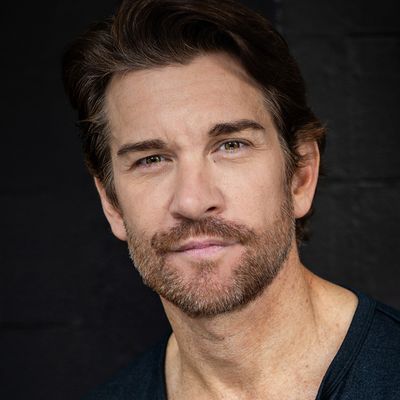
Andy Karl steps into The Batter's Box for Episode 48! Karl is an Olivier Award Winner and 3-time Tony Award nominee with more than a dozen Broadway credits to his name. One of those credits includes a performance that's beloved by our sports fans in Rocky the Musical, in which he portrayed the iconic Rocky Balboa... Read More
From the show: Break A Bat! where Baseball Meets Broadway
Guests
Featured Shows
About
Andy Karl steps into The Batter's Box for Episode 48! Karl is an Olivier Award Winner and 3-time Tony Award nominee with more than a dozen Broadway credits to his name. One of those credits includes a performance that's beloved by our sports fans in Rocky the Musical, in which he portrayed the iconic Rocky Balboa. With other Broadway credits that include Legally Blonde, Jersey Boys, Pretty Woman, and Groundhog Day, Karl has some great behind the scenes stories about 'championing through' those roles as told to host Al Malafronte in this episode.
With an athletic background of his own, Karl also discusses working in percentages to make it through sometimes grueling Broadway schedules, as he says gearing yourself up for a show is in so many ways like gearing yourself up for a game. This mindset is not unlike what made Baseball Hall of Famer Cal Ripken Jr. so successful for Karl's hometown Baltimore Orioles, and led to a fascinating conversation about what it would take a Broadway performer to achieve the equivalent of Ripken's record-setting streak of 2,632 consecutive performances on the field.
Hosted by Al Malafronte
Produced by the Broadway Podcast Network
Edited by Matthew Hendershot
Photo: Walter McBride
Connect with Andy Karl on Instagram: @andy_karl and Twitter: @andy_karl
Connect with Break a Bat! on Instagram: @break_a_bat_podcast
Transcript
This transcript was automatically generated and might contain errors.
[0:08] Al Malafronte: Hello and welcome to the Break a Bat Podcast where baseball meets Broadway, an attempt to show that my two favorite mediums don't have to live in such separate worlds and maybe even break some stigmas.
[0:20] Al Malafronte: We're happy to have you with us. Now let's play ball.
[0:26] Al Malafronte: Hello and welcome to Break a Bat. I'm your host, Al Malafronte, coming at you for the Broadway Podcast Network.
[0:33] Al Malafronte: Uh today we're joined by a 20-year Broadway veteran with some phenomenal credits, including Saturday Night Fever, Legally Blonde, Wicked, 9 to 5, Rocky the Musical, and most recently Pretty Woman.
[0:46] Al Malafronte: Here on Broadway, he's actually a three-time Tony Award nominee. And on the West End, an Olivier Award winner for his performance in Groundhog Day.
[0:55] Al Malafronte: We're really happy to welcome him to the podcast. So with that being said, if you'll please turn your attention to home plate. Now batting.
[1:14] Andy Karl: So nice to be reminded.
[1:18] Andy Karl: You know, before May. That's amazing. We need all the positive reassurance that we could get in these times.
[1:26] Andy Karl: Exactly. Um, yeah, certainly. Um I and you're doing, you know, a great service by doing these interviews. I mean, I've listened to so many of them, and I just love it. It's really interesting.
[1:36] Andy Karl: It's your interesting approach on the world that you know we are in as far as Broadway, and then peppering it with your favorite thing, baseball.
[1:48] Andy Karl: So I think it's, I mean, for me, it's like it's interesting because it's like, uh, when I heard about it, it's kind of how I reacted to when I heard about they were going to audition for Rocky, the musical.
[2:02] Andy Karl: I was like, why would anyone do that? So it's just like it was like, how do you fit those two worlds? How do you make Rocky into a musical and or how do you do a podcast about baseball and Broadway?
[2:14] Andy Karl: Then I listened, then I was just like so involved and so invested in people's stories because it's beyond that because you make the bridge happen, you close the gap.
[2:27] Al Malafronte: Well, thank you. I, you know, what it's a labor of love. And, you know, when I get to talk to folks like you, it's even more of a thrill because you know, rumor has it that you were quite the high school baseball player.
[2:37] Al Malafronte: I think you got to tell us about that.
[2:40] Andy Karl: Uh yeah, um, according to some. Uh no, I really loved it, loved Little League.
[2:48] Andy Karl: I um they called me the Polish Cannon because I had such an arm at that point, probably from lanky limbs, uh, able to get a lot of velocity on that ball.
[2:59] Andy Karl: But um I played a hell of a little league game, uh, all county for that, and it was great.
[3:06] Andy Karl: Uh then I got involved in swimming kind of around actually earlier than baseball, I was involved with swimming.
[3:14] Andy Karl: So I had sort of this like swimming during one part of the season and then going and playing baseball at another part of the season.
[3:24] Andy Karl: Um it was very athletic. And then I mean, I wanted to discuss this with you guys as a sort of like how guys approach baseball and sports and all that stuff.
[3:41] Andy Karl: And obviously, and I don't want to get dark with the conversation because this happens to a lot of guys or and women as well who get involved in sports and they have their fathers with them throughout like a certain part of their getting into it.
[3:57] Andy Karl: Then my parents got divorced sort of when I was around 13 or 14, and I completely lost interest in sports.
[4:06] Andy Karl: I like didn't want, I, it's sort of also the same time I sort of got involved with singing and going in another direction and becoming involved in theater.
[4:15] Andy Karl: So my connection with like baseball and theater stopped at one point and it picked up with theater.
[4:22] Andy Karl: So I don't know if that's ever occurred with anyone you ever talked to or is in your life.
[4:28] Andy Karl: And I'm an older person now, it doesn't bug me as much. It was just interesting to think about and interesting to think about guys who get involved in sports and how it prolongs itself throughout its life.
[4:39] Andy Karl: It could be involved with your father or a family member, and then something happens, and then you no longer have interest. Have you heard anything like that before?
[4:47] Al Malafronte: Well, I can relate from personal experience in the sense that so I lost my dad when I was 15, but you know, so right around the same age.
[4:55] Al Malafronte: But what was interesting was, you know, especially for me, it was a little different because you know, you still had your dad around.
[5:02] Al Malafronte: Um for me, especially being 15, that's such like it's a crazy age as it is. Baseball, and I was doing sports in the arts, you know, from age 10 through that point.
[5:14] Al Malafronte: Um the Yankee thing almost went to another level for me just because it was a way to keep his memory around.
[5:21] Al Malafronte: It was a little bit different with you because you know, I, I you were living with your mom at that point, um, after the divorce.
[5:28] Andy Karl: Yes.
[5:28] Al Malafronte: So yeah, it became sort of like they didn't want to see each other. I was sort of like going between two households, and it just seemed like the, uh, his involvement with like creating a new life and my mother trying to like, you know, create a new life as well, and me going on through school, feeling sort of like disassociated with something that I connected heavily with my father, kind of like didn't happen anymore.
[5:52] Al Malafronte: And my brother really was older than I was, so he had like he had moved out and that kind of stuff, but it was interesting because I know this for sure.
[6:01] Al Malafronte: I know over the years I've examined that part of like why did I like lose interest completely? It's like, oh, it's your, you know, it happened right around the same time you had you were involved with this divorce with your parents, which, um, and they're both lovely people.
[6:14] Al Malafronte: It was just, uh, it was a matter of like something I shared with him, and now I was living with my mother, and so that it just sort of like, you know, dissipated that way.
[6:23] Al Malafronte: No fault of anyone's, you know, don't want them to be miserable in their marriages, but I certainly, it's just sort of like, oh, that's something I'm not gonna do anymore, not gonna be involved with that.
[6:32] Al Malafronte: Um, it'll be a distant memory until you know, much later when the Broadway softball league started up and I dove head first into it.
[6:43] Al Malafronte: Now I know you're from Baltimore when you were playing Broadway softball league. Were you trying to emulate Cal Ripken in the infield?
[6:46] Al Malafronte: Were you trying to emulate, like were you pitching like a Jim Palmer? Because I know you're a Baltimore guy, so these are the parallels that are coming to mind.
[6:55] Andy Karl: That's see, that's you're talking like that's the stuff I was really into. I was really into the Orioles right at that heyday with Cal Ripken Jr. and Eddie Murray.
[7:05] Andy Karl: Uh, you know, Earl Weaver was, you know, their manager. It was a great time for the Orioles.
[7:11] Andy Karl: So that's another thing. It's kind of like the Orioles sort of lost speed after like '84 or something.
[7:17] Andy Karl: And you know, I think they're picking back up now. Um, it was just, it was very strange.
[7:23] Andy Karl: But yeah, to I, I sort of, you know, when I was growing up, like Cal Ripken Jr. was like he was the SHI.
[7:32] Andy Karl: And uh you can finish that word. Um it was, uh he was the man, and it was so wild.
[7:40] Andy Karl: I remember that's the memories I have of going to the field and um seeing him, Eddie Murray out there, and just, uh was it Frank Robinson as well, all those guys were just amazing.
[7:51] Andy Karl: Um that's, that's my heyday with it. So I think I left on a good note.
[7:57] Andy Karl: And obviously it picked up the arts as well.
[8:00] Al Malafronte: Let me ask you, uh, you know, being a guy who went from being an athlete and then into the theater world, you know, from high school and then onward.
[8:07] Al Malafronte: How was that viewed? You know, as a guy, uh, you know, who was considered pretty jockey to that point, and then you know, kind of made that transition, you know, growing up, you know, was it viewed as cool to do both sports and the arts where you grew up, or was there a stigma, or just give me a little insight into that?
[8:24] Andy Karl: I don't think it was viewed as uncool. It was, uh, my mother played organ for her church. Music was always around.
[8:31] Andy Karl: Um, and she's the one that had the Tommy, who's the Who's Tommy soundtrack and Jesus Christ Superstar, um, West Side Story.
[8:41] Andy Karl: She had the albums in the basement. And so, um, music was constantly around my house.
[8:48] Andy Karl: The arts was sort of involved. So I think people expected that, oh, of course, Andy's gonna, you know, know music and he's gonna sing in the chorus at his elementary school and his high school, uh, because, uh, his mother literally is a musician.
[9:03] Andy Karl: Um, so, uh, it wasn't that it was not cool. It was just something that none of my family had ever like done before.
[9:16] Andy Karl: Like my mother was definitely an organ player, a church player, and a teacher, and my dad was like construction worker, uh, you know, baseball, everything sort of like that, and there was the separation.
[9:29] Andy Karl: So I had them around the house all the time. Um, it's just that no one had ever mixed the two.
[9:34] Andy Karl: And I was I was probably the first to like gap that bridge.
[9:39] Andy Karl: Bridge the gap.
[9:41] Al Malafronte: Yeah, you, yeah, bridge the gap, exactly.
[9:44] Al Malafronte: Like kind of like what we're doing on this podcast with the sports.
[9:46] Andy Karl: Exactly.
[9:47] Andy Karl: Exactly. You're bringing me back to my, you know, my roots in a sense, things I've avoided for years.
[9:54] Al Malafronte: Well, we're happy to be the show to do that. And, uh, you know, obviously it's cool that your mom, you know, had that musical and artistic background.
[10:02] Al Malafronte: You're gonna enter a very challenging industry that is acting, and then, you know, eventually Broadway.
[10:07] Al Malafronte: Uh did you have your parents' support at that time?
[10:11] Andy Karl: Yeah, I mean, because there was music in the house, it wasn't like I was doing something crazy.
[10:11] Andy Karl: It wasn't like I was all of a sudden singing when nobody else had ever heard songs before in the house.
[10:22] Andy Karl: Um, so I think they invested themselves into me having the curiosity to go do it.
[10:31] Andy Karl: Um, but my brother, who was five years older than me, he was kind of the wild kid in our family, and he's the one that like, you know, went off any crazy stuff.
[10:42] Andy Karl: So I always look like, you know, nerdy Andy, um, in a sense.
[10:47] Andy Karl: But I was, you know, I, I which means I got a lay, I got away with a lot of stuff, um, especially just sort of like finding out what to do with myself.
[10:55] Andy Karl: And so when I, um, here's here's the story.
[11:00] Andy Karl: I'm such a bad kid. Um, so I was in, uh, high school. I was in my second year of high school, and, uh, a friend of mine was in the bathroom smoking, and I went in to go to the bathroom during one of my classes, and he was like, Boom.
[11:16] Andy Karl: I was like, what? Oh, he's just smoking away.
[11:18] Andy Karl: He's like, hands me the cigarette. I go, never did this before.
[11:22] Andy Karl: I take it and in walks the vice principal.
[11:27] Andy Karl: And he just nails me, and like we go to the office.
[11:30] Andy Karl: That my friend doesn't go to the office, he's the one that's staying in the bathroom.
[11:34] Andy Karl: So gotten so much trouble.
[11:36] Andy Karl: Uh, I got, uh, suspended for like a week, and my mother, who's a teacher, mind you, freaking out, doesn't know what to do, and just like, and I'm just sitting there like, I don't know what to do either.
[11:49] Andy Karl: So she kind of encourages me because I had been singing in the chorus in high school and in middle school, she encourages me to go audition for a, uh, a music, a children's musical, uh, out in Baltimore at a dinner theater.
[12:06] Andy Karl: That's what hooked me because I met this family of actors and directors and people are putting together costumes and everybody's sort of, you know, putting together a stage show.
[12:19] Andy Karl: And I was like, this is it. This is my new family. This is exactly what I was looking for.
[12:23] Andy Karl: I needed to like, I needed to be a part of something, like I was in sports when I was younger.
[12:23] Andy Karl: I needed to be part of putting together something, and I've I never looked back.
[12:35] Andy Karl: And, uh, I think my parents saw that. Certainly my mother saw that and was like, oh, that's, that's what he's gonna do.
[12:41] Andy Karl: That's what he's going to be involved in. Because I was totally curious about it.
[12:45] Al Malafronte: When you were growing up, musical theater, especially on Broadway, uh, was so different from what you see now.
[12:50] Al Malafronte: And it's pretty interesting. You've kind of found a niche in the movie musicals.
[12:54] Al Malafronte: Did you ever envision, you know, like entering into this industry, you'd be in anything from Saturday Night Fever to Pretty Woman, then of course, uh, Rocky the musical, for example.
[13:05] Andy Karl: Dude, are you were you old enough to have seen Tommy on Broadway?
[13:11] Al Malafronte: I was born in '90s. So actually, my first show was uh Once Upon a Mattress, '97.
[13:16] Al Malafronte: So I think it was just after that.
[13:18] Andy Karl: It was good.
[13:18] Al Malafronte: Alex Hara Jessica Parker.
[13:20] Andy Karl: So my once upon a mattress was uh Tommy, uh, the Who's Tommy on Broadway.
[13:27] Andy Karl: I, um, I knew that album backwards and forwards just from the soundtrack from the movie, and from like I was really into The Who and Led Zeppelin and Pink Floyd and all that kind of stuff.
[13:39] Andy Karl: Um, and then I heard, and I was getting into musicals kind of at the same time, and then I heard that Tommy was going to be on Broadway.
[13:46] Andy Karl: I was like, oh my God, stop everything.
[13:50] Andy Karl: I went up and I saw I went back and forth to New York eight times.
[13:55] Andy Karl: I saw that show. I was obsessed.
[13:57] Andy Karl: It's the one and only show that I've ever done that for.
[14:00] Andy Karl: And um, I was the spectacle of it all, the uh the soundtrack coming alive for me. Um, it sort of it melted my brain in this thing. It's like, this is you're if you don't do this, this is you're dumb because it was it was it was a calling at that point. It was it was everything sort of I was involved in coming together at a at a hilt. So that was it. I I just sort of uh I got hooked on that show, and it it, you know, you you see the person you are before you or hear you, hear the person you are hearing from. Now, I mentioned the movie musicals. Rocky is obviously very popular among our sports fans, at least the movie was. Um, how did that project come about? Uh Rocky, uh, as I said before, I was like, uh, I heard from my agent at the time that they were auditioning, and um I was uh my first reaction was that's ridiculous.
They can't how are they gonna make Rocky into a musical? This guy talks low and slow, and he, you know, he's kind of like a like a bumbling guy, he doesn't know how to get anywhere. Um, and make him sing. I was like, that's it's just not gonna work. Anyway, I go back and I watch the movie because I was like, all right, I'll go in. Is this a joke? No, it's not a joke, let's do it. I go and watch the movie, and all of a sudden, this like beautiful independent film that I rem I'm reminded of again, the the for the first Rocky. I'm reminded how beautiful and uh heartfelt, and then the championing at the end, where you can't help but like every time you watch it, you just you're in your seat, like you just want to leap up and be like screaming for Rocky, and you're watching every hit come alive.
And I was like, oh, I need to do this as a musical. Um, this is something that I've never done before. It's sort of creating this uh iconic character again and making him sing when nobody's going to expect how beautiful it's going to be. Um that was really thrilling. It was sort of uh getting getting the idea that this character that has nothing comes up and and fights for you know the championing of himself as well as for his community. Um so I go in, or no, I don't go in. I I send in a tape. They send in a uh a tape. We don't send tapes anymore. I um I sent in uh through uh video on my computer my audition, which was sort of in my living room because uh they were, I don't know where they were, they weren't, I couldn't get to them or something.
So I sent it to them and I sang, I think some like uh something from Eddie and the cruisers um in a tank top, which we're both wearing right now. Um thanks for exposing me, Andy. Appreciate it. Because you have to be. Uh no cats, I think, as well. Um so I I uh I send the tank top because I just wanted to get the you know, the vibe, like he's in a tank top half the time, or you know, he's in his boxing gear. They gotta see the body, gotta see, and I wasn't nearly as fit as I was going to be once I did the show. Um, but something clicked. I sort of knew how to handle this guy and make him somewhat real and and heartfelt and as beautiful as the movie wanted the character to be. And so it's like, you know, Stallone plays it the best because it's him, it's his baby.
Um, but I I sort of I wanted to emulate that. And uh anyway, they saw that the video. It came to them on a two-inch screen because somehow I got the platforms mixed up and sent this like tiny, tiny little video of them that they could barely of myself that they could barely see, but something, something that uh Aaron's and Flarity saw um proof that I could come in and and do a callback. And uh once I walked in the room with this part, sort of I had like maybe another week to work on it and the songs and this the sides and and remember what the you know the beautiful the beauty and the honesty of the film. Everything just sort of clicked into exactly what I just felt completely comfortable with it.
And I I sort of knew that I owned the character when I was doing that audition. Um and like the next day they called. So it was it was really uh that was thrilling. That was uh that was a thrill, but I also knew that uh-oh, I have a mountain to climb with this show. This is gonna be kind of epic.
[18:54] Al Malafronte: Now I know Sly came to see the performance. Did he give you any feedback or any uh did he tell you how much he enjoyed it? What did uh Sly tell you when you got to meet him?
[19:04] Andy Karl: Yeah, he's I mean, he's he's a tough nut to crack, and I was also totally respectful. I was like, I'm not gonna, you know, I'm gonna do the best I can with this because it deserves it. I'm bringing 120% every time to the rehearsals and also to the performance. Um he he it's so ingrained in his DNA, this role, it's really interesting, the story. Yeah. And he's done a million franchises. And he's, but this is the one that sort of set his uh his existence in our movie, you know, cinema world, and for the rest of you know, time, it seems. Um, so I had it's like I needed to be respectful of that. So maybe I didn't like, you know, come in strong, like, this is what I want to do with it. This is I let him talk.
Um, it was some really interesting conversations. Um, we met approximately five times. Um, the first time was I had never met him before, but we were putting together the reading for the first time at at uh Juilliard in some room at Juilliard. And um, we're there, we're basically with our you know, books, books in front of us, and um it's the day of the presentation, and he walks in and it's freaking Sylvester Stallone. It's Rocky about to see my performance of Rocky. And I was like, I put aside the freaking out. I was like, don't do it. Don't you dare freak out. You you open your mouth and speak because when your first words come out of you uh as the character, which I don't remember the exact first line, but I definitely used the voice uh of him to sort of emulate that.
It's a very tricky game with that role. He was he was sitting like you know five feet in front of me, and I was, you know, I was I was pretty, I was pretty much freaking out. It was it was it was interesting, but he loved it. And afterwards he told me it's like he's like, you get it, you get the humility, you get you understand this character we can sit we're gonna talk about it and he gave me some you know ideas to think about especially um the song in Rocky's heart which is smile though your heart is breaking it was it was interesting that he chose that song as as character as his character because this guy kind of smiles or at least gets through this horrible world that he lives in and this horrible town he's got no money he's a terrible boxer and he works for a guy who basically breaks legs and he's a leg breaker and it's um it's interesting that you know Rocky chose chose to you know smile and he wants to do the better idea of what he's doing he doesn't he doesn't want to break people's thumbs he doesn't want to have to do that he knows he has to to make some money but he's like let's you know he lets people go away it's that it's really interesting it's like he wanted a better life for himself and he was given the opportunity and then what does he do with that?
He takes the opportunity and runs which is kind of how I thought about the role I'm like what am I going to do with this tremendous opportunity to play this role I'm gonna step up like Rocky and I'm gonna you know champion through that's so true of uh you know what baseball players and actors and actresses you know deal with on a daily basis uh you know in Broadway so I think that that role uh is such a great embodiment of so many things on so many levels and you know I I just wanted to ask you I know that I mentioned before that you have done a lot of uh movies, churn musicals. Do you have a favorite role on Broadway that you've done? I know you've done some great ones.
[22:51] Andy Karl: Yeah, I mean, they're all obviously great for so many reasons. To get an opportunity to play Rocky was pretty much pretty incredible. Um, that in itself, and sort of and the staging that Alex Timbers did, the the fights at the end, the um there's there was so much the heart of that. It was but what on the flip side of that is a character like Phil Connors from Groundhog Day, which is sort of the complete opposite of Rocky. It was somebody who like takes somebody who has just doesn't care about anybody else's problems and kind of wants them to move out of the way so he can get to the next thing. Um the great thing about um Phil Connors in Groundhog Day is that he lives sort of the opposite journey that Rocky does, where he's a real jerk and he's he doesn't sort of see the people around him, or if he does, he dismisses them because he has no time.
He does not care about your problems, he does not care about you or Punks A Tani, and he wants to get the hell out of there. Uh towards the end, the journey to Phil's Connor, Phil Connor's uh show at the end is that he realizes that everybody around him makes him better, makes him the person that he is, makes him stronger. Um, Groundhog Day used so much uh of what I had to offer as far as an actor, as far as a musician, as far as a comedic actor, as far as slapstick, uh, as far as emotional. Um, it just utilized so much of what I had had inside me. And it also had a very huge metaphysical idea behind it and the magic of it and how to how do you respond to these incredible times? And honestly, right now in the world we're living in, I feel like we're all living a little bit of Groundhog Day.
[24:46] Al Malafronte: I can imagine, you know, speaking of the world we're living in now, you know, let's say if Broadway comes back in January, like they're talking about. I know we've spoken to some folks who've, you know, maybe talked about the spring. They might feel more comfortable performing then. Uh, what are you doing right now to stay on your game during the pandemic, Andy?
[25:04] Andy Karl: Ugh, it isn't it, it's harder. It's like hard some weeks and then it's easy some weeks. I mean, you've got this podcast going on. So you got like you got a game plan. Like my plan is like, all right, I'm gonna write the great American play for everybody to know. And then there's some weeks I'm like, I can't write a thing, and I toss the whole script in the trash. Um, or I, you know, it's I think the thing about it is like um it's regiment. You have to keep yourself in some sort of regiment in order to sort of deal with what we're dealing with. So working out and doing that stuff in the morning, which I'm, you know, it's you're working out like, what am I working out for? I don't understand. Um so that you keeping the hope alive, I think is the big thing, and keeping the hope alive for Broadway to come back.
And and we all wanted to come back because it's so affected our lives. It's why we're talking about it right now. It changed the course of my entire life. How do I get that back? Um, I also have to be able to accept change because I think Broadway, I I'm sure all for the better. I know I know it's going to change for the better because it's going to be something else and something that we're aware of. We've had theater through our lives and all that kind of stuff. It's it's existed for hundreds and hundreds of years, but it's going to be a little bit different when we come back because it's it's a matter of maybe we'll be more appreciative of it, maybe we'll be less into a certain type of show. Maybe we'll want to see a message that's that can really speak to all of us for what we just went through with all this. Um it will be interesting because I I don't have the answers of when and how.
[27:37] Al Malafronte: You sound awesome. I did. That was that was really it was nice because again, it's a it's a remote thing, so you don't know what's really happening when you're recording it. You don't know who's gonna appear on these things, but then you know, Pat Illopone is on it and all these incredible, you know, mainstays of your your of your life as far as actors and and musicians. And um, it was great. It was it was a great uh charity to to to give a little something for.
[28:03] Andy Karl: And I think that's how we're all dealing with stuff right now, is like trying to give as much as we can in order to feel like you know we belong on this earth and are a part of something and to be asked to do something like that was great and to you know be on the same screen with Kermit the Frog, always awesome. He's my Cal Ripken Jr. of my childhood. I do wonder on the baseball Broadway parallel side if you could ever get someone to appear in 2632 consecutive shows, let's say over the course of a few years, because at baseball you have an off season obviously and you know sometimes you're in between shows, but I wonder if someone would ever do 2632 on Broadway. Consecutive? Has somebody in Phantom of the Opera done that? I did, there's got to be people that are close. I know like shows don't run that long that many performances.
[28:56] Al Malafronte: Like, you know, right? You have to have a show run that long and Phantom of the Opera did, or is it there yet? I don't even know if it's there yet, but you know, so they had a little hiatus. They had a little hiatus. I think Lion King is the longest consecutive one right now.
[29:11] Andy Karl: Oh wow, so you know you gotta have some crew guy in the back who's been there every single day.
[29:15] Al Malafronte: So we'll give it to him.
[29:17] Andy Karl: Yeah, we'll give him the Ripken credit. Exactly. No, I mean yeah, look my wife Orfe like never calls out. She's freaking cords of steel, it's amazing. I'm gonna knock on wood, but um it's wild. I try to live up to that, you know, I have missed a few shows like Groundhog Day when I tore my ACL completely. I had to miss a couple shows and um so that was tough for me because I loved it so much. Which makes you think that Cal Ripken must, Cal Ripken Jr. must just love the game that much that he will show up. I'm sure he's had some 80% days.
[29:56] I'm pretty sure he's shown up with a cough and not feeling at his best, but he got through, or they, you know, maybe they didn't play him as long for a few innings, or I'm not so sure. But we should check that out. That'll be interesting to know if he ever had like an off day, because what we do as actors, I think we deal with percentages as far as like going back into work. So if I'm at 80%, I'll still show up. I'll just have to warm up a lot that day. If I'm at 100%, obviously. But below that 80, it's like I'm just not gonna give the audience a really good performance. This just won't be good. If I'm gonna cough or like, you know, sneeze or sound like Kermit the Frog in one of these performances, I can't do that to them. Or you just buck it up, you know, stretch it out, vocalize and say, I feel sorry for this audience, and then you get back out there on the stage.
[30:58] Al Malafronte: Well, Andy, anytime I've seen you on Broadway, you always give 100%, at least from what I've seen. And I hope you can bring 100% to this final segment that we do to wrap every show on Break A Bat. Here we go. All right. Now, are you familiar with who I know you're a little rusty on the baseball, but do you know who Aroldis Chapman is?
[31:17] Andy Karl: No.
[31:18] Al Malafronte: All right. So Aroldis Chapman is the fastest throwing man ever. He's the closer for the Yankees, a six-time All-Star. He holds the record for fastest fastball. He once actually threw 105 miles an hour. And now he's actually Cuban. They call him the Cuban Missile, but since Broadway's kind of gotten a hold of him because of our podcast, they call him the Apex Predator. So it's a comparison to Regina George. So what I want you to imagine, Chapman's on the mound, he's bringing in heat. I'll ask you a question. You say the first thing that comes to your head. How does that sound?
[31:54] Andy Karl: Great.
[31:56] Al Malafronte: All right. Favorite New York City meal.
[32:00] Andy Karl: Uh, Daniela's pasta.
[32:03] Al Malafronte: Now, when you say Daniela's pasta, are we talking like red sauce, clam sauce, vodka sauce?
[32:09] Andy Karl: Uh, they have a great linguini with white sauce, linguini with clams in white sauce. I'm Italian, I can very much appreciate that answer.
[32:16] Andy Karl: Yeah, it's delicious. And it comes, and there's a lot of it. So that I love that too, especially after a show, just pounding down pasta.
[32:24] Al Malafronte: Team Jeter or Team A-Rod.
[32:28] Andy Karl: Ooh, um, I'll go Jeter. Why not?
[32:32] Al Malafronte: What's your answer?
[32:35] Andy Karl: As a player, it's Derek Jeter. But in retirement, A-Rod's a cartoon character. It's just so entertaining to me. I'm so fascinated with his behavior and his life off the field. I've kind of like shifted to Team A-Rod. I'm gonna look him up and see what shenanigans he's gotten into.
[32:58] Al Malafronte: All right, I hope your ribs are pretty strong with those morning workouts, Andy, because you might break one watching something.
[33:04] Andy Karl: You know, I love a funny guy, so I might switch my answer.
[33:10] Al Malafronte: All-time favorite film.
[33:13] Andy Karl: Oh man, that's a good one. Um, Princess Bride is really up there. Come on. Uh, Ferris Bueller changed my life. Karate Kid, I just give you three. Um, but we'll stick with Princess Bride.
[33:28] Al Malafronte: All right, and it, you know, from what I gather about your musical taste, you're pretty big classic rock guess. What's your Desert Island album?
[33:36] Andy Karl: My Desert Island album. Actually, like lately, I've gotten into bluegrass covers of like 90s rock tunes. It's so much fun because you re-listen to the song that you loved from the 90s, and you're like, oh, those lyrics are really deep and profound and work in any type medium of music, any type of music. And um, so it's been really interesting. I'll take a bluegrass album of, uh, I don't know, Van Halen. Why not?
[34:10] Al Malafronte: What's the coolest moment that you've gotten to share on stage with your fellow Tony nominee wife Orfe?
[34:18] Andy Karl: Um, I am not telling people to film shows, but we had the privilege to film Legally Blonde with MTV. Some of my favorite, like I'm able to look at that and the two of us just laugh at ourselves at the characters we were playing and playing opposite each other as Kyle the UPS guy and Paulette the hairdresser. And uh it's still up there. Had so much fun with that.
[34:55] Al Malafronte: Most embarrassing on stage moment.
[34:59] Andy Karl: Uh funny enough, with my wife when we first started dating, and I was kind of I was so out of my league with her. I was put, we were in Saturday Night Fever on Broadway, and I was the understudy to the lead, but it was my first time going on as Tony Monero. And I walk out into the scene that we do together as Annette and Tony, and I'm just like, I'm staring at this gorgeous girl that I'm really into in my life, and it just sort of like wipes away all my lines in my head, and she covers for me for about three or four lines, and then I get back on track when I start dancing. So thank God for her.
[35:45] Al Malafronte: Switching to the, well, that's actually a positive. Usually when we transition from this question to the next one, I say, well, switching to positive. But that's a, we certainly give you plenty of negatives. I'll just go with that one. Like, yeah, ripping out my knee during in the middle of a show on Broadway. That's the worst and embarrassing and awful. But I got over it. It's not bothering me at all.
[36:11] Andy Karl: Proudest moment of your career.
[36:14] Andy Karl: Uh, probably that same night that I ripped my knee out. Um, crawled off stage crying, looked around. Um, Andrew Call, who was on that side of the stage, talking in my ear, saying, You're right, buddy, we got you. Brings over a knee brace and like wraps it around my knees. Crew people are helping me out. Um, everybody's sort of like really worried, awful moment. I'm in tears. Um, because this is two nights before I open the show on Broadway, and I'm thinking it's over. Something clicks in my head. I hear Rocky, you know, keep on standing, that kind of thing. I start thinking about the show must go on, which is really cliché, but it's it, and then I start thinking about the part of the show that I just ran off stage.
I had just become the Phil Connors, the good Phil Connors, and I was helping everybody out, and I had hurt myself and I was crawling. So I had one more song to sing called Seeing You. And uh I was like, damn it, I need to complete this story. So my proud moment, um, you know, maybe people have judgments of it, is that I wrapped my leg up and I got it back out there, and my whole cast was like, yeah, and the audience was like screaming, so like just so happy that I'm doing it, and I was like, oh, I'm teaching myself a lesson, and I'm teaching everybody else, I guess, a lesson. I didn't, I wasn't trying to teach everybody a lesson. Everybody's joining on this moment right now, which brought theater to a very high level in my brain as far as what it can do and how it can affect people.
Um, and I finished the show and sang that song called Seeing You for the audience, for my cast members, and for just the elements of life about being able to see everybody in front of you and realize them and love them and try to see them for the first time. And it was a very artist life moment and very proud of that one.
[38:24] Al Malafronte: Lastly, best piece of advice anyone ever gave you.
[38:32] Andy Karl: Oh, so much. Yeah, that people must always have trouble with this because as actors, and I'm sure as baseball players, we get a lot of advice along the way. Some things inspire us to get over small hills and up big ones and over top of other ones. It all just goes down to the first spark of wanting to take this on as a life as an actor. My director in Greece back in Baltimore when I was like my first year of college, he had seen a lot of Broadway shows, he had seen a lot of people and a lot of actors, and he pulls me aside, and he's a pretty crusty guy. He didn't really like give compliments at all. But he pulled me aside. He's like, I think he's like, have you ever thought about like really doing this as a profession?
Because I think you could do this. I mean, to hear that as a person who kind of like, I do this because I love it, sort of thing, but to hear like, oh, you think I'm good enough? I may have not been, I wasn't all that good back then, but I spent the rest of my life like improving and taking on challenges and knowing that this was my mission. And that was the fire. It was one person to tell you you're good, you should try doing this, and you should follow your dream. And so that was a really important turn in my life.
[40:03] Al Malafronte: Well, Andy, this was awesome. I cannot wait to see you back on Broadway, and I cannot thank you enough for joining us tonight on Break A Bat.
[40:10] Andy Karl: I hope to see you there too, man. Thanks for the interview. It was great. I talk way too much about weird things, and I just really glad that you're doing this for me and for all of us. So keep doing it, man. I appreciate it, brother.
[40:26] Al Malafronte: And um, Andy, if everyone wants to connect with you on social media, where can they find you?
[40:33] Andy Karl: Uh, at Andy underscore Karl, Twitter, Instagram. That's all good. You know, my wife sort of set it up for me, so I kind of just like, oh, I see messages from people, and I go, and I like them. That's about it. That's my technology. I can press a little heart button. That's me.
[40:53] Al Malafronte: These days you're better off not being that engaged with people.
[40:56] Andy Karl: Oh my god. You know, it's, you can sit on your phone all day, and that's probably what we're all doing. I mean, we're on a computer right now.
[41:02] Al Malafronte: Oh man, let's go get outside and throw some ball, man.
[41:04] Andy Karl: Yeah, let's do it, Andy. You're the man, brother. And uh to the batheads at home, thank you so much for joining us tonight. This is Al Malafronte signing off for the Broadway Podcast Network. We'll see you next time.
[41:17] Andy Karl: Thanks for listening to Break A Bat. This is produced by the fine folks at the Broadway Podcast Network. Visit and subscribe at BPN.fm slash breakabat. You can find me online at break underscore a underscore bat underscore podcast. And you can also find the Broadway Podcast Network on Instagram at Broadway Podcast Network. It's been so great having you here with us today, and we'll see you next time. See you next time.
© Broadway Podcast Network, All Rights Reserved