

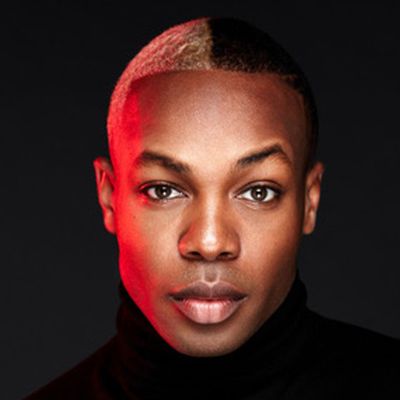
This is the episode I have been waiting for. If the doors to Broadway aren’t opening for you, find a window! YouTube sensation Todrick Hall is so inspiring. He talks about how he created his own opportunities using social media... Read More
From the show: Breaking Broadway with Kerry Butler
Guests
Featured Shows

About
This is the episode I have been waiting for. If the doors to Broadway aren’t opening for you, find a window! YouTube sensation Todrick Hall is so inspiring. He talks about how he created his own opportunities using social media. Learn how to make social media open your window to Broadway!!
Produced by Dori Berinstein and Alan Seales
A proud member of the Broadway Podcast Network.
Transcript
This transcript was automatically generated and might contain errors.
[0:04] Todrick Hall: Once I played a panty who just couldn't stop the bee. Yes, with all their skits on her feet. Although just recently to see. A real cool mom. Musical version of Tina. Tina Thai. Now come with me, Apple Mai.
[0:41] Kerry Butler: I am your host, Miss Kerry Butler. Together, you and I are breaking Broadway. Hello, welcome to Breaking Broadway. I am so excited to welcome our guest, Todrick Hall, who is so kind. He's just in from LA and he offered to squeeze in doing this podcast. He is a singer, songwriter, dancer, actor, director, choreographer. He was an American Idol star, became a YouTube star with over three million followers, performs in huge venues, and has been on Broadway, starring in Waitress. Thank you so much for taking time out of your day to join us.
[1:25] Todrick Hall: Thank you for having me. I'm such a huge fan of yours. I know you know that, but I'm a super, super fan. So tell everyone about your journey. Did you grow up loving theater, or what did you want to be when you were little?
[1:39] Todrick Hall: Well, when I was growing up, I was very like just sheltered, not exposed to theater at all, didn't even realize that it was a thing until a teacher in my elementary school found me and took me to see The Nutcracker. And I immediately like fell in love with everything. Not just like what I saw on stage, but like the smell of the fog machine, like the orchestra like tuning up, and like I just fell in love with everything about theater. And so I knew that I wanted to do it, but I didn't know that there was anything other to do than ballet. And um then I started doing ballet, and then I started working at Six Flags over Texas as in the theme park. And um I realized very soon, like I loved Disney World.
And my family was like, we grew up very poor, and there was no way we were ever gonna be able to go there. So every year I would record the Christmas parade and I would teach myself all the choreography from the parade shows. And I just knew that I loved it. Every day I would run home from school, like I would imagine kids used to run home and watch the Mickey Mouse Club, or like they do in Hairspray to go watch the Corny Collins show. And I would just I would just dance all day. Like I would do choreography I knew, makeup choreography, and it was the only thing I loved to do. So when I found out I could make a career out of performing, then I absolutely took advantage of it.
[2:48] Kerry Butler: Did you do it by yourself when you came home, or would you like choreograph your friends, put on shows?
[2:53] Todrick Hall: A little bit of both, but it would we I mean when I say I grew up like kind of in the hood, and there was like not people who were like interested at all in doing this. I remember um one year I like took a piñata of Mickey Mouse and like cut the head off and like cleaned out all of the like the chicken wire in the inside and put it on my head and like made the kids in my street like reenact the Disney Christmas parade. I took like some doctor gloves and like blew them up and put them on my hands, and I was like riding the bike, like waving at like the pretend people in the audience. So when I could get someone and hold them captive and make them be one of my like performing victims, I absolutely would. But um, most of the time it was just by myself.
[3:31] Kerry Butler: Wow, and this is off topic, but when did you finally get to go to Disney World?
[3:36] Todrick Hall: Um, well, when I was 18, I made a deal with my mom that if I was gonna go to a Disney audition and I did not want to go to college, I just knew it was not for me. So you never went to college?
[3:44] Todrick Hall: I never went because I got cast at Disney. That was the deal. If you get cast at Disney, you don't have to go to college. That can be your college experience. And if you don't, then you should go to college. And um, I got cast in Beauty and the Beast at MGM Studios.
[3:56] Kerry Butler: That's a great show. I love Disney. That is like a Broadway show. It's still running now.
[4:00] Todrick Hall: Yes, I know. I see it all the time. Yeah, it's so cool. It was such an awesome experience. And um, I flew there, and the first time I ever got to go to Disney was when I became an employee there, and I was just like losing my mind, like getting to see all the characters, and in between shows, I would run out and get autographs of things, and I'm sure the cast members thought I was insane, but it was just an experience that I had always wanted to have, and I couldn't believe that I was actually working there and I could go there for free every day, and I took advantage of it.
[4:28] Kerry Butler: That's amazing. Do you still love Disney?
[4:30] Todrick Hall: Oh, I love it so much. I go to Disneyland all the time. I have a season pass. And oh, this is cool information in a crazy circle of life like Mufasa experience. Um, I just wrote the music for the new Disney parade that's coming out next year, Disneyland, California. It's called Magic Happens.
[4:45] Kerry Butler: Oh my gosh!
[4:47] Todrick Hall: And they just announced it, and I got to write the entire parade, like all the floats. I wrote two original songs, and then I got to like really kind of modernize and um make up some of the Disney classics more contemporary. So it's been like such a full circle experience because in January and February, I get to go and watch music that I wrote be in the parade.
[5:05] Kerry Butler: Are you gonna be like hysterically crying?
[5:07] Todrick Hall: I didn't even think about that until this very moment that it was like such a like that that's how I taught myself how to dance just from watching these parades.
[5:14] Kerry Butler: So that is so beautiful. I love that story.
[5:18] Todrick Hall: Thank you. So you worked in Disney, and then what happened? Did you what were your dreams?
[5:26] Todrick Hall: I just wanted to be on Broadway, honestly, but I didn't know how I was gonna get there, and so I kept auditioning, and um, and every time I would do a new job, I would just pick the brains of all of the performers that I respected on that show. And um people told me about doing Radio City, so I auditioned for Radio City, I did that. And um I did the national tour, Beauty and the Beast. Um, and so that's how I got my equity card. And then from there, I I went on a cruise ship and I loved Oprah, and I was a huge American Idol fan, and I voted for Fantasia Barrino over and over and over again. So one day I'm sitting on a cruise ship, hating my life. I did not like doing that cruise ship at all.
And my mom would send me every Saturday VHS's of Oprah Winfrey show. And I saw that Fantasia was going into The Color Purple. And then I looked on actorsequity.com and there was an audition. And so I put in my notice, I left the ship, and I flew to New York to audition for Broadway for the first time. And I kind of was like more confident than I probably should have been because I had never gone before, and I had had really good luck up until then. And I think the naivety is like what probably helped me so much because I didn't realize how difficult it was going to be. I was like, they need an African-American guy. He must be able to sing, dance, act, and he has to be able to do tumbling. There's just not gonna be a lot of guys that could do that, right?
And I walked in and it was like I saw like 90 versions of me for the first time ever. I'd never seen that many talented African-American people in one room fighting for the same role, and I was like, there's just no way if there's one role that I'm gonna get this. But I gave it my all, I got a callback, and they asked us to tumble, which was a part of the requirement, and some people couldn't tumble, Kerry.
[6:58] Kerry Butler: Yes.
[6:59] Todrick Hall: And I was like, girl, did y'all not read the breakdown? And so some people eliminated themselves in the tumbling round, and then um I went and saw the show that night. And I don't know if this is like not PC to say in America right now, but it was the first time I remember going to the Broadway theater, which is right downstairs in the corner, and watching the show. And it was the first time in my life that I remembered being so proud to be black. I watched Disney Channel and things like that all my life growing up. And other than Raven Simone, I didn't really see a lot of representations. I didn't identify with like Usher or Chris Brown or any of the people that I had grown up, you know, that would sing.
There was just nobody that felt like me or felt like I belonged. And that night I just got chills and goosebumps when I saw all these beautiful African American people just singing their faces off. And Fantasia was so amazing, even more amazing than I imagined that she would be from watching American Idol. And um, when I watched the show that night, I was like, I have to get this. This role is mine. And the next day I went and auditioned, and um I'll never forget I went to go see Legally Blonde that night in the cheapest seats that I possibly could sell. And I couldn't even sit still. And I my phone died, my flip phone died. I was like plugging my phone up behind the merch table. And I kept going back, like leaving my seat, walking over people to go check my phone.
And um, and I checked my phone halfway through the first act, and I got a missed call. And I was from Texas, so I didn't know what I said. This 212 number, it seems like it's a New York number. And I checked the message, and they were like, This is Telsey Casting. We would like to invite you to be a part of Oprah Winfrey's The Color Purple. And I like, oh my god! I was calling my mom and everybody I could. My phone just like was kept dying, and I just kept going into businesses, charging it, just so I could tell everybody because it was just such like I could I it was like such a surreal experience. Even now, just thinking about it. I remember it was pouring rain, and I went and sat down outside on 53rd in Broadway and just like sat in the rain, Indian style, and just like looked at the theater and just like let water just pour all over me.
I didn't care. I was like, I'm gonna be on Broadway. I can't believe this. And my mom's job like helped save money for her to fly here to come and see my show. And it was just like such a dream Broadway experience, and it happened so quickly.
[9:10] Kerry Butler: And you got to meet Oprah.
[9:12] Todrick Hall: Yes. I got to meet Oprah. I was downstairs one day underneath the stage, and the theater started rumbling. Like I would imagine it felt like Simba when the stampede comes. And I was like, what is happening? What's going on? And everybody in the cast was being so calm, and they're like, Oprah must be here. This only happens when she's here. And I had bought like three or four things, and I was like, if she comes, I'm gonna have her sign these. And I was just so ballsy at that point. I was like, and then have you signed this for my mom for me? I need you to sign this and that. And she signed everything for me. BB Winans took me into the room with her, and she signed like everything and wrote this long message to me that I have framed in my house now. And it was just insane.
[9:53] Kerry Butler: I'm so glad that she was gracious like this.
[9:55] Todrick Hall: Oh my gosh, the most gracious. I'm just gonna go back to one thing that you said.
[9:59] Kerry Butler: Okay.
[10:00] Todrick Hall: Just to go back to that representation matters. So you know I have an African American daughter, and I used to take her to a lot of shows, and one day we were sitting in a cab and a commercial for Porgy and Bess came up and she said, Mommy, this show has all people, all people with brown skin in it. I said, Yeah, honey, a lot of shows have that. And she goes, No, mommy, usually it's just one.
[10:22] Todrick Hall: Wow.
[10:23] Kerry Butler: Yeah, she was like five years old. So how did you that feel as a parent to hear that?
[10:29] Todrick Hall: For me, having an African American daughter is just so profound because it's like your eyes are opened up. To things you would have never noticed, not intentionally. So that's why I'm so aware of white privilege now, and how the only way you can be completely aware of it is if you have somebody who you love so dearly and you see life through their eyes.
[10:51] Kerry Butler: Yeah.
[10:52] Todrick Hall: And so that's kind of something I love to talk about, and um that's why I think it's important for me to talk about white privilege, because sometimes if African American people talk about it to white people, then it feels like people get defensive.
[11:06] Kerry Butler: Yes.
[11:07] Todrick Hall: But coming from me, uh, then they're not gonna be defensive against like a little white girl. You know what I mean? Talking about like you guys, we need to be aware of this and how it manifests itself in the world.
[11:18] Kerry Butler: Yes, absolutely, I think that's so important.
[11:20] Todrick Hall: It's so uh this is another off-topic thing, sort of but very on topic about what we're talking about. The main reason why I planned this trip to New York is because I heard about the little girl, Charlotte, who was the first African American Marie in The Nutcracker.
[11:32] Kerry Butler: Yes.
[11:32] Todrick Hall: And last night I got to go see her in the show is the main reason I flew here. And I grew up being in The Nutcracker, and fun fact, I was the first African-American Fritz that we ever had in the Ballet Lubbock's history of doing The Nutcracker for years and years. And I found out later as an adult that some people um wrote in letters that they were outraged and they unsubscribed and they wouldn't come and see the show anymore because they had the audacity to cast me as the younger brother to Clara in our version of The Nutcracker. And by the way, I was the only male in the school, so by default, like just anatomically, I deserved the role. Like if they had cast a girl in it over me, it would have just kind of been like wrong.
But also, my um my dance teacher at that time, Yvonne, she was just so forward thinking and so ahead of her time. And um, for me last night to watch the curtain go up and see her, I just got chills immediately because it was something that it's you don't realize how much you like become a sheep and like accept the fact that that's the way the world is. And I love Wicked so much. It's my favorite story of all time. I have Wizard of Oz tattoos all up my arm. I've always loved that show. And I've always wanted to audition for it, but I don't go to the auditions because I was like, well, I can't be Bach and I can't be Fiero. And even though they've had two African American Fieros that I know of three three.
There's like Derek um Tay Diggs and also uh Justin Guarini, I think did it from American Idol. But um at that time, I just I kept going to see the show, and every time I saw it, it was like a leading man type. And I even had a an a Broadway casting director tell me that they typically go for a leading man type for that role. And for me, I mean, that might not have been what he was trying to say, but to me it sounded like he was trying to say we want like an a white, you know, blonde-haired, blue-eyed prince, or somebody who looks more as like a stereotypical example of what you would think a prince would look like. And so I think there's a lot of people who are artists who would be amazing Alphabas or amazing um Fiarros that don't wake up to warm their voices up and waste a headshot and drive down to the to the audition to sit in a room full of people that don't look like them that are judging them, asking almost why are you here, even though this character is green and is judged by the color of her skin with the whole story.
Yes, there's a lot of people who say just like I'm not gonna go and do that because I'm not gonna subject myself to that. This show's been open for 15 years, and as far as I know, there's never been like an African American Alphaba who held the role and and did it the entire time. And I mean, there are a lot of examples of that, but it's just one of those things where for me, I didn't even entertain the concept that I could be any other character other than Simba or Seaweed or like a very small amount of characters that were um that had been played by people who looked like me before, and so last night to see her there, and I got to meet her after the show and meet her family. It was just so awesome to see to see her perform and be this role, but also after the show to see the little white girls with tiaras go up to her and ask her for a photo and say that she was beautiful in the show and stuff.
I almost started crying. Like it was it was just such a beautiful thing, and I don't think, yeah, like you said, representation matters so much, even when we are that one character in in the ensemble.
[14:46] Todrick Hall: Not that the ensemble is insignificant, but it feels like my whole life I was like, I will be the ribbon twirler in Wicked someday. And the idea of being anything more than that or anything other than that was just like not even a possibility. And um, and when you see it on stage, then your eyes are open, and then the possibility is there, just like the president. Yes, people didn't understand why that was important. Yeah, it really really is true. I thought you were talking about the current president. No, yeah, no, um, no, I it really really is true. And I didn't, and even as a black person, I didn't realize how important that was for me to see that. Um, because it also sparks, you know, like sometimes there are not a lot of people who maybe want to take up being a professional ballerina because they don't think it's a possibility.
And for you to see it as a young child, lets you have the chance to train and to actually be able to compete with people, not because of the color of your skin, but because you actually deserve the role. And I think there's a lot of people that are gonna be picking up point shoes and taking theater classes and things like that because of the way the entertainment industry is changing, so it's really beautiful.
[15:51] Kerry Butler: All right. Well, now we will get on our topic. Um, you are here to talk about social media because our show is for, you know, people just starting out and learning how to um get their big break. And I feel like you are someone who went through a window. Like I always say, if the door doesn't open for you, go in through a window and you were. Yes, and you have such an alternative career, and you make things happen for yourself. Uh, so you went on American Idol.
[16:22] Todrick Hall: Yes. And then you start, is that when you started this whole like YouTube career? Yeah, so after I got off American Idol, that was really scary for me. Simon scared the mess out of me, Kerry. And I was like, I don't know if I'll be able to perform again. And I remember doing a production of C uh, Hairspray at Gateway Playhouse, and I just had no confidence. Like I couldn't stand up on stage. I just had lost all confidence to perform. And it's strange how important that is. It's almost more important than your gift. 100%. If you can sell it, people will buy it, even if it's off key. Um, and so I was just like, I don't know what to do. And so I went back home and I was hanging out with my friends, and I decided to go sing at McDonald's drive-through.
Oh my gosh. And um, I was like, I'm gonna write a little song with my McDonald's order and just sing it and put it on YouTube. And we filmed it with a flip cam, uploaded it. I'll never forget that I was going to see Sex in the City 2. And when we got out, I had like 20,000 views. And I was like, How is this possible? Like, I'm no one, no one knows who I am. Really, I was on American Idol, but that show was like on a rough season, and it was just like no one was really remembering me from that. And the video started going viral, and every day it was getting more and more views, and got to 200, 300,000, and I was just like, what's happening? And I started realizing that people were stopping me on the street and recognizing me from YouTube as the McDonald's guy more than they were from being on a show that had 30 million viewers, which American Idol was pulling in at that time.
And so I started saying, like, this might be a way for me to still perform, get recognition, and be confident because I can do it in the privacy of my own home in a place that feels safe where I don't feel like I'm being judged. And so it honestly was a thing that kind of saved my confidence and made me come back and realize that I could do that, that I was, that I could still perform. And um, I started making videos all the time. And um, then I moved to New York. I did Memphis for a short like three or four months, and I started signing up for the revenue on YouTube and realized I was making so much more money from the views on YouTube.
[18:24] Kerry Butler: Wait, okay, so I have no idea how any of this works.
[18:26] Todrick Hall: Okay, girl, you gotta know I'm gonna keep you hip to the streets, Kerry. So basically, AdSense pays you per million views that you get or for the views that you have on your channel. It's not based on a video, it's based on the entire amount of views that your channel possesses. When did you make the channel?
[18:41] Kerry Butler: Like after that McDonald's.
[18:43] Todrick Hall: I made the channel the day I did the McDonald's drive-thru.
[18:46] Kerry Butler: Oh, okay. So you can, anyone can do this, just anyone could do it, yeah.
[18:49] Todrick Hall: Okay. And once you start getting a certain amount of traction, YouTube will reach out to you and say, like, would you like to become part of our AdSense program so you can get paid for your views? And I was thinking, okay, they'll probably send me $20. And when I got a check that was enough for me to buy a car, I was like, Wow! Wow, this is crazy. And so I just was like looking at my checks and that what was fulfilling me at that time. And I decided to leave Memphis and leave Broadway because I wanted to possibly, you know, be a lead on Broadway at some point. It's very easy to get pigeon-held as a big thing.
[19:22] Kerry Butler: That's right.
[19:22] Todrick Hall: Once you're in the ensemble, it's very hard to break out of it. It's really difficult, and you have to really stand your ground. First of all, you have to be realistic because some people are not meant to be a star in the streets. Like some people are meant to cover people. And some people are meant to be a man.
[19:37] Kerry Butler: Yes.
[19:37] Todrick Hall: Yeah. And it's like I never felt like it was any less than to be in the ensemble. I loved being in the ensemble, but then I realized that I had a gift that I wanted to share with people. I just had to figure out how to share that gift. And so anyway, I started doing YouTube. And basically, I did so many videos and Beyoncé reached out and I choreographed for Beyoncé from doing YouTube, and I got to meet Ariana Grande and Taylor Swift and all these people that I became friends with. And eventually Broadway called me to come and be Lola in Kinky Boots. And it was just such a strange turn of events because I would have never considered myself being a lead role in that show that soon. I thought I was gonna have to come back and prove myself and prove myself.
But they gave me the opportunity, and I just took it really seriously and came back. And um, I mean it was like very surreal that that it happened that way. And then after that, I got a call about Chicago, and I came back and I did Julie Flynn. Wow, and um, then I just did Waitress this year. And so it's just been a cycle of now being able to come back and now I'm able to sell tickets and I'm able to like come back and do the show and be appreciated for what is unique about me that would have before been a handicap because my voice is very raspy and like very specific, and so I don't know that I would have gotten there had I not found another way.
[20:57] Kerry Butler: Wow, that is so inspiring. And do you, was Broadway like peeling the lead on Broadway? Was it what you thought it would be? Like, was it as fulfilling as you thought it would be?
[21:04] Todrick Hall: It was fulfilling, but it was a lot of hard work and it was a lot of pressure because when your name is like if when they're putting your bill your face on a billboard in Times Square and people are buying tickets to see you. And because I'm on social media, my fans definitely let me know I missed like seven performances of Kinky Boots. And every time there were just like hundreds of tweets of people that are saying, I drove my family from North Carolina to see you, and you're not here. And so I really really tried to be there as much as I possibly could. Uh-huh. Um and having no life, having to sleep every day. Like so when I was in the ensemble, if I was having a rough vocal day, I could still show up and dance and just take it easy and you know, lightly sing. But in that show, I was, you know, when you're the star of the show, you have to bring your A game every single day.
[21:51] Kerry Butler: So now you enjoy the balance of like doing the stuff for your channel and occasionally coming and doing the Broadway lead.
[21:58] Todrick Hall: Yes. Well, I love Broadway. Any chance that I get to like stop doing what I'm doing in LA, I choose to come here. Uh-huh. Because in LA I have to create the videos, write the songs, direct them, produce them, organize them, and do all of the business things that I don't like to do, like dot the I's, cross the T's, like make sure everyone gets paid. Those things stress me out so much because I'm an artist that is just forced to be a businessman. Uh huh. And so when I come to Broadway, I'm like, oh, this is such a relief, even though it's very stressful. But I just have to show up, play my part. Someone takes care of the costumes and the wigs, and I don't have to be responsible for anyone else.
So it feels, I love to be a student and to learn, and I love a director to like tell me what to do. And um, I love to feel like I'm growing because it's kind of, you know, since I didn't go to college, like I feel like I have so much to learn. And so I'm always watching shows, and any chance that I get to be in a show and work with a director, I always take it because I just I want to grow so much.
[22:51] Kerry Butler: That's so great. So for the viewers listening out there, um what advice would you give them if they want to follow in your footsteps? Like to go in through this alternative door and try and you know make it through YouTube or social media first?
[23:07] Todrick Hall: Well, I think that social media is like such a powerful tool because you can reach so many people that you wouldn't be able to reach in a traditional like way in the entertainment. Um and I would say my advice would be just like literally you, I don't know, I I would just say you have to believe in yourself in a different kind of way. It takes a very specific and special person to be willing to empty their account to fund a project that they don't know whether it will get views or not, or over and over and over and over again. So how, like what, like these videos that you make would cost a lot of money and really and it was, it's also a big part of social media is consistency. You can have great content, but if you're not consistent, then people don't really become a fan of you, they become a fan of whatever specific project that you do.
Which I notice oftentimes with actors, like if you look on social media, like singers and like recording artists have a lot of followers and engagement, and oftentimes actors don't, I mean, they don't, it's like a one-tenth or one-twentieth of what these like a Taylor Swift or Beyoncé or Ariana or Nicki Minaj, Cardi B would get is what, you know, like a Jennifer Aniston or someone like that would get because I think people love Jennifer Aniston and they appreciate the art that she does and her for the characters that she plays, but an average person is not gonna get invested in that person's day-to-day life and what they're doing every day and what they're wearing and what events they're going to and where they're performing.
And when you're on YouTube, it's very much so like being a recording artist. You have like people are wanting to know what you do every single day. And if you're not putting out content on a regular basis, you can't be successful. It's really difficult.
[24:45] Kerry Butler: How often do you have to put out content?
[24:47] Todrick Hall: I mean, the people who are really successful do at least once a week. They put out something, but usually twice a week, and or sometimes they have multiple channels and they are putting out multiple videos a week. But I think once you find a format, once you find something that works, you just stick with it and keep doing it consistently. And what I would have told myself was to do something that was manageable to do because all of my productions were like very like ornate and elaborate, and a lot of costumes and lots of moop skirts and petticoats, a lot of glitter, Kerry. I can't tell you how much glitter I've like I've bought and swallowed in my career. Um, but it just, yeah, I think you have to just be able to find something that you can do always, and you have to be so like, I don't know, unwavering about believing in yourself because you have to build your own brand.
And as artists, sometimes we wait for an audition to come so that we can get a role. And when you are the producer of your own projects, it's really difficult for you to um, it's not difficult, it's just scary. It's scary because it's foreign and you have to be willing to like bet it all on yourself and a lot of people. It reminds me of the never-ending story. I don't know if you ever watched that growing up, but when the kid has to walk through the um, through the Sphinx's eyes, I don't know if you remember, but there's a kid that has to walk through these two women, these like tall statuesque women, and the only thing you have to do is believe in yourself, but nobody's ever gone through because no one believes in themselves enough to not doubt that they can walk through.
And um, I feel like YouTube and social media is very much like that. You have to just bet everything on yourself and wake up every day and also find a way to look at yourself as a brand, like not be offended, not do things that you're doing for your own self-serving purposes, but look at what is actually performing well. And you know, producers are really good about that, and oftentimes they lack the heart, you know. But when you're your own producer, sometimes you have to say, Well, I would love to do this and spend money on this. Statistically, this is not what's proven to do well.
[26:46] Kerry Butler: How do you find that? How do you find like what is proven to do well?
[26:49] Todrick Hall: You have to look at the numbers, it's very plain and simple, it's very there in black and white, but you as an artist are like, but I really want to sing this ballad, and you're like, All right, but the ballads don't perform that well, you know. Like there are a lot of movies like, you know, like Titanic and Forrest Gump and Shawshank Redemption, those are epic movies that receive like lots of awards and accolades, but they're not movies that people want to watch over and over and over again. Whereas like a Mean Girls or a Bring It On or a more light um movie or concept is something that people can watch over and over and over again and quote the lines from Bridesmaids. And when you're doing things on social media, you have to like abbreviate and like cut down and say, I'm gonna make a three-minute project that's funny because this is what the people love, and you have to can do that consistently and be able to like take the criticism that people give you in the comments, like reading them in my opinion is good as long as you cannot be offended by the things that they say.
[27:42] Kerry Butler: As long as they won't break you.
[27:43] Todrick Hall: Yeah, yeah, because it's really rough to read, but also like sometimes if you get an overwhelming response of people saying, I don't like this, this is not what I like, then you should listen to it and not do that again.
[27:53] Kerry Butler: Oh, how long do you do you how much time do you generally spend on your videos, especially when you're first starting out and like you didn't have the followers?
[28:00] Todrick Hall: Well, the turnaround was always really quick. I would shoot the video, I would write the video and then record it like the next day, and then two days later we would shoot it, and by the three or four days later, it would be online. So it would take about a week to put a video together from conception to filming to editing to posting.
[28:17] Kerry Butler: Okay. And then how long before you started making money?
[28:22] Todrick Hall: Well, I was always making money, but I was just spending it. I was just spending it really.
[28:30] Kerry Butler: Right from the beginning, you were making money?
[28:31] Todrick Hall: Well, yeah. I mean, that first, that first video?
[28:33] Kerry Butler: That first video, and it didn't cost anything.
[28:35] Todrick Hall: And that's the crazy part is that sometimes you think more is more, but sometimes less is more. Like the videos that have gone the most viral for me have sometimes been the simplest concepts and something that makes people happy that makes people laugh. Things that like when you watch something and it's so funny, you like I have to click this. I have to share it. And the biggest video I ever did was Belle walking through the hood. She was this opening number from Beauty and the Beast. And she's walking through the street, and then it all of these like people that are like crazy caricatures from the hood come out and they're like, what's good? What's good? And it ended up I posted that video and it got a million views in one day. It was the first time I ever got a million views in one day. And I realized that people that I love Disney and a lot of people love Disney as much as I did, and people love things that were a funny twist on a Disney classic.
[29:22] Todrick Hall: So then that's I rode that train for a long time and got a lot of views from doing that. And that's so stupid. Yeah, doing parodies of things that I grew up loving. And um, yeah, that was kind of like what was my real like that's when my channel took a turn and it started to like the subscribers started to roll in.
[29:47] Kerry Butler: Now, what is the difference between different social platforms? And how do you like work? So are you on everything? Are you like on TikTok too?
[29:54] Todrick Hall: I'm not on TikTok and I need to be on TikTok because I'm not sure. That's where all the kids are, Kerry. All the kids are on TikTok these days.
[30:03] Kerry Butler: TikTok saved Beetlejuice.
[30:05] Todrick Hall: Oh my gosh. Did it really?
[30:06] Kerry Butler: Oh yeah. We have a huge presence on TikTok. They are always dressing up doing our videos from the album. That's what really turned us into a hit.
[30:13] Todrick Hall: Really?
[30:13] Kerry Butler: Oh yeah.
[30:14] Todrick Hall: I had no idea.
[30:15] Kerry Butler: I'm literally...
[30:16] Todrick Hall: You gotta get it.
[30:16] Kerry Butler: I downloaded TikTok.
[30:19] Todrick Hall: Kerry be keeping her ear to the streets, y'all. Miss Butler.
[30:22] Todrick Hall: Miss Butler, if you nasty. Um I um, yeah, but I'm on I'm on Snapchat, I'm on Instagram, I'm on obviously YouTube and Twitter, and those are the main ones that I use.
[30:33] Kerry Butler: Okay.
[30:33] Todrick Hall: And I'm pretty frequent on all of them. Twitter is kind of a scary place.
[30:37] Kerry Butler: Yeah, I don't like Twitter so much.
[30:39] Todrick Hall: Twitter's evil. Like no matter what you say there, someone's gonna attack you.
[30:42] Kerry Butler: Yes.
[30:43] Todrick Hall: If you just say it's a beautiful day out, why do you say that?
[30:45] Kerry Butler: Yes, absolutely.
[30:47] Todrick Hall: And so I I've learned to go on Twitter, say what I have to say, and get off.
[30:51] Kerry Butler: Me too.
[30:51] Todrick Hall: Okay, good. I think that's the best advice you can give someone because if you stay on Twitter too long, I mean it will really upset you.
[30:56] Kerry Butler: Suck you in.
[30:57] Todrick Hall: And it's crazy that this person that's probably sitting in Idaho in the middle of the woods somewhere, like with eight billion cats crawling all over them, is able to affect your life so much. Like you it will really affect you.
[31:06] Kerry Butler: And people can say, I don't care, it doesn't bother me, but it really does bother you, even if you're a very secure human being.
[31:14] Todrick Hall: And so, um, so I don't go on Twitter, but I love Instagram and I love YouTube because most of those places are like very accurate representations of how the world feels. Like if people are canceling you on Instagram or being mean to you on Instagram, you've probably done something.
[31:28] Kerry Butler: Oh even if it's not true, you they've heard that you've done something, and it's not just people that are just angry, and I think people who just wake up on the wrong side of the bed, like who push their bed up against the wall, so it's impossible for them to wake up on the right side of the bed, those people go on Twitter.
[31:44] Todrick Hall: I agree. People are nicer on Instagram.
[31:47] Kerry Butler: Yeah, and on YouTube, every other social media platform, except for it.
[31:50] Todrick Hall: I'm not on YouTube at all. Should I be?
[31:52] Kerry Butler: You should. You should even post these videos. You should record them and put them on YouTube because some people just love to like.
[31:58] Todrick Hall: I go on YouTube sometimes when I'm going to sleep, and I just want to hear people have conversations and I will turn them on and just keep them going until I fall asleep.
[32:05] Kerry Butler: Oh, so we could even post this conversation without any video?
[32:09] Todrick Hall: Or do you have to have the video?
[32:11] Kerry Butler: I think that people would want to watch it with a video, but you don't have to have the video.
[32:14] Todrick Hall: Darn it, we're too late.
[32:15] Kerry Butler: Yeah.
[32:16] Todrick Hall: Well, I could always come back.
[32:18] Kerry Butler: Absolutely.
[32:19] Todrick Hall: Um, but yeah, I think it people enjoy watching. I mean, I think people would actually listen to a podcast without video, but the whole point of YouTube is you know the some type of visual element.
[32:29] Kerry Butler: Yeah, we've had casting directors on who say that it's so important for young actors to have a website, even if they have hardly done anything.
[32:36] Todrick Hall: Really?
[32:37] Kerry Butler: Yes, because they'll look them up and if they're looking for a specific type, they'll look up people and also Instagram to have them even just like posting songs of them singing, things like that.
[32:46] Todrick Hall: Absolutely. It's crazy the way the world is changing because now when I started doing it, it was such a foreign concept. Like when I told people in Memphis I was gonna leave to go do YouTube, they're like, Yeah, what?
[32:57] Todrick Hall: Yeah, like you can't go do YouTube, you can't live off of YouTube. And just so you know, there are people making, I mean, all of my friends are millionaires from YouTube. They're making millions of dollars, not including what they're making on iTunes or for endorsement deals and stuff.
[33:12] Todrick Hall: You know, like what I was making when I was on Broadway in a year, I can now make with a social media post just to post something on Instagram.
[33:20] Kerry Butler: I need to get on YouTube.
[33:22] Todrick Hall: Yeah, it's so it's it's a real thing. Like, I don't like say that's a brag, but I say that because I think it's inspiring.
[33:27] Kerry Butler: Yeah, I mean, six figures, you'll get paid to post something on it.
[33:30] Todrick Hall: I remember one time I did a um thing for uh some type of gum, I don't even remember which gum it was, but it was a six-figure check to post a picture on Instagram.
[33:40] Kerry Butler: Wow.
[33:41] Todrick Hall: Yeah, a one picture and two stories. And I mean, it's just insane because then they know that like now the world is changing so much, and to put an ad on television if someone could be T vowing T voting or whatever, they're recording it, skipping it.
[33:55] Kerry Butler: But when you're on YouTube, people have to watch the ads that are before the YouTube videos, or there's sometimes ads in between, like in the middle of the YouTube video, and you have to watch it.
[34:04] Todrick Hall: And it's been really cool for me because since I'm such a musical theater person, Beetlejuice specifically advertises on my channel because they know I have a lot of um musical theater fans.
[34:14] Todrick Hall: And when Smash came out or when Glee was coming out, or when Pitch Perfect 2, like a lot of the projects that are um that are musical theater based, like the greatest showman, I get those like as specific deals, and then I get more money for the views that I bring um to that project.
[34:29] Todrick Hall: And so it's it's a really cool tool to have, and you'd be surprised how many people get on there, and they become more invested in you than you could ever believe because they'll spend hours and hours and hours and hours watching you in a way that there's no way they could fall in love with you from seeing your career on Broadway or even listening to a podcast.
[34:46] Kerry Butler: It's like I don't know, there's something about just seeing a person over and over again and like going through their journey with them, whether it's I mean, sometimes talking about the deepest, darkest things in your life can make people just become such a huge fan because you never know who needs that message.
[34:59] Todrick Hall: Yes, and do you do that on YouTube or is that something you use for a different platform?
[35:03] Todrick Hall: I do it on YouTube, I'll do it on an Instagram story, I'll do it on Facebook Live, any anywhere.
[35:08] Kerry Butler: So you're but the videos that you make once a week, the ones you actually produce and stuff, you do that once a week, but then are do you also post on YouTube like every day?
[35:17] Todrick Hall: No, and but just to be clear, I don't make videos once a week anymore.
[35:20] Kerry Butler: Okay.
[35:20] Todrick Hall: That was like way too much for me to do. And now I make like more like visual albums or I make uh albums and I put those videos on YouTube, and that's how I promote my tours because I don't have like promoters.
[35:31] Todrick Hall: Um but but I think that you everybody has to figure out how to work their platform themselves. Like sometimes people put 10 slides of a video on on their Instagram. You know how you can put 10 different things and you slide from left to right?
[35:45] Kerry Butler: Yeah, yeah.
[35:46] Todrick Hall: Some people like open up their heart and tell like crazy stories in just 10 minutes, and they'll use all 10 of those minutes to have people swipe by, and that's really great engagement for them.
[35:56] Todrick Hall: A lot of people do it on YouTube because it's longer form content, but now they have the little other option where you can have a longer form video on Instagram.
[36:03] Kerry Butler: So I can imagine that a lot of people are gonna be using that now as well.
[36:08] Todrick Hall: But I just think honestly, what wherever you can go and be like real and authentic, and right now in this current political time, like everybody just needs to wants to hear things from people who have something honest to say and something truthful and something helpful.
[36:22] Todrick Hall: Like it seems like we're turning a curve where people are more aware about how the their bullying online and stuff can affect people, and I think it's really cool to be a social media influencer in this current time.
[36:34] Kerry Butler: Now, is there anything people need to know about like the algorithms or things like that? Like, do you have to post at a certain time?
[36:41] Todrick Hall: I think everybody is different because I never post on weekends, and my theory like I post anywhere from Tuesday to Thursday because I assume that when people come back to work on Monday, they're busy and they have emails to catch up on, and by Friday, everybody's like, I don't want to be on my computer, I want to leave and go to the club, or they want to go to a theme park, or they want to spend time with their family.
[36:58] Todrick Hall: And so I post Tuesday through Wednesday, and I always post at a time where my fan base, because you can look and see your analytics of what your fan base is.
[37:08] Todrick Hall: And my fan base, I want to post when they get out of school and um late enough that their extracurricular activities are over.
[37:16] Todrick Hall: And so I think I really think about the fan base. I think as long as you're considering the fan base and you know, and also YouTube and all social media platforms, especially if you make them business accounts, they always tell you like the best times to post.
[37:29] Todrick Hall: This is what did well and this is why. And they give you as much information as they possibly can to help you um help yourself.
[37:35] Kerry Butler: Oh, and is that like in the insights?
[37:37] Todrick Hall: Yeah, when you go to analytics and the insights, uh, it'll show you like what your uh what your demographic is.
[37:44] Todrick Hall: I'll show you after we get off the phone.
[37:46] Kerry Butler: I'm interested to see what type of people follow you.
[37:48] Todrick Hall: Okay, and it'll tell you what cities you're biggest in, like when you're planning a tour. If you want to go somewhere, you can tell you where most of your fans live.
[37:55] Todrick Hall: It's really, really, really helpful and kind of you know, like very user-friendly.
[37:59] Kerry Butler: Um, you kind of touched on what you wish you knew you when you started. Is there anything else that you wish you knew like when you were just starting out?
[38:08] Todrick Hall: I think that the climate has just changed so much, but I would just say that every time I peel back a layer and let people get to know me, anything that scares me because it's kind of vulnerable and it feels like a secret that I don't know if I want to share, those are the things that always do so well because people like I think the specificity is like so important because there's somebody somewhere that has gone through that thing.
[38:31] Todrick Hall: And if no, if people are afraid to talk about it, then they feel alone. But when you go and you say, I dealt with this, and this is really difficult for me, I think you just talking about adopting a black child is so um informative for so many people, not just black children who've been adopted, but parents who are considering doing it.
[38:48] Todrick Hall: Parents who've adopted children who are white might have a lot to learn from your experience. And I mean, there are just so many people that can be affected by your story, and it's not your job to figure out how it's going to affect them.
[38:58] Todrick Hall: It's just your job to live your truth while being respectful of the political time we're in. And then I think it, I mean, it's just I've gotten so many thousands of message messages from kids saying that certain songs that I've done or videos that I've done have helped change their lives, or in a cases, even save their lives.
[39:14] Todrick Hall: There's a lot of like suicidal kids who are like, you know, part of the LGBTQ plus community and they don't know how to talk to anybody. And I know exactly what that's like. And when I tell specific stories about things I experience, it always gets an overwhelming response because people need that.
[39:29] Kerry Butler: Yes.
[39:30] Todrick Hall: So I would say to my younger self, just be truthful from the get go because I feel like I don't go to therapy and I want to in 2020, it's part of my vision board.
[39:38] Todrick Hall: But I'm shooting board.
[39:39] Kerry Butler: But I feel like therapy.
[39:41] Todrick Hall: Yes.
[39:43] Todrick Hall: I'm putting my I'm putting on my vision board, go to therapy, take your black ass to therapy. You can crop that out if you need to.
[39:49] Todrick Hall: But I need to go. But but when I talk to these kids, I realize that I'm kind of in a way, they are my therapy, and I'm able to like learn so much from them.
[39:58] Todrick Hall: And I don't know, it's it's it's a really strange thing. I just got off of a 38 city tour, and every single city I met people who that I mean just told me the most overwhelming stories.
[40:09] Todrick Hall: It like made me cry and like help I I would have never dreamed in a million years that me getting online and just telling my story about being an African-American gay person from the southern parts of Texas and living in the Bible belt would change so many people's lives.
[40:22] Todrick Hall: But there's so many people who need to hear those stories and who have similar lives and are afraid to come out, or they have come out now because of my story.
[40:30] Todrick Hall: And it's just, I wish that I had had someone to look up to when I was younger. And since it's not on television, social media is it is on television a little bit more now, but not as much as it should be, in my opinion.
[40:41] Todrick Hall: Um the fact that it's 2020 and I've never heard a male sing I love him or he or talk about a boy on the radio, is it's it's crazy to me. But um, I'm I love the line in Hamilton. Look around, look around at how lucky we are to be alive right now because maybe in 20 years, my journey wouldn't matter to so many people, but right now it matters to so many people.
[41:03] Todrick Hall: And so I just love to, you know, share my story and share my truth.
[41:07] Kerry Butler: I'm so sorry, I'm talking so.
[41:09] Todrick Hall: No, you're not.
[41:10] Todrick Hall: I love it, and it's beautiful. This is exactly what I want my podcast to be.
[41:13] Kerry Butler: Yeah, you know, it's really inspiring.
[41:15] Todrick Hall: Um lastly, what are we gonna plug for you?
[41:18] Kerry Butler: I know you're working with my friend Matt Morrison.
[41:21] Todrick Hall: Yes! So I'm uh dance captain on this new show uh called The Greatest Dancer. It had it for its first season last year, and this is part of series two.
[41:28] Todrick Hall: And um, it's a show that kind of reminds me of the voice. Dancers come into a room, a dance studio, and they dance in front of a mirror.
[41:35] Todrick Hall: And if 75% of the people in the audience that's on the other side of the mirror like them, the mirror opens up and we get to choose teams.
[41:42] Todrick Hall: And I'm such a huge fan of Matthew Morrison. I loved him in Hairspray, and I also like was a gigantic, like super fan of Glee.
[41:49] Todrick Hall: And I always posted videos on YouTube about how I wanted to be on Glee, and now in some sort of weird way, I feel like I am on Glee because Mr. Shoe's sitting two seats over from me.
[41:59] Todrick Hall: Um, but it's really cool, it's such a cool opportunity to be able to mentor these kids that are up and coming dancers like I was.
[42:06] Todrick Hall: And it's such a great show. I got to watch the first episode, and it premieres in January on January 4th.
[42:12] Kerry Butler: And I'm not sure how people in America can watch it because it's it's in the UK.
[42:17] Todrick Hall: But I'm sure that there, I mean, crazier things have happened.
[42:20] Kerry Butler: Oh, yeah.
[42:20] Todrick Hall: So I'm sure there's a way we'll find that.
[42:23] Kerry Butler: I think that would be a very smart idea, Carrie.
[42:25] Todrick Hall: Wherever did you get that concept from?
[42:28] Kerry Butler: Um, yeah, so uh please check it out if you can. And if not, let's just cross our fingers that A, Beetlejuice gets to stay in its theater and run longer, but B, that the greatest dancer comes to America.
[42:38] Todrick Hall: And is there anything else? Are you done with your tour?
[42:39] Todrick Hall: No, my tour is gonna be in Mill in um New Zealand and in Australia in March and April.
[42:46] Todrick Hall: And uh I'm my my 35th birthday is on April 4th, and I'll be in Melbourne on that day.
[42:52] Kerry Butler: So I don't know if you have a lot of international listeners, but please come to the show.
[42:56] Todrick Hall: And um, yeah, and I'm sure that I'm gonna be putting out new music and doing another tour soon.
[43:00] Todrick Hall: So everything that I post is on my Instagram at Todrick or on my YouTube channel, which I'm the only Todd Rick on YouTube, I think.
[43:07] Todrick Hall: So just like search T-O-D-R-I-C-K and my website, ToddrickHall.com always has where I'm gonna be performing for Pride seasons and for special events and for my tours.
[43:16] Kerry Butler: Amazing.
[43:17] Todrick Hall: I appreciate you coming to be on our little podcast so much.
[43:21] Todrick Hall: Thank you.
[43:25] Kerry Butler: Thank you so much for listening to Breaking Broadway, produced by Broadway Podcast Network.
[43:30] Kerry Butler: Opening song by Erin Accurso and Joey Mazzarino.
[43:34] Kerry Butler: If you like this podcast and want to hear more, please like, leave a comment, or share with your friends.
[43:41] Kerry Butler: See you next time for more insider tips to making it on Broadway.
[43:45] Kerry Butler: Together, you and I are breaking Broadway.
© Broadway Podcast Network, All Rights Reserved