

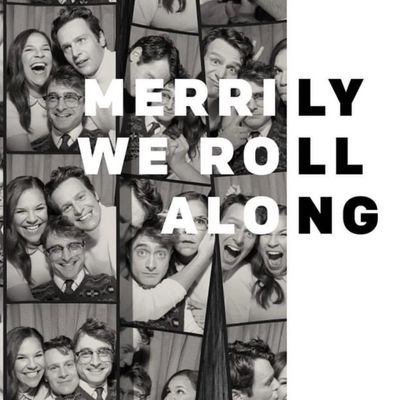
Such a moving conversation with Lonny Price, actor and director, on the podcast this week. Lonny spoke about his life in the theatre beginning in legendary producer Hal Prince’s office, acting in Stephen Sondheim’s “Merrily We Roll Along,” transitioning to directing, and even revealing moments and memories he hasn’t shared before... Read More
From the show: Broadway Biz with Hal Luftig
Featured Shows
About
Such a moving conversation with Lonny Price, actor and director, on the podcast this week. Lonny spoke about his life in the theatre beginning in legendary producer Hal Prince’s office, acting in Stephen Sondheim’s “Merrily We Roll Along,” transitioning to directing, and even revealing moments and memories he hasn’t shared before.
In the fall of 2019, Lonny directed the world premiere of the Mitnick/Gwon collaboration, SCOTLAND PA., for the Roundabout Theatre (produced in association with Hal Luftig). On Broadway, he directed Sunset Boulevard, (starring Glenn Close) Lady Day at Emerson’s Bar & Grill, (Starring Audra McDonald) 110 in the Shade, 'Master Harold'... and the Boys, (starring Danny Glover) Sally Marr and Her Escorts (co-written with Joan Rivers and Erin Sanders), Urban Cowboy, and A Class Act (Tony Award nominated book co-written with Linda Kline). West End credits include Lady Day at Emerson’s Bar and Grill at the Wyndham’s, as well as Carousel, Sunset Boulevard, Sweeney Todd, and Man of La Mancha, all for the English National Opera. Film and television credits include his film version of the New York Philharmonic’s Sweeney Todd (Emma Thompson and Bryn Terfel), and Company, (Neil Patrick Harris, Stephen Colbert, etc). He also directed the stage and filmed versions of his tribute to Stephen Sondheim, Sondheim: The Birthday Concert! (Emmy Award). Other Philharmonic collaborations include the “Live From Lincoln Center” broadcast of Camelot, Candide, Sweeney Todd (George Hearn and Patti LuPone, Emmy Award), and Sondheim’s Passion (Emmy Award). Additional television credits include Lady Day at Emerson’s Bar and Grill for HBO, as well as episodes of “2 Broke Girls,” “Desperate Housewives,” and the upcoming ‘Plan Z.' For his first feature, ‘Master Harold’ ... and the Boys, he received a Best Director Award from the New York International Independent Film and Video Festival. His documentary, Best Worst Thing That Ever Could Have Happened premiered at the New York Film Festival and was named one of New York Times’ Top 10 Films of 2016, and his other documentary Hal Prince: The Director’s Life (PBS) was released to critical acclaim as well.
With Hal, Lonny has two projects in development, a musical adaptation of the cult-classic film, Scotland, PA, and a new play. Stay tuned for news of these projects as they further develop!
For all things Broadway Biz, visit our Instagram @BroadwayBizPodcast or our website broadwaybizpodcast.com.
Have a question for Hal or a topic you'd like him to explore? Send Hal an email at broadwaybiz@halluftig.com.
Transcript
This transcript was automatically generated and might contain errors.
[0:03] Hal Luftig: Hi everyone, this is Hal Luftig with my Broadway Podcast Network show, Broadway Biz, where every episode I will chat with my friends, some of the top theater professionals in the business about the business of Broadway.
[0:22] Hal Luftig: I'll join the Broadway Biz.
[0:25] Hal Luftig: You'll be a Broadway win.
[0:28] Hal Luftig: You'll learn to raise cash to open your smash.
[0:31] Hal Luftig: You'll be all the rage from the patron stage.
[0:34] Hal Luftig: In no time you'll know the business of John, the greatest job there is.
[0:40] Hal Luftig: So join our squad as we unlock our love thing Broadway.
[0:49] Hal Luftig: Let's get busy with the Broadway Biz.
[0:56] Hal Luftig: Lonny Price is an Emmy Award-winning director for theater, film, and television.
[1:02] Hal Luftig: He began his career as an actor working with the legendary director Hal Prince.
[1:08] Hal Luftig: This is sure to be one of my favorite conversations so far on Broadway Biz.
[1:13] Hal Luftig: So good morning, Lonny Price. How are you today?
[1:17] Lonny Price: I'm so good, and I'm so happy to talk to you. So I'm even better. I'm all good.
[1:30] Hal Luftig: So that's where I'm gonna start when I first saw you and Lonny Price came into my sphere, which was back in 1981. I was just entering Columbia with my masters, and I was invited to a preview of Merrily We Roll Along, in which for my listeners, Lonny created the role of Charlie Kringus, which became really famous for the song Franklin Shepherd Inc. Lonny, I was mesmerized the first time I heard you sing Franklin Shepherd Inc. Because I had never seen a character actually have a nervous breakdown in the course of a song before.
[2:10] Hal Luftig: And you did it so convincingly. It was, I know myself and the people around me were just like, who is that person? So I wanted to start a little there. Can you share what it was like creating that character and how at a very young age you tapped into someone like having a breakdown?
[2:31] Lonny Price: You know, the easy and sort of flip answer is I was used to having nervous breakdowns, which at 22 I wasn't quite used to it, but it wasn't necessarily that foreign to me, though. I'm not sure that's true. Yeah, the character, you know, he was very close to me. I mean, I thought he was an urban, you know, Jewish lyricist. And I had grown up in New York City, loved the musical theater, and particularly had a great fondness for composers and lyricists. I read all their biographies. I just knew that genre backwards and forwards. He was not, he didn't feel very far from who I was. I mean, the tricky part of that show is trying to be older than you were. Honestly, you know, and I've said it to him too.
I mean, you have Stephen Sondheim writing you a song. It's like the greatest tailor in the world, making you the greatest suit. It just fit perfectly. I had three good notes, and he kept hitting them. The song came in very, very, very late. In fact, we spent five weeks of rehearsal saying, and Lonny sings a song here, and it wasn't written. And then the first third of it I got two days before the first preview, and then I got another third the day before the first preview. So it came in in fits and starts. I had to learn it really quickly, but at 21, you learn things really quickly. And I remember being in the basement of the Alvin Theater and just going off, you know, thinking I'm never gonna learn these words.
Mostly, and other people who have sung it have said to me, how did you learn that? And the truth is, you know, Steve just knew what I did best. I was good with words. I talk fast. So just the technical aspect of it, I have a pretty good rhythm. And the technical aspect of it was just never hard. And the music of it was just my voice just was just happy singing it because Steve had known the way I sang for a long time by that. The nervous breakdown aspect of it, you know, I really related to that character, and less so now, by the way. I mean, when I was young, I thought, yeah, I mean, for people listening, you know, it's in part about a composer and lyricist team over a 25-year friendship, and they start off very idealistically, and then the composer of it becomes more of a movie producer and more of a mover and a shaker and less of a writer.
And the lyricist, his partner whom he's known since high school, is disappointed in him and wants him to, you know, to be more pure about his art. And in those years, I felt very, you know, yes, Charlie's right. Frank should not be a, you know, he should be working and doing it, you know. And now I think, you know, at my age, it's just like he should do what he wants to do. And why is this guy being such a prig? But in those years, I really I was Charlie, you know, I thought everything was about integrity, and not that I don't do so now, but that everything was about your craft and your art and sacrificing. And I was just very in tune with his philosophy. The idea of losing a friend, I also think was very potent to me.
And not that I had lost, well, I guess by then I had moved a couple of times and friendships, you know, come and go. And I think thinking that I would lose, you know, my friends was very moving to me. Honestly, Hal, the truth is it's so well written that I just invested and believed it. I was just watching Coriolanus, which is not my bent to watch Shakespeare on National Theater Live a few minutes ago. And you know, it's not like I said around watching Shakespeare, so I wish I did, but I don't. But I was watching it and I thought it's the same thing, you know, the writing is so extraordinary that basically if you just get out of the way and say the lines and are truthful about it, the material lifts you.
And the thing about Steve's work is it makes all of us look smarter and more talented than we really are. It just fit really well. And I had sort of an innate understanding of it. It was never hard to do. It was always sort of a high, you know, to get to do it. And the closing of the show was, you know, more devastating for me, not because of the job and all that, but that I didn't get to do it. I just wanted to do it for a long time. There's so much we want to cover, and I just had to start there because it is the seminal moment when you just leaped off the stage into my consciousness. And I don't say this because I'm blowing smoke, but I have probably seen every production, at least 98 percent of the professional productions that have been done, and no one has come close. I'm sorry if my listeners, somebody else has played Charlie Kringus, but nobody else has come close to doing that. So bravo.
[7:33] Lonny Price: Well, thank you. I would love for you to tell our folks how you first came to meet Hal Prince, my hero, and how you then got into sort of investing and you started out very young, knowing the business side. Can you just talk a little bit about that? How Mr. Prince sort of helped you along?
[7:54] Lonny Price: Yeah, I was just sort of this weird kid. I read Variety. I had a subscription to Variety when I was 12, weekly Variety, and I used to look at the grosses. It's really weird. I don't, it was all just I just loved it all and just wanted to be a part of it and wanted to understand all of it. You know, you read the out of town reviews and you read the road grosses, and you know, so I kind of learned a lot about that, even before I worked for Hal. The reason I really worked for Hal was because I in summer camp I had been lucky enough to meet Mary Rogers, who is Richard Rogers' daughter, and who the composer of Once Upon a Mattress and a good friend of mine's mom. In 1973, there was the Scrabble album for people who are old.
There was the first sort of Sondheim benefit thing, and it had everybody in it. It was on the set of A Little Night Music, and I wrote to her, asking her to help me get a ticket because the ad in the New York Times said paid by the friends of Stephen Sondheim. I mean, and I knew she was one of his best friends. And she passed that letter on to Steve, and the letter was all about, you know, here's a 13-year-old kid just saying he's everything to me, and I've seen all the shows and cut school to get tickets on the first day A Little Night Music box office opened. I mean, I was obsessed with him and Hal Prince's work. And anyway, I guess she thought that was kind of charming. And she passed the letter on to Steve.
And Steve wrote to me. So here I am at like 13 years old in Metuchen, New Jersey, and I get a letter from Stephen Sondheim, who was my God. I was, you know, I mean, he I used to say he was my Mick Jagger at that time. It was just like, what? And the letter was just very nice. And I remember he said, I'm flattered you like my work. Anyway, he said he couldn't help me with the tickets for the show, but he told me where to go. But sadly for him, he had his return address on the envelope. And I just, you know, I'm sure he regretted that for the next 60 years or whatever it's been. And I just started writing him, and he'd always write back and was just asking questions about the show. And then I said, I would love a summer job.
Do you have an office? When I was, I guess, I don't know, 14 maybe. And he said, no, write to Hal Prince. And I did, and I wrote to Hal, and Hal, because I also knew that George Abbott, Hal had written to George Abbott to get a job. And I said, you know, I just want to hang out, I want to be paid and all that. Hal said, come on up to the office. I met him, and he was totally amazing and said, yeah, yeah, yeah, why don't you hang out? And so I would come, I was going to performing arts high school by that point on 46th Street. I used to go after school and used to send out group sales things and keep scripts up to date. It was the time of Pacific Overtures when they were working on Pacific Overtures, and I just, you know, adored it.
And he let me come to the recording of the album, which was just one of the highs of my life, because those albums were like, you know, it's too pathetic to say they were friends, but they were just, you know, like my life's blood, those albums. And then he gave me the run of the Winter Garden, and I went out of town with it to see it. And so I sort of apprenticed on Pacific Overtures when I was 15. And it was a great education. And that's really how I met Hal. And we were friends from then on until he died. And he was always just a wonderful supporter and cheerleader. There's so much to say about him. But something I was thinking about the other day, actually, funnily enough, last night I had a Merrily reunion Zoom meeting, which I guess that's happening a lot.
And I haven't seen some of these people for 40 years or 39 years or whatever. So it was really trippy. But it reminded me that the night we closed Merrily, Hal came to my dressing room and he said, I'm sorry I didn't give you a hit. I wanted to.
[11:47] Lonny Price: Oh, oh. He said, I think I gave you a good show, but I didn't give you a hit, and I really wanted to. And I know it was again one of those things where I'm thinking, you're worried about me. I mean, here's this huge, you know, disappointment to you.
[12:06] Lonny Price: And uh, not me personally, but it wasn't like me, it was the kids, it was all of us. But um, that he had that kind of sensitivity and care for us uh was remarkable. And then I was even though I was young, I thought this is an extraordinary man, and that he was humble in that way to say he was sorry that he didn't give us a hit. Anyway, so uh there's so much to say about him. But anyway, that's one of the stories that that I actually never shared before. I don't think I've ever told anybody that before.
[12:38] Hal Luftig: Well, thank you for sharing it uh with us today. And I must say, as a little footnote, I um agree with you. He was an extraordinary person, not because he was Hal Prince the director or Hal Prince the producer, but as a human being, he was extraordinary. And he was always uh so kind and generous with his time and his advice, even with me. And we used to laugh that uh we both were named uh Hal, although his name real name was Harold. And uh I'll never forget this just as a little poignant story. When uh I opened the Fiddler on the Roof in Yiddish um at the at 40 Stage 42. He came to see it, which just set the whole company and me and everyone, like, you know, on tender hooks. And afterwards, he said to the cast backstage, he said, you know, I don't have to tell you how many times I've seen Fiddler on the Roof.
We all like laughed. And he said, but this show tonight made me feel like I was seeing it for the very first time. And I said, Oh, Mr. Prince, that that is the the you know, the kindest thing I've ever heard. And the next day I sent him an email and I said, Dear Mr. Prince, uh thank you so much for coming. Would you mind if we used what you said last night about seeing the show for the first time as a quote? And he said, No, no Hal, but you have to stop calling me Mr. Prince. I just I wrote back and I said, Well, and I guess I can't use the quote. What can I tell you? It was just very hard for me to see, yeah, yeah.
[14:13] Lonny Price: Yeah, no, that's that that's that's very how you said something about not seeing the cast, and I wanted to just back step a little bit because one of another thing that you did that I thought was stupendous was you made a documentary called The Best Worst Thing That Ever Could Have Happened, which was a revisiting and with film clips, you know, archival clips, bootleg clips of looking back on that show with several of the cast members today. What was that experience like for you and the rest of the cast if if you can tell us to do that? And what was the impetus for you doing that documentary?
[14:54] Lonny Price: When we did, I don't know how you've seen so much of my work, God bless you, over the years, but I don't know if you saw we did a everything. Ah, well, we did a reunion concert of Merrily uh 20 years after for I was uh the artistic director of a musical theater works downtown. And um for a benefit, we did a reunion of the original cast and um at LaGuardia High School, actually. I was looking at Jim Walton and singing old friends to him, and I thought, he is my old friend. I mean, Jimmy and I have stayed close all these years, and I thought, well, I'm no longer singing the character, I'm singing my life. And isn't it interesting how these songs and the show, you know, some largely about friendship over a 25-year period.
We were those characters by now. Not that we had the personalities of them, but we had been in each other's lives for that many years. And I thought, wouldn't that be interesting to see the relationship of the material of the material on the people who actually performed it originally, were in the original cast. And I had remembered that there was this documentary that ABC had started to make during uh when we were the making of Merrily when we were in rehearsal. And um in those years, uh, they found out actually why they but they stopped it was that uh ABC Corporation had a uh and it was an ABC documentary on a show called Close Up, had an investment in Merrily, and they considered it a conflict of interest.
They didn't realize they were in it and they had to stop it. Now we call it synergy. Then they called it a conflict of interest, which is really what it was. And they pulled it and they said, shut it down, and they did. But I remembered them shooting, and I remembered where that they did that last uh audition day, and I remembered them filming me in my parents' apartment, talking about my dreams of the theater, and I thought I gotta get that footage. And you know, wouldn't it be swell if we could put all of that together and use performance footage? And um the show started meaning things in in deeper ways to me than just the show I love that I did that was you know such a dream for me. I started financing it myself, and then I got lucky, and someone who loves Sondheim, you know, said I'll I'll finance it.
And and that's really how the movie was born, and then there's the enormous good luck of finding that footage. And I'll tell you something interesting about that. No one I've been looking for that footage for years, and nobody everyone said it was destroyed because um of the conflict of interest, and also they never paid anybody to shoot. That it was no SAG, they didn't pay anybody, and they were embarrassed by it, so all of that. We've hired somebody who was a like one of these guys who finds footage. You know, there are these people in the world, Bruce, Bruce David Klein, who wound up, you know, financing and producing the movie, you know, found this guy. I explained to him what it was, and he said, It's very quiet.
He said, Well, you have a nine percent chance of finding this. And I I've never heard anyone referring. I thought, not even 10%, you have a nine percent chance of it was such an odd number. I was so it's better than eight, right? It's better than eight, but if you go to a doctor and they say you have a nine percent chance of anything, I don't think you'd be I think you'd go, oh, that that's not good. But they went back and they went back and they finally um they finally found it, which was just that was you know one of the great days of my life is knowing that that was available to us.
[18:21] Hal Luftig: So what was that like? Was there a moment where was the most poignant? Was there a moment where you like choked up and and said like I can't believe besides it being 40 years, and I know what that's like. Like, what? How's that possible? But besides that, was there a moment that just touched you emotionally?
[18:45] Lonny Price: Oh, sure. Um, and and it's actually in the film. I mean, we had waited so long to find it, and I had waited, you know, decades. And when they finally got the call, um, guy named Anthony Anthony Perone at ABC said, I think we've I think we come down, I think we've got it. And by the way, it was 10 blocks away from my house, which was extraordinary that that's where it was. I didn't shave or I just looked like a mess, and Matt was with me. And um, I he said, Well, go tomorrow. I said, No, we're going right now. I got I got I gotta go right now. I gotta see it. And so we went and he said, I'll I'll bring the camera. And I said, Oh, don't bring the camera. You know, we're not gonna shoot anything.
I'm just gonna watch the footage. And he said, No, no, no, I think I'm gonna bring the camera. Watching myself, meeting myself as a 21 year old. It, you know, it it was you know, 16 millimeter film, and it, you know, in my seeing my bedroom in my parents' house and all of my books and records and posters, and just I really got to go back in time and meet the 21 year old who was in that show, and um and that was in enormously moving to me. And and I think in some ways, I I don't know if it's in the film, but I I was I always thought I might be embarrassed by him. You know, he was really all he cared about was the theater, and I mean, there's just such a uh small world that was just very obsessive, and and I was glad to see that I had um I didn't hate him.
I thought he was sort of charming, and I sort of forgave him uh for everything. I know I'm talking about myself and the third person, but um I and then when Matt said in the film, do you like him? And I said, Yeah, he's okay. And then he said, Uh, do you think he would like you? And um, what an extraordinary question for Matt to have asked at that point, having just looked at myself at 21. And that's a you know, that's saying, Did you disappoint your young self? Would your young self have uh been happy that you turned out the way you did with your whatever achievements or lack thereof? And um, and uh what I said was, you know, I I hope he would have liked some of the work I did, and uh sort of that kid was just so into it that and had such opinions, you know. You know, when you're young, you have a lot of opinions, yeah.
[21:07] Hal Luftig: Yeah, so that was, I think that was clearly the easily the most moving moment for me is watching myself as a as a uh 21-year-old in my in uh in my parents' apartment, you know.
[21:18] Lonny Price: I can understand that because actually it was you just said it reminded me of that moment. And I I actually choked up too, knowing you as well as I do, I thought that was a that was a tough question.
[21:31] Hal Luftig: Yeah. That question took 40 years to answer, you know. It's it well, I think for any of us, would your what what would your 21-year-old self think of you? Now I know you, and I think you'd be so proud, and so like, oh my god, look at what you did. I don't know how you would feel about it. Luckily, I don't have to answer it because it's my show.
[21:53] Lonny Price: You're gonna answer it.
[21:57] Hal Luftig: I want to just jump a little bit, because as I said, this is a program about business and you know, matching the artistic side of Broadway. You directed and then filmed the 80th birthday of Sondheim, which I think will go down in history as a classic. If my listeners haven't seen that concert, I'm sure it can be found, right, Lon?
[22:22] Lonny Price: You could certainly you piece it together on YouTube, but yeah, yeah, for sure. And uh for some reason it's not uh it's not on a streaming service at the moment, but yeah, there you could find it. It is a wonderful capture, but it it is nothing like having been in that audience.
[22:39] Hal Luftig: And it was a massive show. You had like every star on Broadway, you had you know the Philharmonic, you you I won't give away, but you had a finale that I don't think will ever be recreated again. But yet you probably had a budget, I'm sure you had a budget. How did could you talk a little bit about what you wanted to achieve for Steve's 80th? How much how that affected, you know, what budget you had. How did you marry those two?
[23:13] Lonny Price: Well, you know, it's a good question. Uh my memory is, and I'm I'm actually pretty sure it was, it was a benefit, and therefore nobody got paid. The other thing, really, to say is that whenever you ask an actor or singer to do something for or with the material of Stephen Sondheim, they always say yes. Everybody wants to do his work because they know it's the best work and they know it elevates them, and um it's just fun to work on. That's a party everybody wants to go to. So nobody was paid how. You may remember the red dress sequence, which was um I was just gonna bring that up. Darn you. In the Price Sondheim shows, Desiree, you know, wears a red dress and Phyllis and Folly's, you know, has her big numbers in red. It just was precedent for the Sondheim ladies being in red. So I thought, wouldn't it be great if we can get all of those insanely talented women all in the same shade of red, um, watching each other uh perform his biggest songs?
[24:15] Lonny Price: So we called Diane von Furstenberg and she said, sure. And the ladies went up and chose their dresses, and you know, Elaine Stritch stole hers, and it was, you know, it's just all like it was. Um had them made a three thousand dollar hat for her that she that she took. And um, anyway, Delane was hilarious. The end, the finale with everybody singing Sunday, those were everybody just did that for free. Diane created those gorgeous gowns for the for free. Yeah, she did as a uh as a favor and I guess to Steve I think you know she and Barry Diller are close with Steve and like I said when it's for Steve it's very everybody is so grateful to him for his contribution that um it you people will do things and it they will do them for free for gratis.
Great good for you you didn't you know have to deal with a budget and I think uh the next show I produce I'm gonna bring you on and I'm gonna ask you Lonny could you call all your friends and let's see if we could do this for free uh see what happens but I do I do remember you know not knowing beforehand what I was seeing when the second act began and those five ladies and some of them not the easiest of personalities let's just say was yeah yeah was sitting in a circle all basically I mean with little variation but in the same kind of red basic dress I couldn't help but think like how did he do this you know I mean that that these five women would agree like I'll wear the same thing as she is and she's gonna wear the same thing you know as I am um that must have taken some controlling no well yeah I mean um uh your memory is better than it was they were in the same color but the shapes were different so they weren't in the same dress but they were in the same no exactly they were variations on the same they're variations exactly um well getting them to do that the the the truth is that the 73 concert that I saw when I was a kid that Steve wrote me back um which was maybe still the most thrilling experience I've ever had in the theater.
Bert Shevalov, who directed that, had the women sitting in the semicircle watching each other. So I stole that. I added the dresses. I added the dresses. But I remember thinking, and they, you know, those women are, yeah, I mean, we can say it. It's, you know, Patti LuPone, Elaine Stritch, Audra McDonald, um, the late and beautiful Marin Maisie, um, Donna Murphy, and um, I think, and Bernadette Peters. So, and you know, they they they're they're all formidable in their way. But Audra's, you know, as you know, is a a real pal. And I said to Audra, oh, I got this great idea, and you're all gonna sit watching. She said, No, that's a terrible idea. Don't do that. I'm gonna be dead. Don't do that.
I'm terrible. She was like, I don't want to do that. You're my friend. You're supposed to say yes, so I can say you said yes, so everybody else will do it. And she said, Oh, it's terrifying, terrifying. And and I think what we did was they were they were we did it alphabetically. Um, and then, but I think what I've when they were sort of going, uh, I said, this isn't about you. This is about Steve. Can it not be about you? Can we just do this for him and stop, you know, just just let's do this for him. And they all kind of went, okay. And um it was uh it was the thing that they couldn't argue because you know, it was just this is a gift. I I'm not sure that will ever happen. I could ever do it again or that would ever happen again, but I'm glad it happened that time, and I'm really glad we filmed it. I'm really glad that that live lives in the world for sure.
[27:56] Hal Luftig: I am too. When and what was the impetus for you to change from acting to saying, you know what, I want to direct.
[28:05] Lonny Price: Um, I was doing a play. Uh there was a theater called the American Jewish Theater, which was actually housed in the original roundabout space, which is now the Citizens Brigade Theater. It's it's on 28th Street, a little east of Eighth Avenue. But I was doing a play called The Immigrant there. And uh a man named Stanley Breckner, who ran it, said, I'm doing this musical next. Can you give me some suggestions for directors? And I said, sure. And I gave him some, I mean, it was a postage stamp stage. It was, I don't know, it probably was 15 by 15 or 20 by 20. I mean, it was really small. And I gave him a list of directors, and he said, What about you? And honestly, Hal, I had never thought of directing.
I didn't really pay much attention to what they were doing. I sort of was busy doing my thing. And, you know, um, I I uh it just it never occurred to me. I didn't go to school for it. I had no and no real interest in it. But when he said that, I thought, oh well, that would be interesting. You know, um I I may be bad at it, but I bet I'll learn something. I just got very excited and I said, Yeah, I would love to do that. And what it was was uh a musical from 1968 called The Education of Hyman Kaplan, which George Abbott had directed. From the moment I started, I thought, oh, this is better. I like being in charge. I liked I like telling people what to do a little bit. I liked seeing the the play as as a whole piece, not just my little section of it.
I liked figuring out, in a way, you almost got to play all the parts. All of that was just very exciting to me. Um and this is sort of a silly story, but it's not, it's indicative of something because as an actor, you have so little control. But I remember at a dress rehearsal, uh a woman came out wearing a dress that I didn't think was attractive. And I said to Cowside, Oh, yeah, can we do better? Uh uh, I don't know. So, and the next day she had a new dress on. Now, as an actor, I would go, this itches, this is tight. They don't go, yeah, we'll fix it later. And maybe they did and maybe they didn't. But um, as a director, there was a new dress the next night. I was just like, Oh, I could get used to this.
You know, people actually listen to you and you have some control. And as an actor, you you have just no control at all. And the other thing was I really felt I wasn't gonna be able to grow up as a man if I spent my life looking in the mirror, um, which you do as an actor. You know, so it's so much of it is your physicality. You know, you're you're too short, you're too tall, you're too old, you're too this. And you know, I was starting I you know, I guess I was starting to lose my hair, you know, I'm five, seven or six, depending on the day. Um, you know, I've uh uh I the kinds of roles that I was looking down the road of getting were, you know, the nerdy Jewish accountant, and I thought that's not that interesting to me to play.
I did that in, you know, you know, sort of dirty dancing, and I I sort of had I think I mind the field of that. It occurred to me that oh, this would be so much better, and that my life wouldn't depend on my physicality. I don't regret that decision and and I never look back and think, oh I sh I should have stayed an actor ever, ever, ever. It was um it saved my life to to to to leave it, and though I have to say I enjoyed it so much. I mean, when I did it, it was just the high of my life, and then it was over, and it was okay that it was over.
[31:37] Hal Luftig: This is sort of a speculation, because I don't know if you really know the answer to this, but what do you think it was in that gentleman that said to you, how about you? What do you think he saw in you?
[31:50] Lonny Price: It's such a such an interesting question, Hal. I've never thought of it, and no one's ever asked it. I I worked with a lot of amazing directors. Alan Arkin was one of my favorites, and Athel Fugard and Hal, and just I worked with some great directors. And I worked with some less than great directors. I wound up in some ways directing myself. And also, you know, I mean, when I when my friends found out that I was directing, they said, Well, you've been directing for years. And I said, What are you talking about? And well, a lot of times I guess, you know, there'd be a director sitting there and they wouldn't say much. I said, Okay, well, I'll come in here and then you go there, and then you know, we'll we'll pour the wine over here.
And, you know, there were a lot of directors who were not very um vocal about what they wanted or didn't know. And so I was uh subconsciously or inadvertently kind of directing a little bit already. You know the truth is how I have no idea what he saw in me. And um, I'm very grateful that he did, because honestly, it wouldn't have occurred to me.
[32:50] Hal Luftig: I think a lot of people see that in you, Mr. Prince, myself, so whatever it is, Lon.
[32:55] Lonny Price: Yeah, I'm glad. I I'm glad. The first time I saw you direct something, I think the official first time, a revival of the Rothschilds. I saw the original. I know I look so young. How could I have possibly seen the original on Broadway? But I did. And it was it was overproduced. There was too much stuff on that stage when it was really a simple story of uh uh a man and his five sons, and how he just tried to provide. When I saw your production, that's what you made the story about. Was there something that crystallized for you in taking that story, which was so big on Broadway, and how Linden won a Toby for it, um, and then you know, scaling it down almost like microscopically scaling it down and making it about the story and nothing else.
[33:54] Lonny Price: I'm glad you remembered it was it was the second show I directed, and actually I became a director really because that show moved and ran a year and I had a hit, and that's when uh people started trusting me and sending me things, and so that was really seminal. Um, I had loved that show, and actually my first professional acting job when I was 14 that Mary Rogers got for me was directed by uh was the Rothschilds. And do you remember um the Goober Gross uh circuit, those tents, Camden County Music Fair? Do you remember the music fairs? How oh my gosh, yes, Westbury Music Fair and the Valley Forge Music Fair. That's right. That's it. Yeah. Well, when I was 14, I had written to Mary and said, you know, uh about you know, um, I would love to I'd love to get a job for the summer.
And so she had passed me on to Sheldon Harnick's uh brother Jay Harnick, who directed that tour with Jan Pierce, the opera singer. Anyway, when I was 14, I did a five-week tour of of the Rothschilds, and I fell in love with it and thought it was just really smart, and the book was really good, and the score was wonderful, and you're absolutely right, it was wildly overproduced, and you couldn't find the story. You know, necessity made you, you know, you're doing it at the American Jewish Theater on a 20 by 20, you know, with a seven-foot grid and the you know, shopping carts above your head. You don't have there's no elevator coming anywhere. There's nothing. You got nothing. It was um a very visceral production, and a little bit by necessity that we scaled it down, but you have to have something good to scale down.
You know, I mean, why a lot of Steve's shows work in a pie shop, you know, with a hundred people or at the New York Philharmonic with 3,000, is the materials just so damn good. And a lot of times smaller's better because there's less in the way of the actor and the audience and the material. For me, you know, if you have a good actor and you have a good script, you can do it in your living room and it will move you and make you laugh. And look, Fiddler, you know, you can get a 12-year-old Tevya at camp, and when he says goodbye to that daughter, you will cry. You will cry at a 12-year-old Tevya saying goodbye to an 11-year-old, uh, is it Huddle or Huddle? Because it's it's just so beautifully written. It's bulletproof.
[36:17] Hal Luftig: When you started directing, did the influence of Hal Prince uh weigh into that?
[36:24] Lonny Price: Did you know, did you learn from him or things that you currently use that you just think back without even maybe subconsciously going, I you know, you just do it because it's something you observed uh Hal doing?
[36:37] Lonny Price: Um yeah, I mean what I observed in Hal was when he got this from Abbott, Mr. Abbott was no histrionics. You show up on time, um, you're prepared. He had a real thing about lateness. You were not late. It it wasn't uh touchy-feely, it wasn't um uh emotional, nobody threw a chair and ran out of a room. There was never any of that. It was always uh respectful. And I think when everybody asks me about Stephen Howe, what I learned from them as a young man was to have respect for everybody in the room, and that the stage door man is as important as Angela Lansbury, is as important as you know, uh anybody, that we all need each other. What's very important to me as a director is kindness for each one of us here.
There's a line of people that wishes they could be here, but we got to do this, and so um it's not cancer, and we should treat each other well and um generously. And I I got that from them. Maybe I like to be liked too much, that could be a problem, but I also want people to have a good experience. This is not, we're not curing COVID, you know. We're we're we're doing something that is hopefully a gift to the community, uh, and it shouldn't do no harm, I think is really important.
[38:01] Lonny Price: When you choose a project, what is it that you look for? Always the quality of the writing. I mean, uh to me, if I if if the writing is good, I I'm interested. And um, you know, sometimes theme is important to me. I mean, you know, Scotland uh PA is, you know, based on the Scottish play, and you know, it's a question that I often ask is what are you willing to do to get what you want? And um the theater is filled with people who are willing to do an awful lot to get what they want. And some of that is really good, and some of that is not so good. And um, it's something that since I've been in the theater my whole life, uh, it's something that interests me that question, and it interests me in myself. What am I willing to sacrifice? Um, what am I willing to um look away morally uh by engaging with certain people? Um, and um so it's it's it's it's a real question. What how do you hold on to your morality in a very tricky world and in a very tricky business?
[39:13] Lonny Price: So um, and the other thing is uh a very American thing of when is it enough? Um I'm very fascinating right now. We we we had to print at three trillion or six trillion dollars. We've had um people going to bed hungry in this country for what since it began. What would a trillion dollars have done for the hunger in this country, which we didn't have money for, but we managed to print three trillion dollars now to keep us all afloat so the economy doesn't tank. Why wouldn't we have money to feed those people? So those sort of large questions um are are important and interesting to me. SCOTLAND PA um in its funny and silly way, um, also deals with that. What are you willing to do to get what you want?
And are you willing to kill people? Are you willing to uh how how far will you go? It also has to do, honestly, too, with the with the people. I mean, I'm sure you feel this, Hal. At a certain point, is who do you want to be in the room with? And there are a lot of really talented people, and some of them in the city, some and I I don't want to be with them. And I know they're brilliant, and I'm happy to watch and you ex uh applaud their work, but I don't want to spend three years of my life working with them. They're they're they're not so nice. I don't know if that, but answering it, it would be it would be material and people you want to work with and themes that at least you feel you have a stake in that you have a reaction to in yourself.
[40:40] Hal Luftig: Well, I agree with you, Lonny. If it's if it's at the end of the day, we're not curing cancer. If it can't be enjoyable, if you don't wake up and say, wow, I can't wait to get to the rehearsal room today to see you know what they're doing. And it it's not worth it. And you know what? In my opinion, those things never really become successful because people are at such odds with each other. Uh it just it doesn't leap from the that that feeling leaps, if you will, from the stage to the audience. And um, you know, I don't care how many you know, smiles or tap dances there are, if if they're not having a great time, you could feel it. You could feel it.
[41:22] Lonny Price: Yeah, I think so too. Lonny, let me ask you something because we are working together on Scotland uh PA and this other show, and uh we've had many, many conversations. What do you think makes a good producer?
[41:35] Lonny Price: What I would say, and not just because you're on the call, is uh you. I'll tell you why. Because what makes a good producer is someone who believes in the show and who doesn't believe in the show for the long term and is not someone uh there I think we all know of of producers who you work with them for a year and you do a reading, and one of their investors or their big investor goes, I don't think so, and they walk away. And that's that's to me a bad producer, is they look for everybody else on the outside to tell them what it is, and they don't have a conviction of their own feeling for their commitment to it, and that's very hard. You're a producer that says yes. And that is very encouraging and also very comforting to know that there's someone there who understands what's necessary and is willing to provide the resources for it without being outrageous.
[42:31] Lonny Price: Now, I also, as you're right, I'm not a guy who's gonna ask for Dancing Waters because I want the show to be successful, and I do have an idea of budgets and and uh you know grosses and break-even points and all that, and you know, you want to have something that that lasts, um, and that and also that I'm very aware that people are risking money and I want them to get it back, and I think it's important so that they'll invest in the next one. But mostly I would say the biggest thing to me is long is commitment to something and not being scared away by a bad review or an investor who's does it doesn't like it, or um, you know, that that that is very hurtful that you know when people sort of dump something because one person in their life didn't like it, and you think, well, why were you doing it in the first place? And what do you feel? And I always think when I'm getting your opinion, Hal, it's it's I feel like it's your what you think about it, and that's that's important.
[43:31] Hal Luftig: Well, thank you for all that, Lonny. That was uh a beautiful response.
[43:36] Lonny Price: Thank you.
[43:36] Hal Luftig: Well, it's why I would it's why I bring you things, you know. I mean, there's a reason why if I have something, well, keep doing it, keep doing it.
[43:44] Lonny Price: I will, I will, I will.
[43:46] Hal Luftig: Well, Lon, you know, as they say, like most good things, you know, this needs to come to an end. But before I let you go, I have three questions that I ask every guest. And the only thing I ask is, I'm gonna ask you, don't overthink it, just respond.
[44:02] Lonny Price: Okay, there's no right or wrong answer.
[44:04] Hal Luftig: Okay, number one.
[44:05] Hal Luftig: Yeah, what is your favorite musical?
[44:08] Lonny Price: Uh Fiddler on the Roof, I think.
[44:10] Hal Luftig: What is the wackiest moment that's ever happened to you in the theater?
[44:15] Lonny Price: Oh my god, Hal, I'm not gonna overthink it, but I'm trying to think of wackiest. I guess wackiest.
[44:22] Lonny Price: Um I I'm blanking. Uh the silliest thing, the funniest thing, it doesn't have to necessarily be bad. It could be something you observed. Uh I remember once I was in the theater and you know, and uh a woman picked up her phone and started having a conversation. Not that she was like appalled that her phone rang during the show, but she actually answered it. And I like wanted to say, uh, I'm sorry, ma'am, ma'am. Is the show disturbing your conversation? Because we could stop it if you'd like, yeah.
[44:56] Lonny Price: That kind of thing.
[44:57] Lonny Price: Oh, I don't know. This is not on point, but maybe you could I remember seeing um Sunday in the Park with George and um Joe Stein, who, as you know, wrote Fiddler on the Roof and we're coming up the aisle. And um, and he said, I said, What'd you think? And uh no, this was um, I'm sorry, this was uh Passion. And um, and he was coming up the aisle, and I said, Oh, I saw Joe, and he's what do you think? He said, Well, I dated a girl like that once. I didn't write a musical about her, but I dated a girl like that once. And for some reason that came to mind. That was just insane. I just thought, I don't know. Take it forward, take it for one short.
[45:37] Lonny Price: I was hoping that the end story would be I dated a girl like that, and now she's my wife.
[45:44] Hal Luftig: The last part of this question, and now you know you may not be, which is fair. This isn't this isn't a you know a test of not meant to put you on spot.
[45:51] Lonny Price: So the lesson you learned from that wacky moment with Drew Join would be would be don't would be not everybody's gonna like it. And it's okay. It's okay. You're not here to make everybody like it. Because I do want people to enjoy what I'm doing or be moved or be angry or agitated or whatever. And there's just gonna be some people who don't get it and don't like it. And it and it's okay because not everything is for everybody. You know, I hope my hope is if they don't like it, they at least go home and look at why didn't I like it? What was it about that show or the musical that I didn't respond to? Because sometimes when you ask yourselves that question, it tells you a lot about yourself.
[46:52] Hal Luftig: Yes, and not so much about the show.
[46:54] Lonny Price: But that's what is a great thing about theater, right? It it makes you think, it stimulates you.
[46:59] Hal Luftig: That's so true.
[47:00] Lonny Price: And sometimes it provokes you.
[47:02] Hal Luftig: Yeah, it pokes you.
[47:03] Lonny Price: It that is good theater.
[47:05] Hal Luftig: But I also think you're right, you know, you're right, it makes you think about yours yourself, and I think that that's that's very useful.
[47:11] Lonny Price: And I would just add to that if you didn't like it, don't tell anybody you didn't like it.
[47:15] Hal Luftig: That's right.
[47:16] Lonny Price: It's okay not to like it, but don't tell anybody you didn't like it. Keep it to yourself.
[47:20] Hal Luftig: That is a perfect way to end the show. Lonny Price, I love you, I adore you. Thank you so much for being with us, you know, today.
[47:33] Lonny Price: Me too. Be well. Be safe.
[47:35] Hal Luftig: All right. Lots of love.
[47:41] Hal Luftig: Thank you for listening to today's episode.
[47:44] Hal Luftig: Broadway Biz is part of the Broadway Podcast Network.
[47:48] Hal Luftig: It is produced by Dylan Marie Parent and Kevin Connor.
[47:51] Hal Luftig: And is edited by Derek Gunther.
[47:54] Hal Luftig: Our theme music is by Nell Benjamin and Larry O'Keefe.
[47:58] Hal Luftig: Be sure to subscribe to Broadway Biz and follow us on Instagram at Broadway Biz Podcast.
© Broadway Podcast Network, All Rights Reserved