

CW: This episode frequently mentions the word r**e in relation to the story. Angela Lansbury survived murder mysteries, Tom Bosley's New England accent, and a murderous nephew... Read More
From the show: Broadway Bound: The Musicals That Never Came to Broadway
Guests
Featured Shows

About
CW: This episode frequently mentions the word r**e in relation to the story
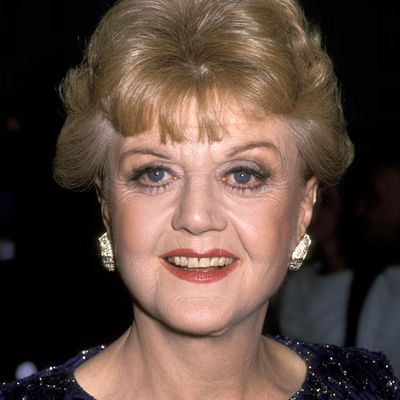
Angela Lansbury survived murder mysteries, Tom Bosley's New England accent, and a murderous nephew. But could she survive a musical about a Southern woman who decides the solution to racism is......well, you just need to listen to this episode about the Styne/Merrill musical Prettybelle
This week, we examine one of the most baffling concepts ever set to music and discover how one of Broadway's most beloved stars managed to walk away from a catastrophe with her reputation not only intact—but somehow improved.
If you like what we are doing DONATE HERE
Fair use is a legal doctrine that promotes freedom of expression by permitting the unlicensed use of copyright-protected works in certain circumstances. Section 107 of the Copyright Act of 1976 provides the statutory framework for determining whether something is a fair use and identifies certain types of uses—such as criticism, comment, news reporting, teaching, scholarship, and research—as examples of activities that qualify as fair use.
Transcript
This transcript was automatically generated and might contain errors.
[0:00] Robert W. Schneider: Dame Angela Lansbury never played the game the way she was supposed to. Hollywood looked at her and saw a character actress. She became a star. Broadway looked at her and saw a movie actress. She became a musical comedy sensation. Television looked at her and saw a woman in her 50s. She became one of the most beloved TV stars in history. But before all of that happened, Angela Lansbury had a habit of making enormous bets. Some paid off, and one did not. By the time Prettybelle came along in 1971, Lansbury had already experienced both extremes of musical theater. One hit, two disappointments. Most performers would have played it safe after that. Angela Lansbury instead chose a musical about a Southern socialite, alcoholism, race relations, political satire, and ghosts.
Why? Because if there's one thing you'll discover about Angela Lansbury's career, it's that she was never interested in protecting success. She was interested in chasing challenges. Sometimes that led to Tony Awards, and sometimes it led to a show so strange, so ambitious, and so controversial that it has become one of the most fascinating Broadway-bound musicals that never actually made it to Broadway. You see, what happened was, well, you'll just need to stick around to find out about the musical that is the nightmare of every cancel culture connoisseur, Prettybelle, on this episode of Broadway Bound, the musicals that never came to Broadway. Hi, I'm Robert Schneider, and welcome to another episode of Broadway Bound, the musicals that never came to Broadway.
[1:43] Robert W. Schneider: In the wonderful musical Gypsy, Mama Rose shouts, I was born too soon and started too late, and no other quote best summarizes the musical known as Prettybelle. Before Slam Frank, before The Book of Mormon, there was Prettybelle, subtitled A Tale of Rape and Resurrection. I guess now and forever wasn't an option. A musical that to this day leaves people going, what the fuck? And this wasn't some little group of naughty boys putting on a show to make themselves laugh. No, no, no, no. This was three of the brightest men in the business, the men who gave the world Hello Dolly, Gypsy, Carnival, and it would star, maim herself, Academy Award nominee and Tony Award winner Angela Lansbury. These are all people who know what they're doing, or so you would think.
So what was Prettybelle? It was a 1970 novella by a man named Gene Arnold. It was a comic tale, but dark, like really dark, like rereading sections going, did I just read that right? Dark. Chapter titles included Watermelon Boy, Who Is My Daddy, and Rape! Exclamation point. The plot was unique, to say the least. Prettybelle Sweet, your typical Southern musical comedy, manic, depressive, alcoholic, nymphomaniac, is sitting in a mental health facility looking back on her life. She was the wife of the racist sheriff Leroy Sweet, who believes more in the power of white than the power of right. Now, after he dies, Prettybelle discovers that he is responsible for the countless arrests and murders of just about any minority that did not look like the typical white Christian American.
Today, he'd probably be in the cabinet. To repent for the sins of her husband, Prettybelle decides she must be raped by only men of minority status. Yes, you heard that correctly. Prettybelle will let any minority have sex with her, and she has sex with many men. Many, many men. A black man, an indigenous man, a Jewish man, a Latinx man, and the list goes on and on. But to clarify, Prettybelle is a willing participant in this, so the term rape is not really being used correctly by her throughout the show. As if this were not enough, Prettybelle also recounts such warm memories as when her son killed four men because they resembled his father, the local schoolteacher who not only enjoys mutilating women but is also the grand wizard of the KKK, the lawyer who practices reverse discrimination by only sleeping with minorities, an obese daughter who flees to become a hippie, and a plot device used in countless musicals, the return of her husband from beyond the grave to take revenge on the radicals who murdered him.
Every show. About the book, the Boston Globe said, quote, With all the reviewers chuckling and nodding happily over this little antebellum gem, you'd think it would live up to its subtitle, A Lively Tale of Rape and Resurrection. Lively it is. A comedy it is not. And it's not very funny. It's vulgar, raunchy, bizarre, and not at all in the style of most source material for musicals of this era. Even the most conceptual shows, like Cabaret or Hair, had taste and logic, and most importantly, a point. Was there a point to Prettybelle except to laugh at the perceived stupidity of Southern characters? Or was it to shock audiences with its graphic and visceral plot to reflect the modern times? Musicals were behind in this shock factor.
Literature, movies, TV, they were all bolder. Musicals still wanted to keep it simple. Perhaps this show could move the needle. And more importantly, it could take some golden age guys who were being pushed aside by contemporary Broadway to show that they were still hip and with it. Yeah, baby. Groovy. Side track, I always love on those, like, late 60s, early 70s, like, variety shows where they have, like, Lucy and Bob Hope dress up like hippies and go, Oh, groovy, man. Can you dig it? Makes me laugh. That's kind of how I'm imagining, like, the Prettybelle production meetings going. Anyway, the producer, Alexander Cohen, best known for producing important plays like Marat Saad, was shepherding the show, which was the idea of lyricist Bob Merrill.
And he amassed a team that you would not naturally think of in terms of creating unsettling material. Cohen was always in competition for the best musicals, but seemed to always lose them to David Merrick or Hal Prince. Ironically, in this case, it was Merrick who had the rights but walked away from the project, allowing Cohen to get his table scraps. And with stars in his eyes, Cohen started putting the team together. Jule Styne at the young old age of 65, the Razzmatazz composer of Gypsy and Gentlemen Prefer Blondes, you know him, and his Funny Girl lyricist Bob Merrill, age 49, would all reunite to write the score, with Merrill also doing the book. But who could star in it? Who could be Prettybelle Sweet?
Before 1972 and before she solved 3,000 murders in a town whose population was 200, Angela Lansbury had already completed enough careers for three normal people and was apparently looking around for a fourth.
[6:36] Robert W. Schneider: Born in London in 1925, Angela came from a family where being talented was less a goal and more a genetic condition. Her mother was a successful actress, and when World War II broke out, the family moved to America. Hollywood took one look at this poised teenager with the smoky voice and thought, excellent, let's have her play middle-aged women. No, seriously. Most actresses spent their 20s fighting to avoid being cast as mothers. Angela Lansbury spent hers playing mothers, aunts, grand dames, and women who looked like they had already refinanced a mortgage. At just 17 years old, she made her film debut in Gaslight in 1944, earning an Academy Award nomination. Then she followed that with The Picture of Dorian Gray and earned another nomination.
Most actors would frame those nominations and spend the next 50 years mentioning them at dinner parties. Angela was still a teenager. The trouble was Hollywood never quite knew what to do with her. She wasn't the blonde ingenue. She wasn't the girl next door. She had too much intelligence, too much wit, and frankly looked like she knew where the bodies were buried—most likely in the backyard of her nephew Grady. So while other actresses were playing romantic leads, Angela became one of the great supporting actresses of the 40s and 50s. She popped up everywhere—National Velvet, Harvey Girl, State of the Union, Court Jester. If there was a movie that needed a sharp-tongued aristocrat, a suspicious aunt, or a woman who could destroy a man with a single raised eyebrow, Angela Lansbury was on speed dial.
Then came 1962 and The Manchurian Candidate. Now, I am not exaggerating when I say Angela's performance as Eleanor is one of the greatest movie villains ever put on film. She is terrifying. She is manipulative. She is ice cold. She makes every Disney villain look like they volunteered at animal shelters on weekends. Oscar nomination number three. At this point, Angela had achieved something remarkable. She was respected. She was acclaimed. She was famous. There was only one problem. She wasn't the star. Hollywood loved Angela Lansbury. Hollywood just didn't always want Angela Lansbury on the poster. Broadway, however, had a different idea. In 1964, she surprised Broadway audiences by starring in a musical where she played Mayor S. Cora Hoover Hooper in Stephen Sondheim's bizarre musical Anyone Can Whistle, which lasted all of nine performances.
A flop. Her first musical, and it was a big old flop. Now, she was not discouraged too much because she proved she could act and sing and dance. She just needed to have more than two people see it. With Jerry Herman's private coaching, she won the role of Mame in 1966, and everything changed. Suddenly, Angela wasn't the supporting player. She was the event. Every scene, she looked glamorous. She kicked her legs high, belted, showed every emotion, and she won the Tony Award and became one of those rare performers who could sell tickets simply by having her name above the title. Audiences adored her. Critics adored her. Producers adored her. Accountants adored her. And then, because Angela Lansbury apparently considered success a personal challenge, she followed it with Dear World in 1969.
Now, Dear World had more problems than a community theater production of Cats, but Angela was magnificent. She won another Tony Award and somehow managed to emerge from a troubled show looking even more impressive than when she entered it. By 1971, Angela Lansbury was 46 years old and sitting atop one of the strangest resumes in entertainment history. Three-time Oscar nominee, two-time Tony winner, respected dramatic actress, beloved musical comedy star, Hollywood veteran, Broadway headliner, and perhaps most importantly, she developed a reputation for saying yes to projects that made everyone else say, Wait, you're doing what? Which is exactly how we arrive at Prettybelle, because when most stars reach the top of the mountain, they look for a safe vehicle, a guaranteed hit, something comfortable.
Angela Lansbury looked at the mountain, climbed down the other side, wandered into the woods, found the weirdest script available, and said, Well, this seems interesting. And thank God she did. Otherwise, we wouldn't have today's story. So, Lansbury met with Cohen and Stein and Merrill, and they explained their vision of the story. It would be an intimate chamber musical, one utilitarian set, actors playing multiple characters. Lansbury would do the whole show in a slip and heels, no costume changes, quirky, intimate, bizarre. They played some of the score for her, and she was enchanted, so much so that she agreed to be paid much less than normal, as did the authors, for their belief in getting a new type of musical up in front of audiences. And the score? It's amazing. This would be Lansbury's opening number in the asylum, an I Am song that is nothing if not unique.
[13:45] Robert W. Schneider: All of this sounded great to Lansbury, but she had only one demand. She wanted Jean Sacks, who directed her to a Tony Award in Maine, to direct her. Only a few years earlier, Lansbury did Dear World, directed by a rotating door of individuals she did not see eye to eye with, resulting in the failure of the piece. She wanted Jean Sacks, period. Well, luckily, he was interested and available and began to work with the team. But after a few months, he lost interest, left the project, and they wanted a director they felt would be what Lansbury wanted—strong, full of ideas, a real leader. Who was available that fit the bill? What about Gower Champion? He was in. Now, Champion described the show as a, quote, "a wild, far-out farce."
And you can even hear how odd it sounds to hear the Golden Age champion using contemporary slang like "far out." To keep up with the kids, the most audacious Champion staging was having three naked, topless go-go girls appear in the show, which was the press team's biggest pitch to journalists. What Champion thought was cutting-edge in 1971 was passé, so those who had seen any movie after 1969 were nonplussed. Champion was the man who gave us good-natured fun. Think Bye-Bye Birdie's telephone hour cubicles and Necco wafer colorings, the pastel parade during Put on Your Sunday Clothes from Hello, Dolly! Why would he want to tell the story of a manic-depressive nymphomaniac who can't stay off of alcohol?
Well, in an interview before its opening in Boston, Champion said, quote, "The content of the show appealed to me. It's highly theatrical and has an unusual concept. The entire play takes place within the mind of Angela Lansbury, so that her thoughts ramble back and forth in time. It's a fascinating work. It has such changes and juxtapositions. It doesn't take place in Never, Neverland. It takes place today. It makes a statement on today." He even tried to downplay the silliness of his previous work by saying, "Yeah, I got a little tired of Dolly. I'm grateful for it, but let's face it, fair lady, it wasn't." But underneath all that, one of his statements was the most astute observations about why he took the project.
He said, quote, "Every Broadway show I've done has been a cotton candy, Never, Neverland kind of thing. Pretty Belle says things I would like to say on brutality, racism, father's relationship to a son, but most of it is done in outrageous comic terms with sharp acid comment. It's a raunchy show. It's not for kiddies." Champion was a peer of great Golden Age artists like Bob Fosse and Hal Prince. Only 15 years ago, all three were giving the world such breezy shows as Damn Yankees, A Funny Thing Happened on the Way to the Forum, and Bye Bye Birdie. But Prince evolved and so did Fosse. And while they were crafting stories about taxi hall dancers looking for love and bystanders to the rise of the Third Reich, Champion was trying to make Robert Preston and Mary Martin look like they were teenagers in love while they hoofed in nightshirts and Edwardian hats.
The industry was moving ahead and Champion was not. How could he shake the world to see he was more than pastels and fancy footwork? Pretty Belle would do that. Or so he thought. Even though this material does not lend itself naturally to musicalization—and yes, neither do a lot of the more successful musicals in the canon, from A Murderous Barber to The Life of a Man on the $10 Bill—it would need an avant-garde creative team to carry this bizarre show to Times Square. It would need Hal Prince or Kander and Ebb or the Guys from Hair, people who would sacrifice showmanship for messaging. Instead, they got the epitome of showmanship, which automatically confused the audiences about a show called Pretty Belle, as the subtitle was now dropped.
In fact, the original title was, quote, "The Rape of Pretty Belle," but they realized that title doesn't scream musical comedy. Maybe they could add an exclamation point. The real reason it was changed was because the theater party ladies—those are the first influencers, but with a telephone book of yentas instead of Instagram—did not think they could convince their ladies to buy a ticket with the word "rape" in the title. Reluctantly, they changed the title with Champion grumbling, quote, "I think the change is a cop-out, and I haven't given up yet. In its endeavor to play for the safe buck, the theater is catering in the wrong direction." The game plan would be to rehearse in December of '70, play the Schubert in Boston for a month on February 1, 1971, then open at the Majestic on March 15, 1971.
Also previewing at this time was a show right next door at the Colonial that everyone thought would be an abject failure, a little show called Follies. And this is my favorite. If you had Hong Kong Flu back in 1968, you would have thought it couldn't get any worse. Well, it could. Allow me to explain. In 1968, at the Colonial Theater in Boston, Angela Lansbury was playing in Dear World, produced by Cohen. She got stricken by the Hong Kong Flu, missed four performances, and Cohen told theatergoers who did not want to watch the understudy that the next time he was in Boston with the show, they could use the Dear World ticket for that current show, which was Pretty Belle. Seventeen hundred people redeemed that offer and probably wished they had the flu by the time the show had begun.
The 27-member cast was assembled, and it was a pretty great group. Charlotte Ray as Pretty Belle's horny mother-in-law, Renee Lippin as her overweight, hippie daughter, Mark Dawson as the dead husband, John Cipher as the schoolteacher who moonlights as the Grand Wizard of the KKK, and in the ensemble, Joe Morden. The first rehearsal at the Riviera Theater on Broadway and 97th—now it's an apartment complex—was an omen of trouble to come. The weather was a blustery 24 degrees, and the heat in the rehearsal hall would not work. There was the entire cast and creative team, bundled in scarves and gloves and jackets, yelling at the management about the poor working conditions of this Broadway-bound musical. Hopefully, the score would warm them a bit. Here is the great Julie Stein talking about his and Bob Merrill's score, and the origins of Pretty Belle.
[19:41] Julie Stein: Well, Pretty Belle was a show that was written—the book was written by Bob Merrill, who also was my collaborated lyric writer, collaborated me on Funny Girl, and he had this idea, and I was fascinated by it, and we went to Angela Lansbury, and she liked it, and Gower Champion, the late Gower Champion, directed it, and it went amiss in Boston. It looked good on paper, and the score, everything sounded fine, but Gower Champion's a very talented fellow, but I don't think he understood this drama. You know, he's better on musicals, you know. His work is on 42nd Street and Dolly, etc. He's a master at that, but I think this drama was beyond him, and I don't know how—and I don't think he knew how to articulate to Angela Lansbury.
She's a very super dramatic actress, and I didn't know—I didn't think he knew how to articulate to the creators what he really saw about it, so we were writing two different shows. We were doing two different shows. He was directing some show in his mind, and we had written something that was very powerful at the time. My manager still wants to do a revival of it, you know, off-Broadway to bring it back, because it's never been seen here, but some of the stuff, thank God, is dated now. A lot of the black thing is dated now. It doesn't exist anymore. In rare cases, no more than it exists to any other white, black, or Chinese. I mean, in isolated bigots we have, or in the closet bigots, shall we say.
We'd rewrite it. We'd rewrite it. We'd stay with the story of a woman who's lost her mind because we'd still keep him a bigot, you know. You don't have to kill Jews, blacks, or anything to be a bigot, you know. There are other ways of bigotry, just by other things, and it had something very important to say, and that's what interested and fascinated me, and we told it musically. If you heard the album, it tells it musically, but it didn't tell it on the stage book-wise, because the focus of the direction was going off into another way. Gower tried to make a musical comedy out of it, which was, it was not, and he had no imagination for it. His talents are undeniably brilliant. He's a champion, but he wasn't set for this thing, and we needed someone to guide us, you know, this dramatic.
We're trying something new, and so we needed a strong hand. He didn't know it, but it's a very good score, and the way we got together is the way any composer and lyric writer get together. It was a very big blow to Bob, and a blow to me, because we thought it was going to be one of something very special, and little by little, we saw it trying to turn into a musical comedy, and it wasn't, and every time we got into a dramatic sequence, musically or book-wise, it was shallow, because it had no backup. The real stuff wasn't coming out while we were doing, you know. It was like a joke, you know, a big joke.
[23:33] Robert W. Schneider: Now, usually in rehearsals is where a show goes awry, but this show was going awry a wee bit earlier. What appealed to Lansbury was the intimacy of the piece, but Alexander Cohen pointed out before they started rehearsals, when an audience sees Lansbury and Champion, they aren't expecting a tiny show. They are expecting and paying for an extravaganza. The show is called Pretty Belle, with Mame, written by the Funny Girl team, directed by the Hello, Dolly! guy. They're expecting a glitzy Southern comedy and fashion show. He wanted that, but Champion had pre-pro'd the whole show as the opposite. He wanted to show Champion without glitz, glamour, and spectacle. His Oliver Smith set was just ramps and stairs and platforms, nothing literal.
Everyone was hot on the avant-garde cinema of the time—Fellini, Bergman—and that visual spectacle, metaphorical imagery, that's what they wanted. But Cohen was paying the bills. That still didn't stop Champion from telling Cohen no and barring him from rehearsals. That's going to come back a little bit later on, friends. What Champion was creating was interesting. Champion, for all his new ideas, was still Gower Champion. John Cipher recounted it best when he said he would slight the book scenes, hurrying through them in order to get to the business at hand, staging the numbers. When he did get involved with directing the book, he acted as more of a moderator than a director, and he made only cursory attempts at exploring the psychological underpinnings of characters' actions.
His rehearsals were closely moderated acting exercises based on the scenes rather than psychological explorations. But what about Lansbury? Hal Prince said her performance in Pretty Belle was the best of hers he had ever seen and was one of the greatest in musical theater history. She delivered on all fronts, was game to be experimental, and constantly led the troops into battle. Even in rehearsals, people could see her magic. One of the most stunning moments people still talk about was when Pretty Belle's son had just committed a mass shooting while sitting in a tree branch. When he left the tree, she took his place and regressed from the middle-aged Pretty Belle to the child Pretty Belle. No tricks, no changes, just pure acting. Here's that song.
[26:19] ♪ Musical number: "I'm in a Tree" — performed by Angela Lansbury ♪
[27:31] Robert W. Schneider: Perhaps Lansbury, or the love of Angela Lansbury, would win over the audiences. On opening night, an opening filled with critics and well-to-do patrons, they all sat there, mouths agape at this musical with its nudity, sex, dirty words and subject matter. Where were the sequins, the bugle, the passerelle? Within ten minutes, people started walking out. Then more, then more, then more. The last scene of Act One had Lansbury being pelted with garbage as the curtain fell. The audience literally booed, booed at the stage. The cast valiantly struggled forward for Act Two, but they could tell it was like rearranging deck chairs on the Titanic. And the next morning came the reviews. Elliott Norden, the dean of Boston Criticism, said, “Prettybelle is not a pretty story.
As it stands, it is likely to offend some, to irritate others, and to bewilder at least a few playgoers of goodwill. For it is always blunt, sometimes cruel, is often bitter, and its heroine, its Prettybelle, is an addled alcoholic.” Kevin Kelly, the preeminent theater critic in Boston, the one that more people read than Elliott Norden, started his review with the blistering, “To be as kind as I can about it, Prettybelle at the Schubert is a very unusual, and to be as accurate as I can about it, it’s pretty bad. It’s facsimile civil rights with a hollow ring of Broadway exploitation, which is the fault of Bob Merrill’s cheap and silly book. Aside from all that’s wrong with it, Prettybelle may turn out to have arrived on the social conscience scene too late.
That must have stung, Champion. He was late to the party, and no one wanted him there.” One critic, John J. Mullins of The Republican, saw what Prettybelle was trying to do and championed it. He said, “Prettybelle, the new musical starring Angela Lansbury, is highly innovative, interesting, and a good show. It’s different for a musical. The usual boy-girl romance is not to be found, and the difference is to be hailed, especially when much of the theater is declared unimaginative and moribund. If the price of tickets were not so high, the show, which opened a five-week pre-Broadway run at the Schubert Theatre Monday night, would be worth seeing for the freshness of its technique alone.” Now, the price of the tickets was $12, or, in modern currency, $95.
Honestly, I would have paid that just to see the facts of life of Mrs. Garrett, Charlotte Rae as Prettybelle’s octogenarian mother-in-law who was obsessed with sex and demanded that every man stop undressing her with their eyes. “Oh, girls, they’re looking at me funny, but don’t stop. Not you, Joe. Don’t look at me, Joe. Oh!” Cohen began to freak out. They called in Joseph Stein to look at it, but he couldn’t do much of anything. They even had critic Elliot Norton come into rehearsals to give feedback. Norton believed in the show, but most importantly, he believed in Lansbury. He described Lansbury’s Prettybelle, “as surely the most extraordinary performance she has ever given, and one of the richest, most artful and understanding some of us have ever seen in any show of the kind.
She is absolutely magnificent.” Each day, the cast would rehearse a new show in the day and perform the old one at night. Cohen was at a loss. He was lost by the fact he wanted to express something, but what he wanted to express had no message. What was Prettybelle? Was it a satire? Alienation theater? But why was there a heart to a lot of it? What was Champion trying to say besides, “I can be weird, too?” He was stymied by the fact all the work had to be done in Boston and not various other cities. Marge Champion, his wife, the person who usually told him which idea of his was best, he would run with that. She was not there. He was rudderless. One day he cut “I am in a tree,” then he put it back, and he tinkered every day, and then something started to happen.
It was expensive with all the rehearsal and all the changes, but it was happening. Through focusing and shaping and refining, the show began to work. It was stronger and was now being greeted with approval from the audience. They were on board. They were giving it a standing ovation. The cast was on board. Angela Lansbury, though, she was cautious. She confided to friends, “It might be working in Boston, but it won’t work in New York. I will not let them bring it into New York unless it’s fixed.” The time in Boston was beginning to wrap up. Champion wanted to go to one more town, fix it there, then come into New York, but Cohen was not happy with Mr. Champion. Follies next door, a Hal Prince production, was opulent and dark.
Its director didn’t ban the producer from being in the room. Its director did what he was told. Of course, Prince was his own director and producer. Cohen wanted a big show, and Champion did not deliver that. He could not keep throwing money at Champion, especially if he was going to be disrespected. But was the slight worth it? Cohen thought about it until Bob Merrill came up to him and said, “Look, let’s be honest. If we take this into New York, the best we will get is a cult following, and the Majestic Theatre was not that.”
[33:15] Robert W. Schneider: Cohen walked to Lansbury’s dressing room and told her first they would not be going to New York. She threw her arms around him and thanked him for being smart enough to know that the show was not ready. She said, “I really thought we had something big in Pretty Belle, a biting musical about the South, rednecks and magnolia blossoms, plus Gower Champion. When you’re in a project like that, you get so immersed in it that you don’t realize you’re going too far. We just didn’t realize how far out we were.” But they still played it safe in some ways. When it came to what the show was trying to say about civil rights, Lansbury later reflected, “It was a little late for that, and we couldn’t circumvent the basic horror of the subject.
It didn’t seem possible to temper it with humor, so we scuttled it.” Cohen announced it was closing, and most everyone hit the roof. Hal Prince said the show deserved a reprieve. Nope. David Merrick flew in to see it and liked it and offered to buy it off of Cohen right then and there. No dice. Pretty Belle was done. On March 6, 1971, Pretty Belle closed. It would permanently close in Boston. At the end of the show, Pretty Belle repeats her name three times, and the curtain fell. But on closing, Lansbury got the first two Pretty Belles out, and then she looked heavenward, raised her arms in defeat, and was too emotional to get the last Pretty Belle out. The jester must have felt like, “What can I do to catch a break in a musical?”
Especially when reviews for her were glowing. Had she come in, she most likely would have won the Tony Award for Best Actress in a Musical. Lansbury packed up her dressing room and hitched a ride back to New York with Rex Reed, stopping at Howard Johnson's in the middle of the night for some fried clams. Now, that's a play. Lansbury was devastated that this was now the third musical out of four that she had headlined and had flopped. Reporter William E. Sarmento dug the knife even deeper when he reported in national syndicates, “The Angela Lansbury disaster, Pretty Belle, collapsed here after trying everything to save it. I'm told that Miss Lansbury is very depressed over the situation since her other musical, Dear World, also flopped in New York.
People I know who saw Pretty Belle will admit that Miss Lansbury, as in Dear World, was terrific, but the show was lousy. The moral of the story is that Miss Lansbury ought to be looking for a good show instead of a star vehicle for herself. If the show is a smash, she'll be a star, regardless of the part.” Lansbury could not take any more chances on new material. Her next musical would be a revival of Gypsy, and she was back on top once again, showing the world with good material she was brilliant in musicals, like she did again in Sweeney Todd. An audio bootleg of one of the performances had circulated for years, until record producer Bruce Yecko put up enough money to have a small recording of the show completed a little over a decade after the show closed out of town, even securing Angela Lansbury to come back and reprise her performance as Pretty Belle Sweet.
When you listen to the album, you realize that Pretty Belle had the curse, like Mama Rose, of being born too soon and starting too late. The material was too edgy for 1971, but somehow also in retrograde. There seemed to be no point except for Lansbury to have a place to show off her acting prowess and for three titans of the golden age to show they could keep up with the changing times. And those reasons alone are not what make a compelling argument to musicalize a property. Lansbury was a smart actress, not because of talent, but she knew what an audience needed and deserved, and that she wanted a strong leader to guide the way so she can just work. Gene Saks, Hal Prince—those were the guys she wanted.
They always put the material first. Gower Champion was incapable of doing that. He was imitating the avant-garde. He was not the avant-garde. It was not in his bones which made Pretty Belle seem hollow. After Gypsy, Lansbury did one new musical with the very strong Stephen Sondheim and Hal Prince, Sweeney Todd, and then she catapulted to TV stardom on Murder, She Wrote, but she never really abandoned Broadway. Her show, Murder, She Wrote, was filled with Broadway legends. She hosted the Tony Awards, and once Murder, She Wrote ended after 264 hour-long episodes at age 70, Lansbury would come back to Broadway five more times, each time stealing the show, whether it was Madame Armfelt in A Little Night Music or as the kooky Madame Arcadi in Blithe Spirit.
She even did an original play, Deuce, and continued working until she passed away in 2022 at the age of 96. So, Pretty Belle never made it to Broadway. The reviews were brutal, the controversy was exhausting, the investors got nervous, and somewhere along the way, a musical about a woman trying to integrate her southern town became the show nobody quite knew what to do with. For most stars, that might have been the end of the story, but Angela Lansbury was not most stars. The funny thing about Angela Lansbury is that every time the industry tried to put her in a box, she simply outlived the box. She was supposed to be a character actress, then she became a leading lady. She was supposed to be a movie star, then she conquered Broadway.
She was supposed to be too old for TV, then she became Jessica Fletcher and spent 12 years solving murders in a town that should have been under federal investigation. Pretty Belle became one of the greatest legendary flops. Angela Lansbury became Angela Lansbury. Maybe that's the lesson there. We tend to think that careers are built on successes, but sometimes careers are built on failures, on the shows that didn't work, the reviews that stung, the risks that seemed insane at the time, because without Pretty Belle, there is no proof that Angela Lansbury was willing to swing that hard. A glamorous southern alcoholic, a civil rights satire, a heroine who sees ghosts, a musical that asks audiences to laugh and cringe at the same time.
In 1971, it was probably too strange, too bold and too uncomfortable, which means it was exactly the kind of thing Angela Lansbury wanted to do. There is something wonderfully revealing about Pretty Belle. It shows us an Angela Lansbury who wasn't interested in protecting a reputation. She was interested in the work and the audience's joy. And in the end, that's why she lasted nearly 80 years in show business. Not because she always chose the safe road, because she never did. And she stayed committed to a show even in the throes of chaos. Unlike the subject of our next episode, a woman who quit not one, not two, but three Broadway shows. Two came in, one did not. The story of Miss Moffat and its star, Bette Davis, on our next Broadway Bound, the musicals that never came to Broadway. Bye-bye.
[40:13] Robert W. Schneider: Hi, friends. Thank you so much for listening to another episode of Broadway Bound, the musicals that never came to Broadway. Just a reminder that it takes a lot of research and assistance to get these episodes produced, and any financial assistance is always appreciated. If you like what we are doing, please head over to robwschneider.com. That's R-O-B-W-S-C-H-N-E-I-D-E-R.com. Click the tab that says AMTA, that stands for the American Musical Theatre Archives, and make a tax-deductible donation to keep shows like this one on the air. Oh my gosh, I sound so much like PBS right now. I'm so sorry. And sadly, I can't even send you a tote bag, but I can wave energetically if I see you on the street.
And isn't that worth the price of a donation alone? Actually, donate to PBS. That way, they can send you a tote bag. You can put it over your head so nobody sees me waving at you if you're really ashamed and embarrassed of my vociferous energy. Once again, robwschneider.com. Click AMTA, make a tax-deductible donation, and I will be forever grateful.
© Broadway Podcast Network, All Rights Reserved