

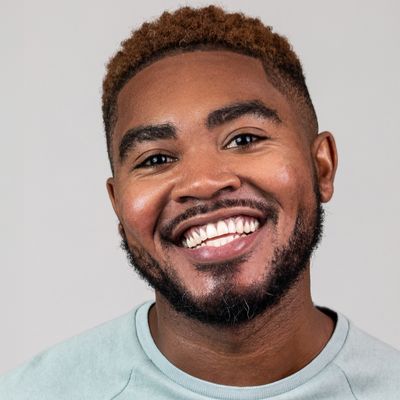
Cody Renard Richard is an advocate, educator, producer, and professional stage manager with a career that spans Broadway, television, Cirque Du Soleil, and opera... Read More
From the show: Broadway Gives Back
Guests
Featured Shows

About
Cody Renard Richard is an advocate, educator, producer, and professional stage manager with a career that spans Broadway, television, Cirque Du Soleil, and opera. On Broadway, he has stage managed 14 productions and was most recently the Production Stage Manager and Associate Director for FREESTYLE LOVE SUPREME, a co-producer on THOUGHTS OF A COLORED MAN, and is now working on the tour of MOULIN ROUGE. As a philanthropist and activist, he has worked with numerous organizations, including Broadway Advocacy Coalition where he founded The Cody Renard Richard Scholarship Program for aspiring BIPOC theater makers. Join Cody as he discusses a changing—and hopefully more inclusive—Broadway industry.
Learn more about about the worthy causes discussed in this episodes and how you can donate and/or help:
Connect with Cody:
- Website: codyrenard.com
- Twitter: @codyrenard
- Instagram: @codyrenard
- LinkedIn: @cody-renard-richard
Connect with The Broadway Gives Back Podcast:
- Facebook: @broadwaygivesbackpodcast
- Instagram: @broadwaygivesbackpodcast
- Twitter: @broadwaygives
Hosted & Executive Produced by Jan Svendsen and co-produced & edited by Jim Lochner.
A proud member of the Broadway Podcast Network.
Special thanks to Dori Berinstein, Alan Seales, and Kimberlee Garris from BPN; Julian Hills from The Bulldog Agency; and Eric Becker from Broderick Street Music.
Transcript
This transcript was automatically generated and might contain errors.
[0:05] Jan Svendsen: Welcome to the Broadway Gives Back Podcast.
[0:07] Jan Svendsen: I'm your host, Jan Svendsen.
[0:10] Jan Svendsen: This podcast spotlights Broadway actors, shows, and organizations in their pursuit of social impact and philanthropy.
[0:17] Jan Svendsen: Join us as some of the brightest lights on Broadway share their stories about their favorite charities and how they got involved and the people on the causes who benefited from these philanthropic efforts.
[0:34] Jan Svendsen: My guest this week, Cody Renard Richard, is an advocate, educator, producer, and professional stage manager with a career that spans Broadway, television, Cirque du Soleil, and opera.
[0:46] Jan Svendsen: On Broadway, he's stage managed 14 productions and was recently the production stage manager and associate director for FREESTYLE LOVE SUPREME.
[0:55] Jan Svendsen: He served as co-producer on Thoughts of a Colored Man and is now working on the tour of MOULIN ROUGE.
[1:01] Jan Svendsen: Cody's also an adjunct professor at Columbia University and currently serves as a delegate for Actors Equity.
[1:07] Jan Svendsen: As a philanthropist and an activist, he has worked with numerous organizations, including the Broadway Advocacy Coalition, where he founded the Cody Renard Richard Scholarship Program for aspiring BIPOC theater makers.
[1:19] Jan Svendsen: I'm so happy to have him here today to talk about being an agent of change in the world.
[1:23] Jan Svendsen: Cody, welcome to the Broadway Gives Back Podcast.
[1:26] Cody Renard Richard: Hi, thank you for having me.
[1:28] Jan Svendsen: It's so good that you're here.
[1:30] Jan Svendsen: So listen, before we start our conversation, let's have a quick Q&A if you're game for that.
[1:35] Cody Renard Richard: Yeah, let's do it.
[1:37] Jan Svendsen: Okay. Three words that describe you.
[1:40] Cody Renard Richard: Oh wow, okay. Um, I'm putting on the spot. Okay. Um, joyful, joyful, chocolate, and fierce.
[1:53] Jan Svendsen: I love that. If you could eliminate one trait from yourself, what would that be?
[2:00] Cody Renard Richard: Ooh, my ability to procrastinate and procrastinate well.
[2:07] Jan Svendsen: I can relate to that too.
[2:10] Jan Svendsen: If you could be a member of any fictional family from a Broadway show or a movie or a TV show, what family would you want to be a part of?
[2:19] Cody Renard Richard: Oh wow, that's hard. Okay. It has to be the Banks family from Fresh Prince. I have to be a part of that family.
[2:30] Jan Svendsen: Great. What's the last book you read?
[2:35] Cody Renard Richard: Oh, um, I didn't finish it, but it was Bell Hooks' All About Love, which I need to pick back up.
[2:41] Jan Svendsen: And what's the last movie you watched?
[2:45] Cody Renard Richard: I actually think it was West Side Story, which is incredible.
[2:49] Jan Svendsen: Mm-hmm. And what is your most used emoji?
[2:54] Cody Renard Richard: Oh my goodness. Um, I think it's probably the praise hands. I'm always like sending those to friends. Um, either that or the face where the guy is doing like the smug like, what you talking about? Look.
[3:13] Jan Svendsen: What is your go-to karaoke song?
[3:16] Cody Renard Richard: Oh man, I don't sing, but if I did, it's definitely Brandy and Monica's The Boy is Mine. So I need a partner to help me with that.
[3:24] Jan Svendsen: I'll partner with you.
[3:26] Cody Renard Richard: Okay, good.
[3:28] Jan Svendsen: And what are you most grateful for today?
[3:31] Cody Renard Richard: Oh, I am most grateful today for grace. Um, a lot has been happening, and today I've been extending myself grace to not feel like I have to do all of the things.
[3:45] Cody Renard Richard: So I am grateful for perspective and grace today.
[3:51] Jan Svendsen: I could use some of that today too, actually.
[3:55] Jan Svendsen: Tell me when you say the word grace, what does that mean to you?
[4:00] Cody Renard Richard: Um, I think it means care. It means putting thought behind your intentions. You know, I think it's about, you know, we make fast decisions all the time and the way we speak to people and the way we speak to ourselves.
[4:16] Cody Renard Richard: So it's really leaning into care and in what we're saying and what we're doing and being okay with, you know, the result not being what we thought it was gonna be. You know, it encompasses all of that, I think.
[4:31] Jan Svendsen: Thank you. This was like a therapy session for me so far. I appreciate that.
[4:36] Jan Svendsen: Um, you know, I was checking out your website and you share a quote from Maya Angelou. Um, "I come as one, but I stand as 10,000." And I wondered why that particular quote resonated with you.
[4:50] Cody Renard Richard: Yeah, and I made sure that I put that quote on the first page of my website because I know that every time I step into the room, I'm representing more than myself. Every time I use my voice, I'm representing more than myself. I'm not saying that I'm taking on that responsibility because that's not a responsibility that I can as Cody can carry, but I do know that me as a person, I stand for more than just who I am.
[5:22] Cody Renard Richard: There have been so many people who I know and who I don't know who have done things to allow me to thrive. So I know that when I step into these spaces, I carry a little bit of all of them without even knowing it. Um, and I think that as the older I get and the more I am able to step into my power and use my voice, um, I'm reminded of that, you know, because things come to me and I'm like, you know, where did that come from?
[5:50] Cody Renard Richard: So I I'm always reminded that, you know, when I step into a space as a black man, as a black queer man, you know, this space wasn't always ready to accept me or people like me. So I know that when I walk into a space, it's bigger than just me being in this space.
[6:13] Jan Svendsen: So let's talk about you. Um, I think we have to talk about your background and your upbringing before we talk about all your activism and your philanthropy and all of your achievements. Who are you, Cody? Like, why are you so passionate about making the world a better place?
[6:27] Cody Renard Richard: You're like a full teacher.
[6:29] Jan Svendsen: Well, thank you. That's very sweet.
[6:31] Cody Renard Richard: You know, I really think it just comes from, you know, my upbringing. Like my family are the most gracious people. And they wouldn't say that because that's just who they are, you know. But I'm from the South. I'm from Houston, you know, we all look after each other. We've always, you know, I never wanted for anything. And I grew up in a very, very low-income house, you know.
[6:55] Cody Renard Richard: So I think just the way that I was raised, that resiliency, that going back to the word grace, that care, you know, we just learning that and seeing that is something that was embedded in me. And I think once I was able to understand what that was, I was able to offer that to other folks. You know, I think a lot of times we just do things, we go through the emotions, we don't realize what's actually happening until someone's like, "Do you know what you're doing right now?"
[7:25] Cody Renard Richard: You know, so I think that's been a part of my journey is that, you know, my mom and my cousins and my aunts and my grandmother, they've always been these types of people. Even when they didn't have, they were able to give something else, you know. Um, so just seeing that is how I move through the world.
[7:46] Jan Svendsen: Talk about your mom, your grandmother, a lot of strong women, it sounds like, right?
[7:50] Cody Renard Richard: Oh, yeah.
[7:51] Jan Svendsen: In your family. And you were raised on a farm in Texas.
[7:55] Cody Renard Richard: Mm-hmm.
[7:57] Jan Svendsen: A black queer kid in Texas on a farm. Wow, that just sets up the stage here for a lot of like who you are and what you've done. Now, many of my podcast guests and podcast conversations the last two years have discussed the straight-up racism that existed in the world of theater. And also the more subtle but I guess equally as dangerous microaggressions.
[8:22] Jan Svendsen: After George Floyd's murder, you called out the industry in a big way on Twitter, and you captured the attention of our entire community and this community that's in need of change. And I personally just respect your courage, your authenticity, your honesty. And I just wondered what were you feeling then? And what are you feeling now?
[8:46] Cody Renard Richard: Yeah, you know, then was a very hard time, you know. We were early on in the pandemic, not knowing what was coming and what was happening. And you know, we were also seeing black bodies die in real time, which we had been seeing before, but before we had work to distract ourselves from it, right? We didn't then.
[9:14] Cody Renard Richard: June 2020 was nothing going on, especially if you worked in the arts. You worked anywhere, really, you know, the world was shut down. Some people had work, not many people did. So we were seeing black bodies die on tape, and nothing be done about it, you know. And I remember being on Facebook, and you know, someone made an ignorant statement about how the theater community is such a community or something towards the line of like, you know, not that racism doesn't exist here, but something towards the line where they don't see the bigger picture and how that infiltrates our lives.
[10:00] Cody Renard Richard: And that was I saw that and I rolled my eyes and kept going. And then the next morning I woke up in bed and I was and I kept thinking about it. And I was like, if this person is thinking this way, then there are so many people don't understand that the smallest actions that they've been doing have been affecting their black and brown colleagues for years, and a lot of us haven't said anything about it.
[10:21] Cody Renard Richard: There have been some who have who have been outspoken and who have really been leading the charge and their careers um were affected by it. You know, they stopped getting hired. They were deemed the troubled people. You know what I mean? So, like there's also a history of that, you know, so that's a whole nother story.
[10:40] Cody Renard Richard: So anyway, I was thinking about this in bed and I, you know, I was on my phone and I was journaling. I write notes a lot. And I kind of just like wrote out my thoughts and I sat with it and I was like, because I needed to write it down for me, like what I was feeling and why I was frustrated. And then I started thinking about some of the things that people have said to me, some of the things people have done, some of the things and I was like, oh wow, I forgot about that.
[11:03] Cody Renard Richard: Because also I don't carry that with me, you know, because it doesn't serve me. I'm like, you know, so like most of these things I've already healed from. All of those things I've healed from. But just remembering these things, I was like, oh wow, that is so ignorant. That is so and and the sad part is that most of these people don't understand what they're doing. Some of them probably did, but most of them didn't understand that making a comment, you know, about the company barbecue and being like, "Black people love barbecue. You're coming." Something as small as that in a show where I'm one of three black people working on it is inappropriate.
[11:39] Cody Renard Richard: You know what I mean? Like small, like things like that that just continue. And I'm like, if you don't understand that your microaggressions here in the theater community leads to the bigger picture of what's happening in the government and what's happening um everywhere else then we have a problem. So that was where I started. I was like and so I wrote that to myself and and then I wasn't gonna share it. And then the next morning I woke up and I was like depleted from watching the news and I was like you know what these are my thoughts.
[12:08] Cody Renard Richard: You know I'm like this here's my love letter to the theater community because we say we're so inclusive and yet you don't understand you know what I'm what I go through. You know, and it was purely to be honest, it was pure it was it was for two things. It was for me just to release it, you know, for me to just be like, I know that um I know that I needed to just release it for myself, A. And the other thing too was that like maybe if I were to say something along these lines, maybe someone else will say, you know what, I went through that too, and let's just air it out. You know what I mean? Um, so that's really what started. And and so I felt very vulnerable then, you know.
[12:51] Cody Renard Richard: Um, and I didn't realize that it would take off the way that it did, you know. I knew that people respond to it because people respond to my social posts often, but not like that, you know. Um, so the onslaught of emails and calls and texts and things that I were getting from that was overwhelming. Um, so it it it was a very overwhelming time to deal with other people's feelings, not just well, you you struck a chord, you know, you became like this catalyst for so much at that moment in time, and also as you were saying, the world was kind of quiet right then, so everybody was sitting with what was happening and not being distracted.
[13:37] Jan Svendsen: So people were able to focus on the words you wrote.
[13:41] Cody Renard Richard: Yeah, I think that's exactly it, you know. Um, because we had time to actually deal with what was in front of us, we had to, you know, and I think that's the beauty of the time. As unfortunate and as devastating as it was, I do think that that time burst real change or the possibility for real change, I should say.
[14:01] Jan Svendsen: Yeah.
[14:03] Cody Renard Richard: So, okay, so you become like this lightning rod with your, you know, your social media. People are now responding to it. And how like and what happened? How did you feel? And how did that it sort of be I mean you were an activist before that, but it really triggered something in you to be more proactive, right? To do something about it.
[14:24] Cody Renard Richard: Yeah, I mean, so it was interesting because like all the things that that I've been saying in the last couple of years have been things that I've me and my friends talk about all the time, or things that I'll say in small communities. But I think now people have given me a microphone and people have given me a space to to speak, which is great. Um, but in the beginning it was really hard. It was it was hard to deal with other people's emotions and other people's feelings because what was happening before people did the work to understand um let that pass.
[15:07] Cody Renard Richard: I love live. Um, what was happening um before people did the work to understand their part in this, they would call and dump things on me. You know, people called me and was like, did I ever do anything to offend you? And and I was so exhausted by calls like that. I started to just not answer the phone. You know what I mean? Like honestly, and if you call me to this day, my mailbox is still full because I was triggered in 2020, and I said I'm not deleting any, no one can leave me a voicemail. And I know that's not great for for business, but for my personal sanity, if you need me, you'll get in touch with me, but you can't leave me a voicemail. You know what I mean?
[15:45] Cody Renard Richard: So that's that's what that's what it trick it was. So it was so much of of me having to navigate someone else's feelings as opposed to them calling me if and just say, hey, I read this thing, you know, this is how I'm feeling about this I'm sorry what can we do to move forward as opposed to did that do something what can I you know and I'm like I don't have the answers for you you have to do the soul searching you know so that part was hard you know um but once we got past that and I was able to to kind of understand um the moment I guess or understand what was happening um I was able to to gather my thoughts and gather myself and actually like find some um some some passion some momentum because I was so depleted at that time it was it was hard to to to want to be motivated to to do much you know um so I think once I was able to to not silence those voices but once I was able to navigate that I was able to focus on you know the initial intent which was to you know bring people together.
[15:48] Jan Svendsen: Well you've definitely brought people together and you are bringing people together and you know it's interesting as I said I've on other podcasts I've had guests we talk about this and in trying to be in trying to really listen and understand and be curious um you talked about some of these microaggressions and I've heard this before where you know some white person says to you oh did I ever do anything you know and I totally understand and respect the fact that that's not your responsibility to educate somebody else.
[17:32] Jan Svendsen: But I guess my question is and you're having this conversation, I don't mean to sound naive or anything, but how how do people learn that? You know, don't you have to have that conversation, that dialogue, and say, hey, you know, when you said blah blah blah, that really affected me, and here's why.
[17:49] Cody Renard Richard: I think the answer to that is is it's different, right? So if I were to come to you and say, hey, when you said this to me, not okay. Let's figure this out. You know what I mean? Because I am coming to you with trauma that you inflicted on me, right? And I think that that sometimes when when people do stuff and they bring the trauma back to someone else, now you're now you're A asking me to relive this thing, B, you're asking me to teach you why it's not okay. And C, you already know it's not okay because you're bringing this to me. And if C, and if that's the answer, then you should do the work on your own to dissect why it's not okay.
[18:28] Cody Renard Richard: So I think that's the issue is that we've missed the last step and we go, we want easy solutions as opposed to the harder way. Like it's not my responsibility to teach that, right? And I think um it's the sure that's the easier way for for someone to come with me and be like, hey, I know this wasn't okay, what can I do to be better? You know, so then I have to take on your emotional baggage or their emotional baggage, you know what I mean? So that's why uh it gets exhausting because we miss the step of, you know, prime exam, we missed the step of accountability. That's what it is. You know what I mean?
[19:04] Cody Renard Richard: So, like if I know that I did something wrong, you know, rather than me going to someone and being like, Did this offend you? You know what I mean? You can just go straight to the person, like, hey, I didn't like the way I did this, I am sorry, I won't do it again. Then that way I don't have to relive it, I don't have to teach you this shit. You know what I mean? So I think that that's that's this that's the difference between the two.
[19:26] Jan Svendsen: Yeah.
[19:28] Cody Renard Richard: Um, Britton Smith was on this podcast um from Broadway Advocacy Coalition, say that 10 times. Um, and he um he's so incredible. And I know that you formed this amazing relationship with um with BAC. It seems like a very authentic, natural place for you guys to be working together on you know, equity and diversity and inclusion. Um, and I wondered how this collaboration works.
[19:54] Cody Renard Richard: Um, we're gonna get to your scholarship program in a minute, but I'm talking more about just the the sort of um highlights of the collaboration. You know, how does it help both sort of entities, you know, BAC and you um achieve your goals on both the macro and the micro levels.
[20:11] Cody Renard Richard: Yeah, I mean, Britton Smith is a unicorn. He is such he is, he is such an incredible individual. Um and I have known Britton for a while. We worked together. Um, we did a show at City Center in 2012. We did another show in 2014. Um, so we have been in each other's orbit for a while, but it's really been inspiring and amazing to really watch him step into his own in the last couple of years, especially through BAC.
[20:39] Cody Renard Richard: Um, and I watch him lead seminars and different events and stuff, and it's really incredible. And I think the beauty of excuse me, the two of us sharing community is is a part of the the brotherhood that that's unspoken. You know, it's there's something special about about people who are after the same goals but go about it different ways, coming together to help create this thing or to help, you know, the bigger picture.
[21:11] Cody Renard Richard: You know, I always say like every little bit moves the needle forward, right? So the way like Britain is a disruptor, you know what I mean? Like he goes in, he shakes up stuff with but with care. You know what I mean? So like so, and that's the way that he you know activates, right? I'm not necessarily a disruptor, you know what I mean? I work from the inside out. Like I I figure people out and I have conversations and we and we try to we try to ch I try to change, you know, what I can do, what I'm responsible for. You know what I mean?
[21:42] Cody Renard Richard: So it's been really great understanding that everyone plays a different role and understanding that you know that we can support each other without being in competition for you know, whatever, you know what I mean? So it's been really amazing getting to um collaborate with him with NBAC.
[22:01] Jan Svendsen: I was just gonna say collaborate's a perfect word for that.
[22:04] Cody Renard Richard: Um so now let's talk about your scholarship program, which has become a collaboration with um BAC. Um I love that your scholarships pay actual cash. And more than that, I think I love that there's like a true mentorship piece of your program. And I really want to focus on this idea of mentorship.
[22:21] Cody Renard Richard: And I um I think mentors are so important in the industry. And I wondered if you had any mentors and if any of them were people of color, or if you saw yourself represented by any of the people that helped you.
[22:37] Cody Renard Richard: I hope that now as you develop this program, I guess the intent is to, you know, have these young people be mentored by people that you know represent them. Um, but I wondered what your experience was with regard to being mentored and why why that's such a big piece of the program for you.
[22:53] Cody Renard Richard: Yeah, I mean, I've had amazing mentors, um, none of which were people of color, none of which were black. Um, now where I am in my life, there are people who can fill a mentor role-ish as um as a person of color, but they're mainly my colleagues, they're mainly like, you know, my friends.
[23:16] Cody Renard Richard: So coming up, you know, I'm still relatively young in this industry, you know. Um, but now people are looking to me as a mentor, which is very interesting, you know. But coming up, I had no mentors of in this field, no mentors of color, no black mentors. Um, so I didn't really see myself represented in this field, and I didn't realize that I didn't see myself represented in this field until I met another black stage manager working on Broadway.
[23:48] Cody Renard Richard: And I was like, oh, right. I didn't even I didn't even notice that they weren't around me until I met another one. That's how messed up white supremacy is. That's how messed up, you know, um, I my my thinking was because I didn't even notice it, you know.
[24:07] Cody Renard Richard: I um and I think that's so wild. But um, but yeah, I I've had some great mentors who have absolutely helped me on my path. Um, um, but what I will say, even though I didn't see myself represented in this industry, I still knew that there was a place for me. You know, I still knew that there was space for me to do what I wanted to do, um, either because I made space or just because, you know, I just knew that that that's what was coming. You know what I mean?
[24:35] Cody Renard Richard: Um, so with this program, it's very important that these students have access to people who are working, that they see themselves represented. Even if these people don't become mentors for them, because you know, um, mentorship, I think is a very specialized relationship. But as long as they can see themselves represented, there's someone that they have access to, there's someone they can aspire to be, there's someone that they know is advocating for them, even if they're not specifically saying their name. You know what I mean? I think that's the important part of seeing yourself represented.
[25:13] Cody Renard Richard: How does a scholarship program work? Um, so we do give out financial grants, you know. The first year we gave out 4,000. Uh, we've been very fortunate to double the grants. So we gave out $8,000 this year to each student. Um the program itself is in the spring semester. Um, so we go through a series of work sessions to where you know, we focus on community building so they get to know each other, so they really build relationships within uh the cohort.
[25:44] Cody Renard Richard: Each student, there are students from all over the US, they're in different universities. And all students have to be studying or pursuing a degree in a non-performance related field. So directors, stage managers, playwrights, designers, like we had a puppeteer the first year, which is really cool. So really just, you know, anybody who's working off stage and identifies as a person of color. So that's what the program's for. And then the rest of the work sessions focus on, you know, racial equity, and we focus on leadership and we focus on self-awareness and really building capacity to use your voice. And we focus on, you know, sometimes how it's hard to exist in certain spaces, you know. We really just try to help build their capacity to be better humans.
And what I'm learning is that these kids, they're not kids, they're young adults, these young adults are way more evolved than I ever was at that age. And it's so inspiring. Like I'm learning from them as they're learning from me and the folks at BAC. It's really cool. Each year I'm just like, wow, y'all are just creating stuff at your school, you're doing rallies, you're having all these amazing things happening that I never thought of when I was in school. I was just trying to make it through, you know. So it's really been exciting seeing the transition of these folks. It is interesting because like the inspiration comes back at you, that energy, and that you know, then propels you forward even more. I love that whole energy transference.
[27:41] Jan Svendsen: So the last two years, Broadway's been shut down, but your profile is skyrocketed in a good way and for good reason. You're busy shaping the future of theater. And I wanted to talk to you about the future of theater. I have asked several guests, you know, when Broadway comes back, what do you want to see the theater look like? And what are the stepping stones to getting there? I asked that question of a lot of people last end of last summer because we thought Broadway's coming back in September, and then we had the hiccup. So now Broadway's back-ish and coming back again still. You know, I guess we have to all be sort of flexible and dynamic about this. But as Broadway returns and we hit the new normal, whatever that is, what's your vision for the future of theater? And how did we get there?
[28:33] Cody Renard Richard: Yeah, it's funny that you asked this question because I gave a keynote speech for the Thespian Festival at the top of 2021. And I ended by saying the future of theater looks like me. You know, the future of theater represents all that I am and all that you are, speaking to the students. And I still believe that. I think the future of theater has to represent each one of us. And I don't think we're there yet. You know, I think that there are people who are making strides, there are people who care, there are people who want to do things, but there are still a lot of people that if it's not convenient for them, it does not matter. So I think that we have a long way to go. In terms of the work that we produce, in terms of the people that we hire, in terms of the people who produce the shows, in terms of the people who are directing the shows, you know.
I think we have a long way to do that. People who make the decisions about the money absolutely, absolutely. That's 100%, you know. So there's a ways to go. But we've been seeing, you know, I'm not a pessimist, I'm very much an optimistic person, even in times where I'm like, okay, I always try to find the thing that's gonna help me see the way forward, right? So, you know, I've been very fortunate. I've worked on, you know, a couple of Broadway shows since theater has been back. And I do feel a shift in the atmosphere, you know. I think the biggest thing at least is that people are more aware of what other people are going through. You know, there's more capacity to allow people to go through the things that they're doing and do this job.
People also realizing that there's more to life than just this little show. And I'd say that's a little show because it's very important what we do, but it's also, you know, life happens outside of the theater, and I think people are finally allowing life to happen outside the theater. Not everyone. So I think there has been changes in that regard.
[30:50] Cody Renard Richard: A friend of mine, she talks about it all the time. She's like, you know, she used to go at it with a sledgehammer, and she's like, People can't take a sledgehammer. You have to go through with an ice pick. And again, as I was saying earlier, everybody approaches it different, you know. So you have to find what's helpful for you in terms of change, in terms of what you want to see, you know. So crazy question just came to me. If you were at Sardi's having lunch with a couple of the theater owners, because we talked about powerful people in the industry, right? So theater owners are super powerful. What would your conversation be at lunch? What would you want to communicate?
[31:37] Cody Renard Richard: You know, it's interesting because it depends on what the grounds of the lunch was. You know, if I were to sit down with the theater owner and they would be like, anything you want, let me know. Then the conversation would be different. If I was sitting down and I was just getting to know them, the conversation would be different. You know what I mean? But I mean, like, if we're talking like realistically, like we were to sit down tomorrow, and I'm just now like, you know, we're getting to know each other. I mean, for me, it would just be much very much like, give me access to Thrive. You know what I mean? I would in that regard, we will be able to collaborate on something, you know, to build a partnership is what I would ask for, because then I can start, then I would have ownership and power over what I can help control. You know what I mean?
[32:39] Jan Svendsen: So give me examples of what access to Thrive would be for you.
[32:44] Cody Renard Richard: Capital. People who support the things that I care about, and space, you know, because a capitalist power, you know, if you don't have people who are supporting what you care about, then it's gonna be hard to do the thing. And if you don't have a space to do it, then we're just talking, you know. So, like in a realistic way, that's what I would ask. In an unrealistic way, if he was like, whatever you want, I would say, let me own and operate one of your theaters. Honestly, I'm not kidding you. I dream all the time. Like they're like, if you ever win the lottery, what would you do? And I would buy two Broadway theaters, and I would own and operate two Broadway theaters. I don't need a lot. Okay, I'm making this announcement right now.
Hey Nederlanders, Jujamcyn, Schubert's, listen to the Scott Podcast. Give Cody a theater or two. Come on, do it. You know, stranger things have happened, you know what I mean? But absolutely. Cut to part two of this podcast in a year from now when you're like a theater owner.
[34:00] Jan Svendsen: I love it. Why not? I love your spirit. And I want to talk a little bit about this idea of being an activist, being a philanthropist. We talk about it a lot on this podcast, that's where the goal. And whether it's big or small, many of the guests have given advice to the listeners about having social impact, being an activist, being a philanthropist. And there's just been this resounding just do something, is like the best advice people are giving. And I wondered if you could share your journey to being, you know, an activist, a philanthropist, and also some advice on being a change maker. How can people in their everyday lives become everyday activists and change makers and philanthropists?
[34:51] Cody Renard Richard: Yeah, you know, what I tell my students all the time is I'm like, if you have a voice, you're a leader, right? If you are able to affect how someone else feels or thinks you're a leader, you're a change maker. It's that simple. It doesn't matter how big the platform is, it doesn't matter how many people you're affecting, if it's one person, you've done your job. You know what I mean? So I always start with that. Like if you have the ability to affect someone else's lives, then you have the ability to affect it positively. So use that. Don't take that for granted, you know. So when I think of the word activism, which, you know, is a word that's hard for me because when I think of activists, I think of people who dedicate their entire lives to work that they are passionate about. And whereas I do dedicate a lot of my life to stuff that I'm passionate about, that word is something that I'm still coming to terms with because I think activism is a full-time job, you know.
[36:07] Jan Svendsen: But Cody, can't we all just be everyday activists?
[36:10] Cody Renard Richard: We absolutely a thousand percent. One thousand percent. I think but the difference is that if you're claiming the word activist, you have to actually care. And I think some people don't care enough if it doesn't affect them. And the passion is only there when it affects them, and the passion has to be there when it doesn't affect you. And I think that's what makes an activist. You know what I mean? But so my advice though is to, you know, start in your community and start with your friends and use your voice everywhere that you can. And again, as everybody else has said, just do something. Because the worst thing we can do is to sit on the sidelines, which a lot of us have. I've been complacent. A lot of us have for so long. So like, why? You know, you know. When you know better, you do better, right? So now we know better. We have to do better. Sitting on our couches watching the news and crying and caring is not doing anything. So do something.
[37:15] Jan Svendsen: Well, Cody, thank you so much. You have used your voice, and you were teaching us how to use our voices to do better and do good, and I really appreciate you being on the podcast today.
[37:26] Cody Renard Richard: Thank you. Oh my god, thank you. This has been a great conversation. I'm so grateful to spend my afternoon with you.
[37:33] Jan Svendsen: Thanks for listening to this episode of the Broadway Gives Back Podcast. Broadway Gives Back is part of the Broadway Podcast Network. Special thanks to my producing partner, writer, editor, and friend Jim Lochner. And thank you to everyone at BPN, including Dori Berinstein, Alan Seales, and Kimberlee Garris. I'd also like to thank Julian Hills from the Bulldog Agency and Eric Becker from Broderick Street Music. If you like what you hear, don't forget to subscribe and rate this podcast wherever you stream your podcasts. You can also follow Broadway Gives Back on Facebook and Instagram at Broadway Gives Back Podcast and on Twitter at Broadway Gives. To learn more, visit BPN.fm slash Broadway Gives Back. Thanks so much.
© Broadway Podcast Network, All Rights Reserved