

The art and a craft of creating Broadway Musicals has been passed down directly from one artist to the next, generation to generation, for more than 125 years... Read More
From the show: BROADWAY NATION
Guests
Featured Shows

About
The art and a craft of creating Broadway Musicals has been passed down directly from one artist to the next, generation to generation, for more than 125 years. We can literally trace the first-hand connections between composers, lyricists, bookwriters, directors, producers and performers from the earliest days of the musical right up to those working on Broadway today.
In this episode and the next Albert Evans and I explore one of the most significant examples of this kind of "legacy chain" -- the knowledge, understanding, and skills that were handed down directly from Otto Harbach to Oscar Hammerstein to Stephen Sondheim to Lin-Manwell Miranda. Listen to the story of how the Musical evolved from "Silver Age" to "Golden Age" and right up to HAMILTON today.
Transcript
This transcript was automatically generated and might contain errors.
[0:14] David Armstrong: Welcome to another episode of Broadway Nation, the podcast that tells the extraordinary story of how immigrants, Jews, queers, African Americans, and other outcasts invented the Broadway musical and how they changed America in the process.
[0:27] David Armstrong: I'm David Armstrong, and I call this episode Children Will Listen: The Harbaugh to Miranda Lineage, Part One.
[0:43] David Armstrong: In our very first episode, I described the Broadway musical as being an art and a craft that has been passed down directly from one artist to the next, generation to generation for more than 125 years.
[0:56] David Armstrong: We can literally trace the first-hand connections between composers, lyricists, book writers, directors, producers, and performers from the earliest days of the musical right up to those working on Broadway today.
[1:10] David Armstrong: In this episode, we will look at one of the clearest and most significant examples of this kind of legacy chain as we explore the knowledge, understanding, and skills that were handed down directly from Otto Harbach to Oscar Hammerstein to Stephen Sondheim to Lin-Manwell Miranda.
[1:27] David Armstrong: At first glance, it may seem that Harbach's loosely constructed musical comedies and operettas would have little relationship to Rogers and Hammerstein's tightly woven, story-driven musical plays.
[1:38] David Armstrong: And that Sondheim's edgy, ironic, sardonic musicals would have nothing to do with the open-hearted Hammerstein shows that came before him, or with Lin-Manuel's hip-hop-influenced work that followed.
[1:49] David Armstrong: But a closer look reveals a very direct influence.
[1:52] David Armstrong: Together, the combined works of these four musical theater giants encompass virtually the entire history of the American musical theater.
[2:00] David Armstrong: Today we're going to explore that deep connection between these four masters of the musical.
[2:06] David Armstrong: Once again, my friend and esteemed colleague Albert Evans is here with me to help tell this story.
[2:11] David Armstrong: So, Albert, who exactly was Otto Harbach?
[2:14] Albert Evans: Well, Otto Harbach wrote the book and/or the lyrics for a really incredible 45 Broadway musicals.
[2:22] Albert Evans: And you probably don't know his name, but if you have ever heard the song Smoke Gets in Your Eyes, you have experienced his talent for writing lyrics.
[2:31] Albert Evans: They ask me how I knew my true love was true.
[2:43] Albert Evans: I of course replied, something here inside cannot be denied.
[3:19] Albert Evans: Smoke gets in your eyes.
[3:31] Albert Evans: He grew up in Salt Lake City, where his parents worked on a farm and joined and then left the Mormon church.
[3:39] Albert Evans: His family was very poor, but somehow Otto worked his way through college.
[3:44] Albert Evans: He graduated from Knox College in Illinois and then received a Master's of English at Whitman College in Washington State.
[3:53] Albert Evans: Meanwhile, in 1895 in New York, Oscar Hammerstein II was being born into a theatrical dynasty.
[4:01] Albert Evans: His father Willie was one of America's most successful theater managers.
[4:05] Albert Evans: He ran Hammerstein's Victoria Theater, the most popular vaudeville house in New York at that time.
[4:11] Albert Evans: His brother Arthur was a successful producer of musical comedies and operettas.
[4:15] Albert Evans: Both were the sons of the German Jewish immigrant Oscar Hammerstein I, a flamboyant showman whose name and face were continually in the public eye as he made and lost fortunes, built 12 theaters, ran several opera companies, and conducted well-publicized theatrical feuds.
[4:34] Albert Evans: He also had a mad passion for litigation and was always involved in some legal action or another.
[4:40] Albert Evans: And at one point he had 40 separate lawsuits all going at the same time.
[4:44] Albert Evans: Young Oscar knew almost nothing of all this while growing up in a comfortable but sheltered environment on the upper east side of Manhattan.
[4:52] Albert Evans: He was, in fact, purposely kept away from theaters and show people because his father Willie, though immensely successful, hated the theater.
[5:01] Albert Evans: He was only in it because it was the family business.
[5:03] Albert Evans: But then in his teens, Oscar discovered what his father and uncle did for a living, and like his grandfather, he fell hopelessly in love.
[5:12] Albert Evans: It was around this time that Otto Harbach came to New York with the intent of getting a PhD from Columbia University.
[5:20] Albert Evans: But when failing eyesight made reading painful, he dropped out to take a job in advertising.
[5:26] Albert Evans: Then in 1906, he saw George M. Cohen's show, 45 Minutes from Broadway, and instantly became fascinated by the possibilities of musical theater.
[5:38] Albert Evans: Two years later, he wrote the lyrics for a Broadway musical called Three Twins that introduced one of the most popular songs of the era, Cuddle Up a Little Closer.
[5:53] Albert Evans: Love the Love and Beam I Little, clinging by.
[7:12] Albert Evans: And he also played the comic lead.
[7:15] Albert Evans: The next year, when America joined the First World War, Hammerstein was eager to enlist but was turned down because he was classified as underweight.
[7:23] Albert Evans: Despondent, he left Columbia and after much effort finally convinced Uncle Arthur to take him into the family business.
[7:30] Albert Evans: He began first as a gopher, what we would call an intern today.
[7:34] Albert Evans: He would later write, I was an office boy and play reader by day, stage manager by night, and an eager kibbitzer at the rehearsals of new shows.
[7:43] Albert Evans: He was soon given the chance to try his hand at contributing lyrics to some of the musicals his uncle was producing.
[7:48] Albert Evans: And then his uncle decided to team him up with the more experienced Otto Harbach so that he could really learn his craft.
[7:54] Albert Evans: Although he was 22 years older than Oscar, Harbach was more than willing to take him on as a sort of junior partner.
[8:02] Albert Evans: As Todd Purdom writes in his recent book Something Wonderful, it was a fateful collaboration.
[8:10] Albert Evans: Harbach was a kind and generous mentor, and he insisted that Oscar, whose instinct was to write very quickly, slow down and think seriously about his goals before putting words to paper.
[8:24] Albert Evans: He likened the construction of a musical play to building a fire in which all the elements, the logs, kindling, matches, a good flu, everything had to come together.
[8:36] Albert Evans: Inspired by Harbach, Hammerstein began to envision a kind of show in which the songs would be a more integral part of the story, and in which both the songs and the story would more meaningfully express human life and emotion.
[8:49] Albert Evans: This intention was realized only haltingly and infrequently at first, but eventually this idea would change the structure and indeed the very nature of the American musical.
[8:59] Albert Evans: Harbach and Hammerstein would collaborate on the book and lyrics for ten musicals and operettas, including the smash hits Rosemary, Sonny, and the Desert Song, working with many composers of varying styles, such as Rudolf Frimmel, Vincent Humans, Sigmund Romberg, and Jerome Kern.
[9:20] Albert Evans: Then it was time for Hammerstein to go off on his own.
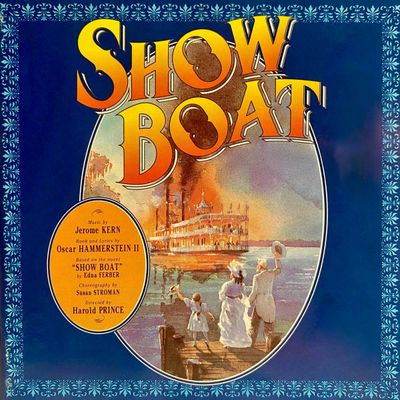
[9:26] Albert Evans: In 1927, he and Jerome Kern decided to adapt Edna Ferber's best-selling novel, Showboat for the musical stage.
[9:34] Albert Evans: Many of his colleagues thought this was a crazy idea.
[9:37] Albert Evans: After all, Ferber's plot dealt not just with failed marriage, gambling addiction, and alcoholism, but most significantly the center of the story revolves around issues of racial prejudice and miscegenation, none of which had ever been dramatized on the musical stage.
[9:53] Albert Evans: But Hammerstein and Kern had vision and courage and did not shy away from the novel's dramatic themes and events.
[10:00] Albert Evans: The result was one of the most beautiful, entertaining, and tune-filled musicals of all time.
[10:05] Albert Evans: It is a show that still delights, moves, and amazes us more than 90 years after it was first performed.
[10:12] Albert Evans: Perhaps more importantly, it demonstrated how musicals could embrace important subject matter, especially issues of race and equality, which from that point on would become the principal subject matter of the American musical.
[10:25] Albert Evans: This may surprise you, but I can count more than 30 hit musicals that have issues of race at the center of their story.
[10:32] Albert Evans: Actually, I suppose it shouldn't surprise us.
[10:35] Albert Evans: The struggle for racial and ethnic equality and the battle against bigotry and intolerance have been major issues in this country from colonial times right up to this week.
[10:46] Albert Evans: And since the musical is our great original American art form, perhaps it is only natural that it would so often reflect and illuminate this aspect of our culture.
[11:00] David Armstrong: Hi, this is David Armstrong. And if you're enjoying this episode, I strongly suspect that you'll want to read my new book, Broadway Nation: How immigrant, Jewish, Queer, and Black Artists Invented the Broadway musical, which is on sale now wherever books are sold.
[11:17] David Armstrong: And I'm happy to report that the reviews have been terrific.
[11:20] David Armstrong: Noted author and theater historian Peter Felicia of Broadway Radio writes that there's so much information here that Broadway Nation could almost be called a textbook, but it's much too fun to be described as such.
[11:34] David Armstrong: So let's just say it's a textbook example of how to write about musicals and how to do it right.
[11:40] David Armstrong: An author and Princeton professor Stacey Wolf says that David Armstrong's Broadway Nation is a lively, engaging and fascinating journey through the vibrant history of the Broadway musical.
[11:52] David Armstrong: Whether you're a historian, a theater maker, or a passionate fan, Broadway Nation is an important and impossible to put down tribute to the diverse voices behind the Great White Way.
[12:04] David Armstrong: And finally, Tony Award-winning lyricist David Zippel says David Armstrong's insightful history of the evolution of the Broadway musical and its creators is captivating and comprehensive as well as indispensable.
[12:19] David Armstrong: Of course, you can find it on Amazon, or better yet, have it ordered by your local bookshop.
[12:24] David Armstrong: But if you go to the publisher's website, Bloomsbury.com, you can order it at 10% off the full price of either the hardcover or the paperback.
[12:34] David Armstrong: Again, like the podcast that inspired it, the book is titled Broadway Nation: How Immigrant Jewish Queer and Black Artists Invented the Broadway Musical.
[12:45] David Armstrong: Now, back to the show.
[12:47] David Armstrong: Three years after the premiere of Showboat, Stephen Sondheim was born on March 22nd, 1930.
[12:54] David Armstrong: Strangely enough, he shares the same birth date as Andrew Lloyd Webber, born in 1948.
[13:00] David Armstrong: Stephen was the only child of a prosperous German Jewish garment manufacturer named Herbert and his designer wife, known to all as Foxy.
[13:11] David Armstrong: Sondheim's father would frequently entertain out-of-town buyers by taking them to see the latest Broadway musicals.
[13:18] David Armstrong: And since he was also an accomplished amateur musician, he was able to return home and play the hit tunes from all of those shows from memory on the family's grand piano, to his son's great delight.
[13:31] David Armstrong: Among the first Broadway musicals that young Sondheim remembers being taken to were Rodgers and Hart's The Boys from Syracuse in 1938, and Jerome Kern and Oscar Hammerstein's Very Warm for May, 1939.
[13:47] David Armstrong: Though not a success, Very Warm for May introduced a classic ballad, which Sondheim has said was one of the songs that inspired him to want to become a composer.
[13:58] David Armstrong: The song was called All the Things You Are.
[14:02] David Armstrong: You are the promised kiss of springtime that makes the lonely winter seem long. You know, breathless hush of evening. Let's remember on the brink of a lovely song. You are the angel alone that lights a stone. The dearest things I know are what you are. My happy arms will hold you, and someday I know that moment divine when all the things you owe.
[15:10] David Armstrong: Just two years later, Hammerstein himself would become an integral part of young Sondheim's life.
[15:16] David Armstrong: On a summer's day in 1941, a friend of Sondheim's mother, Dorothy Hammerstein, arrived for a visit with her ten-year-old son Jimmy in tow.
[15:25] David Armstrong: An instant friendship was established between the two boys, and by the end of that first visit, they informed their mothers that Steve would be coming to spend the weekend at the Hammerstein summer place in Bucks County, Pennsylvania.
[15:36] David Armstrong: Sondheim would end up staying the rest of the summer there, and soon became more a part of the Hammerstein family than his own.
[15:43] David Armstrong: Jimmy's father was, of course, Oscar Hammerstein II.
[15:47] David Armstrong: He was 46 years old at the time, and he had not had a hit show in almost 10 years.
[15:52] David Armstrong: He was, however, just beginning what would become his historic collaboration with Richard Rodgers.
[15:58] David Armstrong: Sondheim says that he osmosed into the Hammerstein household.
[16:03] David Armstrong: They were my surrogate family. My mother was a difficult lady, and I had a difficult time with her.
[16:10] David Armstrong: This seems to be something of an understatement.
[16:13] David Armstrong: Sondheim's mother was, in the words of Jimmy Hammerstein, the worst mother I have ever seen.
[16:19] David Armstrong: He goes on to say that Steve adopted us, and if you prized your mental health, it was a sensible, emotional position to take.
[16:28] David Armstrong: Dad always had time to talk to Steve.
[16:30] David Armstrong: As a child, Sondheim was full of rage and pain and anger, but Hammerstein seemed to be able to bypass that and to get to some other place with him.
[16:42] David Armstrong: His relationship with Oscar Hammerstein would come to shape and inspire Sondheim's life.
[16:48] David Armstrong: He said, I wrote for the theater in order to be like Oscar. I have no doubt that if Oscar had been an archaeologist, I would have become an archaeologist.
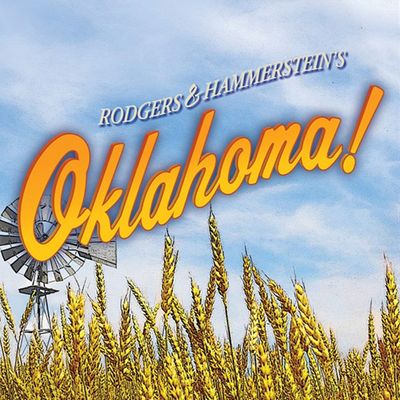
[16:59] David Armstrong: Meanwhile, Hammerstein made a tremendous comeback with the groundbreaking Oklahoma!, his first collaboration with Richard Rodgers.
[17:25] David Armstrong: They didn't set out to break all the rules or throw out all the conventions of the musical comedy.
[17:30] David Armstrong: They just allowed the source material and subject matter to dictate the ways in which they would musicalize the story.
[17:37] David Armstrong: If that meant instead of bringing the curtain up on a lively chorus song and dance number, as was typical of the time, but instead have the curtain reveal just one middle-aged farm woman churning butter as a cowhand begins to sing, Oh, what a beautiful morning off stage and a cappella, then so be it.
[17:54] David Armstrong: If it meant the chorus girls would not even enter until 40 minutes into the play, that was okay too.
[18:00] David Armstrong: If it meant including the violent death of one of the major characters, practically unheard of in musicals of the day, then that is what they would do.
[18:09] David Armstrong: Because of their uncompromising approach, the show had tremendous trouble raising money for production.
[18:14] David Armstrong: Nobody thought it would work.
[18:16] David Armstrong: When producer Billy Rose was approached to invest money, he dismissed the show with the now classic line: no gags, no girls, no chance.
[18:25] David Armstrong: Very few people have ever been proven so completely wrong.
[18:29] David Armstrong: From the very first performance in New Haven of Away We Go, as it was called at the time, it was clear that the creators were on to something special.
[18:37] David Armstrong: At the second pre-Broadway stop in Boston, several changes were made.
[18:41] David Armstrong: One song was cut, and the show was given a new title when another song was changed from a duet into a big rousing chorus number.
[19:07] David Armstrong: Everybody seems to know.
[19:15] David Armstrong: Oklahoma! played 2,243 performances, more than twice as long as any previous Broadway musical.
[19:22] David Armstrong: And touring productions would crisscross America for the next 10 years.
[19:38] David Armstrong: The DECA original cast recording, the first complete recording of a musical, sold over a million copies, and it has never gone out of print.
[19:53] David Armstrong: And because of the popularity of the cast album, millions of people who never got to see the show in a theater still were able to experience the story and the characters and to fall in love with the show.
[20:15] David Armstrong: Because of this overwhelming success, it was understood that creators of musicals would now need to emulate this new kind of musical.
[20:23] David Armstrong: Even musical comedies would from that point on have to integrate all of their elements and use the songs to help tell the story.
[20:31] David Armstrong: Around the same time, during his sophomore year at a prep school called The George School, Sondheim wrote his first musical, and it was entitled By George.
[20:41] David Armstrong: Like so many school shows, it was a satire of campus life.
[20:45] David Armstrong: Sondheim thought the show was pretty terrific.
[20:48] David Armstrong: And with his brain dancing with visions of being the first 15-year-old to have a show on Broadway, he asked Hammerstein to read it as if it were just a musical that crossed your desk as a producer.
[21:01] David Armstrong: As Martin Gottfried related the story in his 1993 book about Stephen Sondheim, the next morning Hammerstein telephoned and suggested that the youngster come over to hear his assessment.
[21:12] David Armstrong: Now you really want me to treat this as if it were by somebody that I don't know.
[21:17] David Armstrong: Yes, please, the boy urged.
[21:19] David Armstrong: Well, in that case, Hammerstein said, it's the worst thing I ever read in my life.
[21:24] David Armstrong: Tears began to form in the adolescent's eyes.
[21:27] David Armstrong: I didn't say it wasn't talented, Hammerstein hastily added. I said it was terrible.
[21:30] David Armstrong: And if you want to know why it's terrible, I'll tell you.
[21:35] David Armstrong: With that, the famous Broadway lyricist and librettist who had written Showboat and Oklahoma! analyzed every aspect of By George from the first stage direction to the finale.
[21:46] David Armstrong: And that afternoon would change Stephen Sondheim's life.
[21:50] David Armstrong: But if you want to hear the rest of the story, you'll have to join me for my next podcast, where the legacy chain of the Broadway musical will continue on its direct path from Harbach to Hammerstein to Sondheim to Lin-Manwell Miranda.
[22:03] David Armstrong: Careful the things you say, children will listen.
[22:13] David Armstrong: Children will see.
[22:39] David Armstrong: Broadway Nation is produced and written by me, David Armstrong.
[22:42] David Armstrong: This episode was co-hosted and co-written by the indispensable Albert Evans.
[22:47] David Armstrong: Thanks to everyone at 101.9, the voice of beautiful Vashon Island, Washington, and especially everyone at the Broadway Podcast Network.
[22:56] David Armstrong: Wishes are children.
[23:02] David Armstrong: Wishes come true.
[23:06] David Armstrong: Not free.
[23:10] David Armstrong: Careful the spell you cast, not just on children.
[23:18] David Armstrong: Sometimes the spell may last past what you can see and turn against you.
[23:29] David Armstrong: Careful the tale you tell. That is the spell. Children will say.
© Broadway Podcast Network, All Rights Reserved