

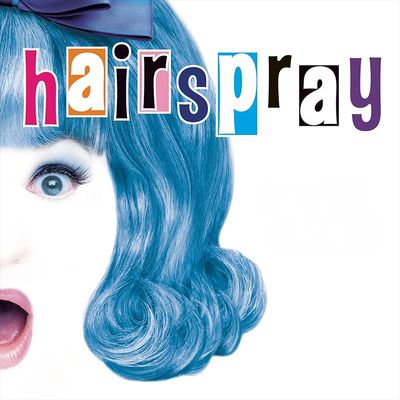
My guests on Broadway Nation today are the Tony Award winning songwriting team of Marc Shaiman & Scott Wittman who join me to celebrate the 20th Anniversary of Hairspray – The Musical. That’s right!.. Read More
From the show: BROADWAY NATION
Guests

Featured Shows
About
My guests on Broadway Nation today are the Tony Award winning songwriting team of Marc Shaiman & Scott Wittman who join me to celebrate the 20th Anniversary of Hairspray – The Musical.
That’s right! It was 20 years ago, during the summer of 2002, that Hairspray first received its World Premiere in June at Seattle’s 5th Avenue Theatre (where at that time I had the great pleasure and privilege of serving as that theater’s Producing Artistic Director). Then, just three months later, the show became an instant hit when it debuted on Broadway on August 15th at the Neil Simon Theatre, where it would go on to run for 2,642 performances!
In this episode Marc & Scott take us inside the creation of Hairspray, how it began, how it developed over four workshops, and how they collaborated with a team of outstanding theatermakers including bookwriters Mark O’Donnell & Tom Meehan, director Jack O’Brian, choreographer Jerry Mitchell, lead producer Margo Lion, and John Waters who wrote and directed the quirky film on which the musical is based.
Our conversation is filled with great behind the scenes stories that include: Harvey Fierstein’s contributions to the script, how they “tortured” Marissa Jaret Winokur, the many songs they wrote for “Velma Von Tussle” (Linda Hart), the legendary night the Seattle Men’s Chorus attended the show, and how Mathew Morrison is a lot like Shirley MacLaine!
In short, it was an absolute delight to reminisce with Scott & Marc about that eventful summer 20 years ago that changed all of our lives!
The episode ends with the inside scoop about their upcoming show, Some Like It Hot, which will open on Broadway in December.
Transcript
This transcript was automatically generated and might contain errors.
[0:14] David Armstrong: Welcome to another episode of Broadway Nation, the podcast that tells the remarkable story of how immigrants, Jews, queers, African Americans, and other outcasts invented the Broadway musical and how they changed America in the process. I'm David Armstrong, and I call this episode 20 Years of Hairspray Part 2.
[0:34] David Armstrong: My guests are the Tony Award-winning songwriting team of Marc Shaiman and Scott Wittman, who have joined me today to celebrate the 20th anniversary of Hairspray. That's right, 20 years ago, following its world premiere in June of 2002 at Seattle's Fifth Avenue Theater, where at that time I had the great pleasure and privilege of serving as the Fifth Avenue's producing artistic director. Hairspray then debuted on Broadway just three months later on August 15th, 2002, opening at the Neil Simon Theater, where it would go on to run for 2,642 performances. In this episode, Marc and Scott take us inside the creation of Hairspray and share with us how they collaborated with a team of outstanding theater makers, including book writers Mark O'Donnell and Thomas Meehan, director Jack O'Brien, choreographer Jerry Mitchell, lead producer Margo Lion, as well as John Waters, who wrote and directed the original film on which the musical is based. It was an absolute delight to look back with Marc and Scott on that eventful summer 20 years ago that changed all of our lives. Here we go.
[1:43] David Armstrong: Welcome, Scott Wittman and Marc Shaiman to Broadway Nation. It's so great to have you here today to talk about 20 years of Hairspray.
[1:50] Scott Wittman: Wow.
[1:51] Marc Shaiman: Yeah, that's my feeling as well.
[1:53] Scott Wittman: I don't look 20 years older.
[1:54] Marc Shaiman: I don't know what happened.
[1:55] Scott Wittman: None of us do.
[1:57] David Armstrong: So let's start, you know, at the very beginning. Where did it start? Who had the initial idea of making a musical out of Hairspray? And how did the two of you become involved?
[2:07] Scott Wittman: Well, initially we got a call. It was Margo Lion who—
[2:08] Marc Shaiman: There's something even before that.
[2:12] Scott Wittman: Well, there was something prior to that.
[2:14] Marc Shaiman: It was Scott Rudin.
[2:15] Scott Wittman: Yeah, Scott Rudin took me and Paul Rudnick to lunch at Joe Allen's one day. I was working with Scott Rudin on a movie. I think he had the rights, or was he gonna get the rights? But he said, Would you guys like to do a musical? And so it never got to even the point where he said like lyrics, and I would have said just what I said to Margot, which is you know, Scott and I. But Scott Rudin let it lapse. But it was like, oh man, that was such a good idea. And then years later, maybe five years later, Margot—
[2:42] Marc Shaiman: I'd never heard that part of the story. That's really interesting.
[2:45] Scott Wittman: You knew Margot well. I mean, she was a Baltimore girl, but she's from the opposite side of town from John Waters. So it was odd that their sensibilities connected, but Margot had been home sick with the flu and was watching a bunch of movies with the idea that maybe one of them would pop out to her. And that did. Mark had written South Park: Bigger, Longer & Uncut, and so someone had said to her, You have to get Mark. We doubt she ever watched that movie, but she did call Mark as a result of that. Then he asked me. She said, you know, would you like to write the music? And who would you want to write the lyrics? And I knew that it was perfect for Scott and I. And even though I write lyrics all the time, no one ever seems to take that in.
So Margot didn't realize I was a lyricist. And she didn't know Scott and I had written a lot of things in New York before we moved to LA. And we never had our big break. But Lord knows we were first in line to every John Waters movie ever. And so this was like, oh my God, so perfect. And I said to her, I would only do it if it's Scott and I writing the lyrics. I don't know that she's ever heard my music for the movies. Like Scott says, you probably never saw the South Park movie. But she said, you know, well, would you guys write some songs on specs so I can hear what your lyrics are like? And we agreed to that and promptly wrote Good Morning Baltimore, Welcome to the 60s, Big Blonde and Beautiful, and I Know Where I've Been.
[4:01] Marc Shaiman: Wow.
[4:06] Scott Wittman: Those four songs right off the bat. This is before any book writer was attached either. Talk about knocking it out of the park with those four songs from the beginning. Not just did they stay in the show, therefore of the tentacles of the show. It's so odd. You know, we certainly have learned since, and before, but certainly since that like the songs you first write for a show very often end up not in the show.
[4:28] Marc Shaiman: Right.
[4:28] Scott Wittman: In this case, we were just so in sync with John Waters' sensibility, we just jumped right in.
[4:35] David Armstrong: And as you said, you had seen all the John Waters movies. Hairspray, especially, were you familiar with? Was it fresh in your memory?
[4:41] Scott Wittman: Yeah, I would have only been happier had it been Pink Flamingos. Yes, I thought that Hairspray was probably his most family-friendly movie at the time.
[4:51] Marc Shaiman: By far.
[4:52] Scott Wittman: I don't think we saw when it came out as much as I think when Desperate Living came out, we probably saw it 30 times. Weekend, Female Trouble. I mean, those movies are just the greatest. It was also paramount to us that we made John happy. So that was a very big priority for us.
[5:11] Marc Shaiman: Then the search went out for someone who could sort of capture John's sensibility in the spoken word of it. And that's where Mark O'Donnell came into the picture. Even today, when you read the script and there's a Mark O'Donnell line, you could mistake it for a John Waters. So he really captured that spirit.
[5:28] Scott Wittman: And had you worked with Mark O'Donnell before or known him?
[5:31] Marc Shaiman: No, no, he came from Margot. He was certainly a well-respected playwright at Playwrights Rising and things like that. I had seen some of those plays, but no, that was the Margot suggestion. We brought her at that time, Rob Marshall, because we were friends with Rob for a long time and wanted to work with him, and he was ready to do a Broadway show on his own. He had only co-directed things or co-choreographed things. So we suggested Rob. Rob was the first director of the show.
[5:59] Scott Wittman: So you and Rob and Mark embark on this. What kind of interaction did you have with John Waters during this?
[6:05] Marc Shaiman: Well, we knew that we needed his blessing, and then Margot had sort of decided that we were going to do a small presentation, just the first act and maybe a snippet of the second. We sort of, you know, woodshed it with Mark, and then I remember Rob coming. We had a house in Laguna Beach, and Mark was there, and Rob Marshall came down. And so we sort of wrote the first act and two songs of the second. And we knew that John would be coming to this presentation. Prior to that, I don't even know if we had a meal. I think maybe just, uh, I think we met him that day.
[6:41] Scott Wittman: Yeah.
[6:42] Marc Shaiman: So we did it at New York Theater Workshop upstairs there in one of their rooms. It's only about, you know, 25 people in the audience. But we did do the first act of it with Harvey and pretty much the cast that went to Broadway.
[6:56] David Armstrong: How did that happen that you put this cast together so quickly?
[7:00] Scott Wittman: Well, that was the beginning of Bernie Telsey. He was just becoming into his own as a major casting director. And so he was the casting director for that. He had brought us pretty much everyone who ended up in the show. I mean, I knew Jackie Hoffman from La Mama shows I had seen her in at La Mama. I had brought her in. And Marissa Winoker at that time was the first girl who auditioned for the part. So we thought, oh, well, she can't be the girl who's gonna get the part. I wasn't even at her audition. Mark was.
[7:29] Marc Shaiman: Yeah, Rob and I were up in my studio in LA to get up to the second floor of the studio. You can walk up the stairs. Marissa's hair appeared first, which is probably a good sign. And then she auditioned, and it was Robin. I were like, God, she's perfect. And then we tortured her for four readings because of Scott's just said, we just couldn't believe that we could be so lucky that the first girl who walked in the door was it. And so she kept doing the readings, but Margot would never commit to her being the star until that fourth reading.
[7:59] Scott Wittman: I also remember that Bernie was bringing in kind of almost serious actors for Edna. And Scott and I, just the night before one of the auditions had just re-watched the movie to get some more inspiration. I remember commenting when we came into auditions the next day that Divine said, Would you keep it down? I'm trying to iron in here. And just the way that Divine says it and the sound of his voice was just so funny. It's like a line that if you read it on the page, it's not so funny. But when he said it is so funny. So I said out loud, who's someone who's just the sound of their voice brings something to it? And then the next audition, Bernie said, How about Harvey Fierstein? And we were like, Oh my god.
And Harvey came in and sang and auditioned and everything. He sang Frank Mills, yeah, in the lowest key ever. You know, someone told him he couldn't sing, and so he thought everything had to be pitched down that low. But we got him up to a almost human key, you know. So we were just blessed like that. Every single thing that ever happened. Dick Latessa was in that workshop, Linda Hart. So it was quite a group, yeah.
[9:05] Marc Shaiman: You discovered so many stars with the show or so many future talents. Many like Dick Latessa, of course, have been around a long time. But when you look at Laura Bell Bundy and Carrie Butler and Mathew Morrison, Shoshana Bean, it's really an amazing list. And that's just in the original cast, much less during the run of the—
[9:19] Scott Wittman: Bernie Telsey and his team, they do great work.
[9:25] Marc Shaiman: And with yours, it was miraculous. I remember even after when the show had just opened, there was a huge article about in the Times, I think about oh, here are the stars of tomorrow, and they were all the kids in that show.
[9:39] Scott Wittman: And they were right.
[9:40] Marc Shaiman: Although Matt was in the ensemble, he wasn't the original guy.
[9:44] Scott Wittman: Right.
[9:44] Marc Shaiman: Even through the readings yet. Let's talk about those four readings. What did you learn? What did you do? What was your goal?
[9:51] Scott Wittman: John came to the New York Theater Workshop reading. He was misty-eyed at the end, because for John it had a sort of a bittersweet quality because Divine had died that right after the movie opened, and it was sort of a big mainstream hit. He probably hate me for saying this, but there's a very sweet part of his heart that was quite touched by the show because I think the only thing that we did in the second act was Timeless to Me and then maybe I Know Where I've Been. But anyway, so Rob Marshall had been sort of workshopping or trying to get the movie of Chicago made. And we thought, oh God, that's never gonna happen. But he was doing like a whole production of it in a small space to show Harvey Weinstein that he could make it happen. So we kept saying, Well, that's never gonna get greenlit. For years, people had been trying to make that movie, but of course, as fate would have it, it did get greenlit. That was after the third reading.
[10:45] Marc Shaiman: Right.
[10:45] Scott Wittman: You know, the readings just kept going well. It was Scott's idea at the second reading to bring Jackie Hoffman in to read stage directions and maybe read like a line or two for what had been written. It hadn't become the part that it ended up being for Jackie. But Scott just knew just the sound of her voice and her personality would match the show so well and would make the reading, you know, have the little extra fizz.
[11:10] Marc Shaiman: Right.
[11:10] Scott Wittman: And so, you know, Scott is responsible for Jackie's career by having this brilliant idea to have her read the stage directions at that reading. And that I think was the last reading that Rob did. I think that might have been the—was it? The third one, which actually didn't have as much of a happy vibe when it was over. It still seemed good, but the third reading had a couple of troubles. I remember that was the one where I sang an additional song called It Ain't Over Till the Fat Lady Sings, with the idea that Tracy would have a solo before You Can't Stop the Beat, which Scott had kept saying, it's ridiculous. That's so crazy, I kept saying, yeah. And so right in the middle of the reading, I got up at the piano and pigs sweated my way through that song.
So I have a distinct memory of that. Then suddenly we got the news that Chicago is greenlit, and we had to all make our own Sophie's choice about what to do. Because we knew that the timing was right because The Producers was in the pipeline, and the idea that the British invasion was now sort of over and people were hungry for this kind of homemade musical theater, as only Americans can really do. So we just felt we could not wait. And that's when we suggested Jerry.
[12:23] Marc Shaiman: Jerry and Jack were about to do The Full Monty, I think, at the time. So then there was one more big, big workshop that was at West Beth, and that was packed with people. That's the one that Jack and Jerry did. And that was the one where people were literally throwing money at Margot. She couldn't stop it. Except for Harvey Weinstein, who said, No one wants to see a show about a fat girl. Strangely enough, Harvey Fierstein in his book describes that reading as having not gone well. But that's where there are three sides to every story: your side, their side, and the truth. In Harvey's mind, it didn't go well, but the truth is it went spectacularly well.
[13:01] Scott Wittman: It was amazing.
[13:02] Marc Shaiman: Yeah, you were there, right? Because Margot wanted us to come to you.
[13:05] David Armstrong: Right. I came in to see the show to finalize whether we were going to do the world premiere at the Fifth Avenue. It really was incredibly exciting.
[13:14] Marc Shaiman: Readings, as we know, can sometimes be exciting, but sort of falsely exciting. This one was so clear, this was not just the people in the room having a good time. This was the show that was quite exceptional. Luckily for us in the show, because Harvey felt it hadn't gone well, he just kind of said, I don't know if I want to do it. There's too many problems. But much to his credit and to the success of the show, he then started ghostwriting. He agreed to bring forth some more material and he would do it without taking credit. He added great, great things like if my memory is correct, and I think it is on this like Tracy would get on the Corney Collins show by directly doing a dance that Seaweed had taught her, and that Seaweed is showing her.
So that her debt to Seaweed is just ever so much stronger. I think in the other versions. They were having fun, and then she got on the Corney Collins show. But he made that connection, and he also did things like he gave Edna the backstory of remember when I wanted to design dresses, I thought I was going to be the biggest thing in Brazil's. So that had an emotional kick. So by the end of the show, when he comes out of the can, it's not just exciting that he comes out of the can and Edna's there, but he says, America, I made this myself. That connection of thinking my dream is dead to having that happen during the finale. Those are the kind of things that Harvey just added and just put us really over the top.
[14:41] ♪ Musical number ♪
[15:34] Marc Shaiman: Fetch the moxicon now.
[15:38] Scott Wittman: And when did Tom Meehan join the mix? He came um I don't remember. Like Margot brought him in because she felt that Mark needed a support in a structural way. And it actually ended up to be a very nice matchmaking because they worked together many times after that, and they actually functioned much the way he did with Mel Brooks. He was a very good listener, and he was a very good editor. We weren't so much in their working relationship every day. But Mark came to rely heavily on Tom on many different things. It seemed like they had a really great working relationship. They were very tight.
[16:16] Marc Shaiman: Yeah, yeah. Off stage and on with families and so what was the hardest nut to crack in the show? What was the thing that during this development? It's a relatively short amount of time as shows go.
[16:26] Scott Wittman: Well, page to stage, yeah. So it was I it was I thought it was all gonna be like this. You know, the only hard nut to crack, as you know, and as anyone who's studied the history of Hairspray knows, it was the producers kept asking us to cut I Know Where I've Been. After every reading, they'd say, It's a great song, but um doesn't it slow down the show and isn't it a little too serious? And we're we're afraid it's gonna stop the show, but not like stop the show, but just stop it dead in its tracks. And Sky Mara was like, No, it's literally what the show's about, and it has to have that heart. We were always just like so confused by them even saying that. Finally, after all those readings, we finally acquiesced and said, Okay, we'll try to write something.
We were being good soldiers. Let us try. Let's see if we can write basically the same ideas that are in the lyrics of the song, but to a more upbeat song that has maybe more hopefulness in it in its groove of song. And we wrote that song and we're rehearsing it. And a lot of the cast had been uh, of course, in all these readings. And one girl, Camila Marshall, who was one of the dynamites and had been in at least probably the last two readings. I said to her at the side of the room one day up there at the new 42 studios, I said, Camilla, what do you think of this song, this new song? And I mean, I I might have even said, How does the black cast feel about this song? And she says, It's fun. I mean, all the harmonies are great.
It's fun. It's it's a little cotton picking. So after the blood finally came back into my face, I raced over to Scott and grabbed him and went into the hallway. I told him what she just said. I was like, Well, what are we gonna do? And we I don't know if we made calls, I think, to Mark Sendroff, our lawyer, and we were reminded that the dramatist guild, God bless the dramatist guild, has this rule, this law, this bylaw, whatever it is that says that writers must be able to hear and see their work performed. Have that right to insist on that. I don't remember how we expressed it to Margot and Richard Frankel, but we're like, sorry, we're putting the song back in. And everyone, you know, still, even Jack was like, Well, let's not make it too slow and let's make sure it keeps moving and it doesn't become about grandstanding.
They were still always like, uh so scared of this song. And then, of course, was the glorious first night in Seattle. Yeah, we agreed that if if it stopped the show in the wrong way, we would take it. We'd be the first to say, oh boy, well, you know, we don't want to screw up the show. And of course, it stopped the show in the right way. And I always still can remember that the producers who were sitting in front of me that I could see their shoulders, I could just read their body language. There was no doubt about it that it belonged in the show, and it makes the last 15 minutes of the show that follow it have so much more meaning. It's not just about Tracy winning an award at a Miss Hairspray contest, it's what it's all about. There's a dream in the future. There's a struggle. We have yet to win. And how high to lift us up to tomorrow.
[16:37] ♪ Musical number: "I Know Where I've Been" — performed by Marc Shaiman ♪
[20:32] Marc Shaiman: I tell people all the time that the audience screamed after the first number in the show. And then they screamed after every number. And when it got to that number, that was the biggest ovation of the night. Right. That's because night there was the gay men's chorus, and that was the benefit of it. That was like the third night. That was that was the third night. Scott and I looked out through the curtain at the audience of the first night. And there's something I think when you're writing a show, you just kind of think the audience is gonna be you. I mean, you're writing it to what feels right to you. And somehow I think, or I'll just speak for myself, a writer just kind of imagined you're gonna look at the audience, it's just gonna be like me and Scott out there in every seat.
And I looked out, and we we both we both looked at and we were like, oh my god, it looks like George and Martha Washington have been cloned. The entire audience was just basically all old white people, and we were like, Oh my god, are they gonna get the humor, the John Waters humor? Are they gonna what are they gonna think of the story? And that was the first time I ever felt like scared, like, oh, maybe this isn't gonna keep going up to that point. It seemed like a fairy tale. And then lo and behold, that audience just went wild. It was just a regular Tuesday night subscription audience, which was a great test for the show because as you said, they went wild for the show. No audience could have been more representative of just plain folk.
And then it was so glorious in Seattle that we had, oh, I'd wish it could happen again. Where we just knew the show worked and was in great shape. We just had the chance now to just make it better and add stuff. And I think we added much more to Welcome to the 60s. I remember rehearsing it right there on stage in Seattle. Um maybe it didn't have that whole middle section. Well, it was about the costume change, right? Yeah, but I remember adding to that, and that was just such a wonderful yeah, and a big fun and beautiful change there. And Linda's number. Oh, Linda, we kept writing new songs for Linda to the point where the final one we wrote her, which was called Status Quo, she wrote it in chalk on had like a song that covered the pit.
Yeah, and she wrote it. So the staging for that number that night was just her starting stage left, reading walking stage right as she read her chalk marks. That song only got performed that one night. And when Scott and I wrote Miss Baltimore Crabs in our hotel room in Seattle, just like a classic Broadway story of writing a song in a hotel room.
[22:51] Marc Shaiman: Why was that song so hard? Is that the hardest spot in the show? Was that the hardest song to come up with? Yeah, and I don't remember why, but it was. Oh, they used to sing a duet, mother daughter, that didn't happen until later in the second act, and it just seemed like we need to establish, I guess, you know, our villain. Well, then there was a song called Nobody Who Looks Like That Is Gonna Not On My Show. I remember the exact title. And I think that's what we mostly had in Seattle. Then I think we wrote new lyrics to that same melody, which was basically the same melody as the mother daughter cha-cha-cha, to the status quo. And you know, it's that thing of having to portray a racist in the middle of a musical comedy.
And so that was what made it hard. And Baltimore Crabs was our fourth stab at it. I know someone in a cabaret has a song called That Song You Hate from Every Musical. And I think I watched it and they didn't name Baltimore Crabs. But I I know that that's the song out of the entire Hairspray that, like, you know, you get a little uncomfortable, and we had to keep whittling it down. We just had to have enough of it to make the point. And then you rewrote it for the movie. Three thousand times. Yeah. We wrote a new, a whole new one. Um, because that became the whole discussion again about what could that song be? And Scott and I were always like, you know, we always wondered if it could have still been different or better.
And we wrote a song called Save Your Applause to the End. And that was gonna be as you can in a movie, Velma watching Tracy becoming a star and being all over town watching her, and every time she thought she got Tracy, like it was almost like the coyote and Roadrunner, like a piano would fall, but Miss Tracy. But she had this great song that Christine Eversaw did the demo for. You think, okay, she seems to have won now, but save your applause to the end. Ah, I'll get her. And then we also wrote a song kind of like the Shoop Shoop song. Where uh how did it go? Uh Mrs. Von Tessel says. So it was in the same spot as uh Baltimore Crabs, but it was more rock and roll. It was like Velma trying to show that she can like rock and roll with the kids.
And it had all the same kind of lines, and it was actually pretty great. And then it was gotten me and Adam and Craig and Neil all fighting about which one should it be. And finally, someone said, Well, let's just send them all to Michelle Pfeiffer. Let's hear what she has to say. And she sent back word, kids. I signed up for Miss Baltimore Crabs. That's the song I'm singing. That was the end of that.
[25:14] ♪ Musical number: "Miss Baltimore Crabs" — performed by Marc Shaiman ♪
[25:34] Scott Wittman: Don't go away, Broadway Nation, we'll be right back. Cause I am Miss Baltimore.
[25:49] Marc Shaiman: As we briefly mentioned a few minutes ago, the third performance in Seattle was a benefit performance for the Seattle Men's Chorus, the largest gay chorus in the world, with which Harvey Fierstein had performed just a few years earlier. It turned out to be an unforgettable night in the theater. Let's actually go back to that third performance with the men's chorus. For all everybody who was there that night will never forget it. We already knew the show was a crowd pleaser, but that just sent it through the roof. Right. And I, if I recall, not unlike the apocryphal story about Gwen Verdon and Can Can, where they actually had to go get her from the dressing room and she came back out in a towel, I think uh Harvey repeated that.
[26:31] Marc Shaiman: It was like a rock concert that night.
[26:33] Scott Wittman: I remember that.
[26:34] Marc Shaiman: The cast took their bow, everybody went away. The audience would not leave, would not stop screaming, and they had to go up to his dressing room, bring him down in his robe to come out without his wig and his wig cap to take another bow.
[26:45] Scott Wittman: I always say it's like from a movie.
[26:47] Marc Shaiman: Yeah, yeah. I remember vividly.
[26:49] Scott Wittman: Well, and also that whole Seattle was all Matt Morrison's audition because Margot never believed he could play the part.
[26:56] Marc Shaiman: So she thought, oh well, we'll try him out. So he was one of the only people in the show who didn't have a contract for Broadway.
[27:03] Scott Wittman: Because the other actor who had rehearsed almost to when we were leaving was Jimmy Carpinello. He was fantastic, but he got a part in a movie.
[27:11] Marc Shaiman: And I don't know why, but he called me and I said, Jimmy, you're crazy. You're gonna be one guy with a bunch of guys in mud with a helmet on, and no one's gonna tell you apart. This is a big great part for you. I think he rue the day he did that. But then Matt, you know, certainly succeeded on his own there, and Margot relented.
[27:30] Scott Wittman: And that was sort of a Shirley MacLaine story, right? He was in the ensemble and moved him up here.
[27:36] Marc Shaiman: I always use that as an example of how the creation of Hairspray was just so charmed that even when something went wrong, and our leading man called us one night to say, I'm in California, I'm not coming in tomorrow. And then Matt Morrison steps forward and becomes a star.
[27:52] Scott Wittman: Tracy, you look beautiful behind bars.
[27:54] Marc Shaiman: It must be the Lomot Institutional lighting.
[27:57] Scott Wittman: Tracy, they can keep us from kissing, but they can't stop us from singing.
[28:02] Marc Shaiman: Once I was a selfish fool who never understood, I never looked inside myself. The wall on the outside, I looked good. Then we met, and you made me the man I am today.
[28:16] Scott Wittman: Tracy, I'm in love with you. No matter what you wake without love.
[28:22] Marc Shaiman: Life is like the seasons with no summer without love. Life is rockin' roll without a drummer.
[28:30] Scott Wittman: Tracy, I'll be lost forever. Cause I never wanna be without love.
[28:39] Marc Shaiman: You see, never set me free.
[28:42] Scott Wittman: No, I ain't lying.
[28:44] Marc Shaiman: Never set me free, Tracy.
[28:47] Scott Wittman: No, no, no.
[28:50] Marc Shaiman: So by the end of Seattle, what had you learned? The show had already been scheduled for Broadway, so you knew you were going to Broadway just a few months later.
[28:58] Scott Wittman: The premiere in Seattle was in June, and it opened on Broadway in August.
[29:02] Marc Shaiman: Right.
[29:03] Scott Wittman: We recorded the cast album in between.
[29:05] Marc Shaiman: Yeah, which is unusual.
[29:06] Scott Wittman: Which was very unusual.
[29:08] Marc Shaiman: And also they gave us three days. It was not like they do it now. We have to do it in one day. It was all done over a leisurely amount of time and money.
[29:19] Scott Wittman: And then you had the album to sell on the first preview or the opening night at least on Broadway, which is quite unusual. Margot was very, very good at what she did, and she had this idea that they were gonna do a mass mailing to people who buy tickets through like Telecharge or whatever, and they would get a CD in the mail of four songs, demos that Mark had made.
[29:42] Marc Shaiman: This was not with the cast members, this was other people, like I think Nathan is on it.
[29:47] Scott Wittman: Was Nathan on it?
[29:48] Marc Shaiman: Styles keep a changing, the world's rearranging. But Edna, you're timeless to me.
[29:56] Scott Wittman: Handlines are shorter, a beer costs a quarter. But time cannot take what comes free.
[30:04] Marc Shaiman: You're like a stinky old cheese, babe. Just getting riper with age.
[30:12] Scott Wittman: You're like the birds and the bees, babe. Cause making love will always be front page.
[30:20] Marc Shaiman: Some folks can't stand it. Say time is a bandit, but I take the opposite view.
[30:28] Scott Wittman: Cause when I need a lift, time brings a gift. Another day with you.
[30:36] Marc Shaiman: Ah, twister awards.
[30:38] Scott Wittman: It's all the same smalts with just a change in the scenery.
[30:44] Marc Shaiman: You'll never be old, hat. That's that.
[30:47] Scott Wittman: Nathan sings "Timeless to Me."
[30:49] Marc Shaiman: Nathan Lane.
[30:51] Scott Wittman: Oh, Wilbur, fans keep a fading.
[30:54] Marc Shaiman: Castro's invading.
[30:56] Scott Wittman: But Wilbur, you're timeless to me.
[31:00] Marc Shaiman: Hair due's the higher. Mine feels like bombed wire, but I'm just as chic as can be.
[31:08] Scott Wittman: You're like a rare vintage ripple. That's sweeter with each passing year.
[31:16] Marc Shaiman: So pour me a deeny beanie triple. And we can toast the fact that we're still here.
[31:24] Scott Wittman: I can't stop eating your hairline.
[31:27] Marc Shaiman: Yeah, Annie Golden sings "Good Morning, Baltimore."
[31:30] Scott Wittman: Anyway, they sent out this mass mailing, which actually was quite magical in that it really started to buzz about the show.
[31:38] Marc Shaiman: I'm sure they're collector's items now. I don't know. I have one of those somewhere. I'll have to dig it out.
[31:42] Scott Wittman: But she was so smart in that because it really started this buzz about the show. And also was unheard of to start previews of a show in August.
[31:50] Marc Shaiman: It opened in August. No one did that.
[31:52] Scott Wittman: Yeah, it was breaking a lot of rules.
[31:54] Marc Shaiman: But the buzz from Seattle was so strong.
[31:56] Scott Wittman: Yeah.
[31:57] Marc Shaiman: Were there any major changes that were made between the Fifth Avenue and Broadway?
[32:01] Scott Wittman: Not that I remember.
[32:03] Marc Shaiman: Well, "Miss Baltimore Crabs," the first time it was performed in front of an audience was at the first preview on Broadway.
[32:08] Scott Wittman: There were a lot more costumes. Seattle is so fantastically famous for its thrift stores.
[32:14] Marc Shaiman: William had shopped so much of that show there. And so the kids were wearing vintage pieces.
[32:20] Scott Wittman: Those fabrics were copied and made into the costumes.
[32:24] Marc Shaiman: I remember Linda had like six costumes on Broadway.
[32:27] Scott Wittman: That didn't last very long.
[32:32] Marc Shaiman: Yeah, into the second year, she only had one.
[32:37] Scott Wittman: That's so funny.
[32:38] Marc Shaiman: So talk about the opening on Broadway. This is your first Broadway show. You guys have both been in the business for a substantial amount of time by this point.
[32:45] Scott Wittman: What was that like to make your Broadway debuts?
[32:48] Marc Shaiman: Well, it was very exciting because the gypsy run-through was through the roof.
[32:53] Scott Wittman: I mean, that was, uh, Mark broke down in tears at that.
[32:58] Marc Shaiman: This is one. I had a woman named Judy Cole, who with another woman in my hometown had created a summer theater workshop for kids because for some reason in my township, they didn't put on musicals in our schools.
[33:10] Scott Wittman: So these two women recognized this and they were both had strong theatrical backgrounds.
[33:14] Marc Shaiman: She was the woman who meant so much to me, who directed the first musical I played for, and then she brought me to every community theater where she directed shows.
[33:23] Scott Wittman: I had her at the Gypsy Run-Through and got up before the show. Now I'm gonna cry again. You know, just to introduce her and to introduce her in front of, you know, an audience at the gypsy run-through where, you know, everyone there has someone like that in their life.
[33:38] Marc Shaiman: So she got the ovation of all time. That's just before the show was even started.
[33:43] Scott Wittman: Right. I remember telling the cast because they're all behind the curtain for the beginning there. Because you could feel it.
[33:48] Marc Shaiman: I said, you'll probably never feel this again in your life. This, that feeling that audience was already sending it. I've never experienced it again in anything I've ever done, but they wanted it so badly.
[34:02] Scott Wittman: It was magical, magical night.
[34:04] Marc Shaiman: Yeah, and then the opening was tremendous. Remember the opening in Seattle when the set broke?
[34:10] Scott Wittman: I was just about to bring that up and take us back to that.
[34:13] Marc Shaiman: So after all these glorious previews in Seattle, and not one single problem. Talk about that.
[34:18] Scott Wittman: What happened on opening night in Seattle when the critics are finally there?
[34:21] Marc Shaiman: Yeah, I mean, what was there even to break? The set is not like Les Mis or something.
[34:26] Scott Wittman: The houses didn't come on or something.
[34:28] Marc Shaiman: It was something like that. The drop didn't go up, so Corney was stuck behind the drop and started singing behind the drop right after "Good Morning Baltimore."
[34:36] Scott Wittman: As I remember, I think it was Operator Eric. It was just the person who was pushing the cue light, pushed the wrong cue light that night for the first and only time.
[34:44] Marc Shaiman: So we stopped for like 10 or 15 minutes, right? Before I don't know even why it took so long to reset.
[34:49] Scott Wittman: But oh, is that just a feeling of like, oh, the other shoe has dropped.
[34:55] Marc Shaiman: We started the show again, and luckily it was as if it never happened and all's well that ends well.
[35:00] Scott Wittman: And then of course on Broadway, it was, you know, for Scott and I. Scott says that there was a sign where he grew up upstate in New York that said 45 minutes to Broadway.
[35:09] Marc Shaiman: It was by the bus station.
[35:12] Scott Wittman: Scott says it should have said 45 years.
[35:17] Marc Shaiman: You know, so as you said, we were in our 40s. We had done a lot. We had tried to write shows. You know, we had been around.
[35:24] Scott Wittman: Well, you were incredibly successful in other mediums.
[35:27] Marc Shaiman: But this was always the dream. And you know what? I can't say enough about the sensibility of John and ours was so akin and so close.
[35:37] Scott Wittman: It was like well tapped, you know.
[35:39] Marc Shaiman: I think that's one of the oceans then.
[35:42] Scott Wittman: Now, 20 years later.
[35:44] Marc Shaiman: Uh-oh. Looking back, the two of you, all of you together wrote not just a hit Broadway show, but you wrote a classic.
[35:52] Scott Wittman: A classic that will be up there with the great classics of Broadway from now on, done in every high school in America, popular around the world, and will remain so.
[36:04] Marc Shaiman: I mean, I talk about in the class I teach, what shows will we remember a hundred years from now, the way we remember many, many shows now from 60, 80, 100 years ago.
[36:14] Scott Wittman: How does that feel? What is that like to know that you have created something that has risen to that level?
[36:21] Marc Shaiman: Well, I thank you for saying that. And I certainly understand the power of Hairspray, but we've had a hard time policing it in a way, because people want to do it, but they don't necessarily have the racial makeup to do it.
[36:35] Scott Wittman: And so that's become, I mean, Mark is very diligent about it because people post things on Facebook or Instagram, and then you see white kids in the wrong parts.
[36:45] Marc Shaiman: So now there's a whole disclaimer in the front of it that says you're not allowed to do it unless you have the right people playing the parts, which is important.
[36:54] Scott Wittman: It just never dawned on us that like an all-girl school in Scotland of all white little Scottish girls would want to put on Hairspray.
[37:02] Marc Shaiman: So we didn't realize how much we needed to police things. We were naive.
[37:07] Scott Wittman: And then there's also the odd thing of like not wanting to have to tell someone they can't be in the show because of their race.
[37:13] Marc Shaiman: Isn't that kind of bizarre that Hairspray would tell someone you can't be in the show because of your race?
[37:19] Scott Wittman: We experimented for a few years of trying to like see if people could in a theatrical way present the show and the story with whatever the makeup of their community was, but that was a failed backfire.
[37:33] Marc Shaiman: Yeah, yeah.
[37:34] Scott Wittman: Because people just took advantage of it and didn't really.
[37:36] Marc Shaiman: But I'll say that when Marg was very ill, and one of the things that was very moving to her was I think in Texas, am I right, Mark? There was a high school in Texas that wanted to do it and they didn't have enough black people, but a few miles over, not just a few miles over, like the other side of town, way over, there was a high school that had predominantly black students, and they joined together so that the black students came and lived in the houses with the white kids who were putting the show on.
[38:09] Scott Wittman: And that makes me very, very happy that that and you can see when they would write to us, it was very emotional.
[38:16] Marc Shaiman: And I think that brought a lot of nice feelings for Margot because she worked so hard for Obama.
[38:21] Scott Wittman: And you know, I mean, it was a big, a big moment.
[38:24] Marc Shaiman: And if you look at my Facebook, not so much lately, well, because of COVID, but you might think, Jesus, does he go to every single production of Hairspray that ever exists? It's a little embarrassing.
[38:34] Scott Wittman: But I would go now and then if you know a cousin knew someone who their friend's daughter was in it over in Livingston, New Jersey, and it wasn't so far to go 45 minutes and you know, go and talk.
[38:44] Marc Shaiman: Where Scott did Summerstock as a 19-year-old, they put on the show and they said, please come up and we want to give Scott a plaque.
[39:00] Scott Wittman: Yeah, yeah. And we went backstage and said, Listen, you are really good. And give us your number because you just never know.
[39:05] Scott Wittman: And that was another great Hairspray-like story that the girl who was playing Tracy there, Scott and I during the show, we were like, She's really good, isn't she?
[39:07] Marc Shaiman: And sure enough, like five months later, she got the call.
[39:10] Scott Wittman: That was Marissa Harry.
[39:12] Marc Shaiman: The show is still on Broadway.
[39:12] Marc Shaiman: And she finished the run on Broadway until the very last few weeks where Marissa Jarrett came back in.
[39:17] Scott Wittman: I always use that as a lesson to students of like, even though it's great that you got the lead in a summer stock, you could think I'm up in Vermont. And you know, what's gonna really happen?
[39:24] Marc Shaiman: And we went to a matinee. You know, you could imagine someone being like, Oh, I don't really have it in me. Uh, you know, walking through the matinee.
[39:34] Scott Wittman: You never know.
[39:40] Marc Shaiman: And Mark's going to see it next week in Baltimore, so it's a constant. And it's always moving. I don't think I ever not cried during the curtain call. I mean, I cry at all curtain calls, especially with high school. You know, they did it in my junior high and my high school, the very auditoriums where I played piano and cut gym class. They were putting on Hairspray with that very piano in the band. But you know, it's always so moving when the girl who's playing Motormouth, for some reason, I have found at first I always think, why did they cast this girl? She seems so shy. And then the first scene often is like not necessarily coming across with, you know, the full energy of Motormouth. And then by the time we get to "I Know Where I've Been," I've seen this happen so many times.
She starts the song and she becomes possessed. And you see this girl change in front of your eyes and suddenly have the confidence because of what she's singing about and the cast members around her. And then always by the end of it, it's just so moving. So I've seen that so many times. And it's just a blessing.
[40:45] Marc Shaiman: I'd also say we went to South Africa and saw it in Johannesburg, which is still mutually divided. And they, it's very rare that they would have a cast of blacks and Africans in the same show. So they were sharing dressing rooms and things like that. The woman who was playing Motormouth there, her mother was a very famous civil rights leader, folk singer named Miriam Makeba.
[41:09] Scott Wittman: Oh, sure.
[41:09] Marc Shaiman: Yeah, her daughter was playing Motormouth, and opening night was quite powerful. And have you seen it around the world in other languages?
[41:17] Scott Wittman: Yeah, the first place was Finland, and someone sent us there was a link, it was the beginning of the internet, and we saw like a commercial they had cut together. It must have still been in rehearsals, and it looked like the most bizarre production ever. And we kind of almost were laughing at it, like it looked so insane. We went to it with Marissa in our all the deals, they have to be able to fly Scott and I first class to opening night. So we were like, shall we? Let's do it. And Marissa came with us. That was the first time we saw the show where it wasn't Jack and Jerry's production, and it was so not their production. Everything about it was so different, and it was fabulous. You could tell that the laughs were in the same place because we certainly didn't speak Finnish, but because we know it so well, we know where the jokes are. For some reason, it started with a cow.
[42:06] Marc Shaiman: Two cows, a black cow and a white cow having an argument.
[42:09] Scott Wittman: Yeah, it was so strange.
[42:12] Marc Shaiman: Fantastic.
[42:13] Scott Wittman: That's hilarious.
[42:18] Marc Shaiman: Sound like a cool pastoral scene with rolling hills and woods of green.
[42:24] Scott Wittman: It's heaven sent to pitch a tent to Bill and Cool.
[42:29] Marc Shaiman: Some like four Hawaiian climb where one can really take one's time and hit the sack in a grass shack.
[42:37] Scott Wittman: Just made for two.
[42:40] Marc Shaiman: Some like a nippy on the ice customer sheets of paradise.
[42:45] Scott Wittman: Keep rubbing hips until your lips stop turning blue.
[43:04] David Armstrong: I know you're not resting on your laurels. You are hard at work. Talk about what's next. What's in the works for the two of you?
[43:10] Marc Shaiman: We start previews at the Schubert Theater on November first with Some Like It Hot. But it opens December twelfth or December eighteenth. I'm not sure of that date, but yeah.
[43:21] Scott Wittman: You're going to Chicago first?
[43:22] Marc Shaiman: No, we did a new version of that, which I think might become the norm, which is we did a four-week rehearsal period where everything was staged, and then we moved to a small theater, the little Schubert on 42nd Street. And we did like ten shows at eleven o'clock in the morning for people who had won a lottery for who had bought tickets for shows that were at Schubert Theatres. Real people that they, you know, contacted and said, would you be interested in coming? So it was great because it wasn't like, you know, industry people with their arms folded. There were very few people in the business at these.
[43:57] Scott Wittman: Yeah, and you do get an idea of how it's going. It's not like going out of town and having a full production.
[44:02] Marc Shaiman: No, there was no lighting, there were no costumes. We did have a cut down version of the orchestra, so they heard the charts. Because it's important that it looks like the girls are playing. And so anyway, it was all very informative and probably a lot less money than going to Chicago because of COVID, obviously. I mean, I would have loved that experience because that's where you really learn, obviously, from our times with you up there. But there was staging. This was sort of like a workshop. It was fully staged. It was called an open rehearsal, they call it.
[44:32] David Armstrong: So how do you feel about it? Tell us about Some Like It Hot. What can you tell us?
[44:36] Marc Shaiman: You know, the things that we've changed about the movie is it's much more racially diverse. And I'm proud to say those ideas to make the show that way happened before it became a law. You know, that was what enticed us to do it when Craig and Neil, who got the rights, and they said, hey guys, because we've been working on Smash, and Smash had all these songs that Marilyn was singing, especially this one song called "Let's Be Bad," where on the TV show it was like we had created a moment that is Some Like It Hot, but isn't it? And so they just thought, well, we were the perfect guys to write a musical Some Like It Hot from what we'd have done on Smash. And we were like, oh, I don't know, you know, it's so tough to work on an iconic, you know.
That was what was great about Hairspray. It was like the little train, what is the expression? The little engine that could, yeah. But then they enticed us with Matthew Lopez, who had written The Inheritance, and he did a beautiful job with the book. And then Amber Ruffin joined us, and they've both been great. And they had said we think sugar should be black, because that'll make the audience not be constantly comparing her to Marilyn Monroe. How can we make sugar just a new character? And so when we heard that, we were like, that's fabulous. And then that way, like sugar, you know, a girl on a bus in a band, it's like Billie Holiday or Ella Fitzgerald, and that just so appealed to us musically and everything that that's what made us really say, okay.
And also the sexual politics of the story are very contemporary. They're ahead of us where we are now. So that's also enticing. I mean, just the title alone, Some Like It Hot, could easily be on a placard in a march because it just means, hey, we're all different. We all like different things. And can you just embrace it? If everybody was the same, well, life would be boring.
[46:24] Scott Wittman: If Many goes with Sammy Hale, that's what he's yearning for. Let different wheel dums move your seats for I have often found. We all dance to a different feat, and that's what makes the world around.
[46:40] Marc Shaiman: It was a great period. So it was a chance to write in sort of a Cole Porter vein that is great fun, especially for lyricists. And also orchestra, like a big sound line. Casey Nicholaw directing it and choreographing it, and the numbers are spectacular. There hasn't been so much tap on Broadway in years, so that was really exciting.
[47:03] Scott Wittman: I think all those sound like incredibly smart choices. Just the idea that some poor actress is not having to imitate Marilyn Monroe.
[47:11] Marc Shaiman: No, no, no, they didn't want to do that. They already did that. That was sugar.
[47:14] Scott Wittman: Exactly. I can't wait to see it.
[47:15] David Armstrong: Thank you, Scott Wittman, Marc Shaiman. Thanks for joining me today. It's been fabulous.
[47:21] Marc Shaiman: Thanks, Hades is a spot to be an angel show I'm not.
[47:33] Scott Wittman: Don't call me savvy. Call me wild. But honey, please, don't call me mouse.
[47:54] David Armstrong: On the next episode of Broadway Nation, my guest will be Hairspray's original choreographer, Tony Award winner Jerry Mitchell, as we continue our celebration of the 20th anniversary of Hairspray. As you probably noticed from earlier in the episode, I was able to find my copy of that original Hairspray demo recording. So I'll leave you today with another cut from that CD. Here is the one and only Jennifer Lewis singing "I Know Where I've Been." Broadway Nation is written and produced by me, David Armstrong. Special thanks to Pals Mox for his help with editing this episode to KVSH 101.9 the voice of beautiful Vashon Island, Washington, and to the entire team at the Broadway Podcast Network.
[48:40] ♪ Musical number ♪
[49:01] ♪ Musical number ♪
[49:26] ♪ Musical number ♪
[49:36] ♪ Musical number ♪
[49:50] ♪ Musical number ♪
[50:59] ♪ Musical number ♪
© Broadway Podcast Network, All Rights Reserved