

This episode is in response to a question I get quite often from listeners: Is Broadway Nation ever going to focus on movie musicals? Well, today is the day! Of course, I don’t really hate any movie musicals. And I love quite a few of them... Read More
From the show: BROADWAY NATION
Guests
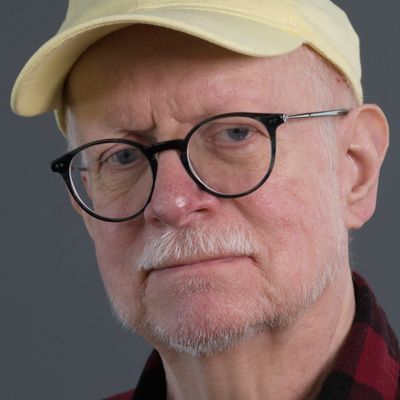
About
This episode is in response to a question I get quite often from listeners: Is Broadway Nation ever going to focus on movie musicals? Well, today is the day!
Of course, I don’t really hate any movie musicals. And I love quite a few of them.
In fact, it was largely old movie musicals from the 1930s, 40s, and 50s that I watched on TV when I was a kid back in the 60s and 70s that made be fall in love with show business in the first place. No doubt because so many of them were backstage musicals set in the worlds of Vaudeville, nightclubs, and the bright lights of Broadway.
The history of stage and film musicals is, of course, closely related, and they share many of the same creators and stars – which is no doubt why many historians and books analyze and discuss them together. I however see stage musicals and film musicals as being two very different things.
What are the main differences between them?
I am thrilled to be joined today by my dear friend and frequent Broadway Nation co-host, Albert Evans, to explore and define those differences -- and at least for a day -- give film musicals some love (and maybe a little bit of criticism) on this podcast.
Transcript
This transcript was automatically generated and might contain errors.
[0:15] David Armstrong: Welcome to another episode of Broadway Nation, the podcast that tells the remarkable story of how immigrants, Jews, queers, African Americans, and other outcasts invented the Broadway musical and how they changed America in the process.
[0:29] David Armstrong: I'm David Armstrong, and I call this episode Why I Love Hate Movie Musicals.
[0:36] David Armstrong: This podcast is in response to a question I get quite often from listeners. Is Broadway Nation ever going to focus on movie musicals in addition to stage musicals? Well, today is the day. Of course, I don't really hate any film musicals, and I love quite a few of them. In fact, it was largely old movie musicals from the 30s, 40s, and 50s that I watched on TV when I was a kid back in the 60s and the 70s that made me fall in love with show business in the first place. No doubt because so many of them were backstage musicals set in the worlds of Vaudeville, nightclubs, and the bright lights of Broadway. The history of stage and film musicals is of course closely related, and they share many of the same creators and stars, which is no doubt why many historians, books, and podcasts analyze and discuss them together. I, however, see stage musicals and film musicals as being two very different things. What are the main differences between them?
[1:56] Albert Evans: Thank you. It's good to be here. As we've discussed previously on this podcast, you and I both fell in love with musicals on the Million Dollar Matinee and the Late Late Show when we were kids.
[2:08] Albert Evans: I did. It was kind of tough because we only had one main television in our house, and that was in the living room, sort of the family hearth. But when I got into high school, I got my own little TV in my room. It's just a little tiny. It must have been like an 11-inch, maybe even smaller. I used to, of course, watch that till late at night. The problem was there was only one channel that actually showed old movies, and they had bought their own, you know how they used to just buy a package. So they basically played the same movies over and over, and they did not have a lot of musicals in this package. Of course, they had Friday Night Horror movies. They had a lot of quasi-musicals like Abbott and Costello movies, that sort of thing.
But I never saw an Astaire Rogers movie until I was almost ready to go to college because they didn't have them. They didn't have the classic mid-century MGM musicals. They had none of that. So it was kind of a mysterious world to me. Now in the Million Dollar Movie, that was the one that showed in the afternoon. They had a two-hour time slot and they would show a movie. But when they showed a musical, in order to fit in the musical and all the commercials they had to show, they would just cut the musical numbers. So that was a very odd experience. Well, we'll talk a little bit about that later. What was it about movie musicals that could actually allow you to cut the musical numbers out of them? We'll come back to that in a few minutes. I know in college you were exposed to a lot of these musicals, especially the big Busby Berkeley movies were part of the college film society, I guess.
[3:42] Albert Evans: Yeah, and the big nostalgia craze was going on at this time. This was in the late 60s, early 70s was when I was in college. And yeah, we had a film society that would show those. In the town where I went to college, there actually were television stations who would in the middle of the night, I'm talking like two or three in the morning, they would sometimes show a Mr. Rogers movie, and that's when I first saw them. There may be trauma ahead.
[4:10] Albert Evans: But while there's moonlight and music and love and romance. Let's face the music and before the fiddlers have led before they ask us to pay the bill and while we still have the time.
[4:39] Albert Evans: First one I saw I remember was Follow the Fleet. Let's face the music and I was just like oh my god what have I been missing? We'll be without the moon coming a different tune and then I think the idea today of college students all gathering together to watch a black and white movie would be very strange to the students that I teach at the University of Washington.
[5:06] Albert Evans: But it was a new experience at this time. It was and it was the only way of course that you could see these movies. We didn't have video or Blu-ray we had nothing like that. If you wanted to see a movie, you had to stay up and watch it when it was on, or you had to go to the college film society, which luckily was usually run by like-minded people, so you would get to see a Busby Berkeley musical. They weren't so big on the mid-century MGM musicals, but they liked the ones that could conceivably be considered as art, as like museum art instead of something more contemporary. And Berkeley was being rediscovered at that moment by all kinds of cinephiles of various kinds. And so were the Marx Brothers and you know, all of those 30s vaudevillians, and they frequently appeared in musical movies.
So it was all sort of part of one. I guess we were trying to change the world politically and at the same time retreat into a past we never knew. And those movies had not been seen since they were released to a great extent.
[6:06] David Armstrong: Yeah, a lot of them hadn't. Like WC Fields movies had really just been, you know, about to burst into flames because they were a nitrate stock. But sometimes they would actually refurbish them and make them watchable again. Of course, they didn't just 16 millimeter prints, but that was all we needed for the film society. Again, I think it's mind-blowing today where we just have access to every movie that was ever made. That really is a digital phenomenon.
[6:31] Albert Evans: Yeah, and a rite of passage that we all grew up with was once a year you could see The Wizard of Oz on television, and that was a big event. And now it's like, yeah, you can see it anytime. You know, you just pull it off the shelf and watch it. Or download it from Amazon or wherever.
[6:47] Albert Evans: Another experience that we share, although we didn't know each other then, was going to especially the Regency Theater in New York, where they would show these movies to a very avid crowd of fans. Describe the Regency Theater for people who unfortunately missed it.
[7:06] Albert Evans: Well, it was on the West Side in the 70s, wasn't it, or the 60s? Close to Lincoln Center, and it had a very knowledgeable staff, and they would usually program double bills, double features, and they would usually be thematically consistent somehow of like two Joan Crawford movies or two movies about pirates, or you know, whatever. And you would get the big list of that and pour over it during the month and go, oh, we definitely have to go see The Women and some other Joan Crawford movie, you know, some later Joan Crawford movie. Or those two Busby Berkeley movies or those two Fred Astaire movies. And there was, I have to say, there was a great deal of smoke going on of all kinds.
[7:50] David Armstrong: What kind of smoke, Albert?
[7:52] Albert Evans: Well, the balcony of the Regency Theater was pretty much hot heaven. And even if you weren't indulging, you would get a secondary high. I remember one time a friend of mine had magic mushrooms. And I had dabbled with that in college, but I hadn't really had any in years. But I thought, oh, that'd be fun. We'll have some mushrooms and go see a double feature of The Wizard of Oz and Meet Me in St. Louis. Because I thought, well, first we'll see The Wizard of Oz. It'll totally freak us out. And then we'll see Meet Me in St. Louis, which, you know, is warm, family, comforting, that will calm us down, bring us back so we can leave the Regency Theater. Well, it happened exactly the opposite. The Wizard of Oz barely made an impression at all.
And Meet Me in St. Louis seemed like the darkest, most sinister, frightening movie I've ever seen. And everyone else kind of had that experience too. It must have been just about the timing of when we had indulged in our little snack. But certainly I've never experienced those two movies since then in the same way.
[8:54] Albert Evans: Sometimes you would get surprised at the Regency. And describe the audience at the Regency.
[9:00] Albert Evans: Most times I was there, it was full. Yeah, oh, especially, you know, if there was some big star. And to us, the stars of the 30s and 40s were big stars, even though we were like 40 years later. Yeah. They were an enthusiastic audience. They loved seeing something that they had seen already, and they loved discovering something new. I remember them being very vocal, almost like a theater audience in that they would laugh and applaud and participate, not in an obnoxious way, but in a way that made the experience very exciting.
[9:30] David Armstrong: Yeah, and very respectful. Oh my god, there's Thelma Ritter. And people would clap and give her a warm hand and start talking about why did she never win an Oscar? And of course, it was a very gay audience. This was the Upper West Side in the 1970s and the 1980s, which was the center of gay New York to a great extent, besides the village at that point.
[9:52] Albert Evans: Yeah, it was the uptown village because rents were cheap at that time in the Upper West Side. Again, something it will be hard for listeners to imagine.
[9:59] David Armstrong: Yeah, and it wasn't the only place in town where you could see these. There were places in the village, there were various little art cinemas over by Carnegie Hall. And you would be standing in line and you'd turn around and go, Don't look now, but that's Greta Garbo.
[10:13] Albert Evans: Did that actually happen to you?
[10:14] David Armstrong: Yeah, yeah.
[10:15] Albert Evans: But we were too polite to say, Oh my god, you're a Greta Garbo. You know, we just play it cool. She's just here to see the movie, like everyone else. The most care of her. So let's talk now about these movie musicals from any era, but certainly from that era. Which are the ones, let's start with love. Always good to lead with love. What are the made-for film musicals? And by that I mean the ones that were not adaptations of Broadway shows that you absolutely love and still love to this day.
[10:44] David Armstrong: Well, there are movies that I can always watch again. I would say that Singing in the Rain is one, but that's kind of like duh. You can be obvious here. Some things are classics because they're really that good. I like all the Astaire Rogers movies, even the boring ones. There's just something about that teaming that was so good. I find it hard to like movies when the actors really can't act. That's why I like Fred Astaire and Ginger Rogers. They actually could play their parts. You actually were emotionally involved with them. Whereas for me, an Eleanor Powell movie, I like it when she's dancing, but she could not act. I mean, she really was boring in the scenes. But that's just my own personal response to them.
I really like Meet Me in St. Louis because that's a movie where everyone in that film can act. You know, you have Mary Astor and well, you have Judy Garland, of course, who was one of the few musical stars who really could tap into something deep and emotional and painful in a happy musical.
[11:43] Albert Evans: Right. And it just gave her depth because she had shadows. Whereas, like Jane Powell or someone, you just go, Oh, that's Jane Powell. She's pretty and she sings nicely. But you know, hers weren't my favorite movies. I like the Judy Garland movies, not just because I'm gay. I think Gene Kelly is really good, and Judy basically taught Gene how to act. So I like the movies that he's in. Back to specific movies. I really do like the Busby Berkeley musicals because no one was ever as good at doing what he did. There were a lot of imitation Busby Berkeleys. So we're talking about the Warner Brothers movies, especially the ones from just pre-code. So like 42nd Street, Footlight Parade, Gold Diggers of 33. After that, they got a little repetitious. The budgets got smaller, and Busby couldn't really do what it was that he did so well. And they couldn't delve into the racy material that they were delving in those early ones.
[12:36] Albert Evans: Right. The early ones really were depression era movies where there was something at stake. These chorus girls weren't just like, oh, let's be in a stage show. That'll be fun. It's like if we don't get a job, we're gonna starve. So they would do what chorus girls knew how to do at that time. Survive. Come on along and listen to the lullaby of Broadway, the Heidi High and Poopa Doo, the Lullaby of Broadway. The band begins to go to town, and everyone goes crazy. You rockabi your baby round till everything gets hazy. Hushabai, I'll buy you this and that. You'll hear a daddy say. And baby goes home to her flat to sleep all day. Good night, baby. Good night. Sleep tight, sleep tight. Let's call it our death.
[14:00] Albert Evans: So I like that because that was really rooted, even if sometimes the actors weren't deep. The movies actually had a lot of grit and a lot of reality, and they were unique. There have never been movies like that since. I actually like a lot of the Shirley Temple movies. And you wouldn't think so for what I just said. But she was a phenomenon. She actually could act and she could sing and she could dance. And the fact that she could do it at such a young age was amazing. Being a songwriter, I like all of those songwriter bio movies, which granted aren't authentic and they're not really true to life at all. You know, movies like they would tell you the story of Gershwin or the story of Jerome Kern or the story of George M. Cohan.
They would even get down to like Calmer and Ruby even got a movie, you know. But I like those just because you get to hear the songs performed by people who really could perform them, and in something resembling the original style, because it was the 40s and 50s, but everyone remembered the 1920s and 30s, and so they knew how to do this stuff.
[15:00] Albert Evans: So a movie like Yankee Doodle Dandy is actually a very good movie.
[15:04] ♪ Musical number: "Yankee Doodle Dandy" — performed by Unknown performer ♪
[15:35] David Armstrong: Then we get into the Freed Unit, which I know that these are among your favorites.
[15:39] Albert Evans: I loved the Comden and Green movies. They were Broadway writers, so they brought that New York sass to their screenplays. I think their first breakthrough, I don't know if it was their first movie, was Good News, which of course was based on the 1920s stage musical, but might as well have been a new musical from what they did to it. And then, of course, Singin' in the Rain, and its quasi follow-up successor, Bandwagon, which was also another composer catalog type movie. So even the worst of those, you're gonna get great sets, great technical qualities, great orchestrations. You know, everything's gonna be first class, even if the movie itself might be like a boy meets girl type movie. But usually, they had something that lifted them above that.
But they were very family-oriented film studios, so that you didn't get a lot of the edge with them. But those three, Good News, Singin' in the Rain, and Bandwagon, are always at the top of my list. What about you? What are your favorite talk about the Freed Unit? Because I know that you're a strong enthusiast.
[16:43] David Armstrong: The thing I love about those MGM musicals from what is called the Freed Unit—some people dispute whether there really was a Freed Unit or not, but it seems to me that there was. He was the producer at MGM, Arthur Freed, and he was able to gather all these people together. As MGM was doing anyway, of course, one of their mottos was "more stars than there are in heaven." And to a great extent, that was true. They were able to gather together in one place much of the greatest talent that was alive at that time that could do musicals in all capacities. And to me, the ultimate power of the movie musical is the star power and the talent power of these shows. Even though, as we'll talk about, I think they in content don't live up to the level of the Broadway musical, they're able to bring forces together that no Broadway show could ever achieve or compete with.
[17:38] ♪ Musical number: "Good Morning" — performed by Unknown performer ♪
[18:16] David Armstrong: So the Freed Unit during that period of the 1940s and the 1950s just had all those stars on hand to work together and combine them with the greatest choreographers and the greatest songwriters, designers. They were able to bring that level of art and craft that was really above and beyond anything I think that's ever been done. That, of course, is that whole sweep of movies, including some of the ones we've talked about. The Wizard of Oz is really at the beginning of the Freed Unit, Singin' in the Rain. Many of the Judy Garland movies, many of those great Fred Astaire movies, the Bandwagon, Easter Parade are happening during this period. And I love all of those movies to some extent. And I will watch them.
Again, they're on such a level of art and craft. And of course, there are sort of spin-offs of the Freed Unit, or you know, people aspiring to do that. And I would say a movie like White Christmas is aspiring to be a movie like Arthur Freed would have made at MGM and achieves it to a great extent using MGM stars. The Freed Unit is setting a standard at this time that any other studio that's trying to make a musical is aspiring to. They raise the bar for all of the movie musicals from that mid-century period.
[19:29] Albert Evans: And I think one thing that's invisible to a lot of people is that MGM had a truly visionary music staff. They're arrangers and orchestrators. They were allowed to show everything that they could do. They didn't have to hold back. They had Roger Edens, Kay Thompson, people like that. Incredible orchestrators, incredible orchestra.
[19:51] ♪ Musical number ♪
[20:49] David Armstrong: Right from the day I heard their star, and that to a large extent, whether people realize it or not, defines what an MGM musical is, that it takes you off onto these flights of fantasy with the orchestra and the arrangers and where the songs go and how they're added to and tweaked.
[21:09] Albert Evans: And it's astonishing.
[21:11] David Armstrong: All of them.
[21:18] Albert Evans: I can't believe I'm at life.
[21:29] David Armstrong: I can't believe that anything would go as well as then your book.
[21:37] Albert Evans: We're so glorious.
[21:50] David Armstrong: On the action.
[21:53] Albert Evans: On the episode of Ring.
[21:56] David Armstrong: On the episode finger.
[21:59] Albert Evans: On the accent.
[22:05] David Armstrong: Don't go away. Broadway Nation will be right back.
[22:11] David Armstrong: That level of craftsmanship and artistic talent on the music side, on the choreography side. As I said, I don't think anybody will ever be able to achieve that because you won't have all those people working on top of each other in the same building, basically, for the same company, and constantly exchanging ideas and information. Like you, I love the Fred Astaire and Ginger Rogers movies. That string of movies is truly remarkable. And again, I think it's because they, in a more limited way, gathered together a team to make those movies. And obviously, Fred Astaire is having a great deal to do with this, as he would at MGM. What I think people don't always realize is that the dancing stars were at the center of shaping their own numbers.
They were at the center of choreographing them or guiding the choreography for them, how they were going to be designed, how they were going to look. They were producing or at least co-producing to a great extent their own musical numbers in most of these movies.
[23:12] ♪ Musical number ♪
[23:34] David Armstrong: Welcome back to Broadway Nation.
[23:41] Albert Evans: Fred Astaire, of course, insisted that most of the time he'd be shown a full-body image of him. There was not a million cuts and very long takes. So you would know that he did this, and he did it without a cut for like two and a half minutes, and you could see every part of his body, and it was perfect. So there was not cheating. He wanted to be very clear that he was not cheating.
[24:04] David Armstrong: Yeah, both he and Kelly were very involved in what the camera work was going to be when they were dancing. Of course, the way we shoot things today is with millions of cuts, and that's sort of the antithesis of what they felt was the most impactful thing to do back in that era. They felt like if you were doing a lot of fast cutting, it was trying to disguise the fact that somebody couldn't really dance.
[24:27] Albert Evans: Yeah. Well, and they got the best composers for those movies, too. Let's face it. George Gershwin, Jerome Kern, Irving Berlin. It was just everyone wanted to write for them. They did their best work for them because they knew it would be presented beautifully. Basically, the studios, especially MGM, raided Broadway for talent. Part of it had to do with the Depression initially, because there was so little work on Broadway, they were able to bring everybody to Hollywood in that era, mostly unhappily, but they still couldn't turn down the money. And then later, money would talk and it would bring the best talent from Broadway, both on the screen and behind the scenes to make these movies.
[25:04] David Armstrong: What's interesting about what both you and I said, before you mentioned the name of any movie, you talked about Judy Garland, you talked about Fred Astaire, you talked about Gene Kelly. The thing we first say about these movies, the first reference is the stars. And this is a lot like the musical comedies and revues on Broadway during what I call the Silver Age back in the 20s and the 30s. Those were shows that were all created as star vehicles for many of these same stars. And the entire reason to do the show was as a vehicle for Fred Astaire or Fanny Brice or Bert Lahr. That was the sole purpose of putting the show together, and the songwriters would come together to create these vehicles.
That got sort of transferred to Hollywood. What we love about those movies is that they were primarily star vehicles, and through them we got to see the greatest musical stars of all time—Fred Astaire, Judy Garland, Lena Horne, Gene Kelly, Bojangles Robinson—all of them expertly showcased by equally great songwriters, choreographers, arrangers, orchestrators, designers, and supporting cast members, as you mentioned. The people that played all the supporting parts were just as genius as Judy Garland was. You mentioned Thelma Ritter before, or just look at the cast for The Harvey Girls. It's a really enjoyable movie. I would not say it's a great movie, but when you look at the cast, and you have Judy Garland and Marjorie Main and Angela Lansbury and Ray Bolger, that depth of talent is part of what I love about these movies.
[26:40] Albert Evans: And a lot of them went along with the studio. You would see an MGM movie and you would get this array of stars. You would see a Fox movie, you would get these supporting players. A lot of the fun of going to the movies was picking out, oh, that's Ned Sparks. And even just talking about The Wizard of Oz. Talk about a collection of talent. You have the greatest vaudeville stars, Broadway stars of all time collected together to support Judy Garland in that movie.
[27:06] ♪ Musical number ♪
[27:32] David Armstrong: It's quite amazing that we get to see these great stars, mostly from the 20s and the 30s, doing their thing, sort of at the prime of their talent.
[27:41] Albert Evans: Well, you get to have someone like Billie Burke, who plays Glinda.
[27:45] David Armstrong: Exactly.
[27:45] Albert Evans: Talk about luxury casting. This was someone who was married to Florenz Ziegfeld and was a big star in the 30s.
[27:52] David Armstrong: Yeah, it was amazing. Let's move on now to talk about the differences between the movie musical and the stage musical. We've touched on some of those already, which I think will lead us to some of the things that we don't like so much about movie musicals. But to hear that part of the conversation, I'm afraid you're going to have to wait till the next episode of Broadway Nation, when Albert and I will return with more on why we love hate movie musicals.
[28:37] ♪ Musical number: "That's Entertainment" ♪
[28:37] David Armstrong: Broadway Nation is written and produced by me, David Armstrong. Special thanks to Pals Mox for his help with editing this episode. To KVSH 101.9, the voice of beautiful Vashon Island, Washington, and to the entire team at the Broadway Podcast Network.
[28:53] ♪ Musical number ♪
© Broadway Podcast Network, All Rights Reserved