

Celebrating Dorothy Fields 118th Birthday! Women have had a much more significant impact on the Broadway Musical than has generally been reported or acknowledged. In fact, talented, dynamic women have been a major force in the creation and development of the American musical theater from the very beginning and right up to today... Read More
From the show: BROADWAY NATION
Guests

Featured Shows
About
Celebrating Dorothy Fields 118th Birthday!
Women have had a much more significant impact on the Broadway Musical than has generally been reported or acknowledged. In fact, talented, dynamic women have been a major force in the creation and development of the American musical theater from the very beginning and right up to today.
In this episode my special guest Albert Evans and I will share the often overlooked stories of songwriters and bookwriters Rida Johnson Young, Dorothy Donnelly, Nora Bays, Ann Ronell, Kay Swift, Betty Comden, Bella Spewack, Mary Rodgers, Carolyn Leigh, and especially Dorothy Fields, whose amazing 50-year career stretched from the vaudeville era to the age of rock!
Special thanks to Billie Wildrick for her voice acting contributions.
Transcript
This transcript was automatically generated and might contain errors.
[0:07] David Armstrong: Welcome to another episode of Broadway Nation, the radio show that tells the extraordinary story of how immigrants, Jews, queers, African Americans, and other outcasts invented the Broadway musical and how they changed America in the process.
[0:22] David Armstrong: I'm David Armstrong, and I call this episode It Takes a Woman or The Women Who Invented Broadway.
[0:28] David Armstrong: I've sometimes read or heard people say that Broadway has been a male-dominated industry.
[0:34] David Armstrong: If this is true, you would have to acknowledge that the overwhelming majority of those males have come from somewhat marginalized groups—queers, Jews, and other disenfranchised immigrants.
[0:44] David Armstrong: However, if we take a closer look, I think we will find that women have had a much more significant and consistent impact on the Broadway musical than has generally been reported or acknowledged.
[0:55] David Armstrong: Even though they certainly were outnumbered by their male counterparts, women have still been a major force in the creation and development of the American musical theater from the very beginning right up to today.
[1:07] David Armstrong: Now it's my great pleasure to again welcome my friend and colleague Albert Evans to the show to help me share with you the stories of the women who helped bring the musical fully to life.
[1:16] David Armstrong: Hello, Albert.
[1:17] Albert Evans: Hi, David.
[1:18] David Armstrong: So glad you're with us today.
[1:20] Albert Evans: Glad to be here.
[1:21] David Armstrong: As far as I can tell, during the earliest years of the musical, there were only a few female songwriters and book writers.
[1:28] Albert Evans: Well, that's true, but luckily they were all wonderfully talented and prolific, even if they are seldom remembered today.
[1:35] Albert Evans: Take, for example, Rida Johnson Young.
[1:42] Albert Evans: Between 1910 and 1924, Rida Johnson Young wrote the book and lyrics for 11 musicals and operettas, including Victor Herbert's greatest success, Naughty Marietta.
[1:54] Albert Evans: She had another huge success when she collaborated with the Hungarian Jewish immigrant composer Sigmund Romberg on the smash hit May Time, which became the second longest running show of the teens.
[2:37] Albert Evans: She wrote more than 500 songs, and listeners may be familiar with at least two of them that were incorporated into the 2002 Broadway musical Thoroughly Modern Millie, A Sweet Mystery of Life, and I'm Falling in Love with Someone.
[2:53] Albert Evans: Yes, I'm falling in love with someone.
[3:36] Albert Evans: She was born in New York in 1880 into a theatrical family.
[3:41] Albert Evans: Her father was an Irish Catholic immigrant who forged a successful career as an actor and singer before eventually becoming the manager of the Grand Opera House.
[3:50] Albert Evans: Dorothy herself was an acclaimed leading Broadway actress for about a dozen years just after the turn of the century, and then she turned her attention to playwriting.
[4:00] Albert Evans: She would write the book and lyrics for eight Broadway musicals or operettas, including several blockbuster hits.
[4:07] Albert Evans: Her first was Blossom Time, her operetta based on the life and music of Franz Schubert, which opened in 1921.
[4:15] Albert Evans: 1921 is the same season as Shuffle Along.
[4:18] David Armstrong: Yes, and Blossom Time would run just as long.
[4:21] Albert Evans: Again, we have the two forms, musical comedy, and operetta side by side.
[4:26] Albert Evans: Of course, there would be endless road companies of Blossom Time and several Broadway revivals, all the way up to 1943.
[4:34] Albert Evans: In 1924, Dorothy wrote the book, lyrics, and directed the musical Poppy, for which she created a career-defining role for W. C. Fields.
[4:42] Albert Evans: His signature persona, the bogusly elegant con man, was established in that show, and it would make him one of the biggest stars on Broadway in the 1920s and in Hollywood in the 1930s.
[4:56] Albert Evans: And that was all the invention of Dorothy.
[5:19] ♪ Musical number: "Drink, Drink, Drink" — performed by Unknown performer ♪
[5:39] Albert Evans: Like Blossom Time, this massively popular operetta would tour for years, be revived on Broadway regularly into the 1940s, and continue to be produced nationwide into the 1980s.
[6:05] Albert Evans: Other female songwriters of the period were performers who wrote material for themselves and also for other performers.
[6:12] Albert Evans: And one of the most significant is the singer, comedian, and actress Nora Bays, who was one of the biggest stars of the era, on a par with Jolson, Cantor, and Fanny Brice.
[6:22] Albert Evans: She even had a theater named after her.
[6:24] Albert Evans: Born as Rachel Goldberg to an Orthodox Jewish family, she adopted the name Nora Bays to better fit the Irish songs that made up most of her repertoire.
[6:34] Albert Evans: She contributed songs to 11 Broadway shows, including her most famous song Shine on Harvest Moon, which she debuted with her co-writer and husband Jack Norworth in the Ziegfeld Follies of 1908.
[6:46] Albert Evans: Here's what the Jewish Women's Archive had to say about her.
[6:50] Albert Evans: Known as a willful and temperamental star, Bayes relied on her own charisma and popularity as she resisted managerial control, ignored the details of legal contracts, and refused to follow the rules set by theater administrators.
[7:06] Albert Evans: In these battles with male businessmen, and in her unconventional personal life, Bayes provides some flamboyant, indeed extreme, examples of the broad social changes happening in the United States in the early 20th century.
[7:20] Albert Evans: Namely, the questioning of traditional roles for women, as well as the challenges to male political and economic power that marked the women's movement of the time.
[7:30] Albert Evans: Unfortunately, there are no recordings of Nora Bays performing her signature tune.
[7:35] Albert Evans: But here, nearly 60 years later, is the great Rosemary Clooney demonstrating that song's timeless appeal.
[7:42] ♪ Musical number: "Shine On, Harvest Moon" — performed by Rosemary Clooney ♪
[8:17] Albert Evans: This brings us to DOROTHY FIELDS, the lyricist whose amazing 50-year career stretched from the vaudeville era to the age of rock.
[8:25] Albert Evans: Using her gift for natural direct language and a great ear for slang and contemporary speech, she wrote some of the best known standards in the American songbook.
[8:35] Albert Evans: She was born into a show business family.
[8:37] Albert Evans: Her father was Lou Fields of the team of Weber and Fields.
[8:41] Albert Evans: After retiring from performing, Lou became one of Broadway's most successful producers.
[8:47] Albert Evans: However, he did everything he could to keep his children out of show business.
[8:52] Albert Evans: But he made a big mistake when he assigned young Dorothy the task of organizing his scrapbooks.
[8:58] Albert Evans: At first, she was interested only in reading his rave reviews, but very soon she became fascinated by what the critics had to say about what makes a show a hit, what material works and what material doesn't.
[9:10] Albert Evans: She became obsessed with show business.
[9:13] Albert Evans: Not long after, a friend suggested that she try her hand at writing lyrics.
[9:18] Albert Evans: And after some trial and error, she partnered with Irish American composer Jimmy McHugh to provide material for a low-budget musical review.
[9:27] Albert Evans: Well, Lou Fields attempted to put his foot down, telling her, ladies don't write lyrics.
[9:32] Albert Evans: And she retorted, I'm not a lady, I'm your daughter.
[9:36] Albert Evans: The song was cut after the first night, but undaunted, they took it to producer Lou Leslie, who hired the team, possibly because they worked cheap, to provide the entire score for his Blackbirds of 1928.
[9:51] Albert Evans: And the song was I Can't Give You Anything But Love.
[9:55] Albert Evans: Gee, I'd like to see you, Juke and swell, baby.
[9:59] Albert Evans: Diamond bracelets move where dozen sounds, baby.
[10:07] Albert Evans: Until the lucky day you know darn well, baby.
[10:13] Albert Evans: I can't give you anything but love.
[10:18] Albert Evans: This breakthrough hit proved that women writers could compete with men on Broadway, and the early 1930s produced a bumper crop of them.
[10:26] Albert Evans: You might call them the daughters of Dorothy.
[10:28] Albert Evans: Composer lyricist Ann Ronell, originally Anne Rosenblatt, was a Radcliffe College trained composer who wrote everything from lyrics to musical comedy tunes to sweeping motion picture scores.
[10:41] Albert Evans: She served as music director for several Broadway shows and was romantically entwined with George Gershwin. Her most famous songs are "Who's Afraid of the Big Bad Wolf" and that great jazz standard, "Willow Weep for Me."
[11:26] David Armstrong: At the time, there was speculation that Gershwin had actually written that song, since its style was so similar to his blues-inflected compositions. But Anne Ronell was just very much in tune with Gershwin's style and methods, and simply wrote her own Gershwin-inspired melody. Or perhaps Gershwin was influenced by her, perhaps.
[12:00] Albert Evans: Kay Swift was another of Gershwin's lovers who found great success writing music. In fact, she was the very first woman to compose the first full score of a Broadway musical. The show was called "Fine and Dandy," and the title song became a jazz standard. At one point in 1931, there were only two hit musicals running on Broadway. One was Gershwin's "Girl Crazy," and the other was Kay Swift's "Fine and Dandy." People who were in the know about the relationship called them the Golden Couple of Broadway. Kay was Gershwin's closest musical associate. Her handwritten notes and suggestions can be seen in his manuscript of "Porgy and Bess." And after his untimely death, it was Kay who completed many of his unfinished works.
[13:03] David Armstrong: Meanwhile, DOROTHY FIELDS and Jimmy McHugh continued producing an amazing string of hits, including "On the Sunny Side of the Street." That song was from Lou Leslie's "International Review," a Ziegfeld-like extravaganza, where it was introduced by another son of Russian Jewish immigrants who became a big Broadway star, song and dance man Harry Richmond.
[14:13] Then in the mid-1930s, like most successful songwriters, Dorothy was lured to Hollywood, where she began to write with other composers, including Jerome Kern. Most famously, they wrote the score for the Fred Astaire-Ginger Rogers classic "Swing Time," which included the Oscar-winning best song, "The Way You Look Tonight." DOROTHY FIELDS was now, without a doubt, one of the top lyricists in show business. One of her biggest hits was called "I Feel a Song Coming On." She later admitted that the song just doesn't come on. I've always had to tease it out, squeeze it out, and anyone that tells you that a song is something that's an inspiration—I hate that word. It's hard slave labor. It's slave labor, and I love it.
[15:06] After several more movies, she returned to New York and Broadway, where she teamed up with her brother Herbert Fields, and together they wrote the books for three hit 1940s Cole Porter musicals: "Let's Face It," "Mexican Hayride," and "Something for the Boys." This last one starring the biggest female star of the day, and arguably the biggest Broadway star of all time, Ethel Merman. Ethel and Dorothy became great friends, and soon Dorothy came up with an idea for a new project that the two of them could work on together. A musical about the legendary sharpshooter Annie Oakley, starring Ethel Merman with a book by Herbert and Dorothy, lyrics by Dorothy, and music by Jerome Kern. Then tragically, just as the production team was being assembled for what looked to be a surefire hit, Jerome Kern suffered a massive stroke and died.
[15:57] The producers of the show were Rodgers and Hammerstein, who had become so successful producing their own shows that they had branched out to producing plays and musicals by other writers. They suggested the ideal replacement, Irving Berlin. But since Berlin always wrote his own lyrics, Dorothy relinquished that job and concentrated on the book. "Annie Get Your Gun" was a giant hit, one of the biggest ever, and it made Dorothy a very wealthy woman.
[16:25] ♪ Musical number ♪
[17:08] Albert Evans: During that same decade, another female lyricist debuted on Broadway. She was half of the team of Betty Comden and Adolph Green. And together they wrote the script and/or lyrics, usually both, for 17 Broadway musicals. They began as nightclub performers, doing a witty act that featured lots of topical humor and song parodies. Their good friend, Leonard Bernstein, would often show up at their gigs and take over the piano playing himself. When Lenny was offered the opportunity to write a Broadway show about three sailors on shore leave, he insisted that Betty and Adolph be hired as writers and performers. The show was "On the Town," and it made all three of them famous at the tender age of 26.
[18:02] ♪ Musical number ♪
[18:34] For the next six decades, Betty and Adolph met every morning and set to work with a freshness and enthusiasm that astonished their colleagues. Many people assumed they were married, and they were just not to each other. They were in a category all their own, unchallenged as the longest-running act on Broadway. Adolph Green attributed the team's success to Betty. "She was always unforgivably responsible," he told the New York Times. "She is always on time for everything, while I am late for anything. I have lived for years in the shadow of an overwhelming suspicion that all our collaborations have in reality been solo efforts, written by Betty alone. Without her, I'm nothing." Betty insisted that she was not the secret to the team's triumphs. "Everything is together," she said. "We don't divide the work up. We develop a mental radar, bounce lines off one another," and added that she could not imagine life without the collaboration.
[19:36] The musicals that Comden and Green created feature a series of strong female characters that, like Betty, are transgressive women who break the conventions of their day and can do it all.
[19:47] ♪ Musical number ♪
[20:28] ♪ Musical number ♪
[20:40] David Armstrong: Now let's turn our attention to Bella Spewack. She was born Bella Cohen in 1899 in Transylvania. Bella's parents were already divorced in 1902 when Bella and her mother emigrated to New York. Like so many of the inventors of Broadway, she grew up in the crowded tenements of the Lower East Side. But unlike many of them, she graduated from high school, and in 1913 she found a job as a reporter for a small newspaper.
[21:08] David Armstrong: And in 1922, she married Sam Spiwack, a foreign correspondent for the New York World. They spent a few years as news correspondents in Moscow before returning to the States and settling down just outside New York, where Sam wrote novels, and Sam and Bella collaborated on plays. Their first Broadway success was Boy Meets Girl, a satire about a writing team looking for the secret to success. And in that play, they seem to have invented the now legendary plot formula: boy meets girl, boy loses girl, boy gets girl. They went on to apply that formula to several Hollywood screenplays, mostly for bee pictures. In 1938, the Spiwacks wrote the libretto for Cole Porter's Leave It to Me, which introduced the song My Heart Belongs to Daddy, which was sung by newcomer Mary Martin.
The Spiwacks were well known as a turbulent couple and were not actually speaking to each other in early 1948 when they were approached to write the book for another Cole Porter show, Kiss Me Kate. Bella initially began working on Kiss Me Kate alone, but finally agreed to bring Sam on to help with the plot. Sam had always been the story partner of the team, while Bella was a genius with character and dialogue. Together, they completed the book, sometimes speaking through intermediaries, and despite, or perhaps because of their conflicts. Considering the subject matter, right, they went on to win Tony Awards as best author and best musical. In 1953, they wrote My Three Angels, a play that was very popular for many years and was adapted into the Humphrey Bogart film We're No Angels.
But Kiss Me Kate was by far their career high point. However, Bella did leave another lasting legacy. While working as a publicist for the Girl Scouts, it was Bella who came up with the idea of raising revenue by selling cookies. So next time you enjoy a thin mint or a peanut butter tag-along, you can thank Bella Spewack.
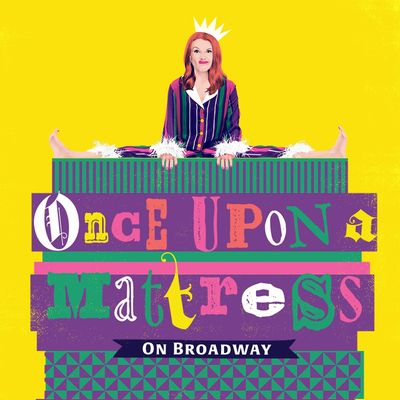
[23:13] David Armstrong: Mary Rodgers was the talented daughter of Richard Rodgers, and she was a composer in her own right. She made her Broadway debut in 1959 with Once Upon a Mattress, a fractured fairy tale starring young Carol Burnett. I've always been shy. I confess that I'm shy. Can't you guess that this confident air is a mask that I wear cause I'm shy? And you may be sure. I'm aware that it's wrong. Mattress had a healthy run and is still very popular with student and community theater productions. And remarkably, it was produced and presented on television three different times. God knows I try, though I'm frightened and shy. And despite the impression I give, I confess that I'm living alive. Because I'm actually terribly timid.
And hardly shy. After a couple of other not-so-successful on and off Broadway shows, Mary gave up on the theater to concentrate on writing children's fiction, which included the novel Freaky Friday. And also she focused on raising her children, one of whom is Adam Gedell, the composer lyricist who wrote the Broadway musical Light in the Piazza. What an amazingly talented family.
[24:55] David Armstrong: One of the best lyricists to emerge in the 50s and 60s was Carolyn Leigh. Her first Broadway job was contributing lyrics to the musical version of Peter Pan, starring Mary Martin. She then teamed up with jazz pianist Cy Coleman on a number of very sophisticated pop songs Witchcraft, The Best Is Yet to Come, It Amazes Me, and many, many more. And they also collaborated on a number of moderately successful musicals, all of which produced big hit songs. Fresh outflow bum bum is up to here. Unfortunately, Carolyn Leigh was a strange, difficult woman. I don't mean difficult in the sense that every strong woman gets called a bitch. I mean she seems to have had some real challenges when it comes to working as part of a team.
One mild example is a director cut one of her songs from a score. It just wasn't working, and everybody on the team acknowledged that, except for Leigh. She marched out into the street, pulled a cop into the theater, and tried to have the director arrested. Well, that sort of behavior derailed her career. After a while, no one wanted to work with her, which was a shame because she was incredibly talented. Her lyrics for Peter Pan enchanted the nation when that show became the first Broadway musical adapted for TV. When it was broadcast in 1955, it was watched by an unprecedented 65 million people.
[26:37] David Armstrong: High over the moon. Hi, oh Mr. Moon. Bid me goodbye. I'm full. I'm heading far out of sight. Second star to the right. Now the way is clear. Neverland is near. Follow all the arrows. I'm about to disappear. I'm DOROTHY FIELDS continued writing in top form through the 1950s, including two big hits, A Tree Grows in Brooklyn and the 1959 Best Musical Tony Award winner, the musical Murder Mystery Redhead, which starred Gwen Verdon and was directed and choreographed by Bob Fosse. Then, for the first time, Dorothy's career hit a lull. In 1965, she turned 60 and started to think of herself as retired against her will. One night at a cocktail party, composer Cy Coleman, who had been working with Carolyn Lee, asked Dorothy if she would like to collaborate with him on a new show.
She grabbed his arm and whispered, Thank God. I thought I was dead. The show turned out to be Sweet Charity, a hard-edged, absolutely up-to-the-minute story of a dancehall girl looking for love. Dorothy was again working with top collaborators, Gwen Verdon, Bob Fosse, and Neil Simon. And Dorothy's lyrics astonished everyone. She had not lost her ear for contemporary speech. Praise after hip praise perfectly captured the zeitgeist of the swinging 60s.
[28:33] David Armstrong: The minute you walked in the joint. Good looking. So refined. Wouldn't you like to know what's going on in my mind? So let me get right to the point. I don't pop my cork for every guy I see. How about it, palsy? Yeah. Seven years later, Coleman and Fields teamed up for one final show, Seesaw. Seesaw got mixed reviews, but enjoyed a healthy run and included some fantastic songs. Sadly, Coleman and Fields' partnership was cut short the next year by Dorothy's death at the age of 68. But what a career. For nearly a half century from the 1920s to the 1970s, her lyrics, smart, conversational, and beautifully crafted, delighted the American public.
[30:17] ♪ Musical number: "If They Could See Me Now" — performed by Billie Wildrick ♪
[31:09] David Armstrong: She was known as the mother of burlesque, Lydia Thompson. Broadway Nation is written and produced by me, David Armstrong. My co-host on this episode was the wonderful Albert Evans. Our recording technician is the indispensable Nick Terabini, and special thanks to the entire team at The Voice of Ashon 101.9 KVSH on beautiful Vashan Island, Washington.
© Broadway Podcast Network, All Rights Reserved