

Although nobody knew it at the time, in April of 1968 “The Golden Age of Broadway” came to an abrupt end on the opening night of the “tribal rock musical” HAIR, which took America by storm and created a shocking jump cut into what I call “The Modern Era" of the Broadway Musical... Read More
From the show: BROADWAY NATION
Featured Shows
About
Although nobody knew it at the time, in April of 1968 “The Golden Age of Broadway” came to an abrupt end on the opening night of the “tribal rock musical” HAIR, which took America by storm and created a shocking jump cut into what I call “The Modern Era" of the Broadway Musical. In this episode I share the story of the emergence and rise of the so called “Rock Musical”.
To many HAIR, and the "Rock Musical", seemed like a total betrayal of the values, craftsmanship and traditions of Broadway. However, I see it, and the other new forms of musicals that rose to the forefront in The Modern Era, as just part of the inevitable ongoing evolution of a form that had always closely reflected what was going on in American culture.
In the immediate wake of HAIR there were many shows that tried to emulate its triumph -- but only three found real success: Jesus Christ Superstar, Godspell, and Two Gentlemen of Verona. Later, the success of Godspell would lead directly to PIPPIN, and the success of Superstar led to Webber & Rice’s 1979 blockbuster EVITA, and the expansion and of their early musical Joseph And His Technicolor Dreamcoat.
The term “Rock Musical” is something of a misnomer. Rock music, in is purest form, actually does not lend itself very well to musical theater storytelling. It’s musical, rhythmic, and lyric forms are much too limited and repetitive. The most successful “Rock Musicals” – from HAIR to RENT -- would more actually be called “rock flavored” musicals that employ a variety of rock, pop, R&B, folk, and latin styles mixed with traditional forms of songwriting.
Over the coming years both Stephen Schwartz and Andrew Lloyd-Webber would move further and further away from Rock and do what Broadway composers had always done – combine the pop music of their day with an eclectic mix of musicals styles that best suited the story and characters they were dramatizing.
Transcript
This transcript was automatically generated and might contain errors.
[0:23] David Armstrong: Welcome to another episode of Broadway Nation, the podcast that tells the extraordinary story of how immigrants, Jews, queers, African Americans, and other outcasts invented the Broadway musical and how they changed America in the process.
[0:36] David Armstrong: I'm David Armstrong, and I call this episode Let the Sunshine In, the modern era of the Broadway musical Part 1.
[0:44] David Armstrong: I don't think I'm alone in sometimes fantasizing about being able to go back in time to see certain Broadway musicals in their original productions.
[0:52] David Armstrong: There are so many shows I would want to see, and I've talked about some of them in past podcasts.
[0:57] David Armstrong: But if I could only choose one week out of the entire 125 years of the musical, it might be the week of April 22nd, 1968.
[1:06] David Armstrong: A time travel tourist in New York that week could see on Tuesday night, Fiddler on the Roof.
[1:12] David Armstrong: On Wednesday, you could see a Jerry Herman Double Feature, Mame at the Matinee, and Hello Dolly, starring Pearl Bailey and Cab Callaway that night.
[1:20] David Armstrong: On Thursday, you could see Man of La Mancha.
[1:23] David Armstrong: On Friday, Cabaret.
[1:25] David Armstrong: And on Saturday, you could go down to Greenwich Village for the Matinee to see the off-Broadway sensation The Fantastics by Jones and Schmidt, and that night you could see their big Broadway hit I Do I Do.
[1:37] David Armstrong: For the Sunday matinee, you could see Promises Promises with a book by Neil Simon and a score by pop songwriters Bert Bacharach and Hal David.
[1:46] David Armstrong: And if you could stay one more day, you could see the opening night performance of Hair.
[1:51] David Armstrong: Over those seven days, you would witness in the most visceral way some of the greatest examples and crowning achievements of the golden age musical play and musical comedy, as well as the influence that the avant garde and experimental theater would have on them.
[2:06] David Armstrong: And then a shocking and abrupt jump cut into what I call the modern era of the Broadway musical.
[2:13] David Armstrong: When the moon is in the seventh house, and Jupiter alights with Mars.
[2:33] David Armstrong: This is the dawning of the angels, the angel.
[2:54] David Armstrong: To many, Hair seemed like a total break from and even a betrayal of the values, craftsmanship, and traditions of Broadway.
[3:01] David Armstrong: But I see it and the other new kinds of musicals that rose to the forefront in the modern era as just further inevitable ongoing evolution of a form that had always reflected what was going on in American culture.
[3:15] David Armstrong: Hair's co-creators, James Rado and Jerome Ragney, were successful mainstream actors who had both appeared on Broadway and had met in 1964 when they performed together in an off-Broadway play.
[3:27] David Armstrong: Rado enjoyed acting but had always wanted to create a musical.
[3:31] David Armstrong: That's where my real heart lay creatively.
[3:33] David Armstrong: That was the ultimate to me, he said.
[3:36] David Armstrong: In addition to mainstream theater, Ragney had also been involved with the open theater and the living theater, two seminal experimental theater companies.
[3:45] David Armstrong: In 1966, he played a leading role in the open theater's play Viet Rock.
[3:50] David Armstrong: This inspired Ragney and Rado to begin work on a musical about hippie culture.
[3:55] David Armstrong: As research, they started hanging out with groups of young people in the East Village who were dropping out, experimenting with psychedelic drugs, and dodging the draft.
[4:04] David Armstrong: Rado recalled there was so much excitement in the streets and the parks and the hippie areas, and we thought if we could transmit this excitement to the stage, it would be wonderful.
[4:13] David Armstrong: And he goes on, we hung out with them and went to their B-ins and let our hair grow.
[4:18] David Armstrong: They moved together into a small apartment in Hoboken, New Jersey, and started writing Hair in every spare moment, either in longhand or on a typewriter they borrowed from their landlord.
[4:29] David Armstrong: Rado said we were great friends.
[4:31] David Armstrong: It was a passionate kind of relationship that we directed into creativity, into writing, into creating this piece.
[4:38] David Armstrong: We put the drama between us onto the stage.
[4:40] David Armstrong: Showbiz agent Nat Shapiro introduced Rado and Ragney to Canadian composer Galt McDermott, who wrote the show's score.
[4:48] David Armstrong: McDermott's life was in great contrast to his co-creators.
[4:52] David Armstrong: He said, I had short hair, a wife, and at that point four children, and I lived on Staten Island.
[4:57] David Armstrong: I had never heard of a hippie when I met Rado and Ragney.
[5:00] David Armstrong: Rado and Ragney would write lyrics and send them to McDermott, who wrote the music independently.
[5:05] David Armstrong: McDermott wrote the first score in just three weeks.
[5:09] David Armstrong: That first batch of songs included the title song Hair, I Got Life, Ain't Got No, and Where Do I Go.
[5:16] David Armstrong: To a great extent, Hair was a return to the review format of the Silver Age of Broadway.
[5:21] David Armstrong: And this form would be employed by many artists trying to shake up theater in the 1970s, probably because it was a direct about face from the integrated musicals of the Golden Age.
[5:32] David Armstrong: As in a review, Hair was essentially a series of songs and skits, each taking on a topic of urgent concern to the tribe of young people that were the characters in the show.
[5:42] David Armstrong: These topics included the war, the draft, racism, sexual liberation, the environment, drugs, etc.
[5:49] David Armstrong: You could say that each segment was ripped from the headlines of the day, much like Irving Berlin's As Thousands Cheer had been 30 years earlier.
[5:56] David Armstrong: But in other ways, Hair followed the Rogers and Hammerstein template.
[6:00] David Armstrong: It even had a dream ballet.
[6:02] David Armstrong: Late in Act 2, Claude has a bad drug trip.
[6:05] David Armstrong: He hallucinates and sees himself interacting with whacked-out scenes from American history, including a minstrel show-inspired sequence featuring Abraham Lincoln.
[6:15] David Armstrong: And Hair's other comments on racial inequity are quite pointed and provocative.
[6:19] David Armstrong: In the song called Colored Spade, the character of Hud, a militant black activist, proudly proclaims himself to be every racial slur and negative stereotype there is.
[6:30] David Armstrong: He commandeers these insults in much the way that the word queer was later rebranded by LGBTQ activists.
[6:37] David Armstrong: However, I suspect this song makes many people today very uncomfortable.
[6:42] David Armstrong: And the song's Black Boys and White Boys made people uncomfortable in 1968, with young women of the opposite race singing lustfully about their interracial sexual desires.
[7:00] David Armstrong: White boys are so pretty.
[7:04] David Armstrong: Here that Chinese still.
[7:06] David Armstrong: I tell you that the white boys give me food's bird suit.
[7:06] David Armstrong: White boys give me a chill.
[7:14] David Armstrong: And we can't touch my shoulder.
[7:19] David Armstrong: That's a touch that kill.
[7:21] David Armstrong: Well the moment of kidney.
[7:40] David Armstrong: White boys are so never returned at the leave.
[7:47] David Armstrong: I just can't get in love.
[7:50] David Armstrong: The show's pansexual sensuality also mirrored what was going on at the time.
[7:54] David Armstrong: Rado said to have intimations of these kinds of other relationships on stage rather than just boy meets girl was just very organic to what we were writing about.
[8:04] David Armstrong: The hippie scene.
[8:05] David Armstrong: It was truly about men loving each other as opposed to fighting each other.
[8:09] David Armstrong: The show was first produced downtown at the public theater and then moved to a discotheque called The Cheetah.
[8:15] David Armstrong: Then Hair was completely overhauled for its Broadway opening three months later.
[8:20] David Armstrong: The creative team added 13 new songs, including Let the Sun Shine In, which they included to make the ending more uplifting.
[8:28] David Armstrong: Experimental queer director Tom O'Horgan was hired to stage the Broadway production.
[8:33] David Armstrong: With years of experience downtown at La Mama, he had been the authors' first choice to direct the public theater production, but was unavailable at the time.
[8:41] David Armstrong: Rado himself originated the role of Claude on Broadway, performing opposite Ragney, who played the role of Burger.
[8:48] David Armstrong: At the center of Hair's pansexual tribe is a bisexual love triangle between the characters of Burger, Sheila, and Claude.
[8:57] David Armstrong: But the central love relationship in the show is between Claude and Berger, the characters Rado and Ragney had written based on themselves and whom they ended up playing on stage on a nightly basis.
[9:08] David Armstrong: However, it wasn't until an interview in 2008 that Rado, for the first time, publicly described himself as omnisexual and spoke openly about being Ragney's lover.
[9:19] David Armstrong: He said it was a deep, lifelong friendship and a love of my life.
[9:23] David Armstrong: Of course, their relationship was no secret to their friends and the cast members of Hair, but in interviews at the time, they didn't talk about it.
[9:31] David Armstrong: He said the show made a point of the love between two men, but we also have other things happening.
[9:36] David Armstrong: Girls with girls, boys with boys.
[9:38] David Armstrong: With all people in the tribe, there was affection and physicality, and that was something very, very new, this kind of behavior on stage.
[9:46] David Armstrong: As a writer for the queer magazine The Advocate wrote, so it seems the bisexuality in Hair was not a 1960s cover for being homosexual.
[9:55] David Armstrong: It was the true expression of Ragney and Rado, who, although being able to respond to more than one gender, in fact, Ragney was married and had a son before meeting Rado, these two men engaged in a love relationship with each other based on profound friendship and deepened by professional collaboration.
[10:13] David Armstrong: But there was one thing that Rado and Ragney did hide from everyone when Hair was about to open at the public in 1967, and that was their ages.
[10:22] David Armstrong: Rado and Ragney were in their 30s in an era when don't trust anyone over 30 was an often repeated phrase.
[10:29] David Armstrong: They told people they were in their twenties, subtracting eight years off their ages.
[10:34] David Armstrong: Shortly before Hair opened on Broadway in 1968, Variety reported, the musical is vehemently anti-establishment and pro-dissenting youth.
[10:43] David Armstrong: Prior to this, most mainstream plays, films, and TV shows had avoided anti-war protest and the sexual revolution or mentioned those topics as a way of reasserting middle class values.
[10:55] David Armstrong: Variety also reported on another radical aspect of the show.
[10:59] David Armstrong: The show includes a scene of total nudity with several men and women facing downstage.
[11:05] David Armstrong: The article went on to say that police raids and arrest were common with nude shows, although New York City authorities have adopted a hands-off policy regarding sexually extreme legit fare, meaning Broadway.
[11:17] David Armstrong: While Hair was safe in New York, it was vulnerable in other cities.
[11:21] David Armstrong: In Mexico, the show was shut down after one performance, and the cast album was banned in some countries.
[11:27] David Armstrong: Though Hair became notorious for its brief nude scene, the show had no nudity in its first two productions at The Public and the Cheetah.
[11:35] David Armstrong: It was not until the show hit Broadway under the directorial banner of Tom O'Horgan that nudity got the green light.
[11:42] David Armstrong: The authors felt strongly that the nudity was vital to the defiance and freedom of the hippie happening.
[11:48] David Armstrong: The scene was actually inspired by an event that took place during a B-in in Central Park that attracted a crowd of 10,000.
[11:55] David Armstrong: As the authors described it, these two guys in the midst of all these people took off their clothes, and everybody was amazed and astounded, just like an audience.
[12:05] David Armstrong: It sent them into this incredible place they had never been before.
[12:09] David Armstrong: Apparently, a plain clothesman rushed out to inform the mounted police that were circling the crowd on horseback.
[12:15] David Armstrong: Thirty policemen on 30 horses moved in on the crowd to arrest somebody, but the crowd turned to the policeman and started chanting, We love Cops, we love cops.
[12:25] David Armstrong: And as they were chanting this, the first two guys who had taken off their clothes disappeared into the crowd and put their clothes back on.
[12:32] David Armstrong: So there was no one arrested.
[12:34] David Armstrong: Rado said it was the perfect hippie happening, and we felt it had to be in the play.
[12:39] David Armstrong: Hair was one of the last Broadway musicals to spawn multiple top ten hits.
[12:44] David Armstrong: In 1969, songs from Hair reached numbers one, two, three, and four on the Billboard Top 40.
[12:51] David Armstrong: Those include Aquarius Let the Sunshine In by the Fifth Dimension, which reached number one, Hair by the Cal Sils, which reached number two, Good Morning Starshine by Oliver, which reached number three, and Easy to Be Hard by The Three Dog Night, which reached number four.
[13:07] David Armstrong: The Fifth Dimension's recording of Aquarius Let the Sunshine In was the number one song in the world in 1969.
[13:28] David Armstrong: From its early preview performances on, the Broadway production of Hair played to near capacity audiences and ran for more than 1,000 performances.
[13:37] David Armstrong: During this run, nine productions of the show played simultaneously in other U.S. cities.
[13:41] David Armstrong: At one point, there were 19 productions of Hair running worldwide.
[13:46] David Armstrong: The London production opened in 1968, and the original London tribe of Hair included Richard O'Brien and Tim Curry, who later collaborated on the Rocky Horror Show.
[13:57] David Armstrong: The 1979 film version of Hair tried to give it a more traditional narrative and was moderately successful in that regard.
[14:04] David Armstrong: There was a hit 2009 Broadway revival, and Hair is still frequently performed in professional and amateur productions.
[14:12] David Armstrong: Advocate magazine sums it up like this: Hair is the outrageous, groundbreaking, influential, and very bisexual rock musical that altered the social and sexual landscape in America.
[14:24] David Armstrong: It changed the modern musical and helped turn public opinion against the Vietnam War.
[14:29] David Armstrong: It was the first rock musical on Broadway, the first Broadway show to feature full nudity, and the first to feature a same-sex kiss.
[14:37] David Armstrong: And the director of the 2009 Broadway revival, Diane Paulus, said what was so radical about Hair is it was reflecting exactly what was happening in real time in the street.
[14:47] David Armstrong: To the point that cast members in the show would get draft notices delivered to the stage door.
[15:48] David Armstrong: And both these musicals introduced songwriters that would have major Broadway careers and write blockbuster shows.
[16:09] David Armstrong: Jesus Christ Superstar was written by Andrew Lloyd-Webber and Tim Rice.
[16:13] David Armstrong: They originally conceived it for the stage, but they were unable to find a producer, so they took a chance on what was considered to be an outrageous idea.
[16:22] David Armstrong: Its first incarnation was as a concept album.
[16:25] David Armstrong: Concept albums were very popular in this period.
[16:28] David Armstrong: For example, the Beatles Sgt. Pepper album and The Who's Tommy had both been released in 1969.
[16:34] David Armstrong: The Jesus Christ Superstar album became the number one album of 1971, even topping Carol King's massive hit Tapestry.
[16:42] David Armstrong: That success made a Broadway production inevitable.
[16:45] David Armstrong: The authors called it a rock opera, and it was flamboyantly staged by Tom O'Horgan, who had directed Hair, and the show played over 700 performances.
[17:22] David Armstrong: Godspell introduced Stephen Schwartz to the New York stage.
[17:26] David Armstrong: This show started as book writer John Michael Teblik's master thesis at Carnegie Mellon University, where it was first produced.
[17:34] David Armstrong: After a run off off Broadway, Stephen Schwartz, another Carnegie Mellon graduate, was brought in to write a new score.
[17:41] David Armstrong: And this score ended up incorporating a variety of musical styles, including pop, folk, rock, gospel, and Tin Pan Alley style songs.
[17:51] David Armstrong: Godspell moved up to off Broadway and eventually Broadway, running a total of 2,651 performances.
[17:59] David Armstrong: Both musicals were condemned by some religious groups who considered them to be blasphemous.
[18:04] David Armstrong: And both were criticized for not clearly depicting the resurrection of Jesus.
[18:09] David Armstrong: And some Jews complained that both of these shows were anti-Semitic, even though both Stephen Schwartz and Andrew Lloyd-Webber are Jewish.
[19:40] David Armstrong: Why don't you love me?
[19:43] David Armstrong: Not your idea of me.
[19:47] David Armstrong: This was a highly entertaining show.
[19:49] David Armstrong: I saw the national tour when it came to Cincinnati when I was in high school and loved every minute of it.
[19:55] David Armstrong: Love me.
[20:02] David Armstrong: Let me go, let me go, let me go, let me go, let me free.
[20:14] David Armstrong: Amazingly, Two Gentlemen of Verona won the 1972 Tony Award for Best Musical, beating out both Follies and Grease.
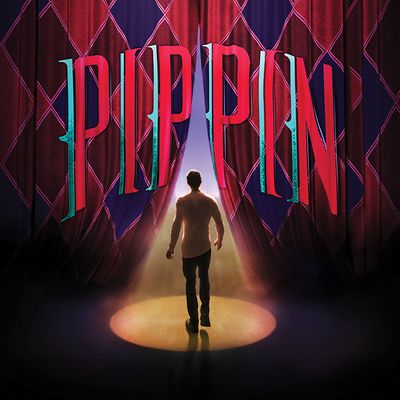
[20:37] David Armstrong: And although I would not call Pippin a rock musical, the score includes many elements of pop, rock, folk, gospel, Motown, Latin jazz, and Broadway showtime.
[20:47] David Armstrong: Every man has his daydreams, every man has his goal.
[20:53] David Armstrong: People like the way dreams have of sticking, as they have their song.
[21:04] David Armstrong: And don't you see I want my life to be something more along?
[21:10] David Armstrong: Rivers belong where they can ramble.
[21:16] David Armstrong: Eagles belong where they can fly.
[21:21] David Armstrong: I've got to be where my spirit can run free.
[21:27] David Armstrong: Gotta find my corner of the sky.
[21:33] David Armstrong: And Pippin was the first cast album to be released by Motown Records.
[21:37] David Armstrong: So many men seem destined to settle for something small.
[21:43] David Armstrong: But I won't rest until I know I'll have it all.
[21:48] David Armstrong: So don't ask where I'm going.
[21:50] David Armstrong: Just Bob Fosse was hired to direct and choreograph, and he made the show as much his creation as it was that of Schwartz and book writer Roger O'Hurens.
[22:00] David Armstrong: This was the height of Fosse's career, and his work was considered by many at the time to be a triumph of brilliant conceptual staging over weak material.
[22:08] David Armstrong: The critics have never given much credit to Stephen Schwartz, in spite of or perhaps because of his enormous success.
[22:45] David Armstrong: We'll be back right after this short break.
[22:56] David Armstrong: I know!
[22:57] David Armstrong: I want a fan that will fuck on you, you be on me too.
[23:02] David Armstrong: I get up here.
[23:07] David Armstrong: You want to know what you're gonna get in me?
[23:09] David Armstrong: Just a little touch of stock quality.
[23:13] David Armstrong: The success of Jesus Christ Superstar would lead to Weber and Rice's 1979 blockbuster Evita.
[23:20] David Armstrong: Perhaps because of its great success, first as a concept album and then on stage in London the previous year, when the show opened on Broadway, it was a pre-sold hit.
[23:30] David Armstrong: Somehow in Evita, the writers are able to make the true life story of Argentina's notorious First Lady Eva Perón into a thrilling, captivating piece of theater.
[23:42] David Armstrong: Like Jesus Christ Superstar, the show is through composed, meaning that there is virtually no spoken dialogue.
[23:49] David Armstrong: The entire story is told through music and lyrics.
[23:52] David Armstrong: This is the legacy of the bench scene taken to the ultimate degree, and it would establish the pattern of all British mega musicals of the 1980s.
[24:01] David Armstrong: As with Pippin, it is mostly pop and not rock music that was used as the principal musical language for Evita.
[24:08] David Armstrong: And over the years, Schwartz and Lloyd Webber would both continue to move further away from rock and do what Broadway composers have always done.
[24:16] David Armstrong: Combine the pop music of the day with an eclectic mix of musical styles that is best suited to the story and characters they are dramatizing.
[24:24] David Armstrong: Rock music in its purest form actually does not work very well for musical theater storytelling.
[24:30] David Armstrong: Its musical, rhythmic, and lyric forms are too limited and too repetitive.
[24:36] David Armstrong: The most successful rock musicals, from Hair to Rent, actually are rock-flavored musicals that use a variety of pop and traditional forms of songwriting.
[25:02] David Armstrong: Just two years later, Weber and Rice's musical Joseph and the Amazing Technicolor Dreamcoat opened on Broadway.
[25:22] David Armstrong: Based on the biblical story, this show was actually one of Weber and Rice's very first collaborations, having begun as a 15-minute pop cantata that had been commissioned for an all-boys school back in 1968, and then was expanded for a record album in 1969.
[25:38] David Armstrong: After the success of Superstar and Evita, Joseph was expanded even further for an off-Broadway production that soon transferred to Broadway and overall ran more than 1,000 performances.
[25:49] David Armstrong: Joseph was revived on Broadway in 1993 and has received five West End productions.
[26:15] David Armstrong: Worldwide, Joseph has been performed hundreds of thousands of times in over 80 countries, and there's no end in sight.
[26:46] David Armstrong: On the next episode of Broadway Nation, Albert Evans and I will explore another defining aspect of the 1970s.
[26:53] David Armstrong: The giant nostalgic craze that brought the music and fashions of the 1920s, 30s, 40s, and 50s back to Broadway and to the culture at large.
[27:13] David Armstrong: I give my promise to you.
[27:17] David Armstrong: Broadway Nation is written and produced by me, David Armstrong.
[27:21] David Armstrong: If you are enjoying this series, please take a moment to rate and review us on Apple Podcasts.
[27:26] David Armstrong: It's very helpful in spreading the word to other people who might be interested.
[27:29] David Armstrong: And please follow the show on Twitter, Instagram, or our Facebook page, where I often post photos and video related to each podcast.
[27:38] David Armstrong: Special thanks to KVSH 101.9, the voice of beautiful Vashon Island, Washington, and to the Broadway Podcast Network.
[28:00] David Armstrong: For me, Argentina, the truth is I never all through my wild days, my mad existence.
[28:10] David Armstrong: I keep my promise, don't keep your dissenting.
[28:27] David Armstrong: All through my wild days, my mad existence.
[28:31] David Armstrong: I keep my promise.
© Broadway Podcast Network, All Rights Reserved