

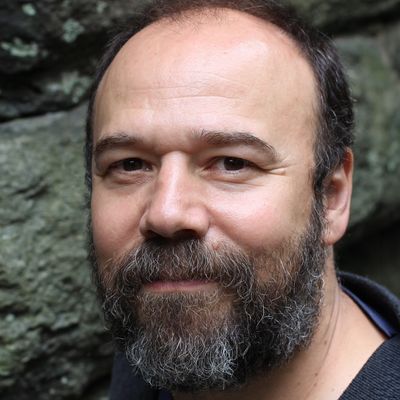
With roles as diverse as Tevye in Fiddler on the Roof, Harold Zidler in Moulin Rouge! and Aldolpho in The Drowsy Chaperone, Danny Burstein is the epitome of a journeyman actor... Read More
From the show: Broadway Teachers Podcast
Guests
Featured Shows

About
With roles as diverse as Tevye in Fiddler on the Roof, Harold Zidler in Moulin Rouge! and Aldolpho in The Drowsy Chaperone, Danny Burstein is the epitome of a journeyman actor. In this interview he charmed the crowd with backstage stories and a powerful message about how what happens inside a Broadway Theatre can help heal us all.
Transcript
This transcript was automatically generated and might contain errors.
[0:08] Pam Parasot: Hello and welcome to the Broadway Teachers Podcast.
[0:10] Gordon Greenberg: I'm Pam Parasot.
[0:12] Gordon Greenberg: And I'm Gordon Greenberg.
[0:13] Pam Parasot: Hi, Gordon.
[0:14] Gordon Greenberg: How are you?
[0:15] Pam Parasot: Hi. I'm so excited that we have Danny Burstein today.
[0:18] Gordon Greenberg: I know. I feel like Danny Burstein is the definition of like a journeyman actor. You know, I mean, he has played so many different roles over the years, and he's had such a long-ranging, far-reaching career.
[0:32] Pam Parasot: Uh, and the other day I was watching the new Julia Child HBO series, and he's on that too.
[0:40] Gordon Greenberg: Yeah, he's so good.
[0:42] Pam Parasot: Um yes, I love him in that, and I love him in everything. He's, you say journeyman, I say mesh. He's just so kind. Like he radiates kindness and soulfulness, and he seems like someone that you want to be friends with. So how lucky are we to get to hang with him for an hour?
[1:04] Gordon Greenberg: Right, excellent. Well, please sit back and relax and enjoy this far-ranging conversation with Danny Burstein.
[1:10] Pam Parasot: The following was recorded live at the Broadway Teachers Workshop, an annual program that brings theater teachers together with the Broadway community for behind-the-scenes classes, workshops, intimate discussions, and Broadway shows in New York City and online. Learn more at www.broadwayteachinggroup.com.
[1:34] Danny Burstein: I think I told you that this group is comprised largely of theater educators from all over the world. So I thought we could start by talking about your educational influences, teachers that meant something to you in your life.
[1:47] Danny Burstein: Uh well, I grew up here in New York City, and when I was 13, I was lucky enough. I had a wonderful teacher in junior high school. Uh, and we did a production of The Me Nobody Knows. And it's so funny talking to a group of people that actually knows what that is. And afterwards he said, you know, you've got something. And he said his husband had gone to, of course, it wasn't his husband at the time, but his partner had gone to the High School of Performing Arts and loved it and said it was the greatest four years of his life. And I said, "What's the High School of Performing Arts?" He explained it to me. And he said, uh, Liza Minnelli went there, and Ben Vereen went there, and that it was just such an amazing experience for him. And he said, you have to prepare a couple of monologues. And I said, great, what's a monologue? And he prepared me. Um, he told me everything I needed to know.
[2:47] Danny Burstein: Now, my parents were both teachers, and actually my mom still is. My dad's 85, almost 85, and he taught for 53, 54 years at Queen's College. Yeah. I do think teaching is the most noble of all the professions. I really do in my heart. Um, and my dad would give me plays, he'd give me things to read, and I hated reading as a kid. And then he gave me a play, and just my whole world opened up. I understood the dialogue form. I understood people talking; it sounded like my parents, it sounded like my friends, and then they cursed and said, you know, these things that I didn't think that people really said to one another, you know. And it was fascinating and dirty and fun, and I learned a lot, and I read play after play after play.
And then I auditioned for the High School of Performing Arts when I was 13. And the year I auditioned, well over 4,000 kids auditioned, and 127 made it in. And all of a sudden I found myself in this group of young actors. And the guy who headed the drama department at that time was a guy named Jerry Esgow, who was Marlon Brando's understudy, among other things, in Streetcar, and he directed Most Happy Fella in London. And he said to us the very first day, he said, if you don't want to be an actor for the rest of your life, there's the door. You know, and we're 14 years old. But I bought it, I bought it, and I went, okay, yeah, this is what I love to do. I and I really did love doing it. So I spent four years there.
[4:38] Danny Burstein: Um, and then I went on to Queens College, where my dad taught. Um, and uh, because that was the rule of the house, you're going to Queens, you know, that was it. Um, and all three boys, my brothers as well, went to Queens College, and there I worked with a guy named Ed Greenberg, who is the executive producer of the Muni in St. Louis. Um, he had also opened up the musical theater of Lincoln Center with Richard Rogers, and so he was a wonderful, wonderful teacher. And um, when I was 19, he said, you know, I think you've got something. Why don't you come out to the Muni this summer and stay for the season? And he gave me my equity card.
[5:20] Danny Burstein: That was probably a tough summer, I'm guessing.
[5:22] Danny Burstein: It was a fantastic summer.
[5:23] Danny Burstein: Long and hot, perhaps.
[5:25] Danny Burstein: Long and hot summer. Yes, yes. It was fantastic, though. My first show was The Music Man with Jim Dale and Pam Daubert. Yeah. It was wonderful. And Jim Dale is still a dear friend to this day. We were even nominated one year for Tony Awards in the same category, you know, with my hero, you know. It was very, very special. And then after I graduated from Queens College, I had all these musicals, of course, because I had done summer stock on my resume, and I would audition for all these other things because I saw myself at the High School of Performing Arts as the next Brando, you know? And I couldn't get into an audition for a film or TV or a play. They would go, oh, you do musicals. That's nice, you know.
So I took a year off to audition and nothing happened. And I got, I went to decided to get my masters at the University of California, San Diego, and I put a lot of credits on my resume that weren't there before, and I learned a lot, and came back to New York in 1990, and I never stopped working after that.
[6:37] Danny Burstein: It's so funny because when I was looking at sort of your body of work, I was amazed at how many plays you've done as well as how many musicals you've done. That is it is rare, I think, in this town, because people do like to pigeonhole you as being one one or the other. Yeah, um, so I love that it was sort of a conscious decision on your part to like I gotta get this other thing going too, so I'm not solely doing musicals for the rest of my life. Not that there's anything wrong with that, but that you got interest in other things.
[7:04] Danny Burstein: Well, no, when I was younger, I had a teacher who said to me, well, what do you see yourself as? And I said, what do you mean? He said, well, what kind of roles do you think you can play? He said, do you see yourself as the neighbor funny next door neighbor? Do you see yourself as this guy or that guy? And I said, I can do it all. And I want to do it all. I do. So when I talk to young actors, I tell them to accept everything within reason, you know, starting out to spread themselves thin. So because you meet people everywhere you go. And they wind up, you know, helping you later on in your career. Just or they become your great friends, you know, that's pretty good too.
[7:48] Pam Parasot: And how did you find the MFA program in San Diego? Was it um vastly different from things you'd done in the past? Did it really prepare you professionally for working in the business?
[7:58] Danny Burstein: We had a great class on a Shakespeare class that was taught by a guy named Jim Winker, who was out of ACT, who studied with Bill Ball, and then Bill Ball, who founded ACT came and taught us there as well. Um gosh, Bill Irwin taught there. A lot of a lot of great people become a great friend. And I just got very lucky. I just had the right teachers at the right time who believed in me and you know opened up a path for me and made me believe that I could do it.
[8:33] Pam Parasot: And when you were out there, was it always the plan to return to New York after you graduated?
[8:38] Danny Burstein: Well, um, we had some presentations in LA and New York, and I was just gonna go wherever I hit it big. And uh when I when I auditioned in New York in LA, I had about seven casting directors and agents out there respond. And when I auditioned in New York, I had about 24. And also my family was here, and so I, you know, I wanted to be here, so it was an easy decision.
[9:09] Pam Parasot: Yeah. And what was your first, would you say was your first big break in New York?
[9:14] Danny Burstein: Gosh, my first big break in New York. Uh I just started doing things, you know, little off-Broadway shows. Um I started working at the downtown, it's defunct now, the downtown circle in the square, where a lot of shows originated, where Tennessee Williams started many of his shows and Horton Foote, people like that. Um and then gosh, and then I did a little off-Broadway show called Weird Romance with Alan Mencken and David Spencer. And that sort of put me on the map. It was Alan's first show back after Howard had passed or Howard Ashman had passed away. And it was back at the WPA and Ellen Green was in it, and so it was, you know, it was sort of, it got a lot of attention. And I had a wonderful song in there called Need to Know, and that sort of opened doors. And now still to this day I hear people singing it at auditions, and you know, it's lovely to hear.
[10:19] Pam Parasot: Soft spot in your heart, yeah.
[10:21] Danny Burstein: That production. Yeah. And am I right that you did you did a few plays with the National Actors Theater?
[10:27] Danny Burstein: Yeah, actually, I did five, I think five shows all together. And for those of you who don't know, it was an organization that was started by Tony Randall with the idea that you know, America needed a rep company or needed an existing ongoing company. And how many years I've tried to remember how many years it was in existence? Unfortunately, not too long. I think altogether about six years. It went off Broadway to Pace University, the theater at Pace University for a little while. Um, but green though, to do all those plays with them. Incredible, incredible.
[11:01] Danny Burstein: And with these incredible stars. Um Tony gave me my, you know, my first Broadway show, and so I'll always be grateful to him. I met him at the Muni in St. Louis. We were doing Around the World in Eighty Days, and I had all these wonderful characters to play opposite him. Um he would come to a different city and I would be there. I was the same actor dressed in a different way with a different accent. So he was in Spain, and I thought he had a Castilian accent, you know, and he was in London, and then he was in the Midwest and that kind of thing. So it was a really, really wonderful time. And I and he was my hero watching him on The Odd Couple all those years when I was a kid. And um I found myself all alone with him on the very first day.
And uh he said, well, tell me about yourself. And I said, well, I want to be an actor, you know. Of course, you know, I'm trying to be an actor, I'm going to grad school, I'm getting about to get married. And he said, oh, grad school for what? I said, for theater for acting. He said, so you can teach acting. I said, yes. He said, if you had an acting class in front of you right now, what would you tell him was the most important part of acting? And I was so green, I was so scared. He was my hero, you know. And I went, well, uh, my my my favorite actors always said the acting teachers always said that acting is doing and acting is reacting, and he went, ha ha ha ha ha ha. Uh-uh. Listening. And I said, well, that's very much a part of reacting, don't you think?
He said, don't argue with me, you asshole. You should get down on your knees and thank me for telling you this. You know, he had studied with Sandy Meisner, and you know, he had taken all those classes. And by the way, he was absolutely right, and it takes time to learn it, but uh listening and staying in the moment is the most important part. I find myself, especially in long runs, that I always have to go back to that because you get you fall into ruts. Um, because in a long run, especially anything and everything can happen, and he usually does. So you have to be there, present every single moment. Listening is the most important part of acting, yeah.
[13:26] Pam Parasot: That's great. Um one thing I also noticed when I was looking at your body of work is that some of them you have a list of musicals that are like the classic American musicals. I mean, you've done Fiddler on the Roof, you've done My Fair Lady, you've done South Pacific, you've done Cabaret, all of them. What when you get cast in a role that you know from a very well-known musical, um, how much does your prior knowledge of that show and that role come into play when you're attacking the part?
[13:58] Danny Burstein: Well, I had, I'm just taking Fiddler on the Roof just to start out with. Um, I'd done it in community theater when I was a kid, and I did it in Summerstock with Theodore Bikel, and um, I had no idea that I would ever be cast in a Broadway production. Not I felt too young for it, but actually I was the oldest person to open it on Broadway. Yeah, I know, because you always think, you know, Zero Mostel, and you always think somebody who looks like Santa Claus or something.
[14:30] Danny Burstein: But no, I was actually older than Zero when he opened it, older than Fred Molina, older than you look so, yeah. I just look so it's great skin. Um, but I watched them all and I learned a lot from the productions that I had done before. And I even got special permission from the Jerome Robbins Estate to watch a production that was filmed of Zero Mostel playing it at the Winter Garden Theater in the 70s. And so during Jerome Robbins' life, he never let anybody go in and watch it because he hated that production from the 70s, yeah. You know why he hated that production? I feel like it's bad me saying this, but it was because he thought that Zero had gone too far, too far playing. And I had a friend who went to see that production, and during the show, Mostel threw cheese into the audience, you know, and there were many musicians who were furious at him because he'd throw cheese and ruin their violins and things like that.
You know, he was a naughty boy. Maybe a little too far. Yeah, he was he was difficult apparently, but he was also a crazy genius, you know. He really was. Uh, but he was kind of difficult after a long run because he would get tired of just playing the regular show. Um, but I watched everything that I could, read his, there were two books that came out at that time, that year, about the making of Fiddler on the Roof. Uh, Jerry Robbins' assistant had written a book. I've got that that was out of print about how they put the show to the initial production together. And I just basically took all that information and had it in a backpack in a way, and walked in to the first rehearsal. And you have to be willing to let all that stuff go, of course, but you have that knowledge, and you're fed by that knowledge.
Um, so, uh, and then you just have to make it as real as possible. Um, how long did you play the part, roughly? Uh, it was roughly about a year and a half. A year and a half. I mean, I'm sure that experience of your first performance in your I mean, there's a lot to grow in that role. I mean, it's such an enormous part, such a Mount Everest to climb. Did you um did you enjoy the whole time of it? Did you do playing that part? I loved playing that part. Yeah, it's like the, you know, as anybody who has ever played the part will tell you, yeah, it's like the King Lear of musicals. You know, it is. It's a beautiful, beautiful show, it's emotional, and there's still, you know, there are moments that you just can't help.
You just burst out crying. Your little girl, your daughter is leaving on a train to Siberia. You'll know you don't know whether you'll ever see her again. And you know, it's very, very emotional. And it's beautiful, and it's so beautifully written that it lifts you up despite the fact that it has such a difficult message. And was that the first show that you did with Bart, your director? No, the first show I did with Bart was South Pacific. Okay. Um, yeah, I was, uh, I hadn't didn't know Bart at all. Yeah, I auditioned for that show over the course of a year. Six times. Tell them a little bit about it. Because I think some people think you go in once you audition, it's like you got the part.
And this sometimes it can happen over an incredibly long period of time. And you can have three, four, five, six times that you go in. So tell me a little bit about the process for that. That was the longest I've ever auditioned for a show, a year. And um, each time I thought, well, I did everything, it went well. I did everything that I can do. And then they'd, you know, two months later, I'd get a call. My agent would call and say, well, you got a callback. And I'd go, okay, what more do they want to see? You know, it's Luther Billis, you know. What can I do? What can I do anything different? And he would call them and they'd say, just do everything you did last time. So, you know, but of course, we're not machines, you know.
And you some days you get you you have it, and some days it's not there. Um, but uh the only direction I got really, you know, after each time he'd go, wow, that's great. Okay, that's great. And I would walk out. Um, but the last time for the final callback, he came out and said, do you know I uh the character famously has a boat, of course, tattooed or drawn, of course, on your belly, and you have to roll it, you know. And he said, uh, Mary Rogers is inside. If she asks you whether you can roll your belly, say yes. And that was it, and then he went back in. Like okay, okay, yeah. And did she ask? She did not ask that. But I, you know, thank God I got it. And uh, and she was wonderful. She would hang out in my dressing room all the time, you know, and tell me stories.
What a beautiful production that was. Just beautiful. Um, I think I mentioned to you that this group is going to see Moulin Rouge while they're here. Um, and so I thought we could talk a little bit about how you got that part and what the rehearsal process, the development process was for that musical. Anything you might share with them that they can take with them to the show. Wow. Um, I was, I can't remember what I was doing at the time. I was doing a show, and I got a call from Alex Timbers, who said, uh, I'd like to talk to you. Uh, let's meet at this diner at 72nd in Broadway. I said, okay. Uh, we sat down there, and he said, here's the script of a show I'm working on. Uh, it's based on the Baz Luhrmann film, Moulin Rouge.
Look it over and uh let me know what you think. And uh, I'll see you here in a week. And we met at the diner in a week? Yeah, okay. Exactly. We'll see you here in a week. And so okay, a week later we met again, and I said, okay, uh it seems like it's a lot of fun. And for me, the most exciting thing is uh it was unlike anything I'd ever done before. After Drowsy Chaperone, I got all these auditions for Latin lovers. After South Pacific, I got all these New York-y wheeler dealer kind of guys. After Fiddler, every Jew in the world was offered to me. And this was something, you know, Ziedler was on something unlike I'd ever done before. And it was, you know, meaty and juicy and fun, and it was dirty and sexy, and a father figure, and a pretty and a the producer, impresario of the place.
And uh, and he was a real character, a real person in real life, and somebody to, you know, explore. And I thought, yeah, I think I think, and I had a bunch of ideas, and he loved them, and I said, okay, let's do it. And that's how I got involved in it. Um, having said that, then we basically got into rehearsal in New York when we headed to Boston first to the Emerson. Did you do workshops of it beforehand or last year? There was a workshop of it beforehand that I couldn't do because I was doing an off-Broadway show, and um, that was all consuming. But uh we when we were in New York, we did a lot of work on it, especially work on the book, which needed a little bit of a push at first. You know, I mean the songs were songs that everybody knew, and a guy named Justin Levine had the task of putting all the songs together and fitting them into the proper place so they made sense, so they pushed the narrative forward, which is not easy with pop songs when the lyrics are, you know, I love you, baby, baby, I love you, you know.
It's tough. It's tough. And it's such a wild ride of a show. I mean, it's an exhausting show to do. It is exhausting. It's the hardest show. That and Fiddler, but this was definitely on my body, and the set is wacky. You know, there are all these there's steps on the sides, and all these steps that uh on the passerelle that come forward or different heights, and it was killer on everybody. And then at the end of the show, there's I don't want to give too much away, but what the hell? Uh, at the end of the show, there's a whole mega mix and it's a lot of fun. And um the kids would come off stage after we all can can together and go, God, you know, my knees. And I go, yeah, tell me about it, you know.
They're 30 years younger than I am, you know, complaining about their bodies. But uh yeah, and had you hard. Were you a fan of the movie? Yeah, I loved the movie. And I love that Baz was around too. You know, the great thing about the business is that um often you get to meet your heroes, and uh in my experience, rarely do they just disappoint. And um, so I've been very, very lucky. That's great. Um, I want to talk a little bit about because as Moulin Rouge opens, it's a huge hit, everyone loves it, and then we get to sort of March of 2020. And yeah, I mean I just remember hearing that you know when COVID was first talked about that Moulin Rouge was sort of one of the first companies to kind of be hit hard and publicly.
Yeah. Um can you talk a little bit about that time and what you know what was happening at the theater? And yeah, everybody was nervous, of course, that uh that and because COVID was hitting Europe badly, especially Italy at the time. And um, and people I think at uh there were a couple of cases here and there, maybe, but we were nobody was sure, nobody wanted to say what it was. And we had uh oddly, we had Thursday matinees, and it was March twelfth, 2020. And um that day at one o'clock, normally at two o'clock matinee, at one o'clock, we all got a text. Everybody in the building got a text saying, please come into the house. Um, there's gonna be a meeting. So, and our and in front of us were our producers and general manager, and everybody was there.
Everybody worked backstage, the ushers, everybody. And they said, one of our company members uh it looks like is tested positive and is sick, and um so rather than do the show, and because somebody here might be sick as well, we're going to scrub down the theater, and we'll see you back here tomorrow. So we're canceling today and canceling today and canceling tonight. And the house manager said, um, there are 200 people online outside already. And he's and they said, well, tell them there's been an emergency and we have to cancel the show. This was, of course, you know, Broadway shows were never canceled, never. And we all went home. Uh well, I was started to pack more stuff than most people.
I turned to my to the guy who was my dresser, and I said, I have a bad feeling about this. And he said, yeah. I said, yeah, I think this is gonna be Broadway's lost year. And I was off by six months, it was a year and a half. Um I just had a bad feeling about it. Um, and uh it was pretty it was pretty bad. And the fellow who was who was there uh who was sick, thankfully it got better, but eventually about 80 percent of the company wound up getting it, which was pretty, which was pretty crazy at the time. Um, and I got it unfortunately the worst. I was in the hospital for about a week. And yeah, and it was it was bad. This is when, you know, Trump was pushing hydroxychloroquine and things like that, you know.
And I got it, you know, which was killing people, that was killing people. So anyway, it was pretty bad. And everybody around me, it was an awful experience, actually. And everybody around me was dying and you know, getting they were telling me uh, because my oxygen was very low that they were gonna put me on a ventilator. And I said, no, I don't want to be on a ventilator. I feel good. See, I'm practicing my moves. I I'm not kidding. That's what I did. I said, I'm practicing my moves, I'm going back to the show. So uh, and they go, okay, all right, all right. And my oxygen just came up enough that you know everybody else was much worse. There was one day where I almost died. You know, I thought my ox, you know, you know those that feeling where you're uh where you're about to faint and the curtains start to come in.
I had that over the course of four hours. It was like this, getting worse and worse and worse. And I thought, oh, this is this is it. Wow, fascinating. So I texted, I texted everybody. I texted everybody I knew, um, and I said, I told them to send me jokes. Send me videos and jokes, it's gonna really pour, my goodness. Um, and they did. And I started laughing. And as crazy as it is, I think that may have saved my life. Just just had being in the proper mood and laughing hysterically. Yeah. You probably had some good joke tellers and good videos coming your way. Yeah, exactly. I had lovely, lovely people. Especially there were some. I think my my older son, who's 29, uh, sent me a couple of Japanese game shows that were really, really funny that had me hysterical.
Yeah. Wow. And so how long did it take you to recover it in total until you felt like I really can get back up on stage and do something? Of course, there was still time that Broadway wasn't open, but it took about a year, I would say. I had that long COVID and the whole thing. But I had slowly the long story, of course, and it's a terrible story, because my wife during that time had developed ALS. And so I was taking care of her. Um, so I had no choice. I had to, and nobody would come to the house to help because of COVID.
[28:53] Danny Burstein: So it would take me, you know, 20 minutes to walk three blocks to the supermarket, but I had to do it because I had to take care of her.
[29:03] Pam Parasot: So yeah.
[29:04] Danny Burstein: In some ways, I'm sure that helped you heal. I mean, you know, heal faster because you had to.
[29:08] Pam Parasot: I had to, exactly right.
[29:10] Danny Burstein: Exactly right.
[29:10] Pam Parasot: Yeah.
[29:11] Danny Burstein: So you ended up writing a piece for the New York Times that I want to talk about a little bit because I think this group would be happy to hear it.
[29:20] Pam Parasot: Um, if you we're gonna put it in the resources so that you can access it and read it on your own time if you have the interest.
[29:26] Danny Burstein: It's called "What Happens Inside a Broadway Theater Can Help Us Heal." So I'd love you to chat a little bit about how this came about and what your thoughts are on it.
[29:38] Danny Burstein: Well, I was contacted, I had written a couple or three articles. My dear friend who's a playwright, her name is Sarah Ruhl. She contacted me after I got out of the hospital to see if I was okay. And she said, you know what, you really have to write your experience down. You really have to. So I wrote it, I wrote this essay about what it was like to be in the hospital. And she said, I and I sent it to her. I said, you know, does this I think this is basically what I went through? And there were a lot of things I left out, but I just wrote it straight through. And she said, That's wonderful. Do you mind if I maybe publish it? And I said, well, it wasn't written for that, but okay. And then she contacted somebody who contacted me and said, Oh, we'd love to publish it.
We're gonna cut it in half, and we're gonna cut this little sentence here, and we're gonna cut these words. And I went, no thanks. No thanks. That's not why I wrote it. This is my story. You don't have to publish it. I don't want you to publish it. If you think cutting it in half is the right thing, I don't want to do that. So Sarah went, sorry about that, no problem. And I just sent it to my friends so they knew what I went through. Cut to my friend Bart Litscheer, who's the director, he said, This has to be in the paper, it has to be published. And I said, you know, I don't want it touched. You can publish it, but I don't want it touched. And the next thing I know, I got a call from David Rooney at the Hollywood Reporter, and he said, I want to publish it exactly as it is.
And I said, Okay. And the weird thing about that was all of a sudden people were writing me saying, I'm sending this to my family because they don't believe COVID exists. You know, I'm like, wow, what? That was I really didn't see that one coming. Because I was just in the hospital and everyone was dying around me, you know. So obviously it was the real thing. And then I wrote another article that followed up to that one, and then I wrote an article after my wife passed. And that's why I think the New York Times contacted me when Broadway started coming back and asked me to write this piece about theater coming back, about Broadway coming back specifically. It was very hard fought that article because a lot of what I wrote there, this is I'd never dealt with that kind of a publication before. I love reading the New York Times, but it was difficult.
[32:27] Pam Parasot: Um, what sense?
[32:33] Danny Burstein: Well, they I wrote a piece about what I thought the good things and the difficult things that were about to happen, and they went, that's great. There's not enough about your wife who passed away. And I was like, oh, so it was a little it was, you know, and so I just you know worked around it, but it was a difficult editing process because there are three different people editing your op-ed. So it was a little difficult. But having said all that, that's the background of it. Eventually I got to something and it got to a place that I felt good about. And even though there were certain people, there were people who said, Why are you talking about this? And why are you talking about that? Why would an actor talk about politics? And I said, Don't touch a word anymore. That's it. No more, no more. I'm done. I'm done. I'm not changing it anymore. So what is there is a big compromise, but I am proud of it.
[33:39] Pam Parasot: You should be, and I encourage you all to take some time to read it. So can you talk a little bit about getting back to the theater after COVID and what that was like and what the Broadway community has been like since then?
[33:50] Danny Burstein: Yeah, that was one of the most exciting days in my life. That was, as you mentioned earlier, it's my 18th Broadway show, and it felt unlike any other night that I'd ever been in the theater before. It was like a truly like a rock concert. We couldn't go on because the response and the love coming back at us was so palpable that we had to stop and just you know revel in it with everyone there because everybody had been longing to get to this moment for such a long time, and we'd lost so many friends and family members, and so it was so important to get back, and especially Moulin Rouge is nothing but escapism, it is pure a feast, a visual feast. That's basically it, and great music. And just if you just want to disappear for two and a half hours and go, holy cow, wow, that's it's exactly what people needed to see at that particular time.
And it brought so much happiness. And it continues to. Now, of course, there are other kinds of crazy issues, you know, different variants and the war causing gas prices, and so a lot of numbers are down for great shows and shows are closing because you know the tourism that usually helps in the summer from Europe is not as strong as it usually is. So it's a fight, it's a struggle, but people continue to put forth great great shows and great art that and I'm proud to be part of this business. In some way, if there is a silver lining to the whole COVID, you know, when the Broadway shutdown, you know, all that time to sort of reflect and then to be able to come back and appreciate it, perhaps in a slightly new way. And for someone who has done 18 Broadway shows where maybe it could seem a little routine, I'm sure it was a huge exciting moment to just be back on stage again.
[36:08] Danny Burstein: It was. It was, but you said it very well. I was thrilled to be there.
[36:11] Pam Parasot: That's great.
[36:14] Danny Burstein: Everybody was. I'd love to open this up for questions. If anyone has a question for Danny, now is the time.
[36:19] Audience Member: Yes, sir. The shows that you've done with Bart. What is his process with actors?
[36:27] Danny Burstein: The great thing about Bart Shear, and we're working on a play now, um that'll hopefully be on Broadway in January, starting in January. The great thing about working with him is that he's got a million ideas, and then he's willing to toss them all out when you walk into the room. He's basically, he doesn't block the show out, know exactly what's gonna happen every. He is fully willing to say, I don't know. And it feels like he's in the trenches with you, discovering the piece. And he's aching for everybody to throw him ideas. He loves it, you know, as he's watching the show. If you're not in the scene, you know, I'll sit next to him and go, Well, why aren't they doing that? You know, why right there?
That's where my focus is going. It should be over there. Okay, okay, you're right, you're right. You know, he loves it. He loves it. And that's really where he does most of his work. He just throws everything at the wall to see what sticks initially. And during previews is really where he sits back because he's really a great storyteller. He can sit back and go, oh, okay, got it. I know what needs to happen here. This the mood is not changing here, it needs to change earlier. Great. That those things, that those three lines can be cut. You know, we need something over here to indicate that we need to move to we're moving to another space. That way his brain really, really takes off when he can see the whole picture. He knows what is working and what isn't, and he's able to fix it.
[38:27] Danny Burstein: There's a gorgeous moment in South Pacific, where all the soldiers were marching, and then they do this marching version of honey bun. And he had them marching and then filing slowly one by one and upstage and then down a ramp. And it was very, very moving. And it came right out of a scene that I had just had. And instead of them being faceless soldiers, he put me into it. He just said, Yeah, why don't you fold into that? Initially that scene wasn't supposed to be there. It was supposed to be it was the old airplane flying over the audience trick with literally two tin cans, you know, and with the lights in them and on fishing line, you know, coming at the audience. And it didn't work, it really looked terrible.
So he said, okay, you know, and we were in previews. He said, Okay, everybody, let's line up. And he started putting it together. And you know, that was him at his best. He's really, really smart, really crazy smart. And he studied with, he worked for Garland Wright and Peter Hall and a lot of great, great directors, and so he did it the right way, and you know, worked his way up. He's brought us some of the best revivals of these classic American musicals and Broadway scene.
[39:57] Pam Parasot: Yes, yeah.
[39:59] Danny Burstein: So you're a lucky girl last one day of your originating this role on Broadway.
[40:05] Pam Parasot: Um, so how does that make you feel like this is an iconic story that I grew up with the movie Love It? Like it's now this amazingly decadent, gorgeous Broadway show, and someone is going to look back and go, Oh my goodness, like how do you feel about that?
[40:24] Danny Burstein: I feel good and I it feels great.
[40:29] Pam Parasot: Next question.
[40:30] Danny Burstein: Um, I believe that I, you know, and I've had so many kids contact me through social media to ask for advice about Fiddler, about South Pacific, about Drowsy Chaperone, any a lot of different shows that I've done. And it feels terrific being able to give back. When I was 18, when I got to Queen's College, the first show there was Merrily, We Roll Along, and it had just closed on Broadway three months before, and it was famously, it was you know, this huge flop, and there are all these different versions of the script floating around. And my teacher, Ed Greenberg, who I mentioned earlier, cast me as Frank. And I read it, read the script, and I thought, how do I make sense of this? Is he such a shit?
How do I start a show and then you work backwards where you sort of understand him at the end, but how do you take the audience on that ride? I had so many questions, and a friend of mine said, you know what you should do, you should write to Stephen Sondheim. And I went, Well, yeah, of course I should write. He said, No, no, no, here's his address. So I wrote him a letter, and within like five days, he wrote me back. He said, Dear Danny, all your questions would have to be answered in a letter the size of War and Peace. But here's my number, give me a call and we'll talk it out. So, and three weeks later, I was at his townhouse in Turtle Bay in New York, and I was as I was walking in, Lapine was walking out, and he was like, Oh hi, yeah, we're working on a show about George Surrats.
And you know, like, okay, great. Hello, hi. And he says Sondheim sat me down on the couch. He said, I'll be right back. He came back with a carafe of wine, it was about that size, put it on the table, and put two glasses down and said, Okay, what do you want to know? And so, and for the next three hours, a little over three hours, we just talked about theater, what he thought, the shows he had done, about Merrily specifically. And it was the greatest lesson. And if he can give back and do all those things, then you know Danny Burstein can certainly do it too. And of course, you know, as you all know better than I do, it's the greatest thing ever, watching those kids bloom. I could almost start to cry, watching them bloom and do great things.
[43:09] Pam Parasot: How incredible what a gift you're all giving these students.
[43:14] Danny Burstein: Uh, you know, I'd I applaud you and I bow down bow down to you all.
[43:19] Audience Member: Yes, Pierre.
[43:22] Danny Burstein: That's all right. I can I can talk about it.
[43:23] Audience Member: Yeah.
[43:25] Danny Burstein: You you talked about uh the decision to go to the party art science. What advice would you give your younger younger self? Looking back on the whole career and how everything evolved and you can go back and talk to yourself making that decision. What would you like to do? I would probably say what the hell were you so scared of? Um I was so nervous. All I I've sort of made a pact with the devil when I was a kid. I thought I don't care about money, I don't care about fame. I love doing this. Um and all I want is to have a normal life and to be able to make a living at it and to have the respect of my peers. And um that was it. And that's you know, I wanted a life like my parents had. I wanted a house and I wanted a car and I wanted a family.
Um all those kinds of normal things that actors can never have. Um but that's that's what I wanted. Um and I was I spent so many years worrying so much about it. Um and I think I just would not worry so much. It's that the Jewish side of me, you know, that worries so much. Um but um, you know, it it's not that it made me work hard, it sometimes made me feel stuck and worried you know, and and uh I think I would just say, okay, let's keep going. That's it. Just relax and keep going.
[45:03] Audience Member: Yes, up here.
[45:09] Danny Burstein: I have written and I have uh directed, yeah.
[45:14] Audience Member: Yeah.
[45:24] Danny Burstein: Like some of our kids cannot mind enough experience.
[45:29] Audience Member: Right.
[45:33] Danny Burstein: Yeah, I think we're actually stats called not to be serious for all expensive. I I think everybody's gotta start somewhere. So why not wherever they are and give everybody a shot? If the if the person is talented, I want to see somebody who's interesting, you know, and then start working with them. Um, because they can teach me as much as I can teach them. And and they can they bring a lot to the table. Uh I think with uh somebody who thinks they know what they're doing already, then you could have, you know, that could be tough too because you have people set in their ways, and breaking them down is is a little harder than shaping somebody who's uh a raw talent and pushing them in the right direction.
[46:23] Audience Member: She was talking about working with with young people and and advice for young people. What was your major at City College? Were you actually at Queen's College?
[46:31] Danny Burstein: Yeah, I was I was the theater major.
[46:33] Audience Member: You're a theater major too. And then you went for an MFA program, which was obviously a very concentrated program. Do you um have an opinion or or advice to to young actors in terms of uh getting a BFA or an MFA versus a more liberal arts experience or uh you know going to college even at all? Um well Queen's College was a liberal arts school, so I had to take all the regular classes that everybody else did. And uh I almost majored in had a English uh minor, actually, um, which I loved. Uh I just had a few credits, I think like four credits shy of uh having a minor in that um because I took all those great books classes. Um but uh yeah, I would tell them to to have uh very well-rounded education.
They shouldn't, you know, you you shouldn't have uh you shouldn't be uh you shouldn't think in a narrow way. You should think globally, and that helps feed your art. Everything, all the information that you have about the world, about books, about psychology, about philosophy, on and on, helps you as an artist and shapes you as a person and makes you hopefully more empathetic as a human being.
[47:56] Danny Burstein: Um, I've been curious. So, in the in the Boston tryouts of Moulin Rouge, you had a great song. You sang uh Shake It Out, and then when it moved to New York, the song was cut. I've always been curious about that and what what happened. Uh, I loved that song.
[48:10] Audience Member: Me too.
[48:11] Danny Burstein: Yeah, Florence and the Machine. It's a great song. Um the writers just felt that it didn't work. And uh so that's that's it.
[48:24] Audience Member: You you sang it so beautiful. I mean, like I I remember that night. Well, you have great taste.
[48:31] Danny Burstein: Thank you. I love that song, I really did. And you know, some that's what happens, as you know, Mike Nichols had that horrible line, but it was it's true as you're working on these things, you know, you you have to kill your babies. That that was his line. Um, but it's it's what it is, you know. You these things that you nurtured uh the whole time. I know right now that was a bad line to use, but um Jesus Christ. Um but it's you know, but you understood, you know, if you knew Mike, then you would understand that kind of that that was his way, that was his want. He was brutal and you know, told you exactly like like it is. Um, but yeah, you have to let go of those things. In Drowsy Chaperon, we were at the Almondson first in LA before we came into New York, and about a good third of the show was changed.
Whole whole pieces were taken out and other pieces put in. And I had another great scene that was, you know, that killed every night, but it didn't help the flow of the show. You know, and and you know, Casey Nicola, the director, he you know, came up to you like all directors do when that happens, and they put their arm around you, and you know, oh, this isn't gonna be good, you know. But he said, I said, is it bad? He said, Yeah, it's bad. So, but it streamlined the character, character, and it worked out perfectly. It really did. And I, you know, I loved that show. That was a very, very special experience, that one, because we were all old friends putting that show together.
[50:15] Danny Burstein: So I know that like every actor and every director has a different process, but for you, like what are the best qualities in a director? Like what's when you work with somebody, what's most helpful for them to give you? I think uh that I think it's helpful when they let you try things. Uh a director, well, you know, it's difficult because sometimes you're doing summer stock, and sometimes you're doing, you know, and you have 10 days or eight days to put on a show, and then there's really no time. Um, during uh tech is when you wind up directing. But if you have a normal rehearsal period, um, you should absolutely take the time to talk. Um I rec I highly recommend sitting around the table uh initially.
Bart Scheer um goes a little too far with that, if you ask me. Uh, but he can with in a five-week rehearsal period, he would spend pretty much two weeks around the table. And where you just feel like I have to get up, I have to, you know. And even even people do. They get up behind their chairs and they start walking around and they can't help it. Um listening, that dialogue back and forth, finding out as much as you can about the show, about the time period, about who these people are, um, being as specific as possible, and doing things to spur the actor's imaginations. So they can uh because after all, they they have to take ownership of the piece. And I think I think that's it. And you know, what I love, I mentioned earlier is that uh Bart definitely does, you know, you feel like you're in the trenches with him.
He discovers it with you. So what about this? Well, try oh try that, you know. Let's see what that is. Kelly O'Hara told me in Light in the Piazza one night uh that she, you know, she has a slight uh physical uh impairment in some way. I'm not sure what it was exactly. But one one preview, she told me she almost killed him because they gave her a slight hump, a literal hump for the character, like this. And she was walking around and and she came off stage after it was over and she went, No, that one didn't work, you know. And she was so mad at him. But you know, that's where you do it. That's where you play. That's how you learn. Um that you know, you learned that one didn't work. You know, but there are so many things that do work.
[53:01] Danny Burstein: Please. Can you unload your belt? I can, yeah. Yeah. I'm not gonna do it now. Thank you for asking.
[53:22] Audience Member: Yes.
[53:22] Danny Burstein: It changes from show to show for um uh for Moulin Rouge. I was there generally two hours to an hour and a half before every show, and I warm up on stage. I love being in the space um beforehand. Um, and the stage hands know that that's what I like to do, and they and I move out of their way when they were doing their things. Um, but you also get to be great friends with everybody front of house and and all the stage hands because in tight. And um, yeah, I I l I I have to. The older I've gotten, especially. Um, I've had two surgeries on each knee uh for torn cartilage over the years, and two on my right ankle. And so um, unfortunately for me, um, I can't, I could never do a show like Moulin Rouge again.
It's just too, too hard on my on my butt this is my 30th year on uh dancing and jumping around on Broadway. And so that was good. I did that. You know, now whatever whatever the next shows are, they have to be a little bit more tame than that one for me yeah it's quiet yeah all the help means to yeah uh you you have to uh well you have to make you know in our in in our art in this art form of musical theater you have to make the lyric mean something it means something normally it means something already usually um uh unless you know it's some banal horrible lyric you know that we sometimes get and whatever in fandom of the opera or whatever um but but sorry you know um sorry my wife was in the original production too um and we'd have to go every five years you know that's the 20th anniversary you know um but it is hard it was especially hard party girls they don't get hurt can't feel anything when will you learn you must push it down you must push it uh I'm the one for a good time call phones blowing up ringing your door doorbell you feel the love you feel the la-a of you know like okay make that mean something you know and that's it was it's hard it's hard but you know you I was managed to shape it uh with the director and uh make it mean something and had had actions to to do to push uh what I wanted in that moment and made it make sense.
Even though you're saying something that, you know, party girls, they don't get hurt, you know. I'm, you know, for me, it was like, oh, I'm gonna cast a spell on him. Listen to these, it's like an incantation, you know, and that's how I used it to start it off. Um, and then all of a sudden, you know, then the lights help me out. The director saw what I was doing, and you know, and it just kept growing and growing until you know make it make sense. Uh, in the sense that uh almost in the same way you would perform Shakespeare, but because you know that many of people in the audience do not know what whatever is. But if you believe it strong enough, you'll take them along for the ride.
[56:54] Audience Member: I know that I speak for this entire room when I say thank you for the amazing body of work that that you have that we've all enjoyed over the years.
[57:09] Danny Burstein: You've been listening to the Broadway Teachers Podcast, recorded live at the Broadway Teachers Workshop, an annual program that brings theater teachers together with the Broadway community for behind the scenes classes, workshops, intimate discussions, and Broadway shows in New York City and online. Learn more at www.broadwayteachinggroup.com.
© Broadway Podcast Network, All Rights Reserved