

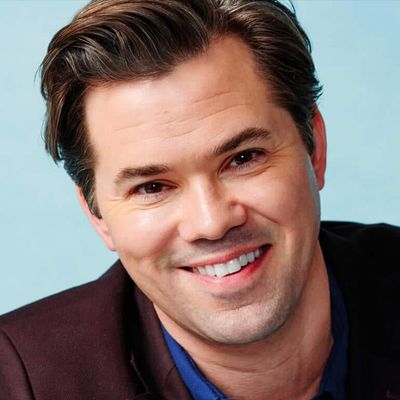
Andrew Rannells took Broadway by storm when he starred as Elder Price in Book of Mormon and transitioned to television stardom in Girls, The New Normal, and Netflix's The Prom... Read More
From the show: Broadway Teachers Podcast
Guests
Featured Shows

About
Andrew Rannells took Broadway by storm when he starred as Elder Price in Book of Mormon and transitioned to television stardom in Girls, The New Normal, and Netflix's The Prom. In this hilarious interview, he talks about his journey from high school to Broadway and beyond, from pitching his song higher than anyone else could reasonably match to protect his job to growing up in Omaha.
Transcript
This transcript was automatically generated and might contain errors.
[0:00] Gordon: Hey, welcome back to the fourth episode of the Broadway Teachers Podcast. Hi, Pam.
[0:09] Pam: Hello, Gordon. And today we have such a great conversation with the lovely and talented Andrew Rannells. He was at our event a few years ago, and we were so excited to have him there. And of course, now he has exploded on the scene with the hit of The Prom on Netflix last season. And of course, his work in Book of Mormon and Falsettos. I mean, I think the thing that I really love about him is that he has so much range. I mean, he can be so funny, so serious. He has that amazing voice. And I think you'll find in this interview that, you know, he had such a wicked sense of humor that we all enjoyed and we're happy to have him at the event. He is hilarious. He is irreverent. Please welcome the hugely talented Andrew Rannells.
[0:59] Gordon: Here's our conversation. The following was recorded live at the Broadway Teachers Workshop, an annual program that brings theater teachers together with the Broadway community for behind-the-scenes classes, workshops, intimate discussions, and Broadway shows in New York City and online. Learn more at www.broadwayteachinggroup.com.
[1:21] Andrew Rannells: Well, that's very nice. Great entrance applause. That's a nice way to start. How's it going? Did you just have lunch? All right. All right. Great. So everybody's alert. This is group E. And this is my first appearance here because I was out of town yesterday for a family event, but nice to see you all. I am so delighted by just the last five sessions have been amazing. And I'm especially overjoyed to have with us one of my favorite actors in New York. He's uniquely skilled at comedy, at musicality. He works with equal ease and grace on stage and on television. And he's right now appearing on Broadway in The Boys in the Band. So I know you've welcomed him, but here he is again, Andrew Rannells.
[2:24] Andrew Rannells: Hi. Thank you very much for that, Gordon. Andrew's working every night with Morgan Holbrook, our stage manager, who is the stage manager there. So he's going to tell us embarrassing stories about Morgan later. Really keeping us on our toes there. But for now, let's hear some embarrassing stories about you.
[2:37] Andrew Rannells: Sure. Okay. Sure. So where are you from?
[2:45] Audience Member: Omaha, Nebraska.
[2:45] Andrew Rannells: Is anyone from Nebraska? You are? What? What? I mean, chances are good. We're somehow related. There's not that many of us. Where are you in Nebraska?
[2:55] Audience Member: Omaha.
[2:55] Andrew Rannells: And we have the same great-grandfather. Oh, get out. Well, I never met him. Wait, she is your cousin. She literally is. That's not my thing.
[3:05] Andrew Rannells: The Rannells. Yeah, we were not particularly, for whatever reason, like my dad didn't, because he was like one of two kids. So we didn't have as much contact with the Rannells side for some reason. As I guess what happens mostly with like mothers who are closer to their family, I guess. But nice to meet you, cousin.
[3:27] Andrew Rannells: Yeah. Oh, gosh, this is going to be an Instagram winner. I know it later. What school are you at in Omaha?
[3:30] Audience Member: Right now I'm in Nashville, Tennessee, and I teach K through 12 general music.
[3:36] Andrew Rannells: Oh, very nice. All right. Very nice. So you went to high school in Omaha?
[3:42] Andrew Rannells: In Omaha, yes. I went to an all-boys Catholic school called Creighton Prep with really no arts program at all. So I went outside of school and found my sort of my education and all of my teen acting experience through community theaters and children's theater. And that's sort of where I had to approach that. So I was always very envious of schools that had an arts program. I just did not come for one of them. So I had to kind of be a little more creative with how I found that.
[4:06] Gordon: How did you even know that was what you're looking for?
[4:12] Andrew Rannells: I grew up very close to a children's theater in Omaha. They had shows nine months out of the year, and then the summer they taught classes. And my mother at some point suggested that she was like, maybe you should try an acting class. So I went and it's like nine, and I started taking classes there.
[4:32] Gordon: Based on your general theatricality?
[4:35] Andrew Rannells: Yeah. I'm one of five kids, and I think she was trying to find sort of what each of her kids' activity was going to be, and it wasn't going to be sports, and it wasn't really school. So I think she was just like, oh, theater? Should we try theater? They'll take anyone. Yeah. So that worked out well. But yeah, my mom sort of very gently dropped me off at this theater and was like, see if you like it. And then I just stuck around. So all through grade school, and I did shows at this children's theater. And then slowly there was like weirdly a lot of community theater in Omaha. So a lot of dinner theaters, because this was the early 90s. So there's a lot of dinner theaters. And so that was like my first exposure to professional theater was performing in front of people while they were eating.
[5:26] Gordon: Do you remember what show you were in?
[5:30] Andrew Rannells: Of course. Of course. My first show at the Firehouse Dinner Theater was On Golden Pond. Yeah. So I was the only kid. I mean, I will say, maybe this is a good way to sort of like segue into this, not having a strong arts program in school, I was mostly working with adults. So that is in itself like a bit of a minefield, because like not everybody is good with kids, not everybody has kids' best interest at heart. So yeah, I grew up sort of quickly learning like, that's someone I should trust. That's not someone I should trust. And yeah, it wasn't until I was in high school, and it was just a very brief program. It used to be called NFAA. Now it's called YoungArts. And it's a really wonderful college scholarship audition. And that was the first time really I was with other kids my age. And I was like, oh my God, this is so much easier. Because you're not juggling adult personalities as a child.
[6:34] Gordon: Yeah, which is tricky.
[6:36] Andrew Rannells: Well, how did you figure out who you wanted to emulate and who you wanted to kind of listen to and who not to?
[6:45] Andrew Rannells: I mean, there's always, there was a couple, there was like one woman named Louise Philbert, that was like sort of a star in the community theater. And she was Ethel on Golden Pond. And she was really, I think she was also a mother. So she really looked out for me. And then my first like sort of, the class was, wait for it, Crimes of the Heart, ages nine through 14. So that was like my first like serious acting class. And this woman, Pam Carter, taught it. And she really like, took me, she really took care of me through my teen years. And like just sort of guided me and steered me away from, you know, certain things or certain people or, and, you know, I think it was a different time too. Like I was going to bars at like 15.
And nobody batted an eye. And I don't know if that was because it was Nebraska, or just because I was only like one of a handful of young people who are walking in with this group of rowdy adults. So I was around a lot of things that I probably shouldn't have been around, I guess.
[7:41] Gordon: Did you see Shows for Days, the play at Lincoln Center?
[7:45] Andrew Rannells: I did some early readings of Shows for Days. Yeah.
[7:48] Gordon: So this was about his experiences in community theater in Pennsylvania, and it sounds a lot like what you're describing.
[7:53] Andrew Rannells: Very similar. Yeah.
[7:55] Gordon: And when you finally did start working with people your own age or peers, did you have a sort of a greater comfort level or a greater-
[8:05] Andrew Rannells: Yeah, because everybody sort of has the same enthusiasm and the same, you know, I think the knee jerk then as a kid, if you're around adults, is to like be as cynical as the adults. And there's not maybe as much like pure joy to it. So I remember that at that YoungArts conference, like going down there and being like, everybody's excited, and I don't feel like a nerd for being excited. Which I think you really have to like, damper when you're around adults, you can't be that excited about doing a show or opening night or be too sad about closing night because but that's all stuff that obviously should be felt. But it wasn't until I was in a little later in high school that I was like, oh, it's okay to be excited about this stuff.
[8:47] Gordon: And now?
[8:48] Andrew Rannells: I'm still excited. Yeah.
[8:50] Gordon: Yeah, because you do find I mean, New York was a whole when I started working in New York and wherever it was, if it was, you know, I got my equity card at the Westchester Broadway Dinner Theater, and everybody was thrilled to be there. And there was a real lack of cynicism about because we were all young, and everybody was either getting their card or just gotten their card. So it was important for me to find those people that were excited, and that I didn't feel judged by being excited about.
[9:16] Andrew Rannells: It's interesting, because that's still a rare commodity.
[9:18] Gordon: Yeah, in our field, because you grow thick skin.
[9:23] Andrew Rannells: Yeah, well, and you don't want to like, yeah, you don't want to injure yourself, you want to sort of guard your own feelings. So it's hard to, there's always, you know, I remember when I was in the ensemble of Hairspray, and there were like 22 year old, very jaded chorus girls in that show. I was like, how did you get here so quickly? Why are you so angry? We're doing a musical on Broadway. We should be thrilled. Yeah, but.
[9:49] Gordon: So out of high school, what were your options, desires for college?
[9:56] Andrew Rannells: Well, it was, I knew I wanted to come to New York. I knew that was like the goal. So I knew my option. I was like, NYU, I guess. But I couldn't afford to go to NYU, and the scholarships they were offering were not helpful at all. So I was like, what else is in New York? And I found this school, Marymount Manhattan. So I was like, I guess I'll go there. So I picked it based on location only, essentially. Like I went and visited the school, I auditioned, I like sat in some classes, and I was like, seems right. So I just like, that's where I ended up. But the downfall and what I tell young people now, particularly high school age kids now, if you can, if you can avoid going to school, college in New York City, I think it's a better option.
Because within a month of being here, I was auditioning for Rent, I was going to like open calls for things. And then once you sort of see that as an option, I was like, well, I'm gonna skip class, and go audition for Bernie Telsey, because that's what I want to be doing anyway.
[11:02] Gordon: Did they allow that there?
[11:02] Andrew Rannells: No, but like, you know, you hear stories all the time about people, even at Juilliard, people like they say they're sick, and then they get cast in a show, and then they have to make a decision. Like, you know, I think that happens any place. But there's just so much opportunity to explore outside of academics, that two years into college, I was like, I'm gonna drop out. And I got a job, and I started working, and it ultimately led me to a good place. But I sort of bypassed all of the academic stuff, which, you know, I certainly regret. I mean, it's hard to say regret, because I'm very happy with the way that my career has sort of taken shape. But had I had a couple more years, I think, of like a safety net of school, it would have been good.
[11:45] Gordon: Have you compensated for that in any way, personally? Like, do you ever feel like you need to just woolgather?
[11:51] Andrew Rannells: Well, it was interesting, like having friends who didn't have that experience. So my best friend, who I met at YoungArts, her name is Zuzanna Sharkovsky, and she went to Barnard, and then she went to grad school at ART. So I just sort of watched what she was doing, and then tried to implement it into whatever regional theater show I was doing. Like, I remember getting cast in Hedwig at like 22 in Austin, Texas. And I was like, I'm gonna make this like my version of acting school. And I like, really doubled down on all my rehearsals and my research and all of that stuff, because I was like, I wanted to have that experience. But when you're putting a show up in two weeks for an audience, you don't get that luxury of like, let's really dig into the fantastics and see like, you know, what's going on inside of Matt. You don't get that luxury. So I was like, I'm going to treat that particular show like that's going to be my school.
[12:41] Gordon: Did she give you like a reading list or?
[12:43] Andrew Rannells: I mean, kind of. Yeah, we like take books that she read, and I would, you know, it's like respect for acting and all those things. And yeah, I just tried my best to sort of, and then along the way, you end up working with people who are so much more talented than you are, that you just sort of follow their lead and like, you know, try to mimic as much as possible.
[13:03] Gordon: Right. Just steal from the best.
[13:06] Andrew Rannells: Like, I remember like working with Barbara Walsh and Jonathan Dekucic and I had been such fans of theirs. I'd seen them on the Tony Awards when I was a kid. Barbara was in Falsettos and Jonathan was in The Who's Tommy and then working with them at Hairspray and just being like, at like, bothering them to no end with questions about like, rehearsals and how does the process work? And yeah, Barbara actually gave me like the best advice ever, which is, and you'll appreciate this because it was during a note session. And I was in understudy and Jack O'Brien had seen me go on and he was like, Andrew, you were late for this entrance. And I was like, well, I was late because, and I started to explain why I was late. And Barbara was sitting next to me and she put her hand on my leg. She went. So I just stopped talking. And then afterwards she was like, just.
[14:19] Andrew Rannells: I grew up in Omaha, Nebraska, and I was always performing. I was in school plays, and I was in choir, and I was in all of the things that you could be in. I was a very active kid, and I loved it. I loved being on stage. I loved performing. I loved the attention. I loved everything about it.
[14:49] Andrew Rannells: I remember my first big role was in a production of "The Music Man." I was Winthrop, and I was so excited. I had a little lisp, and I remember thinking, "Oh, this is going to be great." I just loved it. I loved being in front of people, and I loved the energy of the audience.
[15:15] Andrew Rannells: I think that was the moment where I realized that this was something I wanted to pursue. I was always the kid who was singing in the car, singing in the shower, and I just loved it. I loved the idea of being on Broadway, and I thought, "Why not?"
[15:35] Andrew Rannells: So, I started taking voice lessons and really honing my craft. I was lucky enough to have some great teachers who encouraged me and pushed me to be better. I remember my voice teacher telling me, "You have to sing higher than anyone else can reasonably match," and that stuck with me.
[15:55] Andrew Rannells: I was always trying to push myself to be better, and I think that really helped me when I got to New York. I moved there after high school, and it was a big adjustment. I was just a kid from Omaha, and suddenly I was in this huge city with all these talented people.
[16:15] Andrew Rannells: I remember auditioning for "The Book of Mormon." I was so nervous. I had never been in a Broadway audition before, and I was just trying to keep my cool. I went in, and I sang my song, and I remember thinking, "Just be yourself. Just do what you do."
[16:35] Andrew Rannells: I got a call back, and I was so excited. I went in again, and I sang for the team. I remember thinking, "This is it. This is my chance." I just gave it everything I had, and I was lucky enough to get the role of Elder Price.
[16:55] Andrew Rannells: It was a dream come true. I was on Broadway, and I was doing what I loved. I remember the first time I stepped on stage, and the audience was there. It was electric. I was so grateful for the opportunity, and I just wanted to make the most of it.
[17:13] Andrew Rannells: The experience of being in "The Book of Mormon" was incredible. I learned so much about myself as a performer and as a person. I was surrounded by such talented people, and it pushed me to be better every day.
[17:33] Andrew Rannells: After that, I transitioned to television, and it was a whole new world. I was on "Girls," and it was such a different experience from being on stage. I had to adjust to the pace of filming and the different energy of working on a set.
[17:53] Andrew Rannells: But I loved it. I loved the challenge of it, and I loved being able to explore different characters in a different medium. It was exciting to see how my career was evolving.
[18:13] Andrew Rannells: I think the key to success in this industry is to be adaptable. You have to be willing to take risks and try new things. I never thought I would be doing television, but I embraced the opportunity, and it opened up so many doors for me.
[18:27] Andrew Rannells: I also think it's important to stay true to yourself and your craft. No matter what medium you're working in, you have to bring your authentic self to the table. That's what resonates with people.
[18:47] Andrew Rannells: I remember when I was working on "The New Normal," I was able to bring a lot of my own experiences to the character. It was a great opportunity to showcase my personality and my humor, and I think that made the character more relatable.
[19:11] Andrew Rannells: It's been an incredible journey so far, and I can't wait to see where it takes me next. I love the unpredictability of this industry, and I love that I get to keep growing and evolving as a performer.
[19:21] Andrew Rannells: I think that's what keeps me motivated. I want to keep challenging myself and pushing my boundaries. Whether it's on stage or on screen, I want to keep telling stories that resonate with people.
[19:31] Andrew Rannells: And I think that's what we all strive for as performers. We want to connect with our audience and make them feel something. That's the magic of theater and television.
[19:51] Andrew Rannells: I feel so lucky to be able to do what I love every day. It's not always easy, but it's always worth it. I wouldn't trade this experience for anything.
[20:19] Andrew Rannells: I think back to my time in Omaha, and I realize how far I've come. It's been a wild ride, and I'm grateful for every moment. I wouldn't be here without the support of my family and friends.
[20:29] Andrew Rannells: They always believed in me, even when I didn't believe in myself. That support has been invaluable, and I carry it with me wherever I go.
[20:49] Andrew Rannells: As I continue on this journey, I hope to inspire others to follow their dreams. I want to show them that it's possible to achieve your goals, no matter where you come from.
[21:13] Andrew Rannells: I think that's the beauty of this industry. It's filled with stories of perseverance and triumph, and I want to be a part of that narrative.
[21:33] Andrew Rannells: So, whether it's on stage or on screen, I'm excited to keep sharing my story and connecting with audiences. That's what it's all about for me.
[21:43] Andrew Rannells: I look forward to what the future holds, and I can't wait to see where this journey takes me next. It's going to be an adventure, and I'm ready for it.
[22:03] Andrew Rannells: Thank you for having me on the podcast. It's been a pleasure to share my story and talk about my journey. I hope it inspires others to pursue their passions.
[22:21] Andrew Rannells: Remember, no matter where you start, you can achieve your dreams if you work hard and stay true to yourself. That's the message I want to leave everyone with.
[22:41] Andrew Rannells: Thank you again for this opportunity. I appreciate it, and I look forward to seeing what everyone else is doing in the industry. Keep shining, everyone!
[22:51] Andrew Rannells: And don't forget to support live theater. It's such an important part of our culture, and we need to keep it alive.
[23:11] Andrew Rannells: I hope to see you all at the theater soon!
[27:38] Andrew Rannells: Then it doesn't really matter what the specifics are. You can, you know, I mean, they make up a whole religion based on like Star Wars characters and Star Trek characters. But it teaches these people to be better. So that was their big takeaway from, you know, from the show, was that it can be a helpful tool. It can also be very damaging. So that's sort of the play under the play. And that was consistent.
[28:01] Andrew Rannells: Did you know when you started performing that it was going to sort of light up the world the way it did?
[28:08] Andrew Rannells: No, we thought, we were all very confident that it would find an audience. We certainly didn't think it would still be running eight years from then and touring in Salt Lake City. And, you know, like, I don't think anybody expected that. Yeah. But we thought we were like, we'll find an audience. We'll have a nice run on Broadway. Like, but it's probably not going to be a huge hit because it was so it seemed so polarizing. And then we very quickly realized that all the shocking stuff that we thought was so shocking, like more people feel that way than we realized. So it was cathartic.
[28:42] Andrew Rannells: It was. Yeah, they embraced it. So you knew right when you got to New York that something major was happening.
[28:49] Andrew Rannells: Yeah. I mean, we opened cold on Broadway. We did a workshop and then just opened it. So nobody had seen anything. Nobody had heard anything, which was really exciting and a cool way to do it. It was also the Internet was not quite as damaging as it is now because people watch things out of town and post videos and things die before they even get a chance because you get one bad clip of like, you know, some bootleg of a show that's out of town that's supposed to be working out kinks. And that makes its way around all those damn websites. And then people are like, well, I hear it's trash. And like then the reputation before anything even sets foot in New York is sort of ruined. So luckily for us, we were very protected.
[29:30] Andrew Rannells: And what how did that change your career?
[29:35] Andrew Rannells: I mean, it really changed everything. I immediately like opening night, Lena Dunham was in the audience and she was like, do you want to come be on my new TV show Girls?
[29:46] Andrew Rannells: What happened on opening night? Opening night?
[29:48] Andrew Rannells: So I filmed my first episode like a month after we opened and then that continued all through the summer. And then in the fall, Ryan Murphy was like, would you like to be the lead of a TV show on NBC? Which was crazy. So, yeah, it really changed everything.
[30:06] Andrew Rannells: Yeah. I mean, the NBC show, even though it didn't run very long, was like such a great experience and learning experience about how that part of it works. Because Girls was very it was as a first TV job. It was the perfect job for me because it was so it felt very small and we felt very safe.
[30:23] Andrew Rannells: But on a network schedule, things just move much faster. So for the NBC show, did you shoot that in front of a live audience?
[30:29] Andrew Rannells: We did not. It was a it was a single camera show. So I moved out to L.A. Josh Gad and I weirdly got pilots at the same like the same week. We shot them at the same time. We came back to Book of Mormon. They both got picked up for NBC and then we left on the same day. So it was a really sort of unheard of experience for a Broadway show that we would both get these opportunities right off on the heels of that.
[30:51] Andrew Rannells: Yeah. One more thing about the show is interesting. When you first joined the cast, was Jason directing?
[30:57] Andrew Rannells: Jason Moore was directing. Yeah. And they had been through like three other actors at that point. So it felt very tentative. Like I didn't feel like they didn't offer me a Broadway contract. They offered me a contract for a workshop. So I knew that they had no problem firing whoever was playing this part.
[31:18] Andrew Rannells: Yeah. So that put me immediately on edge. And also made me raise the keys of all of the songs. So no one else could ever do the role. Yeah. I was like, let's take it up. And they were like, are you sure? And I was like, uh-huh. Let's make this as hard as possible.
[31:36] Andrew Rannells: By the way, that was my insurance. That was my insurance policy.
[31:40] Andrew Rannells: You've been responsible for the wreckage of many young male voices.
[31:43] Andrew Rannells: Yeah. People curse me in the streets.
[31:46] Andrew Rannells: Yeah. Um, so, um, how was your performance sort of shaped by that first workshop with Jason?
[31:53] Andrew Rannells: Because they switched directors after that.
[31:57] Andrew Rannells: Well, I never even got to work with Jason. Jason cast me in the show. And then there was a little bit of a contract kerfuffle, I guess is the cleanest way to say it. And then Jason Moore was not a part of the production. And Trey Parker was directing it with Casey Nicholaw, who's also going to choreograph it. So I didn't even get a chance to work with Jason on it.
[32:17] Andrew Rannells: And the show is always, um, yeah, it was Casey and Trey for me.
[32:22] Andrew Rannells: Yeah, I was just curious how that changed, if at all, how it changed.
[32:25] Andrew Rannells: Well, Trey sort of like, we sort of stayed very tight. Casey obviously had a lot of work to do. So my performance was very much shaped by Trey Parker and the notes he gave and the writing he gave me. And he was very observant with all of us to sort of see us, like watch us interact in the room and, um, pull things that, you know, just from our own personalities and sort of put that into the character, which was, you know, super generous and not always the case.
[32:50] Andrew Rannells: So every day it felt like it was becoming more and more in our bodies and kind of more and more us, I guess.
[32:58] Andrew Rannells: Do you remember any specific notes he gave you that were helpful?
[33:03] Andrew Rannells: I mean, broad strokes.
[33:05] Andrew Rannells: Um, no, I don't, yeah. I mean, yes, I remember like a lot of, but probably things that shouldn't be repeated.
[33:11] Andrew Rannells: Okay.
[33:12] Andrew Rannells: So, so once you found yourself in, in Hollywood, um, doing New Normal, um, did you picture that that was going to be the rest of your career and that you would stay out there?
[33:29] Andrew Rannells: No, I mean, I think that the good thing at that age, I was 33. Um, I think I knew just from working in theater for so long that like everything has a closing. So I didn't walk into that thinking like, oh, I'm going to be on this show forever. I was in the same thing with Girls. Like we, it was always very moment to moment that I think we were all very aware that like this could go away at some point and you have to be. And that's the thing about that. I was so grateful having a decade plus behind me before I got that opportunity because I knew how grateful I should be because this doesn't always happen.
[34:05] Andrew Rannells: And this isn't always the case. And I wasn't owed anything. I didn't just, no one owed me this career or I didn't, it's not that I just walked in and deserved a job. You have to work at it and you have to be focused and you have to be, you know, committed to whatever the project is. So at that point I was, you know, working very hard, but also knew it could go away at some point.
[34:27] Andrew Rannells: That's a theme that comes up a lot over these sessions, just gratitude. Um, and it goes so far as, uh, to be the subject of a class that apparently they give at the University of Michigan.
[34:39] Andrew Rannells: Oh, really?
[34:39] Andrew Rannells: For the musical theater program. It's the first class they all take is in gratitude and literally how to write a thank you note.
[34:45] Andrew Rannells: Um, you'll hear about it tomorrow on Path to Broadway.
[34:47] Andrew Rannells: That's important.
[34:49] Andrew Rannells: Um, this current show that you're doing, Boys in the Band.
[34:53] Andrew Rannells: Um, how did that come to be? Did they just come to you with the offer?
[34:56] Andrew Rannells: Yeah. Joe Mantello and Ryan Murphy, uh, reached out to me and asked if I knew the show.
[34:59] Andrew Rannells: Uh, and I knew the movie. I didn't really know the play at all.
[35:04] Andrew Rannells: Um, but I was told it was very similar. And it was the, you know, Mark Crowley who wrote the, uh, the stage play also wrote the screenplay. So like, it's very similar.
[35:14] Andrew Rannells: And would we just do, it was a one day reading that they assembled in New York. So we came, I was already here, I guess we did one day.
[35:24] Andrew Rannells: Um, Joe went away with Mart and Ryan and they sort of talked about what would, you know, how we could sort of streamline it or make it a little more, not current, but there was a lot, the beginning of that takes place in 1968. And there's a lot of explanation about what being a homosexual was and also what analysis is, which analysis for homosexuals at the time was a really big deal. It was sort of a version of conversion therapy, which was to just get you to not be gay.
[35:50] Andrew Rannells: Um, or to work around that with some sort of like acceptance, but also don't acknowledge it. Um, so there was a lot of talk about that and that was the stuff that we sort of trimmed out because it was just very, it was a lot of explanation about that.
[36:05] Andrew Rannells: Um, and then the show became, instead of two acts, it became one act. Um, we did another reading of it and then we did a production.
[36:14] Andrew Rannells: So same cast.
[36:15] Andrew Rannells: Um, yeah, same cast.
[36:18] Andrew Rannells: Yeah. A couple of changes.
[36:19] Andrew Rannells: There were a couple of changes, but yeah. But the four of us, Matt and Zach and, um, Jim and I were all there for the whole, for all of it.
[36:27] Andrew Rannells: Um, can you talk a bit about the rehearsal process?
[36:30] Andrew Rannells: Yeah. Joe Mantello. Um, it's such a brilliant director. We had the luxury of, we rehearsed in Los Angeles, which was sort of odd, Jim was finishing The Big Bang Theory that season. So he had to, we had to be in LA, but they, the Center Theater Group, um, we rehearsed there and they gave us this great space, right, Morgan?
[36:46] Andrew Rannells: Um, that was basically we were rehearsing on the set from day one. So that really frees up a lot of time when you're like, this is the set. And Joe had us all come off book, um, which was also very helpful because then we don't, you're not struggling with, and we did a couple of days of table work before we started, but everybody knew what they were saying.
[37:06] Andrew Rannells: Was, is that difficult for you to memorize?
[37:08] Andrew Rannells: Yeah. To memorize without context.
[37:11] Andrew Rannells: Yeah. Sometimes without like knowing where I'm going, like, you know, uh, you could know it sitting down and then the second someone says, no, stand up and pour a drink and walk over there. You're like, what's the line?
[37:21] Andrew Rannells: Um, so there was a fair amount of that, but we were all ahead of the game and nobody was walking around with the script in their hand, which was really helpful.
[37:28] Andrew Rannells: And how long did you rehearse?
[37:30] Andrew Rannells: Four weeks, four weeks in LA.
[37:34] Andrew Rannells: And then we had 10 days of tech.
[37:36] Andrew Rannells: Roughly a week of tech.
[37:42] Andrew Rannells: Shit. That was fast.
[37:44] Andrew Rannells: Um, yeah, but it all came together. Like, I gotta say, like, from my perspective, it was not, uh, it was pretty smooth.
[37:49] Andrew Rannells: The transition into the theater and people were working very hard to make it that way.
[37:56] Andrew Rannells: Um, so when we came into the theater, the set was virtually finished and we just walked onto this beautiful stage.
[38:01] Andrew Rannells: That must have been amazing because you have been working on the set for four weeks.
[38:05] Andrew Rannells: Yeah, yeah.
[38:05] Andrew Rannells: So we felt very at home with that.
[38:07] Andrew Rannells: And what, um, what are the relationships like between the cast members on stage and off?
[38:12] Andrew Rannells: I mean, do they mirror each other? Is that camaraderie?
[38:14] Andrew Rannells: Yeah, very much so. Most of us knew each other. Michael Washington and I met, um, our senior year of high school. Uh, Zach, uh, and Matt Bomer went to undergrad together. Jim and Brian Hutchinson went to grad school together. I've known Robin just from being around, you know, in the, you know, on the streets.
[38:34] Andrew Rannells: Um, yeah, it was a pretty, and then Tuck, I Tuck Watkins, I didn't know, but Tuck was friends with Joe and Tuck knew Brian. And so it was, it was just a crazy, um, that we all sort of had some sort of relationship or some sort of, you know, at least touchstone with each other that we could just sort of launch into that.
[38:52] Andrew Rannells: Uh, he made a decision to cast, uh, gay actors in these roles. How do you think that, uh, comes into play in, in, um, in the final product or, or in the process?
[39:05] Andrew Rannells: Well, in the process, I feel like there's just a little bit of a shorthand because nobody needs to explain or talk about what that is to be gay or how would I feel about, you know, like there's, it's just, it was a little more street. We sort of got to jump ahead a little bit, I think.
[39:20] Andrew Rannells: Um, on, I think the larger point on Ryan Murphy's part was that the original cast, most of them were not given the option to be out. Um, and if the handful that did were very much professionally punished for that. So I think Ryan wanted to make the statement that we now live in a time where all these are nine actors who all work very consistently who are out. And isn't that a huge step forward 50 years later that we have this.
[39:48] Andrew Rannells: So it was less about the acting and I think more about, I mean, hopefully we're all good actors. Um, but, but we were, I think it was also sort of a statement as to sort of how far we've come and that the talent pool is such a, that you could find nine gay actors.
[40:04] Andrew Rannells: And the truth of the matter is you could find them several times over really. Um, so I think that was a big part of that decision to, you know, say like, we're going to cast out gay actors in this play and, um, that makes a lot of sense.
[40:17] Andrew Rannells: I mean, when the original premiered, it was a pretty scandalous.
[40:22] Andrew Rannells: Yeah.
[40:22] Andrew Rannells: Um, it was definitely a subversive work and they were, you know, very much celebrated and then forgotten.
[40:29] Andrew Rannells: So the play opened in 1968 and was this huge hit and they got all this attention and then a movie came out with the exact cast, which was very rare in 1970 and then no one could get a job again.
[40:41] Andrew Rannells: I mean, and eventually several of them did, but a lot of them did not. So, um, I think they were built up and then, you know, dropped to do one thing.
[40:56] Andrew Rannells: You've been listening to the Broadway Teachers Podcast recorded live at the Broadway Teachers Workshop, an annual program that brings theater teachers together with the Broadway community for behind the scenes, classes, workshops, intimate discussions, and Broadway shows in New York City and online.
[41:12] Andrew Rannells: Learn more at www.broadwayteachinggroup.com.
© Broadway Podcast Network, All Rights Reserved