

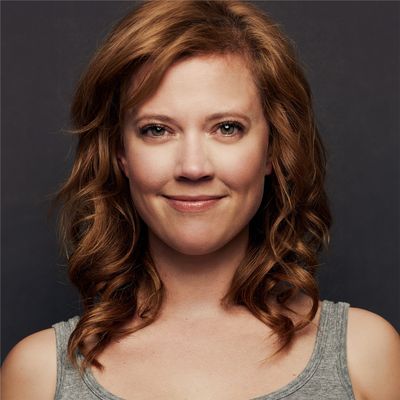
Star of Broadway’s Frozen, Patti Murin, speaks openly about the importance of mental health, coping with anxiety, and finding balance in life... Read More
From the show: Broadway Teachers Podcast
Guests
Featured Shows

About
Star of Broadway’s Frozen, Patti Murin, speaks openly about the importance of mental health, coping with anxiety, and finding balance in life.
Transcript
This transcript was automatically generated and might contain errors.
[0:04] Gordon Greenberg: Hi, I'm Gordon Greenberg.
[0:06] Pam Parasot: And I'm Pam Parasot.
[0:07] Gordon Greenberg: Welcome to the Broadway Teachers Podcast. I'm so excited for today's guest. Um, she's a friend of mine. We worked on the first production ever of Holiday Inn together, the first workshop of Tangled, the live stage musical for Disney. She originated the role of Anna on Broadway in Frozen. She has played Glinda. She has played the leading role of Estrada Jones on Broadway and loves Love's Labour's Lost in the Park for Shakespeare in the Park. She's enormously popular, she's incredibly talented, a lovely person, and very smart. And Pam, do you remember this conversation?
[0:43] Pam Parasot: Oh, I do. She was just the perfect person to talk to the teachers. I mean, she's very open about her struggle with sort of anxiety and a lot of the feelings that I think many teenagers are going through when they're working on their productions at school. And she was just so generous with her time and with her experiences and talking to the teachers. It was a great afternoon.
[1:03] Gordon Greenberg: Very much. She speaks candidly and thoughtfully. So please enjoy Patti Murin.
[1:09] Gordon Greenberg: The following was recorded live at the Broadway Teachers Workshop, an annual program that brings theater teachers together with the Broadway community for behind-the-scenes classes, workshops, intimate discussions, and Broadway shows in New York City and online. Learn more at www.broadwayteachinggroup.com.
[1:32] Gordon Greenberg: Before we get into everything great about what you're doing now, um, can we just talk a bit about where you come from and what middle school, high school was like for you? Because we are surrounded by middle school and high school and beyond theater teachers here.
[1:47] Patti Murin: Um, I grew up just about an hour or so north of here in a town called Hopewell Junction. It's just south of Poughkeepsie. Um, and I started in theater in sixth grade. They did a production of Rogers and Hammerstein's Cinderella with 150 children. So, Princess, I was one of 23 mice.
[2:05] Patti Murin: Oh, okay. So not Cinderella. I've come a long way. Yeah. Um, and I just kind of fell in love with it. I actually remember the day that I went in to audition, and my mom was like, "Can you sing?" And I was like, "Yeah, I can sing. I don't know." Like, and we had like a choice of like "Do-Re-Mi," like "Happy Birthday," you know, the basic songs, and I sang "Do-Re-Mi," and I sang from my own on the car, and she was like, "Oh, okay, I guess." Um, I also started playing the clarinet when I was in fifth grade, and I realized later on that that helped me so much with musicality and rhythm and sight reading, especially. It's, I think that is one of the kind of like unsung heroes of like being a musician that I am as a singer was because I learned the clarinet so young and I played it through senior year of high school.
[2:46] Patti Murin: So, um, marching band?
[2:48] Gordon Greenberg: No.
[2:50] Patti Murin: Our marching band was like always like it was literally it was it was band geeks always on the verge of extinction. There were like 12 people.
[2:56] Gordon Greenberg: Yeah. I forgot about that.
[2:57] Patti Murin: I was a cheerleader.
[2:58] Gordon Greenberg: Patti and I first met. Well, we met long before that, but we did a show together at Goodspeed called Band Geeks, which some of you guys might know. It's licensed by MTI now. Um, but Patti played um the non-musician in the group.
[3:12] Patti Murin: Yeah, I played the baton twirler.
[3:12] Patti Murin: Um, but I didn't realize you actually did play an instrument because we struggled to find actors who could play the instrument.
[3:21] Gordon Greenberg: Oh, I'm sorry here.
[3:22] Patti Murin: And there you are, yeah. So, um, that was uh going into middle school.
[3:27] Patti Murin: Yeah, so going into middle school, I remember auditioning for the school play, and I loved it. And I did a little bit of community theater as well. We had a couple of programs that my parents were also very supportive. So I was very, very blessed from a young age that they would drive me anywhere, you know, take me to anything. We grew up coming to see shows. They grew up, you know, they're not performers, they're just avid theater lovers. So I grew up with a great knowledge of musical theater, um, especially.
[3:50] Patti Murin: And, uh, and then I remember in eighth grade, I was like, "I don't want to try out for the musical, Bye Bye Birdie." I was like, "I want to try out for cheerleading instead." And my dad was like, he was so mad. Um, he was anti-cheerleading. He was anti a little well, I think he thought it was like, because I think he really had like so much belief in me that he really wanted me to, you know, keep going. So I did a community theater production that year instead. I was like, "It's fine, I'm still acting."
[4:12] Patti Murin: Um, and then in high school, we had such a great drama program. It wasn't part of the curriculum officially, but our club was just so good and has actually turned out a couple of other Jason Lyons, the lighting designer, comes from my drama club. Uh, guy named Troy Atkinson, who works in one of the scenic uh PRG scenic technologies. He's from uh a lack, actually, a lot of technical people have come out of that. Um, Shelly Thomas is another actress out there.
[4:37] Gordon Greenberg: Was your stage technically advanced?
[4:39] Patti Murin: Yes.
[4:40] Patti Murin: And not our, you mean like no, uh, you know, I think the like the physical production design stuff was, yes. Like we were like one of the first high schools in the country to use Vari-Lites, which I mean, how many years ago was that, you know.
[4:52] Gordon Greenberg: But like moving lights. How many of you guys have moving lights in your...
[4:54] Patti Murin: That's a lot? And does everybody use mics, like actual mics and that?
[5:02] Gordon Greenberg: Wow. Do your students have to like when they're done with their line, like give them to someone else?
[5:06] Patti Murin: Yeah, I remember that when you had a mic for the whole show, you were like, "I really made it now."
[5:16] Gordon Greenberg: That's hilarious.
[5:18] Patti Murin: It's so true. So who is your teacher?
[5:21] Patti Murin: Um, his name is Anthony Scurone. Um, he's still he ran the drama. He actually was the director of Cinderella, my sixth grade production. So coming into high school, you know, we sort of knew him and whatnot. He was from the area. He just, again, an avid theater lover. He was never an actor. He worked at AIG, the insurance company, but just like loved, loved it so much.
[5:41] Patti Murin: And he had run the drama program for, I don't know, uh, at least four to five years before I got to high school and continued to run it for years after I left high school and now works with two other high schools in the district, Beacon High School and Spackenkill High School. Um, someone else runs, I went to John Jay High School up in East Fishkill, and someone else runs that now. Um, but he's still, I mean, like they put on like three or four productions a year. It's amazing.
[6:06] Gordon Greenberg: Do you remember anything that he said or did or instilled in you as a student that made you uh sort of decide to pursue this to think that it could be a real career for you?
[6:21] Patti Murin: Yeah, you know, I think that he just had a uh a really great eye for who he was pretty sure could like go forth in this, you know, and who was maybe just doing it for fun. So he really sort of instilled a sense of discipline in a lot of us as, you know, teenagers, but also as actors. And you know, he was very, you know, we had to be prepared, we had to know our lines, we had to, you know, be ready for rehearsal. We couldn't chew gum in rehearsal, something that I never listened to, and literally just and that like he, I want to say that I think he trained us well without feeling like we were part of like, you know, a training program.
[7:00] Patti Murin: And he had a lot of stuff run by students, you know. A lot of the decisions for what was what the shows were gonna be were made by a panel of students, some of the older students that had they all had some input and he listened and he, uh, I wanna say he was also a really important thing. He was always there for us whenever we needed to say something to, you know, to ask a question. He would always understand why we would cry when we didn't get roles, you know, he would never dismiss us. Um, and so yeah, I think just overall he really kind of fostered that love for theater because he had it himself.
[7:37] Patti Murin: And again, because we were so close to the city, you know, we would sometimes we would go and take big field trips down to see shows, or sometimes we, a couple of us from the drama club, we would when we were old enough, we would take the train down and he would help us get tickets and really kind of do everything he could to make sure that we were, you know, were still loving it and having fun, but also learning about it.
[8:01] Gordon Greenberg: Yeah, we're in a room full of people that um care deeply about theater and instill the same things in their students. It's interesting how just from a personal point of view, our theater teacher was the opposite in high school and was kind of absent and sort of said, "I don't really care. If you want, you can go direct it." And that was how I started directing. Um, and yeah, he was in the back with like literally a paper bag. I guess in the long run, thanks, Mr. Swift.
[8:29] Patti Murin: Yeah.
[8:30] Gordon Greenberg: And he brought we were only 20 miles from New York and he was like, "Haven't been there in 30 years."
[8:34] Patti Murin: Oh, that was so strange.
[8:36] Gordon Greenberg: I'm like, "It's right there."
[8:37] Patti Murin: Oh my goodness.
[8:38] Gordon Greenberg: Um, so I guess it goes both ways.
[8:40] Patti Murin: Yeah.
[8:41] Gordon Greenberg: Um, how did you pick uh Syracuse?
[8:45] Patti Murin: I applied to I think five or six different schools. They were all kind of within the New York State, you know, uh Boston area. And at the end of the day, I really wanted a real college experience. I wanted to go and have the football team and I wanted to, you know, experience like the quad and stuff. But I also really wanted a great training for the quad. Like I really liked the quad there. I wanted a great training program and that, you know, uh had it really uh great people come out of it.
[9:15] Patti Murin: Um, but it also wasn't one of the ones that was like super competitive and like overhyped. You know what I mean? That like didn't make me feel like, I don't know, kind of, I don't, I don't know. It seemed like it was gonna, it wasn't you weren't going into a competitive environment immediately. I really liked what they did with um, they didn't let freshmen perform freshman year. You couldn't audition for anything you even outside of if of the department because they wanted you to concentrate on your classes and your your your um like your your base, your core. It was literally called core.
[9:44] Patti Murin: Um, and they also had us like run do run crew on shows. And also I spent a semester, I think a semester in the costume shop where I would like learn how to build costumes and stuff. And then I spent a uh I did a show as a dresser, which is like I think gives you such an amazing perspective of like when you go forth into the world, the people and what they do, you know, that are not necessarily standing on the stage, but you just get a really great sense of like the backstage and all of the people that are involved.
[10:12] Patti Murin: So I liked that we were going in as a class, not like, "Oh, we're gonna audition on like day one and like, you know, like Joni is gonna get this part and we're all gonna hate her for all freshman year," you know.
[10:21] Gordon Greenberg: It's amazing that you that you like and appreciate, and especially at that point in your life, were able to appreciate that because I actually hear frequently from people who are freshmen at Michigan or wherever, yeah. They're not even letting us perform. I I don't understand. And in trying to convey to them the importance of walking a minute in somebody else's shoes and understanding the work that goes into every aspect makes you an adult on a production, which is a notable thing about Patti from our from the first time I met her right out of school, we were doing um like a reading of something called Henry Sweet Henry, a concert of it.
[11:00] Patti Murin: It's a play they used to do at Stage Door Manor where I went to camp primarily because they could eliminate the male roles and it still made sense.
[11:14] Gordon Greenberg: So at Syracuse, can you describe a little bit what your experience was like and um how uh how that helped you kind of grow to the next level?
[11:24] Patti Murin: Yeah. Again, that first freshman year was just it was so I think important because that's that's the other thing is like the common misconception about like they're not letting us perform is like well you're performing every day. They're giving you scenes to perform, you know, or like you're learning like different techniques and it's not like they're like you cannot sing for one whole year. You know, you're still singing you're taking voice lessons.
[11:43] Patti Murin: So you know I I think that got me a lot in the mindset that's really good for auditions that like to treat it sort of like a performance as opposed to like just like a you know like kind of like a dry run through. And that was really cool too because you realize that performing is not necessarily just standing on stage in front of an audience and doing what you do. It's also we do it every day when you know we're looking for a job.
[12:02] Patti Murin: So that the freshman year was yeah it was tough. Yeah we had to take you know all the we did a lot of theater history, stagecraft, whatnot um and you know and also getting used to college was was a big part of their focus as well because most of these my family was three hours away, but so many people were coming from so many different states and adjusting and you know, just like learning how to be on their own, or if they even wanted to do this with the rest of their life.
[12:28] Patti Murin: Um, so that was good too, that they kind of gave us room for that.
[12:33] Gordon Greenberg: And was there anything about the program or your time there that surprised you about theater or what was required of uh a professional?
[12:44] Patti Murin: Oh that's a really good question. I think I'm still surprised when I I don't know if it surprised me there. I think I was too like naive and like you know what I mean, everything was new, so nothing was everything was a surprise, I guess. It still surprises me now when I get out and I'm like, oh, I know what he was talking about then. I mean, how many years ago? How many years ago? 16 years ago, 16 years ago, yeah.
[13:04] Patti Murin: So there's still things when like someone says something to me, you know, a director or something, and I'm like, oh, okay. Because at Syracuse, they have something that they call your tool belt, which is you know, not a real thing, but it's like put this in your tool belt, like all the different skills that they give you and that they're trying to teach you. And later, like, you know, a few years out of college, I was like, oh, oh, I have a tool belt. I can take that from my tool. Like it's it was so that continues to surprise me as life goes on that I'm like, oh, I was very well trained, even you know, though, through all of the, you know, the socializing and the the partying that of course happens and the the friends and the boyfriends and the drama and stuff and uh getting the roles, not getting the roles. I I still came out of that, and I still feel like I was I'm very well trained, especially in acting, especially.
[13:49] Patti Murin: What about in resilience?
[13:52] Gordon Greenberg: Ooh, yeah, yeah.
[13:53] Patti Murin: I mean, that's as no matter the first time you audition for a show, you all know, you know, you had to tell kids no and yes all the time, like every day. It's kind of a blessing in a way because in, you know, junior high and high school, when they have to audition and they have to go to that cast list and see their name and they have to deal with rejection, it really lays the groundwork for like is this a feeling that I want to get a lot? And so one when, especially teenagers or, you know, kids just out of college or high school at this stage or when they ask me for a piece of advice, I say the sooner you accept that life isn't fair, the better off you're gonna be and the happier you're gonna be because it just it isn't, it's not fair.
You know, but the more you—and I did this for years, you know, like I didn't take my own advice for the longest time. You know, you're gonna do a lot of like, oh well, you know, like she got this part, it's so unfair because I can like did that step better than her. And it's just like, it's just that's how it goes, you know, just like accept it, move on and make friends with everyone. That's another one, make friends with everyone because the more people that you love and the more the happier you're gonna be when it goes to somebody else that's your friend than to you.
[15:08] Gordon Greenberg: So that makes good sense. I mean, I think a lot of it is learning to or holding on to the joy and love that you feel in high school, once you're in the professional world. Speaking of which, so you got out of Syracuse and then what did you guys do, a showcase or what happened first?
[15:28] Patti Murin: Yeah, we did do a showcase and nothing happened from it for me, no agent, nothing. No, wait, how do we find you for Henry Sweet Henry? I had I was freelancing for a couple years after that with an agent that I think I had just gone to like one of those like actors connection things.
[15:45] Gordon Greenberg: Great.
[15:46] Patti Murin: Because I knew I because like at that point I was, I still had that, you know, I was still in the like brand new phase of like, I'm really good at this. I graduate from college. And like, and so I was like, well, I know that I can go in and I can sing and I can sing well. And I, you know, and so I picked out the agent that I wanted and went and sang for him and then freelanced with them for a bit until I finally signed with someone.
[16:03] Gordon Greenberg: And you kept going and meeting new people, which I think is an essential part of what keeps an actor going at that, especially at that point in your career.
[16:14] Patti Murin: I remember when I was an actor, I was in a Broadway show and still going to open calls.
[16:17] Gordon Greenberg: Yeah.
[16:18] Patti Murin: And with an agent. And I just thought it can't hurt.
[16:20] Gordon Greenberg: Yeah.
[16:21] Patti Murin: It probably could hurt in some ways, it turned out. Like I probably shouldn't go to open calls now. I feel like people would look at me and be like, that's kind of weird, but it's that same drive and determination and feeling that you have to keep working. I always used to think of auditions like deposits in a bank.
[16:38] Gordon Greenberg: Yeah.
[16:39] Patti Murin: And if you withdraw every time you deposit, you'll be bankrupt.
[16:41] Gordon Greenberg: Yeah.
[16:42] Patti Murin: So just trust that you're gonna put a lot more in than you're gonna take out. That was one piece of advice I got from college that I actually found very helpful in the first, you know, I don't even know how many years when I was out is do one thing for your career every day because you're gonna be doing things like babysitting and waitressing and temping and stuff that is obviously not for your career, other than the fact that you're, you know, making money to live wherever you want to live. But like one thing, you know, like learn a new song, go to—it doesn't even necessarily have to be like have one audition every day. It's like, you know, sit down with like lines that you have to learn for next week and really start to work on that.
Read a play, you know, like go see a show, like anything, anything like that. It's just do one thing every day for your career, for the career that you want, and you'll—I, it kept me fulfilled for a long time, but in those spots when I was between shows and stuff.
[17:33] Gordon Greenberg: Well, part of it is working towards your career, and part of it is just as an artist wool gathering, which is important to remember that you have to have experiences in order to cultivate a point of view on them and then bring that back to whatever it is you're doing, whether it's acting, directing or writing or designing. So often in these kinds of chats, we skip over these moments, like when you get out of school and things don't magically like in a Disney movie suddenly like knock you on the head and everything works out perfectly. You sometimes go to a showcase and don't get chosen for an agent, and sometimes have to work doing catering jobs or whatever else. I'm just curious how in those years you maintained your confidence and determination and center.
[18:25] Patti Murin: I think I had I had a pretty full life outside of auditioning for, you know, and like career, like so. I think that that kind of served me very well because I was doing other things. I had friends here, I had family here, you know. So I wasn't just sitting around sort of like waiting for the phone to ring and stuff. And like you said, it's like gathering experiences so that later on, you know, you have things to draw from, or if you want to create something of your own, you have like a something that you—things that you've done outside of, you know, just like beating down doors every day and like, you know, begging for a job or like, you know, patting the pavement. And I also I made sure that I really liked the day jobs and the survival jobs that I had. I was a tour guide on the Sex in the City bus tour for like a year and a half, which was like kind of like brilliant because I loved the show. It was basically a performance.
[19:21] Gordon Greenberg: Yes.
[19:22] Patti Murin: And it like it paid—it was good money. And so it was like great, no-brainer, flexible schedule. It was, it was just, you know, what did you have to do? Like, did you have to pretend to be them?
[19:30] Gordon Greenberg: No.
[19:33] Patti Murin: Oh god, no. No, but no dialogue. No, it was like, you know, I'd stand at the top and be like, hey, I'm Patti. We're gonna go. Thank you, welcome to the Sex in the City bus tour. We'd start up by the plaza and we'd like bust around the city and stop like three or four times.
[19:43] Gordon Greenberg: What was the best place you went?
[19:45] Patti Murin: Well, there was always a stop at a bar where we'd have cosmos if they wanted. Literally just like a huge batch of it was terrible.
[19:52] Gordon Greenberg: Did you have brunch?
[19:54] Patti Murin: But I dated one of the bartenders. So see, now I have a story in case I need to write an episode about like something for a TV show. Look at that. And like where else do they stop at a brunch place?
[20:04] Gordon Greenberg: Magnolia Bakery.
[20:05] Patti Murin: For cupcakes, yep. Um, they I think I don't know if they go to the stoop that they used for Carrie Bradshaw's stoop anymore. That was a big one. Because that's a small street, yeah. Someone's house, like so.
[20:16] Gordon Greenberg: That was a little bit of a thing.
[20:17] Patti Murin: Um, and like somewhere in Soho, I think.
[20:20] Gordon Greenberg: So you did that. What else?
[20:22] Patti Murin: What other crazy things? Babysitting, I did a lot of babysitting.
[20:26] Gordon Greenberg: I've never waited tables.
[20:27] Patti Murin: I've always—I didn't have enough. It was that round robin of like, well, you don't have any experience. Well, how do I get experience if you're not gonna hire me? And I was also kind of terrified. Um, so I did a lot of babysitting. I also I did end up temping for AIG, which Mr. Scorone, my drama teacher, he came through, yeah. It clutched it was actually someone I used to temp for over the summer between college years, and I just kind of always had a temp job to go back to. Um, but yeah, and then and then it was again more babysitting, and then I got Xanadu, which so that was your first probably show.
[21:00] Gordon Greenberg: Yeah, yay, Xanadu.
[21:03] Patti Murin: So um, how did that happen? What was that process like?
[21:05] Patti Murin: That was—I had signed with an agent at that point, right?
[21:09] Gordon Greenberg: How did that happen?
[21:11] Patti Murin: It's just everything's just a mush at some point. Um, I believe yes, I had signed with an agent at that point. And um, I just went in for like a last minute audition for a role in Xanadu, sort of like there was a very small ensemble, and it had just been announced and it was gonna start in like I don't know, three weeks or something like that. And I went in and I sang, and then I came back and I danced and roller skated, right?
[21:36] Gordon Greenberg: Yes, we had to roller skate.
[21:37] Patti Murin: Oh yeah, I hadn't roller skated in like a billion years. Um and then I got the call from my agent, and he was like, Okay, here's the thing they want to offer you a swing. So a swing is an offstage part. So I would cover, you know, the two technically the two female ensemble members, also the two male ones as sort of the second, you know, super emergency backup. And I was covering Carrie Butler as her second cover as the lead. And my agent was like, I totally understand if this isn't how—and I was like, I turned, I took a—I hung up the phone and I was like, wait, this is my Broadway debut! Are you kidding me? And I was like, all of a sudden I was like, what are I talking about? I'm not gonna take it.
Of course I am. So and that was a great way to do that. That's why they have you over a barrel every time, like and any time you get a job and your agent like wants to be proud for you and says, I understand if this is not how you want to make your debut, if you'd prefer to keep babysitting and serving food on the Sex in the City bus tour, go for it.
[22:29] Patti Murin: I had this really great gig of the Sex in the City bus tour right now. I'm just not willing to give it up.
[22:35] Gordon Greenberg: And you ended up with a great Australian accent.
[22:39] Patti Murin: I did a great terrible Australian accent, which I probably could not do anymore.
[22:44] Gordon Greenberg: And a husband?
[22:45] Patti Murin: The first one.
[22:46] Gordon Greenberg: First husband.
[22:48] Patti Murin: Yeah, yeah.
[22:49] Gordon Greenberg: Yeah, yeah.
[22:51] Patti Murin: Life experience, wool gathering.
[22:53] Patti Murin: Yeah, seriously. I mean, truly, truly. Like, like I—it's I'm gonna write a show about it someday. And follow that, that lasted quite a while.
[23:00] Gordon Greenberg: It was a year and a half.
[23:01] Patti Murin: A year of—oh, the marriage?
[23:03] Gordon Greenberg: Yeah, no.
[23:04] Patti Murin: God, I don't even know. Three, three and a half-ish years, I guess.
[23:07] Gordon Greenberg: Yeah.
[23:07] Patti Murin: So the show lasted.
[23:08] Gordon Greenberg: It was an excellent practice round.
[23:12] Patti Murin: And the show was a year and a half.
[23:14] Gordon Greenberg: A year and a half, yes.
[23:15] Patti Murin: Which was a lot longer than people expected.
[23:16] Gordon Greenberg: Well, from week to week, we were like, we're not making any money. How are we still open?
[23:21] Patti Murin: So that was like a lesson. A show that opens and closes quickly is a lesson I should have learned that time around, but didn't because it didn't. Um, but then I learned that on the next one.
[23:32] Gordon Greenberg: So the next one was—well, I'll just say it. It was called Lissa Strata Jones because I saw it downtown.
[23:38] Patti Murin: You guys saw it?
[23:40] Gordon Greenberg: Awesome.
[23:41] Patti Murin: See, see dad, cheerleading was for a reason. It all paid off.
[23:45] Gordon Greenberg: Yeah.
[23:45] Patti Murin: I saw it downtown at Judson Gym when it was literally on a basketball court, which I thought was such a cool idea and very doable at most schools. But it was so successful there and so well received by the New York Times that it then moved to Broadway and it became Patty's starring originating first great Broadway show.
[24:06] Gordon Greenberg: Yeah, um, she was amazing in it and got rave reviews, and it lasted I think four weeks of previews and then three weeks, seven weeks.
[24:15] Patti Murin: Um, but it was still a great experience, right?
[24:18] Gordon Greenberg: I mean, yes, absolutely. I mean, some of my best friends in the world are from there, and it was it was so exciting to be.
[24:25] Patti Murin: Lindsay Nicole Chambers.
[24:26] Gordon Greenberg: Lindsay Nicole Chambers, yes, exactly. She's in my Huey Lewis musical.
[24:28] Patti Murin: Oh my god.
[24:30] Gordon Greenberg: And like I it was it was one of those where we're like, oh my god, like I'm like snoring in a Broadway show. This is so crazy. And so then when we closed, like I think I was heartbroken about that for longer than the dissolving of my first marriage, to be totally honest. Because it was one of those things where you're like, it just—you can't go anywhere from there, you know. It's not like, oh, I'm gonna go and do this like somewhere else, because you're pro—a show that runs that short, you're not gonna do it somewhere else.
[24:57] Gordon Greenberg: Um, as it turns out, I mean, your next—the next big show that you did was huge as far as I was concerned.
[25:05] Patti Murin: It was a brilliant adaptation of Love's Labor's Lost.
[25:08] Gordon Greenberg: Yes, that was after, well, the first I did the tour of Wicked.
[25:10] Patti Murin: Oh, Wicked.
[25:11] Gordon Greenberg: For like seven years.
[25:11] Patti Murin: That's a very big show, I understand.
[25:12] Gordon Greenberg: That is—that is actually one of the—I have to say, one of the good things that came out of Lissa Strata Jones is because they were like, oh, she'd be a good Glinda. And so I just got a call. I literally remember when when Estrata closed, I was like, I just want Wicked to call. And like five months later, they caught—they called and I was like, oh, neat, cool.
[25:29] Patti Murin: So you got to be Glinda around the country.
[25:32] Gordon Greenberg: Yeah, which is wonderful.
[25:34] Patti Murin: Yep.
[25:34] Gordon Greenberg: You learned how to sing soprano, which was geez.
[25:37] Patti Murin: Yeah.
[25:38] Gordon Greenberg: Um, but it came in handy.
[25:40] Patti Murin: But it came in handy. Um, and yeah, and then when I got home from that, yes, that's when I—that's when I—this is Shakespeare in the park.
[25:48] Gordon Greenberg: Um, so Alex Timbers, who's now directing Moulin Rouge and did Bloody Andrew Jackson, Peter and the Star Catcher is a really brilliant guy.
[25:55] Patti Murin: Um, he and Michael Friedman, um, who we lost last year very tragically, um, created this really ingenious and beautiful telling of Love's Labor's Lost that trans—well, transfers all the action to a college campus.
[26:13] Gordon Greenberg: Yep.
[26:13] Patti Murin: Oh, a college reunion, yeah.
[26:15] Gordon Greenberg: So you were a former cheerleader now, right?
[26:19] Patti Murin: I mean, literally, my name was Princess. Like I just can't get away from it.
[26:23] Gordon Greenberg: Um, and that was in the park, and it was incredible. And I believe you guys were—well, I know you recorded because it was in the middle of the Halloween workshop.
[26:30] Gordon Greenberg: We had to let you go to record it.
[26:31] Patti Murin: Yep.
[26:32] Gordon Greenberg: Um, and it's brilliant. I highly recommend it. I don't even know who licenses it, I'm assuming.
[26:36] Patti Murin: Yeah, I don't either.
[26:37] Gordon Greenberg: It might be MTI, I hope.
[26:39] Patti Murin: Um, it's so good.
[26:40] Gordon Greenberg: Yeah.
[26:41] Patti Murin: But what was that like?
[26:42] Gordon Greenberg: Um, because you met someone else doing that.
[26:45] Patti Murin: I did. Well, I didn't meet him. This was literally I came off the Wicked tour and got a divorce. And so the entire audition process for Love's Labor's was—I don't remember a lot of it because I was completely dealing with that emotionally. And I don't know how Alex and Michael saw whatever it was they saw in me when I came in the room, but they were like, oh yeah, okay. And I was like, I don't even know what I just did. It was probably that.
[27:06] Gordon Greenberg: Probably, yeah.
[27:07] Patti Murin: I was probably just so raw and like, you know, open and just willing to sort of do whatever. And um, and so I got cast in that, and then um I was playing not opposite, but my old friend Colin Donnell, who he—we'd known each other for oh my god, at that point, maybe seven and a half years, I guess. We had been introduced years before, and he was a fellow actor and he was also going to be doing it.
[27:29] Patti Murin: And I'd gotten divorced, he had just gotten killed off his TV show, and we were both in very like, you know, like kind of angry places. Um we uh we started we started dating during that. So it was we call it the summer of love because it was such a this the whole experience was so amazing professionally to do. Oh, it's such a great show because it really does combine like the Shakespearean language with like really amazing cool music. Um loves a gun. So good. Oh, so it's so good. Um, and so yeah, that was I thought was it. For some reason I had mixed up in my head that he was in it because when I went to see it, you two were together like right afterwards, but he was clearly just waiting for you.
Wait, uh Colin was in the middle. No, he was in it. Oh, he wasn't. I was like, of course he was in it. Oh, yeah, we s we we we went through a heat wave together. I was like, this guy sweats a lot. I really have to decide if it's something that I'm committing to. You find out a lot when you're performing outside. Oh my goodness, yes. Yeah. But you had you had the Muni to prepare you. Yep. You played a few princesses there too. Princesses print uh Princess Ariel, yep. Um, I guess it's the only one. I did Beauty and the Beast, which was another princess. Yeah, that's true. A lot of princesses. So after that, um, Love's Labors, um uh we did Holiday In, which uh Patty had in the first workshop played a different role opposite Laura Bananti, and then ended up taking that role and helping us grow that to the next level.
And then she suddenly we turned around and she was a princess in a Disney show on Broadway. Yeah. Um and this, I mean, was a long, harrowing, difficult process. So would you mind like just unpacking that a little bit, like how that happened? Um, so Alex Timbers, who directed Love's Labor's Lost, was the original director of Frozen. Um they were doing a two-week reading and they were going through proper audition process for it, having everyone, they weren't just doing the thing where they'd call their friends and you know, because they were doing it for the the the big names at Disney. And so I went in and I auditioned, and I was like, this is really, really right for me. And uh and Bobby and Kristen had been very, very vocal about how they wanted to work with me.
And I was like, I feel like this could be my thing. I feel like this might be like the the thing. And I got cast in the reading. It was a two-week just like stands and stands and music books and stuff, and uh we did that. And then after that, well, we knew there was gonna be a a a development lab in the fall for four weeks. And between May and November, um Alex was let go from the project, and so was the choreographer, and so was the scenic designer and the costume designer. So they went through a whole big thing. And I was like, okay, all right. Well, I don't know how this is gonna go. But um, Kristen called me, Kristen Lopez. Um, she called me and she probably a couple months before it, she was like, We want you to do the workshop.
The director has seen the video, you don't have to come back in an audition. He he really loves you, he wants to work with you. And I was like, Okay, well, that's really great. Sweet of the four weeks. Then I was like, Oh, I left that all out on the table. Like, I don't know what else I could do to, you know, get the because the next step was another lab, but that was going to be the principals who went to Denver for the out of town and who did the show here. And presumably, hopefully. Yes, yeah. Well, if I was offered the next lab, it would have been for everything. Um, so uh, so then it it they were like, well, he just kind of wants to do his due diligence because he didn't do auditions for this, you know, he wants to do it.
And I was like, okay, neat cool. Um, which is again, it's another one that's a resilience thing. It's like even when you think you can do something from day one and not end up doing it on day 10, you know, or you know, or you can be the one that steps in on day 10 and like you're like, sorry, girl from day one. It it works both ways. It's the same thing, like life isn't fair. It's like all kind of evens out in the end. Um, and so that is true, and I think that's a good thing to hold on to because almost any time, you know, a door closes, a window opens, as my mom used to say. But um, it's true, things do balance out, and I've I've replaced people on shows as a director, and I've been replaced.
So that's the that's like something important, also, I think carry around because if you're the person that just keeps hopping from thing to thing and never being replaced, you don't really experience that side of the real side of the street. Yeah, I don't want to work with that person. I don't think anybody does. Yeah, that it's usually it takes like one moment of real life to just kind of give you a more balanced adult perspective. Yeah, perspective. That's exactly what it is. And so this whole the whole frozen thing. So I was waiting for like three months, and I uh I lucky for me, my my I had married Colin. Um, and we were out in Chicago because he's on the very beautiful wedding. Very beautiful.
It's very beautiful. And we were out in Chicago because he's on a TV show called Chicago Med. And I was doing a big guest arc that that season for like with like 18 episodes or something. And so it was super, I was like, well, at least I have a job, you know, at least I'm doing something. And and so while we were waiting, um, we I found out that I was pregnant. And uh it was we're not trying. This is not like a thing. And so we went through like a couple weeks of like, okay, well, I have to like this is what we're doing now. And so um, so I I didn't, you know, I didn't tell anyone at at Disney. I knew they were still auditioning, they were still going through the thing. I still didn't know if it was a yes or a no. I didn't want to, you know, I know how these things go.
And I was like, let's just like keep it quiet for now. And so then we unfortunately uh eight weeks we we lost the baby, and uh, you know, which is one of the most utterly devastating things that's ever happened to me, which I think is what it's that perspective thing again, you know. And they called and they said, Well, we really want to have you come back to audition like a mix and match day. And I thought about it and I said no. And it was the first time I said no in my life to something. And it was like I was like, oh my god, I actually have control over my own life. And it was it was you know, partly because of what I what I was dealing with, but I was like, I'm not in the place to do this right now, I don't care about that right now.
And I just wanted to be, you know, with my husband and dealing with what we were dealing with. And they called back a week later, the day after the mix and match, and they were like, here's the deal. Um, Casey Leedy is now gonna be playing Elsa, and we literally can't offer you the part until you're in a room and you read a scene together. So, in so many words, they told me, you know, like if we fly you here and you do this, you will get the offer. They didn't say that, but they were like, please come here. So I was like, Well, I mean, what what's better that you know what's I was still kind of in a you know, a place then we had to rechange our minds and be like, okay, I guess we're putting off having kids again for a little while.
And so I flew back here and read with Casey and and got on a plane, and as I was sitting on the plane ready to go back to Chicago, Michael texted me and he was like, Yeah, you're you're gonna be Ana. You got it, yeah. It's amazing, yeah. So it has. It's been it's been a lot, it's been a lot career-wise, but it's also been a lot, you know, personally and emotionally, and also like it's that having a full life thing again, you know, even if it's the the parts of that are you know devastating and things I would never wish upon anyone else. It's it it serves me now because I could go into it and be like, this is a play. This is a play. Yes, it's a very, very expensive play, and a lot of people are like spending a lot of money on it.
But when it comes down to it, like it's just a musical. It's true. You definitely by design get sucked into it, and it you become myopic. That's your whole world. Yes. Um, and I guess in some ways it's comforting because that's all you have to worry about. I'm just thinking about this, I'm not thinking about big questions of life. Um, but then you have to figure out how to balance it so that you do you are able to step back, yeah, recognize it for what it is. Otherwise, you become overwhelmed with things like anxiety that that then cripple you and don't allow you to just kind of approach it with your full heart. It's I'm really actually sorry. As I'm talking, I'm like, oh wow, like a really big theme that I keep talking about is having a full life and doing other things, you know, like in high school and doing other things, and in college wanting to go somewhere where I got the full experience, not just the drama experience and you know, jobs out of college, having other friends.
And so I feel like that may be something very important to encourage your students to do. Because in high school, you know, I ran track and I was a cheerleader and I was on, you know, I was like treasurer of my class, and like I did the I did a lot of stuff. And I think it kept me sane, a little more sane than you know, a lot of a lot of kids who are only focusing on on basketball or only focusing on drama or you know, um it's interesting though, because you do have to have the wherewithal and the the focus to become excellent at something, but at the same time, then to have the breadth and scope. So I guess you are all expert at figuring out where your student is at any one time and what they need to hear, whether it's lighten up or get it together.
Um it it almost never uh hurts to, as the English say, let's just get on with it. Um that's my favorite expression in England. I'm sure you heard it from Michael. Yeah, granted. Like whenever things in England, uh this is just my observation from directing in London. Everyone there wants to be a professor. They all wanna talk about everything, circles and circles and circles, before they ever try anything. It's crazy and it drives me nuts. And so I finally learned like, can we just get on with it? Yeah, just see what it is. Um, but here, I I feel like everyone wants to be a star. So almost any question you get from an actor is how we can get them further down center or how we can manipulate the scene to make it more about this character.
Yeah. And so I recognize that that's where the question's coming from. Yeah, I have a center magnet that we call it. Like Patty around center again. So put a big X down center. Um so uh you you spoke out um publicly about your battles with anxiety. And uh I thought not only because you're a spectacular person and artist, but because you're so honest and open, uh, you would be a great role model and a great um sounding board for this group of uh really wonderful people who all work with students probably suffering from similar uh similar issues. So can you just talk a bit about that and when you first became aware of it and when you first became able to articulate what it was? Um, that was probably my junior year of college.
Um, when I I it was it was after a breakup with a boyfriend, and I was like, it just got to be too long that I was like either sleeping all the time or not sleeping at all and going grocery shopping at one o'clock in the morning, and just kind of like, you know, that I was like, this is not over this dumb guy. Like he's not worth this. Something else is happening here. So I went to talk to one of my professors, and she was like, Have you ever considered that you might be clinically depressed? And I was like, no, I haven't considered that, but that's an because this is also like, I don't want to say right at the advent of the internet, but this is like right at the like advent of the internet, you know.
Like, this was like you couldn't just Google anything on your phone, you know. So you you have to actually seek out help or know where to turn for it. Um, and so luckily for me, she kind of steered me the right direction. She was the first one who you know who was like, well, here's you know, why don't you talk to your parents, go to the the health center and find a therapist? And and so I went on Zoloft in college. Um at that point, I I don't know, I feel like I wasn't at a stable enough place in my life to really notice the difference of it. I'm sure it did help, but I I don't know that yeah, that I I realized it. Um, and I went off it right after college. I I think I kind of went on and off it for a bit, and I went off it finally in like 2007, I want to say.
And Q Zanadu, first marriage, wicked tour, meeting Colin, and then right, I about a week before we started uh rehearsals for holiday and up in Connecticut, I was like, Colin, I think I want to go back on Zoloft because I had been doing that thing for years of like I want to, it's fine, I can do this on my own. It's totally I can I don't need medication, I don't want to be on drugs, it's fine. And then like now I'm one of the biggest advocates for like if you have diabetes, are you gonna fight it on your own? No, it's a disease, it's something is not working in inside your brain, and it's not about like how happy your life is or how sad your life is. So I went on it and the side effects were horrifying.
I wanted to quit so bad, but I still remember the moment when I looked at Colin and I was like, I was like, I feel different. Am I different? And he was like, Yeah. Yeah, so it works. Um, and the this uh anxiety issue. How is that different from the depression? And how did that uh sort of uh come to be? The depression was I realized that it had been affecting me a lot more than I thought because I was very, very like anxious about forgetting my lines during the wicked tour. And to the point where I would like say them in my head right before I said them on stage. So like I was never really present. You know what I mean? I was never acting, I was just saying things with feeling that I hoped was appropriate.
And so I remember when we were doing holiday, and that was the first time it clicked that I was like, oh my god, this it's it's a musical. It seems so easy for you. Yeah, it's like, what if I forget a line? I forget a line. We move on with our life, we laugh about it later, and we just you know, it's it's okay. Like nothing, I haven't ruined the world, I haven't ruined these people's nights. People love live theater, they love that stuff.
[41:09] Patti Murin: Um so that was, you know, that was the first the first sentence. That's a very difficult thing to embrace. And it's something I try to say to actors and certainly students, is you first have to acknowledge that you're not going to be perfect before you can be good. Um and anyone who comes on trying to be perfect will kill themselves and kill any spirit within themselves. You're you're not a human then. You're trying to be perfect. Right. Which is antithetical to why we go to theater to see flaws. Exactly, yeah, yeah. Um, and so uh so I and it that was like that was my anxiety, and you know, sort of manifesting itself in performance anxiety because I've come to realize recently that they're two very different things and they they have to be differentiated because it's a different course of action for both, I think.
Um so, but it was because, you know, I I just remember like getting those like instincts to like get mad at Colin for nothing, and then I my and then I would be like, No, no, it's not important. So it sort of yeah, that was like the real life way I handled it. And I was just, I mean, I was not sleeping at night and I was nauseous all the time. And, you know, but like after a month, I was just like, oh, this is like literally life changing, life changing.
[42:23] Gordon Greenberg: And did that cure the anxiety part?
[42:26] Patti Murin: The anxiety part kind of really started, I wanna say when we were in Denver for Frozen. Um, because this is the biggest thing I've ever done from the ground up. It's a lot of pressure. It's a lot of people asking for things of you and parts of you and for you to do things, and it's learning how to say no as a performer, but also as a woman in a world where we're kind of taught that we can't say no to a lot of stuff. Um, and so I had a panic attack in Denver one day. And I was like, I had never had something like that before. And it was on a Tuesday, and so of course we had a show that night. And I went to Casey's, I went to her hotel room and she, you know, let me sleep in her bed and made me soup and was like, it's okay.
And she was like, you can call out. And I was like, I'm not gonna call out. But it was one of the worst performances I've ever had to get myself through because it's just the thing about a panic attack, it's not, it's not like, oh, breathe in this paper bag, you'll get over it. It's a two or three day process. You know, it's the the start of it, which as soon as it starts, you're like, oh crap. All right, and you have to kind of clear your schedule for the next couple of days if you can, and like, you know, like let your loved one know and just sort of like find your safe things. Um, so that was the first time that happened. Then I had another one, um, a Tuesday night before a Tuesday before the show.
And I was like, you know what? I'm not gonna do the show tonight. I was awful. I I had already called out of the show before, you know, I knew my standby was good to go. She was great. And so I called out and I was out for three performances, and I was like, I needed a mental health break from Frozen. Because it was after we opened, but before all the Tony announcements and stuff. So it was kind of in a weird spot of like they're still doing some press and you know, like other stuff, but they're still like I was still being pulled in every direction.
[44:12] Patti Murin: And there was very little that I felt like I could say no to. Um, and so I I was like, I'm gonna take a mental health day. Like, I'm gonna take a couple of those. And it was the most magical thing I've ever done. It was absolutely incredible. And it's like, you know, we work six days a week. We work eight shows a week, and it's like even if, and then we spend the other 21 hours a day making sure that we can do the show that night. Um, and so it's it like really reminded me, I was like, it this is okay. This is all right. Like, this is my this is my thing that I deal with. Some people get a lot of sinus infections. I have anxiety attacks. Like, that's you know, you wouldn't force someone to go on who like literally can't, like, you know, like doesn't have any sort of air movement through their nose and can't sing.
So um, and so the next day I posted about it on Instagram, and I didn't really, I didn't even think about it, honestly. I didn't think like, oh, I'm gonna inspire a lot of people right now. I just kind of did it because I was like, I think this is important, and it's important for me to kind of like just be honest. Because if this is gonna be something I'm dealing with from here on out, this is something I want to be honest with the people that come and see the show about. Like, this is something I deal with, this is how I deal with it. There you go. Do with it what you will. And it got picked up by like so many different like international news outlets and so many like people on Instagram and Facebook and and Twitter and whatnot.
I just got such a an overwhelmingly wonderful response from so many people who are like, I I do I have this too. I have this too. And to see that someone whose life is perfect, you know, who's starring on Broadway and as a Disney princess, literally a Disney princess, has this amazing husband, two really cute dogs, is like, no, this is this is like it's okay, it doesn't, it's not about what you're doing with your life or or how you're you know handling things. It's it's really about this is just something that we have been given to deal with. And that's it's you, you know, we're just like a something just a little bit off in our brains, and that is that is okay. And so it's been uh I get I have to say, most of the I get a lot of letters at the theater, a lot of letters, and it's not even stuff from people asking for anything back or whatever. They just want to be heard and they just want to know that someone is reading their story, and it's mostly I want to say like 14 to 18-year-old girls.
[46:30] Gordon Greenberg: Yep. Amazing.
[46:36] Patti Murin: Well, let's open it up to questions because we only have a little bit of time left.
[46:41] Gordon Greenberg: Um, yes.
[46:47] Audience Member: Thank you so much for what you shared. It was so important because I have so many students uh dealing with anxiety and not sleeping. And I I think if I share with them what you shared, it will be very helpful.
[46:57] Patti Murin: Absolutely. It's it's it I think the great thing about them knowing is that when I was between 14 and 18, I didn't have a name for it. I didn't know what it was. So I'm I'm choosing to be very hopeful that because they at least know that this has a name, that that is already like we're moving in the right direction in terms of really normalizing it and making it not a stigma anymore.
[47:20] Gordon Greenberg: Isn't it interesting that just giving something a name uh sort of unburdens you just a little bit?
[47:26] Patti Murin: Um there was I I think I was just reading in the Times that there was a study about people with uh broader vocabularies um who experienced slightly less depression and less issues because they were able to very specifically identify how they were feeling. Uh in other words the difference between I just feel awful and I feel hopeless right now. I feel like there's no point in me doing, you know, and but that is hard to say because they're ugly feelings that you don't want to name. And they sound like, you know, like we're I'm sure many of you were told, and I'm sure many of your students are told, you're just being dramatic.
[47:58] Audience Member: Oof.
[48:00] Gordon Greenberg: Um anyone else have a question here?
[48:02] Audience Member: Yes, ma'am.
[48:03] Gordon Greenberg: Do you want to just stand and say if you're very loud, yeah. Projection.
[48:07] Audience Member: One of my favorite students about this here. And if I have one.
[48:15] Patti Murin: Oh gosh, beware of marathon your freshman year.
[48:20] Audience Member: No.
[48:21] Patti Murin: Literally, you're gonna say those words to him, and he's gonna be thinking, I don't know what that means. I'm gonna get started, he's gonna be like, oh, yeah, okay, yep, yep. Don't spend too much time there. That's for sophomore year.
[48:28] Audience Member: Um, other than that, just I get it.
[48:30] Patti Murin: Sounds like a bar.
[48:30] Audience Member: It's a drama part.
[48:32] Patti Murin: Oh, a drama part. Yep. Uh-huh.
[48:34] Audience Member: Um, you know, just do your best to always make it to your 830 classes, you know, uh because they're the they're gonna be the best ones, and you're gonna feel like they're putting so much on you and so much like stuff to do. But so many of us have gotten through it and come out like with you know, incredible skills and stuff.
[48:53] Patti Murin: And so don't get don't feel like you're on like try not to get underwater too much. And also the professors are really incredible. You just have to know, let them know. Sign like sign up for office hours. Don't be afraid to go and talk to them and you know, tell them whatever, anything, whatever's on your mind, questions, yeah.
[49:11] Audience Member: And pack a scarf, it's really cold there.
[49:13] Patti Murin: Yeah, it's really freaky. Also, avoid the bourbon chicken at the mall.
[49:17] Audience Member: Yeah.
[49:22] Patti Murin: Um, how do I keep the part fresh night after night? That is that's something actually because I haven't done a long-running show for uh since Wicked, probably for seven months. Uh the it's kind of amazes me how much deeper you can kind of keep going. And you sort of like realize you're like, oh my god, I've just been saying this one particular line. I've been focusing on all these other things, but like, oh, this one line, like that, I I don't have to say it like that. It's sort of like the maybe the the like constant realization that you're like, oh, I can say this slightly differently. Oh, like it's sort of like you're like, um, what am I trying to say? It's it's it's like a ham, not a hamster wheel, but like you're like a goldfish who like keeps forgetting you every time you swim around the thing, and then you're like, oh, I can do this differently. You're like funny mirrors.
[50:07] Patti Murin: Like when you wake up with no memory of what happened before, or with a memory, but yet no memory. So you're constantly surprised by like, oh my gosh, I this is this is part of my job is actually to keep finding new ways to do it. And also the people, you know, the people around you is if they're still doing it, then you still want to do it. And I have to say, in long running shows, it's pretty, it's great, you know, because you get understudies to go on. And so you actually get to kind of like test your skills out amongst other people. You're like, oh, I really have to listen now. Like you feel like you're doing something. You're like, I'm acting today. Like, you know, they did a really great job of uh everyone, Bobby and Kristen, who, you know, they wrote the music for the the film and the show, Jen Lee, who wrote the book and co-directed the film, and she wrote the book for the show. They did a really great job of of making us feel like we were telling Frozen the story.
[50:53] Patti Murin: The story, the story with more stuff in it, more music, more scenes, you know, as opposed to retelling Frozen the brand. Like there was never, I never felt like inside the rehearsal room, at least, that we were it, they they just wanted to make sure it was clear. They they always looked at it like someone was seeing it for the first time because it's really incredible how many people have never seen the movie Frozen. So you are doing it for people who've never seen it for the first time. Um, and also, you know, it's they also like gently remind us that like well, they just did the voices for it, you know. Like you, we've chosen all of you because you fit we liked how you physicalize it. So that was neat to you know, be like they laid such great groundwork with the the vocalizations of it and whatnot, but then we got to take the character that really is or Jen Lee's children, you know, like it's her, those are her babies.
[51:47] Patti Murin: Like, so having her around. I also I never went back and watched the movie after I got this because I was like, why would I watch the movie when I have Kristen and Bobby and Jen right in front of me? Like I can be like, why did you ever say this line? Or like, why is so that was also really helpful that they weren't like go watch the movie again, you know? Which is interesting because we're now in a world where any of your students, when they get a role, can just go watch it on YouTube for the most part.
[52:12] Gordon Greenberg: Yeah.
[52:12] Patti Murin: How do you do you encourage them or discourage them?
[52:15] Gordon Greenberg: Oh, very smart.
[52:17] Patti Murin: Yeah, I I imagine that's tempting.
[52:20] Audience Member: Yeah, yes.
[52:22] Patti Murin: My dream role right now, I've been literally saying this all over town, and I'm going to keep saying it. I do believe that they're finally developing a Princess Bride musical.
[52:29] Audience Member: Oh, yeah.
[52:30] Patti Murin: And I want to do it with my husband so bad.
[52:34] Audience Member: Yeah.
[52:35] Patti Murin: Other than that, it's like writing and starring in my own my own sitcom is is kind of next up on the horizon, I think.
[52:41] Gordon Greenberg: She's gonna be writing next.
[52:42] Patti Murin: There's there's not a ton of liberty, I would say. Like you can't be like, I'm gonna change my blocking today. Like, because a lot of it, and it's a lot of it is because you know, it's you all know, like it's for lighting and and sound, and you know, but um we have a resident director who is there, and so he'll watch the show a few times a week and kind of like, you know, be like, because you know, as you keep doing something, you do want to keep like playing with it. But there's a way of playing with it where it's actually evolving and getting deeper, and there's a way of playing it where you're like, that's literally not this is not what was directed in the first place.
[53:12] Gordon Greenberg: Playing off the rails.
[53:12] Patti Murin: Yes. So they're they're there to keep us in check. The stage manager is there to keep us in check in terms of technical stuff. Um, you know, like if you feel like changing your blocking, she'll be like, don't do that. Um so they keep a pretty tight reign, but they're they're really good about understanding that like, you know, if you have different inflections or a different, you know, expression on your face, or if you're just saying a line in a different way because you've discovered something new, they're like, yeah, great.
[53:39] Patti Murin: I'm one of those that I like to I like to learn it on my feet. Um, I like to sort of be surprised by it because I always I also feel like no one's um no one's experience is the same in this business. You know, even if I'm standing next to, you know, my friend who's also five foot four and has curly, you know, brownish red hair and hazel eyes and belts and can also sing some soprano, our exp, even though we're the same type and this, you know, we're we're going through a lot of the same things, completely different experiences.
[54:08] Patti Murin: So I've always thought that like naive is better because it always feels like beginner's luck when something goes right. And that's a good feeling.
[54:15] Gordon Greenberg: Yeah.
[54:16] Patti Murin: All right, guys. Why don't we thank Patty for the video?
[54:18] Gordon Greenberg: Thank you so much.
[54:23] Announcer: You've been listening to the Broadway Teachers Podcast, recorded live at the Broadway Teachers Workshop, an annual program that brings theater teachers together with the Broadway community for behind the scenes classes, workshops, intimate discussions, and Broadway shows in New York City and online. Learn more at www.broadwayteachinggroup.com.
© Broadway Podcast Network, All Rights Reserved