

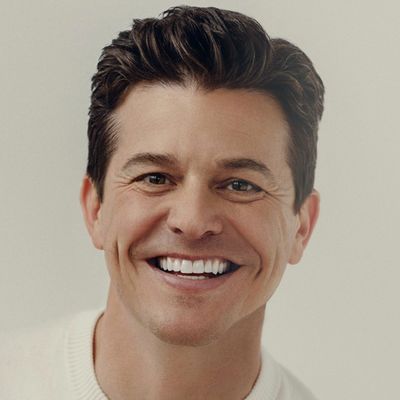
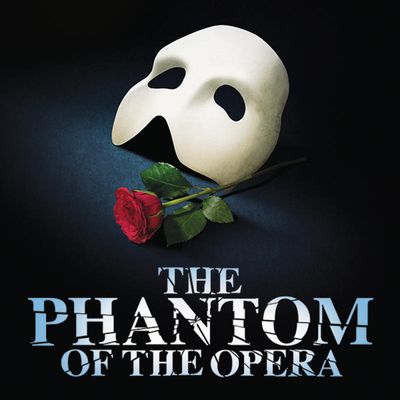
Forbach joined the Las Vegas cast of The Phantom of the Opera understudying the roles of Raoul and Monsieur Reyer. In 2009, Forbach played the dual role of Rapunzel's Prince and The Wolf in Into the Woods at the Wells Fargo Pavilion... Read More
From the show: Built For The Stage Podcast
Guests
Featured Shows
About
Forbach joined the Las Vegas cast of The Phantom of the Opera understudying the roles of Raoul and Monsieur Reyer. In 2009, Forbach played the dual role of Rapunzel's Prince and The Wolf in Into the Woods at the Wells Fargo Pavilion. In 2012, Forbach joined the 25th Anniversary national tour cast of Les Misérables as Feuilly and an understudy for Enjolras. In 2024, it was announced that Forbach will make his film directorial debut with the short thriller film The Delicate Medium from a screenplay he wrote, with production set to begin in January 2025.
Instagram: @jasonforbach
For a free Broadway fitness program visit:
Transcript
This transcript was automatically generated and might contain errors.
[0:11] Joe Rosko: Hey, what's going on? Welcome to Built for the Stage Podcast. This is Joe Rosko, founder and host of Built for the Stage, Broadway's number one fitness platform with clients in over 20 Broadway shows, the West End, Tokyo Disney, Australia, collegiate stages across the country. We are your one-stop shop for all things theater and fitness. Check us out, builtforthestage.com. You can work with me on an interactive fitness app doing your own Broadway Fitness program, BuiltForTheStage.com. Special thanks to BPN, Broadway Podcast Network for producing BFTS Podcast. All right, let's get on to our special guest. Special guest is always, uh, they're currently in A WONDERFUL WORLD. Um, they're up there as a crooner.
I'm excited to see what songs they get to sing, uh, up on the stage. Um, but yeah, they're in previews right now. We probably have lots of exciting stories to talk about, like copy pasting new things into the script or changes of blocking or who knows what's going on. Um, but you've also seen our guest, uh, recently in the revival of Into the Woods, uh, Phantom. You know our guest. Please welcome Jason Forbach.
[1:28] Jason Forbach: Hey, hey, hey, hey, hey Joe, how are you? Welcome to the podcast. Thanks so much for being on with us. Uh, exciting times. So we were chatting a little bit before we, uh, hit record, and you got my, uh, intrigue popping of like what, what might be these last second things you're getting from stage management or your director or whomever saying like this is cut, this is in, this is a change. Anything crazy going on so far in previews?
[1:59] Jason Forbach: Right, right, right. It's a wild time. I mean, this is a wholly original show that they're bringing to New York, and granted they did A WONDERFUL WORLD in Louisiana and Chicago, and they still are like figuring out what it is, changing the music, changing the script. Uh, you know, like the whole, we had a very long process, and now we're in previews, and it's going great. Audiences are really receiving it beautifully. But yeah, to your point, it's like, I don't know if people know the grind of it where it's like, you know, all we're there, like as soon as we're done here, I'm gonna go to the theater and we're gonna implement changes that we'll probably just do tonight in front of a crowd for the first time really.
And that's crazy. It's crazy and it's exciting and it keeps you on your toes, but it is truly figuring out, it's like the last piece of the puzzle is like seeing how an audience responds to stuff. You know, it's like you can kind of figure it out, figure out the structure, figure out what songs work, what keys work, uh, but there's still like the last element, which is like the conversation we have with the audience. And so that's like the last teaching tool, and we're implementing that every day. And the kids in the show who are just dancing their butts off and are amazing. We have choreography by Ricky Trips, he's fantastic. They did one of, uh, the tap numbers on Good Morning America this morning, so check that out. But it's really, really cool. Yeah, it's fun to be a part of something new on Broadway.
[3:28] Joe Rosko: Okay, very cool. Uh, and is this something you embrace or does it give you anxiety? If it does, how do you overcome that anxiety of like the last second changes like you're saying and then having to do it in front of an audience?
[3:41] Jason Forbach: You know, I feel like 20 years ago I would have been a basket case. If I was, um, younger or just starting out, I would be fully having like an anxiety attack. But now it's like I, it's, I, I'm kind of familiar with how varied these pressures are in this business. Um, so not too terribly. Not, I, I'm doing okay, and honestly, like what I'm doing in the show is a very light lift, you know. Yeah, like James Monroe Eigelhart is such a, he's so incredible in this role, and he's such a sweet guy. I mean, and this is a long show that he really doesn't leave the stage. So I think I'm like, I check in with him, I'm like, how are you doing? Yeah, yeah. But he carries the show magnificently, and so yeah, everyone's kind of like, I think it's also because you like look around and you like the people that you're surrounded by and you trust them, and that helps with that energy as well, you know what I mean?
[4:45] Joe Rosko: Right, right. Okay, so like I mentioned in the intro, you're slated in the cast list as crooner. So yeah, any popular songs that we know of that you get to sing during the show?
[4:58] Jason Forbach: Yeah, it's interesting. Uh, this crooner, uh, he's kind of like this amalgam of Danny Kaye, uh, Bing Crosby, Sinatra, you know, like Louis Armstrong would do, would be paired with these crooners in his like Hollywood era. And, um, and it was always interesting to see that kind of like mashup and what it would bring out of the other guys. And they added this role and this number, um, in their, in their, uh, transition to Broadway from Chicago. And there is a, uh, the movie's called The Five Pennies, and Danny Kaye sings, uh, When the Saints Go Marching In with Louis in the number, and so it's, that's the, that's the number that I do with him, and it opens Act Two, and it's kind of like a big Hollywood splashy bit.
And it's great because it like recalls that moment, but it also is like we're aware of the issues with race and class and Hollywood kind of like commandeering jazz and the origins of jazz, and so it is dealing with some social, um, uh, like challenging topics at the same time. What we would now probably look at as, I mean, you'd call like microaggressions, you know, Danny Kaye kind of imitating Louis, and you know, and it's born out, I believe, you know, a lot of that was just out of so much love and respect and thrill at his talent, but now we know that is challenging, and so we are touching on some of those harder conversations in the span of his life and career through a lens that we can now see very clearly in 2024.
[6:50] Joe Rosko: Yeah, okay. So, like on that note, as far as the show, besides getting to see a recap of Louis's life or some of the songs that we love and know, what's like the heartbeat of the show, or why should the audience come and see this particular story being told of his life?
[7:12] Jason Forbach: It's interesting because there is a structural element that is based in his four, uh, marriages. There are these four wives, kind of each have a chapter of this story, and kind of through their relationship, we see him. And so it's a very unique take on how to tell the story of someone's life.
[7:37] Jason Forbach: Yeah, I love, I love that. Wow. Yeah, it's a really, uh, and the four actors that are playing his wives are knockouts. Um, so that kind of brings a fresh approach to telling a traditional bio musical. And, um, and it allows to like also hear the breadth of his catalog in different ways, you know, and it's not just his voice. You can hear how the music of his career kind of like fits into the story of his life, and it doesn't feel like it's just kind of like wedged in there, like so many of these like jukebox musicals. It's like a tone or something, but these like really speak to the moment because it was his life, you know. So, um, it's just kind of a beautiful thing. I think it's cool to look at someone that we all know and love and also see that there is such depth in that history as well that maybe you hadn't known before.
[8:40] Jason Forbach: Yeah, I took a class and I have two music degrees, and I remember in my undergrad, we had this jazz pop and rock teacher, and he said that music, there I just have held on to this for years, that Louis's improvisations, his solos had the same, uh, compositional complexity to them as Mozart.
[9:03] Jason Forbach: Wow, when studied by musicologists and historians. Yeah, when you break it down and analyze it.
[9:08] Joe Rosko: Yeah, yeah, yeah.
[9:09] Jason Forbach: That's incredible.
[9:11] Jason Forbach: Instinctively. And, um, and I thought that was really cool to, you know, it's like to break down boundaries and say like these, the way these minds functioned on a level of brilliance were comparable.
[9:26] Jason Forbach: And so I think it's really cool to just investigate somebody like that, especially now, you know.
[9:32] Joe Rosko: Yeah. Well, you just mentioned your music degrees, and we're talking about Louis's life. Let's hop off of Louis's life and let's zoom in to Jason's, uh, for a little bit. When, uh, when did music or performing, when did this all start?
[9:48] Jason Forbach: Uh, was it as a kid in front of the TV, you know, mimicking something, or when did you stumble upon this if you did?
[9:56] Jason Forbach: I kind of always had been like interested and, uh, in music, and it kind of just spoke to me early on, and I had always played a lot. I played piano a lot, I played lots of instruments growing up, and it was the one thing that kind of stuck. Uh, and it just has been like, uh, a part of my life always. And I'm grateful that my parents really encouraged it. I mean, I tried all kinds of things, like I tried every sport under the sun, and I just was crap at all of it. I mean, I just like, not that I, I tried, I tried, you know, like they were good about, uh, allowing me to try everything and, um, music.
[10:37] Jason Forbach: I don't know, it helped like organize my brain, it helped organize my thoughts and my emotional self, and so it felt very comforting also. I think when I look back as a kid, I just kept coming to it. There were so many times I think when you're growing up where it's like, oh, I need to be practical, I need to get a real job in hard quotes, whatever that means. And for whatever reason, like I just felt compelled. I just kept coming back to music, like it wasn't even my choice in a way, you know what I mean? Like it just kept calling me back my entire life, you know. So that was, yeah, it's just kind of always been ever present, I suppose.
[11:22] Joe Rosko: Yeah, okay, so for something that's always been there, and you're at this point in your career, what has helped mentally or physically with the durability or keeping things fresh? How would you advise someone just from your experience of putting together a career of consistency, but also at the same time, like your health, your mental or physical health, whether it's from lessons learned the hard way, or that you found success in?
[12:02] Jason Forbach: It's interesting because it is all encompassing, you know. I was watching, you know, Censor Boulevard just opened and Nicole Scherzinger is on the red carpet and she's speaking so profoundly about how hard Broadway is, and like just throwing up mad respect to Broadway performers, and it's nice to hear. And then you also start thinking about it, and you're like, this is really hard. I don't think anyone realizes how hard it actually is until you're doing it. And then you're like, oh my gosh. I think to be a good artist is to have a healthy understanding of your own psychology, your emotional self, your spiritual self, and have a constant, if often fluctuating conversation with your body and what those needs are, and kind of what each show dictates what it needs.
But, you know, I think if I wasn't in shows, I probably would have gotten caught up in partying or caught up in something else, or like bad eating habits, or it's so easy to do. But there was something about eight shows a week, like at seven o'clock, you have to be able to be functioning at a very high level. And it does, you start to be aware of what you're eating and when and how much sleep you're getting and the value of sleep. And you know, even vocally, like aside from having a good solid sense of craft, it's like you know, I have to, it's just being conscious of health. But that's also like I teach voice here in the city, and much of what I teach to the young people I work with is also kind of dismantling toxic thought processes, you know.
[14:00] Jason Forbach: Oh, singing is such a mental game. Oh my goodness. There's such a mental game. Yeah, it's like I can know the mechanics, I can know the music, but if I am constantly attacking myself while I'm doing it, whether singing or reciting a monologue, whatever, if the critic is ever present, the creative does not exist. And so a big chunk of all artist work is like doing the work, you know, like going to the gym, putting in the time, putting in the reps, but also allowing for rest, allowing for moments of contemplation, allowing yourself to be kind to yourself so that you can just be a functioning vessel for whatever the work is. So there is no like one answer to this. And I say this as someone who's 46, who's like been wrestling with all these issues for a long, long time.
I feel like it wasn't even until the past few years where I started to like trust myself and my body and want more from myself, but also be like, you're doing the best you can. So like there are multiple scales happening at the same time with performing and health that will always fluctuate, but it's about being gracious to yourself in those conversations.
[15:20] Joe Rosko: Okay, can let's pause there and zoom in on that. So you're saying you're 46 and you're just coming within the past couple of years of like maybe the full scope of giving grace or giving yourself more credit where it's due. What was that breakthrough that like gave you that epiphany, if you will, or also like what was holding you back all those years prior to that, do you think?
[15:48] Jason Forbach: I think it's a series of things. I think growing up gay, you have a lot of shame. You're processing a lot of shame, a lot of self-hate starts to become ironed into the way you think. And on top of that, being an artist, you are critical. You are assessing your taste level, you are honing a new skill, and that takes time. So having a critical eye on yourself is necessary, but it's also being in control of that. And sometimes that wildly spins out of control. My therapist called, you know, like we have negative self-hate tapes that we run. We run the same tapes over and over again. And it stops being about betterment and it starts to kind of like erode progress. And no matter what you do physically or, you know, like save a lot of friends or save a lot of followers, those are all kind of like temporary fixes.
I think it's a lot of spiritual work. I mean, personally, for me, I discovered very late in life about some neurodivergence and getting on a treatment plan and understanding that in conjunction with I had an experience with Into the Woods, which was really profound. I was thrown on opening night to play the baker, and it was wildly unimaginable. It was a feat I didn't think I could do, three hours of a Sondheim show on Broadway in one of the most anticipated shows of a role that never leaves the stage. And what happened in that instance is I had no time to let my mind sabotage myself. I liken it to like being pushed out of a plane. I had to trust that the parachute was packed correctly and would deploy and I would land.
And when the show is over and I bowed and I looked to my left and my right, and I'm surrounded by like all of my idols, and they were like, great job. I realized I've always been enough. I just have never allowed myself to share that, because I've always been in such cruel self-critical mode that I've never, it's always been a filter over my performances. You know what I mean? And when I see everyone is so talented. New York is filled with talented, the world is filled with talented people. And you can even know that deep down inside yourself. But if you don't fully allow yourself to be open to share it, if there's always this, even if it's just like a glimmer of like, that was flat, what are you doing with your hand?
That line was not correct. If that voice is active while you're doing it, you're not doing the whole work. And anyway, so that happened, and it was the biggest life lesson to me. I was like, I've been getting in my own way this whole time. And there have been moments where it would flash back in. And it's like, you know, when you don't update your phone, it doesn't quite work, and you're like, why is it not working? It's like, oh, your body wants to do an old operating model, and your spirit has learned differently. And it's like, no, that's good. I was like, we don't do that anymore. That's good. You know, so when you're saying, like, do you get anxious about these changes? And I was like, yeah, you know, like I hope I remember the right lyrics, but I don't catastrophize.
[19:33] Joe Rosko: Okay, so wait, Rana's back. How do you get notified that you're gonna go on on opening night? Did you know just that day or how last second was it?
[19:44] Jason Forbach: In that instance, it was, well, there was a Saturday before, and we found out that Brian wouldn't be able to do the show. This was still like in the throes of COVID era. And I had never done it on stage, ever, ever, ever. There were numbers I had never run, like Your Fault, which is like quite possibly the most impossible song to do. I had never done on stage before until like a few minutes prior to the matinee. And you know, I did both thankfully I had Saturday and Sunday, but I didn't know if he would be back. I didn't know what the situation was. I didn't know if they would trust me to do it on such a big night, and then Sunday morning they're like, we are moving forward and you're going to be doing this, and it was such a whirlwind.
I don't even think I had time to process that it was opening night, that there would be people from the original cast there, that James LePine would be there, and all these celebrities. I didn't process any of that. But it was hands down the most special moment of my life.
[20:54] Joe Rosko: Well, that's amazing. I'm glad that you shared that with us. Speaking of special people or taking a moment, maybe just honor Gavin that recently passed.
[21:07] Jason Forbach: Was there any memory from that show that you got to share or that you maybe hold fondly while working with Gavin Creel during Into the Woods?
[21:20] Jason Forbach: Yeah, I uh I love him so much. Um we uh so many of us laugh because I was like, he was my best friend, and then you know, he passes and you see how many people he made feel that way, and it just goes to show like the incredible quality of his character.
[21:45] Jason Forbach: Um he taught me a lot uh about acceptance, about joy. Um I was learning from him in real time all the time. He would hold the work, he was so intelligent about the work. I mean, his voice was undeniable. He was one of the singers that made me want to do this. Um held the work so joyfully and loosely, and I would watch him maybe make a mistake and then make the most brilliant, miraculous recovery from it in a way that just won the audience over ten times over.
[22:31] Jason Forbach: Or kind of like everything was alive and present, and the way he would play with me and the way we would come up with comedy, and there was never a single moment where he's like, "Can you not do that?" He was like, if I started to do a choice, he would be lit up by it. And he's like, "Then how do I react to that?" Everyone in that woods company was so accomplished and so comfortable in themselves that they would see someone and be like, "Oh, that's you, more of you." And I think there's nothing more gracious than that.
[23:07] Jason Forbach: Now I know if you see a star that's kind of single-handedly carrying the weight of the show and their name's above the title and they're a little bit of a tyrant. Now I look at that person, I'm like, "God, look at how scared you are. Look at how exhausted you are." That sort of cruelty or that reaction, that fear-based reaction is just based off of fear.
[23:29] Jason Forbach: And I was looking at a bunch of joyfully fearless people, and joyfully fearless is the best way I could summarize Gavin Creel's approach to life. And um he just made everybody feel seen, valid, heard, celebrated, top to bottom.
[23:50] Jason Forbach: And um, I think that was clearly apparent when you saw an entire industry, not just the United States, but uh on the West End explode with um admiration and love for him. So he changed my life. Um and I will love him forever.
[24:09] Joe Rosko: Yeah, thanks for sharing that. Um, to uh turn the corner, if you will, um to turn the corner on this and kind of wrap up our conversation. You're speaking about uh being a voice teacher uh in the city when you're in the midst of a show like this or busy times, do you keep that going? Or how does your balance between um being a vocal coach or a voice teacher, excuse me, on how you refer to your craft, but uh how do you balance that while doing a show?
[24:50] Jason Forbach: Right, right. It's tricky uh during previews and such rehearsals and that sort of thing, but I still do. I mean, the New York thing is that we're all everyone's a hustler, you know. You know this, you know this very well. You you know, like we're all spinning multiple plates. Uh everyone here is really ambitious and really talented, and it's another thing I like to dispel for young people, where it's like, no, like when I moved here, I had three jobs.
[25:16] Jason Forbach: I would like go from this job to this job to the and it's just kind of the nature of the beast. Um but I also love teaching. It's like if I can make another person's journey to wherever they need to go easier, if I can take like one burden off their shoulders, it's like get to your dream faster. And if something inhibiting you is kind of this construct, not necessarily of your own making, but like based on trauma or history, it's like if I can take that from them sooner, I will. I didn't have an easy journey here, and it's like what I want to make it easier for everyone else, however I can.
[26:01] Jason Forbach: But yeah, I'm always um I always am. It's tricky doing both just scheduling-wise, but I'm also in pre-production for a film I'm going to direct.
[26:10] Joe Rosko: I saw that on your Instagram. Uh congratulations.
[26:15] Jason Forbach: Thanks, amazing. So it's like I am completely overwhelmed. And uh, but also like uh scared in a way that's exciting, and you know, I think it's good. I think that's what's great about performers in general too, is the way we just have to keep pushing ourselves, you know, keep evolving, keep growing.
[26:35] Jason Forbach: And so yeah, I'm always teaching. I think I'll always teach no matter what, whether I'm here in the city or whatever. It's just it reminds me of why I'm doing this in the first place.
[26:48] Jason Forbach: It sounds cliché, but it's really honestly true, you know.
[26:52] Joe Rosko: Yeah.
[26:53] Jason Forbach: Um for me now it's not so it's not at all about me. It's about the thing I love about doing a show is just like having fun with people and making stuff and yeah, seeing other people be incredible is more thrilling for me. And so I think I'll always be doing that.
[27:11] Joe Rosko: Well, if you have any openings, uh how would someone best like reach out to work with you?
[27:18] Jason Forbach: Uh find me on Instagram and message me there. Uh I did have a whole I did have other all these other things, and I'm so technically like a mess. So I I've dropped the ball on all of that. But finally, yeah, if it works, it works.
[27:36] Joe Rosko: Yeah, we have uh Jason's handle in the description of the episode, so you can just follow along with him and shoot him a message. Um tell us also about the film, like where can we get more info on this or when's it releasing?
[27:50] Jason Forbach: Yeah, the uh so I tilted more toward writing with kind of like uh full enthusiasm about like five, six years ago. I felt just like compelled to start telling my own stories, and um, it brought me a lot of joy, and I felt like a lot of what I had learned and experienced in my life um funneled into screenwriting in a way that suddenly clicked for me.
[28:20] Jason Forbach: Um I just was really thrilled by it. And it became this great comfort during the pandemic, and I started writing features and I wrote a play, and they started to be received well and would win festivals and awards, and I was blown away by it. And it just I just it was just something that I felt compelled to do for myself to get things out, you know, if I was just processing something and manifested that in a script and it helped me get over it, but the response back was so encouraging.
[28:56] Jason Forbach: And so I met a producer uh in DC, and they have been such a champion of mine, and so really pushed me to direct something that I wrote, and we've assembled a really great team. We're uh in a capital campaign now.
[29:11] Jason Forbach: So information about the film, how you can get involved, how you can contribute to the whole journey of it is also on my um Instagram. Uh there's an Indiegogo link there. So people can check that out too. But um, yeah, it's like I wanted to elevate queer storytelling, and there isn't a lot of writers and directors in the thriller horror suspense cinema world that are uh LGBTQ plus.
[29:42] Jason Forbach: And so it's like there is kind of like this gap in the market, and that's the kind of story I like to tell. Those are the movies I like to watch, and it's like we are all more nuanced and interesting, and it doesn't need to be relegated to stories that are just about. I mean, you know, they're all beautiful, but it's like there is a YA element, and then there's kind of just like these you know romantic kind of movies, but it's like we are we are all so varied, and so it's like I want to see our stories in all kinds of genre filmmaking.
[30:19] Jason Forbach: So that's kind of just have to be about romance, yeah. So that's because that's kind of um my life philosophy or or my filmmaking philosophy. And so I'm kind of hoping to kind of crack in, and it's a whole new industry like Broadway that's like it's hard to get into, and it's like, oh, I remember this. I remember when I came to the city years ago, and I was like, it's hard to get in there. How do you break in?
[30:41] Jason Forbach: And so it's interesting bringing that experience into the film world where it's like it's gonna be hard, but you've done this before. So just like chipping away one step at a time, and so I'm excited to kind of get progress with this film, and I'll report back and let you know how it goes.
[30:58] Joe Rosko: Okay, amazing. Yeah, okay. Well, Jason, I know you're crazy busy, so I want to be respectful of your time. Thanks so much for chatting with us on uh podcast. You've been awesome. Can't wait to see the show. Everyone go run to the theater and see Jason and the rest of the crew in A WONDERFUL WORLD.
[31:17] Jason Forbach: Thanks, Jason.
[31:18] Joe Rosko: So much, appreciate it.
[31:19] Jason Forbach: You're welcome.
[31:20] Joe Rosko: All right, everyone, Jason Forbach. This is Joe Rosko with Built for the Stage Podcast. Actors are athletes, train like one. Later.
© Broadway Podcast Network, All Rights Reserved