

This very special five-part series celebrating Lucy Simon kicks off with a fascinating conversation about Lucy’s early years with Grammy winner Lucy Simon, Academy Award-winning screenwriter and book writer for Broadway’s JERSEY BOYS and THE ADDAMS FAMILY, Marshall Brickman, legendary singer and songwriter Judy Collins and moderator, former Rolling Stone writer, editor and Broadway producer, Loraine Alterman Boyle... Read More
From the show: Celebrating Lucy Simon
Guests

Featured Shows
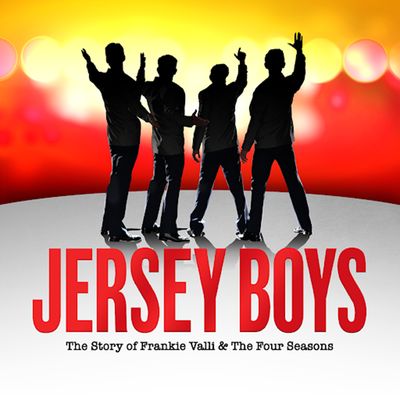
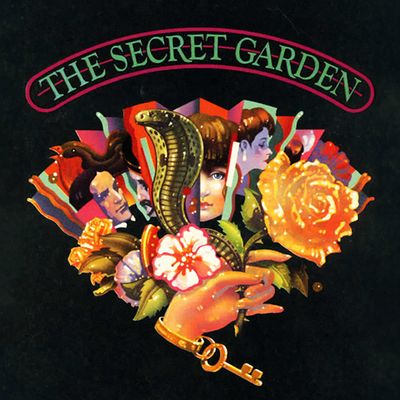
Videos
About
This very special five-part series celebrating Lucy Simon kicks off with a fascinating conversation about Lucy’s early years with Grammy winner Lucy Simon, Academy Award-winning screenwriter and book writer for Broadway’s JERSEY BOYS and THE ADDAMS FAMILY, Marshall Brickman, legendary singer and songwriter Judy Collins and moderator, former Rolling Stone writer, editor and Broadway producer, Loraine Alterman Boyle.
Featured Song:
WYNKEN, BLYNKEN & NOD
Written by Lucy Simon. Performed by The Simon Sisters
Transcript
This transcript was automatically generated and might contain errors.
[0:08] Loraine Alterman Boyle: Welcome to a very special podcast series celebrating the acclaimed composer Lucy Simon. This five-episode podcast celebration of Lucy Simon's music begins with a special conversation between Lucy Simon, former Rolling Stone writer, editor, and Broadway producer Loraine Alterman Boyle, Academy Award-winning screenwriter and bookwriter for Broadway's Jersey Boys and The Addams Family, Marshall Brickman, and finally legendary singer and songwriter Judy Collins. Let's begin. This is episode one, The Early Years.
[0:41] Lucy Simon: Lucy was one of four children, Joanna, Lucy, Carly, and Peter. Her parents, Simon and Schuster founder Richard Simon, and Mother Andrea entertained the era's leading lights in music, like Richard Rogers, Benny Goodman, Arthur Schwartz, and Oscar Hammerstein in their home. Her father was an accomplished pianist. Her mother had a beautiful voice, so the whole family often filled the big house in Riverdale with music. A school assignment to memorize and recite a poem prompted 14-year-old Lucy to write her first music. Because she was dyslexic, she could only memorize Eugene Field's poem Winkin', Blinkin', and Nod by setting it to music. Eventually, that song would launch the careers of Lucy and Carly as the Simon Sisters. The rest is history.
[1:38] Loraine Alterman Boyle: Now where are you going and what do you wish? The old moon asked the three. Well, we're going out fishing for heron fish that live in the beautiful sea. That's of silver and gold. Have we said winking and blinking and nod? The old moon laughed and sang a song as they rocked in their wooden shoe. And the wind that sped them all night long ruffled the waves of dew. This podcast is gonna be about Lucy's early years performing as part of the Simon Sisters, who had a hit record that was in the Billboard Top 100, I think 1964, Winkin', Blinkin', and Nod. Marshall Brickman, who was an Academy Award-winning screenwriter and Tony Winner for Jersey Boys, was in the Tarriers, a folk group at that time. And of course, Judy Collins doesn't need an introduction because she's still performing, and she was in the village in the days of the Simon Sisters, too.
[2:47] Loraine Alterman Boyle: So I want to start with Lucy. Lucy, I came across an old interview I did with you in the 70s when I was still writing about rock and roll and music, where you said that Winkin', Blinkin', and Nod actually started, I think, in high school, wasn't it? Or even earlier, eighth grade, when you had to present a poem.
[3:12] Lucy Simon: Yeah. I had to recite a poem in front of my class, and I'm very dyslexic, always was. So in order to remember the poem, I had to set it to a tune, which I didn't. I just spoke the poem in class, but then I later taught it to my sister Carly, and we sang it together, and it became a hit single. The thing I remember about those days was how collegiate we were. It was just such a wonderful group of people that we got to gather together, and it was not in those days commercial for me. I mean, I don't remember who was the owner of the Bitter End.
[3:56] Marshall Brickman: Fred Weintraub.
[3:56] Lucy Simon: Well, he hired Carly and me to open for the Tarriers and Allen. And he paid us $50 a week for how many shows we did. It wasn't a money-making thing. And it wasn't a money-making thing in those days, for me anyway.
[4:32] Judy Collins: And Lucy, you actually came from a very musical family. So you and your other sister, Joanna, were always singing with your mother and everything, even before you and Carly decided to hit the road.
[4:45] Lucy Simon: Right. Well, my father was a wonderful pianist, my mother a beautiful singer, and we just always sang. It was just part of our life. I can't remember not singing.
[4:54] Loraine Alterman Boyle: What kind of stuff did you sing around the piano when your father played? Was it pop songs, folk songs, Wagner? What was it?
[5:02] Lucy Simon: Most often show tunes.
[5:06] Loraine Alterman Boyle: Show tunes and leader?
[5:09] Lucy Simon: Yeah. Exactly. And then Joanna was in Glee Club at school, and she would bring home her music, three parts. And we sang those. Like didn't famous people like Richard Rogers hang out at your house or Oscar Hammerstein? Wasn't your father who started Simon and Schuster? Didn't he have a lot of show people friends?
[5:39] Lucy Simon: Absolutely. And I gotta say, one of the biggest influences on my music was Arthur Schwartz, who was a very close friend of our families, and he would spend a lot of time and he would sing us all of his new songs.
[5:54] Loraine Alterman Boyle: What about Jackie Robinson? Wasn't Jackie Robinson a neighbor and friend?
[6:01] Lucy Simon: Yes, very close friend.
[6:02] Loraine Alterman Boyle: So it was an exciting childhood filled with different artists and talented people. Well Lucy, what did you and Carly, where did you first perform? Was it in the village or when you went to Provincetown? I think it was '62, right?
[6:19] Lucy Simon: There was a restaurant and drinking place called the Moors in Provincetown. We started singing there. And then we—I don't remember the evolution of the Simon Sisters. We just sang, people heard us and liked us. We often sang in people's homes.
[6:41] Loraine Alterman Boyle: Lucy, you and I met because of David Braun.
[6:45] Judy Collins: No, I think it was just because of David Levine.
[6:48] Loraine Alterman Boyle: Well, no, because here's what happened. I know you'll remember this. David was my lawyer, and I think he helped you out.
[6:57] Lucy Simon: Yeah.
[6:58] Loraine Alterman Boyle: But he introduced you to me, but then I introduced you to David Levine. I was dating your husband. We went out a couple of times. When I say dating, this was so innocent as not to be believed as any kind of relationship. But there was a party after one of my shows at Carnegie Hall, and I was there and you were there, and David was there, and I introduced you to him and boom.
[7:24] Judy Collins: You were married.
[7:27] Loraine Alterman Boyle: Within moments. So we met and just I adored you and always have, and we've been friends for decades. In fact, I was gonna—well, I'll tell you that later when you get down to other things in your career. But anyway, I adore you. Lucy is an incredible writer and creator of musicals. And when she created The Secret Garden, she called me one day. I knew about the songs. I've always wanted to hear everything she writes because she's so spectacular. And of course, she called me up and said, "Would you mind singing the songs? How could I ever know?"
[8:14] Judy Collins: You sang?
[8:16] Lucy Simon: Yes, and come to my God. And so I got to sing those songs as a preparation for your workshops like Backers Audition or whatever. I was beyond over the moon to sing those songs.
[8:38] Judy Collins: Oh boy, how could I ask for anything more?
[8:42] Loraine Alterman Boyle: So Lucy and I have always talked about everything right through the years. And also because our birthdays are close, we always talk to each other around those times in the year. We're May babies, we're Tauruses, of course.
[9:00] Judy Collins: Here's an interesting thing, Judy. I sometimes didn't know whether you wrote something or opera.
[9:08] Judy Collins: I know. She said one day she called me and she said, "I was playing The Blizzard, which I wrote, and thinking, I just wrote the most wonderful song."
[9:33] Marshall Brickman: Remember, Lucy was the musical director. It was a big show for A E, the um the channel, the television channel. And that for that show, I wrote The Blizzard. And for the first time I sang it on that stage. And Lucy was our was our musical director. So she has a good a good right to be an owner in many ways of that song. Well, we were so close, really, that we all didn't know. I mean, maybe you did, Judy, but I didn't know whether I wrote it or you wrote it. Yeah, exactly. Did I write that or did Judy write it?
[10:13] Lucy Simon: I think it's interesting that Marshall, yes, both you and Lucy left the village, went through other incarnations, different things. Lucy did two solo albums and a couple of children's albums. The children's albums, by the way, won Grammys for children's albums in Harmony One and Two. And but and Marshall did many films, of course, but you both somehow ended up in musical theater. Um, Marshall with Jersey Boys at first, and Lucy Secret Garden. It's kind of an interesting thing. We don't often find that um in on Broadway, for instance. Would you like to talk about that? How you how you ended up doing uh shows, Lucy, and also Marshall, although you didn't write the music.
[11:03] Lucy Simon: I got tired of writing and singing songs that were so personal. So I wanted to get into storytelling. So I got the rights for Little House and Prairie, that didn't happen, but it led the way to my getting the job of writing the music for The Secret Garden. And I was so happy to be able to write for other people. What a gem. For not only other women, but for men, for situations. It was just a joy. What do you write on? In your head, on the piano and the guitar and the guitar? I'm curious.
[11:38] Lucy Simon: You know, I write a lot in my head. And then I I I write singing, you know, I sing it. Oh, really? And I put it on tape. Like most I'm not I'm not good with writing notes. Still dyslexic, can't do it. Are you musically dyslexic when you look at a music? Do you start playing from the right side of the brain?
[12:05] Lucy Simon: I have a very active right brain and no left brain. Interesting. And Marshall, how did you end up for uh starting out in folk music and well, we know you were writing for Dick Habbott and all kinds of stuff. But I mean, what what led you to Broadway?
[12:22] Marshall Brickman: Uh it's all uh accidents. It's every step I've taken has been to avoid falling on my face, you know. So there's never been any life plan or agenda. But the short version is that a friend of mine who was very involved in the musical theater, Rick Ellis, who at that time was working at Sereno Coin, which is the advertising agency that handles the advertising for most of the Broadway shows, and he was the creative director, and some guy had contacted him with the um catalog of the Four Seasons, and he said, This guy wants to make a musical. And I deferred the murder, um uh because it wasn't my cup of tea. It I was a folk uh banjo player and ex, you know, comedy writer. And he gave me the double album of uh all these songs, you know, walk like a man and so on.
And I was knocked out by it. Um and I was a convert. I drank the Kool-Aid, we wrote it, uh, and before we knew it, uh it was on, we had no hopes. We had a 400 this uh Lucy will understand this. When we came to New York, we had a 400,000 advance, which is like no advance, you know. So we depended on word of mouth and uh God and whoever. So that's that's it was a friend I was dragged into it.
[13:49] Judy Collins: And you know that I that I met Marshall in 19 oh my god, it was 60, 1960 in Chicago with the Terriers, and I was opening for the Terriers. So I've been born, the Blue Angel, what was it? It was the Gate of Horn. I didn't ever work the Blue Angel, although I won't yearn to, but I didn't. So we've known each other all these years. Amazing. Forever. Almost as well along almost as I've known Lucy, the four the three of us have been uh bonded at the hips for all these years. Can we get adjacent uh Adirondack chairs at the home, you think?
[14:32] Marshall Brickman: Uh uh I think so. Music barn. The music barn, yes, the music barn. Stockbridge, where was that? Stockbridge, yeah. Stockbridge. Oh, Dan Sabiano, no, what was his name? Right. So it's been a long time. That was that was at a time when Carly had had this just passion for Odetta. And Odetta, oh yes. Odetta was singing there. And yeah, one night we were at the potting shed, was it? And the potting shed. Odetta sat in in the front seat where Carly and I were performing. Carly looked down and she fainted. Oh my god. I need to do a solo.
[15:26] Judy Collins: Did you guys ever play at Gertie's Folk City?
[15:30] Marshall Brickman: Uh yes, Gertie's Folk City. I came there. Um, and I'm sure, I'm sure that Lucy and Carly must have played the Folk City. I I arrived there in 1961. I was the headliner, and I was quite surprised because I'd only been doing this for a couple of years. But you know, it was very word of mouth, wasn't it? I mean, you know that Odetta's husband, Danny Gordon, was my manager for a couple of years.
[15:59] Judy Collins: Right. I thought we were all Leventhal. We then went, of course, to Harold quickly after that. But but uh, but uh Danny helped me. He got me a couple jobs, not a lot, but you know, it was word of mouth, you know, the clubs it at the Gate of Horn, then Alan Riback would call the people in New York and say we she sold some tickets, so why don't you hire her? And uh I got to the the Gertie's Folk City was I was the headliner, and I looked around and everybody was there. You might have been there too, but uh Peter Paul and Mary was there before they were Peter Paul and Mary, and Peter used to say, now if this doesn't work out with Mary, keep your keep your schedule clear. And so then I looked around and I realized everything everybody was there really. Rambling Jack Elliott was there, Dave Van Ronck was there, and then I was told and I saw that my opener was a 13-year-old named Arlo Guthrie.
[17:05] Judy Collins: Oh my god. Wow. So, you know, we know each other a long time. It's just such a nice community.
[17:15] Marshall Brickman: It was it's a lovely community, it is. Absolutely. Absolutely. I think it was just all love and exactly marches against the.
[17:29] Judy Collins: I was just gonna say love in a very turbulent time.
[17:33] Marshall Brickman: That's right. Turbulent time. And and no money. And no money. But you had fun. And it led to great things for all of you. Thank you. I love you all. You've all been friends of mine, maybe only since the late 60s, but uh we've all been together and through a lot. So thank you. And I look forward to more coming. Please stay tuned for the rest of the episodes in this five episode series. Tremendous thanks to our guests Lucy Simon, Marshall Brickman, Judy Collins, and to our episode host, Loraine Alterman Boyle, with narration by me, Lucy Boyle. This episode is produced by Jory Berenstein, Alan Seals, and Kimberly Garris for the Broadway Podcast Network. Executive producers are Loraine Alterman Boyle and Liz Armstrong.
Associate producer is Henny Konisberg. This series is edited by Alan Seals and Dory Berenstein. Thank you to Victoria Troub, Sean Flavin, and Concord Music for their tremendous support and partnership on this very special project. Find out more about Lucy Simon, how to support the Leukemia and Lymphoma Society, and more ways to listen to this podcast by visiting BPN.fm slash Lucy Simon.
© Broadway Podcast Network, All Rights Reserved