

In the sixth episode in the “Conversations From Away” series, we welcome Christine Toy Johnson (Diane & Others, Come From Away North American Tour) and Pearl Sun (Standby, Come From Away Broadway)... Read More
From the show: Conversations From Away
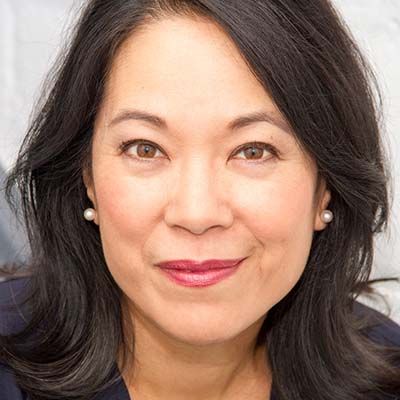
Guests
Featured Shows
About
In the sixth episode in the “Conversations From Away” series, we welcome Christine Toy Johnson (Diane & Others, Come From Away North American Tour) and Pearl Sun (Standby, Come From Away Broadway). In the spirit of AAPI Heritage Month, they discuss their experiences as Asian American actors in Come From Away, and beyond. What can we, as allies, do to support and stand by the AAPI community in light of recent surges in violence and discrimination? Listen to find out.
For additional resources to help end violence and harassment in the AAPI Community and ALL communities, visit:
Christine Toy Johnson is the host of "Talkback,” also on Broadway Podcast Network. https://broadwaypodcastnetwork.com/podcast/talk-back/
Also, please check out the premiere of her short film EMPRESS MEI LI LOTUS BLOSSOM on May 25 at 7 pm EST, hosted by Abingdon Theatre Company. https://www.abingdontheatre.org
Learn more about the virtual concert of “A Gentleman’s Guide to Love and Murder” that Pearl mentioned in today’s episode, at www.CollaboraZian.com
Programming Note: Conversations From Away will be taking a few weeks off, in observance of Memorial Day and to record new and exciting content. We’ll be back with a new conversation on June 7th!
Host: Aaron Michael Ray (@aaronraystagram on Instagram)
Guests: Christine Toy Johnson (@CToyJ on Instagram and Twitter)
Pearl Sun (@pearlraysun on Instagram and Twitter)
Special Thanks to Broadway Podcast Network and Junkyard Dog Productions
Transcript
This transcript was automatically generated and might contain errors.
[0:03] Aaron Michael Ray: Hello everyone, welcome back to Conversations from Away.
[0:08] Aaron Michael Ray: I'm your host, Aaron Michael Ray, and y'all, I'm really excited for this episode because May is AAPI Heritage Month, and I'm so excited to bring on two guests that are part of the Come From Away family.
[0:26] Aaron Michael Ray: Um, and we're going to introduce them to you now. Our first guest is Christine Toy Johnson, who plays Diane on the North American Tour.
[0:36] Aaron Michael Ray: Christine and I have done the tour since the beginning. And Christine, I'm so happy to talk to you today and to just have you on. So thank you for coming.
[0:44] Christine Toy Johnson: Thank you for having me.
[0:47] Aaron Michael Ray: And our second lovely guest, another CFA family member is Pearl Sun. Um Pearl is also she was a fit uh a fellow standby uh sister brethren with me, and I am just so glad that there is another standby uh family member here on this episode.
[1:11] Aaron Michael Ray: So, Pearl, thank you so much for joining us as well.
[1:14] Pearl Sun: Oh, it's great to be with you.
[1:17] Aaron Michael Ray: So I so yes, for AAPI Heritage Month, I'm not gonna lie, y'all. I embarrassingly did not know that AAPI Heritage Month was in the month of May.
[1:28] Aaron Michael Ray: I want people to know that it's okay that if you don't know when you know that is, and we can just talk about it and we can, you know, have a conversation about it. But you know, I think especially as a black person, I know every February I'm like Black History Month, Black History Month.
[1:44] Aaron Michael Ray: So I did feel kind of embarrassed when I found out that not until recently that AAPI Heritage Month was in the month of May. But I'm so glad to now know.
[1:57] Aaron Michael Ray: And now that I know it, I will acknowledge it every single May. And I'm really looking forward to the AAPI Heritage Month moving forward.
[2:08] Pearl Sun: Aaron, you're not alone.
[2:10] Pearl Sun: So thank you for all of that what you just said, but you're not alone in not uh knowing about the month.
[2:18] Aaron Michael Ray: Well, and also, I mean, isn't this what we're all here for anyway? I mean, this year has been a year full of uh learning and discovery and meeting each other uh in ways that we hadn't before.
[2:35] Pearl Sun: So I think that uh I'm grateful for your embrace.
[2:39] Aaron Michael Ray: Well, thanks, Pearl. So, Pearl, I'll ask you, um, how do you celebrate AAPI Heritage Month?
[2:49] Pearl Sun: You know, I I think I think this month will be different than other months for me. Um I just I think every day I want to try to reflect on um someone either in history or someone currently who has done um activism and activist work.
[3:11] Pearl Sun: Um I I've learned about a lot of activists from decades ago who I had never heard of, and only really within the last year, Grace Lee Boggs and you know, I just there are so many of them, and we don't know about them because and that's purposeful, right?
[3:29] Pearl Sun: Yeah, so our history is being erased here in this country on purpose. And um, so that that's my work, I think, this for this coming May is to learn more for myself.
[3:43] Pearl Sun: I took uh an Asian American history class in college, and I chose that for myself. And had I not chosen that for myself, there's so much that I would not have known.
[3:55] Pearl Sun: Um so there's that. I wanna I want to eat good food this month. I want to spend time and uh be in community with my friends.
[4:06] Pearl Sun: And um yeah, I just wanna and I want to just put out good narratives and and maybe help help others learn more um about our history.
[4:16] Aaron Michael Ray: Nice. What about you, Christine?
[4:19] Christine Toy Johnson: Well, I I think that for um the past uh I don't know, 10 or so years, I've been trying to um create events that amplify our Asian American fellow artists um in one way or another, through my writing or through uh gathering people in community.
[4:40] Christine Toy Johnson: Um Pearl was in one of the events we did several years ago called Um Asian Americans on Broadway. We had this amazing company of fantastic uh Broadway Asian American actors, singers, dancers.
[4:55] Christine Toy Johnson: We did excerpts from Gypsy, The Light in the Piazza, the Producers, and Company, and you have not lived until you've seen Pearl Sun sing not getting married today.
[5:05] Christine Toy Johnson: That was amazing. And um that was really yeah. Well, there are some clips, I'll send them to you another time.
[5:12] Christine Toy Johnson: Um I I got to sing Margaret and Light in the Piazza, which I would like to do someday. And um with Ali E. Walt and Josh Tella Cruz.
[5:20] Christine Toy Johnson: I mean, come on. Oh my god. And Jose Lana was there, and it was just an amazing, amazing group of people.
[5:25] Christine Toy Johnson: And Marata, yeah, all all of our all of our people. And then also I started something called the Asian American Musical Theater Writers Project.
[5:36] Christine Toy Johnson: And we did it's meant to do celebrate works created and sung by Asian American artists. And we've done a couple of things.
[5:46] Christine Toy Johnson: It's been a little dormant lately, but we did a uh concert of all new works by various Asian American musical theater writers. We did that uh several years ago.
[5:59] Christine Toy Johnson: And uh this this year uh I am I have the opportunity to do a couple of things, some related to, as Pearl said, uh celebrating Asian American activists.
[6:11] Christine Toy Johnson: I'm doing an event at Lincoln Center as part of their restart project uh on May 19th, which is the centennial, would have been the 100th birthday of Yuri Kochiyama, who was a Japanese American activist.
[6:23] Christine Toy Johnson: Uh I also happen to write a monologue about her for a project called Statue Fest that will be premiering that Friday.
[6:30] Christine Toy Johnson: So there are a number of uh ways that we are uh looking to celebrate and amplify all these great people in our history, because as Pearl says, our history has largely been missing from not only uh just the general American narrative, but uh more specifically in our schools.
[6:51] Christine Toy Johnson: I don't remember reading anything about major events in in our history. In fact, I think a lot of things I've learned have come from my my writing about it in various plays, etc.
[7:06] Christine Toy Johnson: Also, for me in school, the only reason why I knew about the Japanese internment camps before my college class that I took was because my English class assigned farewell to Manzanar.
[7:18] Christine Toy Johnson: That's the only way that I had heard about it. The only reason why I had heard about it prior to my college course.
[7:26] Christine Toy Johnson: So and Yuri Kuchiyama and Malcolm X were best friends.
[7:31] Pearl Sun: Yes.
[7:32] Christine Toy Johnson: She was there when he was there.
[7:33] Pearl Sun: Yes, yeah.
[7:34] Christine Toy Johnson: When he when he was assassinated. And it's it's really interesting how you talk about the erasure of the Asian history, because something that I think, you know, is unfortunately too common is any history that isn't a white history of any kind or European history, tends to be erased a lot.
[8:00] Christine Toy Johnson: And that goes for the AAPI history, uh the black history, uh, trans history, you know, all of those things. I mean, it's just unfortunate how common it is to be erased.
[8:12] Pearl Sun: Indigenous peoples as well.
[8:14] Christine Toy Johnson: Oh, absolutely. I think it has to do with things that the uh that seem embarrassing, quote unquote embarrassing in the American narrative.
[8:24] Christine Toy Johnson: So our, you know, our um story has always been about um being this great beacon of democracy, which it is, but it also has this horrible history of xenophobia and exclusion and uh systems of oppression.
[8:40] Christine Toy Johnson: And uh for example, the Chinese Exclusion Act of 1882 that lasted 60 years, was responsible for my own father not being allowed into this country until he was 10, and not even with uh with any kind of um papers that connected him to his own father.
[9:02] Christine Toy Johnson: So there's there's a whole history of of exclusion and how various people were not allowed to come over uh for over 60 years.
[9:14] Pearl Sun: Yeah, it's uh I that uh hearing all of that, you know, it's I just hate how common that is that you know there are so many things that we just don't know.
[9:24] Pearl Sun: And you know, and hearing that story about your dad, that just it it's unfortunate that we have to that has to be a part of your history.
[9:33] Aaron Michael Ray: And so with this episode, I really wanted to highlight, you know, for AAPI Heritage Month, I just want to only amplify every single thing that you two are doing, and I also just want y'all to know that y'all are trailblazers in this industry, and both of y'all are making history doing what y'all are doing yourselves.
[9:57] Christine Toy Johnson: Oh, thank you.
[9:58] Pearl Sun: Thank you.
[9:59] Aaron Michael Ray: And speaking of which, so Christine, I mean I feel like since I've known you, you are the definition of multi-hyphenate art.
[10:10] Aaron Michael Ray: Oh my lord. I mean, Christine, what can't Christine Toy Johnson do?
[10:14] Christine Toy Johnson: I have I have a lot of it.
[10:17] Aaron Michael Ray: I I had the uh the uh distinct honor of glancing at her calendar once.
[10:25] Aaron Michael Ray: And I I mean, when when you talk about, first of all, it's so organized. Of course, and everything's color-coded and it's full, y'all.
[10:35] Aaron Michael Ray: It's full. I mean, she wears so many different hats and wears them so well, and and you know, between her performance work and her uh writing and her activism and and her you know, panel discussions and her, you know, leading all these different organizations, it's crazy.
[10:56] Pearl Sun: Oh, yes, I am aware of this.
[10:59] Aaron Michael Ray: I I feel like even when we were on tour and we could be in the most random city, and Christine would say, you know, after rehearsal, well, I need to go record my podcast, or I'm writing or I'm doing this.
[11:11] Aaron Michael Ray: So, Christine, you are one of the founders of the Asian American Performers Action Coalition.
[11:19] Christine Toy Johnson: I'm so glad I said that correctly.
[11:20] Aaron Michael Ray: Yes, otherwise known as APAC, which would be a little simpler, maybe to say go ahead.
[11:26] Christine Toy Johnson: Well, you know, gotta say the full name first, then we'll just try thank you.
[11:29] Aaron Michael Ray: Yeah, yes, thank you. Um, so how did this amazing organization come to be?
[11:36] Christine Toy Johnson: So uh in about I think it was 2011, it actually all started with a Facebook post. Our friend Pun Bandu, who is um uh an amazing writer and a Tony Award-winning producer, uh speak of speaking of multi-hyphenate people, uh, he also was a graduate of Yale School of Drama and or is a graduate of Yale School of Drama, and he posted something about how he had just gotten his first audition for a one of the major off-Broadway uh theaters in New York City 10 years after he had graduated from arguably one of the best um acting programs in the United States, and how strange it felt that it had taken 10 years to get an odd just an audition at this place.
[12:24] Christine Toy Johnson: And he said, he posed the question is this happening to other people? I wonder, are we being underrepresented in New York City theater?
[12:34] Christine Toy Johnson: I laugh, of course, because it's it's absolutely the case. And so we gathered people together to start talking about it.
[12:42] Christine Toy Johnson: Of course, the pay the Facebook post generated many, many responses. Yes, me too. I have not been to be uh been seen by any of these places.
[12:51] Christine Toy Johnson: Um and we decided to form a group to look at the to see if our our theories were true, to form to um gather other people, have some forums, have some discussions.
[13:05] Christine Toy Johnson: Eventually that led to um gathering statistics about uh various uh actors from historically marginalized communities in New York City.
[13:16] Christine Toy Johnson: So our mission has been to look at these numbers uh and underrepresentation on Broadway and uh at the 18 largest nonprofit off-Broadway theaters.
[13:28] Christine Toy Johnson: Over the years, uh we have gathered these statistics to also include now uh board members of the nonprofits.
[13:35] Christine Toy Johnson: This spoiler alert, it's pretty homogenous, uh, directors um and and writers.
[13:42] Christine Toy Johnson: And the statistics have been used quite broadly and widely to open up these large conversations about how we are underrepresented, and not only that, but the economic impact that this subconscious or not, um exclusion is affecting all of us that are that are being uh marginalized, put in uh the plays that are being redlined to the smaller spaces in the in the theaters, uh, etc.
[14:18] Christine Toy Johnson: And so it's um it's been a uh it's a grassroots, totally volunteer grassroots organization of now 11 uh working actors, and we now have funding from the American Theater Wing to continue our our statistic collecting.
[14:34] Christine Toy Johnson: But it's been uh really quite uh something. And I'm proud to say that we received an Obi Award uh in 2020 for uh divorce and inclusion.
[14:44] Aaron Michael Ray: Yeah, well, congrats on that.
[14:46] Aaron Michael Ray: Jumping on that though, Christine, I distinctly remember, I don't remember the context of which in which I heard you say this, but you were speaking about how somebody had approached you, asking for if you knew anybody who could play so and so such and such role.
[15:07] Christine Toy Johnson: Um I also feel like um they all often come to you as the Rolodex for Asian American actors, yes.
[15:16] Aaron Michael Ray: Um, and then in addition to that, there was somebody who had said, well, there might not, there just might not be um enough Asian American actors to play leads.
[15:27] Christine Toy Johnson: Well, yeah.
[15:28] Aaron Michael Ray: So there are a lot of things, yeah.
[15:29] Christine Toy Johnson: And your response was so beautiful, which is no, they're there, they're just not given the opportunity to be leads.
[15:36] Aaron Michael Ray: So how do we how do we nurture leading Asian American actors, but to give them the opportunity to allow them to shine and then grow, right?
[15:48] Christine Toy Johnson: I know from my experience that I only get better with every role that I take on.
[15:53] Pearl Sun: Of course.
[15:54] Christine Toy Johnson: Um course, as everyone, as everyone does.
[15:56] Pearl Sun: Yeah.
[15:56] Christine Toy Johnson: Yeah, I've heard so many, so many questions.
[15:59] Pearl Sun: I am considered like some Rolodex.
[16:02] Christine Toy Johnson: And or I will hear where are there any Asian American actors or writers now?
[16:08] Pearl Sun: Now it's it it's it's changed to that.
[16:10] Christine Toy Johnson: And I would say you want to do you want to look at my iPhone, because you can just look at my contacts.
[16:16] Pearl Sun: But the other part of that is I will get inquiries like, do you know any Asian American actors for this project I'm working on?
[16:24] Christine Toy Johnson: And that's where the sentence ends.
[16:26] Pearl Sun: So I want to say uh can you please give me some more uh qualifications, uh descriptors, uh anything, characteristics that you voice parts.
[16:36] Christine Toy Johnson: Exactly.
[16:37] Pearl Sun: I mean, I can't imagine somebody saying to casting, uh, we're looking for some white actors, period.
[16:45] Christine Toy Johnson: You know, and so that unfortunately is also I think really indicative of the way we have been looked at largely as a monolith and uh with no I mean a label and no no specific um qualities uh of individualism, and that's that's been a big problem and and something that I've been trying to really address for all of these years in my advocacy through Actors Equity and now the Dramatists Guild, and of course through APAC and whoever else asks me to speak about it, which is hence my full calendar.
[17:23] Aaron Michael Ray: Yes, I'm sure your calendar is all colors of the rainbow, highlighted, gel pen, all of that.
[17:29] Christine Toy Johnson: I do not discriminate against the color itself.
[17:35] Aaron Michael Ray: Well, yeah, I mean, I it it's so interesting that you talk about, you know, do you know any Asian American actors? Period. And you know, it's like I've even gotten that, you know, too with you know any black actors, that's it.
[17:51] Christine Toy Johnson: And I'm just kind of like, yes, I do.
[17:54] Pearl Sun: What else?
[17:55] Christine Toy Johnson: You know, it's like you have to realize that, like, yes, we're out here, but what do you need?
[18:03] Pearl Sun: Be specific in what you need, you know.
[18:05] Christine Toy Johnson: To my friend's credit, I just got a text this morning, actually, uh, asking me if I knew if I could give him three names of Asian American women who are in their 30s, who are motherly, and who have a dry wit.
[18:19] Pearl Sun: I was like, okay, that's better.
[18:21] Christine Toy Johnson: Yeah, and to which the response I was like, that's very specific.
[18:25] Pearl Sun: Yeah.
[18:25] Christine Toy Johnson: And I gave names, but like I was half surprised and stunned, and I don't know. It just it was great.
[18:32] Pearl Sun: It was great.
[18:33] Christine Toy Johnson: I also would just want to give a little PSA, take it this opportunity to give a little PSA about actors of any stripe having online presence so that we can recommend you by sharing a link to a page, even if it's a web page with just your contact information.
[18:52] Pearl Sun: Uh I that I'm just throwing that in there, not a little off topic, but not really.
[18:56] Christine Toy Johnson: Oh no, I mean, this is very important, you know, especially coming from the Christine Toy Johnson over here.
[19:03] Pearl Sun: You know, some of the, I mean, that I feel like, especially with, you know, even when Pearl you were saying my friend texted me, I need this, like, that's giving somebody a job, you know, and that could really change something, and that could build a working relationship with someone too.
[19:19] Christine Toy Johnson: And at the same time, it could educate someone who hasn't worked who hasn't just, you know, like you said, put um put all of you know a certain marginalized community as a monolith, like you know, I mean I want to see.
[19:34] Pearl Sun: He actually he was very specific. I loved how he worded it. He said, Um, hey my love, can I pick your brain? Name three Asian female actors, dry wit, but also motherly thirties, putting a list together and for my presentation, would like want to see where my blind spots are.
[19:50] Christine Toy Johnson: Love that's awesome.
[19:51] Pearl Sun: Isn't that amazing?
[19:52] Christine Toy Johnson: I really love that.
[19:54] Aaron Michael Ray: Wow. Um, so Christine, I'm still gonna pick on you a little bit. Um I have to give you a huge congrats for now being a Dramatists Guild board officer.
[20:07] Christine Toy Johnson: You are the treasurer of the Dramatists Guild. That's huge, Christine.
[20:10] Christine Toy Johnson: I'm real, it's such an honor. It's an it's an honor.
[20:15] Christine Toy Johnson: Um, yeah, so I have been um a member of the Dramatists Guild since 2006, and then I was elected to the council in 2016, um, sitting with arguably almost every living American writer that I have ever admired, and so it still kind of freaks me out to be uh in the room with them.
[20:37] Christine Toy Johnson: All of these amazing writers who many of whom are at the peak who are at the peak of their careers, who are serving to just advocate for writers and um and our and our rights.
[20:49] Christine Toy Johnson: So then I was elected uh as an officer with um Amanda Green, our first female president in the hundred-year history of the guild. Brandon Jacobs Jenkins, our first uh black male officer, he's vice president, and Christopher Diaz, our first Latino officer, and I am the first Asian American officer of the guild.
[21:10] Aaron Michael Ray: So that is huge.
[21:11] Christine Toy Johnson: It's amazing, and um it's an it's a phenomenal group of of leaders and we're um we're just rolling up our sleeves and getting to work with with uh continuing to advocate for writers and uh and a more robustly diverse American landscape of storytelling.
[21:11] Aaron Michael Ray: I that is that is amazing and I just can't express how proud I am of you for that I think that is such a huge accomplishment and again this is just another moment where you know to some people it may not seem like a big deal but you just named so many firsts that have to do with some of the officers that are elected including the president who is the first female president like all of those things just continue to fuel my optimism for how change is really coming and we know that on the horizon like we really if you squint hard enough you can see the light at the end of the tunnel and you know that you know it's it's only going to get better because now there's more representation and there's more of people there's more BIPOC people at the table there's more queer people at the table you know we um it those things just really really make me so happy to see so congrats on that.
[21:11] Christine Toy Johnson: Thank you well it's a very it's been a long road you know there's been um there have been many many people um we're we're standing on their shoulders and we're um we're continuing the work uh for literally decades um but yes oh I you know, I like to say we're farther than we've ever been.
[22:52] Pearl Sun: That's true.
[22:52] Aaron Michael Ray: That's true right um so Pearl, you have a virtual concert that you are producing.
[23:00] Pearl Sun: I I am co-producing. I'm part of an incredible team of Asian American uh producers now.
[23:08] Pearl Sun: Uh I think I'm one of seven. We're all doing little bits to uh put this uh together. We're doing an all-Asian uh gentleman's guide to love and murder, a condensed version of the show, and uh we begin rehearsal actually in the month of May.
[23:29] Pearl Sun: So I think it's a really wonderful thing, and it and it's going to be airing on July 15th.
[23:37] Pearl Sun: Uh, and all the proceeds or donations that we receive, contributions that we receive will go to the Stop Asian Hate Organization.
[23:46] Christine Toy Johnson: So, you know, I over this past year plus since shutdown on Broadway, I I took the time and I took some commercial theater producing classes, and I I just thought I can't sit and wait anymore.
[24:05] Pearl Sun: I want to be part of the change.
[24:07] Pearl Sun: Um, and there aren't there just aren't enough of us on the other side of the table.
[24:13] Pearl Sun: And it really struck me about five years ago when I did two back-to-back, pretty high-profile um developments labs of shows, and I just looked at the the sea of elderly white men, you know, watching me, and I thought, oh, there's a reason why there's only one of me on this side, and why we're telling a certain kind of narrative over and over and over again.
[24:38] Pearl Sun: It's because there's none of me on the other side.
[24:41] Pearl Sun: So how do I change that? And that was five years ago.
[24:44] Pearl Sun: And so finally the the wheels, the hamster wheel stopped for a moment and gave me a breath to be able to see to say, how do I contribute in a in a bigger way?
[24:56] Pearl Sun: Because I I feel like as an actor, the only real power I have is the power in saying no to something.
[25:04] Pearl Sun: And I want to live my life saying yes to things, right?
[25:08] Pearl Sun: And so I want to I want to be able to have more creative control over the work that I do and the work that it helps to support.
[25:17] Pearl Sun: Um so that's one project, and you know, I have a couple more lined up.
[25:23] Aaron Michael Ray: Oh, yes, and we're we're gonna get into that.
[25:26] Pearl Sun: No, a couple more productoral stuff.
[25:28] Aaron Michael Ray: Oh, great.
[25:29] Pearl Sun: So amazing.
[25:29] Pearl Sun: Yeah, so I mean, but you know, I'm not gonna air it out yet, but you know, the Schubert organization actually, um they have created an initiative for uh emerging BIPOC producers that I applied for.
[25:44] Aaron Michael Ray: So crossing fingers.
[25:46] Pearl Sun: Oh, that's great.
[25:47] Pearl Sun: Um, and it's it's a very exciting opportunity.
[25:51] Aaron Michael Ray: So we'll see how many, how many they they dole out because they weren't specific about how many they were gonna honor, but they wanted to hear what we uh what our mission statement is as producers, and they were gonna provide a bunch of um support for it.
[26:07] Christine Toy Johnson: So that's amazing.
[26:09] Pearl Sun: Fantastic goes Schubert organization.
[26:11] Christine Toy Johnson: Yes, yeah.
[26:12] Pearl Sun: I mean, I I I think you know, I just wanted to um amplify something you said that that it's so important to really recognize whose stories are being told and through whose lenses, because it can no longer be blamed on our our lack of existing we've heard this so much um that the our the lack of parity is because of us not existing and that's not true but it's uh about producers and uh others who have uh the opportunity to lift up those stories even if they are not being told through their own lenses to recognize that there are other narratives that need to be out front so that we can get a fuller picture of what our global story really is.
[27:07] Christine Toy Johnson: Yeah I I completely agree with that I mean I I feel like for years I have been saying you know nothing just grinds my gears more than you know when someone's looking for a a specific um um character uh what you know for a breakdown for a role we're auditioning for and they say you know oh, you know there's just no there are just no black uh you know dancers or there's no black and it's like no you're not looking hard enough that's really just what it is you don't want to do the work to look hard enough and so and that's just for acting you know and so there are so many other you know there are there are writers there are performers of course there in and there are so many we're capable we're all capable of many things and so it just infuriates me when I hear things like that too.
[28:02] Pearl Sun: Well, and I and I look at, you know, I I think I think the very first time I ever laid eyes on Christine was it when she was in the Music Man.
[28:12] Christine Toy Johnson: Oh.
[28:13] Pearl Sun: And she was one of the pick a little ladies.
[28:15] Christine Toy Johnson: Right.
[28:15] Pearl Sun: And what was that? 2001.
[28:19] Christine Toy Johnson: All right.
[28:21] Pearl Sun: That was the first time I had seen her.
[28:24] Pearl Sun: And I just was so thrilled, you know, because Christine, like, please let me know. I we've never gotten to talk about this, what it's like at the stage door outside of Come From Away.
[28:35] Christine Toy Johnson: It's amazing.
[28:36] Pearl Sun: But I know for me, when I come outside, if there are any Asian faces uh who had watched the show, they're so grateful.
[28:46] Christine Toy Johnson: Yes.
[28:47] Pearl Sun: Yes.
[28:47] Christine Toy Johnson: And saying, you know, I know how hard this is, but keep going because there's so few of us, and to be able to see me represented on stage is incredible.
[28:57] Pearl Sun: I mean, and that's how I felt when I saw you in Music Man.
[29:02] Christine Toy Johnson: And, you know, it matters.
[29:05] Pearl Sun: You know, representation matters so much.
[29:08] Christine Toy Johnson: Uh, you know, in a broader scale scope, in addition to theater, but definitely film and television, so many people in this world may not have the opportunity to interact with Asian people in their lives, uh day-to-day lives, and how what do they learn or what do they see but what's on film and television?
[29:28] Christine Toy Johnson: And so we need to broaden the perspectives of what people are seeing, because they again we're we're erased in our classrooms in history, and if if you're only getting a certain narrative in film and television, then you miss uh the whole of us.
[29:48] Pearl Sun: You know, I think unfortunately what we've really learned in deeper ways this year is that there is a direct line between the underrepresentation of our stories being told through our lenses, which often leads to the perpetuation of harmful stereotypes straight to the dehumanization and erasure of our three-dimensional selves, and then the harm. And then into the harm. So because if we are erased, then we are somehow looked at as dispensable and expendable without feeling right. And it's literally become a life or death issue now for us, which is crazy. I love how, I really do love, Pearl, that you were able to have that moment of saying, even seeing Christine for the first time and saying like, "Hey, you know, there we are, like we're over here, we're doing it."
You know, and I feel even when I saw my first Broadway show, there was one Black woman in the ensemble and she was one of the dancers in the whole show. I was watching her. I just felt like because it was my first time seeing a Broadway show, and then I was like, "Oh, there I see someone who looks like me." And that like people, you know, I'm just gonna say that, you know, I feel like white audience members never have to worry about that, and that is a privilege that they have. And I mean, I need a shout out to the very first Asian American actress I ever saw on television, and I was a kid and I was watching Different Strokes, and Rosalind Chow was one of their teachers. And I just was in awe that somebody was on the screen that looked like me.
[31:46] Christine Toy Johnson: Oh, yeah. And it just was so beautiful. And now I follow her on Instagram. I love that. One day I'll tell her she was the first.
[32:00] Pearl Sun: Oh, I love that. I love those stories of, you know, I remember seeing myself when blank. You know, those are always...
[32:07] Christine Toy Johnson: Well, you know, it's sort of, it's you do sort of think about how, I mean, I do. I'm older than both of you, but thinking, how did I even have the nerve to go into this business? Because I really saw hardly any role models in theater, film, or television, and yet I somehow decided that this was a good idea. And it was, it's a very good idea. I've had a, I'm very grateful for my life in the industry. But it does make you think how when you don't see yourself represented, what kind of impact does that have on a person? And how we internalize that. I mean, I think the only real reason why I had the audacity to do any of this is because my parents were amateur Chinese opera singers, and so I grew up in the theater, but in that very specific genre of theater.
And so it felt natural to be on stage, and I did several productions with my parents as a kid growing up. And so when I was in high school and we did high school, you know, school productions, you know, I, it just, first of all, I was grateful to my high school because, you know, they cast me as Sandy in Grease. I was the narrator in Joseph, you know, things that are not meant, quote unquote, meant for me. And so I think that I along the way, I just had people, you know, just give me space. And so I think that's where my audacity came from.
[33:51] Pearl Sun: Yeah. I have to say my parents also were, have always been my biggest fans and my biggest supporters. So that is definitely a big part of the journey. I mean, my parents, once they gave over, they gave over, but I'll tell you it took them a very long time. They just did not want me to pursue this because there at the time there were hardly any faces. They were worried I was going to starve to death. And it wasn't until college that they said, "Okay, I think she has something, we'll support." And from that moment forward, came to every show, was, you know, huge fans, but it just took a while because they just didn't, again, they didn't see it. And honestly, I get it, you know, I mean, I feel that, you know, when you don't, especially as I'm not a parent, but I feel like if I was a parent, I would be just nervous for my child going into an industry where we don't see each other.
And even, you know, even in my middle school, you know, I remember my dad would say like, "Okay, so who are the Black students you're friends with? Or who, you know, are you making sure, you know, like do you have Black friends in your school?" And that kind of thing. And I got that in middle school especially a lot. I definitely got that, but I just, I don't blame your parents for feeling that at first, but it makes me so happy that they are big supporters for both of you, and they come see your shows when they can. And I hope that they've been to all the performances you wanted them to come to.
[35:29] Pearl Sun: Yes, yes.
[35:31] Aaron Michael Ray: All right, we are gonna take a quick break.
[35:43] Aaron Michael Ray: All right, welcome back, ladies. So with an increase in the violence and racism towards the AAPI communities, especially since the COVID-19 pandemic started, I know that I don't want to just quote unquote listen and learn, like what a lot of the country says that they're doing. So, what is the best way that we can show up for the AAPI community in this time?
[36:12] Christine Toy Johnson: I think there are a lot of different ways. I would say on a really simple human level, check in with your AAPI friends and colleagues. A lot of us are not okay right now. The community is in a lot of pain. There are a lot of personal stories about being harassed, discriminated against, or even afraid to go outside. Even more than the past year has taught us to be because of the coronavirus. And I would just offer that as an initial thing. It's meant a lot to me to hear from people just to touch base and say, "How are you doing? I'm thinking of you."
[36:57] Pearl Sun: Yes.
[36:59] Christine Toy Johnson: In addition to that, there is this wonderful organization called Hollaback, H-O-L-L-A-B-A-C-K. You can find them, they have websites, they also are on Instagram. You can just find them, H-O-L-L-A-B-A-C-K. And they offer bystander training programs that are free, that are one hour long that you can take from the comfort of your home. They're all virtual. And it really gives you tangible steps in the case that you are a witness to a hate crime happening in front of you. And I think it's useful, whether it's Asians that are being attacked or LGBTQ, trans Black community, you know, it just helps everyone, right? It gives you step-by-step ways in which you can help in the moment, because that is often something that I'm reading about or hearing about is that, you know, it's shifting a bit where people are stepping up and helping out, but often victims will talk about the fact that people were around, but nobody helped them.
And that to me is even more painful. Like the woman who was attacked on 43rd Street, and the three men in the building were watching it all happen, and they were doing nothing to help. And even something as simple as calling, just shouting out, "Hey, hey," just to distract, bringing attention.
[38:38] Pearl Sun: Yeah.
[38:39] Christine Toy Johnson: Bring attention. And or if you're too afraid in the moment to get physically involved, then the moment that it's over, go attend to that person, ask them how they're doing, ask them if you would like them to call an ambulance for them or 911 or anything or a family member, you know, just humanity, humanity, right? I talked, I took the bystander training, I think a week and a half ago, and it's just fantastic. It's very easy to understand, and I highly recommend it too.
[39:13] Pearl Sun: And yeah, and I took it last week. There was, they what did one specifically for how to help against police brutality when you're a witness to police brutality, how in which you can help. The website I was told is called iHollaback.org for those who are listening, i-h-o-l-l-a-b-a-c-k dot org. Thank you so much for looking that up. Yeah, I just think it's really for the time being, that's what we can do, right? On a bigger scale, vote, of course, don't give up your vote, right? There's...
[39:13] Christine Toy Johnson: Don't...
[39:13] Pearl Sun: So yeah, sorry Pearl, I didn't mean to interrupt you.
[39:13] Pearl Sun: No, no, no. There's so much to do. I think that also, you know, on the simplest level of having compassion for one another is being open to the idea that we all have much to learn about one another. And we all have unconscious biases that we're carrying around. And if we can all challenge ourselves to really take a look at those and see what kinds of stereotypes we might be feeding into when we're not even aware of it, I think it will help break down those barriers of stereotyping and helping one another and helping to see each other.
[40:45] Christine Toy Johnson: Yeah.
[40:46] Pearl Sun: I mean, really, frankly, just that's what we need, right? Is to be seen and to be understood.
[40:56] Christine Toy Johnson: I thank you for saying that because I just think that unfortunately, with the increase in protests that were happening last year, I think there was so much attention on it, which is good, but it also only just increased for some reason the increase in violence that was happening in Atlanta recently, you know, that was absolutely devastating. And like you said on 43rd Street here in New York, like it unfortunately happens everywhere, and I just need our listeners to know that we need to, we really need to make sure that we are all seen, just like Christine and Pearl are saying, seen and understood, and that is the most important thing for sure.
[41:45] Pearl Sun: Yeah, I mean, I had talked about this before too, that we saw this. I mean, I saw it first in March of last year. It really didn't get reported until the end of 2020. And so it had been going on for months and months, and it had increased and increased and continued to grow. But a lot of my friends were like, "Why aren't we complaining about it? Why aren't we saying anything?" And it was because my advice was we have a bigger fire to put out right now. And that was post-George Floyd. And you know, our Black brothers and sisters are hurting. Let's care for what's going on. And now our house is on fire too.
[42:39] Christine Toy Johnson: Of course.
[42:40] Pearl Sun: But I wanted to make the space for what was happening, what continues to happen, what has been happening for centuries, but was really just so devastatingly real for us for the global world to see, right? And that's what made this case so different. And I also think that that's also why Derek Chauvin was guilty on all three charges, is because of how horrific that tape was. The hate crimes against Asians are not ending, they're not slowing down. If you don't follow the right sources, you're not gonna know about them. They're happening all day, every day in multiple cities across the country. So, as Christine said, just be there and be our angels out on the streets as well on the sidewalks, because that helps us to walk around and know that we have support out there in case anything were to happen.
[43:59] Aaron Michael Ray: That's a good story. Uh, so Pearl, before Come From Away, you were the standby for the role of Diana on the first national tour of Next to Normal. So what were the res... and so you were standby and you were covering Alice Ripley.
[44:16] Pearl Sun: Um so what were the responses like from the audience whenever you went on? Because there's obvious there's something a little different about you and Alice Ripley, I think.
[44:26] Pearl Sun: Yeah, no, um, you know, it was twofold, right? So the tour was advertised as don't miss the Tony Award winning performance of Alice Ripley. Okay, right? So audience members would walk in if they opened the program and they see that Alice wasn't there, they felt like they were already missing something, even if they didn't know her, right? Um, which a lot of people did know her. So a lot of people were super fans and had seen the show several times and then came on tour and you know, oh, you finally came to my city, blah, blah, blah. So um, so I had to win them over. You know, and it took, and I could feel the energy from the audience, and I and there were times where I audibly heard groans uh before the start of a show.
And I said, you know, it's fine. Uh let me just do my do what I need to do. And I could feel like the audience crossing their arms almost in indignation, right? And so it it isn't until if you're familiar with the show, um, the first big solo that that that role carries is um I missed the mountains, which is about I would say about a a a quarter to a third of the way into the show. And um, that was the moment after I finished that solo where I felt like all their arms went okay and dropped, and where they just kind of said, Okay. And then by the end of the show, they were with me. They were totally with me. Of course, yes, because it was amazing. Which was amazing. You know, it's just I was like, Yes, I got them. But you know, it was a hard win.
[46:07] Pearl Sun: But one story I tell, um, well, there are two more things. There was one instance in Seattle where she was sick and um she had a cold, and she started the show, and I was the dance captain as well. And I was sitting in the audience at that time watching as I do to take notes, and I could just hear from the opening number, I was like, oh no, she doesn't sound okay. She doesn't sound okay. And then as the act progressed, it just got worse and worse, and it was just I was so heartbroken for her. Um, and then I always go backstage during the intermission when I'm watching the show, and as soon as I opened the door backstage, my stage manager says, You're on. So I had 10 minutes to warm up. And I always make the joke that uh Diana Goodman walked into you know ECT, blonde hair, uh blonde-haired Caucasian walked out of ECT, rave black haired and Asian.
Because the start of act two, the start of act two is you know, she's she's experiencing the ECT and and post ECT is the treatment. Um but the staff members over at the Fifth Avenue Theater in Seattle approached me and said, Pearl, I have to tell you, uh, we've never received more in the history of our theater. We have never received more letters and emails and phone calls thanking us because they were a part of that evening. And that they were grateful that they got to see both of us. Wow. Which was so lovely. Um, but I just distinctly remember in Los Angeles, I was sitting in the audience watching the show again, and uh I was sitting with one of my other standbys on one side, and then there was a gentleman, there was a gentleman on one side and his wife on the other side.
And during intermission, he's flipping through the program and he turns to his wife and he points at my my photo and he said, Now, how's that gonna work? And you were right next to him, and I was right next to him, and I was like, and in well, inside my first reaction was, oh my god. And then my second reaction was it works very well, thank you. You know, I mean, like, I wanted to go, hey, you don't know me. And also, here's the real deal. If I'm playing that role and covering Alice, there's a reason. Right. Exactly. So I need to take that power for myself, you know, and say, I had to jump more hoops in order to earn that role, right? Yep. So don't criticize me just because of my face. Don't make an assumption.
Don't make an assumption. And you know, and so I just was grateful for that experience of having that time on tour and having audience members just embrace me and also kind of shocking them. I shocked them.
[49:11] Christine Toy Johnson: Yes, you did.
[49:14] Pearl Sun: So there.
[49:16] Christine Toy Johnson: Yes. Yes, Pearl. I love that Pearl. Especially, I mean, you know, we both obviously have been standbys for Come From Away. And I think being a standby in Come From Away for sure has really been eye-opening for me as a performer too. Because I just remember when we also in Seattle, we opened there the tour. And after one of our first put ins for, you know, one of our first tracks, I remember just talking to our associate director, and I said, okay, you know, I I really want to bring, I know that y'all say to bring myself, you know, to these roles, but like how how myself am I supposed to be, you know, because like I cover this person who's white, and when I go on, I'm not I'm not the same as them, really at all.
So how does this work? How can I, you know, and I'm really, really grateful that fortunately, you know, our creative team and our associates um have always from the jump, especially with the standbys, we said, we cast you for a reason because we want you to bring you to this role. And so, you know, and if bringing me adds a layer of my blackness and my queerness to these roles, then I'm gonna bring that because that's who I am.
[50:40] Pearl Sun: And so even here's the Yeah, even if I I was just gonna say, you know, and I feel like in your in your situation with Next to Normal, I feel like, okay, so if there's an Asian mom, then that's fine, you know. You know, that there's no way that this world can't exist. And that's what people need to understand.
[51:00] Christine Toy Johnson: Yeah, I mean, and here's the deal about especially with Come From Away, it's a story of every man. Oh, yes. It's a story of 7,000 people. We're representing 7,000 people who landed, in addition to the community of Gander. So, and we are playing multiple characters, donning multiple accents. There is no reason why there isn't space and room for everyone to be on that stage. Um, you know, and also they the creative team at Come From Away had me play Janice for three nearly three months. That's right. You know, took over for Janice for three months. That was not something that was originally part of the plan. I mean, that role was actually intentionally meant to be um Caucasian, held for a Caucasian actor, um, because that that role is predominantly a ganderite. Um, because that that role is predominantly a ganderite. And you know, Christine, I really want to know what your experience was to you know, take the show across the country playing a Texan woman.
[52:09] Christine Toy Johnson: Right. Well, you know, there are Asians in Texas, actually. I can I can account for that. I'm from Texas. I'm I'm I'm just being no, but there are, but that's not right. We're not allowed to have that accent.
[52:23] Christine Toy Johnson: Yeah, so well, it's been amazing to play Diane Morrison because first of all, I love her so much. We're very close, Nick and Diane, and my husband and I, we're we're we're very close friends now. And um I've always felt like, well, first of all, we've never been asked to do an impersonation, an impersonation of any of the people that we're portraying, even if they are the wonderful people that the story is is based on. Uh so we've never been asked to do an impersonation. What we've been asked to do is bring our uh our essence to the role and tell the story of these incredible people. And so honestly, when I first got the audition, I really thought, oh, I'm not gonna get this because I don't I I'm I don't look like uh Diane, the real the real Diane.
But um, but it has been quite a joy to connect with all the things that I do connect with that are that are um similar to Diane's outlook on life and her her sheer joy and um commitment to embracing a second chance. You know, that's so that's what that role is to me. She happens to be Texan and she has that accent. Um so it's been great. And and just going back to, I know we've been talking for so long now, but going back to something you said, Pearl, about meeting the kids outside the stage door. Not just kids, adults, adults. But every city, every city I would say there have been uh Asian American people who come back and and are waiting to see us all, and I can just see it in their faces that they are uh they feel a connection because they feel so happy to be somehow represented up there.
Uh I have not had any negative uh experiences or responses to to playing to playing her. I did I did accept for I did hear this is so this was not direct. I did hear that someone very prominent uh was talking to a friend of mine about me playing this role and said, Well, that's Diane from is is not Asian, and my my friend said, Well, she is on this in this production. Well, she's doing this role, so and the and the real Diane is is delighted.
[54:57] Pearl Sun: Of course, of course.
[54:59] Christine Toy Johnson: And especially.
[55:05] Pearl Sun: Yeah.
[55:03] Christine Toy Johnson: I mean, Nick and Diane are so lovely too.
[55:05] Pearl Sun: They are amazing.
[55:06] Christine Toy Johnson: They're so generous and warm and loving and everything, everything you know you'd want in your friends to be. You know who's been the the just the best to me is Hannah.
[55:17] Pearl Sun: Oh, yes.
[55:19] Christine Toy Johnson: She's been so sweet and she's lovely. I want to see you play me one day. She was so sweet, because you know, we keep pet missing each other when you know when she'll come and see the show. And but um she's lovely and her granddaughter is lovely. Yeah, they're they're all they're all the best. I miss everyone so much. I can't wait till we're all able to gather again.
[55:42] Pearl Sun: Yeah. And shout out to the ganderites. We love you, we miss you. We're thinking about y'all all the time and are excited to come back to Ganguru.
[55:51] Christine Toy Johnson: There's one thing I want to mention to you guys.
[55:54] Pearl Sun: Sure.
[55:55] Christine Toy Johnson: Something that just warmed my heart so much is um you guys took a backstage photo uh one day when it was just like a rainbow of you on stage at the same time.
[56:07] Pearl Sun: Yes.
[56:08] Christine Toy Johnson: And I think like a bunch of covers were on as well. So Aaron was on even more than than usual.
[56:15] Pearl Sun: And I I just it just warmed my heart so much to see the community, like the community of beautiful faces, you know, just celebrating each other and being being on stage together.
[56:30] Christine Toy Johnson: Yeah. I just loved it. I think that's great.
[56:32] Pearl Sun: It was a great that was in Oklahoma City when I went on for the first time as Kevin T. And yes, it was fantastic.
[56:39] Christine Toy Johnson: Yeah, so I was on for Kevin T, and because of just how the rest of the show or how the rest of the cast was set up, you know, half of our cast on stage was of color.
[56:50] Pearl Sun: It was a true, like half was diverse, half was white.
[56:54] Christine Toy Johnson: And it was it really there was something different in in those shows that um because I ended up going on a couple times, actually a few times that week. I was actually on a lot. But um it's magical.
[57:07] Pearl Sun: It's magical.
[57:08] Christine Toy Johnson: It was really special.
[57:09] Pearl Sun: Yes.
[57:10] Aaron Michael Ray: And I think that's honestly a really great place to wrap up. Um, ladies, thank you so much for joining me today. I wanted to bring y'all on because like I said, both of y'all are trailblazers for not only the AAPI community, but for me as well, and for all of Broadway and just all of what y'all are doing is amazing. And I just say please keep going. You are both encouraging and inspiring me every day. And so I just really hope that y'all know that y'all are doing amazing, amazing things.
[57:13] Pearl Sun: Thank you.
[57:13] Christine Toy Johnson: Thank you so much for you.
[57:44] Pearl Sun: Yes.
[57:46] Aaron Michael Ray: Um, and so for at the end of each episode, we always shout out an organization uh that you can donate to or support or find out more information on. And of course, we want to shout out APAC. Did I say it right?
[57:59] Pearl Sun: APAC?
[58:00] Aaron Michael Ray: Yes, you did.
[58:01] Pearl Sun: Thank you. Amazing.
[58:02] Aaron Michael Ray: Yes. And so if you want to know any more information, you can go to A-A-P-A-N-Y-C.org.
[58:12] Pearl Sun: Sorry, you missed out one letter.
[58:14] Aaron Michael Ray: A P A C N Y C dot org.
[58:17] Pearl Sun: Oh my gosh. Of course I missed a letter.
[58:19] Aaron Michael Ray: A A P A C N Y C dot org.
[58:24] Pearl Sun: And we will put that in the bio for the description of this episode so that y'all can go and donate if you want to. If you want to donate, it's that same website slash donate. Or just read or just read our visibility reports. I think you'll learn a lot.
[58:39] Christine Toy Johnson: Yes. Please take a look at that.
[58:42] Aaron Michael Ray: Christine and Pearl, thank you so much again. I'm so glad that y'all were able to come on.
[58:47] Pearl Sun: Thank you, Aaron.
[58:48] Aaron Michael Ray: All right. And thank you all for listening, and we'll see you next time.
© Broadway Podcast Network, All Rights Reserved