

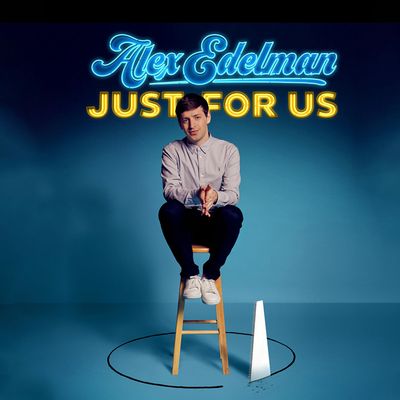
Comic genius, Alex Edelman, star of the hysterical one-man show JUST FOR US, joins Deep Dive Broadway for a fascinating look inside the world of a creative mastermind. Alex is an award-winning stand-up comedian, a television writer and an accomplished writer for magazines and documentaries... Read More
From the show: Deep Dive Broadway
Guests

Featured Shows
About
Comic genius, Alex Edelman, star of the hysterical one-man show JUST FOR US, joins Deep Dive Broadway for a fascinating look inside the world of a creative mastermind.
Alex is an award-winning stand-up comedian, a television writer and an accomplished writer for magazines and documentaries. He worked as a speechwriter for the Los Angeles Dodgers and the Boston Red Sox.
JUST FOR US was nominated for an Outer Critics Circle Award, a Drama Desk Award, Best Show in Melbourne, Best Show in Edinburgh and won a Herald Angel Award.
The New York Times proclaimed JUST FOR US "Belly-laugh funny!"
The New Yorker called the show "Uproarious".
TIME OUT said "Alex Edelman is a Master"
JUST FOR US is currently playing in New York at the Greenwich House Theatre through August 26th.
Transcript
This transcript was automatically generated and might contain errors.
[0:05] Dori Berinstein: Welcome to a very special episode of Deep Dive Broadway.
[0:09] Dori Berinstein: I'm Dori Berinstein, and I'm thrilled to welcome brilliant award-winning comic genius Alex Edelman, comedian, writer, and star of the Off the Charts Must See award-winning solo show Just for Us.
[0:24] Dori Berinstein: The demand has been so overwhelming for Alex's show that it's been extended over and over and over and it's been moved to three different theaters.
[0:33] Dori Berinstein: Alex, welcome.
[0:35] Alex Edelman: What a year.
[0:36] Alex Edelman: Aside from Just for Us, you've been on Stephen Colbert, Late Night with Seth Meyers, even PBS News Hour.
[0:42] Dori Berinstein: Wow.
[0:43] Dori Berinstein: And every big name comedian has raced to see your show.
[0:46] Dori Berinstein: Of course, we'll be talking about that later.
[0:49] Dori Berinstein: And the world of theater has embraced you big time.
[0:54] Dori Berinstein: You're a Drama Desk and Outer Critics Circle nominee.
[0:56] Dori Berinstein: Bravo, and welcome to Deep Dive Broadway.
[0:59] Alex Edelman: I mean, as someone who's obsessed with theater and has been, I don't want to say like on the outside looking in because it's not as if theater in New York is inaccessible, but like as someone who comes from the world of comedy and has always been a theater kid and loves theater. To be in the company of shows like Mr. Saturday Night or even Prayer for the French Republic and other Broadway and Off-Broadway things that I admire so much and Broadway people that I, you know, like it blows my mind. I've been feeling so welcomed by this theater community and by the people who some of whom I've grown up idolizing. So this is like one more in the series of like I feel like it's my sort of like theater make a wish, like what's going on right now.
We're like to be a Drama Desk nominee or to have been an Outer Critics Circle nominee in the Broadway Alliance, you know, like Off-Broadway Alliance, like those things are so huge for me, and I'm just like really gobsmacked by what's happened.
[1:58] Dori Berinstein: I love that you're gobsmacked, but it couldn't be more deserved. Your show is just off the charts, brilliant, it's provocative, it's genius, and everyone who is listening that hasn't seen it better go immediately and see it somehow, whatever you have to do to get a ticket because it's amazing and it deserves all these kudos that it's getting and so much more.
[2:20] Alex Edelman: That's so nice. And we've been fighting to keep the show, you know, affordable and available, which is harder than you'd think, weirdly, because I get now why some shows are so expensive. Our show is I keep my show priced at what I would think, you know, it someone in their 20s and 30s should be able to buy a ticket for.
[2:39] Alex Edelman: Yeah. Because when I was in my twenties in New York, I found a lot of stuff harder to get tickets for. And we hold an indecent amount of seats to try to make sure that we can release things day of. It's been also weird seeing like scalping and stuff like that. Like there's scalping happening where it's just like I I'm always like, please don't. Someone was selling like the tickets to our last run for our final shows. Someone was selling like tickets for like a thousand bucks a piece, and I was like, I don't make a thousand bucks a piece on that, like you know, it was so upsetting. I was so upset.
[3:13] Dori Berinstein: Oh my gosh, that is incredible. And but not shocking, I have to say, you've also had a parade of comic legends coming to see the show, which I think is well, they need to check out their competition.
[3:27] Alex Edelman: I get it. It's not that's not competition, but I mean, like when Steve Martin came, I wanted a Steve Martin and Billy and uh Billy, like he's my friend, but uh Billy Crystal and Jerry Seinfeld and Sarah Jessica Parker, all these people who've meant so much to me coming to see the show and being so supportive. And also it's not you know, it's also the folks who aren't obvious legends to people who are outside of theater, but like when Susan Stroman came, I was like failing. When John Benjamin Hickey came, I was like, oh my god, you know, Manny Eisenberg came and like uh Manny Eisenberg and I was like, oh my god. Like it is it I can't say enough about how much it means to me. And you and I have gotten to know each other, so you know how much it means to me, how much I love the history and breadth of comedy, so yeah and theater. So yeah, that's been uh it's been dynamite and just like the coolest thing in the world.
[4:24] Dori Berinstein: How does that affect your performance, knowing that these people you admire so much are in the audience?
[4:30] Alex Edelman: I have to tell you that I don't mean this from a place of like cool as a cucumber, but like when I say give it my all, I give it my all every night, and it's not out of like uh it's out of like sheer desperation. Like I really want you know someone in the audience. Joe DiMaggio used to say that he went hard every game and really focused every at bat. And someone said, why do you, you know, they were he was he was on the Yankees and the Yankees were having one of the rare losing seasons and he wasn't playing that great, but someone noticed him like really buckling down and trying to turn it around and someone's like, why do you care? It's like you guys are in last place or second to last place.
He's like, well, what if there's a kid in the stands who's never seen Joe DiMaggio play before? Which is like a little bit arrogant. Like, I'm not like, what if there's a kid in the stands who's never seen Alex Edelman do comedy before? But like also, what if there's a kid who like really loves comedy and like it could be an important show for him and like or he hasn't gotten a chance to see a comedy show or solo show in a theater, and this is like a big night out for him? Or like what if there's a lady from who knows where and this is a big she's got a sitter and she's come to the theater. So I'm not being like faux humble when I say I go hard every night or you know, that I really work for it every night, but like every night I'm always trying to make it the best show it's ever been.
[5:50] Alex Edelman: So um but yeah, when Steve Martin's in the crowd, like I heard Steve Martin's laugh, and I was like, I know that laugh, and it's impossible not to take that in. Or Billy Crystal, I could see him at the Cherry Lane, and so he would occasionally nod. And I was like, you know, I think I told you this. So I remember thinking when Seinfeld came, how did anyone ever shoot Abe Lincoln? Because I was like every line of the play, weren't people like, does Lincoln enjoy this? Does Lincoln, you know, that weren't wasn't everyone always looking at Abe Lincoln? Because I was looking at Abe Lincoln, like Seinfeld's my Abe Lincoln. It affects you in a sense where you're just like aware that they're there, but my effort is the same, I guess.
[6:32] Dori Berinstein: Does that make any sort of sense?
[6:33] Alex Edelman: Oh, it makes total sense.
[6:34] Dori Berinstein: It makes total sense. And and with what you were saying, Carol Channing always talked about how every night was opening night, and that she felt that for the audience it was their opening night.
[6:49] Dori Berinstein: So she had to show up and give that opening night performance every night.
[6:53] Alex Edelman: And she did Hello Dolly 5,000 times.
[6:53] Dori Berinstein: 5,000 times?
[6:57] Alex Edelman: Yeah, yeah.
[6:58] Dori Berinstein: Five thousand times. How do you do Hello Dolly five thousand times?
[7:01] Alex Edelman: That's a good thing.
[7:01] Dori Berinstein: Yeah, she did over and over again. But at any rate, I so appreciate that because that commitment to craft and that um, you know, commitment to the audience is such a rare thing, and so essential, you know.
[7:17] Alex Edelman: You it's great. But do you know to be candid, some audiences on certain nights are better than other audiences.
[7:25] Alex Edelman: Yeah.
[7:26] Alex Edelman: And like a matinee is usually famously quiet. In any arena of theater, a matinee is a little less uh what do you mean? Like a little little less raucous, no?
[7:40] Dori Berinstein: I think uh that there's a long history of that, yes.
[7:43] Alex Edelman: Yeah, and so I've noticed myself sometimes futile, futile in a futile way. I'll try to raise the matinee to like I never stop really pushing. And sometimes that's a skill that is not a skill, that's a um being okay with it is an attitude that's uh acquired, or not being okay with it, but like forgiving yourself or forgiving an audience for not being what last night's audience was.
[8:11] Alex Edelman: Yeah, I still actually don't really know. I'm because I'm new to New York theater, I still don't know what the appropriate thing is. Is it appropriate to try to like just keep pressing and pressing? Because sometimes an audience can detect desperation or something like that, or is it appropriate to let it go? I I don't really know the right approach or the right attitude, but like yeah, I treat every night like opening night, and I treat every show like uh but when I was coming back from COVID and I was exhausted and every night we would you see my dressing room, we have that whiteboard with the five goals for the show.
[8:44] Alex Edelman: Yes, our number one goal for a few nights after I came back from COVID was get through the show. And it was like a struggle. It's been a struggle sometimes, like giving the, you know, trying to give the audience your all every night can create an effect where you're run down or by the end of my charity run, we did three shows on a Saturday. And after the nine o'clock show, I was like, we're never doing this again.
[9:11] Dori Berinstein: Well, first of all, you know, you're doing a one-man show. It's not like you can you know do your number and step in the wings and have a sip of water and relax for a minute and then come back out. You it's you. You the entire time.
[9:26] Alex Edelman: So of course it's giving your all night after night, you know, it's a tremendous amount. And if an audience, because who knows what's happening in the world or their day and they're a little quieter, it doesn't give you that boost that you need to just like know that just know you have them.
[9:46] Dori Berinstein: What was your inspiration as a kid when you saw live performance, live theater that you just were completely transported?
[9:54] Alex Edelman: There have been so many. The Producers on Broadway when I was 12 or 13 years old was huge. My parents drove down. There was Spamalot, which toured to the Orpheum in Boston or something, and I went on a Tuesday and then on Wednesday came back and I waited by the stage door. Someone was nice enough to bring me into the theater and show me how all of the bits of the scenery worked. Because if you remember, Spamalot was very expensive actually. They really went for it. And that was gorgeous, and then in November, I think it was November 22nd or October 22nd, 2006, Billy Crystal came through. And he was doing 700 Sundays at the uh I think it was also the Orpheum in Boston. And I saw the show and that blew my mind.
And there was a comic named Billy Connolly, who I'd love to hunt down one day. He's actually, I think he's currently dying of Parkinson's in Key West, but he's a Scottish comedian who's a really wonderful act. I saw him doing his stuff in Boston. They think he did three hours with an intermission, a stand-up, a sort of stand-up comedian. It was effortless. It was brilliant. But I've had so many of those moments, you know, where you see something and it deepens your commitment. Because like there are there's comedy, there's theater, and like sometimes it happens, it happens in unexpected places. It still happens the moments where my commitment to seeing Mark Rylance and Stephen Fry do Shakespeare in rep on Broadway in like 2014 or 15, like those were special shows, and they make you want to be more a part of it all.
[11:42] Alex Edelman: It's really, it's really something. It really is like, uh, but as a young person, I think I'd have to say 700 Sundays, and I think I'd have to say Spamalots. Um, I saw lots of bad stuff on Broadway too when my parents would come into town and take me. Uh, I saw the Wedding Singer on Broadway, which was imperfect. I'm sorry I'm picking so many, but I think the one moment, if I had to pick one, was 700 Sundays at the Orpheum in Boston. That would be my answer on a game show. And so it transports you, you love it, but was it that moment, or was there a different moment where it was like, okay, I can do this. I can be in this world, not just, uh, love it, but I can—I still haven't had that. It's so funny.
I still feel I'm not being modest. I feel like an outsider, and any moment someone can tap me on the shoulder and be like, hey, it's time to go. Please give us the keys. Uh, not gonna happen. Not gonna—I know. I mean, there was, uh, a lot of the—here's the thing. You—the way it works because of reviews and things like that, you do the work and then you—maybe this is unhealthy, I'm just giving you an honest answer—but like you do the work and then a lot of the validation comes like in the papers or something like that. Like you being given a New York Times critic's pick for this show was like so, uh, wonderful because I remember how much stuff I begged, borrowed, and stole to get a ticket for because it was a critic's pick.
So being that was pretty cool. I get from a craft perspective, I've not told you about this, but I did a show in Berlin once with Eddie Izzard. Maybe I have, I can't remember. We did two shows to celebrate the 70th anniversary of the end of World War II, and it was 2015. And I did this show with Eddie, and it wasn't opening for Eddie, he was sort of headlining this night of comedians, and I got this really wonderful ovation and I thought, okay, I can, you know, if I can compete at this level, then maybe I can do it at a, uh, at a higher one. But in terms of New York, like it's all been very incremental, and even now, like the challenges get a little bit bigger.
[13:53] Dori Berinstein: Well, didn't you also do, uh, weren't you also with Eddie in Moscow? That must have been—
[13:56] Alex Edelman: Oh my god, that was—yeah, that was crazy. That was a different—it was this, it was the next night, and we were still riding high from Berlin, but Moscow was this bananas experience. This guy Johnny Riley from the Irish consulate bribed an officer to let us into, uh, Red Square because it was closed that night. It was the most unforgettable show because I couldn't believe anyone spoke English. And when we got out of the car to go into the venue, it was like we were the Beatles. Like we were mobbed, people were like pulling at our clothing, everyone had pictures of us printed out from the internet to autograph. It was like they had orchestrated this crazy thing. And every conversation I had with us, every single Russian I met was uniformly lovely, which makes what's happening so heartbreaking to me.
And there's this one kid who I met who was 12 years old named Demir. And you know, Damir, when I met him, I was like, oh my god, you're me at 12. You're just Russian. Like you are obsessed with comedy. He knew every single one of our jokes. He was like, he had gotten bootlegs from the internet, and when he talked with passion, his hands were like claws. And I still sort of keep in touch with Damir. Like I messaged him at the beginning of the Ukraine thing. He's like a sort of well-spoken, uh, 18 or 19-year-old now, and his English is pretty good because he's been watching comedy and comedy TV since he was old enough to watch anything. It's so weird to think about it because it feels like just yesterday, but it was 20—I got a poster in my wallet. It's 2015 or 2016, and I can't imagine what it would be like to go back now. I hope I get the chance one day.
[15:37] Dori Berinstein: I hope you do. I hope you do. And it was, you know, that that comedy has that impact. I mean, it had that impact on you, and that it could have that impact in Berlin and Moscow. Is the—what's the audience like? You know, you've also done so much at the Edinburgh Festival at the Fringe. So, like when you're performing for that audience versus Moscow versus Berlin versus New York, is there some way to, you know, that the audience is going to be just very different in this way in these different worlds?
[16:13] Alex Edelman: You know, that's a good question because the New York audiences catch me off guard. Like the way that I would be in an audience in one of these places is it's always different to how they actually are. I find New York audiences to be very thoughtful and sophisticated and a little bit, um, sometimes withdrawn, some, uh, withdrawn because they see so much. And, um, in Edinburgh, it's so different. Like an 815 show in Edinburgh is different from a nine o'clock show, and a show at the Pleasants Courtyard is different than a show at the Pleasants Dome, which are two venues that are part of the same entity, and a show in the ad—so like there—and because there have been so many shows done there, people understand the sort of fluid dynamic of time slot and venue and genre of comedy and early in the festival versus late in the festival, things are very different there. So, you know, I just—it's a good question. I don't honestly know that I know the answer to it.
[17:19] Dori Berinstein: And do you have to tailor your comedy for different audiences?
[17:24] Alex Edelman: I try very hard not to. Mm-hmm. Because I think also audiences go—if they go to see something that is from the background that they are from, they go to sort of connect with the universality of that, or they go to connect with the differences between, you know, their upbringing and your upbringing. So people who are modern Orthodox Jews, even who come see me have gradients of modern orthodoxy that they either see me differing from or in similarity with.
[19:08] Alex Edelman: When I'm in the UK, I describe going up to the third floor of this building, uh, in the show. And then I pause and I look at the audience and I go, or if you're British, the second floor, because they—they have their—and it's a little, and it's one line, it's a little joke that's been like, all right, you guys are crazy for doing that, but like whatever. Um, and that joke wouldn't work in that—in the US that joke would be like a little bit of a weird, uh, a weird detour. They'd be like, I mean, yeah, I guess they do that, but it seems like an odd thing to do. So I try to exceed to where I am, but not too much.
[19:44] Dori Berinstein: I love that. I think that's a good one. What a needlessly thorough answer. I'm giving you such long-winded answers to such good questions.
[19:51] Alex Edelman: I love your—I love your answer. You know, we—I think we talked about it at some point, but a long time ago I interviewed the creators when they were all with us of Fiddler on the Roof, and I asked them what was their favorite production ever of Fiddler. And they—they all agreed that it was a performance that they attended in Japan, and that afterwards there was this big banquet that was arranged for them afterwards, and they were just surrounded by people who thanked them for telling their story in Japan.
[20:24] Alex Edelman: I love that. I think there's a very good conversation that happens around cultural appropriation about like, but I also think that in some cases—and by the way, there are smarter people than me and more tactile people than me who have that conversation—but I also love watching things, uh, from one area through the careful and loving filter of another area. I think it creates good art. I think it's—I've also seen Shakespeare in other languages, and I think there's something really gorgeous about translation, and I think there's something really, uh, respectful and interesting about like I would love to see Fiddler on the Roof in Japanese. I would love to see Fiddler on the Roof in Qatar or, you know, uh, Kuwait or any—any country that might—might have it because, you know, ultimately the thing that I think—Keys Heble coming back to Shakespeare is there's something—like Shakespeare's not the only playwright who survives from that era.
There's something gifted about Shakespeare's writing in a way that means any angle that you look at it from, it has prismatic value. And so I think really good art from really—from different cultures being examined by other cultures is a really—is a really worthwhile thing.
[21:45] Alex Edelman: I was doing some work in Amsterdam, and my daughter Sammy came to visit me, and we drove to Hamburg to see a preview of the, uh, out of country tryout of Rocky the musical, Rocky Dusk musical. And wait, Rocky, Rocky, Rocky?
[22:07] Dori Berinstein: Rocky?
[22:08] Alex Edelman: Rocky. Like fighting Rocky, fighting Rocky before it was on Broadway. We went to Hamburg and we saw it, and it was—and it was not in English, we do not speak German, and it was fabulous. It was fabulous because, you know, we knew the story, and we were imposing our own version kind of on the—but seeing the sets and the performance and the songs, and it was so magical. It was so great. I would do it, uh, yeah, I want to see productions like that all around the world of different shows because it—they approach it in a slightly different way, and, um, it was fascinating and I loved it. I love the idea of like, no, Rocky's angry, not Rocky's sad, not Rocky's fighting. Now Rocky's in love, you know, like it was—you don't even need to—
[22:57] Alex Edelman: Ah, that's so cool. And also, you know what's great? I've seen shows in languages I don't speak before. And you can tell who's a good actor and who's not. Even though you don't know it's happening, you're like, oh, that girl's fantastic. That boy's not very good. That—you know, like it's a real funny. It's a real funny thing.
[23:15] Alex Edelman: I've seen shows in Arabic, which I don't speak. And I'm like, well, that was I saw the taming of the shrew in Arabic. Wow. And in a place called Cologne in Israel. And there's a blind museum there that has theater, and it's a really thoughtful museum. It's a museum about the experience of being blind for people who are not blind. And although I hear it's also good if you're blind. But it's this beautiful museum, and they did taming of the shrew, and I saw it in Arabic, and I was like, wow, this is really spectacular, and also that person's good, that person's not good, that person's good, that person radiates no charisma. Like it's a really interesting I would watch I'd watch a good actor do anything in any language, is what I'm saying.
[24:06] Dori Berinstein: Oh yeah, me too, me too. You know, I'm gonna bring this up because it's in your description of the show, otherwise I wouldn't want to ruin anything for anybody who hasn't seen the show. But you know, you tell this insanely fabulous story about hanging out with white supremacists. Um and I'm just I'm curious to know because it, you know, the takeaway obviously is just not to give anything away, but it's it makes you think so differently about people, and you have an amazing ability to I think bridge divides and bring people together and to have them think differently. Um so first of all I want to know did you invite any of them to see the show or do you know if they have seen the show? And you know, maybe you should run for political office because I think that that's needed now so desperately.
[24:59] Alex Edelman: I have no way of getting in touch with any of them. All of them are thankfully gone from even the portion of the internet that I used to be that I caught them on. Uh so I have no idea if any of them have seen it. I have a fear every night that one of them will see it and be like, Oh my god, this is a gross mischaracterization of our views. And although my therapist was like, You think someone's gonna show up and be like, excuse me, as a Nazi, I feel very misrepresented. But um I also think that in comedy, uh so like first of all, thank you. Uh I think that in comedy one of my least favorite things is easy targets. Sometimes folks say punching down to indicate and I've seen and there is a lot of comedy that punches down.
There's also a lot of comedy that punches up in a really lazy way. And uh, if that makes sense, like comedy should speak truth to power, but sometimes someone's like, you know, I just think that sexism is bad and everyone's like or you know, uh I also didn't want the show to be about a bad thing that happened to me, which is um there is an element in the show of someone I used to date, um that's infused in one of the characters or one of the people at that meeting. This girl who I met on the Upper East Side when I was uh very young. Uh or not very young, I guess right out of college. And there was an aspect of that in the show, and like I don't know. I think it's uh I think the show does its best not to do um easy punching.
[26:37] Alex Edelman: Like Pauline Kael, the movie critic for The New Yorker for many years, gave a bad review to a movie. I think it was Tr Justice at Nuremberg, which is about the Nuremberg trials. And she said it takes a brave stance against being a Nazi. I never wanted my shows to be you should walk in there knowing that it's not good to be a Nazi, or it's not good to be a white nationalist or a white supremacist. I would call them white nationalists, because in my mind a lot of this stuff, or I don't know what I call them. They were espousing a lot of views that I would say are white supremacists. But I think just letting the show be observed instead of making generalizations does a lot of work and people draw their own conclusions.
Some of those conclusions are surprising. I think I do my best not to editorialize the thing too much. I want to give it a sense of perspective, an authorship and a point of view, but I don't want to create too much dicta. And I think doing that, which is by the way, something that Adam Brace, my director, who's the artistic director at the Soho in London, has encouraged and has fostered, I think has created an environment for the show that makes it um a little more interactive and a little more um tangible in a way that like you can actually take it away from the theater and think about it and talk about it and argue about it. People reach out all the time to let me know that they argue about the show with their friends and their family, or they come out of the show with this point of view.
People reach out to let me know things they don't like about the show, things that they do like about the show. Like, there is something about the show that lends itself to uh I think self-reflection and general reflection and asks a couple of tough questions and people sit next to each other sometimes at the show and walk away with completely different interpretations of it, which is what's something I really love.
[28:28] Alex Edelman: I don't know if that answered uh the question. Oh also I won't run for office. Like I want to be effective in my life, so I don't think running for political office is a good way to do that. But um But yeah, also I've uh I cursed and uh on TV, so I think that probably precludes me from ever being an elected official, but like Oh yeah, because that's that's the worst thing elected officials have been ever done. Um It's so weird. I'm always like, how's anyone my age ever gonna be president? But then you see like someone like the last guy, and I was like, oh yeah, well, the last guy did worse stuff, but yeah, I think so. But I I uh I think that your comedy accomplishes what what uh you know politicians are unable to clearly these days. It really does bring people together to to think and to consider different perspectives and consider consider a different viewpoint on a situation. And I've I've seen your show three times, and I'm going to go again.
[29:23] Dori Berinstein: Oh god.
[29:23] Alex Edelman: And again, I love it. I love it. And I and all the discussions that I have when I'm there are different every time, exactly what you're talking about because it's it, you know, it's so jam-packed with those sorts of things. Um I'm also you know, you're all your parents and your your Bob Sledding Olympian brother. They're all they're all uh very much uh part of your storytelling. Um and I ha I've got to ask, you know, are they are they proud? Do they feel like people should be asking them for the autographs or do they feel earlier?
[30:00] Alex Edelman: They chepnach us as the term goes. They get I think they get something out of it. Yeah, they're really happy and pleased with the reception. And my mom's even a little bit smug. She's like, the Newmans reached out for tickets, but I uh you know, it's sold out, but I I told them months ago to get tickets, so they you know, they should have just gone and got it. It's very affordable, I told them, but now they want free you know, they want tickets from you. So like so she's a little bit like uh I think my pa my parents are my parents are very pleased. But you know, uh not all of my work is gonna be critically acclaimed. So I try to tell them that. I was like, I'm gonna take some chances at some point.
P I might do a thing that's a total dud. So you have to be I'm trying to to say to them, like, hey, the reward for this is not all of the external validation. It's that I'm lucky enough to do a show in New York and that people are coming to see it. So enjoy that and also be sanguine about what this means. My father's pretty good about that. My mother is also pretty good. My mother worries for me. She worries all the time. Like when the first run sold out, she was I was like, We're gonna add another run. And she was like, But it's been such a success. Maybe like maybe just sort of like go out on top here. And I was like, and then when the second run sold out, I was like, we're doing a third run, and she was like okay, okay, fine.
Do a third, but like, yeah, they're very supportive. They're very uh lovely about it. They also always encouraged me to do what I you know, the sort of like immigrant immigrants' dream, which is that you're um the someone the first generation comes over here and they work, you know, a very tough job so that their children can go to college, and then their children go to college and they become doctors or lawyers, and then their children become DJs. So and and squander everything that the previous two generations have hoped and dreamed for. So like I think my parents encouraged that. They were just like, do something interesting, do something fun, swing for the fences. If it doesn't work, you can always, you know, change.
But yeah, I think they're very happy. And my brother AJ is still trying to uh accomplish a second Olympic goal. He's he's still competing in the Bobsled arena, and they're going for the Olympics in uh whatever the next cycle is coming up, 2024 in Milan. So he's still very active and uh and yeah.
[32:23] Dori Berinstein: I love that your parents have embraced this. And I'm when you were a kid, were you always gunning it for I'm going to be this, I'm gonna be a comedian? Were you voted like most likely to be a comic genius or something like that?
[32:38] Alex Edelman: Oh no, no. No one thought I was funny. I'm also even not like the funny friend. Like all my friends are the funny friends. I'm like very, very like earnest, quiet, and ponderous in my everyday life. And then if you can't tell from this incredibly earnest interview, but uh but occasionally I get I like I don't know, I still I love to crack a joke, and I am like I guess that's I guess I am kind of the funny friend, but I'm I think I'm the funny friend. But like I'm not the only I'm not the only one. And growing up I was uh the artistry of comedy always grabbed me, but it was never this this was never the plan. The plan was like I had a job in baseball when I was younger. I was really into baseball, and I walked into 700 Sundays because I was a baseball fan and I heard there was a baseball component.
And in fact, I did purchase a $30 baseball from the souvenir stand. It was the most expensive uh souvenir. Theater souvenirs are too expensive. Let's be real about drinks are too expensive and souvenirs are too expensive. And I have to think they'd sell more if they were at a more affordable price point but that's not my it's not my business or my problem. But like uh but yeah I was a big baseball fan and thought that I would work in baseball my entire life and then this is just kind of a hobby that's gotten out of hand is really what's happened. This hob it's never been which is why I think I still love things. Like why I think I still love it when you know like Susan Stroman or Tommy Kail comes to the show I'm like oh my god oh my god you know like because if I was cool and like if I understood what was happening in a very real way I think I'd think I'd be enjoying it less so um but yeah I it was never the plan but but I also never thought of quitting so it's and I still don't ever think of quitting even when things are really bad even in the middle of the pandemic when all my work had gone and I was sort of dried up and feeling bad about myself like I'm sure everybody who's listening to this did during the pandemic it was it was the worst two years of all of our lives like even if you were bullied in high school like this is like my it was still it was still not a fun uh it was still a really unfun time but I never I've never thought of quitting comedy and even if it all went boom tomorrow even if like you know even if the tide shifted in a major way and all of a sudden white supremacy was back in fashion culturally and they were like this guy did this show is you know, like, and I couldn't I'd like change my name and move somewhere and keep trying to do stand-up.
[35:06] Alex Edelman: Like, I love stand-up comedy so much.
[35:08] Dori Berinstein: I'm so happy to hear that.
[35:09] Alex Edelman: This week, four members I have to ask this question, four members of SNL retired from SNL.
[35:17] Dori Berinstein: And I can't imagine, yeah.
[35:20] Alex Edelman: I mean, first of all, you should be the host, but not just a cast member. But I mean, was that ever a dream of yours to be part of that world?
[35:27] Alex Edelman: I still kind of I still kind of want to do everything. Like my comedy is I one of the reasons I picked comedy is because it was dilettante by nature. Comedy goes into musicals, it goes into solo shows, it goes in this comedy clubs in the deep south and the heart of the Midwest and the coolest coffee houses in Portland and the, you know, and theaters in Moscow and Berlin and and Dubai. And so I loved comedy's modality and mobility. Maybe I'm using real modality wrong, but SNL is a certain is certainly like the pinnacle of one of the places comedy goes. And so I would love to work on SNL. I'd love to be uh I love a window into uh I'll be maybe because I'm Jewish, I have a almost unhealthy love of institution, especially uh institution and uh I love institution and I love things that have staying power, so I'd be really and uh also most of the people who work on SNL are either people I've performed with or spent time with, or even a few really good friends.
Mike Senzo, who's a writer there now, has been somewhat of a helping hand all the way through this, even he saw it in its first workshop performance in New York. Jake Nordwind is one of my closest friends, he and his partner Chloe Feynman uh work on the show and write on the show and perform on the show. So like and John Mulaney, who's one of my favorite comedians, he's uh he was he worked he he worked on the show for many years. So like, so like yeah, it's something I it's something I'd still like like to do. But I also like have an unhealthy thing where I'm like, I still think I might play in the NHL. Like I know it's very unlikely, but I still am like, you know, maybe they decide to draft somebody and take like uh maybe they decide that they need a uh like English literature major to play goalie for the Bruins and like and like I'll get drafted and the commissioner, the only Jew involved in the NHL comes on stage at Madison Square Garden, and he's like, and the Chicago Blackhawks with their 43rd pick take Alex Edelman, Dov and Yois of Edelman, you know, like it's uh so yeah, I some things, even the things that I'm past uh career-wise, uh which I'm not which is not what I'm saying about SNL, but even things I'm some past career-wise, I still kind of want to do and and kind of have a love of and uh and like I think a big joy of this show has been access to communities and worlds that I had only ever dreamed of uh meeting theater kids or meeting people who are aware of me now because of theater, like I've been to a couple of openings.
I went to the Funny Girl opening, I saw you there, I went to the opening of POTUS. And like, you know, part of it is like running into these people who are there because they love theater and they're at every Broadway thing, and they're like, Alex, and I was like, Do I know you? And they're like, I saw your show, and they're like, Do you they want to gossip and talk shit and like and you know, talk about who's doing what and like I don't know like I've never like I have huge blind spots. Like I've never seen Wicked, I've never seen Phantom. Like, like I've never seen Chicago. I know. I these are things I need to go do, and I will, but like I just like I just like the entree into these sort of into these new worlds. And it's what's provided and it's what the show has provided me, and I'm really eager to investigate it.
[38:49] Dori Berinstein: Well, I could talk to you for days and days, but I w I'm gonna end this with one last question.
[38:56] Alex Edelman: Sure.
[38:56] Dori Berinstein: I am wondering if you could have dinner with anyone past, present, living, not living, whatever. Four people. And tell me who you would invite to this special dinner party and what would you want to talk to them about.
[39:12] Alex Edelman: Okay. This is an impossible question. I used to host a podcast called Dream Dinner, which uh had one episode made as a pilot for Comedy Central before Comedy Central kind of imploded. Um and our one guest was Josh Groban, uh, for our pilot, and he gave amazing answers and the show was a wonderful show to do, and all right. So I love this question. Four people living or dead. Um I missed out on meeting Gary Shanling, who is one of my favorite comedians in Shanling, was a fascinating character for me. And so I think he's someone who I'd really uh love to have dinner with. Um there's uh the architect Frank Lloyd Wright, who seems like a monster, but also sort of a genius. So there's there's that.
Living or dead four people. I love I love Emily Dickinson's poetry, so but I don't know how fun she'd be at a dinner. I don't know how fun she'd be kind of a downer, like Shanling would make a joke, and she'd be like, uh, you know, life without uh All right. I mean, uh these are these are gosh, these are gosh darn hard qu this is uh this is the hardest question. All right, so we've got Shanling, we've got uh Frank Lloyd Wright, uh the boxer Jack Johnson, who is a really fascinating character, uh to me, I think is a really um I think really is like I think you can't miss out on uh on Jack and also just because I feel like she'd be so fascinating, Barbara Streisand. I'm just like, what is going on with Barbara Streisand?
Like it because she weirdly seems accessible, but also very much not. Like she seems like she's like a human being, but she also has a mall in her basement. So, like, like what's going on? Like, you have a mall in your basement, and also you seem amazing and really fun and cool. So, like that feel like, but also I'd love to be sat at the Algonquin round table and hear those like waspy monsters, like talking, you know, talking horrific shit about people, and like I'd love to, you know, meet uh I had an interaction once when I was a kid with this guy Vaclav Havel, who was a poet who was also the president of the Czech Republic and like one of the leaders of the Velvet Revolution there, and like that that short interaction was like something I'll never forget.
So, like there are world leaders and then there are entertainers and stuff, and I know I've picked entertainers mostly, but Barbara Streisand, like what's going on, Barbara? Like, she's Barbara. And also, like, how does she feel about like I have so many questions about like how do you feel about A Star is Born? How do you feel about Funny Girl? Like, how do you feel about like some of these properties? What are the things that you wanted to make but never got to? Do you s have you watched Prince of Tides recently? Like, what's going on? Like, also, like, I hear you have yogurt machines in your basement, like in the mall. Like what flavor of yogurt? And also, like, do you get it changed out?
Like there's so many questions I have for Barbara. So I think and I also think that even if I invited like Genghis Khan, Martin Luther King, uh, you know, and uh everybody else, like I still think Barbara like would dominate the conversation. Like I think, you know, I think Barbara would just absolutely like if she was in a good mood, maybe she's in a listening mood sometimes, and Mark Barbara mostly listens, but like if Barbara was in a chatty mood and she's feeling pretty good, someone's written a nice retrospective on Yentl or something, and like she read it earlier that day, so she's feeling a little froggy. Like, like, I think that would be the most entertaining. So, and by the way, like uh you said living or dead.
Like, I'm kind of okay with everyone who I picked who's dead being dead, and it's just their dead bodies and Barbara Streisand, and we talk about like, you know, you say living or dead. Although it'd be nice to have certain politicians at the table who are alive now dead, so that I could be like so and so dead. So it's sorry, but yeah. Um it's a question I think about a lot. So you have to promise me when this happens, you're just gonna tell me so I could be at the next table.
[43:25] Dori Berinstein: You're invited. You're you're invited, but you you know how much I love conversations with my betters and my teachers, and so um, and so frankly, I tr I've treasured every I've gotten the chance to talk after these shows to Seinfeld and Crystal and Steve Martin and Manny and Susan and And it's been a even in those moments, there's been a real learning experience. I'm using a different kind of microphone because Billy recommended I use a different kind of microphone, and it really has worked out, and uh I never wanted to use one of these microphones. I was always comfortable with this microphone because that's the microphone I've used the 10 years I've been doing comedy, but but like when you if you have comedy greats in front of you, I think it's a mistake not to ask for no the only person I didn't ask for notes is Judd Apatow because I can't I I'm too afraid of I mean he means a lot to me and I respect his comedy brain almost more than anybody else's. Uh and he works constantly in comedy still and is uh on the cutting edge.
And I'm like I was like, thank you. I'm not gonna and also everybody asks him for notes, I'm sure. So I just I let him I let him live his life. But but yeah, I've taken full advantage of the comedy greats that have come to my show and also regular people. I'm outside after almost every show. And I talk, and you've been out there, I'll talk to people for as long as that they want to talk uh about whatever they want to talk about. And sometimes I hear things that make me change little things in the show.
[45:01] Dori Berinstein: Well, uh everyone who is listening, Alex Edelman, you better be paying attention because this guy is gonna make you laugh and think and laugh and think and laugh and think for years and years and years and years to come. Thank you so much.
[45:15] Alex Edelman: I adore talking to you.
[45:18] Dori Berinstein: I love talking to you. It's you're my I'm not exaggerating. You we've had more dinners and chats together than anyone else over the course of this run, and it's been just a pleasure.
[45:28] Alex Edelman: Wow. Um you've been such a firm guiding hand and such a great place for advice. And I I cannot thank you enough for having me on this and just being um present for uh for everything. So thank you. And I will I just cannot wait to see what's next in your future. It I'm on the edge of my my seat. I'm so excited. So thank you very, very much.
[45:52] Dori Berinstein: Thank you. Thanks so much for joining us on Deep Dive Broadway, and thank you to Alex Edelman. Obviously, I admire this guy endlessly, and I'll be first in line to see anything he creates. If you move like lightning, you may be lucky enough to get a ticket to see Just For Us at the Greenwich House Theater, playing now through August 26th. Otherwise, please check out other Deep Dive Broadway episodes at bpn.fm slash deep dive broadway and all the amazing podcasts you'll find on the Broadway Podcast Network.
© Broadway Podcast Network, All Rights Reserved