

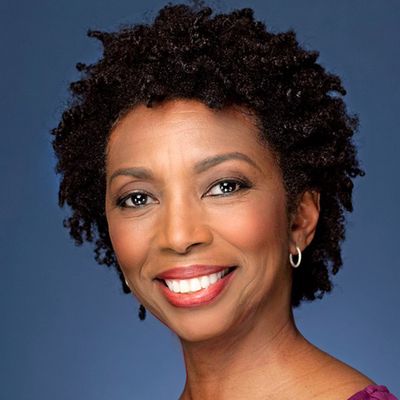
Join me producer donnie l. betts for my conversation with SHARON WASHINGTON (Co-Book Writer) "New York New York" Tony nominee. A proud Native New Yorker with her family living in Manhattan since 1835, Sharon is celebrating over 30 years as an actor... Read More
From the show: Destination Freedom Black Radio Days
Guests
Featured Shows
About
Join me producer donnie l. betts for my conversation with SHARON WASHINGTON (Co-Book Writer) "New York New York" Tony nominee. A proud Native New Yorker with her family living in Manhattan since 1835, Sharon is celebrating over 30 years as an actor. She is thrilled to continue her collaboration with this incredible creative team who she worked with on The Scottsboro Boys musical—this time as a writer. Sharon made her debut as a playwright with her solo play Feeding the Dragon. Off-Broadway it was nominated for an Outer Critics Circle Award, Lucille Lortel Award, and won an Audelco. Published by Oberon Books it was also recorded as an Audible Theater Original. She is currently writing a children’s picture book version for Scholastic Books. Sharon is a co-writer/executive producer on a project in development for Disney+. She is a proud member of AEA, SAG-AFTRA, and The Dramatists Guild.
Transcript
This transcript was automatically generated and might contain errors.
[0:00] Donnie L. Betts: Next up on Destination Freedom, Black Radio Days, The Eclectic, our conversation with Tony nominee, Sharon Washington.
[0:07] Sharon Washington: I would tell people about this, and nobody would quite believe me. Or they would say, Oh, what a great story. The little girl who lives in the library. You have to write that story. You have to write that story. And so for years, I thought it would be a great picture book for kids and the little girl who lived in the library and the fairy tales and the stories that I would, you know, make up downstairs by myself and true story that I tell every now and then. One day I was doing a production of Cymbeline at the New York Shakespeare Festival, and Wendell Pierce was in it. And I remember we were sitting around talking and telling different stories, and we were talking about our childhoods, and I told Wendell that story, and he said, Okay, look, if you don't tell that story, I will.
And so he said, I give you, I'll give you a few years, and then I'm just gonna tell it myself. So we would joke back and forth. So finally, um, in 2016, I did the world premiere of my play, Feeding the Dragon, which is about my family and my time growing up.
[1:10] Donnie L. Betts: Fresh for your years, tell everybody. It's the new podcast from the producers of Destination Freedom Black Radio Days. Produced and hosted by Donnie L. Betts of No Credits Productions comes The Eclectic. Interviews with difference makers, artists, authors, bold thinkers, people we love who get stuff done. Our guest is artist Sharon Washington, one of Sharon's latest achievements is a Tony nomination for best book of a musical. New York, New York, with David Thompson and Sharon Washington. Hope you enjoyed.
[1:50] Donnie L. Betts: All right. Welcome, Sharon.
[1:53] Sharon Washington: Oh, it is so good to be here. Thank you, Donnie. I'm I'm thrilled. Absolutely. I'm thrilled.
[1:59] Donnie L. Betts: All right. Let's start with the question that I asked all of my guests, and it's from my mentor, Dr. Vincent Harding, who is a great, great academic hero and also a colleague of MLK, wrote speeches for him and that sort of thing. Tell us your full name, your mama's name, daddy's name, your mama's mama's name, your daddy's daddy's name, and where you spent your childhood.
[2:22] Sharon Washington: Oh my goodness. All right, let me see if I can let's see if the memory holds as I run this down. Okay, my full name is Sharon Washington. And my mama's name is Consuelo Henry. She did not have a middle name. She was um, she wanted a middle name. I think she probably made one up for herself, but her full name was Consuelo Henry. Uh everybody called her Connie. My daddy's name was George King Washington, and uh everybody down south called him King. Oh, okay. He's from South Carolina. Um, and my mama's mama's name was uh Cassandra Henry, and my daddy's daddy's name uh was Robert Washington. And I spent my childhood born and raised in New York City on the upper west side of Manhattan, then we moved to the east side, but uh all all of my childhood was spent uh on the island of Manhattan, New York, New York.
[3:28] Sharon Washington: And sometimes your heart breaks with a deafening time. Somebody loses and somebody wins, and one day it kicks, then it kicks in the shits. But the planet spins, and the world goes round and round.
[4:02] Donnie L. Betts: Beautiful, beautiful. Thank you so much for sharing that information. So one of the things about interesting and fascinating about your childhood is the fact you spent some time in a very sacred place, I would say, because one of the places I love are libraries. Let's talk about the book, the podcast, the film, the stage show, known as Feeding the Dragon.
[4:32] Sharon Washington: Yes, feeding the dragon. So for your audience, I was uh born and raised, as I said, in uh New York, New York on the island of Manhattan, and my father uh was a custodian for the New York Public Library system. And back in the day, these old libraries, these uh very large old buildings were heated with uh coal. It was a coal furnace, and the custodians had to make sure that that furnace was stoked 24-7. I mean, that's how the buildings got heat, hot water. Um, and so there were apartments, custodial apartments inside um all of the Carnegie Libraries um in Manhattan. And these again are these big old, including the large one with the lions out front on Fifth Avenue. Um, the very well known landmark.
There was an apartment in there. Um, so very few people knew that it's starting to become more and more um known that these custodial apartments were inside above the library. So I had a key as a kid I had a key to the front door of the St. Agnes branch on the of the New York Public Library up on 81st Street and Amsterdam Avenue in New York City. I opened the front door and then inside and up three very steep flights of steps and our apartment was inside on the top floor. So that was my childhood and when my father locked up at night I'd I yes I had the entire library to myself. I was an only child an only child of old older excuse me an only child of older parents and so um I was quite inquisitive and um quite grown from my age as people would say and um I would spend a lot of time uh by myself downstairs uh in the library well sometimes my dog Brownie would come down with me but um when it was empty reading you know I had access to everything my it w what was good is my parents knew I was safe because the front door was locked they always knew where I was I wasn't outside on the streets of New York um so that was you know that was the library with my babysitter because both my parents worked my father was stoked in that furnace and keep it a very very large building clean you know polishing those marble floors and all that wood and everything he did by himself taking out those big cans of trash and so he worked all the time.
And my mother was a secretary, uh a church secretary. So I the library was my babysitter. I my grandmother lived with us. Um and so she would read stories to me, and then I'd go downstairs and I'd get a book. And when I mean get a book, I mean just pull it off the shelf and take it upstairs. And so that was my life. And I would tell people about this, and nobody would quite believe me. And or they would say, Oh, what a great story. The little girl who lives in the library. You have to write that story. You have to write that story. And so for years I was thinking about writing his children's book. I thought it would be a great um, you know, picture book for kids and the little girl who lived in the library and the fairy tales and the stories that I would, you know, make up downstairs uh by myself and all the characters I would create.
So I I never quite did that. And then um, as you know, I I took up this uh habit of acting, and I went to uh drama school, which is where I met Donnie, and uh and so the years went by and I never really did anything with the writing, you know. Uh a career as an actor or trying to make a career as an actor takes a lot of time and focus, and I couldn't focus on anything else. And then one day, and this is um true story that I tell every now and then, one day I was doing a production of Cymbeline at the New York Public, not the New York Public Library, I was doing a production of Cymbeline at the New York Shakespeare Festival, um, directed by Joanne Acolytis and Wendell Pierce was in it. And I remember we were sitting around talking and telling different stories, and we were talking about our childhoods, and I told Wendell that story, and he said, Okay, look, if you don't tell that story, I will.
And so he said, I give you, I'll give you a few years, and then I'm just gonna tell it myself. So we would joke back and forth. So finally, um, in 2016, I did the world premiere of my play, Feeding the Dragon, which is about my family and my time growing up in the library. And I did it at City Theater in Pittsburgh, and then it went to Hartford Stage in Hartford, Connecticut, and then it premiered off Broadway. Um it took me a lot longer than I thought it would, but um, it was a solo show.
[9:21] Sharon Washington: To me, the furnace room was an enchanted cave where I could watch Daddy feed the dragon. The giant silver furnace had slanted vents that looked like eyes and a big metal grape that could definitely pass for teeth. It crouched against the back wall in the basement. I loved watching daddy work. He was like a knight from my blue fairy book, St. George and the Dragon. He stood tall between the terrible beast and me, and I wasn't afraid. The furnace room had a low ceiling with a bare light bulb hanging overhead. There were thousands of pieces of black coal piled up almost to the ceiling. They sparkle when they catch the light. I'd seen an episode of Superman on TV once, where Superman changed a piece of coal into a diamond by crushing it in his super hands.
Put it under a million tons of pressure for a thousand years, and you've got a diamond. I squeezed as hard as I could. But no diamond. Just clueless. And um to my great delight, it was accepted very well. It was received very well. And there's now an audible audiobook version of it. And there will be uh it's in the works to be developed into uh a hybrid of uh animated and uh live action uh series. Nice. And I am eventually um going to finish my draft of the children's book, which is what I started out doing. I have a deal with Scholastic to finally get that children's picture book done. So that's my journey with feeding the dragon and telling my story.
[11:19] Donnie L. Betts: That's amazing. And you're right. I'm so glad that Wendell Pierce and others have helped encourage you to tell your story, share your story with the world because it's so important.
[11:27] Donnie L. Betts: Um, not just for people who enjoy stories, but also for young girls, you know, looking up to you to say, ah, this is what I can do as well, too.
[11:40] Donnie L. Betts: So you talked about this amazing career that you've had, and it's been a really a nice ride for you.
[11:46] Donnie L. Betts: More than a nice ride, it's been a wonderful ride for you to over the course of your carving out your career, and it's never easy. So people look at you as your recent success and think, oh well, she's always been, you know, at the top of her game, you know. Um, but it hasn't always been that way, you know. You started out for as college is concerned, you attended Dartmouth. Am I correct?
[12:08] Sharon Washington: Correct.
[12:09] Sharon Washington: That's correct. Yep. Um let's talk about that journey and then your transition into YSD.
[12:16] Sharon Washington: Sure. Um, so uh I always go back to yes, I was a New York City girl and born and raised, and when I it came time to uh apply to colleges, I wanted to go somewhere that had the true what I thought was the true college experience. I didn't want to um stay in the city. I wanted to have that on campus, full college experience. And um so one of the places I saw and I never visited was Dartmouth. And it had the picture postcard look of a college. It's you know the nickname of Dartmouth, one of them is the College on the Hill. So it's this perfectly picturesque on the green, the buildings surrounding the green, like everything about it said college to me. So fortunately I got in and I um I spent four years uh at Dartmouth having an amazing experience uh not only because of the arts, but because of my some of my professors, uh William Cook and Errol Hill, and um there were just uh there are too many to name, but I I really found myself and my voice because there are not that many, and certainly there weren't that many uh black students when I was there, and certainly not many black women when I was at Dartmouth.
When I was at Dartmouth, it was still transitioning uh from its uh first class of women. So when I was there, we were only about the sixth or seventh class of uh of women attending Dartmouth. So it was um it was a unique experience, and I think it was a very formative. I don't think I know it was a very formative experience for me because not only is Dartmouth a great institution as far as the arts and sciences and a true liberal arts education, because I felt like I learned so much about things besides the arts. I was actually a government major. I was going to so they call instead of political science, they call it government at Dartmouth. And you could either do the international or the national track.
And I studied international government relations and my dream, because at the time I spoke a fairly uh fluent French. And I was going to go to a French speaking African country and uh join the foreign service. I had registered for the foreign service exam. I was ready to go.
[14:47] Sharon Washington: Fantastic. And um the but the great thing about Dartmouth is that you could major in uh one thing, but the arts is open to everyone. So while I was majoring in uh government, I was also performing on the Hopkins Center stages, and I was uh performing with the Black Underground Theater Association, and we were creating our own work, and again, our professors um at predominantly our black professors who were really interested in the arts. Um again, Errol Hill, who started my love of Shakespeare, he wrote this great book called Shakespeare and Sable and William Cook and it was just Bill Cole, a great musician. Um so they fired our senses in a different way.
[15:35] Sharon Washington: Okay. And um, so it was a really good combination. So anyway, I I registered for the foreign service exam, and then I started thinking I'm gonna go home to New York, maybe during the summer I'll I'll just look at different things before I, you know, go somewhere else, leave the country. And it just so happens that Barry Grove, uh the managing director of Manhattan Theater Club in New York City, uh starting with class of 73. So I went in and I had a conversation with him. They always say, reach out to the alumni network and you know, chat about your future. And I went in and I talked to him, and they were they were just finishing doing like Ink Misbehaven, and they were doing all of these really new exciting plays along with the classics.
And um I said, Well, you know, I'm also interested in the theater. He said, Well, I can't help you with that, but I have a job in the box office. Do you want to take that for the summer? And I was like, Yeah, sure, I'll learn a little bit about the theater, I'll get to see some really great shows for free. And um I never left after I after I got the job in the box office. I stayed for the summer, and his assistant, Barry Grove's assistant left, so I became his assistant for two years. So I was assistant to the managing director at Manhattan Theater Club for two years, where I learned everything about running an off-Broadway theater from someone who knows his stuff, right? So that was a huge plus for me.
[17:01] Sharon Washington: But even while I was doing that, I just I would go see shows and think, but I want to be on that side of the stage, right? I I want to be up there. I just couldn't get rid of the Jones, right? So um Lynn Meadow, um, who is the artistic director for the Yaeli. So I all these actors kept coming through, and they were they all had this common denominator, and I didn't know much about YSD. I I I was like, I know what it is, but I I really didn't, and I certainly wasn't interested in going to graduate school. I'd just gotten out of school, and but I just kept seeing these compelling performances, and then what sealed the deal was I saw Rock Dutton do the original Ma Raineys on brought on Broadway.
And all I could think of was I don't know what and and everyone else, Alita Mitchell and and um the I I just again I was blown away and I thought I I don't know what these people are doing, but I need to be doing this. And um and that's how that's how I ended up applying to Yale.
[18:12] Sharon Washington: Wow. And um and spent my three years there. Uh again, just I don't think I'll ever work that much again, you know, going from classes from eight to whatever to your first set of rehearsals for you know, whatever production you were in to your second set of rehearsals because you were probably doing a cabaret as well, and you know, working with directors, and that's where you start, you know.
[18:36] Donnie L. Betts: Well, we're a perfect example.
[18:38] Sharon Washington: That's where you start finding your network, finding your drive, right? Over all these years, and you know, not gonna name drop, but I am, you know.
[18:47] Sharon Washington: Um why not? Yes, you know, um doing Lynn Nottage's first one of her first plays in drama school. I mean, we're friends to this day, right? But I remember doing her work at school, and of course uh being around for the golden days of August doing all of his work at the O'Neal and then to the rep and then to Seattle and being part of that, you know, watching those plays, watching fences and watching Joe Turner, and then being in piano lesson. I mean, it was just it was a great formative time.
[19:24] Sharon Washington: So that's that's the history there between uh Dartmouth and Yale, and that's how I ended up where I am today.
[19:33] Donnie L. Betts: You are listening to Destination Freedom the Eclectic and we are very excited to be joined by artists and I say artists because he's mostly hyphenated Sharon Wilson. Who recently had a uh is a Tony nominated for her book with um David Thompson for New York New York it's once again you you you working with the with the team of Cantor and Eb you had worked with them on on Scottsboro Boys as an actor let's talk about then that transition now from actor to creating a book for this new musical sure um I um as you said I was I was cast in the Scottsboro Boys back in 2010 and you know I'm trained in um the legit what we call the legit theater I don't know from musicals and um I mean I enjoy them but I I I would certainly never go to a audition where I had to sing and and uh compete with some of these amazingly talented performers in the musical theater business.
[20:43] Sharon Washington: But anyway so I got this call from my agent that um I had an audition for a musical and we both sort of laughed and and and he said but listen don't worry about it you don't um you don't have to sing you don't have to dance really and you actually don't speak and I thought, I literally said, and I would want to do this, why and um and he said, well, it's Candoran Ebbs, Susan Strowman, David Thompson, you might want to consider going in. And the thing I was most nervous about was they said, Well, you know, just do because the part of the lady that I eventually did hadn't been written. They had an idea of what it was going to be. They knew they wanted, they had the idea of telling the Scottsboro boys story, and the way they wanted to tell it, the framework of this minstrel show, which was very controversial, but I think really worked. But anything, anyway.
[21:43] Sharon Washington: Um it they had they knew they wanted a sort of storyteller and a thread, an observer, a part sometimes participant, but they hadn't crafted what that was yet. So they said, basically, just um come in and you know, find a monologue from some words from Rosa Parks and do that as a monologue, and then and then you have to dance maybe 16 bars with Strowman. And that's what I was most nervous about. Of course. She said she just needs to see if you can move. And I thought, oh my lord, I have to do an audition for Susan. Um I got the job, and what happened in that room is directly connected to me working with them today. Because what they do is we crafted that together. And they will say this that we were we were in that room sort of talking, and they were creating the show, and then I was giving my feedback as an artist.
It was the first time I really considered myself an artist and knew that I was also a creator using my own body as the instrument, right? Um, but it really that really solidified like, oh, I I can be in this room, and and they were so generous and so collaborative, and so like, let's try it, let's do this, and let's, and that's how we created the role of the lady.
[23:05] Sharon Washington: And it was such an integral part of them creating the Scottsville voice. And we became friends and colleagues, and so then flash forward to me getting a call from Strowman saying, we're working on this New York, New York piece, and we've been talking about it for years, and we're not quite sure what the story is, but they knew my story. They've been very supportive of my journey as a writer. But they came to opening nights and Feeding the Dragon and read early drafts, and they said, well, so they knew my story as a New Yorker and my family's stories. And they said, since this is a real New York story, we want to make it an authentic New York story. Would you read it? And just yeah, let's talk about it.
Let us know what you think, which was amazing, right? This is, you know, honestly, this Golman and Tommy Thompson want my opinion, and I was like, great. And because they're my friends, I felt so honest, and I had done this with them before. So I was very honest about the script and what I thought was lacking in it. And what frankly is most important to me was that I wanted to see my family's stories and the stories that I grew up with and the people I knew reflected in this New York story. And it was a little slight in that area when I first read it. And I said that to them, and to their credit, they were like, well, tell us more. And what is missing, and what do you think it means? And they were so hungry to make it not the film.
And something that really reflected the real New York of 1946-47. So I had all these stories. My father, my uncle, my aunts, my, you know, the neighbors down the street, the Italian guy who served pizza, my German piano teacher, like all of these New York stories. So that's how I got in the room. And then more and more I was involved in the creating of these characters. And they were really, it was an honor to do it, and I was so excited to be able to do it, to have the opportunity, and they were so open to it. And that's how that happened.
[25:22] Sharon Washington: They're cheering for me now. Can you hear them cheering for me now? Right up Broadway, they're cheering for me now. One day soon, all the jobs I have to do will make my dreams come true. It starts today. And a million's behind me. You know you can find me here in New York. If you really want to make it happen, you gotta live by three things. Music. Money. If I can make it there, I make well. Come through the new.
[26:48] Donnie L. Betts: And that's beautiful. You said you were able to be in the room, which I think is so important. Now we were talking about composer John Kendor and lyricist Fred Epp, who are known for Cabaret and Chicago, and this is based loosely on Martin Scorsese's version of New York, New York. But then you said you wanted to tell, you guys wanted to tell that real true authentic story of New York. I'm just glad that you were able to be in the room and do that. That leads me to one of the next questions: how important is it, speaking of being in the room, can you talk about the current state that you see people of color in the arts? Is it getting better, staying the same, or is sliding back to the point where the letter was written, the infamous famous letter, "We See Your White Theater"?
[27:43] Sharon Washington: I have to remain optimistic and that it is getting better. I just worked with this wonderfully collaborative team, including Lynn Manuel Miranda, who is also about, you know, moving the needle forward. So the team I worked with and our producers, Sonia Friedman and Tom Curtehay, very much about let's make it as right as we can possibly make it. Let's they wanted a tapestry of stories. And never mind, you know, this now we're getting, you know, pushback from all this woke, you know, woke pushback. And it wasn't about being woke. It was about telling the stories that were invisible, telling the stories that we've never seen, telling the stories that people were like, well, I didn't know that. I didn't know there were black longshoremen.
Well, yeah, my uncle was a longshoreman. Right. So I think it's getting better. I think the needle always it gets to a certain point. There's pushback and it goes really far in one direction, then it gets pushed back, and now I think it's finding its, um, where hopefully it will live without being, um, you know, discussed all the time. Um, that it should just be people telling their stories the way they should be told. So I think, um, I think we're again we're in a difficult time right now because I think we're getting so much pushback about being woke, um, and people using that as a derogatory term.
[29:28] Sharon Washington: Yes, yes. I mean, it was actually in some of our reviews about New York, New York being, you know, trying to people see it, people see the truth telling as somehow we're altering history when we're actually just telling it like it was, yes, telling it the way it actually was, but because it's unfamiliar, suddenly it's we're making this up, or you know, we're pushing the envelope. No, we're actually just trying to tell stories that haven't been told before. So I think that's where we're right now in this environment, we all know the environment we're in right now. There's gonna be a lot more push. But I mean, books are getting banned, right? We're just it's the dumbing down again and tamping down of these stories by people who want to remain in power. And what the arts best is, you know, push past that. So we have to push past that.
[30:25] Sharon Washington: Well, I think that's one of the beauties of the arts is that it always has allowed artists and artists who are not, you know, part of quote unquote the artist community to use that art form in order to push those boundaries. Absolutely tell authentic stories. Um, you know, I'm a documentary filmmaker, so I mean I get pushback all the time because I'm trying to tell those stories. I could talk about have not been told, whether it'd be about the West or my current film working on police brutality, that sort of thing. So it's a constant pushback from individuals and organizations who don't want that truth told. They want to keep the narrative and most time a false narrative of what has or has not happened.
[31:06] Sharon Washington: That's right. That's right. And I think something you referred to earlier about being in the room where it happened is, um, I think is so essential for us because we have been able in the past, we being people of color or people outside the quote unquote mainstream, we've always pushed back, we've always told our stories. It's just been more difficult and there have been more roadblocks, but we've done it. Yes. Um, and I think we will continue to do that, but I think it's important to have both to have those stories and have that way of producing, but also be in those rooms where you can say, for example, if I was in the room in New York, New York, and I'd say, can we just explore telling this story or that?
Because people are not aware of the story. So it's in, you know what I'm saying? So if you're in that room, you can be the one to just say, sometimes it's just, it's not it, it's not because they don't want to tell it, they really don't, they don't know. So if we're not in the rooms, how are they gonna know? So I think we need to do both. We need to self-produce and we need to be in the room. And like you said, it's not part of some individuals' lived experience, so how would they know? You know, that that's the importance of being in the room.
[32:21] Donnie L. Betts: Yep. Let's talk about a couple other things before we have to jump away. Um, your stage career is amazing. Okay. You know, you I don't know, you've worked with most everybody and you've done almost every show you can think of, new, um, uh established, uh, Shakespeare and so on and so forth. You worked at, um, you know, the public, you worked at, oh God, everywhere. So after all these great successes on stage, I mean you were you were work with Tenzel several times in the New York Shakespeare Festival. Um, after all these successes, what excites you still and what keeps you going?
[33:07] Sharon Washington: That's a great question. What excites me is, um, live theater still excites me. I hadn't done a show since my solo show since Feeding the Dragon. The last iteration I did at Bad Off Broadway was twenty eighteen. And last summer, um, so 2018. So it'd been four years since I stepped on stage. And last summer I did, uh, Margaret in Richard the Third, uh, Shakespeare in the Park, um, directed by Robert O'Hara, starring Denai Guerrera and, uh, as Richard. And I hadn't, nothing had really piqued my interest since doing a solo show eight times a week is exhilarating but exhausting, and you know, just I just thought I need a break from the theater. Right. Um, there wasn't anything that really was drawing me to do the theater.
I hadn't been home, all that. Um, and then I stepped onto the stage of the Delacourt last summer, and that's a 2000 seat amphitheater. And boy, when you feel that audience drawn in and just breathing with you, there's nothing more exciting than that.
[34:23] Sharon Washington: So that finding the truth in performance and knowing when you've when you're telling that story, as my father would say, if you don't tell it, tell it right. And when you're telling the story right, and feeling that essence of storytelling and what binds us, what connects us as humans. Oh, there's an I that's what still thrills me. And that's what keeps me coming back. I mean, I do a lot of film and television as well, and that's wonderful when I get to work with some wonderful people, but the liveness of it is not there. And you know, that's the film and television is a director's medium. So, so you know, I can say you chose to do you chose to use cut number 12 when I thought I probably would have chosen cut number three, right?
But that's okay. That's not my that's this is your this is your thing. Right. Um in that moment as an actor on that stage, I control it. Right. And now I've discovered a joy in as well, a joy in writing, and to go back to the thing, telling stories that I'm still discovering things that I didn't know. I had a very good history, I had a very good educational experience. I went to some top institutions, and there's still stories that I'm like, I never heard that, I never heard about Pauly Murray. Right. Why don't I know about Pauly Murray? Yes. It wasn't I played Pauly Murray. I was like, what? So it's I'm so excited about telling those stories. That's what it comes down to. So those two things still really excite me.
Um and and knowing that I'm doing for some young people what people did for me for us when I was coming up. If you can see it, you can be it, it's cliche, but I still have young women writing me saying, I saw you as ex or I saw you as Queen Margaret, or I saw you as and it made me think I can do that. That's that's a joy. That is, that is.
[36:33] Donnie L. Betts: You've answered my actual my next question too about how important it is for artists to create their own work too. You talk uh you talked about that as well, too. Uh and you're right, it is kind of addiction. That's right. Yes, that's that's so um, that's all I can say. You like you said, it's for me, it's it's addicting, it's it's um it's where I feel like it's where we we can really communicate on a really intimate level, like never else. Um and I know it seems crazy if they're two thousand or three thousand seats, but it is I feel like there are times when you feel like you are just talking to one or two people or the audience is like one organism almost. You know. Um that's we're all breathing together, we're all experiencing the experiencing the same moment at the same time together. And you know, again, not to be cliche or um but togetherness is really important these days and any experiences that make us seem less other to each other is a good thing. You know?
[37:43] Donnie L. Betts: Well we have been speaking with artists, Sharon Washington. I'm honored to call a friend. See he's Tominat Tony nominated for his best book of a musical along with David Thompson for New York, New York, the brand new musical. There are in fact nine Tony nominations for this great musical. So you know, we can only wish you the best with that, you know.
[38:07] Sharon Washington: Thank you.
[38:09] Donnie L. Betts: And continue success with your career, whether it be stage, television, writing, whatever the case may be. One last question though. What what are your thoughts on maybe the one of your other moves is directing?
[38:21] Sharon Washington: Well, you know, um it's interesting. I felt like um I've been asked a couple of times, and I feel like I'm really good um in one-on-one, like I'm really good at coaching and I'm really good at schoolwork, but like seeing the whole picture, like seeing what directors do, what y'all do, the whole, because you have to have that concept and you have to hold that concept. You're the, you know, it's not a democracy. Like that's not it is not. That is your vision. And I I've just watched my friends who were directors and just coming off this, you know, New York, New York with Strowman. Like every question goes to her, or every question goes to the director. The design, the life, the press, what's going in the pro like everything.
Like, I don't think I want to be responsible for that many decisions. I think I'm good with my little corner of the world. But uh, but I also want to give shout out to um my husband who's a documentary filmmaker as yourself, and um he did a wonderful piece called Um When My Sleeping Dragon Woke, which is he had the opportunity to follow me and follow my process or follow my progress from having this idea of writing the play to actually writing the play. So he has footage from when I first sort of sat down with my first 12 pages and read them for you know, Oscar Eustace at the public saying, Do you think I should do this or quit my day job or what should I do? Um, to me stepping on stage, you know, um off Broadway.
So it's a really interesting for anyone who's interested in like process, and you asked earlier about um hard times and whether they're times that were difficult, like it's not all, it's not all fun and games in this as you know, well, and there are times when I really thought, what of what was I thinking? Why did I think that's this? You know, really hard, you know, wanting to quit and all that. So he's captured a lot of that. It's and it's not just about if it is following my specific journey, but it's a journey of all artists. Like when you question yourself or when you is it worth it, and what story am I telling? And all that. So anyway, I just wanted to um let folks know that you know that's out there as well.
[40:41] Donnie L. Betts: Well, don't worry, I was gonna get to it when my dragon my sleeping dragon woke directed by your husband, Chuck. And uh we just can't let that go because that's an interesting backstory to the way you guys met and up until now. So look can you share that a little bit with the audience?
[40:58] Sharon Washington: Sure. So I I met uh my husband Charles Schultz, Charles Chuck Schultz through uh another classmate, another Yale classmate, Sean Cullen. Um my goodness, Sean. That yes, he and Chuck were friends. They did production in New York back in the day. Um, and when I mean production, I mean, you know, lugging, uh working for commercial production houses and lugging equipment and setting it up and breaking it down and that kind of work. Um, but he was always a uh documentarian and making his own and making his own work. And he and Sean were actually working on a script about uh Chuck's time as a substitute teacher in Newark and how stories about this, you know, Chuck's right and had going into these, you know, predominantly black tough schools and how he got their attention, how he kept their attention.
You know, he was he was gonna do a drama, uh he was gonna do a documentary, but also a dramatic piece called City High about that. And anyway, we were introduced because uh Sean said, uh, Sean called me Wash. Wash, um, we got the script, we'd like you to read it. So see what happens when I I've been reading people's scripts. So he wanted me to script. And I again gave him my honest opinion about what this script was. And uh that's where it all started. That's how we met. And uh um we've celebrated 20 years of marriage. So uh something going on right.
[42:39] Donnie L. Betts: Yeah, something's going on right.
[42:39] Sharon Washington: Something's going on right. But yes, he's he's his vision, he does mostly social issue documentaries and and and uh but this one in particular, he saw what I had gone through, sort of collaborating on Scottsboro Boys, and he said he'd always wanted to do kind of a how it happens, you know, what happens in the room, how the soup gets made, how the sausage gets made, whatever that expression is. And uh he saw the opportunity, and I said, Okay, and you know, sometimes I regretted it when he the camera was in my face when I like can you please not record this? And he's like, Well, um, so you know.
[43:22] Sharon Washington: Yeah, I do know that's so beautiful. And uh the document has um taken home a few awards so far. Am I correct?
[43:32] Sharon Washington: Wow, so far, yes, it's gotten um best uh new feature at the Heartland Film Festival, and it went out to um oh Lord, I wasn't I was able to go with him to Heartland. Where was the second one was uh oh Lord, now I can't remember. It's okay. Um that's terrible. But yes, it's it's making its way on the festival circuit. So I almost don't want to talk about it because people hear about it and they want to know where they can see it. And right now, you know this as well. It's it's it's on the festival circuit. It's kind of on lockdown till um till the fall. Um but yeah, but you can, you know, certainly follow it and see what it ends up.
[44:15] Donnie L. Betts: Beautiful. I want to make sure that we gave that uh love. This is Destination Freedom Black Radio Days, the eclectic. Uh, guest has been Sharon Washington. It's been a real pleasure. We hope you'll join us again sometime. But for now, best of luck at the Tony's.
[44:31] Sharon Washington: Thank you so much. I appreciate it. I had a great time chat.
[44:34] Donnie L. Betts: Beautiful. Take good care.
[44:36] Sharon Washington: All right, you too.
[45:09] Donnie L. Betts: I'm Donny Betts. Talk to you soon.
© Broadway Podcast Network, All Rights Reserved