

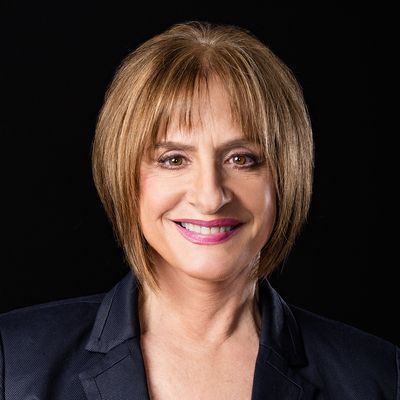
The three-time Tony winner and undisputed icon of the theatrical world reflects on a career like no other. From her legendary roles in Evita, Sunset and Les Misérables to her dislike of riffing, love for her late friend Stephen Sondheim and being a proud groupie... Read More
From the show: eleven
Guests
Featured Shows

About
The three-time Tony winner and undisputed icon of the theatrical world reflects on a career like no other. From her legendary roles in Evita, Sunset and Les Misérables to her dislike of riffing, love for her late friend Stephen Sondheim and being a proud groupie. We also dive into her desire to sing rock, bursting blood vessels and what it’s like to call out when there’s an audience waiting for you. Plus we discuss all things A Life in Notes as the concert comes to the London Coliseum on February 16th. She’s quite simply one of the greatest stars in history.
Host: William J Connolly
Produced by: William J Connolly/Darren Bell
londoncoliseum.org
Welcome to eleven. The official theatre podcast that brings the biggest stars and creatives together in one place to discuss life in the arts. Follow eleven on social media via @elevenpodcast and via elevenpodcast.com.
Transcript
This transcript was automatically generated and might contain errors.
[0:00] Patti LuPone: My name is Patti LuPone and you're listening to Eleven, the official theatre podcast.
[0:16] William J Connolly: Hello and welcome to Eleven, the official theatre podcast that brings the biggest stars and creatives together in one place to discuss life in the arts. She's quite simply one of the greatest stars in history. From her instantly recognisable voice to unmatched humour and soaring acting ability, she starred in, originated and played some of the most signature roles ever. Roles in shows that include Company, Warpaint, Gypsy, Sweeney Todd, Masterclass, Sunset Boulevard, Anything Goes, Les Mis, Oliver, The Roommate, Evita, Measure for Measure, The Beggar's Opera and Woman on the Verge of a Nervous Breakdown to name but a few. I repeat, a few. Plus, she's also a double Olivier winner, has two Grammys, four Drama Desk Awards, the Drama League Award for Distinguished Performance, two Emmy nominations alongside a Critics' Choice nomination.
She also has a New York Times bestseller to her name and the voice on all of those musical theatre albums that you've listened to on repeat since birth. Plus, did I mention she has three Tony Awards and eight nominations? And all of this before we've even stepped into the roles that she's undertaken in the world of television or on the big screen. We don't have time for it, just Google it. So here, in an exclusive conversation direct from her very own dining table at home, we talk a life in notes at the legendary London Coliseum coming February 2025, her forever love of London and why lyrics are so damn hard to remember when there's 25 songs on the sheet. Plus, we dive into key moments from her career, including what made her the singer that she is, including the voices, the songs and the training that got her there.
Plus, we talk legendary roles from Evita, Sunset, Les Mis, her dislike of riffing, her, of course, wonderful love for her late friend, the fantastic Stephen Sondheim. What it's like calling out when your name is above the title, being sick on Broadway, stealing your family car, seeing Nicole Scherzinger take on a rather signature role for her in Sunset Boulevard and why she'd love to work with Jamie Lloyd in the future, how she loves to sing rock, her appearance or lack of in Titanic, rupturing blood vessels and a certain US president and even being a proud groupie. It's all on the table. So, are you ready? Are you sat and are you listening? As mother is about to speak, it's the greatest honour to say these words. She's my queen and yours, it's actual Patti LuPone. Hear now on this, the next episode of Eleven, the official theatre podcast.
[2:59] William J Connolly: To ensure the safety of all involved in this episode of Eleven, Patti and I connected for this conversation digitally, so please forgive any brief moments while we wait for the internet to catch up. Enjoy. Please help me welcome to this, the next episode of Eleven. She is the stage legend that's heading back to our British shores to perform an array of sounds that are a touchstone and reflection on her life and I'm thrilled to say with a massive smile on my face that she's here to be able to tell me a little bit more about it. So, please help me welcome my queen and yours, it's the phenomenal Patti LuPone. She's laughing already, this is a good start. Hi Patti, how are you?
[3:36] Patti LuPone: I'm fine, how are you William?
[3:41] William J Connolly: I'm doing very well. Did you like my introduction, was that okay?
[3:46] Patti LuPone: It was lovely. I'm not gonna lie, I drafted it a few times, I was like, Patti might not like this bit or that bit, so I feel like I've done the difficult bit because as I sort of joked about, but very genuine and serious in that introduction, you mean a great deal not just to myself but to British audiences and we all collectively just feel a great sense of love and excitement that you are coming back to us, you are going to be here, you're literally holding yourself almost like a hug, I wish I could give you one.
[4:08] Patti LuPone: Yes, because I love you so much, you have no idea, I'm so thrilled to be back in London. It's been a long time and I'm just really, it's my favourite city, you're my favourite audience, I'm really happy to be back.
[4:18] William J Connolly: I'm happy to be your favourite and we're happy to be your favourite and am I right in saying this is the first time you've been here and performed since Company?
[4:22] Patti LuPone: Wow, which must be, am I allowed to call it a little bit of a homecoming, does it feel like it to you?
[4:26] Patti LuPone: Yes, I think so, I mean I wish it wasn't a homecoming, I wish it was a regular thing, you know what I mean? I wish I was in London more often.
[4:31] William J Connolly: Less of a homecoming, more of a hookup in a very weird sort of strange way.
[4:37] Patti LuPone: Yeah.
[4:43] William J Connolly: I think it's the only time I'd be able to say I'm having a hookup with Patti LuPone, but we're going to go with this, the vibe, I'm happy, you're smiling, let's go with that. But it is very, very exciting and I think a lot of people have dreamt about this, myself included, and thought, gosh I really hope this happens and it is finally happening. So why was now the right time for you to do this? Because I imagine there's been other opportunities, so why did this feel right?
[4:56] Patti LuPone: I don't know, you'd have to ask my agent that. Perhaps it's the producer, the presenter that's bringing me over. I know that it was supposed to come over, I think it's September, but I did a play on Broadway, I think it was September, and this sort of fit in. You know, I'm just glad it happened. I'm glad it's happening. I'm really thrilled to be back, to be coming back.
[5:20] William J Connolly: It's exciting to get to see you in a different medium, for those of us that did recently when you were last here, I believe it was in 2018, and Company and The West End, get to see you in a show playing a character, but to get to learn a little bit more about you, it's your opportunity to teach potentially a new audience something about you. Do you welcome that with open arms?
[5:37] Patti LuPone: Well indeed, it started when I was doing Evita on Broadway, which was the most difficult thing I had done to date, and my applause used to dip after Mandy's, and I would in the bow go, they don't know what to make of me because I'm so good in my role. And so every night it was sort of depressing to, you know, they'd be cheering for Mandy, and then, oh, here she comes, I don't know. And so someone approached me and said, do you want to do a cabaret? I said, do a cabaret? I can barely sing this thing six times a week and do a cabaret act. And then I went, you know what? Yes, because I want people to remember who I was before I played this part. And who I was before I played this part was a brown-haired comedian.
My first Tony nomination was for Rosamund Musgrove in The Robber Bridegroom, which is a slapstick comedy. And so I felt that it was important to remind people who Patti LuPone was. She wasn't this blonde fascist dictator tap dancer. And, you know, it was quite controversial in New York. The theater community in New York resented British upstarts and resented the fact that they were glorifying a Nazi sympathizer. There was a lot of pushback back then, back in 1979, 1980, a lot of pushback. And so it was not a pleasant experience at all. And then, of course, I had, I could barely sing it. So embarking on this was like, what, am I crazy? But I did, and we did 27 weeks at Les Mouches at midnight on a Saturday night, which was quite successful.
And I discovered as basically we've all discovered that it is, it helps support us in the off years or the off months when we're not performing on stage. The concert work supports us, financially supports us. So from Les Mouches, I started to do these acts. When I was doing Life Goes On in L.A., I was on television and I missed singing. And I met Scott Whitman through my friend Jeffrey Richman. Scotty is a scavenger of music, and he actually puts acts together for people. And that's the first time we worked together in 1993, right before I was coming to London for Sunset Boulevard. So my first concert with Scotty was my farewell to L.A. And Scotty and I have been working since 1993 on these concerts.
We've done the first one, I can't remember if there was a name to it, Coulda Woulda Shoulda, Matters of the Heart, Lady with the Torch, Don't Monkey with Broadway. This one is now A Life in Notes. And basically this one evolved because I was actually, I said, I don't want to sing anymore Broadway. The last show was Don't Monkey with Broadway, which was how I ended up on the Broadway musical stage. So that's an aspect of my life. This is how I ended up on Broadway. This show, A Life in Notes, is my introduction to music basically at a young age, growing up on Long Island. And I grew up in the 50s. My mom loved opera, my dad loved jazz, and I was a product of rock and roll. We had transistor radios, we had disc jockeys, Wolfman Jack, Cousin Brucie, Alice in the Nightbird.
You know, I sort of grew up with rock and roll. I always knew I had a Broadway voice. I wanted to be a rocker, but every time I opened my mouth, I sounded like, you know, singing a rock song, I sounded like Ethel Merman. So I knew that was out. But so I'm like, I'm a closet, either a closet rocker or a closet groupie. I'm not quite sure which one. But so the concerts evolved. They are so much fun because a group of like-minded people with no agenda get together to create a show. And I've been working with the same people for close to, you know, maybe 37 years. So I love doing them. I'm glad that I'm bringing this one to London. It's probably my most personal, but it's also music that you don't expect me to sing.
Audiences don't expect me to sing. They know I will sing Broadway show tunes. I have another show called Songs from a Hat, which is all the songs I've ever sung, plus some, in a top hat. And I have no idea what I'm going to sing. I ask the audience to pick out of the top hat. I say, I tell the story and sing that song. Sometimes it's the 11th hours right off the bat. And sometimes it's ballads all night long. I have no idea what I'm going to sing. That's a great show. That's a lot of fun. This is about me hearing music and remembering how it affected me when I first heard it, how it still affects me. And it's not unique to me. We all have that. We all have a song. We all have, you know, a symphony. We all have something that goes, oh my God, it takes me back to either good times or bad times and everything in between.
[10:32] William J Connolly: All the way through you explaining your life in notes just there, I noticed that the smile got bigger and bigger and bigger. And you said it meant something to you. This feels like this is very personal to you, as you referenced there. This is something that connects deeply with you, even today. This is important to you, right, this show?
[10:47] Patti LuPone: I've lived a long life so far, and I've heard a lot of music in those years. I mean, I went through the AIDS crisis during Anything Goes. And so it was the cradle will rock and anything goes. So the music that I heard then, or even, you know, my musical director died of AIDS, tragically and brutally. So there is a section that's dedicated to that period of time, which was the mid to late 80s in New York, which was pretty horrific. It was the AIDS epidemic. And there's music associated through that period. You know, that's what I'm sort of breaking up when I was a kid. Movie star crushes and music that's associated with, you know, puberty, stuff like that. You know, we'll see, you guys might get bored. I don't know.
[11:40] William J Connolly: That's absolutely not possible. That is absolutely not possible. But also, like the connection that you have to other people, like it's you explaining how music that and what it means to you and how it's influenced the person that is talking to me now. But also, I imagine some wonderful connections to audiences as well that may be direct or indirect. And I think that must be a wonderful thing to know that you have a place in an audience, a very loyal audience, as they've shown to you selling out the Coliseum.
[12:06] William J Connolly: And audiences here in the UK all these years later. And I know having interviewed you many times, I actually came to your house in London. You say to me, that's principally, number one, what means the most is that it's the art and it's the joy that it brings to other people.
[12:18] Patti LuPone: Yeah, still, always and forever. It should deliver. We should be changed as audiences seeing something. I love to go to the theater and then when I hit the street, go, oh, oh, oh, I'm on the street. Oh, that experience was, that changed me. If it was just for two hours, that experience changed me. I don't know whether my concert's going to do that. But I'm talking about, you know, like when I saw Les Liaisons d'Angel Rose with Alan, God rest his soul, Alan Rickman and Lindsay Duncan. I actually said out loud in the theater, bring the curtain down. It's too hot in here. I said it out loud. It just came out of my mouth because it was an extraordinary production. I'll never forget Nicholas Nickleby, all eight hours of it.
I'll never forget Peter Brooks, Midsummer Night's Dream. You know, those moments, that was theatrical. I'm trying to think of the music. Well, you'll hear it, the band, the band. My friend and I hijacked my brother's car. I lied to him. It was New Year's Eve and it was a blizzard in New York and I said to my brother, oh, I'm just going to go to a party downtown. We drove to Socrates, from New York City, we drove to Woodstock in a blizzard in search of the band. We got very close and we put on these Caracan accents and the guy behind the bartender, the bartender behind the bar, actually pulled out the phone book that was going to give us his addresses, their addresses. But that music, when I hear certain songs from the band, it takes me right back.
Crazy, 18 years old in New York City. Is it at all that music has that ability, doesn't matter where you are, what you're doing, even, you know, sometimes when Shuffle plays sort of Havoc with you on Spotify and it takes you back to a song that may even predate, you know, you, myself being alive, but it's just that one song or that one lyric or that one motif that you go, this is me in a certain space. Do you have those, do you have those moments?
[14:09] Patti LuPone: Well, that's what this show is about. Yeah, that's exactly what this show is about. Yeah. And I say it, I say this is my experience, but it's not unique to me. We've all had that experience with music. It's, it's, it's powerful and we, and we latch on to it. Do you know what I mean? We just, I mean, I think you find that it's, it's, it's a necessity. And then if something rings true, it's sort of like, oh my God, this is, this is filling me. This is doing something for me. Do you also have an appreciation or an understanding for when that experience is related to you through another person? For example, when an audience member has that moment with a creation, a soundtrack, an album, a performance that you've delivered, are you aware that you have a presence in other people's lives?
[15:00] Patti LuPone: I'm told, you know, I'll, I will get letters from people that say that. And I'm, you know, grateful that, that I am communicating with them because that's my job, you know, and, and I love to do it, but that is what I'm responsible for, for communicating. And communicating, honestly, I think that's, you know, honestly, in a way that is true to the piece, but also to your experience on that night, no Patti LuPone performance is ever the same, isn't, I feel like that's the great joy of it, right?
[15:18] Patti LuPone: Right. It isn't the same. I'm, you know, I think I'm doing it. I've been doing this long enough that I now understand how to relax on stage and to allow things to come to me in a play, in a musical, to keep it alive. And if it's alive, it's going to be alive for the audience. Do you know what I mean? We're not, I don't want audiences to worry about me. I want them to sit back in their seat and go, okay, I trust that she's okay. I'm sure you've been in the audience where the actor on stage is not exactly comfortable and you get nervous for them. So you're taken out of the play. And I never want that to happen for an audience. If I'm on stage, I want them to go, I can relax.
[16:02] William J Connolly: Will you feel relaxed when you know the London Coliseum is sold out for one person and one person and that is you?
[16:06] Patti LuPone: No!
[16:09] William J Connolly: Thank you for being honest.
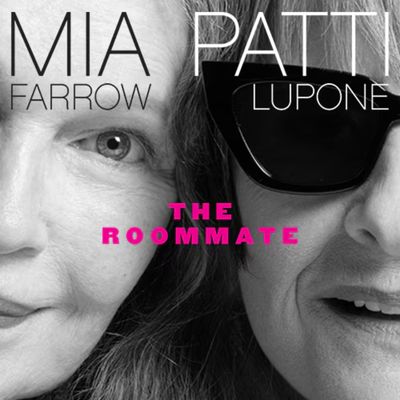
[16:11] Patti LuPone: I don't think so. As a matter of fact, we haven't touched this show because I was on stage. We did it in Australia and we did six performances in Australia, having left it for a while. And then I came home and went into rehearsal and in performance for The Roommate with Mia Farrow. So we haven't done it in maybe five months. And so my agent arranged five performances before we come to London so that we can remember what we're doing. Everybody has their own lives. You know, my MD plays for other people and Brad, the string instrumentalist, is a professor at Ann Arbor and playing with other people. So we have to, you know, find that focus, our focus, our trio again. I'm just hoping I'm loose enough on stage that it'll just be fun.
[16:58] Patti LuPone: That question was not meant to scare you at all. I'm so sorry. I felt like it went the other way. I still get stage fright. I still, you know, every time we go out in concert and it's just me, about 15 minutes before the show, I get a pit in my stomach and I go, oh, no. But when it's just you and it's just you out there, I find this a little audacious. It's a little audacious. So good luck.
[17:29] William J Connolly: Good luck to Patti on the night. Patti on the night will be very, very, very cool. I'm sure. Is there an ability to create a separation between, for example, I think it's interesting that you being you gives you that in your stomach, but yet you playing a character doesn't have that as much. Is that because of the separation of the character or?
[17:49] Patti LuPone: I think there's more people on stage. You know, it's not just, they're not, people aren't just looking at me. They're looking at the scene. You know, it is two hours or it's an hour, let's say it's an hour and a half of lyrics. I think there's 25 songs. Am I going to remember all my lyrics? Believe me, I'm rehearsing this. I'm rehearsing this. Believe me, I'm rehearsing now. And every day I just sort of like steal myself and go downstairs and sing and just go through the lyrics and try to remember who I am and what I'm doing.
[18:35] William J Connolly: Producers of this concert series and subsequently this podcast are going to regret me interviewing you. They're going to say you've scared the shit out of this poor woman.
[18:38] Patti LuPone: Well, I'm a scaredy cat anyway.
[18:44] William J Connolly: You've talked about the journey that this concert has taken from previous incarnations and the way in which you've developed it. And as year on year, you get to perhaps add additional things to it, take stuff away, make it feel like it's the flavour of you for that moment. Is that a process of creation around yourself and a concert like this that you enjoyed? You like allowing things to feel like they're living and organic and moving?
[19:04] Patti LuPone: Completely. I mean, when we, I just, you know, when it started, when I told Scotty, I wanted to do this, basically, I wanted to sing songs that people would never expect me to sing from my youth, growing up, you know, 42 miles west of Manhattan, we used to, you know, steal cars and, you know, sneak into the city, our parents' cars, not just cars off the street, in the middle of the night and drive into New York City because we could, you know, we were wild, we were rebels, we were hippies, but we took chances, we took big chances. That's who I am. And that's what my childhood was like on Long Island. You know, there was a lot of music. I mean, I was very fortunate. My hometown of Northport still has an extremely strong music department in the public school system.
And I started to play an instrument and learn how to read music in the third grade. And we were all, those of us that chose the band or the orchestra or the chorus, we were all being trained for the high school band, chorus, and orchestra. So music was incredibly important to me. My inspiration was a woman by the name of Esther Scott, who took me through junior high and high school. She was transferred up to high school when my class went into high school. And I was in magicals, I was in chorale, and I was in the chorus. And I was given a huge solo in a modern piece by Arthur Frackenpoel, the Todeum. And I was, you know, I was still a kid, so I was not terribly disciplined. But I woke up with a sore throat, and it got progressive.
And we had to drive in the bus up to, from Long Island to the Concord, which is in the Catskills. So there's a lot of pressure on Esther, and there's a lot of pressure on me, because I was given a solo. Only to find out, when I got to, I was sick. I had, when the solo was over, they called in the doctor, 105 people, and tonsillitis. And didn't, I mean, I knew I was sick, but the responsibility. And what Esther did, I couldn't tell her I was sick, because I couldn't let myself down. And I remember, I was, I held on to my dearest friends, a tenor on one side and a soprano on the other side. And there's a crack on the top note, one crack, but I got through the solo. And it doesn't sound like I'm sick, but I remember Esther telling us a story.
I could cry thinking about this, and this is what got me through it. She had a special needs son that we didn't know about, who was institutionalized. And his only response was music. And she said, do it for Gary. You don't imagine your singing teacher has a child that's institutionalized, because he's not functioning. And you don't then imagine the singing teacher is not going to yell at you to be great. She's going to inspire you to be great, because you're doing it for someone else. I mean, it was an amazing lesson.
[22:08] Patti LuPone: So these are the things that, in my lifetime, the experiences that I've had, that, you know, they just solidify music for me. They solidify a moment in time. They have made me who I am. And they're not musicals. You know, they're not what I'm known for. It's amazing how one thing, and it only takes one thing, of a chapter in a moment so often that we don't expect, where the life lesson that all these years later is still here, you still remember it. And I think that's what's, it's not the most important thing about music, but I'd argue that it's one of the top things as to how that art form in particular, the creation of perseverance, sure, absolutely, but also the creation of music for others.
It's not just about a selfish thing, the act of performing live. It is for others as well. It stays with you all these years later. And I imagine if you asked the Patti LuPone back then, she wouldn't bet that on this day here in 2025, we'd still be having this conversation, you remembering that. And that just shows the true magnitude of it.
[23:06] Patti LuPone: I knew that I would remember it for the rest of my life, because it was that powerful to me. I knew that I would remember, because it was also shocking. Your teacher is vulnerable. Your teacher is exposing a vulnerability. But that's what made her unique. That's what made her so unique. She also got me. She got all of me. And she laughed when I would get in trouble, and I got in trouble all the time. And Esther would laugh. She wouldn't go straighten up and fly right. She'd just go, well, that's Patti. But the music that I sang with her, The Silver Swan, The Coronation, Mozart's Coronation Mass. I mean, the stuff that we sang with her was extraordinary stuff that was a big lesson. But then it also, I went, okay, I get this.
I'm not going to be doing this for the rest of my life, because I want to go to the rock concert in Hector Park and flirt with the drummer or the bass player. I don't give a shit which one, but I'm going to flirt with one of them because they're rockers. Do you know what I mean?
[24:12] William J Connolly: I wish we were friends when you were in this era, I tell you.
[24:15] Patti LuPone: Girl after my own heart.
[24:21] William J Connolly: You know, you referenced, obviously, an example that you just used about the instrument, about knowing what feels right, perhaps pushing through when we shouldn't do, and also about the power of calling out, being like, you know what, this isn't working, and I need to get some support in whatever capacity it might be. Has that stayed with you? Is that the example that you think of, of this is the gift that I'm not prepared to push? The reason why I ask is because it's a very present conversation, if we look towards what's happening with Gypsy on Broadway at the minute, and, you know, perseverance and understudies, and pushing through, and when you're ill, you're ill, and this time of year is challenging anyway.
But, you know, this is the gift. This is the thing that's been given to people they trained so long for, that it is hard, if we're honest, to move away from the thing you love. But this should be protected, right? And we should be honest about the fact that it doesn't, it's not indestructible, right?
[25:04] Patti LuPone: We're not allowed to on Broadway. We're not allowed to, especially if your name is above the title, and people are paying money to see you. And you have a responsibility to yourself, you know, you don't want to miss because audiences are paying to see you. Everybody's sick on Broadway. I've never been in a season on Broadway where so many shows canceled for sickness. We're not, I mean, I had a vocal cord operation. I was, all my life, I would, see, I didn't really know how to sing. I would just sing, and I would sing to rock and roll. I'd sing to Dionne Warwick. I'd sing in her keys. I'd sing whatever, you know, and I, the vocal lessons I had, I imitated them. I didn't understand them. It was only until I studied with Joan Lader, and the camera, and the vocal cords, and I started to understand how this thing works, this apparatus works.
I still don't understand the diaphragm, which was what it looks like filled and what it looks like empty. I still don't get that. But I would blow out my voice. And I thought, well, it's just because I'm singing too hard. But I was a kid when I discovered what I was doing was I was rupturing a blood vessel in my vocal cord. And the, it was like a black and blue mark inside of a vocal cord. And that's why I was out. But I had to have a vocal cord operation, and I had to learn how to talk again, and learn how to sing again. And Joan gave me a technique, which has protected me. But I never protected my voice up to that point, because I really believed it was indestructible, because who was going to tell me it wasn't? When I blew out my voice, it came back.
Until the month that my voice was gone. It was a month before the blood subsided. And people in the opera, the women in the opera world, understand this, they know this. And in the old days of opera, if you were, it's when women are mid-cycle, their blood vessels are engorged. So if you sing on an engorged vocal cord, you could rupture it. You could break the, you know, the blood vessel and fill it up with blood, which is what I did. But nobody told me that I shouldn't, because we don't have that information in the West End. You know, musical theater, opera singers have it, but they were also allowed to stop production or cancel performances. We're not allowed to do that, nor do we think to do it.
So it is essential to figure out how to protect it. You can't help but get sick. And these theaters are old. Nobody knows what's living in the fly floors, how much asbestos is still in these theaters. Laura Benanti and I were sick for seven weeks of Gypsy. Neither one of us missed, but we hacked up lungs before we'd walk on stage. We were so sick, but it took seven weeks for us to get acclimated into the theater.
[27:40] William J Connolly: I was going to ask a follow-up question there, actually. You mentioned about having your name above the title and the political calling out part of that and the fact that that's basically, you can't do it, as you so put it. From somebody whose name has been above the title, has been, you know, Patti LuPone stars in Insert Name of Show Here. And I think we had it very similarly with Glenn Close doing Sunset Here when she called out. And it was this uproar of like, oh my God, I paid to see Glenn Close and everything that follows with that. What does that do to an artist when you can't do it?
[28:05] Patti LuPone: It's horrible. It's horrible. I remember my last performance in LA after nine weeks of Evita. And I, you know, Andrew insisted we record the album during the day. I could barely sing the role. And so the closing night, I woke up, I was talking. I could barely talk. And I got through the first act and I went, I have nothing. And I packed up a dressing room that I had lived in for nine weeks in 15 minutes because I didn't want to hear that announcement. It's, and you know, people say, oh, I'm sorry, I missed you. And it's embarrassing. You know, you hope that you can be strong. And it's, unless, if you don't care, that's one thing. I care very much. And I know people are paying money to see me.
So it's heartbreaking when, you know, your frailty shows. But it's also important that you are protected. And I know this sounds like I'm stating the obvious, but we want you at your best. We're not interested in seeing anybody, you know, struggling through. I think we've all sat in audiences where we feel like saying, I actually, I'd rather you stop. And I could just potentially give you a hug and you go home and you rest. You know, you don't, the audience, if the audience truly cared, I think the conversation would be slightly differently. But it's a challenging thing, right? But audiences also know that I don't call out unless I'm really sick. You know, I'm on stage all the time. I only miss three performances in Gypsy.
I try to take care of myself well enough so that I don't miss, so that I don't miss. I don't want to miss. I know I have that responsibility. Not just because I'm Patti LuPone. I have a responsibility to be on stage, period. I signed a contract for eight shows a week, but it feels horrible.
[29:49] Patti LuPone: I don't know if you know this, but I've actually just come back. So I'm dressed up a little bit from seeing the official West End opening of a musical called Titanic. I haven't seen it though. It's superb. It's very funny. It's a wonderful tribute to Titanic and Céline Dion. And I don't know if you know, but you are actually in this.
[30:03] William J Connolly: I heard, what am I doing?
[30:05] Patti LuPone: There's a lovely cardboard cutout of you. You appear twice. You do have two features in it. And you're in the opening number and around about in the middle and you get slapped by Céline Dion. It's a very funny moment.
[30:19] William J Connolly: Okay. I referenced it very much at the beginning, but I did say that I came to your house when you were doing Company in London and you were incredibly kind to me. I was working at Gay Times at the time. And I said to you like, I love Gypsy more than anything in the world. And I actually had a playbill that you very kindly signed. This is a podcast people won't be able to see, but you signed it here for me. You did my favourite thing that's ever happened was we were having a conversation and I think we were talking about how much the gays love you. Surprise, surprise. And you were being quite vocal about how much you loved the gay community and it was all lovely. And you projected rather loudly. And I don't know if you remember, you set off an Alexa two rooms over.
[31:00] Patti LuPone: And it was like, what do you want? And I was like, she's an artist. She's projecting. And I promise if I ever spoke to you again, I would tell you because I tell this story on the daily. It is iconic.
[31:10] Patti LuPone: You know, we rented that house and it was sort of like Faulty Towers. We had no idea what was going on in that house.
[31:15] William J Connolly: So I haven't, there was an Alexa there. Holy shoot.
[31:17] Patti LuPone: And I should actually play you when you come here.
[31:22] William J Connolly: You were like, Alexa, shut up, shut up.
[31:26] Patti LuPone: Yeah, no, I don't remember that, but I'm not surprised. By the way, I'm not saying that you're loud. Please don't say that the wrong way.
[31:30] Patti LuPone: I've been told that my entire life to shut up.
[31:37] William J Connolly: I would never tell you to shut up at all. Obviously this concert is taking place in London. You of course do know London very, very well for lots of different shows and reasons. But for you being back here, I remember going back to that conversation. You just spoke about this space being very holy to the world of theatre. You of course referenced Shakespeare, which is very obvious and important here, but about the craft of the West End. And I wondered, would you just be able to tell me a little bit more for audiences that are in this space and maybe aren't able to reflect on it too much? How precious and important is the theatre space of the West End? How important is it to you for somebody that visits?
[32:09] Patti LuPone: Well, it's a time-honoured tradition in your city. I don't think the London actors, and I could be completely wrong here, have the pressure of having to succeed in order to go on to Hollywood, or are more obsessed with fame than they are with acting. And it's just an abundance of places where actors in London can work. We have the same thing here, but there's a different desire. We don't have enough acting schools that are training actors well. I was auctioned off for Hammerstein, something or other, and these are kids in Pennsylvania. They were kids, you know. The kid said to me, the question was, what do I do when I improvise? And I actually let him have it. I said, what do you mean improvise?
Do you think you're better than the playwright, basically? And that's sort of what we're up against now in America, where people are... I hate the riffing on a song. And I don't... It's harder to say what's written, and it's harder to sing what was written. Improvising, ad-libbing. It was basically ad-libbing and riffing. And I don't see that in London. And I know that... I'll tell you a quick story, that they wanted to bring the roommate over to London and my director said, they haven't seen acting like this. And me and I looked at each other, Eileen Atkins, Vanessa Redgrave, Judy Dench, Janet McTeer, Juliet Stevenson. Shall we go on? Do you know what I mean? I was like, what's he talking about? There's just a higher standard that is met. And for me, it's inspiration.
[34:04] William J Connolly: Are you putting yourself on a higher bar when you come here because you want to meet that standard?
[34:08] Patti LuPone: I don't know if I'm putting myself on a higher bar, but I would love to be as good as anybody in the London theater. I mean, I remember when I was... I was so proud to be in Les Mis with the Royal Shakespeare Company. And I remember watching Sue Jane Tanner or Roger Allen argue. Not Sue... Sue Jane wouldn't argue, but I saw Roger argue a point with Trevor. And I went, we don't have that in the States. First of all, we don't have a lot of very good directors. Then we don't have actors that trust their information to defend it to a director. And I was so impressed with that. Yeah, I think it's different because it's time-honored in your country. And we are third class citizens in America. Actors, the arts. I don't think I've ever heard the word arts and culture in my country for years.
[35:00] William J Connolly: Well, I was going to ask you actually about that, because obviously there is a shift in all countries with the arts based on the social and societal norms, the acceptance, et cetera. And obviously the political element of it. And I'm sure you can guess where this question's going, but I imagine you must be aware of a shift that is looming within the next, what's recording this, two weeks. Does it feel like the point, does it feel like the point of the arts is about to take another turn again as it did, or was it four years prior to this?
[35:27] Patti LuPone: I don't know what's going to happen in this country. I think we're doomed, quite frankly. I think the experiment has spectacularly failed. We haven't been a democracy for years. We're a fascist country run by corporations. And look at the fucking idiot Zuckerberg and Elon Musk. He just wanted to slap them down to the ground. I really hate billionaires. I really, really detest that kind of wealth that is so in your face. Jeff Bezos and his $500 million yacht. It's just, we are in such deep shit. I don't want to see your fucking yacht. No, I went down to Washington for the first National Endowment of the Arts cut, and we were low priority.
[36:17] Patti LuPone: I think the most important thing is to be honest with yourself and to be honest with your audience. I think that’s what makes a great performance.
[36:47] Patti LuPone: I’ve always believed that if you’re not being truthful, then you’re not really doing your job as an actor.
[37:07] Patti LuPone: I’ve had the privilege of working with some incredible people in this industry, and each experience has taught me something new about myself and my craft.
[37:33] Patti LuPone: I remember when I first started out, I was so eager to prove myself. I wanted to show everyone that I could do it, that I could be a star.
[37:55] Patti LuPone: But over the years, I’ve learned that it’s not about being a star; it’s about connecting with the audience and telling a story that resonates with them.
[38:15] Patti LuPone: I’ve had my share of ups and downs, but I wouldn’t trade any of it for the world. Each moment has shaped who I am today.
[38:43] Patti LuPone: I think it’s important to embrace the challenges and the struggles because they make the victories that much sweeter.
[39:03] Patti LuPone: And I’ve had some incredible victories in my career, from Evita to Sunset Boulevard to Les Misérables.
[39:23] Patti LuPone: Each role has been a gift, and I’m so grateful for the opportunities I’ve had to bring these characters to life.
[39:43] Patti LuPone: I’ve always been passionate about music, and I love the way it can evoke emotions and tell stories in a way that words alone sometimes can’t.
[40:03] Patti LuPone: I’ve had the chance to work with some of the greatest composers and lyricists, and their work has inspired me in so many ways.
[40:13] Patti LuPone: I remember my late friend Stephen Sondheim, who was such a brilliant mind. His music and lyrics have left an indelible mark on the theatre world.
[40:31] Patti LuPone: I think about him often, and I feel lucky to have had the chance to work with him and learn from him.
[40:51] Patti LuPone: There’s something so special about live performance, the energy of the audience, and the connection you feel in that moment.
[41:11] Patti LuPone: It’s exhilarating, and it’s what keeps me coming back to the stage time and time again.
[41:31] Patti LuPone: I’ve had moments where I’ve felt completely vulnerable, standing in front of an audience, but that vulnerability is what makes it real.
[41:41] Patti LuPone: I think that’s why I’ve always been drawn to the theatre; it’s a place where you can truly be yourself and express your emotions.
[42:01] Patti LuPone: I’ve also had my share of health issues, and I’ve had to learn how to navigate those challenges while still performing.
[42:21] Patti LuPone: It’s not always easy, but I’ve learned to listen to my body and take care of myself, especially when I’m on stage.
[42:41] Patti LuPone: I’ve had to push through pain and discomfort, but I’ve always believed that the show must go on.
[43:01] Patti LuPone: And I think that’s a mindset that many performers share; we’re dedicated to our craft and to our audiences.
[43:21] Patti LuPone: I’ve had moments where I’ve had to call out for help, and it’s a reminder that we’re all human, and we all have our limits.
[43:41] Patti LuPone: But I think it’s important to be honest about those moments and to seek support when you need it.
[44:01] Patti LuPone: I’m excited about my upcoming concert, A Life in Notes, and I can’t wait to share that experience with everyone.
[44:21] Patti LuPone: It’s going to be a celebration of music and storytelling, and I hope it resonates with the audience.
[44:41] Patti LuPone: I think there’s something magical about sharing music live, and I’m looking forward to that connection.
[45:01] Patti LuPone: I’ve always loved rock music, and I’ve had a desire to explore that genre more in my performances.
[45:21] Patti LuPone: It’s a different energy, and I think it would be a fun challenge to incorporate that into my work.
[45:41] Patti LuPone: I’ve always been a proud groupie of the artists I admire, and I think that passion fuels my own performances.
[46:01] Patti LuPone: I’m grateful for the support of my fans, and I hope to continue to inspire them through my work.
[46:21] Patti LuPone: It’s a beautiful journey, and I’m excited to see where it takes me next.
[46:41] Patti LuPone: Thank you for having me on the podcast today. It’s been a pleasure to share my thoughts and experiences with you.
[47:01] Patti LuPone: I hope to see everyone at the London Coliseum for A Life in Notes.
[47:21] Patti LuPone: It’s going to be a night to remember, and I can’t wait to share it with all of you.
[47:41] Patti LuPone: Thank you again for this opportunity, and I look forward to what’s next in my journey.
[48:03] Patti LuPone: Until next time!
© Broadway Podcast Network, All Rights Reserved