

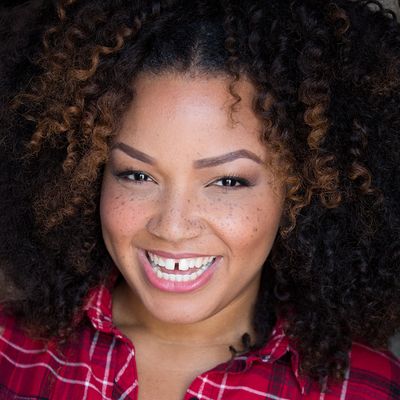
The 2x Olivier nominee on her history-making performance as Sally Bowles in Cabaret on Broadway - a role she reprises direct from the West End opposite Billy Porter - the joyful challenge of mastering the British accent and why she is fully standing in her power... Read More
From the show: eleven
Guests
Featured Shows

About
The 2x Olivier nominee on her history-making performance as Sally Bowles in Cabaret on Broadway - a role she reprises direct from the West End opposite Billy Porter - the joyful challenge of mastering the British accent and why she is fully standing in her power.
We also talk about overcoming both the doubt and the haters to keep standing tall, originating in Waitress alongside Sara Bareilles and the late Gavin Creel – and why she hopes her roles in Oklahoma! and Guys & Dolls has helped usher in a more inclusive space for everybody to be seen and heard.
Plus, how almost ten years in London all started with what should have been a brief few weeks standing in as Effie White in Dreamgirls and why her new album Marisha Wallace: Live In London is a celebration of the journey so far - and why you should never give up!
Host: William J Connolly
Produced by: William J Connolly/Darren Bell
slinky.to/MarishaLiveinLondon
Transcript
This transcript was automatically generated and might contain errors.
[0:01] Marisha Wallace: My name is Marisha Wallace and you're listening to Eleven, the official theatre podcast.
[0:17] William J Connolly: Hello and welcome to Eleven, the official theatre podcast that brings the biggest stars and creatives together in one place to discuss life in the arts. She's the Olivier nominee and now New York leading stage star that's making history and turning it out playing Sally Bowles in the finale of Cabaret on Broadway, a role that she reprises direct from the West End, opposite none other than Billy Porter. So across the pond and direct into her home to discuss life back stateside as she leads that closing company of Cabaret. How almost ten years in London all started with what should have been just a brief few weeks standing in as Effie White in Dreamgirls and how from here on then everything changed.
We also talk about overcoming both doubt and the haters to keep standing tall, originating in Waitress alongside Sara Bareilles and the late Gavin Creel and why her roles in Oklahoma and Guys and Dolls she hopes help bring a more inclusive space for everybody to be seen and heard. Plus, she reflects on singing for King Charles, dueting with some of the biggest stars in musical history and why her new album Live in London is a personal deep dive into her career so far, the people who got her there, some of whom you might hear feature as guests and a reminder that even when things don't go right, that doesn't dent your shine, it just makes you stronger. So strapping as it's the singular sensation, Marisha Wallace. Here now on this, the next episode of Eleven, the official theatre podcast.
[1:55] William J Connolly: Please help me welcome to this the next episode of Eleven. She's the double Olivier nominee, history making and groundbreaking stage artist that's served it up in London and is now back on home soil, headlining in the final mega cast of Cabaret opposite the Billy Porter in a historic pairing for the production. And now with a new live album bursting with signature moments from her career, she's here to tell me all about it. So I say good day, Broadway. Marisha Wallace, are you there?
[2:21] Marisha Wallace: Hello, I'm here. How are you?
[2:23] William J Connolly: I'm doing very well. Thank you so much for agreeing to do this. Biggest smile on your face. I'm so happy to see you.
[2:27] Marisha Wallace: I'm so happy to be able to talk to you in what I imagine is probably a rather bloody good time to be Marisha Wallace. Before we talk about that live album in a second, you opened up Broadway this week literally in the leading role in Cabaret. How are you feeling?
[2:40] Marisha Wallace: I felt like I've been flying for the past couple of days. And yesterday in the show, I finally felt like I was in my own body because, you know, you kind of got me in an out of body experience. And even though I've done the show before and it's like the same show, it's just it's bigger. It's double the size, the audience. But the love that I have received has been so overwhelming at the stage door. People are just lining up and they've all just been saying, welcome home. We've missed you. We're so happy you're back. We've been wanting you to be here for so long. We've watched everything, your whole journey to get to where you are. Like one girl said last night, she was like, you're the people's princess. And I was like, I like that. I like being the people's princess. I like that. So it's been amazing.
[3:34] William J Connolly: I saw the video I think you posted on your Instagram of you going out to the stage door. I think that was for the first time. Is that right?
[3:39] Marisha Wallace: Yeah.
[3:40] William J Connolly: Try and sum up what that moment was like, because I know the person was recording and they got a lot of your reaction, but you could hear in the background out of shot people going cray cray to see you. I mean, that must have been one of those moments where you go, I need to remember this.
[3:51] Marisha Wallace: Yeah. Well, you don't know what impact that you're making when you are deeply in the work. Like I really try to stay deeply in the work. Social media is incredible because like I have documented so much of my journey online just to inspire people and for me to remember. But also just the things that I said and the people I've connected with. You just don't know who's watching. You don't know who's listening. And then to come to a completely different country and where you haven't been for almost nine years and people love you. And it's young generation of actors and also theater fans who have invested in you and you didn't even know. And it's just been incredible to finally meet these people.
And I was in a I was getting tacos the other day. And these little girls, like five little girls, came up to me and they were like maybe 10 and 12. And they were like, are you Marisha? And I was like, yes. They said, we saw you in Guys and Dolls. We love you. My mom loves you. And I was like, what? Like I'm in America and the impact that I've made in the UK has been felt here. So it's amazing.
[5:01] William J Connolly: I was going to ask you about that. What's it like when you are based in another country? Then you go in your case, you go back home. But then with that nine year gap and then people say, oh, by the way, I either traveled over to see you or I was in London and lucky enough to see you. Or in some cases, I've never seen you live on stage until now. But I'm already a super fan. What's that experience like?
[5:21] Marisha Wallace: That's been pretty crazy because also YouTube, because people have been watching me on YouTube. I've met Lawrence Fishburne's daughter, who's 18 years old. She's going to Pace University for theater. I was seeing Lawrence and Keanu for the first time. I've seen Lawrence before because he came to South Cabaret and Keanu were at Evita. So I went to Lawrence and I was like, hi, it's Marisha again. He was like, oh, my God, amazing. His daughter was there and she was like, oh, my God, I'm your biggest fan. I've been watching your Olivia's performance like every day. And I was like, what? And she was like, I've been wanting to see you live like forever. And it's just you just don't know who's watching and social media.
I remember back in the day we didn't know what was going on in the West End. Like we didn't like the U.S. and Broadway and West End were not as connected as they are now. Where we know who's doing what on the West End and we know who's doing what on Broadway. We know. And we're kind of more of a global community than we were before. I've really felt that being here, that that connection that I've made online and people who've traveled. Theater fans are theater fans everywhere, which I think is what's been amazing to see that like people go to London to see you. People come to the U.S. to see you. We're all very connected in that way. And it's really beautiful to see.
[6:45] William J Connolly: I want to make sure I get this question the right way around, because I think there's lots of different ways of saying the same thing. But does it feel like does it feel like you've left your home? Because you are, of course, now been celebrated as a British citizen, which we love to have you. And I love to see that view. But does it also feel like you've gone home or have you left home? Like how has it played out? Or is it maybe just a little bit of a little bit of everything? Because you've got a home there and also a home here.
[7:07] Marisha Wallace: I feel like it's a little bit of everything because I do feel like the U.K. was my like is my home because it was so it's where I became the artist that I am showing them today. Like I don't feel like I would have gotten back here if I didn't have the support and freedom and the love that I got from the West End, who basically I want to say they basically said, here's the proof of concept. Basically, they were like, here's the proof. She's the real deal. We believe we've always believed. And because you guys believed, the Americans believe. And they've come to see me in shows in London as well, like all the producers and all the fans. So I think it's a little bit of it is a homecoming celebration because I have gotten to see people who were with me in the trenches when I was in New York struggling, when I was trying to make it.
We auditioned together. Rory O'Malley, who was in the original cast of Book of Mormon, came to the show a couple of nights ago and he was just like, Marisha, it's been like 10 years of you cooking. He's like, it took 10 years to make that performance that you made. And that's what I love about it is I took something from everyone. What I learned on Broadway about showmanship and hard work and the work ethic. And then what I learned in the West End, like West End actors, there's nothing like them. The acting in the West End and the way they approach a musical from almost a play perspective was something that I had not experienced until I came there. And I think that's what's made me kind of a beast because I got the musical theatre comedy chops and like showmanship from America. And then I got the nuance from the Brits. And that was really I think that makes an incredible package.
[9:11] William J Connolly: Do you also think as well, the fact that you've led companies here and you've been able to be in a supporting role, then in a principal leading role and then be able to continue to do that, not just once, but twice, three times, four times? Obviously with the very now famous two Olivier recognitions. But do you think that doing all those things has actually led you to cabaret first here and now there? Do you feel like this is the time for it?
[9:33] Marisha Wallace: Oh, absolutely. I when I got cabaret or when I was even thinking about wanting to do cabaret because I was looking for a way to come back. And I was like, if I find if I come back to Broadway, I want to come back in my full power and my full glory. And I don't want it to feel like I'm starting over. I want it to feel like I was just moving over. Like I didn't want it to feel like I had to start back at the bottom and work my way up. Like I wanted it to feel like, OK, she's made a name for herself in London and now let's just show them what we've made. So I saw cabaret. I was like, well, that's in both places. So if I can get a cabaret and do what I know that I can do with a role, I think I might be able to to transfer.
And it just manifested it. I worked my butt off on this role. I don't think I've ever worked so hard on trying to be the best that I can be in a part like Adelaide taught me so much about how to recreate a part and still make the audiences feel like they know who this person is. They know that Sally, but they're seeing it from a different perspective. So I I really dived in with the dialect coaching and with my research. And I was like, I'm not going to be the American that sounds crazy as a British. I was like the dialect coach. I said I want to be on me like white over rice. I want to be perfect. So, yeah, it's been amazing. It really all worked out.
[11:11] Marisha Wallace: What's happening? The understatement, you absolutely killing it. It's so funny you say about the accent. I feel like you did have kind of nine years of training. So I feel like you're maybe a little bit ahead of certain other people, but smart. I would be. But then when I would actually say the words in a British accent, I sound crazy. I was like, I cannot sound like this. Like, I have to be good. So I work with Niamh Diamond, who did Palm as Cal for all the strangers, the film. She's incredible. She got me prepared for the audition. And then the dialect coach that was on board for the show continued to work with me as we went through it. And it just I know I love it. I want to learn more accents because now I know the rules and the technique. Everything has a technique. And I'm like a nerd for technique and voice and singing and acting and all of it. So when I learned the technique.
[11:59] Marisha Wallace: So I was like, oh, that's how you can learn any accent.
[12:02] William J Connolly: But does that then make it easier or harder when you go to a world now full of Americans who are going to, by default, distract you day to day and get in your brain, or is it actually easier?
[12:10] Marisha Wallace: It's actually easier. Also, I have no pressure. I was like, my accent will be better than a lot of people who try to do a British accent. So I was like, no pressure. And they're Americans. So they're like, it's gonna be great. So it's very... When I did it in London, I was like, get all these vowels right, make sure you are together. This one, I feel like I'm like, I'm gonna be good. I'm Gucci.
[12:42] Marisha Wallace: It's also interesting as well, because the direction in this is so specifically British, and that sounds like the most backwards thing to say. But everything in terms of particularly, like the big end of Act One or the big classic numbers that people are waiting for are so specific on the enunciation and pronunciation of stuff, like what good is sitting, and it's like all time to what you are doing physically. So I can imagine it becomes, is it like a rhythm to you?
[13:04] Marisha Wallace: Oh, yeah, like it's a rhythm. When I start the show, I always start speaking as her before I go on. I always say, did you come for your drink? I promised to buy you a drink. And here you are. Is dinner alright? Of course, it is all I've got. I just say the first couple of lines, just start speaking like her. Yeah, it's so in my body now, which I really love. I'm so glad I did it in London first, because it was like almost having an out of town tryout for the show.
[13:30] Marisha Wallace: So it's like so deeply ingrained. And so I can go deeper into the work. And I feel like I have gone deeper into the work. We've done four shows already now. I don't know when this comes out. But I just feel like I can go deeper into the work because I'm not worried about the minutia of the show, like just where you're going, your stamina. So now my body knows the show so well, I can just go deeper into the work. I feel like I'm at an advantage that I've gotten the chance to do it before I got here.
[14:01] William J Connolly: You say in a second ago about like kind of everything leading up to this moment, and you feel like you've got a lot in your wheelhouse to make you feel sort of reassured that you have the right to be, you have the capacity to be there, the kind of the ability to do it day in day out, which is I know, the great challenge of repeating doing a show kind of eight, nine times a week, when you now are doing it, and you know that you've done it before to such great acclaim. Do you think that helps you? Because the reason why I say it's because I remember on the opening night, you didn't look happy. Well, of course, you were happy. And I remember watching yours, you just looked like so relieved and like reassured to yourself.
And I felt like giving you a hug going, maybe you did it. And it was an interesting response, rather like jumping up and down. It was like, I did it for me. And I wondered, has that stuck with you? And I guess so you continue every day now going, I know I can do it now I can maybe enjoy it just a little bit more.
[14:49] Marisha Wallace: And I am enjoying it. But I think the thing is, when I get to the end of that show, I've given them everything that I have. And I'm more crying because I'm so proud of what I've done, and that people have accepted what I've created. Because you don't always get this amount of creative freedom in the work. So I think Rebecca Frecknell and the team, and Tom Hughes, who worked with me on this, they just let me do my thing. They trusted me. And then for the audience to love what you've created, because you just never know how it's going to be received. You never know.
[15:30] Marisha Wallace: I do know some, I feel like I trust my artistic integrity more now than I ever have in my entire life. Because I've had proof of concept, right? I've proof that what I bring to the table works. Having the people around you to trust you, and then also trusting yourself. To trust yourself as an artist that you are enough, that you don't have to be like Liza. You don't have to be like Jessie Buckley. You don't have to be Amy LeWood. You don't have to be none of the people. You just have to be yourself. Nobody can be you better than you can.
[16:00] Marisha Wallace: And I think that's what I've learned in the past, maybe like three years, is to just trust my creative. Because so many, do you know how many people told me I wasn't supposed to do this? That I wasn't good enough? That I was too black, too fat, too this, too that, voice too big, voice too small, voice too gospel, not gospel enough, not black enough. You have so many people telling you who you can and cannot be, that when you finally step into the light and you are who exactly who you want to be in that moment, it feels, it makes you cry. It makes you weep. Instead of like smiling and jumping for joy, you're just like, wow, I've made it. It's like when you get to the top of a mountain and you just look out and it's like, wow, all this work paid off. All the work, it's like a mountaintop moment. And I've been having a lot of those lately, a lot of them.
[16:58] William J Connolly: I can imagine that came none greater than when you walked up to that theatre for the first time and you saw your name outside. That must have been the, I did this for me.
[17:06] Marisha Wallace: Yeah, because I, you know, I wanted to come back to Broadway, but I never expected my name to be above the title in your first principal Broadway role. And to see your face and your name on the poster, like it's not just Cabaret, it's Billy Porter, Marisha in Cabaret, which is very big as an artist, but as a Black woman, you don't even like know. Even Audra getting her name above Gypsy, like Audra's Gypsy. That's very rare. Like that's rare for us to be celebrated in this way. It's just so beautiful.
[17:44] Marisha Wallace: Billy's been out here a long time. Audra's been out here a long time. When I was a baby theatre girl trying to make it, these are the people I looked up to and they're only just getting their flowers now. So to be in the same breath as them, to be given the same respect as them, makes me feel like I'm doing the right thing. And that I hope it inspires other people, not even just Black people, but anybody who is in this business that you don't have to be a celebrity. You don't have to be a pop star. You can just do the work and it does count for something. It counts for something.
[18:31] Marisha Wallace: I think that's why everyone is so excited about me getting this opportunity because they were like, wait, hard work pays off? Wait, oh, wait, you can just be a working actor and get your flowers? Like, yeah, it does happen for you.
[18:47] William J Connolly: How far into the West End, and obviously continuing now with Broadway, were you aware that history would be attached with you playing this role? And I guess, how much time do you spend with that each day? Being, I'm sure, very present and aware of it, but also trying to do, as Billy Porter so perfectly said to me, do the work, stay focused, and allow that to be an important but slightly separate conversation to turning up to work every day. How does it sort of play out for you?
[19:09] Marisha Wallace: Well, you know what? I feel like I push all that down, like the historical-ness of it, when I'm first doing it because I don't want it to distract me and I don't want it to scare me. Like, I want it to be like, I want it to be there, but I don't want it to affect the work. Like, because you get these opportunities, but you still have to have, I always say, be careful what you pray for because you also need to pray for the patience, the power, the willingness, and the health to get you through the things you prayed for. I always say that. Like, you also better pray for that too when you're praying for your blessing.
[19:47] Marisha Wallace: And so when you get the blessing, you have to be able to fulfill it, fulfill the blessing. So I have just really focused on taking care of myself and doing the work. And then when you get to the end of the thing, you're like, whoa, look what I've completed. I just feel like I'm a very old soul and I feel the ancestors with me every time I'm on stage anyway. And someone had to go before me. There were people who had to make these historical movements before me. And now I feel like I'm doing that for the new generation. And I'm very happy about that. I feel like I wear that with a badge of honor for sure.
[20:26] Marisha Wallace: And also I can imagine it all becomes worth it when you do have those interactions, as you said, at the start with the young kids or the kids at the stage door and you're their first Broadway experience for somebody that looks like them. I'm their first Sally. Can you believe I will be people's first Sally? Like, that's their introduction to Cabaret is me. Like, that's wild to me. I remember when I did Guys and Dolls and they were like, you're my first Adelaide. So I'm what they expect Adelaide to be, which is or Sally to be, which is amazing. It's amazing.
[21:03] Marisha Wallace: I think that's lovely that it's reminding people and showing people and explaining to people about what could be rather than what can't. And I feel like that should be more often. You know what I hate about musicals or what makes me crazy is that people think we always have to do it the same way. Shakespeare doesn't have any of those constraints. We've done Shakespeare in a barn, in the Bronx, on a farm, in the hood. We changed the title. We changed the time period. We've done it in street clothes. We've done it in period. And no one's batted an eye. Like, no one cares.
[21:34] Marisha Wallace: You change a little bit about a musical, people go crazy. But I was like, but what if you did? Like, look at Sunset. Look what Sunset did. Look what Guys and Dolls has done. What Cabaret has done. It's, you see things with a new lens. Like, I think we should allow musicals to evolve and to give them a new face, a facelift. Not to reinvent them, but to reimagine them.
[21:58] William J Connolly: I can imagine you very much felt that as well, doing some of the productions you just referenced with like Oklahoma and Guys and Dolls, where it was about stepping into something new and proving to an audience it can be done. It can be successful. It can still feel as authentic as everybody wants it to do and be, but also it can feel exciting and new and most importantly, involve everybody, both cast and audience alike.
[22:24] Marisha Wallace: Yes. And also the diversity of casting is so important because it's like seeing the same photo with a different filter. Like you're seeing, oh, the blues look a little more blue, or that part hits a bit different. Or when she is going to stay in Berlin, oh God, that hits different because you know she's not going to survive. It hits different. And I think that's important. And people want to see themselves represented, but not even just race, body positivity. Because I'm curvy, there's so many girls who have been, it's just been great to see your thighs move on stage. I ain't never thought about that, but I was like, you know what? I want to see some thighs moving too. That's good. It's great.
[23:09] William J Connolly: Now, you were here and now you're back on Broadway, but we're going to do a little bit of a shift to come back to the UK because you did something rather special that is about to come out that actually was supposed to be the main part of talking about this, which does have a beautiful connection. So thank you for making my job incredibly easy because you're just about to release a single from this live album, which we're going to talk about generally in a second, but it has a beautiful connection to anybody that is either seen or going to be singing in cabaret. So please tell the children at home what you may be gifting us with your lovely vocals.
[23:38] Marisha Wallace: So Cabaret, the song from my live album, Marisha Wallace Live in London, comes out now. So you can listen to it, but the whole album comes out August 15th. I did a concert at the Adelphi Theatre and we did a through line where I tell the story of how I grew up on a hog farm.
[24:59] Marisha Wallace: It's been such an incredible journey, honestly. I mean, coming from the West End and then transitioning to Broadway, it's like a dream come true. I never thought I would be playing Sally Bowles, especially in a production with Billy Porter.
[25:26] Marisha Wallace: The challenge of mastering the British accent was definitely there, but it was also a joyful experience. I really wanted to do justice to the character and the story.
[25:54] Marisha Wallace: Standing in my power has been a huge theme for me, especially after facing doubt and negativity from others. It's important to rise above that and keep pushing forward.
[26:24] Marisha Wallace: I remember originating in "Waitress" alongside Sara Bareilles and Gavin Creel. Those experiences shaped me and taught me so much about resilience and the importance of representation in the arts.
[26:50] Marisha Wallace: My roles in "Oklahoma!" and "Guys & Dolls" were also significant in that regard. I hope they have helped create a more inclusive space where everyone feels seen and heard.
[27:19] Marisha Wallace: It’s funny how almost ten years in London started with what was supposed to be a brief few weeks standing in as Effie White in "Dreamgirls." That experience opened so many doors for me.
[27:47] Marisha Wallace: My new album, "Marisha Wallace: Live In London," is a celebration of this journey. It reflects the highs and lows, and I want to inspire others to never give up on their dreams.
[28:17] Marisha Wallace: I think it's crucial to share our stories and uplift one another, especially in this industry.
[28:47] Marisha Wallace: The support I've received from my peers has been invaluable, and I hope to continue that cycle of encouragement.
[29:17] Marisha Wallace: It's all about standing tall and being proud of who you are, regardless of the challenges you face.
[29:47] Marisha Wallace: I believe that every role I take on is an opportunity to make a statement and push boundaries.
[30:17] Marisha Wallace: The arts have the power to change lives, and I want to be a part of that change.
[30:47] Marisha Wallace: It's about creating a legacy that others can look up to and feel inspired by.
[31:17] Marisha Wallace: I’m grateful for every moment, every performance, and every opportunity that has come my way.
[31:30] Marisha Wallace: I truly believe that if you work hard and stay true to yourself, amazing things can happen.
[32:00] Marisha Wallace: So, to anyone listening, I just want to say: keep pushing, keep striving, and never lose sight of your dreams.
[32:26] Marisha Wallace: The journey is just as important as the destination, and every step counts.
[32:40] Marisha Wallace: I’m excited for what’s next and can’t wait to share more of my story with the world.
[33:07] Marisha Wallace: Thank you for having me on this platform to share my experiences and thoughts.
[33:35] Marisha Wallace: It’s been a pleasure to connect and hopefully inspire others along the way.
[33:48] Marisha Wallace: Let’s keep the conversation going about inclusivity and representation in the arts.
[34:02] Marisha Wallace: Together, we can create a brighter future for everyone involved in this beautiful industry.
[34:32] Marisha Wallace: Thank you again for this opportunity, and I look forward to what’s ahead.
[35:01] Marisha Wallace: Remember, never give up on your dreams!
[35:31] Marisha Wallace: Keep shining your light!
[35:59] Marisha Wallace: Who we came back for that reunion on the album, when we sing "Soft Place," it's just magical. It reminds me of that time and how that show healed me. It healed me. It really, because after "Dreamgirls," I was like, maybe I want to do TV and film. Maybe I don't want to do theater anymore, because it's so hard. And it's like an ex-boyfriend. You're like, it makes you, it hurts you. And then it loves you. And then it hurts you and it loves you. And then it keeps calling you back and you can't stop answering those texts. You're like, oh, I'm going to try it one more time. I tried to find the exact source material where I read this from, and I'm sure it was on a YouTube video that you did. I feel like it was a blog.
So if I'm bastardizing this story, please correct me. But what is the story that you told about how you were nervous about talking to Sara about the fact that you wanted to sing your big "Waitress" song a step higher and you had to find the courage, was it, to speak to her because you knew you had more to offer, but you said you felt unsure about, obviously she's the writer. So what happened with that? And I guess the reason why I ask is because it feels like it leans into you believing what you can do and how actually sometimes you do need to speak up for yourself in order to also help others as well. Do you know which story I'm talking about?
[37:19] Marisha Wallace: Yes. I remember that I have a photo of that moment where she was sitting at the piano in the diner and I was like, cause there was a couple of notes that just felt like I couldn't give it the power that I wanted to give and I didn't plan it. And if I was like, if it goes, if I can get the key raised, then I just feel like it'll be easier for me to just hit that note and like really make it sing. And I was like, do you mind if I try this up a step? She was like, sure. She jumps on the piano and she's like, how about here? And I was like, okay, let's go. And I'm like, go ahead. And everyone starts coming out of their holes, cause we're in tech. And everyone's coming towards the stage while me and Sara are playing through the song and everyone was like, yeah, that's it.
That's it. And she was like, absolutely. So then they changed all the music and like, cause you know, you got to change the charts. You got to change for the whole band. And she was so lovely and was like, of course, I want you to sound the best that you can be. And it's so hard when you're like, that's always, I'm always kind of like jumping into roles that have already been done and people think, oh, you have to sing it just like everybody else. I think you need to do what's best for you, for your voice. Like changing keys is important. You want it to be in the meat of your voice so you can do the best performance that you can do. So I hope people will have agency to at least ask. You know who told me about that?
That was Gavin. Cause we were doing "Book of Mormon" and he was, and Andrew Rannells had his key so high so that no one could replace him. He told me he did it for job security. I was like, that is a power move. I think, and I think ever since I've been like, raise the key. So Gavin was like, I'm not playing these games. He was like, can I lower this key of this song to fit my voice? And I remember we came back into rehearsal for "Book of Mormon" and we all learned our harmonies a step down and he did it in that key and he was great and he didn't have to call out a lot and it was great for him. And I remember that story. I was like, I'm going to remember that. And then I did it, I did it, but I went up a key.
[39:40] Marisha Wallace: For people that are getting the luxury when this comes out of being able to sit with the whole album, I'm sure they'll have their favorites they'll jump to, but to be able to hear the stories about you and to get to learn a little bit more about you, is there a particular thing that you hope audiences are able to take from you as the human being, as Marisha, as the human, as well as the artist? What I want people to take from it is that you don't always know the process, you just see the product. And I want you to see the process, like I want you to see the things that make the people you love who they are, like the things that they go through. They're going through the same things that you are, they just have carrying this gift around as well, this talent that they have to protect.
If anything, it's going to inspire people that you can get through hard things and still make something out of yourself. I want people to just turn it on and just be like, you know what, I might have had a bad audition today, but I'm gonna listen to this concert and I'm gonna know that I can do it because Marisha is not gonna stop me. So I really hope that people see the humanness of me. I think people see the humanness of me anyway, because I'm very kind of an open book about my life and about the things I've been through. But I just wanted to inspire people that like, okay, maybe you have had this bad thing happen to you, maybe you didn't get that recall, or maybe you didn't, you know, get the show that you wanted, maybe you weren't the first choice, maybe it didn't happen all the way that you think it should have happened, but it's all part of the plan.
Because if I had gotten everything I wanted in the beginning, where would I be now? I feel like all those things that happened to me had to happen, all the breakups, the scamming, the setbacks, the, you know, all of that had to happen to me to become who I am today. So I hope it inspires people to keep going. And if they're feeling down or blue, they can turn on my album and get some inspiration. And by the time you get to the end of it, you'll be dancing. So that's good.
[41:58] Marisha Wallace: And very finally, one thing that I love about you is this sense of self-assurance that comes from earned merit. And it feels like you understand what you're great at, you understand what you still want to work on. And you're very, as you have shown in this conversation, honest with yourself about where you want to go, where you want to be. And I think that's incredibly hard in this industry to believe in yourself. I know those days don't always come particularly easy. But one thing that's been extraordinary is hearing you speak about the beginning of this journey in like a time period that continues, but you're able to actually reflect on it. And it feels like this album very much does that.
I wonder if we think back to the Marisha that got the call to come, as you say, to be the band aid for those three weeks in London and was probably, I imagine that the sort of the plan was for you to go back to the States and continue slaying it on Broadway. But what do you think the Marisha that was coming day one rehearsal of "Dreamgirls" in London? What would she think of the fact that you've originated roles, you're a two-time Olivier nominee, and now not only have you made history in "Cabaret," but it's also taken you back to the very place that, if you're honest with yourself, and maybe I'm over speaking here, but maybe you were running away from it a little bit in order to be able to prove yourself in different spaces.
What would she think of the fact that you've got all of these credits, all of these accolades, this position in the industry? You've also got this album as well that celebrates your life. And it's also taken you back to the very beginning, back on Broadway with your name in lights. What do you think she would think of all of the things that have happened and perhaps the lady that's been sat with me for the last hour?
[43:16] Marisha Wallace: I think she wouldn't believe it. I think I remember specifically on one of the hard days at "Dreamgirls" where I felt like I knew I could play this role full-time, but it was still like up in the air if I could do it. And there was an H&M that was on the Strand at that time, and there was a little alleyway that was in between. And I called my best friend and I was bawling, I was crying. I was just like, I don't know if they believe in me. I don't know if I'm good enough. I don't know. But I feel like I am, and I'm working my ass off. And I'm here every day, and I'm doing it when I'm sick. And I'm doing it when no one else is around, I'm here. And she would just be so proud that she didn't give up.
I think that's what she didn't give up. And it didn't matter what people said to her. She would just be so proud that I didn't give up, that I didn't allow it to stop me. What do they want you to stop? You're not going to stop. You know what I mean? You can't stop. You have to just keep going. And that's what I've been doing. I've been going. And she would just be so proud that I didn't give up and I didn't allow anyone's disbelief to stop my belief in myself. And I just went and found all of the people who believed in me. And I devoted all my attention to them. The followers, the fans, my team, everybody who was a believer, I just went to go collect them. I was like, I believe, and if all y'all believe and we all believe together, it's like a church.
Something's going to happen. If we all believe, and I'm very proud of myself, and I'm glad. I wish I could just give my little self a hug and say you're so brave for what you've done. How brave is it to leave your country, to leave everything you know, pack up all your stuff and start over in a new place where I never even lived before. And people just accepted me and just continue to do the work. So this is a celebration of bravery and belief in yourself and continuing to fight and advocate for your talent and to advocate for who you are and what you bring to the table. So many people, there's nothing separates you from the people you see on TV and you is confidence, like literally that and access and opportunity.
So if you can just believe that, okay, I already knew in myself that this was going to happen. I just didn't know how I was going to get there. I was like, okay, that's the goal. I didn't know it was going to take 10 years, but I'm glad it took 10 years. But I was like, that's the goal. So now how am I going to make this happen? And it's just little steps and I manifest it. I write everything down. Everything that you see happen to me has been written down specifically as the thing that I want to happen to me. And it scares me because it works because you have to say it out loud what you want so the universe can hear you so that your body can hear you. Because like, how can you believe in something?
How can you want someone to buy something that you don't believe in? Coca-Cola doesn't go, I don't really know about this Coke. It's all right. You might like it. It's okay. No, they're like, this is the best soda ever. Drink this drink right now. That's what they say. So you kind of have to be that about like that about yourself. You're like, you know what? I'm a talent that you need to listen to. I'm a person you need to be around. Join me. So I never understood when people kind of downplay themselves like, I don't know, maybe. And then they wonder why nobody wants to buy it or no one wants to be a part of it because you don't believe in it. So I know that was a long way around. But that's what I would say. I'm just happy that I believed and I kept going.
[47:42] William J Connolly: You've been listening to Eleven, the official theatre podcast. Find out more about Eleven at elevenpodcast.com or via the Broadway Podcast Network.
© Broadway Podcast Network, All Rights Reserved