

Featured Shows
About
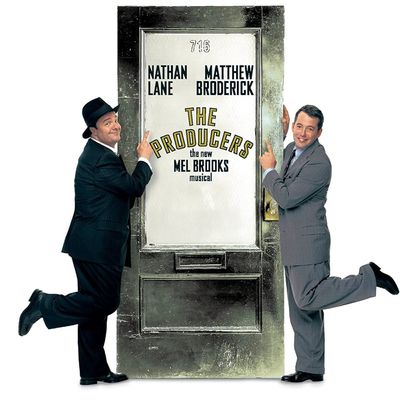
The West End leading man and genius of the acting world on leading the new West End production of The Producers as Max Bialystock, the vitality of the show to a 2025 audience and the honour of joining a league of legends that have played Max before.
Plus, we explore the unmatched brilliance of Mel Brooks, why the joy of this world - and his time in Hello, Dolly! Last summer at the Palladium - was and remains a tonic to him, as much as he knows it does for the audience.
And, we explore his standout role in Fiddler on the Roof, crediting an audience with intelligence and - thanks to his star-turn in the Wicked movie – he’s Hot 100.
Host: William J Connolly
Produced by: William J Connolly/Darren Bell
theproducersmusical.com
Transcript
This transcript was automatically generated and might contain errors.
[0:01] Andy Nyman: My name is Andy Nyman, and you're listening to Eleven, the official theatre podcast.
[0:17] William J Connolly: Hello, and welcome to Eleven, the official theatre podcast that brings the biggest stars and creatives together in one place to discuss life in the arts. He's the West End leading star and all-round acting genius that's bringing the hit new production of The Producers to London's West End, direct from its sellout run at the Menier Chocolate Factory, playing none other than Max Bialystock. But how do you find a new life in such a beloved and signature theatrical piece? And how do you explore your own way when joining a league of legends that have played Max before? Well, let's find out as direct from the closing days of rehearsals ahead of moving into the Garrick in the glittering West End. We talk all things Producers, including the relevance of the show to a 2025 audience, the genius of Mel Brooks, and why the joy of this world and his time previously in Hello, Dolly! last summer at the Palladium was and remains a tonic to him.
Plus, we explore his standout role in Fiddler on the Roof, the vitality of crediting an audience with intelligence, and thanks to his star turn in the Wicked movie, why he's Hot 100. And perhaps most importantly, why he never takes a day in this industry for granted. Welcome to this, the next episode of Eleven.
[1:44] William J Connolly: He is the extraordinary London stage actor that's about to bring one of the greatest musicals and roles of all time to the West End as he plays the brilliant Max Bialystock in The Producers, and he's here to tell me all about it. So, from one Leicestershire lad to another, I say, Good afternoon, Andy Nyman. How are you?
[2:01] Andy Nyman: Hey, me, Dilk, I didn't know that.
[2:03] William J Connolly: Where are you from?
[2:04] Andy Nyman: I'm a Loughborough boy.
[2:05] William J Connolly: Are you?
[2:05] Andy Nyman: That's posher than me, actually, Love Brah.
[2:08] William J Connolly: Where are you from?
[2:09] Andy Nyman: I'm from Leicester from Knighton.
[2:10] William J Connolly: We don't sound the same.
[2:11] Andy Nyman: You sound much more Leicester than me.
[2:12] William J Connolly: I'm afraid I've had it beaten out of me with my podcast and journalist training, but then on again, it slips in, right?
[2:18] Andy Nyman: Yes, of course.
[2:19] William J Connolly: Of course, as it should do. Well, it's lovely to be talking to you. Thank you very much. And talking to you at a very exciting time, I've managed to pull you out of rehearsals as you begin this rather exciting, and as I said in the introduction, one of the greatest musicals, I think, of all time is back in the West End. It feels like we've clicked a reset button. It feels like everything is all right in the world now that we've got The Producers back in the West End. How are you feeling at the minute? I believe you're on—is this week one or week two of rehearsals?
[2:44] Andy Nyman: You're quite early on in the process.
[2:45] Andy Nyman: Day two.
[2:46] William J Connolly: Okay.
[2:46] Andy Nyman: This is day two of the re-rehearsals because we did it at the Menier Chocolate Factory from last October to March to huge success. It sold out in a matter of days and did incredibly well. And hence the origin of the transfer to the West End.
[3:04] William J Connolly: But William, you would never have seen it. You're too young.
[3:07] Andy Nyman: It was in the West End, it was 20 years ago.
[3:10] William J Connolly: I did, and I came with my family. It's one of my first ever memories of seeing it.
[3:13] Andy Nyman: Yes, I did. It's one of my first ever theatre memories. And actually, it's part of a little bit of an obsession for me with The Producers. I mean, I literally have old-fashioned 2004 playbills to show for it. I love it so much. And people always say to me, What do you love so much about this show? And I just think it has everything. And I wonder for the man that has, as you mentioned, done it at the Menier and is about to embark on this West End transfer and in the middle of these rehearsals, what is the thing that makes The Producers just so darn special?
[3:39] Andy Nyman: That is a good question. And it is, it truly is a very special show. There's something about it that is like the quintessential perfect musical comedy. Mel Brooks' writing is so unbelievably witty. The music is so earworm catchy. He has a way of creating songs that sound utterly new and like you've known them forever, all at the same time, that they're sort of steeped in vaudeville, steeped in Broadway history, steeped in Borscht Belt comedy. He's truly brilliant. It is the most wonderful revival of it because the thing what had happened with The Producers originally was that that Susan Stroman production that was on Broadway 23 years ago or whatever it was, I think won more Tony Awards than any other show ever has had before or has since.
It was a—I mean the smash beyond smash, and then went all over them, including Theatre Royal Drury Lane, where it ran for a few years, closed 20 years ago. But that production became the sort of gold standard, almost like the perfect version of what that show is. So it's never really been done since because it was like this iconic version, and it's taken 20 years, and Tony Award-winning director Patrick Marber to be able to get the rights to do a new version of it that isn't based on the Stroman production, that is its own entirely new thing, and that's what we did at the Menier. It's so amazing to see this piece of writing that is based on the film Mel Brooks's film from gosh, I can't remember what the year was, 61, 62, or something like that, which felt incredibly daring and brave then.
And then 20 odd years later, when he wrote the musical, which felt astonishing. Now I honestly think the material feels more daring, risky, brave, outrageous and essential than it ever has done. The comedy hits so hard, it's just amazing. Hearing audiences just honestly screaming with laughter, and it's just an amazing thing.
[6:04] William J Connolly: So for you, knowing all of that history, knowing how much it means to people, and perhaps knowing that this is like the best source material that you have, realistically, how does it play out for you when this project comes to you and they say this could be something that you want to do? And a part that you know you're following in the sort of footsteps of legends and icons. And I imagine you respectfully want to do a good job as well, and you know you have what you have to offer. So, how's it played out for you and initially with the Menier mounting it and now with it coming to the West End? Is it great love or is it, you know, respectfully slightly nervous?
[6:34] Andy Nyman: I'm not nervous about it. I absolutely love it. And I've been very blessed to have played—I mean, the strange thing is I don't really consider myself to be an actor who works in musicals, and yet here I am, you know, this is my—you know, I went from doing Tevye in Fiddler to Horace in Hello, Dolly!, and now Max in The Producers. And the funny thing about all of those roles, I mean, actually, funnily enough, Tevye and Max were both originated by Zero Mostel. So I'm following his footsteps, and then for Fiddler, of course, Topol's iconic performance, and then on this, you've got Nathan Lane and Zero Mostel. And then on Hello, Dolly!, you had Walter Matthau, who sort of iconically did it in the film.
So I've sort of—Fiddler was the first one of those roles where, you know, you're stepping into the footsteps of someone iconic. And what do you do with that information? Well, you can either be completely browbeaten and terrified by it, which just completely suffocates you creatively, or you can do what I chose to do, which is to just go, I'm never going to be as good as that. That's all people think about. That's fine. So you just put it away and you go, okay, so now I just approach it like I would any other part. And in the role of Tevye, you look at it and think, well, there's a man who's been married for—as it was when I did the show, 25 years. And at that point, I have been married about 28 years.
And what's that? What's his marriage like? What's my marriage like? How does he deal with his kids? What are the problems that I understand that I have with my—and you start to piece together your version of it, and none of those decisions become about, oh, he did it like that, so I'll do it differently. You just find Topol could no more do it like me than I could do it like him. And I feel the same with all of these roles, which is what I'm doing is nothing like Nathan Lane. Nothing, the production's nothing like it. What I'm doing is nothing like it. If anything, it's probably a bit closer to Zero Mostel. But again, you know, ultimately you find what is the truth of the character. And it's in Max's case, Max Bialystock's case, he's a man who has tasted huge success and riches and then lost it all, but still swims in the sea of success and wants everyone to think he's a success and wants to clamber back onto that.
Well, that is not hard for an actor to imagine, you know, what it's like when your job finishes and you're like, what's next? And you see all the successes you've had are sort of meaningless if you're not earning and paying the bills and no one's applauding you anymore. It's about taking that and then with the help of a brilliant script, brilliant material, and a brilliant director, navigating your way through it so it feels original.
[9:25] William J Connolly: Did you see it at the Menier?
[9:27] Andy Nyman: I did, yeah.
[9:27] William J Connolly: I was about to say I saw it at the Menier, and what was so extraordinary about seeing what I think is one of those big, big West End Broadway musicals was seeing it in a space so intimate like the Menier, and yet nothing was lost. If anything, I think you gained something, and that shows like I'm set taking a side set to it being in the West End. But like being in that space felt so intimate, such is the genius of that space. And one of the questions I wanted to ask you was what was it like to do something that is perhaps written for a larger space in such an intimate space like the Menier?
[9:54] Andy Nyman: I adore that space. I think it's, you know, it's a magical theatre that just transforms. So it was sort of the same with Fiddler was, you know, it was a massive show in this pressure cooker. And I think what's amazing is it will still—the lessons you learn at the Menier will carry on in the West End. Of course, it will be bigger in the West End. But that's not really what made it feel so intimate. What made it feel intimate is the design is stripped back. There's a rawness to the production that isn't the vaudeville multi-million dollar parade it had been. I don't say that with anything other than reverence because it was a brilliant circus, but this is a very different feel. This, I mean, the description I've always sort of had is for me.
What I love about this production is it goes back to the sorts of dirty fingernails of what the original is about. There's no sheen to it. What I love is the raw power of what Max is trying to do. I think really sort of, you know, builds. And I really—that's an exciting thing to play.
[11:10] William J Connolly: So many people that have had the pleasure of performing and creating work at the Menier talk about it being a space as an actor to really learn to sort of hone your craft because of that lack of space between actor and audience. Is that something that you experience? And do you become a better actor because of that distance and because of the fact that you are front and center, perhaps without some places to hide?
[11:30] Andy Nyman: Oh, yeah, it's brilliant. It is a brilliant, brilliant space. First thing I did there was Assassins, was Jamie Lloyd's Assassins, which was extraordinary. Then I did Abigail's Party, and that feels like it felt like you're in the front room of someone's house, you know, and then Fiddler. Gosh, I'm missing one. What else did I do there? Oh, first thing I did there was a play called Terrible Advice. There you go. That's what it was, a new American play. Yeah. And now here we are with this. And there is such an intimacy that, you know, it almost feels like film acting because you're so close to the audience. And so they can see every detail. But I honestly don't think that's massively different.
I mean, I was staggered when I did the Palladium last year with Hello, Dolly! Because, you know, that seats, Crikey, I don't know, 2800 or something insane. It's one of the most intimate theatres I've ever played in my life. You know, and you really understood the minute you walked out on that stage. Oh, this is why this is the favorite theatre of Frank Sinatra or Judy Garland or Laurel and Hardy, or it's an amazing house for comedy.
[12:38] Andy Nyman: It's an amazing house for music, because when you're in the audience, you look along and it's giant, you're like, this is huge. When you're on that stage, even if you're not mic'd, you can just talk and you are you it's like you can touch every person in the audience. And when there's a laugh or the applause, whoa, it just hits you. And the Menier is also like that, although it only seats 200 or whatever, you know. Uh, it has a sort of a buoyancy to it that's really exciting. One thing that I love at the minute is, and I feel like I'm gonna do a disservice to any form of new writing, please don't misinterpret that. But like I love the fact there's this great resurgence of classic musicals in ginormous spaces or intimate spaces, and it feels like we're getting the best of everything.
I think a lot of people have felt that with Evita, they felt that last summer with having Dolly there as well, and now with The Producers coming back. It feels like we're finding new ways to honor the before while also celebrating the now. And I wondered how important or how much of a key player do you think it is that you know that audiences that come and see The Producers, some may be for the first time, which how exciting is that? But also they're on your side from the beginning, they want to enjoy it with you. Like, does that play an extra part of almost like a little bit of a they're going on the journey with you from the start?
[13:53] William J Connolly: Yeah, I think so. I mean, I think what's really exciting about The Producers is it's not like some radical reinvention of it. It isn't like there's no cameras on the stage and screen, people covered in blood. It's not like a sort of, hey, we're gonna, we're gonna find a new way of doing it. It's simply it sort of strips it back to its truth in a way. I think that yeah, I mean, one of the truly thrilling things about it is once you got into the run at the Menier, we did it for I think five months or something. Is initially it was people who had been waiting, fans who just couldn't wait to come see it again. And then as you got into the run, you realize, oh, these are people who've never seen it.
And it's so amazing for a modern audience to see this. It's not that this is an old piece, it's 25 years, but the world has changed immeasurably in those 25 years. So some of this comedy, I think if it was a fresh piece, you might struggle with now having this piece that's already a hit come back. Holy shit, you hear the audience initially, especially people of your generation, William, are like, oh, we can I laugh at this? Is this okay? And then bit by bit it just batters you into laughter because Mel Brooks is he's I think audiences sort of were sort of starved of satire, and there's a fear now politically of what you can or can't say. And so to have a the fearlessness and the wit of Mel Brooks, who literally uses laughter as the best weapon against hatred or against bad thinking, you just point a finger at it and laugh. Oh my god, it's fantastic. So it feels so refreshing to do that night after night.
[15:40] Andy Nyman: It's interesting. I was talking to the director of Titanic recently, and he was saying, when it we're at the end of the show, when we're saying Celine Dion says everybody survived, we know that didn't happen. But the point is that it's creating a bigger picture, a bigger conversation through comedy and through great laughter. That actually, when you're in the space, everyone collectively has to accept they know that didn't happen. And I feel like it's it's almost asking more of the audience to suspend their disbelief and also be intelligent enough to understand that. And I think audiences, I don't know from your experience at the minute, but audiences seem to respond back to some form of trust and intelligence between actors and audience alike.
[16:13] William J Connolly: Yeah, totally. I mean, it's when you credit an audience with intelligence and don't have to batter them with political correctness and virtue signal. I mean, this is the very opposite of virtue signalling, this show. And yet it's got the most brilliant liberal, genuinely liberal heart underneath it. The other thing that's really unique about it is it's sort of a love story between these two men, these two lost men. Not love in a sexual way, love as of as friends. And there's a very beautiful song in it called "Till Him" that is about male friendship. It's not something you ever, ever see.
[16:57] Andy Nyman: What was the response like for you then inside of that theater for people that maybe haven't seen this show before? Were they doing what you mentioned there, which was waiting for permission to laugh? I mean, from the get go, the laughter is there. And it as the as the jokes at times become more and more shocking. And if anyone's listening to this and they don't know The Producers and they haven't seen it, I would urge you don't listen to the soundtrack. Don't watch the film. Certainly don't watch the film of the musical, which is not great. Don't watch any of it. Come and see the show knowing nothing, other than what you basically will know on the blurb, which is about a down at heel producer and a sort of cowardly accountant whose paths cross and they decide they come up with a scheme to put on the worst musical ever made, and then they'll make money because it will close. That's that's the description. So if you've never seen it, treat yourself, come and see it because honestly, you won't believe it.
[18:03] William J Connolly: For you as well, getting to bring comedy and great laughter to the West End. We mentioned about there being a lot of seriousness in the world, being a lot of seriousness on stage, but also people wanting to find that relief to even as we say, you know, discuss sometimes some slightly challenging political conversations, but to also be able to come and have escapism and fun. And I wondered how important and how exciting is it for you to be able to be a vessel to do that?
[18:25] Andy Nyman: Oh, it's fantastic, it's really essential because people have really difficult lives, people go through difficult times all the time. You never know what someone's life is like, and to have genuine escapism that is that delivers at the level this show delivers, it's honestly it's therapy, it's so brilliant. And for me personally, to be able to go through this joy night after night after night is such a blessing.
[18:57] William J Connolly: Is it hard to be able to find that when perhaps you're not feeling 100%, or is it the great source material that that puts you in the right place?
[19:05] Andy Nyman: Oh, William, I'll tell you the truth. My wife died seven weeks ago. My wife of 34 years, and so when I say people go through very difficult times, I really mean it. And when I was doing Hello, Dolly! last year, my wife had had cancer on and off for 15 years. I cannot tell you the amount I I've we've always my wife Sof was really open about it, I've spoken publicly about it many times. I cannot tell you the amount of people who would be at the stage door waiting to say we're having a terrible time at the moment. This has been the most amazing escape for us, or I'm just about to go into chemo. This is the most this has just lifted my spirits, or this is the first time I've been out since I've had cancer, or and not just the cancer thing.
I mean, life's fucking hard, it really is to be able to deliver joy like this is not a small thing. You know, the arts is a lifesaver, it really is and provides the most essential escape for audiences, you know, for those two and a half hours. The other thing is theatre is really expensive and can often be crap. And if anybody comes to see this and they don't have a great time, I just cannot imagine that. I mean, honestly, it delivers a hundred percent, a hundred percent. And I know they've got a whole bat slew of sort of 25-pound tickets and stuff on sale at the moment, but I think it's I can't wait. It's wonderful for me to be swimming in this joy and this energy, you know, after a very, very difficult period, and it's been a light at the end of my tunnel knowing I'm gonna be doing that.
[20:45] William J Connolly: I wanted to say congratulations to you, by the way. Did you realize that you were Hot 100? Is that a goal that you uh realized was going to come your way?
[20:52] Andy Nyman: The Billboard, the Billboard thing. No, I mean, that was quite hysterical. I couldn't quite believe that when that came through. That for those who don't know what that is, that was um, I'm in the film of Wicked, and I play Elphaba's dad, and so I'm sort of the first or second track on the album, and that song was like in the Billboard top 100s, and it sort of says Andy Nyman, Ariana Grande. Quite brilliant.
[21:21] William J Connolly: Is that the sort of project then because you know that it's going to have this big world appeal, you know that everyone's going to have their eyes on it, they're going to want to listen to it because of the extraordinary artists that you get to play with. Is that the sort of thing that you think it's going to mean something? But as you very kindly reference on your social media, the attention to detail, the love that surrounded it. Did it take you by surprise a little bit how much love and joy it gave you?
[21:41] Andy Nyman: Hugely, hugely. He did the most John, the director did the most incredible job on the film. He really did. Because I'd seen the musical when it first opened, and I really didn't get it, to be honest. I didn't really get it. I wasn't, I didn't go away sort of thinking, oh, that's a wonderful school, which you know I acknowledge now it is, but I it just didn't really touch me. So when I came to do the film, I was thrilled by the little bit of singing that I did in it, but also just how truthful the scenes were and how wonderful that was. What staggered me when I saw the film was the emotional truth of it and how it just transformed the musical for me, and just I thought, God, this is in this is amazing. How could I have missed the power of this? But I think clearly something about the film connected in a way from you know, millions and millions and millions of people. Yeah, I'm very blessed to be part of it.
[22:44] William J Connolly: I wonder if you think back to the beginning and how theatre has managed to impact and change your life in very many different ways. Could you ever have imagined all the love and luck that has come your way? The accolades, the nominations, the awards, the writing that I know is incredibly important to you. And now to be back in the West End leading an extraordinary musical like this, could you have imagined that this chapter would come to you at this point in your life?
[23:05] Andy Nyman: Well, the truth is I've wanted to be an actor since I was 10. So I always was blessed with a happy childhood, wonderful supportive parents, and I I've always had a good sense of self-worth and what I wanted to do. So did I imagine that I would make a success of I don't mean like be successful, but I mean that I would make it work as an actor. Yeah, I kind of always had this blind, blinkered self-belief that made me think, oh, it'll be fine, I'll work as an actor. But that's very different from I guess the successes that I've had. So no, of course I can't have envisaged that. But honestly, I never ever take a day of it for granted. I cannot bear actors that moan. I cannot bear people that find things to chip away at, the joy of it.
I adore it, and I feel there are so many people who would not I'm I'm not even just talking about other actors who don't work, I'm talking about people who would love to be performers but either haven't had the courage or the breaks or the luck to make a go of it. So it is an honor to be able to work for a day as an actor, let alone do a job in the West End, and let alone do the many jobs that I have now done in the West End. But I never think I've deserve it, or aren't I a special person? I don't think that. I've never thought that for a second. I think it's just just the most wonderful, joyous thing that I've had that it's worked the way it's worked, and that I just love it.
[24:56] William J Connolly: You've been listening to Eleven, the official theatre podcast. Find out more about Eleven at elevenpodcast.com or via the Broadway Podcast Network.
© Broadway Podcast Network, All Rights Reserved