

Direct from Oz, the West End’s original Glinda on working with Idina Menzel in Wicked UK, being cast as Margaret New in the Australian premiere of British musical Everybody’s Talking About Jamie, and why she’s waiting for the perfect time to return to the London stage... Read More
From the show: eleven
Featured Shows

About
Direct from Oz, the West End’s original Glinda on working with Idina Menzel in Wicked UK, being cast as Margaret New in the Australian premiere of British musical Everybody’s Talking About Jamie, and why she’s waiting for the perfect time to return to the London stage.
Host: William J Connolly
Technical: Jordan Priestley
Image of Helen: Kurt Sneddon
Produced by: William J Connolly/Darren Bell
Welcome to eleven. The official theatre podcast that brings the biggest stars and creatives together in one place to discuss life in the arts. Follow eleven on social media via @elevenpodcast and via elevenpodcast.com.
Transcript
This transcript was automatically generated and might contain errors.
[0:01] Helen Dallimore: My name is Helen Dallimore, and you're listening to Eleven, the official theatre podcast.
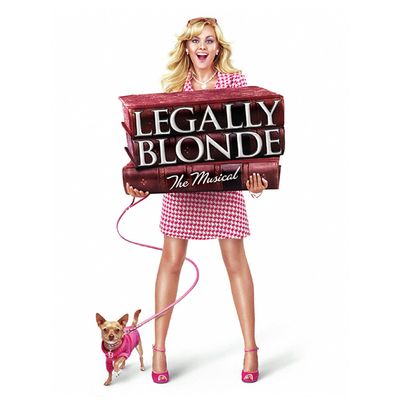
[0:16] William J Connolly: Hello and welcome to Eleven, the official theatre podcast that brings the biggest stars and creatives together in one place to discuss life in the arts. She's the first lady of theatre in Oz that's become quite the name when it comes to their top tier acting. The actor, singer and director made history as the first person to star as Glinda in the original West End production of Wicked, alongside Tony Winner and OG Greenwich Idina Menzel. It's a role that saw her bow before royalty at the Raw Variety Show during a UK television debut performance of Defying Gravity. Not done with one of the most iconic and camp roles in theatre, she headed up the first ever Australian production of Legally Blonde as the hilarious Paulette, alongside Wicked Australia's first ever Glinda, Lucy Durak.
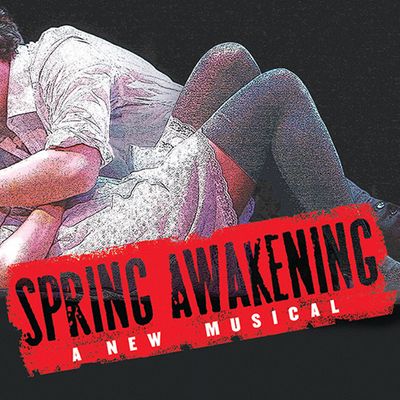
She's also appeared on screen, television, on stage in Spring Awakening, and is hopefully all being well in the era of post-COVID, as Mum Margaret New in the debut Australian viewing of Everybody's Talking About Jamie, belting out He's My Boy, scheduled for the Sydney Opera House and later a tour. She also played Miss Adelaide in Guys and Dolls, Judy Garland in End of the Rainbow, and created the role of Simone in Up for Grabs, a role later played by Madonna in the West End. So it's easy to see how she's become one of the most prominent figures in Australian theatre. So let's go direct to Australia to talk Glinda, Idina Menzel, British accents, living in London, being an actress above everything else, the pressures of originating signature roles, and her overflowing hope that she will soon get to star in that production of Everybody's Talking About Jamie.
It's the fabulous Helen Dallimore on this, the next episode of Eleven, the official theatre podcast. Just to let you know, due to the COVID-19 global pandemic, Helen and I connected digitally on opposite sides of the world. So please forgive any brief moments while we wait for the internet to catch up. Enjoy.
[2:23] William J Connolly: Hello, Helen, how are you?
[2:24] Helen Dallimore: Hello, I'm very well, thank you.
[2:27] William J Connolly: It's so nice to see you. We've been trying to hook up for a long time now, and I'm so glad we finally found the time and opportunity to do this. So thank you so much in advance for being on Eleven.
[2:36] William J Connolly: We are, we should say, on opposite sides of the world. So there is a slight delay. So I'm going to apologise in advance to the listeners, but also yourself if I talk over you. I promise you it's certainly nothing personal, but we've got so many things to talk about and to jump into. So I guess before we talk about this career that you've had, which is incredibly impressive, and I know that you've got some exciting projects coming up, I just want to talk about theatre generally at the moment. So perhaps for people like myself that feel like they're locked in a little bit of a UK centric bubble. Talk to me about, I guess, where you're at in terms of the COVID-19 crisis, specifically referencing theatre.
[3:20] Helen Dallimore: Yeah, well, I mean, it's been the worst year any of us have ever known. I mean, actors are used to being out of work, but when everyone's out of work and there's no work at all, it's really grim. I was supposed to be doing Everybody's Talking About Jamie, playing the mum in the Australian tour of that show, Australian premiere of that show, and that was cancelled right sort of in the height of COVID was when we were supposed to be kicking it off here in Sydney. So that was cancelled, and that would have been, you know, a year's worth of work for me. I think, you know, we're lucky because we're a tiny population in a very large expanse of continent, and we're a long way away from everything else.
It's much easier for us to manage. And things have started going back. We had a production of Pippin, which is still running, and Frozen opened, it's suspended now, I think, for a little while, and Shrek. So things are starting to come back, but we had an outbreak in the northern beaches of Sydney a few weeks ago, just before Christmas, and that, everyone sort of jumps on it. When we have a little sort of cluster like that, then we go into lockdown, and that affects audiences, obviously, so all the people that might come from there obviously don't go to the theatre, and so then you have empty seats, and it's really impossible for producers to run at such losses. But you know, the vaccine is on the horizon.
I know you guys have rolled it out over there, and we've got it coming here, and it'll probably take a long time to get around to everybody, but it does mean that, you know, it feels like there's light at the end of the tunnel, you know.
[5:10] William J Connolly: Yeah, absolutely. And you mentioned some theatres opening and obviously the response to the pandemic as and when it's required. Have you guys been performing, I guess, in sort of similar fashion to us here, with socially distanced audiences, or has that not been a thing where you are?
[5:25] Helen Dallimore: Some, yeah. I think that some of the bigger theatres have been operating at about 75% capacity and audiences in masks. I did a show in a really small theatre in Parramatta, as sort of an Australian musical, just a four-hander. And it was a perfect COVID show because it was four people delivering soliloquies, really sort of sung soliloquies. There were no scenes, so it worked really well for COVID. We had a set where there were sort of four separate rooms, and the audience, like we didn't sell the first few rows because I think you have to have four meters between a singer and the audience, or four meters singing distance, I guess. Depends on how plosive a singer you are. And that worked really well.
But yeah, everybody's sitting in the theatre in masks. It's crazy, and you know, sort of muffled laughs, or I can imagine it is quite strange for an audience. But also for actors on the stage to look out to just lots of well, material essentially. It must be a bit like you miss the smiles in a way.
[6:33] Helen Dallimore: Yeah, it's really strange. And my first audition that I did after we came out of lockdown, we might have still been in lockdown actually. And it was sort of almost a year since I'd auditioned for anything, and I was kind of really out of form because I hadn't done it for so long, but also the whole panel were in masks, and it really threw me. I sort of went out there and all the things that I knew to be true were no longer true. Like it's just strange because you can't see if someone's smiling or receiving a performance, and it's very odd.
[7:14] William J Connolly: One of the little pockets and things that I think we are as audience members and theatre makers keeping safe and very sacred is the fact that theatre can continue in some way. And you guys in Australia are very much talked about here in the UK because you are not only just getting the virus under control but you are persevering with theatre in a safe way. And it feels like you guys really are leading the charge. Does it feel safe for you when you have been in a theatre?
[7:37] Helen Dallimore: Yeah, it feels really safe actually. I mean, with everyone in masks and everyone keeping their distance, it feels fine to me. And honestly, our cases are so low, we have so little community transmission that I think we might feel differently if the numbers were higher and you had a higher chance of getting it. But I think we feel, I feel fine on stage and in the audience, and I think we just all have a newfound appreciation for being in the theatre. I know that the few times that I've been in the audience, I've just relished it so much more because I've missed it so terribly and communing, you know, I mean, what this virus has done is it's taken that thing away from us that makes us human beings, which is to commune with one another and have ceremony and share, and you know, theatre is, that's what theatre is. And I think we've all really missed that, and I just remember feeling quite misty-eyed the first time I sat in an audience after, you know, almost a year.
[8:46] William J Connolly: Absolutely, 100%. You are so right when you say about not just the enjoyment of theatre, but the need for theatre as well and the arts in particular. We've all spent so much time in lockdown, you know, watching television programmes and we've been watching box sets. I mean, I never want to see a box set again in my life. I've watched so many of them, but getting that sort of that instant, constant and, you know, very much needed connection to the arts just shows how important it all is. And I love the sense of positivity that you have, how, you know, things can happen as we look to Australia and, you know, people on your side of the world that things can go back to normal as much as possible.
I'm not quite sure we'll ever go back to the sense of normal we once knew for a while, but it's exciting that things are being planned, it's exciting that things are happening. And you mentioned it there. So I'd love to talk about a show that's actually very dear to my heart and also people in the UK, and that is Everybody's Talking About Jamie, because it was a show that you were scheduled to do. It obviously started in Sheffield. I was lucky enough to see the very, very first pre-West End production. And it's, I mean, I don't know how much you know about that show in terms of research or if you've had the opportunity to watch perhaps the cinema recording, but I know you probably know it very well.
And it's, I mean, let's be honest, it's just a bloody good show. Tom McRae, who wrote the book, is actually an old friend of mine. I met him in Wicked days in London. He's a friend of a friend, so it was kind of delicious to be able to tell him that I was going to be in it.
[10:12] Helen Dallimore: And look, I'm really hoping that it will get back up again. I'm sure the producers are keen to put it on as soon as we can. It's just, you know, I'm sure it's only a matter of time. But I love the show, it's a brilliant show. It's just got, it's just heartwarming and it's fun and it's got something to say, and it's charming and inclusive and you know, everything you want. And I don't really feel like there's been a show like it. I know there's been sort of American versions of productions like Kinky Boots and obviously Priscilla, but I feel like Jamie sits in a bracket all of its own, which I imagine for you as an actress and as a singer must be quite exciting that you get not only to originate a role in your country but also get to put your stamp on something very fresh.
[10:56] Helen Dallimore: Yeah absolutely. I love to be the first and she's such an amazing character and you know let's face it, she's got one of the best songs ever written for the musical theatre stage so I'm really looking forward to smashing that out when I get a chance. Are you not a little bit terrified though? Because I mean, not that I want to add any more pressure to a role that I know you're obviously very excited about playing, but that song is huge and you absolutely have the vocals for it but I mean the emotional side of it, the fact people love it, it sits at the perfect point in the show. I mean you really are sort of gonna steal the show.
[11:36] Helen Dallimore: Well I probably won't steal the show from the gorgeous young man who's being cast as Jamie, James Maju, and if we get it up again then I hope that James will be doing it and he's just an absolute heartbreaker. But yes, I was terrified to audition because I had to audition with that number obviously and I first heard it I thought, "Shit, okay pressure's on." But you know, I sung it enough times through the audition process that I now feel like, you know, if I can win the role with it then I should be able to win over the audience.
[12:17] Helen Dallimore: In terms of, I guess looking at some of the other women that have played that role, are you the sort of person that will look at what they've done and try and do it similarly or are you trying the sort of same person that would look at it and try and do it differently? I guess how do you approach taking on something that people might have come in contact with before?
[12:17] Helen Dallimore: Well, I mean I'm an actor first so I really do approach things from where I would start. I will look at other people's performances but I think, you know, emulating somebody else is not as fun as trying to find where that character might sit in terms of your own range. So, you know, I wouldn't want to reinvent the wheel because obviously she's written a certain way, it'll certainly be my version of her.
[13:07] Helen Dallimore: In terms of accents, the show is a very specific Sheffield accent, somewhere that I've actually lived and I know it's a very difficult accent to do. We know you can do a lovely English accent. Are you going big? Are you going for the Sheffield accent and how are you getting on?
[13:23] Helen Dallimore: Uh yeah, we're all doing the Sheffield accent. Well, I did it in the audition and I did a fair bit of work on it for that and when, if and when it gets up again, I'll be working really hard to make sure that's as good as it can be. I'm a bit out of practice now so don't ask me to do it.
[13:40] Helen Dallimore: You're like, don't even try it. It's a good accent, I will say that. It's a good accent but it's a tough accent. I love that. I love that. Well, luckily though I won't have too many people from Sheffield actually being to watch it.
[13:40] Helen Dallimore: Well, I think you're probably right in some sense but those Jamie fans are hardcore. I think you've experienced hardcore fans with Wicked and Legally Blonde but they'll be on that plane quicker than you realise. So I'd be ready for, I mean I was gonna say notes, you won't need notes but be ready for some comments, some lovely thick Sheffield accents coming for you.
[14:13] Helen Dallimore: I know all the fan pages have already friended me on Instagram. Those people are very protective of that show and I don't know if you'll get the opportunity, I'm sure you will, to meet Jamie Campbell, the person who the show is originated on. Him and his mum are two of the nicest people I've ever had the pleasure of interviewing and the story itself is wonderful. I'm so glad that it's getting the opportunity to travel the world from a little show that I reference, you know, starting in Sheffield to this huge West End hit, touring the UK. I know it's been in Asia and now to Australia. It's a wonderful show so fingers crossed and good luck to you with that role. You are going to be amazing.
[14:50] Helen Dallimore: Thank you, thank you. And a movie soon too, right? With Richard E. Grant? I mean the success of the show is huge and the film is exciting so it just means even more people are gonna come and see you in the show.
[15:03] Helen Dallimore: Exactly, amazing. Let's talk about a show that I love talking about and some of my friends actually got the opportunity to come and see you in and they kept talking about this lady that played Paulette and I said, "I know who that lady is, you don't need to explain to me the talent of her," and that is Legally Blonde. I mean signature role again, another role that we all know. I mean you don't do yourself, you know, you don't make easy roles for yourself by playing these parts that we all love and by the sounds of it you did such a fantastic job. Was it exciting to get to play, I think it's fair in saying, one of the most signature and iconic roles in movies? I mean everybody knows that role, right?
[15:20] Helen Dallimore: Yes, and I'm a huge fan of the movie too and a huge fan of her. But yeah, I mean it's its own thing. The musical is so different from the film in a lot of ways and you know it was such a dream role. She's so funny and she's got such a beautiful heart and again a difficult accent, the Boston accent. So that’s always fun nailing that one.
[16:07] Helen Dallimore: How much rehearsals did you have to do to perfect your bend and snap? Were you pretty good at it to start, or was that a new skill that you acquired for this show?
[16:14] Helen Dallimore: Yeah, the bend was okay. It was more of the snap that was a bit more of a challenge. I mean, I've been bending for years, let's face it.
[16:22] Helen Dallimore: Were you a big fan of pink beforehand? Because it's, I mean, there's no escaping pink during that show. I mean, it's fair to say that you know you sort of have to succumb to the world of Paul Matt and Al. I mean, are you now sort of pleased on your rider? Does it say please no mention or use of the colour pink now? Like I'm sort of over it.
[16:40] Helen Dallimore: No, I say I love pink. I've always loved, well, I was a goth when I was a teenager and into my early twenties. So I missed the whole girly pink phase because all I wore was black for about 10 years and then I had a late blooming with pink.
[16:55] Helen Dallimore: You also got to reunite with somebody that I know has played a role that you've also played, and that's Lucy Jirak, who was Elle. So it's sort of like a Glinda reunion from opposite sides of the world. What was it like getting to work with her? Because I know that you guys are friends outside of work as well.
[17:10] Helen Dallimore: Well, yeah, I mean we became good friends doing that show together. We knew each other before that, but we became very close doing that show because obviously those two characters are so close and we did that show for probably about a year. We did it all over Australia and she's just the most, honestly, no one will argue with me if I say she's the nicest woman in this Australian show biz. She's just the sweetest, most lovely girl, and we just had such fun together, and you know, I now count her as one of my dearest friends.
[17:49] Helen Dallimore: So yeah, she's a proper Glinda, like she's got the goodness inside of her. I'm the kind of evil Glinda that just wants all the attention for herself.
[18:03] Helen Dallimore: Is that bad to say? Should we say that? I don't know. Maybe that makes me look bad, but yeah.
[18:10] Helen Dallimore: I think self-knowledge is a wonderful thing. But to be fair, I always think with Wicked and, you know, people say like, "Oh, who would you rather play?" I'd always rather play Glinda. Like I've very, very little interest in Elphaba, minus the ability to be able to say I can belt that high. I would, I mean I can't sing anyway, who am I kidding? But I've never, I would always want to do what you did and play Glinda. Was that, were you the same? Did you ever want to play Elphaba? Was that ever on the horizon?
[18:35] Helen Dallimore: I just didn't want all that green in the pores of my skin. I mean, I'm obviously a Glinda. If I was going to cast me in something, you know, I think you've got to play to your strengths. And, you know, I'd like you would love to have those big flashy, showy numbers to sing, but I'm a clown and I really do get off on making people laugh.
[19:02] Helen Dallimore: I'm so glad you mentioned being funny because you are hysterically funny, and I think that's one thing that you could put above anything because your acting is just hysterical, and that's one thing that you really did make a mark on your performances as Glinda. And that's the one thing I think I remember is apart from this beautiful English accent that you put on, which I couldn't believe that you were Australian afterwards and had this thick Australian accent. I was like, where does she put that during the show? But the funny isms that you brought to that role really were exceptional. Was it an enjoyable process getting to do something that's very different, I imagine, to what we hear from Kristen on the album?
And you are, you know, one of the first women after her to get to play it. I know there were a few in the States. Was it an exciting process for you to get to originate, you know, this slightly tweaked new production that Stephen Schwartz has spoken about before and said he's very proud of? Was it fun to get to sort of be the first to explore a slightly newer side of Glinda?
[19:52] Helen Dallimore: Thank you. It was my English accent comes from living in the UK for half my life. So I grew up in both Oxford and Sydney and went to school in Oxford, in both primary and secondary school because my parents are academics, so they would take us over for sabbaticals on a regular occasion. So my accent was born of years of trying to fit in with the good burgers of Oxfordshire.
[20:19] Helen Dallimore: Um, but it was so I and also I think I mean it was kind of an extraordinary thing, really, that uh and I'm sure that there were a lot of British actresses at the time who really hated me, you know. Here comes this kind of fly-in from Australia who nobody's ever heard of, and and gets the the big kind of British musical theatre role of the decade. And um, and I think I was it was in my favour, probably that the Americans didn't know really one person from another, so they were coming in from the states, and and for all they knew I was British. I don't think they even knew I was Australian when I was auditioning. But it was really great to be able to reinvent Glinda and and make her British and kind of figure out what sort of British woman she would be, because that you know, the decision was taken to to have everybody in British accent except for the wizard and at the time Elphaba when it was Edina, and I think now they that the alphabet is British as well.
Yeah, because Carrie was British when she did it. So I was, you know, I I thought, you know, it's what's the sort of equivalence to that um sorority girl American type. And I thought probably some sort of Sloan Ranger, you know. So it was, yeah, it was fun to kind of find out who she was and reinvent her, and you know, even changed a couple of lines here and there, like instead of fix your hair, I said, Well, we should probably say, like, British people don't say fix your hair, we'd say do your hair. So we changed that just to make it sound authentic for for a British audience. Well, when I look back on it now, with so much time has passed, I it's kind of quite an amazing thing, really, that that um that happened to me.
[22:01] William J Connolly: When did you first find out that you were sort of sharing a stage with the original Green Girl?
[22:06] Helen Dallimore: I was so lucky because uh Edina is is just the most wonderful lovely woman, and and she's a real actress, you know. She's a apart from that incredible voice she's got, she's she's a proper actress, and and because I I don't really come or I didn't really come from a musical theatre background, I came from a from a straight acting background, and so I approached the role as an actress rather than as a musical theatre performer, and I think she really appreciated that and she she really wanted to work with me as an actress first, and so we had this great rapport, and it I think it showed um the chemistry showed when we uh when we were working together on stage.
[22:51] William J Connolly: In terms of when you said about the accent, just to step back a question, the album itself is in an American accent, and then you've got Adina in an American accent, and you're perfecting your British accent. Was it hard not to mimic what she said, or was it quite easy to go off into I guess a bubble of your own and and to do that?
[23:08] Helen Dallimore: Because I'm somebody that does pick up accents a lot. I'm quite shocked that I haven't started imitating yours yet.
[23:14] William J Connolly: Well, I think I'm imitating yours a little bit to be honest.
[23:17] Helen Dallimore: When I because I've I've spent so much time in the UK, uh when I speak to my British relatives, I usually slip into uh a slightly more British accent, or you know, but I I I did um I was fine with her. I don't she's so American. Do you know what I mean? Like she's it was uh it was easy to to be in my own bubble, uh, like the reference there too. Is there a reason why you didn't continue with the ride to Australia? Was that ever on the cards?
[23:43] Helen Dallimore: Look, it was it was on the cards for a bit, but I I'd never done anything for as long as that. So I did that for a year, and I'd never done anything for that long before because the the longest sort of play run I'd done was probably eight weeks. And I was exhausted, and I you know it was so taxing really um doing that role for that for that long. Um, and I was ready to do something else. That seems fun. I thought, you know, I can't really top this, I can't really top originating the role in the West End. You forget how exhausting those types of roles are, especially you know, originating stuff from rehearsals and stuff. So I think that's I think that's more than fair. Sometimes being completely knackered is a really, really good reason to go. I'm gonna leave that memory there.
[24:30] William J Connolly: So I'm for you on that one. You can uh hear some kookaburras now in the gun, literally in the gum tree out the front. Can you hear that?
[24:37] Helen Dallimore: Just a little bit, yeah. It's it's fun. About about this time it's dusk now. About this time every night they laugh hysterically for about a minute, and sometimes I might take a small bow or just saying thanks very much. There's just a couple more questions that I wanted to ask you. I know that Spring Awakening came to Australia as well, and I'm right in saying that you were part of that as well.
[25:00] Helen Dallimore: Yeah, um, that great production um that that started in New York, the sort of the revised production um was such such a great version of it, and we did it, yes, we did it here, and um the Sydney Theatre Company did it, and I got to play the adult women in that, which was a hoot. You know, beautiful music in that show.
[25:21] William J Connolly: Were you sort of familiar with the show before you were part of it? Did you sort of get to feel that hype from when it was in uh America?
[25:28] Helen Dallimore: Uh a little bit. I I found out more about it once I I was cast. You know, it was was odd because uh you know that the roles I was I didn't sing at all in it. There it there was no singing for the those adult roles, but I think that the director wanted to have somebody who came from a musical theatre world. Um, just to kind of be stylistically in the same place as everybody else. So I I enjoyed kind of being there for them and in a kind of um pastoral nurturing way. The reason why I asked that question is because some of the shows, or that most of the shows that you've done have these big followings, you know, they're really established, even new work where they have a core fan base of people, and it's like you know, talk about a rod for your own back.
I mean, you sort of hold yourself to a huge high account by not just yourself, I know, but but fandoms as well. Do you do you like that interaction that you get with fans? Because I know some people sort of run very much from it. Do you embrace it? Do you like the stage door vibe? Or are you the sort of person that's actually quite private off stage and you sort of like to slip away?
[26:32] Helen Dallimore: Oh look, I think that as a performer, you have a responsibility to um to fans, and particularly people who have waited and want to meet you and have a photo or autograph or whatever. And I always took that um responsibility very seriously when I was in Wicked and did stage door every every show, except for matinees because I needed to rest between shows. But uh I was always very happy to do that. I mean, I am private and I don't have a fan page, and I I don't sort of interact with fans online or anything like that. Um but I'm always happy for a photo and an autograph if somebody wants it.
[27:12] William J Connolly: That's lovely, and I think so many people appreciate that and have you know a real genuine desire just to say thank you. And I always love I love when I see people taking pictures, I love when I see people feeling part of theatre. But when you hear the words thank you, it feels it feels really wholesome, it feels really nice.
[27:30] Helen Dallimore: I agree, I agree. In in what can sometimes be a thankless profession, you know, like that the applause is lovely, but you know, you work really hard, and and certainly sometimes it's nice to actually hear that that what you've done has had an impact on someone and a positive impact. There are so many other roles in your career. I mean, your CV is incredibly impressive, and there are lots of other things that I know people will want to ask you questions for. And we might need to leave that for another day. But my sort of final question for you, and actually probably the most important one of this entire conversation. I know that you've been here a few times, so my plea with one of a better phrase to you is please will you come back to the West End when time allows? Will you come back?
[28:09] Helen Dallimore: Oh, look, I would love to, and um, you know, I have a son now, he's about to turn 10. Can you believe it? And uh, so I share custody with with his dad. So it makes it hard to move back. Um, his dad and I pretty much need to stay in the same country now. Um but you know, I will always come back should the right role come up for a role. And I and I did that for Into the Woods and a couple of shows, but you know, you really need to be there to you know to be seen by people and audition. And but I if somebody wants to cast me in a show, I will be very happy as soon as we're allowed to fly to come over and do one for sure.
[28:54] William J Connolly: I feel like your son for his 18th birthday is going to be getting a one-way plane uh ticket with you to the West End. This is our new home, and he's got some shows to be doing.
[29:07] Helen Dallimore: Yes, you could well be right.
[29:09] William J Connolly: Well, that's good parenting, so I'm going to encourage that behavior. So, Helen Dallimore, please do that. But just to say thank you so much, just to say thank you so much for doing this. It's a real pleasure, and and it seems sort of slightly disingenuous to keep saying it, but I am a real great big fan of yours, and it's a real sort of pleasure to get the opportunity to go through some of the fantastic, fantastic performances that that you've been lucky enough to deliver to us. So thank you so much for that and for your time today.
[29:14] Helen Dallimore: Thank you so much. It's been an absolute pleasure. Enjoy the rest of your evening and the lovely songbirds that you've got around you. Most importantly, please stay safe. And I look forward to seeing you in a hopeful not-so-distant future.
[29:44] Helen Dallimore: Yes, stay safe yourself, and uh, we'll see each other on the other side.
[29:51] William J Connolly: You've been listening to Eleven, the official theatre podcast. Find out more about Eleven at elevenpodcast.com or via our official social channels.
© Broadway Podcast Network, All Rights Reserved