

The stage superstar and Tony nominee on celebrating 25 years of rocking out on Broadway with his new live streamed show So Far, how originating in RENT changed the lives of so many, and why his life-long friendship with the legendary Idina Menzel helped kick-start it all for New York City's finest rock voice... Read More
From the show: eleven
Guests
Featured Shows
About
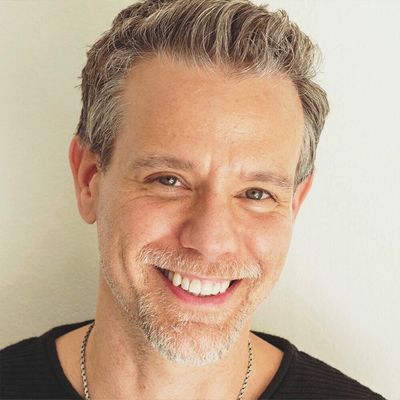
The stage superstar and Tony nominee on celebrating 25 years of rocking out on Broadway with his new live streamed show So Far, how originating in RENT changed the lives of so many, and why his life-long friendship with the legendary Idina Menzel helped kick-start it all for New York City's finest rock voice. Plus why Aida, Disney and Sir Elton John deserve an apology!
Host: William J Connolly
Technical: Jordan Priestley
Produced by: William J Connolly/Darren Bell
Welcome to eleven. The official theatre podcast that brings the biggest stars and creatives together in one place to discuss life in the arts. Follow eleven on social media via @elevenpodcast and via elevenpodcast.com.
Transcript
This transcript was automatically generated and might contain errors.
[0:01] Adam Pascal: My name is Adam Pascal, and you're listening to Eleven, the official theatre podcast.
[0:16] William J Connolly: Hello and welcome to Eleven, the official theatre podcast that brings the biggest stars and creatives together in one place to discuss life in the arts. Now he's a Tony nominee and a Broadway legend that's about to take audiences through his incredible twenty-five-year career on the stage as part of a series of new streamed concerts that celebrate his work. From starring in the original cast of Jonathan Larson's musical Rent to working with Sir Elton John and Disney on Aida, alongside the incredible, incredible Heather Headley. He's no stranger to originating in incredible pieces of theatre. He's also starred in chess, cabaret, Memphis, Pretty Woman, Chicago, Something Rotten, and School of Rock, recording albums performed with Queen's Brian May, and he is a lifelong bestie to Broadway Belter Idina Menzel.
So it's safe to say that he knows pretty much a thing or two about rocking out. Here, direct from his home, stateside, it's time for he and I to discuss pretty much all of it, including highlights of his 25-year career on the stage, including his incredible friendship with Miss Menzel that helped launch his career into the world of theatre. The impact of shows like Rent and how he thinks it helps shape the landscape of modern musical theatre, working with Sir Elton John on Aida, and why he's demanding an apology from the Tony voters for their admission on the show. Getting to experience a masterclass in quite a few of his productions from his co-stars, including from the previously mentioned incredible Heather Headley.
Those personal stage door messages and experiences that, as you'll witness here in a rather touching and emotional pause, mean more than words can really ever reach. The one show and role that he would actually love to return to, how his British accent is actually rather darn good, thanks to him playing William Shakespeare in Something Rotten, and why this special series of streamed concerts that I mentioned is the perfect way for him to take a trip back down memory lane. So let's get ready to rock as it's Broadway legend, Adam Pascal here now on this, the next episode of Eleven, the official theatre podcast. To meet with current restrictions and to start the possible spread of COVID-19, Adam and I connected for this conversation digitally. So please forgive any brief moments while we wait for the internet to catch up. Enjoy.
[2:32] William J Connolly: Now he is the voice that made me fall in love with theatre. So this is actually going to be quite an honor for me. So please help me welcome to this the next episode of Eleven. It's Tony Nominee, Adam Pascal. Hi, Adam, how are you?
[2:41] Adam Pascal: I'm fine, thank you. Thank you so much for having me. It's an honor.
[2:44] William J Connolly: Thank you very much for being here. And as I sort of joke at the start, you really are the voice that I grew up and absolutely got me obsessed with theatre. So I've got lots of very geeky questions to talk to you about, which actually feels very apt because you're about to go through, I believe it's a 25-year career. Some people like hate talking about timelines, but that's so impressive. Twenty-five years on the stage in so many different shows, varieties, etc., which we'll touch on just a few, or we'll be here for literally hours, with this new live stream, which people are gonna get to see, listen to, enjoy, and just submerge themselves in your world. And I do believe it's called Adam Pascal's So Far, which I think is a very, very interesting name. So before I start asking you about specifics, I guess why that title and why this show now?
[3:26] Adam Pascal: It's taken 25 years for me to accumulate enough work on Broadway to be able to put a show like this together. Um, and so I'm somebody who, uh, in addition to doing musical theatre, has always gone out and done my own music and played my own music, and that's how I, you know, I grew up playing in rock bands. And so um, this was uh an opportunity for me to put together for the first time a solo acoustic show, which I've done in the past in various different forms, but never like a cohesive show like this that had like a beginning and an end and like a through line, you know. Um, but again, it was only it was it's just like the timing was right because I've finally have this body of work and this 25 years of experiences, uh, a lot of which are kind of crazy and funny, and I like to talk about them to the audience, and you know, and and and so um so that's where the show came from, and that's what the show is.
Uh, and so I was doing that live, and I I'd done various different projects. Um, but this this particular thing seemed very appropriate for this new medium of like streaming and and zooming and all this stuff. Um, because it was just me. It is just me and my guitar. Uh, and so uh so we decided, or I mean and this, you know, production team art uh art lab uh and we and we put it together and it literally it's just in my I'm not there now, I don't live there anymore, but I in my apartment in Las Vegas uh and we set up cameras and uh and by cameras, I mean iPhones, and so I had three three of them. Um uh and uh and we shot me playing live, you know, in and it looks great. Such a big part of the show is talking to the audience and and telling these stories and whatever.
So I um and and there's an energy to that, there's a give a give and take there, you know. Um, but I I didn't think it was going to come across if I just spoke to the camera. A buddy of mine, Tony uh winner, Jared Emmick, lives in Las Vegas, and uh, and so I said, Will you come over and just interview me? And I'll I'll intercut that into this, you know? And so that's what we ended up doing, and it worked out great. And so he and I just sat there, I set up the cameras, and we just talked for a while, and um, and then that that's how I was able to tell these stories in a similar way that I tell them on stage because I had another person to actually interact with and talk to.
[5:39] William J Connolly: Are you the sort of person that likes to look backwards on your career in your life and find those sort of those moments that perhaps I can imagine when you're in them don't feel like milestones, but actually when you look back, you think, oh gosh, that was a big moment for me. Do you like doing that? Because a lot of people do go, la la la, I don't want to talk about it. Like, don't don't let me look back, maybe look forward. I guess how do you approach it?
[5:58] Adam Pascal: No, I definitely like to look back at those things because you're right. When you're in them, you don't absorb them a lot of times, you know. Um, and so especially with these big things like Rent or any of these big experiences, you know, they they are they're hard to absorb there because so much happens in such a short amount of time. So I I do like to, and especially now, I've been doing it a lot because it's 25, you know, the the show is 25 years ago, I have this show, I've been talking about this stuff a lot. So I actually uh I I have been looking back a lot, and I'm um I'm amazed that I have had the career that I've had that I've had, you know, because it's because it's been difficult, you know what I mean?
So so I've lived through all of this difficulty, but then when I look back on it, I go, oh yeah, there's some pretty fabulous things happened also. But it's hard to remember the fabulous things when there was so much difficulty because show business sucks and there's difficulty. That's just the nature of the business.
[6:58] William J Connolly: When it came to your time on the stage, when it came to the way in which you first sort of walked into theater and realized, you know what, this is something I think I like and I want to do. Was that before you found your love of music? Or did music bring you to theater? I guess. How did those two relationships come side by side?
[7:11] Adam Pascal: My story is pretty uh unique in that I grew up playing in rock bands. And I never I never thought about doing musical theater. Uh, I never thought about being an actor. It's not something that ever occurred to me. I discovered playing, you know, I discovered rock music at a really young age, and I wanted to be Bono, you know, like, and so like it was, you know, that was that's where my head was my whole life up until my mid-20s. Um and in my mid-20s, I was living in New York City where I grew up and out here on Long Island, I grew up too. Um, but um, I got a call from Idina Menzel, who is a lifelong friend of mine who grew up down the street from me. And so she said, hey, I'm doing this off-Broadway musical.
There's a role in it that the character sounds like you. Um, and I and uh they're they're auditioning people who don't have any prior experience um, you know, in theater necessarily, and and we thought of you, do you want to go and do you would you like to audition for that? Because I they they would see you. And it was just like I she's I she said, just go in with the guitar and sing a song. It was really just like about like, oh, you mean somebody will sit in front of me and listen to me sing a song? Because, you know, like as opposed to me sitting in my bathroom in my apartment and singing a song, you know. So like it was really it wasn't I didn't even think of it as an audition necessarily, as much as like, oh, this is just a chance to go sit in a room with somebody and play for a human being, you know.
[8:32] William J Connolly: So when you have a success, when they go, okay, yeah, we'll we'll take you on, like we like what you do, but you've never done it before. Is that when you go, oh shit, I've now got to do this thing called Broadway?
[8:44] Adam Pascal: Well, yes and no. I mean, it looked it it wasn't it it didn't go immediately to Broadway. You know, we started out off Broadway, so it was an ascension to that, uh, you know, albeit a quick one. But there, you know, I always felt at home on a on a stage in a musical. From the first time I I started rehearsals for Rent, it just felt very natural to me. Um, so I I was never concerned that what I was doing wasn't working or appropriate or I didn't know what I was doing. Uh, you know, I just I you know, I I kind of just I I instinctually felt that like I I kind of know how to do this. I I had a tremendous amount to learn, as do we all always. But I started out with this with a very good instinctual knowledge of how to do that.
I didn't know I had it until I did it, you know. Like I didn't go out there saying, like, oh, I got this. It was just like I just started to do it and never felt anything but comfortable doing it, you know. So it was sort of like an uh that type of an evolution.
[9:41] William J Connolly: Do you think that it probably always would have happened though? Or do you think it's quite literally down to this specific chapter in your career and your friendship with Idina that sort of almost forced you into it? Because obviously, she was a wedding singer, liked this, but actually, when the opportunity came, it you know, now you think, well, of course Idina would always do this, but actually it m not necessarily wasn't.
[9:59] Adam Pascal: Not necessarily. Not necessarily. Of course not. I mean, this was lightning in a bottle in a lot of ways for all 15 of us who were casting that show. And and and you can certainly uh, you know, um, you know, I uh it do a thought experiment about like where our lives would have turned out without this show. So I don't think I you know, because it's not just about like there's two questions here. There's a question of what would have happened if Rent happened without me, and then what would have happened if Rent never happened at all? My the trajectory of my life and all 15 and Idina's and everybody's is very different when you ask the question in those two specific, specifically different ways.
You know, if the show had happened without me and had the same success and wrought all that it wrought, meaning Lynn and Pasek and Paul and uh you know um Tom Kitt and all these composers who are clearly all brilliant, but my but like also inspired by Jonathan. And like, would those musicals have ever happened? Would the director with Spring Awakening would at once would like you know, you connect you can in a way connect it all to a certain extent. And and I guess my question is so therefore the Broadway landscape may or may not have looked the same. I know I'm doing I'm getting really deep here. So it so let's just say that the Broadway landscape looks exactly as it looked, but without me, I it's a I it's an interesting question.
Like, would I go, hey, I should audition for that show Rent? Maybe I could play that that role Roger and that hit show Rent. I don't know if I would have done that. I often think like also like, would I have done like um American Idol? Would I have tried to do American Idol? Would I have tried to do The Voice or America's Got Talent? Like, you know, I I I ask those questions about myself, like had my career been different. And then, of course, the you know, so again, so those two things, Rent happening with us, or Rent not happening at all, takes us in two different directions. Both of which I'm so glad that you definitely did that show and that Rent definitely too.
[11:56] William J Connolly: I literally two or three episodes before this one, I was talking to Renee Elise Goldsberry, of course, the superstar genius of Hamilton, and she said that she knows as a fact that Hamilton wouldn't exist without Rent. She says there's just absolutely no way it would have happened. And therefore, as a cultural piece, I think you more than anybody will know it completely shifted everything. There is, you know, there is it's it's almost impossible to have conversations around Wicked around so many of the other shows. They simply wouldn't have existed because of it. Were you and this is the this is the ADR question of like, did you know at the time, but was there ever a moment where you thought maybe this could be something pretty epic? Like, did you have that penny drop moment?
[12:34] Adam Pascal: Well, uh yes, in a way. I mean, it was in a way it was a slow burn, but but also we, as being inside it, working on it, knew that it was really special. That but that's not to say that we had any idea it would go beyond the four weeks at the New York Theater Workshop. You know what I mean? We just but we knew it was special. I always say that like had the experience ended after those four weeks, it still would have been a life-changing experience. I don't know where my life would have gone after that, but it still would have changed my life, just having that experience and meeting those people and doing the show for four weeks, say, you know. So um, it won the Tonys and then it won the Pulitzer, and then you know, like so like all of these things were happening.
And so we knew that like this is something huge and special, but you really don't know until you sit here and you and I have a conversation 25 years later, and and and are able to look back on it and make and see all of the things that came after it and make those connections and and and now we can say, wow, yeah, it really did have an unbelievable effect on the future, uh, you know, a landscape of musical theater, a dramatic effect, absolutely. But that's not something you can know on you know, and on without hindsight.
[13:48] William J Connolly: Do you apply the same model to the social and political impact that the show had around conversations on people living with HIV and AIDS, people that are existing within the world and people that are dying within that world? Do you were you aware of that type of conversation?
[14:02] Adam Pascal: Well, I I maybe a little bit of both, but I was definitely aware of it at the time because we were so in it, and because people were dying of AIDS at that time, you know, uh uh, you know, uh dramatically um uh in in sort of you know high numbers. W we could tell how it was impacting the the gay community, the how how our show is impacting the gay community and and and not just the gay community, um, but anyone who's been touched by not just AIDS, like like it really like it's spoke to anyone who was either suffering or or had somebody pass away from a disease, you know, uh you know, like it really affected it branched out, and and that's what I always loved about the show is that this the specificity of the characters having HIV all these years later is now incidental. You know what I mean?
[14:53] Adam Pascal: It could be anything, you know what I mean. And now when I sing this song and I'm talking about just singing "Once on This Island" and the virus taking hold, look at what the fuck we're living in now. Like, you know, there's relevance now, you know. I wish there wasn't, but there is, you know, and so you can carry that message from the show and apply it to the things that are going on now in the world. I'm so glad that you have the ability to be able to look back. Sometimes people do projects in their life, and then it's a chapter that exists in the past, but actually, I think very much with that show and some of your cast members that I've had the honor of speaking to, they all do talk about it as being this ray of light that will never leave them for so many different reasons.
It's wonderful to see so many different things. Everybody gives me a different answer to the question of what was sort of the moment that you realized it was gonna be a success, and a lot of people do just talk about the impacts of it so many years later, the fact that it's still here, still exists, and it's still got a heartbeat now.
[15:49] Adam Pascal: I mean, I get choked up thinking about it sometimes, but like every night we would come out of the stage door. Well, first we would go into this alley, you know, like we'd have to go to this outside alley first, and everybody would sign the wall and stuff. And like the reaction from people, you know, like the tears of gratitude and thank you from people who lost loved ones or lost friends, and somehow were comforted by seeing our show. That's an experience that I am articulating to you now, but the words don't at all fully encapsulate what that feels like.
[16:46] Adam Pascal: Now there is another show, and I would be amiss being British if I didn't ask you about, and that was getting to play probably one of the great British people that have ever existed, and he shares part of the same name with me, and that is "Something Rotten" and William Shakespeare. If there was like a hierarchy of shows that have happened elsewhere but not quite come here, that's top three. That's like the West End is "Next to Normal" is probably another one, and of course, "Moulin Rouge" is definitely because of the iconic film, and that is coming here. But yeah, "Something Rotten" is the show that never was in London, and I still think, you know, there's rumblings all the time. Maybe it could happen, and I really hope it does.
[17:21] William J Connolly: Oh, I definitely think it will. You know, I mean, the show's not that old, you know. Like, if you think about it, like it closed on Broadway just in 2017. We did the tour in 2018. So, you know how things go. Like, they may have wanted to do it, and there's just not an available theater. Like, it'll happen, definitely. I mean, I think people love that show, you know. I mean, and I also think that it would do really well there.
[17:43] Adam Pascal: Definitely. So, is playing the bard as fun as I would expect it to be?
[17:46] Adam Pascal: Oh, yeah, absolutely. I mean, and that's just a testament to Wayne and Carrie Kirkpatrick who wrote it, and Casey Nicholaw directed it. You know, I mean, they created this hilarious farcical show and created this character of Shakespeare in the way that he's portrayed. And so, you know, it was just the most fun I ever had, you know, getting to play him every night and play him with the people that I did—Rod McClure and Josh Grisetti and Blake Hammond and, you know, all of these amazing actors. It was just a dream come true. And I learned so much about comedy from those guys.
[18:28] William J Connolly: Because you did perform "Rent" in London for a short while, I do believe as well. So therefore, were you tapping back into your British accent from then? Were you like, "I remember a few tips," or was it quite difficult? How is your British accent?
[18:39] Adam Pascal: My British accent is very good. It depends on which region you're asking me to speak of. And so I can very easily switch between different regions and go, you know. Sir William Shakespeare was a much more posh fellow, and so he spoke a little bit more sort of high class, but, you know, yeah, but so I and actually I had to play, I forget Casey. I forget what, oh my god, Toby, Toby Belch. I'm trying to remember the accent, but I had to do a more northern accent, and so I had to do a different like to because it's Stratford-upon-Avon, isn't it? So it's not London, but yeah, that's very good.
[19:16] William J Connolly: Yeah, good.
[19:17] Adam Pascal: But it was so much fun.
[19:20] William J Connolly: Yeah, I literally was about to say it just looked like so much fun, and of course, Marisha Wallace, who I know is part of that company as well, has obviously is an absolute superstar here in the West End now from "Dreamgirls" and "Hairspray." And she just talks about it all the time. Like if you talk to Marisha about theater, she's like, "Yeah, but 'Something Rotten' was this show." And it's like you're keeping the buzz alive, you know, keeping the flame alive.
[19:40] Adam Pascal: You know what? It really is the kind of show that anyone who does it falls in love with it. You know what I mean? It's like we didn't want it to end, you know, like we did the tour for a year and a half. I would have done it for another year. We just didn't want it to end. We were having the best time every night.
[19:59] Adam Pascal: I'd love to talk to you as well, just very briefly about working with Elton John, who of course is a music genius, is probably one of the crown princes of the music world internationally, particularly here in the UK. And just "Aida," the show itself, again, is a show that we've never really had a full-scale production of. I know that they've done it with sort of slightly off-West End venues and stuff, and it gets the most remarkable responses, and people do absolutely fall in love with it. And I know that it's a big part of your life. And I was watching an interview with, I think it was like Broadway.com or Broadway World or somebody where you just said that as a creative piece, you felt like you could really dig into that, and to get the opportunity to create as an artist with somebody like Elton John felt rare but very special.
[20:39] Adam Pascal: It was indeed that, absolutely. And you know, it was a really interesting contrast going from "Rent" and the process of making an off-Broadway musical, but off-Broadway with no money and, you know, no budget and, you know, like we all wore our own clothes, and it was just very sort of like a small insular group of people, to then right after that going and making another new musical, but with Elton and Disney and millions and millions of dollars and all this stuff. It was, and each one of those was extremely rewarding in and of itself, you know, for separate reasons. But yeah, making that show was an incredible experience. It was at times very frustrating because of the sort of the lack of respect that Disney received from the Broadway community at the time, and even Elton, the lack of respect that Elton received from the Broadway community at the time.
[21:39] Adam Pascal: And I've been talking about this a lot, so I keep bringing it up because I want to remind people. So I've been saying this a lot. I remind people about "Aida" in relation to what I was just talking about and this absurd snobbery on Broadway, which doesn't quite exist so much anymore towards Disney or Elton for that matter. But the show was not nominated for Best Musical. The show was nominated for four other Tonys, and it won those other Tonys, including Actress and Best Score. In some crazy fucked up universe in the year 2000 or 2001, wherever we opened, the nominating community of Broadway didn't deem the show that won Best Music and Actress and costumes and whatever else it won. They somehow didn't deem it worthy enough to nominate for Best Musical.
So I remind people of that. And I also remind people of the stupid ass show called "Contact" that did win Best Musical, which is not a musical because it has no live music, no live singers, no original score, and no book. So on what planet is that a musical? If that's a musical, everything's a musical. So that was a really fucked up year. And so I am petitioning for an apology for everyone who was a Tony nominator that year that they need to apologize to Disney and Elton John. Say, "I'm sorry. I'm an idiot and I fucked up."
[23:02] Adam Pascal: I also how can you witness a piece of theater? Firstly, that has that creative team behind you, like number one, like you must literally be stupid. But then also to have a leading lady like Miss Hedley, like Karma. Like, I don't care. Even if she, even if the show was shit, she's amazing. Like, come on. Like, that's just ridiculous. Like absurd.
[23:21] William J Connolly: Yeah, it is absurd.
[23:23] Adam Pascal: The whole thing was a farce. And I hope that they're embarrassed, those people who were nominating that year.
[23:30] William J Connolly: They should be.
[23:31] Adam Pascal: Definitely. I saw on a YouTube clip one of Heather singing the close of Act One. I think it was a comment that someone put that you said in an interview, "I used to just literally just watch her belting away every night." Was that just mass? Was that literally like having a front row to a master class every night?
[23:46] Adam Pascal: Yes, absolutely. And I've done that in other shows since for different reasons. The other show I did it in was "Disaster." And I got a comedy master class every night watching, you know, Roger Bart, Kevin Chamberlain, Faith Prince, you know, Jen Samard and Max Crumm and Carrie Butler. To watch all of these amazing comedic actors. So when I wasn't on stage with them, I was in the wings watching every night. I was never in my dressing room.
[24:14] William J Connolly: Do you enjoy being a teacher to your colleagues when you get the opportunity to witness? I can imagine this if you talk specifically about Heather, somebody that I think in, you know, 20, 30 years' time will look back and say she was an icon of that era. I mean, I think that now, as do a lot of other shows. Look back and go, "Yeah, how lucky were those people that they got to see her on stage?" Are you a sort of a student of that?
[24:35] Adam Pascal: Absolutely. Yeah, yeah, absolutely. I'm extremely honored and proud of my peers, of my community, the people that I have been making theater with for the past 25 years. You know what I mean? I'm extremely proud of the work that we've all done. And you know, not just Heather, but you know, Norbert Leo Butz, my buddy, you know what I mean? And like, you know, Norm Lewis and like, you know, I have a lot of friends that we've all been doing this for so many years, and I just love that we're all still doing it and we're all still friends, and I'm so proud of all of us that we're still here doing it.
[25:13] William J Connolly: How are you when you become the teacher and they become the student? Do you like that?
[25:16] Adam Pascal: I don't know if that's ever happened. It's certainly at least if it has been, it's been imperceptible to me.
[25:22] William J Connolly: One venue that I know that you know quite well is the Royal Albert Hall here in the United Kingdom. I mean, literally, we're going through these shows, like literally iconic show and role after another. Then you start adding these signature venues. Does that when the pinch-me moment come?
[25:35] Adam Pascal: Yes, yes, absolutely. I mean, honestly, if I had a top three greatest moments of my career, it might even be number one, was playing "We Are the Champions" with Brian May with an orchestra behind us at sold-out Royal Albert Hall. It was literally a dream come true. Who didn't want to be Freddie Mercury? Who didn't want to be the singer of Queen? Who didn't want to be standing next to Brian May singing that song? And it happened.
[26:01] Adam Pascal: And so, like, I could die now.
[26:04] William J Connolly: I guess that's when you know at the start where we're talking about looking back, that's when you do get to, I guess, go through the different chapters and go, "Holy shit, this has actually been a, you know, I've actually had a really good time." And I guess that's when when you put the moments together that for you as an individual taking away you as an artist and you as a performer, that's when it must be actually quite emotional.
[26:22] Adam Pascal: Yeah, it is. And I'm extremely grateful. And again, I have to do that because like I said, it's hard to separate that from the struggles of a life in this business. So it is good to take stock and look back and go, "Oh, okay, there's been lots of great things," and you know, I'm glad, like I said before, and I'm glad I didn't give up and I can keep going, you know, and hopefully there's 25 more years.
[26:53] William J Connolly: Have you sat down and watched your live stream back to back? Have you watched the entire thing just you at you and yourself, I guess?
[26:59] Adam Pascal: No, no, no, no, no, no. I don't like to do that. I just I'll get little tastes of each song. Well, actually, I shouldn't say that I have watched every single moment. I just haven't watched it consecutively. But I have watched every song, you know, from top to bottom and all of the storytelling stuff. I just haven't watched it all as one. But I'm actively out there doing it every night. Not every night, but like a lot. I've been doing it a lot live here in New York. As a matter of fact, I have one coming up on Saturday. So it's very active in my mind, you know.
[27:31] William J Connolly: The reason why I ask was because my last question was going to be around when you see everything together and when you see all the things that you've done and some of the things that will be very small things that mean an enormous amount to you that will think, "Oh, I don't understand why that means such a huge thing to him," but actually it has the personal connection. I wondered if when you see it as a collective and the stories told by you about your career, you ever think back to what the person who Idina got to audition for "Rent" all those years back what perhaps he might think of the success that you've had.
[27:59] Adam Pascal: Well, it's not that that makes me think of that stuff that you just mentioned. It's really like what you and I are doing right now and talking about it and talking about my past and my history and the things that I've done. And because I have this show coming out now, I've been doing this a lot over the past few days, you know, and talking about all that stuff. So it's really that that's making me revisit it all and look at it and get this sort of really grateful perspective on it.
[28:27] Adam Pascal: Lindsay Hatte is an absolute West End superstar, and 30 years after she played the narrator this summer, right now, people can go see her playing that exact part 30 years on, and she is extraordinary. Is there one particular part that you would love to give another go?
[28:41] Adam Pascal: Yeah, you know what? I would love to play Billy Flynn again in "Chicago." That was a lot of fun, and I only did it for a short amount of time. I would definitely do that again in a heartbeat. I would certainly play Shakespeare again, you know, if that happened. Yeah, I think probably though. Oh, and also I would love to do "Disaster" again because I had so much fun doing it, and it was so short-lived. But I would only want to do it with that same group of people.
[29:02] William J Connolly: Amazing, amazing. Well, people can watch your live show and go through and hear from you rather than hear via me, can hear from you all of these amazing stories and also get to hear that incredible, incredible voice of yours. So thank you so much for giving me some of your time today. It's genuinely such an honor.
[29:15] Adam Pascal: Oh, please, it's my pleasure. Thank you. Best of luck with everything that's coming up and the world of theatre and music is coming back, which above all else is the most exciting thing. So best of luck with everything, and thank you so much for your time.
[29:26] Adam Pascal: All right, buddy, take care.
[29:30] William J Connolly: You've been listening to Eleven, the official theater podcast. Find out more about Eleven at elevenpodcast.com or via the Broadway Podcast Network.
© Broadway Podcast Network, All Rights Reserved