

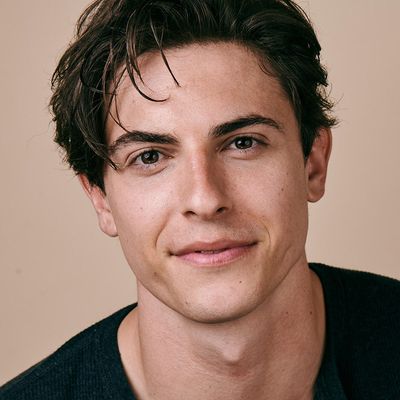
The Broadway leading man on embracing the madness of becoming a Tony nominee, learning from Alanis Morissette when mounting the Jagged Little Pill musical and the exciting new world of My Marcello. Plus the pressures of wearing *those* white Fiyero pants in Wicked... Read More
From the show: eleven
Guests
Featured Shows

About
The Broadway leading man on embracing the madness of becoming a Tony nominee, learning from Alanis Morissette when mounting the Jagged Little Pill musical and the exciting new world of My Marcello. Plus the pressures of wearing *those* white Fiyero pants in Wicked.
Host: William J Connolly
Produced by: William J Connolly/Darren Bell
broadwayrecords.com
jaggedlittlepill.com
Welcome to eleven. The official theatre podcast that brings the biggest stars and creatives together in one place to discuss life in the arts. Follow eleven on social media via @elevenpodcast and via elevenpodcast.com.
Transcript
This transcript was automatically generated and might contain errors.
[0:01] Derek Klena: My name is Derek Klena, and you're listening to Eleven, the official theatre podcast.
[0:16] William J Connolly: Hello and welcome to Eleven, the official theatre podcast that brings the biggest stars and creatives together in one place to discuss life in the arts. He's the Tony nominee and leading man of Broadway that's become seriously hot property, with big stage credits including Carrie, Dogfight, Wicked, The Bridges of Madison County, and Anastasia. He's an original cast member of many and has appeared on the respective Premier Cast recordings too. He currently finds himself originating in the record-breaking Jagged Little Pill musical, penned musically, of course, by Alanis Morissette and Glenn Ballard, a role that's gained him the highest accolade most recently of a Tony nomination for Best Performance by a Featured Actor in a Musical.
Here, direct from his home in this conversation, we discuss the slow but rather enjoyable journey of getting used to having Tony nominee directly next to your name, and why getting nominated for a Tony Award isn't a normal everyday occurrence for him. But also why he takes responsibility of being that Tony nominee very seriously as he hopes to inspire a whole new generation of young people to fall in love with the arts and performing. We also dive into a new world to find out why he's lending his voice to a world premiere cast recording titled My Marcello, something he described as a warm and comedic filling story, and how he recorded the album in his bedroom under a sheet. We also discuss how he perfected his Italian accent and why he actually embraces new creative challenges and isn't afraid to push himself to try something new.
We also discuss why he tries to push against being pigeonholed into a specific type of genre as a performer, and why accents actually make him more conscious the older he gets. We also discussed some of the incredible roles that he's been associated with, including why his leading role in Anastasia was intimidating, and why he would describe his role in Jagged Little Pill as one of the scariest he's done. And also the one that's left him the most self-conscious and fearful because of the emotional depths it goes to eight times a week, saying the tears and the turmoil are worth it. We also discussed the artistic freedom from Alanis Morissette that was given to him and his cast members with the respective songs in the show.
And why meeting and even working with some of these professional idols never ever becomes normal. Also, why he's embracing and encouraging a new and more inclusive Broadway space for everybody to feel part of, and why he's always up for tackling new conversations that help achieve this, and why those signature Fiyero hot pants in Wicked didn't scare him all that much, as he knows that all eyes are on him and his butt, and why the return of Broadway is a return of a community who is here to share and heal together. Is the brilliant talents of Mr. Derek Klena here now on this, the next episode of Eleven, the official theatre podcast.
[3:01] William J Connolly: To ensure the safety of all involved in this episode of Eleven, Derek and I connected for this conversation digitally, so please forgive any brief moments while we wait for the internet to catch up. Enjoy.
[3:16] William J Connolly: So let's get into this Broadway groove as we welcome to this, the next episode of Eleven. It's Tony Nominee, it's Derek Klena. Hi, Derek, how are you?
[3:23] Derek Klena: Hi, I'm good, thanks. Thank you so much for having me.
[3:25] William J Connolly: Thank you very much. We've been trying to do this for a little bit of a long time now, so thank you so much for sort of being flexible with all of the dates. I wanted to make sure I had a very specific amount of time with you because I've been such a fan of your work for a lengthy amount of time now, and I've got lots of questions to ask you. So for me, this is going to be super fun. So thank you so much in advance.
[3:37] Derek Klena: Oh, thank you.
[3:40] William J Connolly: I did mention in the little bit of the introduction there, Tony nominee. And it's been Derek Klena, Tony nominee for quite a long time now, because we're still waiting for that Tony nomination thing to come out, which feels like I can imagine for you you've been a Tony nominee all of basically all of your life now, because it's probably has been almost as much of your life as a Tony nominee as not. But does it become normal just having that title associated with your name now? Is that just sort of like, yeah, I'm a Tony nominee, get used to it?
[4:06] Derek Klena: No, I don't think it will ever feel normal. It's definitely not a normal occurrence. It hasn't been a normal year. This hasn't been a normal process. So yeah, I think I maybe this is the new normal. But regardless of the time spent since the nominations came out, I'm just so thankful that we're actually gonna be celebrating the Tony Awards coming up, which is very, very exciting. I'm very thrilled and proud to be a part of Jagged Little Pill. We got nominated for 15 Tony Awards, which is unheard of and very, very exciting. And that honestly was like the coolest part. When do you get to be a part of, you know, when you get nominated for Tony? Never think that's even gonna happen. Yeah, but then to get nominated with all the people that worked so hard with you to build this thing because it takes an army to put on a Broadway show, as you well know. And yeah, it's gonna be amazing to be back in the room with these people again and celebrate together.
[5:01] William J Connolly: It's also like a weird sort of positive and negative experience because if you do win, which fingers crossed you do, then it's gonna change again. So you're gonna have only just got used to the nominee, and it's like, oh, a winner pass. I've got a new title now. So it's sort of like, do you want to win? I don't know. Do you get used to it?
[5:14] Derek Klena: I mean, of course I want to win. I don't anticipate winning just because that's me. I'm like, you know, if I win, that will be fantastic. But I'm not gonna put my hopes in that basket. But just to be a part of it, just to be nominated, very thrilled. And I don't think it'll ever feel normal. I mean, I'm not one much for like formalities of it. So every time I hear it, I'm like, oh gosh. But I know it's something to be proud of, and it's something that I will learn to enjoy and adopt willingly. But it's definitely bizarre, it's a weird experience. But I'm so honored to be a part of the nominee club.
[5:54] William J Connolly: Yeah. It's cool. It's definitely a club, it's a very sort of specific club that only few people have the opportunity to be part of. So congratulations to yourself for that. But do you ever think about like having that title and not spend too much time on this? But like just because the Tony Awards are obviously within this season and within reaching distance. Because obviously that will go on the billboards now, and that will forever be associated with you. So are you like, yeah, I'm a Tony nominee. I know that the work that I'm doing is good, I know that people like it, or you now like, holy shit, there's quite a lot of pressure now. Because I've got to be a Tony nominee. Like, how do you approach it?
[6:24] Derek Klena: I'm leaning more towards the pressure of it. What are accolades? What are awards? Awards are opinions, and I'm just happy that enough people had positive opinions about my performance. You know, it's live theater. There, you know, we do hundreds of shows a year. And there are thousands and thousands and thousands of willing and able and talented performers that could equally be doing the jobs that we're doing. So I don't take any of that for granted. I know that the position I'm in, yeah, whether it be fate or circumstance or talent, I think it's a combination of all of them. I'm super grateful to be in this position, and I hope to make I think it's not only is it a great accomplishment, but it's a responsibility.
I think by being put in this leadership position in a way, you represent not only your show, but your community, and I think there's a huge responsibility in that. So in that way, I'm excited that I get the opportunity to lead in that way and hopefully inspire the next generation of young performers.
[7:26] William J Connolly: Absolutely. That's arguably the most humble answer I think I ever could have expected. So credit to you for that. Well done.
[7:31] Derek Klena: No, well, thank you.
[7:32] William J Connolly: We can't talk about Tony nominations and fingers crossed Tony wins for too long because we've got lots of other fun things to talk about. And the main focus of our conversation today is, and I feel like I'm making this very, very British in the way that I say it. So if I'm pronouncing it wrong, please correct me. But it's My Marcello, is that how you say it?
[7:47] Derek Klena: Yeah, My Marcello.
[7:49] William J Connolly: No, that's correct. I'm always like, oh gosh, maybe I've made it far too British. I was like, okay, so it's an Italian tale.
[7:55] Derek Klena: Yes.
[7:56] William J Connolly: Okay, cool. I'm fine. I was really worried. I was like, imagine if I say it completely wrong all the way through, and you're far too polite to correct me, and then everyone will be like, he's an idiot, he doesn't know what he's talking about. Okay, My Marcello. Okay, I feel like we could do this. Which is a world premiere recording, which in the era of COVID is actually feels very, very special to be able to say that we've got new work and new possibility and new things to be able to just dive into and get lost into. So before we talk about specifics and how you became involved, because there's one sentence on the press release which I'm absolutely obsessed with, which I'm gonna ask you about in a second. But how would you describe what the recording is and perhaps your involvement in it? I guess talk me through what is My Marcello.
[8:28] Derek Klena: I feel like it's such an endearing story, and it's a very unique story about at its core, a community of people supporting one another, above all else, the love that we share with one another, and what people are willing to do for love. So in that way I felt like it was very appropriate for this type of year that we have, and such a polarizing year to have this warm, comedic, fulfilling story. And under the circumstances of the pandemic, obviously, we couldn't all be in the same room together and we couldn't record this album together. So that opened up so much creative opportunity for different teams to explore and create these recordings of their work. So that was also like a bizarre experience actually recording.
I was sitting right where I am now in my bedroom, and like, you know, with the sheet over my head, recording with GarageBand and zooming in with the various technicians that were helping me, you know, balance everything. The finished product was kind of surreal that we were all able to lay this down, being through all walks of life, all places, all over the country, all over the world, and make something together. So if we can take anything away from this past year, is that anything is possible? This new technology opens up tremendous opportunity for different creative projects, and I think they did an amazing job with it. I mean, it's a great team, amazing talent on the album, and I'm just I was stoked to be a part of it.
And very funny, like it was a role that I hadn't really gotten to explore recently, or this type of role, this comedy, and also putting on the best Italian accent I could, impromptu Italian accent. With my good friend Elizabeth Stanley. It was fun to sing with her, and yeah, and a thrill to record the album. I'm so pleased with how it turned out, and I hope the team is as well.
[10:14] Derek Klena: GarageBand and a bed sheet. Isn't it so glamorous?
[10:15] Derek Klena: Oh, it's so glamorous. I mean, that's been like the whole year is makeshift setups in my bedroom and trying to find the right background, the right curtain. I know all of us have been going through it like, where's the light? Find the light. In a New York apartment, not the easiest thing. We live and we learn, and it's been an adventure, but it came together.
[10:37] Derek Klena: Is gangsters falling church bells and evil landowners and bodies hidden among frozen peas? When I read that, I was like, what? And that's all included in the press release. And I was like, yeah, that's just a normal cast recording, really, isn't it?
[10:48] Derek Klena: Uh yeah, yeah, it's just your normal tale. Yeah, yeah. I'm about trying to keep everyone from dying so that you can steal the last plot in town. You know, it is kind of like if on paper it's kind of morbid, but given the wittiness and creativity of the writers and the amazing talent on the album, there's such humor and love. And at the end, you know, the way it all comes together in the end is so warm and heartfelt. And I love that about this. I love that it kind of goes through all those levels and tugs at all the heartstrings and at its core is this ridiculous plot line that they humanize and find ways that everyone could connect to. And I think that that's good writing.
[11:30] William J Connolly: Is lending your voice to projects like this when they're presented to you quite is it a is it a challenging thing to make decisions on what you say yes to and perhaps what you decide not to? Like how I guess do you make those creative decisions? Because sometimes things on paper sound crazy and they're the best things ever, and sometimes the reverse happens. So I guess how when you've been on Broadway and people come to expect something from you, how do you then make decisions on, yeah, I'm gonna, you know, I'm gonna give this a go. This is good for me.
[11:52] Derek Klena: Yeah, I think first and foremost, you look at the team, you look at the type of people involved. It's such a tight-knit community. Everyone kind of gets chances to work with everybody. So that was the first draw is like, oh, I love this creative team, I love this production team, I love this cast. So that drew me in, and then when I started listening to the material, I was like, Oh, this is really funny. This is really unique, this is something that I haven't done before. Oh, I get to sing this with Elizabeth Stanley, that's super fun. So you look at all the perks and you kind of piece it together and you're like, you know, is this something that I am proud to represent me in this moment? And it was. And I was like, you know, this is gonna be a fun adventure, a fun challenge for the time being. And I'm all for those type of experiences. So I was all aboard.
[12:35] William J Connolly: Do you tend to lean more towards challenging yourself as a creative as an individual, or do you tend to go, oh gosh, I've maybe not done that before, so I'm probably gonna try and not do that? I guess how do you approach it?
[12:45] Derek Klena: Definitely challenge. I think it's more intriguing, and I think there's more reason to do it if it is a challenge and if it is something that shows a different side of you. I think that's always what I'm looking for. It's easy in this industry to be kind of pigeonholed into one type or one genre. And I've been very privileged to be able to do different genres, and I think that is a conscious choice that I'm making and things that draw me to certain projects is if they're different and if they're gonna push me out of my comfort zone. Because ultimately that's where you find growth, and that's where you find what you like to do best. So yeah, this was more of a period Italian legit adventure that I welcomed with open arms after being a part of Jagged Little Pill for a period of time.
[13:34] William J Connolly: How are you with accents? Is it something that sort of sits quite well with you, or are you like me who everything just sounds well, shit's awful?
[13:40] Derek Klena: Well, no, I don't like where this is going. Because if you're gonna make me do accents, okay. I'm pretty good. When I was younger, when I had no shame and no self-consciousness, I was really good. And then as I got older, I realized that I'm my own worst enemy when it comes to accents. I'm like, I'm a perfectionist, so if I don't feel like it's perfect, or the people that I'm presenting it to are going to think it's an incredible thing, then I am a little self-conscious about it. But I think I am at my core. I have a really good ear, so I think I can handle accents well, but definitely want to put in the time to make sure that it's perfected.
[14:20] Derek Klena: I feel like sometimes when you know someone's not quite sure with their accent, you can sort of hear it a little bit. So I definitely feel you on just going away and being like, I've got to get this right.
[14:28] William J Connolly: Yeah, totally. I mean, I've worked on projects before, like with Bridges in Madison County, for instance, where Kelly O'Hara had to have an Italian accent, sing and talk in Italian the entire time. And one of my best friends is Matt James Thomas, and he's from the UK, and he has like the most amazing American accent. Those are some of my accent icons that I hope. I mean, that would be fun to do an entire show with an accent and see if I could pull that off. So maybe that's the next challenge. Maybe that's turning this Mon Marcello into a full show experience and seeing if I could carry that Italian accent on with confidence.
[14:59] Derek Klena: But like you're literally set yourself up for a fall here, an entire show.
[15:02] William J Connolly: I know.
[15:03] Derek Klena: Are you serious?
[15:04] William J Connolly: No, I mean no, no, no. I mean I'm in an accent. It's an accent. If I had to say it all in Italian, now that's a different challenge.
[15:11] Derek Klena: That's the next step. Didn't Kelly O'Hara do that? So if she can do it, you can do it, right?
[15:15] William J Connolly: No, I don't know. I mean it's fair. You mentioned about taking risks, and I think that's a really exciting sort of view of the world. I must confess, if someone was to say to me, Are you sort of more inclined to be like we shouldn't do it or should, I'll always pick the should. I don't know why, and it gets me into trouble all the time. But I wondered if you'd had that approach or that attitude to any of the roles that you'd done on Broadway, and perhaps if there was one that at the initial start of said conversation, you were like, This is a huge, I don't want to say risk, but challenge for you as a creative at the point of which you were at that time.
[15:45] Derek Klena: I think every role that I've gotten to do comes with its own challenges. For instance, Anastasia was intimidating because it was this title character, or and it was the leading man with this incredible iconic team that I idolized. One of my favorite musicals ever is Ragtime. So to get to work with Aaron Sinflaherty and Terrence McNally and Darko Tresniak, who just won a Tony Award for Gentleman's Guide, it was kind of an embarrassment of riches in this room. And so that was a challenge in its own is to hold my own in this room of legends. But it was an amazing experience. And that's what makes the experience that much greater is getting to the point where you feel good about your performance. You've settled in and you're able to take that on. And once you get over that hump, you've grown as a person and grown as an actor, and that's the goal.
[16:31] Derek Klena: But honestly, I think probably the scariest, honestly, Jagged Little Pill has been kind of a not a terrifying process, but it's been a I've been more self-conscious and more not tentative. I've been more fearful about this role than any other role because of the emotional depths that we have to go to in our show. And I think emotionally driven pieces are always the hardest because they're the hardest to maintain and sustain. And we have to do these shows eight shows a week for an extended period of time, and it starts to wear on you mentally and emotionally. So I had never been a part of a show or taken on a role that demanded that, like Jagged Little Pill. I had never played a role that had so many qualities and characteristics that I, Derek, have and can relate to.
So I think the fact that it was personal, the fact that this role gets involved with some unlikable things was a challenge to feel fulfilled and feel whole and feel sane day in and day out while doing this. But ultimately it's been a beautiful ride. We're really, really proud of the show that we're doing. I think that's another reason to take something on, even though it's scary if you stand by the message that the show is telling and the purpose of the show, then it's all worth it. And I think it is with Jagged Little Pill. I think we touch on some of the most important issues of today in a very thoughtful, respectful way. And in that way, you know, it's a great privilege to be able to play these characters and put these messages out in the world and try to shed light on some maybe more sensitive material that people don't often talk about day in and day out, but should so hopefully we're starting the conversation and it's a privilege to be a part of that. So the tears and the turmoil are worth it in the end.
[18:20] William J Connolly: I like those two words, privilege and responsibility, because I feel like just to reference the two examples of Anastasia and Jagged Little Pill, both of course were exciting for us as audience members to be like, oh gosh, we get two incredible pieces on stage. Of course, one we'd previously seen as an album, and of course, as the film and the soundtrack. But then also fans want it to work well, and I can imagine as you on stage being at the heart of it, you know you've got support, and I can imagine that means quite a lot, knowing people are willing you and the team to be successful. Alanis Morissette is internationally renowned and has such a great international following. So people come to the show, I think not expecting what they're gonna get.
A lot of people come to the show because we didn't give a whole lot about the plot of the show. We wanted people to take it in and come with a blank slate and not know what to expect. So our publicity kind of drove home some of the themes that we embrace, but not necessarily the plot lines. When people come, they expect to hear Alanis' iconic music and maybe some traits like as we follow her life, and it's not that at all. It's a completely fictional original story that Diablo Cody has masterfully written, and it takes people on a ride.
[19:27] Derek Klena: And I think that is ultimately what's so impactful about the show and what people take away is it's nothing that you're gonna expect. It's gonna take you on this emotional ride, and you're gonna leave with a different yet profound view on your day and your life and your interaction with people. I think it's a beautiful story, but it definitely hits hard and it starts all the right conversations. So it's cool. I think Alanis draws them in, but it's the story and the music and the all-inclusive nature of what we bring that resonates.
[20:02] William J Connolly: One person that I know you know very well, who's actually was our guest on eleven literally just short of a week ago, is Mr. Glenn Ballard, who is, of course, one of the original creatives on that famous Jagged Little Pill album. The original album, of course, the adaptation to the stage as well, and one of the things that he was talking about was the sense of theatricality in the writing that happened organically, and I sort of posed the question, the sort of cliché question of do you think it was always meant to be? And he said, Yes, he feels like it lends itself to the stage in a way that even he found quite surprising. And I wondered for somebody like yourself who, of course, is a fan of the original album. Were you surprised in the best possible, most exciting way, how much it did lend itself to the stage?
[20:40] Derek Klena: I actually was because we didn't alter the music that much, other than Tom Kitt orchestrating it and arranging it in such a way that worked for the plot line that we were bringing to the show. But as far as lyrics go and melodies go and the way the songs were originally written, I would say we kept the original form 75% of the time, and then had to alter 25% of it to match, you know, a character's arc or a specific moment in the show that differs from the song's original intent. But her music is so, like you said, it's theatrical in its elements, they're so extreme, they're so visceral, and it did in its way just translate so beautifully to this show, and I think we all were taken aback hearing the songs and seeing where they were placed, how well it all kind of meshed together.
[21:31] Derek Klena: A lot of people think about the term the jukebox musical with such a stigma, not necessarily positive. And so I think that was a challenge to us to prove that wrong and say that you can plug in these songs seamlessly into a plot line and have it work and have the audience not think anything of it. And I think it does. I think it's one of the most brilliantly crafted projects that I've ever gotten to work on in that way, is that all these scenes seamlessly are interwoven into these songs, and it never feels like any song's out of place, it never seems, it never feels like a song comes out of nowhere where it often does, or we feel forced to create a segue just to fit a song in, you know? It feels like it all organically flows from one to the next, and that is super rare. But I think it's a testament to the writing, the source material and the team involved.
[22:27] William J Connolly: Is it difficult for you then? Obviously, because you're a fan of her and because of the music, to not then accidentally start singing like the lady on the CD? I mean, I am not Alanis Morissette, I need to stop trying to be her, or is it quite easy to not? I'm just me.
[22:39] Derek Klena: Well, I think it makes it easier that Alanis is so iconic. Like no one can replicate the intonations and her vocal style. She is Alanis Morissette because she's so singular. She is that rare and that special. And so if any of us try to do her isms, I think it would just be foolish.
[22:59] Derek Klena: And people would call her bluff. But she did give us, I think that was the secret sauce to our success, is that she gave us the freedom to do what we felt was right for these songs and our character and honor our character rather than honor her take on the source material. I think it's very different. Like if we sing them as Alanis did, she was in a very specific time of her life, a very specific period of time. And so, of course, the type of emotion and motive behind singing those songs are gonna be different. So she gave us that artistic freedom to make them our own. Of course, like I have a very different tone than she has. My song is in a different key. When I sing "Perfect," it's in a different key, different orchestration, different build.
It comes out of a scene that's quite dramatic. So, how do you, you have to start in a certain place and then end in another? And you know, there are two reasons characters sing songs in shows. It's either to tell the audience how they feel about an occurrence that's just taken place, or singing about something they're going through, have a light bulb happen in the middle of the song that changes their perspective about an event. So, in this case, you know, having the entire thing and all of these songs plot-driven and character-driven, it kind of changes your mentality about how you attack the song. And it just kind of works itself out to making it your own and creating your own thing with it.
There were certain stylistic things that they wanted us to try to incorporate into our performance just because of literally some of the "eyes" and things like that in "You Learn," like all of that is very instinctual, and it's there in its symbolic sounds that she wanted in the score, and it's written, so things like that we tried to honor as much as we could and give our Alanis a tip of the hat to Alanis in that way. But no, we had a lot of freedom, which was pretty awesome.
[24:58] Derek Klena: When you worked on the 10th anniversary of Wicked, and then with the Ragtime creatives on Anastasia, and then of course with Terrence, you mentioned, and then also I know that Liz Callaway was involved in some capacity when she came to see the show, and then of course Alanis Morissette sat with this and Glenn. Does just working with icons and legends just become normal service for you? No, absolutely not. It's always like pinch-me moments. It's always, do I deserve this? Like, why am I, like what makes me privileged enough to be here? No, it's always an amazing experience meeting someone that you idolize and that are iconic legends of the field. I think that those are the pinch-me moments. Like I did a reading recently with a pretty incredible group of people.
Joe Mantello was directing, and like, you know, Bernadette Peters was in the room and Nathan Lane, and it was this crazy experience where I looked around the room and I was like, I can't believe that I'm here right now. And we are all on this even playing field of exploring something fresh for the first time. And I think that's the beauty of theater. I think that's why art is so inclusive, is because it does give that opportunity to so many. You know, if you put yourself in a position to succeed, anything's possible. And I think as we progress and grow as a community and as a world, that will become more and more attainable. I think a lot of at least Broadway and the arts in New York are taking leaps and strides ahead and broadening that room and making it more inclusive and making it easier to be in the room with these iconic people. So those are the next steps. But it's always pretty jaw-dropping to meet somebody that you've listened to over and over since you were 10 years old, you know.
[26:39] Derek Klena: When you think about the reactions to these shows and the fandoms and the fact that these shows are, of course, massive senses of enjoyment, places that people feel like they can belong, also just a way to connect with other humans. When you see when it sort of goes a little bit beyond that, when it gives people acceptance, I'm just thinking about Wicked and individuality and just identity, gender identity, sexual identity, racial identity. When you think of all of these topics that some of the shows that you've been part of cover in actually quite a specific and often head-on way, does that side of it become the part that's actually quite emotional for you when you realize that you going to work has a direct impact on hopefully somebody else's life?
Absolutely. I think that's why we do it. That's what makes live entertainment and Broadway or theater shows so impactful, is that we do get that opportunity to shed light on these topics, and we are given the platform to make statements, whether they be hard-hitting statements, whether they be subtle. I think we're given that platform for a reason to tell a story and to shed light on certain topics that don't often get that type of exposure. And so that is the greatest art, is shedding light on these things that wouldn't otherwise have that day in the sun. And so that is the privilege that's involved, and that is the opportunity that's involved in specifically Jagged Little Pill is that and I think something we're all looking forward to too is the things we address in the show, such as gender identity, sexual abuse, sexual violence, addiction, biracial adoptees.
Like we touch on so many aspects of the day in the life that people take for granted and don't often acknowledge. And so that's been the cool part about this. We're now going to be presenting all of these thoughts and ideas to a completely different audience that has experienced so much over the past year and a half, and hopefully they'll have different perspectives on some of the source or the material that we address in the show. And so that's something that I'm looking forward to as well, is not only presenting these themes and these ideas and these thoughts, but also how they're going to be interpreted and the reciprocal relationship between an actor and the audience. That's what makes live entertainment so exciting.
Is that it is a two-way street. They are, you know, the audience is your scene partner as much as the person who's on stage with you. Feeling that energy and seeing how people respond to the material in light of the events of the past year is what I'm looking forward to most.
[29:04] Derek Klena: I have had the pleasure of speaking to lots of ladies that have gone green and belted quite high on cherry pickers, and they just talk about the experience and the sort of the fear almost of going green. And so I want, but I've never actually had the opportunity to speak to somebody that's played opposite them as a Fiyero. So I was thinking like, what would be the one question that I'd want to ask? And I talk about like fear of constantly being green or being in the bubble or whatever it might be like. And I wondered if you had a fear of the white jodhpurs, do we like, oh my gosh, I've gotta do them. Like, is jodhpurs fear a real thing? At first, maybe. At first, maybe it was a little intimidating because I know it's like a thing.
But once I was in them and did my first go-around of "Dancing Through Life," I was like, I got this. It'll be alright. They make sure everything's wrapped tight, everything is, you know, the material is flattering, all the things, you know, Wicked world, all of those costumes and all the thought that goes into the construction of everything is, you know, picked through with a fine-toothed comb. It's all pretty. Even when you go see the show, that's always the moment I'm like, I would actually refuse to walk on stage. I'd just be like, nah, nah. Yeah, it's my Broadway debut, first entrance, just hopping off the carriage with these tight white pants.
[30:17] Derek Klena: My final question for you, because you've been very generous with your time. I guess if we think back to the last, I think it's literally a year and a half now. It's not far off a year and a half. It's crazy how weirdly fast the sort of last year and a half has gone. But is there one thing in particular that you have missed the most? The community. When you're in a Broadway show, or when you're in any show, you are often with your castmates and the people involved with the show more than your significant others or your family. You spend most of your day at these shows and at the theater. And there's nothing like it. I think that's my, that's why theater will always be my first love. Is that the teamwork and the community involved in that it takes to an army, each show is its own puzzle, and we work for weeks and weeks and weeks trying to fit all these little pieces, puzzle pieces together to make one beautiful picture.
And that is what I miss most. I haven't been able to be a part of, like many of us, haven't been able to be a part of that collective effort over the past year. And I've always, I think that's why I was a sports kid growing up too. I love the camaraderie. I love working with the team towards a common goal and sharing that time on stage with one another, and in return, you know, sharing that with an audience. So it's the connection and the community that I'm looking forward to most. And just reminding us why we did this in the first place. I think it was easy this past year to lose sight of that. To, you know, I think going into this when our identities, our jobs, our livelihoods were kind of stripped from us unawares that it, you know, there were days where you woke up being like, what do I do today?
Who am I? What do I like to do? Why do I do this in the first place? And so little by little, there have been reminders of why, of the whys and the appreciation of that. And so I'm excited to share and heal and be with everybody again, because I think that's what makes it so special.
[32:13] Derek Klena: And another thing, like this is kind of a side note, but this past year I've gotten to teach a lot, which has been one of the high points of this past year, and something that's really inspired me and made me so hopeful for the future of this community. And you know, even on the darker days where you wake up and you're not feeling your best, to work with these aspiring young people and see how talented they are and how inspired they are, really instilled hope within me that there are brighter days ahead and that we have this new generation of fearless, amazing, talented young bucks coming into the industry that's very, very exciting. And so that just reminded me, you know, eyes on the prize, it's a marathon, it's not a sprint, and we get so caught up in the day-to-day within this industry.
I think we are conditioned to think, even when you are in something you're constantly planning for, the next thing you're constantly auditioning. So just being in the moment, taking it minute by minute, hour by hour, and day by day with these people and just appreciating every second of it. I think that's a new mindset that I'm gonna go into it now, and I can't wait to share it with my castmates.
[33:26] William J Connolly: Right, today's most certainly are ahead. In the true theater spirit, I think the phrase is break a leg for reopening, break a leg as well for the Tony Awards. I don't know, I feel like I want to say good luck, but I don't know if that's even a good or a bad thing. So we can either take or leave that.
[34:05] William J Connolly: See you soon. Thank you. Bye.
[34:08] William J Connolly: You've been listening to Eleven, the official theater podcast. Find out more about Eleven at elevenpodcast.com or via the Broadway Podcast Network.
[34:39] Derek Klena: I'll take it all. I'll take it all. But just thank you so much for your time. It's such a genuine pleasure to get the opportunity to talk to you today. So thank you so much and best of luck with reopening.
[34:47] Derek Klena: Thank you. I appreciate it. Amazing. I will see. Now we're allowed back. I think literally as of today, the UK is allowed back into America when you're double jabbed on all those things, which means Broadway doesn't seem that far away now. So I look forward to coming and seeing you in the show. But thank you so much and enjoy the rest of your day.
[34:58] Derek Klena: Thank you so much. I hope we see you in New York very soon.
© Broadway Podcast Network, All Rights Reserved