

Guests
Featured Shows

About
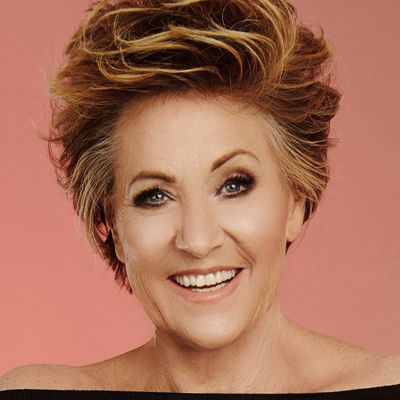
In a year that will mark Judy Garland’s 100th birthday, her daughter discusses her lasting legacy, shares personal memories of her mother and how her family is planning to honour the anniversary this June. Plus the singer and actress discusses bringing her solo show The Joy of Spring to the UK this April, that Oscars moment between her sister Liza Minnelli and Lady Gaga and why she’d liked to see a theatre named after her late mother.
Host: William J Connolly
Produced by: William J Connolly/Darren Bell
brasseriezedel.com
Welcome to eleven. The official theatre podcast that brings the biggest stars and creatives together in one place to discuss life in the arts. Follow eleven on social media via @elevenpodcast and via elevenpodcast.com.
Transcript
This transcript was automatically generated and might contain errors.
[0:01] Lorna Luft: Hi, my name is Lorna Luft, and you're listening to Eleven, the Official Theatre Podcast.
[0:17] William J Connolly: Hello and welcome to Eleven, the official theatre podcast that brings the biggest stars and creatives together in one place to discuss life in the arts.
[0:26] William J Connolly: She's the superstar performer, actress and producer that's a key figure in one of the most beloved Showbiz families of all time, a child of a legend, as it is so often and rather accurately put. Most definitely at home in the spotlight, she made her showbiz debut at the age of 11, singing "Santa Claus is Coming to Town" during a CBS special, a performance that saw her appear alongside her sister, Liza Minnelli. Since then, she's gone on to perform in musicals such as "Mame," "Follies," "Gypsy," "Little Shop of Horrors," and in the film version "Grease 2," toured the UK as part of the show "Judy," and even played a certain Green Witch in a stage production of "The Wizard of Oz." And this April, she's finally setting foot back on UK shores for a series of exclusive concerts, perfectly titled "The Joy of Spring."
She's also an author, recording artist, and a leading figure in keeping the memory of her mother, the incomparable Judy Garland, alive. So here, in an exclusive conversation, we discuss returning to the UK as part of her live tour, why she has an overwhelming respect and love for London, her sister Liza and Lady Gaga's moment at the 2022 Oscars, why she'd like to see a theatre named after her mother, and what life is really like as part of one of the most beloved Showbiz families of all time. Plus, in a year that will mark her mother's 100th birthday, she discusses the legacy of Judy Garland, shares personal stories and memories, and how she and her family are planning to honour and celebrate Judy. So please be upstanding for icon Lorna Luft here now on this, the next episode of Eleven, the official theatre podcast.
[2:03] William J Connolly: To ensure the safety of all involved in this episode of Eleven, Lorna and I connected for this conversation digitally. So please forgive any brief moments while we wait for the internet to catch up. Enjoy.
[2:19] William J Connolly: The word legend is used all too often these days, but my guest today is a fully true and justified legend. So please help me welcome to this, the next episode of Eleven. Hello, Lorna Luft. How are you?
[2:28] Lorna Luft: I'm very well. How are you?
[2:30] William J Connolly: I'm doing very well. And as I think a lot of people will be able to tell from sort of the level of excitement coming from my voice, I feel deeply honored and humbled to get the opportunity to talk to you today. So thank you so, so much for giving me some of your time. The idea that I'm getting to say that you're coming to the UK, you're going to be performing and singing here, just feels like, especially after the last couple of years, such a luxury rich gift. So I want to dive into that if that's okay. And I know that the UK audience is a place where you've spent a lot of time. You've obviously performed here throughout your life, but also it's a place, London, that has a very special place in your heart.
[3:02] Lorna Luft: London, the UK, has an incredibly special place for me. My husband's British, so he's got all of his family. So it really is like a second home to me. And so I love performing in London. I love going over and seeing family, and the audiences have always, always been really lovely to me. So I do have a special place in my heart.
[3:22] William J Connolly: From some of the audiences that you've played around the world, how do we line up? Are we quite well behaved for you, or do we sort of just scream every time you see?
[3:29] Lorna Luft: British audiences are a bit reserved. I mean, and I'm comparing them to American audiences. And I sort of like the fact that they really listen and they do, and then they make up their own minds of, you know, are you gonna get a, I mean, if you get a standing ovation in England, it's a really big deal. You don't pop up onto your feet as fast as we do in America. And so when you get the ovations in England, it really does mean something. Not that it doesn't mean anything over here. It just means that you guys are a bit more, as I said, a bit more reserved. And but I love to hear you hoop and holler and just have a good time.
[4:07] Lorna Luft: So we've gone through a lot of stuff in the last 28 months. And now I think it's time to remember what feeling happy is about.
[4:16] William J Connolly: And I should say, sort of, I guess, in defense, in a way, of UK audiences, I like the fact you mentioned listening, because I do definitely think that's a trait of British audiences. But also, I came to see you. I think the first time that I actually had the honor and privilege of getting to interview you was during a rehearsal for the songbook of Judy Garland when that first came out. And it was amazing because you kept saying to me, "Oh, I'm intrigued to see how the audiences react," which is what made me want to sort of speak to you about how the audience reactions have been. Because when I came to see it, I believe it was at the Wimbledon Theatre. I mean, people went absolutely crazy. I mean, I remember that rapturous applause and screams when you first walked on. I mean, I don't think we are really reserved by the end. We show you how much you mean to us.
[4:52] Lorna Luft: Oh, well, that's really sweet. You know something? I think it's a diverse audience, meaning that you're gonna get a different reaction in every city and every town that you go into. What I really like about that is it keeps you on your toes, and it also doesn't let you be, I guess, not the feeling of relaxed, but the feeling of this is, you know, in America, you know, you've got the New York crowd, because I'm in New York now, they're very vocal and they're very exuberant and they're very enthusiastic. And then you go to the middle of the country in Ohio, they listen, and so you have to not only work just a little bit harder, but you have to realize that they're not a New York crowd. You're gonna have to come to them on their level of what you say to them, what you try to express in a way of not thinking that they're a New York crowd and appeal to their form of what they are feeling in their town.
[5:52] William J Connolly: Absolutely. Isn't it amazing how different audiences are to the same person all around the globe?
[5:56] Lorna Luft: I think it's fascinating. I'm always curious to see what someone of your status and sort of legend, how the reaction is, and I promise that there'll be lots of tears and lots of screams when you do come to the UK, which is very shortly. So let's talk about that for a second. Lorna Luft, "The Joy of Spring," which is just the perfect title for right now. So, in your own words, do you want to talk me through exactly perhaps why now felt like the right time to do this show and perhaps what we as an audience can expect?
[6:19] Lorna Luft: So spring is my favorite time of year. I know a lot of people sometimes love the fall, a lot of people love the summer. I think even some people like the winter. Spring for me, I love everything about it. I love colors. A couple of days ago I was in Central Park and I saw that first little daffodil coming up through, you know, the cold, cold, icy patch of ground where it was. And I just love the fact it means new beginnings, it means everything is coming back to that vibrant color of the yellows and the oranges and the pinks, and I just, I love that, and it does mean a new beginning. When the dates came in for me to go to England and play New York and all that, because I'm on tour, I just said, let's call this "The Joy of Spring," because we haven't been able to really enjoy spring in the last couple of years, but now we do, and I don't think we should take it for granted.
I think that every single time you see, you know, a little crocus or you see that, stop for a second and think to yourself, isn't this great? And I love this idea of sort of joy and new beginnings and growth. And I feel like particularly after the last couple of years, the idea that we all get to sort of feel like we're starting to connect again, but also to connect in a way which I think is universal, which is the power of music and the power of live performance. Like it just feels like the most perfect time.
[7:42] Lorna Luft: And I can imagine for you as a creative, purely on a sort of really organic level to get to be on tour and to get to sing again. I mean, there's nothing like it.
[7:51] Lorna Luft: Yeah, I wasn't real. I mean, I tried to do when we had the lockdowns and all that, I tried to do those Zoom concerts and I just hated them. I thought I'm getting all made up and I'm standing in my living room and there's no one here. You get no applause and you get no feedback. I know that the people who did watch them, they were really appreciative, but I need to have an audience of people that I can see and I can be with and all of that. And I just, I mean, I never want to do another Zoom concert again. It just meant so much for not only myself, but every single performer and every single person that does something out on a stage. When we were able to come back and be in front of an audience, I know a lot of my friends, especially in the Broadway community.
I mean, we lost it. I mean, I remember the first time I sang right after the lockdown, and it was at my daughter's wedding. And in the middle of my song, I thought, I remember how to do this. I remember what this feels like. This is a lot of fun. It really was really emotional.
[9:01] Lorna Luft: I think it is emotional even now. I mean, we've had theatre back in the UK for like round about six months, don't quote me on that, but it's sort of round about that period from September onwards. And even now, when like for example, I went to see "Les Mis," you know, opening chords, they're in tears. Like it just, it just gets you. And I think it's been a nice reset for all of us, but also so desperate to come back. When I was in London a couple of months ago, my husband and I went to see "Six." We had the best time. I loved that show. It was everybody was on their feet from the minute it started. I loved how long it was. I loved those girls. I loved the idea. And I walked out of there and I said, I really needed that. I needed to see and hear those voices and look at that audience lose their minds. I loved it.
[9:51] William J Connolly: Yeah, it's such a good show. I mean, the only problem with "Six" is that you're like, right, well, I've got to go back again. It was so good. You're like, oh no, I got to keep going back.
[9:59] Lorna Luft: I mean, I just, you know, I went in there and I just said, okay, I'm just ready to have a good time. I thought those girls were fantastic, thought the band was great. The audience reaction, I said, this is like a really good shot of adrenaline and something we all really needed.
[10:18] William J Connolly: So which one would you be if the "Six" queens, which one do you think you'd want to take on and be like, I want to do that?
[10:23] Lorna Luft: I'm too old for "Six," but I am not too old to appreciate their talent. And all six of those girls were absolutely, as we say in New York, ridiculous, ridiculously talented, and they were just fabulous. I loved that show. I thought it was smart. What a great way to, again, like when I saw "Hamilton," getting people to read history or getting people to know about history and getting people to do that through music of either rap or pop and all of that.
[10:53] Lorna Luft: And I thought this is really smart.
[10:55] William J Connolly: Definitely.
[10:56] Lorna Luft: It's interesting. It's sort of carved both of those shows you referenced, sort of a new era of musical theater that I think again makes it more accessible for a new generation of people. So that I think that's very much a good thing.
[11:05] William J Connolly: Yeah, me too. So talk to me about some of the songs that we're gonna get at The Joy of Spring. So what are the sort of the hits and the songs or perhaps something that we might not expect that we're gonna get to hear from that amazing voice of yours?
[11:14] Lorna Luft: I wanted to put a show together that would talk about the joy of spring. So some of the things I put together are a medley of a song "Hey Buds Below," which is from a show called and a movie called On a Clear Day, all about this girl who couldn't make flowers grow. And I put that with "April Showers" and I talk about, you know, the writers and the people who influenced me in my life, and I was lucky enough to not only have their music as a part of the great American songbook, but the people that I knew. So I'm able to talk about Johnny Mercer and Jerry Herman and Peter Allen. It's a pretty personal show because I knew all of these people so well. They gave me the gift of their talent as songwriters and lyricists, and they taught me a great deal because I knew them all, and some of them I knew they knew me before I was born.
[12:08] William J Connolly: For you as an artist, when you're sort of trying to build together a show, and because you have so many different relationships with different songs, is it interesting that you get to dive into them or is it actually quite difficult to be able to make decisions on what to include?
[12:21] Lorna Luft: No, my whole feeling about putting a show together is what I do as a, and I call it nightclub. Okay, I don't really enjoy the word cabaret performer. I don't like the word. I like nightclubs because that's what they are. They're small nightclubs. And I happen to really love those venues. I love them because they are personal. I love them because people are sitting close. I love the fact that you are, you can't lie. You can't, you have no costume, you have no script, it's just you on that stage. And for a lot of people, I know it's terrifying because there isn't anything to hide behind. You can't walk out of the show. And if somebody criticizes you, you know, you can't say, well, I didn't write it.
Well, yeah, you did. So that's, you know, it's a very fine art form that, you know, we almost lost for many years because, you know, the age of television came in and it really did sort of wipe out the nightclub element. And now that they're all starting to come back and people are starting to go back and enjoy these places, these venues where we all started. You know, not everybody started on a Broadway stage. We started in, you know, small nightclubs. And I think that to be able to go back to that, it really is like returning home. And I love the big venues. I've done many shows in all of the big venues. You know, I've done White Christmas over in the UK. I did that for quite a long time. And I've done book shows in the UK. I love all of that. But I think that what really challenges you is to do a setting like, you know, the Crazy Coqs, and like it's the most honest you're ever going to be on a stage.
[14:10] William J Connolly: Have you told your sister you don't particularly like the phrase cabaret?
[14:13] Lorna Luft: Oh, yeah, but it's just, yeah. I mean, it's just the word cabaret, I think started to be used more with smaller venues, I guess during the 80s and the 90s, you know, but I'm not crazy about using that word for the places I perform. I mean, I've got this wonderful friend of mine, Marilyn May, and she's an incredible talent, an incredible singer, and she really is a nightclub icon. And I heard her say the same thing in an interview, she says, I don't like that word. She said, I'm a nightclub singer. And I said, I love that you came out and said it. I like the reclamation of certain things that perhaps don't sit well with you as an artist, so therefore you make it work and you make it feel right for you.
And also you should feel empowered. I mean, you reference it there, but like it's such a gift to be able to stand in front of, particularly in intimate venues, all of those people and be incredibly vulnerable and incredibly honest. And I know part of your show includes stuff about your personal life, trips down memory lane, some of the friendships that you've made along the way, some of the successes, some of the limitations. Is it, I don't want to say easy because it makes it seem like it's not particularly personal, but how are you with revisiting some of those moments? Is that something that you feel comfortable leaning into?
[15:23] Lorna Luft: I just think that what you have to do is just be honest. And I think that because I've been written about for so many years, and I think that, you know, my feeling also is that if you get, if you decide to do this, then you have to expect all, I mean, but you, you have to know the audience expects something from you. My feeling is if you can't do that, then don't take the gig. But if you are wanna just sit there and just feel that you're really in sort of a large living room and all you're doing is talking and because you've only got a piano player and a bass player, and that you are really at your most vulnerable. And I think that that's something that's really challenging, but I also find a lot of people they can't do it, especially musical comedy.
I should say people who do book shows, some of them have come up to me and said, I could never do that. Then I say, why? Why can't you do it? And they said, I'm too scared. I said, Is it too scary for you to be you? And they said, Yeah, it is. I need a script, I need costumes, I need lighting, I need this. I said, Well, that's great. That's wonderful. But in your career, try it. You might have a go at it and, you know, because as I said, it's the most vulnerable you can be is when you're in a small, small setting.
[16:50] William J Connolly: How are you when the sort of the tables are turned and you get to meet people that either haven't had the opportunity to ever meet you or haven't seen you in a particularly long time, when they tell you how much you mean to them, how are you when people talk about the relevance that you, your family have had to their lives? Because I know a lot of people having done eleven for a while now, when you talk to people about the impact they have on their lives, they can talk about roles they've played, but they find it quite difficult to be reflective inward and talk about the success and the impact they've had. So, how does it normally play out for you?
[17:18] Lorna Luft: Well, I've always found all of my audiences to be really genuinely graceful and gracious, and I'm very grateful to them that they do come up and talk to me about my heritage and what my family has meant to them. And I find that to be really nice. I would never ever not want them to do that because yes, I am from a legendary show business family, and I know what my mother has meant to so many people and so many generations and so many different kinds of people, different places around the world. It takes a lot for somebody to come up and talk to you. And I find that, you know, when they come up and they say, I'm sorry, you know, I don't want to bother you. And I say, Don't say you're sorry because you're not doing anything and you're not bothering me.
I always love when you speak to people like yourself that have such an incredible career when people talk and find the most nuanced part of that person's life that they really connected with. I know some of your performances, for example, in like Follies or Gypsy and some of the others that you've done, people say, Oh, I loved that specific part of your career. And I feel like that shows sort of true respect is just how they found a part of you that they were able to connect with so much they wanted to come and tell you. That takes a lot, you know.
[18:33] Lorna Luft: It does. It takes a lot to walk over to somebody that you don't know, and they're famous, and you're hoping that they're going to be receptive. And it takes a lot. And so, and I always think about that. I always think about how they must feel coming over and giving you it, you know, and it's also the way you receive a compliment. Because I used to when I was very young, I didn't know how to handle it. And I found it to be, it was sort of embarrassing for me when they would come over and gush and all of that about my family. And I would think to myself, oh, oh, uh no, okay, okay, you know, and I would back up. And now it's, I think it takes so much for them, and I've learned over the years to just say thank you.
[19:19] William J Connolly: I think a really good example of this, like the ultimate, ultimate respect actually happened like what, a week ago with your sister and Lady Gaga, like the ultimate respect from Lady Gaga for Liza. I mean, it was just so humbling to see even somebody of Gaga's stature just understanding how much of a cultural impact your sister has.
[19:36] Lorna Luft: Yeah, but I look at she's a, I mean, Steph, uh Stephanie, sorry, Gaga. I had some really, really wonderful conversations with her after A Star is Born. For me, she's always just been, she's very smart and she's very nice. And she's really talented. And she was great on the Grammys last night. Listen, I mean, the album she did with Tony Bennett was great. And she loves, you know, she comes from that kind of musical history of respect. She's a really, really nice lady. And I mean, let's face it, I mean, the Oscars were weird this year.
[20:15] William J Connolly: To say the least.
[20:15] Lorna Luft: To say the least. You know, and I do make reference to it, you know, the Oscars in my show because I do love them. I really, really love the Academy Awards. But man, they were weird this year.
[20:30] William J Connolly: Yes, it was a very, shall we say intimate occasion?
[20:33] Lorna Luft: Show is that the right way to, uh too. Oh no, why did we just say it was like watching a ballroom, uh, like a bar room brawl? The hell is happening here.
[20:43] William J Connolly: I think the picture of Nicole Kidman, I don't know if you've seen it of sort of mouth wide open, hands in the air shocked, a picture says what's that picture says a thousand words.
[20:51] Lorna Luft: That bit is true. That was all of us watching it.
[20:53] William J Connolly: Yeah, I just think that it was first of all. I mean, we were all sitting and we were all, you know, watching, and I knew that my, you know, I knew that my sister was going to be on. And then when we watched all of that, I thought, uh, okay, did, uh, did that just really happen? Are we just really watching this?
[21:08] Lorna Luft: Yeah.
[21:08] William J Connolly: And that was, it was just, I found it to be, we all thought it was a bit, you know, we all thought, okay, this is, you know, a bit. And then when he sat down in the chair, started screaming profanities, I went, okay, this isn't cool anymore. This is like, this is really odd behavior. And I thought think it was like, I think the producer of the show did an interview and he said it was like pouring cement into the room.
[21:29] Lorna Luft: Yeah, isn't that so that's a really good analogy of that experience. That's that's a really good way to put it. Yeah. And and and it was and then I watched the Grammys last night and they were so wonderful and respectful of the music industry and they did this magnificent tribute to the Ukraine that was just, uh, you just wept. And it was so wonderful. And I thought to myself I I'm so glad a bunch of incredibly talented brilliant musicians got up and talked about what is going on in the world because it's a pretty scary time and to say music will bring us together and we we're we're trying we're really trying to be there. I call it sort of like the crazy glue that bonds everybody because at some point in your life you've had a favorite song at some point in your life a song has meant something to you whether you know it anything from the classical music all the way up to you know the punk bands and the rock and roll and all of that whatever it is it bonds you to people and I think that's what the most important thing about it's I think it's the greatest form of communication.
[22:39] Lorna Luft: 2022 will mark a hundred years since your mother was born it'll be our hundredth birthday and I just wondered as we approach that on June 10th. What sort of lasting legacy and memory would you like people to think of on that June 10th day? Well, I think, you know, first of all, we've got a whole lot of things going on here in the States. Um, I worked with a perfume man who I guess you would call the perfumers. We have a fragrance coming out. We've got a huge gala that will be taking place on June 10th. We also have the Pride Parade in Hollywood. Then I'm coming flying right back to New York because I'm doing an event at the Stonewall in uh down in Greenwich Village, which was of course so representative of the beginning of gay pride, and we're unveiling a magnificent portrait of her.
June 10th, she's a hundred. I think the only person who would not be celebrating is if she were around. She would hate to be a hundred. Um, but uh and and she would hate that everybody was saying it too. But I think that everyone has been so gracious. And I think we've got so many things planned for the actual day of her birthday. Also, it's not just the day, it is the centennial, it's the year. So, you know, when you think of my mom, just don't think of June 10th. Think of it as the year of her of her birth and the centennial that you know, you can celebrate. I mean, she's still gonna be a hundred on June 11th, 12th, 13th, and keep just keep going.
[24:16] William J Connolly: The most perfect way to put it. I adore, adore the idea of the outcome. And I, you know, it's no surprise as a queer person, she's to me, I think the greatest of all time. And the last time that you and I spoke, um, a quote that I've repeated to all of my friends, so sorry that I stole it from you. But one thing that whenever I mentioned the fact that I had the honor then, and of course, on and out to interview you whenever your mom gets brought up, is you said to me that she's the greatest artist and performer of all time. And it feels like the perfect way to remember her. And it's, I'm sure, something that you very much still stand by.
[24:47] Lorna Luft: Yeah, I do stand by that. And I'm not alone in the way people have viewed her. There have been books written, uh, you know, many books with quotes from other major celebrities. She was, she was unique. She was one of a kind. She broke the mold, she set the mold, and uh she, you know, she was quite extraordinary. And my my family is now my, you know, I I'm a grandmother of of four now. And I just had a brand new grandbaby four weeks ago. And so it's it's it's great watching my grandchildren now being able to learn about their great-grandmother, their little eyes light up and all of that. And then my my daughter was uh, I think she was on the Today show last week talking about her grandmother and just what it means to find out through me and th through all of her films and her recordings and all of that, because she never got to meet her. And it's just a lovely thing to watch now, other generations of my family getting the education and the wonder and the surprise and the love of what they will carry on after I'm gone.
[26:01] Lorna Luft: I remember when we were chatting in person uh way back when that you told me the amazing story of the first time that you watched with your mom, the Wizard of Oz with your sister, and how you got frightened. Do you as a family sit down when there's a new grandchild and prepare for that moment when you'll get to watch it with them? We don't prepare for it because it's on so much now all the time, and there are so many different versions of it, Blu-ray and all these things. No, I mean with baby Kieran. With Kieran, we're just gonna, you know, he's only four weeks old. So I mean, what we're we know exactly the time and how old he will be when he'll see it for the first time. And it's just something that is, you know, they did a huge um screening of it when the academy, uh the motion picture academy opened in uh Hollywood a couple of months ago, and they did this magnificent screening of the movie on this fantastic screen and in this beautiful, beautiful the David Geffen Theater.
And but they had a symphony orchestra underneath the movie that played along with the movie, which I thought was great. But what I really thought was remarkable was that it was a youth symphony. So all of the performers in the orchestra were all 14, 15, 16, 17 years old. It was really heartwarming. But at that screening, these people came up to me after, and it was Mervyn LaRoy's granddaughter, who of course he produced the movie. It was a lot of the family of the people who were involved in the film. And I just looked at all of them and I said, you know what's really cool? I said, I think this is so cool. When anyone says, Do you have home movies? We all can say, Yeah, this one.
[27:37] Lorna Luft: Do you find people do what I feel like I'm doing now, which is just getting emotional about this the way in which you let you sort of go through and lament about just your life, your family, your legacy, and everything that comes with it, because it feels and this is perhaps an overshare, but like it feels like we're part of it even though we're not, if that makes any sense whatsoever. Yeah, it does make sense because you were uh doing what she loved to do. You're being a fan, and she loved that, and she loved audiences, and she uh adored that. So you're not doing anything that is anything but great. I just think that we're a pretty open book. I mean, my family. And uh, I think, you know, my sister and I have God knows we've been asked absolutely every single solitary question about our growing up, so there's really nothing to hide.
But it was really lovely at one of my shows last week in New York. There's a very small group of us, and we call each other it's a it's a really little club. We call each other the children of legends. And listen, there are children of stars, let's face it. You know, they're children of what celebrity is now, but there are very few of us who have legendary family members. And this beautiful lovely lady was in my audience, and she came backstage and she said, Um, I'm Maria Cooper, and my father was Gary Cooper. And I thought, ha I said, hey, you're in the club. And she said, Yes, I am. And it was really lovely because all of us, I think all of the children that come from legendary people, whether they be writers or directors or actors or whatever, there's a a small group of us, and I think that all of us watch each other's back because it's sort of easy to take shots at our parents.
And I think that we are the people who carry the torch and we're able to defend and to stand up uh for our parents. I think that that is something that I think we do people do anyway, but I I think it's harder because they're not around to defend themselves, so it's up to us. So it was really nice to meet Maria, and uh, you know, it was just it's just it's as I said, it we're we belong to a very small club.
[29:52] William J Connolly: Lorna, you've been incredibly kind of your time. I have two very quick final questions for you. On this hundredth anniversary, I don't know, is there a UK or a New York sort of Broadway S type theater named after your mother? And is that something that you would support? No, I mean that would be very, very cool if they did, but no, there isn't there isn't theater named after her in New York or the UK.
[30:12] William J Connolly: But it feels like a miss, doesn't it? It feels like that should that should already have happened.
[30:14] Lorna Luft: Well, honey, you start that ball rolling, okay.
[30:19] William J Connolly: I have your permission to do it, right? Because I think it should happen.
[30:21] Lorna Luft: Sign seal delivered. Go ahead.
[30:24] William J Connolly: Promise.
[30:25] Lorna Luft: Um amazing.
[30:25] William J Connolly: And very finally, and I I always do this sort of like bit just to say that this is a disclaimer that whenever I ask this question, Alan Menckin told me that it made him feel incredibly old. So this is absolutely not my intention, but I hope you understand why I'm asking this question. But when people think about you and the amazing, amazing work and the performances and the music that you've given to the industry as a whole, what do you hope your legacy holds? What do you hope that people remember of you?
[30:49] Lorna Luft: I think I want people to remember that they had a good time. All of the people that I like to always say, you're invited to this party. And that's how I feel about my performing. Let's c come to the party. We're gonna have a good time in my personal life and in my family personal life, you have to be invited in. And I think that that's the one thing that I've learned growing up is that I only need to invite in who I feel comfortable with in my personal life, but in my professional life, I want everybody to come to the party and have a really good time.
[31:26] William J Connolly: Lorna Luft, the first time that we got the opportunity to talk was a real privilege. This time it's a real honor. So thank you so much for giving me such a large proportion of your time. I'm very much looking forward to seeing you live in person. I can't believe it's finally happening again, which feels like a gift. And just thank you so much for talking through your amazing family, your career, and some really personal stuff there. So thank you so much and see you in the UK very, very soon.
[31:47] Lorna Luft: Absolutely. Looking forward to it. Bye.
[31:52] William J Connolly: You've been listening to Eleven, the official theatre podcast. Find out more about Eleven at elevenpodcasts.com or via the Broadway Podcast Network.
© Broadway Podcast Network, All Rights Reserved