

The West End witches of Wicked on 15 years of Defying Gravity, the pressures of playing two of the most iconic roles in theatre and why their friendship lives both on stage – and off. Plus they talk vocal riffs, going green and giving a voice to the outcast... Read More
From the show: eleven
Guests
Featured Shows
About
The West End witches of Wicked on 15 years of Defying Gravity, the pressures of playing two of the most iconic roles in theatre and why their friendship lives both on stage – and off. Plus they talk vocal riffs, going green and giving a voice to the outcast.
Host: William J Connolly
Produced by: William J Connolly/Darren Bell
Recorded by: West End Media
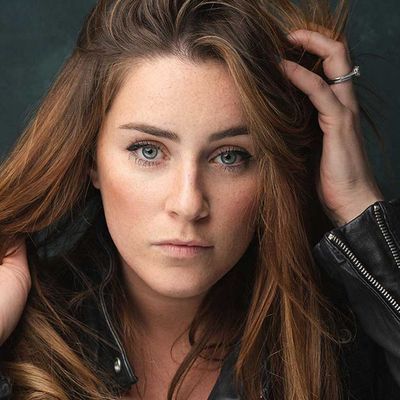
Image of Lucie by: Michael Shelford
wickedthemusical.co.uk
Welcome to eleven. The official theatre podcast that brings the biggest stars and creatives together in one place to discuss life in the arts. Follow eleven on social media via @elevenpodcast and via elevenpodcast.com.
Transcript
This transcript was automatically generated and might contain errors.
[0:01] Helen Woolf: My name is Helen Woolf.
[0:02] Lucie Jones: My name is Lucie Jones, and you're listening to Eleven, the official theatre podcast.
[0:17] William J Connolly: Hello, and welcome to Eleven, the official theatre podcast that brings the biggest stars and creatives together in one place to discuss life in the arts. They're the West End Witches of Oz that are taking flight in the hit musical Wicked as it celebrates over 15 incredible years at the Apollo Victoria Theatre. From signature makeup to floating bubbles, being cast as Elphaba and Glinda is the journey of a lifetime for these two stars, and they're embracing every single moment of it. So here, in an exclusive conversation and to mark the first live and in-person recording of Eleven since the pandemic, we talk flying centre stage to lead as Elphaba and Glinda in the West End production of Wicked.
We also talk 15 years of Oz, Going Green, Loyal Fans, Perfect Character Arcs, and what it's really like getting to sing some of the greatest musical theatre songs of all time. Plus, we try to answer the most important question of all. Good, bad, or just misunderstood. It's the delightful Lucie Jones and Helen Woolf together here now on this, the next episode of Eleven, the official theatre podcast.
[0:25] William J Connolly: They're the West End Witches of Oz, one good and one misunderstood. I'll let you know which witch is which. So please help me welcome to this, the next episode of Why You're Already Smiling and Laughing.
[1:36] Lucie Jones: That was really good.
[1:39] William J Connolly: Hi Lucie Jones, how are you?
[1:40] Lucie Jones: I'm good, how are you?
[1:43] William J Connolly: Would you introduce you to the lovely lady sat beside you?
[1:45] Lucie Jones: Absolutely. Uh I am sat in a studio here with the most wonderful human being who plays Glinda the Good in Wicked. Uh, and I'm thrilled to be working with her. Her name is Helen Woolf.
[1:57] Helen Woolf: I paid her 20 quid to say that.
[2:00] William J Connolly: Thank you so much for agreeing to do this. And I should say that actually, Lucie, you are part of a little bit of sort of Eleven history because during the pandemic, you were the first podcast that I did that wasn't in person. So you were the first one that we did in that medium of Zoom, if you remember that very strange part of sort of the world. And this is the first in-person podcast that I've done since the pandemic. I’m not gonna say it's over, but it's sort of past us. So thanks for being part of history for the day.
[2:21] Lucie Jones: Oh great, thanks for having me back.
[2:22] William J Connolly: I can't have done too terrible a job the first time.
[2:24] Lucie Jones: That's great.
[2:25] William J Connolly: We deleted it, but that's fine. But thank you both of you so much for giving me some of your time today. And it's so nice to be doing it in person and most importantly, celebrating the return of live theatre because even I think it's like over six months now since the West End officially reopened again and shows started coming back. But it just feels very special that we even have the ability to have a connection. I think, particularly after the last sort of 18 months, two years, everyone felt so far away. And to actually get to be in a room, a very big room in your case, with a theatre, and to get to be able to explore theatre and just lose ourselves in a way that I think we all miss, just feels very special.
[2:57] William J Connolly: So what we're gonna do today is just talk about a very, very small off-off West End show that I think you both might be part of. I think it's called Wicked. Have you heard of that?
[3:05] Lucie Jones: Yeah, but I don't think it's gonna run.
[3:07] Helen Woolf: No, I don't think it's not a hit.
[3:08] Lucie Jones: Yeah, I've got to say it's definitely not in its 15th anniversary year. Sold more tickets, I think, than any other show basically ever. Can you believe? Can you actually believe that 10 million people have seen the show in London?
[3:18] Helen Woolf: And how many times have I seen it?
[3:21] Lucie Jones: 9.9.
[3:22] Helen Woolf: I don't even know. I can't embarrass, I don't even know.
[3:24] Lucie Jones: But that isn't that amazing. It just speaks for itself, really. We don't need to sell the show, we don't. It speaks for itself. It is a brand that is so recognizable because it's so consistently fantastic, and you escape to this world of ours, which, like you say, now is more enjoyable than ever, I think.
[3:43] Helen Woolf: Absolutely. And we let's talk about actually playing these roles to start with, because obviously, Helen, this is a role that you know very well. So, for you coming back after the pandemic and pregnancy, does it feel the same or different?
[3:54] Helen Woolf: Oh, hugely different. You know, every time I've come back to the show, it feels different because you know, you're in a sea of different faces, and every time you find something new in the rehearsal process, you know, there's so many layers and elements to our characters that just you, it's hard to describe, really, but they are so wonderful, so iconic. You form a new friendship. So there's stuff that I will have with Lucie that I wouldn't have had with previous, and perhaps if I was to do it again in the future, wouldn't it with someone else? It's just it just goes on and on and on. You can't do it with someone else after doing it for me.
[4:26] Lucie Jones: Sorry, that's this feels like it needs to be.
[4:29] Helen Woolf: Oh, sorry. Like we'll do it now for like maybe six years together.
[4:32] Lucie Jones: And then yeah, yeah, yeah.
[4:34] Helen Woolf: And then we'll call it a day, and I'll have a couple of babies, and we'll just grow old together.
[4:38] Lucie Jones: Okay.
[4:38] William J Connolly: Should we just end the podcast there?
[4:40] Lucie Jones: Yeah, full step and scene.
[4:42] William J Connolly: Good luck to the Wicked.
[4:44] Lucie Jones: This is gonna be so nausey, which we said at the start we were gonna be well behaved, and already I see why they cast you two together. Do you make it through any shows without one of you at least corpsing while I'm not?
[4:53] Helen Woolf: No, well, I think that we're gonna corpse actually.
[4:56] Lucie Jones: No, we are good. We don't corpse, but we have lots of twinkle, you know. Sometimes you just see that little twinkle, you know, we twinkle occasionally, yeah, yeah.
[5:03] Helen Woolf: But it's good fun, it keeps it alive for us. But we're giving the audience the same thing, we're not laughing and ruining it for them. We don't do that, definitely not. But it's uh yeah, we do have a laugh, don't we?
[5:14] Lucie Jones: It's fun, we do, yeah.
[5:16] William J Connolly: Lucie, when we spoke way back when we spoke about your love for this part and this role, and you've been very honest, which so often doesn't happen in this industry about roles that people want to play. You know, sometimes it's incredibly vulnerable to be able to be honest about the fact that I really like that part, I really like that song, I really like that show, I'd like to be part of it. Question of two halves. Why were you so honest about the fact you always wanted to play Elphaba and I guess to put it out to the world? And now you've got it. Does it live up to what you wanted?
[5:41] Lucie Jones: Um, really good question because I was asking myself that question the whole time like, why do I want to do this so much? And then when I got it and started doing it, like I kept checking in with myself. I've kept a diary of how it has felt, and I've often said it even to myself, I still can't believe I'm doing this, and I can't believe how much I love it, and I really do love it. It's completely exceeded all of my expectations in many, many ways on stage and off, but also for what it's doing for me as a person to play this role. To be in her boots, you know, and on that broomstick and taking on bits of Elphaba because I feel like I've got bits of L and bits of Maureen and bits of Jenna in me now, because you can't play a role for a year and not adopt some of that personality.
You can't. And I feel like I'm already getting a bit of Elphaba in there, and like, you know, the not letting injustices pass is something that I definitely had before, but might have suppressed. But now if I see something happening, maybe to my fault, I'm straight in there and I'm trying to protect what I think is right or good, which is nice and not so nice. Um, but what was the first part of the question? Why was I honest? Oh yeah, well, why not? I think there's so much bullshit around. There really is, especially with what we do. There really is, you know, playing the game and ducking and diving, and I see that, and I don't like it, and I don't want to subscribe to it. So I don't really.
I mean, I probably do more than I think I do, but why not speak honestly and hopefully in turn doing so I'm in a position of privilege here? I might be inspiring someone else to do the same thing or to aspire for something, you know.
[7:17] William J Connolly: But also I don't think it's lost on either of you how sacred and important these roles are to British musical theatre, to the musical theatre scene generally, but also to audiences. They come with an expectation that they want to see a certain thing. They of course want to see that your interpretation of it, but also it's exciting knowing that the audience is on your side and that these roles are so coveted, they are so huge, and therefore people come in willing you on. It's not like one of those like sounds like I'm sort of being disrespectful to new shows, but like it's not the win me over, it's I want to go on this journey with you. And I can imagine for you as an actor, that's exciting because you know actually they're gonna go with me, and I get to bring me to the role.
[7:51] Lucie Jones: Yeah, absolutely. And it's funny when I'm in the bubble at the top of the show, you can and and they've just done the or they're about to do the pre-show announcement. They obviously dim the house lights a little bit, and everyone's like going, oh you know, like they're so excited, either because they don't know what's about to happen or that they do know what's about to happen, and for that reason exactly, they want to be there and they want to be there a lot. You know, people come back time and time again.
[8:11] Helen Woolf: Yeah, I was gonna say maybe the podcast sort of medium is not the opportunity for me to admit how many times I've seen this show, but I think it'll be I mean maybe we might include this bit, but include it.
[8:20] Lucie Jones: 83.
[8:20] Helen Woolf: No, don't tell you you said that bit out loud, you know.
[8:24] Lucie Jones: Maybe I'm a bit blind.
[8:25] Helen Woolf: Maybe that's amazing.
[8:27] Lucie Jones: In quite a lot of different countries, languages.
[8:29] Helen Woolf: Yeah, I saw the Japanese production. That was really interesting, it's very different.
[8:34] Lucie Jones: No, no, no, no.
[8:34] Helen Woolf: Yes, reimagined version.
[8:37] Lucie Jones: Yeah, the costumes look bonkers.
[8:38] Helen Woolf: And Elphaba flies out over the audience.
[8:41] Lucie Jones: Yeah, quite literally like Mary Poppins.
[8:43] Helen Woolf: Yeah, just in green.
[8:45] Lucie Jones: Because you've not got enough to deal with it as also very much.
[8:46] Helen Woolf: Well, do you know what I did think that? I saw a little bootleg of it.
[8:49] Lucie Jones: Oh, really?
[8:49] Helen Woolf: And I thought she's ah at the end of act one, she's flying and then on the down, she flies out over the audience. I was like, how, how, how?
[8:56] Lucie Jones: I'd be like, mixing, mixing, mixing.
[9:03] Helen Woolf: I'd love to see that. That would be great fun. Let's make that happen.
[9:06] William J Connolly: You reference the songs in the show there. I mean, one thing that's so great about this show, I think, from an audience and a fan perspective, is that every single person that plays these parts obviously sounds different because they're a different human being, but they're also allowed to bring a part of them. Parts where it sits in their voice that feels more organic to them. The fact that there's options that I know that you can have in the show now. I know that the show is very much catered around the people that sing the songs, and it feels like your voice and you as an artist is celebrated. But when you still have to sing those signature songs, there are obviously certain expectations for you, Lucie, as a singer as a vocalist. Is the pressure on, or is that something that you go, I know there's a legacy, of course. I like the fact there's a legacy with these songs, and I'm gonna meet it. How does it play out for you?
[9:43] Lucie Jones: Yeah, um, it's interesting because it feels it's different. I take it, I take on different energies with regards to that kind of with how I'm feeling or what I've done in the day, or you know, what I might have because I don't like to I always say to people, don't read things, don't you know, don't listen to people, but you do see things, and you do there is an element of expectation with particularly you know, Defying Gravity and No Good Deed, where people want me to riff and then quite vocal about that, and they want Elphaba to you know explore and show off, and quite frankly, I'm not allowed to do that. I'm I am singing what's on the page for a very good reason. There are, like you say, options available, and I can choose to take those or not take them, generally, depending on how I'm feeling on that day.
But they're within parameters of I am in a huge musical playing a huge role that is loved and respected all over the world for a very good reason, and I don't want to mess with that. And I mean, I say that I'm that gal that changed up Dream to Dream after you know 35 years. But I was asked to do that by the producers of the show, and so I obliged and I loved it, and that was great fun. And I feel like I am still reinventing the role for myself in the way that I tell the story and through the way that my vocal kind of prowess is because I'm doing my version of it, and nobody's done that before, and I think that's probably enough, you know.
[11:09] Lucie Jones: There is an expectation to if you want riff, but I will be doing what I am allowed to do, and I love that, and I love our version of the show.
[11:21] William J Connolly: Can you see my questions? Because the next point that I wanted to make was actually going to be around the "I Dreamed a Dream" video because of course it made waves online, it became very synonymous with you, and lots of people celebrated it, but it's very unusual for that to be sort of given the green light by a big blockbuster musical.
[11:42] Lucie Jones: But that sort of in itself, that moment itself brings an expectation, and I guess it's already a blockbuster musical, it's already a blockbuster part.
[11:49] William J Connolly: Yeah, so I guess how much do you push out the social media noise and how much do you have to be aware of it even if you don't listen to it?
[11:55] Lucie Jones: Well, I mean, you I'm not gonna lie to you and say that I completely ignore it, and I'm above it all, because of course I'm not, I'm a human being, and I'm in my 30s, I'm of a generation that spends a lot of time on my phone, and I look at things and I read things and I connect with people, and I love that. With the "I Dreamed a Dream" thing, I was once stopped in the street and told that I was an abomination for doing that. And I kind of responded with, well, when Cameron Mackintosh asked me to do that, he didn't think so, and he's the one that's employed me, so thank you, but respectfully move out of my path and get on with your day. But obviously, that's a very one in a million thing. In terms of this show with social media and expectation and things, there's a lot of it, and there's a lot of voices, and there's a lot of people who really, really love the show, and they have a lot to say about that.
And that's fine. That really is fine. The majority of what I see is positive because people love the show and are rooting for the show and the people in the show. There's always gonna be strands of negativity, and I'm very used to that, very used to it. I tend to not respond to a lot of it. Sometimes I'll do a little comedy response and then think better of it later on in the day. But hey ho, we're all human. But yeah, there is noise, and I hear some of it, and I choose to believe what I choose to believe, really. I listen to the audience, sorry, at the end of the day, and yeah, the audience at the end of the show are on their feet for us, and the whole cast in the show, and the people who may be commenting on the YouTube from, you know, their basement in Czechoslovakia, they can have their opinion too. But until they're right in front of me telling me those words, I'm not really gonna believe them.
[13:31] Helen Woolf: To hear somebody speak so honestly about that and have that approach, it's refreshing to hear, right?
[13:35] Lucie Jones: Absolutely, and I just I think we're just human at the end of the day, and you know, I feel like there's a lot of noise out there about hashtag be kind and all of this, but many people tweet about it, but they're not they don't actually, you know, follow up with that. And I think that's the thing I find a little bit frustrating about that sometimes is that people are very quick to judge and understand at the end of the day that we are just human, and we are humans who can just put one foot in front of the other and do our very best in that moment in time. And if that's not quite up to their expectation, then yeah, it's hard to navigate because we feel a lot of things, of course we do, we all do, but with regards to social media and people saying things, we are actually both people that can kind of go, "Oh, what a dick he sounds, you know.
Great, good for him, glad you had your say," and then get on with our day. And I do feel very lucky to have you, yeah, around with that. I think if we were having this conversation maybe even two or three years ago, it wouldn't have happened. People would be like, "Why are you talking about social media in the world of theatre?" But it is a very present part of it, as much as people want to pretend like it isn't. People online like to have their opinions, and I will say, because I know that you guys don't really look too much at social media, but the reaction has been overwhelming, like in terms of people just saying how refreshing it is, how nice it is to see two people be able to completely embody roles and go on such journeys, and particularly those talk about the acting, which I can imagine you're both incredibly proud of.
[14:54] William J Connolly: And we just take Glinda for a second, she goes on this journey, which I think is just the genius of Winnie in the way in which she carved out this role. In that I think a lot of people immediately at the start of the show, they like her, she's in this impressive bubble, she's really funny. And actually, as the show goes on, you almost go for the dip of rejecting her, then going through a sense of saying, "Well, why would she react like that?" But then also going on to an understanding as to why she makes certain decisions. And I think as an actor, it's a difficult line to tread because you're trying to make someone understand why somebody makes certain decisions. But for you as a performer and as an actor, you're just like, "This is amazing, what a character arc." And I can imagine you feel quite lucky to have it.
[15:30] Lucie Jones: Absolutely, and you know, sometimes at the end of a two-show day, I feel like I've been hit by a bus because her highs are so high, her lows are so low, and there's rarely much middle ground with it. And she really is that whole rainbow of colours, and honestly, like it's fantastic to get your teeth into. I think sometimes, you know, like if you come in and you're a bit tired, it is quite hard to come out there and be the big chirpy one very quickly because there's no warm-up with her, with Glinda, you're just in and you're off, you know. It's like being on that roller coaster, you just shoot and you're on your way. Like she's amazing. And you know, I think I sort of can kind of compare myself to her as a person in some ways, in that you know, you first meet her when she's at university and she's that sort of bright-eyed bushy tail, ready to come go and explore the world.
And I was like that when I first joined the show. And now I'm kind of like more of the Glinda the good because you know I'm 10 years older, I've got life under my belt, I'm more grounded as a person. So I can really identify with different bits of her throughout the show. And also it's quite, I guess, exciting but also challenging as an artist because I don't think she necessarily knows some of the decisions as to why she makes the good and the bad decisions.
[16:40] Helen Woolf: No, and she's always influenced into that decision. So, like, for instance, when she gives Elphaba the hat, you know, which then becomes part of Elphaba's iconic outfit. She didn't do that intentionally to kind of to upset her or to talk or to make laugh and jokes, you know, to make fun of her. You know, her little sidekicks were like, "Oh go on, you should." You know, she's always manipulated quite a lot because I think she's sort of seen as this little malleable bit of an airhead. But she's not, she's not that at all. She's very clever, she's very earnest, she knows what she's doing. And also the sort of the very, very end of the show. I don't want to spoil it for anybody, but when you have that final sort of piece together just before the closing chords, that's the moment when I think you truly understand the journey that Glinda goes on, which is, oh gosh, I've messed up, but I have to do what's right.
And she has to do it for her. She does it. Sorry, she's just I'm pointing at you. You can't see what I'm doing. I'm pointing my finger at Lucie Jones. She does it for Elphaba, you know, it's her legacy she's taking on.
[17:35] Lucie Jones: That's my favourite moment of the show.
[17:37] Helen Woolf: Yeah. That moment that we have together where she's back in the bubble and I'm heading off to the bad lands. And our very last thing that we both sing in the show is "I Have Been Changed." And I think that says it all really.
[17:48] William J Connolly: We've only got a few minutes left. Let's not cry too much. There's just a couple more questions I want to go through with you both. Lucie, the signature part of this role is of course the green. How are you getting on with the green showers? Does your husband hate you yet?
[18:00] Lucie Jones: She's wearing a green a beige jacket, so I thought it was pretty punchy. I can see the hat, there's no green. But there will be for the other day, I guess. If you look at the back of my shirt here from last time I wore this, it's covered in green. Disgusting, do you think?
[18:12] Helen Woolf: Well, I do, but I just can't get out of the nooks and crannies, Will. It's hard. But you know, I really like having it on. It's quite therapeutic, the way that it goes on and everything, and it's part of my ritual for getting ready for the show now. So it's just second nature.
[18:24] Lucie Jones: Um, but it's very cool. It's not lost on me that I'm getting greened every day. What was the first time that you did it? Because what I love about Wicked is when you see like the actress that's gonna play it, but if they've never played it before, they've never been green, the production picture doesn't come. When you first do it, and obviously I know that I think you do a makeup test before you do a full costume. What happens if you look at it and you're like, I look like the what I'd call like the Act One Elphaba, or people like Idina and Julia Murney who have played it, who are very much the Act Two Elphabas because they look a lot darker with it. Which one do you think you are?
[18:49] Lucie Jones: I don't know, really, because we have such a big makeup change for Act Two. There's a lot more added there, and I get a lash and I get a contour and she gets a bit sexy, you know, a bit of a smoky eye going on. Um, but the makeup artists are so good at what they do. Um, Georgia Woodland, who did me for the photo shoot, she's been there for years, and she actually did my makeup on X Factor way back when, weirdly. Uh, she is an artist, and so I can't choose, I can't choose. She makes it work for both with my face, weirdly. But yeah, I think I don't know. That's an interesting question, actually. Actually, am I an act one or an act two alpha? But like in general, because I guess people...
[19:28] Helen Woolf: What do you think?
[19:28] Lucie Jones: Probably two.
[19:29] Helen Woolf: Do you reckon?
[19:30] Lucie Jones: Yeah.
[19:31] Helen Woolf: Growing into that old strength.
[19:32] Lucie Jones: Yeah, and that smoky eye.
[19:33] Helen Woolf: Yeah, I'll take it.
[19:34] Lucie Jones: Yeah, it's nice.
[19:35] Helen Woolf: Thanks. Are you good with frustration? Because some people like I just don't have that in them, but I know that particular gal.
[19:41] Lucie Jones: Yeah.
[19:41] Helen Woolf: Oh, I'll draw it all out there, yeah.
[19:43] Lucie Jones: Yeah.
[19:44] Helen Woolf: I mean, you'll be on the receiving end of the anger during a certain cornfield scene.
[19:49] Lucie Jones: Yeah, exactly.
[19:50] Helen Woolf: Have you been right?
[19:51] Lucie Jones: She did smack you for once.
[19:52] Helen Woolf: Oh, yeah, you did, yeah. Might have been our first show or something together.
[19:54] Lucie Jones: I've proper whacked you around the face.
[19:56] Helen Woolf: We have a book of that.
[19:57] Lucie Jones: I'm so sorry. Now's the time to apologise.
[19:58] Helen Woolf: Sorry for doing that, darling.
[19:59] Lucie Jones: Babe, I'll get you back.
[20:01] Helen Woolf: If she hits you tonight, it's on purpose.
[20:02] Lucie Jones: I know she's definitely gonna do it, isn't she?
[20:04] William J Connolly: You guys have been very kind with your time. I've just one final question for both of you. Elphaba and Glinda, the respective roles that you play. Good, bad, misunderstood. What are they?
[20:11] Lucie Jones: Oh, I think all of the above. I think there's elements to I don't want to say sorry, that's really sitting on the fence, but I honestly think very bit of everything.
[20:19] Helen Woolf: She definitely is all of the above, does she?
[20:21] Lucie Jones: Yeah.
[20:22] Helen Woolf: I think Elphaba is misunderstood and good. I don't think there's bad in her.
[20:25] Lucie Jones: I don't think there's bad in her.
[20:28] Helen Woolf: Even the kind of content in Glinda.
[20:30] Lucie Jones: Yeah, it's a tiny, like shred of her is not, you know, inherently good.
[20:36] Helen Woolf: But she changes that by the end of the story.
[20:38] Lucie Jones: I think the only bit of Elphaba that could be deemed to be bad is the, you know, the love interest angle. But I really think she's so naive to it all that she doesn't really know what's happening to her.
[20:49] Helen Woolf: And I'm not that girl for me, is very much first time all of these things are happening, and she's kind of shocked by it. And so when then he comes to the train station in the following scene, and he's there obviously to kind of see them both, and he gives flowers to Elphaba. I'm really trying to play that in what is happening here, and so it's not like a, "Oh god, I'm doing a really bad thing and, you know, falling in love with my mate's guy." She's not aware of it.
[21:15] Lucie Jones: So yeah, I think good and misunderstood.
[21:18] William J Connolly: What are you, Will?
[21:19] Lucie Jones: What am I?
[21:20] Helen Woolf: Of the above?
[21:20] William J Connolly: Yeah.
[21:22] Lucie Jones: Oh, bad always.
[21:23] William J Connolly: I am, I'm wicked.
[21:23] Helen Woolf: Yeah, what a place to end.
[21:27] William J Connolly: That's so awful. I'm so sorry we had to end on it though.
[21:29] Lucie Jones: Um, Lucy, Helen, thank you so much. Good luck with the show. I'm looking forward to finally seeing you both in it, but just thank you so much for your time.
[21:34] Lucie Jones: Oh, thank you.
[21:34] Helen Woolf: Thank you.
[21:37] William J Connolly: You've been listening to Eleven, the official theatre podcast. Find out more about Eleven at elevenpodcast.com or via the Broadway Podcast Network.
© Broadway Podcast Network, All Rights Reserved