

Featured Shows
About
The Oscar-nominated Screenwriter-Producer-Director of the Back to the Future movies on adapting his infamous franchise for the stage and why this new adventure always featured a red button when things didn’t feel right. We also discuss what it was like collaborating with music genius Glen Ballard, why there’s ZERO plans to capture the stage musical for a big screen viewing and why there's not a reboot, remake or part four of the original Back to the Future films in the works. Plus, Bob fights tears recalling the joys of life with Michael J. Fox and Christopher Lloyd in it.
Host: William J Connolly
Produced by: William J Connolly/Darren Bell
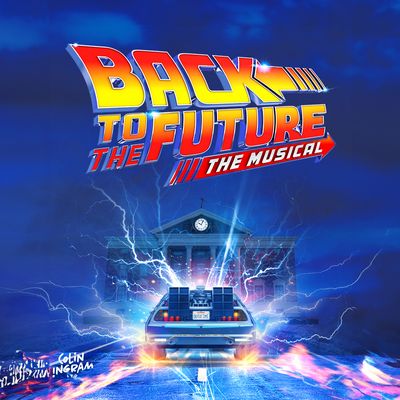
Image supplied by Back to the Future: The Musical
backtothefuturemusical.com
Welcome to eleven. The official theatre podcast that brings the biggest stars and creatives together in one place to discuss life in the arts. Follow eleven on social media via @elevenpodcast and via elevenpodcast.com.
Transcript
This transcript was automatically generated and might contain errors.
[0:01] Bob Gale: My name is Bob Gale, and you're listening to Eleven, the Official Theatre Podcast.
[0:16] William J Connolly: Hello and welcome to Eleven, the official theatre podcast that brings the biggest stars and creatives together in one place to discuss life in the arts. He's the Oscar-nominated screenwriter, producer, director who's created one of the most successful film franchises of all time, and now he's turned his hand to a stage musical. As co-creator, co-writer and co-producer of Back to the Future and its sequels, his work has been seen and enjoyed by multiple generations of film lovers and enthusiasts. And now he's added a live stage musical to his catalogue as Back to the Future the Musical takes off at the Adelphi Theatre in London, marking his first foray into writing for the stage. So here, in an exclusive conversation direct from his home, we discuss bringing this beloved story to life live on stage, including the lengthy and detailed journey to adapting Back to the Future for the stage, and why the adventure always featured a red button when things didn't feel right.
We also discussed collaborating with music genius Glen Ballard, bringing families together through his work, and how some fans of this new stage musical have seen the show over 100 times. Plus, he shuts down any possible reboot, remake, or part 4 of the Back to the Future films, and why there's zero plans to ever capture this new stage musical for a big screen or at-home viewing. Plus, in a final emotional moment, he recalls the joy of filming on set and why his life is better, thanks to Michael J. Fox and Christopher Lloyd, the franchise's original stars. Don't mess up my childhood, they told him. Well, he certainly didn't do that, so let's get into it. As the extraordinary talent of Mr. Bob Gale is here now on this, the next episode of Eleven, the official theatre podcast.
[2:02] William J Connolly: To ensure the safety of all involved in this episode of Eleven, Bob and I connected with this conversation digitally. So please forgive any brief moments while we wait for the internet to catch up. Enjoy.
[2:16] William J Connolly: Please help me welcome to this, the next episode of Eleven. He is the legendary Oscar-nominated screenwriter, producer, director that has now turned his genius mind to creating one of the most exciting new stage musicals. Hi Bob Gale, how are you today?
[2:30] Bob Gale: I'm great, William. How are you doing? Firstly, thank you so much in advance for agreeing to do this. I really appreciate it. Have you been surprised at just how successful and how loved Back to the Future has been in the West End? Because it is the show to see right now.
[2:44] Bob Gale: I have been blown away by it. I was in town for Back to the Future Day, October 21st. I was meeting and greeting fans in the lobby, taking pictures, and somebody came up to me and said, "This is my 115th time seeing the show." Oh my god, I couldn't believe that. Back in July, when I was in town, a woman came up to me and she said, "I've now seen the show 19 times." I said, "Wow, that must be kind of expensive 19 times." She said, "Well, I figured it out. I was in therapy. And every time I'd go see my therapist, I'd leave and I'd feel depressed. But when I saw your show, I felt really happy and alive and up. So I figured I'm gonna quit seeing my therapist and all the money I was spending on my therapist, I'm now gonna spend on theater tickets. And I'm much happier for it." Can you get that on a poster? Quit your therapist, see Back to the Future.
[3:37] Bob Gale: Of course, that case works, right?
[3:39] William J Connolly: Yes, we've had several people I've told that story to have suggested the same thing. Have you, as somebody that's at the heart of it, have you even seen it 19 times yet? That feels like a pretty large number. Never mind 100 plus.
[3:50] Bob Gale: Oh, oh yeah, I've seen it. I've seen it way more than 19 times because I've been around for all the rehearsals, all the previews in Manchester. There were 20 of those, all the British rehearsals and the previews in the UK and many times coming back to London to the Adelphi. So I've probably seen the show, I've certainly seen the show over 40 times, probably over 50. Wow, maybe 60. It's an extraordinary piece of theater to witness. And I want to talk about some of the specifics in a second, but for somebody like you, this is the one of the geniuses behind this world to start with. Do you enter into a project like this with great love and ease for it and think, you know what? Actually, this is gonna work.
Or because it is so well loved and protected, do you have to put a little bit of distance between you and what could happen here? Because this franchise in this world is highly respected, as you very much know, but also very much loved and protected by the fans. How quickly do you say, "Yeah, let's do a musical?"
[4:44] Bob Gale: The good part of this process has been that because Back to the Future was an original screenplay written by Bob Zemeckis and me, we had total control over the theatrical rights. Nobody could take that away from us. We decided after we got Alan Silvestri and Glen Ballard involved, we said this is our red button. If at any point we feel like this show, this musical is not gonna live up to the spirit of what Back to the Future is, we'll push the red button because nobody's gonna complain if there is no musical of Back to the Future. They will complain if there's a mediocre musical of Back to the Future. That fact helped us protect the quality, and it also was an inspiration to us to make sure that the show was going to be primo.
The other great thing that happened as we went through this process because we started, we would meet with producers, and they were our contemporaries, and they would kind of back to future. I don't know. How are you going to do that on the stage? A lot of work. You guys have never written theater before. And then we met Colin Ingram. He was a fan of the movie. He saw it when he was like 14 or 15. And Colin's attitude was, "Hell yes, I want to put Back to the Future on stage. Hell yes, I want to work with you guys to do it." It proceeded that everybody who came on board to work on the show, they were fans of the movie. And their attitude was, "Yes, I want to do this. And oh my God, I better not mess this up."
[6:18] William J Connolly: Had there been prior conversations to this journey which had become successful to it coming to the stage where a stage production had ever been discussed before, or is this a relatively new conversation?
[6:28] Bob Gale: The conversation started way back in December of 2005. So that'll give you an idea of how long the gestation period was. We interviewed other producers, we interviewed other directors. We actually had a false start on, and we hired a director with whom we found we had serious creative differences, and we parted ways with him. You know, good things take time, as they say. And this took a long time. The good side of that is the quality is assured, and the technology improved as to what we could actually do. If we'd put this show on stage in 2008 or 2009, it wouldn't have been anywhere near as good as what you can see at the Adelphi right now.
[7:16] William J Connolly: And technology plays a huge part in the show.
[7:18] Bob Gale: It very much feels like the technology is that extra player within this story of both actors as well as music and audience, which I think is one of the great success stories, having been privileged enough to go see your production, is that it feels like you're experiencing something new. Like Back to the Future did when we first got the opportunity to see those films. Was technology always going to be a big deciding factor in what we saw on that stage? Was it sort of that extra player?
[7:41] Bob Gale: We actually never gave it a whole lot of thought about how to do this stuff. Because we knew that this was not our expertise. You know, doing writing for the stage wasn't my expertise, although it's not significantly the rules of drama are the same in cinema as they are on the stage. And I gone to enough theater and studied Shakespeare enough to know what you're supposed to do and what you're not supposed to do. In a movie these days, now you can just say, "Okay, you know, we have the planets collide and the digital guys figure out how to do that." We didn't know how we were going to create the illusion of the DeLorean going 88 miles per hour on a live theater stage. We also, being aficionados of magic, we knew that David Copperfield and Lance Burton and Penn and Teller, you know, they're constantly making cars appear and disappear and buildings disappear, doing all kinds of crazy stuff like that.
So we figured that there had to be a way to do it. And everybody loves the challenge. So between our wonderful director, John Rando, who hired the best people, Tim Hatley, our production designer, Chris Fisher, our FX guy, and Finn Ross, our video guy, you know, these guys were all devoted fans, and they said, "Yeah, let's figure out how to do this," and they experimented with this, they experimented with that. The watchword with the show was always good enough is not good enough. You know, it's gotta be great.
[9:19] William J Connolly: So talk to me about what it was like during those 20-something preview performances out of town in Manchester when that technology did happen and you saw the DeLorean did just appear. Is that the Eureka moment for you?
[9:27] Bob Gale: That's a classic stage illusion. When I wrote it, I wrote it like that to have that be the entrance of Doc and the DeLorean. That was at least one that I knew how it's done, how it and how it would be done. So that wasn't the big surprise. The big surprise to me was when we melded all these elements. That number where the DeLorean is revealed, and then the DeLorean girls come out of nowhere, and the DeLorean starts turning around on a turntable like you're in a car commercial of some weirdness and all that video stuff going on. I was laughing so hard I had tears in my eyes the first time I saw that. So that was the moment where I said, "Oh my god, this is really exceeding my expectations."
[10:14] William J Connolly: Have you been able to experience some of the fan reactions to those sorts of moments? Because I remember on the opening night, I mean there were audible gasps from every person sat in the theater. It was extraordinary.
[10:24] Bob Gale: Oh, yeah. Absolutely. I get an adrenaline buzz just from being around people, and I'm thinking, "Okay, wait for it, wait for it, wait for it." That happens, you know. And on Back to the Future Day, as I think you know, we had Harry Waters Jr., who played Marvin Berry in the movie, he came and saw the show for the first time, and I was sitting right across the aisle from him. I kept looking over to him when a moment was about to happen because I knew how he was going to react. And it was just glorious.
[10:56] William J Connolly: Did you have the same sort of experience when Christopher came to that opening night? Did you spend one eye on the show, one eye on him?
[11:02] Bob Gale: Yes. Although I will tell you that I needed an extra eye because on that very opening night where Chris was there at the Adelphi, we had our cover Doc to play Doc Brown, Roger Bart tested positive for COVID. So Mark Oxtaby, who did a fantastic job, he'd never performed the part on stage in front of an audience. You know, you're also, you know, my stomach was tightening up in knots. Is he gonna be able to pull this off? Is it gonna work? But again, once he pulled off that number, it works. I was able to relax a little bit and say, "Okay, he's got it down, it's gonna be great."
[11:41] William J Connolly: It really was. And I love the fact that I was very lucky enough to be there, as I mentioned, and it was incredible to be able to see the audience reaction to him, you know, to be able to say, "We're with you, we want this to work," and obviously the difficult circumstances with COVID that night, but it really worked. And obviously, while people would have loved to have seen Roger, he was extraordinary. You must have been very proud of him.
[11:58] Bob Gale: Oh, we were very proud of him. And the other thing that was going on in that crowd was when we had our openings and like every show in Manchester, the people were insane. I mean, it was like a football crowd practically. They were just going nuts because they don't have any filter, they don't have any filters up there. You don't have those stuffed shirts where they're saying, "Oh, well, I'm a theater critic, I'm a theater expert." You know, you didn't have that stuff going on. They were just the people, right? So we had those people, especially on opening night. Oh, I've heard this is a good show, but you better prove it to me. You could see those people begin to loosen up as the show progressed, and they finally just they gave into it and they just totally went for it.
[12:47] William J Connolly: I'd love to talk about Glen Ballard because I've had the pleasure of he was a guest on Eleven just before you opened here in London. And he spoke about the real joy of trying to find the music for this show to try and give it a musical voice. And of course, in musicals, that's a big part of the storytelling. It's how we, as the audience, connect in this fresh and exciting new way. Talk to me about what was it like getting to collaborate with somebody of his stature, because he's an extraordinary talent.
[13:12] Bob Gale: Now, Glen Ballard is an incredible talent and a wonderful man. Bob Zemeckis and Alan Silvestri had worked with him on Polar Express, which is why they both said, "We got to get Glenn on this, we gotta get Glenn on this."
[13:24] Bob Gale: So I when I first met Glenn, it was like I'd known him, you know, for all my life. That's how easy going and how connected we felt. And Glenn has always said that the first thing you do is you take the Hippocratic oath, you do no harm. And he had total respect for what the movie was, for who the characters were. His approach was always what is motivating them that I can use in a song. Um, because you'll have songs in the musical that are helping to tell the story, but you also have the famous what are known as I am songs, where and of course, in Back to the Future, the musical, the most moving and powerful I am song is when Doc sings for the Dreamers. When we heard the demo of that, when we heard Glenn do that in his studio, Sean Randall and I were just completely, completely blown away.
But, you know, once I heard it, I said, Well, I'm restructuring the second act so that we can put this song in because it's too good. Not only about Doc Brown, but about everybody that has a dream. Um, if you're in a creative field in any field, really, if you dream that that song is going to touch your heartstrings in every possible way. This was a collaborative effort. And I'm always saying this to people who want to heap praise on me. Well, it's not me. I'm part of the equation. It doesn't work unless you have all these other folks doing their jobs. You know, somebody once asked me, what do you see your job as on this show? I said, my job is to make everybody else look good. Because when they look good, they make me look good.
And it's a totally symbiotic, symbiotic relationship because that's how it is. And this goes all the way back. My recognition of this goes all the way back to the movie. As I'm sure all real big Back to the Future fans know, we shot the movie five and a half weeks with the wrong actor in the lead. Eric Stoltz was playing Marty McFly, and the movie wasn't working. Bob Zemeckis and I did something that was pretty much unheard of, which was a third of the way into our show, we fired the lead actor and we put Michael J. Fox in there. And the difference between what Michael brought versus what we already had was night and day. It's if we hadn't done that, you and I wouldn't be talking here. Michael brought so much to the character.
He elevated everybody else around him. Everybody else's performance was better when they were with him. And it's something that you sort of intellectually know, but when you experience it, it's indelible. And people always ask me, what was your most memorable moment of making the first movie? It was the first night that Michael J. Fox came to work. It's almost play it back as it happened in my head. That was how powerful it was.
[16:16] William J Connolly: That feeling of you just know when it's right and when it's perhaps not?
[16:20] Bob Gale: Oh, absolutely. And we encouraged the director, John Rando, who got it, obviously, to say, yeah, explore this. Because he'd say, What if we did this? And I'd say, try it. Because I was there all the time. Usually Glenn or Allen would be there most of the time. And he'd say, 'I'm not sure if this is working.' And I'd say, Oh, or I'd say, Hey, John, this isn't working right. Have him say this instead of that, or try doing it this way. We had a totally comfortable relationship. Everybody did. The cast could come forward and say it was actually Emma Lloyd who plays Linda, the sister, and also plays Stella Baines. She came to me and she said, Bob, in the movie, Stella's pregnant. Shouldn't she be pregnant?
And I was embarrassed to not have thought of it. And I said, Emma, you're absolutely right. Yeah, you need to be pregnant for all these scenes. And it's much funnier when you see her walk in and he says, Grandma, and she's ready to drop a new member of the family. Production design-wise, lighting-wise, everybody always had an open door to kick things around to say, What if we do this? What if we do that? And again, this is something that was certainly part of my MO from cinema. You get the best work from people when you let them do, you hire the best people you can and you let them do their job. If you acknowledge that and you encourage them, they're gonna do way better than anybody thought.
[17:44] Bob Gale: So when somebody like Roger comes across your table and says, I want to be part of this project, is that like a creative stream? Because he really is the best of the best.
[17:52] William J Connolly: Yeah, it is.
[17:54] Bob Gale: And he again, he brought so much, not only on stage but off stage, because he, you know, he's the most veteran performer that we have, and he would be there to give good counsel and good advice to the rest of the cast, and they could watch his work ethic and see how he did stuff and see how he could stay loose, but then also he knew the book backwards and forwards, he knew the music backwards and forwards. He is a guy that has, I don't even know where you get this. He can sense the energy of the audience. If you see him do Doc Brown on a Friday or Saturday night, it's always gonna be a little bit different than the way he does it on a Monday or a Wednesday performance because the Friday and Saturday night audiences are a little bit rowdier.
Um, they've had maybe an extra drink or two. Roger picks up on that and you'll find some ad libs or just some facial things that he does. I mean, if you've seen him more than once, you know what I'm talking about. You are prepared for the fact that British audiences are historically, although I don't think always a little bit more reserved than American audiences. So when Roger goes to America, the roof is gonna go off. I mean, because American audiences love to be vocal. That's gonna be quite an experience to be able to see him on a Friday night on Broadway in full flow with Roger, sort of really connecting to the audience.
[19:15] Bob Gale: Yeah, we're totally looking forward to that. And it's actually been one of the most gratifying things here in London. When you go to a show on Broadway, it's almost obligatory that it gets a standing ovation. And I've been to many shows on Broadway where I scratch my head and I say, this is not standing ovation material. It's a weird thing, I guess, because tickets are so much more expensive on Broadway than they are in the West End that people feel like if they stand up and give it a standing ovation, they're like convincing themselves that they got their money's worth. So on Broadway, I've seen standing ovations for shows that I say to myself, this isn't standing ovation material. That doesn't happen in the UK, especially in London.
If the show isn't good enough for standing ovation, it doesn't get one. And so the fact that we get them constantly, you know, it really I'm saying to myself, this is a really discerning audience. These people, they're a bit more reserved, but they're a bit more pickier about who they show their approval. And so that approval has been fantastic.
[20:25] William J Connolly: I think that the American audiences are gonna go completely berserk.
[20:30] Bob Gale: We had actually one of the best audience reactions in London we ever had was when we did the show for the ushers and the staff at the Adelphi Theater the day before our first preview, and there were about eighty people in the crowd, and I swear to God, it sounded like there were a thousand. They were so vocal, they were so excited, they were so pumped. They in fact gave us a standing ovation at the end of Act One, which is like unheard of. And that again, their spirit, this all permeates through the show. And this is the wonderful thing about live theater, which is because people say, Are you gonna make a movie of this? You're gonna put this on Netflix? No, no, no, no, we're not gonna do that because you need to come to the theater to get this experience, which isn't just the show.
It's the people that you're with. It's the whole way that the audience and the people on stage are communicating with each other. There's an energy that happens in any great theater that you cannot define any other way, other than to say you had to be there.
[21:36] Bob Gale: You have referenced so many times about other people's knowledge of the movies, of the characters, what they would do, how they would react, the protective nature that some of the creatives have had over the material. Has this journey of moving from screen to stage allowed you to hear firsthand of how your work and your creations and these original film franchises has affected their lives and hopefully bettered it? Has it allowed you to learn a bit more about the other side of the films?
[22:01] Bob Gale: Oh, I mean, yes. And it's ongoing. I mean, it actually began. I remember being told that, or John Mayer, the you know, the rock and roll guy, yeah, he said in an interview, it was seeing Michael J. Fox play Johnny Be Good in Back to the Future that made me say, I want to do that. I've heard from people that various things, people that wanted to become filmmakers, people who want to become musicians, people who want to become scientists. The best part is people say it brought me closer to my own family. It made me ask my parents questions that I'd never thought to ask them. And that's very, very gratifying to hear that. And of course, the musical does that. And for those listening that may not have seen the movies, and there are people out there that haven't, you do not have to see the movie to enjoy the musical.
It was designed specifically that way because we knew that it's a family show. You can bring your kids. There's a few hells as dirty as it gets. We knew that there would be a whole generation of kids that probably hadn't seen the movie, and they need to be able to enjoy the show too. And they do. And so we hear from people all the time. You know, I never saw the movie, but I didn't have any problem. I love the musical. People say I like the musical even better than I like the movie. That's fine. That's fine. As long as long as you're not coming out saying, I hated it.
[23:29] Bob Gale: I had the pleasure of going backstage quite recently, and just to stand on a stage with a DeLorean felt like a religious experience. It was very bizarre. I mean that in the nicest possible way, but you do stand there going, is that it was a bit like when I met a Dalek for the first time being a Doctor Who fan and went, This is very, very, very strange. Do people have that experience a lot? And especially from an audience perspective, when they get the first look at the DeLorean, it's like, wow, you know that's a moment that people take very personally to actually see it in the flesh.
[24:01] Bob Gale: Oh, sure it is. I mean, it's one of those things. I think I may have written actually written it this way in the book, you know, when Doc Brown emerges, it may be the greatest theatrical entrance in the history of theater. You know, that you hear the audience overwhelmed by it, and you don't know whether they're applauding Doc Brown or the effect of how we brought the DeLorean, but it doesn't matter. It's all just parts, part and parcel of the same thing. I love the fact that you do try and honor the film in there. You don't want to pretend like it doesn't happen. Do people, particularly the hardcore fans, do they respect the fact that that was a very deliberate decision by you to make sure that it feels like a continuation of the Back to the Future world, not a completely separate entity where they're two completely different things?
[24:45] Bob Gale: Oh, absolutely. Absolutely. I mean, I've said in interviews before that when people have said, When are you guys going to do Back to the Future Four or Reboot? What they're really saying is that we want this, you know. And I'm thinking to myself, no, you don't want that. What you want, you want to feel the same way you felt the first time you saw Back to the Future. That's what you want. And that was our mission with the musical. If you ever get a chance to see Back to the Future in Concert, where you'll sit in a concert hall, you know, one or two thousand other people, and the movie runs with a live symphony orchestra, you get that from that experience as well. So we wanted to give people the sense, yes, this is totally Back to the Future. And we do that immediately with the overture. You're sitting in the theater and you hear bum bum bum bum b-da, and you're all you're getting goosebumps because you're saying it's Back to the Future, it's Back to the Future.
[25:46] Bob Gale: In the rehearsal stage, there's something called sits probe, the sits probe. And this is the first time that the performers get to do their numbers with the full orchestra, the full band. Up until then, they've rehearsed it with, you know, somebody at the piano, maybe a guitarist, a drummer, whatever. But they've never heard the songs that they're singing as they will be arranged. We go to the studio, we're doing this in Manchester, and without being told, they're just kind of the actors are kind of milling around, waiting to be told what they're supposed to do. And Jim Henson, our conductor, he raises his baton and the band plays the overture. And they went bonkers to be right there with the orchestra right there in the room and to hear this.
[26:38] Bob Gale: They went completely out of their minds. And then later on, when we did our first rehearsal at the Adelphi with the band, and now we had some other members of the company that were not with us in Manchester. Uh and the band started playing it. Cass literally ran to the edge of the stage and looked down into the pit to watch these guys playing the overture. Uh they were just giddy. So yeah, that was, and of course, obviously the first thing when Bob and I said we're going to try to make a musical, the next call we made was to Alan Silvestri. Because if the musical doesn't sound like Back to the Future, it's not Back to the Future. We always took pains to make sure that there were these touchstones throughout the musical that let people know you're in good hands.
Yes, this is Back to the Future, you know, and at the same time uh providing a few little Easter eggs for the Uber fans, you know, the disappearing photo in the show, uh, they're standing in front of Monument Valley, uh, which was a location of Back to the Future Part Three. Uh, that was obviously a conscious decision on my part to say, hey, let's the real fans will get a big kick out of this, and the people otherwise it won't matter to them. So that was a nice little touch that did double duty.
[27:57] William J Connolly: Does the fact that this stage musical has been so successful so far and shows that you've still got it? People are still there, and the fandom is as strong, if not stronger than ever before. Does it make the conversation about potential revivals, remakes, a new installment for film? Does it make that conversation louder? Is it happening more often, either in your inbox or even in your mind?
[28:16] Bob Gale: We're not going to do a reboot. We're not going to do a remake. We're not going to do a part four. This is why we did the musical instead of thinking about any of those type of things. Because what we now want to do is get the musical to as many people around the globe as we can. This is the new way to experience Back to the Future, which is approved and authorized by the guys that made the movie. And the fact is that when people see the show, there are just as many people that say, Thank God those guys didn't go for a Back to the Future part four. And we hear that just as much or even more than we hear, uh, when are you going to give us another movie? Because people say, Don't mess up my childhood.
And you hear that comment about some of the franchises that have gone back to the well too many times. You know, and I've gone to see some of those movies, and I scratch my head and I say, gee, what were they thinking? But uh this is what's good about the fact that Bob Zemeckis and I are in control creatively, we're not going to let that happen. And it's also, I think, kind of nice for people who are fans to say, hey, I can watch the movie in two hours and it's a complete experience, or I can watch the trilogy in six hours, and that too is a complete experience. And I don't have to think about gee, how many spin-offs do I have to look into and all this kind of stuff? And you go to a Marvel movie, uh, and if you haven't seen all the other Marvel movies, you're lost in so many places.
And I, you know, I say, okay, all right, there's enough Marvel fans that want to that have seen that to make these things successful. Um, I felt that way when I saw the Harry Potter show. If you didn't know chapter and verse of Harry Potter, you were pretty lost. I kept saying, wait, who is this character? I don't remember this person. And I did read the books and I saw the movies. They didn't do to me what they did to the core audience. For me, the Harry Potter show didn't look out for the people that didn't know the franchise. And that's why we really wanted to make sure that we did look out for those people.
[30:28] Bob Gale: Also the stage musical is so far I think from what people would have expected to be a perhaps slightly predictable next step from you guys because a musical you think well now you've seen it of course it works. It's you guys at your best but actually I think it was very much a surprise for the fans and I think that's perhaps certainly in my opinion why they've connected to it and flocked to it so much and are excited about it going global is because it is somewhat unpredictable and I think that's the genius of your decisions.
[30:56] Bob Gale: Well thank you when we made the decision uh there were a lot of people that didn't think it was such a genius decision. And believe me I had a lot of people come up to me and say I resisted coming to this because I didn't want my vision of the movies distorted or ruined and boy was I wrong. I'm so glad that I'm here and people uh even even uh when a show in Manchester remember guy came up to me and he said Mr. Gale I owe you an apology I said I'm sorry I don't know you I don't know what you have to apologize for. He said no he said, Listen, when you announced you're doing a musical, uh, I went on all my social media accounts and I said, This is the stupidest thing. This movie, this show's going to be crap.
And I can't actually he said I came here expecting to hate it, and expecting that tomorrow I'd be writing on Facebook and all these things. I was right, this show sucks. And he said, Boy, was I so wrong, and now I'm gonna proselytize about it. And uh, you know, that too is is is totally gratifying. And the word has gotten out, and we have uh our Facebook page, Back to the Future Musical Fans, run by a couple of really devoted fans, and they have helped spread the word. And when we uh made our cast changes recently, they were there cheerleading us on because I was always there assuring them, hey, we're not gonna do anything that is gonna hurt this show. Anyone who is gonna be on stage performing this show has gone through some you know rigorous review.
There's a lot of talented people out there. Britain's got talent, that's not just some name of some show. It's a fact, it's a fact, and America's got talent too, and Germany's got talent. There's talented people all over the world, and the fact that we have so many of them who are also Back to the Future fans, that really bodes well for the future of Back to the Future.
[32:53] William J Connolly: I just want to talk about the recent reunion between Christopher and Michael. If that's a testament to the fan love and security, and the fact they wanted to show up and be there for both of them, for you to see that reaction all these years later and to see just how I think overwhelmed they were by the audience reaction. What was it seeing those videos and photographs? What did that mean to you? Because it was a moment.
[33:14] Bob Gale: It was yeah, I cried like everybody else. I did. Uh, the relationship that those guys, I'm I'm I'm tearing up right now thinking about it. Um, the relationship that Michael and Chris have developed over the years, and they're in completely different cities, and they only see each other at these types of events, but they regularly communicate with each other and it's really powerful. It's one of those really interesting things where one of the things we don't explain in the movie or the show is why are these two guys friends, right? I mean, you know, we got Marty McFly, 17 years old, and he's friends with this inventor who's in his who's in his 60s, and nobody has a problem with that. And it's a testament to what those guys brought to the movie, to their feelings for each other, and it's you know, maybe it has a little something to do with the way that the parts are written.
It works on stage just as well as it works in the movie. And whenever anybody asks me what's the backstory, how do they meet? Bob and I always knew what that was, but we just said, hey, we're coming in on the middle of this. We want people to see this, they're gonna understand, you know, right from the first frames of the movie when you see that Marty knows where the key is to Doc's lab, and he's coming in, say, oh, okay, this is a guy who's familiar with the environment. And we introduced Doc Brown, not by showing Doc Brown, but by showing, you know, his dog food machine and his clocks and all this stuff in his lab. It's all just designed so that this is what it would be like in real life if these two guys had this relationship and people just go with them.
It's a very unique friendship, and I think that's again one of the great geniuses of your work in this world is getting lost in that. I think it's extraordinary to witness out. And again, and it carries over into their relationship between Michael and Chris, because they developed a certain chemistry, which was really fascinating because Christopher is a theatrically trained actor, and Michael is a TV trained actor. And it's very they're very different because when you're a theatrically trained actor, you memorize the entire script, not just your part, everybody's part. You know it backwards and forwards. And what Michael was doing on Family Ties, they would change the script every day. So he said, Well, I'm not gonna learn my part because they're gonna change it tomorrow.
And so he was a really quick study and he'd learn his lines 15 minutes before he had to say 'cause they were working together in the movie, Michael was more comfortable with ad-libbing than Christopher was. And he might say something that would throw Chris for a little bit of a loop, and sometimes you'd see Chris do a little thing with his eyes or his head or his expression, because he didn't expect it, but he kept it in character because if you're theatrically trained, you know that that's what you do.
[36:07] Bob Gale: We've spoken about the varying different iterations that people have come into contact with the world of Back to the Future. We've spoken about the great successes that it's had. But 50% of this conversation has been around the impact it's had off-screen with fans, with your relationship with the actors, with the fact that all these years later, multiple three, if not even four generations of people now have had the opportunity to watch these films and get lost and come to the theater and spend time together. When you think back to the very beginning of this journey with the films through to the stage musical now, could you ever have envisioned that this would have brought so much joy to your life?
[36:41] Bob Gale: Oh my God. We couldn't have envisioned, you know, we were just keeping our fingers crossed that people would show up when the movie opened. Uh, you know, I've told the story many times that the script was rejected over 40 times. Even even people that liked it, they would say, Well, yeah, but it's too nice and it's too sweet, and um audiences aren't gonna go for this, or uh it's it's clever and all that, but time travel movies don't make any money. Um and this stuff was all the these were rational reactions to what we were trying to, you know. We're asking, you know, we're asking for a studio to give us 15 or 20 million dollars. It's a big deal. We understood that, even though we said, come on, you gotta take a chance.
You gotta do you gotta do something original. You can't keep doing, can't keep doing, you know, the two guys are cops and they don't get along with each other, that story. Um so yeah, we were taking so so we had that risk, uh, and we of course we did the crazy thing, which was we replaced our lead actor, um, and that kind of was a signal in Hollywood. Oh, that movie must be in trouble. That movie must be in trouble. But I'll tell you the anecdote that they kind of made Bob and I look at each other and say, hey, they might actually show up when the movie opens. We shot the high school scenes, uh Whittier High School, which is a suburb of Los Angeles, happened to be um in total non sequitur here, it's where Richard Nixon went to high school.
Um we you can only shoot in high school when school is not in session. So we filmed there with Eric Stoltz uh over the Christmas holiday uh in 1984. And people, when that whenever you're filming in a public place, people go by and say, Oh, they're filming. Uh, what are they filming? Maybe it's if it's a TV series that they know, they'll hang around. Uh, or if it's a movie they never heard of, they'll say, Who's in it? Uh somebody named Eric Stoltz. So, okay. Well, then we can come back to Whittier High School for spring break, 1985. And oh, they're filming a movie. Oh, yeah, who's in it? Michael J. Fox. Michael J. Fox, because he was this big star from television. The next thing we know, we had kids lined up seven deep to catch a glimpse of Michael J. Fox. Um, and Bob and I looked at each other and said, Holy shit, this guy really is a big star. Um, maybe people really will come to the movies to the cinema when the show opens. And they did.
[39:12] William J Connolly: Bob Gale, thank you so much for your time today. I really appreciate it. And thank you so much for the gift of Back to the Future on Stage. It's extraordinary.
[39:20] Bob Gale: Thank you for your enthusiasm, William. Thank you for having me on the show. Thank you for letting me talk your ear off about this. For those of you that haven't seen the show, what are you waiting for?
[39:32] William J Connolly: You've been listening to Eleven, the official theater podcast. Find out more about Eleven at elevenpodcast.com or via the Broadway Podcast Network.
© Broadway Podcast Network, All Rights Reserved