

Featured Shows
About
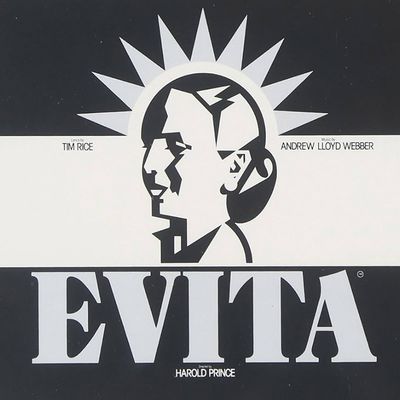
The 22-year-old internationally acclaimed superstar voice of Moana on reigning in a new era as Eva Perón, leaning into history with her portrayal of the Argentine rose and why EVITA is all about words, words, words! Plus, we get an update on the hilarity of the upcoming Mean Girls musical movie. And, of course, there may be a little mention of Moana too.
Host: William J Connolly
Produced by: William J Connolly/Darren Bell
lwtheatres.co.uk
Welcome to eleven. The official theatre podcast that brings the biggest stars and creatives together in one place to discuss life in the arts. Follow eleven on social media via @elevenpodcast and via elevenpodcast.com.
Transcript
This transcript was automatically generated and might contain errors.
[0:01] Auliʻi Cravalho: My name is Auliʻi Cravalho, and you're listening to Eleven, the Official Theatre Podcast.
[0:16] William J Connolly: Hello and welcome to Eleven, the official theatre podcast that brings the biggest stars and creatives together in one place to discuss life in the arts. She's one of the most instantly recognizable artists that's bagged over a billion streams as she voices the title role in the record-breaking movie Moana. No stranger to the world of theatre and live performance, she's also starred in Sunset Boulevard and The Little Mermaid Live. And now she'll make her West End debut playing one of the most legendary women in history as she takes on Eva Perón in Andrew Lloyd Webber and Tim Rice's legendary masterpiece, Evita. So here, in an exclusive conversation just days before she arrives on British shores to begin rehearsals for Evita, we discuss reigning in a new era as Eva Perón, leaning into history with her portrayal of the Argentine Rose and why Evita is all about words, words, words.
Last week, we get an update on the hilarity of the upcoming Mean Girls musical movie and why Tina Fey is a genius. And, of course, there may be just a little mention of Moana 2. It's the superstar voice of Auliʻi Cravalho here now on this, the next episode of Eleven, the official theatre podcast. To ensure the safety of all involved in this episode of Eleven, Auliʻi and I connected for this conversation digitally, so please forgive any brief moments while we wait for the internet to catch up. Enjoy.
[1:44] William J Connolly: Please let me welcome to this, the next episode of Eleven. She is the voice instantly recognizable across the world and about to take on one of the most famous women in history live in London's West End. So let's say a massive hello to Auliʻi Cravalho.
[2:00] Auliʻi Cravalho: Hello, how are you?
[2:02] Auliʻi Cravalho: Aloha. Oh my gosh, that intro instantly sent me into like a spiral. My heart is racing. I'm scared. I'm excited. Um, yeah, thanks for having me. This is super exciting, and I don't mean to make you nervous. I promise this is gonna be very much a celebration because this is so freaking exciting. Like 10 out of 10, one of my favorite shows of all time. I feel like I'm about to just geek out and nerd to you, so strap in and we can just celebrate the fact that you are playing, arguably, I think, I'm sure nobody would object to me saying this, one of the most famous women in history, certainly in the world of musical theatre, iconic in name, song, goes so often by one name, and written by one of the most famous composers and lyricists of all time. I mean, not to add the pressure, but how are you feeling?
[2:45] Auliʻi Cravalho: I'm feeling the pressure, thanks for asking. No, I'm really, I really am honored and I'm so excited to play Eva Perón, aka Evita. Um, I am Puerto Rican and Portuguese, so I've been practicing rolling my R's, I've been practicing the music, I've been up to my neck in the lyrics. Gosh, there are so many words. But like you said, she really is such an interesting character and such a well-known and famous woman in real life. And then when I dive deeper into, you know, her history, but also her as a character in this show, she's so complex. Sometimes I wonder, I'm like, when is she acting? When is she real? Is she in love? Is she in love with the power? I've been really interested in that journey, and my gosh, is she taking me on one?
[3:34] Auliʻi Cravalho: I guess just before we dive into that for a little bit of context, it's Evita at the Theatre Royal Drury Lane, which is just the most stunning venue for this. It's gonna be extraordinary. Was the idea of playing a historical figure one of the great appeals? Or does that add to start with, I guess, a little bit of context to the fact that there is truth built into here. It's not just all about how you choose to interpret it. What was your first reaction?
[3:55] Auliʻi Cravalho: My first reaction was Andrew Lloyd Webber. And I said, yes. Um, I did audition for this, by the way. This wasn't like a direct offer or anything. So I practiced and I sang the song and then I waited and I heard back and I screamed, and then I was like, oh my gosh, no screaming, I have to preserve my vocal cords. But um, I think what really drew me to Evita is the fact that there is so much mystery surrounding her. Like I can Google up as much as I want about her character, but in the end, like who I want to portray on stage is going to be different than anyone else who's done it. And I'm left with the same question of like, okay, who are you? You're larger than life. You are a fantastic performer.
And I think that she just really wanted to change her circumstance. And that is something that I deeply relate to. I'm a child of a single parent. I grew up in a really small town, and I'm already living a life that is larger than my wildest dreams. And if I dare to look further, and if I put myself in her shoes, um, like in an earlier time, who do I need to meet in order to make myself the ultimate dream? Like that is the story to me. Um, and so it's just fun to play a character who just keeps on pushing. Every song gets higher and higher in my register. You know? By the end of Act One, it literally is just screaming, by the way. There's no singing.
[5:23] Auliʻi Cravalho: What? I remember I wasn't, like I said, like I'm not super familiar previously with the show. And I was like, oh, I know, I know Rainbow High. I love that song. Uh, Don't Cry for Me Argentina, Buenos Aires. This is in my register, girl. It gets higher. Yeah, I'm up there. Yeah, it definitely won't be an easy ride, but it will be an enjoyable learning experience, which I'd argue actually is more exciting. So I'd say, let's go for the high Andrew Lloyd Webber belting any day of the week. But I'm sort of fascinated with the fact that whenever people talk about playing this role or have played this role, they do reference, as we sort of just touched on there, the fact that there is a historical element, but also there are these such great character arcs, which we don't always get, particularly in female leading characters, always painted as a one-dimensional thing.
And the great joy of her is that people come to this show with different backgrounds with different viewpoints of her. I'd argue a lot of people leave with different viewpoints of her. But I can imagine for you as an actor, that's the great joy, right? The fact that every scene is different, every characterization is different, and every perspective is different.
[6:29] Auliʻi Cravalho: Well said, yeah. I'm really grateful that I'm coming in with a clean slate. I get to perform at Drury Lane Theater, like what an iconic venue as well. So I just get to come in and really just knock the whole house down, you know, like nothing, no previous rendition really in my brain. Um, and I'm excited to bring also, I think, some, I'm sorry to say it, but youth to her. You know, I'm 22. And when I think of all of these incredible things happening to her, like her relationship with Magaldi, um, her relationship with Perón, like she moved up in rank so very quickly. Um, and when I put that in my own voice, there's an excitement, like the ticking clock that we all know that she passed when she was quite young.
So I just, I like, yeah, as you said, there's so much to think about as the show progresses, and that arc is really a dream to get to portray. I'm used to really playing women who are side characters, to be honest, to the leading man. So I'm grateful to play the leading lady this time.
[7:33] William J Connolly: Talk to me about the audience relationship to this piece because I guess one of the great joys about doing the show is you know there's a legacy. So therefore, you know, people that are choosing to come to see it. Well, not exclusively, most of them will have had an engagement with perhaps the film, the stage show, or just the soundtrack. So therefore, you know when people are coming in, they're ready to go on this ride and they're excited to see the show. And I think that that must be quite comforting.
[7:55] Auliʻi Cravalho: Babe, they know the show better than I do. I like it's absolutely true. Um, I have some friends in London that I know are gonna see the show who again know it better than I do. Um, but yeah, I know that there are high expectations. I like I said, I'm nervous, I feel it in the pit of my stomach, but I'm nervous because I am grateful and I am excited, and it means so much to me to do this well, especially with the women that have preceded me. Uh so yeah, I'm gonna rock that high belt. I promise. I promise.
[8:31] William J Connolly: Talk to me about the fact that this is such a good repertoire, just song after song after song, like knowing that you've got, you know, the hits to be able to work with each night. You're of course a vocalist, you're a great, great singer. Must be nice to know the instrument is going to be working.
[8:47] Auliʻi Cravalho: Yeah, you can say that again. I am really excited. Um, I just have listened to the soundtrack over and over again, and you're right. Every single song is iconic. Rainbow High is definitely my favorite. Um, the more I listen to the soundtrack, I realize, like, oh, it's so clever, these little quips, you know, and that's maybe where like some of the maybe British humor comes in. I'm like, oh no, I get it now. And I've been singing this truly in my sleep. Like I've listened to nothing else.
[9:17] Auliʻi Cravalho: Um, so I'm excited, I really am. I joke about the fact it's so high, there's so much belting, but actually there's also the opposite of that. Of course, yes, of course, there's Don't Cry for Me Argentina, but also You Must Love Me. I mean, Lana Del Rey covered that. I mean, like, it's really, really sort of small and together and particular. Do you like the fact that there is this ability to be able to flex in one direction and then really shift it the other way?
[9:39] Auliʻi Cravalho: Absolutely. I also think of it from the perspective of a voice actor, like there are like You Must Love Me, that's a little lower, but also I'd Be Surprisingly Good for You. That is so sultry and beautiful and sexy and a little dark and cunning because she can almost see into the future in that song. Um, and I like the idea of truly playing with my voice from the beginning of our play, where she is younger till the very end, You Must Love Me. That is, uh, or, or what is it, lament or even in the montage? Like at that point, we are nearing the end of her life, and what does that sound like when she knows that she's going to pass and how I can manipulate my voice because I do that usually alone in a booth, just acting like a little gremlin, you know, when I don't have to worry about my facial expressions. Um, but I'm excited to change her voice and mimic the years as they pass.
[10:37] William J Connolly: Do you also like the fact that people, I guess, through albums and through watching films, will have known your voice from one particular thing, and to then get to explore a different part of it? I think that's exciting as an audience member. And you must be excited for you as a performer to go, oh, actually, I can do other things and as well as be obviously still be celebrated for the original. Like, I like the fact there's more to show.
[10:56] Auliʻi Cravalho: Yeah, I'm really grateful. Um, most people will know my voice from Moana. I also have Mean Girls, the musical, the movie that'll be coming out soon. So I have now these other songs that people can recognize my voice from, not just How Far I'll Go, which I really appreciate. Um, and I hope to just continue working in stage work. Like that is the thing that scares me most. I think because everything is on display, you know, like the way that you hold your shoulders and what that means, lifting your chin to the audience that is in the very back of the house instead of, you know, lowering my chin to speak into a mic in a booth. Like that's what I'm used to, if I'm honest. I'm used to being by myself. And I'm also really excited to meet the West End cast, you know. Like I'm being brought to Mecca. Like these people are just professionals and the best in their field, and I'm so humbly honored to enter their space and learn from them.
[11:57] Auliʻi Cravalho: What's it like when you have a reputation or you have something you're famous for and you try and venture into other things? Is it hard to then navigate the possibility of, oh, I do something else?
[12:07] Auliʻi Cravalho: Or does because of other success, do you get the opportunity? I guess do you get further along because of it? I guess how does it play out in real time? Uh it's definitely some of the latter. Like, I wouldn't describe myself as a Nepo baby, but we all like that's how that works for them, you know. So, yes, being known as the voice of Moana has definitely helped me, especially in like these music-heavy fields, but I also still audition. Like, I've not gotten to the point in my career yet uh where I don't have to prove myself, so to speak. And I don't mind also, like as I said, growing up not knowing a lot of musicals, I appreciate the time to learn it, to figure out if it's in my voice part. I don't take things for granted. And I think that's also what it's something not growing up in this industry that I'm like, this is so cool every time. Um, and I hope that I don't lose that.
[13:03] William J Connolly: Definitely. I think that's important, you know, to see that shift in perspective and see the possibility of what could be, but also the fact that you know it comes with responsibility, great power is great responsibility, and it seems like you understand how that benefits you, but also it may even work the other way. You may, you know, the expectation of what you could do is perhaps even so much higher. So, you know, that could almost work against you, right?
[13:24] Auliʻi Cravalho: That is true. I experienced that specifically in voiceover work where a lot of people uh forget that I can do voices. They're like, no, no, no, no, no, just give us Auli, you know? Um, and especially taking on a character and a person like Eva Perón, like that is a woman who is larger than life, who is idolized, who is treasured by her people. And that's a very different character from a 16-year-old Moana. I'm glad to take her on. Talk about depth, talk about going from one extreme to another.
[13:52] William J Connolly: For you, uh, like you talk about the fact that the voice and the acting and the possibility and being able to perform live on stage, but you've done that before. That's something that's not new to you. Is has theater always been was theater like the beginning, or was it the voice work that was the beginning? Where did the love to do this sort of begin?
[14:09] Auliʻi Cravalho: So, as I mentioned, uh, there isn't much theater in Hawaii, but my mom actually used to pull me out of school like like a Friday out of every month to go to the Kahilu Theater, which was an hour away. I grew up in a really small town, so that I could see whatever local production was there, whether it was a ballet or a choir performance. So I think it started with stage work, just seeing it and realizing, oh, that person looks like me. I could be up there. Like that realization, that really flipped a switch for me. But Moana was my first job. So I think the understanding of storytelling through song is something that I've always understood. I sung in school choir and in church choir. And then moving into like, as I would say, like theater, that's when you two plus two plus two.
You know, you add all of all of the elements, um, the costume. I'm excited to put on a blonde wig. It's just so exciting. My my little like theater kid, my my inner theater kid is just jumping for joy right now.
[15:14] William J Connolly: So, what was your I want moment when, you know, like in a musical, it's normally like the second or third song. Obviously, Buenos Aires is is the one in this, but what was your no, this is this is what I have to do for my life.
[15:26] Auliʻi Cravalho: You know, I don't know that I've experienced that yet. I keep saying it, but I'm really grateful to be in this industry, but at the same time, none of this feels real. It's all playing pretend. I look forward to the day where I get to go home to Hawaii and work on climate issues and socioeconomic issues for the people that I grew up with and I cherish. And this feels like work. Like it is hard. It is hard work, and uh that's also why I'm really excited to meet my other castmates who I suspect will either be the same age as me or significantly older, and that have dedicated their lives to this. And I want to ask them that question. Like, how did you know? When did it click for you? Because I'm waiting for it.
For now, it feels terrifying every time there's a new job, but also so exciting. And there's also kind of like a pull at my heart where I'm like, oh, I can't wait to go home, you know. And I wonder if they feel that as well, being away from from home and and touring with with a production like this or or anything else. You know, I just want to pick other actors' brains.
[16:34] William J Connolly: I think your co-star Matt Rawl would be a very, very good person to ask. Because I mean, part of the fact he knows Evita probably arguably more than anybody else, because he did it for so long and and is obviously legendary for playing this part. I mean, I think he's also got a great life experience as well within the industry. So I'd say I think lots of questions will get you lots of answers when you're here. So I'd say ask away.
[16:52] Auliʻi Cravalho: Okay, I will. If everyone is as nice as you are, then I'm I should have no fear.
[16:58] William J Connolly: No, you're too kind. Thank you. I can ask really rubbish questions if you want, just to bring it up. Can I ask you about West End audiences and the fact that obviously we talk about the fact this is obviously home away from home for you? Hopefully, it will feel like home here, and you and you'll be able to be embraced, I'm sure, with both hands. But the opportunity to connect with a different audience to be able to connect with an audience that really respects the craft. And I don't want to sort of underplay that of live theater, live performance and live acting, number one, which is really important. Is that prospect for you something that feels like I say a challenge, but I think people see challenge as a negative word. It's not, it's the opportunity to grow and to learn.
[17:36] Auliʻi Cravalho: Yeah, that's I keep saying that I'm scared, but that's because I care so much. Yeah, this crowd will know Evita. They will know her in a way that I will not play her. Period. Point that that's it. And so, like you said, like it really is just doubling down, believing in the character that I am going to bring to life. And it's exciting for people to see me in a different role. I'm excited to meet people from across the sea who have great accents, can't wait to meet you and talk to you. Um, yeah, it's it's all a new experience for me.
[18:09] William J Connolly: And what about the opportunity to connect with fans? Because obviously COVID put a stop to the fact we can't connect to people. But for you getting the opportunity to travel the globe, which you've done throughout your career, and to get opportunity just to find out how the song, the film or the show has connected with somebody further afield, somebody away from where you live. Do you relish in those moments?
[18:28] Auliʻi Cravalho: Oh, that's so true. You know what? I completely forgot about the stage door. I mean, I would suppose that you do the same thing, right?
[18:35] William J Connolly: 100%.
[18:35] Auliʻi Cravalho: Yeah. Oh, that'll be so nice to see people to get feedback, to share in the experience. Like that is really what live theater is about. Um, I also hope to see people's faces without masks. That'll be so nice.
[18:49] William J Connolly: Oh, you're right. You brought up a really good point. I almost didn't remember what it was like before our our new normal, so to speak. But I did a show, um, Sunset Boulevard at the Kennedy Center here in in DC, and it was really beautiful. I loved talking to people after the show, people who had seen, you know, the show like five, six times before that. And there's I really do think that no matter how many renditions of a character, there is always something new to find.
[19:18] Auliʻi Cravalho: Well, something new to find is your your superpower that only you and you alone have. So I'd say you should cherish that because I think a lot of people becoming expecting and wanting to see what you bring to it. So I think it's really exciting. I'm really, really looking forward to it. Also, it's really not that far away now. Not to make you even more nervous.
[19:33] Auliʻi Cravalho: I'm so sorry.
[19:34] William J Connolly: No, I know it is. I'm I've been counting the days. I'm soon gonna be on a long ass flight to London. Um, I know there's gonna be very little that you can tell me about the Mean Girls movie musical, but just it sort of indulged me for a second. Tina Fey's been teasing and teasing and teasing about how amazing she thinks it's gonna be, what to expect. Is it is the whole thing just a massive dream for you?
[19:56] Auliʻi Cravalho: Ah, absolutely. She is so funny, so clever. It was lovely having her not only, you know, every day on set, but also as someone that I could come to and be like, hey, this line just isn't working with me. And she was like, okay, how can you make it funnier? You know, like really um encouraging us to kind of take the wheel on our character, which was nice because this is somewhat of a remake, somewhat of a new rendition. So it was very possible that she would say, you know, these characters are drawn out. There's no reason for you to reinvent something here, but she really did, and that that is seen through costume, through makeup, um, and through our own renditions of the characters. We also have some incredible people from Broadway, Draco Spe uh Spivey, um Renee Rapp, who's our Regina George.
So we have some really strong voices, and another way that we honor that is with live takes and um with one takes as well, where we start a song and then we run. We are running, we're doing choreography, um, throughout just one camera take. It was exhausting, but it's also that's kind of one of the few ways that you can get that live feeling that we crave and that we love from theater performances. So yeah, she's doing a great job on the press tour. I can't wait to join her. And I'm really thrilled. I can't wait for Mean Girls, the musical the movie.
[21:26] William J Connolly: Well, thank you so much for your time. I've got one final question for you. And we've spoken about some of the huge milestones in your career, the ways in which you've discovered this gift that you have as a performer as a vocalist, the varying different iterations of the way in which you hope to and will connect with the art. We spoke about the fact your mom used to take you on that hour-long journey to discover the beauty of theater, you know, way back at the beginning. What do you think that young person then would have thought of the girl that's about to step onto the most famous stage, arguably, that we have to play one of the most famous women in history? What would what would that person think of all of this?
[22:03] Auliʻi Cravalho: I think that I am she and she is me. I'm really grateful that I still feel pretty in touch with with that little girl from my small town, and we have no expectations, right? I have no idea how Jury Lane is going to feel. Um, I'm glad that I was able to see representation on stage. I'm so grateful to my mom who realized that, like, yeah, school is very important. That's not what I'm, I'm not saying school isn't important, but if there is a field that your child is craving, that that the public and just public school education system does not nurture that I I'm just so grateful that she found a way to foster that creativity in me. And it well, it's taken me really far, you know. She I am her wildest dream.
Um, and I hope to inspire the next generation of that, you know, the next generation of native Hawaiian or mixed raced kids who are like, gosh, how do I get up there? I'm like, bro, I don't know, but I'm here. Like, it's you can do it too. And I mean it. I mean it from the bottom of my heart.
[23:31] William J Connolly: You said you're proud of her. We're proud of you already, and you're not even here yet, which is so exciting for us. So I hope that you're very proud of the performance that you give, because I know already it's gonna be really extraordinary. So enjoy the ride, embrace every single moment of it, and most importantly, have fun. This has been such a pleasure. Thank you so much.
[23:50] Auliʻi Cravalho: Thank you. I appreciate it.
[23:54] William J Connolly: You've been listening to Eleven, the official theater podcast. Find out more about Eleven at elevenpodcast.com of either the Broadway Podcast Network.
© Broadway Podcast Network, All Rights Reserved